

Global Benign Positional Vertigo Market Size and Forecast – 2026 to 2033
According to Coherent Market Insights, the global benign positional vertigo market is estimated to be valued at USD 2.01 Bn in 2026 and is expected to reach USD 2.96 Bn by 2033, exhibiting a compound annual growth rate (CAGR) of 5.7% from 2026 to 2033. The main factors behind this gradual rise include the growing awareness of the existence of the so-called vestibular disorders, development of diagnostic techniques, and an aging population at risk of having a balance problem. Moreover, better health facilities and availability of specialized care also increase the market size.
Key Takeaways of the Benign Positional Vertigo Market
- Antihistamines segment is expected to lead the benign positional vertigo market capturing 47% share in 2026.
- Branded segment is estimated to represent 58% of the market share in 2026.
- Prescription (Rx) segment is projected to dominate with 61% of the global benign positional vertigo market share in 2026.
- North America is expected to lead the market, holding a share of 39% in 2026. Asia Pacific is anticipated to be the fastest-growing region, with 23% share in 2026.
Market Overview
- The aging global population and rising awareness of vestibular disorders are increasing demand for effective BPPV diagnostics and treatments.
- AI-assisted diagnostic tools and home-based rehabilitation devices are improving diagnostic accuracy and treatment accessibility.
- Telemedicine and AI-driven platforms offer opportunities for remote consultations and personalized treatment, especially in underserved regions.
- As some of the limitations to the broader use of benign positional vertigo treatments: limited awareness in developing countries and the high cost of the advanced diagnostic technologies.
Currents Events and Its Impacts
Current Events | Description and its Impact |
Advancements in Digital Rehabilitation Devices |
|
Integration of AI in Diagnostic Tools |
|
Segmental Insights

- Current Industry Events of 2026
- Market Size Estimation
- Regional Breakdown
- Competitive Landscape
- Customer Intelligence
- Segmental Analysis
- Pricing Analysis
- Key Market Drivers, Challenges & Future Trends
- Customized Insights Section
Why Does the Antihistamines Segment Dominate the Global Benign Positional Vertigo Market in 2026?
The antihistamines segment is expected to hold the largest share of 47% in 2026, attributable to their proven efficacy and favorable safety profile. The antihistamines stabilize the inner ear, which consists of the vestibular system and minimize the effects of vertigo: dizziness, nausea, and vomiting. Their dual activity on the histamine receptors and their influence on the vestibular nuclei gives them an advantage over other treatments used by healthcare providers in the management of benign positional vertigo.
For instance, Meclizine is a commonly prescribed antihistamine that helps manage symptoms of vertigo by reducing nausea and dizziness associated with BPPV. It works by blocking histamine receptors in the brain, which can help alleviate the motion sickness and vertigo symptoms often experienced by patients with benign positional vertigo. However, it does not treat the underlying cause of benign positional vertigo and is typically used as a supportive therapy alongside repositioning maneuvers.
Why Does the Branded Segment Dominate the Global Benign Positional Vertigo Market in 2026?
The branded segment is projected to hold the largest share of 58% in 2026, owing to the increasing assurance of consistent quality, efficacy, and safety. Clinicians and their patients tend to use branded medicines in the treatment of vertigo, where the quality of life and functional abilities directly depend on symptom management, as these brands have proven themselves to be effective due to thorough clinical trials and regulatory examination. By the sensitive nature of the BPV treatments, physicians are very dependent on brands that are reliable and with detailed clinical information. Such trust is especially significant in the case of medications like antihistamines and benzodiazepines where some differences in the formulation may affect the performance or tolerability of the drug.
For instance, in September 2025, Stugeron, a branded antihistamine widely used to treat vertigo and motion sickness, continues to hold a dominant position in the global benign positional vertigo market. With its long-established market presence and proven effectiveness in managing vertigo symptoms, Stugeron remains one of the top treatments for patients worldwide. The brand’s strong reputation and trust in its clinical efficacy have made it a preferred choice for both healthcare providers and patients.
Prescription (Rx) Dominates the Global Benign Positional Vertigo Market
Prescription (Rx) segment is expected to capture the highest share of 61% in 2026, driven by the need for medical supervision and controlled administration of effective treatments. The diagnosis and specialized treatment that benign positional vertigo needs are often inaccurate and needs to be prescribed, and the results of this treatment are necessarily safer and specific. The prescription drugs leadership is based on the clinical complexity of benign positional vertigo and the side effects that are possible by the drugs used, including benzodiazepines and antihistamines.
Diagnostic Advancements and Telehealth Integration in the Benign Positional Vertigo Market
Category | Description | Impact |
Diagnostic Advancements | The development of advanced diagnostic tools such as AI-assisted videonystagmography (VNG), eye-tracking systems, and digital vestibular tests are revolutionizing the diagnosis of Benign Positional Vertigo (BPPV). These tools provide faster, more accurate assessments of vestibular disorders. | These advancements improve diagnostic precision, reduce the time needed for diagnosis, and allow for more accurate differentiation between various balance disorders, leading to better treatment outcomes.
|
Telehealth Integration | The integration of telemedicine and remote diagnostics is gaining momentum in the market. Virtual consultations, combined with AI-driven platforms, are enabling healthcare providers to monitor and treat patients remotely, especially in underserved regions. | Telehealth expands access to BPPV care, especially in rural or remote areas, offering patients the convenience of receiving diagnoses and treatment plans without the need for in-person visits. This increases overall treatment adherence and accessibility. |
Regional Insights
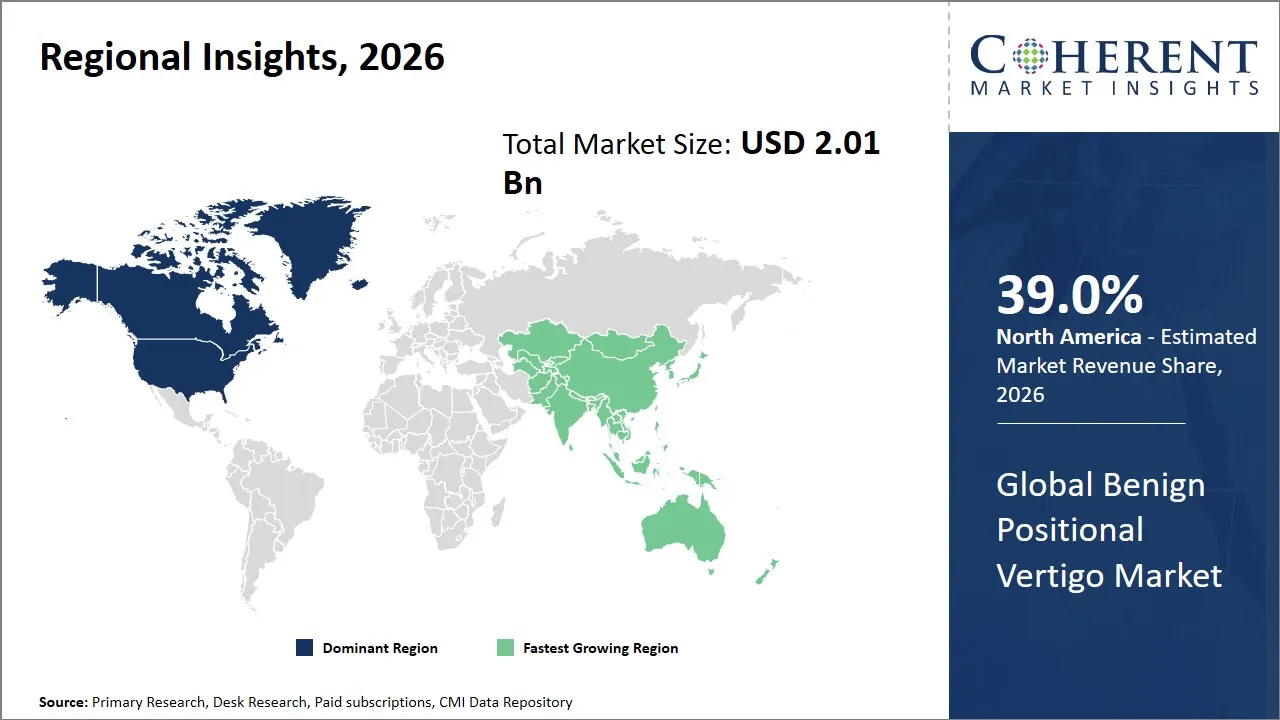
North America Benign Positional Vertigo Market Analysis and Trends
The North America region is projected to lead the market with a 39% share in 2026, driven by a highly developed healthcare infrastructure, widespread adoption of advanced diagnostic and treatment technologies, and strong government initiatives promoting neurological and vestibular disorder research. The availability of many specialized clinics and hospitals with the state-of-the-art vestibular testing equipment is a contributing factor to the region lead. Also, positive reimbursements policies and high awareness of the issues among patients promoting the early diagnosis and treatment contributes to the market dominance.
For instance, in September 2025, the widespread use of the Epley maneuver, a proven treatment for BPPV, in the U.S. Clinics and healthcare providers across North America frequently employ this maneuver, which involves a series of head movements to reposition displaced calcium crystals in the inner ear, causing vertigo. The integration of AI-driven diagnostic tools, such as videonystagmography (VNG) systems, is also gaining traction in the region to help diagnose BPPV more efficiently.
Asia Pacific Benign Positional Vertigo Market Analysis and Trends
The Asia Pacific region is expected to exhibit the fastest growth in the market contributing 23% share in 2026, propelled by rapidly expanding healthcare access, increasing geriatric population prone to vestibular disorders, and rising investments in healthcare infrastructure. The governments of countries such as China, India, and Japan are initiating healthcare reforms and awareness programs addressing the neurological disorders, which contributes to market growth. The increasing popularity of international firms dealing with medical devices works together with domestic distributors to help it enter the market.
For instance, on February 2, 2026, the adoption of artificial intelligence (AI) and machine learning (ML) platforms for diagnosing Benign Paroxysmal Positional Vertigo (BPPV) is accelerating in China, particularly in tier-1 and tier-2 cities, and is now expanding into more remote regions to bridge healthcare gaps. This technological shift is significantly improving diagnostic accuracy—with deep learning models demonstrating over 90% accuracy in detecting nystagmus—thereby improving patient outcomes and boosting the BPPV market.
Benign Positional Vertigo Market Outlook for Key Countries
What are the Current Trends Shaping the U.S. Benign Positional Vertigo Market?
The market of benign positional vertigo in the U.S. is supported by a high level of medical services and a large amount of research. Competitors such as Medtronic and Natus Medical are still coming up with new state-of-the-art diagnostic devices and rehabilitative devices. The existence of major hospitals and clinics of the vinebular disorder guarantees extensive usage of beneficial treatment regimes. Also, it is home to supportive insurance structures that enable patients to access therapies and hence, the US is a focal point to the global benign positional vertigo market.
How is Germany Helping in the Growth of the Benign Positional Vertigo Market?
The benign positional vertigo market in Germany has a good health system in place with outstanding research centers in all aspects of clinical researches and government-supported health policies that emphasize the neurological conditions. Other companies such as Siemens Healthineers are crucial in this scenario as they offer innovative devices of vestibular testing, which are very popular in the rehabilitation centers. The introduction of digital health technologies and the governmental assistance to the geriatric population also lead to the development of the market in the country.
Key Drivers for the Growth of the China Benign Positional Vertigo Market
China is still on the forefront of the Asia Pacific benign positional vertigo market based on its growing investment on modernization of healthcare and its huge public health programs that target treatment of the neurological diseases. Local and international firms are starting to appear, such as GE Healthcare, and easier access to affordable and sophisticated solutions in the treatment and diagnosis of the vestibular. The main growth potentials in this market are the expansion of insurance covers and increasing expenditures on healthcare by the middle classes.
Japan Benign Positional Vertigo Market Trends
The market in Japan is experiencing a stable growth owing to an ageing population with balance disorders prevalence. Well-established companies like Amplifon and OMRON aim at producing easy-to-use, home- based vestibular rehabilitation apparatus to suit the elderly population. The policies of the government promoting preventive healthcare and rehabilitation services boost patient outreach making Japan a technologically advanced benign positional vertigo market.
Rising Investment in AI-Powered Diagnostic Tools Driving Growth in the Benign Positional Vertigo Market
- There is a strong increase in the benign positional vertigo market over the last few years in terms of investment in AI-assisted diagnostic tools. Such devices as AI-assisted videonystagmography (VNG) and eye-tracking devices are transforming the diagnosis of BPPV. These systems can provide more accurate diagnoses as the machine learning and AI algorithms can identify vertigo and balance disorders more accurately, assisting healthcare providers with faster treatment. This development can be particularly useful in the under-served areas, where the traditional forms of diagnosis may be scarce.
- The increase in the number of investments in these AI-based solutions will boost the development of the benign positional vertigo market. With the advancement of AI technology, the treatment decision and its impact on patient outcomes can improve as it allows healthcare workers to have comprehensive information on a real-time basis. Moreover, these technologies contribute to the decrease in the duration of the diagnoses and the availability of high-quality care, especially in isolated locations, which eventually leads to the integration of AI technologies into benign positional vertigo market on the global level.Top of FormBottom of Form
Market Players, Key Developments, and Competitive Intelligence
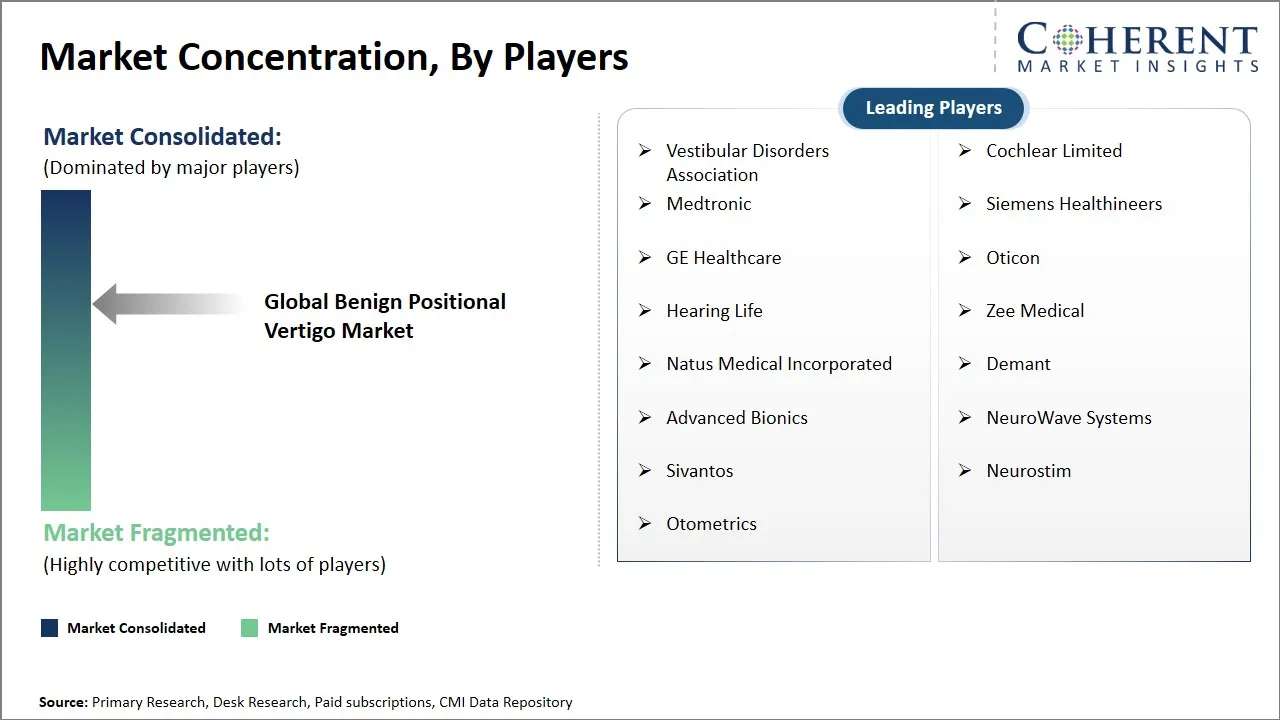
Key Developments
- On January 21, 2026, FutureCure Health, the operator of the NeuroEquilibrium network of vertigo and balance disorder clinics, raised USD 1,040 million in a funding round to scale diagnostics and rehabilitation services for vertigo patients, signaling strong investor interest in specialized vestibular care expansion.
- In November 2025, Natus Medical, a leader in neurodiagnostic and therapeutic systems, announced new collaborations with neurology research institutes to further develop advanced diagnostic and rehabilitation solutions. These strategic partnerships are expected to lead to the launch of cutting-edge products designed to improve the diagnosis and management of vertigo and balance disorders, particularly in patients suffering from Benign Positional Vertigo (BPPV).
- In September 2025, Reddy’s Laboratories completed the acquisition of the STUGERON brand from Johnson & Johnson for USD 50.5 million, expanding its anti‑vertigo portfolio across 18 markets including India and Vietnam; this strengthens its presence in the BPPV/vertigo segment by gaining access to an established branded treatment line.
Top Strategies Followed by Global Benign Positional Vertigo Market Players
Player Type | Strategic Focus | Examples |
Established Market Leaders | Established companies dominate the Benign Positional Vertigo sector by investing heavily in research and development (R&D) to innovate high-performance therapeutic and diagnostic products. They maintain technological leadership through continuous innovation and form strategic partnerships to enhance product development. | Medtronic has expanded its diagnostic portfolio with AI-powered balance assessment tools and partnered with global healthcare providers to strengthen its position in emerging markets like China and India. |
Mid-Level Players | Mid-level players in the benign positional vertigo market focus on providing cost-effective solutions that balance quality and affordability, targeting price-sensitive consumers and healthcare providers in developing economies. | TympaHealth offers affordable ear and balance diagnostics and has partnered with local distributors to expand access to its products in emerging markets, making BPV management more accessible. |
Small-Scale Players | Small-scale players in the benign positional vertigo market focus on niche opportunities by developing specialized products with unique features, such as digital diagnostics or wearable devices. They often form localized partnerships to enhance market entry and visibility in targeted regions. | NeuroEquilibrium has developed a portable diagnostic tool for vertigo, targeting smaller healthcare settings in India. The company partners with regional manufacturers to expand its reach and provide affordable, innovative solutions to local markets. |
Market Report Scope
Benign Positional Vertigo Market Report Coverage
| Report Coverage | Details | ||
|---|---|---|---|
| Base Year: | 2025 | Market Size in 2026: | USD 2.01 Bn |
| Historical Data for: | 2020 To 2024 | Forecast Period: | 2026 To 2033 |
| Forecast Period 2026 to 2033 CAGR: | 5.7% | 2033 Value Projection: | USD 2.96 Bn |
| Geographies covered: |
| ||
| Segments covered: |
| ||
| Companies covered: | Vestibular Disorders Association, Cochlear Limited, Medtronic, Siemens Healthineers, GE Healthcare, Oticon, Hearing Life, Zee Medical, Natus Medical Incorporated, Demant, Advanced Bionics, NeuroWave Systems, Sivantos, Neurostim, and Otometrics | ||
| Growth Drivers: |
| ||
| Restraints & Challenges: |
| ||
Market Dynamics
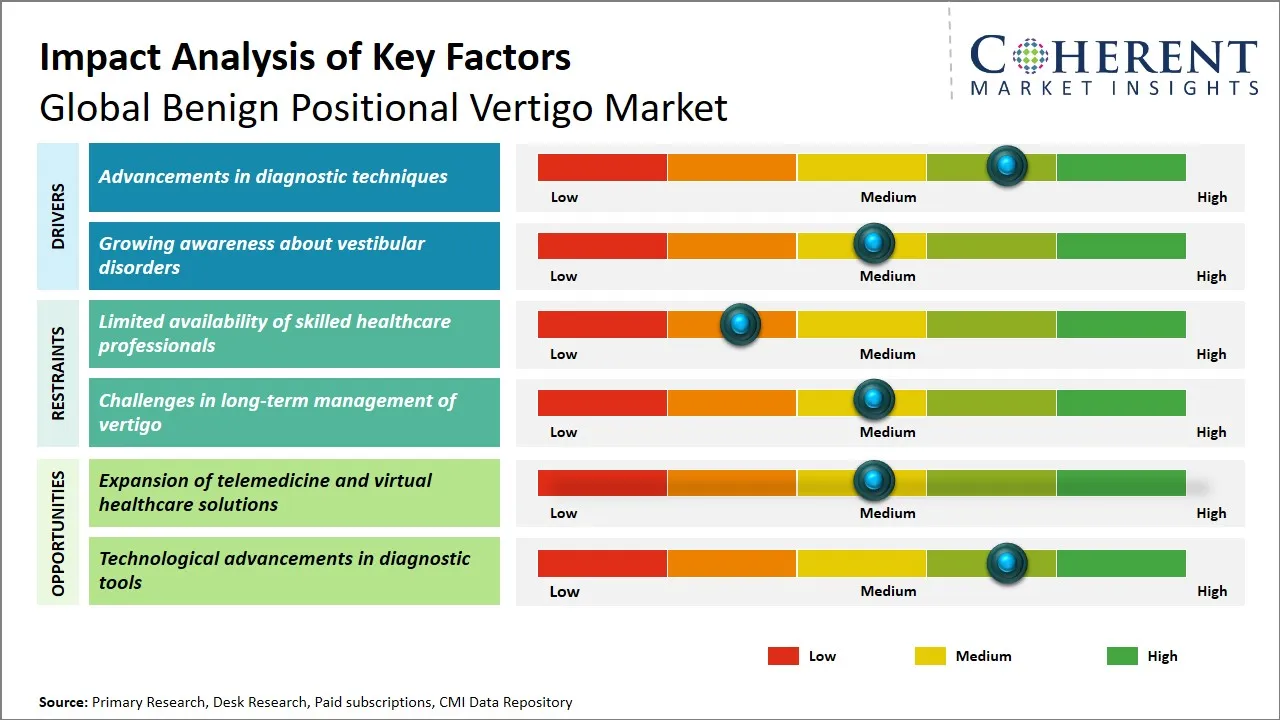
Benign Positional Vertigo Market Driver - Advancements in diagnostic techniques
The market of benign positional vertigo in the world has received a huge boost due to constant improvement in the diagnostic technology which has facilitated faster and more precise identification of the disorder. New developments, like videonystagmography (VNG), rotational chair test and better vestibular evoked myogenic potentials (VEMP), have helped clinicians to determine BPV with more accuracy. Such advanced equipment helps to evaluate the work of the vestibulus completely, reducing the possibility of misdiagnosis and providing an opportunity to determine individual treatment methods. Also, handheld diagnostic equipment, with eye-tracking and motion-sensing features has been made more accessible, which has allowed it to be used out of the standard clinical setting.
For instance, research conducted by Shuang Ho Hospital and Taiching Tzu Chi Hospital found that there were a development and testing of a machine learning model that could differentiate dangerous and benign vertigo, including Benign Positional Vertigo (BPPV), in outpatient clinical assessment. The model applies advanced algorithms in improving diagnostic accuracy in the differentiation of BPPV and other forms of vertigo, and could increase early detection and lower the incidence of misdiagnosis in clinical practice.
Benign Positional Vertigo Opportunity: Expansion of Telemedicine and Virtual Healthcare Solutions
The benign positional vertigo market also represents a great opportunity due to the fast growth of telemedicine and virtual health care services. As the internet penetration and the use of smart phones continue to rise across the globe, BPV patients are now able to receive healthcare services through remote means and therefore diagnose and control their health conditions in time without the constraints presented by geographical boundaries. Virtual consultations support early intervention since medical professionals are able to use virtual consultation to help patient’s complete symptom evaluation and prescribe correct therapeutic exercises or repositioning movements that are important to complete BPV intervention.
For instance, in June 2025, researchers at Florida Atlantic University reported the development of an AI‑driven telehealth diagnostic tool that allows patients to record eye movements on a smartphone and upload videos for remote analysis of balance and vestibular disorders, including benign positional vertigo, by specialists without in‑person visits. This innovation is enhancing access to vestibular diagnosis and enabling faster, more accurate remote care delivery.
Analyst Opinion (Expert Opinion)
- The benign positional vertigo market is characterized by fast growth; it is positively influenced by the development of diagnostic technologies and the spread of information about the existence of vestibular diseases. The accuracy and efficiency of it can be greatly enhanced with the help of technological advances like AI-assisted diagnostic tools and digital vestibular systems that in turn increase the growth of the market. Furthermore, the baby-boom generation has become elderly, and the number of problems with balance is increasing, which implies that the population demands efficient treatment methods. The regulatory support policies introduced by governments and reimbursement policies are also contributing to the expansion of the market, and telemedicine and virtual healthcare solutions offer benign positional vertigo care more accessible, particularly in underserved areas.
- However, the market has still its problems such as expensive cost of treatment and lack of awareness in certain areas. Nevertheless, there is a good prospect in expanding wearable devices usage towards remote monitoring and AI-assisted rehabilitation treatments. Conferences, such as the World Vestibular Conference and the International Conference on Neurological Disorders, have played a vital role in knowledge exchange, information on new treatment methods, and policy formulation. Some businesses, such as Medtronic and TympaHealth have gone a long way in advancing the digital diagnostics and wearable-treatment solutions in the industry further driving it towards more efficient and patient-centric care model.
Speak to the analyst
Want personalized insights?
Take the findings above to one of our principal consultants, or have the report rebuilt around the segments, geographies and competitors you actually track.
Market Segmentation
- Drug Class Insights (Revenue, USD Bn, 2021 - 2033)
- Antihistamines
- Benzodiazepines
- Anticholinergics
- Others (Antiemetics, etc.)
- Product Type Insights (Revenue, USD Bn, 2021 - 2033)
- Branded
- Generics
- Type Insights (Revenue, USD Bn, 2021 - 2033)
- Prescription (Rx)
- Over-the-counter (OTC)
- Route Of Administration Insights (Revenue, USD Bn, 2021 - 2033)
- Oral
- Others (Parenteral, etc.)
- Distribution Channel Insights (Revenue, USD Bn, 2021 - 2033)
- Hospital pharmacies
- Retail pharmacies
- Online pharmacies
- End User Insights (Revenue, USD Bn, 2021 - 2033)
- Hospitals
- Specialty clinics
- Ambulatory care centers
- Others (Homecare providers, etc.)
- Regional Insights (Revenue, USD Bn, 2021 - 2033)
- North America
- U.S.
- Canada
- Latin America
- Brazil
- Argentina
- Mexico
- Rest of Latin America
- Europe
- Germany
- U.K.
- Spain
- France
- Italy
- Russia
- Rest of Europe
- Asia Pacific
- China
- India
- Japan
- Australia
- South Korea
- ASEAN
- Rest of Asia Pacific
- Middle East
- GCC Countries
- Israel
- Rest of Middle East
- Africa
- South Africa
- North Africa
- Central Africa
- North America
- Key Players Insights
- Vestibular Disorders Association
- Cochlear Limited
- Medtronic
- Siemens Healthineers
- GE Healthcare
- Oticon
- Hearing Life
- Zee Medical
- Natus Medical Incorporated
- Demant
- Advanced Bionics
- NeuroWave Systems
- Sivantos
- Neurostim
- Otometrics
Sources
Primary Research Interviews
Industry Stakeholders List
- ENT specialists
- Neurologists
End-users List
- BPPV patients
- Healthcare providers in balance disorder clinics
Government and International Databases
- National Institute on Deafness and Other Communication Disorders (NIDCD)
- World Health Organization (WHO)
- U.S. National Library of Medicine
- National Institutes of Health (NIH)
- Centers for Disease Control and Prevention (CDC)
- European Medicines Agency (EMA)
Trade Publications
- The Lancet Neurology
- Journal of Vestibular Research
- Neurology Times
- Journal of Clinical Neuroscience
- Otolaryngology–Head and Neck Surgery
- Journal of Neuro-Ophthalmology
Academic Journals
- Journal of Vestibular Research
- Clinical Neurophysiology
- Journal of Neurology, Neurosurgery, and Psychiatry
- Journal of Clinical Neuroscience
- Frontiers in Neurology
- Archives of Otolaryngology
Reputable Newspapers
- The New York Times
- The Guardian
- The Washington Post
- The Wall Street Journal
- Reuters
- BBC News
Industry Associations
- American Academy of Otolaryngology
- Vestibular Disorders Association (VeDA)
- American Neurological Association (ANA)
- International Society for Neurotology (ISN)
- American Physical Therapy Association (APTA)
- European Academy of Neurology (EAN)
Public Domain Resources
- ClinicalTrials.gov
- U.S. National Institutes of Health
- National Health Service (NHS) UK
- World Health Organization (WHO) Global Health Observatory
- The Human Genome Project
Proprietary Elements
- CMI Data Analytics Tool: Proprietary analytics tool to analyze real-time market trends, consumer behavior, and technology adoption in market
- Proprietary CMI Existing Repository of Information for Last 8 Years
Get access to 250+ pages report
Every segment, forecast, competitor profile and data table behind the analysis above — available for instant download.
- ESOMAR Member
- ISO 9001:2015 Certified
- D-U-N-S Registered
- GDPR & CCPA Compliant
Missing comfort of reading report in your local language? Find your preferred language:
Transform your Strategy with Exclusive Trending Reports
Frequently Asked Questions
The global benign positional vertigo market is estimated to be valued at USD 2.01 Bn in 2026 and is expected to reach USD 2.96 Bn by 2033.
The CAGR of the benign positional vertigo market is projected to be 5.7% from 2026 to 2033.
Advancements in diagnostic techniques and growing awareness about vestibular disorders are the major factors driving the growth of the benign positional vertigo market.
Yes, telemedicine is positively impacting the benign positional vertigo market by increasing accessibility to remote diagnosis and treatment. AI-driven diagnostic tools and virtual consultations enable patients, especially in underserved regions, to receive timely care without the need for in-person visits, improving both convenience and early intervention.
AI is shaping the benign positional vertigo market by improving diagnostic accuracy with tools like AI-powered VNG and eye-tracking systems. These technologies enable faster diagnoses and personalized treatments. AI integration into telemedicine platforms also increases accessibility, allowing remote care and enhancing patient outcomes, driving market growth.
Limited availability of skilled healthcare professionals and challenges in long-term management of vertigo are the major factor hampering the growth of the global benign positional vertigo market.
In terms of drug class, antihistamines is estimated to dominate the market revenue share in 2026.