

Global Biomass Fuel Market Size and Forecast: 2026-2033
The global biomass fuel market is estimated to be valued at USD 54.90 Bn in 2026 and is expected to reach USD 84.20 Bn by 2033, exhibiting a compound annual growth rate (CAGR) of 6.3% from 2026 to 2033.
Key Takeaways of the Biomass Fuel Market
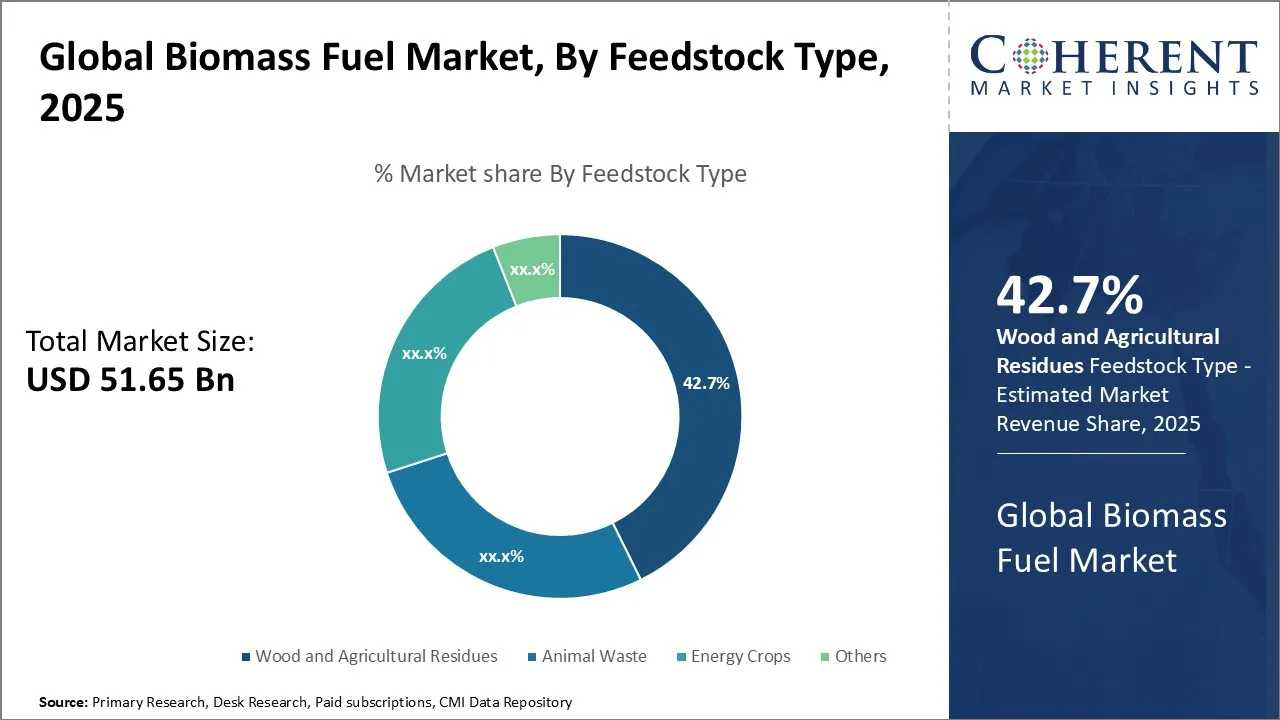
- The wood and agricultural residues segment is expected to account for 43.7% of the market share in 2026.
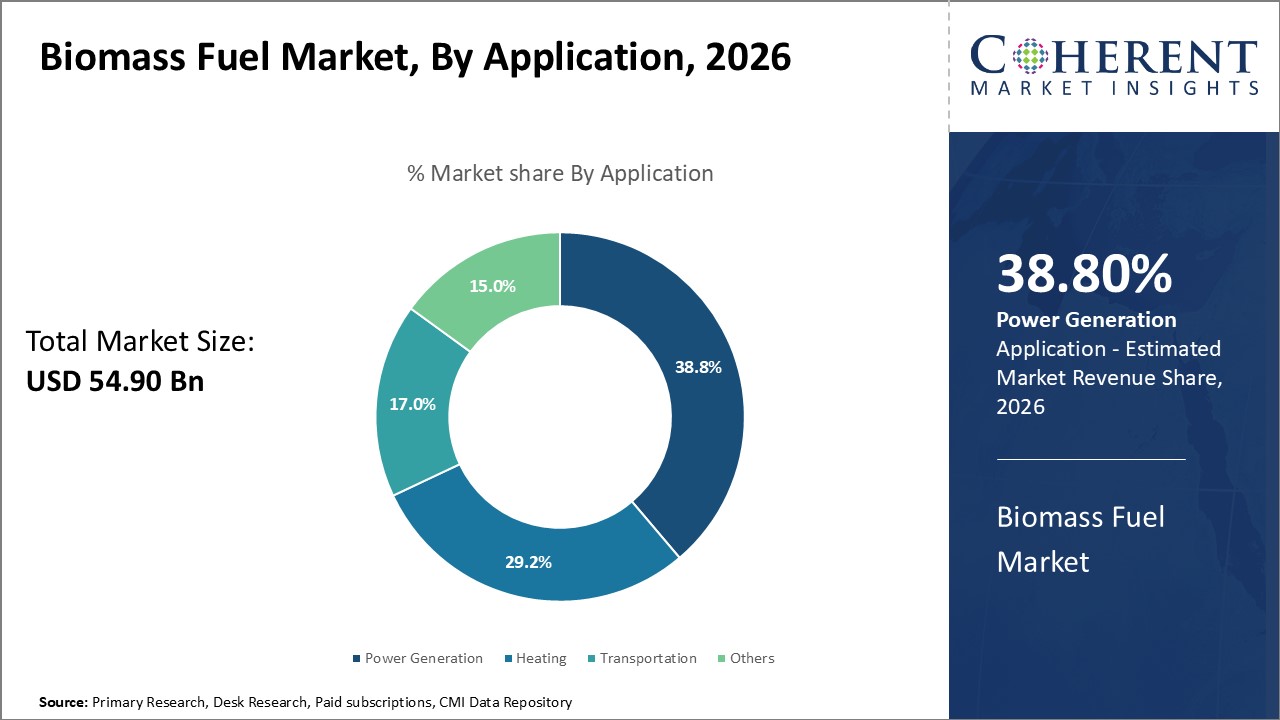
- The power generation segment is projected to hold a 38.8% share of the market in 2026.
- The residential segment is expected to account for 40.8% share of the market in 2026.
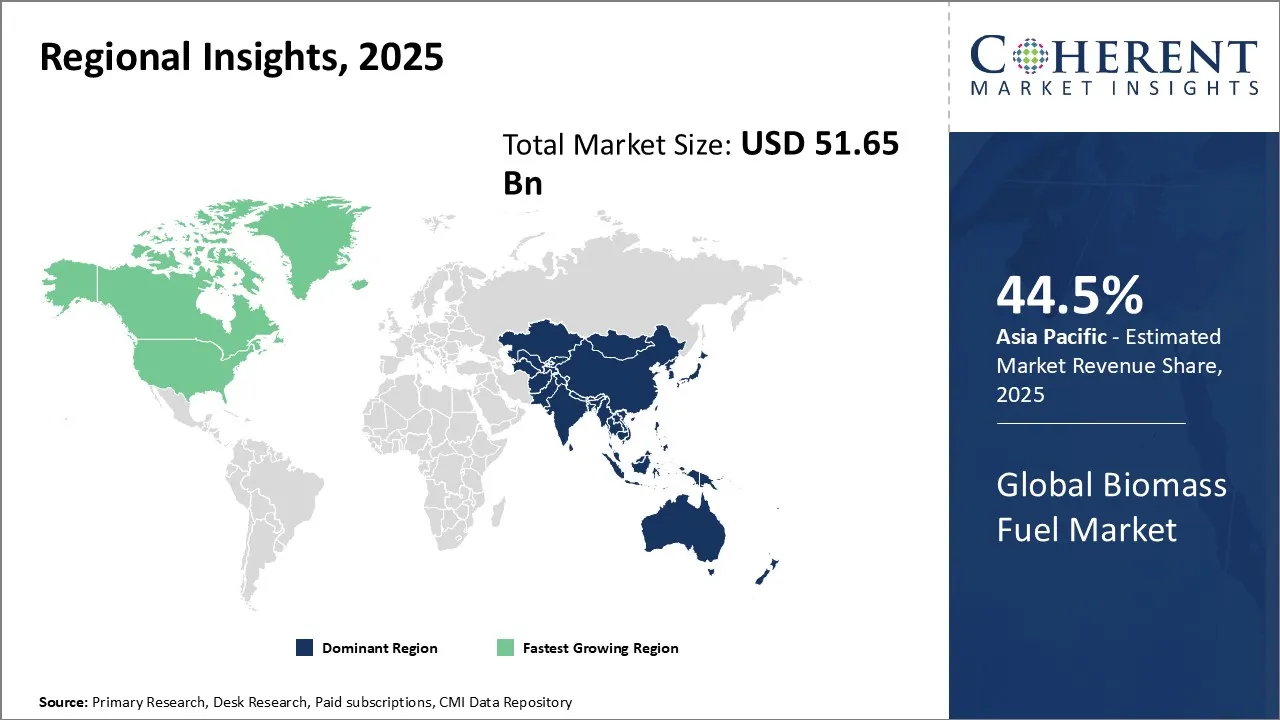
- Asia Pacific is estimated to lead the market with a share of 44.5% in 2026. North America is expected to hold a share of 22.8% share, and it is the fastest-growing region.
Market Overview
Key market trends include a significant shift toward bioenergy adoption across various industries, supported by favorable government policies and incentives promoting green energy, including carbon credit and carbon offset programs. Technological advancements in biomass conversion and enhanced the supply chain logistics, that are further propelling the market expansion. Additionally, growing environmental concerns and efforts to reduce carbon emissions continue to bolster the integration of biomass fuel in the energy mix worldwide, with carbon credit systems playing a pivotal role in encouraging sustainable practices.
Currents Events and their Impact
Current Events | Description and Its Impact |
Stricter Environmental Regulations and Renewable Energy Mandates |
|
Agricultural Waste Utilization and Circular Economy Focus |
|
Segmental Insights
- Current Industry Events of 2026
- Market Size Estimation
- Regional Breakdown
- Competitive Landscape
- Customer Intelligence
- Segmental Analysis
- Pricing Analysis
- Key Market Drivers, Challenges & Future Trends
- Customized Insights Section
Biomass Fuel Market Insights, By Feedstock Type - Wood and Agricultural Residues Segment Dominates Due to Abundant Availability and Cost-Effectiveness
Wood and agricultural residues segment is expected to hold 43.7% share in 2026, due to their widespread availability and cost-effective nature. The wood and agricultural residues represent a vast portion of biomass resources across various regions, stemming from forestry operations, agricultural harvests, and related industries. Their abundance ensures a reliable and continuous feedstock supply, which is critical for scaling the biomass fuel production. Additionally, these residues are often regarded as waste products in traditional sectors, making their utilization for biomass energy an effective means of waste management that adds value while reducing environmental impact.
In Sweden, the Värmevärden biomass power plant uses wood chips and agricultural residues as primary feedstock, helping to generate heat and electricity. This plant demonstrates the effective use of agricultural by-products and wood waste, turning what would otherwise be considered waste into a valuable energy resource. The success of this plant has helped establish a more sustainable and cost-effective biomass fuel supply chain in Sweden.
Biomass Fuel Market Insights, By Application - Power Generation Segment Dominates Due to Rising Energy Demand and Policy Support for Renewable Electricity
Power generation segment is expected to hold a share of 38.8% in 2026, due to the growing global demand for clean and renewable energy sources. As nations pursue energy security and seek to diversify away from fossil fuels, biomass-based power generation offers an attractive solution due to its ability to provide dispatchable electricity with lower greenhouse gas emissions. The biomass fuel power plants can operate continuously, unlike the intermittent renewable sources such as solar and wind, making them a dependable backbone for grid stability.
Biomass Fuel Market Insights, By End User – Residential Segment Dominates Due to Increasing Demand for Sustainable and Cost-Effective Heating Solutions
The residential segment is expected to hold 40.8% share in 2026, driven by the escalating demand for sustainable and economical heating options, especially in rural and peri-urban areas. Many households continue to rely on traditional heating fuels such as electricity and fossil fuels, which are often costly and prone to price volatility. The biomass fuels like wood pellets, agricultural residues, and other bio-based fuels offer a viable alternative that can significantly reduce heating expenses while ensuring a renewable and domestic energy supply.
Several factors promote the use of biomass fuels within residences. Growing environmental awareness among consumers has shifted preferences towards greener heating technologies to minimize carbon footprints and indoor air pollution. Biomass heating systems, such as pellet stoves and biomass boilers, have benefited from widespread technological improvements, increasing their efficiency, reliability, and ease of operation. These advancements make the biomass fuel systems more attractive for homeowners seeking long-term energy solutions.
Regional Insights
Asia Pacific Biomass Fuel Market Analysis and Trends
The Asia Pacific region is projected to lead the market with a 44.5% share in 2026, driven by escalating energy demand, increasing environmental concerns, and government initiatives to diversify energy portfolios away from fossil fuels. Rapid industrialization and urbanization in countries such as China, India, and Southeast Asian nations have generated substantial biomass feedstock from agricultural residues and forestry waste. Supportive policies, including subsidies and renewable energy mandates, are encouraging biomass power projects and co-firing initiatives in coal-based plants.
The presence of emerging domestic companies like China’s China National Petroleum Corporation (CNPC) in bioenergy and India’s Greenko Group reflect active industry participation. Moreover, trade improvements, infrastructure investments, and public-private partnerships are accelerating technology deployment, expanding biomass fuel availability, and enhancing supply chain efficiencies across the region.
North America Biomass Fuel Market Analysis and Trends
The North America region is expected to exhibit the fastest growth in the market contributing 22.8% share in 2026, driven by a combination of strong governmental support, abundant natural resources, and increasing focus on sustainability. Policies such as the Renewable Fuel Standard (RFS) in the U.S. and incentives from Canada’s Renewable Energy Strategy have fostered the growth of biomass energy. The U.S. and Canada benefit from vast agricultural and forested areas, providing a consistent supply of biomass feedstock.
Additionally, North American companies are actively investing in biomass power plants, with major players like Enviva, Green Plains, and Pinnacle Renewable Energy leading the development of bioenergy infrastructure. These companies focus on improving efficiency in biomass production, enhancing the sustainability of biofuels, and expanding production capabilities. The region’s well-established energy grid, coupled with trade agreements like the United States-Mexico-Canada Agreement (USMCA), facilitates efficient distribution of biomass energy across borders, ensuring optimized the market operations and stable pricing.
Global Biomass Fuel Market Outlook for Key Countries
Germany Biomass Fuel Market Analysis and Trends
Germany biomass fuel market is notable for its integration into the country’s ambitious Energiewende (energy transition) policy, emphasizing sustainability and greenhouse gas reductions. The government’s strong regulatory support, including feed-in tariffs and grants, encourages biomass power plants and biogas facilities. Key industry players such as Enertrag and Veolia operate multiple biomass energy projects, focusing on advanced bioenergy technologies. Germany’s extensive forestry resources and agricultural waste streams complement its technology-driven ecosystem, positioning the country as a leader in both biomass fuel production and utilization in Europe.
China Biomass Fuel Market Analysis and Trends
China continues to lead biomass fuel development in Asia Pacific with strategic government focus on renewable energy as part of its broader carbon neutrality goals. Numerous large-scale biomass power stations and pellet industries benefit from policy incentives and supportive financing. Domestic companies like CNPC and Tianjin Zhonghuan Renewable Energy are aggressively investing in biomass fuel technologies, ranging from direct combustion to bioethanol production. China’s vast feedstock availability, including crop residues and forestry by-products, combined with increasing rural electrification needs, fuels rapid expansion of biomass fuel market across the country.
U.S. Biomass Fuel Market Analysis and Trends
The U.S. exhibits a diversified biomass fuel market driven by strong agricultural output, forestry activities, and evolving renewable energy policies at federal and state levels. The U.S. focuses on bioethanol, biodiesel, and biomass power generation, supported by programs like the Renewable Fuel Standard and tax incentives. Industry leaders including POET LLC, Enviva Partners, and Drax Energy U.S. are pivotal players investing in supply chain optimization and advanced biomass conversion technologies. The presence of robust research institutions and technology innovators further promotes the biomass fuel market development, with an emphasis on sustainability and emissions reduction.
India Biomass Fuel Market Analysis and Trends
India biomass fuel market is expanding rapidly due to the abundance of agricultural residues and government efforts to promote renewable energy under initiatives like the National Bio-Energy Mission. Biomass cogeneration in sugar mills and decentralized biomass power plants are gaining traction, helped by subsidies and preferential tariffs. Companies such as Greenko Group and Thermax Ltd. are driving the market growth through technology adaptation suited for local feedstocks. India’s growing energy needs, combined with environmental policy shifts, continue to energize the biomass sector while facing challenges of feedstock collection and logistics.
Brazil Biomass Fuel Market Analysis and Trends
Brazil biomass fuel market benefits from the country’s long-standing bioenergy expertise, especially in bioethanol production derived from sugarcane bagasse. Government biofuel blending mandates and sustainability certification schemes underpin market stability and growth. Major players like Raízen and Petrobras are significant contributors, integrating biomass fuel within their diversified energy portfolios. Brazil’s favorable agro-climatic conditions, extensive agricultural sector, and export capabilities strengthen its position as a critical in Latin America biomass fuel market.
Macro Factors Impacting the Biomass Fuel Market Growth
- Government Policies & Incentives
- Supportive regulations, subsidies, and renewable portfolio standards boost investment and development in biomass fuels, making them more financially attractive compared to fossil fuels.
- Policies aimed at meeting global carbon neutrality goals and reducing greenhouse gas emissions drive demand for biomass energy.
- Environmental Concerns
- Rising awareness about climate change and the need to transition to renewable energy sources fuel the adoption of biomass fuels globally.
- Biomass is promoted as a carbon-neutral energy source, helping to lower overall emissions.
- Technological Advancements
- Innovative processing (gasification, anaerobic digestion, advanced pelleting) and integration with smart grids improve efficiency, cost-effectiveness, and reliability.
- Adoption of carbon capture and storage technologies further reduces emissions, enhancing the sustainability of biomass.
- Feedstock Availability & Supply Chain
- The availability, price, and consistency of biomass feedstock (wood, agricultural residues, municipal waste) are critical to market stability and growth.
- Regional variations: Europe leads due to stringent environmental norms; Asia-Pacific sees rapid growth thanks to abundant agricultural waste but faces supply chain challenges.
Market Players, Key Development, and Competitive Intelligence
Key Development
- In February 2025, Mazda successfully tested the use of 100% biomass fuel at its Hiroshima Plant, replacing fossil fuels with bio-coal briquettes derived from coconut shells in the cupola melting furnace. This move is part of Mazda's commitment to achieving zero emissions across its global plants by 2035, focusing on energy conservation, renewable energy adoption, and carbon-neutral fuel integration.
Top Strategies Followed by Global Biomass Fuel Market Players
- Established players, often large multinational corporations, leverage their substantial resources to drive innovation and market expansion. These companies invest heavily in research and development (R&D) to create high-performance biomass fuel products that meet stringent efficiency and environmental standards. Their R&D efforts focus on improving fuel quality, processing technologies, and sustainability measures, allowing them to maintain a technological edge. Collaborations also extend to governments and research institutions, solidifying their market presence.
- For example, Neste, a Finland-based multinational company, heavily invested in biofuel technology, particularly in the production of renewable diesel from biomass. Their approach focuses on improving fuel quality, efficiency, and environmental sustainability. This includes their Neste MY Renewable Diesel, made from waste and residues, which has a lower carbon footprint compared to traditional fossil fuels.
- Mid-level market players adopt a somewhat different strategic approach, positioning themselves as providers of cost-effective biomass fuel solutions that strike a balance between quality and affordability. Recognizing that a significant segment of the market is price-sensitive, these companies tailor their offerings to meet the demands of consumers and industries seeking economically viable alternatives to traditional fuels without compromising on essential performance standards.
- For example, Green Plains Inc., based in the U.S., specializes in the production of ethanol from biomass and shifted its strategy toward producing biomass-based renewable energy. Green Plains is particularly focused on offering lower-cost biofuels that can be used in transportation and industrial applications, targeting price-sensitive customers.
- Small-scale players in the biomass fuel market rely on agility and specialization to compete within this dynamic environment. These players often target niche segments by focusing on specialized features or innovative biomass products that address specific customer requirements, such as pelletized fuels tailored for residential heating or biofuels optimized for particular machinery. To stay competitive, small companies adopt cutting-edge technologies, including advanced biomass processing methods and digital tools for supply chain management.
- For example, Biomass Energy Europe, a specializes in small-scale biomass pellets used in agriculture and residential heating. Their strategy is to offer high-quality, eco-friendly alternatives that help rural and agricultural customers reduce heating costs, while also meeting stringent environmental regulations. The company successfully used digital tools for inventory management and customer relationship management to stay competitive in its niche market.
Market Report Scope
Biomass Fuel Market Report Coverage
| Report Coverage | Details | ||
|---|---|---|---|
| Base Year: | 2025 | Market Size in 2026: | USD 54.90 Bn |
| Historical Data for: | 2020 To 2024 | Forecast Period: | 2026 To 2033 |
| Forecast Period 2026 to 2033 CAGR: | 6.3% | 2033 Value Projection: | USD 84.20 Bn |
| Geographies covered: |
| ||
| Segments covered: |
| ||
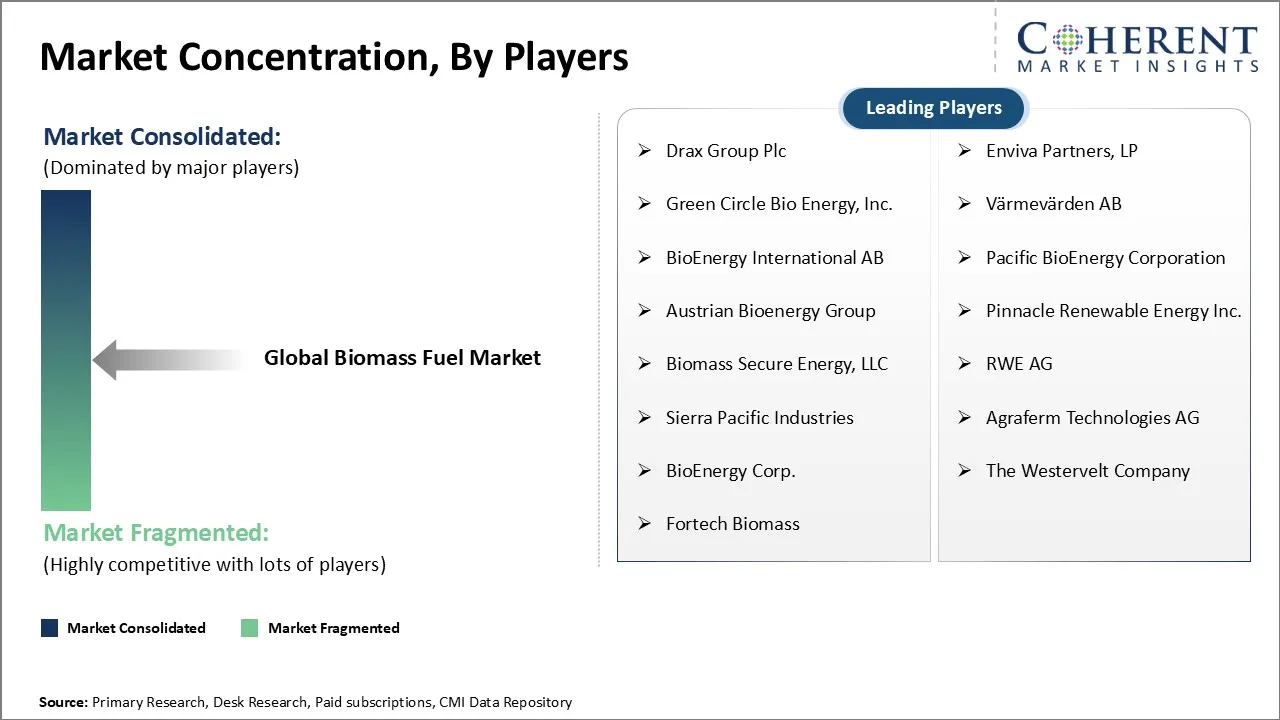
| Companies covered: | Drax Group Plc, Enviva Partners, LP, Green Circle Bio Energy, Inc., Värmevärden AB, BioEnergy International AB, Pacific BioEnergy Corporation, Austrian Bioenergy Group, Pinnacle Renewable Energy Inc., Biomass Secure Energy, LLC, RWE AG, Sierra Pacific Industries, Agraferm Technologies AG, BioEnergy Corp., The Westervelt Company, and Fortech Biomass | ||
| Growth Drivers: |
| ||
| Restraints & Challenges: |
| ||
Biomass Fuel Market Dynamics
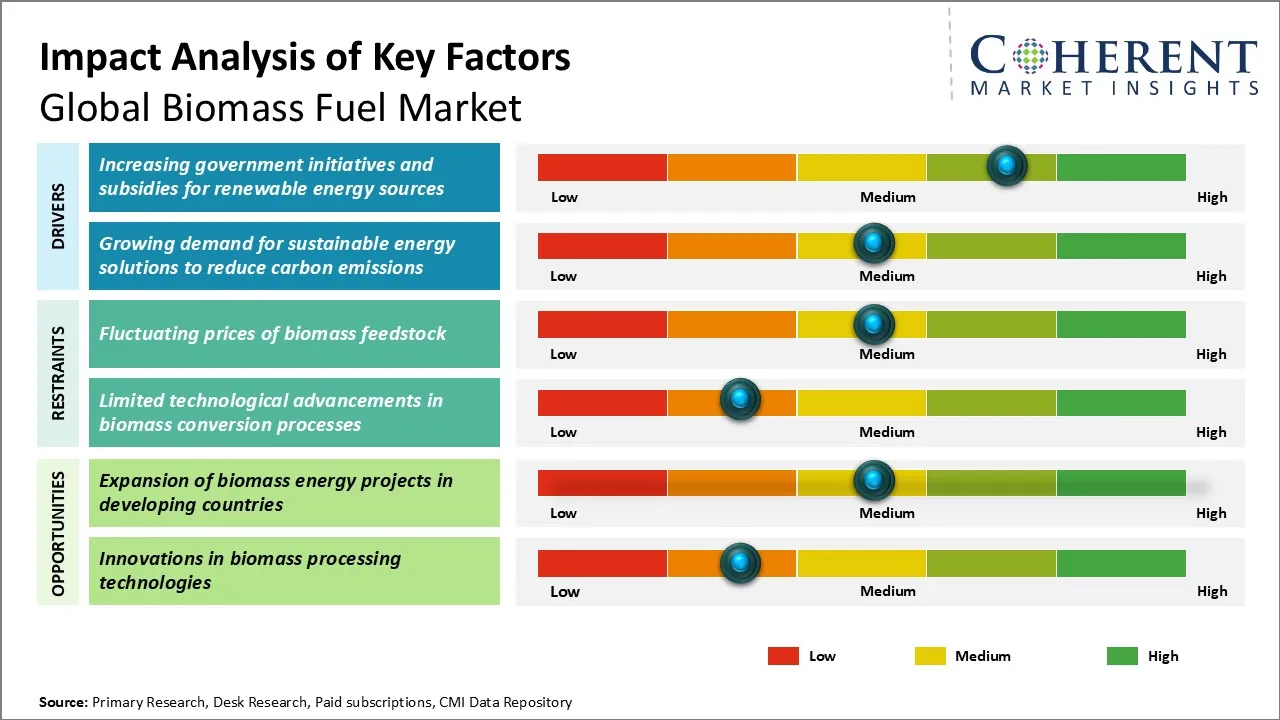
Biomass Fuel Market Driver - Increasing Government Initiatives and Subsidies for Renewable Energy Sources
One of the key drivers propelling the growth of the global biomass fuel market is the robust support from governments worldwide through various initiatives and subsidies aimed at promoting renewable energy sources. Governments are increasingly recognizing the environmental and economic benefits of biomass fuels as part of their commitments to reduce carbon emissions and achieve sustainable energy goals. To encourage adoption, many countries have introduced favorable policies such as tax incentives, grants, and feed-in tariffs specifically targeted at biomass energy projects.
For instance, Germany offers financial support through its Renewable Energy Sources Act (EEG), which provides feed-in tariffs and investment grants for biomass-based energy generation. Similarly, the UK's Renewable Heat Incentive (RHI) program offers subsidies to businesses and homeowners who use biomass for heating, thus incentivizing the use of renewable fuels and significantly contributing to the market's growth.
Biomass Fuel Market Opportunity - Expansion of Biomass Energy Projects in Developing Countries
The growing emphasis on sustainable energy solutions in developing countries presents a significant opportunity for the global biomass fuel market. Many developing nations are actively seeking to diversify their energy mix to reduce dependency on fossil fuels, improve energy security, and address environmental concerns. Biomass energy, derived from organic materials such as agricultural residues, forestry waste, and organic municipal waste, offers a viable and cost-effective renewable energy source tailored to the unique resource availability in these regions.
For example, Indian government's National Bioenergy Program, which aims to promote biomass as a key component of India’s renewable energy strategy. The program provides financial support through subsidies and incentives for small-scale biomass power plants, especially in rural areas where agricultural residues are abundant. India has also set a target to achieve 10,000 MW of biomass power generation capacity by 2022.
Analyst Opinion (Expert Opinion)
- The global biomass fuel market is witnessing robust growth, propelled by the escalating need for renewable energy sources amid rising environmental concerns. Insights from the World Biomass Energy Conference (2023) and the International Biomass Conference (2022) revealed significant innovations, with companies like Enviva and Drax Group leading the way in advanced biomass production techniques.
- Enviva's recent investment in expanding its pellet production capacity underscores the increasing demand for sustainable heating solutions, particularly in Europe and North America. Discussions at these conferences highlighted the importance of improving feedstock supply chains and addressing sustainability certifications, which are critical for gaining consumer trust.
- The challenges such as regulatory hurdles and competition from other renewable sources, like solar and wind, were noted as potential barriers to market expansion. Companies that focus on enhancing the efficiency of biomass conversion technologies and develop strategic partnerships for sustainable sourcing will be better positioned to thrive. Ultimately, the future of the biomass fuel market will depend on its ability to navigate these challenges while meeting the growing demand for cleaner energy alternatives.
Speak to the analyst
Want personalized insights?
Take the findings above to one of our principal consultants, or have the report rebuilt around the segments, geographies and competitors you actually track.
Market Segmentation
- Feedstock Type Insights (Revenue, USD Bn, 2021 - 2033)
- Wood and Agricultural Residues
- Animal Waste
- Energy Crops
- Others
- Application Insights (Revenue, USD Bn, 2021 - 2033)
- Power Generation
- Heating
- Transportation
- Others
- End User Insights (Revenue, USD Bn, 2021 - 2033)
- Residential
- Commercial
- Industrial
- Utilities
- Technology Insights (Revenue, USD Bn, 2021 - 2033)
- Combustion
- Gasification
- Anaerobic Digestion
- Others
- Regional Insights (Revenue, USD Bn, 2021 - 2033)
- North America
- U.S.
- Canada
- Latin America
- Brazil
- Argentina
- Mexico
- Rest of Latin America
- Europe
- Germany
- U.K.
- Spain
- France
- Italy
- Russia
- Rest of Europe
- Asia Pacific
- China
- India
- Japan
- Australia
- South Korea
- ASEAN
- Rest of Asia Pacific
- Middle East
- GCC Countries
- Israel
- Rest of Middle East
- Africa
- South Africa
- North Africa
- Central Africa
- North America
- Key Players Insights
- Drax Group Plc
- Enviva Partners, LP
- Green Circle Bio Energy, Inc.
- Värmevärden AB
- BioEnergy International AB
- Pacific BioEnergy Corporation
- Austrian Bioenergy Group
- Pinnacle Renewable Energy Inc.
- Biomass Secure Energy, LLC
- RWE AG
- Sierra Pacific Industries
- Agraferm Technologies AG
- BioEnergy Corp.
- The Westervelt Company
- Fortech Biomass
Sources
Primary Research Interviews
- Director of Sustainability – Leading Biomass Energy Provider
- Energy Procurement Manager – Major Utility Company Focused on Renewable Energy
- Head of Product Development – Biomass Pellet Manufacturer
- R&D Manager – Biomass Conversion Technology Innovator
Stakeholders
- End-use Sectors
- Power Generation Companies using biomass energy
- Industrial Manufacturers using biomass for fuel
- Residential Heating Solutions using biomass
- Agricultural sector using biomass for energy
- Regulatory & Certification Bodies
- Renewable Energy Standards Bodies
- Environmental Certification Agencies
- National Biomass Associations
- E-commerce Platforms & Retailers
- Technology Integration Players
Databases
- UN Comtrade Database
- India Import Export (EXIM) Database
Magazines
- Renewable Energy Magazine – Market updates on biomass energy technologies
- Energy & Environmental Business – Innovations in biomass fuel and power generation
- Bioenergy Insights – Updates on biomass fuel applications and technologies
- Global Energy Business – Trends in renewable energy sources, including biomass
- The Biofuel Journal – Market insights on biofuels, including biomass
Journals
- Renewable Energy Journal – Biomass fuel applications in power generation
- Journal of Cleaner Production – Environmental impacts of biomass energy systems
- Biofuels, Bioproducts & Biorefining – Research on biomass conversion technologies
- Energy Policy Journal – Policy analysis on biomass energy adoption and regulation
- Biomass and Bioenergy – Scientific research on biomass fuels and sustainable energy
Newspapers
- The Financial Times – Market growth and investment trends in the biomass energy sector
- The Guardian – Coverage of renewable energy developments and biomass fuel usage
- Asia Pacific Energy Review – Biomass fuel consumption trends in Asia-Pacific markets
- European Energy News – Biomass regulations and energy policies in Europe
Associations
- International Biomass Energy Association (IBEA)
- European Biomass Association (AEBIOM)
- Bioenergy Europe
- American Biomass Energy Association (ABEA)
- Biomass Power Association (BPA)
Public Domain Sources
- U.S. Department of Energy (DOE) – Biomass program and renewable energy guidelines
- European Commission – Renewable Energy Directive – Policies on biomass energy utilization
- International Renewable Energy Agency (IRENA) – Biomass energy insights and adoption strategies
- OECD – Biomass and Renewable Energy Reports – Biomass energy reports and sustainability studies
- International Energy Agency (IEA) – Market data and policy reports on biomass fuel
Proprietary Elements
- CMI Data Analytics Tool, Proprietary CMI Existing Repository of information for last 8 years.
Get access to 250+ pages report
Every segment, forecast, competitor profile and data table behind the analysis above — available for instant download.
- ESOMAR Member
- ISO 9001:2015 Certified
- D-U-N-S Registered
- GDPR & CCPA Compliant
Missing comfort of reading report in your local language? Find your preferred language:
Transform your Strategy with Exclusive Trending Reports
Frequently Asked Questions
The global biomass fuel market is estimated to be valued at USD 54.90 Bn in 2026 and is expected to reach USD 84.20 Bn by 2033.
The CAGR of the global biomass fuel market is projected to be 6.3% from 2026 to 2033.
Increasing government initiatives and subsidies for renewable energy sources and growing demand for sustainable energy solutions to reduce carbon emissions are the major factors driving the growth of the global biomass fuel market.
Fluctuating prices of biomass feedstock and limited technological advancements in biomass conversion processes are the major factors hampering the growth of the global biomass fuel market.
In terms of feedstock type, the wood and agricultural residues segment is estimated to dominate the market revenue share in 2026.
Drax Group Plc, Enviva Partners, LP, Green Circle Bio Energy, Inc., Värmevärden AB, BioEnergy International AB, Pacific BioEnergy Corporation, Austrian Bioenergy Group, Pinnacle Renewable Energy Inc., Biomass Secure Energy, LLC, RWE AG, Sierra Pacific Industries, Agraferm Technologies AG, BioEnergy Corp., The Westervelt Company, and Fortech Biomass are the major players.
Asia Pacific is expected to lead the global biomass fuel market in 2026.