

Global Blood Bags Market Size and Forecast – 2026 to 2033
The Global Blood Bags Market is estimated to be valued at USD 403.8 Mn in 2026 and is expected to reach USD 687.5 Mn by 2033, exhibiting a compound annual growth rate (CAGR) of 7.9% from 2026 to 2033. This steady growth is driven by increasing demand for blood transfusions, advancements in blood storage technologies, and rising healthcare infrastructure development worldwide. The market expansion is further supported by growing awareness about blood donation and improving regulatory frameworks governing blood safety.
Key Takeaways of the Global Blood Bags Market
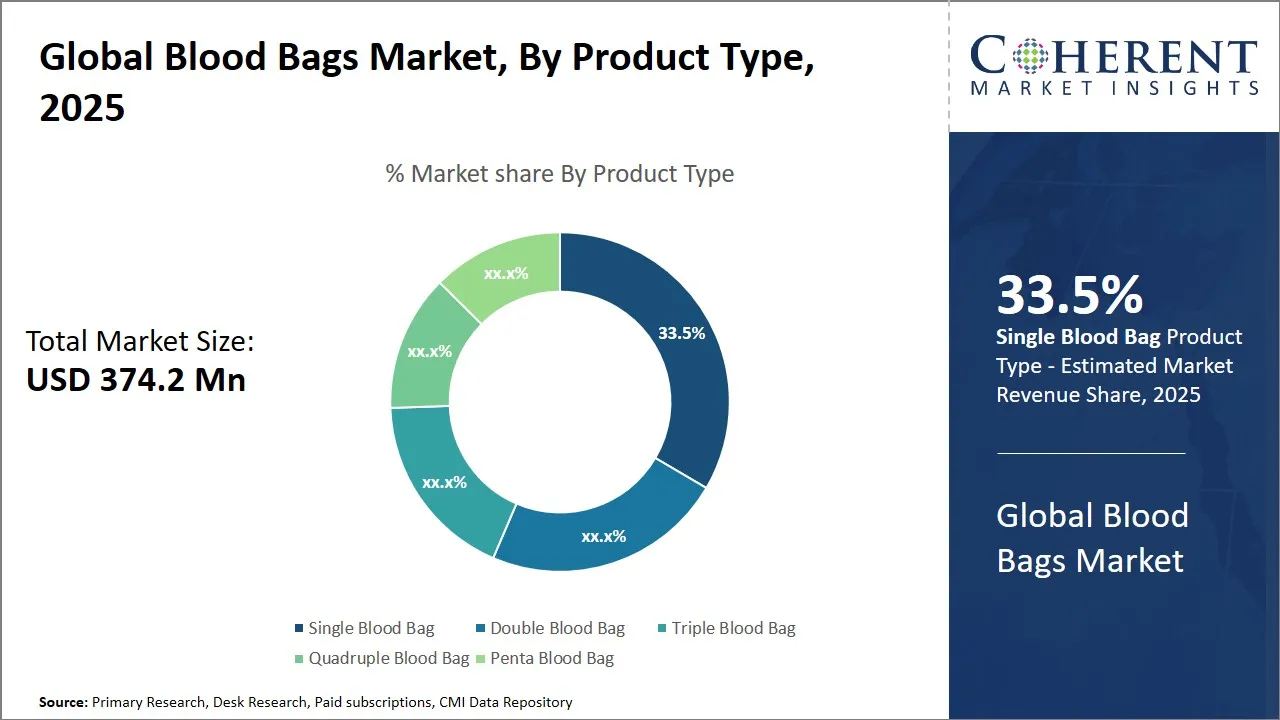
- The single blood bag segment is projected to account for 34.5% of the market share in 2026.
- The collection blood bags segment is projected to hold 69.9% of the global blood bags market share in 2026.
- The hospitals segment is expected to capture 37.9% of the market share in 2026.
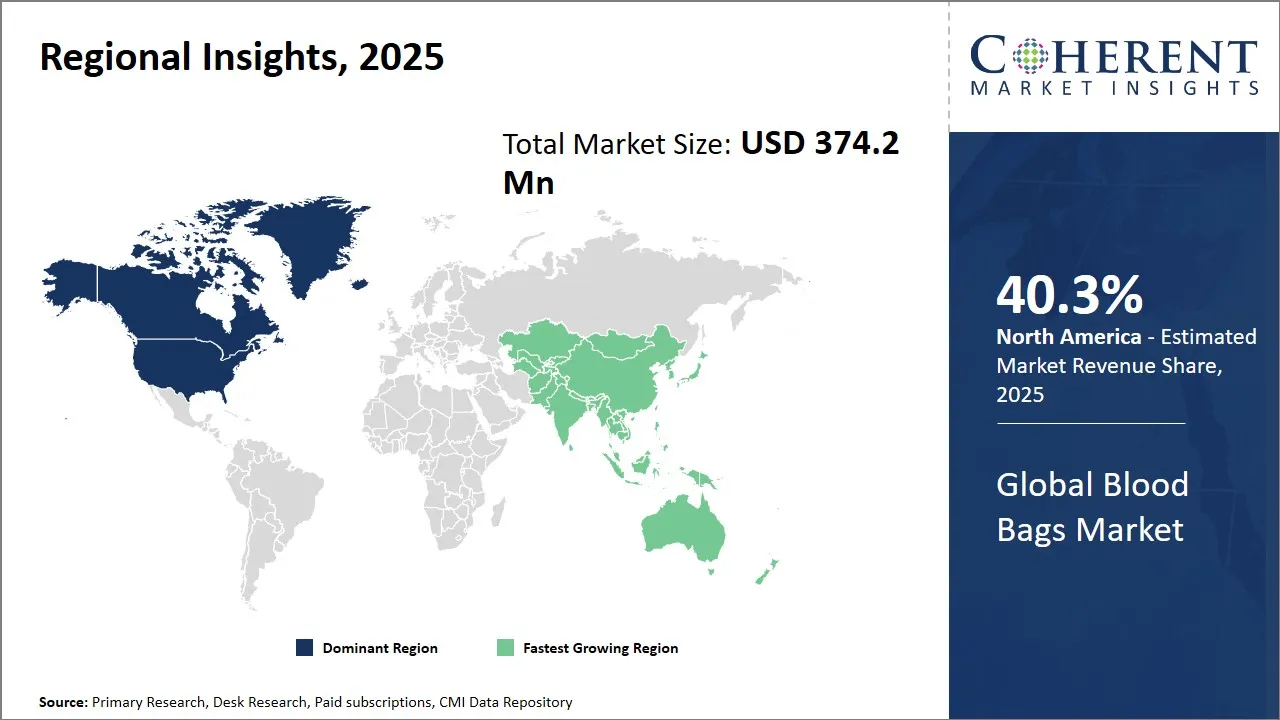
- North America is expected to lead the market, holding a share of 40.3% in 2026. Asia Pacific is anticipated to be the fastest-growing region, with a market share of 25.3% in 2026.
Market Overview
A prominent trend in the blood bags market is the shift towards the adoption of advanced and sustainable blood bag materials that reduce contamination risks and enhance storage life. Additionally, increasing investments in healthcare sectors in emerging economies are facilitating better access to blood products. There is also a growing focus on the development of multi-layered and additive-free blood bags that ensure higher biocompatibility and extended shelf life, reflecting the market's move toward safer and more efficient blood storage solutions.
Current Events and Its Impact
Current Events | Description and its Impact |
Advancements in Blood Bag Technology |
|
Expansion of Blood Donation Campaigns & Infrastructure |
|
Segmental Insights
- Current Industry Events of 2026
- Market Size Estimation
- Regional Breakdown
- Competitive Landscape
- Customer Intelligence
- Segmental Analysis
- Pricing Analysis
- Key Market Drivers, Challenges & Future Trends
- Customized Insights Section
Blood Bags Market Insights, By Product Type - Single Blood Bag Contributes the Highest Share of the Market Owing to its Broad Usability and Cost-Effectiveness
The market share of the single blood bag segment in the global blood bags market is expected to be 34.5% in 2026, due to their application in blood collection and storage procedures. Single blood bags are the simplest and most commonly used type of blood bag during blood collection which includes donating blood at various blood banks. Their design is usually such that they can take standard anticoagulants and thus are able to separate blood components when needed, thereby making them highly versatile.
For example, IBS Groupe, a leading medical device company, highlighted its single blood bag systems designed for safe blood collection, processing, and storage. These sterile, high-quality blood bags come in configurations from single to quintuple and use CPDA and CPD-SAGM solutions to extend blood storage up to 42 days. Features such as atraumatic needles, kink-resistant tubing, and tamper-evident packaging ensure patient comfort, sterility, and traceability.
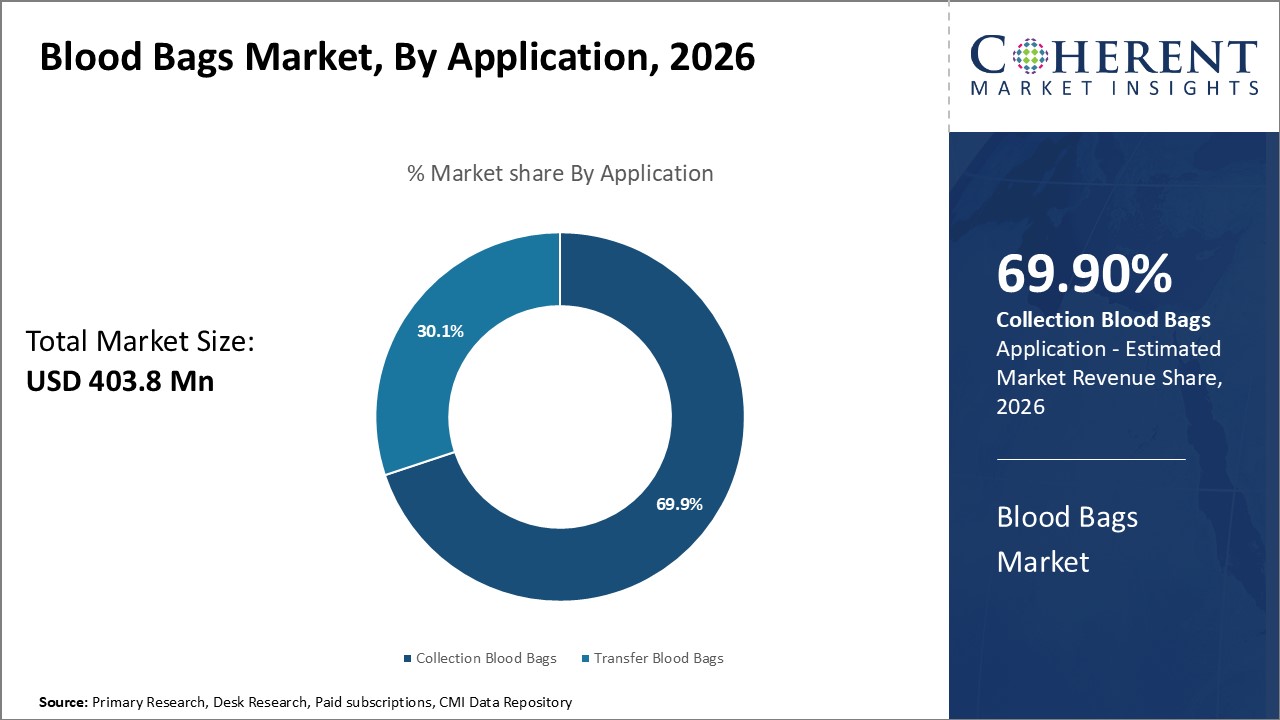
Blood Bags Market Insights, By Application - Collection Blood Bags Contribute the Highest Share due to their Critical Role in Maintaining Blood Safety and Efficacy from the Point of Donation
Collection blood bags form the first and most important step in the entire blood transfusion chain and hold an estimated 69.9% of the market share in 2026. Their main role is to hygienically collect and mix blood with an anticoagulant while preserving its components either for further processing or direct transfusion. This sector is widely used as the quality of the transfusion depends directly on the integrity of the collected blood and consequently the patient outcome.
One of the reasons that collection blood bags are an increasingly important factor for the growth of the collection blood bags market is raising awareness and improving blood donation processes worldwide. As blood transfusion services become more modern, greater emphasis has been placed on reducing the possibility of contamination during blood collection.
Blood Bags Market Insights, By End User - Hospitals Command the Highest Share Driven by their Central Role in Blood Transfusion Services and Expanding Healthcare Infrastructure
The hospitals segment is the major end user, because they are the most significant part of the healthcare service with an estimated market share of 37.9% in 2026. The segment dominates as hospitals carry out surgeries, trauma care, oncology treatments, and emergency care, all of which often require blood transfusions. Their large and diverse patient population creates a continuous demand for blood bags, especially the ones that are suitable for immediate transfusion purposes.
The growing number of surgical procedures and critical care treatments globally has significantly increased the need for consistent blood supply within hospital settings. Hospitals often maintain in-house blood banks or have close tie-ups with regional blood banks, necessitating the frequent procurement of blood bags.
Regional Insights
North America Blood Bags Market Analysis and Trends
The primary reason North America is the dominant region in the global blood bags market is its excellent healthcare facilities which contributed an estimated 40.3% of the market share in 2026, along with strict regulatory policies, and a strong blood donor network. The region is also getting a lot of government support for blood and transfusion safety improvements, for instance, the U.S. FDA’s very strict regulations on medical devices and blood storage. North America has big manufacturers like Terumo Corporation, Haemonetics Corporation, and Baxter International that are involved in the research and development of blood bags and hence the availability of high-quality products.
In October 2024, Terumo Blood and Cell Technologies, a global leader in blood management, launched the Reveos Automated Blood Processing System in the U.S. This system processes up to four whole blood units at once, separating them into platelets, plasma, and red blood cells in a single step, improving efficiency and platelet supply for blood centers. Blood Centers of America and Carter BloodCare in Texas are among the early adopters using Reveos to enhance blood processing with better efficiency and traceability for blood bags and components.
Asia Pacific Blood Bags Market Analysis and Trends
The Asia Pacific region is the fastest-growing region in the blood bags market with an estimated 25.3% of the market share in 2026, driven by increasing healthcare spending, rising awareness about blood safety, and expanding healthcare infrastructure. The major economies of the region like China, India, and South Korea are seeing big investments in medical devices manufacturing and distribution networks.
On the other hand, government policies that make healthcare more affordable and programs to improve blood transfusion services in rural areas are opening up markets for blood bags. What's more, along with the local companies, that are just coming up, global players like Terumo and Retractable Technologies are making their presence felt through tie-ups and joint ventures which means that the service is becoming more reachable and there is a transfer of technology.
Global Blood Bags Market Outlook for Key Countries
U.S. Blood Bags Market Analysis and Trends
One of the reasons why the blood bags market in the U.S. is thriving is due to the sophisticated healthcare infrastructure, the dictatorial regulatory environment, and an industry that is always innovating. Companies like Haemonetics and Terumo lead the market by continuously introducing advanced blood bag technologies such as leukocyte reduction and pathogen inactivation systems, thus keeping the market strong. The market is backed by solid blood donation networks and extensive government funding.
For example, Macopharma launched its U.S. FDA NDA-approved dual-needle cord blood collection bag in the U.S. With over 15 years of experience in Europe and worldwide, Macopharma aims to enhance the U.S. cord blood collection process. The innovative collection kits feature a 12G needle, volume graduations, and a CPD rinsing pouch, making them suitable for C-section deliveries.
Germany Blood Bags Market Analysis and Trends
The blood bags market in Germany is supported by a strong healthcare system that includes strict quality control and regulatory oversight by the Federal Institute for Drugs and Medical Devices (BfArM). Besides that, the country also has major suppliers such as Fresenius Kabi and Cerus Corporation, who contribute to the development of blood bag technology. The awareness about blood diseases and an ever-increasing elderly population are factors that raise the need for blood products and transfusions.
In August 2023, Fresenius Kabi announced the successful development of a novel blood bag system, which includes a red cell storage bag made of PVC/BTHC (butyryl trihexyl citrate) material, as an alternative to the traditional DEHP-based system.
China Blood Bags Market Analysis and Trends
In the Asia Pacific region, China is the largest market in terms of blood bags and it continues to be so due to the government’s strong commitment in various national health programs aimed at improving blood safety and infrastructure. This has encouraged companies like Terumo and Beijing Kangkang Shenghua Medical Instrument Co. to boost their operations so as to cater to the increased demand.
The country’s huge population and excellent manufacturing capabilities are also a reason for the quick adoption of modern blood bags. Moreover, China is also upgrading its blood transfusion system which will be in line with international standards.
In June 2026, Taiwan announced plans to begin domestic production of blood bags, a critical component for battlefield medical preparedness. This move is part of a broader strategy by President Lai Ching-te to bolster national security and reduce reliance on Chinese imports.
India Blood Bags Market Analysis and Trends
The increase in blood bag demand in India is mainly due to the growing support from the government towards blood donation drives and healthcare access improvements in rural areas. The Drugs Controller General of India (DCGI) plays an active role in regulating the safety and quality of blood bags in the country. The home-grown companies such as Hindustan Syringes & Medical Devices as well as the international names like Terumo are all participating actively in the market by ramping up their production capabilities and introducing lower-priced products to penetrate the emerging market.
In May 2023, the Indian Council of Medical Research (ICMR) successfully conducted a trial run for delivering blood bags by drones under its iDrone initiative. This marks the first time in India that blood bags have been delivered via drones, as part of a groundbreaking study in collaboration with Lady Hardinge Medical College (LHMC), Government Institute of Medical Sciences (GIMS), Greater Noida, and Jaypee Institute of Information Technology (JIIT), Noida.
End User Feedback and Unmet Needs – Global Blood Bags Market
- Healthcare advanced blood bag features, such as leak-proof seals and barcode tracking systems, are generally liked by the providers because they give safety and efficiency. A case in point is that the European hospitals referred to the integrated tracking system as an important point in minimizing the human error. Nonetheless, the expensive specialized blood bags like the ones with pathogen reduction technology are still a big concern, and they also limit the use of such products in the budget-constrained areas.
- Unmet needs involve the non-existence of blood bags that can be adjusted according to the users’ demands, e.g. children, and high-quality options that are affordable. The proposals that are based on the comprehension of these gaps through the provision of more affordable and custom-made solutions might lead to the opening up of new channels for growth and enhanced customer loyalty, particularly in smaller healthcare facilities.
Market Players, Key Developments, and Competitive Intelligence
Key Developments
- In February 2025, Oneject, a leading Indonesian medical device manufacturer, launched the OneBag Blood Bag and Oneject Hemodialysis Machine, marking the first domestically produced blood bags and hemodialysis machines in the country. The event was attended by Indonesia’s Minister of Health, Bapak Budi Gunawan Sadikin, and former Vice President Bapak Jusuf Kalla. Oneject's fully automated production line, backed by expertise from Japan and Germany, will produce up to 5 million blood bags and 1,500 hemodialysis machines annually.
- In December 2023, India unveiled a novel blood bag technology at the Global Bio-India 2023 event, developed by biotech startups to reduce the nation's reliance on imported medical supplies. This innovation is expected to enhance the self-sufficiency of India's healthcare sector and contribute to the growth of the domestic biotech industry.
- In February 2025, Indonesia’s health department revealed the commencement of local production of blood bags and hemodialysis machines to enhance the national healthcare system and reduce dependence on imports.
- In March 2023, scientists at the Institute for Stem Cell Biology and Regenerative Medicine (inStem) developed an innovative blood bag utilizing special polymers that capture damage-associated molecular patterns (DAMPs), extending the blood’s shelf life to 51 days while ensuring high transfusion quality.
Top Strategies Followed by Global Blood Bags Market Players
- The companies that are already in the market lead are bearing the brunt of the costs that come with doing scientific research and development (R&D) as a means to innovate and make new products which would be high-performance but would also meet the high quality and safety standards that are in place. The businesses are concentrating their efforts on the blood storage solutions that are technologically advanced and thus, would be able to provide a longer shelf life, better compatibility, and easier usage for healthcare providers.
- Grifols and Fresenius Kabi are prominent examples of established players in the blood bags market. Grifols, known for its PlasmaSafe blood bags, has led the way in developing advanced blood storage solutions with extended shelf life and improved patient safety features. These companies invest heavily in R&D to maintain their dominant position by focusing on high-performance products that meet the increasing demand for safe and long-lasting blood storage.
- The companies that are in the blood bags market are in the middle category follow a basic strategy that revolves around providing strikingly quality-driven products that are cost-effective and thus, the price-sensitive groups, mainly in the third-world countries where the purchasing decisions are greatly influenced by the budget restrictions. These companies aim to give reasonable prices and at the same time, provide reliable product features creating value propositions that set them apart from both the high-end and low-cost competitors.
- Revac and JMS Co., Ltd. are examples of mid-level players that provide cost-effective solutions while still focusing on quality. Revac, based in India, manufactures blood bags that are more affordable than the high-end solutions provided by the likes of Grifols or Terumo, yet they still maintain international certifications for safety and performance.
- The small-scale actors in the global blood bags market create their own special niches by emphasizing product features that are different or using technologies that are superior and are not noticed by big competitors. Such firms usually are the first to make new innovations like reducing the number of pathogens, using eco-friendly materials, or making specially designed bags for specific medical uses.
- Biosafe and Pall Corporation are small-scale players that differentiate themselves by focusing on niche applications and innovations. Biosafe offers Safe-T-Tube, an advanced blood collection and transport system designed to protect blood samples from contamination and enhance safety during storage.
Market Report Scope
Blood Bags Market Report Coverage
| Report Coverage | Details | ||
|---|---|---|---|
| Base Year: | 2025 | Market Size in 2026: | USD 403.8 Mn |
| Historical Data for: | 2020 To 2024 | Forecast Period: | 2026 To 2033 |
| Forecast Period 2026 to 2033 CAGR: | 7.9% | 2033 Value Projection: | USD 687.5 Mn |
| Geographies covered: |
| ||
| Segments covered: |
| ||
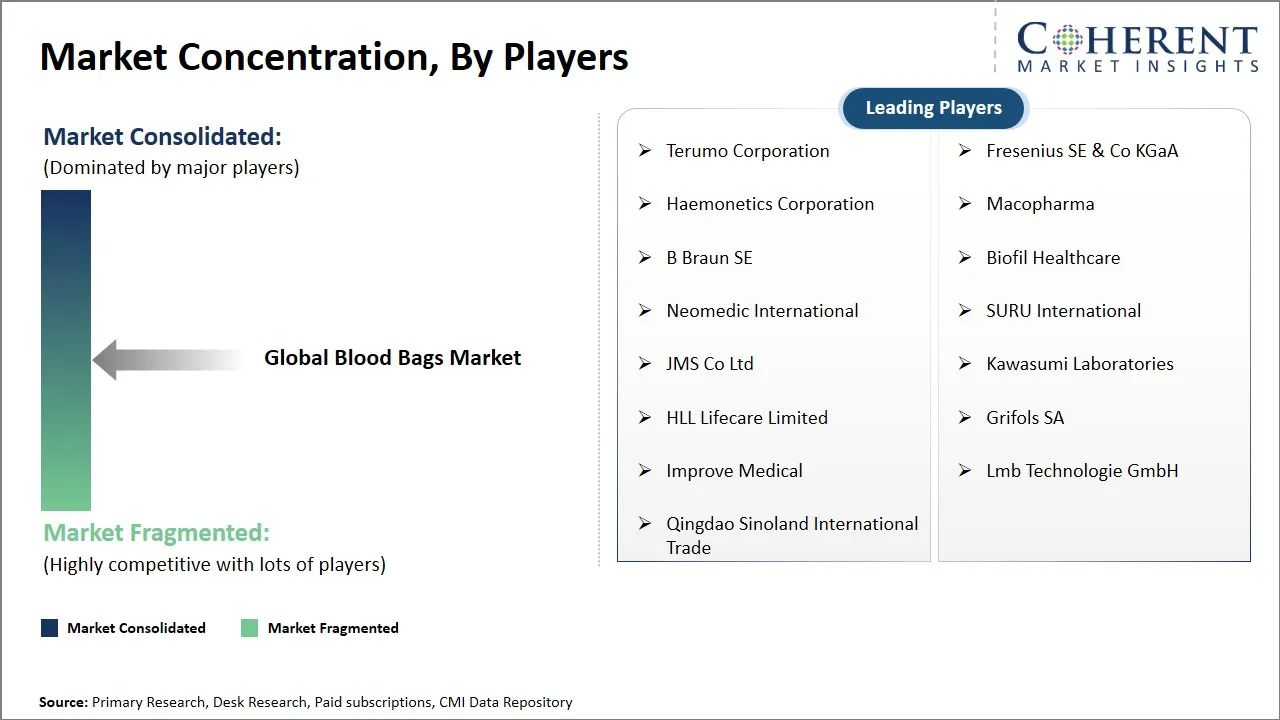
| Companies covered: | Terumo Corporation, Fresenius SE & Co KGaA, Haemonetics Corporation, Macopharma, B Braun SE, Biofil Healthcare, Neomedic International, SURU International, JMS Co Ltd, Kawasumi Laboratories, HLL Lifecare Limited, Grifols SA, Improve Medical, Lmb Technologie GmbH, and Qingdao Sinoland International Trade | ||
| Growth Drivers: |
| ||
| Restraints & Challenges: |
| ||
Blood Bags Market Dynamics
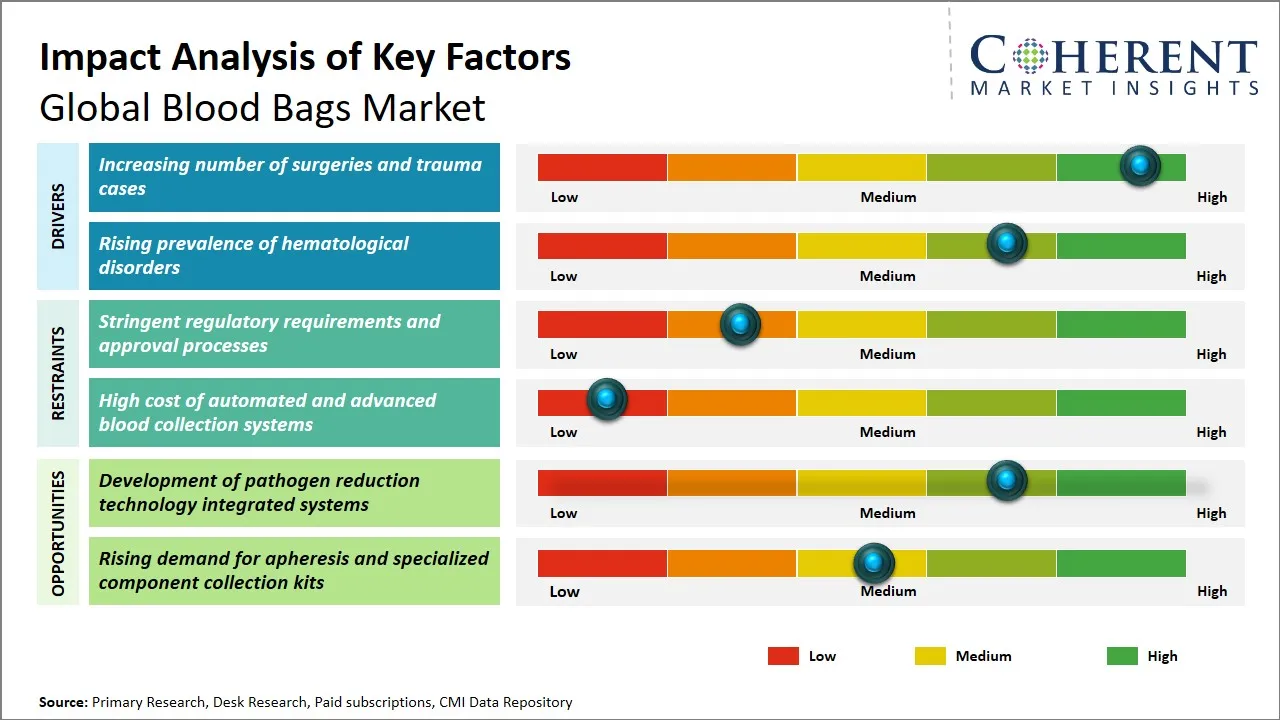
Blood Bags Market Driver - Increasing Number of Surgeries and Trauma Cases
The increased global number of operations and traumas is one of the most important aspects that are driving the demand for blood bags in hospitals and other healthcare facilities. The surgical practices are made more sophisticated and thus more and more people especially in the low-income areas are getting the chance to have the surgery performed by trained professionals, and hence the hospitals and clinics have the need for a constant supply of blood and blood products for transfusion. Besides, the rise in the number of accidents, road traffic injuries, and other trauma cases results in a great demand for blood supply that is quickly replaced through efficient storage solutions. The blood bags are indispensable for the "safe" collection, "safe" keeping, and "safe" moving of blood, hence they are indirectly influencing the patients' outcomes in such critical medical situations
In April 2024, Sancheti Hospital in Pune, India hosted the Pune Trauma Operative Course (PTOC), where over 1,200 aspiring orthopedic surgeons observed 18 complex trauma surgeries performed by leading surgeons. The event provided hands-on insights into advanced surgical techniques for treating fractures and reconstructive procedures.
Moreover, in February 2025, Helsinki University Hospital (HUS) performed 91,572 surgeries, a 4% increase from the previous year. Notable growth was seen in neurosurgery, with a 32% rise in procedures, and in gastrointestinal, plastic, and cardiac surgeries.
Blood Bags Market Opportunity - Development of Pathogen Reduction Technology Integrated Systems
The use of Pathogen Reduction Technology (PRT) in the blood bag system is one of the major factors that lead to the growth of the blood bags market worldwide. It is, thus, a very positive development that takes care of the long-lasting safety issue tied to-Transfusion-Transmitted Infections (TTIs), which, even today, pose a great challenge despite the measures adopted for the screening of blood. The integration of PRT technology in blood bags would give the manufacturer the chance to minimize the risk of contamination by all sorts of bacteria, viruses, and parasites during the whole processes of blood collection, storage, and transfusion.
For example, Cerus Corporation has developed the INTERCEPT Blood System, which utilizes amotosalen and ultraviolet (UV) light to inactivate pathogens in blood components. This system is widely used for platelets and plasma, offering a broad spectrum of pathogen inactivation and extended shelf life for treated blood products.
Analyst Opinion (Expert Opinion)
- The blood bags market is witnessing a phenomenal growth phase and this has been supported through technological advancements regulatory backings alongside the rising world demand for blood products as the foremost factor driving the market. With the use of blood bags made of advanced quality materials, technology for anti-coagulation has improved, and sterilization techniques have improved; all these have made blood safe during storage and transportation.
- There is also the provision of regulatory frameworks that support the U.S. FDA and WHO which in turn encourages the development of blood bag designs that meet safety standards globally. As the healthcare infrastructure is developing in emerging markets, the demand for blood bags will consequently increase market opportunities.
- Nonetheless, the supply chain disruptions and the call for environmentally friendly substitutes for the PVC-based bags are the main challenge remaining. Events like the International Society of Blood Transfusion (ISBT) congress and the AABB Annual Meeting that bring together global blood-related organizations have proven to be important for the industry. They have provided a platform for knowledge dissemination and sharing of ideas on innovations and policies. The case of blood donation programs that have been on the increase through state-backed initiatives in places like Asia Pacific and Europe is one of the future growth drivers.
Speak to the analyst
Want personalized insights?
Take the findings above to one of our principal consultants, or have the report rebuilt around the segments, geographies and competitors you actually track.
Market Segmentation
- Product Type Insights (Revenue, USD Mn, 2021 - 2033)
- Single Blood Bag
- Double Blood Bag
- Triple Blood Bag
- Quadruple Blood Bag
- Penta Blood Bag
- Application Insights (Revenue, USD Mn, 2021 - 2033)
- Collection Blood Bags
- Transfer Blood Bags
- End User Insights (Revenue, USD Mn, 2021 - 2033)
- Hospitals
- Blood Banks
- Ambulatory Surgical Centers
- Clinics
- Non-Governmental Organizations (NGOs)
- Material Insights (Revenue, USD Mn, 2021 - 2033)
- PVC (DEHP)
- PVC (DEHP-Free)
- PET
- Other Polymers
- Volume Capacity Insights (Revenue, USD Mn, 2021 - 2033)
- 100 ml
- 150 ml
- 250 ml
- 300 ml
- 350 ml
- 400 ml
- 450 ml
- Regional Insights (Revenue, USD Mn, 2021 - 2033)
- North America
- U.S.
- Canada
- Latin America
- Brazil
- Argentina
- Mexico
- Rest of Latin America
- Europe
- Germany
- U.K.
- Spain
- France
- Italy
- Russia
- Rest of Europe
- Asia Pacific
- China
- India
- Japan
- Australia
- South Korea
- ASEAN
- Rest of Asia Pacific
- Middle East
- GCC Countries
- Israel
- Rest of Middle East
- Africa
- South Africa
- North Africa
- Central Africa
- North America
- Key Players Insights
- Terumo Corporation
- Fresenius SE & Co KGaA
- Haemonetics Corporation
- Macopharma
- B Braun SE
- Biofil Healthcare
- Neomedic International
- SURU International
- JMS Co Ltd
- Kawasumi Laboratories
- HLL Lifecare Limited
- Grifols SA
- Improve Medical
- Lmb Technologie GmbH
- Qingdao Sinoland International Trade
Sources
Primary Research Interviews
- Industry Stakeholders
- U.S. FDA's Center for Biologics Evaluation and Research (CBER)
- BloodTransfusion-Association.org
- End Users
- Hospitals and Blood Banks
- Clinical Laboratories
Government and International Databases
- U.S. Food and Drug Administration (FDA)
- World Health Organization (WHO)
- European Medicines Agency (EMA)
- Indian Council of Medical Research (ICMR)
- National Institutes of Health (NIH)
- Centers for Disease Control and Prevention (CDC)
Trade Publications
- Bio IT World
- Medical Plastics News
- Medical Design & Outsourcing
- Medical Device Network
- Medical Plastics News
- Medical Design & Outsourcing
Academic Journals
- Journal of Clinical Apheresis
- Transfusion Medicine Reviews
- Vox Sanguinis
- Transfusion
- Journal of Blood Transfusion
- Blood Transfusion
Reputable Newspapers
- The New York Times
- The Guardian
- The Washington Post
- The Times of India
- The Economic Times
- The Hindu
Industry Associations
- AABB (formerly known as the American Association of Blood Banks)
- International Society of Blood Transfusion (ISBT)
- World Health Organization (WHO)
- Indian Red Cross Society
- National Blood Transfusion Council (NBTC)
- Blood Transfusion Association
Public Domain Resources
- Google Scholar
- National Center for Biotechnology Information (NCBI)
- Open Access Journals
- ResearchGate
- arXiv
Proprietary Elements
- CMI Data Analytics Tool: Proprietary analytics tool to analyze real-time market trends, consumer behavior, and technology adoption in market
- Proprietary CMI Existing Repository of Information for Last 8 Years
Get access to 250+ pages report
Every segment, forecast, competitor profile and data table behind the analysis above — available for instant download.
- ESOMAR Member
- ISO 9001:2015 Certified
- D-U-N-S Registered
- GDPR & CCPA Compliant
Missing comfort of reading report in your local language? Find your preferred language:
Transform your Strategy with Exclusive Trending Reports
Frequently Asked Questions
The global blood bags market is estimated to be valued at USD 403.8 Mn in 2026 and is expected to reach USD 687.5 Mn by 2033.
The CAGR of the Global Blood Bags Market is projected to be 7.9% from 2026 to 2033.
Increasing number of surgeries and trauma cases and rising prevalence of hematological disorders are the major factors driving the growth of the global blood bags market.
Stringent regulatory requirements and approval processes and high cost of automated and advanced blood collection systems are the major factors hampering the growth of the global blood bags market.
In terms of product type, the single blood bag segment is estimated to dominate the market revenue share in 2026.
Blood bags are used for whole blood, plasma, and platelet collection, with specialized bags for each component.
Yes, innovations include anti-coagulation agents, improved sealing technology, and enhanced sterility features.