

Global Castor Market Size and Forecast – 2026 To 2033
The global castor market is estimated to be valued at USD 1,664.3 Mn in 2026 and is expected to reach USD 2,637.7 Mn by 2033, exhibiting a compound annual growth rate (CAGR) of 6.8% from 2026 to 2033. Market growth is supported by the expanding use of refined castor oil and derivatives in pharmaceuticals, cosmetics, lubricants, coatings, polymers, and bio-based chemicals.
Its biodegradability, lubricity, hydroxyl functionality, and suitability for chemical conversion strengthen its position as an alternative to selected petroleum-derived materials. In May 2025, scientists supported by India’s Department of Science and Technology developed an environment-friendly lubricant using surface-modified graphitic carbon nitride in castor oil, improving friction reduction and wear resistance. The development highlights the potential for technology-led expansion of castor-based formulations in machinery, automotive systems, and sustainable industrial lubrication.
Key Takeaways of the Global Castor Market
- Refined castor oil is expected to lead the global castor market with a 31.8 % share in 2026 because it is the standardized feedstock for chemical conversion and multiple end uses including lubricants, polymers, pharmaceuticals, cosmetics, and coatings. In February 2026, Jayant Agro Organic reported Year 9 progress under Pragati, strengthening sustainable castor sourcing in Gujarat, India and supply assurance for refiners.
- Industrial grade is projected to account for 52.6 % of the market share in 2026, reflecting castor oil’s value as a reactive, renewable input for engineering polymers, specialty oleochemicals, adhesives, coatings, and metalworking formulations. In July 2025, Arkema reported solid growth for its castor-derived Rilsan polyamide 11, showing commercial conversion of castor chemistry into high-performance materials for automotive, electronics, and sports applications.
- Lubricants and greases are expected to capture 24.8 % of the global castor market in 2026 because castor oil offers lubricity, viscosity performance, biodegradability, and functionality for base oils, additives, metalworking fluids, and grease thickeners. In July 2026, India’s Department of Science and Technology announced a borophene-enhanced castor-oil lubricant that reduced friction, supporting energy-efficient industrial formulations.
- Asia Pacific is expected to represent 48.7 % of the market share in 2026, supported by India’s concentrated castor cultivation, integrated crushing and derivative capacity, export infrastructure, and proximity to Asian manufacturing customers. In March 2026, the Solvent Extractors’ Association of India presented its 2025–26 crop survey alongside digital traceability and enzymatic processing initiatives, highlighting the region’s supply-chain depth.
- Europe is expected to hold 23.8 % of the market share in 2026 while expanding the fastest as manufacturers prioritize renewable carbon, traceability, and functional substitutes for petroleum-based inputs. In June 2025, Italian yarn producer, Fulgar reported that PANGAIA selected its castor-based EVO bio-based yarn for a plant-based activewear collection, illustrating commercial uptake across premium European material value chains.
- Traceable Supply Becomes a Buying Requirement: Castor buyers are moving beyond basic quality specifications toward verified farm practices, chain-of-custody documentation, lifecycle data, and auditable environmental claims. This shifts supplier selection toward processors that connect seed origin with finished-product performance. Producers investing in traceability, certification, and transparent impact measurement can secure preferred-vendor status, defend margins, reduce compliance friction, and strengthen relationships with multinational chemical and consumer-goods customers.
- Value Shifts Toward Application-Specific Derivatives: Competitive advantage is moving from bulk oil availability toward tailored molecules, specialty grades, and formulation-ready derivatives designed for precise performance needs. This will redirect investment toward purification, hydrogenation, splitting, esterification, and technical support. Suppliers that co-develop products with lubricant, polymer, coating, pharmaceutical, and personal-care customers can shorten qualification cycles, increase switching costs, and capture more value than commodity-focused exporters.
Segmental Insights
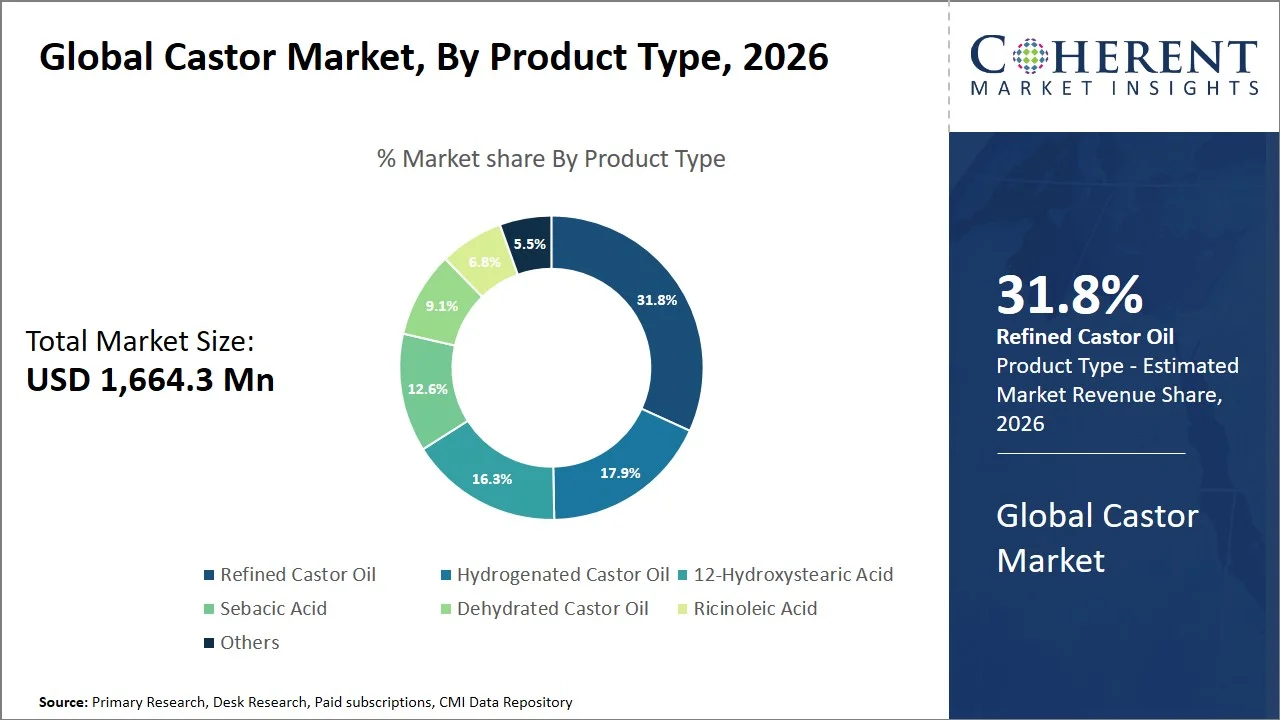
Why Does Refined Castor Oil Dominate the Global Castor Market?
Refined castor oil is expected to capture 31.8% of the global castor market in 2026 because refining converts crude oil into a consistent, low-impurity input suitable for direct formulation and further chemical conversion. Controlled acidity, moisture, color, and suspended matter help buyers qualify one material across pharmaceutical excipients, personal care products, coatings, electrical fluids, and specialty intermediates. Refiners also gain manufacturing flexibility because a common processing platform can supply pale-pressed, pharmaceutical, and industrial specifications in drums or bulk shipments, improving plant utilization and customer coverage. For suppliers, this broad usability supports recurring contracts and opportunities to cross-sell derivatives. In February 2026, Croda identified refined castor oil within its Super Refined oils and esters portfolio for oral, topical, injectable, and transdermal formulations, demonstrating how advanced purification extends the oil into tightly controlled, higher-value applications.
- Current Industry Events of 2026
- Market Size Estimation
- Regional Breakdown
- Competitive Landscape
- Customer Intelligence
- Segmental Analysis
- Pricing Analysis
- Key Market Drivers, Challenges & Future Trends
- Customized Insights Section
Why Does Industrial Grade Represent the Largest Grade in the Global Castor Market?
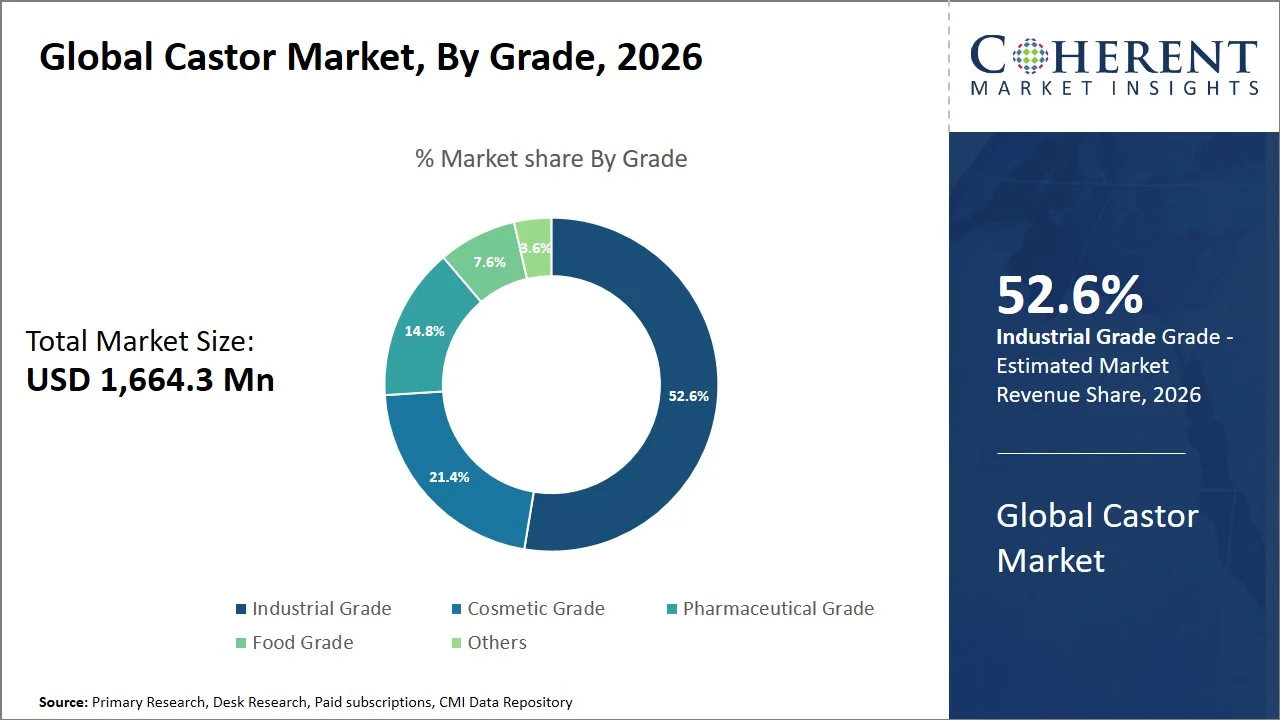
Industrial grade is projected to represent 52.6% of the global castor market in 2026 because the largest-volume buyers require functional performance and reliable bulk supply rather than the additional testing and documentation attached to cosmetic, pharmaceutical, or food grades. Its hydroxyl-rich chemistry enables conversion into polyamides, polyurethanes, plasticizers, coatings, adhesives, lubricants, and corrosion-control products. Integrated crushers and derivative manufacturers can move industrial material through tanks, drums, and long-term business-to-business contracts, lowering handling costs and aligning output with continuous manufacturing schedules. This gives processors a scalable outlet while allowing industrial customers to incorporate renewable carbon without redesigning every production step. In October 2024, RadiciGroup launched its Bionside bio-based polymer line and presented castor-seed-derived PA610 for automotive cooling connectors, ducts, pump parts, thermostat housings, and water-management components, confirming industrial castor chemistry’s relevance in demanding engineered applications.
Why Do Lubricants and Greases Dominate the Application Category of the Global Castor Market?
Lubricants and greases are expected to hold 24.8% of the global castor market in 2026 because castor oil combines high viscosity, strong surface affinity, low volatility, and inherent lubricity, making it useful as a base fluid or functional component in metalworking, hydraulic, gear, and specialty grease formulations. Chemical modification can address oxidative stability and low-temperature limitations while retaining biodegradability and film-forming performance. Demand is therefore linked to manufacturers seeking renewable formulations that reduce friction without sacrificing equipment protection. Additive developers and formulators can capture value through application-specific esterification, nanoparticle dispersion, and performance testing rather than selling untreated oil alone. In November 2024, a peer-reviewed Tribology International study reported that functionalized calcium-carbonate nanoparticles in castor oil reduced friction and wear, demonstrating a practical route for upgrading castor-based nanolubricants for more demanding machinery and industrial operating conditions.
Current Events and their Impact
Current Event | Description and Its Impact |
India Approves National Mission on Edible Oils–Oilseeds – October 2024 |
|
EU Introduces Additional Tariffs on Russian and Belarusian Castor Products – June 2025 |
|
EU Revises Pesticide-Residue Limits Covering Castor Beans – January 2026 |
|
Global Castor Market Dynamics
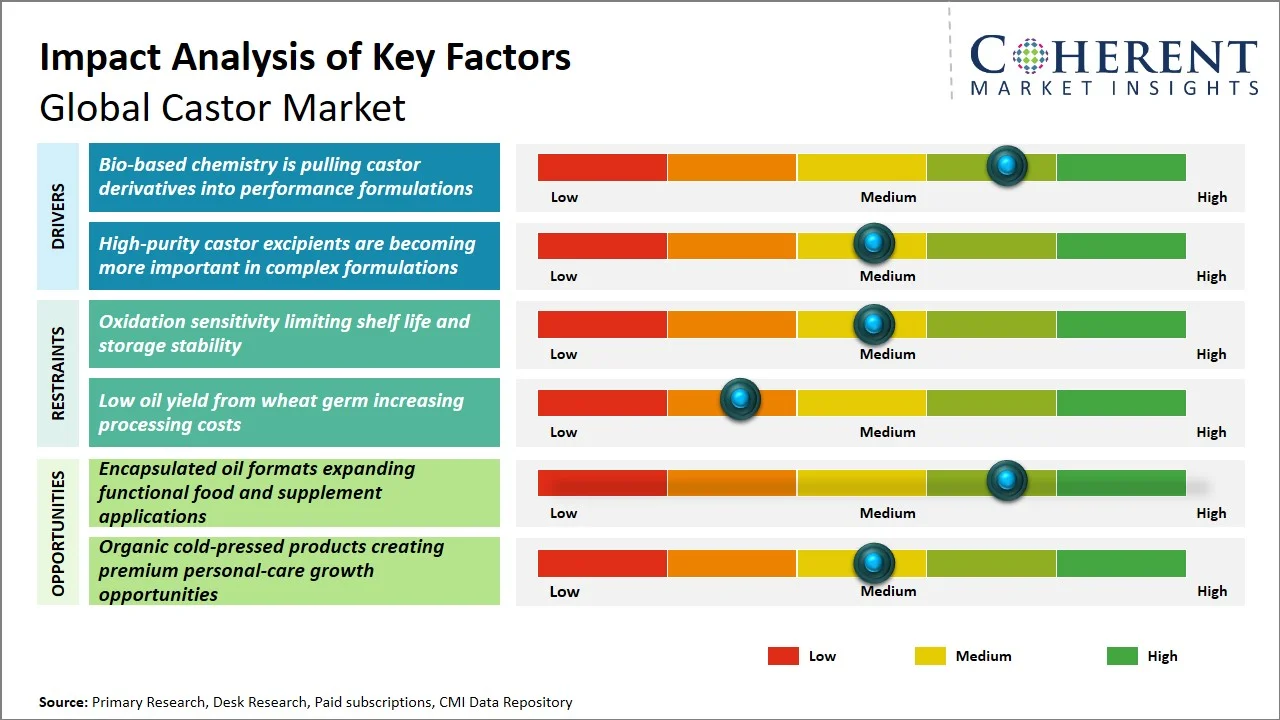
Key Market
- Bio-Based Chemistry is Pulling Castor Derivatives into Performance Formulations: Castor oil derivatives are gaining strategic value as chemical buyers seek renewable carbon without accepting lower durability, processability, or formulation stability. The oil’s hydroxyl functionality allows manufacturers to produce polyols, esters, plasticizers, coatings intermediates, and specialty resins that can replace part of the petrochemical content in established systems. This mechanism benefits refiners, derivative producers, coatings formulators, adhesive suppliers, and industrial customers with measurable sustainability targets. Commercially, the opportunity extends beyond additional volume: suppliers can earn stronger margins by documenting bio-based content, maintaining consistent specifications, and providing application support during customer qualification. In May 2025, BASF highlighted its Sovermol bio-based polyols derived from renewable materials, including castor oil, for concrete flooring, adhesives, polyurethane foams, and protective coatings, demonstrating that renewable feedstocks can serve demanding industrial formulations rather than only niche natural products.
- High-Purity Castor Excipients are Becoming More Important in Complex Formulations: Cosmetic and pharmaceutical formulators require castor oil and its ethoxylated or hydrogenated derivatives to perform as solubilizers, emulsifiers, consistency agents, lubricants, and controlled-release aids. Demand therefore shifts toward grades with tightly controlled color, acidity, peroxide levels, microbial load, residual impurities, particle size, and supporting regulatory documentation. These specifications protect sensitive active ingredients, improve batch reproducibility, and reduce reformulation risk in parenteral, oral, topical, and premium personal-care products. High-purity refiners, excipient specialists, contract manufacturers, and suppliers with validated analytical systems benefit most because qualification creates longer customer relationships and higher switching barriers. In April 2025, National Library of Medicine researchers reported that polyoxyethylene hydrogenated castor oil RH40, combined with porous starch, improved the solubility, stability, cellular uptake, and bioavailability of bisdemethoxycurcumin, reinforcing the functional importance of well-characterized castor-derived excipients in advanced delivery systems.
Emerging Market Trends
- Renewable-Carbon Accounting is Influencing Formulation Decisions: Buyers are moving beyond broad bio-based claims and requesting clear evidence of renewable-carbon content, product footprints, energy use, and sourcing methods. Castor suppliers that provide credible lifecycle data and product-level documentation will be better positioned for preferred-supplier programs and premium applications. This will make carbon-accounting capability an important part of technical service, customer qualification, and contract negotiations.
- Feedstock Volatility is Changing Procurement Models: Concentrated cultivation, weather risks, and changing crop economics can disrupt castor oil supply and pricing. Buyers are responding through longer contracts, safety stocks, multiple approved suppliers, and regional inventories. Derivative producers are also seeking flexible production systems that can adjust product mix when feedstock costs change. Suppliers with strong agricultural visibility, storage capacity, and reliable communication will gain an advantage over spot-market exporters.
Regional Insights
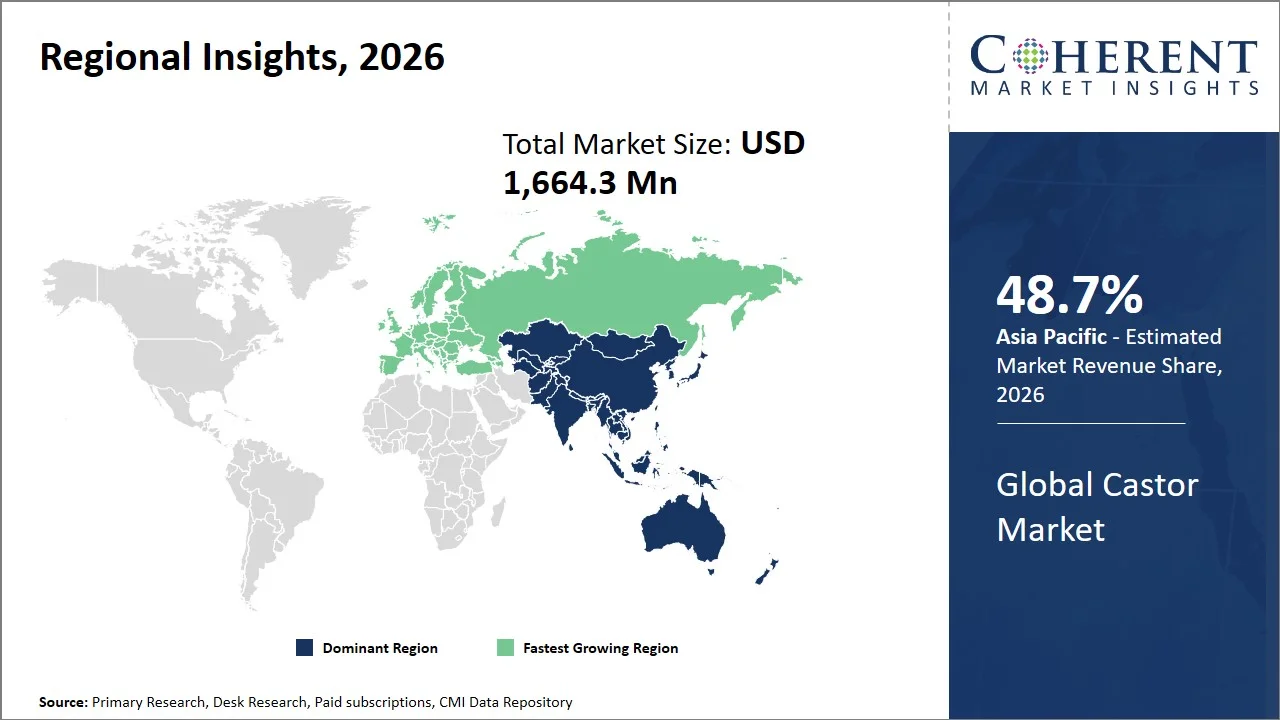
Why Does North America Dominate the Global Castor Market?
North America is expected to account for 48.7% of the global castor market in 2026 under the approved input because its demand base spans pharmaceuticals, personal care, specialty lubricants, coatings, and formulated industrial chemicals. The region has a broad network of ingredient distributors, contract manufacturers, formulation laboratories, and regulated healthcare channels that can absorb refined and high-purity grades rather than only bulk oil. Buyers also emphasize consistent specifications, safety documentation, and dependable imported supply, which favors established exporters and regional stockists. Its commercial advantage lies less in domestic cultivation and more in downstream value addition, product qualification, and high-value end-use concentration. In October 2025, DailyMed published Bionpharma’s label for a castor oil product categorized as a human OTC stimulant laxative for the temporary relief of occasional constipation.
Why is Europe Emerging as the Fastest-Growing Region in the Global Castor Market?
Europe is expected to hold 23.8% of the global castor market in 2026 and emerge as the fastest-growing region as chemical producers, cosmetics formulators, and industrial buyers substitute renewable feedstocks for selected fossil-based ingredients. Growth is supported by strict product stewardship, lifecycle assessment, traceability, and documentation requirements, which increases the value of certified castor oil and technically differentiated derivatives. European distributors also hold local inventory, manage customs compliance, and supply customers that cannot import full bulk shipments. This creates opportunities for pharmaceutical, cosmetic, and application-specific industrial grades supported by complete technical files. In February 2026, Netherlands-based Castor International identified sustainability expertise, lifecycle assessment, compliance, and supply-chain management as operating priorities, reflecting how European purchasing is shifting from simple commodity sourcing toward documented, service-supported oleochemical procurement.
Global Castor Market Outlook for Key Countries
Why is the U.S. a Key Market for the Global Castor Market?
The U.S. is a key market for castor oil because it combines large pharmaceutical, personal-care, agrochemical, metalworking, and specialty chemical industries with a strong preference for formulation-ready ingredients. Domestic customers use refined oil, hydrogenated castor oil, castor ethoxylates, ricinoleate esters, and related intermediates as emulsifiers, solubilizers, lubricants, structuring agents, and processing aids. Since the country depends substantially on imported feedstock, distributors and formulators create value through inventory availability, repacking, technical support, and compliance documentation. This structure favors suppliers able to meet repeatable specifications and serve both large industrial accounts and smaller specialty buyers. Stepan currently offers ECOSTEP CE-13, a castor-oil ethoxylate designed as a wetting agent and emulsifier for organic agricultural formulations, showing how U.S. demand extends beyond traditional pharmaceutical and cosmetic uses into higher-functionality crop-input applications.
Why is India Important in the Global Castor Market?
India is central to the global castor market because it combines the largest production base with established seed aggregation, crushing, refining, derivative manufacturing, and export infrastructure. Gujarat anchors the commercial ecosystem, enabling processors to procure seed, convert oil into hydrogenated castor oil, 12-hydroxystearic acid, sebacic acid, and other intermediates, and ship them to customers worldwide. Cost-efficient processing, technical experience, and proximity to cultivation allow Indian suppliers to compete across commodity and specialty grades. Domestic oilseed programs and crop monitoring can also improve planning for processors and exporters. In March 2026, India’s Department of Food and Public Distribution reported estimated production of 40.99 million tons across nine cultivated oilseeds for 2025–26 and identified castor among the country’s major traditionally cultivated oilseed crops, confirming the depth of India’s broader oilseed infrastructure.
Why Does China Support Growth in the Global Castor Market?
China supports growth in the global castor market through its extensive manufacturing base for coatings, plastics, resins, lubricants, textiles, personal care products, and specialty chemicals. Chinese buyers import castor oil and derivatives for conversion into hydrogenated products, surfactants, plasticizers, polymer intermediates, and formulation additives used by large domestic processing clusters. Scale in downstream manufacturing allows suppliers to serve multiple applications from the same derivative platform, while local standards formalize quality expectations for processors and industrial customers. The country’s role is therefore primarily defined by conversion capacity and consumption rather than dominance in global seed production. In December 2025, China’s national standards platform-initiated revisions of the recommended standards for castor oil and hydrogenated castor oil, indicating continued institutional attention to product specifications, testing consistency, and commercial quality control across the domestic value chain.
Why is Germany a Strategic Country in the Global Castor Market?
Germany is a strategic country in the global castor market because its automotive, coatings, adhesives, engineered plastics, lubricants, and personal-care industries purchase materials based on technical performance and documented sustainability. German manufacturers are positioned to convert castor-derived intermediates into higher-value formulations where heat resistance, elasticity, rheology control, lubricity, and renewable content influence material selection. The country’s chemical clusters, testing capabilities, research ecosystem, and export-oriented customer base also shorten the route from formulation development to industrial qualification. Suppliers entering Germany must therefore provide detailed specifications, regulatory files, lifecycle information, and reliable European distribution. LANXESS currently markets RHENOPREN Asolvan, a castor-oil material cross-linked with sulfur for rubber and latex manufacturing, demonstrating Germany’s continued use of castor chemistry in specialized industrial processing rather than only in consumer-oriented natural products.
Why is Brazil an Important Growth Market for the Global Castor Market?
Brazil is an important growth market for the global castor market because it has suitable agricultural zones, an established biofuel framework, domestic chemical demand, and potential to expand mechanized cultivation beyond traditional semi-arid production. Castor can support crop diversification in the Northeast and selected Cerrado systems while supplying oil for industrial chemicals, lubricants, polymers, and biodiesel-related value chains. The country also has agricultural research capabilities focused on higher-yielding, earlier, and disease-resistant varieties, which are essential for improving commercial economics and reducing supply variability. Growth will depend on linking improved cultivars with crushing capacity, contracted offtake, logistics, and farmer support. In May 2024, Embrapa began a castor breeding project scheduled through 2028 to develop productive cultivars suited to the Cerrado and Semi-Arid regions, strengthening the technological foundation for a larger domestic supply base.
Technology Adoption Landscape in the Global Castor Market
Technology | Adoption Level | Key Application Area | Business Impact |
Multi-Stage Neutralization, Bleaching, and Vacuum Dehydration | High | Refined, cosmetic, and pharmaceutical-grade castor oil | Improves color, acidity, moisture control, storage stability, and batch consistency, enabling suppliers to meet tighter customer specifications. |
Catalytic Hydrogenation | High | Hydrogenated castor oil, castor wax, and 12-hydroxystearic acid production | Converts liquid oil into higher-melting intermediates used in greases, coatings, cosmetics, plastics, and specialty wax formulations. |
Fatty-Acid Splitting and Vacuum Distillation | High | Ricinoleic acid and purified chemical intermediates | Separates and concentrates functional fatty acids, supporting higher-purity derivatives and broader downstream product portfolios. |
Lipase-Catalyzed Esterification and Transesterification | Medium | Specialty esters, biodegradable lubricants, surfactants, and personal-care ingredients | Offers selective reactions and lower processing temperatures but requires improvements in enzyme recovery, cycle time, and commercial-scale economics. |
Digital Batch and Chain-of-Custody Traceability | Medium | Farm-lot tracking, refinery intake, sustainable sourcing, and export documentation | Connects seed origin with finished-product batches, reducing audit risk and supporting customer sustainability and compliance requirements. |
GC, HPLC, FTIR, and Continuous Quality Analytics | High | Raw-oil inspection, derivative testing, impurity control, and product release | Accelerates quality decisions, detects specification deviations, reduces rejected batches, and supports pharmaceutical, cosmetic, and industrial qualification. |
How are Biocatalytic Conversion Platforms Creating New Growth Opportunities in the Global Castor Market?
Biocatalytic conversion represents an underdeveloped route for turning ricinoleic acid and other castor intermediates into high-value specialty esters, surfactants, aroma ingredients, pharmaceutical excipients, and biodegradable lubricant components. Enzymes can offer selective reactions at milder operating conditions, helping manufacturers reduce unwanted by-products and tailor molecular structures for specific performance requirements. Commercial capture will depend on moving beyond laboratory synthesis toward immobilized enzymes, continuous reactors, efficient purification, and repeatable quality at industrial scale. Specialty chemical formulators, pharmaceutical suppliers, personal-care ingredient companies, and precision-lubricant producers are the most relevant customer groups because they value functionality and documentation more than commodity pricing. Participants will require application laboratories, analytical capability, regulatory dossiers, enzyme-recovery expertise, and customer co-development programs. The opportunity is likely to favor vertically integrated castor processors and focused technology specialists that can secure feedstock, protect process know-how, and offer toll manufacturing. New entrants can participate through licensing or modular plants, while commodity refiners without downstream technical capability may struggle to capture the available margin.
Market Players, Key Development, and Competitive Landscape
Key Developments
- In March 2026, Casterra announced successful commercial field trials of mechanized castor cultivation in Brazil using advanced seed varieties under both rainfed and irrigated conditions. This is important for the global castor market because commercially viable cultivation outside traditional supply centers could broaden feedstock availability, support local biofuel and bio-based chemical projects, and create a more geographically diversified production model. Commercial success will depend on maintaining oil yield, farmer economics, processing access, and consistent large-scale agronomic performance.
- In November 2025, Evonik unveiled ISOLAN DisperPlus for color cosmetics. The renewable-source water-in-oil emulsifier incorporates plant-origin inputs including castor and is designed to support pigment wetting, emulsion stability, cold processing, and silicone-alternative formulations. This is important for the global castor market because it shows how castor-derived polyhydroxystearate and sebacate chemistry can move into differentiated makeup and sunscreen ingredients where formulation performance, processing efficiency, and natural-origin positioning influence purchasing decisions.
- In October 2024, Clariant introduced VitiPure CO 35 Superior, a highly purified Polyoxyl 35 Castor Oil for colorless and parenteral pharmaceutical applications, alongside powdered VitiPure HCO for solid oral and topical formulations. This is important for the global castor market because it extends castor derivatives into applications requiring low residual impurities, controlled microbial loads, formulation stability, and specialized physical formats, supporting premium excipient demand and raising the technical threshold for suppliers serving pharmaceutical customers.
Competitive Landscape
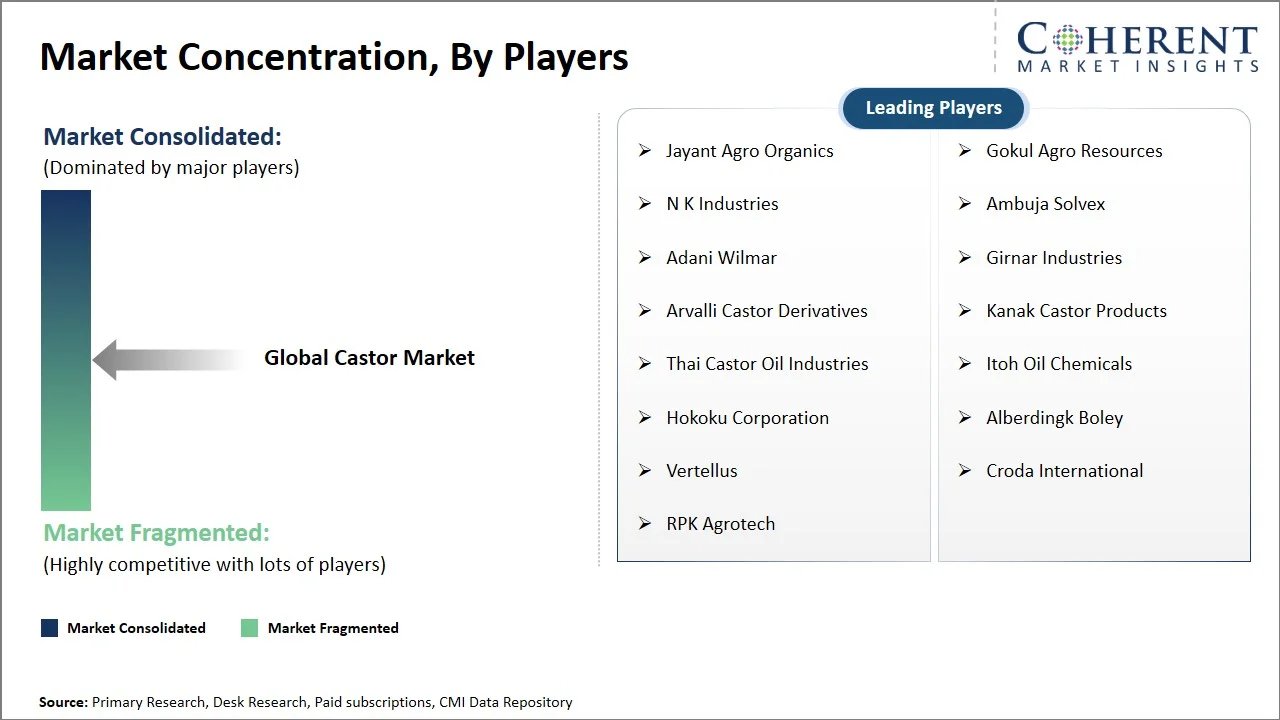
The global castor market is moderately fragmented, combining integrated seed crushers and derivative manufacturers, multinational specialty chemical companies, independent refiners, regional exporters, distributors, and application-focused ingredient suppliers. Competition varies by product tier: bulk oil suppliers compete through procurement efficiency, price, capacity, and shipment reliability, while derivative and high-purity producers compete through specification control, regulatory documentation, conversion expertise, and customer qualification. Regional processors remain important in feedstock aggregation and export execution, whereas specialist companies differentiate through formulation support and products designed for tightly defined industrial, pharmaceutical, or cosmetic uses.
Key focus areas include
- Feedstock integration: Direct grower and aggregator relationships improve procurement visibility and protect plant utilization during crop-price fluctuations.
- Derivative portfolio depth: Suppliers offering hydrogenated, dehydrated, split, esterified, and distilled products can serve more applications and reduce dependence on commodity oil margins.
- Purity and quality assurance: Pharmaceutical, cosmetic, and specialty industrial buyers favor suppliers with robust analytical testing and repeatable batch specifications.
- Manufacturing economics: Reaction yield, energy efficiency, catalyst recovery, plant flexibility, and by-product utilization influence delivered cost and margin resilience.
- Supply reliability: Export execution, storage capacity, packaging flexibility, and regional inventory determine the ability to serve customers with continuous production schedules.
- Technical customer support: Formulation guidance, sample development, troubleshooting, and qualification assistance help suppliers become embedded in customer specifications.
- Compliance and sustainability documentation: Regulatory dossiers, safety data, product-carbon information, and sourcing records increasingly support preferred-supplier status.
- Distribution coverage: Local distributors and application-focused channel partners extend access to smaller customers requiring lower order quantities and faster delivery.
Market Report Scope
Castor Market Report Coverage
| Report Coverage | Details | ||
|---|---|---|---|
| Base Year: | 2025 | Market Size in 2026: | USD 1,664.3 Mn |
| Historical Data for: | 2020 To 2024 | Forecast Period: | 2026 To 2033 |
| Forecast Period 2026 to 2033 CAGR: | 6.8% | 2033 Value Projection: | USD 2,637.7 Mn |
| Geographies covered: |
| ||
| Segments covered: |
| ||
| Companies covered: | Jayant Agro Organics, Gokul Agro Resources, N K Industries, Ambuja Solvex, Adani Wilmar, Girnar Industries, Arvalli Castor Derivatives, Kanak Castor Products, Thai Castor Oil Industries, Itoh Oil Chemicals, Hokoku Corporation, Alberdingk Boley, Vertellus, Croda International, and RPK Agrotech | ||
| Growth Drivers: |
| ||
| Restraints & Challenges: |
| ||
Analyst Opinion (Expert Opinion)
- The next competitive shift may occur through digital, specification-led B2B purchasing rather than solely through conventional trader relationships. Buyers will increasingly expect searchable grade portfolios, immediate access to technical documents, faster sampling, transparent order status, and lower-volume replenishment options. Suppliers combining direct commercial relationships with digital product selection and distributor fulfillment could gain access to mid-sized formulators that are currently underserved by bulk-oriented sales models.
- Castor’s molecular advantages may eventually face competition from fermentation-derived fatty acids, engineered oil crops, and synthetic routes capable of reproducing selected functional properties. This could weaken business models that rely on castor’s natural scarcity alone. Participants that understand performance at the molecular level, protect conversion know-how, and remain flexible across renewable feedstocks will be better placed than companies positioned only as processors of one agricultural commodity.
- The global castor market participants should prioritize flexible derivative capacity, advanced analytical laboratories, agronomic resilience, and joint product qualification with high-value customers. Supply concentration and crop-price volatility require stronger grower networks, inventory planning, and carefully structured customer contracts. Producers should avoid excessive investment in undifferentiated refining capacity without secured feedstock or downstream demand. Partnerships with formulation specialists, regional distributors, seed developers, and application laboratories can create more defensible advantages than pursuing volume growth alone.
Speak to the analyst
Want personalized insights?
Take the findings above to one of our principal consultants, or have the report rebuilt around the segments, geographies and competitors you actually track.
Market Segmentation
- Product Type Insights (Revenue, USD Mn, 2021 - 2033)
- Refined Castor Oil
- Hydrogenated Castor Oil
- 12 Hydroxystearic Acid
- Sebacic Acid
- Dehydrated Castor Oil
- Ricinoleic Acid
- Others
- Grade Insights (Revenue, USD Mn, 2021 - 2033)
- Industrial Grade
- Cosmetic Grade
- Pharmaceutical Grade
- Food Grade
- Others
- Application Insights (Revenue, USD Mn, 2021 - 2033)
- Lubricants and Greases
- Cosmetics and Personal Care
- Pharmaceuticals
- Plastics and Resins
- Coatings Paints and Inks
- Biofuels
- Others
- Distribution Channel Insights (Revenue, USD Mn, 2021 - 2033)
- Direct B2B Sales
- Chemical Distributors
- Wholesale Traders
- Online B2B Platforms
- Others
- Regional Insights (Revenue, USD Mn, 2021 - 2033)
- North America
- U.S.
- Canada
- Latin America
- Brazil
- Argentina
- Mexico
- Rest of Latin America
- Europe
- Germany
- U.K.
- Spain
- France
- Italy
- Russia
- Rest of Europe
- Asia Pacific
- China
- India
- Japan
- Australia
- South Korea
- ASEAN
- Rest of Asia Pacific
- Middle East
- GCC Countries
- Israel
- Rest of Middle East
- Africa
- South Africa
- North Africa
- Central Africa
- North America
- Key Players Insights
- Jayant Agro Organics
- Gokul Agro Resources
- N K Industries
- Ambuja Solvex
- Adani Wilmar
- Girnar Industries
- Arvalli Castor Derivatives
- Kanak Castor Products
- Thai Castor Oil Industries
- Itoh Oil Chemicals
- Hokoku Corporation
- Alberdingk Boley
- Vertellus
- Croda International
- RPK Agrotech
Sources
Primary Research Interviews
- Castor growers, seed crushers, oil refiners, derivative manufacturers, specialty chemical companies, distributors, exporters, private-label suppliers, and contract manufacturers
- R&D, procurement, production, quality, regulatory, formulation, sustainability, logistics, marketing, and sales executives
- Stakeholders:
- Lubricant, cosmetic, pharmaceutical, coatings, polymer, resin, biofuel, and specialty chemical manufacturers
- Farmers, cooperatives, equipment suppliers, testing laboratories, packaging companies, storage operators, logistics providers, importers, exporters, wholesalers, and B2B platforms
End-use Sectors
- Lubricants, greases, hydraulic fluids, metalworking fluids, and biodegradable formulations
- Skincare, haircare, color cosmetics, soaps, creams, and personal-care products
- Pharmaceutical excipients, laxatives, drug-delivery systems, capsules, and topical formulations
- Polyamides, polyurethanes, plasticizers, adhesives, coatings, paints, inks, surfactants, waxes, and biofuels
Regulatory & Government Bodies
- U.S. FDA, USDA, EPA, European Commission, ECHA, EFSA, and UK regulatory authorities
- India Ministry of Agriculture, DGFT, FSSAI, BIS, and relevant chemical and export authorities
- China SAMR, NHC, Ministry of Agriculture, and General Administration of Customs
- Brazil ANVISA, Argentina SENASA, Codex Alimentarius Commission, and national trade, chemical, agricultural, and environmental authorities
Databases
- UN Comtrade, ITC Trade Map, WTO Statistics, Eurostat, USITC DataWeb, FAOSTAT, World Bank, OECD, and UNIDO
- India DGCI&S, APEDA, China Customs, Brazil Comex Stat, Argentina INDEC, and U.S. Census trade databases
- PubMed, ScienceDirect, ClinicalTrials.gov, Espacenet, company filings, product catalogues, pricing records, and distributor databases
Magazines and Journals
- Oils & Fats International, Biofuels International, Lubes’n’Greases, Chemical Week, ICIS, Coatings World, and CosmeticsDesign
- Industrial Crops and Products, Journal of the American Oil Chemists’ Society, Tribology International, Lubricants, Renewable Energy, and International Journal of Pharmaceutics
Associations
- Solvent Extractors’ Association of India
- International Castor Oil Association
- American Oil Chemists’ Society
- European Oleochemical and Allied Products Group
- American Chemistry Council
- Independent Lubricant Manufacturers Association
- Cosmetics Europe
- Personal Care Products Council
Public Domain Sources
- Agricultural, pharmaceutical, cosmetic, chemical, biofuel, trade, customs, labeling, and environmental authorities
- Annual reports, technical data sheets, safety data sheets, certificates of analysis, patents, sustainability reports, and company press releases
- Crop estimates, seed prices, export records, distributor listings, B2B platforms, and peer-reviewed studies covering cultivation, processing, derivatives, formulations, and lifecycle assessment
Key Standards and Regulations
- U.S. FD&C Act, Toxic Substances Control Act, pharmaceutical GMP, cosmetic labeling, and biofuel regulations
- EU REACH, CLP Regulation, Cosmetic Products Regulation, pharmaceutical requirements, and renewable-energy rules
- India FSSAI, Drugs and Cosmetics Act, BIS specifications, hazardous chemical rules, and export-import policies
- China GB standards, Brazil ANVISA requirements, Codex standards, and ISO specifications for vegetable oils, lubricants, cosmetics, quality, and environmental management
Proprietary Elements
- CMI Data Analytics Tool, Proprietary CMI Existing Repository of information for last 10 years.
Get access to 250+ pages report
Every segment, forecast, competitor profile and data table behind the analysis above — available for instant download.
- ESOMAR Member
- ISO 9001:2015 Certified
- D-U-N-S Registered
- GDPR & CCPA Compliant
Missing comfort of reading report in your local language? Find your preferred language:
Transform your Strategy with Exclusive Trending Reports
Frequently Asked Questions
The CAGR of the global castor market is projected to be 6.8% from 2026 to 2033.
Rising demand for natural vitamin E sources supporting supplement consumption and clean label skincare adoption increasing wheat germ oil formulation demand are the major factors driving the growth of the global castor market.
The global castor market growth is estimated to be valued at USD 1,664.3 million in 2026 and is expected to reach USD 2,637.7 million by 2033.
Castor oil and its derivatives are widely used in lubricants and greases, cosmetics and personal care products, pharmaceuticals, plastics and resins, coatings, paints, inks, and biofuel formulations.
Direct B2B sales represent the principal distribution channel, as industrial buyers generally purchase castor oil and derivatives in bulk under long-term supply agreements and customized quality specifications.
The increasing use of renewable and traceable raw materials is influencing the market. Buyers are placing greater importance on sustainable cultivation, product-level environmental documentation, supply-chain transparency, and castor-derived alternatives to petroleum-based chemicals.
Oxidation sensitivity limiting shelf life and storage stability and low oil yield from wheat germ increasing processing costs are the major factors hampering the growth of the global castor market.