

Global Cattle Health Monitoring Systems Market Size and Forecast – 2026 to 2033
The Global Cattle Health Monitoring Systems Market is estimated to be valued at USD 2.98 Bn in 2026 and is expected to reach USD 8.23 Bn by 2033, exhibiting a compound annual growth rate (CAGR) of 15.6% from 2026 to 2033. This significant growth is driven by the increasing adoption of advanced technologies in livestock management and rising demand for improving cattle health and productivity in the agricultural sector worldwide.
Key Takeaways of the Global Cattle Health Monitoring Systems Market
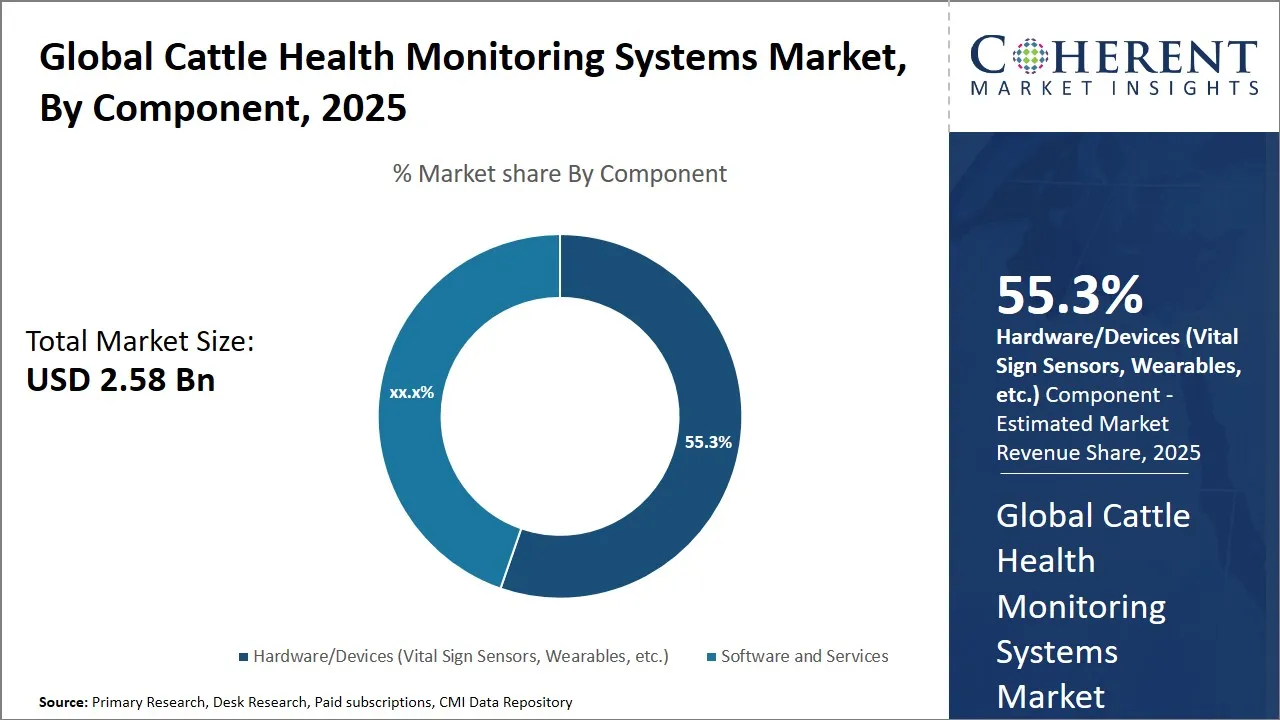
- In 2026, hardware and device components, including vital sign sensors and wearables, are expected to account for the largest share of the global cattle health monitoring systems market at 56.3%.
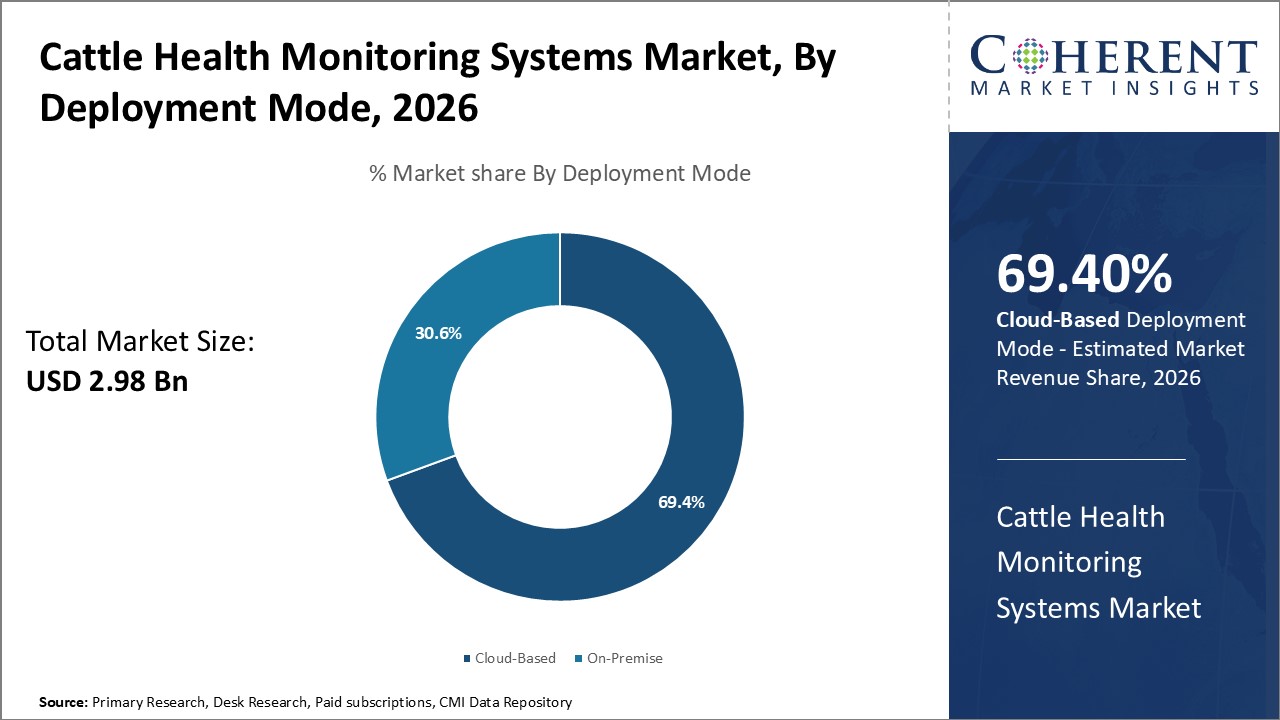
- The cloud-based deployment mode is projected to dominate the market with a 69.4 % share in 2026.
- By application, the disease detection and diagnostics segment is anticipated to lead the market, capturing 24.2 % of the total market share in 2026.
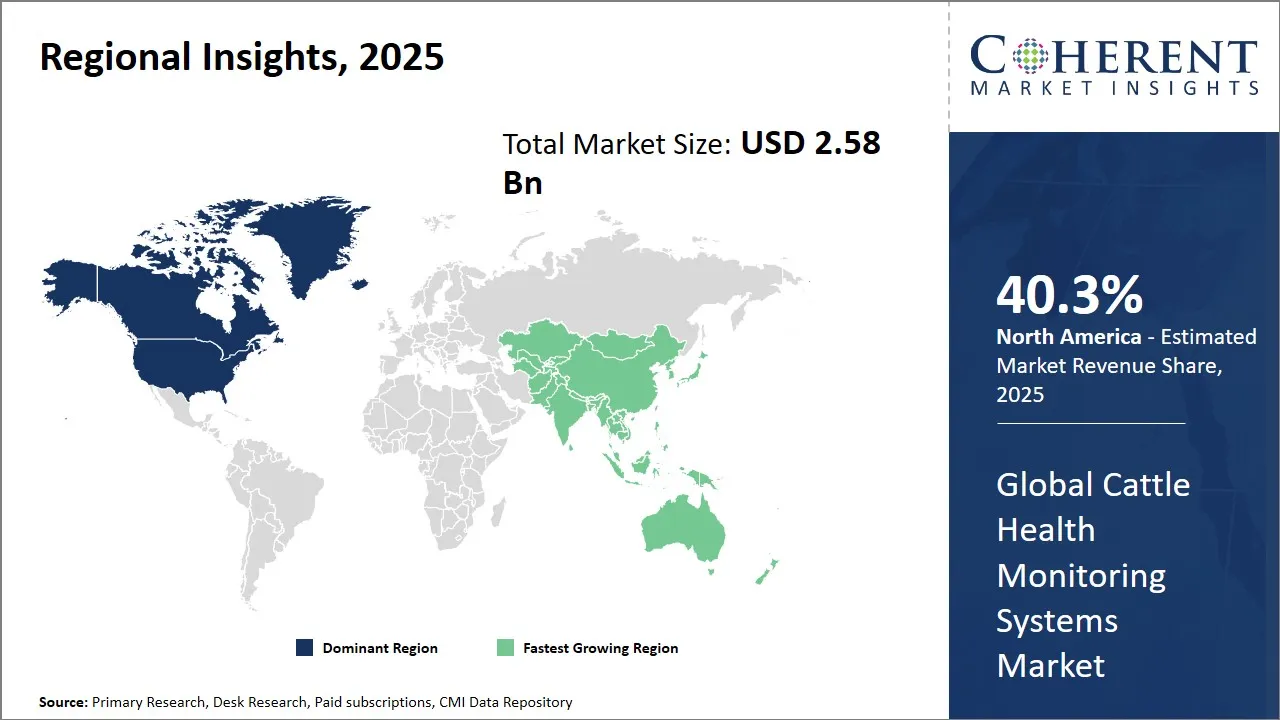
- North America is expected to lead the market, holding a share of 40.3 % in 2026. Asia Pacific is anticipated to be the fastest-growing region, with a market share of 24.5% in 2026.
Market Overview
Market trends indicate a strong shift towards the integration of IoT-enabled devices and real-time monitoring solutions, enabling farmers to track health parameters such as temperature, activity, and rumination with high accuracy. Additionally, growing awareness about animal welfare, coupled with advancements in data analytics and AI, is fostering the development of predictive health management systems, ultimately leading to enhanced operational efficiency and reduced disease outbreaks in cattle farming.
Current Events and Its Impact
Current Events | Description and its Impact |
Increasing Government Support and Regulations |
|
Technological Advancements in Wearable Sensors |
|
Segmental Insights
- Current Industry Events of 2026
- Market Size Estimation
- Regional Breakdown
- Competitive Landscape
- Customer Intelligence
- Segmental Analysis
- Pricing Analysis
- Key Market Drivers, Challenges & Future Trends
- Customized Insights Section
Cattle Health Monitoring Systems Market Insights, By Component - Hardware/Devices Leads Owing to Advancements in Sensor Technology and Real-Time Data Collection
The Hardware/Devices (Vital Sign Sensors, Wearables, etc.) segment of the cattle health monitoring systems market is projected to showcase the highest market share of 56.3% in 2026 due to the development of sensor technology and increased desire to know animal health-related information in real-time. Wearable sensors and vital sign monitors can be used to track the temperature, heart rate, and activity wirelessly in real time and allow the detection of disease early and improve the productivity of the herd.
For example, smaXtec animal care GmbH, a leader in dairy technology, has consistently grown its global presence due to its innovative hardware-based in-rumen bolus monitoring technology, which provides real-time data on livestock health. The smaXtec bolus is a hardware element that measures inner body temperature, rumination, water consumption, activity, and pH directly in the reticulum and presents farmers with constant data on the health status.
Cattle Health Monitoring Systems Market Insights, By Deployment Mode - Cloud-Based Deployment Drives Scalability and Enhanced Data Analytics
The cattle health monitoring systems market is dominated by the cloud-based segment, which is estimated to account for 69.4% market share in 2026, as it is scalable, easily accessible, and capable of uniting data on the farms, veterinarians, and consultants in real-time.
For example, in August 2026, JioGauSamriddhi, a smart cattle management solution by Jio Things Limited, launched a comprehensive cloud-based mobile app and smart neck tag system for dairy farmers. The solution includes real-time monitoring of cattle health, heat cycles, and milk yield, while offering alerts for health issues and optimal insemination timings.
Cattle Health Monitoring Systems Market Insights, By Application - Disease Detection and Diagnostics Maintain Dominance Powered by Early Intervention Needs
The disease detection and diagnostics segment is projected to hold the leading position within the global cattle health monitoring systems market by application with 24.2% share in 2026, driven by the urgent need for early identification and management of contagious and chronic diseases in cattle populations.
It is crucial to detect infections like mastitis, respiratory disorders, and parasitic infestations early to prevent them from causing significant harm to animal health, productivity, and overall farm profitability. Health monitoring systems are adept at detecting subtle changes, both physiological and behavioral, which are usually not detected through routine visual inspection, and therefore the system takes preemptive diagnostic measures.
Regional Insights
North America Cattle Health Monitoring Systems Market Analysis and Trends
North America will dominate the market for cattle health monitoring systems in 2026 with an estimated market share of 40.3%. The region offers high technology adaptation, an established livestock industry, and governmental support for smart farming and animal welfare projects.
For example, Lansitec Technology Co. Ltd, a multinational IoT provider company, launched its smart cattle tracking and water management system in North America to industrialize the process of large-scale ranching. The solution incorporates smart ear tags that contain Bluetooth technology and solar-powered gateways to track the movement of cows, water levels, and their drinking behavior.
Asia Pacific Cattle Health Monitoring Systems Market Analysis and Trends
The Asia Pacific region is expected to witness the highest growth in cattle health monitoring systems, with a projected share of 24.5% in 2026. This growth is driven by the rapid modernization of the agricultural industry, increased government focus on food safety, and rising awareness of livestock welfare.
The growth of dairy and beef sectors in India, China, and Australia is driving the demand for innovative health monitoring systems to guarantee the health and productivity of herds.
Global Cattle Health Monitoring Systems Market Outlook for Key Countries
U.S. Cattle Health Monitoring Systems Market Trends
The current market in the cattle health monitoring sector of the U.S. is defined by the popularity of the use of sophisticated sensor-based health monitoring instruments, as well as their integration with farm management software platforms. Allflex and Zoetis are major players, which have good footprints in the region, and their solutions include real-time monitoring solutions, early disease detection, and behavioral analytics.
For example, Lallemand Animal Nutrition, a global leader in microbial feed and cattle health monitoring solutions, launched LEVUCELL Trivantage in the U.S., an all-in-one feed supplement that enhances rumen efficiency, gut integrity, and immune health in cattle and equines. Combining LEVUCELL SC, PROTERNATIVE, and AGRIMOS technologies, the product supports digestive balance and complements modern cattle health monitoring systems by improving overall wellness indicators.
India Cattle Health Monitoring Systems Market Trends
The cattle health monitoring systems market in India is experiencing fast growth with the government being the main driver due to the establishment of projects that are meant to enhance the dairy output and uplift the lives of the rural population. IoT-enabled monitoring devices from companies like Stellapps and Vence are designed to serve both small-scale farmers and large dairy cooperatives. Mobile technology penetration and rise in awareness about livestock health promotes the growth of the market.
For example, PsiBorg Technologies in India developed an IoT-based cattle health monitoring system for SKUAST Srinagar, featuring smart collars with LoRa connectivity for real-time tracking, geofencing, and health analytics. The system monitors temperature, heart rate, rumination, and activity to detect illness and heat cycles early, enabling 24/7 remote farm management and improved breeding efficiency.
Australia Cattle Health Monitoring Systems Market Trends
Australia remains on the forefront in Asia Pacific with state-of-the-art practices in livestock farming. The high number of cattle in the country, together with the innovation based agritech firms, like Agersens and Nedap, facilitates the use of advanced monitoring technologies in the country that monitors health, reproductive conditions, and grazing pattern. Government policies and research activities are aimed at sustainable livestock production, biosecurity, and improving the level of technology adoption.
For example, Genetics Australia Holdings Pty Ltd, a joint venture between Genetics Australia Cooperative and URUS Group LP, introduced the GENEX HerdMonitor system to strengthen cattle health monitoring and herd management. The cloud-based solution uses SmartTag neck and ear devices to track rumination, fertility, activity, and cow positioning in real time
China Cattle Health Monitoring Systems Market Trends
Growth in cattle health monitoring solutions is supported by the growing dairy and beef industries in China, as well as the government initiatives to modernize the agricultural industry. Local companies and international companies modify sensors and analytics platforms to match local demand, resulting in an increased involvement of the market. Food safety and sustainable farming policies by the governments promote the use of precision health tools in large scale.
For example, Prompt Equipments Pvt. Ltd., a pioneer in dairy technology, launched BovSmart, an IoT-enabled animal heat detection and activity monitoring system for dairy farms. The smart collar records cattle movement, rumination, and ambient temperature to accurately detect estrus cycles and monitor health in real time.
End User Feedback and Unmet Needs in the Cattle Health Monitoring Systems Market
- The current capabilities of the technology have had mixed experiences with end users in the cattle health monitoring systems market, which consists of large dairy farms, providers of veterinary services and government-supported livestock health programs. The connected monitoring devices have a high level of satisfaction that many users testify of because of their precision and convenience. As an illustration, dairy cooperatives in the U.S. have complemented IoT-enabled ear tags and rumination sensors by maintaining disease-related losses, and enhancing reproductive control, and have observed quantifiable productivity gains in herds in a one-season period. Monitoring of the temperature, activity, and feeding patterns have decreased veterinary efficiency by enabling faster interventions and improved health outcomes of herds. These customers underline that the best value can be provided by the systems that are well-integrated with farm management software, especially with the support of efficient data analytics and cloud-based dashboards.
- In spite of this, various recurring problems have kept on emerging among the smaller and middle-sized operators. In developing countries, e.g. farmers tend to mention costs and absence of local technical support amongst the significant adoption disadvantages. Connectivity in the countryside is not as fast as practical in real-time data transfer, and some users struggle to use the current platforms with older farm machinery or even between devices of different brands. An increasing need also exists to have systems capable of analyzing the data of the behavior of native languages and have the capability to respond to local livestock management practices. Meeting these unfulfilled requirements, such as modularity, low-cost hardware, open-source data infrastructure, and localized after sales support, would not only increase accessibility, but also boost user confidence. To manufacturers and policymakers, this presents a good opportunity to increase the market accessibility and develop innovation on low-cost precision farming and improve sustainability of cattle healthcare solutions across the globe.
Market Players, Key Developments, and Competitive Intelligence
Key Developments
- In August 2025, Nexa, a U.S.-based agri-tech innovator focused on livestock health solutions, unveiled the world’s first implantable cattle monitoring system that tracks temperature, heart rate, blood oxygen, movement, and GPS location directly from inside the animal. Unlike traditional collars, ear tags, or boluses, the new in-ear microchip offers deeper, more accurate, and longer-lasting health and reproductive insights at lower cost. The system detects early signs of diseases such as mastitis and pneumonia while improving heat detection accuracy.
- In July 2025, the Indian Institute of Information Technology (IIIT) Allahabad introduced an AI-powered smart dairy monitoring system designed to detect early signs of cattle diseases through video-based behavioral analysis. Led by Prof. Vrijendra Singh, the system leverages Artificial Intelligence and Machine Learning to identify conditions like mastitis, lumpy skin disease, and ketosis by monitoring subtle changes in movement, appetite, and social behavior. It provides real-time alerts to farmers via mobile notifications, enabling prompt veterinary action.
- In October 2024, Merck & Co., Inc., a division of Merck & Co., Inc., introduced SENSEHUB Cow Calf, a remote monitoring system designed to enhance breeding efficiency and herd management for cow-calf producers using artificial insemination and embryo transfer. The system tracks behavior to detect estrus, determine optimal breeding windows, and identify reproductive issues earlier than traditional methods. Equipped with an ear-mounted accelerometer, it monitors activity and rumination to alert caregivers when cows or heifers need attention, enabling faster intervention and better outcomes.
Top Strategies Followed by Global Cattle Health Monitoring Systems Market Players
- The market leaders have a foundation based on high levels of investments in research and development (R&D) to create high-performance products that will respond to the changing demands in livestock health management. The focus of these companies is on developing technologically superior solutions that include internet of things sensors, AI based analytics, and real time data processing to increase the accuracy of monitoring, and their usability. They also engage in strategic partnership and collaborative agreements with original equipment manufacturers (OEMs) and other stakeholders of the industry, in addition to innovation.
- Companies like MSD Animal Health (Allflex), DeLaval, and Afimilk lead through R&D in IoT and AI-integrated systems. MSD’s SenseHub Dairy 2.0 and DeLaval’s DelPro enhance herd health and productivity. Partnerships such as MSD with Quantified Ag strengthen predictive analytics and monitoring capabilities.
- The strategy of the mid-level firms in the cattle health monitoring systems sector is to place themselves strategically by providing cost-effective but efficient solutions that will attract price sensitive consumers, especially the small to medium sized cattle farmers. These players lay stress on finding a balance between quality and affordability and these players often customize products to fit the minimum performance requirements without violating critical performance specifications.
- Firms such as CowManager, BouMatic, and Lely Industries focus on affordable yet reliable monitoring solutions. CowManager’s Smart Ear Tag and BouMatic’s RealTime Activity Monitoring provide cost-efficient tools for small to mid-scale farms, ensuring data accuracy without heavy infrastructure costs.
- Small competitors cut competitive niches within the larger cattle health monitoring industry by focusing on some specific features or products with a high level of innovation that make them stand out of the mainstream products offered by the industry. These businesses are the first to implement the latest technologies like Blockchain traceability, high-tech biosensors, or high-precision monitoring devices that target a particular health parameter.
- Innovators like Moocall, CattleEye, and Connecterra carve niches through AI and Blockchain. CattleEye’s vision-based lameness detection and Moocall’s SMS calving alerts simplify health tracking, while Connecterra uses Blockchain for transparent cattle health records.
Market Report Scope
Cattle Health Monitoring Systems Market Report Coverage
| Report Coverage | Details | ||
|---|---|---|---|
| Base Year: | 2025 | Market Size in 2026: | USD 2.98 Bn |
| Historical Data for: | 2020 To 2024 | Forecast Period: | 2026 To 2033 |
| Forecast Period 2026 to 2033 CAGR: | 15.6% | 2033 Value Projection: | USD 8.23 Bn |
| Geographies covered: |
| ||
| Segments covered: |
| ||
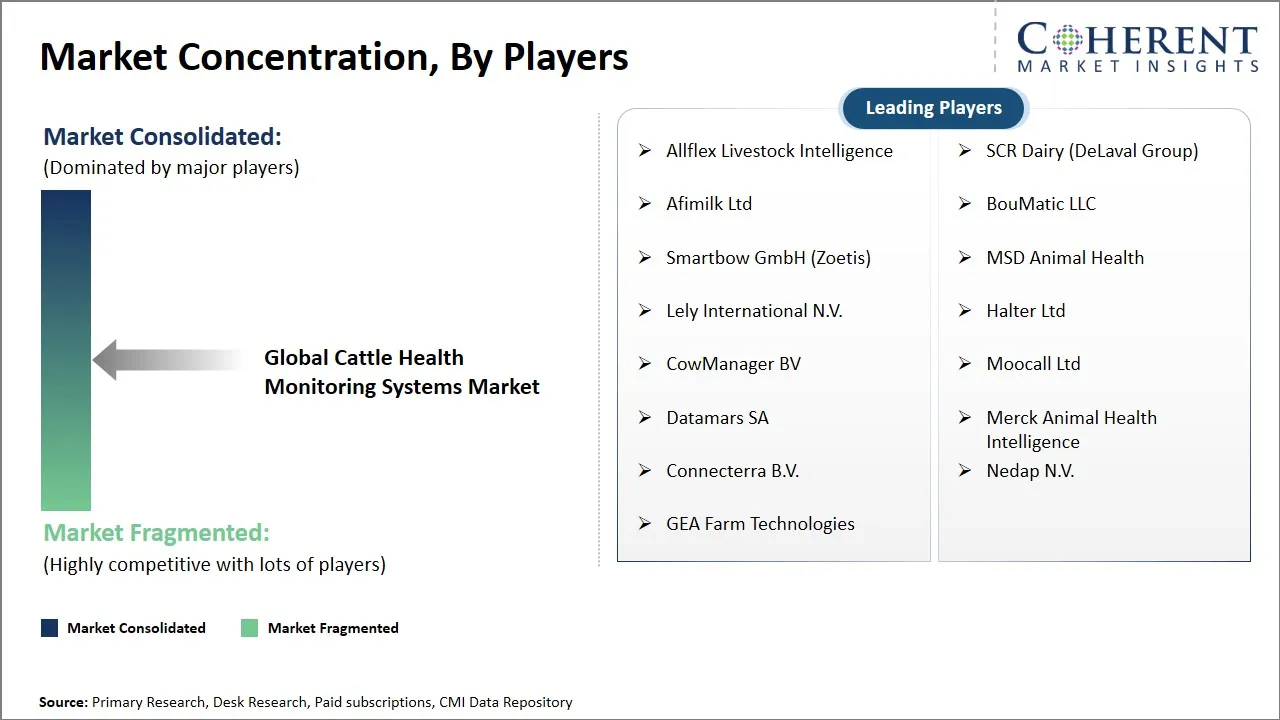
| Companies covered: | Allflex Livestock Intelligence, SCR Dairy (DeLaval Group), Afimilk Ltd, BouMatic LLC, Smartbow GmbH (Zoetis), MSD Animal Health, Lely International N.V., Halter Ltd, CowManager BV, Moocall Ltd, Datamars SA, Merck Animal Health Intelligence, Connecterra B.V., Nedap N.V., and GEA Farm Technologies | ||
| Growth Drivers: |
| ||
| Restraints & Challenges: |
| ||
Cattle Health Monitoring Systems Market Dynamics
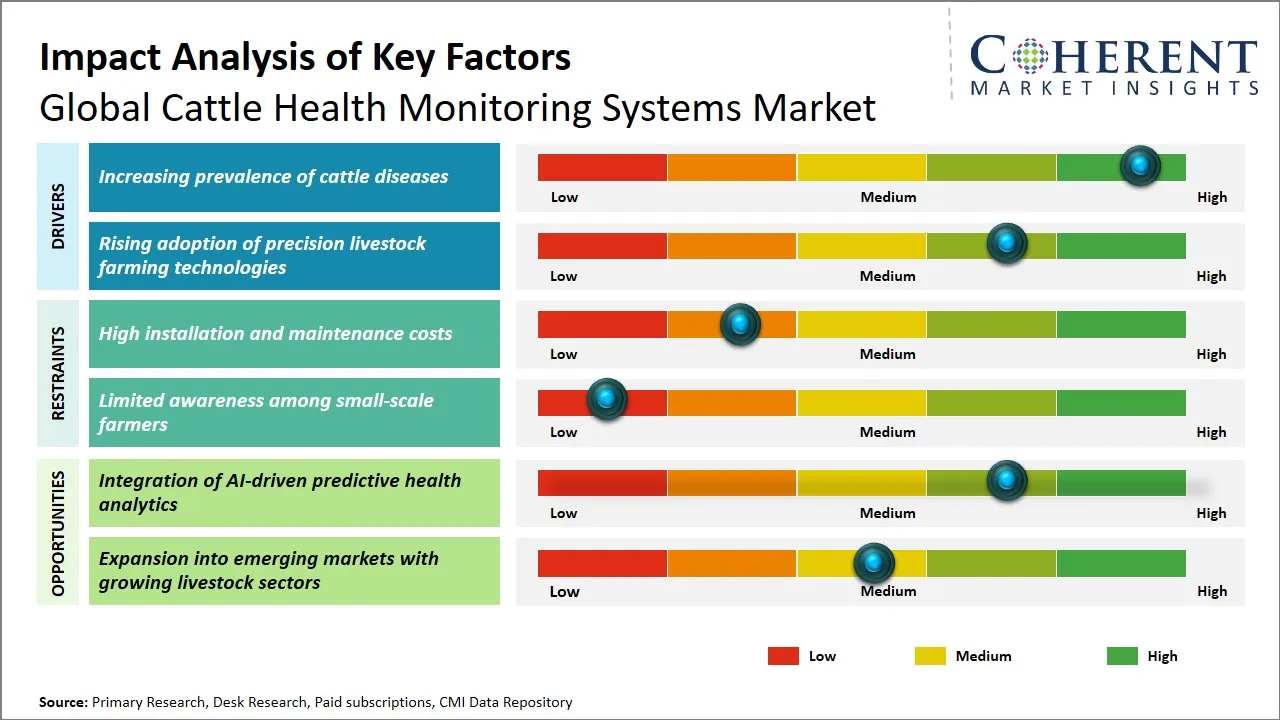
Cattle Health Monitoring Systems Market Driver - Increasing Prevalence of Cattle Diseases
The increased rate of cattle diseases in the global market is putting a lot of strain on livestock farmers to embrace modern health monitoring technologies. Diseases including mastitis, bovine respiratory disease, foot-and-mouth disease and parasitic diseases are becoming more common, resulting in significant loss of productivity, deaths, and high veterinary expenses. These health issues necessitate the adoption of uninterrupted and precise monitoring devices by farm operators that will help to quickly identify and rectify the situation before it becomes too late and the situation becomes too bad to control.
For instance, in May 2025, the World Organisation for Animal Health (WOAH), the global authority on animal health established in 1924, released its first State of the World’s Animal Health report, highlighting the growing spread of infectious animal diseases and their impact on food security, trade, and ecosystems. The report revealed that nearly half of emerging animal diseases have zoonotic potential, with avian influenza outbreaks in mammals more than doubling since 2023. It also noted a 5% global drop in antibiotic use between 2020 and 2022, emphasizing vaccination and improved surveillance as key to reducing antimicrobial resistance.
Cattle Health Monitoring Systems Market Opportunity - Integration of AI-Driven Predictive Health Analytics
The introduction of AI-oriented predictive health analytics is a major growth and innovation in the international market of cattle health monitoring systems. With livestock farming becoming more technologically savvy, AI-based systems will allow them to process data in real-time and analyze health trends more thoroughly, which will allow farmers to prevent possible health problems before they lead to an expensive outbreak. Predictive analytics uses machine learning algorithms to use past and current biometric data like temperature, heart rate, activity levels and feeding habits to provide early alerts to diseases, stress conditions and reproductive cycles.
For example, Belfast-based CattleEye Ltd, a pioneer in autonomous video-based livestock monitoring, advanced its hardware-free AI system designed to enhance dairy herd welfare and efficiency. Using standard security cameras placed above milking parlor exits, the platform analyzes cattle movement and body condition in real time through cloud-based AI algorithms, eliminating the need for collars or sensors.
Analyst Opinion (Expert Opinion)
- The cattle health monitoring systems market is gaining momentum as farms adopt IoT-based wearables, AI analytics, and cloud connectivity to improve animal welfare and productivity. Demand is rising due to the growing need for early disease detection, optimized breeding, and traceability in dairy and beef production. Governments and agricultural agencies are promoting smart farming programs that support digital monitoring and sustainable livestock practices. The biggest opportunities lie in data-driven predictive health tools, multi-sensor integration, and cost-effective monitoring solutions for small and mid-sized farms, while challenges include high device costs, connectivity gaps in rural areas, and the need for farmer training on advanced systems.
- Over the last few years, global events like the Precision Livestock Farming Conference, EuroTier, and the World Dairy Expo have played a key role in promoting technological innovation and collaboration among researchers, equipment manufacturers, and farm operators. These platforms have encouraged the use of AI, IoT, and data analytics in livestock management. Industry examples such as Merck Animal Health’s SenseHub Cow Calf system, Nexa Labs’ implantable cattle microchip, and IIIT Allahabad’s AI-based dairy monitoring pilot illustrate how innovation is reshaping herd management. Supported by regional initiatives like smart dairy pilot projects in India and the EU’s sustainable livestock programs, the market is set to expand as digitalization becomes central to animal health and productivity management.
Speak to the analyst
Want personalized insights?
Take the findings above to one of our principal consultants, or have the report rebuilt around the segments, geographies and competitors you actually track.
Market Segmentation
- Component Insights (Revenue, USD Bn, 2021 - 2033)
- Hardware/Devices (Vital Sign Sensors, Wearables, etc.)
- Software and Services
- Deployment Mode Insights (Revenue, USD Bn, 2021 - 2033)
- Cloud-Based
- On-Premise
- Application Insights (Revenue, USD Bn, 2021 - 2033)
- Disease detection and diagnostics
- General Wellness and Behavioral Health
- Reproductive health/estrus detection
- Chronic disease monitoring (e.g., mastitis, respiratory disorders)
- Veterinary intervention tracking
- Vaccination and medication compliance monitoring
- Calving and neonatal health monitoring
- Post-operative or post-treatment monitoring
- Others (Milk, Feeding and Breeding Management, etc.)
- Cattle Type Insights (Revenue, USD Bn, 2021 - 2033)
- Dairy Cattle
- Beef Cattle
- End User Insights (Revenue, USD Bn, 2021 - 2033)
- Veterinary Hospitals and Clinics
- Research and Academic Institutions
- Livestock Health Service Providers
- Others (Dairy Farms)
- Regional Insights (Revenue, USD Bn, 2021 - 2033)
- North America
- U.S.
- Canada
- Latin America
- Brazil
- Argentina
- Mexico
- Rest of Latin America
- Europe
- Germany
- U.K.
- Spain
- France
- Italy
- Russia
- Rest of Europe
- Asia Pacific
- China
- India
- Japan
- Australia
- South Korea
- ASEAN
- Rest of Asia Pacific
- Middle East
- GCC Countries
- Israel
- Rest of Middle East
- Africa
- South Africa
- North Africa
- Central Africa
- North America
- Key Players Insights
- Allflex Livestock Intelligence
- SCR Dairy (DeLaval Group)
- Afimilk LtdBouMatic LLC
- Smartbow GmbH (Zoetis)
- MSD Animal Health
- Lely International N.V.
- Halter Ltd
- CowManager BV
- Moocall Ltd
- Datamars SA
- Merck Animal Health Intelligence
- Connecterra B.V.
- Nedap N.V.
- GEA Farm Technologies
Sources
Industry Stakeholders List
- Veterinary device manufacturers
- Livestock management software developers
- IoT hardware suppliers for animal health
- Dairy technology solution providers
- Artificial insemination service providers
- Veterinary diagnostic equipment producers
End Users List
- Dairy farm operators
- Beef cattle ranchers
- Veterinary hospitals and clinics
- Agricultural universities and research institutes
- Livestock cooperatives and dairy boards
- Government livestock health departments
Government and International Databases
- Food and Agriculture Organization (FAO)
- World Organisation for Animal Health (WOAH/OIE)
- United States Department of Agriculture (USDA)
- European Food Safety Authority (EFSA)
- Department of Animal Husbandry and Dairying (India)
- National Agricultural Statistics Service (NASS)
Trade Publications
- Dairy Global
- The Cattle Site
- Progressive Dairy
- Dairy Herd Management
- Feedstuffs
- All About Feed
Academic Journals
- Journal of Dairy Science
- Computers and Electronics in Agriculture
- Animal (Cambridge University Press)
- Livestock Science
- Sensors (MDPI)
- Frontiers in Veterinary Science
Reputable Newspapers
- The Guardian (Agriculture & Environment section)
- The Economic Times (AgriBusiness section)
- The Hindu Business Line (Agriculture section)
- Reuters (AgriTech & Sustainability news)
- Bloomberg Agriculture
- Financial Times (Food & Agribusiness section)
Industry Associations
- National Dairy Development Board (NDDB)
- International Dairy Federation (IDF)
- American Veterinary Medical Association (AVMA)
- Dairy Farmers of America (DFA)
- National Cattlemen’s Beef Association (NCBA)
- European Association for Animal Production (EAAP)
Public Domain Resources
- World Bank Open Data (Agriculture & Rural Development)
- OECD Agricultural Statistics
- Eurostat – Livestock and Dairy Statistics
- Open Government Data (India)
- United Nations Comtrade Database
- U.S. Government’s Data.gov (Agriculture datasets)
Proprietary Elements
- CMI Data Analytics Tool: Proprietary analytics tool to analyze real-time market trends, consumer behavior, and technology adoption in market
- Proprietary CMI Existing Repository of Information for Last 8 Years
Get access to 250+ pages report
Every segment, forecast, competitor profile and data table behind the analysis above — available for instant download.
- ESOMAR Member
- ISO 9001:2015 Certified
- D-U-N-S Registered
- GDPR & CCPA Compliant
Missing comfort of reading report in your local language? Find your preferred language:
Transform your Strategy with Exclusive Trending Reports
Frequently Asked Questions
The global cattle health monitoring systems market is estimated to be valued at USD 2.98 Bn in 2026 and is expected to reach USD 8.23 Bn by 2033.
The CAGR of global cattle health monitoring systems market is projected to be 15.6% from 2026 to 2033.
Increasing prevalence of cattle diseases and rising adoption of precision livestock farming technologies are the major factors driving the growth of the global cattle health monitoring systems market.
High installation and maintenance costs and limited awareness among small-scale farmers are the major factors hampering the growth of the global cattle health monitoring systems market.
In terms of component, hardware/devices (vital sign sensors, wearables, etc.) is estimated to dominate the market revenue share in 2026.
Allflex Livestock Intelligence, SCR Dairy (DeLaval Group), Afimilk Ltd, BouMatic LLC, Smartbow GmbH (Zoetis), MSD Animal Health, Lely International N.V., Halter Ltd, CowManager BV, Moocall Ltd, Datamars SA, Merck Animal Health Intelligence, Connecterra B.V., Nedap N.V., and GEA Farm Technologies are the major players.
North America is expected to lead the global cattle health monitoring systems market in 2026.