

Global Clay Roof Tiles Market Size and Forecast – 2026 - 2033
The Global Clay Roof Tiles Market is estimated to be valued at USD 9.36 Bn in 2026 and is expected to reach USD 13.98 Bn by 2033, exhibiting a compound annual growth rate (CAGR) of 5.9% from 2026 to 2033.
Key Takeaways of the Clay Roof Tiles Market
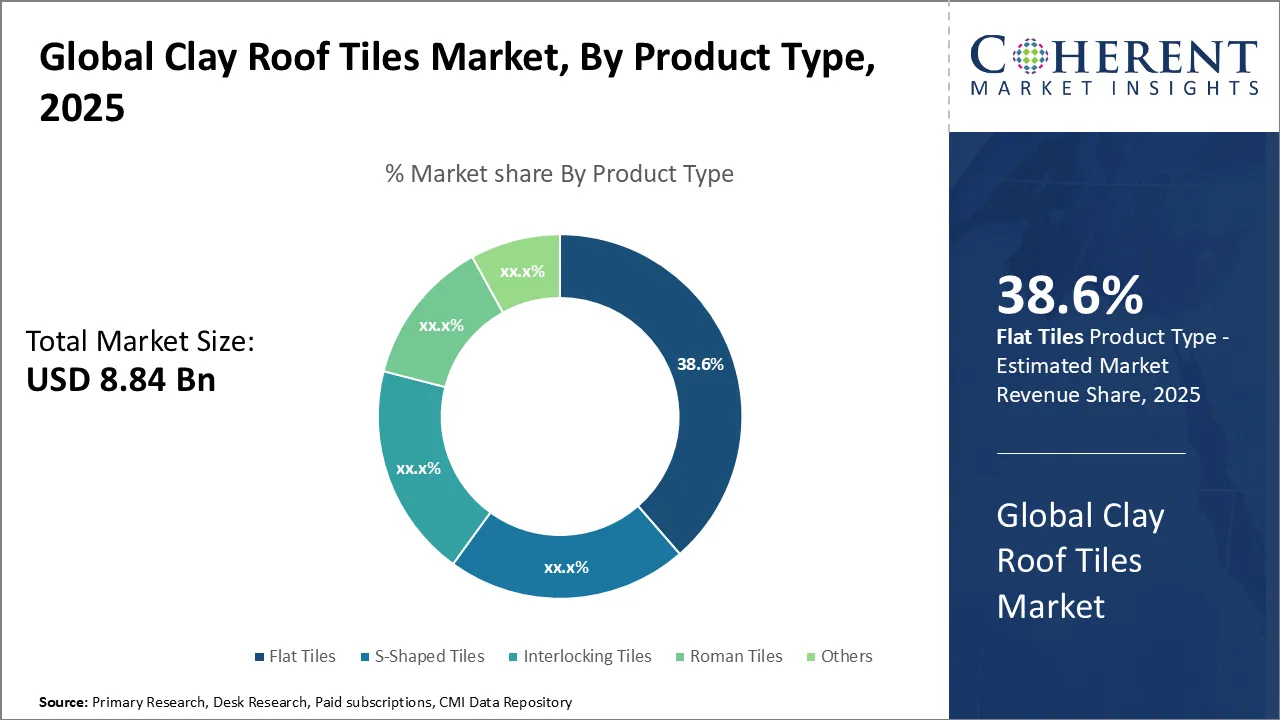
- Flat tiles are expected to account for 39.6 % of the global clay roof tiles market in 2026, driven mainly by their versatility and attractive aesthetic appeal.
- Residential buildings are projected to hold a 43.6 % share of the global clay roof tiles market in 2026, fueled by the growth in housing developments and rising renovation activities in urban and suburban areas.
- Online stores are expected to account for 53.6 % of the global clay roof tiles market in 2026, driven primarily by the growing consumer preference for digital shopping platforms.
- Europe is expected to lead the global clay roof tiles market in 2026 with a 41.2 % share, driven by expanding residential developments and increasing demand for sustainable roofing solutions. Asia Pacific, with a 13.5% share in 2026, will be the fastest-growing region, fueled by rapid urbanization, infrastructure expansion, and a growing preference for durable and aesthetically appealing roofing materials.
Market Overview
A prominent trend in the clay roof tiles market is the growing preference for sustainable and energy-efficient roofing materials. Consumers and builders are increasingly adopting clay tiles due to their natural insulation properties, longevity, and aesthetic appeal, which contribute to lower energy consumption and maintenance costs. Additionally, the resurgence of traditional architectural styles and increased awareness about eco-friendly construction, green construction practices are bolstering the adoption of clay roof tiles globally. Manufacturers are investing in innovative design and color options to cater to diverse consumer preferences and urban development needs, further driving market growth.
Current Events and Its Impact
Current Events | Description and its impact |
Technological Advancements in Manufacturing and Product Innovation |
|
Surge in Green Building Initiatives and Eco-Friendly Construction |
|
Segmental Insights
- Current Industry Events of 2026
- Market Size Estimation
- Regional Breakdown
- Competitive Landscape
- Customer Intelligence
- Segmental Analysis
- Pricing Analysis
- Key Market Drivers, Challenges & Future Trends
- Customized Insights Section
Clay Roof Tiles Market Insights, By Product Type - Flat Tiles Segment Dominate the Market Due to Versatility and Aesthetic Appeal
Flat tiles contribute an estimated 39.6% share of the global clay roof tiles market in 2026, primarily driven by their inherent versatility and strong aesthetic appeal. Flat clay roof tiles are characterized by their smooth, uniform surface and thin profile, which enables them to integrate seamlessly with various architectural styles. These tiles offer a sleek, modern appearance while also complementing traditional designs, making them a popular choice for a wide spectrum of construction projects.
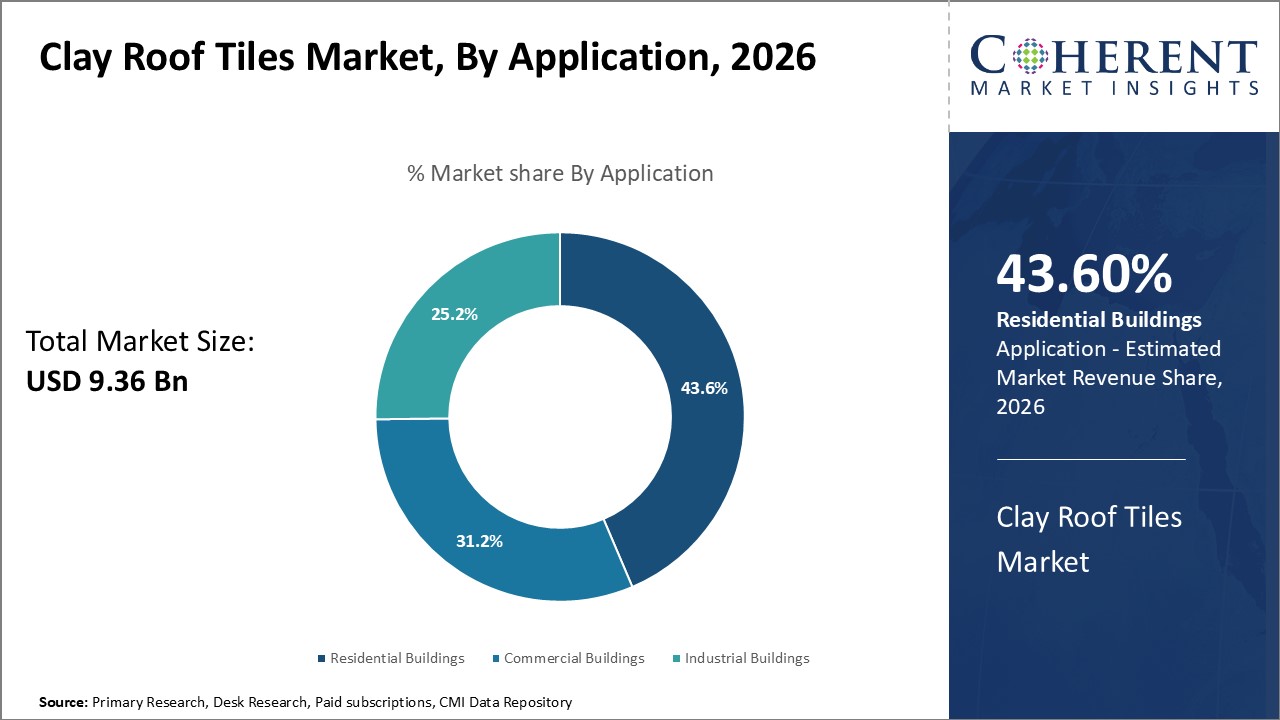
Clay Roof Tiles Market Insights, By Application - Residential Buildings Segment Lead Demand Due to Growing Housing Development and Renovation Trends
Residential buildings command an estimated 43.6% share of the global clay roof tiles market in 2026, driven by expanding housing developments and increasing renovation activities across urban and suburban regions. The rising global population and urbanization trends result in heightened demand for new residential constructions, which naturally boosts the use of clay roof tiles, especially given their durability and appeal for long-term housing solutions.
Clay Roof Tiles Market Insights, By Distribution Channel - Online Stores Lead Distribution Growth through Convenience and Broader Accessibility
Online stores are expected to hold 53.6% share of the global clay roof tiles market in 2026, a trend largely fueled by shifting consumer purchasing patterns toward digital platforms. The e-commerce model offers unmatched convenience and accessibility, allowing customers—including contractors, architects, and homeowners—to explore extensive clay tile options from anywhere, streamlining the procurement process.
The growth of online stores as a preferred channel is supported by consumers’ increasing comfort with technology and the ability to compare product features, prices, and reviews in real time. This transparency empowers buyers to make well-informed decisions, which is particularly vital for high-involvement purchases like roofing materials where durability, aesthetics, and compliance matter greatly.
End User Feedback and Unmet Needs
Durability and Aesthetic Value
- A consistently cited benefit by both residential and commercial users is the exceptional durability and longevity of clay roof tiles. Many properties owners report that clay tiles routinely last over 50 years, even in harsh climates, with minimal depreciation. For instance, a commercial property developer overseeing a boutique hotel restoration praised clay tiles for their ability to preserve the building’s historical authenticity while requiring little ongoing maintenance. The natural color palette and variety of shapes—such as flat, S-shaped, and barrel tiles—allow for architectural flexibility, meeting both modern and traditional design preferences.
Technological Gaps
- One of the most pressing unmet needs in the clay roof tiles market is the lack of technological advancements in tile durability and ease of installation. While traditional clay roof tiles are highly durable, there is a gap in the market for lighter, more flexible versions that do not compromise on strength. Additionally, innovations aimed at improving the ease of installation, such as interlocking tiles or pre-assembled roofing systems, are still in the early stages. Manufacturers could explore research into advanced ceramic compositions that reduce the weight of tiles while enhancing their strength and lifespan.
Regional Insights

Europe Clay Roof Tiles Market Analysis and Trends
The Europe region is projected to lead the market with a 41.2% share in 2026, which stems from a well-established construction ecosystem, stringent building regulations emphasizing durability and energy efficiency, and a rich tradition of using clay tiles in residential and heritage architecture. Countries such as Spain, Italy, and Germany have long favored clay tiles for their aesthetic appeal and performance in diverse climatic conditions.
European governments support sustainable building materials through various green policies, boosting the demand for eco-friendly clay roof tiles. Established European manufacturers like Terreal, Wienerberger AG, and Imerys contribute significantly to innovation and quality, integrating advanced production technologies and maintaining high standards that reinforce Europe’s leadership in this market. The regional trade network also facilitates efficient distribution across neighboring countries, enhancing market penetration.
Asia Pacific Clay Roof Tiles Market Analysis and Trends
The Asia Pacific region is expected to exhibit the fastest growth in the market contributing 13.5% share in 2026, driven by rapid urbanization, expanding infrastructure development, and a rising preference for durable and sustainable roofing materials in countries such as China, India, and Indonesia. Government initiatives promoting affordable housing, rural development programs, and increased investment in commercial real estate construction fuel demand.
Local manufacturers, alongside international companies like Boral Limited (Australia) and CSR Limited, are expanding production capacities to meet growing needs. The region’s diverse climates, from tropical to temperate, favor the use of clay tiles, which offer thermal insulation and weather resistance. Additionally, improving trade relations within Asia Pacific nations expedite the supply chain, boosting market growth.
Global Clay Roof Tiles Market Outlook for Key Countries
Spain Clay Roof Tiles Market Trends
Spain clay roof tiles market remains pivotal in the global clay roof tiles ecosystem due to its historical reliance on clay roofing, which aligns well with Mediterranean architectural styles. Leading Spanish companies like Tejas Borja focus on blending tradition with innovation by offering advanced, lightweight clay tiles that improve installation efficiency. Spain’s government supports sustainable building through incentives promoting energy-efficient materials, further bolstering clay tile adoption in residential and commercial projects.
China Clay Roof Tiles Market Trends
China’s rapidly growing urban housing sector and robust government support for green building practices position it as a key growth driver in the clay roof tiles market. Domestic producers such as Dongpeng and New Shanghai are investing in automated manufacturing facilities to cater to large-scale demand. The emphasis on durability and thermal performance in roofing solutions aligns well with the benefits offered by clay tiles, leading to increased adoption across urban and semi-urban regions.
Italy Clay Roof Tiles Market Trends
Italy continues to lead the European market with strong demand rooted in cultural and architectural heritage that values the natural aesthetics of clay roofing. Notable players like Imerys contribute through the supply of premium clay tiles that meet stringent European norms for sustainability and resilience. Italian building codes and a growing green construction movement enhance the preference for clay roof tiles in both restoration and new construction projects.
India Clay Roof Tiles Market Trends
India’s clay roof tiles market government initiatives such as the Pradhan Mantri Awas Yojana (PMAY) emphasize affordable and sustainable housing, pushing demand for durable roofing options. Companies including Somany Ceramics and Johnson Tiles are expanding their product portfolios to include clay roof tiles designed for tropical climates. Increasing infrastructure projects and a growing middle-class consumer base further drive clay tile adoption in residential and institutional buildings.
Market Players, Key Development, and Competitive Intelligence
Key Developments
- In November 2024, RUSSELL Roof Tiles unveiled its innovative Bute3 concrete roof tile, marking a significant milestone in the UK roofing industry. This breakthrough product, following a USD 2.73 million investment and five years of design and development, is the first of its kind in the country. Manufactured at the company’s new fully automated production line in Burton on Trent, the Bute3 is a triple interlocking multipurpose roof tile.
- In October 2022, Brickability Group plc acquired ET Clay Products for USD 14.85 million, including 100% of ET Clay Products Limited and Heritage Clay Tiles Limited. Established over 25 years ago, ET Clay Products specializes in UK and imported clay facing bricks and handmade clay roof tiles. This acquisition enhances Brickability's market position and product portfolio in the clay products sector.
Top Strategies Followed by Global Clay Roof Tiles Market Players
- Established Players: Leading companies in the sector heavily invest in research and development (R&D) to drive innovation and develop high-performance clay roof tiles that meet evolving consumer demands, particularly in durability, aesthetics, and sustainability. These established players often form strategic partnerships and alliances with major industry players, original equipment manufacturers (OEMs), and construction firms to reinforce their market foothold.
- For example, Wienerberger, one of the leading global manufacturers in the clay roof tiles market, has consistently invested in R&D to enhance the performance and environmental footprint of its products. They introduced solar-embedded clay roof tiles, which increase roof energy efficiency by 21%. This innovation highlights their commitment to sustainability and addressing growing consumer demand for energy-efficient building materials.
- Mid-level players in the global clay roof tiles market adopt strategies tuned to balance quality with affordability, targeting price-sensitive consumers who seek durable yet cost-effective roofing solutions. These companies emphasize operational efficiency to minimize production costs without compromising product standards, enabling them to offer competitive pricing in both developed and developing markets.
- For example, Companies like Russell Roof Tiles, for example, are committed to providing cost-effective roofing solutions while ensuring durability and aesthetic appeal. They emphasize operational efficiency, investing in technologies that reduce production costs.
- Small-scale players in the clay roof tiles market navigate intense competition by focusing on niche segments and leveraging innovation to differentiate their offerings. These firms prioritize specialized features such as eco-friendly formulations, customized designs, or tiles with enhanced thermal insulation properties that cater to specific customer preferences or regulatory requirements.
- For example, Tejas Borja has focused on catering to the growing demand for energy-efficient materials in residential buildings, aligning with regional sustainability goals.
Market Report Scope
Clay Roof Tiles Market Report Coverage
| Report Coverage | Details | ||
|---|---|---|---|
| Base Year: | 2025 | Market Size in 2026: | USD 9.36 Bn |
| Historical Data for: | 2020 To 2024 | Forecast Period: | 2026 To 2033 |
| Forecast Period 2026 to 2033 CAGR: | 5.9% | 2033 Value Projection: | USD 13.98 Bn |
| Geographies covered: |
| ||
| Segments covered: |
| ||
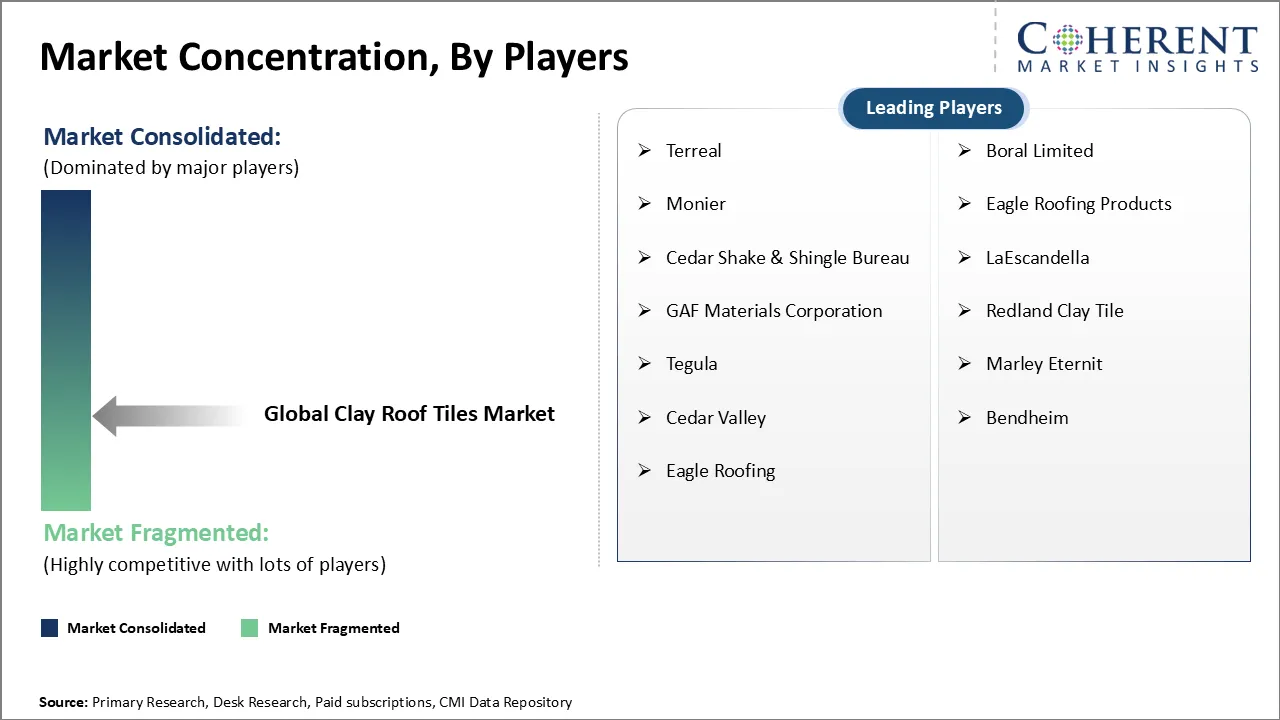
| Companies covered: | Terreal, Boral Limited, Monier, Eagle Roofing Products, Cedar Shake & Shingle Bureau, LaEscandella, GAF Materials Corporation, Redland Clay Tile, Tegula, Marley Eternit, Cedar Valley, Bendheim, and Eagle Roofing | ||
| Growth Drivers: |
| ||
| Restraints & Challenges: |
| ||
Clay Roof Tiles Market Dynamics
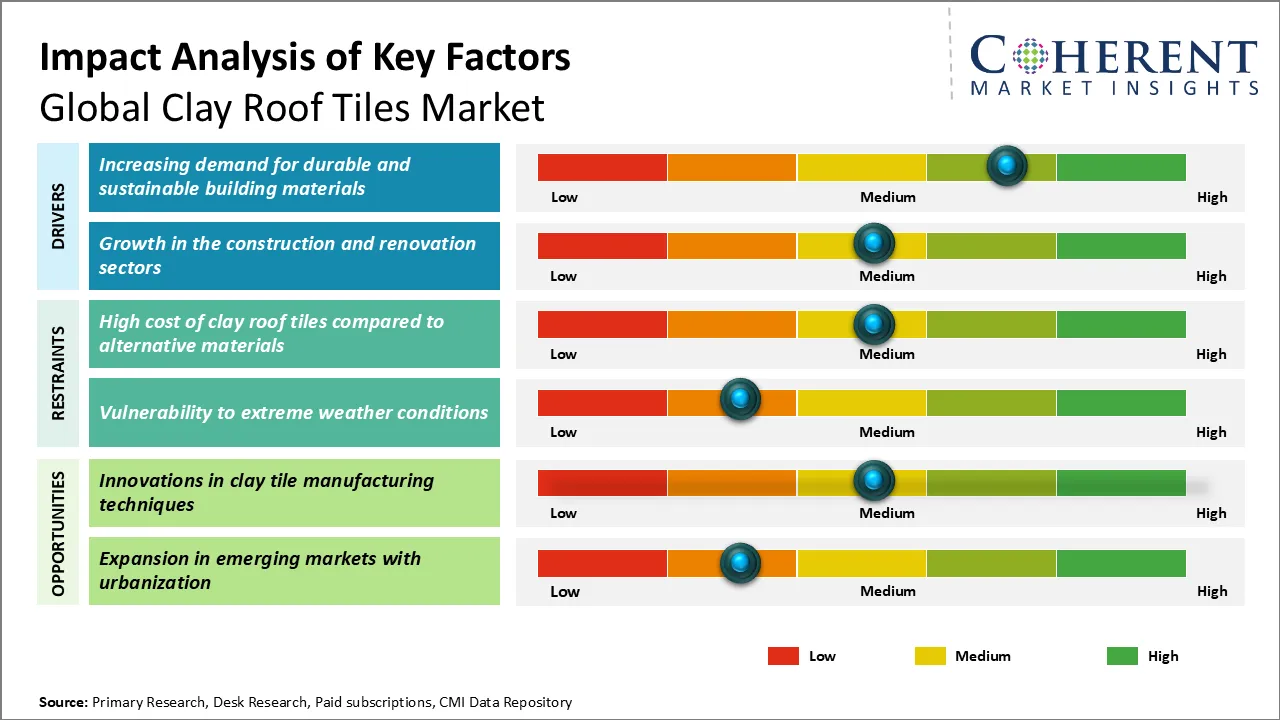
Clay Roof Tiles Market Driver - Increasing Demand for Durable and Sustainable Building Materials
The growing emphasis on sustainability and long-lasting construction solutions is significantly propelling the demand for clay roof tiles in the global building materials market. Builders, architects, and homeowners are increasingly prioritizing materials that not only offer durability but also have a minimal environmental footprint, making clay roof tiles an attractive option. These tiles are naturally sourced, eco-friendly, and highly resilient to harsh weather conditions, ensuring extended roof life with reduced maintenance costs.
According to the International Energy Agency's (IEA) Global Status Report for Buildings and Construction 2021, the building sector accounts for approximately 38% of global energy-related CO2 emissions, intensifying the urgency for sustainable material adoption. Furthermore, the United Nations Environment Programme's 2022 Global Status Report highlighted that sustainable building materials could reduce construction-related emissions by up to 50% by 2030, creating substantial market opportunities for clay roof tiles.
Clay Roof Tiles Market Opportunity - Innovations in Clay Tile Manufacturing Techniques
The global clay roof tiles market is set to grow due to innovations in manufacturing, such as automation, precision molding, and enhanced firing technologies. These advancements improve product quality, reduce waste, and increase efficiency, making clay tiles more cost-effective and environmentally friendly. Digital printing technology also allows for intricate surface designs, expanding aesthetic options. According to the International Energy Agency's 2022 report, these advanced processes have reduced energy consumption by 25-30%, making clay tiles more competitive with alternative roofing materials.
Analyst Opinion (Expert Opinion)
- The global clay roof tiles market is experiencing a renaissance, driven by the increasing demand for durable and aesthetically pleasing roofing solutions. Companies like Boral Roofing and Terreal are innovating with eco-friendly options that enhance thermal efficiency and reduce energy consumption. Recent conferences, such as the International Roofing Expo (2023) and the Green Roofs for Healthy Cities conference (2022), have showcased successful case studies where clay tiles have been effectively used in both residential and commercial projects, highlighting their longevity and low maintenance.
- These events have also emphasized trends toward integrating clay tiles with modern architectural designs, appealing to a broader consumer base. As the market evolves with a focus on sustainability and design flexibility, the global clay roof tiles market is well-positioned for growth, driven by innovations that meet contemporary building standards and consumer preferences.
Speak to the analyst
Want personalized insights?
Take the findings above to one of our principal consultants, or have the report rebuilt around the segments, geographies and competitors you actually track.
Market Segmentation
- Product Type Insights (Revenue, USD Bn, 2021 - 2033)
- Flat Tiles
- S-Shaped Tiles
- Interlocking Tiles
- Roman Tiles
- Others
- Application Insights (Revenue, USD Bn, 2021 - 2033)
- Residential Buildings
- Commercial Buildings
- Industrial Buildings
- Distribution Channel Insights (Revenue, USD Bn, 2021 - 2033)
- Online Stores
- Specialty Stores
- Others
- Regional Insights (Revenue, USD Bn, 2021 - 2033)
- North America
- U.S.
- Canada
- Latin America
- Brazil
- Argentina
- Mexico
- Rest of Latin America
- Europe
- Germany
- U.K.
- Spain
- France
- Italy
- Russia
- Rest of Europe
- Asia Pacific
- China
- India
- Japan
- Australia
- South Korea
- ASEAN
- Rest of Asia Pacific
- Middle East
- GCC Countries
- Israel
- Rest of Middle East
- Africa
- South Africa
- North Africa
- Central Africa
- North America
- Key Players Insights
- Terreal
- Boral Limited
- Monier
- Eagle Roofing Products
- Cedar Shake & Shingle Bureau
- LaEscandella
- GAF Materials Corporation
- Redland Clay Tile
- Tegula
- Marley Eternit
- Cedar Valley
- Bendheim
- Eagle Roofing
Sources
Primary Research Interviews
- Product Manager – Leading Clay Roof Tile Manufacturer
- Regional Sales Director – Major Building Material Distributor
- Sustainability Director – Tile Production Facility
- Head of R&D – Roofing Solutions Provider
Stakeholders
- Manufacturers
- End-use Sectors:
- Residential Roofing (Single-family, Multi-family)
- Commercial Roofing (Hotels, Offices, Malls)
- Roofing Contractors and Installers
- Regulatory & Certification Bodies:
- Building Codes and Standards Organizations
- Environmental Certification Bodies for Sustainable Roofing
Databases
- UN Comtrade Database
- India Import Export (EXIM) Database
- Eurostat Building and Construction Database
- U.S. Census Bureau Construction Data
Magazines
- Building Materials Magazine – Innovations in Roofing Solutions
- Roofing Journal – Trends in Clay Roof Tile Production
- Construction Today – Latest Updates on Building Materials
- Sustainable Roofing Magazine – Eco-friendly Roofing Materials
- Tile Business – Market Developments in Clay Tiles
Journals
- Journal of Building and Construction Materials – Trends in Tile Production
- Construction and Building Materials Journal – Energy Efficiency in Roofing
- Journal of Environmental Design and Construction – Eco-friendly Roof Tiles
- Roofing & Waterproofing Journal – Durability of Clay Roof Tiles
- Building Materials Research Journal – Advances in Roof Tile Manufacturing
Newspapers
- The Financial Times – Roofing Material Market Insights
- The Guardian – Growth of Sustainable Roofing Materials
- Construction News – Clay Roof Tiles Market Developments
- The New York Times – Consumer Preferences in Roofing Materials
- The Times of India – Rise of Eco-friendly Building Materials in India
Associations
- National Roofing Contractors Association (NRCA)
- Tile Roofing Institute (TRI)
- European Roof Tile Manufacturers (ETRMA)
- International Code Council (ICC)
Public Domain Sources
- National Institute of Building Sciences – Roof Tile Performance Standards
- European Commission – Sustainable Construction Regulation
- World Health Organization – Environmental Impact Assessments for Building Materials
- International Energy Agency (IEA) – Energy Consumption in Building Materials
- U.S. Department of Energy – Energy-Efficient Building Materials and Standards
Proprietary Elements
- CMI Data Analytics Tool, Proprietary CMI Existing Repository of information for the last 8 years.
Get access to 250+ pages report
Every segment, forecast, competitor profile and data table behind the analysis above — available for instant download.
- ESOMAR Member
- ISO 9001:2015 Certified
- D-U-N-S Registered
- GDPR & CCPA Compliant
Missing comfort of reading report in your local language? Find your preferred language:
Transform your Strategy with Exclusive Trending Reports
Frequently Asked Questions
The global clay roof tiles market is estimated to be valued at USD 9.36 Bn in 2026 and is expected to reach USD 13.98 Bn by 2033.
The CAGR of global clay roof tiles market is projected to be 5.9% from 2026 to 2033.
Increasing demand for durable and sustainable building materials and growth in the construction and renovation sectors are the major factors driving the growth of global clay roof tiles market.
High cost of clay roof tiles compared to alternative materials and vulnerability to extreme weather conditions are the major factors hampering the growth of global clay roof tiles market.
In terms of product type, flat tiles are estimated to dominate the market revenue share in 2026.
Terreal, Boral Limited, Monier, Eagle Roofing Products, Cedar Shake & Shingle Bureau, LaEscandella, GAF Materials Corporation, Redland Clay Tile, Tegula, Marley Eternit, Cembrit, Cedar Valley, Bendheim, Eagle Roofing, and Tondach are the major players in the global clay roof tiles market
Europe is expected to lead the global clay roof tiles market in 2026.