

Clinical Microbiology Market Size and Forecast – 2026-2033
Global clinical microbiology market is estimated to be valued at USD 5.57 Bn in 2026 and is expected to reach USD 8.26 Bn by 2033, exhibiting a compound annual growth rate (CAGR) of 5.8% from 2026 to 2033.
Key Takeaways
- Based on Product Type, the Reagents segment is projected to account of the largest share of the market in 2026, as they are consumed regularly in diagnostic testing, infectious disease screening, and research applications.
- Based on Disease Type, the Respiratory Diseases segment is projected to lead the market with highest share in 2026, driven by high prevalence of pneumonia, tuberculosis, and rising antimicrobial resistance.
- Based on End User, the Hospital segment is expected to capture the greatest share in the 2026, driven by high patient inflow, rising demand for infectious disease testing, and the adoption of advanced diagnostic systems.
- Based on Region, North America is expected to lead the market, holding a share of 34.9% share in 2026. While, Asia Pacific is anticipated to be the fastest-growing region.
Market Overview
Global clinical microbiology market is expected to witness positive growth during the forecast period, owing to factors such as increasing prevalence of infectious diseases, growing awareness regarding diagnosis of infections, technological advancements in diagnostic techniques, and rising healthcare expenditure. Ongoing research and development activities for developing advanced microbiology-based diagnostic techniques and untapped emerging markets offering huge growth opportunities are expected to propel the market growth.
Current Events and Its Impact
Current Event | Description and Its Impact |
Rising Antimicrobial Resistance (AMR) Crisis |
|
Regulatory Transformation of Laboratory Developed Tests (LDTs) |
|
Technological Innovations in the Clinical Microbiology Market:
- Automation & Robotics: Robotic sample handling and automated culture systems reduce manual labor and errors.
- Molecular Diagnostics: PCR-based assays and next-generation sequencing (NGS) enable rapid pathogen identification and antimicrobial resistance detection.
- AI & Machine Learning: Integrated for predictive analysis, anomaly detection, and faster interpretation of complex clinical data.
- Point-of-Care Devices: Decentralized testing with immediate results, especially critical during infectious disease outbreaks.
- Digital Imaging & Analysis: Enhances lab efficiency and accuracy in identifying microbial colonies and growth patterns.
- High-Throughput Systems: Increase laboratory throughput, improving patient outcomes and operational efficiency.
- Current Industry Events of 2026
- Market Size Estimation
- Regional Breakdown
- Competitive Landscape
- Customer Intelligence
- Segmental Analysis
- Pricing Analysis
- Key Market Drivers, Challenges & Future Trends
- Customized Insights Section
Segmental Insights
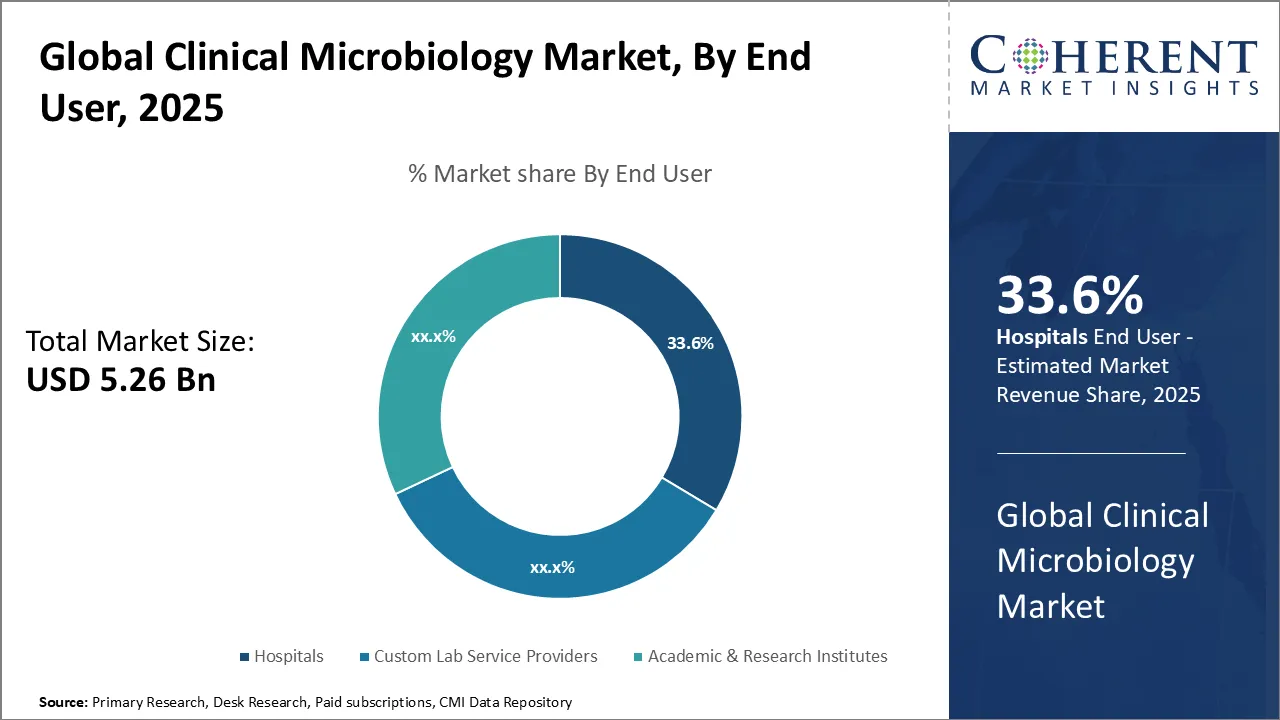
Clinical Microbiology Market Insights, By End User - Hospital Dominance Driven by High Patient Inflow, Rising Demand for Infectious Disease Testing, And the Adoption of Advanced Diagnostic Systems
In terms of end user, the hospitals sub-segment is estimated to hold 34.6% of the market share in 2026, due to the rising incidence of infectious diseases, increased demand for rapid diagnostics, and the integration of advanced microbiology testing technologies. High patient inflow, coupled with the need for accurate and timely results, further strengthens hospitals as the primary end users.
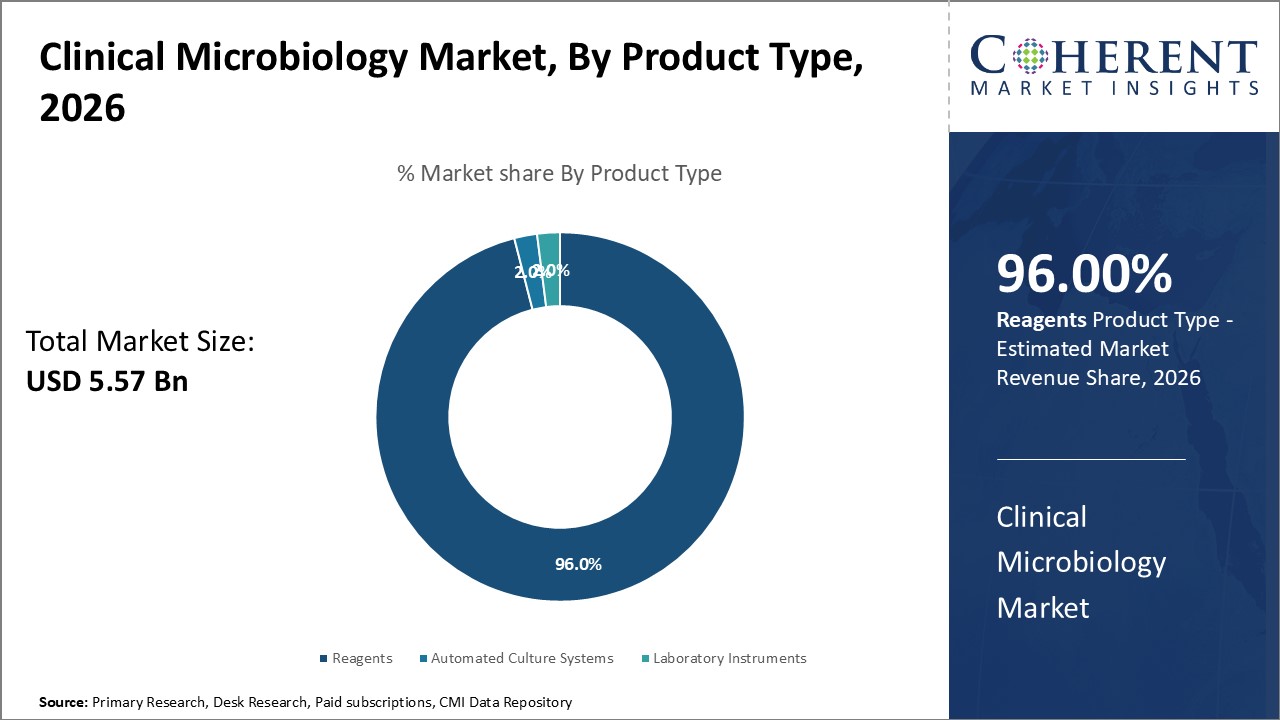
Clinical Microbiology Market Insights, By Product Type - Reagents Dominance is Observed as They Are Consumed Regularly in Diagnostic Testing, Infectious Disease Screening, And Research Applications
In terms of product type, the reagents segment is expected to hold the largest share of the market in 2026, driven by their recurring use in culture media preparation, molecular diagnostics, and antimicrobial susceptibility testing. Unlike instruments, which are one-time investments, reagents require continuous replenishment for routine laboratory operations, infectious disease detection, and research purposes, making them the most essential and revenue-generating product category in the market.
For instance, in October 2024, a new diagnostic method, GoPhAST-R, developed by the Broad Institute and Massachusetts General Hospital, rapidly assesses bacterial antibiotic susceptibility by detecting messenger RNA changes after antibiotic exposure, along with resistance genes. In a pilot using patient blood cultures, it achieved 95% agreement with standard assays and delivers results in hours instead of days. The test uses the NanoString RNA detection reagent to measure gene expression.
Clinical Microbiology Market Insights, By Disease Type - Respiratory Diseases Dominance Is Driven by High Prevalence of Pneumonia, Tuberculosis, and Rising Antimicrobial Resistance
In terms of disease type, the respiratory diseases segment is considered to hold the highest share of the market in 2026, owing to the rising global burden of infections such as tuberculosis, pneumonia, and influenza. Increasing antimicrobial resistance and the need for rapid diagnostic solutions further accelerate demand. Growing investments in advanced microbiology testing technologies also support this dominance across hospitals, laboratories, and research institutions.
For instance, in April 2024, Bruker expanded its clinical microbiology and infection diagnostics portfolio with several new tools, including the MBT Pathfinder IVD robot for automated MALDI target preparation and the LiquidArray MTB-XDR panel for detecting Mycobacterium tuberculosis and resistance to five second-line drugs.
Regional Insights
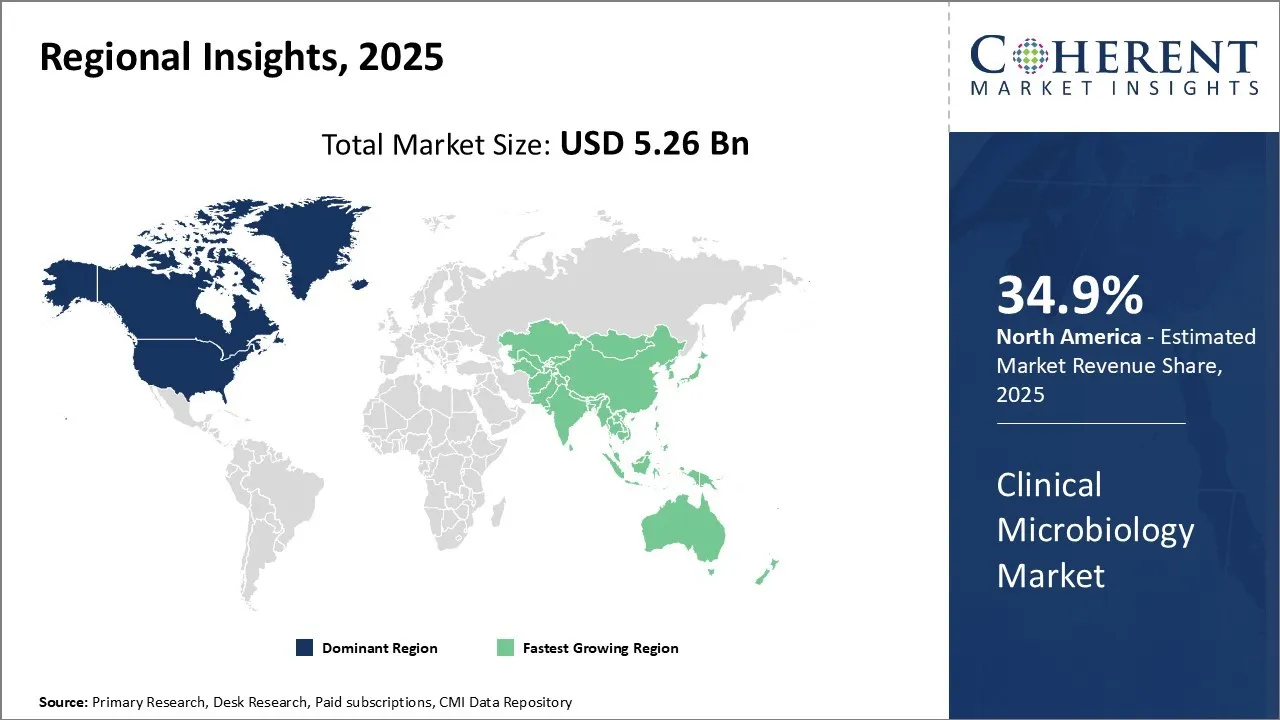
North America Clinical Microbiology Market Analysis & Trends
North America remains the dominant region in the global clinical microbiology market and is estimated to hold 34.9% of the market share in 2026, owing to strong presence of leading product manufacturers and robust healthcare infrastructure in the region. The U.S. accounts for the largest share due to presence of most sophisticated clinical setups and growing demand for advanced microbiology diagnostic tests. Several major pharmaceutical companies headquartered in the U.S. have been investing heavily in R&D to develop novel microbiology diagnostics and testing equipment, and this leads to new product launches.
For instance, in January 2026, Rapid Infection Diagnostics Inc. (RID) introduced BSIDx, an innovative microbiology testing system for bloodstream infections. With a single button press, BSIDx identifies pathogens and assesses antibiotic sensitivity from positive blood cultures in under five hours. In trials, it outperformed traditional methods by 30 hours. Developed in collaboration with Alberta Precision Laboratories, the system utilizes high-sensitivity mass spectrometry to detect microbial metabolites, aiding in rapid and precise treatment decisions.
Asia Pacific Clinical Microbiology Market Analysis & Trends
Asia Pacific region is emerging as the fastest growing market for clinical microbiology globally. Significant growth in healthcare spending by both government and private bodies has enhanced diagnostic capabilities of clinical labs in Asia. Rapidly developing economies like China and India are attracting big global players to set up manufacturing bases in these countries, ensuring easy availability of advanced products. Rising population, increasing incidence of infectious disease and growing geriatric population drives the clinical microbiology market in Asia.
For instance, in July 2026, Clever Culture Systems, an innovator in automated plate reading technology, secured partnerships with pharmaceutical giants AstraZeneca and Bristol Myers Squibb. Their APAS Independence system, initially designed for clinical microbiology, has been adapted for pharmaceutical microbiological testing. This collaboration aims to enhance environmental monitoring processes, ensuring compliance and improving data integrity in pharmaceutical manufacturing.
Clinical Microbiology Market Outlook Country-Wise
The U.S. Clinical Microbiology Market Trends
The United States drives significant demand in the Clinical Microbiology Market due to its advanced healthcare infrastructure and strong focus on early disease detection. A high prevalence of infectious diseases, combined with the widespread adoption of innovative diagnostic technologies and automated laboratory systems, compels hospitals and diagnostic centers to invest in state-of-the-art microbiology solutions, strengthening the market’s growth.
For instance, in September 2026, the American Society for Microbiology (ASM) announced the launch of ASM Food Microbiology, a new open-access journal set to begin accepting submissions in early 2026. The journal will focus on critical areas such as foodborne pathogens, probiotics, fermentation microbiology, spoilage, preservation, and biotechnological innovations in food systems.
China Clinical Microbiology Market Trends
China is witnessing rapid growth in the Clinical Microbiology Market, supported by expanding healthcare infrastructure and rising awareness of infectious diseases. The country is investing heavily in diagnostic laboratories and hospital networks, while government initiatives to improve healthcare access and diagnostic capabilities further fuel adoption of advanced clinical microbiology solutions, positioning China as a key growth market.
For instance, in May 2026, a recent study published in Frontiers in Cellular and Infection Microbiology revealed that metagenomic next-generation sequencing (mNGS) detects lung pathogens in 86% of cases, surpassing conventional microbiological tests (CMTs), which identify pathogens in 67% of cases. mNGS identified 96 pathogens, including bacteria, fungi, and viruses, compared to 28 detected by CMTs. This advancement enhances early diagnosis and personalized treatment for pulmonary infections.
Market Report Scope
Clinical Microbiology Market Report Coverage
| Report Coverage | Details | ||
|---|---|---|---|
| Base Year: | 2025 | Market Size in 2026: | USD 5.57 Bn |
| Historical Data for: | 2020 To 2024 | Forecast Period: | 2026 To 2033 |
| Forecast Period 2026 to 2033 CAGR: | 5.8% | 2033 Value Projection: | USD 8.26 Bn |
| Geographies covered: |
| ||
| Segments covered: |
| ||
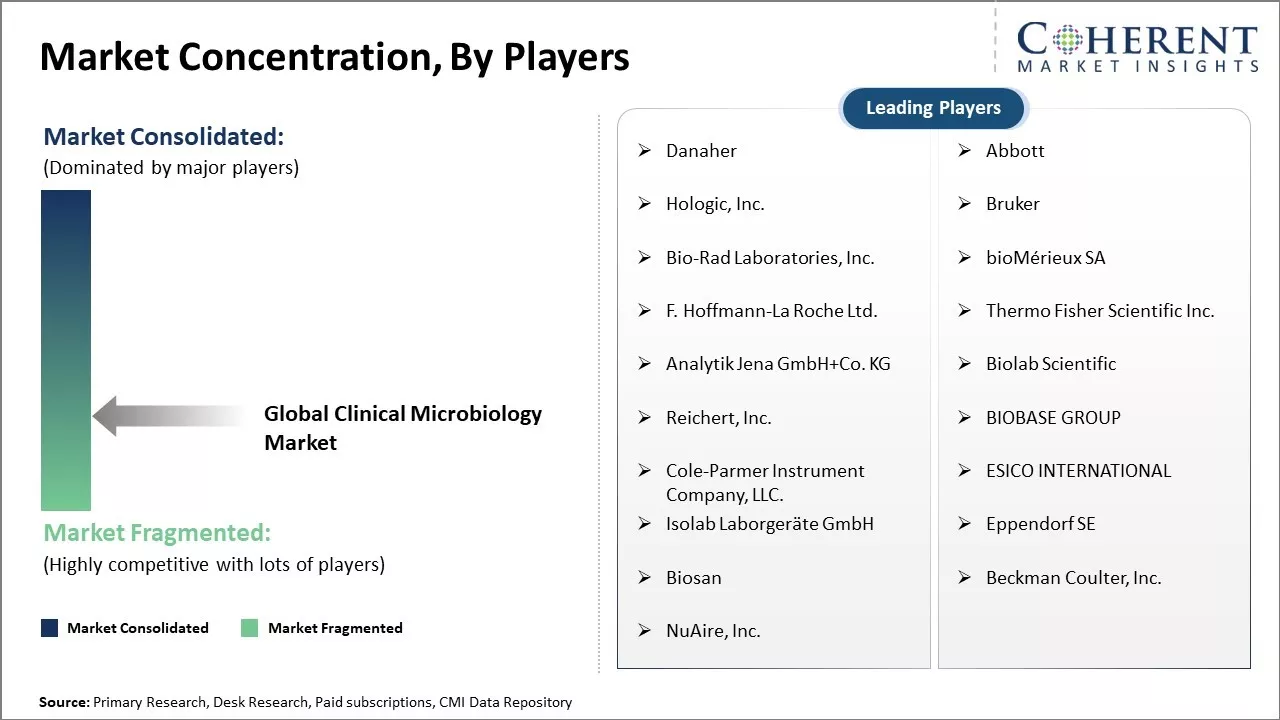
| Companies covered: | Danaher, Abbott, Hologic, Inc., Bruker, Bio-Rad Laboratories, Inc., bioMérieux SA, F. Hoffmann-La Roche Ltd., Thermo Fisher Scientific Inc., Analytik Jena GmbH+Co. KG, Biolab Scientific, Reichert, Inc., BIOBASE GROUP, Cole-Parmer Instrument Company, LLC., ESICO INTERNATIONAL, Isolab Laborgeräte GmbH, Eppendorf SE, Biosan, Beckman Coulter, Inc., NuAire, Inc. | ||
| Growth Drivers: |
| ||
| Restraints & Challenges: |
| ||
Market Dynamics
Clinical Microbiology Market Driver
Growing Prevalence of Infectious Diseases:
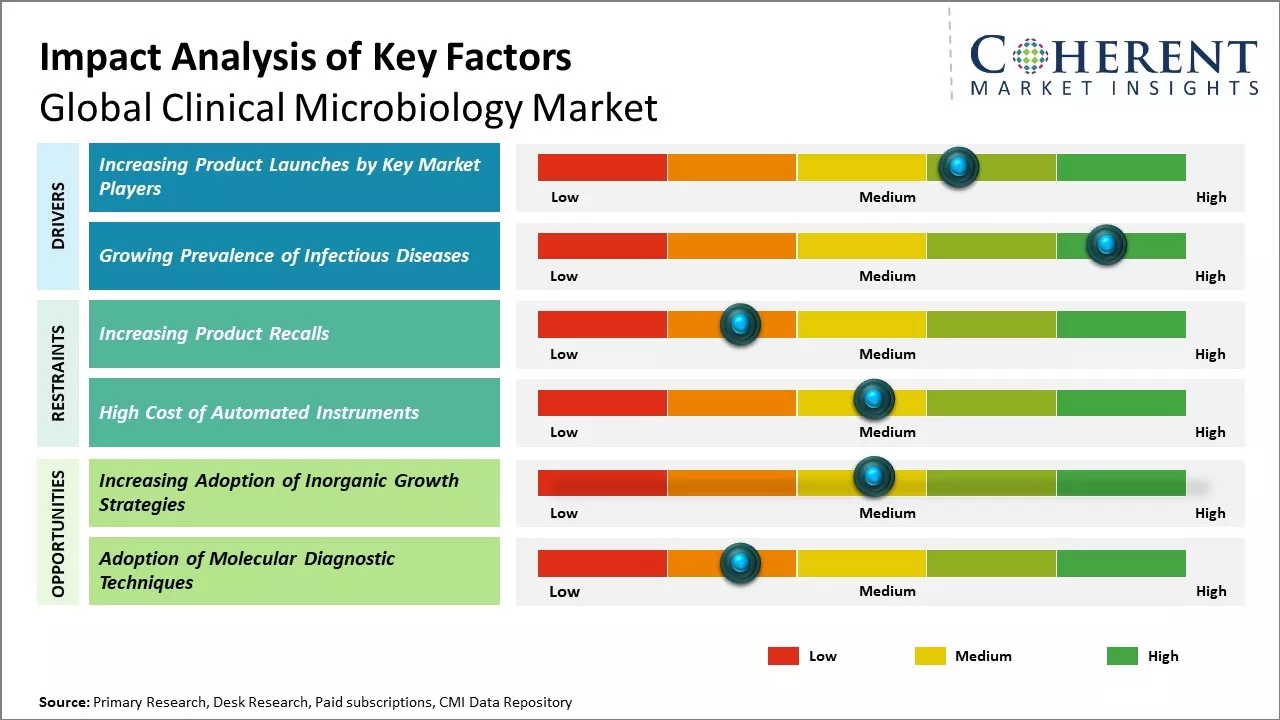
The rising incidence of infectious diseases such as bacterial, viral, and fungal infections is a major driver for the Clinical Microbiology Market demand. Hospitals, diagnostic laboratories, and research institutes increasingly rely on advanced microbiology testing to ensure rapid and accurate pathogen identification. This trend is especially pronounced in regions with high population density and limited public health infrastructure, fueling sustained adoption of clinical microbiology solutions.
Clinical Microbiology Market Opportunities
Increasing Adoption of Inorganic Strategies
In the clinical microbiology market, companies are increasingly pursuing inorganic strategies such as mergers, acquisitions, and strategic partnerships to expand their product portfolios, enter new geographies, and strengthen market presence. For instance, acquisitions of niche diagnostic technology firms or collaborations with global laboratory networks enable faster market penetration. These strategies support revenue growth, technology enhancement, and competitive advantage, forming a key driver in the clinical microbiology market forecast.
Market Concentration and Competitive Landscape
Analyst Opinion (Expert Opinion)
The clinical microbiology market value is undergoing a decisive transformation, shaped by rapid technological advances and the shifting burden of infectious diseases. A notable trend is the increasing adoption of molecular diagnostic platforms, which now account for nearly 50% of infectious disease testing in developed markets. Their ability to deliver results within hours, compared to 2–3 days for conventional culture methods, has created a clear preference among healthcare providers for precision-driven tools.
One of the most significant developments is the integration of next-generation sequencing (NGS) in clinical workflows. For instance, the Mayo Clinic’s use of NGS for bloodstream infections has demonstrated detection rates up to 20% higher than standard culture techniques, highlighting the growing indispensability of genomics in microbial identification. Furthermore, the rise in antimicrobial resistance (AMR) has accelerated demand for rapid susceptibility testing solutions. According to the WHO, AMR is associated with nearly 5 million deaths annually, underscoring the urgency of technologies that provide resistance profiles in real time.
Equally important is the growing role of point-of-care testing (POCT), particularly in resource-limited settings. Devices like Cepheid’s GeneXpert and BioFire’s FilmArray have become benchmarks for decentralized, accurate, and cost-effective diagnostics, significantly reducing reliance on centralized laboratories.
Speak to the analyst
Want personalized insights?
Take the findings above to one of our principal consultants, or have the report rebuilt around the segments, geographies and competitors you actually track.
Clinical Microbiology Industry News
- In June 2025, the NeoSep1 clinical trial commenced in Cape Town, South Africa, marking a significant step in combating drug-resistant neonatal sepsis. This study evaluates the efficacy of a novel antibiotic combination, fosfomycin, flomoxef, and amikacin, against five standard regimens. Aiming to enroll 3,000 newborns across nine countries by 2028, the trial seeks to identify optimal treatments to reduce mortality from antimicrobial-resistant infections.
- In May 2025, Shimadzu Corporation launched "MicrobialTrack," a next-generation software platform for microbial identification. Utilizing a cloud-based service and a vast protein mass database derived from approximately 400,000 microbial genomes, it enables the identification of around 85,000 prokaryotic species, including hard-to-culture and uncultured microorganisms. This advancement enhances applications in food safety, healthcare, drug discovery, and environmental research.
- In May 2023, Copan Diagnostics Inc., a manufacturer of laboratory products, introduced CYCLONE AUTO-PREP, a fully automated instrument for preparing pour plate total viable bacterial counts on liquid samples, with optional Smart Incubators and the use of Artificial Intelligence (AI) for automatic colony counting and colony recognition for most common bacteria of specific interest in the food protection industry
- In March 2023, bioMérieux SA, a biotechnology company, in collaboration with its partner Interscience, laboratory equipment supplier in U.S., introduced the 3P STATION, an automated system tailored to meet the specific requirements of pharmaceutical industry stakeholders. This automated system optimizes and ensures reliable reading performances and was created specially to satisfy the environmental monitoring requirements of the pharmaceutical industry
- In February 2023,bioMérieux SA launched MAESTRIA, a cutting-edge middleware designed for microbiology laboratories. With the help of this new-generation middleware, all routine activities in the microbiology lab will be managed through a single software tool.
Market Segmentation
- Product Type Insights (Revenue, USD Bn, 2026 - 2033)
- Laboratory Instruments
- Incubators
- Gram Stainers
- Bacterial Colony Counters
- Autoclave Sterilizers
- Petri Dish Fillers
- Automated Culture Systems
- Microbiology Analyzers
- Microscopes
- Molecular Diagnostic Instruments
- Mass Spectrometers
- Reagents
- Disease Type Insights (Revenue, USD Bn, 2026 - 2033)
- Respiratory Diseases
- Bloodstream Infections
- Gastrointestinal Diseases
- Others
- End User Insights (Revenue, USD Bn, 2026 - 2033)
- Hospitals
- Custom Lab Service Providers
- Academic & Research Institutes
- Regional Insights (Revenue, USD Bn, 2026 - 2033)
- North America
- U.S.
- Canada
- Latin America
- Brazil
- Argentina
- Mexico
- Rest of Latin America
- Europe
- Germany
- U.K.
- Spain
- France
- Italy
- Russia
- Rest of Europe
- Asia Pacific
- China
- India
- Japan
- Australia
- South Korea
- ASEAN
- Rest of Asia Pacific
- Middle East
- GCC
- Israel
- Rest of Middle East
- Africa
- South Africa
- North Africa
- Central Africa
- Key Players Insights (Revenue, USD Bn, 2021 - 2033)
- Danaher
- Abbott
- Hologic, Inc.
- Bruker
- Bio-Rad Laboratories, Inc.
- bioMerieux SA
- F. Hoffmann-La Roche Ltd.
- Thermo Fisher Scientific Inc.
- Analytik Jena GmbH+Co. KG
- Biolab Scientific
- Reichert, Inc.
- BIOBASE GROUP
- Cole-Parmer Instrument Company, LLC.
- ESICO INTERNATIONAL
- Isolab Laborgeräte GmbH
- Eppendorf SE
- Biosan
- Beckman Coulter, Inc.
- NuAire, Inc.
Sources
Primary Research — Interviews from the following stakeholders
- Clinical microbiologists and laboratory directors at tertiary-care and reference laboratories.
- Heads of clinical diagnostics and laboratory services at hospitals and health systems.
- Infection prevention & control (IPC) leads and hospital epidemiologists.
- Laboratory purchasing/procurement heads and finance managers.
- Directors of central lab networks and national reference laboratories.
- R&D and product managers at diagnostic OEMs (molecular, culture, rapid tests, MALDI-TOF, automation).
- Quality assurance and regulatory affairs lead in diagnostics manufacturers.
- Sales & business development leads at diagnostic reagent and instrument suppliers.
- Medical affairs and key opinion leaders (KOLs) — infectious disease physicians and clinical pathologists.
- Managers of hospital IT/LIS (Laboratory Information Systems) and EHR integration teams.
- Biobanking managers and microbiology sample logistics providers.
- Public health surveillance officers and national AMR (antimicrobial resistance) program heads.
- Distributors, contract lab service providers, and diagnostic installers/maintenance teams.
Specific stakeholders
- Clinical laboratory directors at major hospital systems (e.g., NHS Trust labs — UK; Mayo Clinic — US; AIIMS — India; Apollo Hospitals — India).
- Infection prevention leads at major hospitals and medical centers (e.g., Cleveland Clinic, Singapore General Hospital).
- Heads of microbiology at national reference/public health labs (e.g., CDC / Public Health England / Indian Council of Medical Research (ICMR) reference labs).
- Procurement and supply chain heads at large hospital groups and government health departments.
- R&D/product managers at diagnostic OEMs and component suppliers (e.g., companies supplying PCR platforms, consumables, MALDI-TOF, automation modules).
- Clinical affairs/medical directors at major diagnostic companies and hospital networks.
- Program managers at public health surveillance programs (e.g., GLASS focal points, national AMR programs).
- Laboratory automation integrators and service engineers supporting high-throughput labs.
Databases & Surveillance Sources
- World Health Organization (WHO) — GLASS (Global Antimicrobial Resistance Surveillance System) and surveillance reports.
- Centers for Disease Control and Prevention (CDC) — surveillance data and antibiotic resistance threat reports.
- European Centre for Disease Prevention and Control (ECDC) — surveillance and laboratory data.
- gov — diagnostics-related clinical studies and trial outcomes.
- PubMed / MEDLINE — peer-reviewed literature and systematic reviews.
- National health data portals (e.g., NHS Digital — UK; ICMR / NCDC — India).
- OECD Health Data and World Bank health indicators.
- National regulatory databases: US FDA devices/510(k)/PMA listings and approvals; EMA device/IVD pathways.
- Hospital/LIS extract datasets and laboratory information system (LIS) de-identified test volumes.
- National notifiable disease registries and laboratory-confirmed case reports.
Trade, Economic & Policy Databases
- World Trade Organization (WTO) trade statistics (diagnostic instrument and reagent trade flows).
- UN Comtrade Database (HS codes for in vitro diagnostic instruments and reagents).
- National customs/statistics portals (e.g., China Customs, Japan METI trade stats).
- Ministry of Health / Industry data portals (country-specific diagnostics procurement and policy documents).
- WHO procurement and prequalification lists.
Magazines & Industry Publications
- Clinical Lab News / Clinical Laboratory News.
- Infection Control Today.
- The Pathologist.
- Laboratory Medicine.
- Diagnostic Imaging & Laboratory Management trade sections.
- GenomeWeb (diagnostics coverage).
- Medical Device & Diagnostic industry newsletters and trade press.
Peer-Reviewed Journals
- Journal of Clinical Microbiology.
- Clinical Microbiology and Infection.
- Clinical Microbiology Reviews.
- Diagnostic Microbiology and Infectious Disease.
- Journal of Clinical Pathology.
- The Lancet Infectious Diseases.
- Emerging Infectious Diseases (CDC).
- Journal of Antimicrobial Chemotherapy.
Newspapers & General Media
- The Wall Street Journal — Health & Biotech coverage.
- New York Times — Health/Science features.
- Financial Times — Healthcare industry reports.
- The Hindu / The Indian Express — health policy and industry news (India).
- Nikkei Asia — medical device & supply-chain reporting.
- South China Morning Post — biotech & diagnostics industry.
Professional Associations & Standards Bodies
- American Society for Microbiology (ASM).
- European Society of Clinical Microbiology and Infectious Diseases (ESCMID).
- Infectious Diseases Society of America (IDSA).
- Clinical and Laboratory Standards Institute (CLSI).
- Association of Public Health Laboratories (APHL).
- International Organization for Standardization (ISO) — standards for medical devices/IVDs.
- World Health Organization (WHO) — laboratory strengthening and IVD guidance.
Public Domain & Government Sources
- U.S. Food and Drug Administration (FDA) — IVD guidance, EUA listings, device recalls.
- European Medicines Agency (EMA) / Notified Bodies guidance for IVDs.
- Indian Council of Medical Research (ICMR) guidelines and national reference lab reports.
- National Centre for Disease Control (NCDC), India.
- Ministries of Health (country-level diagnostics procurement and strategy papers).
- WHO technical guidance on laboratory diagnostics and AMR.
- National public health institute reports (e.g., Public Health England / UKHSA).
*Definition: Clinical Microbiology involves the commercialization of diagnostics tools, instruments, and consumables used for the identification and diagnosis of human microbial infections and diseases. It covers all products used in clinical microbiology laboratories to identify microorganisms like bacteria, viruses, fungi and parasites causing infections in patients for appropriate treatment and management of infectious diseases.
Get access to 250+ pages report
Every segment, forecast, competitor profile and data table behind the analysis above — available for instant download.
- ESOMAR Member
- ISO 9001:2015 Certified
- D-U-N-S Registered
- GDPR & CCPA Compliant
Missing comfort of reading report in your local language? Find your preferred language:
Transform your Strategy with Exclusive Trending Reports
Frequently Asked Questions
The Clinical Microbiology Market is estimated to be valued at USD 5.57 Bn in 2026, and is expected to reach USD 8.26 Bn by 2033.
The CAGR of the Clinical Microbiology Market is projected to be 5.8% from 2026 to 2033.
Increasing product launches by key market players and growing prevalence of infectious diseases are the major factors driving the growth of global clinical microbiology market.
Increasing product recalls and high cost of automated instruments are the major factors hampering the growth of global clinical microbiology market.
In terms of product type, laboratory instruments segment is estimated to dominate the market in 2026
Danaher, Abbott, Hologic, Inc., Bruker, Bio-Rad Laboratories, Inc., bioMérieux SA, F. Hoffmann-La Roche Ltd., Thermo Fisher Scientific Inc., Analytik Jena GmbH+Co. KG, Biolab Scientific, Reichert, Inc. , BIOBASE GROUP, Cole-Parmer Instrument Company, LLC. , ESICO INTERNATIONAL, Isolab Laborgeräte GmbH, Eppendorf SE, Biosan, Beckman Coulter, Inc., NuAire, Inc. are the major players.
North America is expected to lead the global clinical microbiology market.