

Global Coco Peat Compost Market Size and Forecast – 2026-2033
The Global Coco Peat Compost Market is estimated to be valued at USD 3,601.5 Mn in 2026 and is expected to reach USD 5,273.9 Mn by 2033, exhibiting a compound annual growth rate (CAGR) of 5.6% from 2026 to 2033.
Key Takeaways of the Coco Peat Compost Market
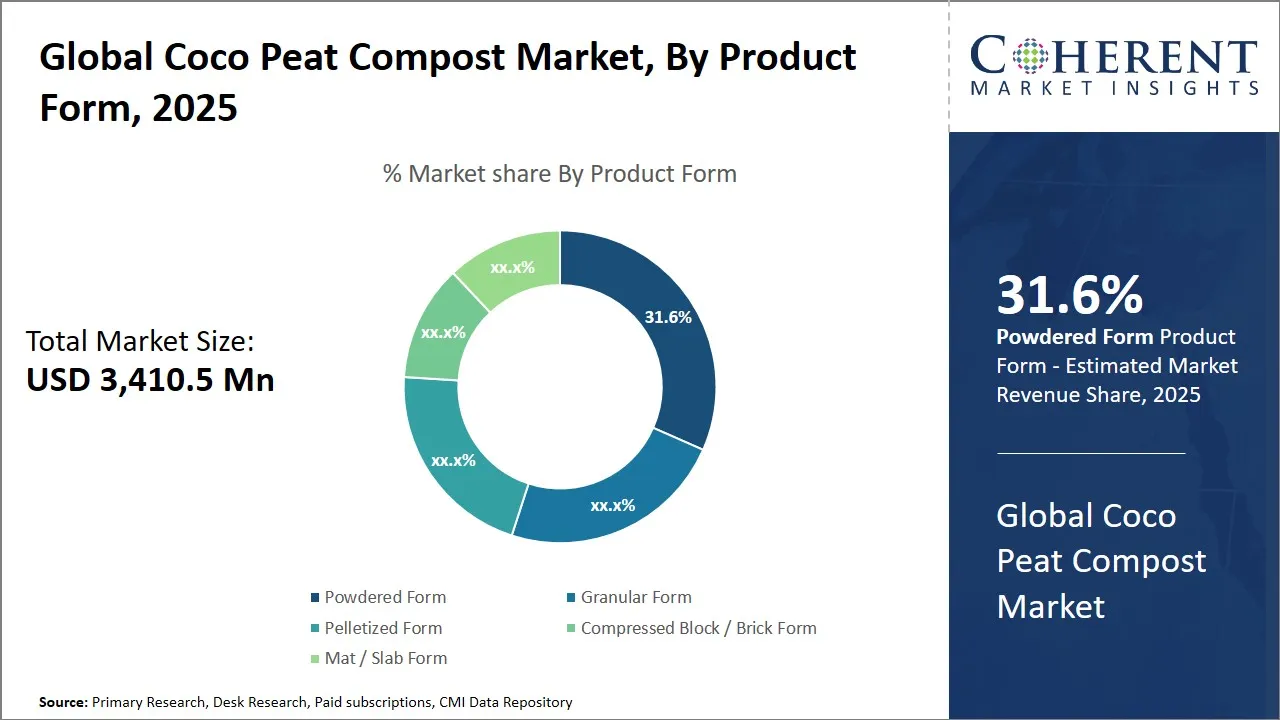
- The powdered form segment is expected to account for 32.6% of the coco peat compost market in 2026.
- The commercial horticulture segment is projected to hold 24.7% of the coco peat compost market in 2026.
- The direct sales segment is expected to dominate the global coco peat compost market in 2026, accounting for 55.7% share.
- Asia Pacific is set to lead the global coco peat compost market in 2026 with a 36.2% share. Africa, with an estimated 8.3% share, will be the fastest-growing region.
Market Overview
A key development impacting the coco peat compost market is an increase in the use of biodegradable and renewable materials in agriculture and landscaping. More consumers and industries are turning to coco peat for its ability to better retained water, aerate, and hold nutrients than traditional soil amendments. The influence of the organic farming movement and government policies supporting sustainable agriculture continue to drive the market growth and topical developments in production approaches continue to improve quality and value.
Currents Events and their Impact
Current Events | Description and its impact |
Surge in Organic Farming Globally |
|
Technology Advancements in Composting |
|
Segmental Insights
- Current Industry Events of 2026
- Market Size Estimation
- Regional Breakdown
- Competitive Landscape
- Customer Intelligence
- Segmental Analysis
- Pricing Analysis
- Key Market Drivers, Challenges & Future Trends
- Customized Insights Section
Coco Peat Compost Market Insights, By Product Form - Powdered Form Segment Dominates the Market Due to its Versatility and Enhanced Usability
The powdered form segment is expected to hold 32.6% share of the coco peat compost market in 2026, mainly due to its high adaptability and ease of use in almost all agricultural and horticultural applications. The powdered form provides the best water holding capacity, aeration, and efficiency in nutrient uptake compared to other forms like granular, pelletized, or compressed block due to which it is the most important factor for healthy soil ecosystems and promoting maximum plant growth. Its fine structure allows for better blending with soil or other growing media, which enhances moisture distribution and root zone situation, allowing for better nutrient uptake and plant vitality.
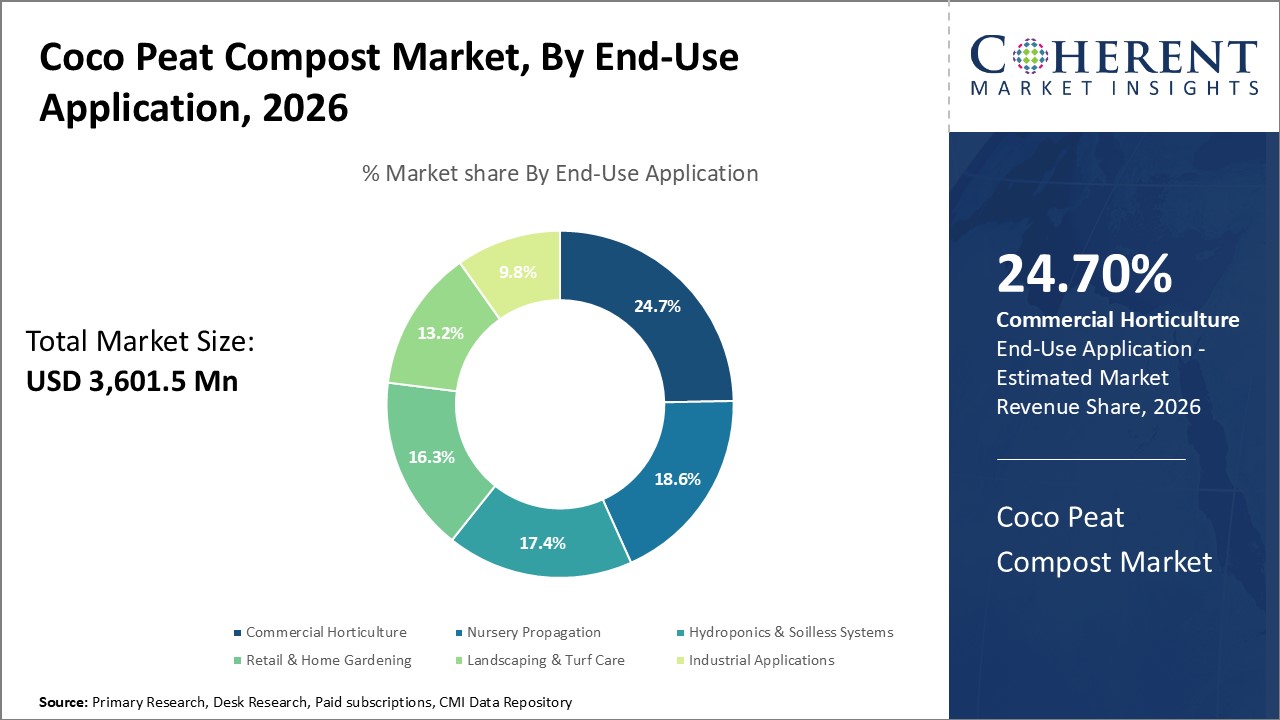
Coco Peat Compost Market Insights, By End-Use Application - Commercial Horticulture Leads Due to Rising Demand for Efficient, Sustainable Cultivation Practices
Commercial horticulture segment is projected to hold 24.7% share of the coco peat compost market in 2026, driven primarily by the industry's increased emphasis on producing high crop yields while following sustainable methods of cultivation. This division encompasses mass cultivation, such as floriculture and vegetable cultivation, where controlled growing media usage like coco peat is critical in enhancing crop health and performance. The special characteristics of coco peat, including superior water-holding capacity, improved aeration, and naturally adjusted pH, make it a substrate of choice for commercial growers interested in optimizing output quality and consistency.
Commercial horticulture demand is further promoted by the transition towards integrated pest management and organic cultivation in large-scale agricultural operations. Natural composition of coco peat reduces the necessity for chemical inputs and fertilizers by promoting increased root growth and microbial activity, thus lowering input costs and environmental loads. Moreover, the light weight and easy handling characteristics of coco peat render it cost-effective to ship and handle in bulk, which is appropriate for the magnitude of commercial horticulture operations.
Coco Peat Compost Market Insights, By Distribution Channel - Direct Sales Segment Dominates Due to Strategic Supplier–Consumer Relationships and Customization Options
Direct sales segment is set to hold 55.7% share of the market in 2026, significantly because of the strategic benefits that it presents both to suppliers and final consumers. This channel creates closer relationships between consumers and manufacturers, allowing for a clearer identification of individual needs like product form, quality specifications, and delivery times. Such direct contact is specially appreciated in commercial horticulture and industrial use where bulk buying and product customization are essential to operational success.
Regional Insights
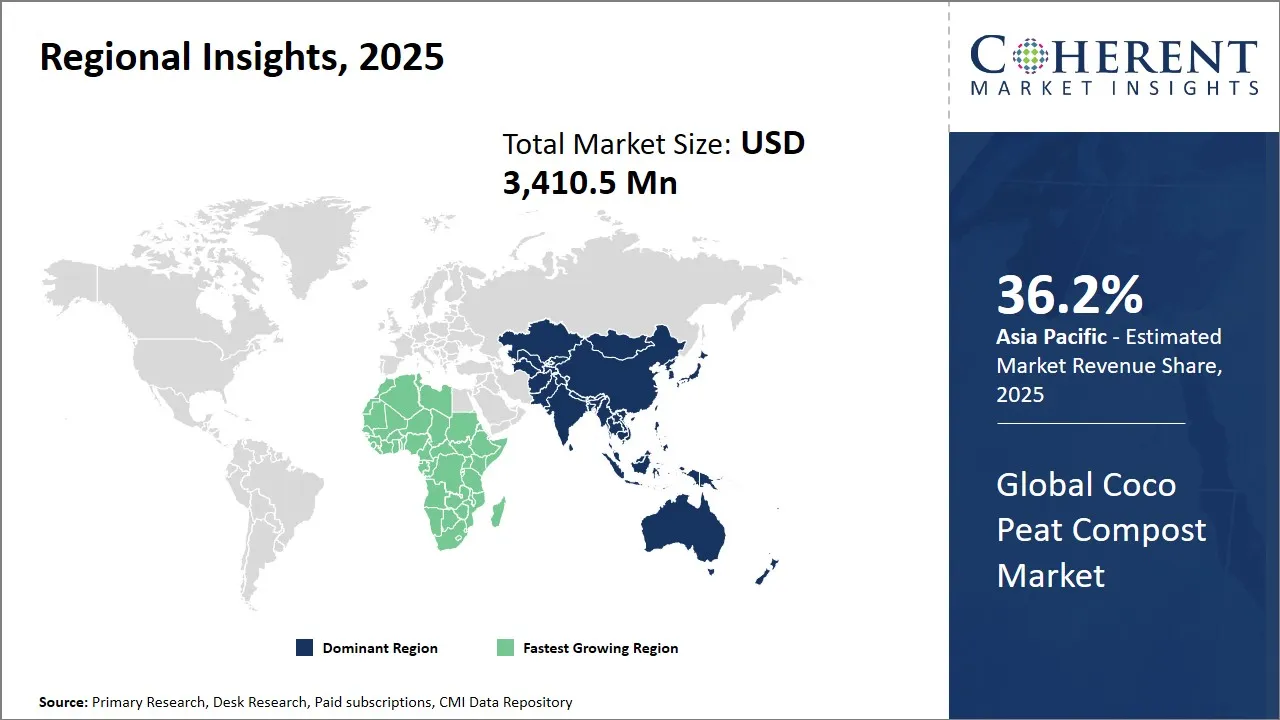
Asia Pacific Coco Peat Compost Market Analysis and Trends
The Asia Pacific region is expected to dominate the market in 2026 with a share of 36.2%, driven by the rich availability of raw material, which is largely caused by the vast coconut growing areas of the region in countries such as India, Indonesia, and the Philippines. A well-developed coconut farm industry provides an excellent support system for coco peat manufacturing and downstream uses in horticulture and agriculture. Government efforts towards encouraging sustainable farming and organic farming have also driven market expansion.
Moreover, while there are many small and medium-sized enterprises engaged in processing coco peat, the supply chain resilience is supported. CICO Companies (India), Cocopeat Co. Ltd. (Indonesia), and A&B Group (Philippines) are prominent companies that have played a key role by developing processing technologies and increasing the export capacity through favorable trade policies within the region, such as bilateral trade agreements and minimal export tariffs.
Africa Coco Peat Compost Market Analysis and Trends
The Africa market is anticipated to show the highest growth with 8.3% share in 2026 due to growing demand for sustainable crop management and effective, environment-friendly growing media. The increase in demand for organic farming within the region, coupled with government programs encouraging environmental protection, drives the trend. Furthermore, the increasing use of greenhouses and hydroponics in South Africa, Kenya, and Morocco propels the demand for coco peat. Local and multinational businesses, including Green House Africa and AgriFibre, are expanding their presence and product ranges to address the needs of the market, emphasizing quality and price. The market is further underpinned by enhanced distribution networks, with imports from Asia Pacific being a leading influence on the supply chain, supported by trade treaties and logistics infrastructure development within the region.
Global Coco Peat Compost Market Outlook for Key Countries
India Coco Peat Compost Market Trends
India's coco peat compost market is favored by being a large producer of coconuts, with a vast raw material base. Organic farming through initiatives such as the Paramparagat Krishi Vikas Yojana (PKVY) encourages the use of green growing media like coco peat. Indian businesses such as CICO Companies have a key function by improving processing methods and selling quality coco peat products all over the world. The ecosystem of the market comprises many small-scale processors with conventional techniques, slowly moving towards mechanized production to cater to increasing domestic and foreign demand.
Indonesia Coco Peat Compost Market Trends
Indonesia remains at the forefront of coco peat compost production as it is the leading global coconut producer and exporter. Climatically favorable conditions and enormous plantation lands guarantee consistent raw material supplies. The government of Indonesia carries out initiatives on agroforestry and sustainable agriculture, indirectly promoting the use of other coco peats. Large companies like Cocopeat Co. Ltd. emphasize technology-driven processing and supply chain improvements to assure the consistency of products and increase exports, particularly into North America and Europe. Convenient port locations allow for streamlined trade logistics, which strengthens Indonesia's competitive position in the global market.
U.S. Coco Peat Compost Market Trends
The U.S. coco peat compost market is growing at a fast pace, driven by the growing adoption of organic gardening and professional horticulture markets adopting sustainable media. The regulatory landscape favors environmentally friendly substrates, and consumers are looking for peat substitutes such as coco peat. Firms such as SunGro Horticulture have taken advantage of this trend by adding coco peat to high-quality potting mixes and hydroponic substrates. Imports are supplemented by domestic blending and packaging activities mainly from Asia Pacific. Consumer awareness and the U.S.'s sophisticated distribution network support the market growth.
Netherlands Coco Peat Compost Market Trends
The Netherlands is a key center for coco peat compost in Europe because it hosts a sophisticated horticulture sector and is a leading flower and plant exporter.
Dutch enterprises incorporate coco peat as part of high-performance growing media for greenhouses and nurseries. Public policy supports sustainable farming and circular economy approaches, which promote the adoption of coco peat as a sustainable, bio-degradable medium. Companies such as Koppert Cress and Van der Kaaij Group help by making available innovative substrate formulations and logistics services with the benefit of the Netherlands' logistical port situation to deliver products efficiently throughout Europe.
Brazil Coco Peat Compost Market Trends
Brazil's coco peat compost industry is developing, fostered by increasing organic agriculture initiatives and diversification in cropping practices. The country's extensive agricultural base provides prospects for coco peat application in improving soil quality and water holding capacity. Limited domestic coconut production though requires dependence on imports, mainly from Asia Pacific producers, which affects trade patterns. Horticeres and Ecoclim Verde are some companies working in complementary business areas, initiating consciousness and organic medium blends development containing coco peat. The government is supporting rural innovation and sustainability that slowly promotes the market growth.
Fluctuating Pricing Trends in Coco Peat Compost
- Unpredictable price directions in the market for coco peat compost have been determined by a number of dynamic factors such as fluctuations in raw coir supplies, increases in freight charges, and changes in export demand. Such changes bring about an element of uncertainty that affects both the supplier margins and buyer procurement strategies significantly. As raw material supply becomes uncertain, suppliers tend to struggle with managing steady production costs, while buyers react by changing purchasing strategies.
- To offset the effects of price fluctuation, most customers are moving to locally produced coco peat products or choosing compressed coco peat, as these can lower shipping costs and increase cost-effectiveness. This not only aids in containing pricing risk but also impacts the product mix, where more focus is given to cost-efficient alternatives like compressed coco peat or which is produced nearer to the point of consumption.
- These price changes have larger ramifications for international trade flows, especially between major production areas such as India, Sri Lanka, and Vietnam, and large consuming regions in North America, Europe, and the Middle East. The changing buying pattern and modified product demand, driven by cost discipline, are transforming market dynamics towards more local production and a possible change in export trend.
Market Players, Company Insights, and Competitive Intelligence
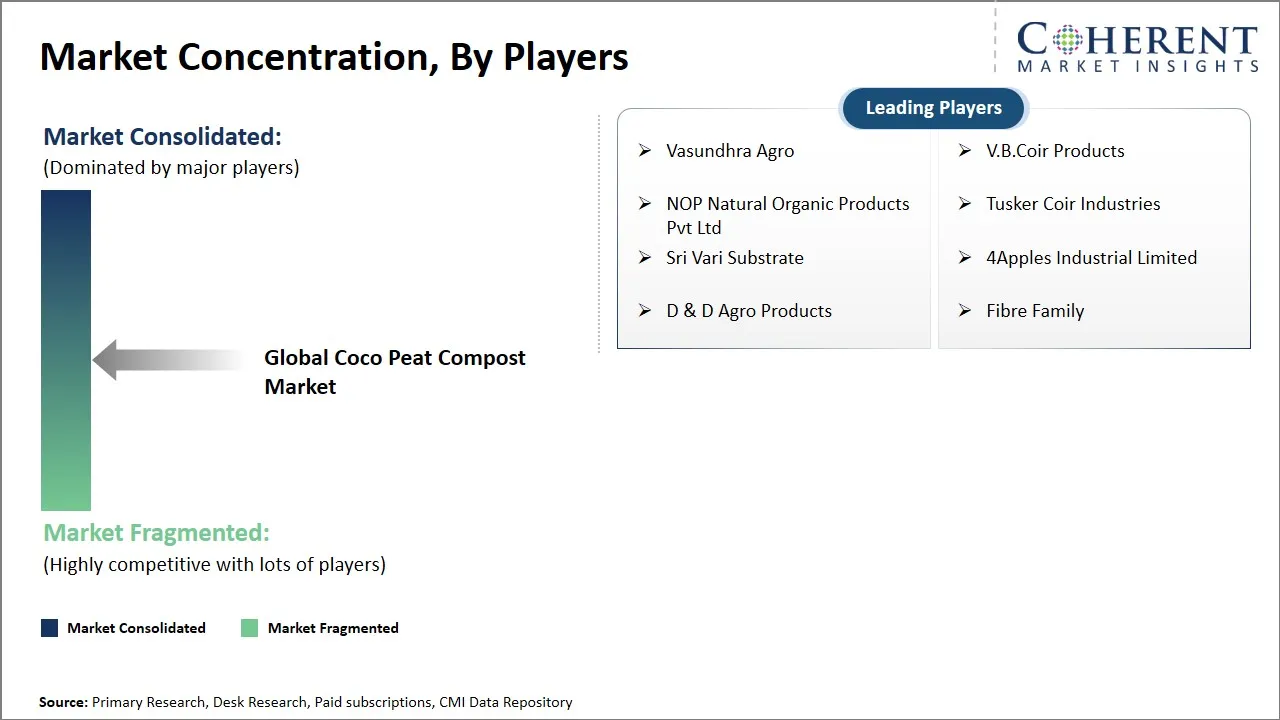
Company Insights
- Vasundhra Agro is a leading manufacturer and supplier located in Mumbai, Maharashtra, that focuses entirely on 100% organic and natural coco peat and vermicompost products. They offer several products including pure coco peat, coco peat with vermicompost, and coco peat blocks that have been compressed for agricultural/horticultural applications.
- B. Coir Products is a prominent coconut peat compost provider. The company offers a gamut of coir products for agriculture, horticulture, and construction applications. Some of their leading products include Sterilised Coir Pith: Sold at INR 12 per kilogram, this product is sterilized to effectively eliminate pathogens that act as pathogens for most popular plants, and is useful for soil conditioning and the retention of water for various plants.
Top Strategies Followed by Global Coco Peat Compost Market Players
- Leading players in the coco peat compost market invest significantly in research and development (R&D) to create innovative and enhanced performance coco peat products to satisfy the changing needs of agriculture and horticulture. In doing so, they will enhance product quality, durability, and nutrient holding capacity as they refine their products to stay ahead of their competition.
- For example, the leading brand, CocoGreen has developed a premium coco peat product with superior water retention and nutrient holding capacity which has resulted in it becoming the preferred coco peat product among large scale horticulturists and greenhouse growers.
- Mid-level market players seek to differentiate by focusing on affordable, low-cost product solutions that still deliver a degree of reliability. Such providers develop products for price-sensitive segments of the coco peat compost market that provide only enough quality to attract small-scale farmers and local horticultural businesses looking for value-based products when balancing product costs. The same type of products appeals to distributors hoping to make a profit in a relatively inexpensive segment of the market.
- For instance, the Sri Vari Substrate provides an economical coper peat block by optimizing their manufacturing process to reduce costs. Its product is popular with farmers and local horticulturists who want cheap but quality coco peat for their gardening needs.
- Small-scale players in the coco peat compost market often carve out niche segments by zeroing in on specialized product features and innovative solutions that cater to specific regional or agricultural needs. These companies tend to be more agile in adopting cutting-edge processing technologies, such as automated drying and sieving systems, organic enhancements, or customized grading that increase product appeal to particular client bases.
Market Report Scope
Coco Peat Compost Market Report Coverage
| Report Coverage | Details | ||
|---|---|---|---|
| Base Year: | 2025 | Market Size in 2026: | USD 3,601.5 Mn |
| Historical Data for: | 2020 To 2024 | Forecast Period: | 2026 To 2033 |
| Forecast Period 2026 to 2033 CAGR: | 5.6% | 2033 Value Projection: | USD 5,273.9 Mn |
| Geographies covered: |
| ||
| Segments covered: |
| ||
| Companies covered: | Vasundhra Agro, V.B.Coir Products, NOP Natural Organic Products Pvt Ltd, Tusker Coir Industries, Sri Vari Substrate, 4Apples Industrial Limited, D & D Agro Products, and Fibre Family | ||
| Growth Drivers: |
| ||
| Restraints & Challenges: |
| ||
Coco Peat Compost Market Dynamics
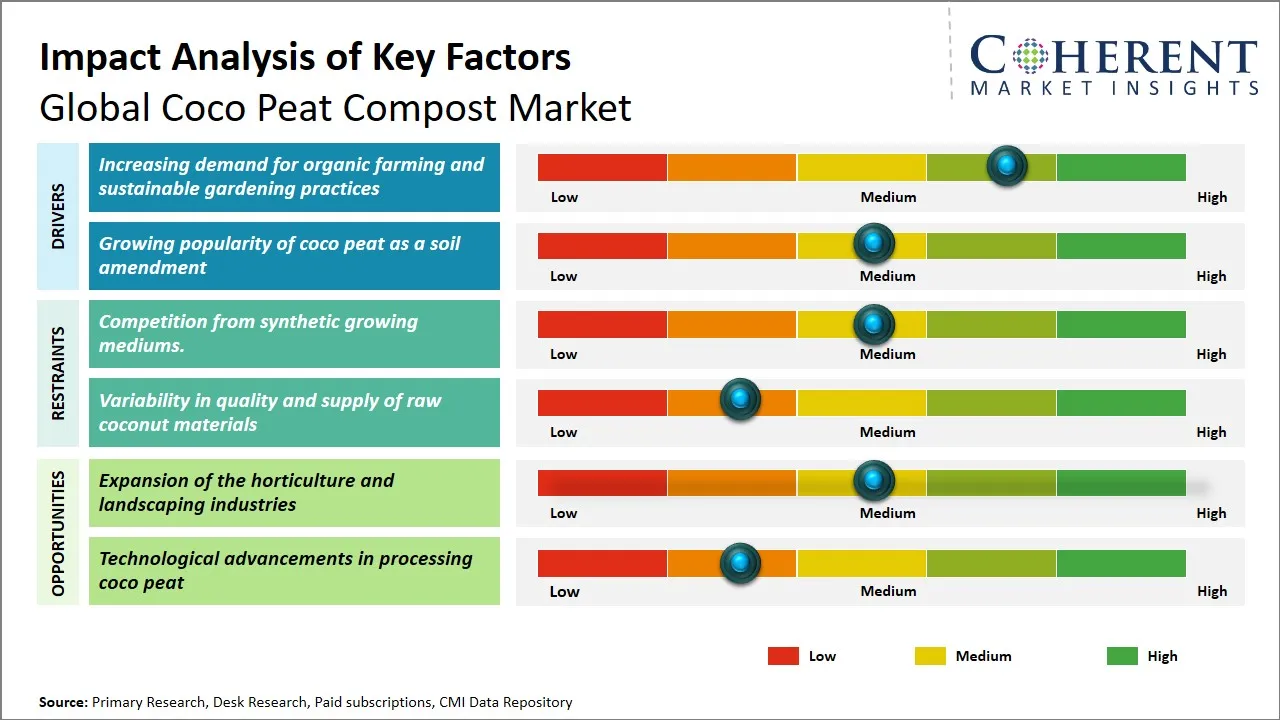
Coco Peat Compost Market Driver - Increasing Demand for Organic Farming and Sustainable Gardening Practices
The increasing worldwide awareness of environmental protection and health consciousness has significantly stimulated demand for organic farming and sustainable gardening that has led to a rise in the use of coco peat compost. Consumers and farmers alike are more concerned about using eco-friendly and chemical-free farming, and coco peat compost is a favorite growing medium due to its natural sources, ability to retain water, and biodegradable properties. Coco peat, unlike synthetic base materials, is beneficial to root growth and helps with soil aeration, fulfilling important principles of organic agriculture.
The Government of India has helped promote organic farming through the National Mission on Organic Farming (NMOF) which provides financial resources for organic certifications and eco-friendly practices. Farmers in states such as Sikkim, which is India's first fully organic state, are using coco peat compost more frequently as their chosen medium to help improve soil health and grow crops sustainably.
Coco Peat Compost Market Opportunity - Expansion of the Horticulture and Landscaping Industries
The global coco peat compost market has a profitable growth opportunity due to the fast-expanding horticulture and landscaping industry globally. With the continuing acceleration of urbanization and the increasing interest of consumers in sustainable and eco-friendly gardening practices, the demand for high-quality growing mediums, such as coco peat compost, is also increasing. This natural, renewable resource possesses excellent water retention properties, aeration capability, and nutrient-holding capacity, making it very appropriate for a broad range of horticultural activities, including potting mixes, seed germination, and soil conditioners.
For example, horticulture and landscaping is the increased prevalence of vertical farming in urban areas. In cities such as New York, Singapore, and Dubai, where traditional agricultural land is more limited, vertical farming and urban gardening are becoming popular.
Key Takeaways from Analyst
- There is a growing demand for coco peat compost and this sector is expanding as people become more aware of sustainable horticultural and organic gardening practices. The International Horticultural Congress occurring in 2023 and the Global Organic Summit that was held in the Fall of 2022 were the beginnings of many obvious opportunities for companies such as Coco Coir and Green Earth to develop new, innovative, high-quality and fully sustainable coco peat products.
- Innovation was a strong focus of both meetings, especially in relation to sourcing raw materials in sustainable ways and processing coco coir products that meet consumers' demands for sustainability. Challenges related to the coco peat compost market mentioned by companies include competition from synthetic alternatives and quality control considerations. Companies that develop numerous applications for coco peat and thoroughly discuss their coco peat specifications will have a competitive advantage.
- In addition, engaging nurseries and landscape designers as clients will broaden and deepen coco peat's market penetration. Ultimately, the coco peat compost market will grow if the industry can foster innovative growth while balancing sustainability and fulfilling the needs of the agriculture community.
Market Segmentation
- Product Form Insights (Revenue, USD Mn, 2021 - 2033)
- Powdered Form
- Granular Form
- Pelletized Form
- Compressed Block / Brick Form
- Mat / Slab Form
- End-use Application Insights (Revenue, USD Mn, 2021 - 2033)
- Commercial Horticulture
- Nursery Propagation
- Hydroponics & Soilless Systems
- Retail & Home Gardening
- Landscaping & Turf Care
- Industrial Applications
- Distribution Channel Insights (Revenue, USD Mn, 2021 - 2033)
- Direct Sales
- Indirect Sales
- Regional Insights (Revenue, USD Mn, 2021 - 2033)
- North America
- U.S.
- Canada
- Latin America
- Brazil
- Argentina
- Mexico
- Rest of Latin America
- Europe
- Germany
- U.K.
- Spain
- France
- Italy
- Russia
- Rest of Europe
- Asia Pacific
- China
- India
- Japan
- Australia
- South Korea
- ASEAN
- Rest of Asia Pacific
- Middle East
- GCC Countries
- Israel
- Rest of Middle East
- Africa
- South Africa
- North Africa
- Central Africa
- North America
- Key Players Insights
- Vasundhra Agro
- B.Coir Products
- NOP Natural Organic Products Pvt Ltd
- Tusker Coir Industries
- Sri Vari Substrate
- 4Apples Industrial Limited
- D & D Agro Products
- Fibre Family
Sources
Primary Research Interviews
- R&D Director – Leading Coco Peat Compost Manufacturer
- Procurement Manager – Major Agro-Input Retailer
- Product Development Head – Well-Known Organic Soil Amendment Brand
- Sustainability Manager – Soil Health Certification Body
Stakeholders
- Manufacturers of Coco Peat Compost
- End-use sectors
- Horticulture and Landscaping
- Agriculture (Organic Farming)
- Nursery and Greenhouse Growing
- Regulatory & Certification Bodies
- E-commerce Platforms and Retailers of Soil Amendments
- Technology Integration Providers: AI-based soil health and amendment personalization services
Databases
- UN Comtrade Database (Trade data for coco peat and related products)
- India Import Export (EXIM) Database (Key import-export statistics)
Magazines
- Organic Farming Journal – Trends in organic soil amendments and compost
- Horticulture Today Magazine – Innovations in growing media and coco peat
- Global Agriculture Insights – Consumer and market trends in growing media
- Sustainable Farming Review – Market updates on biodegradable and renewable growing media
Journals
- Journal of Soil Science and Plant Nutrition – Research on benefits of coco peat in agriculture
- Journal of Agricultural and Food Chemistry – Studies on formulation and bioavailability of nutrients in growing media
- Environmental Science & Technology – Assessments related to sustainability of coco peat compost
Newspapers
- The Financial Times – Market growth and investment trends in coco peat products
- The Guardian – Consumer interest in sustainable gardening and growing media products
- Asia Agricultural Journal – Growth of coco peat compost use in Asia-Pacific region
- European Green Review – Regulation and certification trends in organic soil amendments
- The New York Times – Shifts in consumer preference towards organic and sustainable growing media
Associations
- International Society of Growing Media and Composting (ISGMC)
- Organic Materials Review Institute (OMRI)
- European Compost Network (ECN)
- International Federation of Organic Agriculture Movements (IFOAM)
- Clean Label Project
Public Domain Sources
- Food and Agriculture Organization (FAO) – Guidelines and standards for soil amendments and compost
- European Commission – Regulation and standards pertaining to growing media and compost products
- United States Environmental Protection Agency (EPA) – Compost safety and quality standards
Proprietary Elements
- CMI Data Analytics Tool, Proprietary CMI Existing Repository of information for last 8 years.
Get access to 250+ pages report
Every segment, forecast, competitor profile and data table behind the analysis above — available for instant download.
- ESOMAR Member
- ISO 9001:2015 Certified
- D-U-N-S Registered
- GDPR & CCPA Compliant
Missing comfort of reading report in your local language? Find your preferred language:
Transform your Strategy with Exclusive Trending Reports
Frequently Asked Questions
The global coco peat compost market is estimated to be valued at USD 3,601.5 Mn in 2026 and is expected to reach USD 5,273.9 Mn by 2033.
The CAGR of global coco peat compost market is projected to be 5.6% from 2026 to 2033.
Increasing demand for organic farming and sustainable gardening practices and growing popularity of coco peat as a soil amendment are the major factors driving the growth of global coco peat compost market.
Competition from synthetic growing mediums. and Variability in quality and supply of raw coconut materials are the major factors hampering the growth of global coco peat compost market.
In terms of Product Form, Powdered Form segment is estimated to dominate the market revenue share 2026.
Vasundhra Agro, V.B.Coir Products, NOP Natural Organic Products Pvt Ltd, Tusker Coir Industries, Sri Vari Substrate, 4Apples Industrial Limited, D & D Agro Products, and Fibre Family are the major players.
Asia Pacific is expected to lead the global coco peat compost market in 2026.