

Global Cone Rod Dystrophy Market Size and Forecast – 2026 To 2033
The global cone rod dystrophy market is expected to grow from USD 148.6 Mn in 2026 to USD 237.8 Mn by 2033, registering a compound annual growth rate (CAGR) of 7% from 2026 to 2033. The market for cone rod dystrophy is poised for significant expansion, fueled by the rapid development of gene therapy and diagnosis of genetically inherited retinal diseases.
According to a comprehensive study published by National Library of Medicine in June 2023, over the 40 years of the Orphan Drug Act, 6,340 orphan drug designations were granted by the U.S. FDA, representing drug development for 1,079 rare diseases. Additionally, 882 of those designations resulted in at least one FDA approval for use in 392 rare diseases, highlighting a growing regulatory framework and increasing investment in the development of novel therapeutic strategies for orphan diseases and more particularly inherited retinal disorders such as cone-rod dystrophy.
(Source: National Library of Medicine)
Key Takeaways of the Global Cone Rod Dystrophy Market
- Cone-rod dystrophy is projected to hold 63.4 % of the global cone rod dystrophy market share in 2026, making it the dominant disease type segment across North America due to favorable regulatory support for orphan retinal disorders and the presence of advanced rare disease research programs. For instance, the U.S. Food and Drug Administration (FDA) grants Orphan Drug Designation to eligible therapies for rare diseases, providing incentives such as tax credits, fee waivers, and seven years of market exclusivity to accelerate treatment development.
- Genetic testing is projected to hold 31.8 % of the global cone rod dystrophy market share in 2026, making it the dominant diagnosis segment, across Europe due to the widespread adoption of genomic medicine and coordinated rare disease diagnostic networks. For instance, the European Reference Network for Rare Eye Diseases (ERN-EYE), supported by the European Commission, promotes standardized genetic diagnosis and cross-border collaboration for inherited retinal diseases.
- Supportive care is projected to hold 48.7 % of the global cone rod dystrophy market share in 2026, making it the dominant treatment segment across North America due to established clinical guidelines for vision rehabilitation and comprehensive patient management. For instance, the National Eye Institute (NEI) recommends low-vision rehabilitation, assistive devices, and multidisciplinary care to optimize functional vision in patients with inherited retinal diseases.
- North America maintains its dominance with an expected share of 40.8 % in 2026, bolstered by the high concentration of inherited retinal disease clinical research and established genomic medicine infrastructure. For instance, the National Institutes of Health (NIH) continues to fund the eyeGENE Network, which connects patients with inherited eye diseases to genetic testing and research opportunities. The program strengthens patient identification and supports the development of precision therapies for inherited retinal disorders.
- Asia Pacific is expected to exhibit the fastest growth with an estimated contribution of 21.9 % share in 2026, driven by increasing investments in genomic medicine, expanding ophthalmic healthcare infrastructure, and improving access to molecular diagnostics. For instance, Australia's Genomics Health Futures Mission, led by the Australian Government Department of Health and Aged Care, supports the integration of genomic testing into clinical care for rare diseases. This initiative is expected to improve the diagnosis and management of inherited retinal disorders, supporting market expansion across the region.
- Growing Adoption of Mutation-Agnostic Gene Therapy Platforms: Mutant-agnostic gene therapies are set to broaden the opportunity in cone rod dystrophy by aiming to block a common mechanism shared across various forms of the disorder. This will serve a large proportion of patient populations, in which the disease can present in myriad ways through varied mutations.
- Integration of Artificial Intelligence in Inherited Retinal Disease Diagnosis: AI-assisted retinal imaging and automatic genotype-phenotype correlation have ushered in a new era of opportunities to optimize earliest and precise diagnosis for cone-rod dystrophy. The use of AI in the analysis of OCT, fundus autofluorescence and fundal imaging could aid patients to be timely diagnosed to receive definitive genetic diagnosis and enroll for clinical trial. With expanding application in clinical ophthalmology, it is likely to play an increasing role to strengthen efficient patient selection and treatment with precision medicine approach for inherited retinal disease.
Segmental Insights
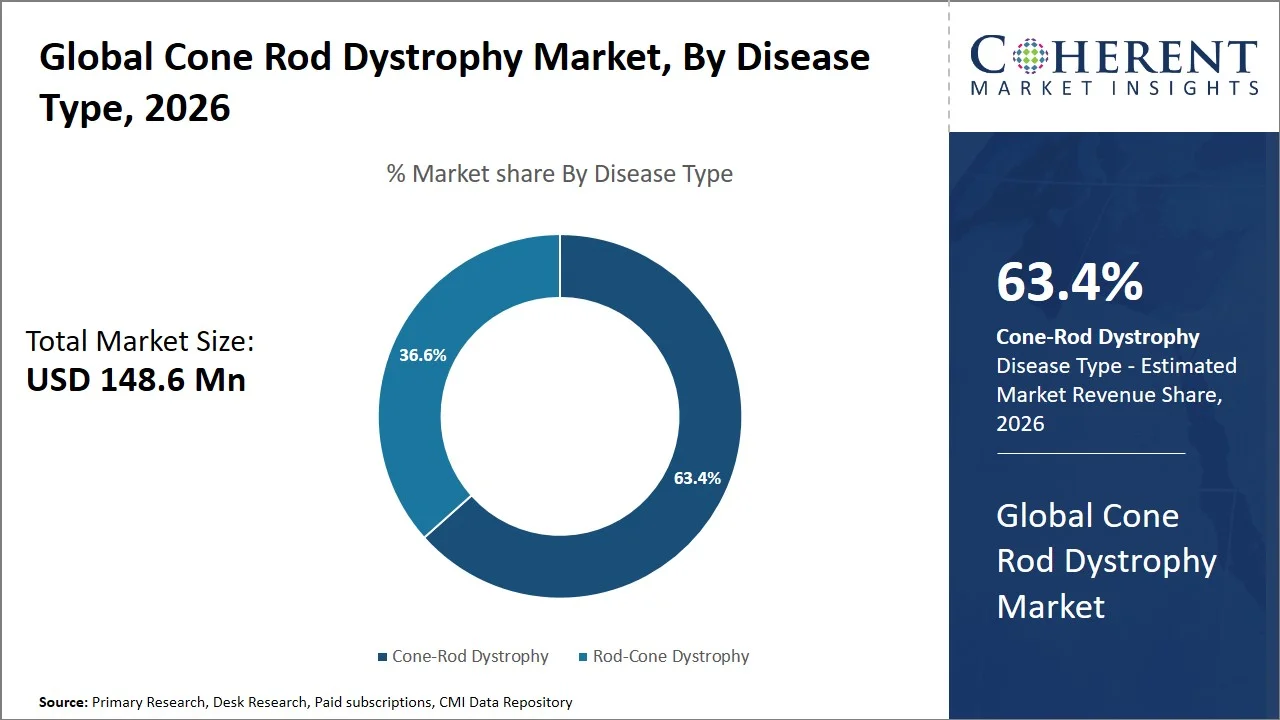
Why Does Cone-Rod Dystrophy Dominate the Global Cone Rod Dystrophy Market?
Cone-rod dystrophy is projected to hold a market share of 63.4% in 2026, driven by progressive central vision loss, the growing need for molecular diagnosis, and increasing research into disease-modifying therapies for inherited retinal disorders. The rapid developments of mutation-independent treatment strategies offer increased treatment options for heterogeneous retinal diseases. For instance, in November 2025, Nanoscope Therapeutics, Inc. presented 5-year safety data for its EXTEND phase 1/2 follow-up study on its MCO-010 optogenetic therapy for retinitis pigmentosa, indicating safety for a single intravitreal injection of MCO-010 as a long-term treatment option for inherited retinal diseases. (Source: Nanoscope Therapeutics, Inc.)
- Current Industry Events of 2026
- Market Size Estimation
- Regional Breakdown
- Competitive Landscape
- Customer Intelligence
- Segmental Analysis
- Pricing Analysis
- Key Market Drivers, Challenges & Future Trends
- Customized Insights Section
Why Does Genetic Testing Represent the Largest Diagnosis Segment in the Cone Rod Dystrophy Market?
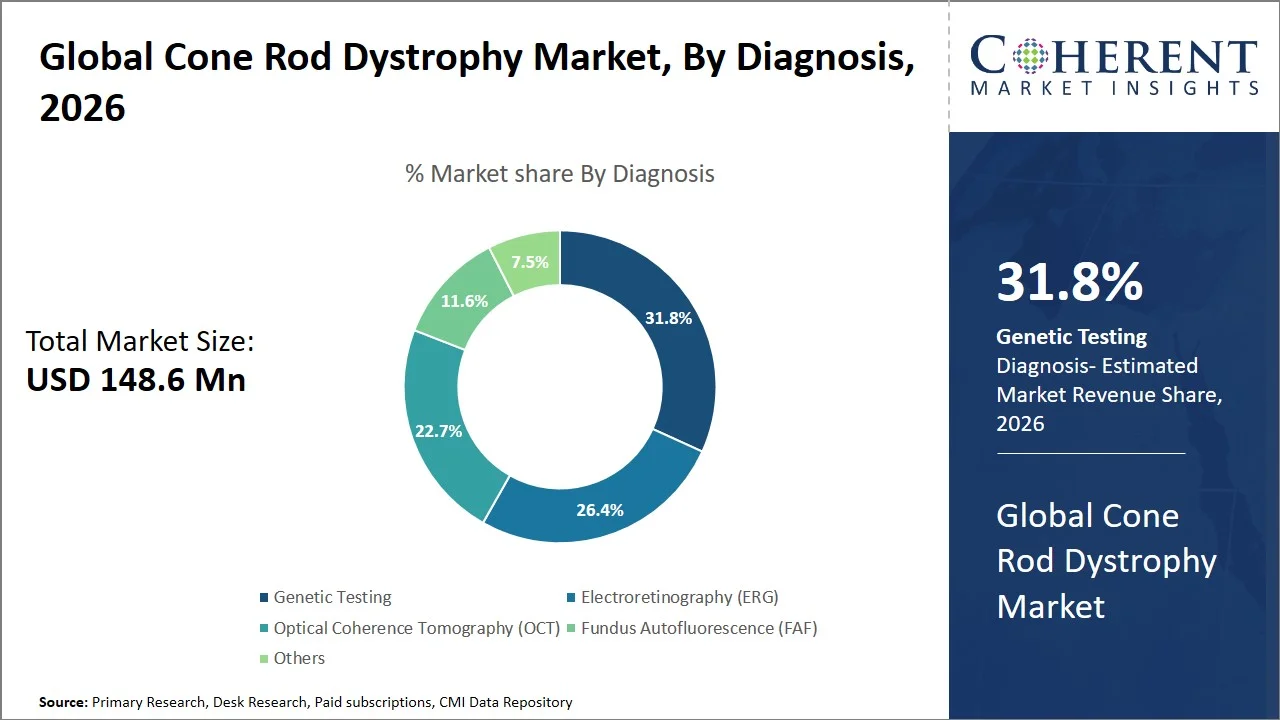
Genetic testing is projected to hold a market share of 31.8% in 2026, as it helps determine causative mutations, assists in early diagnosis of inherited retinal diseases, and also identify patients for precision medicine and inherited retinal disease clinical trials. The rise in the utilization of next generation sequencing has also helped in speeding up molecular diagnosis and identifying causative genes in diverse group of genetically heterogeneous retinal disorders. For instance, Invitae’s Inherited Retinal Disease Program offers genetic testing and genetic counseling for patients suspected of having an inherited retinal disorder (such as cone-rod dystrophy) with a specialized inherited retinal disorders gene panel. (Source: Invitae)
Supportive Care Segment Dominates the Global Cone Rod Dystrophy Market
The supportive care segment is projected to hold a market share of 48.7% in 2026, because it represents the most effective standard of treatment for majority of the cone rod dystrophy patient population. In the absence of proven disease-modifying therapies, lifelong low-vision rehabilitation, occupational therapy, and assistive devices remain essential to help patients with cone-rod dystrophy maintain functional independence and perform daily activities. Also, patients suffering from cone rod dystrophy require consistent follow-ups and supportive care which keep the demand at par. For instance, the American Academy of Ophthalmology (AAO) advises early referral to low-vision services and assistive technology in order to obtain the best possible vision from individuals with irreversible retinal conditions. (Source: American Academy of Ophthalmology)
Currents Events and their Impact
Current Events | Description and its Impact |
U.S. FDA Launches Rare Disease Innovation Hub (May 2026) |
|
U.S. FDA Issues Draft Guidance on Innovative Clinical Trial Designs for Cell and Gene Therapies (September 2025) |
|
(Source: Retinal Physician, Food and Drug Administration)
Cone Rod Dystrophy Market Dynamics
Market Drivers
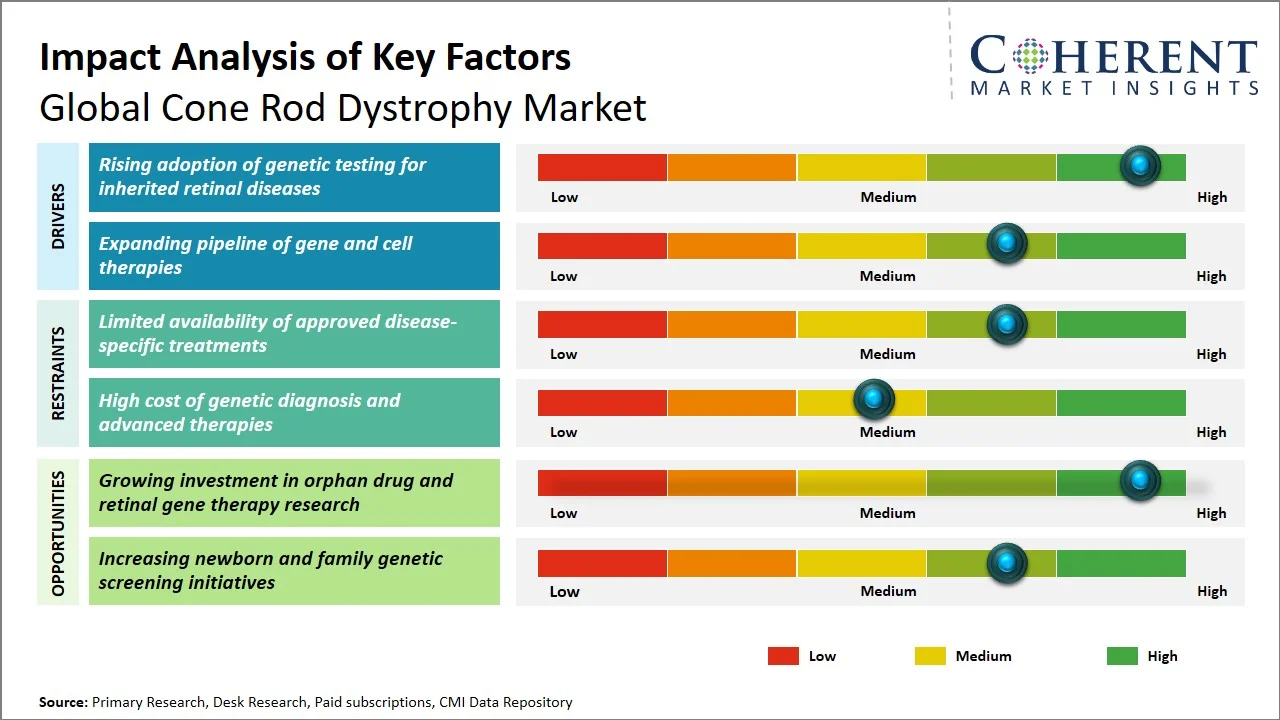
- Rising adoption of genetic testing for inherited retinal diseases: The growing use of broad genetic testing bolsters the market for cone rod dystrophy through enabling quicker identification of disease as well as exact mutation testing, and better identification of which patients would be suitable for both precise treatment approaches and trials. Technologies such as next-generation sequencing (NGS) have allowed for increased performance and reach for the diagnosing of inherited retinal disorders. For instance, the Foundation Fighting Blindness continues to offer its Open Access Genetic Testing Program, providing no-cost genetic testing and genetic counseling for individuals with suspected inherited retinal diseases across the U.S.
- Expanding pipeline of gene and cell therapies: The growing pipeline of gene and cell therapies is rapidly altering the cone rod dystrophy landscape by speeding up the development of disease-modifying therapies in the inherited retina disease indication. Advancements in gene replacement therapies, retinal regenerative medicine, and next-generation vector technologies are expected to expand future treatment options beyond conventional supportive care. For instance, in July 2025, Atsena Therapeutics announced alignment with the U.S. Food and Drug Administration (FDA) on the regulatory pathway for ATSN-201, its investigational gene therapy for X-linked retinoschisis (XLRS), supporting its progression toward regulatory approval.
Emerging Trends
- Shift Toward Mutation-Independent Therapeutic Approaches: Therapeutic development is increasingly shifting toward mutation-independent approaches that target common retinal degeneration pathways instead of individual genetic defects. These platform technologies have the potential to treat a broader patient population and overcome the challenge of extensive genetic heterogeneity associated with cone rod dystrophy.
- Growing Integration of Multimodal Retinal Imaging with Genomic Diagnostic: Healthcare providers are increasingly combining optical coherence tomography (OCT), fundus autofluorescence, and electrophysiological assessments with comprehensive genomic sequencing to improve genotype-phenotype correlation. This integrated diagnostic approach is enhancing patient stratification for clinical trials and supporting precision treatment planning in inherited retinal diseases.
Regional Insights
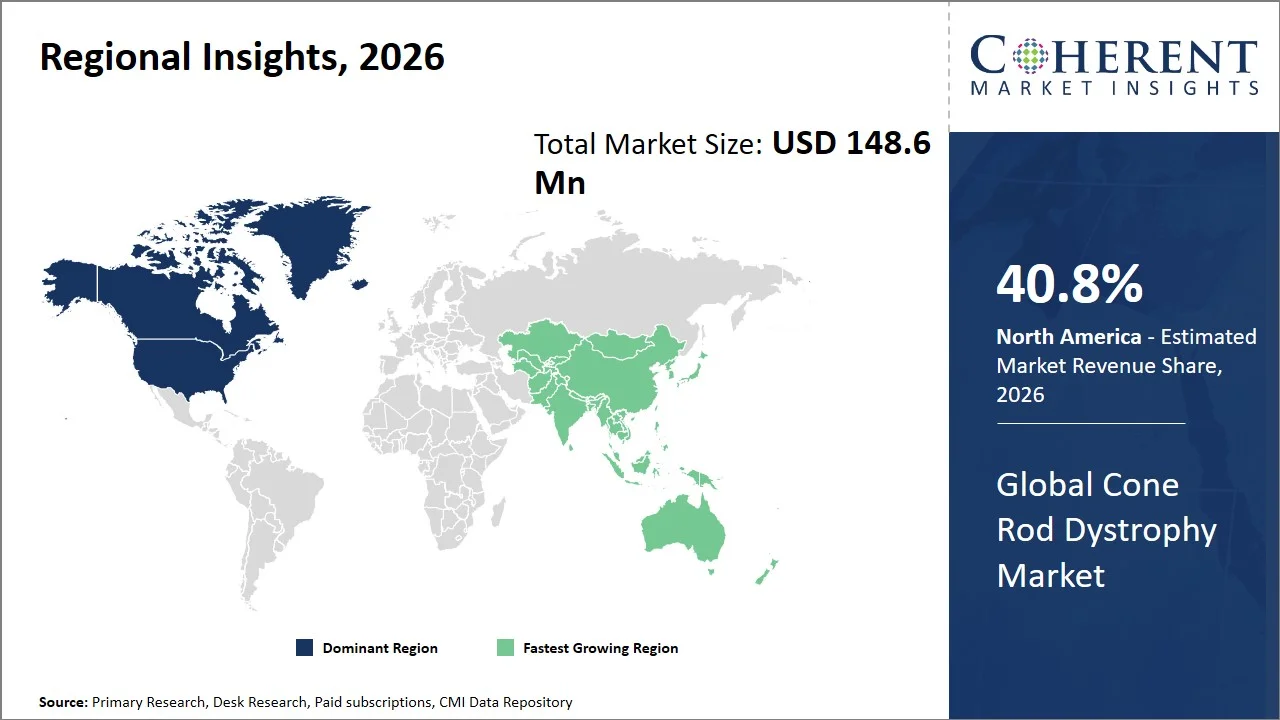
Why is North America a Strong Market for Cone Rod Dystrophy?
North America leads the global cone rod dystrophy market, accounting for an estimated 40.8% share in 2026, owing to the region’s well-developed inherited retinal disease ecosystem, higher acceptance rate of molecular genetics diagnostics in clinical practices, and developed infrastructure for care. Encouraging government initiatives for rare disease research, orphan drug discovery, and advancement of biomedical sciences will further promote clinical advancement of treatments for the condition. For instance, the National Center for Advancing Translational Sciences (NCATS), a part of the U.S. National Institutes of Health (NIH), created Bespoke Gene Therapy Consortium (BGTC) in its Accelerating Medicines Partnership (AMP) program with the goal of identifying or designing platforms, manufacturing methods and regulatory standards for individually-tailored gene therapies for rare diseases. (Source: National Center for Advancing Translational Sciences) In addition, the region accounts for a considerable percentage of the world’s clinical research trials focused on inherited retinal diseases, supporting faster clinical translation of novel therapies.
Why Does the Asia Pacific Cone Rod Dystrophy Market Exhibit High Growth?
The Asia Pacific cone rod dystrophy market is expected to exhibit the fastest growth with an estimated contribution of 21.9% share to the global market in 2026, due to rapid advancement of genomic medicine, increasing accessibility of molecular genetic diagnostics and escalating availability of specialized eye care infrastructure. Increasing ophthalmic R&D initiatives and expansion of precision medicine in mainstream practice have further facilitated better prognosis of inherited eye diseases. Additionally, enhancements to rare disease guidelines and the strengthening of clinical trial expertise accelerate the introduction of sophisticated cell and gene-based treatment modalities across the region.
For instance, in 2021, the government of India has introduced National Policy for Rare Diseases (NPRD) to improve early diagnosis, create a set of Centers of Excellence, undertake indigenous research, and provide access to treatments for rare diseases such as inherited genetic diseases. The Policy envisages improving diagnostics and laying groundwork for enabling future access to high-tech treatments like innovative therapies for inherited retinal disorders like cone rod dystrophy. (Source: Ministry of Health and Family Welfare)
Global Cone Rod Dystrophy Market Outlook for Key Countries
Why is the U.S. Leading Innovation and Adoption in the Cone Rod Dystrophy Market?
The U.S. dominates the cone rod dystrophy market driven by its massive infrastructure, broad coverage of established inherited retinal disease referral centers (such as Bascom Palmer Eye Institute, Johns Hopkins Wilmer Eye Institute, and Massachusetts Eye and Ear), early implementation of complete genomic profiling into eye care and the high concentration of in-first-human retinal gene therapy trials. Moreover, the country supports the development of cutting-edge retinal imaging, longitudinal natural history studies, and patient registries-which serve to identify these patients, and facilitate trials and enhance adoption.
Is Japan a Favorable Market for Cone Rod Dystrophy?
Japan is one of the most promising markets for the cone rod dystrophy market, as the country offers a high level of competence within retinal regenerative medicine and precision ophthalmology. It possesses accumulated experience with managing inherited retinal disease through specific centers (such as Department of Ophthalmology at Keio University School of Medicine and the National Hospital Organization Tokyo Medical Center) specialized with state-of-the-art ophthalmic imaging devices and molecular diagnostics. This will create a supportive clinical context for the next gene and cell therapy initiatives regarding cone rod dystrophy.
Is China Emerging as a Key Growth Hub for the Cone Rod Dystrophy Market?
China is positioned as a key growth hub in the global cone rod dystrophy market as the country expands genomic medicine, continues to develop its clinical infrastructure for treating inherited retinal diseases, and boosts investment in ophthalmic biotechnology. Over the recent years, China has substantially improved the quality of its infrastructure and molecular capabilities for assessing retinal disease, helping to achieve much earlier and accurate diagnoses of those with rare retina conditions. This has accelerated the progress towards the development and eventual commercial use of precise therapies for cone-rod dystrophy.
Why Does Germany Top the European Cone Rod Dystrophy Market?
Germany is the leader in the European market for cone rod dystrophy owing to country’s network of highly skilled university-eye clinics for hereditary eye diseases (such as University Hospital Tübingen – Centre for Ophthalmology, University Hospital Bonn – Department of Ophthalmology, and LMU University Hospital Munich – Eye Clinic), the broad accessibility of molecular eye diagnostics. The high enrollment in retinal multicenter studies as well as advanced retinal imaging and the country's know-how of genotyping-based eye disease therapies enables an earlier discovery of patient access.
Is Cone Rod Dystrophy Market Developing in India?
The India cone rod dystrophy market is steadily expanding driven by the country’s growing capacity for the diagnosis of inherited retinal disease and increasing incorporation of molecular ophthalmology into the clinic. The increasing availability of advanced ophthalmic care, gene diagnostics and retinal imaging will enable a more effective detection and longitudinal care of inherited retinal disease patients, allowing for the prospective uptake of precision medicines in this patient population.
Innovation Pipeline Landscape in the Global Cone Rod Dystrophy Market
Innovation Area | Technology/Approach | Key Innovators | Development Stage | Commercial Potential |
Mutation-agnostic Gene Therapy | Modifier gene therapy | Ocugen, SparingVision | Phase II/III | High |
Gene Replacement Therapy | AAV-mediated gene delivery | MeiraGTx, Beacon Therapeutics | Clinical | High |
Cell Therapy | Retinal progenitor/stem cell therapy | jCyte, BlueRock Therapeutics | Clinical | Moderate-High |
Genome Editing | CRISPR/Cas-based retinal gene editing | Editas Medicine, CRISPR Therapeutics | Preclinical/Early Clinical | High |
AI-enabled Precision Diagnostics | AI-assisted retinal imaging & genotype-phenotype analysis | Digital health & ophthalmic diagnostics developers | Commercial/Early Adoption | Moderate-High |
How is the growing investment in orphan drug and retinal gene therapy research creating new growth opportunities in the cone rod dystrophy market?
The growing investments in retinal gene therapy research is setting lucrative opportunities for the global cone rod dystrophy market through hastening innovation and progression of disease-modifying agents for inherited retina disease. With improvement in vector technology and precision genetics, one-time therapeutics hold a wider pipeline and business prospects. For instance, in March 2025, SpliceBio dosed the first patient in the phase 1/2 astra trial of sb-007, a dual-AAV gene therapy candidate for stargardt disease, continuing commitment to next-generation retinal gene therapy targeting inherited retinal disease. (Source: SpliceBio) Such clinical advancements are anticipated to strengthen innovation pipelines and drive future market growth.
Market Players, Key Development, and Competitive Intelligence
Key Developments
- In November 2025, MeiraGTx entered a strategic collaboration with Eli Lilly and Company to develop and commercialize genetic medicines for ophthalmic diseases. The partnership combines MeiraGTx's gene therapy platform with Lilly's global development and commercialization capabilities to accelerate innovative treatments for inherited retinal disorders. The collaboration is expected to strengthen the future pipeline and commercialization prospects for gene therapies in the cone rod dystrophy market.
- In June 2025, Ocugen received U.S. FDA clearance for its Investigational New Drug (IND) amendment to initiate a Phase 2/3 pivotal confirmatory trial of OCU410ST, a modifier gene therapy targeting ABCA4-associated retinopathies, including Cone-Rod Dystrophy 3 (CORD3). The therapy is designed as a one-time treatment to preserve retinal function and slow disease progression. This milestone reinforces the growing pipeline of advanced gene therapies for inherited retinal disorders.
Competitive Landscape
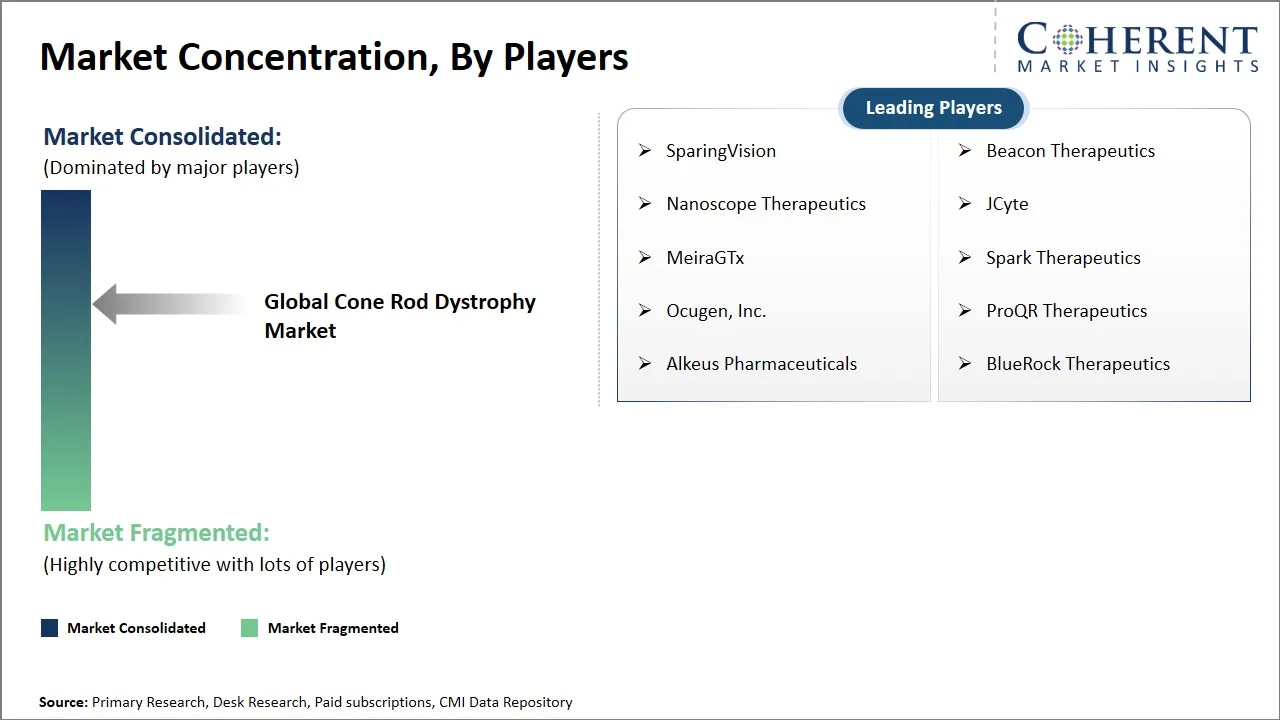
The global cone rod dystrophy market is moderately consolidated, where competitive advantages is linked to the development of best-in-class gene and cell therapy programs, discovery of mutation-independent treatment platforms, and leveraging of precise diagnosis for inherited retinal disorders. Manufacturers are focusing on the expansion of gene therapies in their portfolios through various joint ventures, clinical study expansion, clinical trial application of regulatory designations and investments in future ocular gene delivery methods. Key focus areas include:
- Development of mutation-agnostic gene therapies to address genetically heterogeneous cone rod dystrophy populations.
- Expansion of AAV-based gene delivery and retinal cell therapy platforms for durable disease-modifying treatment.
- Integration of advanced genetic diagnostics and AI-assisted retinal imaging to improve early diagnosis and patient selection for precision therapies.
- Strategic licensing agreements, research collaborations, and co-development partnerships to accelerate clinical development and global commercialization.
- Advancement of novel ocular drug delivery technologies and genome-editing approaches, including CRISPR-based therapies, to enhance treatment efficacy and long-term retinal preservation.
Market Report Scope
Cone Rod Dystrophy Market Report Coverage
| Report Coverage | Details | ||
|---|---|---|---|
| Base Year: | 2025 | Market Size in 2026: | USD 148.6 Mn |
| Historical Data for: | 2020 To 2024 | Forecast Period: | 2026 To 2033 |
| Forecast Period 2026 to 2033 CAGR: | 7% | 2033 Value Projection: | USD 237.8 Mn |
| Geographies covered: |
| ||
| Segments covered: |
| ||
| Companies covered: | SparingVision, Beacon Therapeutics, Nanoscope Therapeutics, JCyte, MeiraGTx, Spark Therapeutics, Ocugen, Inc., ProQR Therapeutics, Alkeus Pharmaceuticals, and BlueRock Therapeutics | ||
| Growth Drivers: |
| ||
| Restraints & Challenges: |
| ||
Analyst Opinion (Expert Opinion)
- In the coming years, the cone rod dystrophy market will be driven by a trend towards disease-modifying therapies replacing symptomatic treatments. This trend has been driven by gene therapies, genome editing, and retinal regenerative medicine technologies, and as the ongoing trials reach completion, aided by the existing regulatory pathways in place to accelerate approval for rare diseases. There is the potential for commercially approved novel therapies to protect retinal function and postpone sight loss. This, along with increasing accessibility to genetic testing, and precision diagnostics for earlier diagnoses and patient stratification, has potential to bring more cone rod dystrophy patients to access these targeted treatments.
- The maximum opportunities will probably exist within gene therapy segment in the North America region primarily the U.S. due to established clinical research landscape, established Inherited retinal disorders specialist centers, and reimbursement available for gene therapies for inherited eye diseases. Additionally, the APAC region comprising primarily of Japan and China possess high future potential attributed by significant increase in funding for genome-based medicine, ophthalmology sector and an awareness level among general populations to the prevalent inherited eye conditions. These factors will potentially improve rates of diagnostics, resulting in uptake of novel gene therapies.
- In order to obtain a competitive advantage, market participants should focus on developing mutation-agnostic therapeutic platforms capable of addressing multiple genetic subtypes, thereby overcoming one of the major challenges associated with cone rod dystrophy’s genetic heterogeneity. Companies should also strengthen collaborations with academic institutions, retinal research centers, and genetic testing providers to accelerate clinical development and patient recruitment. Furthermore, investments in scalable vector manufacturing, companion diagnostics, and region-specific commercialization strategies will enable companies to improve market access, reduce development timelines, and establish a sustainable competitive position in the evolving inherited retinal disease landscape.
Speak to the analyst
Want personalized insights?
Take the findings above to one of our principal consultants, or have the report rebuilt around the segments, geographies and competitors you actually track.
Market Segmentation
- Disease Type Insights (Revenue, USD Mn, 2021 - 2033)
- Cone-Rod Dystrophy
- Rod-Cone Dystrophy
- Diagnosis Insights (Revenue, USD Mn, 2021 - 2033)
- Genetic Testing
- Electroretinography (ERG)
- Optical Coherence Tomography (OCT)
- Fundus Autofluorescence (FAF)
- Others
- Treatment Insights (Revenue, USD Mn, 2021 - 2033)
- Supportive Care
- Pharmacological Therapy
- Gene Therapy
- Cell Therapy
- Retinal Prostheses and Visual Aids
- End User Insights (Revenue, USD Mn, 2021 - 2033)
- Hospitals
- Ophthalmology Clinics
- Specialty Eye Centers
- Research Institutes
- Others
- Regional Insights (Revenue, USD Mn, 2021 - 2033)
- North America
- U.S.
- Canada
- Latin America
- Brazil
- Argentina
- Mexico
- Rest of Latin America
- Europe
- Germany
- U.K.
- Spain
- France
- Italy
- Russia
- Rest of Europe
- Asia Pacific
- China
- India
- Japan
- Australia
- South Korea
- ASEAN
- Rest of Asia Pacific
- Middle East
- GCC Countries
- Israel
- Rest of Middle East
- Africa
- South Africa
- North Africa
- Central Africa
- North America
- Key Players Insights
- SparingVision
- Beacon Therapeutics
- Nanoscope Therapeutics
- JCyte
- MeiraGTx
- Spark Therapeutics
- Ocugen, Inc.
- ProQR Therapeutics
- Alkeus Pharmaceuticals
- BlueRock Therapeutics
Sources:
Primary Research Interviews:
- Vitreoretinal Specialists and Inherited Retinal Disease (IRD) Ophthalmologists
- Ocular Geneticists and Clinical Genetic Counselors
- Medical Directors from Ophthalmic Gene Therapy Companies
- Clinical Investigators Involved in Inherited Retinal Disease Trials
- Healthcare Reimbursement and Rare Disease Market Access Experts
Stakeholders
- Gene Therapy and Cell Therapy Developers for Inherited Retinal Diseases
- Genetic Testing and Molecular Diagnostics Companies
- Retinal Imaging Device Manufacturers (OCT, OCTA & Fundus Imaging)
- Hospital Systems and Specialty Eye Care Networks
- End-use Sectors
- Hospitals and Multispecialty Healthcare Systems
- Ophthalmology Clinics and Retina Specialty Centers
- Academic Medical Centers and Rare Disease Referral Centers
- Regulatory & Health Bodies
- U.S. Food and Drug Administration (FDA)
- European Medicines Agency (EMA)
- Medicines and Healthcare products Regulatory Agency (MHRA), UK
- Pharmaceuticals and Medical Devices Agency (PMDA), Japan
- National Medical Products Administration (NMPA), China
Databases
- ClinicalTrials.gov
- Orphanet
- FDA Orphan Drug Designations and Approvals Database
- NIH Genetic Testing Registry (GTR)
- WHO Global Health Observatory (GHO)
Magazines
- Retina Today
- Ophthalmology Times
- Modern Retina
- Review of Ophthalmology
- Healio Ophthalmology
Journals
- American Journal of Ophthalmology
- Investigative Ophthalmology & Visual Science (IOVS)
- Retina
- Molecular Therapy
Newspapers
- The Wall Street Journal – Biotechnology and Rare Disease Industry Developments
- Financial Times – Life Sciences and Gene Therapy Investments
- The New York Times – Healthcare Innovation and Rare Disease Research
- The Economic Times – Biotechnology and Healthcare Market Developments
Associations
- American Academy of Ophthalmology (AAO)
- American Society of Retina Specialists (ASRS)
- European Society of Retina Specialists (EURETINA)
- Association for Research in Vision and Ophthalmology (ARVO)
- Foundation Fighting Blindness (FFB)
Public Domain Sources
- World Health Organization (WHO)
- National Eye Institute (NEI), NIH
- National Center for Biotechnology Information (NCBI)
- Genetic and Rare Diseases Information Center (GARD)
- International Agency for the Prevention of Blindness (IAPB)
Proprietary Elements
- CMI Data Analytics Tool, Proprietary CMI Existing Repository of information for last 10 years.
Get access to 250+ pages report
Every segment, forecast, competitor profile and data table behind the analysis above — available for instant download.
- ESOMAR Member
- ISO 9001:2015 Certified
- D-U-N-S Registered
- GDPR & CCPA Compliant
Missing comfort of reading report in your local language? Find your preferred language:
Transform your Strategy with Exclusive Trending Reports
Frequently Asked Questions
The global cone rod dystrophy market is estimated to be valued at USD 148.6 Mn in 2026 and is expected to reach USD 237.8 Mn by 2033.
Cone-rod dystrophy dominates due to its higher diagnosis rate, increasing clinical research activity, and growing focus on developing targeted gene therapies for inherited retinal disorders.
Cone-rod dystrophy is a rare inherited retinal disorder characterized by the progressive degeneration of cone photoreceptors followed by rod photoreceptors, leading to severe vision loss.
The CAGR of the global cone rod dystrophy market is projected to be 7% from 2026 to 2033.
Cone-rod dystrophy is primarily caused by inherited mutations in genes such as ABCA4, CRX, RPGR, and PROM1, which impair retinal photoreceptor function.
Genetic testing confirms the causative mutation, enables accurate diagnosis, guides patient eligibility for gene therapy clinical trials, and supports personalized treatment strategies.
In terms of diagnosis, genetic testing is estimated to dominate the market revenue share in 2026.