

Global Cotton Fiber Market Size and Forecast
The Global Cotton Fiber Market is estimated to be valued at USD 5.66 Bn in 2026 and is expected to reach USD 8.51 Bn by 2033, exhibiting a compound annual growth rate (CAGR) of 6.0% from 2026 to 2033.
Key Takeaways of the Cotton Fiber Market
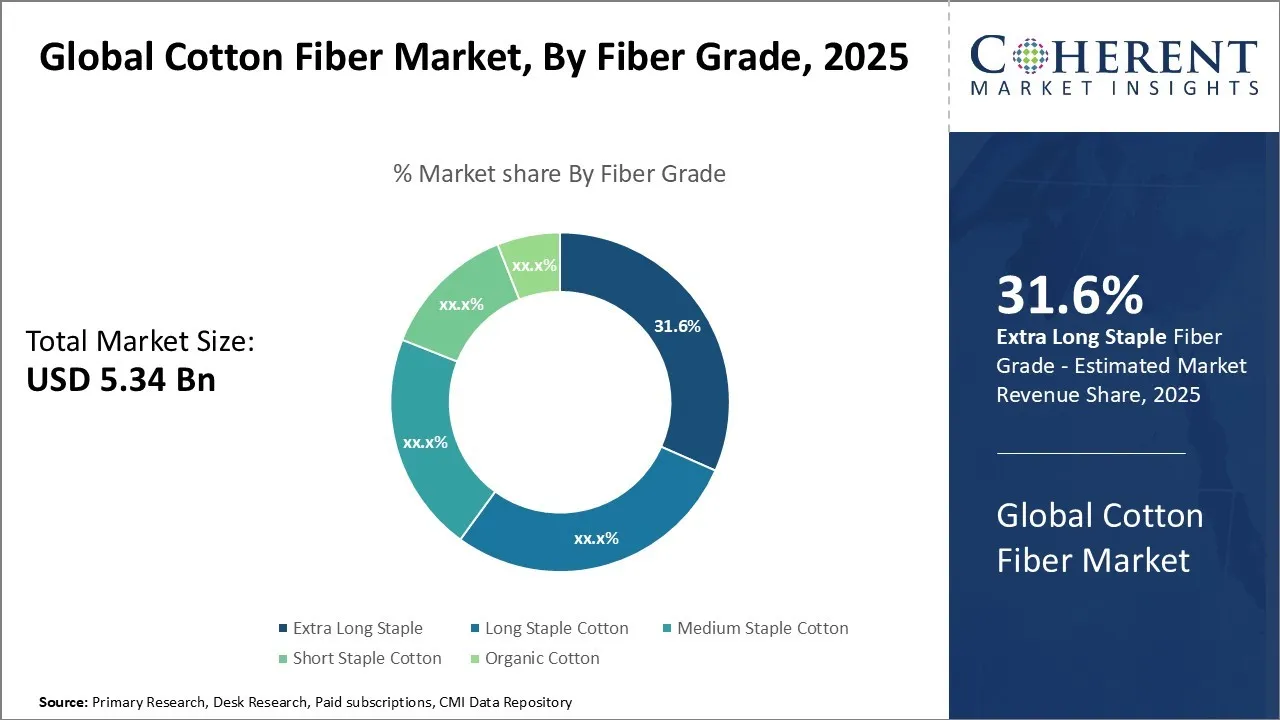
- The Extra Long staple segment is expected to hold a dominant 32.6% share of the global cotton fiber market in 2026.
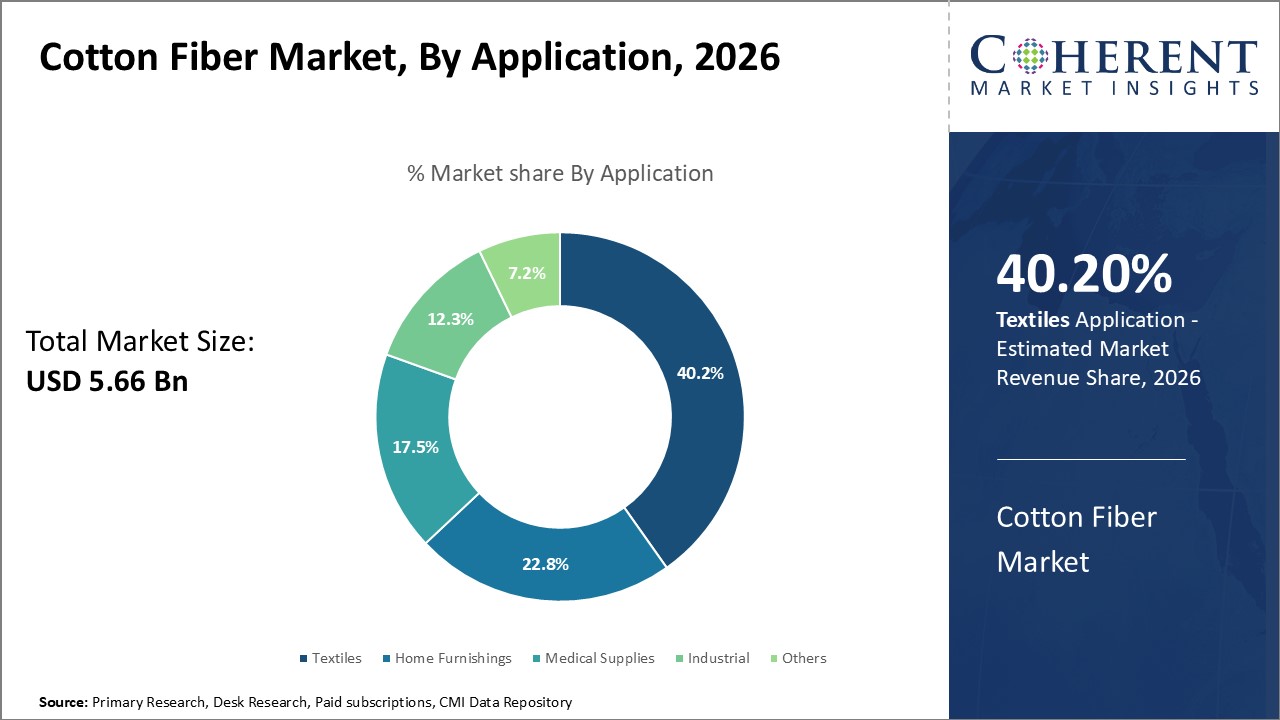
- The Textiles segment is expected to account for 40.2% of the market in 2026.
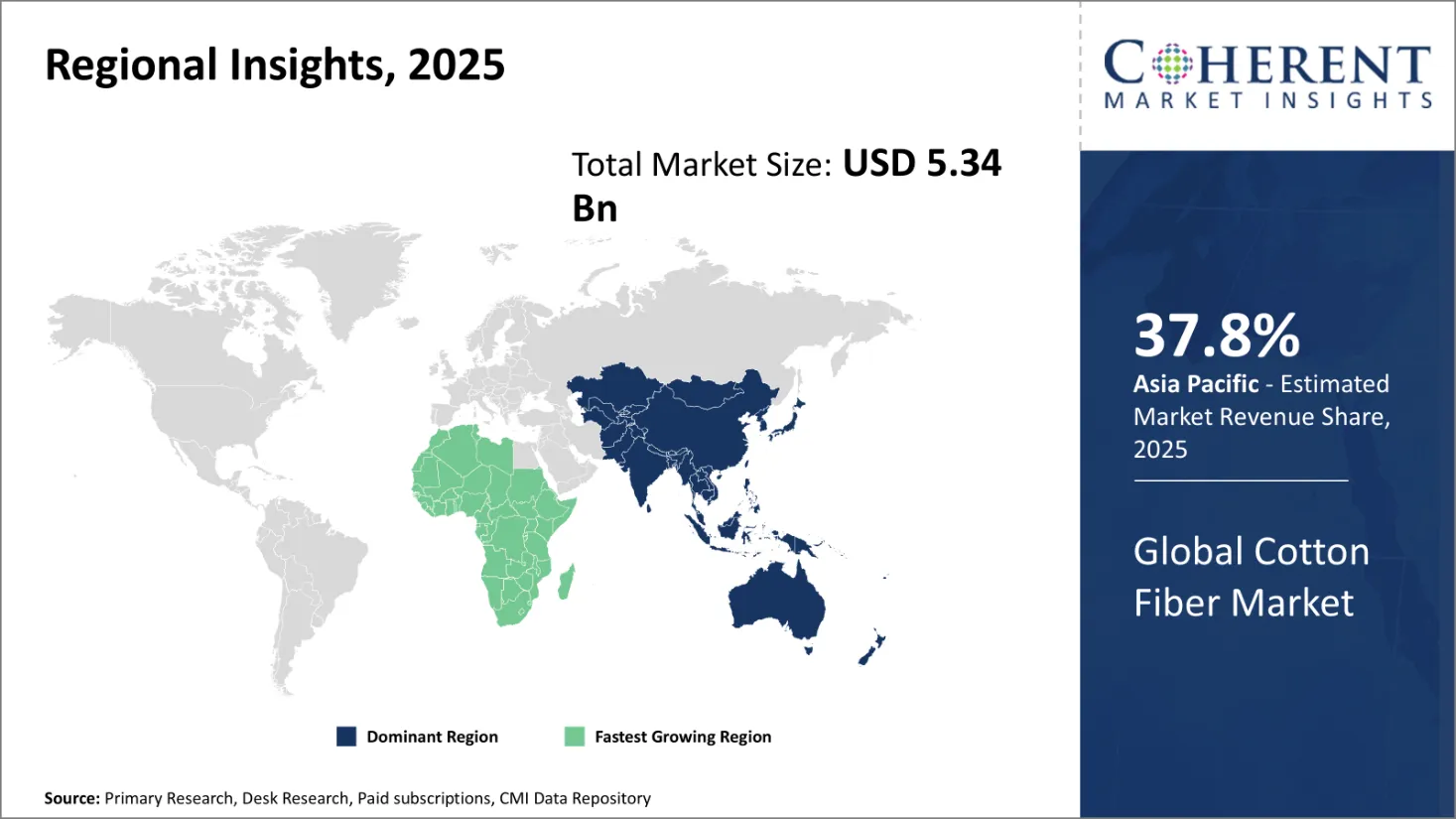
- Asia Pacific is set to lead the global cotton fiber market in 2026 with a 37.8% share. Africa, with a 7.5% share, is estimated to be the fastest-growing region.
Market Overview
In terms of market trends, the cotton fiber market is witnessing a significant shift towards organic and genetically modified cotton varieties that offer higher yield and better pest resistance. Additionally, advancements in cotton processing technologies are enhancing fiber quality and reducing environmental impact. Growing awareness about sustainable fashion and stringent regulations on synthetic fibers are pushing manufacturers and consumers towards cotton fibers, propelling innovation and investment in this space, and strengthening its position as a preferred raw material in global textile manufacturing.
Currents Events and their Impact
Current Events | Description and its impact |
Policy Shifts: India’s Five-Year Cotton Mission and MSP Hike |
|
Trade Policy Uncertainty and Tariff Volatility |
|
Segmental Insights
- Current Industry Events of 2026
- Market Size Estimation
- Regional Breakdown
- Competitive Landscape
- Customer Intelligence
- Segmental Analysis
- Pricing Analysis
- Key Market Drivers, Challenges & Future Trends
- Customized Insights Section
Cotton Fiber Market Insights, By Fiber Grade - The Extra Long Staple Segment Leads the Market due to Its Exceptional Quality and Versatility
The Extra Long Staple segment is expected to dominate with 32.6% share of the global cotton fiber market in 2026, primarily due to the outstanding quality characteristics that differentiate it from other fiber grades. ELS cotton fibers are notably longer, finer, and stronger than those of other grades such as Long Staple, Medium Staple, or Short Staple cotton.
These attributes translate into an enhanced tactile experience, superior durability, and greater fabric strength, making ELS cotton the preferred choice for high-end textile applications. The fineness of ELS cotton fibers also facilitates the production of finer yarns, enabling manufacturers to create premium quality textiles with a smooth, lustrous finish—qualities highly sought after in luxury apparel and high-grade home textiles.
Cotton Fiber Market Insights, By Application - Textiles Segment Leads Due to Diverse End User Demand
Textiles segment is projected to account for 40.2% share of the market in 2026, largely because of cotton’s continued prominence as a fundamental raw material in clothing and fabric manufacturing. Cotton’s natural properties such as breathability, comfort, and moisture absorption make it an ideal choice across a wide spectrum of textile products—from casual wear and formal apparel to activewear and luxury garments. The versatility of cotton ensures its appeal to a broad consumer base worldwide, catering to varying styles and climates, which drives robust demand in the textile industry segment.
Regional Insights
Asia Pacific Cotton Fiber Market Analysis and Trends
The Asia Pacific region is projected to lead the market with a 37.8% share in 2026, driven by established cotton-producing countries such as India, China, and Pakistan. The region benefits from a robust agricultural ecosystem with large-scale cotton cultivation supported by favorable climatic conditions. Government policies promoting agro-based industries, subsidies for cotton farmers, and investments in modernizing cotton ginning and spinning infrastructure contribute significantly to sustaining the region’s leadership. Asia Pacific also hosts major textile hubs, integrating cotton fiber production with downstream industries, thus enhancing market efficiency.
The presence of notable companies like India’s Vardhman Textiles, China National Cotton Group, and Pakistan’s Nishat Mills significantly bolsters the region’s production capacity and market reach. Furthermore, trade dynamics favor Asia Pacific due to large export volumes of cotton fiber and related products, supported by extensive logistic networks spanning major ports and trade agreements within the region.
Africa Cotton Fiber Market Analysis and Trends
The Africa region is expected to exhibit the fastest growth in the market contributing an estimated 7.5% share in 2026, driven by expanding cotton farming activities in countries such as Egypt, Burkina Faso, and Mali. The region’s cotton market growth is supported by increasing government initiatives aiming to enhance agricultural productivity, improve fiber quality, and strengthen farmers’ income through cooperative societies.
The relatively underexplored potential of cotton cultivation combined with increasing foreign investments and development programs is fueling demand for better processing facilities and market expansion. The cotton value chain is gradually expanding as local manufacturers and international firms like El Nasr Cotton Co. (Egypt) and Olam International invest in improving the supply chain. Trade dynamics are improving with enhanced access to global markets through emerging trade partnerships, increasing Africa’s visibility as a critical player in cotton fiber supply.
Global Cotton Fiber Market Outlook for Key Countries
India Cotton Fiber Market Trends
India’s cotton fiber market remains pivotal globally, anchored by a vast cotton-growing belt supported by government schemes such as minimum support price and crop insurance. The country’s integrated textile industry, featuring giant corporations like Vardhman Textiles and Arvind Mills, enables an efficient transformation of raw cotton fiber into high-value textile goods. Additionally, India’s expanding export infrastructure and improving farmer awareness about sustainable practices reinforce its competitive edge in international markets.
China Cotton Fiber Market Trends
China continues to lead in cotton fiber consumption and production, with its well-established infrastructure catering to a broad textile manufacturing base. State-owned enterprises including China National Cotton Group play a crucial role in securing cotton supply chains domestically and via global imports. Government policies emphasize technological advancement and quality enhancement, promoting the use of long-staple cotton fibers. China’s sophisticated logistics and port facilities ensure a streamlined trade dynamic, facilitating large-scale exports and imports aligned with global demand.
U.S. Cotton Fiber Market Trends
The U.S. is a major cotton fiber producer with advanced agricultural technologies and high-yield cotton farming methods centered in states like Texas and Georgia. Companies such as Cotton Incorporated and Plains Cotton Cooperative Association facilitate innovation and marketing, strengthening the domestic market and export potential. U.S. government support through agricultural policies and research initiatives ensures continuous improvement in fiber quality and sustainable farming practices, solidifying the nation’s role in global cotton trade.
Egypt Cotton Fiber Market Trends
Egypt’s cotton fiber market is renowned for producing premium long-staple cotton, often referred to as "Egyptian cotton," which commands a niche market globally. Local companies such as the El Nasr Cotton Company play a vital role in maintaining quality standards and supporting export activities. Government focus on revitalizing cotton agriculture through rehabilitation projects and enhanced irrigation infrastructure has revitalized the sector. The country’s trade policies encourage international partnerships, fostering access to premium textile manufacturers worldwide.
Pricing Analysis of the Cotton Fiber Market (2024–2025)
The global cotton fiber market in 2024 experienced significant volatility, influenced by factors such as climatic conditions, geopolitical tensions, and shifting trade dynamics.
Global Price Trends
In the U.S., cotton futures fluctuated between 63 and 74 cents per pound, reaching lows not seen since the COVID-19 pandemic. This decline was primarily due to escalating trade tensions, particularly between the U.S. and China, which led to retaliatory tariffs and disrupted traditional export channels.
Brazil emerged as a dominant exporter, surpassing the U.S. with 12.4 million bales exported in the 2023–24 season. This surge in Brazilian exports contributed to a global oversupply, further exerting downward pressure on prices.
Indian Market Dynamics
India, traditionally a major cotton producer and exporter, faced challenges in 2024. The Cotton Association of India (CAI) revised its production estimate downward to 30.1 million bales, a 7.84% decrease from the previous season. Consequently, India transitioned from a net exporter to a net importer of cotton, with imports expected to double in the 2024–25 season.
Market Players, Key Development, and Competitive Intelligence
Key Developments
- In June 2025, Cotton Incorporated unveiled the revamped CottonWorks website, marking a significant step in its digital transformation. This innovative platform is designed to meet the dynamic needs of global textile professionals across the entire value chain. More than just a redesign, the new CottonWorks website offers an intuitive, fashion-forward interface that enhances support for compliance, product development, sourcing, and education within the textile industry.
- In December 2024, India's imports of extra-long staple (ELS) cotton, particularly Supima cotton exported by the U.S., experienced a notable rebound. This surge followed the withdrawal of the 11% import duty imposed on cotton during the 2021-2022 Budget. The decision to lift the import duty earlier in the year has had a significant impact, facilitating increased imports of ELS cotton. This move is expected to benefit textile manufacturers in India, as they now have access to a broader range of high-quality cotton for use in premium fabric production.
Top Strategies Followed by Global Cotton Fiber Market Players
- Established market leaders in the cotton fiber industry invest heavily in research and development to innovate high-performance products that meet increasingly stringent quality and sustainability standards. These companies prioritize the creation of advanced cotton fibers with improved durability, softness, and environmental compatibility, catering to premium textile and apparel markets.
- For instance, Lenzing Group, a leading manufacturer of sustainably produced fibers, focuses on creating Tencel fibers using eco-friendly processes that improve fiber durability and softness.
- Mid-level players in the cotton fiber market adopt more cost-conscious strategies, centering on offering products that strike a balance between quality and affordability. This focus enables them to target price-sensitive consumers and manufacturers who require reliable cotton fiber sources without incurring premium costs. To stay competitive, mid-tier companies frequently pursue collaborations and joint ventures aimed at enhancing production efficiency, acquiring new technologies, and expanding their market outreach.
- For example, Gildan Activewear produces budget-friendly cotton t-shirts and activewear that are popular in both developed and developing markets, offering a good blend of durability and price efficiency. Their commitment to maintaining competitive prices while ensuring product quality allows them to reach a broad customer base, especially in regions where cost concerns are paramount.
- Small-scale players in the global cotton fiber market differentiate themselves by concentrating on specialized or innovative product features, catering to niche segments underserved by larger companies. These players often adopt cutting-edge technologies such as biotech-enhanced fibers, organic cotton variants, or sustainable processing techniques to maintain a competitive edge.
- For example, one such player is Pima Cotton, a company specializing in high-quality cotton grown in California. Pima Cotton has carved out a niche in the luxury textiles market by offering an exclusive range of cotton fabrics that are smoother and more durable than conventional cotton.
Market Report Scope
Cotton Fiber Market Report Coverage
| Report Coverage | Details | ||
|---|---|---|---|
| Base Year: | 2025 | Market Size in 2026: | USD 5.66 Bn |
| Historical Data for: | 2020 To 2024 | Forecast Period: | 2026 To 2033 |
| Forecast Period 2026 to 2033 CAGR: | 6.0% | 2033 Value Projection: | USD 8.51 Bn |
| Geographies covered: |
| ||
| Segments covered: |
| ||
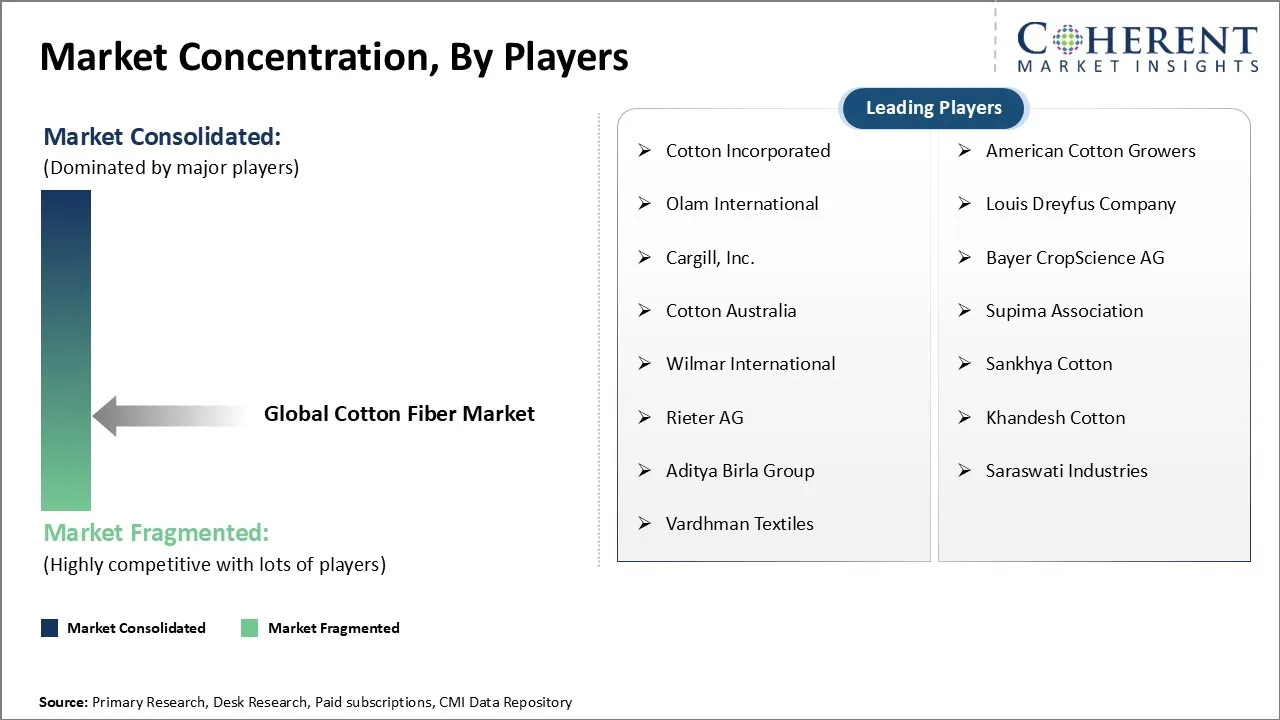
| Companies covered: | Cotton Incorporated, American Cotton Growers, Olam International, Louis Dreyfus Company, Cargill, Inc., Bayer CropScience AG, Cotton Australia, Supima Association, Wilmar International, Sankhya Cotton, Rieter AG, Khandesh Cotton, Aditya Birla Group, Saraswati Industries, and Vardhman Textiles | ||
| Growth Drivers: |
| ||
| Restraints & Challenges: |
| ||
Cotton Fiber Market Dynamics
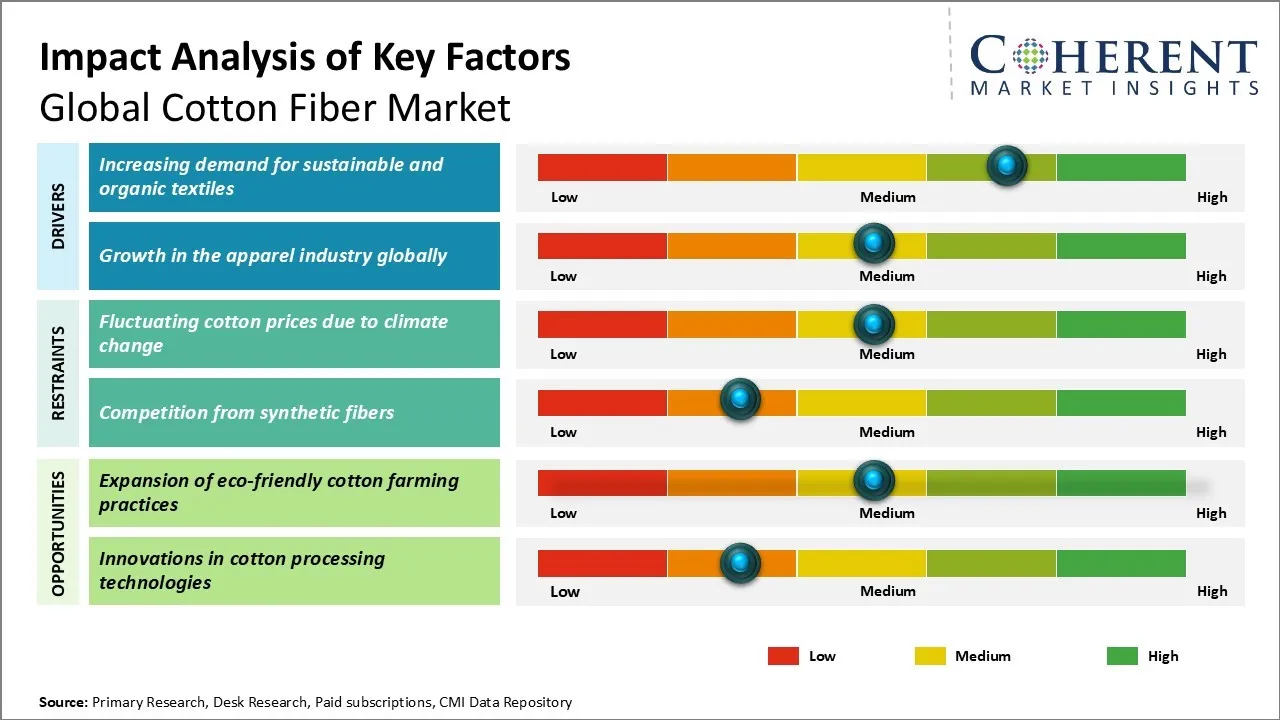
Cotton Fiber Market Driver - Increasing Demand for Sustainable and Organic Textiles
The growing global consciousness towards environmental sustainability and health has significantly elevated the demand for sustainable and organic textiles, positioning cotton fiber as a preferred choice among consumers and manufacturers alike. Unlike synthetic fibers, cotton is a natural, biodegradable, sustainable material, which appeals to eco-conscious buyers seeking to reduce their ecological footprint. The surge in awareness about the harmful effects of chemical-intensive textile manufacturing has propelled the shift toward organic cotton, cultivated without synthetic pesticides or fertilizers, ensuring lower environmental impact and safer end products.
In the European Union, the demand for organic cotton has been propelled by the EU’s EcoDesign Directive, which mandates stricter environmental regulations for textile products. This has led to an increased preference for organic cotton, particularly in markets like Germany and the UK, where consumers prioritize eco-friendly and ethical sourcing in their purchasing decisions.
Cotton Fiber Market Opportunity - Expansion of Eco-Friendly Cotton Farming Practices
The global cotton fiber market stands to gain significantly from the expansion of eco-friendly cotton farming practices, which is emerging as a critical opportunity driven by growing consumer awareness and stringent environmental regulations. As sustainability becomes a focal point for both brands and end consumers, the adoption of organic and regenerative farming methods is increasing, aiming to reduce the environmental footprint associated with traditional cotton cultivation. Practices such as reduced pesticide use, water conservation techniques, and soil health management are gaining traction, contributing to the production of organic cotton that commands premium pricing in global markets.
In India, one of the largest cotton producers globally, the government has been increasingly supportive of eco-friendly farming practices. The Sustainable Cotton Initiative, introduced by the Textile Exchange in collaboration with local farmers, promotes the use of organic farming techniques and certification programs like GOTS (Global Organic Textile Standard) and Fair Trade.
Analyst Opinion (Expert Opinion)
- The global cotton fiber market is navigating a transformative phase, marked by a growing emphasis on sustainability and ethical sourcing. Companies like Cotton Incorporated and Bamboo Fabrics are pioneering initiatives that promote organic cotton and regenerative farming practices, responding to increasing consumer demand for environmentally responsible textiles. Recent conferences, such as the Cotton Conference (2023) and the Sustainable Cotton Summit (2022), have showcased innovative practices and successful case studies where brands have integrated sustainable cotton sourcing into their supply chains, leading to enhanced brand loyalty and market differentiation.
- These events have also highlighted the critical role of technology in improving cotton yields and reducing environmental impact. As consumer awareness and regulatory pressures rise, the global cotton fiber market is well-positioned for growth, driven by innovations that align with the principles of sustainability and social responsibility.
Speak to the analyst
Want personalized insights?
Take the findings above to one of our principal consultants, or have the report rebuilt around the segments, geographies and competitors you actually track.
Market Segmentation
- Fiber Grade Insights (Revenue, USD Bn, 2021 - 2033)
- Extra Long Staple
- Long Staple Cotton
- Medium Staple Cotton
- Short Staple Cotton
- Organic Cotton
- Application Insights (Revenue, USD Bn, 2021 - 2033)
- Textiles
- Home Furnishings
- Medical Supplies
- Industrial
- Others
- Regional Insights (Revenue, USD Bn, 2021 - 2033)
- North America
- U.S.
- Canada
- Latin America
- Brazil
- Argentina
- Mexico
- Rest of Latin America
- Europe
- Germany
- U.K.
- Spain
- France
- Italy
- Russia
- Rest of Europe
- Asia Pacific
- China
- India
- Japan
- Australia
- South Korea
- ASEAN
- Rest of Asia Pacific
- Middle East
- GCC Countries
- Israel
- Rest of Middle East
- Africa
- South Africa
- North Africa
- Central Africa
- North America
- Key Players Insights
- Cotton Incorporated
- American Cotton Growers
- Olam International
- Louis Dreyfus Company
- Cargill, Inc.
- Bayer CropScience AG
- Cotton Australia
- Supima Association
- Wilmar International
- Sankhya Cotton
- Rieter AG
- Khandesh Cotton
- Aditya Birla Group
- Saraswati Industries
- Vardhman Textiles
Sources
Primary Research Interviews
- Cotton Fiber Supply Chain Manager – Leading Cotton Manufacturer
- Product Development Manager – Global Textile Brand
- Procurement Manager – Major Apparel Retailer
- Sustainability Expert – Cotton Farming and Certification Body
- Textile Industry Expert – Specializing in Cotton Fiber Innovation
Stakeholders
- Manufacturers – Cotton Fiber Producers, Spinning Mills
- End-use Sectors
- Apparel and Fashion Industry
- Home Textiles (Bedding, Towels)
- Industrial Textiles (Filters, Insulation)
- Regulatory & Certification Bodies
- Retailers and E-commerce Platforms – Cotton-based product retailers
- Technology Providers – Automation and textile innovation providers
Databases
- UN Comtrade Database – Cotton fiber trade data
- India Import Export (EXIM) Database – Cotton fiber trade between India and global markets
Magazines
- Textile World – Trends in cotton fiber innovations and sustainable sourcing
- Cotton International – Cotton industry updates and market insights
- Textile Focus – Market growth and technological advancements in cotton fiber production
- The Fibre Year – Global fiber market outlook including cotton
Journals
- Textile Research Journal – Studies on cotton fiber characteristics and innovations
- Journal of Applied Polymer Science – Textile applications and cotton fiber processing
- Journal of Fiber Bioengineering and Informatics – Innovations in cotton fiber applications
- International Journal of Clothing Science and Technology – Technical aspects of cotton fiber processing
Newspapers
- The Financial Times – Cotton market developments and pricing
- The New York Times – Global cotton trade dynamics and sustainability discussions
- Asia Times – Cotton industry growth in Asia, including China and India
- The Guardian – Ethical sourcing and environmental impact of cotton farming
- Textile Today – Cotton industry updates with focus on market growth and regulations
Associations
- International Cotton Advisory Committee (ICAC)
- Cotton Incorporated – U.S. cotton research and promotion organization
- National Cotton Council of America (NCC)
- Cotton Australia – Industry standards and regulations for cotton farming
- The European Confederation of Flax and Hemp (CEFI) – Cotton versus alternative fibers
Public Domain Sources
- U.S. Department of Agriculture (USDA) – Cotton production, consumption, and export data
- International Trade Centre (ITC) – Cotton trade regulations and market access
- Food and Agriculture Organization (FAO) – Global cotton farming statistics and sustainability studies
Proprietary Elements
- CMI Data Analytics Tool, Proprietary CMI Existing Repository of information for the last 8 years
Get access to 250+ pages report
Every segment, forecast, competitor profile and data table behind the analysis above — available for instant download.
- ESOMAR Member
- ISO 9001:2015 Certified
- D-U-N-S Registered
- GDPR & CCPA Compliant
Missing comfort of reading report in your local language? Find your preferred language:
Transform your Strategy with Exclusive Trending Reports
Frequently Asked Questions
The global cotton fiber market is estimated to be valued at USD 5.66 Bn in 2026 and is expected to reach USD 8.51 Bn by 2033.
The CAGR of global cotton fiber market is projected to be 6.0% from 2026 to 2033.
Increasing demand for sustainable and organic textiles and growth in the apparel industry globally are the major factors driving the growth of the global cotton fiber market.
Fluctuating cotton prices due to climate change and competition from synthetic fibers are the major factors hampering the growth of the global cotton fiber market.
In terms of Fiber Grade, Extra Long Staple is estimated to dominate the market revenue share in 2026.
Cotton Incorporated, American Cotton Growers, Olam International, Louis Dreyfus Company, Cargill, Inc., Bayer CropScience AG, Cotton Australia, Supima Association, Wilmar International, Sankhya Cotton, Rieter AG, Khandesh Cotton, Aditya Birla Group, Saraswati Industries, Vardhman Textiles are the major players in the global cotton fiber market.
Asia Pacific is expected to lead the global cotton fiber market in 2026.