

Global Current Sensor Market Size and Forecast – 2026- 2033
The Global Current Sensor Market is estimated to be valued at USD 3.78 Bn in 2026 and is expected to reach USD 7.55 Bn by 2033, exhibiting a compound annual growth rate (CAGR) of 10.4% from 2026 to 2033.
Key Takeaways of the Current Sensor Market
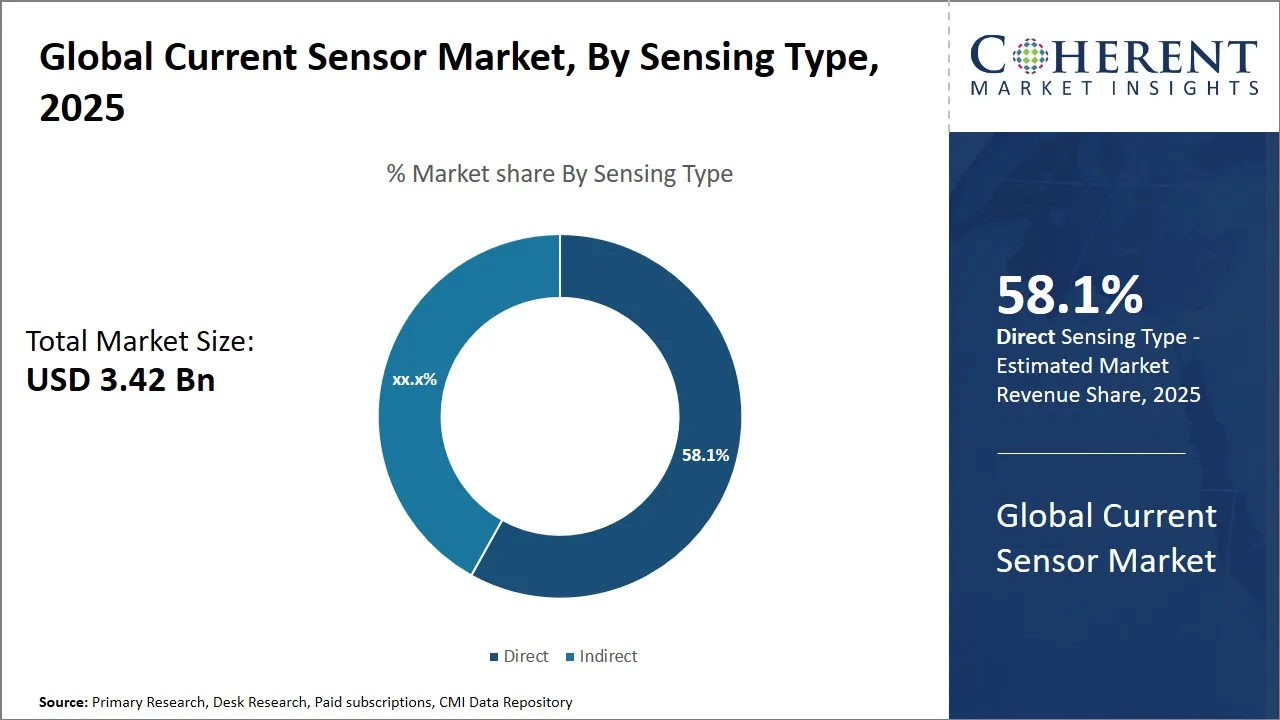
- The Direct segment leads the market holding an estimated share of 59.1 % in 2026.
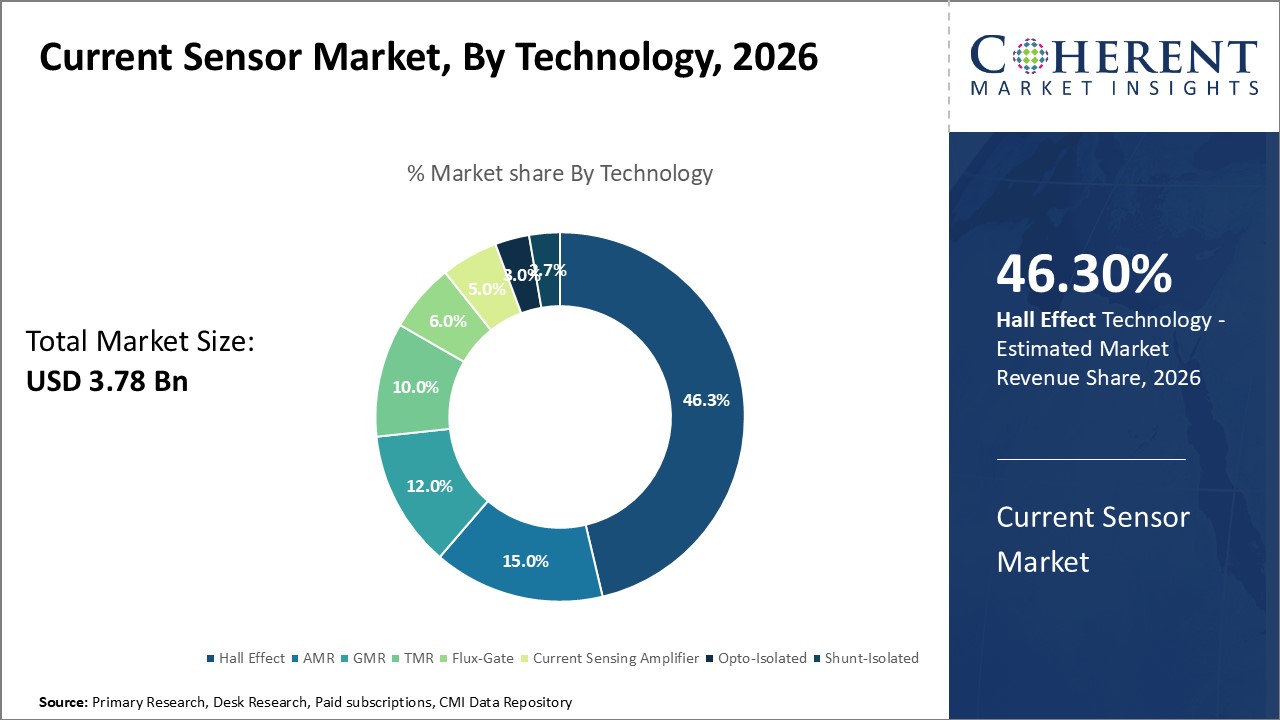
- The Hall-Effect segment leads the market holding an estimated share of 46.3 % in 2026.
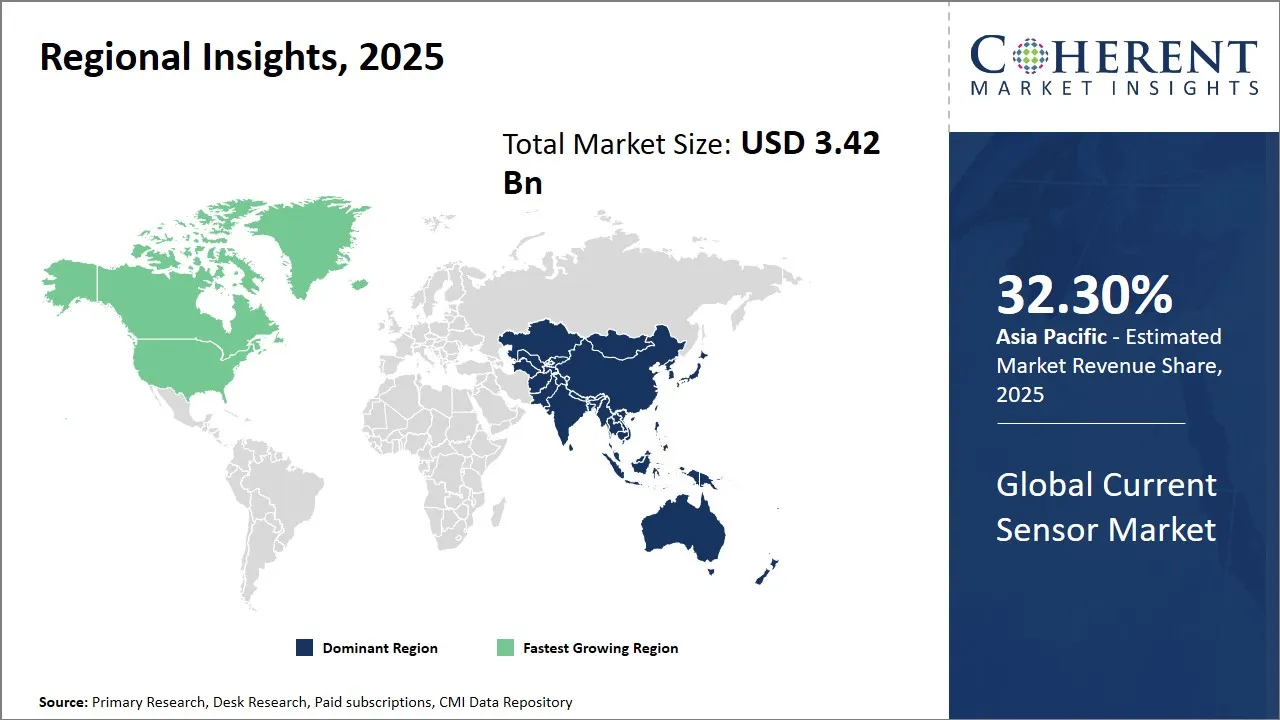
- Asia Pacific is estimated to lead the market with a share of 32.3 % in 2026.
- North America, holding a share of 24.6 % in 2026, is projected to be the fastest growing region.
Market Overview
The market is seeing a shift towards integrating advanced current sensors with IoT and smart grid technologies, improving precision and real-time monitoring capabilities. Also, the rise in renewable energy deployments and electric vehicle production is creating need for reliable current sensing solutions. Manufacturers are focusing on miniaturization, cost-efficiency, and high accuracy to meet evolving customer requirements, adding to the innovation and competitive dynamics in the market.
Current Events and Its Impact
Current Events | Description and its impact |
AKM and Silicon Austria Labs integrate current sensor into power module |
|
Danisense Launches Online Calibration Portal |
|
Honeywell acquires Sundyne LLC for USD 2.2 Bn |
|
Segmental Insights
- Current Industry Events of 2026
- Market Size Estimation
- Regional Breakdown
- Competitive Landscape
- Customer Intelligence
- Segmental Analysis
- Pricing Analysis
- Key Market Drivers, Challenges & Future Trends
- Customized Insights Section
Global Current Sensor Market Insights, by Sensing Type – Direct Leads Due to its Superior Accuracy and Real-Time Measurement Capabilities
The direct segment, holding an estimated share of 59.1% in 2026, holds a dominant position in the global current sensor market. Direct current sensors measure current by making physical contact with the conductor carrying the current, giving real-time and accurate readings. As utilities shift to smarter and more efficient energy systems, there is a lot of need for accurate, real-time current measurements. Also, industrial automation and electric vehicle (EV) markets greatly use direct sensing technology. Manufacturing lines need efficient motor control and current measurement to ensure proper function and avoid downtime.
The implementation of more stringent regulatory norms concerning energy efficiency and safety globally also add to the demand for direct sensing. Industries need to maintain accurate current monitoring to comply with these regulations and avoid penalties, which adds to the adoption of direct sensing technologies. Lastly, the advancement in sensor materials and miniaturization enables direct sensors to be incorporated into compact and complex electronic devices without compromising accuracy.
Global Current Sensor Market Insights, by Technology - Hall ‑ Effect Leads the Market due to its Versatility and Non-intrusive Current Measurement Capabilities
Hall-Effect technology is the frontrunner in the global current sensor market, holding an estimated share of 46.3% in 2026. Hall-Effect sensors detect the magnetic field generated by current flow in a conductor, providing isolation from high voltages and reducing the risk of circuit interference or damage. They can measure both AC and DC currents effectively, making them suited for many applications such as industrial machinery, consumer electronics, and automotive systems.
Also, Hall-Effect sensors are greatly used in industries focusing heavily on safety, such as electric vehicles and power management systems, because of their inherent galvanic isolation. This protects sensitive electronic circuits from high-voltage surges and faults, improving device reliability and longevity.
The ongoing trend of electrification and digitalization in different industries is also adding to segment growth. For example, in electric vehicles, Hall-Effect sensors help in battery management, motor control, and energy regeneration systems by providing precise and reliable current measurements without interrupting the electrical path.
Impact of AI on the Current Sensor Market
The integration of Artificial Intelligence (AI) in the current sensor market is reshaping both product development and application performance. AI-driven analytics enable more precise current measurement, fault detection, and predictive maintenance, particularly in complex systems like electric vehicles (EVs), industrial automation, and smart grids. For example, AI algorithms can process real-time sensor data to predict equipment failures, thereby reducing downtime and improving energy efficiency. This advancement is pushing sensor manufacturers to develop smarter, self-calibrating, and adaptive current sensors that can integrate seamlessly with AI-enabled platforms.
A real-world instance of AI impacting the market is Infineon Technologies' collaboration with Swoboda in 2024–2025. The companies co-developed an AI-ready current sensing module specifically designed for EV battery and motor control systems. The module leverages AI to optimize energy usage and extend battery life through real-time feedback and adaptive load management.
Regional Insights
Asia Pacific Current Sensor Market Analysis and Trends
The Asia Pacific region, holding an estimated share of 32.3% in 2026, dominates the global current sensor market because of fast industrialization, expanding manufacturing capabilities, and increasing focus on automation and electrification. In 2024, Asahi Kasei Microdevices (AKM), based in Japan, introduced its next-generation coreless current sensor series (CZ39xx) specifically designed for electric vehicle (EV) onboard chargers. Governments across China, India, Japan, and South Korea are putting in place supportive policies and investment incentives to boost domestic electronics production and renewable energy projects, which directly create demand for current sensing technologies.
The growing adoption of electric vehicles and smart metering infrastructure add to market growth. Local and multinational companies such as TDK Corporation, Shindengen Electric Manufacturing, and Melexis N.V. actively contribute by adding to production capacities and developing innovative sensor technologies tailored to regional requirements.
North America Current Sensor Market Analysis and Trends
North America, holding a share of 24.6% in 2026, is expected to exhibit the fastest growth in the global current sensor market because of a well-established industrial ecosystem, big investments in advanced manufacturing, and the presence of many leading technology firms. In February 2026, Allegro MicroSystems launched a series of Tunnel Magneto-Resistance (TMR) current sensors, including the ACS37610, designed for next-generation electric vehicles and solar inverters. The region benefits from robust government support promoting innovations in energy efficiency, automotive electronics, and smart grid technologies, all of which heavily employ current sensing solutions.
The mature infrastructure and stringent regulatory frameworks for electrical safety contribute to widespread adoption of high-precision sensors. Key companies such as Honeywell International Inc., Texas Instruments, and Analog Devices play significant roles by offering cutting-edge current sensing components and customized solutions for various sectors including automotive, aerospace, and industrial automation.
Global Current Sensor Market Outlook for Key Countries
U.S. Current Sensor Market Analysis and Trends
The U.S. remains a key market with diverse applications ranging from automotive and consumer electronics to industrial automation and aerospace. Major players like Honeywell and Texas Instruments lead innovation efforts with products emphasizing reliability and miniaturization. Supportive regulatory frameworks for energy management and electrical safety encourage widespread adoption of advanced current sensors. The country’s tech-driven ecosystem fosters continuous R&D investments, ensuring dynamic product evolution adapted to next-generation smart systems.
China Current Sensor Market Analysis and Trends
China is bolstered by aggressive industrial growth, government-backed initiatives for smart manufacturing and renewable energy, and rapid adoption of electric vehicles. Local manufacturers such as Shindengen Electric Manufacturing collaborate with global firms to enhance product localization and cost competitiveness. The Chinese government’s focus on energy efficiency and grid modernization supports extensive deployment of current sensors across power and automotive sectors, making this country a central hub for market expansion in Asia Pacific.
Germany Current Sensor Market Analysis and Trends
Germany continues to lead in Europe due to its strong industrial base, high standards for manufacturing quality, and focus on Industry 4.0 implementation. Companies such as Infineon Technologies and Siemens contribute significantly by delivering advanced sensor solutions integrated into industrial automation, automotive safety systems, and smart infrastructure projects. Germany’s government policies encourage sustainable energy systems and smart grid development, thereby sustaining demand for precise current sensing devices.
Japan Current Sensor Market Analysis and Trends
Japan demonstrates a strong foothold with a well-established electronics manufacturing sector and a culture of innovation. Enterprises like TDK Corporation and Melexis N.V. provide technologically advanced sensor products used extensively in automotive safety, consumer electronics, and industrial applications. Japanese government policies promoting automated manufacturing and environmentally conscious technologies further support sustained market growth and product sophistication.
India Current Sensor Market Analysis and Trends
India current sensor market is emerging rapidly amid increasing infrastructure development, expanding automotive manufacturing, and growing renewable energy projects. The government’s focus on ‘Make in India’ encourages local production and innovation, while rising electrification and digitization efforts across industries drive demand for reliable current sensors. Both domestic players and multinational corporations are investing in capacity expansions and tailoring solutions to meet India’s cost-sensitive and diverse application landscape.
Market Players, Key Development, and Competitive Intelligence
Key Developments
- On July 24, 2025, STMicroelectronics, a global semiconductor leader serving customers across the spectrum of electronics applications, announced the acquisition of NXP Semiconductors’ MEMS sensors business, focused on automotive safety products as well as sensors for industrial applications. The transaction will complement and expand ST’s leading MEMS sensors technology and product portfolio, unlocking new opportunities for development across automotive, industrial and consumer applications.
- In January 2025, Allegro MicroSystems, Inc., a global leader in power and sensing solutions for motion control and energy-efficient systems, announced the launch of two new current sensor ICs - the ACS37030MY and the ACS37220MZ. Leveraging Allegro’s cutting-edge sensing technology, these ICs provide low internal conductor resistance, high operating bandwidth and reliable performance across a wide range of automotive, industrial and consumer applications.
- In July 2024, Infineon Technologies AG and Swoboda jointly developed and market high-performance current sensor modules for automotive applications. The partnership combines the best-in-class current sensor ICs from Infineon with Swoboda's expertise in the development and industrialization of sensor modules to address the fast-growing market of sensing solutions for hybrid and electric vehicles.
- In February 2024, Asahi Kasei Microdevices Corporation (AKM) started mass production of the CZ39 series of coreless current sensors. The CZ39 device family is particularly well-suited to electric vehicle (EV) applications due to its 100 ns response time, low heat generation, and noise immunity. These properties are highly compatible with the silicon carbide (SiC)- and gallium nitride (GaN)- based power devices favored by OEMs for their reduced form factor and high efficiency.
Top Strategies Followed by Current Sensor Market Players
- Established players dominate the market through substantial investments in research and development (R&D), aiming to innovate and unveil high-performance current sensing solutions that meet the evolving demands of industries such as automotive, renewable energy, industrial automation, and consumer electronics.
- In January 2025, Texas Instruments (TI) announced the expansion of its current-sensing portfolio with the launch of the INA781, an ultra-precise, zero-drift current sense amplifier. TI’s investment in precision analog and AI-driven sensing technologies aims to meet the rising demand from EVs, solar inverters, and industrial automation.
- Mid-level players in the current sensor market adopt a different approach, concentrating on the development and promotion of cost-effective sensor solutions that strike a balance between quality and affordability.
- ACEINNA, a mid-tier U.S.-China-based player, offers its MCX1101 family of low-cost, high-speed current sensors optimized for DC-DC converters and power supplies.
- Small-scale players in the global current sensor market distinguish themselves by focusing on specialized features or niche applications that larger companies may overlook. These firms harness cutting-edge technologies, such as advanced semiconductor materials, Micro-Electro-Mechanical Systems (MEMS), and IoT-enabled sensing solutions, to deliver innovative products that cater to highly specific industry needs.
- Danisense focuses on precision fluxgate-based current transducers for specialized use in particle accelerators, MRI machines, and calibration laboratories.
Market Report Scope
Current Sensor Market Report Coverage
| Report Coverage | Details | ||
|---|---|---|---|
| Base Year: | 2025 | Market Size in 2026: | USD 3.78 Bn |
| Historical Data for: | 2020 To 2024 | Forecast Period: | 2026 To 2033 |
| Forecast Period 2026 to 2033 CAGR: | 10.4% | 2033 Value Projection: | USD 7.55 Bn |
| Geographies covered: |
| ||
| Segments covered: |
| ||
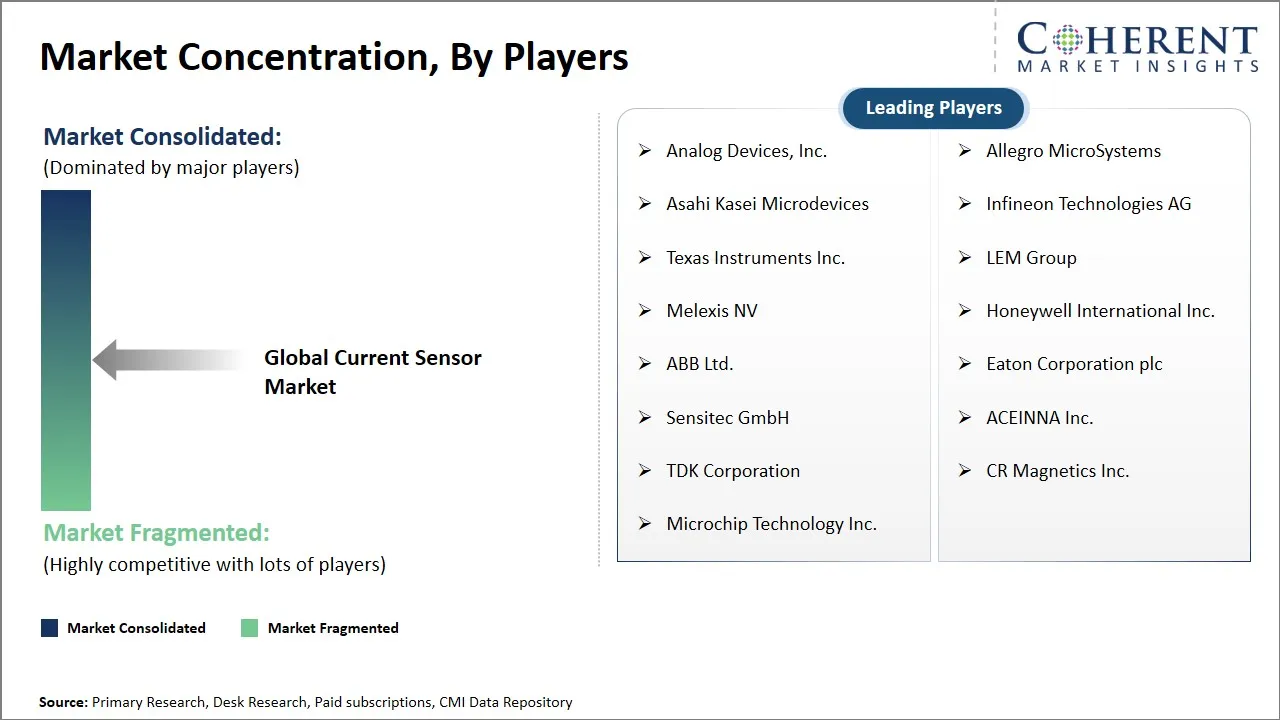
| Companies covered: | Analog Devices, Inc., Allegro MicroSystems, Asahi Kasei Microdevices, Infineon Technologies AG, Texas Instruments Inc., LEM Group, Melexis NV, Honeywell International Inc., ABB Ltd., Eaton Corporation plc, Sensitec GmbH, ACEINNA Inc., TDK Corporation, CR Magnetics Inc., and Microchip Technology Inc. | ||
| Growth Drivers: |
| ||
| Restraints & Challenges: |
| ||
Market Dynamics
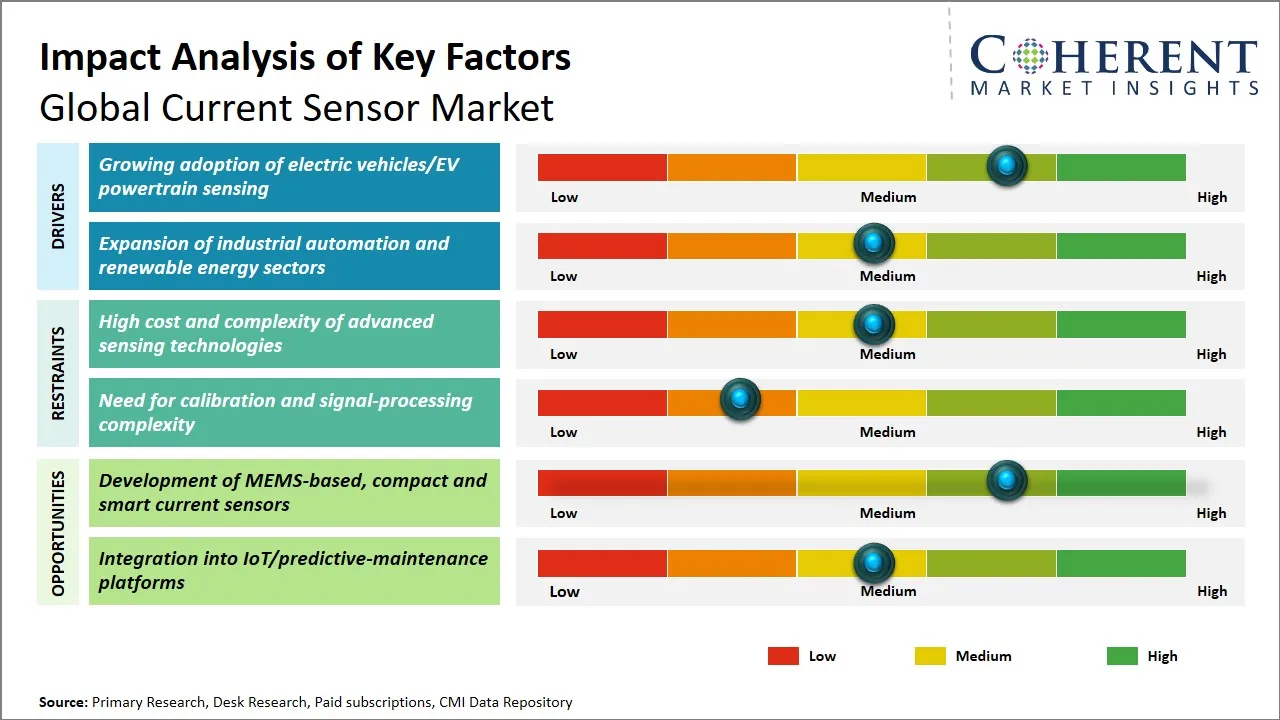
Global Current Sensor Market Driver – Growing Adoption of Electric Vehicles/EV Powertrain Sensing
As electric vehicles rely heavily on precise monitoring and control of battery packs, motor currents, and charging infrastructure, current sensors have become indispensable components ensuring operational efficiency, safety, and energy optimization. The complexity of EV powertrains, characterized by high current flows and rapid switching operations, necessitates advanced current sensing technologies that can provide accurate real-time measurement with minimal losses. A concrete example is NIO’s June 6, 2024 deal selecting Melexis current‑sensor chips for its traction‑inverter systems across NIO BEVs, illustrating direct, EV‑led demand for high‑accuracy, automotive‑grade current sensing.
Furthermore, regulatory pressures on emissions reduction and governmental incentives promoting electric vehicle adoption are driving automakers to integrate sophisticated sensing solutions to enhance vehicle performance and extend battery life. This trend is also catalyzing innovation in sensor designs, including the development of non-invasive and highly sensitive sensors compatible with compact, lightweight EV architectures.
Global Current Sensor Market Opportunity – Development of MEMS-Based, Compact, and Smart Current Sensors
The global current sensor market is poised to benefit significantly from the advancement and integration of Micro-Electro-Mechanical Systems (MEMS)-based current sensors, which offer enhanced precision, miniaturization, and intelligence in sensing capabilities. MEMS technology enables the production of highly compact and lightweight current sensors that can be seamlessly embedded into various electronic and industrial systems, addressing the growing demand for space-efficient and reliable sensing solutions. A clear instance is ACEINNA’s MCx1101/MCx2101 AMR “MEMS current sensor” families, marketed as compact, plug‑and‑play devices with high bandwidth and precision for power electronics.
Furthermore, the capability of MEMS-based sensors to be integrated with smart electronics facilitates real-time monitoring, data processing, and communication, thereby supporting IoT-enabled and Industry 4.0 frameworks. The trend towards electrification and the proliferation of smart devices are driving the need for intelligent sensing solutions that not only measure current accurately but also provide diagnostic and predictive maintenance data.
Analyst Opinion (Expert Opinion)
- As electric vehicles evolve from simple energy consumers to grid-interactive assets (via Vehicle-to-Grid or V2G systems), current sensors must now accurately measure bidirectional current flow with ultra-low latency and high dynamic range. This is pushing manufacturers to design smarter sensors that integrate with Battery Management Systems (BMS) and support real-time energy trading, battery health analytics, and load balancing.
- With Industry 4.0 accelerating, current sensors are emerging as core enablers of predictive maintenance in industrial environments. Integrated into motor drives, robotic arms, and control panels, they feed critical current data into AI-powered platforms to detect anomalies, anticipate equipment failure, and optimize load distribution—reducing downtime and improving Overall Equipment Effectiveness (OEE).
- Traditionally a domain of power systems, current sensors are now finding their way into wearables, portable diagnostic equipment, and miniaturized healthcare devices. Advancements in MEMS and magnetoresistive technologies have enabled the creation of ultra-compact, high-sensitivity current sensors that are safe for patient use and suitable for real-time bio-signal monitoring, drug delivery systems, and battery-operated implants.
Speak to the analyst
Want personalized insights?
Take the findings above to one of our principal consultants, or have the report rebuilt around the segments, geographies and competitors you actually track.
Market Segmentation
- Sensing Type Insights (Revenue, USD Bn, 2021 - 2033)
- Direct
- Indirect
- Technology Insights (Revenue, USD Bn, 2021 - 2033)
- Hall‑Effect
- AMR
- GMR
- TMR
- Flux-Gate
- Current Sensing Amplifier
- Opto-Isolated
- Shunt-Isolated
- Regional Insights (Revenue, USD Bn, 2021 - 2033)
- North America
- U.S.
- Canada
- Latin America
- Brazil
- Argentina
- Mexico
- Rest of Latin America
- Europe
- Germany
- U.K.
- Spain
- France
- Italy
- Russia
- Rest of Europe
- Asia Pacific
- China
- India
- Japan
- Australia
- South Korea
- ASEAN
- Rest of Asia Pacific
- Middle East
- GCC Countries
- Israel
- Rest of Middle East
- Africa
- South Africa
- North Africa
- Central Africa
- North America
- Key Players Insights
- Analog Devices, Inc.
- Allegro MicroSystems
- Asahi Kasei Microdevices
- Infineon Technologies AG
- Texas Instruments Inc.
- LEM Group
- Melexis NV
- Honeywell International Inc.
- ABB Ltd.
- Eaton Corporation plc
- Sensitec GmbH
- ACEINNA Inc.
- TDK Corporation
- CR Magnetics Inc.
- Microchip Technology Inc.
Sources
Primary Research Interviews
Stakeholders
- Electronic Component Distributors and Procurement Managers (e.g., Mouser, Digi-Key)
- Automotive Powertrain Engineers and EV System Designers (e.g., OEMs, Tier 1 Suppliers)
- Industrial Automation Experts (PLC & Motor Drive Integrators)
- Energy Infrastructure Engineers (Smart Grid & Solar Inverter Installers)
- IoT Device Manufacturers and Embedded System Architects
- Academic Researchers in Electrical Measurement and Sensor Design
Databases
- Electronic Parts Data Exchange (EPDX)
- Global EV Components Repository
- Sensor Integration Benchmark Database
- Asia-Pacific Industrial Market Compendium
- Automated Systems Analytics Exchange (ASAE)
Magazines
- Sensor World Quarterly
- Power Electronics Technology Today
- EV Systems and Components Digest
- Industrial Automation & Control Review
- Next-Gen Components & Measurement Magazine
Journals
- International Journal of Power Electronics and Drive Systems
- Journal of Electromagnetic Sensor Applications
- Sensors and Transducers Journal
- Journal of Renewable Energy Systems Integration
- Current Sensing & Measurement Review
Newspapers
- Tech Manufacturing Daily
- Electronics Business Post
- Asia-Pacific Engineering Times
- North American Industrial News
- The Semiconductor Herald
Associations
- International Society for Sensor Engineers (ISSE)
- Smart Grid Device Manufacturers Association (SGDMA)
- Global Electric Vehicle Components Alliance (GEVCA)
- American Society of Precision Electronics (ASPE)
- Asia-Pacific Electronics and Automation Council (APEAC)
Public Domain Sources
- U.S. Census Bureau
- EUROSTAT
- United Nations Economic Commission for Europe (UNECE)
- World Bank
- ResearchGate
Proprietary Elements
- CMI Data Analytics Tool, Proprietary CMI Existing Repository of information for last 8 years
Get access to 250+ pages report
Every segment, forecast, competitor profile and data table behind the analysis above — available for instant download.
- ESOMAR Member
- ISO 9001:2015 Certified
- D-U-N-S Registered
- GDPR & CCPA Compliant
Missing comfort of reading report in your local language? Find your preferred language:
Transform your Strategy with Exclusive Trending Reports
Frequently Asked Questions
The global current sensor market is estimated to be valued at USD 3.78 billion in 2026 and is expected to reach USD 7.55 billion by 2033.
The CAGR of global current sensor market is projected to be 10.4% from 2026 to 2033.
Growing adoption of electric vehicles/EV powertrain sensing and expansion of industrial automation and renewable energy sectors are the major factors driving the growth of the global current sensor market.
High cost and complexity of advanced sensing technologies and need for calibration and signal‑processing complexity are the major factors hampering the growth of the global current sensor market.
In terms of sensing type, direct segment is estimated to dominate the market revenue share in 2026.
A current sensor detects and measures electrical current (AC or DC) in a circuit and converts it into a readable signal, enabling monitoring and control in applications like EVs, power supplies, and industrial automation.
Current sensors are used in electric vehicles, industrial motor drives, power inverters, energy grids, battery management systems, and consumer electronics.