

Global Drug Repurposing Market Size and Forecast – 2026 to 2033
The Global Drug Repurposing Market is estimated to be valued at USD 36.69 Bn in 2026 and is expected to reach USD 49.59 Bn by 2033, exhibiting a compound annual growth rate (CAGR) of 4.4% from 2026 to 2033. This steady growth reflects the focus on identifying new therapeutic uses for existing drugs. This approach significantly reduces the time and cost associated with traditional drug development processes. It offers substantial opportunities for pharmaceutical companies and healthcare providers.
Key Takeaways of the Global Drug Repurposing Market
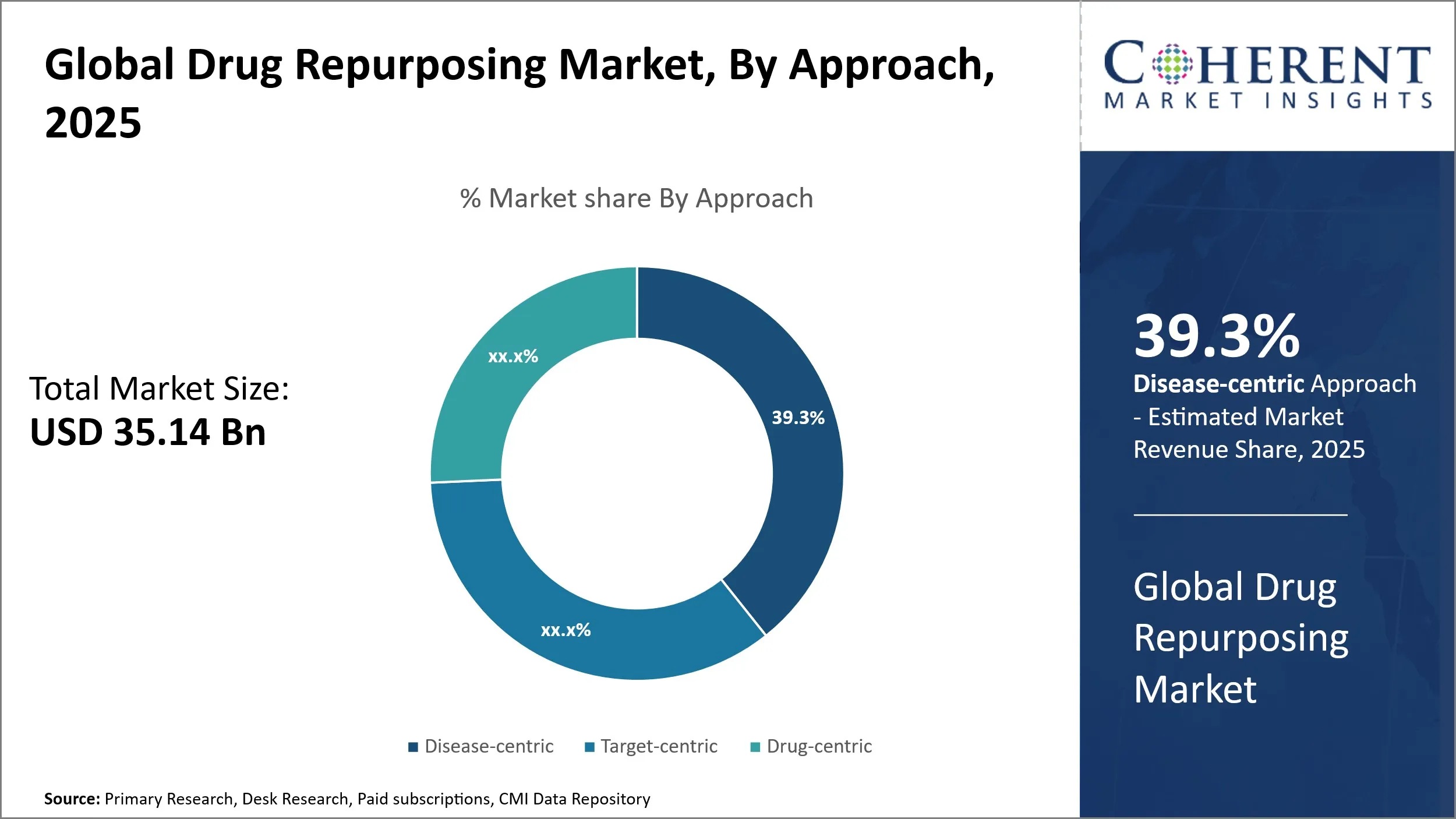
- The disease-centric approach is expected to lead the global drug repurposing market, accounting for 40.3% of the market share in 2026.
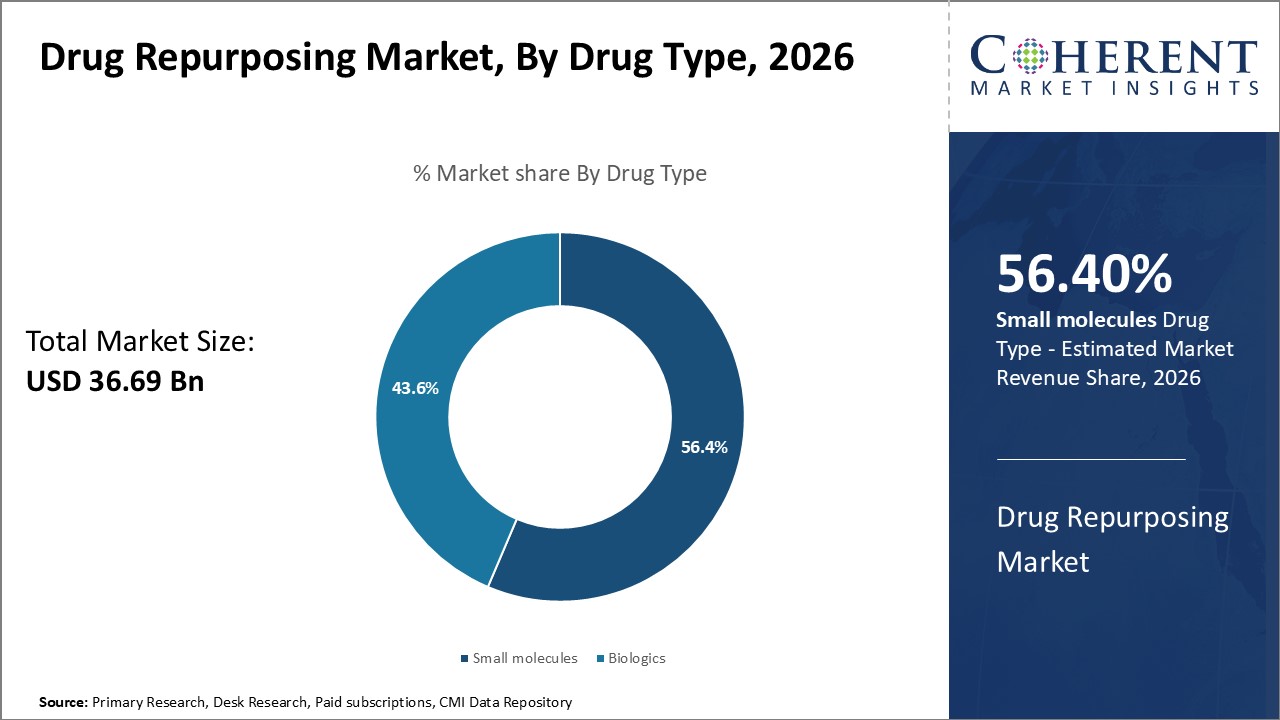
- Within the drug type segment, small molecules are projected to dominate, holding a 56.4% share in 2026.
- The oncology segment remains the largest contributor to the drug repurposing market, with an estimated 46.6% share in 2026.
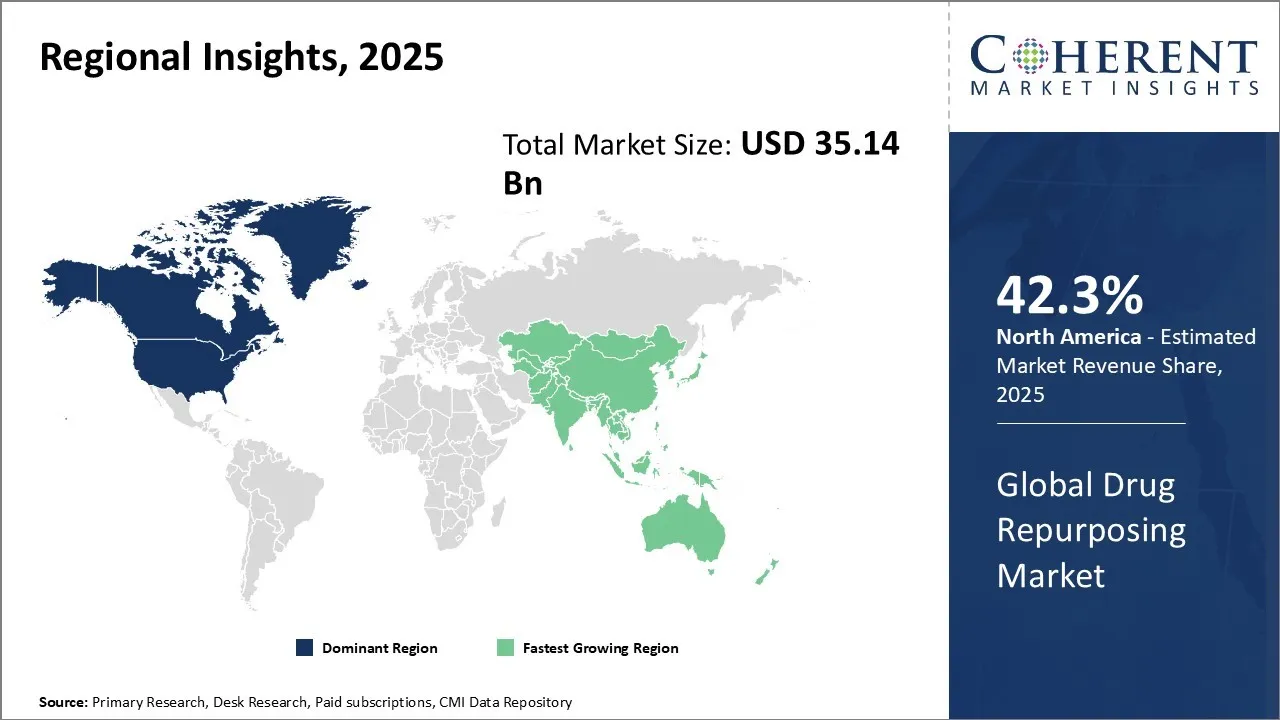
- North America is expected to lead the market, holding a share of 42.3% in 2026. Asia Pacific is anticipated to be the fastest-growing region, with a market share of 24.5% in 2026.
Market Overview
A key trend in the drug repurposing market is the integration of advanced technologies such as AI and machine learning to enhance the identification of potential drug candidates. Additionally, the rising prevalence of chronic diseases and the urgent need for effective treatments during health crises, like pandemics, are driving investments and collaborations across the biopharmaceutical industry. Increased regulatory support and growing awareness about drug repositioning benefits further fuel market expansion, making drug repurposing a pivotal strategy in future pharmaceutical innovation.
Currents Events and its Impact
Current Events | Description and its Impact |
Growing burden of chronic & rare diseases driving repurposing demand |
|
Push for generic‐drug repurposing and non ‑ profit pathways |
|
Segmental Insights
- Current Industry Events of 2026
- Market Size Estimation
- Regional Breakdown
- Competitive Landscape
- Customer Intelligence
- Segmental Analysis
- Pricing Analysis
- Key Market Drivers, Challenges & Future Trends
- Customized Insights Section
Drug Repurposing Market Insights, By Approach - Disease-centric Approach Drives Market Leadership through Focused Therapeutic Targeting
The disease-centric segment is the leader in the global drug repurposing market with an estimated share of 40.3% by 2026. Its main reason is to focus on specific diseases, which means selecting existing drugs having potential effectiveness. This approach is based on a thorough knowledge of disease biology and pathophysiology, allowing scientists to find out which drugs can alter essential disease pathways in a very effective way.
More and more experts consider complex diseases like chronic ailments and rare disorders, among the major reasons that trigger this segment's growth, which needs innovative therapy solutions beyond the usual drug development pipelines.
Drug Repurposing Market Insights, By Drug Type - Small Molecules Lead Due to Versatility and Established Therapeutic Profiles
On the other hand, small molecules are expected to maintain their position as the largest source, with 56.4% in 2026. Their low molecular weight allows quick passage through cell membranes, making them applicable in various therapeutic areas. Small molecule drugs are composed of low molecular weight compounds that pass through the cell membrane quickly. This enables them to connect with targets inside the cell, making them applicable in various therapeutic areas
For instance, Novartis AG is applying its small-molecule compounds towards drug repurposing, taking advantage of their established therapeutic profiles for speeding up the process of development. In the same way, Lantern Pharma makes use of AI technology in order to spot new disease applications for small molecules and is thus exploiting their adaptability, which, in turn, contributes to the growth of the drug repurposing market.
Drug Repurposing Market Insights, By Therapeutic Area - Oncology Therapeutic Area Leads Driven by Urgent Need and High Repurposing Potential
The oncology area is responsible for most of the drug repurposing market, and it has an estimated 46.6% stake in 2026, due to the high need for new cancer treatments and the peculiar nature of the tumors which makes it possible to do effective repurposing.
Cancer remains the major global killer, thus prompting an extensive investigation into the less toxic and more effective therapies. Drug repurposing in oncology is one of the ways that healthcare practitioners can use the drug that has a known safety profile and interfere with the tumor growth, metastasis, and resistance mechanisms.
AI-Driven Drug Repurposing for Rare and Age-Related Diseases: Innovations and Partnerships Shaping the Future of Treatment
- AI-driven drug repurposing is revolutionizing the pharmaceutical industry by using artificial intelligence to identify new uses for existing drugs, enabling faster and more cost-effective treatments. In February 2024, recent partnerships like ARPA-H’s MATRIX project, which received USD 48 million in funding, aim to repurpose approved medications for rare diseases. The project uses AI to predict how existing drugs can be effective for diseases with no current therapies, potentially accelerating the development of cures for the 30 million Americans affected by rare conditions.
- In a similar vein, in August 2024, Rejuvenate Biomed teamed up with SAS to develop an AI-driven drug discovery tool using SAS Viya. This platform will help researchers uncover novel biological interactions and repurpose existing drugs for age-related diseases. By combining Rejuvenate Biomed’s AI-based discovery platform with SAS’s advanced analytics, the partnership seeks to speed up drug development and expand the potential for therapeutic solutions across multiple age-related conditions.
Regional Insights
North America Drug Repurposing Market Analysis and Trends
North America will hold the largest share of the global drug repurposing market with 42.3% by 2026. This is due to its well-established healthcare system, strong pharmaceutical R&D infrastructure, and government policies like the U.S. FDA’s fast tracking of drug approvals. The combination of pharmaceutical companies, biotechnology firms, and academic research institutions encourages the development of repositioning strategies through innovative approaches.
In October 2023, Rejuvenate Biomed successfully ran a Phase 1b proof-of-concept clinical trial for RJx-01, a combination of galantamine and metformin targeting disuse-induced muscle atrophy. The trial met all endpoints, demonstrating safety, tolerability, and good bioavailability. With Phase 2 trials for sarcopenia planned for 2024, the results highlight the challenge of increasing participation in drug repurposing for age-related diseases.
Asia Pacific Drug Repurposing Market Analysis and Trends
Asia Pacific is expected to exhibit the fastest growth in the drug repurposing market with a share of 24.5% in 2026 due to expanding healthcare expenditure, rising prevalence of chronic diseases, and increasing investments in life sciences. Countries in this region are strengthening regulatory frameworks to support accelerated drug approvals, which plays a pivotal role in encouraging drug repurposing initiatives.
The expanding pharmaceutical manufacturing base, coupled with growing expertise in biotechnology and clinical research, attracts multinational companies to establish partnerships and research centers here.
Global Drug Repurposing Market Outlook for Key Countries
U.S. Drug Repurposing Market Trends
Strong innovation culture and a wide range of public and private funding grants make the U.S. a global leader in drug repurposing. The supportive stance of the U.S. Food and Drug Administration (USFDA) on regulatory flexibility for repurposed drugs quickens the development cycles, leading to fast market entry. Besides, major pharmaceutical companies like Johnson & Johnson and Amgen are already at the forefront of the application of precision medicine and AI in the identification of new indications for existing molecules.
In April 2026, Plex Research, an AI-driven biotech company in the U.S., partnered with Ginkgo Bioworks, a leading synthetic biology firm, to use Plex’s AI platform on Ginkgo’s new GDPx2 dataset to uncover fresh drug-disease links and accelerate drug repurposing insights.
U.K. Drug Repurposing Market Trends
The U.K. drug repurposing market is gradually moving towards AI-driven discovery along with faster clinical validation and strong collaborations between biotech companies, academic institutions, and the NHS. Making use of real-world evidence, advanced analytics, and high-throughput data to identify new indications for existing molecules is getting widespread acceptance in the areas of oncology, rare diseases, neurodegeneration, and metabolic disorders.
In August 2023, DEBRA UK announced that its first drug repurposing clinical trial had been approved, thanks to funding from the A Life Free of Pain appeal. The project aims to expedite the development of treatments for Epidermolysis Bullosa (EB) by exploring potential new therapeutic applications for known drugs.
China Drug Repurposing Market Trends
A series of huge government initiatives such as “Made in China 2026” plan that promotes pharmaceutical innovation are some of the factors that have greatly contributed to the drug repurposing market in China. Besides, the large population of the country with varying healthcare needs and its access to conceptualizing new applications of drugs using vast real-world data offers a great potential for the identification of drug repurposing opportunities.
WuXi AppTec and Fosun Pharma, among others, are key players in the drug repositioning research that specifically targets oncology and infectious diseases. The changes in the regulatory landscape that seek to hasten approvals for clinical trials have been a major contributor to the growth while collaboration with Western pharmaceutical companies has been bringing the advanced technology required to the local market.
Japan Drug Repurposing Market Trends
Japan manages to hold the Asia Pacific region through its leading research in biotechnology and winning policies regarding healthcare.cThe Ministry of Health, Labour and Welfare promotes drug repurposing as a strategy to counteract the problems resulting from an aging population.
The Japanese pharmaceutical behemoths, Takeda and Daiichi Sankyo, are, moreover, involved in drug repurposing, giving preference to precision therapies directed at rare and chronic illnesses. The excellent clinical research infrastructure of Japan, along with the robust intellectual property protection, boosts the market and investments.
Comparative Analysis: Cost, Time, and Success of Repurposed Drugs vs. De Novo Drug Discovery
Metric | De Novo Drug Discovery (New Chemical Entities) | Drug Repurposing (Existing/Approved Drugs) |
Average cost to approval | USD 1.5 billion – USD 4.5 billion (commonly around USD 2–3 billion) | USD 300 million (significantly lower) |
Average time to market | ~10‑17 years typical (commonly ~12 years median) | ~3‑12 years reported for repurposing |
Success (approval) probability | ~10‑12% from Phase I to approval | ~30% reported for repurposing (around 3× higher than de novo) |
Market Players, Key Developments, and Competitive Intelligence
Key Developments
- In August 2025, Fifty1 Labs, an AI-powered healthcare solutions provider, and BioSpark AI, a company specializing in artificial intelligence for drug discovery, partnered to transform over 10,000 unstructured clinical case reports into a structured, queryable database. This database, containing 2,000+ real-world patient treatment-outcome pathways, accelerates drug repurposing and functional medicine innovation by enabling prioritized candidate selection for chronic fatigue, neuroinflammation, and sleep disorders.
- In January 2025, Mr. Tom Livne, the former CEO of Verbit, launched Grace, a startup aimed at repurposing abandoned drugs using advanced AI. Grace is targeting USD 10-20 million in funding to accelerate the rediscovery of drug candidates and address the high attrition rate in clinical stages.
- In April 2024, Every Cure, a nonprofit organization focused on unlocking the potential of underutilized drugs, and BioPhy, a biotechnology company specializing in AI-driven drug discovery, partnered to transform drug repurposing. Utilizing BioPhy’s AI platform, BioLogicAI, they identify promising drug-disease matches and optimize clinical trials to increase success rates and reduce costs.
Top Strategies Followed by Global Drug Repurposing Market Players
- The market players that are already in the market are the ones that have the most powerful impact, as they invest a lot in R&D and come out with new repurposed drugs that meet unmet medical needs. Thus, they have a competitive edge over others. They also continue to be the leaders by getting into strategic alliances with major pharmaceutical companies and contract manufacturing, which allows them to share knowledge and access cutting-edge technology.
- Pfizer, Novartis, and Bristol Myers Squibb are the ones that mostly control the drug repurposing field by investing a lot in R&D. For instance, Pfizer was able to use the antiviral drug Paxlovid, which was originally developed for HIV, to treat COVID-19. These companies consolidate their influence in the market by collaborating with big pharmaceutical firms and OEMs, thereby facilitating knowledge sharing and access to state-of-the-art technologies.
- The middle-class players are constantly trying to find the most favorable price-to-quality ratio so that they can attract the price-sensitive consumers, especially in developing countries, where healthcare spending is limited. Their products are the cheaper versions of the original drugs but are as effective as the former. They will be looking for partnerships with the big pharmaceuticals, contract research organizations, and technology providers in order to increase production efficiency and gain a foothold in the market.
- Teva Pharmaceutical Industries, Eli Lilly, and Mylan (currently part of Viatris) all aim to tick the cost-quality balance scale to please the consumers in the developing nations who are price-sensitive. Teva has launched the creation of affordable generic products for the main therapeutic areas while Mylan has concentrated on making generic drugs of the repurposed cancer drugs.
- The smaller companies focusing on niche markets are doing so by offering specialized and innovative products. These products often target specific areas or rare diseases, where larger companies have less presence. To keep up with the competition, they are using the latest technologies such as AI, machine learning, and advanced data analytics to spot new drug repurposing opportunities.
- Alltrna and Pharvaris are small companies that focus on developing treatments for rare diseases, and their niches, which are areas that larger competitors, are less involved in. Alltrna is concentrating on engineered tRNA-based therapy for genetic disorders, while Pharvaris is developing drugs for hereditary angioedema.
Market Report Scope
Global Drug Repurposing Market Report Coverage
| Report Coverage | Details | ||
|---|---|---|---|
| Base Year: | 2025 | Market Size in 2026: | USD 36.69 Bn |
| Historical Data for: | 2020 To 2024 | Forecast Period: | 2026 To 2033 |
| Forecast Period 2026 to 2033 CAGR: | 4.4% | 2033 Value Projection: | USD 49.59 Bn |
| Geographies covered: |
| ||
| Segments covered: |
| ||
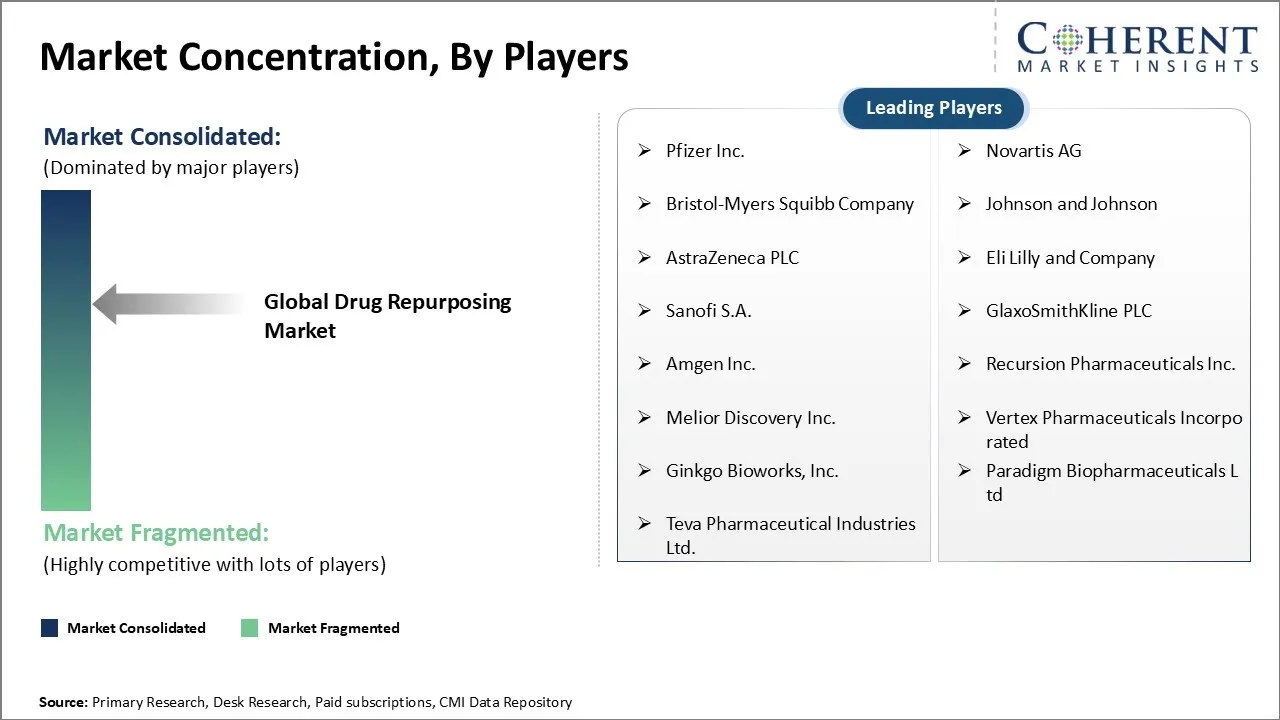
| Companies covered: | Pfizer Inc., Novartis AG, Bristol‑Myers Squibb Company, Johnson and Johnson, AstraZeneca PLC, Eli Lilly and Company, Sanofi S.A., GlaxoSmithKline PLC, Amgen Inc., Recursion Pharmaceuticals Inc., Melior Discovery Inc., Vertex Pharmaceuticals Incorporated, Ginkgo Bioworks, Inc., Paradigm Biopharmaceuticals Ltd, and Teva Pharmaceutical Industries Ltd. | ||
| Growth Drivers: |
| ||
| Restraints & Challenges: |
| ||
Drug Repurposing Market Dynamics
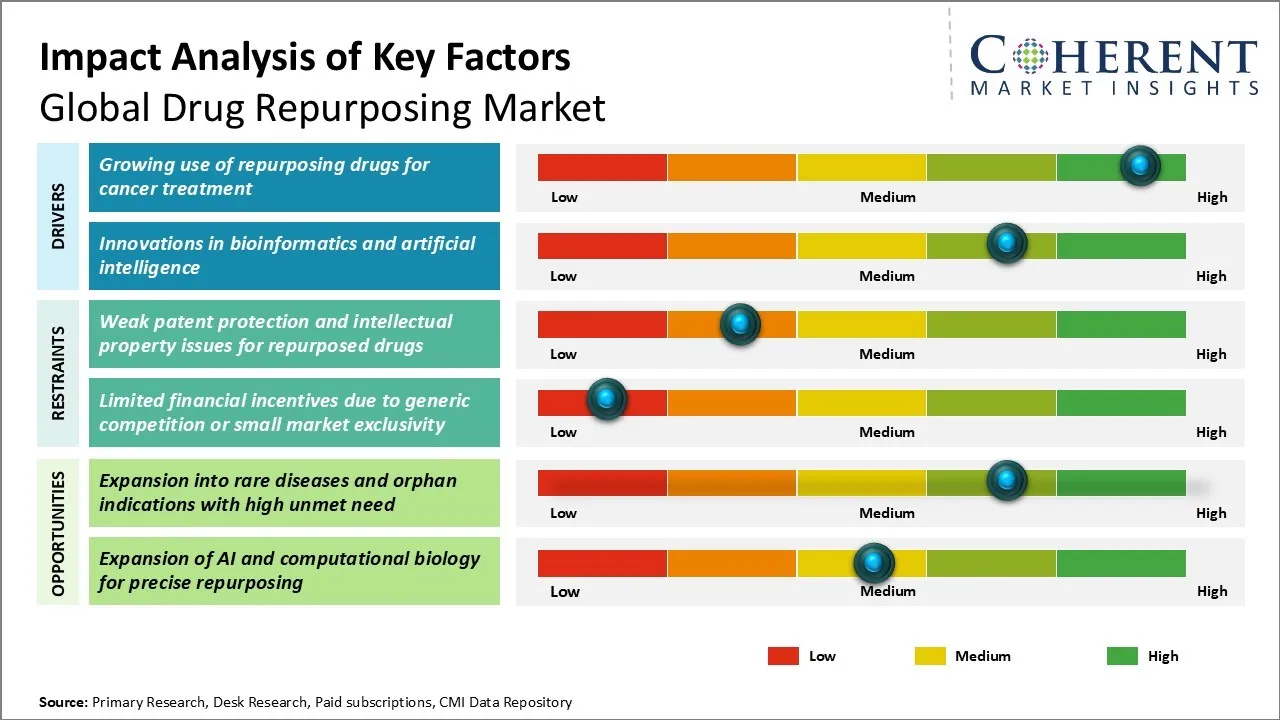
Drug Repurposing Market Driver - Growing Use of Repurposing Drugs for Cancer Treatment
The increasing adoption of repurposing drugs for cancer treatment has become one of the main factors behind the growth of the global drug repurposing market. The conventional development of drugs usually takes a long time and costs a lot of money, with the repositioning of existing pharmaceutical compounds being a very attractive alternative, especially in oncology.
Quite a number of drugs that have been approved for other indications have meanwhile been found to possess anticancer properties through a great number of mechanisms like apoptosis induction, angiogenesis inhibition or immune modulation. The already existing medicines are cheaper and quicker to get to patients, and the risks connected to drug discovery are reduced since safety profiles and pharmacokinetics of these drugs are known already.
For instance, in September 2024, researchers at the Institute of Advanced Study in Science and Technology (IASST), Guwahati, under the Department of Science & Technology (DST), Govt. of India, discovered that Selegiline, an antidepressant, could potentially be repurposed for breast cancer treatment. The study found that Selegiline effectively targeted both estrogen and progesterone-positive as well as triple-negative breast cancer cells. It induces cell death without relying on reactive oxygen species (ROS) and inhibits protein kinase C phosphorylation. This breakthrough in drug repurposing could offer a cost-effective alternative for cancer treatment, but further studies on in vivo efficacy, dosage, and side effects are needed.
Drug Repurposing Market Opportunity - Expansion into Rare Diseases and Orphan Indications with High Unmet Need
The global drug repurposing market is probable to grow significantly by venturing into rare disorders and orphan indications which have been hitherto neglected by the pharmaceutical industry because of their small patient bases and corresponding high costs. Repurposing of drugs means to use the already existing drugs that have known good safety profiles, hence the development time and financial risk are greatly reduced which is very important for rare diseases because of the lack of commercial incentives. One of the main reasons that the identification of candidate drugs for orphan diseases has become more precise is the increased use of genomic and molecular profiling technologies that have improved the understanding of disease mechanisms.
For instance, in June 2025, Alltrna, a biotech firm focused on engineered tRNA therapeutics, is pioneering a mutation-driven approach to treat rare diseases. CEO Michelle Werner, inspired by her son’s diagnosis with Duchenne muscular dystrophy, leads the effort to target genetic mutations shared across multiple diseases. Their first candidate, AP003, shows potential in treating liver diseases and is moving toward clinical trials, offering a broader, more scalable solution to genetic conditions.
Analyst Opinion (Expert Opinion)
- The global drug repurposing market is on an upward trajectory as the AI and machine learning advancements are the biggest contributors to faster drug discovery and lower prices. In addition, the approval of drug repurposing by the U.S. FDA and EMA is another factor that has made the drug repurposing market more efficient and affordable. However, concerns over intellectual property protection and the possibility of unanticipated side effects are still the main deterrents to the widespread use of the drug repurposing process.
- Some of the leading events in this area, such as the PhRMA Annual Meeting and BioEurope, have played an important role in drug repurposing discussions, enabling the pharmaceutical, regulatory, and academic sectors to collaborate. Those partnerships between the biotech firms using AI technology in their drug development and the pharmaceutical companies are giving birth to new initiatives like the one for the treatment of COVID-19 that rely on drug repurposing. The countries that are advocating for drug repurposing are likely to be the next markets for this product.
Speak to the analyst
Want personalized insights?
Take the findings above to one of our principal consultants, or have the report rebuilt around the segments, geographies and competitors you actually track.
Market Segmentation
- Approach Insights (Revenue, USD Bn, 2021 - 2033)
- Disease‑centric
- Target‑centric
- Drug‑centric
- Drug Type Insights (Revenue, USD Bn, 2021 - 2033)
- Small molecules
- Biologics
- Therapeutic Area Insights (Revenue, USD Bn, 2021 - 2033)
- Oncology
- Neurology and CNS disorders
- Infectious diseases
- Cardiovascular diseases
- Metabolic disorders
- Other therapeutic areas
- Route Of Administration Insights (Revenue, USD Bn, 2021 - 2033)
- Oral
- Intravenous (IV)
- Other routes
- End User Insights (Revenue, USD Bn, 2021 - 2033)
- Pharmaceutical and biotechnology companies
- Contract research organizations (CROs)
- Hospitals and Clinics
- Others
- Regional Insights (Revenue, USD Bn, 2021 - 2033)
- North America
- U.S.
- Canada
- Latin America
- Brazil
- Argentina
- Mexico
- Rest of Latin America
- Europe
- Germany
- U.K.
- Spain
- France
- Italy
- Russia
- Rest of Europe
- Asia Pacific
- China
- India
- Japan
- Australia
- South Korea
- ASEAN
- Rest of Asia Pacific
- Middle East
- GCC Countries
- Israel
- Rest of Middle East
- Africa
- South Africa
- North Africa
- Central Africa
- North America
- Key Players Insights
- Pfizer Inc.
- Novartis AG
- Bristol‑Myers Squibb Company
- Johnson and Johnson
- AstraZeneca PLC
- Eli Lilly and Company
- Sanofi S.A.
- GlaxoSmithKline PLC
- Amgen Inc.
- Recursion Pharmaceuticals Inc.
- Melior Discovery Inc.
- Vertex Pharmaceuticals Incorporated
- Ginkgo Bioworks, Inc.
- Paradigm Biopharmaceuticals Ltd
- Teva Pharmaceutical Industries Ltd.
Sources
Primary Research Interviews
Industry Stakeholders
- Biotech/Pharmaceutical Research and Development (R&D) heads
- Regulatory affairs leads (drug approval processes)
End Users
- Hospital formulary committees (medicine adoption)
- Clinical trial investigators (testing repurposed drugs)
- Patient-advocacy organizations (demand side)
- Contract Research Organizations (CROs) specializing in repurposing trials
Government & International Databases
- U.S. Food and Drug Administration (FDA) labeling/indication databases
- European Medicines Agency (EMA) regulatory pathways
- World Health Organization (WHO) International Clinical Trials Registry Platform (ICTRP)
- National Health Technology Assessment (HTA) agency databases
- Patent databases (e.g., World Intellectual Property Organization (WIPO), U.S. Patent and Trademark Office (USPTO)
Trade Publications
- Express Pharma
- Drug Patent Watch
- Pharma Documentation Ring
- Scrip Intelligence
- Pharmaceutical Research and Manufacturers of America (PhRMA)
- Assopharm
Academic Journals
- Frontiers in Drug Discovery
- Scientific Data
- Journal of Pharma Insights & Research
- BMC Health Services Research
- Bioinformatics & Biology Insights
- eCancer Medical Science
Reputable Newspapers/News Sources
- The Guardian
- Financial Times
- Bloomberg News
- Reuters Health section
- The New York Times
- The Times of India
Industry Associations
- European Federation of Pharmaceutical Industries and Associations
- Pharmaceutical Research and Manufacturers of America
- Indian Drug Manufacturers Association
- Pharma Documentation Ring
Public Domain Resources
- DrugBank (open drug data repository)
- ReDO_DB (Repurposing Drugs in Oncology Database)
- FDALabel Database (FDA drug labeling repository)
- EU Clinical Trials Register (EUCTR)
- ICTRP (World Health Organization [WHO] International Clinical Trials Registry Platform)
Proprietary Elements
- CMI Data Analytics Tool: Proprietary analytics tool to analyze real-time market trends, consumer behavior, and technology adoption in market
- Proprietary CMI Existing Repository of Information for Last 8 Years
Get access to 250+ pages report
Every segment, forecast, competitor profile and data table behind the analysis above — available for instant download.
- ESOMAR Member
- ISO 9001:2015 Certified
- D-U-N-S Registered
- GDPR & CCPA Compliant
Missing comfort of reading report in your local language? Find your preferred language:
Transform your Strategy with Exclusive Trending Reports
Frequently Asked Questions
The global drug repurposing market is estimated to be valued at USD 36.69 Bn in 2026 and is expected to reach USD 49.59 Bn by 2033.
The CAGR of the global drug repurposing market is projected to be 4.4% from 2026 to 2033.
Growing use of repurposing drugs for cancer treatment and innovations in bioinformatics and artificial intelligence are the major factors driving the growth of the global drug repurposing market.
Weak patent protection and intellectual property issues for repurposed drugs and limited financial incentives due to generic competition or small market exclusivity are the major factors hampering the growth of the global drug repurposing market.
In terms of approach, the disease‑centric segment is estimated to dominate the market revenue share in 2026.
Pfizer Inc., Novartis AG, Bristol Myers Squibb Company, Johnson and Johnson, AstraZeneca PLC, Eli Lilly and Company, Sanofi S.A., GlaxoSmithKline PLC, Amgen Inc., Recursion Pharmaceuticals Inc., Melior Discovery Inc., Vertex Pharmaceuticals Incorporated, Ginkgo Bioworks, Inc., Paradigm Biopharmaceuticals Ltd, and Teva Pharmaceutical Industries Ltd.
North America is expected to lead the global drug repurposing market in 2026.