

Global Ecotoxicology Market Size and Forecast – 2026-2033
The global ecotoxicology market is estimated to be valued at USD 1,141.5 Mn in 2026 and is expected to reach USD 1,408.2 Mn by 2033, exhibiting a compound annual growth rate (CAGR) of 4.2% from 2026 to 2033. This steady growth reflects the increasing focus on environmental safety and regulatory compliance, driving demand for ecotoxicology testing and consulting services worldwide, particularly in industries subjected to stringent environmental regulations.
Key Takeaways of the Global Ecotoxicology Market
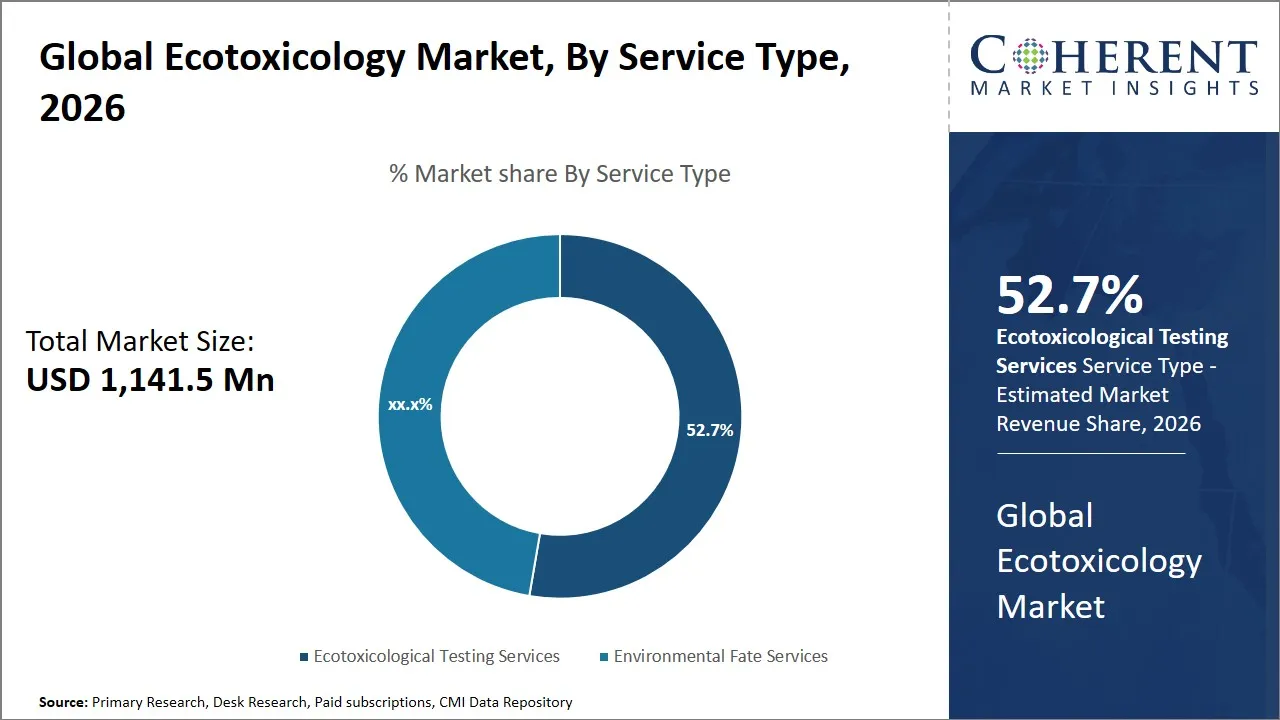
- Ecotoxicological testing services segment is expected to lead the ecotoxicology market, capturing 52.7% share in 2026.
- Rapid segment is estimated to represent 61.4% of the ecotoxicology market share in 2026.
- Wastewater/effluent segment is projected to dominate with 37.8% of the global ecotoxicology market share in 2026.
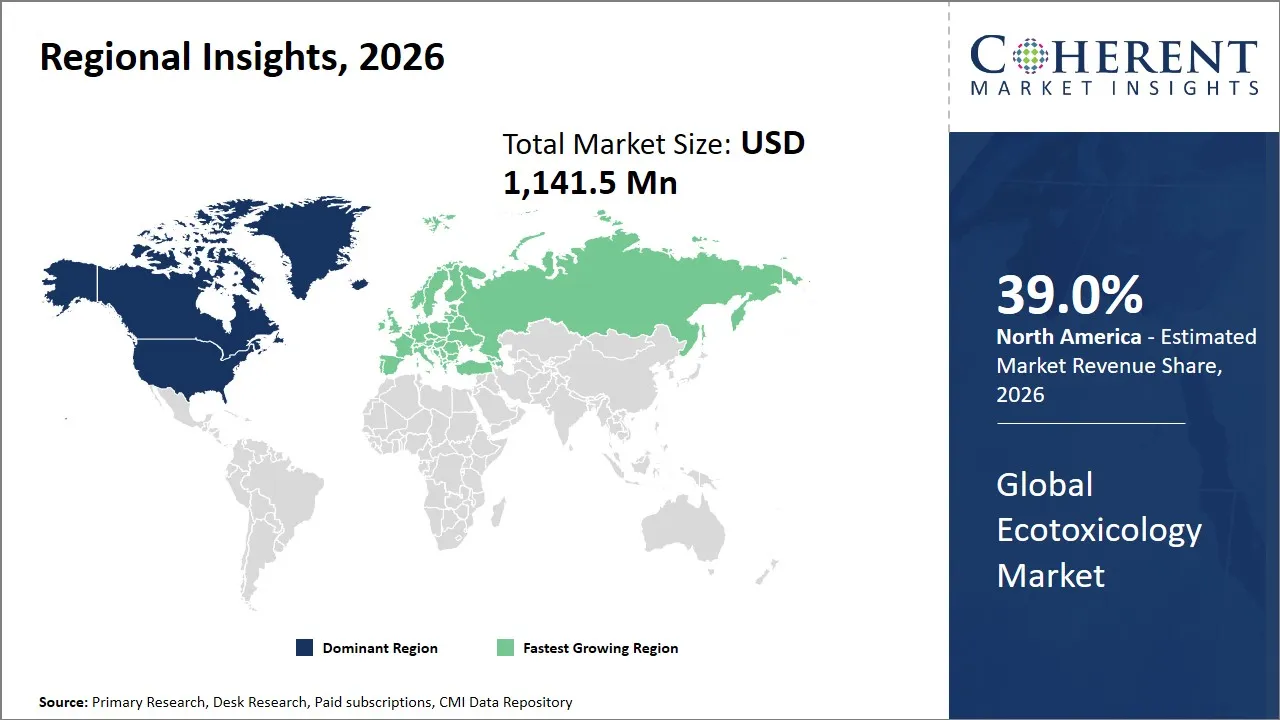
- North America is expected to lead the market, holding a share of 39.0% in 2026. Europe is anticipated to be the fastest-growing region, with 27.5% share in 2026.
Market Overview
- Expanding scrutiny on per- and polyfluoroalkyl substances (PFAS), pesticides, industrial chemicals, and emerging contaminants is increasing demand for ecotoxicity, environmental fate, and aquatic risk studies. Regulatory pressure is no longer limited to legacy chemicals; it now covers broader substance classes and long-term ecosystem effects.
- Organization for Economic Co-operation and Development (OECD) test guidelines continue to anchor global chemical safety testing, which keeps demand strong for laboratories capable of delivering regulator-ready, internationally accepted datasets. This supports recurring business in method validation, repeat testing, and cross-jurisdiction compliance work.
- The market is shifting from purely animal-based testing toward in vitro, in silico, omics, and high-throughput screening approaches. That is changing buyer expectations: clients increasingly want faster, scalable, lower-cost, and more mechanistic testing models.
- Aquatic life benchmarks, pesticide assessments, sediment studies, and water-related exposure testing continue to dominate practical demand because regulators still rely heavily on aquatic endpoints for environmental decision-making. This keeps fish, algae, daphnia, and sediment-based studies commercially important.
Currents Events and their Impact
Current Events | Description and its Impact |
Tightening PFAS and persistent chemical regulation |
|
Broader use of New Approach Methods (NAMs) and non-animal testing |
|
Segmental Insights
- Current Industry Events of 2026
- Market Size Estimation
- Regional Breakdown
- Competitive Landscape
- Customer Intelligence
- Segmental Analysis
- Pricing Analysis
- Key Market Drivers, Challenges & Future Trends
- Customized Insights Section
Why Does the Ecotoxicological Testing Services Segment Dominate the Global Ecotoxicology Market in 2026?
The ecotoxicological testing services segment is expected to hold the largest market share of 52.7% in 2026, driven by the increasing regulatory scrutiny and demand for comprehensive environmental risk assessments. The governments and other regulatory organizations around the world have been putting strict requirements in order to determine the effects of chemicals, pharmaceuticals, pesticides and industrial effluents on the ecosystem. This has resulted in increased demands of strong ecotoxicological testing procedures, which are able to give credible information on the level of toxicity in different species and different environmental matrices.
The other major driving force behind this segment is the increased awareness about corporate social responsibility and sustainable environmental practices amongst industries. Firms, especially in the chemical sector, farming, and pharmaceutical industries are undertaking ecotoxicological testing to establish that their products are not harmful to the biodiversity over the long run. The nature of environmental regulations makes testing procedures involving experts necessary as they can model real-life exposures and biological reactions, therefore, the need to make use of specialized services.
For instance, in October 2025, Charles River Laboratories and Toxys announced a collaboration to validate the use of New Approach Methodologies for developmental toxicity testing. The partnership provides Charles River clients access to ReproTracker, a human stem cell–based in vitro assay designed to rapidly identify developmental toxicity hazards in drugs and chemicals. The technology supports early screening for teratogenic effects and offers a non-animal alternative to traditional in vivo testing, helping accelerate environmental and chemical safety assessments.
(Sources- Charles River Laboratories)
Why Does the Rapid Segment Dominate the Global Ecotoxicology Market in 2026?
The rapid segment is expected to hold 61.4% of the market share in 2026, due to its ability to provide faster, cost-effective, and efficient analytical results without compromising accuracy. The traditional or conventional approaches are reliable, but in most cases, they have long testing durations, high resource use, and resource complexities. The advent and adoption of fast technologies have transformed ecotoxicological evaluations, which satisfies the pressing demand of rapid detection and decision making in environmental protection.
Some of the rapid ecotoxicology technologies are bioassays, microfluidic systems, molecular, biochemical markers and enhanced sensor systems. These technologies save much on the time of the assays which will allow industries and regulators to respond promptly to the ecological risks. In addition, high throughput screening is facilitated by rapid procedures, and therefore, they are used in a situation where several samples or contaminants require to be evaluated at the same time.
The Wastewater/Effluent Segment Dominates the Global Ecotoxicology Market
The wastewater/effluent segment is expected to hold the largest market share of 37.8% in 2026, driven by the critical need to assess and mitigate pollution from municipal, industrial, and agricultural sources. Wastewater and effluents are often a complex of organic and inorganic contaminants such as pharmaceuticals, heavy metals, pesticides and emerging micropollutants that can have very deleterious effects on aquatic life and downstream ecosystems in case they are not treated or poorly treated.
The high rates of urban growth and industrial development have led to high levels of effluent discharge in the water bodies and this has to be monitored all the time in order to abide by the environmental regulations. Ecotoxicological analysis of wastewater will help in giving an important picture of the environmental risks as opposed to merely chemical concentration by giving a cumulative toxic effect. Subsequently, regulatory bodies require such tests as discharge permits and environmental impact assessment.
Annual New Chemical Registrations Requiring Ecotoxicology Assessment
- The annual number of new chemical registrations that need ecotoxicology testing is not unique worldwide since the registration systems vary depending on region, type of substance, and tonnage range. In reality, the volume is driven by significant regulatory frameworks including EU REACH and the U.S Toxic Substances Control Act (TSCA) where testing demands differ according to the hazard profile, volume of production, use pattern and the current data available. This implies that annual demand can be more accurately described as a continuous stream of new submissions, dossier updates and data-gap studies and not a single global figure.
- A pragmatic sign is provided by the U.S. where EPA through its TSCA New Chemicals Program is reported to have submitted statistics of annual submissions up until 2025 with a flow of new chemical submissions and other submissions that can initiate environmental review being reported. Meanwhile, OECD and other international systems are still revising test guidelines, making ecotoxicology work remain dynamic with method validation, repeat testing and cross-jurisdiction compliance maintenance. The conclusion is simple: despite the absence of a clean worldwide annual number, the market experiences an annual repetition of ecotoxicology demand due to the introduction of new chemicals, new regulations, and even greater levels of examination of environmental endpoints.
Regional Insights
North America Ecotoxicology Market Analysis and Trends
The North America region is projected to lead the market with a 39.0% share in 2026, driven largely by a robust market ecosystem characterized by advanced research infrastructure, stringent environmental regulations, and significant investment in environmental safety and health. The U.S. and Canada have a large number of governmental organizations that include the Environmental Protection Agency (EPA) and Health Canada whose initiatives encourage the use of ecotoxicological testing in order to safeguard the ecosystems against the dangers of the chemicals. This regulatory focus makes industries such as agriculture and pharmaceutical, manufacturing rights and interests invest in ecotoxicology testing and monitoring services.
Moreover, North America enjoys the focus of such major players in the industry as Charles River Laboratories, SGS North America, and Eurofins Scientific, which offer a complete ecotoxicology testing solution. The region also has an advantage in terms of trade dynamics as it is a point of importation of chemical substances that need to be tested in relation to exports of advanced technologies in the sphere of environmental testing.
For instance, in March 2024, York Analytical Laboratories announced that it had joined ALS Limited to accelerate the growth of environmental testing services in the Northeast U.S. ALS said the acquisition would strengthen its position in a fast-growing regional market supported by major infrastructure investment and increasing demand for contamination testing, particularly around PFAS-related issues. CEO and Managing Director Malcolm Deane said the deal would help ALS expand quickly in the Northeast U.S. environmental marketplace.
(Source- York Analytical Laboratories)
Europe Ecotoxicology Market Analysis and Trends
The Europe region is expected to exhibit the fastest growth in the ecotoxicology market contributing 27.5% share in 2026, driven by the regulatory burden under REACH, where registration dossiers must include ecotoxicological and related hazard information. This continues to create demand in environmental fate studies, aquatic toxicity testing and data ready for regulators.
The expanding regulatory pressure on PFAS and other long-lasting contaminants, as well as the wider zero-pollution and the sustainability agenda by EU, are further mounting the pressure on the ecotoxicology research. Meanwhile, there is continued demand of OECD compatible and GLP data that can be used to submit regulatory submissions across multiple countries in Europe.
For instance, in September 2024, the European Chemicals Agency announced that it aims to complete its scientific evaluation of the proposed European Union wide restriction on per- and polyfluoroalkyl substances by the end of 2026. The evaluation is part of a broader regulatory effort to address the environmental and health risks associated with PFAS chemicals, which are widely used in industrial and consumer products across Europe. The move is expected to significantly influence chemical safety regulations and increase demand for environmental and ecotoxicological testing across the region.
(Sources- European Chemicals Agency (ECHA))
Ecotoxicology Market Outlook for Key Countries
How is the U.S. Helping in the Growth of the Ecotoxicology Market?
The U.S. ecotoxicology market is advantaged with an advanced regulatory environment that is led by the stringent regulations on the chemical safety and environmental monitoring of chemicals imposed by the EPA. Certainly, large companies such as Charles River Laboratories and BioReliance have developed extensive testing services that serve the pharmaceutical, agrochemical, and consumer products sectors. It is also the U.S. which is at the forefront in coming up with innovative ecotoxicological methods of assessment and green chemistry initiatives, which affect international market standards.
How is China Helping in the Growth of the Ecotoxicology Market?
The ecotoxicology market of China is increasing at a very fast rate due to its high industrial base and increasing focus on environmental regulations that are handled by the Ministry of Ecology and Environment. A lot of infrastructure is being developed in the nation to facilitate testing of chemicals and pesticides and companies like the TUV Rheinland and SGS are spending a lot of money establishing local testing labs and services. In addition, government incentives to control pollution and sustainable industrial concerns are significant motivators to the market demand.
Key Drivers for the Growth of the Germany Ecotoxicology Market
The ecotoxicology market in Germany remains at the forefront of the market in Europe due to the strict environmental regulations that are in line with the EU and the established chemical and pharmaceutical sectors. The market also exists on the basis of such leading companies as BASF and Eurofins Scientific that provide innovation in the ecotoxicology testing and regulations of environmental risks. The presence of Germany as a hub of chemical production and export demands the use of efficient ecotoxicological services to comply with the regulations in the region and internationally.
India Ecotoxicology Market Trends
The market of ecotoxicology in India is experiencing a rapid growth as evidenced by the growing government attention to environmental conservation and common agricultural practices that are sustainable. The Ministry of Environment, Forest and Climate Change has also implemented measures that force the industries to embrace ecotoxicological assessments. Syngenta and Intertek have created local ventures to meet the interest of the expanding market in agencies such as agriculture, biotechnology, and pharmaceuticals. The market prospects of the country are also enhanced by the trade expansion and foreign investments.
Global GLP-Certified Ecotoxicology Laboratory Capacity
- The capacity to carry out GLP-certified ecotoxicology laboratory tests worldwide is fragmented and not centrally counted, since there is no single global register to claim total capacity by type of study, region, or capacity of test slots. In reality capacity is accredited based on laboratories operating within the framework of the Organisation for Economic Co-operation and Development (OECD) Good Laboratory Practice (GLP) scheme where national compliance monitoring programmes are used to inspect test facilities and certify those that comply with the GLP requirements of non-clinical health and environmental safety studies. This renders GLP status as a fundamental quality standard of ecotoxicology laboratories that are used in regulated chemical, pesticide, pharmaceutical and industrial testing.
- The true market value is that, globally, the actual market value is not the absolute number of GLP-certified labs, but that capacity is related to those countries that have signed the OECD Mutual Acceptance of Data (MAD) system, under which regulators accept data, rather than the study data, that complies in each jurisdiction. That will provide great commercial value to GLP ecotoxicology labs in key regulatory markets, particularly where clients require internationally recognized aquatic, terrestrial and environmental fate data to make multi-country submissions. With the increased complexity in regulation, the labs that have been proven to be in compliance with GLP, wider endpoint coverage, and higher turnover rates are best placed to win the demand.
Market Players, Key Developments, and Competitive Intelligence
Key Developments
- In September 2025, Eurofins Agroscience Services completed the acquisition of the agroscience research division of Cawood Scientific, integrating laboratories such as Innovative Environmental Services and Mambo-Tox. The move strengthens Eurofins’ global ecotoxicology research capabilities and expands contract research services for agrochemical and environmental safety studies.
- In June 2025, Eurofins acquired ETM, an environmental testing laboratory, to strengthen its environmental and ecotoxicology testing network. The acquisition enhances analytical testing capacity and broadens the company’s environmental monitoring and ecotoxicology services for industrial and chemical safety assessments.
- In March 2024, SGS introduced a new suite of advanced ecotoxicology testing services designed to support environmental risk assessments for chemicals, agrochemicals, and pharmaceuticals. The services include expanded aquatic and terrestrial ecotoxicity testing capabilities aligned with OECD and regulatory guidelines, helping companies generate compliance data for global chemical registration programs.
Top Strategies Followed by Global Ecotoxicology Market Players
Player Type | Strategic Focus | Examples |
Established Market Leaders | Established companies in ecotoxicology lead through strong R&D, broader testing portfolios, and international lab networks that let them deliver high-quality, regulator-ready studies at scale. They also strengthen their position through partnerships, technology adoption, and expansion into regions where environmental compliance requirements are rising. | Eurofins is a strong example. Its environmental safety and ecotoxicology capabilities span environmental fate, behavior, and organism-impact studies, supported by a large global laboratory network and specialized ecotoxicology sites, which gives it scale, credibility, and cross-border reach. |
Mid-Level Players | Mid-level players in the ecotoxicology market usually compete by offering dependable, regulatory-compliant services at a more affordable price point than top-tier global laboratories. Their edge comes from balancing cost and quality, which makes them attractive to SMEs, agrochemical clients, and public-sector buyers with tighter budgets. Many of these companies also grow through partnerships with regional labs, technology providers, or distributors so they can widen coverage, improve efficiency, and enter new markets without building everything from scratch. | ibacon is a good example of this model. It built a strong position in GLP ecotoxicology, environmental fate, and residue analysis, and its 2024 majority acquisition by LabAnalysis shows how mid-tier firms use strategic alliances and scale partnerships to expand market reach and strengthen service capability. |
Small-Scale Players | Small-scale players in the global ecotoxicology market usually stay competitive by focusing on narrow, high-value niches instead of trying to match the scale of larger laboratories. They tend to specialize in specific testing needs, faster screening formats, or innovative tools such as micro-scale bioassays, automation, and data-led analysis, while also building regional partnerships with research institutes and local industry players to improve market access and adapt to local regulatory needs. This gives them flexibility, speed, and stronger positioning in specialized segments. | MicroBioTests is a good example of this strategy. The company focuses on standardized, culture-independent aquatic and terrestrial ecotoxicity bioassays and test biota rather than broad full-scale laboratory services, which helps it stand out in a specialized part of the market. |
Market Report Scope
Ecotoxicology Market Report Coverage
| Report Coverage | Details | ||
|---|---|---|---|
| Base Year: | 2025 | Market Size in 2026: | USD 1,141.5 Mn |
| Historical Data for: | 2020 To 2024 | Forecast Period: | 2026 To 2033 |
| Forecast Period 2026 to 2033 CAGR: | 4.2% | 2033 Value Projection: | USD 1,408.2 Mn |
| Geographies covered: |
| ||
| Segments covered: |
| ||
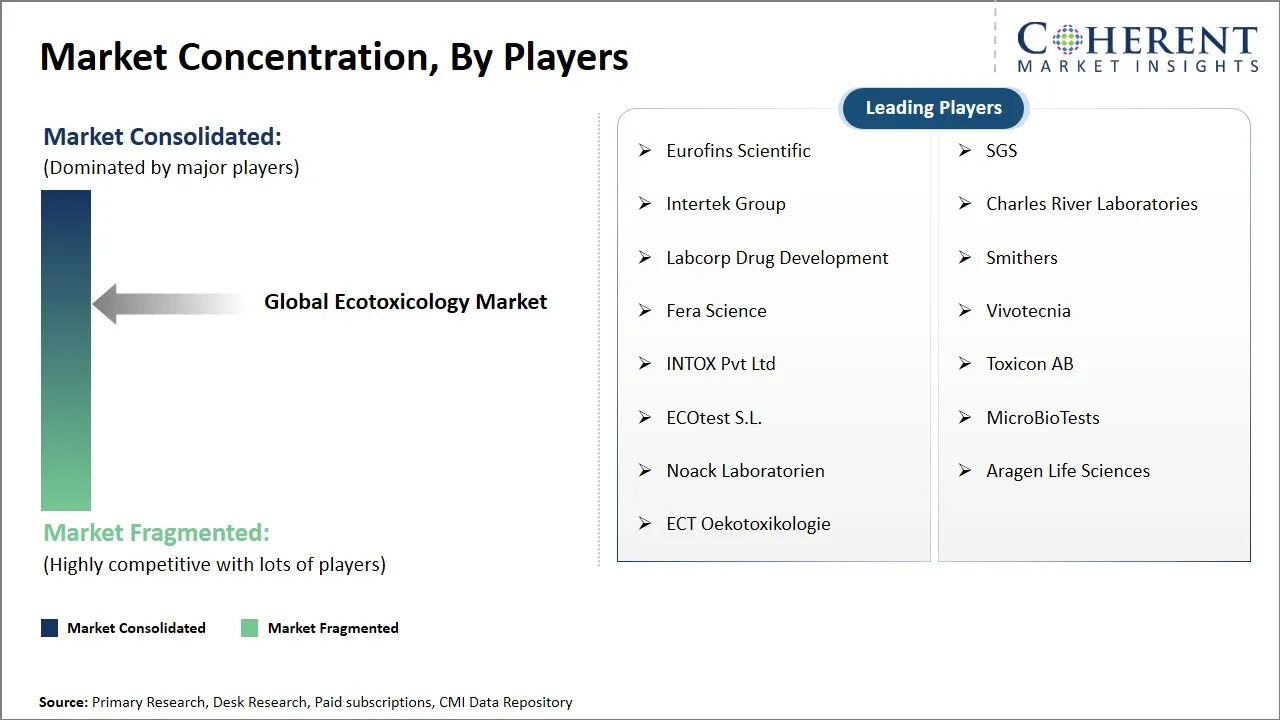
| Companies covered: | Eurofins Scientific, SGS, Intertek Group, Charles River Laboratories, Labcorp Drug Development, Smithers, Fera Science, Vivotecnia, INTOX Pvt Ltd, Toxicon AB, ECOtest S.L., MicroBioTests, Noack Laboratorien, Aragen Life Sciences, and ECT Oekotoxikologie | ||
| Growth Drivers: |
| ||
| Restraints & Challenges: |
| ||
Global Ecotoxicology Market Dynamics
Global Ecotoxicology Market Driver - Rising Demand for GLP Compliant Environmental Risk Assessment Studies
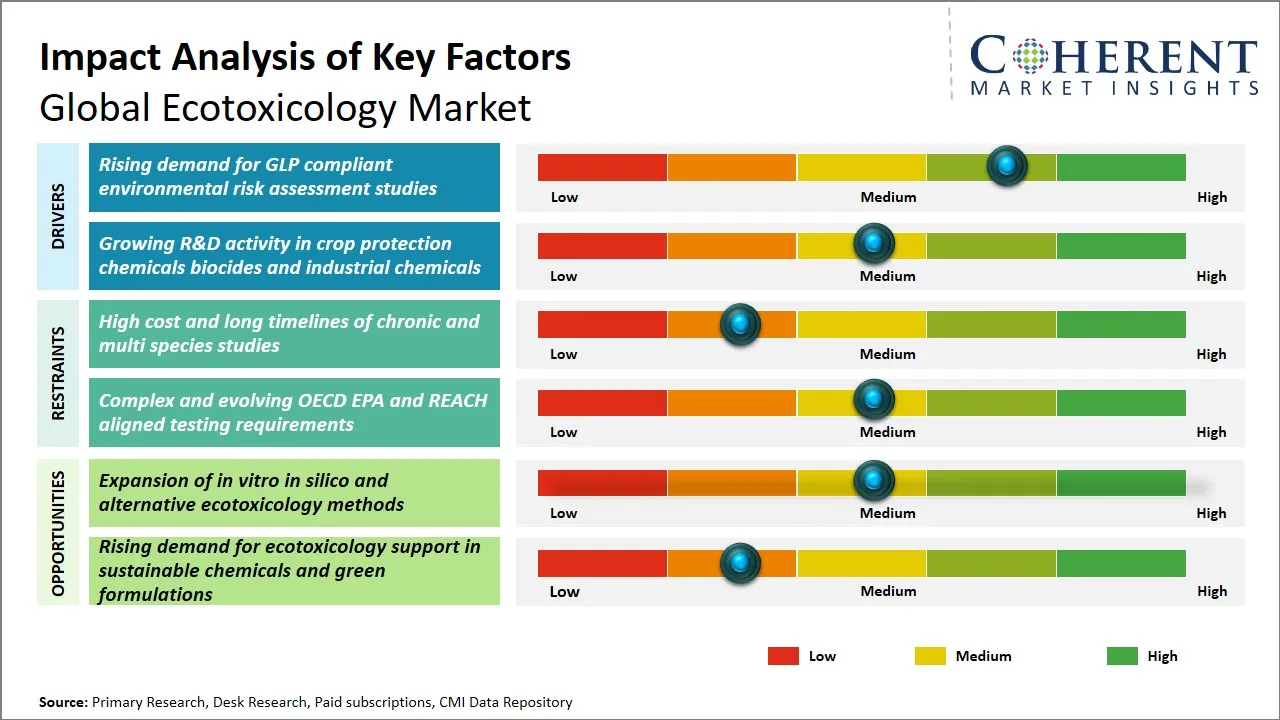
The rising need to consider environmental protection and regulatory compliance has greatly facilitated the need to have Good Laboratory Practice (GLP) compliant environmental risk assessment studies in the ecotoxicology market. The world regulatory agencies impose strict assessment of chemical substances, pharmaceuticals and industrial pollutants to have few negative impacts on the ecosystem before market acceptance.
GLP standards give a systematic approach that ensures the reliability, reproducibility, and integrity of safety data produced during ecotoxicological testing. With the increase in the critical examination of industries by policymakers and environmental controls, the demand of stringent, standardized risk assessment has been on the rise and organizations are willing to spend a lot of money on the services that are GLP compliant.
For instance, in October 2024, Jai Research Foundation highlighted the introduction of the RTgill-W1 fish cell line acute toxicity assay, an in vitro ecotoxicology testing method designed to evaluate chemical toxicity in aquatic environments. The assay uses rainbow trout gill cell lines to predict acute fish toxicity and support environmental hazard assessments, offering a faster and more ethical alternative to traditional animal-based testing methods used in ecotoxicology studies.
(Sources- Jai Research Foundation)
Global Ecotoxicology Market Opportunity - Expansion of In Vitro, In Silico, and Alternative Ecotoxicology Methods
The potential of the global ecotoxicology market is characterized by the growth of the use of in vitro and in silico and other alternative testing methods. The growing regulatory pressure to decrease testing of animals in pharmaceuticals, chemicals, and cosmetic sectors is driving the need to use innovative, ethical, and cost- effective ecotoxicology methods. In vitro techniques, involving the use of cell cultures and tissue models provide faster, reproducible, and mechanistic information about the toxicological effects on aquatic and terrestrial ecosystems, which improves the predictive quality of environmental risk assessment.
Simultaneously, the development of in silico modeling, which applies artificial intelligence and machine learning, allows simulating and predicting the toxic impacts, with the help of computational models, without the requirement of a large-scale laboratory testing. Such approaches lower prices and time, as well as, it also takes care of the ethical issues linked to animal testing.
For instance, in September 2024, Montrose Environmental Group announced the acquisition of Origins Laboratory to expand its environmental testing operations in the Rocky Mountain region. The move strengthened Montrose’s laboratory network and added capacity in environmental analytical services relevant to contamination testing and broader ecological assessment work.
(Source- Montrose Environmental Group)
Analyst Opinion (Expert Opinion)
- Global ecotoxicology market is expanding due to increased environmental regulation, greater attention to PFAS, pesticides and new contaminants, and the use of OECD test guidelines as the internationally recognized safety data. New Approach Methods are also influencing growth, with more and more laboratories including in vitro, computational and mechanistic tools along with traditional testing. The greatest opportunity is expected to be labs with the ability to provide faster, regulator-ready, multi-region information, whereas the major challenge will be the increasing complexity of each study and the lack of regulatory acceptance of newer techniques across markets.
- Recent occurrences in the industry and policy movement attest to this trend. Environmental risk assessment, mixture toxicity, and next-generation testing approaches were both mentioned at SETAC Europe 35th Annual Meeting in 2025 and SETAC World Congress 2025, and contributed to the development of scientific exchange and regulatory thought. Meanwhile, the market is moving in the direction of more predictive, harmonized and technology-based ecotoxicology services currently due to updates to the OECD guidelines and ongoing interest of EPA in NAMs.
Speak to the analyst
Want personalized insights?
Take the findings above to one of our principal consultants, or have the report rebuilt around the segments, geographies and competitors you actually track.
Market Segmentation
- Service Type Insights (Revenue, USD Mn, 2021 - 2033)
- Ecotoxicological Testing Services
- Aquatic Ecotoxicology
- Sediment Ecotoxicology
- Terrestrial Ecotoxicology
- Avian Ecotoxicology
- Pollinator Testing
- Environmental Fate Services
- Transformation in Soil
- Transformation in Water
- Transformation in Manure
- Adsorption on Soil and Sewage Sludge
- Hydrolysis and Photolysis
- Bioaccumulation and Bioconcentration
- Others
- Ecotoxicological Testing Services
- Technology Insights (Revenue, USD Mn, 2021 - 2033)
- Rapid
- Convectional
- Sample Type Insights (Revenue, USD Mn, 2021 - 2033)
- Wastewater/Effluent
- Soil
- Water
- Air
- End User Insights (Revenue, USD Mn, 2021 - 2033)
- Agriculture
- Chemical Industry
- Environment Testing Laboratories
- Regulatory Authorities
- Pharmaceutical and Biotechnology Companies
- Contract Research Organizations (CROs)
- Research Laboratories
- Others (Research Centers and Academic Institutes, etc.)
- Regional Insights (Revenue, USD Mn, 2021 - 2033)
- North America
- U.S.
- Canada
- Latin America
- Brazil
- Argentina
- Mexico
- Rest of Latin America
- Europe
- Germany
- U.K.
- Spain
- France
- Italy
- Russia
- Rest of Europe
- Asia Pacific
- China
- India
- Japan
- Australia
- South Korea
- ASEAN
- Rest of Asia Pacific
- Middle East
- GCC Countries
- Israel
- Rest of Middle East
- Africa
- South Africa
- North Africa
- Central Africa
- North America
- Key Players Insights
- Eurofins Scientific
- SGS
- Intertek Group
- Charles River Laboratories
- Labcorp Drug Development
- Smithers
- Fera Science
- Vivotecnia
- INTOX Pvt Ltd
- Toxicon AB
- ECOtest S.L.
- MicroBioTests
- Noack Laboratorien
- Aragen Life Sciences
- ECT Oekotoxikologie
Sources
Primary Research Interviews
Industry Stakeholders list
- Regulatory ecotoxicologists
- Environmental risk assessment specialists
- GLP laboratory directors
- Chemical safety and stewardship managers
- Environmental fate and behavior scientists
- CRO project managers for ecotoxicology
End-users list
- Agrochemical manufacturers
- Industrial chemical producers
- Pharmaceutical environmental safety teams
- Consumer product manufacturers
- Water treatment and environmental monitoring agencies
- Environmental consulting firms
Government and International Databases
- Organisation for Economic Co-operation and Development
- U.S. Environmental Protection Agency
- European Chemicals Agency
- European Food Safety Authority
- U.S. National Library of Medicine PubChem
- European Environment Agency
Trade Publications
- Chemical Watch
- Chemistry World
- Chemical & Engineering News
- The Analytical Scientist
- Environmental Science & Technology News
- AgroPages
Academic Journals
- Environmental Toxicology and Chemistry
- Aquatic Toxicology
- Integrated Environmental Assessment and Management
- Environmental Toxicology
- Toxicological Sciences
- Ecotoxicology and Environmental Safety
Reputable Newspapers
- Financial Times
- The Wall Street Journal
- The New York Times
- The Guardian
- Nikkei Asia
Industry Associations
- Society of Environmental Toxicology and Chemistry
- European Centre for Ecotoxicology and Toxicology of Chemicals
- International Union of Pure and Applied Chemistry
- British Toxicology Society
- Society of Toxicology
- American Chemical Society
Public Domain Resources
- ECOTOX Knowledgebase
- OECD Test Guidelines Programme
- OECD Good Laboratory Practice resources
- ECHA chemical safety assessment guidance
- EFSA environmental risk assessment resources
- U.S. EPA ecological risk assessment resources
Proprietary Elements
- CMI Data Analytics Tool: Proprietary analytics tool to analyze real-time market trends, consumer behavior, and technology adoption in market
- Proprietary CMI Existing Repository of Information for Last 8 Years
Get access to 250+ pages report
Every segment, forecast, competitor profile and data table behind the analysis above — available for instant download.
- ESOMAR Member
- ISO 9001:2015 Certified
- D-U-N-S Registered
- GDPR & CCPA Compliant
Missing comfort of reading report in your local language? Find your preferred language:
Transform your Strategy with Exclusive Trending Reports
Frequently Asked Questions
The global ecotoxicology market is estimated to be valued at USD 1,141.5 million in 2026 and is expected to reach USD 1,408.2 million by 2033.
The CAGR of global ecotoxicology market is projected to be 4.2% from 2026 to 2033.
Rising demand for GLP compliant environmental risk assessment studies and growing R&D activity in crop protection chemicals biocides and industrial chemicals are the major factors driving the growth of the global ecotoxicology market.
Demand is rising because regulators are tightening scrutiny on PFAS, pesticides, industrial chemicals, and other emerging contaminants, which is increasing the need for environmental fate, aquatic toxicity, and ecological risk studies.
New Approach Methods are pushing the market toward faster, more mechanistic, and less animal-dependent testing models, with growing use of in vitro tools, omics, and computational methods in environmental hazard assessment.
High cost and long timelines of chronic and multi species studies and complex and evolving OECD EPA and REACH aligned testing requirements are the major factors hampering the growth of the global ecotoxicology market.
In terms of service type, ecotoxicological testing services are estimated to dominate the market revenue share in 2026.