

Biological Pesticide Market Size and Forecast — 2026-2033
The Global Biological Pesticide Market size is estimated to be valued at USD 5.80 billion in 2026 and is expected to reach USD 10.8 billion by 2033, exhibiting a compound annual growth rate (CAGR) of 11.5% from 2026 to 2033.
Overview
Biological pesticides—also called biopesticides—are pest-control agents derived from natural organisms such as bacteria, fungi, plants, and beneficial insects. Designed to target specific pests with minimal environmental impact, they are widely used in sustainable agriculture, integrated pest management, forestry, and organic crop cultivation.
Key Takeaways
The microbial pesticide segment, holding 46% biological pesticide market share, dominates due to robust product efficacy and a wide application spectrum, while biochemical pesticides exhibit the fastest growth, propelled by advances in molecular biology.
In application segments, fruits & vegetables lead market revenue contributions owing to high residue sensitivity and premium crop returns, whereas cereals & grains are the fastest-growing segment driven by large-scale adoption in staple crop protection.
North America continues dominate with a 35% market share, supported by strong regulatory frameworks and proactive farmer adoption, while Asia Pacific is the fastest-growing region with a CAGR of over 13%, fueled by expanding agricultural modernization and rising organic farming hectares.
Biological Pesticide Market Segmentation Analysis
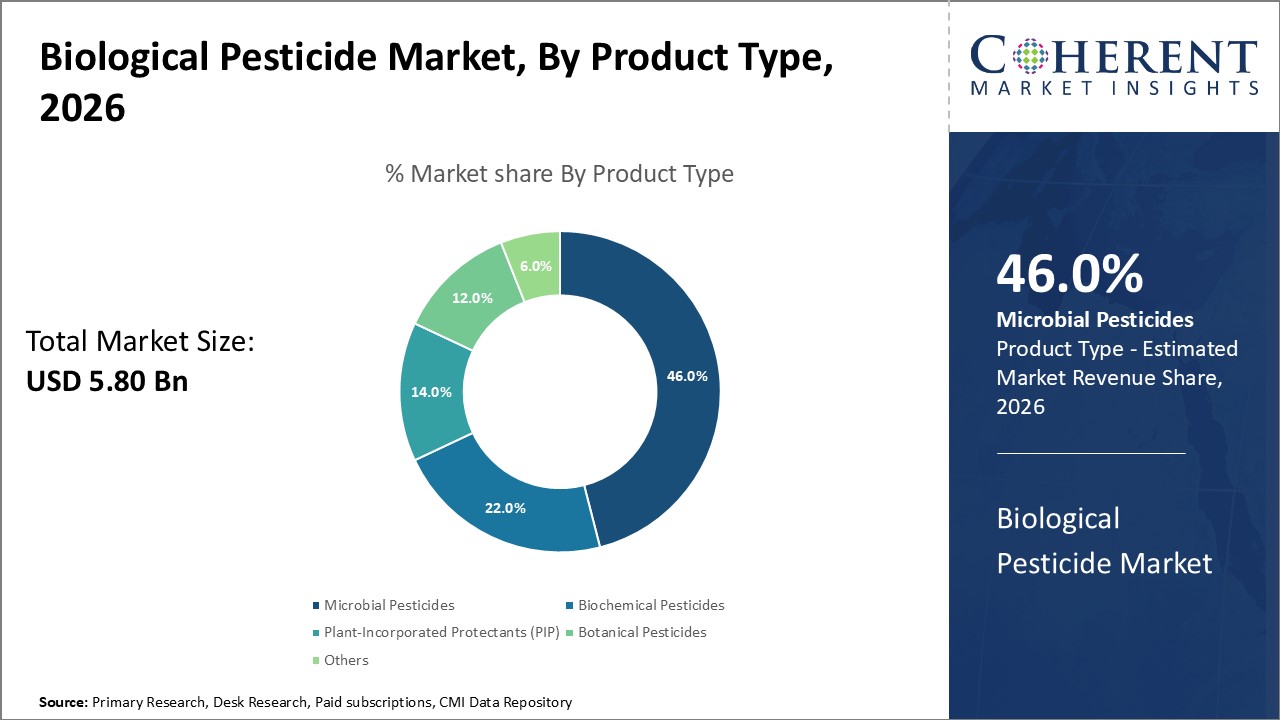
Biological Pesticide Market Insights, By Product Type
Microbial Pesticides hold the largest share due to their proven effectiveness against a broad spectrum of pests and compatibility with integrated pest management systems. Their mass production scalability and adaptability to various crops ensure steady market demand. The fastest-growing subsegment is Biochemical Pesticides, propelled by advancements in molecular biocontrol agents like pheromones and insect growth regulators, which offer precision targeting and reduced environmental impact. Plant-Incorporated Protectants continue to witness moderate growth, facilitated by genetic engineering innovations enhancing pest resistance. Botanical Pesticides, though niche, contribute due to their natural origins and consumer preference for organic products.
Biological Pesticide Market Insights, By Application
Fruits & Vegetables dominate the biological pesticide market share. This dominance stems from the high value of produce, elevated residue concerns, and stricter regulatory requirements for fruit and vegetable exports. The fastest-growing application is Cereals & Grains, as increasing biopesticide use in staple crops addresses rising pest resistance to chemical pesticides and supports food security objectives. Oilseeds & Pulses maintain steady growth, driven by rising global demand for plant-based proteins and pulses, while Turf & Ornamentals see growth linked to environmental aesthetics and regulatory pressures in urban landscaping.
Biological Pesticide Market Insights, By Formulation
Liquid formulations dominate due to their ease of application, compatibility with existing spraying equipment, and superior pest coverage, making them favorable among large-scale commercial farms. The fastest-growing subsegment is Dry Formulation owing to advancements in shelf life and portability, boosting use in smallholder and organic farms. Granular formulations, though smaller in share, are preferred for soil-borne pest control and slow-release properties, particularly in high-value plantations. Each formulation type serves distinct market needs aligning with crop type, application methods, and regional farming practices.
Biological Pesticide Market Trends
The biological pesticide market demonstrates clear trends favoring high-tech biotechnology integration and sustainability-aligned product innovation.
The transition towards gene editing and RNAi technologies illustrates a drive for more precise, ecologically sound pest management, as evidenced by product launches in 2025 that reported 20-31% improvement in pest control efficiency.
Adoption of combined microbial-botanical blends showcases an evolving market preference for multi-functional biologicals addressing complex pest challenges.
Geographic digitalization, including precision spraying and sensor-based monitoring in North America, is driving targeted application growth reducing chemical inputs.
Biological Pesticide Market Insights, By Geography
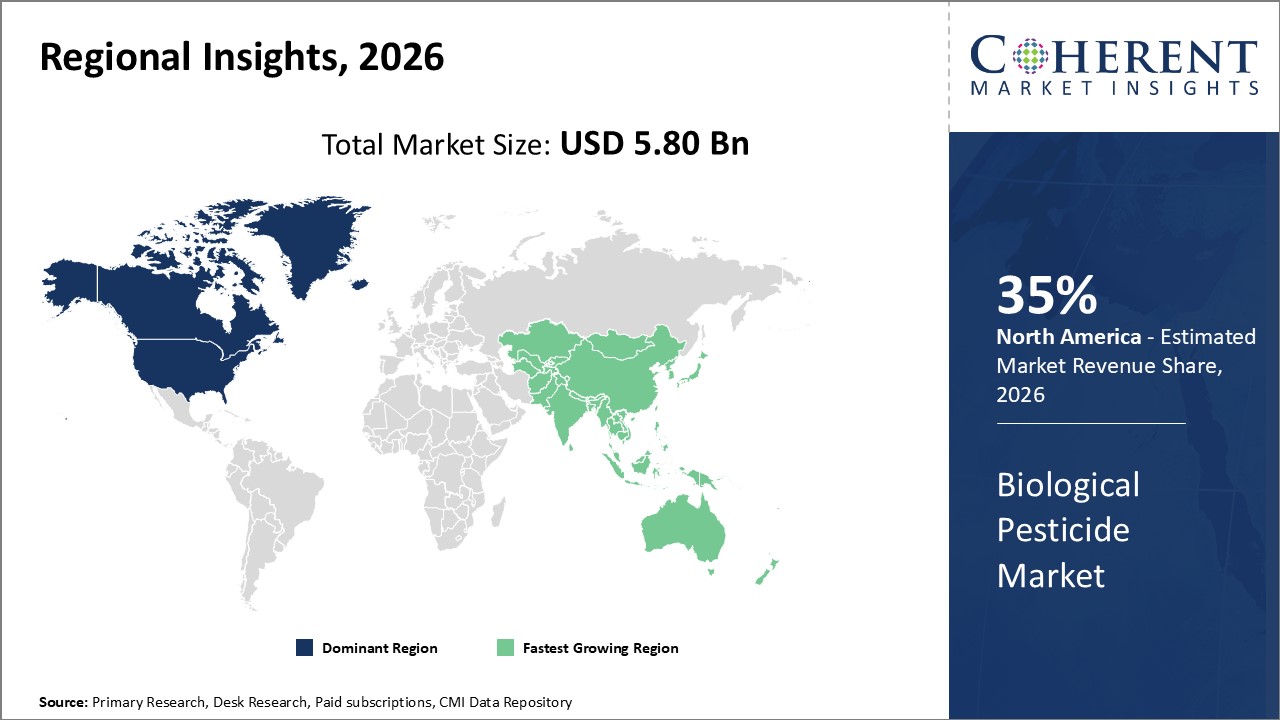
North America Biological Pesticide Market Analysis and Trends
In North America, the dominance in the Biological Pesticide market is sustained by strict regulatory policies such as the Environmental Protection Agency’s initiatives promoting biopesticides and significant investments in agricultural R&D. The region manages approximately 35% market share, buoyed by a mature organic produce sector and expansive adoption of precision agriculture tactics. Leading companies established R&D hubs and production facilities here, accelerating innovation cycles and market responsiveness.
Asia Pacific Biological Pesticide Market Analysis and Trends
Meanwhile, the Asia Pacific region exhibits the fastest growth, with a CAGR exceeding 13%, driven by increasing government incentives for sustainable agriculture in India, China, and Southeast Asia. The market is bolstered by rising awareness of crop protection alternatives amid escalating pest resistance and pollution concerns. Government policy reforms in countries like India’s National Biotech Development Board provide subsidies and technical support, expanding market reach. Major players have formed partnerships in this region to tap into its vast arable lands and growing demand for organic produce.
Biological Pesticide Market Outlook for Key Countries
USA Biological Pesticide Market Analysis and Trends
The USA’s biological pesticide market benefits from proactive regulatory frameworks and the presence of multiple industry-leading companies with intensive R&D capabilities. For instance, investments in microbial pesticide innovation led to a 15% increase in biopesticide adoption among row crop farmers in 2025. Strategic collaborations between agritech firms and academic institutions have accelerated field trial success rates and regulatory approvals, solidifying the market’s revenue growth. Furthermore, sustainability-focused consumer demand and the federal push towards integrated pest management underpin significant business expansion
India Biological Pesticide Market Analysis and Trends
India’s biological pesticide market is expanding rapidly due to strong government incentives and rising organic farming acreage, which increased by over 8% in 2025. Local companies combined with multinational entrants have launched cost-effective microbial formulations adapted to diverse climatic zones. Regulatory reforms facilitating faster product approvals and farmer outreach initiatives serve as key facilitators for business growth. Additionally, increased awareness about the harmful effects of chemical pesticides fuels demand in the country’s staple crop segments like rice and wheat, propelling market momentum.
Analyst Opinion
Rising production capacity of microbial biopesticides is significantly influencing market size, with global manufacturing facilities increasing by 25% from 2023 to 2025. For example, several bioformulation companies expanded fermentation capacities in India and Europe, meeting escalating demand from both crop protection and regulatory-driven segments.
Demand-side indicators such as diversified end-use applications across fruits, vegetables, and cereals are enhancing market revenue. Data from 2025 confirms over 36% of new biological pesticide adoption occurred in high-value crops, driven by yield improvement targets and residue restrictions.
Nano-biopesticides are emerging as crucial micro-indicators for market growth dynamics, with studies revealing enhanced delivery efficiency and pest targeting, resulting in 15-21% better pest mortality rates compared to traditional bioformulations in field trials during 2026.
Pricing trends remain favorable despite raw material fluctuations; average selling prices for biopesticides remained stable or increased marginally (2.8%) in 2025, reflecting premium value perception among farmers aiming for sustainable crop protection options.
- Current Industry Events of 2026
- Market Size Estimation
- Regional Breakdown
- Competitive Landscape
- Customer Intelligence
- Segmental Analysis
- Pricing Analysis
- Key Market Drivers, Challenges & Future Trends
- Customized Insights Section
Market Scope
| Report Coverage | Details | ||
|---|---|---|---|
| Base Year: | 2025 | Market Size in 2026: | USD 5.80 billion |
| Historical Data for: | 2020 To 2024 | Forecast Period: | 2026 To 2033 |
| Forecast Period 2026 to 2033 CAGR: | 11.5% | 2033 Value Projection: | USD 10.8 billion |
| Geographies covered: |
| ||
| Segments covered: |
| ||
| Companies covered: | BASF SE, Bayer AG, Corteva Agriscience, Marrone Bio Innovations, UPL Limited, Syngenta AG, Sumitomo Chemical Co., Ltd., Novozymes A/S, Valent Biosciences LLC, Koppert Biological Systems. | ||
| Growth Drivers: |
| ||
Biological Pesticide Market Growth Factors
Increasing regulatory support worldwide encourages biological pesticide adoption by imposing stricter limits on chemical pesticide residues, exemplified by the European Green Deal’s Farm to Fork strategy, which targets a 51% reduction in chemical pesticide use by 2030. Rising consumer demand for organic and sustainable agriculture propels business growth, with organic farming acreage expanding by over 11% annually in key regions such as North America and Europe, driving parallel growth in the biological pesticide market revenue. Technological innovation in microbial strain development and bio-formulation enhances efficacy and shelf life, which in turn boosts market share and facilitates greater farmer acceptance, evidenced by multiple patented biopesticide technologies introduced since 2023. Expansion of precision agriculture integrating biological pesticides as part of integrated pest management (IPM) strategies increases targeted application efficiency and lowers ecological impact, which supported a 16% rise in adoption rates among commercial growers in 2025.
Biological Pesticide Market Development
In 2026, Insecticides India Limited (IIL) introduced two major products for the Indian agriculture sector, strengthening its crop protection portfolio. Sparcle, launched in collaboration with Corteva Agriscience, is a new-generation insecticide targeting key pests in paddy cultivation, offering improved efficacy and resistance management support for farmers. Centran, a patent-pending granular insecticide, was also launched as a first-of-its-kind mixture-based solution aimed at broad-spectrum pest control with higher field stability.
In 2026, Bayer entered an exclusive agreement with AlphaBio Control to commercialize a new biological insecticide designed for key crops such as cereals and oilseed rape. The product—expected to launch in 2028—is positioned as a next-generation, environmentally compatible alternative to conventional pesticides, leveraging AlphaBio’s expertise in nature-derived active ingredients. This partnership highlights Bayer’s long-term strategy to expand its biologicals portfolio and support sustainable crop protection innovations.
Key Players
Leading Companies of the Market
BASF SE
Bayer AG
Corteva Agriscience
Marrone Bio Innovations
UPL Limited
Syngenta AG
Sumitomo Chemical Co., Ltd.
Novozymes A/S
Valent Biosciences LLC
Koppert Biological Systems
BASF SE has recently deployed innovative fermentation technology to boost microbial pesticide output, realizing a 13% increase in global market share in 2025. Corteva Agriscience implemented strategic partnerships in Latin America, expanding the distribution network for biochemical pesticides, contributing to a 10% regional revenue uplift last year. Marrone Bio Innovations leveraged R&D investment to launch novel nematicidal biopesticides addressing resistance issues, resulting in enhanced business growth in North America and Asia Pacific markets.
Biological Pesticide Market Future Outlook
The market outlook is highly favorable as governments, food producers, and consumers increasingly prioritize environmentally responsible crop protection solutions. Advances in biotechnology, microbial formulation stability, precision agriculture, and RNA-based pest control are expected to enhance effectiveness and scalability. Major agricultural regions—particularly Asia and Latin America—will drive adoption as sustainable farming transitions accelerate. Partnerships between agrochemical companies and biological technology innovators will shape future competitive landscapes.
Biological Pesticide Market Historical Analysis
Historically, biological pesticides gained momentum as sustainable agriculture practices and integrated pest management strategies expanded globally. Early use was concentrated in organic farming and horticulture, but rising concerns over chemical pesticide toxicity, soil degradation, and resistance development broadened commercial acceptance. Regulatory incentives and improved microbial strain development supported market maturity and diversification.
Sources
Primary Research Interviews:
Agronomists
Crop Protection Distributors
Biotech Product Developers
Databases:
FAO Agricultural Statistics
USDA Pesticide Data Program
GlobalData Agrochemicals
Magazines:
AgriBusiness Global
CropLife
Modern Farmer
Journals:
Pest Management Science
Biological Control
Journal of Agricultural and Food Chemistry
Newspapers:
The Hindu BusinessLine (Agriculture)
The New York Times (Environment)
Financial Times (AgriTech)
Associations:
EPA Office of Pesticide Programs
International Biocontrol Manufacturers Association (IBMA)
FAO
Get access to 250+ pages report
Every segment, forecast, competitor profile and data table behind the analysis above — available for instant download.
- ESOMAR Member
- ISO 9001:2015 Certified
- D-U-N-S Registered
- GDPR & CCPA Compliant
Missing comfort of reading report in your local language? Find your preferred language:
Transform your Strategy with Exclusive Trending Reports
Frequently Asked Questions
The dominant players include BASF SE, Bayer AG, Corteva Agriscience, Marrone Bio Innovations, and UPL Limited, recognized for their extensive product portfolios and active innovation pipelines.
The Biological Pesticide market is projected to grow from USD 5.80 billion in 2026 to USD 10.8 billion by 2033, at a CAGR of 11.5%, driven by increasing demand for sustainable agriculture.
The fruits & vegetables segment presents the largest growth opportunity due to high consumer demand for residue-free produce and stringent regulations on chemical pesticides.
Emerging trends, including RNA interference-based pesticides, hybrid formulations, and digital integratio,n will reshape the market, enhancing pest control efficacy while advancing sustainable farming.
The market features intense competition with innovation-driven growth while facing challenges such as regulatory hurdles, formulation stability, and farmer awareness for novel bio-based products.
Key strategies include strategic partnerships for distribution expansion, investment in R&D for next-gen biopesticides, and education programs targeting farmer adoption and integrated pest management approaches.