

Edge Banding Materials Market Size and Forecast – 2026 to 2033
The global edge banding materials market is estimated to be valued at USD 1.70 Bn in 2026 and is expected to reach USD 3.34 Bn by 2033, exhibiting a compound annual growth rate (CAGR) of 10.0% from 2026 to 2033.
Key Takeaways
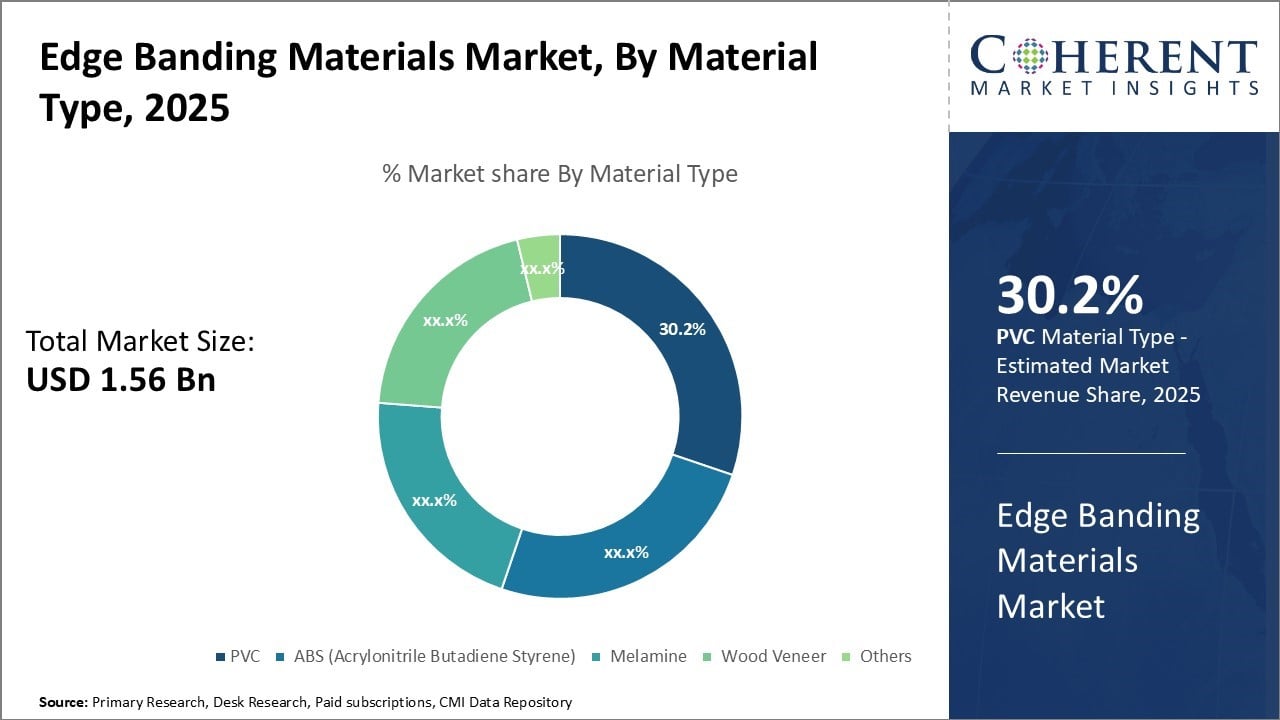
- By Material Type, Polyvinyl Chloride segment is estimated to contribute 31.2%share of the market in 2026 owing to its surging furniture & construction demand.
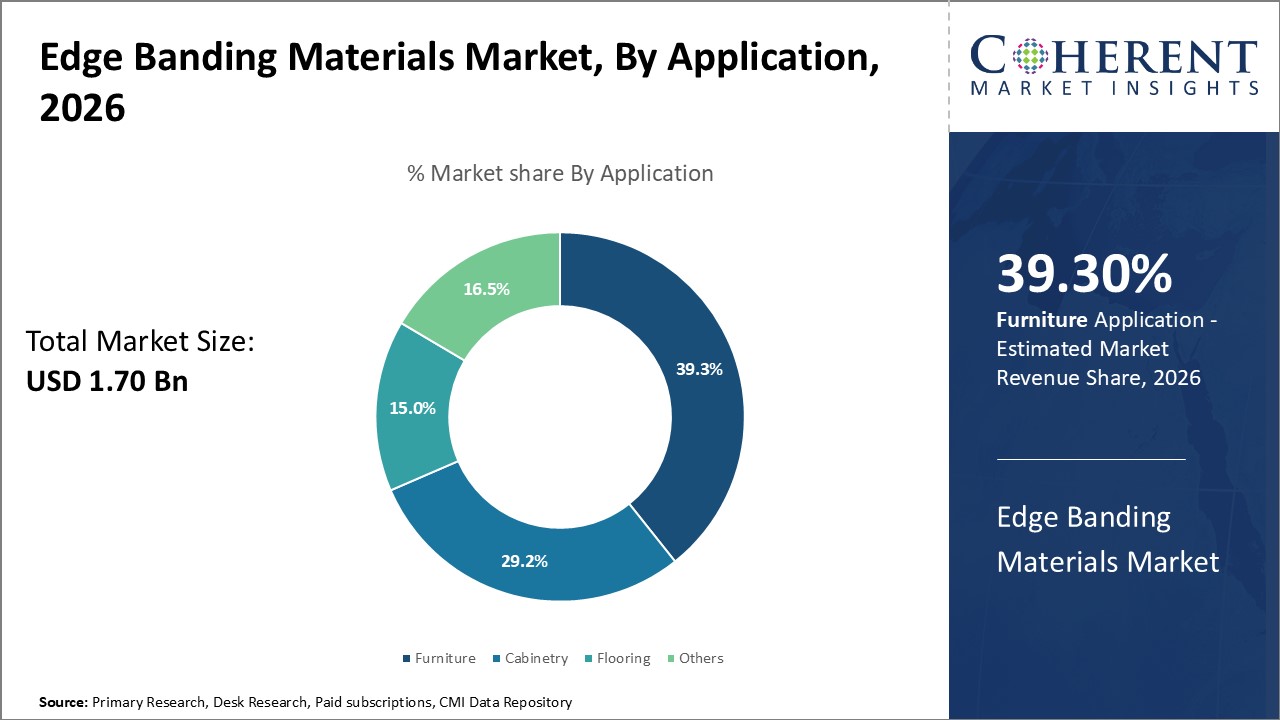
- By Application, Furniture segment is estimated to dominate the market revenue share of 39.3%in 2026 as growth in furniture & cabinetry production.
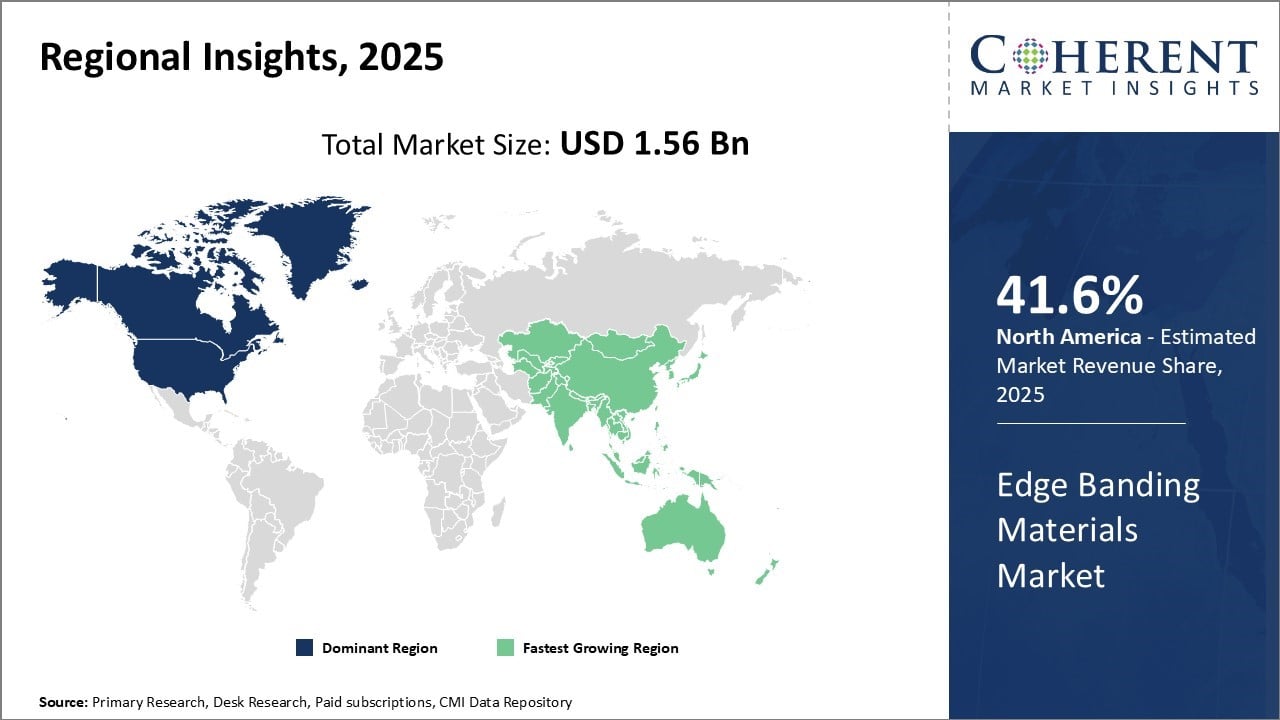
- By Region, North America acquired the prominent market share of 41.6% in 2026 owing to its strong residential construction & renovation activity.
Market Overview
The edge banding materials market continues to grow steadily, driven by rising demand across the construction, furniture, and interior design industries. Manufacturers use these materials to give wood-based panels a polished finish while boosting moisture resistance and durability. Factors such as rapid urbanization, increasing consumer interest in modular furniture, and a surge in renovation projects are fueling this growth. Technological advancements in edge banding equipment and adhesives are improving application efficiency and product aesthetics. The growing preference for customizable and eco-friendly solutions is shaping material choices like PVC, ABS, and wood veneer. Both industrial producers and the growing DIY community contribute to edge banding materials market share.
Current Events and their Impact on the Edge Banding Materials Market
Current Events | Description and its impact |
Geopolitical Disruptions in Supply Chains |
|
Trade Policy Shifts and Tariff Escalation |
|
Technological and Sustainability Transitions |
|
End-user Feedback and Unmet Needs in the Edge Banding Materials Market
- Demand for Enhanced Durability: End-users often seek edge banding materials that offer greater resistance to scratches, heat, and moisture. Many report that existing options sometimes fall short in high-traffic or humid environments, driving the need for more robust and long-lasting solutions that maintain appearance and function over time.
- Desire for Eco-Friendly Options: Consumers increasingly expect sustainable, low-emission, and recyclable edge banding materials. Despite some progress, users feel that more affordable and widely available green products are necessary to meet environmental goals without compromising quality or aesthetics.
- Customization and Aesthetic Variety: Users want a broader range of colors, textures, and finishes to better match diverse interior designs. The current market sometimes limits choices, prompting demand for more customizable and visually appealing edge banding that can satisfy both residential and commercial design preferences.
- Current Industry Events of 2026
- Market Size Estimation
- Regional Breakdown
- Competitive Landscape
- Customer Intelligence
- Segmental Analysis
- Pricing Analysis
- Key Market Drivers, Challenges & Future Trends
- Customized Insights Section
Import Export Analysis of Edge Banding Tape
Between March 2023 and February 2024, India exported 11 shipments of PVC Edge Banding Tape, a 22% increase compared to the previous year. These exports were carried out by three Indian exporters and reached seven different international buyers. In February 2024 alone, one shipment of PVC Edge Banding Tape was exported from India.
On the import side, India received 4,446 shipments of Edge Banding from October 2023 to September 2024, reflecting a 34% growth over the prior year. These imports came from 413 overseas suppliers and were distributed among 402 Indian buyers. In September 2024 alone, India imported 286 shipments, showing no year-over-year or month-over-month change compared to September and August 2023, respectively.
India primarily sources its Edge Banding imports from China, Germany, and Turkey.
Globally, Vietnam, India, and the United States are the top importers of Edge Banding. Vietnam ranks first with 45,556 shipments, followed by India with 24,652, and the U.S. with 10,353 shipments.
Segmental Insights
Edge Banding Materials Market Insights, By Material Type
Polyvinyl Chloride contribute the highest share of the market owing to its cost‑effectiveness & durability
Polyvinyl Chloride segment is estimated to contribute 31.2% share of the market in 2026. PVC is the most widely used material for edge banding due to its ability to be easily formed and fabricated. It can be thermoformed or cold formed depending on the desired shape or thickness needed. This versatility allows PVC to be customized for any size, thickness, or curvature required for different edge banding applications. In addition to its forming capabilities, PVC edge band is very cost effective compared to other materials. It is inexpensive to purchase raw PVC and the manufacturing process to produce PVC edge tape is relatively simple and inexpensive compared to other materials like wood or metal. This low production cost is passed onto customers in an affordable final product price.
Edge Banding Materials Market Insights, By Application
Furniture contributes the highest share of the market owing to its customization & aesthetics
Furniture segment is estimated to dominate the market revenue share of 39.3% in 2026. Furniture represents the largest application segment for edge banding materials due to the sheer scale of the global furniture manufacturing industry. Furniture production has expanded dramatically worldwide to meet growing demand from both commercial and residential sectors. All furniture requires some sort of edge banding to finish and protect raw edges. Larger furniture companies utilize edge banding on assembly lines to maximize efficiencies of scale. Meanwhile, smaller custom furniture makers still rely upon edge banding for its protective and cosmetic benefits.
In June 2025, YouhaoCNC launched two new edge banding machines—a semi-automatic model and the fully automatic E506—marking a significant technological advancement and efficiency boost in sheet furniture manufacturing.
Regional Insights
North America Edge Banding Materials Market Trends
North America’s edge banding market is shaped by rising residential and commercial construction, increasing demand for high-quality, modern furniture, and the expansion of modular and RTA products. Manufacturers are embracing advanced production methods—like laser-edge systems and hot-melt adhesives—for faster, cleaner results. Eco-conscious consumers are also driving adoption of sustainable options such as recycled PVC and wood veneers. A DIY surge and growing e‑commerce availability have further propelled the edge banding materials market revenue, while customization trends continue to push suppliers toward varied colors, textures, and finishes.
SURTECO is one of the provider of edgebanding products and solutions—offering PVC, ABS, and acrylic materials—for the North American woodworking industry. The company operates manufacturing facilities, service centers, and maintains a strong network of distribution partners across the region.
Asia Pacific Edge Banding Materials Market Trends
Asia-Pacific leads the global market, driven by strong manufacturing bases in China, India, and Japan, along with rapid urban growth. Expanding construction and furniture manufacturing sectors are creating high demand for quality edge banding materials, supported by affordable labor and resources. Regional manufacturers are responding to evolving design preferences by adopting decorative finishes like wood-look, stone textures, and metallic effects. Consumers are increasingly favoring visually appealing, eco-friendly options, prompting producers to use more recyclable plastics and sustainable natural wood veneers in their product lines.
United States Edge Banding Materials Market Trends
The ongoing growth of the U.S. construction industry is driving the demand for edge banding materials in furniture, cabinetry, and interior finishes. Increased residential building, commercial expansions, and remodeling projects all rely on premium edge banding to enhance strength and appearance. Designers and consumers are increasingly favoring materials with diverse colors, textures, and finishes. To meet these demands for personalized and attractive furniture and interiors, manufacturers are expanding their range of edge banding options.
China Edge Banding Materials Market Trends
China’s rapid growth in furniture manufacturing is driving significant expansion in its edge banding materials market. Domestic demand and export opportunities have positioned the country as a global leader in furniture production. Manufacturers are adopting advanced technologies like pre-glued materials and laser edge banding, which improve product quality, reduce labor costs, and boost production efficiency.
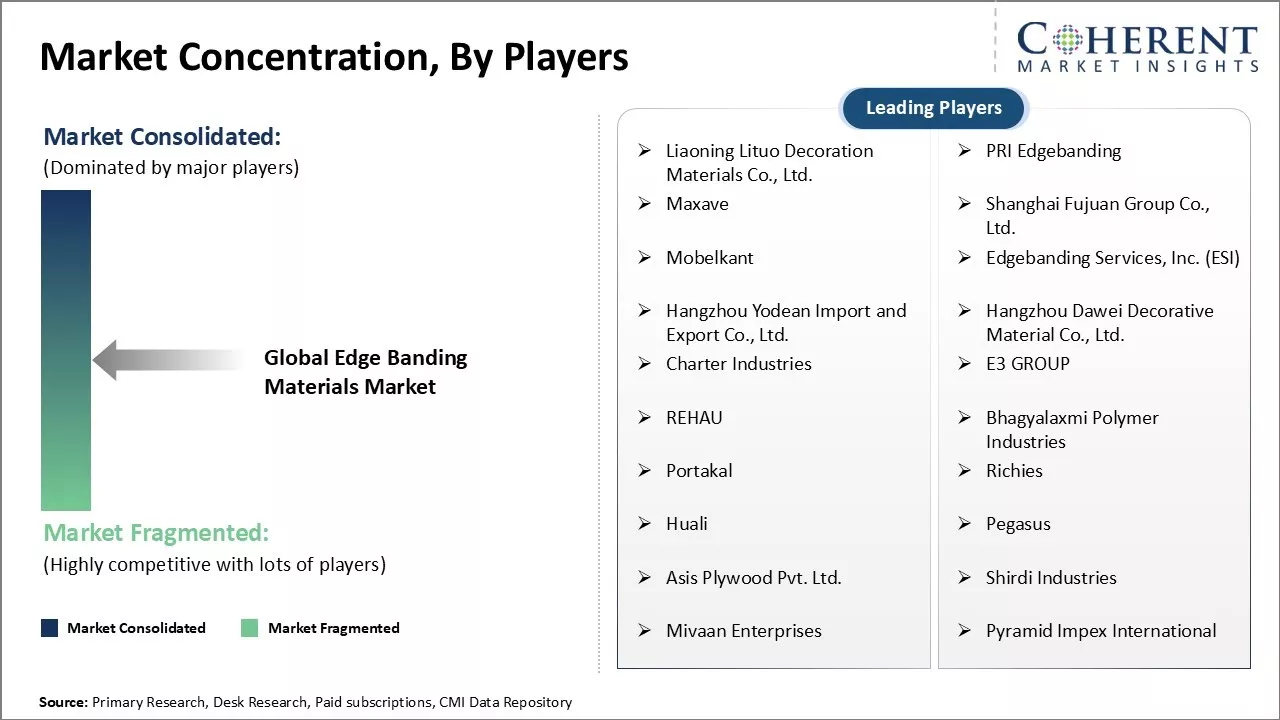
Market Concentration and Competitive Landscape
Edge Banding Materials Market News
- In February 2025, Samach, a well-known name in the woodworking machinery industry, launched its advanced range of edge banding machines. This innovative lineup is engineered to provide exceptional precision, reliability, and efficiency, significantly boosting the productivity and output quality of woodworking businesses.
- In March 2025, Powerspeed Electrical Ltd, a leading building materials provider in Zimbabwe announced the opening of its new timber factory under the Electrosales Timber Division. The spacious facility features advanced machinery, including a finger jointing machine and an edge banding machine, allowing the company to produce a wide variety of timber products.
Market Report Scope
Edge Banding Materials Market Report Coverage
| Report Coverage | Details | ||
|---|---|---|---|
| Base Year: | 2025 | Market Size in 2026: | USD 1.70 Bn |
| Historical Data for: | 2020 To 2024 | Forecast Period: | 2026 To 2033 |
| Forecast Period 2026 to 2033 CAGR: | 10.0% | 2033 Value Projection: | USD 3.34 Bn |
| Geographies covered: |
| ||
| Segments covered: |
| ||
| Companies covered: | Liaoning Lituo Decoration Materials Co., Ltd., PRI Edgebanding, Maxave, Shanghai Fujuan Group Co., Ltd., Mobelkant, Edgebanding Services, Inc. (ESI), Hangzhou Yodean Import and Export Co., Ltd., Hangzhou Dawei Decorative Material Co., Ltd., Charter Industries, E3 GROUP, REHAU, Bhagyalaxmi Polymer Industries, Portakal, Richies, Huali, Pegasus, Asis Plywood Pvt. Ltd., Shirdi Industries, Mivaan Enterprises, and Pyramid Impex International | ||
| Growth Drivers: |
| ||
| Restraints & Challenges: |
| ||
Edge Banding Materials Market Trend
Growing Demand for Sustainable Materials
The market is witnessing increased demand for eco-friendly and sustainable edge banding materials as manufacturers and consumers become more environmentally conscious. There is a shift towards using recyclable plastics, bio-based PVC, and FSC-certified wood veneers. These materials reduce environmental impact without compromising performance or aesthetics. This trend is further driven by stricter regulations on emissions and waste, pushing companies to innovate and offer greener alternatives that appeal to eco-aware customers and align with global sustainability goals.
Technological Advancements in Production
Advancements in edge banding technology, such as laser edge banding, automated application, and pre-glued materials, are improving manufacturing efficiency and product quality. These technologies enable precise application, reduce waste, and lower labor costs while enhancing the durability and finish of edge banding products. Manufacturers adopting these innovations can respond faster to market demands, offer customized solutions, and maintain competitive advantage.
Edge Banding Materials Market Opportunity
Expansion in Emerging Markets
Emerging economies, particularly in Asia-Pacific, Latin America, and Africa, present significant growth opportunities for edge banding materials. Increasing urbanization, rising disposable incomes, and expanding construction and furniture industries fuel demand. Companies can capitalize by establishing local manufacturing, distribution networks, and tailored product offerings to meet regional preferences. Additionally, untapped markets in these regions offer scope for affordable and eco-friendly edge banding solutions, aligning with growing environmental awareness and modernization trends.
Analyst Opinion (Expert Opinion)
- The Edge Banding Materials market is at a pivotal juncture where innovation, sustainability, and technological integration are not just competitive advantages but prerequisites for survival. Manufacturers that fail to prioritize eco-friendly materials risk losing relevance as regulatory pressures and consumer awareness intensify. For instance, companies like Rehau and Arpa Industriale have made significant strides by integrating bio-based PVC and recycled content, capturing growing market segments focused on sustainability.
- Technological advancements, particularly laser edge banding and automation, are redefining production benchmarks. Laser edge banding reduces material wastage by up to 30%, as reported by industry case studies, while enhancing finish quality beyond what traditional hot-melt methods achieve. This precision also supports faster changeovers in manufacturing, vital in today’s demand for customization and shorter product lifecycles.
- Regionally, Asia-Pacific’s growth isn’t solely due to low-cost manufacturing. The rapid urbanization and evolving consumer tastes in markets like China and India require high-quality, customizable edge banding solutions that domestic producers are increasingly delivering. For example, Chinese manufacturers have adopted laser technologies en masse, allowing them to compete effectively on quality with Western counterparts.
- Furthermore, the DIY segment’s growth highlights a shift in consumer behavior toward hands-on customization, compelling manufacturers to innovate in packaging and ease-of-use. This segment represents an underexplored opportunity for growth, especially if companies invest in educational marketing and user-friendly products.
Speak to the analyst
Want personalized insights?
Take the findings above to one of our principal consultants, or have the report rebuilt around the segments, geographies and competitors you actually track.
Market Segmentation
- Material Type Insights (Revenue, USD Bn, 2021 - 2033)
- PVC (Polyvinyl Chloride)
- ABS (Acrylonitrile Butadiene Styrene)
- Melamine
- Wood Veneer
- Others
- Application Insights (Revenue, USD Bn, 2021 - 2033)
- Furniture
- Cabinetry
- Flooring
- Others
- By Regional Insights (Revenue, USD Bn 2021 - 2033)
- North America
- U.S.
- Canada
- Latin America
- Brazil
- Argentina
- Mexico
- Rest of Latin America
- Europe
- Germany
- U.K.
- Spain
- France
- Italy
- Russia
- Rest of Europe
- Asia Pacific
- China
- India
- Japan
- Australia
- South Korea
- ASEAN
- Rest of Asia Pacific
- Middle East
- GCC Countries
- Israel
- Rest of Middle East
- Africa
- South Africa
- North Africa
- Central Africa
- Key Players Insights
- Liaoning Lituo Decoration Materials Co., Ltd.
- PRI Edgebanding
- Maxave
- Shanghai Fujuan Group Co., Ltd.
- Mobelkant
- Edgebanding Services, Inc. (ESI)
- Hangzhou Yodean Import and Export Co., Ltd.
- Hangzhou Dawei Decorative Material Co., Ltd.
- Charter Industries
- E3 GROUP
- REHAU
- Bhagyalaxmi Polymer Industries
- Portakal
- Richies
- Huali
- Pegasus
- Asis Plywood Pvt. Ltd.
- Shirdi Industries
- Mivaan Enterprises
- Pyramid Impex International
Sources
Primary Research Interviews
- Interviews with manufacturing plant managers and R&D heads in furniture and edge banding material companies
- Discussions with product designers and industrial engineers specializing in wood-based furniture finishing
- Conversations with procurement specialists from major furniture retailers
Databases
- Global Trade Tracker (for import/export data on edge banding materials)
- World Customs Organization database (HS codes related to edge banding products)
- National manufacturing and industrial production databases from government portals
Magazines
- Woodworking Network
- Furniture Today
- Surface & Panel Magazine
Journals
- Journal of Coatings Technology and Research
- Materials Today
- Journal of Cleaner Production
Newspapers
- The Wall Street Journal (Business and Industry section)
- Financial Times (Manufacturing and Sustainability coverage)
- The New York Times (Home and Design section)
Associations
- The Kitchen Cabinet Manufacturers Association (KCMA)
- The American Home Furnishings Alliance (AHFA)
- The Woodworking Machinery Industry Association (WMIA)
Public Domain Sources
- U.S. Environmental Protection Agency (EPA) reports on VOC regulations in coatings
- U.S. Department of Commerce manufacturing reports
- Trade statistics from the United Nations Commodity Trade Statistics Database (UN Comtrade)
Proprietary Elements
- CMI Data Analytics Tool, and Proprietary CMI Existing Repository of information for last 8 years
Get access to 250+ pages report
Every segment, forecast, competitor profile and data table behind the analysis above — available for instant download.
- ESOMAR Member
- ISO 9001:2015 Certified
- D-U-N-S Registered
- GDPR & CCPA Compliant
Missing comfort of reading report in your local language? Find your preferred language:
Transform your Strategy with Exclusive Trending Reports
Frequently Asked Questions
The Edge Banding Materials Market is estimated to be valued at USD 1.70 Bn in 2026, and is expected to reach USD 3.34 Bn by 2033.
The CAGR of the Edge Banding Materials Market is projected to be 10.0% from 2026 to 203.343.34.
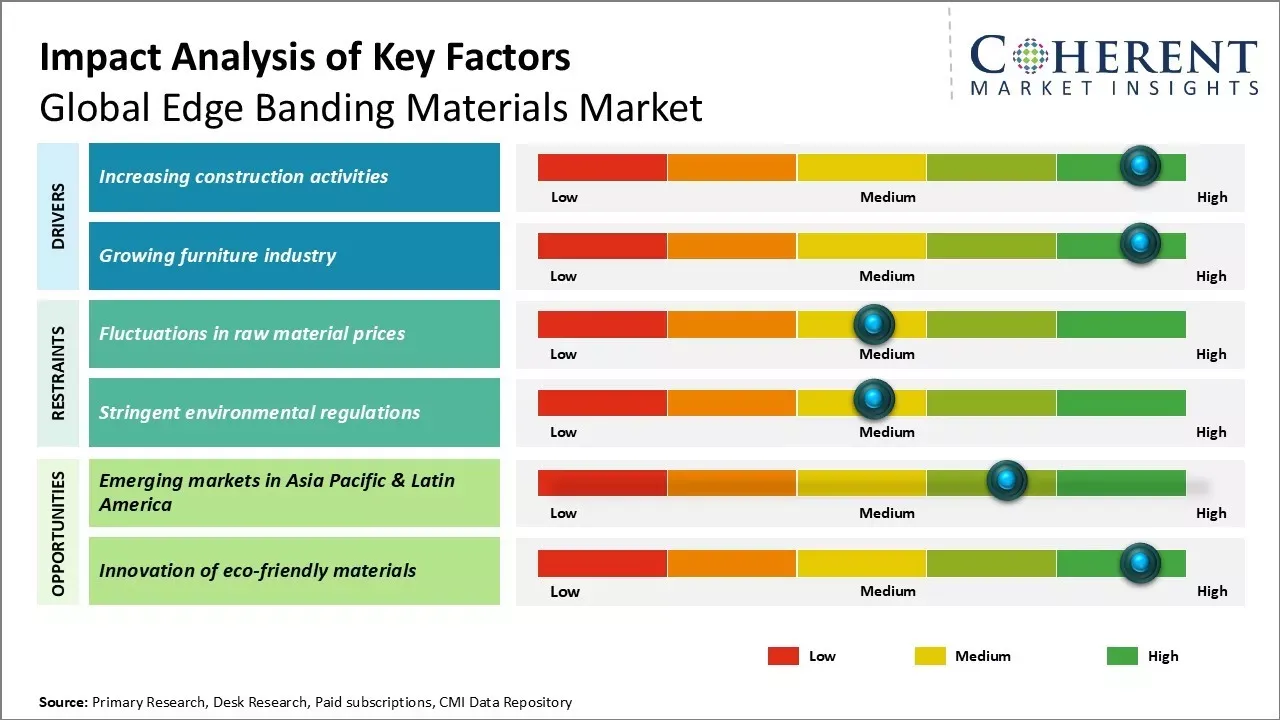
Increasing construction activities and growing furniture industry are the major factors driving the growth of the global edge banding materials market.
Fluctuations in raw material prices and stringent environmental regulations are the major factors hampering the growth of the global edge banding materials market.
In terms of material type, PVC (Polyvinyl Chloride) is estimated to dominate the market revenue share in 2026.
Liaoning Lituo Decoration Materials Co., Ltd., PRI Edgebanding, Maxave, Shanghai Fujuan Group Co., Ltd., Mobelkant, Edgebanding Services, Inc. (ESI), Hangzhou Yodean Import and Export Co., Ltd., Hangzhou Dawei Decorative Material Co., Ltd., Charter Industries, E3.34 GROUP, REHAU, Bhagyalaxmi Polymer Industries, Portakal, Richies, Huali, Pegasus, Asis Plywood Pvt. Ltd., Shirdi Industries, Mivaan Enterprises, and Pyramid Impex International are the major players.
North America is expected to lead the global edge banding materials market.