

Global Electric Ferry Market Size and Forecast – 2026 - 2033
The Global Electric Ferry Market is estimated to be valued at USD 10.17 Bn in 2026 and is expected to reach USD 25.30 Bn by 2033, exhibiting a compound annual growth rate (CAGR) of 13.9% from 2026 to 2033.
Key Takeaways of the Electric Ferry Market
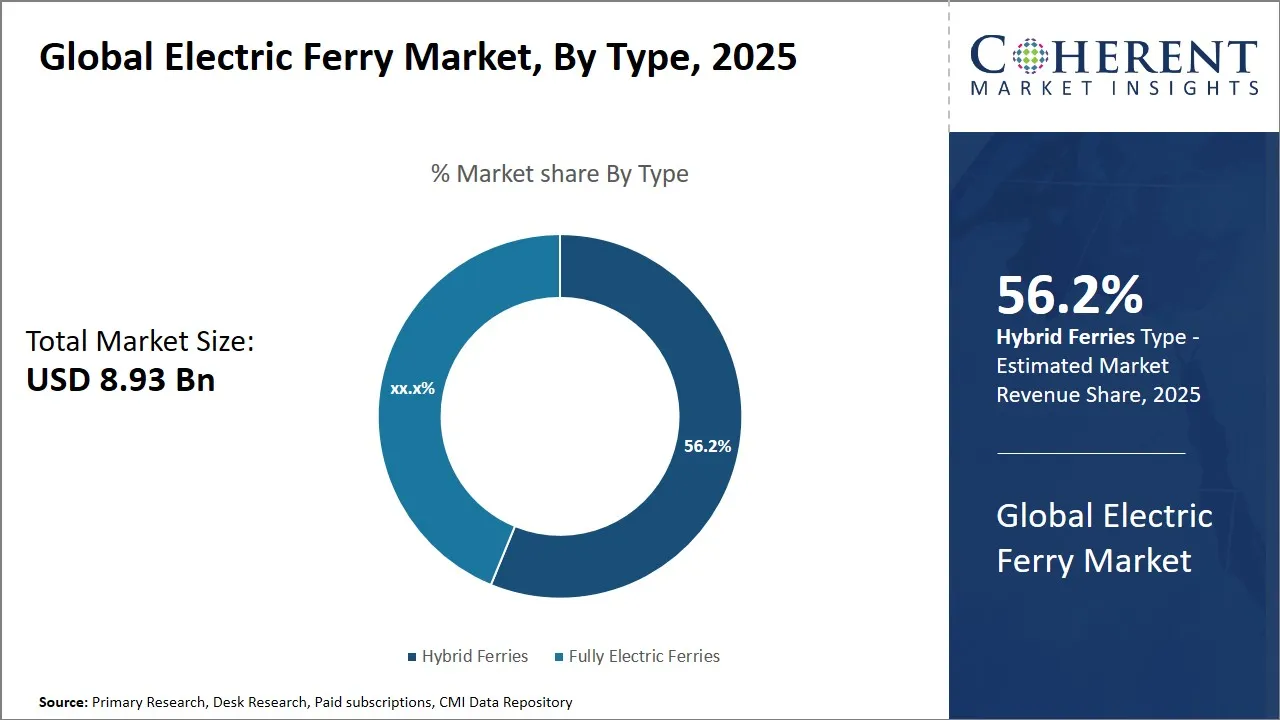
- The Hybrid Ferries segment leads the market holding an estimated share of 57.2 % in 2026.
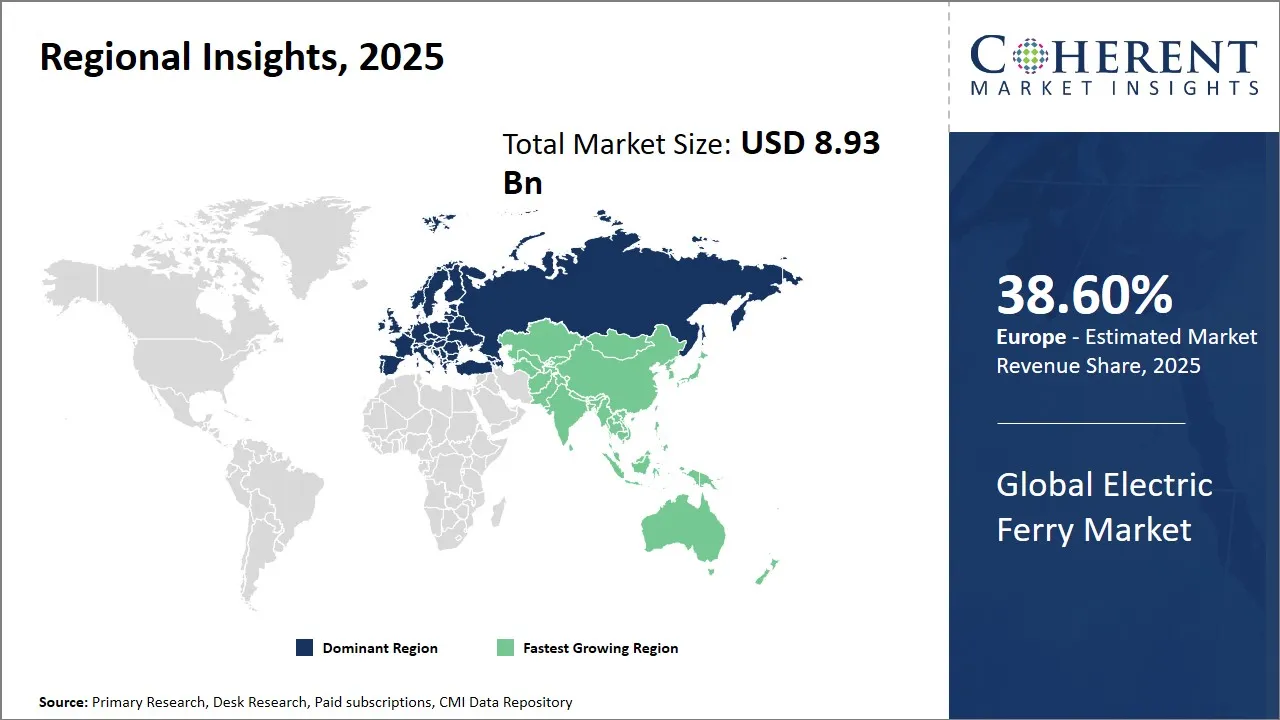
- Europe is estimated to lead the market with a share of 38.6 % in 2026.
- Asia Pacific, holding a share of 29.6 % in 2026, is projected to be the fastest growing region.
Market Overview
The market is seeing a widespread adoption of advanced battery technologies and renewable energy integration, which improve operational efficiency and reduce dependency on fossil fuels. Also, government incentives and supportive policies promoting green transportation infrastructure are adding to the market penetration. Innovations in charging infrastructure and vessel design are also adding to adoption, making electric ferries a suited option for coastal regions and urban waterways wanting to minimize environmental impact and optimize fuel costs.
Current Events and Its Impact
Current Events | Description and its impact |
Geopolitical and Trade Developments |
|
Economic and Infrastructure Trends |
|
Segmental Insights
- Current Industry Events of 2026
- Market Size Estimation
- Regional Breakdown
- Competitive Landscape
- Customer Intelligence
- Segmental Analysis
- Pricing Analysis
- Key Market Drivers, Challenges & Future Trends
- Customized Insights Section
Global Electric Ferry Market Insights, by Type - Hybrid Ferries Lead Owing to their Operational Flexibility and Environmental Benefits
Hybrid ferries are expected to contribute the highest share of 57.2% in the market in 2026. While fully electric ferries face limitations related to battery capacity and charging infrastructure, hybrid ferries can easily switch between diesel engines and electric motors. This ensures operational reliability while also reducing carbon footprints.
Another factor fueling the preference for hybrid ferries is the relatively lower initial investment compared to fully electric counterparts. Hybrid ferries can use existing diesel technology and infrastructure, making possible a smoother and more cost-effective transition toward greener marine transport. Also, ongoing advancements in battery technology and energy management systems have added to the performance and efficiency of hybrid propulsion systems. These improvements allow better fuel economy and extended electric-only operation periods, adding to the segment growth.
End User Feedback & Unmet Needs in the Electric Ferry Market
- Operators in remote or secondary terminals report a lack of fast-charging infrastructure, leading to long turnaround times and reduced service frequency. Scalable, modular charging systems that can be deployed cost-effectively in non-urban ports.
- Fleet managers express concern over the long-term cost of battery replacements, which are not always covered under initial investment grants. Extended warranty programs, modular battery swap solutions, or leasing models to spread replacement costs.
- Ferries on longer or mixed-length routes require more flexible energy systems; pure battery-electric ferries may not suit routes without mid-journey recharge capability. Hybridization options, energy-efficient hull designs, or onboard solar/wind energy supplements. For instance, BC Ferries has opted for hybrid-electric systems in its Island Class vessels to serve long coastal routes where full-electric operation is impractical due to limited recharge opportunities mid-journey.
Regional Insights
Europe Electric Ferry Market Analysis and Trends
Europe, holding an estimated share of 38.6% in 2026, dominates the global electric ferry market. European governments are putting in place policies that promote zero-emission vessels to reduce the carbon footprint of inland and coastal shipping. Countries like Norway, Germany, and the Netherlands have introduced subsidies and incentives to support the shift to electric ferries.
The mature maritime ecosystem, combined with the presence of leading shipbuilders and technology providers such as Siemens Energy, ABB, and Kongsberg Gruppen, allows Europe to maintain its leadership position. For instance, Norled launched MF Hydra in 2023, a hydrogen-powered electric ferry using liquid hydrogen fuel cells combined with battery-electric propulsion. Also, Europe's extensive network of fjords, islands, and short-sea shipping routes create a lot of natural demand for electric ferries, supporting the region’s green transportation goals. Trade dynamics with other eco-conscious regions further reinforce Europe’s role as a hub for innovation and deployment of electric ferry solutions.
Asia Pacific Electric Ferry Market Analysis and Trends
The Asia Pacific, holding an estimated share of 29.6% in 2026, exhibits the fastest growth in the global electric ferry market, fueled by rapid urbanization, increasing government focus on reducing maritime emissions, and expanding coastal transport networks. Countries like China, Japan, and South Korea are investing heavily in electrification of their ferry fleets to address severe air pollution and meet international environmental commitments. The market growth is supported by rising investments in clean energy infrastructure, including charging stations and power grid enhancements critical for electric ferry operations.
Major shipbuilding companies such as China State Shipbuilding Corporation (CSSC), Mitsubishi Heavy Industries, and Hyundai Heavy Industries are actively advancing electric ferry projects, capturing growing demand from both domestic and international customers. In 2023, China State Shipbuilding Corporation (CSSC) launched the “Zhongshan 1”, a 1,500-passenger, 100% battery-electric ferry operating on the Yangtze River. The vessel is powered by a 5,000+ kWh lithium battery system, with shore-based charging infrastructure co-developed by China Southern Power Grid.
Global Electric Ferry Market Outlook for Key Countries:
Norway Electric Ferry Market Analysis and Trends
Norway is a frontrunner in electric ferry adoption, benefiting from its government’s ambitious environmental policies and extensive fjord geography that demands frequent ferry crossings. The Norwegian government provides significant subsidies and grants through initiatives like the Enova program, fostering a strong pipeline of electric ferry projects. Key players such as Norled, Fjord1, and Siemens are instrumental in developing and operating some of the world’s largest electric and hybrid ferries. Norway’s emphasis on incorporating renewable energy sources into ferry operations enhances the sustainability of its electric ferry market.
Germany Electric Ferry Market Analysis and Trends
Germany electric ferry market is characterized by robust industrial support from its advanced manufacturing sector and a commitment to decarbonize inland waterway transport. Companies like ABB and Siemens supply critical powertrain and propulsion systems, while shipbuilders in regions such as Mecklenburg-Western Pomerania and Hamburg focus on integrating these technologies into new electric vessels. The German government’s environmental policies, coupled with the European Union’s Green Deal objectives, are driving investments in electric ferry infrastructure, particularly for river and short-sea routes.
China Electric Ferry Market Analysis and Trends
China electric ferry market reflects its expansive coastal shipping routes and aggressive policy push toward clean transportation. The government’s focus on reducing air pollution in major urban centers such as Shanghai and Shenzhen encourages widespread adoption of electric vessels. State-owned enterprises under CSSC and industry giants like Wuzhoulong Motors are significant contributors to ferry electrification projects, delivering numerous electric ferries for passenger and vehicle transport.
Japan Electric Ferry Market Analysis and Trends
Japan continues to lead in innovation and operational efficiency within the electric ferry market, driven by its island geography and commitment to energy transition following the Fukushima disaster. Japanese companies like Mitsubishi Heavy Industries and NYK Line are pioneering battery technology and hybrid propulsion systems tailored for ferry applications. The government supports electric ferry initiatives via subsidies and pilot projects targeted at reducing emissions in regional and inter-island ferry services.
South Korea Electric Ferry Market Analysis and Trends
South Korea is marked by aggressive investment in electric and hydrogen-powered ferry development as part of its broader green shipping strategy. Hyundai Heavy Industries and Samsung Heavy Industries are at the forefront of producing advanced electric ferry vessels designed to reduce harmful emissions and lower operational costs. South Korean government policies prioritize clean energy transport solutions and facilitate the development of associated charging infrastructure. The country’s strategic location as a major shipbuilding hub further accelerates its advancement in the electric ferry sector, supporting both domestic use and export.
Market Players, Key Development, and Competitive Intelligence
Key Developments
- On July 22, 2025, Incat Tasmania announced that it has been selected to design and build two new state-of-the-art battery-electric ferries for leading Denmark-based ferry operator Molslinjen. The vessels, each 129 meters long and powered by approximately 45,000 kWh battery systems, will operate on the busy Kattegat route between Jutland and Zealand.
- In May 2025, Stockholm, Sweden expanded its electric hydrofoil ferry service, Nova, which significantly reduces travel time between Tappström (Ekerö centre) and Stockholm City Hall - offering a 30-minute ride compared to one hour by car or bus. The service, which had operated five days a week, now runs daily.
- In May 2025, Incat launched the world’s largest battery-electric ship, Hull 096. Constructed for ferry operator, Buquebus, Hull 096 is the most significant vessel ever built by Incat and represents a giant leap forward in sustainable shipping. When it enters service between Buenos Aires and Uruguay, it will operate entirely on battery-electric power, carrying up to 2,100 passengers and 225 vehicles across the River Plate.
- In March 2023, ABB secured a contract with Fincantieri, one of the world’s leading shipbuilding groups, to deliver in total eight mid-range Azipod propulsion systems for four forthcoming medium-sized cruise vessels. The ships set to be delivered in 2024, 2025, 2026 and in 2027.
Top Strategies Followed by the Electric Ferry Market Players
- Leading companies in the sector prioritize heavy investment in research and development (R&D) to create high-performance, efficient, and eco-friendly vessels that meet stringent regulatory standards and evolving customer demands.
- ABB Marine & Ports (Switzerland) continues to invest in its Azipod electric propulsion systems, now optimized for hybrid and zero-emission ferries.
- Mid-level players in the global electric ferry market adopt a distinct strategy centered on balancing quality and affordability to appeal to cost-conscious customers.
- Saam Towage (Chile) and Korean shipbuilder Sekwang Heavy Industries co-developed compact hybrid-electric ferries tailored for short coastal transport, with reduced capital and operating costs.
- Small-scale players specialize in developing unique features tailored to specific operational needs or geographic conditions, such as ferries optimized for short routes, low-capacity vessels, or bespoke customization for local environmental and regulatory contexts.
- Candela Technology AB (Sweden) has developed the Candela P-12 Shuttle, a fully electric hydrofoil ferry designed for city commutes. With its 80% lower energy consumption and wave-reduction tech, it's ideal for urban waterways like Stockholm, offering a differentiated solution compared to larger conventional electric ferries.
Market Report Scope
Electric Ferry Market Report Coverage
| Report Coverage | Details | ||
|---|---|---|---|
| Base Year: | 2025 | Market Size in 2026: | USD 10.17 Bn |
| Historical Data for: | 2020 To 2024 | Forecast Period: | 2026 To 2033 |
| Forecast Period 2026 to 2033 CAGR: | 13.9% | 2033 Value Projection: | USD 25.30 Bn |
| Geographies covered: |
| ||
| Segments covered: |
| ||
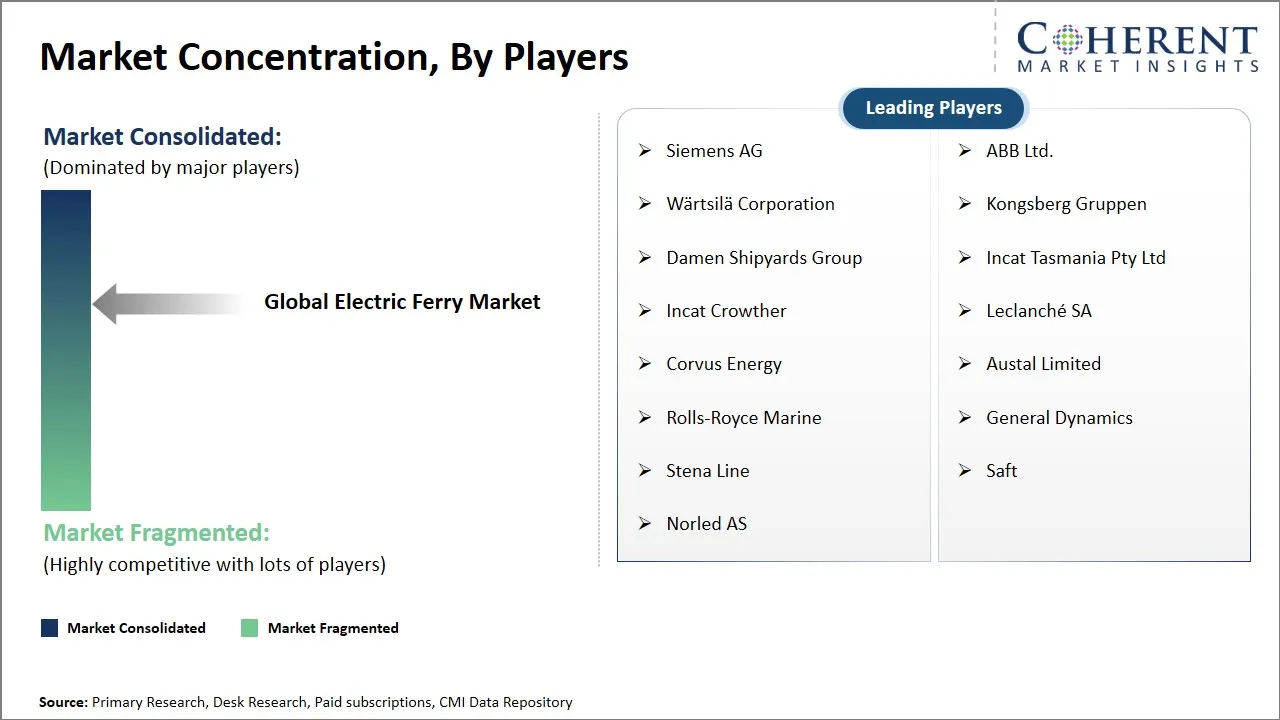
| Companies covered: | Siemens AG, ABB Ltd., Wärtsilä Corporation, Kongsberg Gruppen, Damen Shipyards Group, Incat Tasmania Pty Ltd, Incat Crowther, Leclanché SA, Corvus Energy, Austal Limited, Rolls‑Royce Marine, General Dynamics, Stena Line, Saft, and Norled AS | ||
| Growth Drivers: |
| ||
| Restraints & Challenges: |
| ||
Market Dynamics
Global Electric Ferry Market Driver - Government Clean ‑ Transport Subsidies and Regulatory Mandates
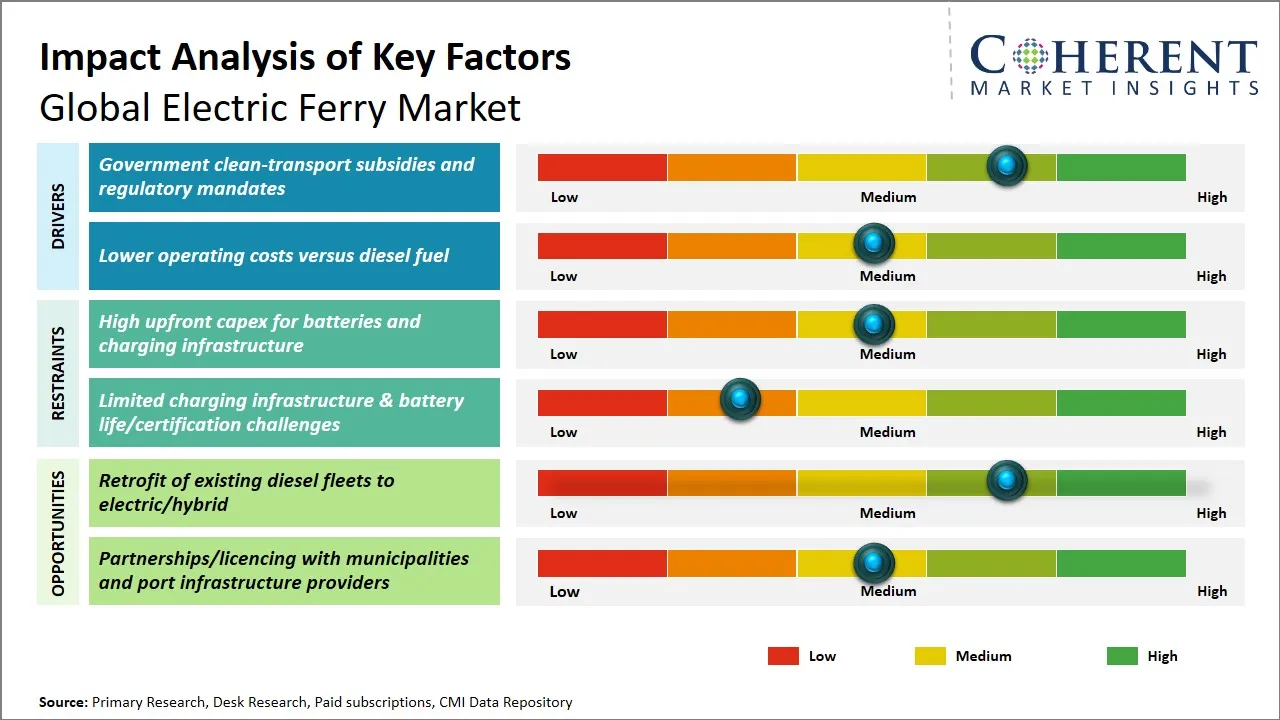
Many governments are prioritizing the reduction of carbon emissions and promoting sustainable transportation solutions by offering financial incentives such as grants, tax credits, and low-interest loans specifically targeted at electric ferry operators and manufacturers. These subsidies help offset the higher upfront costs associated with electric propulsion systems, making investments more viable and attractive.
Simultaneously, evolving regulations aimed at curbing air and water pollution are imposing stricter emission norms on traditional diesel-powered ferries, effectively encouraging fleet operators to transition to electric alternatives. Norway’s National Transport Plan (NTP) 2022–2033 mandates that all new ferries operating in the Norwegian fjords must be zero-emission by 2026. Regional and international environmental policies are increasingly mandating zero-emission targets for maritime transport, further pushing stakeholders to embrace electric ferries.
Global Electric Ferry Market Opportunity – Retrofit of Existing Diesel Fleets to Electric/Hybrid Vessels
Many ferry operators worldwide currently rely on aging diesel vessels that contribute substantially to emissions and operational costs, creating a pressing need for more sustainable and cost-efficient alternatives. Retrofitting these existing fleets enables operators to transition towards greener technologies without the substantial capital investment and lead time associated with purchasing new vessels. BC Ferries (Canada) launched its “Clean Futures Plan”, aiming to convert its existing diesel fleet into hybrid-electric ferries through a multi-stage retrofit program. This opportunity is particularly attractive in regions with stringent environmental regulations and ambitious carbon reduction targets, where operators face increasing pressure to reduce their carbon footprint.
Moreover, advances in battery technology, energy management systems, and electric drivetrains have improved retrofit feasibility, efficiency, and operational performance, making conversions more economically viable and technically attractive. Governments and regulatory bodies are further incentivizing retrofits through subsidies, grants, and tax benefits aimed at accelerating the electrification of maritime transport. The retrofit market also caters to ferries operating on short to medium routes, where electric or hybrid propulsion can provide sufficient range and power while offering substantial fuel savings and reduced noise pollution.
Analyst Opinion (Expert Opinion)
- Emerging solid-state battery technologies promise significantly higher energy densities and enhanced thermal stability compared to current lithium-ion solutions. For electric ferries, this translates to longer routes per charge and reduced fire risk — a major concern in marine environments. Companies investing early in marine-adapted solid-state tech, like Blue Solutions and Toyota’s maritime research divisions, are likely to gain a strategic edge by 2030.
- As the global EV industry matures, surplus EV batteries are being repurposed for less energy-intensive maritime applications. Ferries operating short distances or in sheltered ports can benefit from these ‘second-life’ batteries, significantly reducing initial CAPEX. This is especially relevant for small- and medium-sized operators in Asia and the Baltics who face budget constraints but seek compliance with zero-emission mandates.
- Integration of ultracapacitors alongside batteries offers rapid charging and discharging capability — ideal for ferries running on high-frequency routes. While not a replacement for batteries, hybrid systems can optimize energy recovery during braking and acceleration phases, improving efficiency. Companies like Skeleton Technologies (Estonia) are already piloting such solutions in harbor tugboats, paving the way for adoption in commuter ferry segments.
Speak to the analyst
Want personalized insights?
Take the findings above to one of our principal consultants, or have the report rebuilt around the segments, geographies and competitors you actually track.
Market Segmentation
- Type Insights (Revenue, USD Bn, 2021 - 2033)
- Hybrid Ferries
- Fully Electric Ferries
- Regional Insights (Revenue, USD Bn, 2021 - 2033)
- North America
- U.S.
- Canada
- Latin America
- Brazil
- Argentina
- Mexico
- Rest of Latin America
- Europe
- Germany
- U.K.
- Spain
- France
- Italy
- Russia
- Rest of Europe
- Asia Pacific
- China
- India
- Japan
- Australia
- South Korea
- ASEAN
- Rest of Asia Pacific
- Middle East
- GCC Countries
- Israel
- Rest of Middle East
- Africa
- South Africa
- North Africa
- Central Africa
- North America
- Key Players Insights
- Siemens AG
- ABB Ltd.
- Wärtsilä Corporation
- Kongsberg Gruppen
- Damen Shipyards Group
- Incat Tasmania Pty Ltd
- Incat Crowther
- Leclanché SA
- Corvus Energy
- Austal Limited
- Rolls‑Royce Marine
- General Dynamics
- Stena Line
- Saft
- Norled AS
Sources
Primary Research Interviews
Stakeholders
- Maritime Transport Authorities (e.g., Port Managers, Ferry Network Operators)
- Electric Propulsion System Manufacturers
- Ferry Builders and Naval Architects involved in commercial vessel design
- Public Transit and Coastal Ferry Operators
- Battery and Energy Storage System Providers
- Environmental Policy Advisors and Green Maritime Consultants (for clean shipping mandates)
Databases
- Eurostat
- U.S. Maritime Administration Database
- Marine Fleet Electrification Tracker (M-FET)
- OECD iLibrary – Maritime Transport Section
Magazines
- Marine Engineering Today
- Electric & Hybrid Marine Technology International
- Shipbuilding Industry Digest
- Green Maritime Review
Journals
- Journal of Marine Science and Application
- International Journal of Naval Architecture and Ocean Engineering
- Marine Technology & Environmental Innovation Journal
- Journal of Clean Propulsion and Energy Systems
Newspapers
- Maritime News Daily
- Offshore and Onshore Maritime Times
- The Guardian (UK)
- The Economic Times (India)
Associations
- International Maritime Battery Council (IMBC)
- European Community Shipowners’ Associations (ECSA)
- Zero Emission Ship Technology Association (ZESTA)
- Norwegian Shipowners’ Association
- American Bureau of Shipping (ABS)
Public Domain Sources
- U.S. Census Bureau
- EUROSTAT
- United Nations Economic Commission for Europe (UNECE)
- World Bank
- ResearchGate
Proprietary Elements
- CMI Data Analytics Tool, Proprietary CMI Existing Repository of Information for the Last 8 Years
Get access to 250+ pages report
Every segment, forecast, competitor profile and data table behind the analysis above — available for instant download.
- ESOMAR Member
- ISO 9001:2015 Certified
- D-U-N-S Registered
- GDPR & CCPA Compliant
Missing comfort of reading report in your local language? Find your preferred language:
Transform your Strategy with Exclusive Trending Reports
Frequently Asked Questions
The global electric ferry market is estimated to be valued at USD 10.17 billion in 2026 and is expected to reach USD 25.30 billion by 2033.
The CAGR of global electric ferry market is projected to be 13.9% from 2026 to 2033.
Government clean‑transport subsidies and regulatory mandates and lower operating costs versus diesel fuel are the major factors driving the growth of global electric ferry market.
High upfront capex for batteries and charging infrastructure and limited charging infrastructure & battery life/certification challenges are the major factors hampering the growth of global electric ferry market.
In terms of Type, Hybrid Ferries are estimated to dominate the market revenue share in 2026.
Asia Pacific is the fastest-growing region, projected to grow rapidly, due to increasing coastal urbanization and clean transport initiatives, holding 29.6% share in 2026.
Yes, retrofitting is a growing opportunity, especially for operators aiming to meet emission targets without replacing entire fleets.