

Global Esomeprazole Market Size and Forecast – 2026 to 2033
The global esomeprazole market is estimated to be valued at USD 2.21 Bn in 2026 and is expected to reach USD 3.42 Bn by 2033, exhibiting a compound annual growth rate (CAGR) of 6.4% from 2026 to 2033. This steady growth is driven by increasing prevalence of gastrointestinal disorders and rising awareness about acid-related diseases, which augment demand for effective proton pump inhibitors like esomeprazole across both developed and emerging markets.
Key Takeaways of the Global Esomeprazole Market
- The tablets segment is projected to account for 48.2% of the esomeprazole market share in 2026.
- The Gastroesophageal Reflux Disease (GERD) segment is estimated to hold the largest share, representing 35.5% in 2026.
- In terms of drug type, the branded segment is projected to lead the market with a share of 53.4% in 2026.
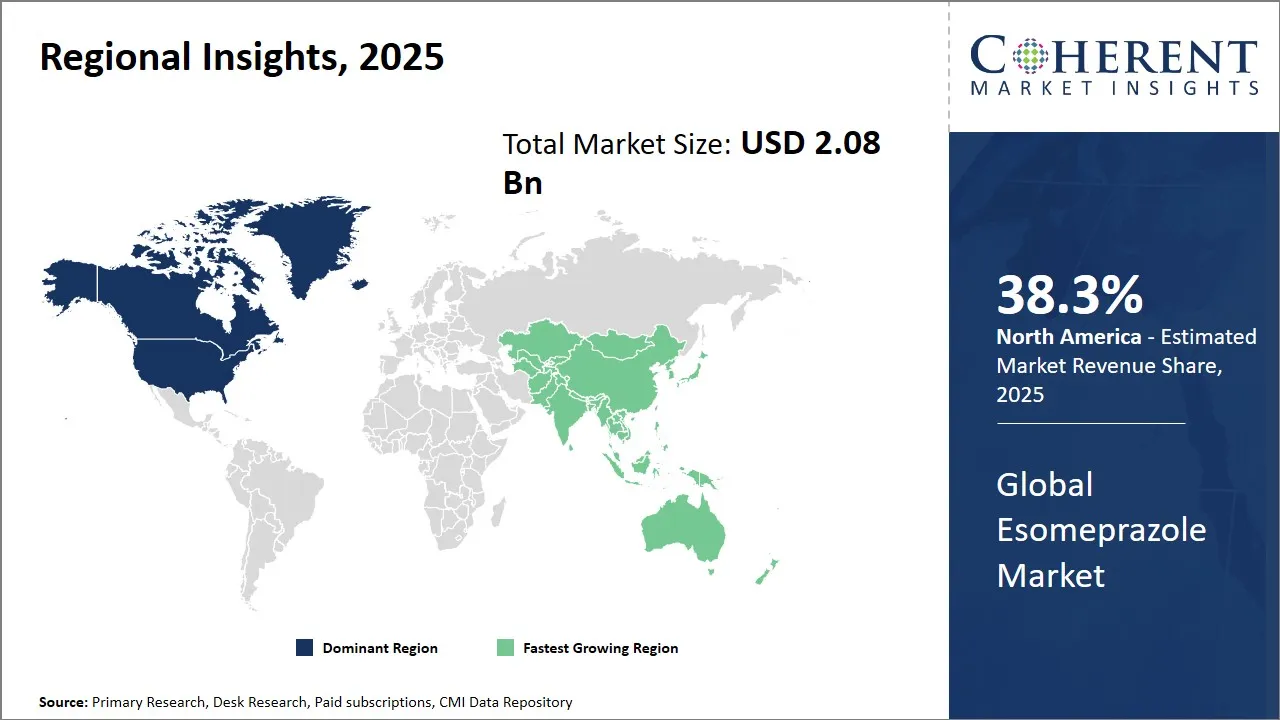
- North America is expected to lead the market, holding a share of 38.3% in 2026. Asia Pacific is anticipated to be the fastest-growing region, with an estimated market share of 23.4% in 2026.
Market Overview
Current market trends indicate a growing preference for generic esomeprazole formulations due to cost-effectiveness and wider accessibility. Additionally, pharmaceutical innovations focusing on improved drug delivery systems and extended-release formulations are gaining traction. The surge in geriatric population and rising healthcare expenditure further fuel market expansion. Moreover, the shift towards outpatient care and increased adoption of personalized medicine contribute to evolving market dynamics, positioning esomeprazole as a critical therapeutic option globally.
Currents Events and Its Impacts
Current Events | Description and its Impact |
Growing shift toward generics after patent expiry |
|
Rise of digital health & telemedicine |
|
Segmental Insights
- Current Industry Events of 2026
- Market Size Estimation
- Regional Breakdown
- Competitive Landscape
- Customer Intelligence
- Segmental Analysis
- Pricing Analysis
- Key Market Drivers, Challenges & Future Trends
- Customized Insights Section
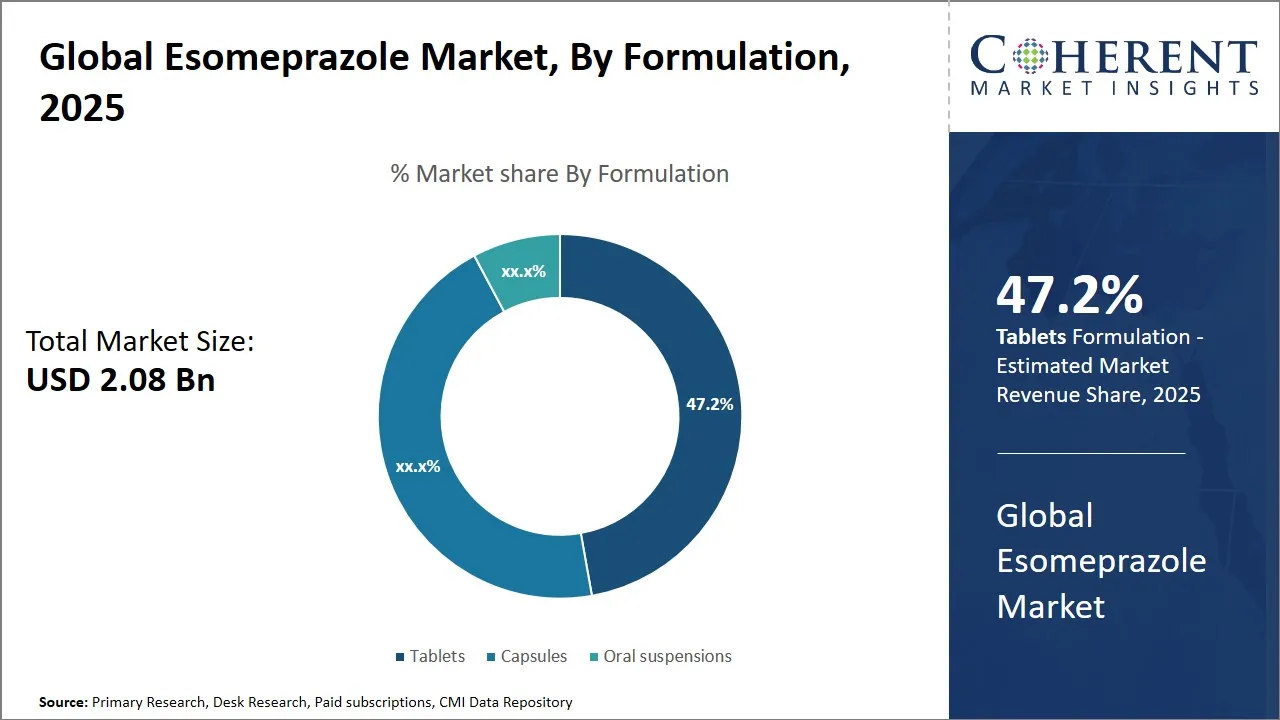
Esomeprazole Market Insights, By Formulation - Tablets Contribute the Highest Share of the Market Owing to their Convenience, Stability, and Cost-Effectiveness
The tablets segment is expected to forms the majority share of the global market with 48.2% in 2026 due to the high standard of the drug in delivering the preferred mode of drug administration between the patient and the healthcare provider. The benefits of using tablets are many including ease of administration and portability which directly affect the compliance of the patient as this would be the case in chronic conditions where long-term treatment like GERD is necessary. Tablets have been shown to be more uniform in dose and have a longer shelf life than other formulations such as capsules and oral suspensions, which is attractive to both pharmaceutical companies and the final product consumers.
For Instance, In July 2020, Cadila Pharmaceuticals launched Esomeprazole tablets under the brand name Esiloc in India. The tablets, available in 20 mg and 40 mg doses, are designed to treat hyperacidity and drug-induced gastritis. Esiloc offers a more affordable option, being 50% cheaper than alternatives.
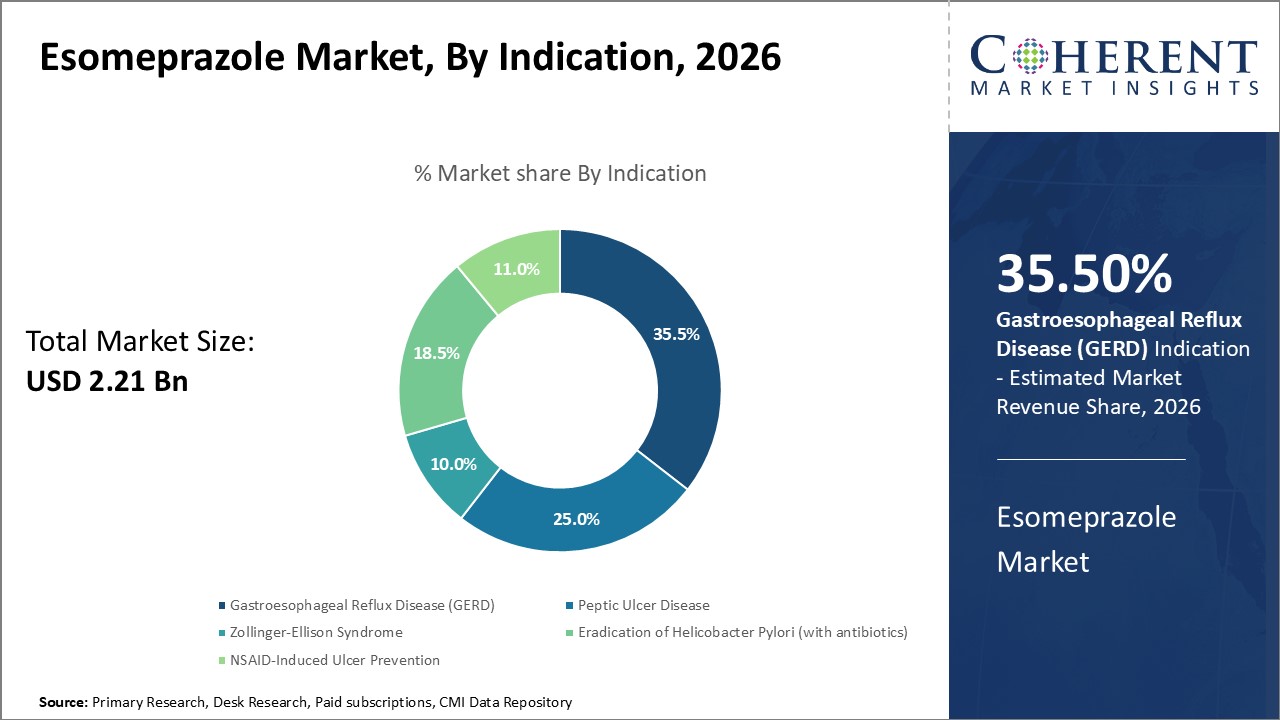
Esomeprazole Market Insights, By Indication - Gastroesophageal Reflux Disease (GERD) Holds the Largest Market Share Owing to its High Prevalence and Chronic Nature
GE reflux disease (GERD) segment has the highest market share of 35.5% share in 2026. This is fueled by the fact that GERD is a growing disease in the world with no signs of stopping as it is fueled by lifestyle, diet and stress.
GERD is a condition that has a high percentage of the population in the global world, leading to chronic pain and elevated chances of damaging the esophagus in case it has not been addressed. The chronic nature of this condition means that proton pump inhibitors such as esomeprazole must be used constantly and sometimes indefinitely, which directly underlies the need of such indication.
Esomeprazole Market Insights, By Drug Type - Branded Segment Holds the Largest Share Fueled by Physician Preference and Perceived Quality Assurance
The branded segment is the most dominant with an estimated market share of 52.4 in 2026 with good reasons attached to the segment concerning trust, perception of efficacy and the massive advertisement by drug companies.
The prescribing behavior is significantly affected as physicians and patients tend to regard branded drugs as having superior quality and regulating high-level standards and the systematic clinical outcomes. BRANC esomeprazole has a history of proven effectiveness, which is supported by clinical trials and longitudinal studies that highlight the safety and clinical effectiveness.
Prevalence, Incidence, and Treatment Insights for GERD, PUD, and NSAID-Related Disorders
Condition / Disorder Type | Prevalence | Incidence / Annual Rate | Estimated Treatment / PPI‑Use Rate (proxy for Esomeprazole use) |
GERD | In many Western populations, ~10–21% report weekly symptoms. | Estimated ~0.4% annual incidence in some populations. | High: acid‑suppressive therapy (PPIs) considered standard; many GERD patients likely use PPIs long‑term per global guidelines. |
Peptic Ulcer Disease( PUD (general population) | 1‑year prevalence (physician-diagnosed) ~0.12–1.50%. | Annual incidence ~0.10–0.19% (physician‑diagnosed); 0.03–0.17% (hospitalization‑based). | Moderate: Use of PPIs reduces ulcer formation/recurrence; but real-world gastro‑protective co‑therapy underused. In one study, only ~39% of at-risk patients received gastroprotective agents. |
NSAID‑associated Gastric / Duodenal Ulcers (NSAID‑related PUD) | Not population‑wide; but long‑term NSAID use causes ulcers in ~12–15% of chronic users. | Among chronic NSAID users, risk is significantly elevated; many PUD cases are NSAID‑related. | In studies, Esomeprazole (20–40mg) led to ulcer healing rates ~88–91.5% at 8 weeks. However, in real-world at-risk populations, under‑use of PPIs/gastroprotection remains common. |
Regional Insights
North America Esomeprazole Market Analysis and Trends
It is estimated that North America region will command the largest market share of 38.3% in 2026 due to the well-established pharmaceutical ecosystem, well-developed infrastructure, and favorable regulatory environments. The market is made strong by the presence of large pharmaceutical firms such as AstraZeneca, Pfizer and Teva Pharmaceuticals, which has vast Research and development and marketing potentials.
Also, the long-term demand is due to the high awareness of gastroesophageal reflux disease (GERD) and other disorders of acid among patients. The area also enjoys the presence of well-developed distribution networks and good intellectual copyrights that promote the ongoing innovations and new formulations.
Asia Pacific Esomeprazole Market Analysis and Trends
Asia Pacific market will likely record the highest market growth rate with a share of 23.4% in 2026 due to the rising healthcare accessibility, the rise in the prevalence of digestive disorders and the expanding aging population. Urbanization, better healthcare systems, and better coverage of health insurance promote the use of pharmaceuticals.
The esomeprazole market is dominated by China, India, Japan, and South Korea because local and multinationals, including Sun Pharmaceuticals, Dr. Reddy Labs, and Takeda Pharmaceuticals, put in a vast production and distribution effort to dominate the market. The policies and trade liberalization and the rise in foreign direct investments contribute to the improvement of the pharmaceutical supply chains and technology transfer contributing to the acceleration of growth in this region.
Esomeprazole Market Outlook for Key Countries
U.S. Esomeprazole Market Trends
The healthcare expenditure on esomeprazole in the U.S. market is also high, as well as the awareness of patients about acid-related disorders. Other key players like AstraZeneca which initiated the innovation of esomeprazole, are still investing in high-level formulations and clinical trials. Generic pharmaceutical firms, such as Mylan and Teva, contribute to the availability and low price. Demand is a given by the existence of integrated healthcare systems and insurance cover.
For Example, AstraZeneca, Sandoz, a division of Novartis, and Amgen are active players in the U.S. market, offering generic versions of esomeprazole. These companies contribute to increasing market access, especially in the face of the growing demand for cost-effective treatments. Lupin Pharmaceuticals also provides generic Esomeprazole in the U.S., further increasing competition and accessibility.
Germany Esomeprazole Market Trends
The esomeprazole market of Germany is a mature healthcare system with high coverage of the public health insurance which increases the accessibility of the needed medicine such as esomeprazole. Pharmaceutical giants like Bayer and Merck are making major contributions in terms of R&D in the gastroenterology therapies. The high standards are ensured by the strict regulatory environment in the country, the Federal Institute for Drugs and Medical Devices (BfArM).
For example, Bayer, Merck, and Boehringer Ingelheim, companies like Novartis and AbbVie are also involved in the German market. Novartis manufactures generic esomeprazole, enhancing availability, while AbbVie continues to focus on innovative treatments in gastroenterology.
China Esomeprazole Market Trends
China is a fast-growing market that is on the rise because of the increasing rates of digestive disorders and the growth of interest to invest in healthcare infrastructure. The pharmaceutical companies at the domestic level like Shanghai Fosun pharmaceutical and Jiangsu Hengrui medicine play a large role in producing branded and generic products. Government intervention in such policies as the Healthy China 2030 blueprint is designed to increase both the availability and affordability of drugs.
For Example, Shanghai Fosun Pharmaceutical and Jiangsu Hengrui Medicine, Sinovac Biotech and Yunnan Tin Company Limited play a significant role in the Chinese esomeprazole market. These companies manufacture both branded and generic versions of the drug, responding to the country's growing healthcare needs and regulatory shifts.
India Esomeprazole Market Trends
The market for esomeprazole in India depicts a dynamic environment in which there are high levels of presence of generic drug manufacturing companies such as Sun Pharmaceutical, Cipla and Dr. Reddy Labs. The positive government policies that are encouraging generic drugs use and higher spending on health provision provide a favorable growth environment. The large number of patients and the increasing change of acid related conditions lead to the demand of cost-effective esomeprazole preparations.
For example, Sun Pharmaceutical, Cipla, and Dr. Reddy's Laboratories, companies such as Cadila Healthcare and Torrent Pharmaceuticals are key contributors in the Indian esomeprazole market. These companies manufacture a variety of formulations, making esomeprazole more accessible and affordable to a large patient population.
Adverse Effects, Safety, and Long-Term Therapy for Esomeprazole Market
- Adverse Effects
Common side effects include headaches, nausea, and abdominal pain. Long-term use may cause kidney damage, bone fractures, vitamin B12 deficiency, and increased infection risk. - Safety Profile
Generally safe, but prolonged use can lead to hypomagnesemia, liver enzyme elevation, and kidney issues. Monitoring is advised during extended therapy. - Long-Term Therapy
Long-term use is essential for chronic conditions like GERD or NSAID ulcers. While effective, it should be managed to minimize risks. The lowest effective dose is recommended with periodic evaluations.
Market Players, Key Developments, and Competitive Intelligence
Key Developments
- In June 2024, Glenmark Pharmaceuticals received U.S. FDA approval for its Esomeprazole Magnesium Delayed-Release Capsules USP, 20 mg (OTC), bioequivalent to Nexium 24 HR. Glenmark, a global pharmaceutical company, operates across branded, generics, and OTC segments with a focus on respiratory, dermatology, and oncology therapies.
- In October 2023, Granules India Limited received U.S. FDA approval for its Esomeprazole Magnesium Delayed-Release Capsules. Granules India is a leading pharmaceutical company specializing in the production of active pharmaceutical ingredients and finished dosage forms. This approval strengthens the company’s generics portfolio, further expanding its presence in the U.S. market.
- In December 2022, Sun Pharma received approval from the CDSCO panel to manufacture and market its Esomeprazole dual-release gastro-resistant tablets 80 mg. This decision followed detailed deliberations, allowing Sun Pharma to expand its product offerings in the proton pump inhibitor segment.
- In March 2020, Cipla Limited received final U.S. FDA approval for its generic version of AstraZeneca's Nexium (Esomeprazole for Oral Suspension 10mg, 20mg, and 40mg). Cipla is the first company to file for the 10mg strength. The product is an AB-rated therapeutic equivalent for treating conditions like GERD, NSAID-associated gastric ulcers, and H. pylori eradication.
Top Strategies Followed by Global Esomeprazole Market Players
- The existing market leaders invest heavily on research and development (R&D) to facilitate innovation and come up with high-performance esomeprazole formulations to meet the changing regulatory requirements and market expectations. To ensure efficiency, bioavailability, and delivery channels to remain technologically superior, these players have established strategic alliances with pharmaceutical firms and OEMs to enhance dominance in the market.
- Other industry giants such as Sanofi have made substantial investments in newer breeds of the esomeprazole formulations where they are aiming at better drug delivery systems to achieve better efficacy, whereas Novartis is taking the lead with newer therapy and higher bio availability with which they have managed to maintain their position in the market through constant innovation in their research and development sectors.
- At the middle level of esomeprazole market, the typical strategy of mid-level players is to focus on the provision of products of cost-efficient character that are neither of high quality nor high cost. These companies understand that a large portion of consumers, particularly in the developing countries, are very sensitive to prices and thus they package their products to fulfill the needs of the budget-conscious consumers without necessarily lowering their effectiveness and safety.
- Mid-level companies like Amgen are concerned in manufacturing generic forms of esomeprazole at lower prices, maximizing their production at no cost to quality, which allows them to enter price sensitive markets. As a unit of Novartis, Sandoz focuses on providing affordable generics in equilibrium between affordability and regulatory control and takes a solid position in developing markets.
- Small-scale players dominate their market niche in the esomeprazole market by specializing, or innovating in product, features that make them stand out of the market. They usually embrace new technologies including new drug delivery systems, new formulations, etc. to provide special value propositions based on patient needs or regional market requirements.
- Small-scale actors such as Lupin Pharmaceuticals take the opportunity of innovative drug delivery technology to address the needs of particular patients, which are gaining momentum in niche markets. Zydus Cadila aims at regional needs by providing customized versions of esomeprazole in distinct therapeutic markets, especially in such markets as India.
Market Report Scope
Esomeprazole Market Report Coverage
| Report Coverage | Details | ||
|---|---|---|---|
| Base Year: | 2025 | Market Size in 2026: | USD 2.21 Bn |
| Historical Data for: | 2020 To 2024 | Forecast Period: | 2026 To 2033 |
| Forecast Period 2026 to 2033 CAGR: | 6.4% | 2033 Value Projection: | USD 3.42 Bn |
| Geographies covered: |
| ||
| Segments covered: |
| ||
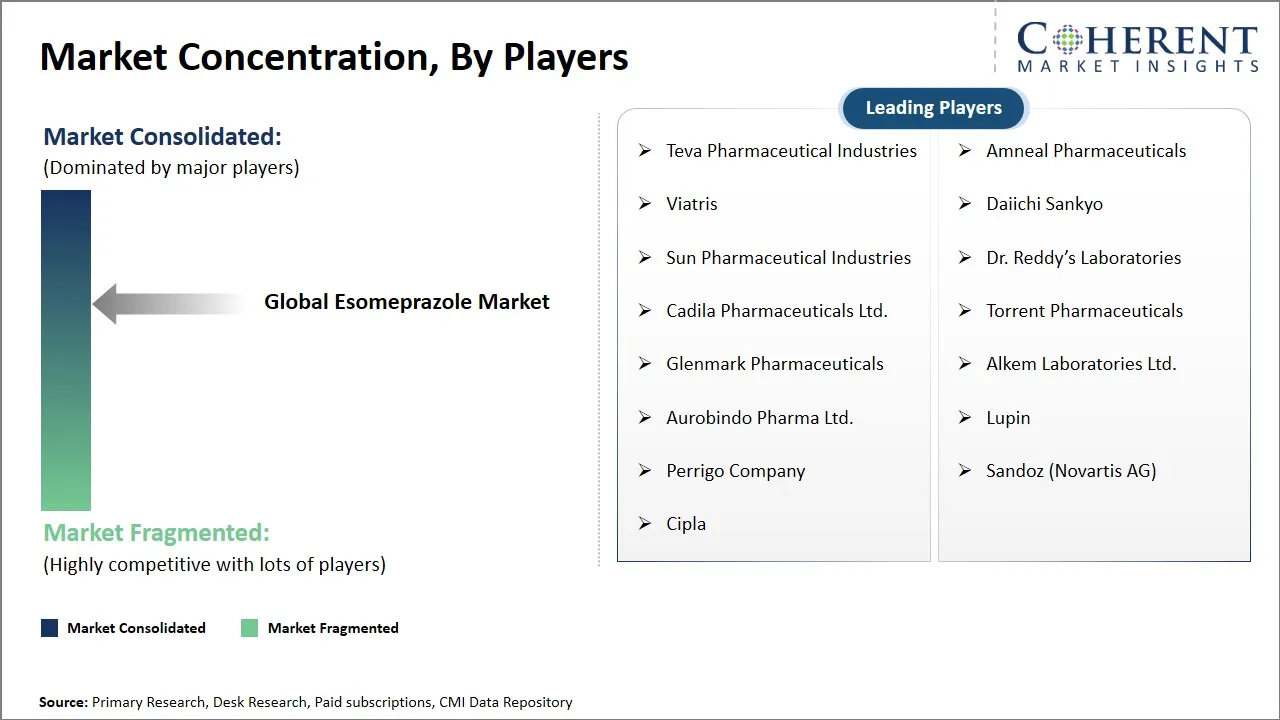
| Companies covered: | Teva Pharmaceutical Industries, Amneal Pharmaceuticals, Viatris, Daiichi Sankyo, Sun Pharmaceutical Industries, Dr. Reddy’s Laboratories, Cadila Pharmaceuticals Ltd., Torrent Pharmaceuticals, Glenmark Pharmaceuticals, Alkem Laboratories Ltd., Aurobindo Pharma Ltd., Lupin, Perrigo Company, Sandoz (Novartis AG), and Cipla | ||
| Growth Drivers: |
| ||
| Restraints & Challenges: |
| ||
Esomeprazole Market Dynamics
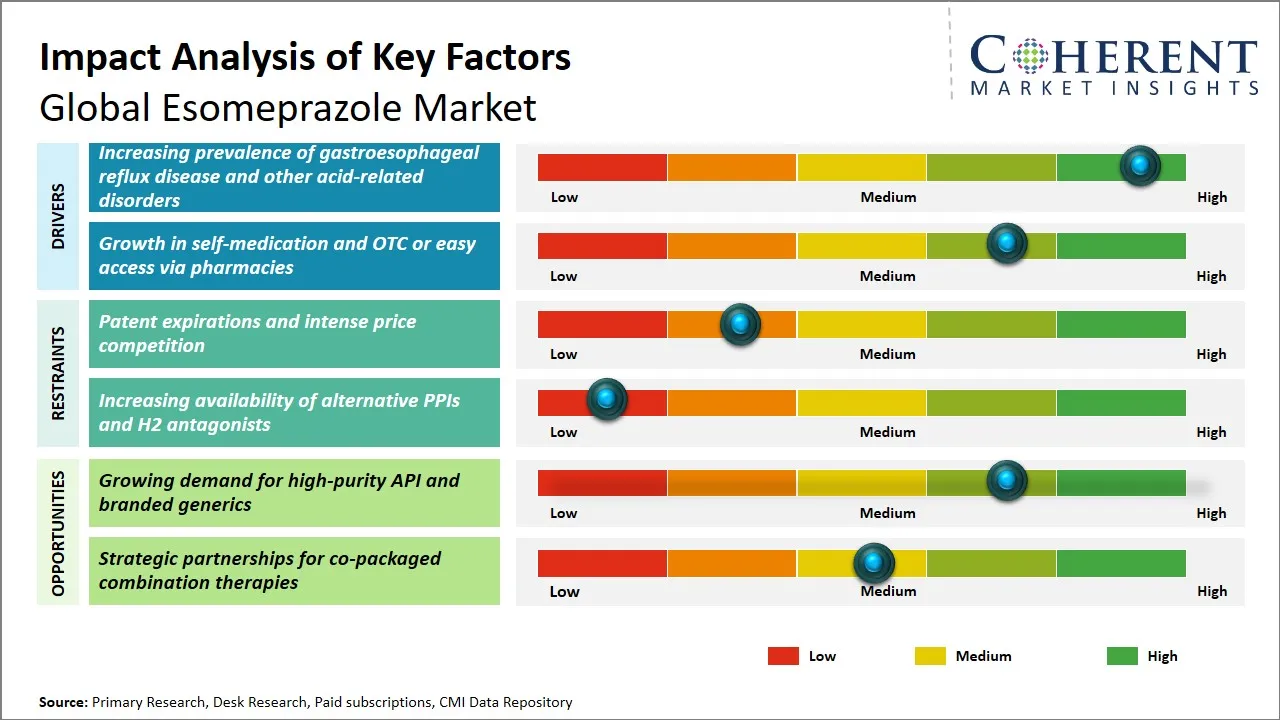
Esomeprazole Market Driver - Increasing Prevalence of Gastroesophageal Reflux Disease and Other Acid ‑Related Disorders
The growing prevalence of gastroesophageal reflux disease (GERD) and other acid-related conditions including peptic ulcers and Zollinger-Ellison syndrome are also contributing to the high demand of esomeprazole in the world. These disorders, which are caused by the over production of gastrointestinal acid and the subsequent discomfort or damage to the esophagus and stomach, have been experiencing gradual increase because of the changing lifestyle patterns such as unhealthy diets, obesity and a higher level of stress. Esomeprazole esophratic acid secretion, which is a proton pump inhibitor, is effective as a symptomatic agent and as a healing factor of the mucosa.
A study published On November 15, 2021, in Cureus assessed the prevalence of Gastroesophageal Reflux Disease (GERD) in Saudi Arabia's Eastern region. The research found that 20.6% of the 1,517 participants had GERD, with higher rates among pregnant women, smokers, men, those using analgesics regularly, and individuals with a family history of GERD. Sociodemographic and lifestyle factors, such as diet and smoking, were significant risk factors. The study highlighted the growing prevalence of GERD in the region and stressed the importance of lifestyle changes alongside proton pump inhibitors (PPIs) for effective management.
Esomeprazole Market Opportunity - Growing Demand for High-Purity API and Branded Generics
The world esomeprazole market is a promising opportunity due to the increasing demand of high purity active pharmaceutical ingredients (APIs) and branded generics. With regulatory bodies in major market jurisdictions persistently imposing greater quality requirements, producers are left with little choice but to focus on the manufacture of high-purity APIs to promote the high efficacy and safety of Esomeprazole-based treatment. This is more specifically true in the developed worlds like in North America and Europe where consumer consciousness and healthcare policies are advocating the high quality of pharmaceutical products.
For example, Sun Pharma has capitalized on the demand for high-purity Esomeprazole APIs by meeting stringent regulatory standards in North America and Europe. Cipla has successfully expanded its branded generics portfolio, providing affordable, high-quality Esomeprazole in emerging markets with rising healthcare demand.
Analyst Opinion (Expert Opinion)
- The factors that have influenced the esomeprazole market include; technological development in the formulation of drugs used, growing demand of PPIs in the market because of the rising incidences of gastro intestinal disorders, and the promotion of accessibility by the government. The old age of the population and the increasing incidence of diseases such as GERD are key factors that have aided in the expansion of the market. Nevertheless, there are obstacles like the pressure of price by generic and cost-efficient healthcare options.
- Opportunities include online patient management tools and combination therapies. Such important conferences as Digestive Disease Week (DDW) and European Society of Gastrointestinal Endoscopy (ESGE) have promoted the critical knowledge exchange. Also, the further expansion of Esomeprazole in low-income areas is supported by government programs on extending its availability, which also contributes to the market growth prospects.
Speak to the analyst
Want personalized insights?
Take the findings above to one of our principal consultants, or have the report rebuilt around the segments, geographies and competitors you actually track.
Market Segmentation
- Formulation Insights (Revenue, USD Bn, 2021 - 2033)
- Tablets
- Capsules
- Oral suspensions
- Indication Insights (Revenue, USD Bn, 2021 - 2033)
- Gastroesophageal Reflux Disease (GERD)
- Peptic Ulcer Disease
- Zollinger-Ellison Syndrome
- Eradication of Helicobacter Pylori (in combination with antibiotics)
- NSAID-Induced Ulcer Prevention
- Drug Type Insights (Revenue, USD Bn, 2021 - 2033)
- Branded
- Generic
- Age Group Insights (Revenue, USD Bn, 2021 - 2033)
- Adults
- Pediatric
- Geriatric
- Distribution Channel Insights (Revenue, USD Bn, 2021 - 2033)
- Hospital Pharmacies
- Retail Pharmacies
- Online Pharmacies
- Regional Insights (Revenue, USD Bn, 2021 - 2033)
- North America
- U.S.
- Canada
- Latin America
- Brazil
- Argentina
- Mexico
- Rest of Latin America
- Europe
- Germany
- U.K.
- Spain
- France
- Italy
- Russia
- Rest of Europe
- Asia Pacific
- China
- India
- Japan
- Australia
- South Korea
- ASEAN
- Rest of Asia Pacific
- Middle East
- GCC Countries
- Israel
- Rest of Middle East
- Africa
- South Africa
- North Africa
- Central Africa
- North America
- Key Players Insights
- Teva Pharmaceutical Industries
- Amneal Pharmaceuticals
- Viatris
- Daiichi Sankyo
- Sun Pharmaceutical Industries
- Reddy’s Laboratories
- Cadila Pharmaceuticals Ltd.
- Torrent Pharmaceuticals
- Glenmark Pharmaceuticals
- Alkem Laboratories Ltd.
- Aurobindo Pharma Ltd.
- Lupin
- Perrigo Company
- Sandoz (Novartis AG)
- Cipla
Sources
Primary Research Interviews
Industry Stakeholders
- Interviews with pharmaceutical wholesalers
- Interviews with hospital pharmacists
End Users
- Surveys with physicians prescribing Esomeprazole
- Patient usage surveys
Government and International Databases
- WHO VigiBase
- World Bank health expenditure data
- FDA approval documents
- UNCTAD reports on drug access
- Health Action International (HAI) surveys
- National government policy reports
Trade Publications
- Scrip World Pharmaceutical News
- Regulatory Affairs Journal (RAJ Pharma)
- Access to Medicine Index
- WHO/HAI medicine price reports
- International Health Policy reviews
- Public-health consumption journals
Academic Journals
- Clinical pharmacokinetics of Esomeprazole
- Meta-analysis on proton pump inhibitors
- Bioequivalence studies in Esomeprazole
- Safety and efficacy reviews in clinical trials
- Research on drug interactions
- Pharmacodynamics of Esomeprazole
Industry Associations
- WHO pharmacovigilance databases
- Access to Medicine Foundation
- UNCTAD pharmaceutical technology transfer
- National drug regulatory agencies (FDA)
- Health Action International (HAI)
- Public health advocacy groups
Public Domain Resources
- PubMed Central (PMC)
- Open biomedical literature
- WHO/HAI open datasets
- FDA drug safety and approval data
- Global health data by the World Bank
- Public domain regulatory databases
Proprietary Elements
- CMI Data Analytics Tool: Proprietary analytics tool to analyze real-time market trends, consumer behavior, and technology adoption in market
- Proprietary CMI Existing Repository of Information for Last 8 Years
Get access to 250+ pages report
Every segment, forecast, competitor profile and data table behind the analysis above — available for instant download.
- ESOMAR Member
- ISO 9001:2015 Certified
- D-U-N-S Registered
- GDPR & CCPA Compliant
Missing comfort of reading report in your local language? Find your preferred language:
Transform your Strategy with Exclusive Trending Reports
Frequently Asked Questions
The global esomeprazole market is estimated to be valued at USD 2.21 Bn in 2026 and is expected to reach USD 3.42 Bn by 2033.
The CAGR of the global esomeprazole market is projected to be 6.4% from 2026 to 2033.
Increasing prevalence of gastroesophageal reflux disease and other acid‑related disorders and growth in self‑medication and OTC or easy access via pharmacies are the major factors driving the growth of the global esomeprazole market.
Patent expirations and intense price competition and increasing availability of alternative PPIs and H2 antagonists are the major factors hampering the growth of the global esomeprazole market.
In terms of formulation, the tablets are estimated to dominate the market revenue share in 2026.
Teva Pharmaceutical Industries, Amneal Pharmaceuticals, Viatris, Daiichi Sankyo, Sun Pharmaceutical Industries, Dr. Reddy’s Laboratories, Cadila Pharmaceuticals Ltd., Torrent Pharmaceuticals, Glenmark Pharmaceuticals, Alkem Laboratories Ltd., Aurobindo Pharma Ltd., Lupin, Perrigo Company, Sandoz (Novartis AG), and Cipla are the major players.
North America is expected to lead the global esomeprazole market in 2026.