

Global Eye Drops Market Size and Forecast – 2026 to 2033
The Global Eye Drops Market is estimated to be valued at USD 7.11 Bn in 2026 and is expected to reach USD 9.61 Bn by 2033, exhibiting a compound annual growth rate (CAGR) of 4.4% from 2026 to 2033. This steady growth is driven by the increasing prevalence of ocular disorders, rising awareness about eye health, and advancements in eye care technologies. Expanding geriatric populations and higher incidences of conditions such as dry eye syndrome further contribute to market expansion during this period.
Key Takeaways of the global eye drops market
- By type, prescription eye drops account for the largest share of the global eye drops market, representing an estimated 75.1% in 2026.
- Among therapeutic applications, Dry Eye Disease (DED) management leads with an estimated 22.4 % share in 2026.
- In terms of drug class, lubricants and emollients hold the highest share at 23.1 % share in 2026.
- North America is expected to lead the market, holding an estimated share of 37.3 % in 2026. Asia Pacific is anticipated to be the fastest-growing region, with a market share of 25.3% in 2026.
Market Overview
A notable trend in the eye drops market is the growing preference for preservative-free and natural formulations, driven by consumer demand for safer and milder treatment options. Additionally, integration of novel drug delivery systems and rising investments in research are fostering product differentiation. Increasing adoption of over-the-counter eye drops, coupled with strategic collaborations between manufacturers and healthcare providers, are also shaping the market landscape, promoting accessibility and enhancing patient compliance worldwide.
Current Events and Its Impact
Current Events | Description and its impact |
U.S. FDA-Approved Qlosi Now Available to Address Age-Related Blurry Near Vision |
|
U.S. FDA Crackdown on Contaminated Products |
|
Segmental Insights
- Current Industry Events of 2026
- Market Size Estimation
- Regional Breakdown
- Competitive Landscape
- Customer Intelligence
- Segmental Analysis
- Pricing Analysis
- Key Market Drivers, Challenges & Future Trends
- Customized Insights Section
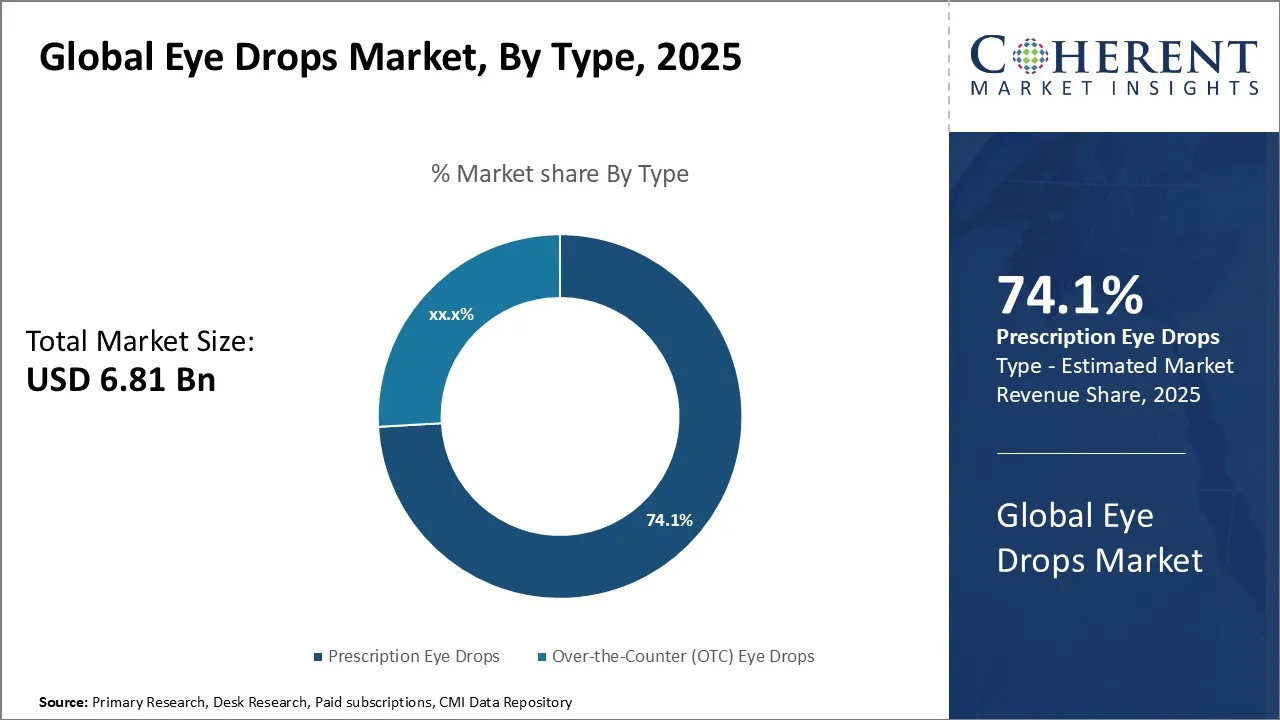
Eye Drops Market Insights, By Type - Prescription Eye Drops Dominate Due to Increasing Prevalence of Chronic Eye Conditions
In terms of type, prescription eye drops contribute the highest share of the global eye drops market with an estimated share of 75.1% in 2026, primarily driven by the rising incidence of chronic and complex ophthalmic disorders that require professional diagnosis and treatment. Prescription eye drops are essential for managing a range of serious eye diseases such as glaucoma, ocular hypertension, uveitis, and post-surgical care, which necessitate stringent medical oversight for safe and effective therapy.
The critical nature of these conditions demands customized formulations often unavailable in over-the-counter (OTC) options, positioning prescription products as indispensable in therapeutic regimens. The management of these diseases often involves long-term treatment plans using medicated eye drops that are only accessible via prescriptions. This includes the use of beta-blockers and prostaglandin analogs for glaucoma, as well as corticosteroids and NSAIDs for inflammation control.
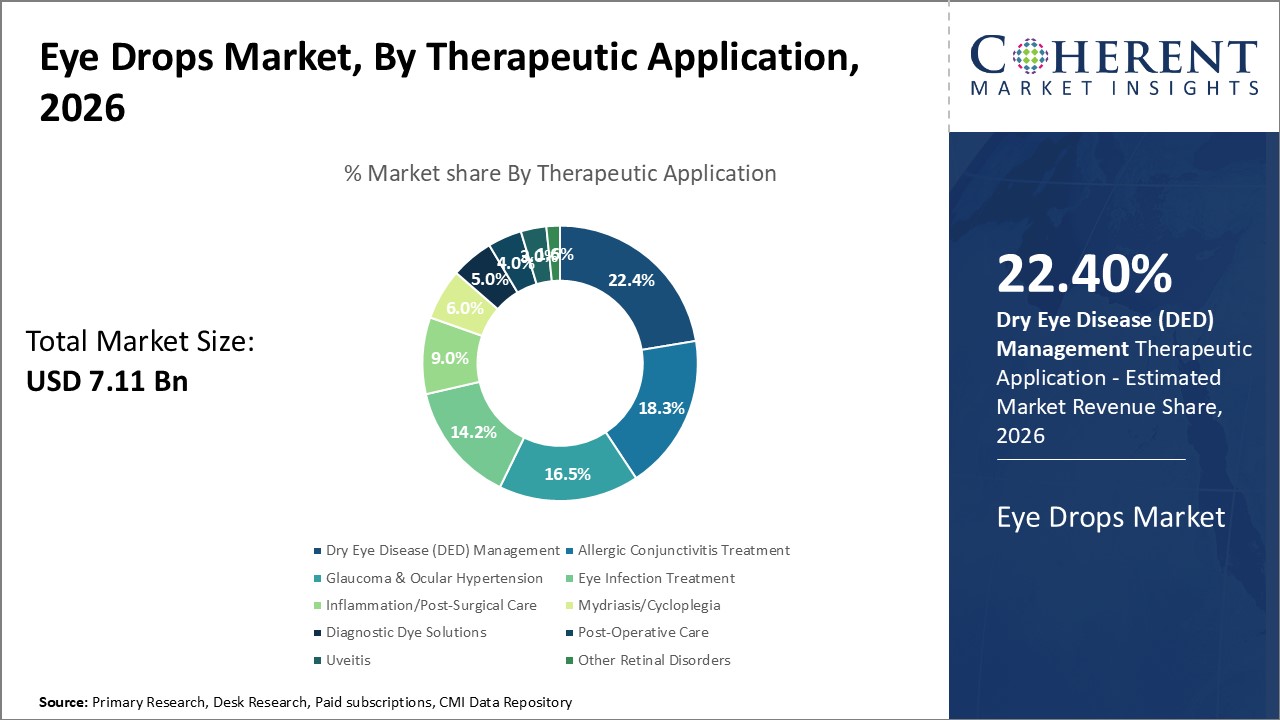
Eye Drops Market Insights, By Therapeutic Application - Dry Eye Disease Management Leading Therapeutic Applications Owing to Environmental and Lifestyle Changes
Among therapeutic applications, Dry Eye Disease (DED) management is expected to hold the largest share in the global eye drops market with a share of 22.4% in 2026. The burgeoning prevalence of DED is predominantly driven by environmental, behavioral, and lifestyle factors increasingly common across both developed and developing regions. Urbanization, air pollution, prolonged exposure to digital screens, and rising incidences of autoimmune disorders significantly contribute to the growing number of individuals experiencing dry eye symptoms.
DED is a multifactorial condition characterized by tear film instability and ocular surface inflammation, causing discomfort and impaired vision that severely impact quality of life. As awareness of DED increases among both patients and healthcare providers, there is a growing demand for specialized eye drop formulations designed to restore tear film balance and alleviate symptoms.
Eye Drops Market Insights, By Drug Class - Lubricants and Emollients Leading Drug Class Owing to their Versatility and Wide Usage
In terms of drug class, lubricants and emollients command the highest share of the global eye drops market with an estimated 23.1% in 2026 due to their broad applicability across various eye conditions and their foundational role in ocular surface health. These agents form the cornerstone of treatment for dry eye symptoms by mimicking natural tears, stabilizing the tear film, and providing immediate relief from irritation and discomfort.
The versatility of lubricants and emollients is a major driver of their widespread use. They are widely employed not only for managing dry eye disease but also as supportive therapy in postoperative care, exposure to irritants, and as adjuncts during contact lens wear.
In January 2022, NovaBay Pharmaceuticals, a U.S.-based company developing science-backed eyecare and skincare products, expanded its Avenova brand with new Lubricating Eye Drops for immediate relief of dry eye symptoms. Part of a three-step daily regimen alongside the Avenova Warm Eye Compress and Lid & Lash Solution, these preservative-free drops feature a unique formulation at a competitive price point.
Regional Insights
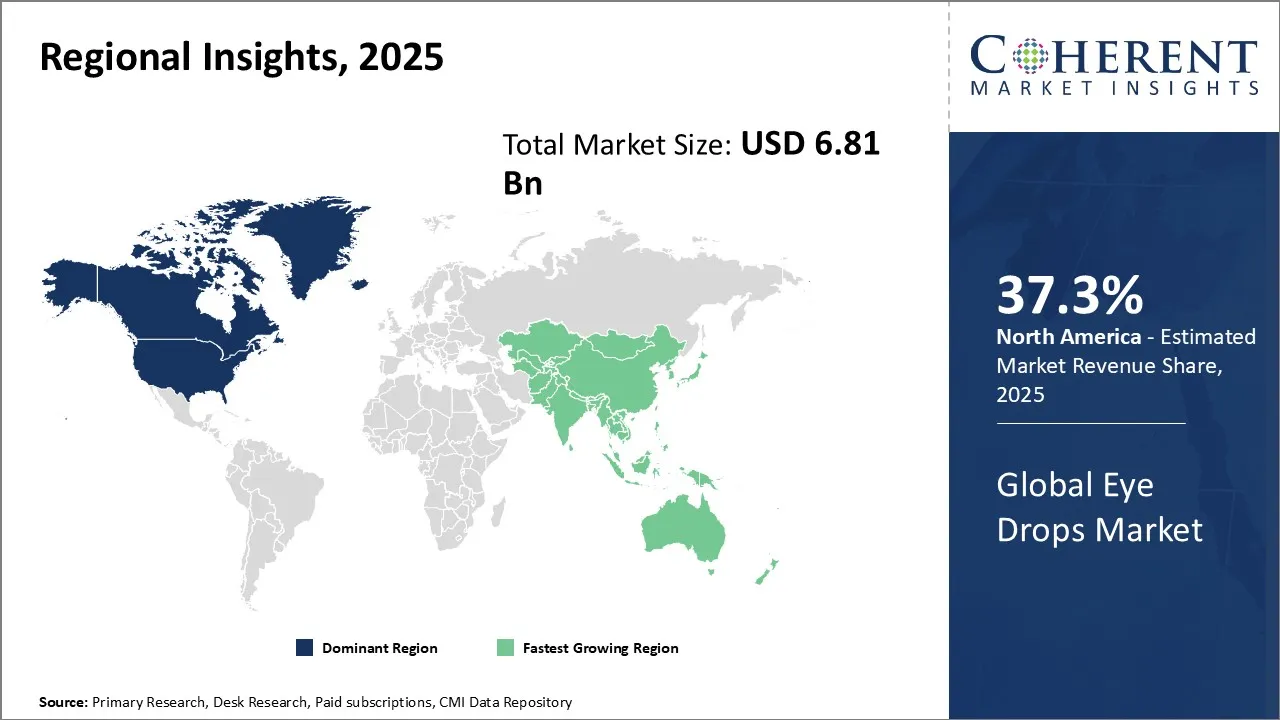
North America Eye Drops Market Analysis and Trends
North America is expected to dominate the global eye drops market with an estimated share of 37.3% in 2026, driven by its well-established healthcare infrastructure, high prevalence of ocular diseases, and advanced pharmaceutical research capabilities. The robust presence of leading pharmaceutical companies such as Allergan (AbbVie), Bausch + Lomb, and Pfizer significantly strengthens the market landscape. Strong governmental regulations ensuring stringent quality standards and extensive insurance coverage facilitate the widespread adoption of prescription and OTC eye drops. The trade ecosystem is well integrated, enabling quick product distribution across the U.S., Canada, and Mexico, supported by efficient supply chains and regulatory harmonization.
In July 2023, Tarsus Pharmaceuticals, a company pioneering treatments for unmet needs in eye care, announced U.S. FDA approval of XDEMVY 0.25% (lotilaner ophthalmic solution), the first approved eye drop targeting Demodex mites—the cause of Demodex blepharitis, which affects about 25 million people in the U.S. Clinical trials showed significant improvements in eyelid health and mite eradication. XDEMVY is available by prescription by August 2023.
Asia Pacific Eye Drops Market Analysis and Trends
The Asia Pacific region is expected to exhibit the fastest growth in the eye drops market, driven by a large population base with a share of 25.3% in 2026, rising prevalence of eye disorders due to increased screen time, pollution, and aging demographics. Countries like China, India, Japan, and South Korea have witnessed rapid healthcare modernization and expanding pharmaceutical manufacturing hubs. Favorable government initiatives aimed at improving healthcare infrastructure and increasing healthcare expenditure fuel market expansion.
For example, local players such as Santen Pharmaceutical (Japan), Lupin Limited (India), and Shandong Mingxin Pharmaceutical (China) are actively innovating and catering to both domestic and export markets. In August 2024, Ji Xing Pharmaceuticals, a China-based clinical-stage biopharma company focused on innovative treatments for serious diseases, announced it has completed enrollment of 300 patients in a Phase 3 study of LNZ100 (aceclidine) eye drops for presbyopia. Conducted across 19 leading centers, the trial evaluates the safety and efficacy of this potential best-in-class non-invasive therapy, aiming to address significant unmet needs beyond traditional spectacles.
Global Eye Drops Market Outlook for Key Countries
U.S. Eye Drops Market Trends
The U.S. eye drops market is marked by significant innovation and a large patient base with various ophthalmic conditions such as dry eye and glaucoma. Major companies like Allergan (part of AbbVie) and Bausch + Lomb hold substantial market shares with their comprehensive product portfolios ranging from prescription drugs to OTC lubricants. The presence of world-class research institutions and favorable USFDA regulatory frameworks encourages continuous introduction of novel therapeutics. Additionally, a high level of healthcare awareness and insurance coverage supports consumer access to advanced eye care products.
In November 2024, Aldeyra Therapeutics, a U.S.-based biotech company developing innovative treatments for immune-mediated diseases, announced the U.S. FDA has accepted its New Drug Application for reproxalap eye drops to treat dry eye disease, setting a PDUFA date of April 2, 2026. Alongside the filing, Aldeyra expanded its option agreement with AbbVie, which could lead to up to USD 400 million in payments and a U.S. commercialization partnership if approved.
China Eye Drops Market Trends
China's eye drops market is rapidly evolving due to growing urbanization and increased incidence of eye diseases linked to aging and lifestyle changes. Domestic companies such as Shandong Mingxin Pharmaceutical focus on producing affordable eye drops, while multinational corporations, including Santen Pharmaceutical and Novartis, have enhanced their footprint through joint ventures and direct investments. Government policies encouraging local pharmaceutical development and improving medical insurance reimbursement are key growth enablers.
In May 2026, Uni-Bio Science Group, a China-based biopharma company specializing in innovative therapies, announced NMPA approval for (Diquafosol Sodium Eye Drops) to treat dry eye syndrome. The product stimulates tear fluid and mucin secretion via P2Y2 receptor activation, offering improved corneal repair and relief for millions affected by dry eye in China. With the market expected to exceed USD 5.75 billion by 2030, the company has scaled up sales channels and supply partnerships to drive adoption and reinforce its ophthalmology leadership.
India Eye Drops Market Trends
India continues to lead in terms of emerging market potential, supported by increasing awareness of eye care and the rising burden of conditions like conjunctivitis and dry eye syndrome. Indian pharmaceutical companies such as Lupin Limited and Sun Pharmaceutical Industries actively develop cost-effective eye drop formulations catering to the domestic market. The government's initiatives to enhance healthcare infrastructure and promote accessibility drive demand especially in tier-2 and tier-3 cities.
In July 2024, Glenmark Pharmaceuticals, a global pharmaceutical company headquartered in India, launched Hydrochloride eye drops formulated with the same active ingredient used in Pataday Twice Daily Relief. The new product offers patients an alternative option for managing eye allergies while maintaining comparable efficacy to established treatments.
Germany Eye Drops Market Trends
Germany eye drops market benefits from a strong pharmaceutical sector and an advanced healthcare system. Companies such as Bausch + Lomb and Bayer have a significant presence, supported by continuous innovation and extensive distribution networks. The country’s focus on medical research and regulatory rigor contribute to the availability of high-quality ophthalmic products. Additionally, healthcare reimbursement policies and an aging population increase demand for both prescription and non-prescription eye drops.
In November 2023, URSAPHARM Arzneimittel GmbH, a Germany-based pharmaceutical company known for its HYLO brand of market-leading eye drops and ointments, announced it will be the presenting partner of the FIS Ski Jumping World Cup through the 2026 season. The partnership highlights HYLO’s role in relieving dry and irritated eyes, a common issue during winter sports, and underscores URSAPHARM’s commitment to supporting international athletic events.
End User Feedback and Unmet Needs
- End users across key application sectors of the global eye drops market—including individual consumers, ophthalmology clinics, pharmacies, and institutional healthcare providers—have consistently reported diverse experiences with product performance, ease of use, and integration into daily regimens. Positive feedback frequently centers on advanced formulations offering long-lasting relief for chronic conditions such as dry eye disease and allergic conjunctivitis. For example, several large ophthalmic centers in North America have cited the effectiveness of preservative-free multi-dose packaging systems, which improve patient adherence while minimizing contamination risk. In contrast, recurring concerns have emerged regarding the variability in drop viscosity and the resulting inconsistency in therapeutic coverage, particularly among elderly patients with dexterity challenges. A frequently cited limitation among institutional users is the lack of standardized dosing delivery in unit-dose formats, which often leads to wastage and higher treatment costs in high-volume outpatient settings.
- Unmet needs within the market remain significant and multifaceted. Many end users have expressed a desire for greater customization in formulations tailored to specific ocular conditions, as well as more affordable options that maintain clinical efficacy without premium pricing. Additionally, feedback underscores the need for clearer guidance and user support, particularly for first-time patients managing chronic ophthalmic diseases. Addressing these gaps through innovations such as adaptive dispensing mechanisms, personalized therapeutic regimens, and transparent pricing models could not only enhance patient satisfaction but also strengthen brand loyalty and market penetration. For manufacturers and policymakers, prioritizing these improvements represents an opportunity to differentiate products, drive repeat purchase behavior, and support broader public health objectives by improving treatment adherence and outcomes.
Market Players, Key Developments, and Competitive Intelligence
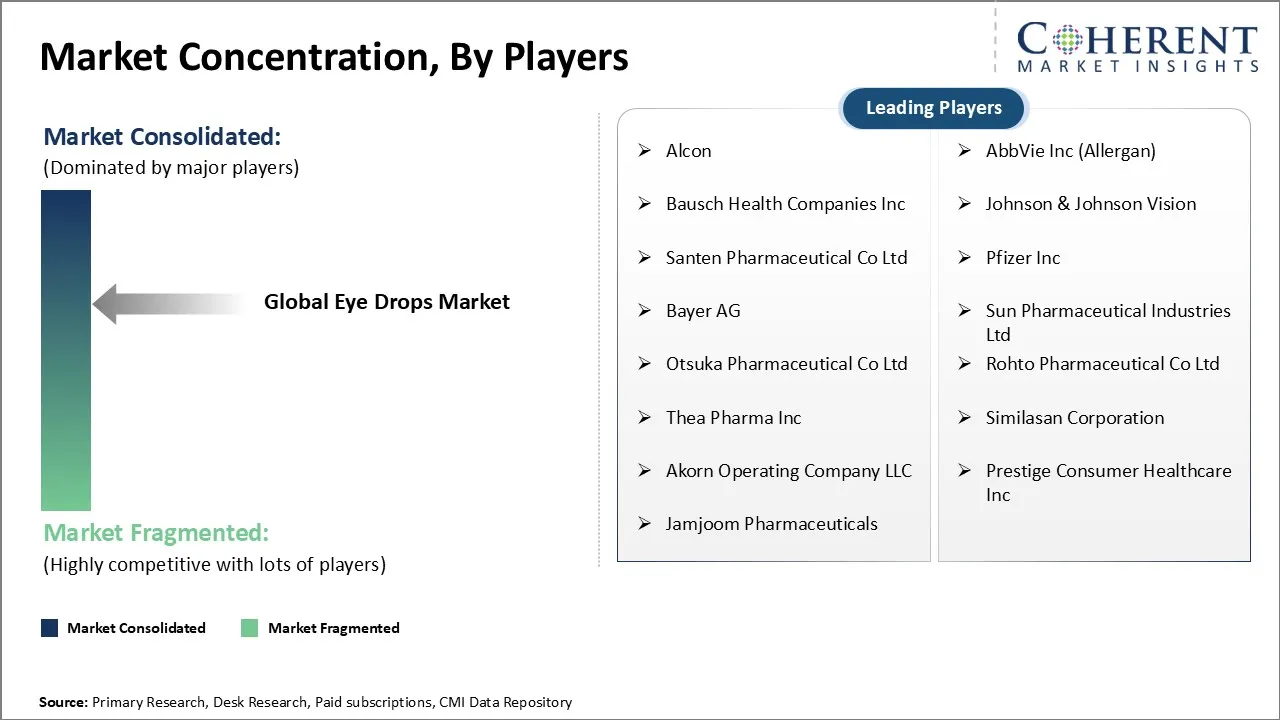
Top Strategies Followed by Global Eye Drops Market Players
- Established market leaders in the global eye drops market are making significant investments in research and development (R&D) to consistently innovate and introduce high-performance products that tackle a broad spectrum of ocular conditions, with a focus on improving efficacy and safety. Their dedication to advancing the field is evident through the integration of cutting-edge biotechnologies and innovative formulations, ensuring their product portfolios stay strong and at the forefront of technological progress.
- In June 2023, Novaliq, a biopharmaceutical company specializing in innovative eye therapies, announced U.S. FDA approval of VEVYE 0.1% cyclosporine eye drops for dry eye disease. VEVYE is the first cyclosporine solution shown to improve signs and symptoms in as little as 4 weeks.
- Mid-level players in the eye drops market focus on developing targeted solutions for specific ocular conditions, contributing to the innovation landscape while often taking a more agile approach than larger companies. These companies typically concentrate on addressing unmet medical needs with novel formulations, sometimes targeting niche markets or specific therapeutic areas. They often focus on achieving strong clinical results and regulatory milestones to establish themselves in the competitive eye care industry. Their emphasis is on delivering effective treatments while adhering to strict safety standards.
- In February 2023, Ocuphire Pharma, a clinical-stage biopharma company developing therapies for eye disorders, announced the U.S. FDA has accepted its New Drug Application for Nyxol eye drops to reverse pharmacologic dilation. The U.S. FDA set a PDUFA date of September 28, 2023. If approved, Nyxol would be the first prescription eye drop to reverse pupil dilation, supported by positive Phase 2 and 3 trial results in over 600 patients.
- Small-scale players in the global eye drops market typically carve out niches by focusing on specialized or innovative product offerings that address specific ophthalmic challenges or consumer preferences. They often emphasize unique product features, such as all-natural ingredients, preservative-free formulations, or tailored drug delivery mechanisms, to differentiate themselves in a crowded marketplace.
- In July 2023, Einar Stefánsson, a vitreoretinal surgeon specializing in diabetic eye diseases, and Thorsteinn Loftsson developed innovative eye drops that can reach the back of the eye, offering a potential needle-free treatment for diabetic macular edema (DME), which affects 37 million people annually. The drops use a unique cyclodextrin-based nanoparticle to deliver medication past the eye’s protective barriers to the retina. Now in clinical trials, this breakthrough could allow patients to self-administer treatment instead of relying on costly injections.
Key Developments:
- In June 2025, Bausch + Lomb, a leading global eye health company with USD 4.8 billion in annual revenue and 12% annual growth, launched Blink Nourish and Blink Boost eye drops in the U.S. Available at major retailers like Walmart, Target, and Amazon, Blink Nourish is the first preservative-free, vitamin-enriched eye drop with nutrients such as vitamins B12 and C, magnesium, and amino acids. Blink Boost features a pH-balanced formula with hyaluronan and antioxidants to mimic healthy tears and support eye comfort.
- In May 2025, Grifols, a global healthcare company specializing in plasma-derived therapies, announced USFDA clearance to start a phase 2 trial of GRF312 immunoglobulin eye drops for dry eye disease. The trial, launching later this year, will assess safety and efficacy in 100 patients. GRF312 targets multiple inflammatory pathways and previously showed significant symptom improvement with good tolerability. The treatment is being developed in partnership with Selagine.
- In May 2025, Alcon, a global leader in eye care dedicated to helping people see brilliantly, announced U.S. FDA approval of TRYPTYR (acoltremon ophthalmic solution) 0.003% for treating signs and symptoms of Dry Eye Disease (DED). TRYPTYR is the first TRPM8 receptor agonist eye drop that stimulates corneal nerves to quickly boost natural tear production. In Phase 3 trials with over 930 patients, TRYPTYR showed significant improvements in tear production as early as Day 1, with up to four times more patients achieving meaningful results compared to placebo by Day 14.
- In April 2025, Oculis, a global biopharma company developing innovative eye treatments, announced it has completed enrollment of over 800 patients in its Phase 3 DIAMOND-1 and DIAMOND-2 trials of OCS-01 eye drops for diabetic macular edema (DME). These are the first pivotal studies of a topical DME treatment. Topline data are expected in Q2 2026, followed by an NDA submission. If approved, OCS-01 could become the first non-invasive eye drop therapy for DME.
Market Report Scope
Eye Drops Market Report Coverage
| Report Coverage | Details | ||
|---|---|---|---|
| Base Year: | 2025 | Market Size in 2026: | USD 7.11 Bn |
| Historical Data for: | 2020 To 2024 | Forecast Period: | 2026 To 2033 |
| Forecast Period 2026 to 2033 CAGR: | 4.4% | 2033 Value Projection: | USD 9.61 Bn |
| Geographies covered: |
| ||
| Segments covered: |
| ||
| Companies covered: | Alcon, AbbVie Inc (Allergan), Bausch Health Companies Inc, Johnson & Johnson Vision, Santen Pharmaceutical Co Ltd, Pfizer Inc, Bayer AG, Sun Pharmaceutical Industries Ltd, Otsuka Pharmaceutical Co Ltd, Rohto Pharmaceutical Co Ltd, Thea Pharma Inc, Similasan Corporation, Akorn Operating Company LLC, Prestige Consumer Healthcare Inc, and Jamjoom Pharmaceuticals | ||
| Growth Drivers: |
| ||
| Restraints & Challenges: |
| ||
Eye Drops Market Dynamics
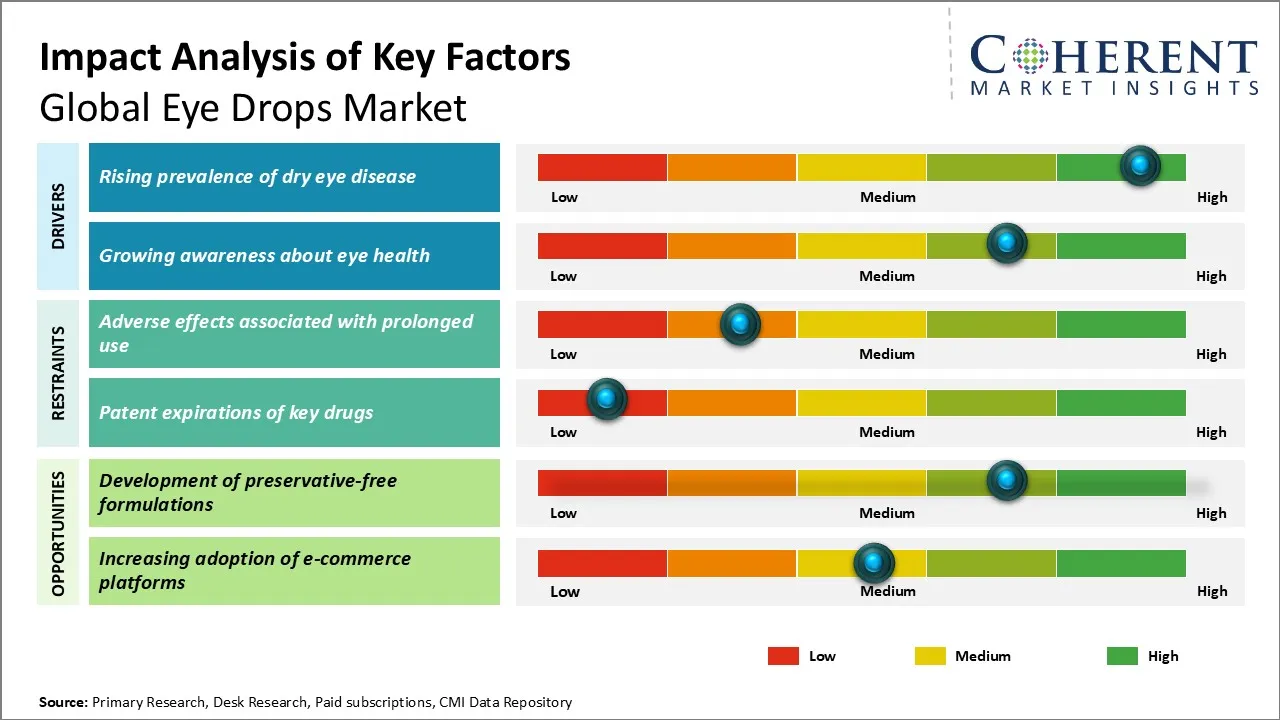
Eye Drops Market Driver - Rising Prevalence of Dry Eye Disease
The increasing prevalence of dry eye disease worldwide has emerged as a significant driver for the global eye drops market. Modern lifestyle factors such as extended screen time, use of digital devices, air-conditioned environments, and urban pollution contribute to ocular surface stress, exacerbating symptoms of dry eye. Additionally, aging populations in both developed and developing regions are more susceptible to dry eye disease due to natural tear production decline and age-related ocular changes. Furthermore, systemic conditions like diabetes and autoimmune disorders also elevate the risk, intensifying the need for effective symptomatic relief. As dry eye disease often leads to discomfort, irritation, and visual disturbances, sufferers frequently turn to lubricating and therapeutic eye drops to manage their symptoms and improve quality of life.
In October 2024, a cross-sectional study published in Scientific Reports found that 60.4% of Thai medical students experienced dry eye disease (DED) symptoms. The research linked DED to poorer quality of life and mental health, though screen time, gender, and mask use were not significantly associated with symptoms—contrary to earlier studies. Preexisting dry eye, allergic conjunctivitis, refractive errors, and frequent use of artificial tears were the strongest risk factors. Researchers highlighted the need for awareness and preventive strategies as prolonged online learning and lifestyle changes continue to affect young adults’ eye health.
Eye Drops Market Opportunity - Development of Preservative-Free Formulations
The rising demand for preservative-free eye drops represents a significant opportunity within the global eye drops market, driven by growing consumer awareness regarding ocular health and the adverse effects associated with preservative-containing products. Traditional eye drops often contain preservatives such as benzalkonium chloride, which, although effective in preventing microbial contamination, have been linked to ocular surface toxicity, irritation, and allergic reactions, especially among patients requiring long-term or frequent use. This has created a considerable unmet need for formulations that minimize such side effects while maintaining efficacy and safety. Technological advancements in multi-dose container designs and single-use vials have enabled manufacturers to offer preservative-free solutions that combine convenience with enhanced patient comfort.
In February 2025, Alcon, a global leader in eye care, announced the U.S. launch of SYSTANE PRO Preservative-Free (PF), its longest lasting dry eye drop. The new over-the-counter formula combines hyaluronate, nano-sized lipids, and HP-Guar to provide sustained hydration and stabilize the tear film, offering long-lasting relief from burning and irritation caused by dry eye. Dry eye disease affects over 45 million Americans, and this preservative-free innovation expands Alcon’s SYSTANE portfolio to better support patients.
Analyst Opinion (Expert Opinion)
- The global eye drops market is witnessing robust growth driven by rising prevalence of dry eye disease, allergies, and age-related vision disorders such as presbyopia and glaucoma. Technological advancements, including preservative-free formulations and innovative delivery systems like cationic emulsions and nanoparticle carriers, have improved treatment efficacy and patient compliance. Additionally, supportive regulatory approvals of novel products—such as VUITY for presbyopia and XDEMVY for Demodex blepharitis—are accelerating market expansion. However, challenges remain around pricing pressures, reimbursement hurdles in emerging economies, and patient adherence to chronic regimens, creating opportunities for digital tools to improve education and compliance.
- In recent years, conferences such as the American Academy of Ophthalmology Annual Meeting, the European Society of Cataract and Refractive Surgeons (ESCRS) Congress, and Asia-Pacific Academy of Ophthalmology Congress have served as key platforms for sharing clinical trial data and showcasing new therapies. Notable initiatives include AbbVie’s launch of VUITY, Oculis’ Phase 3 trials of OCS-01 topical treatment for diabetic macular edema, and Aldeyra’s collaboration with AbbVie for reproxalap eye drops. These efforts reflect a dynamic innovation landscape expected to shape the market’s evolution over the coming years.
Speak to the analyst
Want personalized insights?
Take the findings above to one of our principal consultants, or have the report rebuilt around the segments, geographies and competitors you actually track.
Market Segmentation
- Type Insights (Revenue, USD Bn, 2021 - 2033)
- Prescription Eye Drops
- Over-the-Counter (OTC) Eye Drops
- Therapeutic Application Insights (Revenue, USD Bn, 2021 - 2033)
- Dry Eye Disease (DED) Management
- Allergic Conjunctivitis Treatment
- Glaucoma & Ocular Hypertension
- Eye Infection Treatment (Bacterial, Viral, Fungal)
- Inflammation or Post-Surgical Care
- Mydriasis or Cycloplegia
- Diagnostic Dye Solutions
- Post-Operative Care (Anesthetic Drops)
- Uveitis
- Other Retinal Disorders
- Drug Class Insights (Revenue, USD Bn, 2021 - 2033)
- Lubricants and Emollients
- Antihistamines
- Mast Cell Stabilizers
- Corticosteroids
- Non-Steroidal Anti-Inflammatory Drugs (NSAIDs)
- Prostaglandin Analogs
- Beta-Blockers
- Alpha Agonists
- Carbonic Anhydrase Inhibitors
- Antibiotics
- Antivirals
- Antifungals
- Vasoconstrictors
- Combination Drugs
- Preservative Status Insights (Revenue, USD Bn, 2021 - 2033)
- Preserved Eye Drops
- Preservative-Free Eye Drops
- Type Insights (Revenue, USD Bn, 2021 - 2033)
- Brand
- Generics
- Formulation Insights (Revenue, USD Bn, 2021 - 2033)
- Solution
- Suspension
- Emulsion
- Viscosity Insights (Revenue, USD Bn, 2021 - 2033)
- Low Viscosity
- Medium Viscosity
- High Viscosity
- Distribution Channel Insights (Revenue, USD Bn, 2021 - 2033)
- Hospital Pharmacies
- Retail Pharmacies
- Online Pharmacies
- End User Insights (Revenue, USD Bn, 2021 - 2033)
- Hospitals
- Ophthalmology Clinics
- Others (Ambulatory Surgery Centers)
- Regional Insights (Revenue, USD Bn, 2021 - 2033)
- North America
- U.S.
- Canada
- Latin America
- Brazil
- Argentina
- Mexico
- Rest of Latin America
- Europe
- Germany
- U.K.
- Spain
- France
- Italy
- Russia
- Rest of Europe
- Asia Pacific
- China
- India
- Japan
- Australia
- South Korea
- ASEAN
- Rest of Asia Pacific
- Middle East
- GCC Countries
- Israel
- Rest of Middle East
- Africa
- South Africa
- North Africa
- Central Africa
- North America
- Key Players Insights
- Alcon
- AbbVie Inc (Allergan)
- Bausch Health Companies Inc
- Johnson & Johnson Vision
- Santen Pharmaceutical Co Ltd
- Pfizer Inc
- Bayer AG
- Sun Pharmaceutical Industries Ltd
- Otsuka Pharmaceutical Co Ltd
- Rohto Pharmaceutical Co Ltd
- Thea Pharma Inc
- Similasan Corporation
- Akorn Operating Company LLC
- Prestige Consumer Healthcare Inc
- Jamjoom Pharmaceuticals
Sources
Primary Research Interviews
- Ophthalmologists
- Optometrists
- Hospital Pharmacy Directors
- Regulatory Affairs Specialists
- Key Opinion Leaders in Ocular Therapeutics
Government and International Databases
- U.S. Food and Drug Administration (FDA)
- European Medicines Agency (EMA)
- World Health Organization (WHO)
- Centers for Disease Control and Prevention (CDC)
- National Institutes of Health (NIH)
- Health Canada
- Japan Pharmaceuticals and Medical Devices Agency (PMDA)
- Australian Therapeutic Goods Administration (TGA)
Trade Publications
- Ophthalmology Times
- Review of Ophthalmology
- Optometry Times
- The Ophthalmologist
- Ocular Surgery News
Academic Journals
- Ophthalmology (American Academy of Ophthalmology)
- Journal of Cataract and Refractive Surgery
- Investigative Ophthalmology & Visual Science
- British Journal of Ophthalmology
- American Journal of Ophthalmology
Reputable Newspapers
- The New York Times
- The Wall Street Journal
- Financial Times
- The Guardian
- The Washington Post
Industry Associations
- American Academy of Ophthalmology (AAO)
- European Society of Cataract and Refractive Surgeons (ESCRS)
- Asia-Pacific Academy of Ophthalmology (APAO)
- International Council of Ophthalmology (ICO)
- American Optometric Association (AOA)
Public Domain Resources
- U.S. Census Bureau Health Statistics
- Eurostat Health Database
- National Center for Biotechnology Information (NCBI)
Proprietary Elements
- CMI Data Analytics Tool: Proprietary analytics tool to analyze real-time market trends, consumer behavior, and technology adoption in market
- Proprietary CMI Existing Repository of Information for Last 8 Years
Get access to 250+ pages report
Every segment, forecast, competitor profile and data table behind the analysis above — available for instant download.
- ESOMAR Member
- ISO 9001:2015 Certified
- D-U-N-S Registered
- GDPR & CCPA Compliant
Missing comfort of reading report in your local language? Find your preferred language:
Transform your Strategy with Exclusive Trending Reports
Frequently Asked Questions
The global eye drops market is estimated to be valued at USD 7.11 Bn in 2026 and is expected to reach USD 9.61 Bn by 2033.
The CAGR of the global eye drops market is projected to be 4.4% from 2026 to 2033.
Rising prevalence of dry eye disease and growing awareness about eye health are the major factors driving the growth of the global eye drops market.
Adverse effects associated with prolonged use and patent expirations of key drugs are the major factors hampering the growth of the global eye drops market.
In terms of type, the prescription eye drops segment is estimated to dominate the market revenue share in 2026.
Alcon, AbbVie Inc (Allergan), Bausch Health Companies Inc, Johnson & Johnson Vision, Santen Pharmaceutical Co Ltd, Pfizer Inc, Bayer AG, Sun Pharmaceutical Industries Ltd, Otsuka Pharmaceutical Co Ltd, Rohto Pharmaceutical Co Ltd, Thea Pharma Inc, Similasan Corporation, Akorn Operating Company LLC, Prestige Consumer Healthcare Inc, and Jamjoom Pharmaceuticals are the major players.
Key packaging trends in eye drops include the rise of preservative-free multi-dose bottles and single-dose packaging to enhance sterility and convenience. Additionally, sustainable materials and smart packaging features like QR codes are gaining popularity for improved patient safety and environmental impact.