

Global Enteral Feeding Formulas Market Analysis & Forecast
Global Enteral Feeding Formulas Market is estimated to be valued at USD 7.61 Bn in 2026 and is expected to reach USD 14.56 Bn in 2033, exhibiting a compound annual growth rate (CAGR) of 9.7% from 2026 to 2033.
Key Takeaways
- By Product Type, Elemental Formulas are expected to capture the largest share of the global enteral feeding formulas market in 2026, holding approximately 53.2%, driven by their suitability for patients with impaired digestion and absorption.
- By Region, North America is projected to maintain its leading position with over 38.7% share of the global enteral feeding formulas market in 2026, supported by advanced healthcare infrastructure and increasing prevalence of chronic diseases requiring nutritional support.
- Asa Pacific is accounted for 23.2% shares in the global market in 2026. This is due to rising prevalence of chronic diseases.
Market Overview
The Enteral Feeding Formulas Market is expected to experience steady growth, driven largely by the rising prevalence of chronic illnesses that lead to malnutrition. The increasing use of tube feeding as an effective nutritional intervention is further accelerating market expansion. The main consumers are the expanding elderly population, who are more susceptible to age-related health conditions. Challenges such as the high cost of specialized formulas and risks associated with tube feeding procedures may hinder growth. However, innovations like disease-specific formulas designed to support gut health, boost immunity, or improve organ function are improving patient care and are likely to propel the market forward.
Current Events and Its Impact on the Enteral Feeding Formulas Market
Event | Description and Impact |
Global Aging Population and Healthcare Demand Surge |
|
Global Enteral Feeding Formulas of supply chain Supply Chain Disruptions and Raw Material Shortages |
|
Regulatory Harmonization and Standards Evolution |
|
Pipeline Analysis
The enteral feeding formulas pipeline showcases significant innovation across all clinical phases, focusing on personalized and disease-specific nutrition.
Phase III candidates include Nestlé Health Science’s ONS-Pro Advanced, a high-protein immune-modulating formula targeting elderly patients with sarcopenia, and Peptamen AF Plus, a peptide-based formula for critical care patients with malabsorption. Danone Nutricia’s Nutrison Advance supports ICU patients with multi-fiber immune support.
In Phase II, Abbott Nutrition’s ImunoEN-2024 targets post-surgical immune modulation, while Fresenius Kabi’s GutRestore Pro focuses on microbiome health. Other key candidates address neurological conditions, oncology-specific nutrition, and pediatric malnutrition.
Early-stage (Phase I) developments explore synthetic biology (SynBio-EN), personalized metabolic formulas (MetaboFeed Pro), and advanced GI barrier support (GI-Restore 3.0). Preclinical research emphasizes AI-driven formula optimization, nanotechnology for enhanced nutrient delivery, and sustainable plant-based medical nutrition.
Key innovation trends include personalized nutrition via AI and genetic profiling, microbiome-targeted formulations, specialized disease-specific products (e.g., cancer and neurological support), advanced delivery systems such as nanotechnology, and sustainable ingredient sourcing.
Leading innovators are Nestlé Health Science, Abbott Nutrition, Danone Nutricia, Fresenius Kabi, and Baxter Healthcare, with investment focused on immunonutrition, pediatric and geriatric nutrition, oncology support, and critical care formulas.
- Current Industry Events of 2026
- Market Size Estimation
- Regional Breakdown
- Competitive Landscape
- Customer Intelligence
- Segmental Analysis
- Pricing Analysis
- Key Market Drivers, Challenges & Future Trends
- Customized Insights Section
Patent Landscape
The global enteral feeding formulas market features a robust patent landscape, with over 600 active patents filed worldwide. These patents primarily cover innovations in formulation technologies, delivery systems, and ingredient sourcing. Recent patent activity focuses heavily on enhancing nutrient stability, such as microencapsulation methods to improve probiotic viability within enteral formulas.
A significant portion of patents also address modular feeding approaches, allowing for tailored macronutrient delivery based on individual patient needs. Innovations targeting sustainable and plant-based ingredient incorporation are emerging, reflecting growing environmental concerns and consumer preferences.
Key industry players dominating the patent space include Nestlé Health Science, Abbott Laboratories, Fresenius Kabi, Danone Nutricia, and Baxter Healthcare. These companies invest heavily in R&D to maintain competitive advantages through proprietary technologies.
The patent landscape reveals a trend towards integrating advanced biotechnologies like synthetic biology and nanotechnology, aimed at improving nutrient absorption and formula efficacy. Additionally, many patents focus on enteral feeding devices and packaging innovations that enhance ease of use and reduce contamination risks.
Overall, the active patent portfolio highlights continuous innovation driving market growth and differentiation in a highly competitive environment.
Reimbursement Scenario
The global enteral feeding formulas market operates within varied and complex reimbursement frameworks across regions, influencing market accessibility and growth.
In the United States, Medicare covers approximately 80% of approved costs for enteral feeding formulas, reimbursing between $0.58 and $2.34 per 100 ml based on formula complexity. Medicaid programs contribute over $1.2 billion annually with coverage ranging from 85% to 100%, subject to state-specific criteria and prior authorizations. Private insurance plans typically cover 70-85% of costs but often require prior authorization and enforce annual caps between $5,000 and $15,000.
Europe sees full coverage for prescribed formulas under the UK’s NHS, while Germany’s Statutory Health Insurance reimburses about 90% of costs with a 10% patient co-payment. France offers 65% basic reimbursement, increasing to full coverage for chronic conditions, though specialized formulas require prior approval.
In the Asia-Pacific, countries like Japan, China, and Australia regulate enteral formula reimbursement through national health insurance schemes with varying degrees of coverage and strict regulatory oversight.
Across all regions, physician prescription and medical necessity documentation are critical for reimbursement eligibility, with growing emphasis on cost-effectiveness and formulary restrictions.
Prescribers’ Preference
Prescriber preferences in the enteral feeding formulas market are shaped by patient condition, clinical setting, and formula characteristics. Healthcare professionals such as gastroenterologists, intensivists, oncologists, nephrologists, and clinical nutritionists influence formula selection based on disease-specific nutritional needs and patient tolerability.
Standard polymeric formulas remain the first-line choice for patients with functional gastrointestinal tracts. Formulas like Jevity® and Osmolite® (Abbott) and Nutren® (Nestlé) are favored for long-term feeding, post-surgical recovery, and chronic conditions. ICU clinicians often prefer isotonic formulas to reduce gastrointestinal intolerance.
For specialized needs, disease-specific formulas are widely prescribed. Nephrologists prefer renal formulas such as Nepro® for dialysis patients, while hepatologists choose branched-chain amino acid-enriched formulas like Hepatic-Aid® for hepatic encephalopathy. Pulmonologists often select high-fat, low-carb formulas like Pulmocare® to ease respiratory burden.
In severe GI dysfunction, elemental and semi-elemental formulas like Vivonex® T.E.N. and EleCare® are prescribed due to their pre-digested nutrient profiles, aiding patients with malabsorption or allergies.
Overall, prescriber decisions balance clinical efficacy, patient tolerance, and cost considerations to optimize nutrition therapy.
Segmental Insights
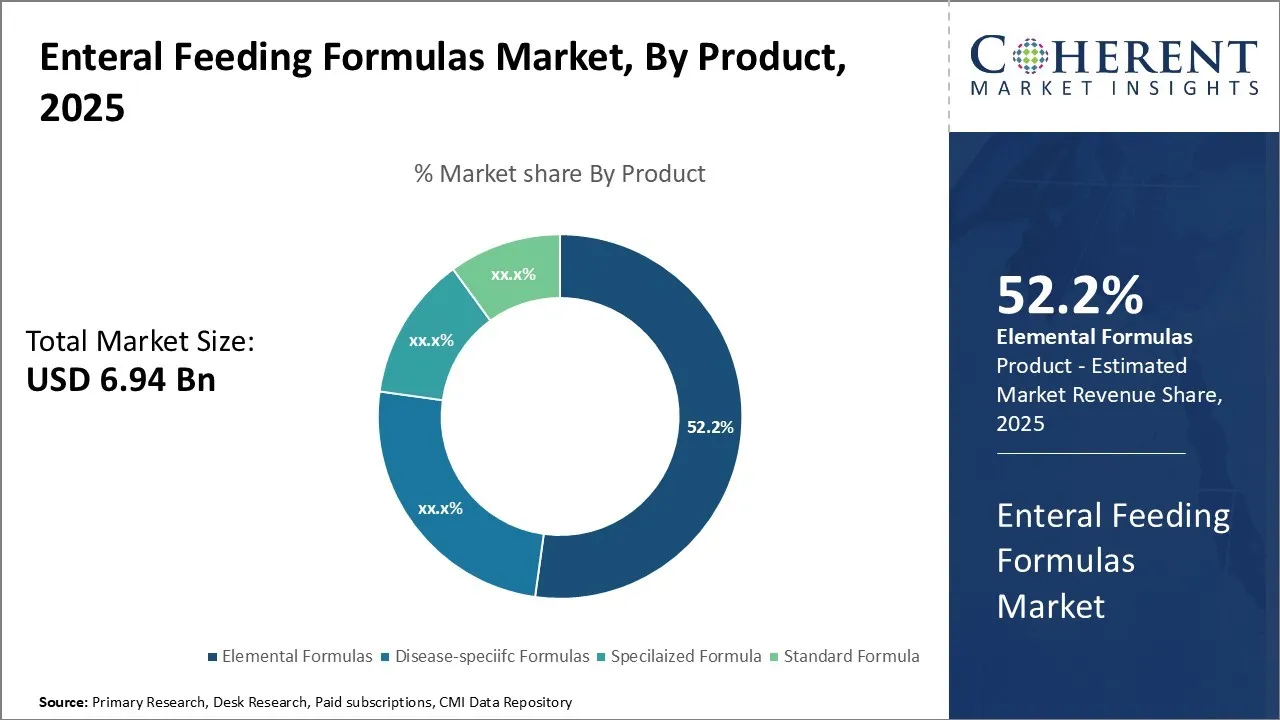
Global Enteral Feeding Formulas Market Insights, By Product
The product type segment is categorized into standard formula, disease-specific formulas, elemental formulas, and specialized formulas. Among these, elemental formulas are projected to dominate the market, accounting for 53.2% of the share in 2026.
This dominance is primarily due to their superior digestibility and suitability for patients with compromised gastrointestinal function. Elemental formulas contain pre-digested nutrients, which are ideal for individuals with malabsorption issues or severe food allergies, making them essential in clinical nutrition protocols for critical care and gastrointestinal disorders.
For instance, the dominance of elemental formulas is supported by their frequent use in managing conditions like Crohn’s disease, where their pre-digested nutrients and low-residue composition help reduce intestinal inflammation and improve nutrient absorption in patients with severe gastrointestinal impairment.
Disease-specific formulas are also gaining traction, driven by the need to provide tailored nutritional support for conditions such as diabetes, renal impairment, and cancer. Their precise nutrient composition enhances disease management and improves patient outcomes. Meanwhile, standard formulas and specialized formulas hold comparatively smaller shares but continue to play vital roles in general nutritional supplementation and targeted therapeutic interventions, respectively.
Global Enteral Feeding Formulas Market – Regional Insights
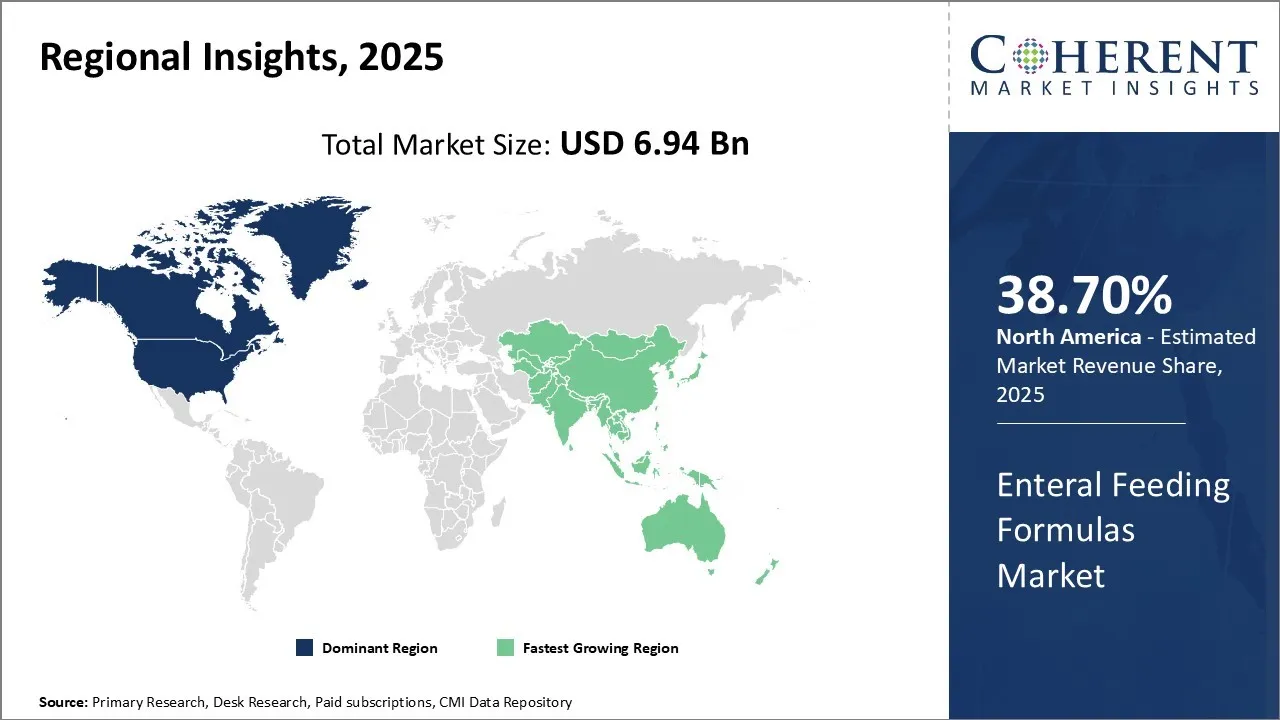
North America Enteral Feeding Formulas Market Analysis and Trends
North America is projected to lead the Enteral Feeding Formulas Market, capturing over 38.70% of the total market share by 2026. This dominance is driven by the region’s sophisticated healthcare infrastructure, widespread clinical acceptance of enteral nutrition, and a rising geriatric population. The U.S. and Canada, with their high prevalence of chronic illnesses and strong hospital networks, play a critical role in market expansion.
Supportive reimbursement frameworks and the presence of major manufacturers further accelerate adoption. Notably, the U.S. had over 46 million individuals aged 65 and above in 2022—a figure expected to reach nearly 90 million by 2050—signaling a growing demand for long-term nutritional support and enteral feeding solutions.
Asia Pacific Enteral Feeding Formulas Market Analysis and Trends
Asia Pacific is emerging as the fastest-growing regional segment within the Enteral Feeding Formulas Market, anticipated to account for over 23.2% of the market share by 2026. Key growth markets include China and India, where increasing healthcare expenditures, expanding aging populations, and a surge in chronic diseases are driving demand. Limited insurance coverage for enteral therapy in some nations has encouraged the uptake of low-cost formulations.
Local manufacturers are leveraging this opportunity by offering affordable, quality alternatives, thereby improving accessibility. Additionally, economic growth across the region is enhancing healthcare delivery and infrastructure, positioning Asia Pacific as a rising hub for both production and global enteral feeding formulas in consumption patterns.
Europe Enteral Feeding Formulas Market Analysis and Trends
Europe is expected to hold around 20.2% of the Enteral Feeding Formulas Market during the forecast period. The market here is shaped by an aging population, comprehensive healthcare systems, and strong regulatory oversight. Ongoing research initiatives, coupled with increased awareness of clinical nutrition, continue to influence product development and adoption. Technological advancements in enteral delivery systems and the growing competition among healthcare providers further support regional growth. Europe's continued focus on patient safety and therapeutic efficacy reinforces its role as a mature and strategically important market for enteral feeding formulas.
Dominating Countries in the Enteral Feeding Formulas Market
United States Enteral Feeding Formulas Market Analysis and Trends
The U.S. is the largest contributor globally, supported by high healthcare spending, widespread clinical acceptance of enteral feeding, and an aging population. Its advanced hospital systems, favorable reimbursement policies, and presence of top-tier manufacturers such as Abbott and Nestlé Health Science ensure continued market leadership.
China Enteral Feeding Formulas Market Analysis and Trends
China represents a rapidly growing market in Asia Pacific, driven by increasing healthcare investments, an expanding elderly population, and local production of cost-effective nutritional products. Government support for domestic healthcare innovation and rising awareness about clinical nutrition contribute to market momentum.
India Enteral Feeding Formulas Market Analysis and Trends
India is emerging as a key growth market due to its large population base, growing burden of non-communicable diseases, and push for affordable healthcare solutions. Initiatives such as Make in India and rising demand in both urban and rural areas are accelerating local manufacturing and market penetration of enteral feeding formulas.
Germany Enteral Feeding Formulas Market Analysis and Trends
Germany leads the European market, with its strong regulatory environment, advanced healthcare infrastructure, and increasing geriatric population. High awareness among healthcare professionals and a preference for disease-specific nutritional management fuel demand for advanced enteral products.
Market Report Scope
Enteral Feeding Formulas Market Report Coverage
| Report Coverage | Details | ||
|---|---|---|---|
| Base Year: | 2025 | Market Size in 2026: | USD 7.61 Bn |
| Historical Data for: | 2020 To 2024 | Forecast Period: | 2026 To 2033 |
| Forecast Period 2026 to 2033 CAGR: | 9.7%2033 Value Projection: | USD 14.56 Bn | |
| Geographies covered: |
| ||
| Segments covered: |
| ||
| Companies covered: | Nestle, VICTUS, Primus Pharmaceuticals, Inc., Meiji Holdings. Co., Ltd., Mead Johnson & Company, LLC, Abbott, Danone S.A, and Fresenius Kabi AG | ||
| Growth Drivers: |
| ||
| Restraints & Challenges: |
| ||
Global Enteral Feeding Formulas Market- Drivers
- Rising incidence of chronic diseases
The rising prevalence of chronic diseases across global populations is a major factor driving growth in the enteral feeding formulas market. Chronic conditions, such as cancer, gastrointestinal disorders, neurological disorders, and others, that hamper natural oral consumption of food are increasingly common. For instance, as per the World Health Organization, the chronic disease burden is expected to reach 57% of the total global disease burden by 2020.
Similarly, the National Cancer Institute estimates that the number of cancer patients worldwide will rise to 27.5 million by 2040 from 19.3 million in 2020. Conditions resulting from chronic diseases often lead to impaired swallowing function, bowel obstruction, or malabsorption issues. In such cases, enteral nutrition through feeding tubes provides nutritional support to help patients meet their daily requirements in an easy-to-digest, pre-packaged form. This helps avoid complications of malnutrition and supports faster recovery.
The ability of enteral formulas to fulfill nutritional needs with minimum effort makes them a preferred option among healthcare providers and patients. With projections of continued rise in chronic ailments, the demand for customized enteral formulas tailored for individual health conditions and lifestyle needs is growing. Furthermore, advancements in formulation technology are also contributing to the market potential. New formulas enriched with probiotics, prebiotics, or pharma nutrients allow addressing multiple health targets through a single solution.
This has boosted uptake across settings from critical care to long-term care. Upcoming areas dominated by geriatric population growth also present major opportunities. With chronic diseases affecting quality of life more than ever before, enteral feeding formulas are increasingly becoming a principal part of treatment pathways. The future outlook remains positive as formulation innovations and demographic shifts maintain high dependence on nutritional support through tube feeding.
- Changes in healthcare landscape and reimbursement policies
Changes in the healthcare landscape along with evolving reimbursement policies are major factors driving the growth of the enteral feeding formulas market. Traditionally, tube feeding was mainly administered in hospitals for short-term illnesses or recoveries. However, with the focus shifting towards home healthcare and reducing hospital readmissions, there has been a rise in long-term home enteral nutrition over the past decade.
This trend is encouraging patients requiring long-term enteral nutrition to shift from hospitals to homecare setting. Home enteral feeding offers several advantages like improved quality of life, reduced healthcare costs, and risk of hospital acquired infections. It allows patients to receive specialized nutrition in a more convenient and comfortable environment.
This shift towards home healthcare is increasing the demand for easy to administer and portable enteral feeding products like tube feeding formula in liquid or powder form and portable pumps.
- Increasing preference for homecare services
With increase in chronic illness and preference for homecare, the demand for enteral feeding formulas has increased significantly. More patients are now preferring homecare over institutional care as it provides comfort of staying with family and flexible administration of nutrition.
Chronic conditions like cancer and gastrointestinal disorders often require artificial feeding support through enteral tubes. Home enteral nutrition helps in improving the quality of life for millions of people with swallowing difficulties or inability to eat independently. Families also find it economically viable compared to hospital stays. Many government programs are promoting home healthcare as it reduces burden on limited hospital resources.
As per data from the World Health Organization, chronic diseases accounted for 71% of global deaths in 2019. These long-term conditions require long term nutritional support. With growing geriatric population globally, the incidence of chronic illness is projected to rise substantially in the coming years.
As per United Nations population projections, the number of people aged 60 years or over is estimated to more than double, from 900 million globally in 2015 to about 2.10 billion in 2050. The rise in aging population will further propel the demand for home enteral tube feeding products.
Global Enteral Feeding Formulas Market- Opportunities
- Emerging markets in developing countries
Emerging markets in developing countries present a great opportunity for growth in the enteral feeding formulas market. As economies in regions like Southeast Asia, South Asia, Latin America, and Africa continue to develop and incomes rise, more people will have access to medical treatment and nutrition support. This increasing demand for quality healthcare will directly boost the enteral feeding formulas market.
- Growing demand for organic and natural enteral formulas
The growing demand for organic and natural enteral formulas presents a major opportunity in the enteral feeding formulas market. In recent years, there has been a strong shift in consumer preference towards organic and natural products due to rising health consciousness. As people are becoming more aware of the synthetic ingredients and chemicals present in traditional formulas, they are looking for cleaner options that are free from artificial colors, flavors and preservatives.
Global Enteral Feeding Formulas Market- Trends
- Customized formulae for specific clinical conditions
The demand for customized enteral feeding formulas tailored to specific clinical conditions is gaining significant traction in the market. With advancements in medical research, customized formulas are being formulated to address the unique nutritional needs of patients with complex diagnoses. This trend allows for a more tailored nutritional therapy compared to generic formulas.
As per the National Health and Nutrition Examination Survey conducted by the CDC between 2015 and 2020, approximately 13% of American adults suffer from conditions requiring specialized enteral nutrition such as diabetes, cancer, renal disease, and chronic lung disorders.
- Rise in the demand for disease-specific enteral nutrition
Disease-specific enteral formulas allow for individually tailored macronutrient and micronutrient content to optimize clinical outcomes for patients. For example, diabetes-specific formulas contain regulated carbohydrate levels and fiber to help manage blood sugar.
Formulas for cancer and gastrointestinal diseases focus on easing symptoms like diarrhea, maintaining weight, and muscle mass during treatment. The added health benefits of tailored nutrition are boosting compliance and willingness to pay premium prices compared to general formulas.
Analyst’s Viewpoint
- The global enteral feeding formulas market is experiencing strong growth, primarily due to the rising elderly population. Aging individuals often face swallowing difficulties and chronic illnesses that necessitate nutritional support.
- Increasing cases of neurological disorders such as stroke, Parkinson's disease, and dementia are further fueling the demand for enteral feeding solutions tailored to specific conditions.
- Greater awareness among healthcare professionals regarding the benefits of enteral nutrition is driving adoption. Additionally, global improvements in healthcare infrastructure are enhancing accessibility to these products.
- However, high product costs remain a barrier, particularly in price-sensitive regions. This limits broader usage and slows growth in some areas.
- Strict regulatory standards present further challenges, making it difficult for new players to enter the market and slowing down product innovation.
- Complex reimbursement policies across countries add another layer of difficulty, hindering consistent market penetration.
- Despite these challenges, there are promising opportunities in the development of condition-specific formulas enabled by advancements in nutritional science and technology.
- The expansion of home healthcare services offers significant potential, as more patients can now receive enteral nutrition in a comfortable, home-based environment.
- North America currently holds the largest market share, thanks to its advanced healthcare infrastructure and high healthcare spending.
- Asia-Pacific is emerging as the fastest-growing region, supported by rising disposable incomes, growing healthcare awareness, and improved medical infrastructure in countries like India and China.
Global Enteral Feeding Formulas Market- Recent Developments
- On September 28, 2023, Cardinal Health, a U.S.-based multinational health care services company, announced the Kangaroo OMNI Enteral Feeding Pump in the US. This innovative pump is designed to offer more options for enteral feeding patients, catering to their personalized needs throughout the enteral feeding journey. This launch signifies Cardinal Health's commitment to enhancing the options available for patients undergoing enteral feeding, providing a more tailored and flexible approach to their medical care.
- On September 18, 2023, Vonco Products LLC, a prominent risk-free plastic and packaging manufacturer, reported that the U.S. Food and Drug Administration (FDA) has granted clearance for EnteraLoc Flow as an over-the-counter (OTC) direct-connect feeding solution for enteral patients. This regulatory approval reflects a significant milestone for Vonco Products, enabling broader accessibility to EnteraLoc Flow and enhancing options for enteral patients seeking feeding solutions.
- In May 2022, Abbott, a U.S.-based multinational medical devices and health care company, announced that the U.S. District Court for the Western District of Michigan has modified the recent consent decree, enabling the release of restricted quantities of its EleCare specialty amino acid-based formulas. This decision follows the recall of certain powder infant formulas from Abbott's Sturgis, Michigan, U.S., facility on February 17, 2022. The amendment allows for the distribution of EleCare products that were temporarily withheld, addressing concerns related to the recal
Market Segmentation
- By Product (Revenue, USD Bn, 2021 - 2033)
- Standard Formula
- Disease-specific Formulas
- Elemental Formulas
- Specialized Formulas
- By Flow Type (Revenue, USD Bn, 2021 - 2033)
- Intermittent Feeding Flow
- Continuous Feeding Flow
- By Stage (Revenue, USD Bn, 2021 - 2033)
- Adults
- Pediatrics
- By Indication (Revenue, USD Bn, 2021 - 2033)
- Alzheimer’s
- Nutrition Deficiency
- Cancer Care
- Diabetes
- Chronic Kidney Diseases
- Orphan Diseases
- Dysphagia
- Pain Management
- Others (Malabsorption/GI Disorder/Diarrhea, etc.)
- By End Use (Revenue, USD Bn, 2021 - 2033)
- Hospitals
- Cardiology
- Neurology
- Critical Care (ICU)
- Oncology
- Others
- Home Care
- Hospitals
- By Sales Channel (Revenue, USD Bn, 2021 - 2033)
- Online Sales
- Retail Sales
- Institutional Sales
- By Region (Revenue, USD Bn, 2021 - 2033)
- North America
- U.S.
- Canada
- Latin America
- Brazil
- Argentina
- Mexico
- Rest of Latin America
- Europe
- Germany
- U.K.
- Spain
- France
- Italy
- Russia
- Rest of Europe
- Asia Pacific
- China
- India
- Japan
- Australia
- South Korea
- ASEAN
- Rest of Asia Pacific
- Middle East
- GCC Countries
- Israel
- Rest of Middle East
- Africa
- South Africa
- North Africa
- Central Africa
- North America
- Key Companies
- Nestle
- VICTUS
- Primus Pharmaceuticals, Inc.
- Meiji Holdings. Co., Ltd.
- Mead Johnson & Company, LLC
- Abbott
- Danone S.A
- Fresenius Kabi AG
Sources
Primary Research Interviews
- Healthcare providers and nutritionists specializing in enteral nutrition
- Key executives from enteral feeding formula manufacturers
- Hospital procurement managers and clinical dietitians
- Regulatory affairs specialists in medical nutrition industry
- Others
Databases
- IBISWorld Industry Research Database
- Euromonitor International Health and Nutrition Database
- Others
Magazines
- Nutrition in Clinical Practice Magazine
- Clinical Nutrition Insight Magazine
- Medical Nutrition Industry Magazine
- Enteral Feeding Today Magazine
- Others
Journals
- Journal of Parenteral and Enteral Nutrition
- Clinical Nutrition Journal
- Nutrition in Clinical Practice Journal
- Others
Newspapers
- Healthcare Finance News
- Modern Healthcare
- Medical Device Daily
- Nutrition Business Journal
- Others
Associations
- American Society for Parenteral and Enteral Nutrition (ASPEN)
- European Society for Clinical Nutrition and Metabolism (ESPEN)
- International Association of Healthcare Central Service Materiel Management (IAHCSMM)
- Academy of Nutrition and Dietetics
- Others
Public Domain Sources
- FDA (Food and Drug Administration) regulatory filings and approvals
- WHO (World Health Organization) nutrition guidelines and reports
- National Institute of Health (NIH) clinical studies database
- European Medicines Agency (EMA) product information
- Others
Proprietary Elements
- CMI Data Analytics Tool
- Proprietary CMI Existing Repository of information for last 8 year
*Definition: Enteral feeding formulas, also known as enteral nutrition or tube feeding formulas, are specialized liquid nutritional products designed for individuals who are unable to consume food orally or have difficulty in swallowing. These formulas provide essential nutrients such as proteins, carbohydrates, fats, vitamins, and minerals to meet the nutritional needs of the body. Enteral feeding is administered through a feeding tube that can be inserted into the stomach, duodenum, or jejunum, depending on the patient's condition and medical requirements. There are various types of enteral feeding formulas, and they can be categorized based on their composition and intended use.
Get access to 250+ pages report
Every segment, forecast, competitor profile and data table behind the analysis above — available for instant download.
- ESOMAR Member
- ISO 9001:2015 Certified
- D-U-N-S Registered
- GDPR & CCPA Compliant
Missing comfort of reading report in your local language? Find your preferred language:
Transform your Strategy with Exclusive Trending Reports
Frequently Asked Questions
The Enteral Feeding Formulas Market size is estimated to be valued at USD 7.61 Bn in 2026, and is expected to reach USD 14.56 Bn by 2033.
The CAGR of the Enteral Feeding Formulas Industry is projected to be 9.7% from 2026 to 2033.
Rising incidence of chronic diseases and increasing preference for homecare services are the major factor driving the growth of the global market.
Risk of infection and availability of alternative nutrition therapies are the major factor driving the growth of global market.
In terms of product, Elemental Formulas is estimated to dominate the market revenue share 2026.
Johnson Control, Toyota Boshoku Corporation, Lear Corporation, Toyoda Gosei Co., Ltd., Faurecia SA, Continental AG, Magna International, Delphi, Adient plc., Robert Bosch GmbH, Yanfeng (China), Lear Corporation, Antolin, Polydesign Systems, and Machino Plastics Limited are the major players.
North America is expected to lead the global Market.