

Global Hydrogel Market Size and Forecast — 2026-2033
Global hydrogel market is estimated to be valued at USD 33.92 Bn in 2026 and is expected to reach USD 54.47 Bn by 2033, growing at a compound annual growth rate (CAGR) of 7.0% from 2026 to 2033. Hydrogels have widespread application in various areas such as wound care, implantable devices and drug delivery systems. Their ability to retain water content similar to natural tissues increases their demand across sectors.
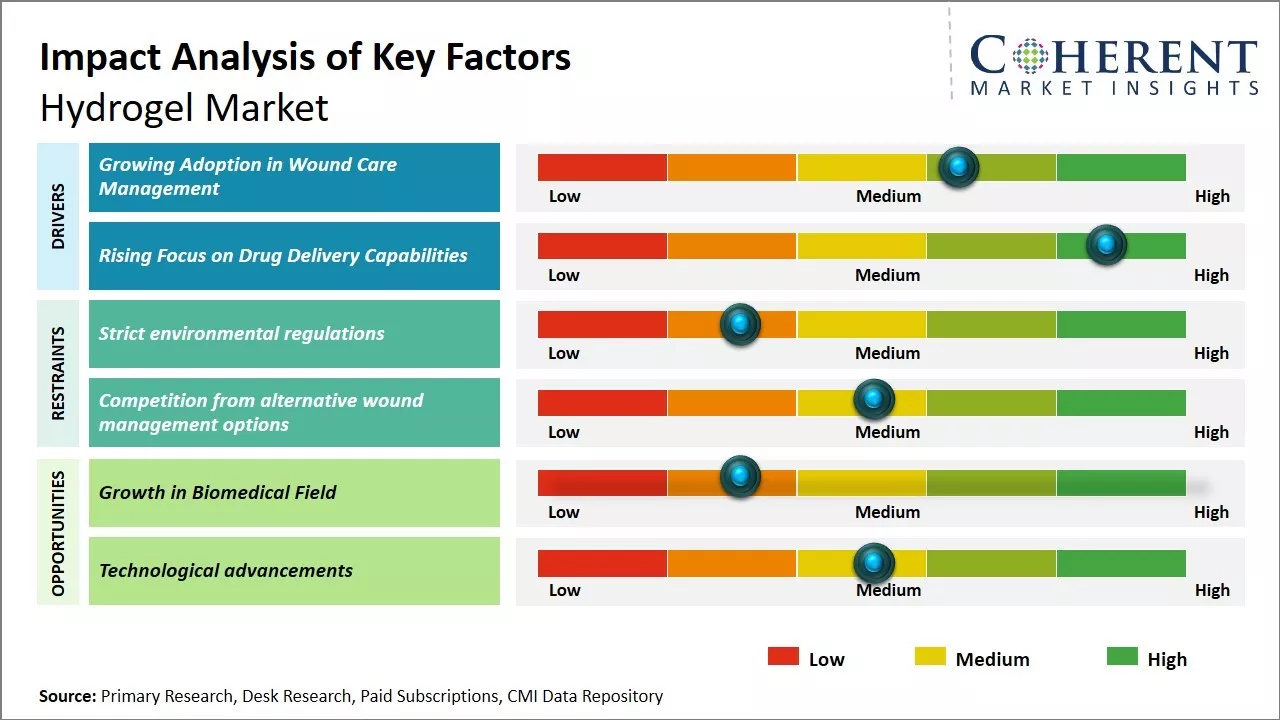
Global hydrogel market trend includes rising demand from the healthcare industry. With surging preference for advanced wound care solutions coupled with innovations in burn and ulcer treatment, hydrogels cater to new growth opportunities. Their biocompatibility makes them suitable for use in tissue engineering and regenerative medicine as well. Research focused on expanding hydrogel applications can drive the market growth in the near future.
Growing Adoption in Wound Care Management
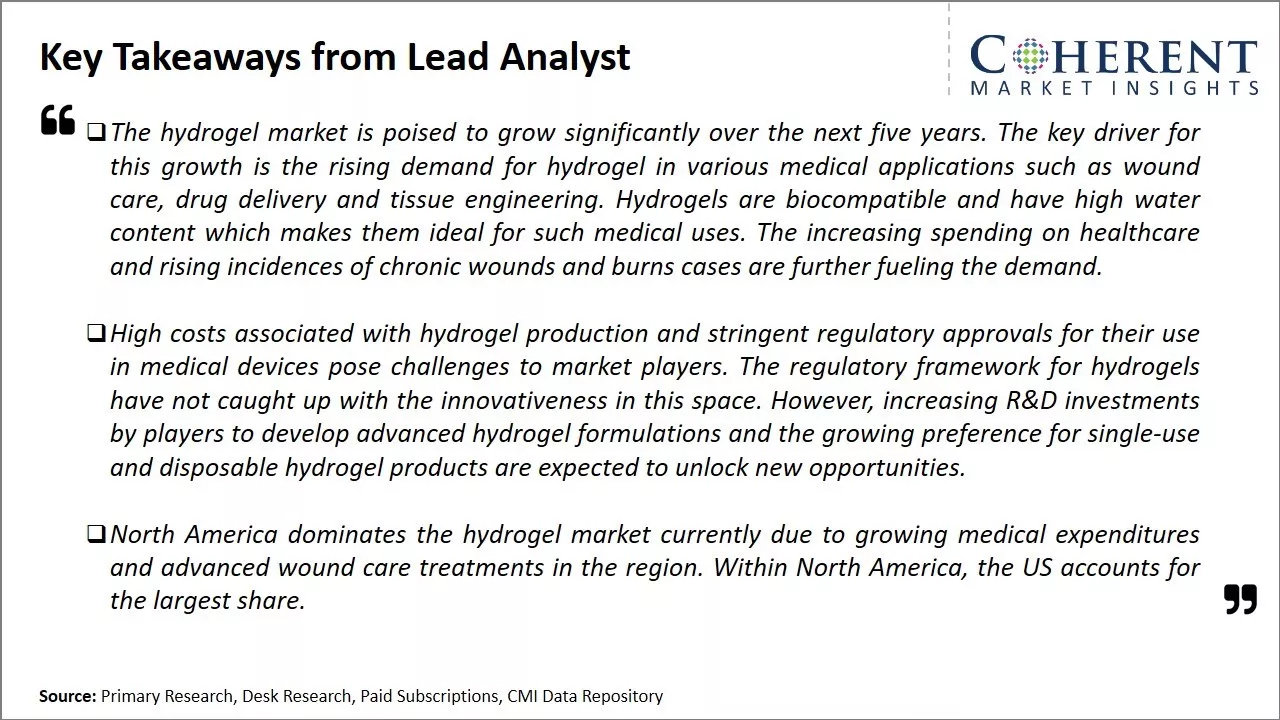
Global hydrogel market is expected to witness significant growth due to increasing adoption of hydrogels in wound care management. For instance, according to the data published by National Institute of Health in 2021, chronic wounds impact the quality of life of nearly 2.5% of the total population in the U.S., and about 8.2 million Medicare beneficiaries suffer from chronic, nonhealing wounds. Hydrogels are playing a critical role in wound healing procedures due to their ability to absorb fluid, maintain a moist environment, and mimic natural tissue. With rising incidences of chronic wounds such as diabetic foot ulcers and pressure ulcers, primarily due to the growing geriatric population and increasing prevalence of lifestyle diseases, the demand for advanced wound care products is surging. Hydrogels have emerged as an effective solution due to their ability to promote autolytic debridement of necrotic tissues from wounds, accelerate re-epithelialisation and granulation of tissues. Their biocompatible and non-irritant nature enables painless and gentle removal of dead tissues. This ensures faster wound healing with reduced risk of infection and scarring compared to other options like surgical debridement.
Insights, By Raw Material
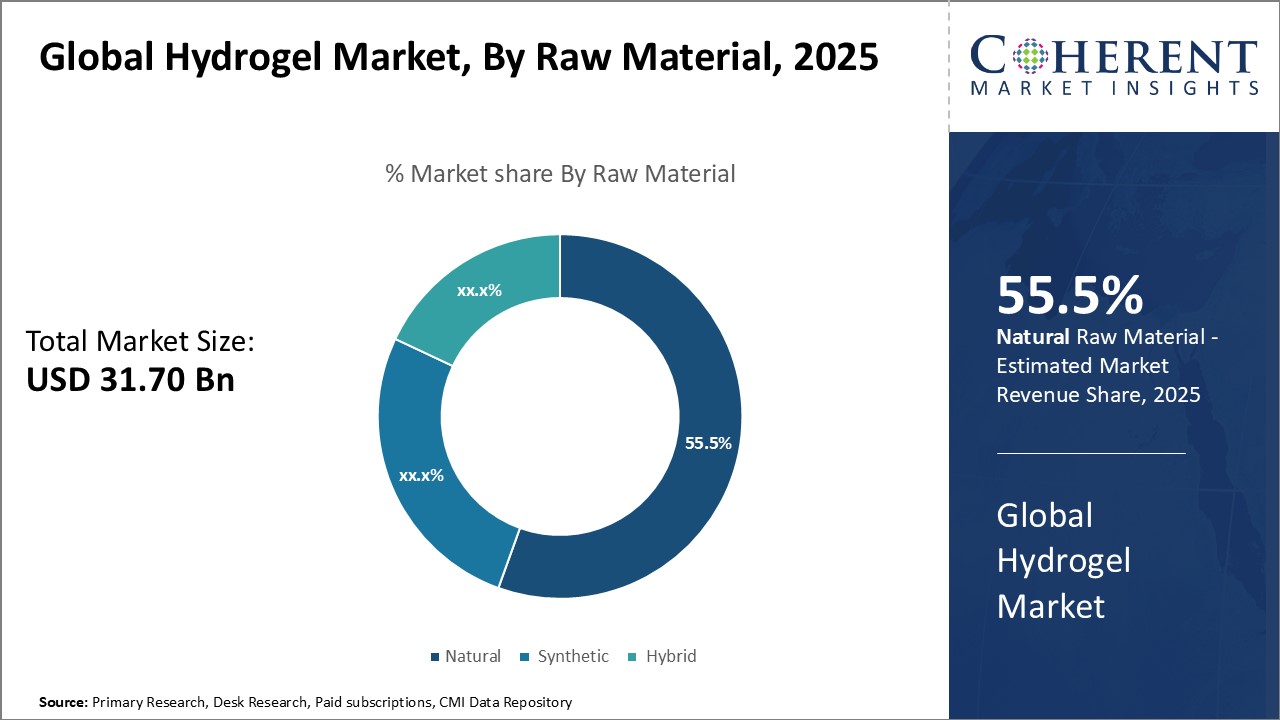
Insights, By Raw Material: Accessibility and Versatility of raw material Drive Synthetic Raw Material Dominance
In terms of raw material, the synthetic segment contributes the 56.5% share of the hydrogel market owing to its accessibility and versatility. Synthetic hydrogels can be easily synthesized from widely available chemicals through well-established polymerization reactions. This allows for mass production and consistent supply to meet the bulk demands of various end-use industries. In contrast, natural hydrogels rely on scarce biological sources that have seasonal and regional availability issues. The chemical composition of synthetic hydrogels can also be precisely tailored during synthesis for desired properties like degradation rate, water retention, or mechanical strength. This provides formulation engineers high design flexibility to develop hydrogels optimized for different applications. As a result, synthetic hydrogels find wide use where performance, reliability and cost-effectiveness are priority over biocompatibility. Areas like agriculture, construction, and packaging benefit significantly from the tailorability and mass-production friendliness of synthetic hydrogels. The personal care and biomedical sectors also leverage synthetic hydrogels for various dermal patches, wound dressings and drug delivery systems despite their non-biological origin. For instance, according to data published by The International Trade Administration, U.S. Department of Commerce, in 2022, the beauty and personal care product market in Indonesia is a large and growing market that every U.S. exporter should consider. Revenues are projected to reach US$ 7.5 billion in 2021 and grow at a 6.5% compound annual growth rate through 2025 Thus, the process advantage and application versatility of synthetic hydrogels have enabled them to dominate the raw material landscape of this market.
Insights, By Composition
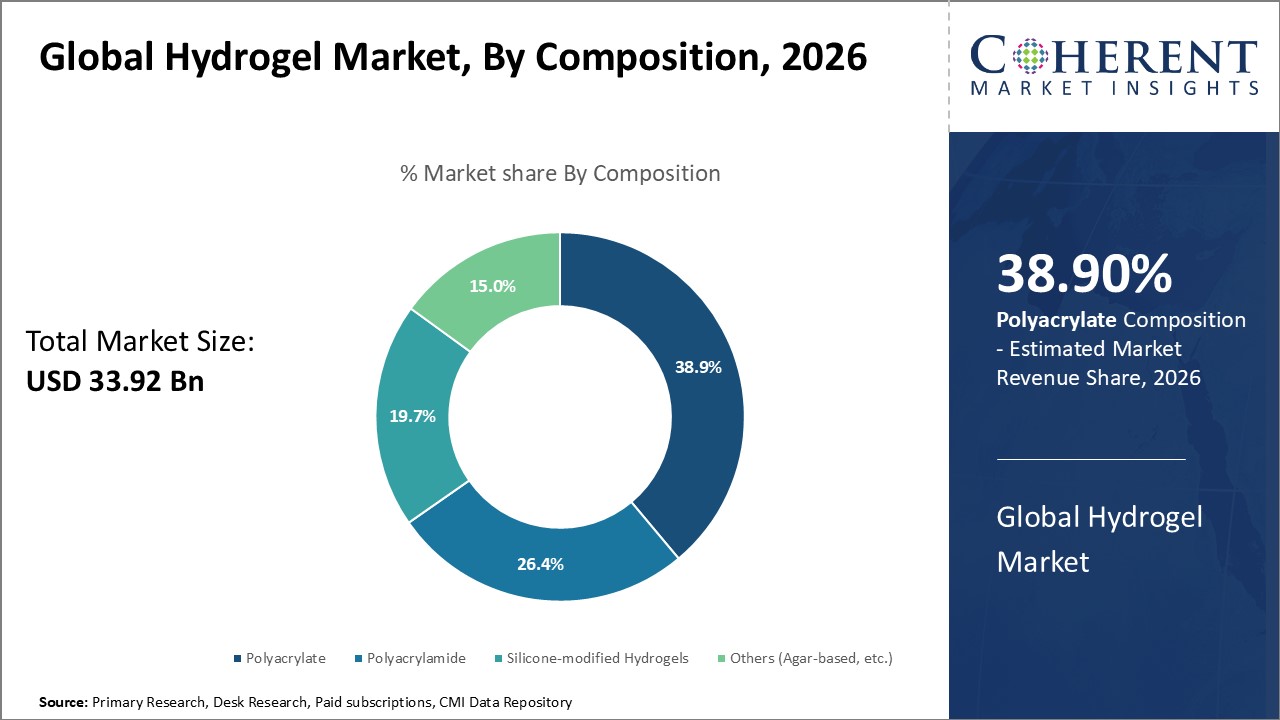
Insights, By Composition: Superior Water Absorption Capacity Boosts Polyacrylate Composition Share
In terms of composition, the polyacrylate segment contributes the 38.9% share due to its unparalleled water absorption capacity. Polyacrylate hydrogels can absorb hundreds of times their dry weight in water via osmosis. This is attributed to highly hydrophilic acrylate functional groups along the polymer backbone. The absorbed water becomes tightly bound yet mobile within the cross-linked matrix. As a result, polyacrylate hydrogels find extensive use as super absorbents in hygiene products like diapers, sanitary napkins and adult incontinence pads where rapid and high water retention is critical. These also excel as soil conditioners and water management agents in agriculture and horticulture due to their exceptional moisture holding ability. Unlike other compositions, polyacrylate hydrogels maintain their structural integrity even when fully saturated with fluid. This leak-proof characteristic further boosts their popularity in absorbent core construction. Ongoing research to enhance the absorption kinetics and swelling pressure of polyacrylate networks will potentially expand their presence in biomedical and industrial domains as well. Hence, the unrivaled water handling characteristics of polyacrylate confer it dominance in the hydrogel composition segment.
Insights, By Form
Insights, By Form: In terms of Form, Semi Crystalline Hydrogels contributes the highest share of the market owning to their tunable properties
In terms of Form, Semi Crystalline Hydrogels contributes the 42.5% share of the market owning to their tunable properties. Semi-crystalline hydrogels have a distinct advantage over amorphous hydrogels due to their ability to finely tune material properties for specific applications. The semi-crystalline regions within these hydrogel networks provide enhanced mechanical strength and elasticity compared to amorphous structures. This allows for development of hydrogels that can resist mechanical stresses both during use and manufacturing. A key driver of the semi-crystalline hydrogel segment is their suitability for wound care products. The material properties can be optimized to mimic soft tissue and promote healing. Crystalline domains provide strength needed for handling and application while still maintaining good water absorption. This facilitates moisture management at the wound site. Leading producers are focusing on refining semi-crystalline compositions to accelerate healing time for chronic and acute wounds.
Insights, By Application
Insights, By Application: Driving Growth in the Wound Care Application Segment
Wound care commands the largest share of the hydrogel market due to the critical need for effective wound treatment amid rising prevalence of chronic conditions. Hydrogels demonstrate performance advantages over traditional dressings in optimizing the moisture environment and protecting wounds from external contaminants or friction. A major factor propelling the wound care segment is the aging global population vulnerable to cuts, ulcers and postoperative incisions. Age-related impairments in healing ability increase medical costs associated with managing non-mending wounds. Hydrogel dressings successfully regain moisture balance and nutrient levels to support natural healing mechanisms compromised in older adults.
Regional Insights
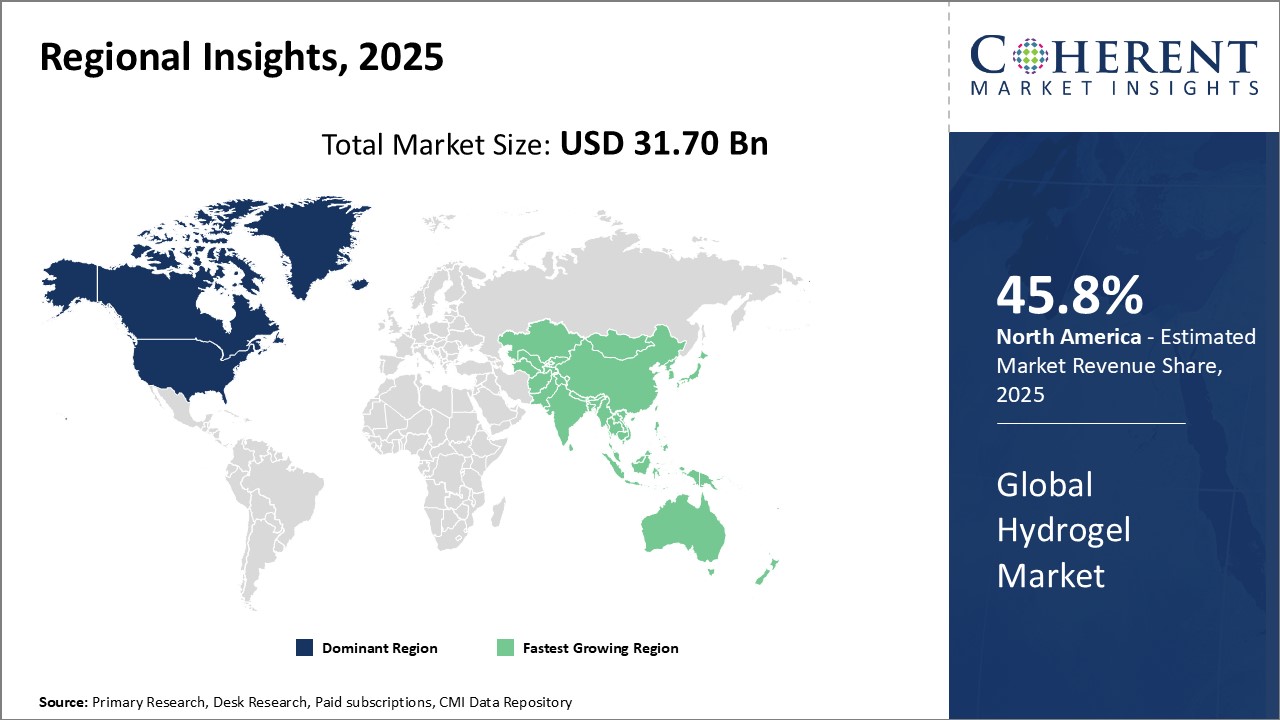
North America has established itself as the dominant region in the global hydrogel market with 45.8% share. With the presence of several large medical device manufacturers and research institutes, the U.S. and Canada account for the majority of the market share. Many advanced wound care products featuring hydrogel technologies originated from research conducted in universities and hospitals in this region. North American companies have established a stronghold in markets for consumer products using hydrogels such as baby diapers, adult incontinence products and contact lenses.
Asia Pacific region has seen tremendous growth and is emerging as the fastest growing market for hydrogels. Countries like China, India, Japan and South Korea are rapidly expanding their healthcare infrastructures and witnessing increased disposable incomes. This boosts consumption of advanced woundcare and medical devices. At the same time, these nations offer attractive production environments due to lower costs of setting up manufacturing facilities and an abundant skilled workforce. Several large North American and European companies have established production bases in Asia to cater to the growing local demand as well as export to other markets.
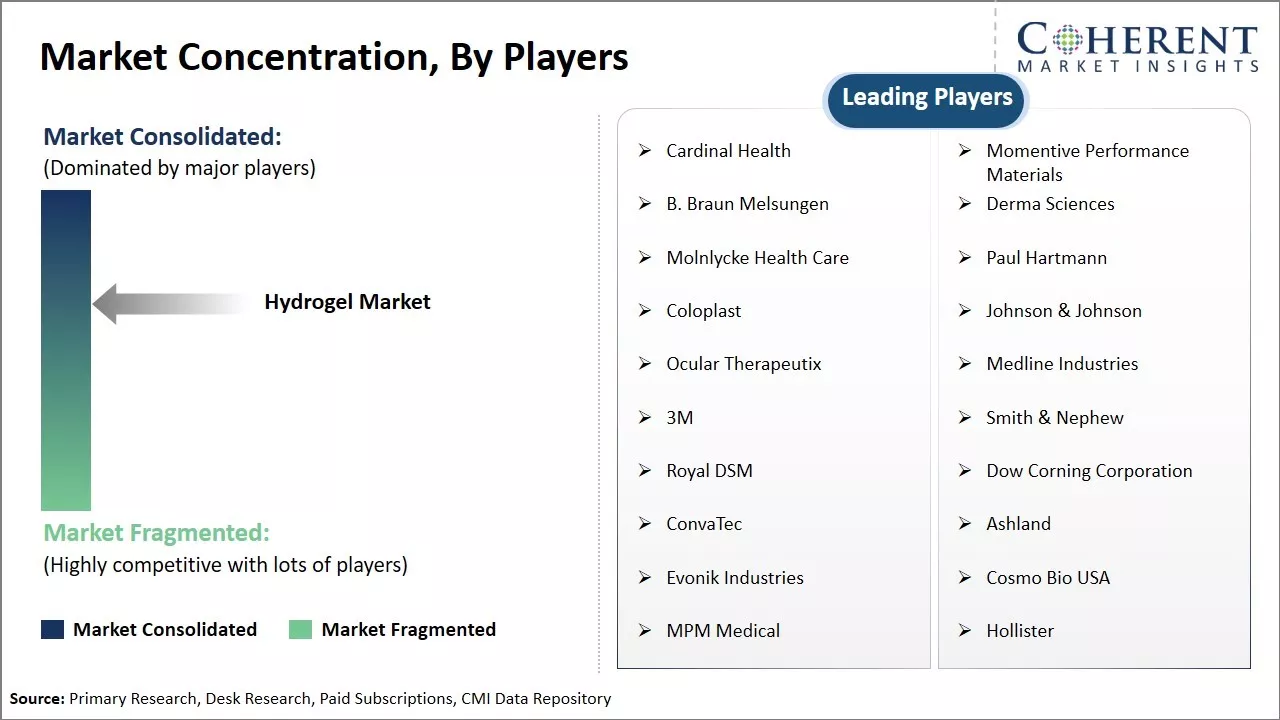
Market Players, Key Development, and Competitive Intelligence
Rising Focus on Drug Delivery Capabilities
Growing focus on their capabilities for controlled drug delivery and release. Hydrogels offer advantages over other drug delivery platforms through their high water content, tunable physical properties, flexibility in design and ease of surface functionalization. These attributes enable encapsulation of a wide range of molecules and precisely modulating the diffusion rates. This makes hydrogels an effective vehicle for localized and sustained delivery of antimicrobials, growth factors and other bioactive molecules to enhance wound healing. Their ability to emulate the natural extracellular matrix also supports cellular activities like proliferation and migration.
- Current Industry Events of 2026
- Market Size Estimation
- Regional Breakdown
- Competitive Landscape
- Customer Intelligence
- Segmental Analysis
- Pricing Analysis
- Key Market Drivers, Challenges & Future Trends
- Customized Insights Section
Market Report Scope
Global Hydrogel Market Report Coverage
| Report Coverage | Details | ||
|---|---|---|---|
| Base Year: | 2025 | Market Size in 2026: | USD 33.92 Bn |
| Historical Data for: | 2020 To 2024 | Forecast Period: | 2026 To 2033 |
| Forecast Period 2026 to 2033 CAGR: | 7.0% | 2033 Value Projection: | USD 54.47 Bn |
| Geographies covered: |
| ||
| Segments covered: |
| ||
| Companies covered: | Cardinal Health, Momentive Performance Materials, B. Braun Melsungen, Derma Sciences, Molnlycke Health Care, Paul Hartmann, Coloplast, Johnson & Johnson, Ocular Therapeutix, Medline Industries, 3M, Smith & Nephew , Royal DSM, Dow Corning Corporation , ConvaTec, Ashland , Evonik Industries , Cosmo Bio USA , MPM Medical , Hollister | ||
| Growth Drivers: |
| ||
| Restraints & Challenges: |
| ||
Analyst Opinion (Expert Opinion)
Market Challenges: Strict environmental regulations
Global hydrogel market currently faces several key challenges. Manufacturers struggle with developing hydrogels that can withstand various environmental conditions over long periods of time without degradation. Hydrogels also need to be designed for optimized drug release profiles. Producing hydrogels at scale requires complex manufacturing processes that keep costs high. These economic barriers limit the ability to commercialize novel hydrogel formulations.
Market Opportunities: Growth in Biomedical Field
Global hydrogel market also presents many promising opportunities. The biomedical field continues pushing for advanced wound care solutions like wound dressings and burn treatment aids made from hydrogels. Growing elder populations demand more effective drug delivery methods for chronic conditions such as diabetes. Consumer products seek moisture-locking, time-release hydrogels. Expanding research further explores bioprinting human tissues and developing smarter sensors using hydrogels.
Speak to the analyst
Want personalized insights?
Take the findings above to one of our principal consultants, or have the report rebuilt around the segments, geographies and competitors you actually track.
Market Segmentation
- Raw Material Insights (Revenue, USD Bn, 2021 - 2033)
- Natural
- Synthetic
- Hybrid
- Composition Insights (Revenue, USD Bn, 2021 - 2033)
- Polyacrylate
- Polyacrylamide
- Silicone-modified Hydrogels
- Others (Agar-based, etc.)
- Form Insights (Revenue, USD Bn, 2021 - 2033)
- Amorphous Hydrogels
- Semi Crystalline Hydrogels
- Application Insights (Revenue, USD Bn, 2021 - 2033)
- Wound Care
- Contact Lens
- Drug Delivery
- Agriculture
- Personal Care & Hygiene
- Others (Tissue Engineering, Dental, and Research & Forensic)
- Regional Insights (Revenue, USD Bn, 2021 - 2033)
- North America
- U.S.
- Canada
- Latin America
- Brazil
- Argentina
- Mexico
- Rest of Latin America
- Europe
- Germany
- U.K.
- Spain
- France
- Italy
- Russia
- Rest of Europe
- Asia Pacific
- China
- India
- Japan
- Australia
- South Korea
- ASEAN
- Rest of Asia Pacific
- Middle East
- GCC Countries
- Israel
- Rest of Middle East
- Africa
- South Africa
- North Africa
- Central Africa
- North America
- Key Players Insights
- Cardinal Health
- Momentive Performance Materials
- B. Braun Melsungen
- Derma Sciences
- Molnlycke Health Care
- Paul Hartmann
- Coloplast
- Johnson & Johnson
- Ocular Therapeutix
- Medline Industries
- 3M
- Smith & Nephew
- Royal DSM
- Dow Corning Corporation
- ConvaTec
- Ashland
- Evonik Industries
- Cosmo Bio USA
- MPM Medical
- Hollister
Get access to 250+ pages report
Every segment, forecast, competitor profile and data table behind the analysis above — available for instant download.
- ESOMAR Member
- ISO 9001:2015 Certified
- D-U-N-S Registered
- GDPR & CCPA Compliant
Missing comfort of reading report in your local language? Find your preferred language:
Transform your Strategy with Exclusive Trending Reports
Frequently Asked Questions
The Global Hydrogel Market is estimated to be valued at USD 33.92 Bn in 2026, and is expected to reach USD 54.47 Bn by 2033.
The CAGR of the Global Hydrogel Market is projected to be 7.0% from 2026 to 2033.
Growing adoption in wound care management and rising focus on drug delivery capabilities are the major factor driving the growth of global hydrogel market growth.
Strict environmental regulations and biocompatibility issues are the major factor hampering the growth of global hydrogel market growth.
In terms of raw material, natural, estimated to dominate the market revenue share 2026.
Cardinal Health, Momentive Performance Materials, B. Braun Melsungen, Derma Sciences, Molnlycke Health Care, Paul Hartmann, Coloplast, Johnson & Johnson, Ocular Therapeutix, Medline Industries, 3M, Smith & Nephew , Royal DSM, Dow Corning Corporation , ConvaTec, Ashland , Evonik Industries , Cosmo Bio USA , MPM Medical , Hollister are the major players.
North America is expected to lead the global hydrogel Market.