

Global Heat Treatment Market Size and Forecast – 2026-2033
The global heat treatment market is estimated to be valued at USD 112.56 Bn in 2026 and is expected to reach USD 152.16 Bn by 2033, exhibiting a compound annual growth rate (CAGR) of 4.4% from 2026 to 2033.
Key Takeaways of the Global Heat Treatment Market
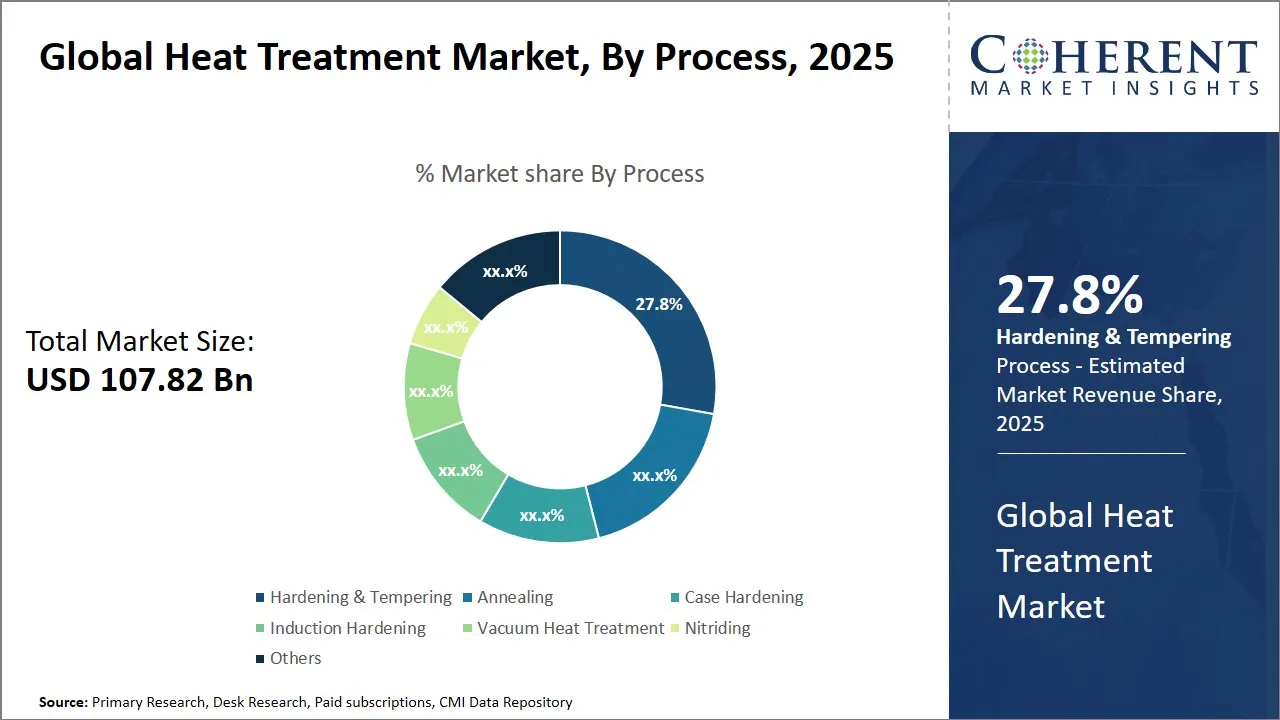
- The hardening & tempering segment leads the market holding an estimated share of 28.8 % in 2026.
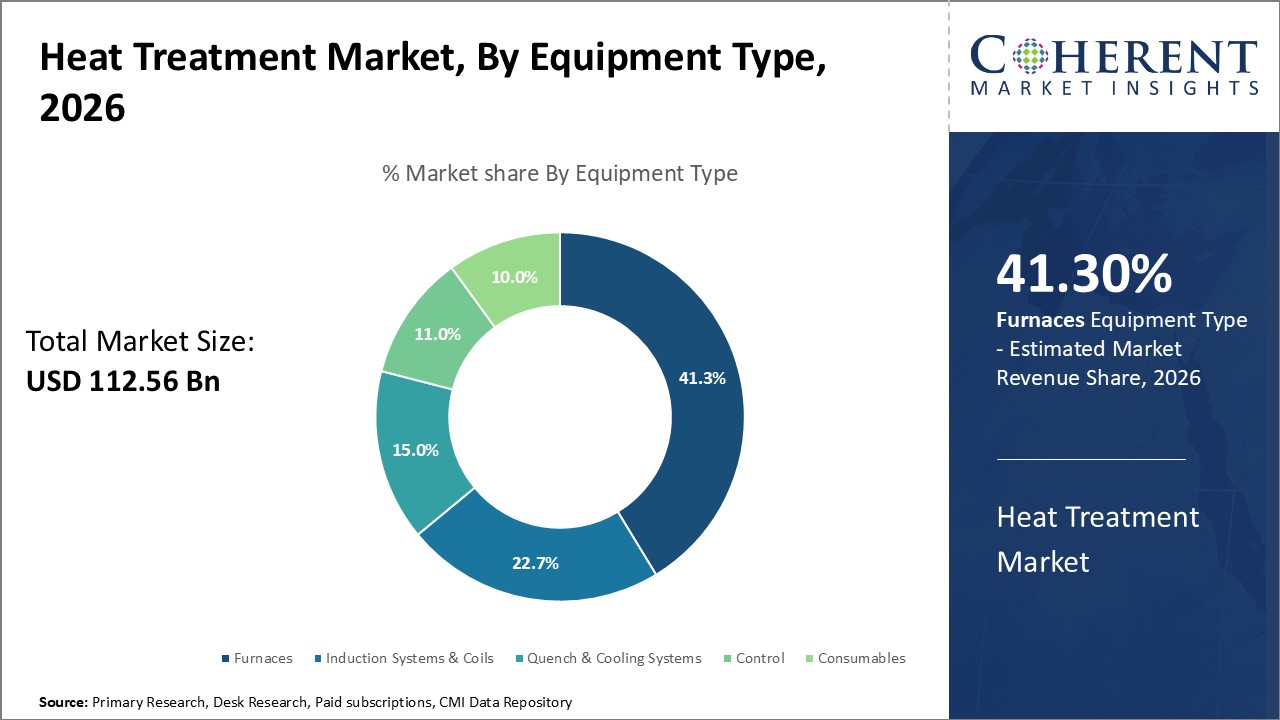
- The furnaces segment is expected to capture 41.3 % share in 2026.
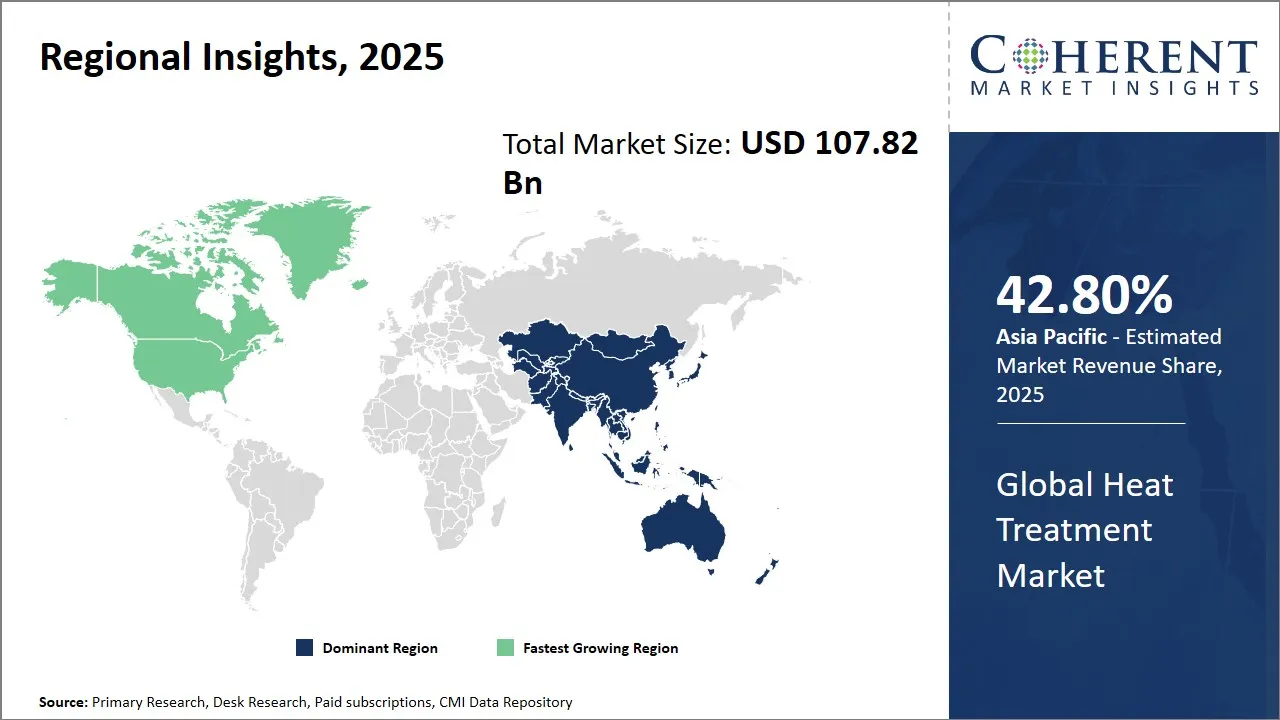
- Asia Pacific is estimated to lead the market with a share of 42.8 % in 2026.
- North America, holding an estimated share of 22.6 % in 2026, is projected to be the fastest growing region.
Market Overview
Market trends indicate a significant shift towards advanced, energy-efficient heat treatment technologies, integrating automation and digital monitoring systems to optimize process control and reduce operational costs. Additionally, growing emphasis on sustainability and environmental regulations is propelling the adoption of eco-friendly methods, such as vacuum and controlled atmosphere heat treatment, further shaping the market dynamics and encouraging innovation among key players.
Current Events and Its Impact
Current Events | Description and its Impact |
Energy-efficiency & Emissions Regulations |
|
Automotive Electrification Surge in Asia Pacific |
|
Raw-material & Energy Price Volatility |
|
Segmental Insights
- Current Industry Events of 2026
- Market Size Estimation
- Regional Breakdown
- Competitive Landscape
- Customer Intelligence
- Segmental Analysis
- Pricing Analysis
- Key Market Drivers, Challenges & Future Trends
- Customized Insights Section
Global Heat Treatment Market Insights, by Process – Hardening & Tempering Leads Owing to its Critical Role in Enhancing Material Performance and Manufacturing Efficiency
The hardening & tempering segment is projected to account for 28.8% share in 2026. Hardening involves heating steel or alloy to its austenitizing temperature followed by rapid quenching—commonly in water, oil, or polymer solutions—to increase hardness and tensile strength. Tempering is subsequently applied, reheating the hardened material to a lower temperature and cooling it at a controlled rate to relieve internal stresses, improve toughness, and reduce brittleness created during quenching. A key driver for this segment is its critical application in automotive and transportation sectors, where gears, crankshafts, axles, and transmission components require exceptional surface hardness to withstand heavy loads and continuous friction.
The rapid expansion of electric vehicle production further amplifies the demand, as drivetrain components and precision shafts must deliver consistent performance under high torque conditions. Similarly, aerospace and defense manufacturers rely on hardening and tempering to meet strict mechanical specifications for landing gear, turbine shafts, and structural fasteners, ensuring resistance to extreme operational environments. Another growth factor lies in industrial machinery, tooling, and energy equipment, where hardened and tempered steels offer extended service life and reduced maintenance costs. Advanced induction hardening techniques, often combined with computer-controlled tempering systems, allow for precise case depth control and uniform properties, reducing distortion and scrap rates—critical for large or complex parts.
For instance, in 2024, Dana expanded its Ohio and Hungary facilities to include new computer-controlled induction hardening and tempering systems designed to handle large-volume EV drivetrain shafts and precision gears. These upgrades allow for tight case-depth control and automated tempering cycles, ensuring high surface hardness and core toughness—key to supporting the higher torque loads of electric vehicles while maintaining dimensional stability.
Global Heat Treatment Market Insights, by Equipment Type – Furnaces Segment Dominate, Acting as the Backbone of Efficient and Precise Heat Treatment Operations
The furnaces segment is projected to hold 41.3% share in 2026. Furnaces serve as the core infrastructure for most heat treatment operations, providing the controlled environment necessary for processes like annealing, hardening, and nitriding. The dominant growth factor for furnaces is their versatility across different heat treatment processes and materials. Whether used for batch processing or continuous production, modern furnaces cater to diverse temperature requirements and atmosphere controls—key factors for achieving specific material properties. Energy efficiency is another major driver sustaining furnace dominance. Recent innovations such as vacuum furnaces, atmosphere-controlled furnaces, and advanced insulation materials substantially reduce heat loss and operational costs.
The integration of automation and smart technologies further solidifies the furnace segment’s leading role. Advanced control systems allow precise temperature regulation, real-time monitoring, and data analytics, enabling manufacturers to optimize process parameters and improve throughput. Additionally, the rising complexity of heat treatment requirements, driven by the need for specialized material characteristics and customization, has necessitated furnaces capable of multi-atmosphere and variable temperature treatments. Another factor contributing to furnace market prominence is the growing the demand for vacuum heat treatment furnaces. They provide an oxygen-free environment that reduces oxidation and contamination, delivering superior surface finishes and mechanical properties.
Impact of AI on the Heat Treatment Market
Artificial Intelligence (AI) is reshaping the global heat treatment market by optimizing furnace operations, improving quality control, and reducing energy consumption. Modern AI-driven systems use predictive analytics and machine learning to monitor furnace temperatures, quench cycles, and atmosphere conditions in real time, allowing operators to correct deviations before defects occur. AI also aids in predictive maintenance, analyzing sensor data to forecast equipment failures, which minimizes unplanned downtime and extends furnace life. By integrating with Industry 4.0 platforms, AI enables seamless connectivity between heat-treatment equipment and enterprise resource planning systems, enhancing overall production efficiency.
An example is SECO/WARWICK’s cooperation with Cognite (2024) to deploy an AI-powered analytics platform across its vacuum furnace installations. This system aggregates operational data from multiple plants, applying machine learning to optimize cycle parameters and identify early signs of component wear.
Regional Insights
Asia Pacific Heat Treatment Market Analysis and Trends
The Asia Pacific region is projected to lead the market with a 42.8% share in 2026, driven by the robust industrial ecosystem, backed by rapid urbanization and infrastructure development across countries like China, Japan, India, and South Korea. The region hosts a vast manufacturing base encompassing automotive, aerospace, heavy machinery, and electronics industries, which extensively utilize heat treatment processes to enhance product quality and durability.
Supportive government initiatives—such as “Made in China 2026” and India’s “Atmanirbhar Bharat” campaign—promote advanced manufacturing technologies, including heat treatment services, fueling market penetration. Additionally, Asia Pacific benefits from competitive labor costs and increasing foreign direct investments, encouraging multinational companies to establish manufacturing and R&D facilities here. Notable companies like Jiangsu Changjiang High-Tech Material Co., Ltd., Nippon Steel Corporation, and Bharat Forge Limited are significant players, contributing to technological advancements and expanding service capacities in the region.
North America Heat Treatment Market Analysis and Trends
North America, holding an estimated share of 22.6% in 2026, exhibits the fastest growth in the global heat treatment market, supported by strong demand from the aerospace, automotive, and defense sectors which require stringent material strengthening solutions. The region benefits from a highly mature manufacturing infrastructure with widespread adoption of sophisticated heat treatment technologies such as vacuum and cryogenic processes.
Stringent environmental regulations and government incentives towards sustainable manufacturing practices drive innovation in heat treatment methods that are eco-friendly and energy efficient. The presence of leading global players like Bodycote Plc, Ellwood Group, and Bodycote PLC, who provide advanced thermal processing solutions, strengthens the market. Furthermore, trade policies that encourage local production and import of specialized equipment also impact market dynamics positively in this region.
Global Heat Treatment Market Outlook for Key Countries
China Heat Treatment Market Analysis and Trends
China remains central to the Asia Pacific heat treatment landscape due to its massive manufacturing sector, especially in automotive, steel production, and heavy engineering. Major local companies like Jiangsu Changjiang High-Tech Material Co. and Baosteel Group focus on scaling production capacities and integrating IoT and automation in heat treatment processes. The government’s emphasis on upgrading industrial capabilities and environmental compliance mandates more efficient and precision-focused heat treatment services, fostering competitive growth.
U.S. Heat Treatment Market Analysis and Trends
The U.S. continues to lead North America with emphasis on the aerospace, defense, and automotive industries requiring extremely reliable heat treatment techniques for high-performance parts. Companies such as Bodycote Plc and Ellwood Group have a strong operational presence here, investing significantly in R&D to develop innovative vacuum and atmosphere heat treatment solutions. U.S. trade policies and increased infrastructure spending support domestic manufacturers, encouraging adoption of advanced thermal processing technologies.
Germany Heat Treatment Market Analysis and Trends
Germany plays a pivotal role in Europe heat treatment market due to its strong mechanical engineering and automotive sectors. The country hosts key players like HEF Group and Aichelin Group, which focus on advanced heat treatment technologies—such as inductive hardening and vacuum carburizing—to meet stringent quality standards. Germany’s rigid regulatory framework and focus on Industry 4.0 adoption encourage manufacturing firms to replace traditional methods with smart, automated heat treatment operations.
India Heat Treatment Market Analysis and Trends
India heat treatment market is expanding rapidly, driven by increasing domestic manufacturing activities in automotive, railways, and heavy machinery sectors. Government initiatives such as “Make in India” promote indigenous production that requires substantial heat treatment services to ensure component reliability. Leading companies like Bharat Forge Limited are pioneering the integration of advanced heat treatment techniques and forging solutions. India’s relatively low labor costs combined with improving infrastructure and rising private investments contribute to the market growth.
Japan Heat Treatment Market Analysis and Trends
Japan continues to hold a strong position in the Asia Pacific region with its highly sophisticated automotive, electronics, and precision machinery industries demanding state-of-the-art heat treatment solutions. Companies such as Nippon Steel Corporation and Kawasaki Heavy Industries lead innovation in heat treatment technologies, focusing on energy-efficient processes and enhanced metallurgical properties. The country’s consistent investment in R&D and supportive industrial policies facilitate adoption of cutting-edge thermal processing techniques.
Market Players, Key Development, and Competitive Intelligence
Key Developments
- In August 2025, SECO/WARWICK, a world leader in heat treatment technology, signed another contract with a Global Partner from the energy industry for the delivery of a single-chamber Vector vacuum furnace with gas cooling up to 6 bar abs. This is the ninth device delivered by SECO/WARWICK to this customer. It will be used for the production of gas turbine components.
- In June 2025, as part of the SECO/WARWICK Group's strategy for 2023–2026, the Group announced the merging of its two American companies, SECO/VACUUM Technologies (SVT) and SECO/WARWICK (SWC). Both entities, located in Meadville, will now operate under one brand – SECO/WARWICK.
- In November 2024, ECM Group signed the acquisition of Vacuum Service & Maintenance. Vacuum SM is specialized in the maintenance of industrial furnaces for vacuum heat treatment.
- In January 2024, Bodycote acquired Lake City HT successfully. The consideration paid on closing for Lake City HT was USD 66.5 million (£52m) on a cash and debt free basis. After expected tax benefits worth approximately USD 7.5 million, the net economic price paid was USD 59.0m (£46m), resulting in an acquisition multiple of less than 7.5x 2024 EBITDA.
Top Strategies Followed by Heat Treatment Market Players
- Established market leaders heavily invest in research and development to innovate and deliver high-performance products that meet evolving industry standards and customer demands.
- Bodycote plc continues to channel significant resources into advanced process development, particularly Hot Isostatic Pressing (HIP) and low-pressure carburizing. In 2024, the company expanded its HIP capability at its Stillwater, Oklahoma facility and rolled out proprietary Bodycote Powdermet additive-manufacturing heat-treatment solutions.
- Mid-level players in the heat treatment market adopt a differentiated strategy that emphasizes cost-effective solutions, aiming to strike a balance between quality and affordability.
- Unitherm Engineers Ltd. (India) is focused on affordable, energy-efficient furnace lines for automotive and general engineering clients in emerging markets. In 2024, it introduced a compact continuous gas carburizing furnace with lower fuel consumption and simplified maintenance, allowing budget-conscious manufacturers in South and Southeast Asia to access reliable heat-treatment technology without premium pricing.
- Small-scale players in the global heat treatment market tend to specialize in niche areas, differentiating themselves through unique or innovative product features tailored to specific applications or customer needs.
- Advanced Heat Treat Corp. (U.S.) carved a niche in ion (plasma) nitriding services. The company invests in tailored process control and metallurgical consulting rather than competing on scale, enabling it to attract customers in high-performance sectors like aerospace, medical implants, and precision tooling that require specialized surface-hardening treatments.
Market Report Scope
Heat Treatment Market Report Coverage
| Report Coverage | Details | ||
|---|---|---|---|
| Base Year: | 2025 | Market Size in 2026: | USD 112.56 Bn |
| Historical Data for: | 2020 To 2024 | Forecast Period: | 2026 To 2033 |
| Forecast Period 2026 to 2033 CAGR: | 4.4% | 2033 Value Projection: | USD 152.16 Bn |
| Geographies covered: |
| ||
| Segments covered: |
| ||
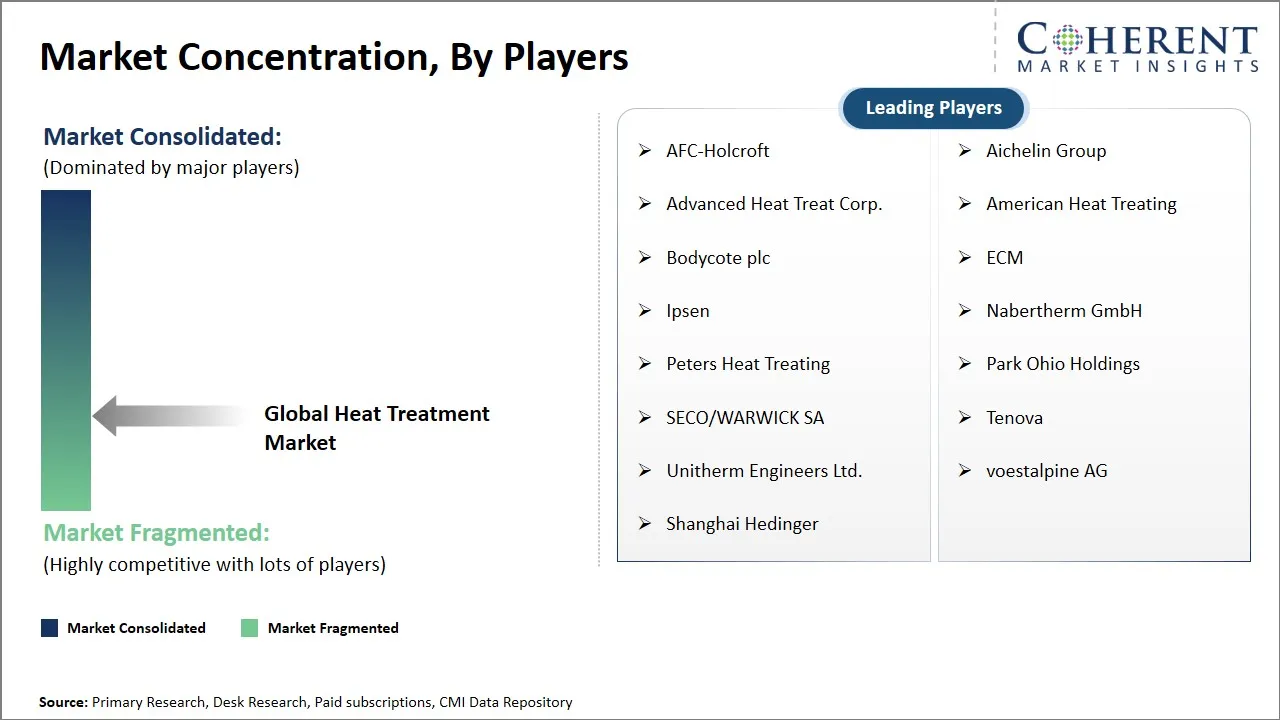
| Companies covered: | AFC-Holcroft, Aichelin Group, Advanced Heat Treat Corp., American Heat Treating, Bodycote plc, ECM, Ipsen, Nabertherm GmbH, Peters Heat Treating, Park Ohio Holdings, SECO/WARWICK SA, Tenova, Unitherm Engineers Ltd., voestalpine AG, and Shanghai Hedinger | ||
| Growth Drivers: |
| ||
| Restraints & Challenges: |
| ||
Market Dynamics
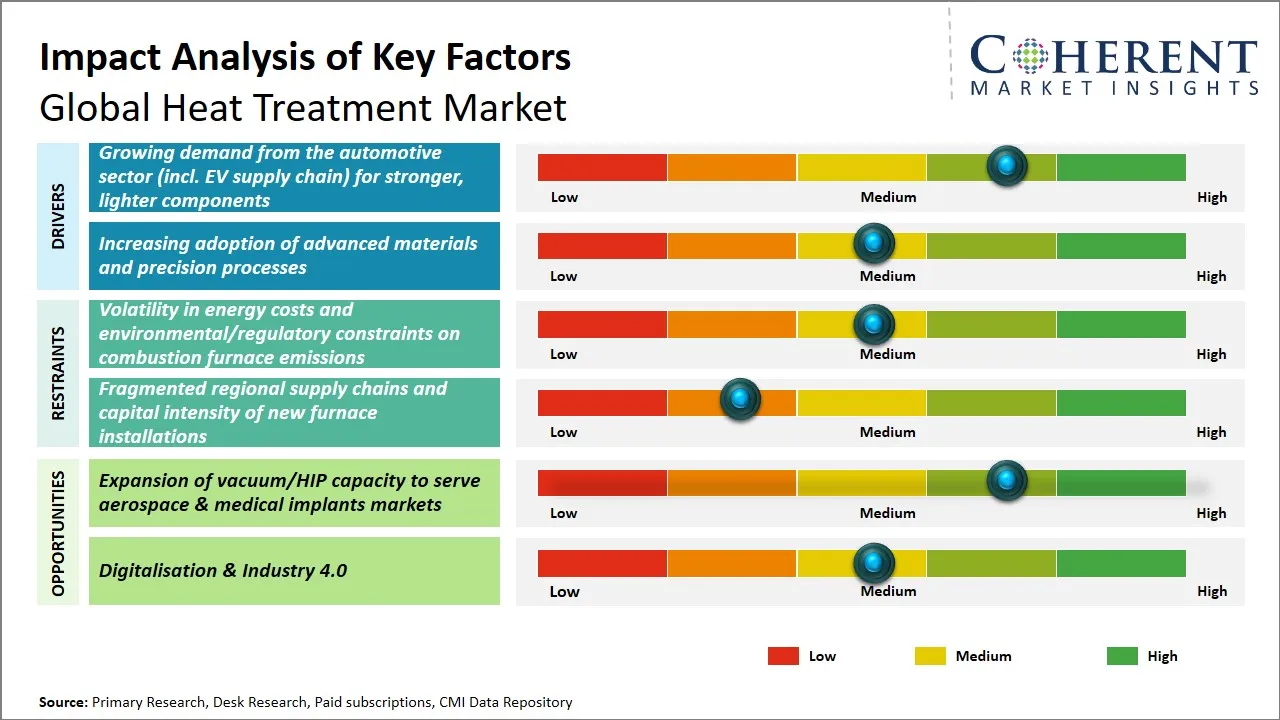
Global Heat Treatment Market Driver – Growing Demand from the Automotive Sector (Incl. EV Supply Chain) for Stronger, Lighter Components
The automotive industry is significantly driving the demand for advanced heat treatment processes as manufacturers increasingly focus on producing stronger yet lighter components to enhance vehicle performance and fuel efficiency. Heat treatment techniques such as quenching, tempering, and carburizing are essential for improving the mechanical properties of metals, allowing the production of components that can withstand higher stresses while contributing to lighter vehicle structures.
An example is Tesla’s expansion of its Gigafactory in Shanghai and Berlin to produce next-generation drivetrains and structural battery packs. These parts require precision heat treatment—such as induction hardening and low-pressure carburizing—for gears, shafts, and aluminum die-cast structural elements. Additionally, automakers are investing in innovative alloys and materials that require precise heat treatment to meet stringent safety and durability standards.
Global Heat Treatment Market Opportunity – Expansion of Vacuum and HIP Capacity to Serve Aerospace and Medical Implants Markets
The global heat treatment market presents a significant opportunity through the expansion of vacuum heat treatment and Hot Isostatic Pressing (HIP) technologies, particularly in the aerospace and medical implants sectors. Both industries demand components with exceptional mechanical properties, high strength-to-weight ratios, and superior fatigue resistance, necessitating advanced heat treatment processes. Vacuum heat treatment offers precise control over atmospheric conditions, minimizing oxidation and contamination, which is critical for aerospace components such as turbine blades and structural parts made from high-performance alloys.
Similarly, HIP technology enhances the density and structural integrity of medical implants, ensuring biocompatibility and longevity by eliminating internal defects and porosity in materials like titanium and cobalt-chrome alloys. Increasing the demand for lightweight, durable, and high-performance materials in aerospace to improve fuel efficiency and reduce emissions is driving the need for sophisticated heat treatment solutions.
An examples is Bodycote’s 2024, expansion of its Hot Isostatic Pressing (HIP) facility in Stillwater, Oklahoma and the addition of new large-capacity HIP vessels in Europe. These investments specifically target the aerospace and medical implant sectors, where 3D-printed titanium and high-performance alloy parts must undergo HIP to remove internal porosity and meet stringent certification standards. Likewise, the growing geriatric population and rising incidence of orthopedic conditions worldwide are catalyzing the expansion of the medical implants market, thereby boosting the demand for HIP-treated implants with superior mechanical properties.
Analyst Opinion (Expert Opinion)
- The increasing production of electric vehicles and lightweight drivetrain components is fueling strong demand for induction hardening, carburizing, and stress-relief annealing processes. OEMs and tier-1 suppliers are prioritizing precision heat treatment to improve component durability while reducing weight.
- Aerospace engine components, landing gear, and structural parts are driving adoption of vacuum heat treatment and HIP (Hot Isostatic Pressing). The use of high-performance alloys and additive-manufactured components necessitates advanced, tightly controlled thermal processes.
- The growing demand for medical implants and industrial tooling requires specialized surface-hardening treatments like plasma nitriding and vacuum annealing. This segment is expected to expand steadily, particularly in regions with high healthcare investment and precision engineering industries.
Speak to the analyst
Want personalized insights?
Take the findings above to one of our principal consultants, or have the report rebuilt around the segments, geographies and competitors you actually track.
Market Segmentation
- Process Insights (Revenue, USD Bn, 2021 - 2033)
- Annealing
- Hardening & Tempering
- Case Hardening
- Induction Hardening
- Vacuum Heat Treatment
- Nitriding
- Others
- Equipment Type Insights (Revenue, USD Bn, 2021 - 2033)
- Furnaces
- Induction Systems & Coils
- Quench & Cooling Systems
- Control
- Consumables
- Regional Insights (Revenue, USD Bn, 2021 - 2033)
- North America
- U.S.
- Canada
- Latin America
- Brazil
- Argentina
- Mexico
- Rest of Latin America
- Europe
- Germany
- U.K.
- Spain
- France
- Italy
- Russia
- Rest of Europe
- Asia Pacific
- China
- India
- Japan
- Australia
- South Korea
- ASEAN
- Rest of Asia Pacific
- Middle East
- GCC Countries
- Israel
- Rest of Middle East
- Africa
- South Africa
- North Africa
- Central Africa
- North America
- Key Players Insights
- AFC-Holcroft
- Aichelin Group
- Advanced Heat Treat Corp.
- American Heat Treating
- Bodycote plc
- ECM
- Ipsen
- Nabertherm GmbH
- Peters Heat Treating
- Park Ohio Holdings
- SECO/WARWICK SA
- Tenova
- Unitherm Engineers Ltd.
- voestalpine AG
- Shanghai Hedinger
Sources
Primary Research Interviews
Stakeholders
- Heat Treatment Service Providers and Commercial Treaters
- Furnace and Equipment Manufacturers
- Automotive OEMs and Tier-1 Suppliers involved in component manufacturing
- Aerospace and Defense Component Manufacturers
- Medical Implant and Biomedical Device Manufacturers
- Industrial Machinery and Heavy Equipment Manufacturers
- Sustainability Consultants and Energy Efficiency Experts in manufacturing
Databases
- Global Metallurgy & Materials Database (GMMD)
- International Heat Treatment Equipment Index (IHEI)
- World Industrial Production Statistics (WIPS)
- OECD Manufacturing Data Repository
Magazines
- Heat Treat Today
- Industrial Furnace & Thermal Processing Magazine
- Metallurgical Engineering Review
- Advanced Manufacturing Insights
Journals
- Journal of Materials Processing Technology
- Metallurgical and Materials Transactions A & B
- Surface Engineering Journal
- International Journal of Advanced Manufacturing Technology
- Journal of Thermal Processing Technologies
Newspapers
- Industrial Manufacturing Times
- The Metallurgy Herald
- Manufacturing Today
- The Economic Times (India) – Industrial Section
- The Financial Chronicle – Manufacturing Insights
Associations
- American Society for Metals (ASM International)
- International Federation for Heat Treatment & Surface Engineering (IFHTSE)
- European Heat Treatment Association (EHTA)
- Society of Automotive Engineers (SAE) – Heat Treatment Division
- Vacuum Furnace Manufacturers Association (VFMA)
Public Domain Sources
- U.S. Energy Information Administration (EIA) – Manufacturing Energy Data
- EUROSTAT – Industrial Production and Machinery Data
- United Nations Industrial Development Organization (UNIDO)
- World Bank – Manufacturing and Industrial Statistics
- ResearchGate – Academic papers on heat treatment and metallurgy
Proprietary Elements
- CMI Data Analytics Tool, Proprietary CMI Existing Repository of information for the last 8 years
Get access to 250+ pages report
Every segment, forecast, competitor profile and data table behind the analysis above — available for instant download.
- ESOMAR Member
- ISO 9001:2015 Certified
- D-U-N-S Registered
- GDPR & CCPA Compliant
Missing comfort of reading report in your local language? Find your preferred language:
Transform your Strategy with Exclusive Trending Reports
Frequently Asked Questions
The global heat treatment market is estimated to be valued at USD 112.56 billion in 2026 and is expected to reach USD 152.16 billion by 2033.
The CAGR of the global heat treatment market is projected to be 4.4% from 2026 to 2033.
Growing demand from the automotive sector (incl. EV supply chain) for stronger, lighter components and increasing adoption of advanced materials and precision processes are the major factors driving the growth of the global heat treatment market.
Volatility in energy costs and environmental/regulatory constraints on combustion furnace emissions and fragmented regional supply chains and capital intensity of new furnace installations are the major factors hampering the growth of the global heat treatment market.
In terms of process, the hardening & tempering segment is estimated to dominate the market revenue share in 2026.
The heat treatment market involves services and equipment used to alter the physical and mechanical properties of metals and alloys through processes like annealing, hardening, and tempering.
Furnaces hold the largest share, approximately 40.3% in 2026, due to their central role in all heat-treat processes.