

Global Industrial Electrification Market Size and Forecast – 2026-2033
The Global Industrial Electrification Market is estimated to be valued at USD 43,238.8 Mn in 2026 and is expected to reach USD 75,069.6 Mn by 2033, exhibiting a compound annual growth rate (CAGR) of 8.2% from 2026 to 2033.
Key Takeaways of the Industrial Electrification Market
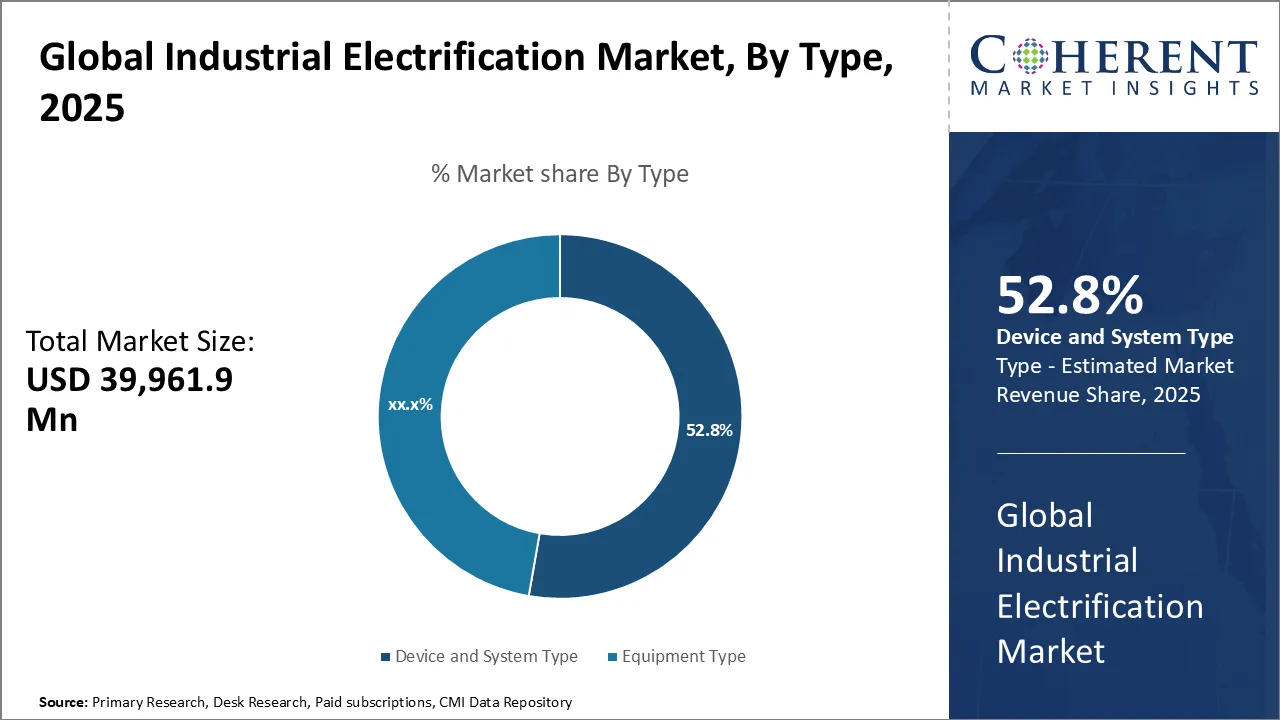
- The device and system type segment is expected to account for 53.8% of the global industrial electrification market in 2026, driven largely by the growing focus on automation and advanced control systems across multiple industries.
- The chemicals segment is projected to account for 24.7 % of the global industrial electrification market in 2026, driven by the need for safe and efficient power solutions in complex chemical manufacturing.
- The offline segment is projected to dominate the global industrial electrification market with a 68.77 % share in 2026, primarily due to traditional purchasing habits and the intricate requirements common in industrial sectors.
- Asia Pacific is expected to lead the global industrial electrification market in 2026 with a 36.5 % share, driven by rapid industrialization, infrastructure development, and a strong focus on energy efficiency. North America, with a 31.2% share in 2026, will be the fastest-growing region, fueled by industrial modernization, government regulations promoting sustainability, and increasing investments in energy-efficient solutions.
Market Overview
A significant trend within the industrial electrification market is the growing adoption of smart and connected technologies, facilitating enhanced operational efficiency and predictive maintenance. Additionally, rising regulatory pressures to reduce carbon emissions and improve sustainability are driving investments in advanced electrification solutions. Integration of renewable energy sources and digitalization in industrial processes further fuels the demand for sophisticated electrification systems, shaping the industry's evolution toward greener and more efficient industrial operations.
Current Events and Its Impact
Current Events | Description and its impact |
Record Growth in Renewables and Electrification |
|
Policy Acceleration in Industrial Electrification (EU Focus) |
|
Segmental Insights
- Current Industry Events of 2026
- Market Size Estimation
- Regional Breakdown
- Competitive Landscape
- Customer Intelligence
- Segmental Analysis
- Pricing Analysis
- Key Market Drivers, Challenges & Future Trends
- Customized Insights Section
Industrial Electrification Market Insights, By Type - Device and System Type Segment Drives the Market due to Increasing Technological Integration and Operational Efficiency
The device and system type segment is expected to hold 53.8% share of the global industrial electrification market in 2026, primarily driven by the increasing emphasis on automation and intelligent control systems across various industries. The segment is expected to grow at a CAGR of 8.16%. This segment includes essential components such as electric actuators, switchgear, electric air-conditioning systems, power distribution units (PDUs), and other device and system types, which are fundamental to ensuring operational reliability and energy efficiency in electrified industrial environments.
Electric actuators and switchgear are instrumental in automating machinery and managing power flow, which reduces downtime and enhances safety. Companies are increasingly investing in these devices to meet stringent regulatory standards related to energy efficiency and workplace safety, as well as to achieve better scalability in operations. Additionally, the adoption of electric air-conditioning systems in industrial facilities supports stringent environmental controls necessary for operations that require temperature-sensitive manufacturing processes, thereby augmenting their adoption.
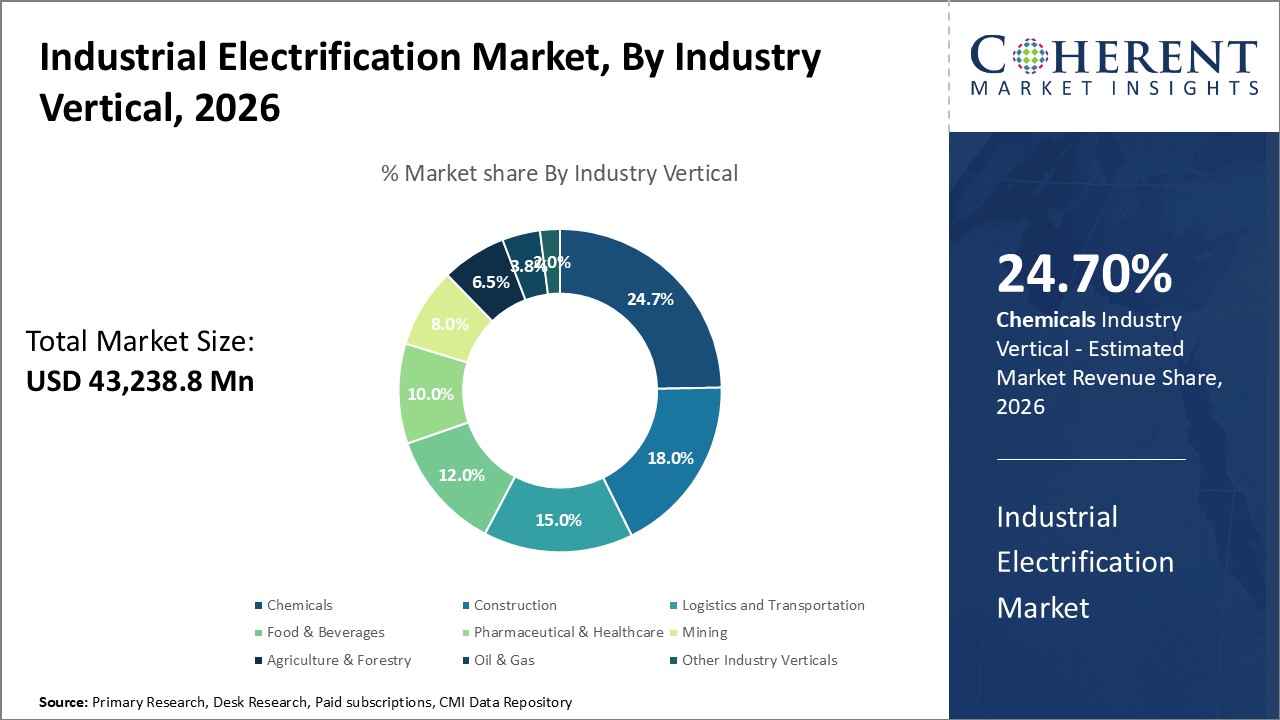
Industrial Electrification Market Insights, By Industry Vertical - The Chemicals Industry Segment leads the Market due to the Increasing Focus on Electrification Driven by Safety, Efficiency, and Regulatory Pressures
The chemicals segment is projected to hold 24.7% share of the global industrial electrification market in 2026, driven by the critical need for safe, reliable, and efficient power solutions in highly hazardous and complex chemical manufacturing processes. The segment is expected to grow at a CAGR of 9.35%. The chemicals industry is highly energy-intensive, with numerous processes sensitive to power fluctuations that can affect product quality and safety, making electrification vital to operational stability.
One of the main growth drivers in this vertical is the stringent regulatory environment governing chemical plants, especially regulations related to emissions, workplace safety, and energy consumption. Industrial electrification helps manufacturers comply with these regulations by integrating advanced control systems and electrical devices that improve process accuracy and reduce the risk of accidental hazardous discharges.
Industrial Electrification Market Insights, By Sales Channel – Offline Segment Dominates the Market due to Industry Practices and Customer Preferences
The offline segment is expected to command 68.77% share of the global industrial electrification market in 2026, largely attributable to the traditional purchasing behaviors and complex requirements prevalent within industrial sectors. The segment is expected to grow at a CAGR of 7.48%. Despite the emergence of digital platforms, industrial buyers continue to favor offline channels for acquiring electrification equipment due to the need for personalized service, technical consultations, and hands-on product evaluation.
Industrial electrification products, such as switchgear and power distribution units, often require detailed customization and compliance verification before purchase. Offline sales channels facilitate direct interaction between suppliers’ technical experts and end users, enabling tailored solutions that address specific operational challenges. This face-to-face engagement also helps build trust and long-term relationships, which are crucial in an industry where equipment reliability and service support carry significant operational and financial implications.
Regional Insights
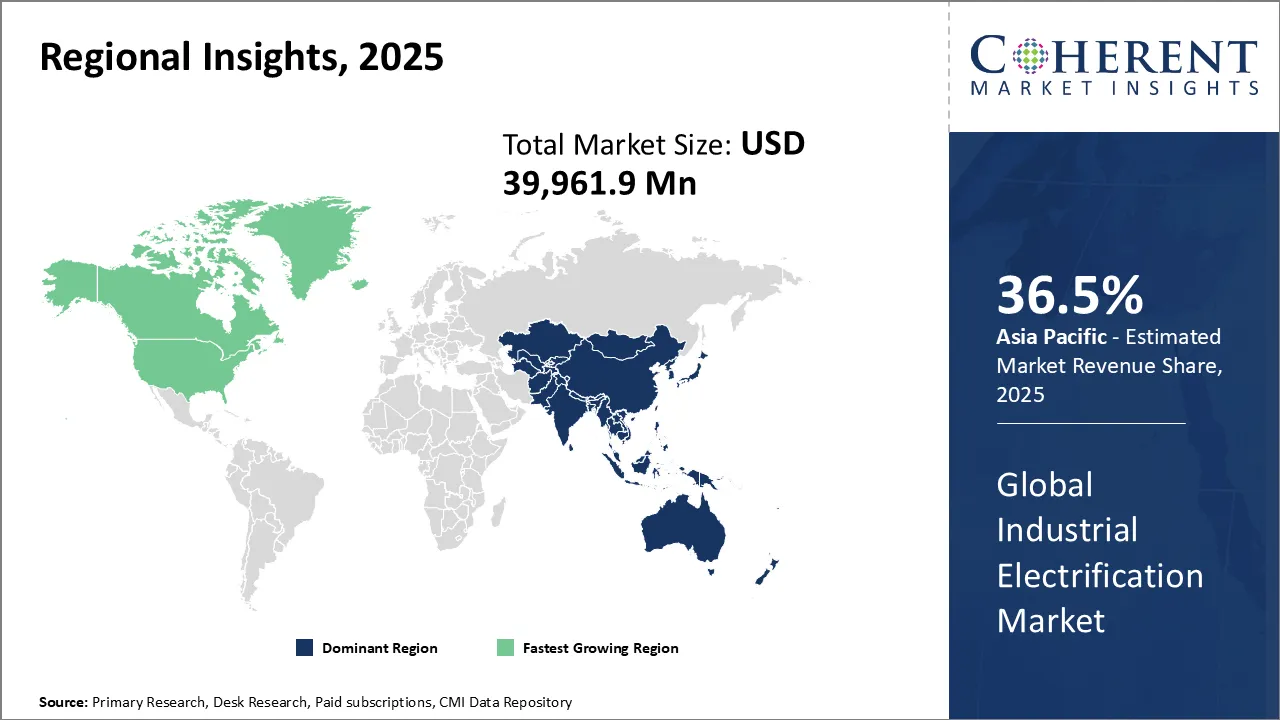
Asia Pacific Industrial Electrification Market Analysis and Trends
The Asia Pacific region is projected to lead the market with a 36.5% share in 2026, attributed to rapid industrialization and significant infrastructural development in emerging economies like China, India, and Southeast Asia. The region is expected to grow at a CAGR of 8.68%. It is characterized by a strong push for modernization of aging industrial infrastructure and the adoption of smart, energy-efficient electrification technologies.
Government initiatives and policies promoting sustainability, energy efficiency, and carbon reduction are further propelling market growth. The increasing demand for electrification solutions in key sectors such as automotive, steel manufacturing, and chemicals, coupled with the expansion of the renewable energy sector, drives adoption in the region.
Additionally, Asia Pacific’s growing emphasis on digital transformation, IoT integration, and automation technologies in industries presents vast opportunities for industrial electrification providers. Key players such as Siemens, Mitsubishi Electric, and ABB continue to innovate and expand their offerings to meet the region's evolving demands. The region also benefits from favorable trade policies, strong supply chain networks, and low-cost manufacturing capabilities, reinforcing its market leadership in industrial electrification.
North America Industrial Electrification Market Analysis and Trends
The North America region is expected to exhibit the fastest growth in the market, contributing a 31.2% share in 2026, driven by a well-established industrial base, technological advancements, and a strong focus on modernizing and upgrading legacy systems. This region is expected to grow at a CAGR of 7.7%. Government policies aimed at enhancing energy efficiency, reducing carbon footprints, and promoting renewable energy adoption play a crucial role in accelerating the demand for industrial electrification solutions. The region’s robust manufacturing sector, coupled with rising electricity demand and an increasing emphasis on automation and digital transformation, further fuels the uptake of electrification technologies.
Additionally, North America benefits from significant investments in research and development, particularly in IoT integration, smart grids, and digital electrification solutions. Major players, such as General Electric, Schneider Electric, Eaton, and Rockwell Automation, continue to lead the market by providing innovative and energy-efficient solutions tailored to heavy industries. Public-private partnerships, along with favorable trade policies and regulatory frameworks, help maintain North America’s position as a leader in the industrial electrification sector.
Industrial Electrification Market Outlook for Key Countries
Japan Industrial Electrification Market Trends
Japan's industrial electrification market is characterized by high technological penetration and robust innovation ecosystems that are expected to grow at a CAGR of 9.29%. The country’s commitment to sustainable manufacturing and energy efficiency standards propels investments in smart grid technologies and electric automation systems. Major players such as Mitsubishi Electric, Yokogawa Electric, and Panasonic have developed advanced industrial controls and electrification equipment tailored for automotive, electronics, and heavy machinery sectors. The government’s incentives for clean energy adoption and the modernization of existing plants significantly support market expansion.
Germany Industrial Electrification Market Trends
Germany’s industrial electrification market thrives on the country’s strong manufacturing and automotive sectors, which demand reliable and energy-efficient electrical infrastructure. A key metric highlighting the sector’s regional momentum is a CAGR of 8.77%, reflecting strong demand for next-generation electrification solutions and a decisive shift towards decarbonization and digitalization.
Companies like Siemens and Phoenix Contact lead innovation, delivering integrated automation and electrification systems that align with Germany’s stringent environmental and industrial policies. The nation’s well-established electrical equipment manufacturers and skilled workforce fortify market growth.
China Industrial Electrification Market Trends
China continues to lead the industrial electrification market in Asia Pacific, underpinned by massive industrial and infrastructure development programs. The country’s emphasis on upgrading traditional industries to smart manufacturing platforms catalyzes demand for sophisticated electrification products, including automation controls and electrical distribution equipment. The industrial electrification market in China is projected to grow at CAGR of 9.40%, underscoring the scale and momentum of this transformation. Multinational corporations such as ABB and Schneider Electric have formed strategic partnerships with local firms, accelerating adoption. Government initiatives toward energy conservation and industrial upgrading are central to shaping market dynamics.
India Industrial Electrification Market Trends
India’s industrial electrification market is rapidly expanding, fueled by growing industrial hubs and government policies promoting electrification and energy efficiency, including the UDAY scheme and National Electric Mobility Mission. The country’s large-scale infrastructure projects and increasing automation trends across manufacturing and process industries create robust demand.
Companies like Larsen & Toubro and Siemens India contribute significantly by providing tailored electrification solutions suitable for endogenous market needs. The industrial electrification market in India is expected to grow at a CAGR of 8.82%, reflecting the strong momentum driven by policy support, industrial modernization, and increasing adoption of energy-efficient technologies. Government support in facilitating renewable energy integration alongside electrification adds momentum.
U.K. Industrial Electrification Market Trends
The U.K. industrial electrification market is influenced by its strong industrial base and the increasing need for modernization of electrical infrastructure across sectors such as manufacturing, automotive, and energy expected to grow at a CAGR of 8.44%. Supportive government policies focused on improving energy efficiency and promoting green technologies favor industrial electrification.
Key companies like Rolls-Royce, Siemens, and ABB maintain a strong presence, offering products tailored to local regulatory standards and addressing the challenges of electrification in a highly industrialized environment. Trade relations within Europe also play a role in market expansion, facilitating technology exchanges and cross-border collaborations.
Regulatory & Policy Framework For the Industrial Electrification Market
Government Policies and Incentives for Industrial Electrification
- Several countries have established long-term roadmaps, plans, and targets aiming for substantial GHG emission reductions from industries through electrification and decarbonization initiatives, e.g., India’s focus on green hydrogen aligns with electrification of heavy industries like steel, cement, aluminum, and petrochemicals.
- Carbon pricing mechanisms such as emissions trading systems (ETS) or carbon taxes are implemented or planned to provide strong market signals, incentivizing industries to reduce carbon emissions via electrification or other low-carbon technologies.
- Financial incentives and subsidies remain a key policy driver for accelerating investment in clean electricity supply and electrification technologies (e.g., electrified furnaces, heat pumps, electrolysers for hydrogen production).
Regional Regulations on Emissions, Energy Usage, and Efficiency Standards
- Regulatory frameworks often include emissions performance standards and market-based emissions limits for industry and power generation sectors, aimed at cutting carbon dioxide emissions from electricity generation and industrial processes.
- Minimum Energy Performance Standards (MEPS) and standards & labeling schemes promote the deployment of energy-efficient appliances and equipment in industrial settings to curb energy consumption.
- Many regions enforce renewable portfolio standards (RPS) or similar requirements, mandating a growing share of electricity from low-carbon sources, which complements industrial electrification efforts by decarbonizing the grid.
Market Players, Key Development, and Competitive Intelligence
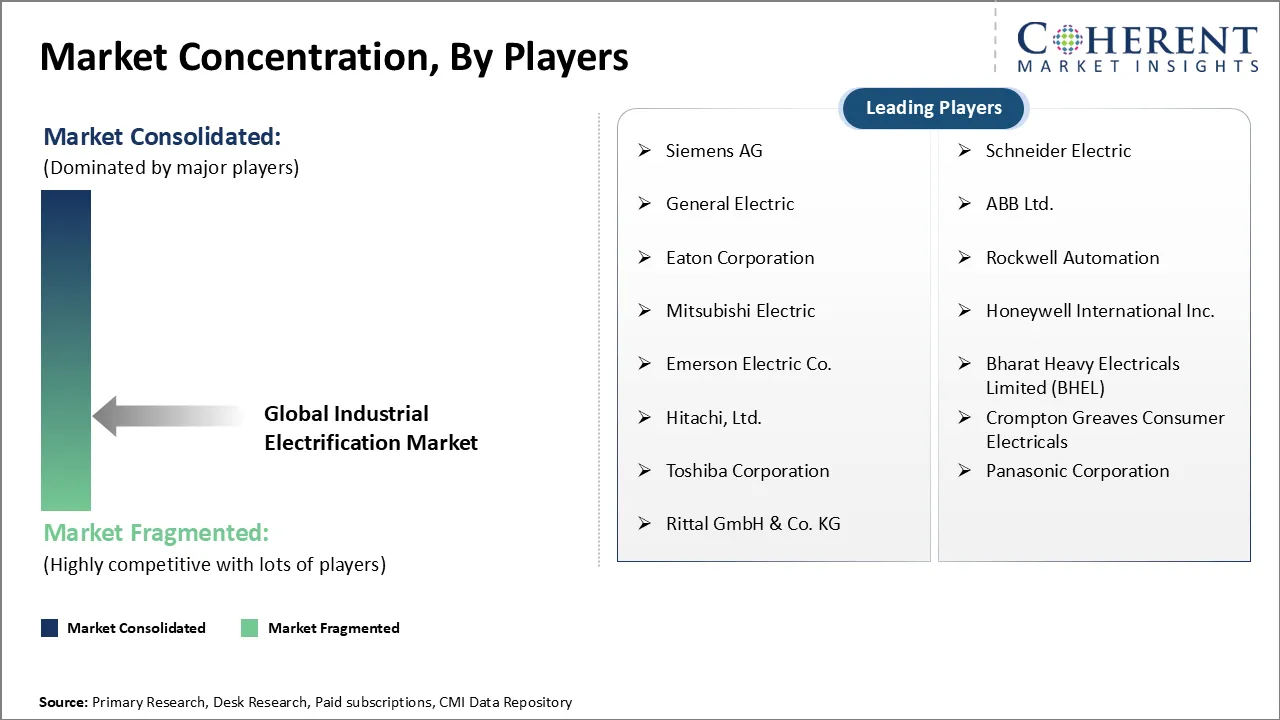
Key Developments
- On March 2025, Indonesia's Ministry of Industry announced its support for the development of the solar module industry, a crucial component in the construction of solar power plants (PLTS). This initiative aims to optimize the potential of new and renewable energy sources to drive electrification across the country, contributing to Indonesia's efforts to enhance its renewable energy capacity and sustainability goals.
Top Strategies Followed by Global Industrial Electrification Market Players
- Established players, Leading companies focus on enhancing smart grid systems to improve power distribution and industrial energy management. Countries like China, the US, and European nations invest heavily in smart grid and renewable energy infrastructure, which players leverage to expand electrification solutions connected to decentralized power generation (microgrids, distributed energy resources)
- For instance, Siemens and GE Vernova lead the market by developing smart grid systems and energy-efficient electric motors, thus ensuring energy savings and improved operational performance for industries like manufacturing and automotive. Siemens' Digital Grid Solutions enable real-time monitoring and optimization of electrical grids, enhancing industrial electrification capabilities.
- Mid-level market participants occupy a unique niche by offering cost-effective electrification solutions that strike a balance between quality and affordability. These players primarily target price-sensitive customers, including small to medium-sized industrial enterprises, which demand reliable yet budget-conscious options. To improve their competitive edge, mid-level companies frequently engage in collaborations with technology providers and manufacturing partners. Such partnerships enable them to enhance their production capabilities, adopt new technologies more rapidly, and diversify their product portfolios without incurring prohibitive costs.
- For example, Schneider Electric collaborates with Microsoft to integrate cloud-based services into their electrification solutions, allowing mid-level industrial players to benefit from the advanced capabilities of the digital era at affordable costs.
- Small-scale players in the industrial electrification market differentiate themselves by carving out specialized niches through product innovation and agility. These firms often concentrate on specific industrial applications or introduce innovative features that larger players may overlook, such as customized solutions for particular sectors or integration with cutting-edge digital technologies like IoT and automation. Adopting advanced manufacturing techniques and software-driven product designs allows small players to remain competitive despite limited resources.
- For example, Epishine, a Swedish startup, developed a unique solar cell for indoor applications. Its technology easily integrates into small, low-power industrial devices, enabling self-powered and wire-free units for smart buildings and IoT-enabled industrial assets
Market Report Scope
Industrial Electrification Market Report Coverage
| Report Coverage | Details | ||
|---|---|---|---|
| Base Year: | 2025 | Market Size in 2026: | USD 43,238.8 Mn |
| Historical Data for: | 2020 To 2024 | Forecast Period: | 2026 To 2033 |
| Forecast Period 2026 to 2033 CAGR: | 8.2% | 2033 Value Projection: | USD 75,069.6 Mn |
| Geographies covered: |
| ||
| Segments covered: |
| ||
| Companies covered: | Siemens AG, Schneider Electric, General Electric, ABB Ltd., Eaton Corporation, Rockwell Automation, Mitsubishi Electric, Honeywell International Inc., Emerson Electric Co., Bharat Heavy Electricals Limited (BHEL), Hitachi, Ltd., Crompton Greaves Consumer Electricals, Toshiba Corporation, Panasonic Corporation, and Rittal GmbH & Co. KG | ||
| Growth Drivers: |
| ||
| Restraints & Challenges: |
| ||
Industrial Electrification Market Dynamics
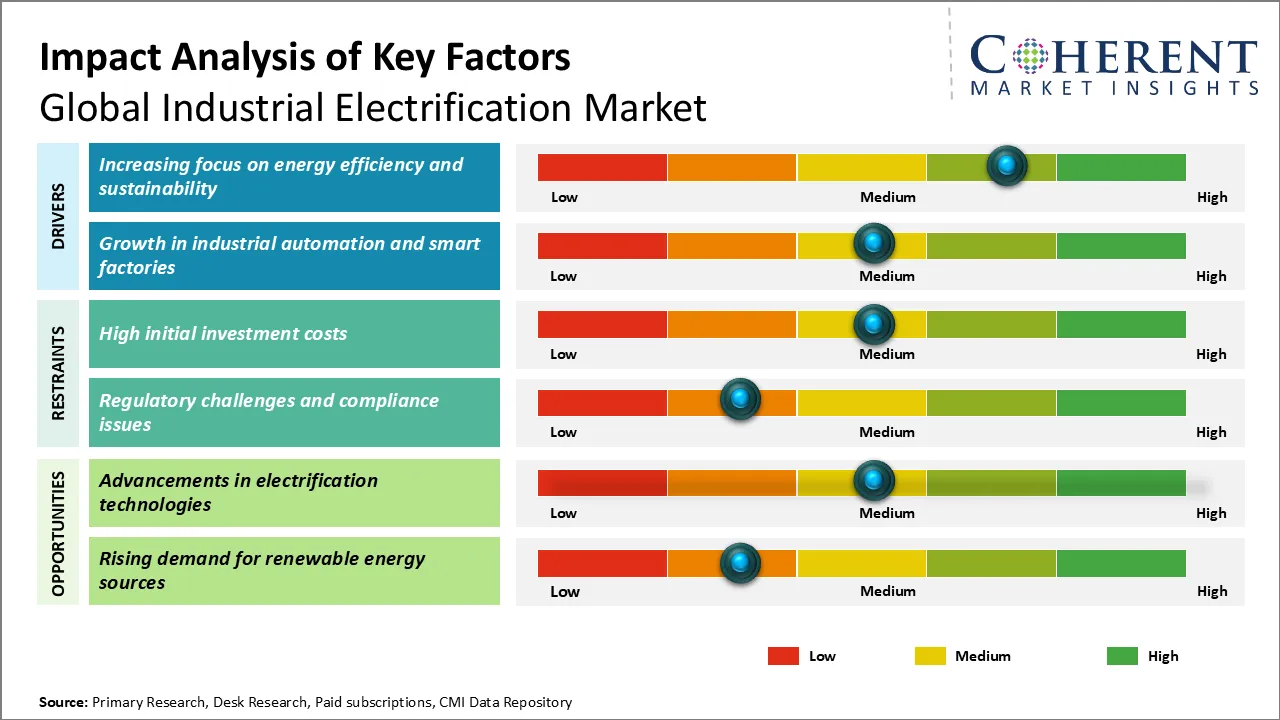
Industrial Electrification Market Driver - Increasing Focus on Energy Efficiency and Sustainability
The rising emphasis on energy efficiency and sustainability is a critical driver propelling the adoption of industrial electrification worldwide. Industries are progressively seeking ways to minimize energy consumption and reduce greenhouse gas emissions to comply with stringent environmental regulations and meet corporate social responsibility goals. Electrification offers a more efficient and flexible alternative to conventional fossil-fuel-based systems by enabling better control over energy usage and integrating renewable energy sources seamlessly.
For example, General Electric and Siemens have been pivotal players in promoting industrial electrification as a solution for energy efficiency and sustainability. For instance, GE's focus on electrification through its "Grid Solutions" division emphasizes the integration of renewable energy sources such as solar and wind into industrial operations. This helps industries reduce dependency on fossil fuels and lower carbon emissions.
Industrial Electrification Market Opportunity - Advancements in Electrification Technologies
The global industrial electrification market presents a significant opportunity driven by rapid advancements in electrification technologies. Innovations such as the integration of smart grid systems, power grid system, development of high-efficiency electric motors, and adoption of advanced power electronics are transforming traditional industrial processes by enhancing energy efficiency and lowering operational costs.
For instance, modern electric arc furnaces in steel manufacturing now incorporate advanced power electronics that optimize energy input based on real-time load conditions, while electric heat pumps are revolutionizing industrial heating processes across chemical and food processing sectors. The integration of smart grid technologies with industrial systems has created opportunities for demand response optimization, allowing manufacturers to adjust their energy consumption patterns dynamically.
Analyst Opinion (Expert Opinion)
- The global industrial electrification market is poised for transformative growth as industries increasingly shift towards electrification to enhance efficiency and reduce carbon footprints. Leading companies like Siemens and Schneider Electric are pioneering innovations in electrification solutions that optimize energy consumption and integrate renewable sources.
- Recent conferences, such as the International Conference on Electrification (2023) and the Global Energy Transition Summit (2022), have underscored the critical role of electrification in achieving sustainability goals across various sectors. Presentations highlighted successful case studies where manufacturers transitioned from fossil fuels to electric systems, resulting in significant operational cost savings and emissions reductions. Additionally, discussions emphasized the importance of adapting infrastructure to support electrification, particularly in heavy industries like steel and cement, where traditional processes are energy-intensive.
- The convergence of government policies promoting green technologies and advancements in battery storage is creating a conducive environment for growth. As industries navigate the complexities of this transition, the electrification market is well-positioned to thrive, driven by innovation, regulatory support, and a collective commitment to sustainability that meets the demands of a rapidly evolving energy landscape.
Speak to the analyst
Want personalized insights?
Take the findings above to one of our principal consultants, or have the report rebuilt around the segments, geographies and competitors you actually track.
Market Segmentation
- Type Insights (Revenue, USD Mn, 2021 - 2033)
- Device and System Type
- Electric Actuator
- Electric Switchgear
- Electric Air-conditioning System
- Power Distribution Units (PDUs)
- Other Device and System Types
- Equipment Type
- Electric Excavators
- Electric Wheel Loaders
- Electric Forklift
- Other Equipment Types
- Device and System Type
- Industry Vertical Insights (Revenue, USD Mn, 2021 - 2033)
- Chemicals
- Construction
- Logistics and Transportation
- Food & Beverages
- Pharmaceutical and Healthcare
- Mining
- Agriculture and Forestry
- Oil & Gas
- Other Industry Verticals
- Sales Channel Insights (Revenue, USD Mn, 2021 - 2033)
- Offline
- Online
- Regional Insights (Revenue, USD Mn, 2021 - 2033)
- North America
- U.S.
- Canada
- Latin America
- Brazil
- Argentina
- Mexico
- Rest of Latin America
- Europe
- Germany
- U.K.
- Spain
- France
- Italy
- Russia
- Rest of Europe
- Asia Pacific
- China
- India
- Japan
- Australia
- South Korea
- ASEAN
- Rest of Asia Pacific
- Middle East
- GCC Countries
- Israel
- Rest of Middle East
- Africa
- South Africa
- North Africa
- Central Africa
- North America
- Key Players Insights
- Siemens AG
- Schneider Electric
- General Electric
- ABB Ltd.
- Eaton Corporation
- Rockwell Automation
- Mitsubishi Electric
- Honeywell International Inc.
- Emerson Electric Co.
- Bharat Heavy Electricals Limited (BHEL)
- Hitachi, Ltd.
- Crompton Greaves Consumer Electricals
- Toshiba Corporation
- Panasonic Corporation
- Rittal GmbH & Co. KG
Sources
Primary Research Interviews
- R&D Director – Leading Industrial Equipment Manufacturer
- Procurement Manager – Major Power Distribution Company
- Product Development Head – Electric Motor Manufacturer
- Sustainability Manager – Industrial Electrification Solutions Provider
Stakeholders
- Manufacturers
- End-use Sectors:
- Energy Generation & Distribution
- Electric Vehicle Charging Infrastructure
- Industrial Automation
- Renewable Energy Systems
- Data Centers & IT Infrastructure
- Regulatory & Certification Bodies
- E-commerce Platforms and Retailers
- Technology Integration Players: IoT and AI-based energy management solutions
Databases
- UN Comtrade Database
- International Energy Agency (IEA) Database
- U.S. Energy Information Administration (EIA)
Magazines
- Industrial Equipment News – Innovations in industrial electrification
- Energy Efficiency Journal – Trends in electrification and energy optimization
- Renewable Energy World – Electrification in renewable energy sectors
- Energy Tech Review – Industry updates on electrical solutions in industry
- Global Energy Insights – Market outlook and forecasts in industrial electrification
Journals
- Journal of Industrial Power Systems – Developments in industrial electrification technologies
- International Journal of Electrical Power & Energy Systems – Power generation and distribution innovations
- IEEE Transactions on Industrial Electronics – Research on industrial automation and electrification
- Renewable and Sustainable Energy Reviews – Integration of electrification in renewable systems
- Electric Power Systems Research – Studies on optimization of industrial electrification
Newspapers
- The Financial Times – Developments in industrial electrification and global energy markets
- The Guardian – Regulatory updates and innovations in industrial electrification
- Industry Week – Adoption trends of electrification technologies in manufacturing
- Asia Industrial News – Industrial electrification growth in the Asia-Pacific region
- The New York Times – Future of industrial electrification in the context of green energy transitions
Associations
- International Electrotechnical Commission (IEC)
- Institute of Electrical and Electronics Engineers (IEEE)
- Global Wind Energy Council (GWEC)
- European Association for the Storage of Energy (EASE)
- World Economic Forum – Industrial Electrification Policy
- American Society of Mechanical Engineers (ASME)
Public Domain Sources
- U.S. Department of Energy – Guidelines for industrial electrification and energy efficiency
- European Commission – Energy Efficiency Directive and Electrification Guidelines
- International Energy Agency (IEA) – Global electrification trends and policies
- United Nations Economic Commission for Europe (UNECE) – Electrification standards and frameworks
Proprietary Elements
- CMI Data Analytics Tool, Proprietary CMI Existing Repository of information for last 8 years.
Get access to 250+ pages report
Every segment, forecast, competitor profile and data table behind the analysis above — available for instant download.
- ESOMAR Member
- ISO 9001:2015 Certified
- D-U-N-S Registered
- GDPR & CCPA Compliant
Missing comfort of reading report in your local language? Find your preferred language:
Transform your Strategy with Exclusive Trending Reports
Frequently Asked Questions
The global industrial electrification market is estimated to be valued at USD 43,238.8 Mn in 2026 and is expected to reach USD 75,069.6 Mn by 2033.
The CAGR of the global industrial electrification market is projected to be 8.2% from 2026 to 2033.
Increasing focus on energy efficiency and sustainability and growth in industrial automation and smart factories are the major factors driving the growth of the global industrial electrification market.
High initial investment costs and regulatory challenges and compliance issues are the major factors hampering the growth of the global industrial electrification market.
In terms of type, device and system type is estimated to dominate the market revenue share in 2026.
Siemens AG, Schneider Electric, General Electric, ABB Ltd., Eaton Corporation, Rockwell Automation, Mitsubishi Electric, Honeywell International Inc., Emerson Electric Co., Bharat Heavy Electricals Limited (BHEL), Hitachi, Ltd., Crompton Greaves Consumer Electricals, Toshiba Corporation, Panasonic Corporation, and Rittal GmbH & Co. KG are the major players.
Asia Pacific is expected to lead the global industrial electrification market in 2026.