

Global Power Electronics Market Size and Share Analysis – Growth Trends and Forecasts (2026-2033)
The global power electronics market is estimated to be valued at USD 54.10 Bn in 2026 and is expected to reach USD 81.92 Bn by 2033, exhibiting a compound annual growth rate (CAGR) of 6.1% from 2026 to 2033.
Key Takeaways
- In terms of Component, Module Segment is expected to contribute 55.2% share of the market in 2026. This is due to its widespread use in electric vehicles.
- In terms of End-Use Industry, Energy and Power Segment is expected to contribute 37.9% share of the market in 2026. This is due to the criticality of efficient power conversion across utility infrastructure.
- In terms of Material, Silicon Carbide (Sic) Segment is expected to contribute 46.9% share of the market in 2026. This is due to its unparalleled advantages over silicon.
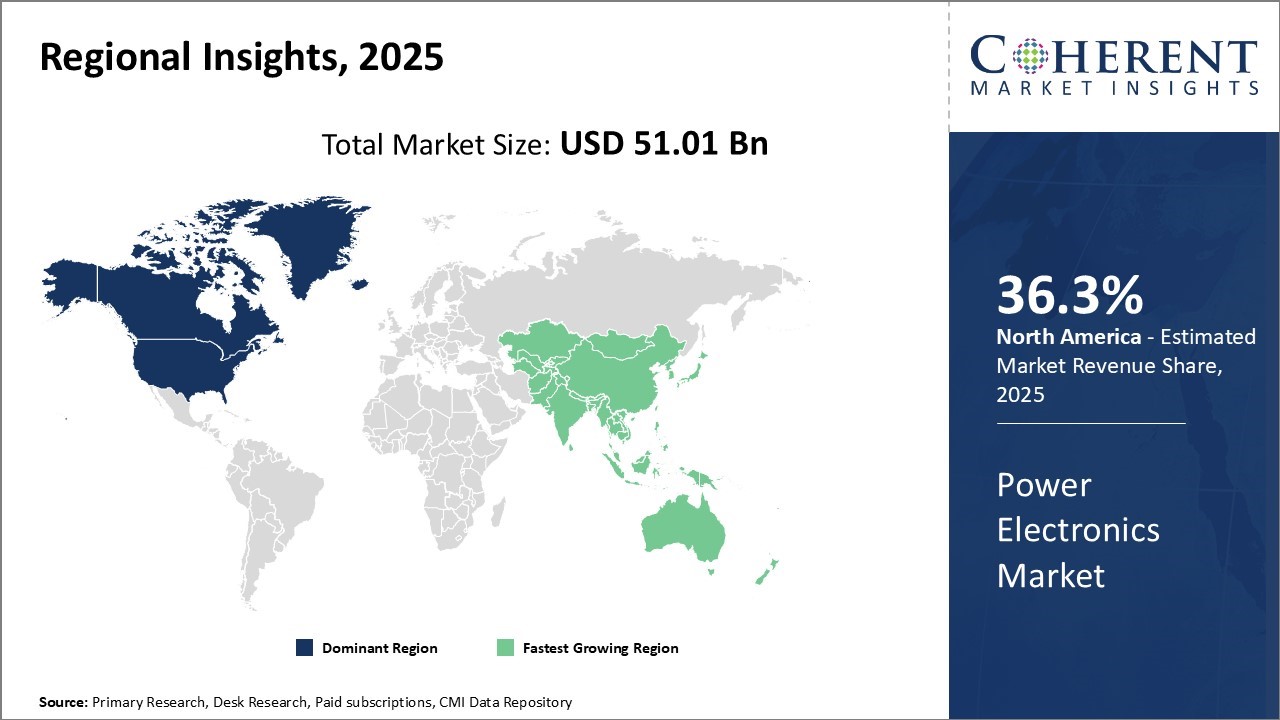
- North America has established itself as the dominant region in the global power electronics market. The region is expected to account for 36.3% of the market share in 2026. This is due to strong industrial and automotive manufacturing base which has helped boost the demand for power electronics over the years.
Market Overview
The fast growth in the adoption of renewable energy sources and rising energy-efficient power management solutions demand from different end-use industries like industrial, residential, transportation, and utilities is accelerating tremendous growth in the global power electronics market. The industry is seeing growing demand for silicon carbide (SiC)- and gallium nitride (GaN)-based power semiconductors due to their superior attributes like higher efficiency, higher switching speeds, and lower size compared to traditional silicon-based devices. Moreover, the increased use of electric vehicles globally is also driving the demand for the implementation of advanced power electronics for efficient onboard power management and charging infrastructure.
In December 2024, the U.S. Department of Commerce sanctioned as much as $225 million in loans and grants to finance Bosch's $1.9 billion plan to produce silicon carbide (SiC) power semiconductors in Roseville, California. The factory is slated to start making SiC chips in 2026, representing more than 40% of U.S. domestic SiC capacity.
Current Events and Its Impact on Power Electronics Market
Current Events | Description and its impact |
Singapore Opens 200 mm SiC R&D Production Line through A*STAR |
|
India's First SiC Fabrication Plant Approved in Odisha |
|
Pricing Analysis
The market prices of power electronics are determined by various factors, including material prices, technological improvements, demand for end-use applications, and local manufacturing capabilities. The components of power electronics, like power modules, discrete devices, and power ICs, have varying price levels depending on their specifications, materials (e.g., silicon, SiC, GaN), and voltage levels.
Legacy silicon-based power devices are fairly inexpensive, with discrete devices costing between $0.50 and $5 based on the application. The newer wide-bandgap technologies, however, such as silicon carbide (SiC) and gallium nitride (GaN), cost much more, typically from $10 to $100 per module for high-voltage devices. The higher cost is justified by better performance in the form of quicker switching, greater thermal robustness, and better energy efficiency—making them perfectly suited for EVs, renewables, and industrial drives.
Pricing too is application-driven. For consumer electronics and low-power applications, cost sensitivity is intense, resulting in volume-driven pricing strategies. For electric vehicles, energy infrastructure, and industrial automation, performance and long-term energy efficiency are more important, enabling higher price elasticity. Bulk orders and long-term agreements in automotive and renewable industries have the potential to bring down per-unit expenses through economies of scale.
The growing need for energy-efficient products, government support for clean technologies, and increased use of smart devices are driving overall market prices upwards. Yet, increasing competition and technological improvement in the fabrication process are slowly bringing the cost of SiC and GaN components down to make them more affordable for mass-market applications.
- Current Industry Events of 2026
- Market Size Estimation
- Regional Breakdown
- Competitive Landscape
- Customer Intelligence
- Segmental Analysis
- Pricing Analysis
- Key Market Drivers, Challenges & Future Trends
- Customized Insights Section
Role of advanced technology
Emerging technology is the key driver of the development and growth of the global power electronics market. Major technological advances—e.g., the creation of wide-bandgap (WBG) semiconductors such as silicon carbide (SiC) and gallium nitride (GaN)—are greatly improving the performance and efficiency of power electronic systems. These materials provide higher switching speed, greater voltage and temperature endurance, and lower power losses than conventional silicon-based devices and are therefore well suited for next-generation applications such as electric vehicles (EVs), solar inverters, and fast-charging stations.
Another key development is the integration of embedded software and digital control systems. Contemporary power electronics solutions now incorporate intelligent control software that maximizes energy flow, adjusts to load conditions, and enhances thermal management in real time. Smart features are crucial in industrial automation, smart grids, and renewable energy systems, where optimum power conversion is crucial.
In addition, the advent of AI and IoT is facilitating predictive maintenance and remote monitoring for power systems. The connectivity enhances system reliability and operational cost reduction, especially in utility-scale energy infrastructure and industrial processes.
Advanced packaging technologies, e.g., chip-scale packaging and 3D integration, are decreasing component size and increasing thermal performance, thus allowing for more compact and efficient devices.
In short, the use of leading-edge technologies not only enhances the performance and efficiency of power electronics but also broadens their application range. With ongoing innovation, the technologies are poised to contribute an even bigger share to meeting the world's needs for clean energy, electric mobility, and intelligent industrial systems.
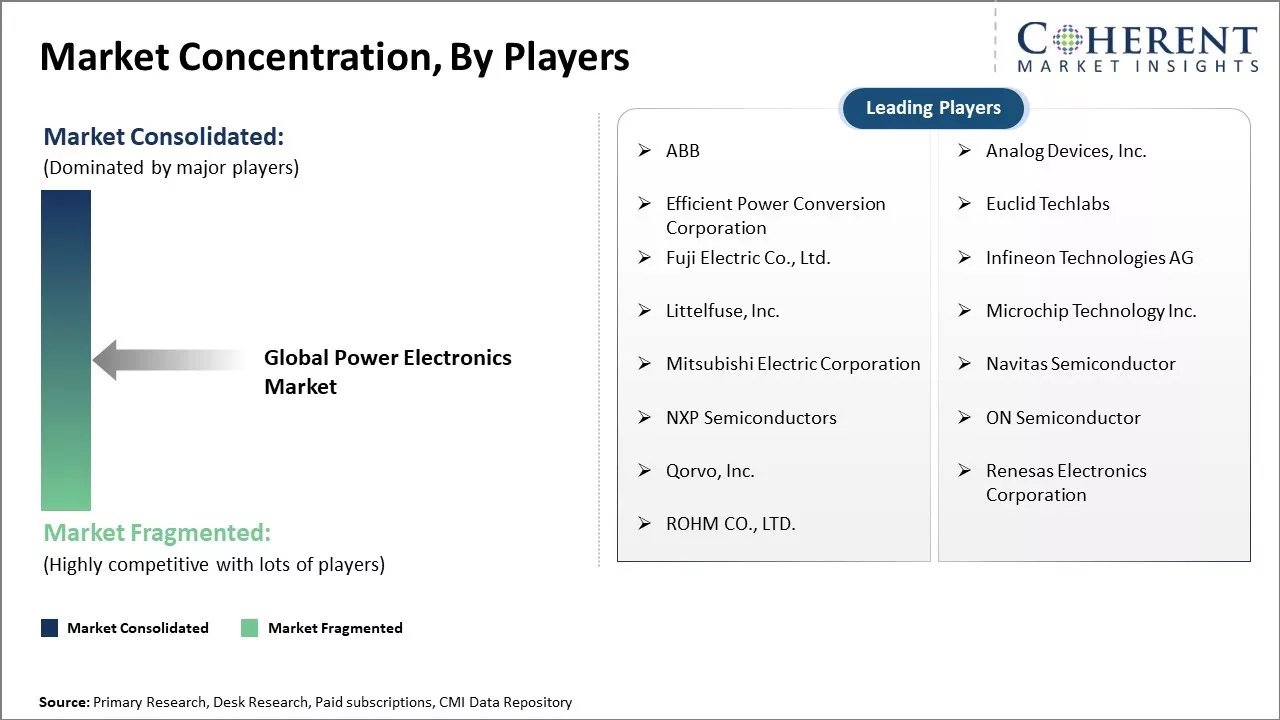
Market Concentration and Competitive Landscape
Market Driver
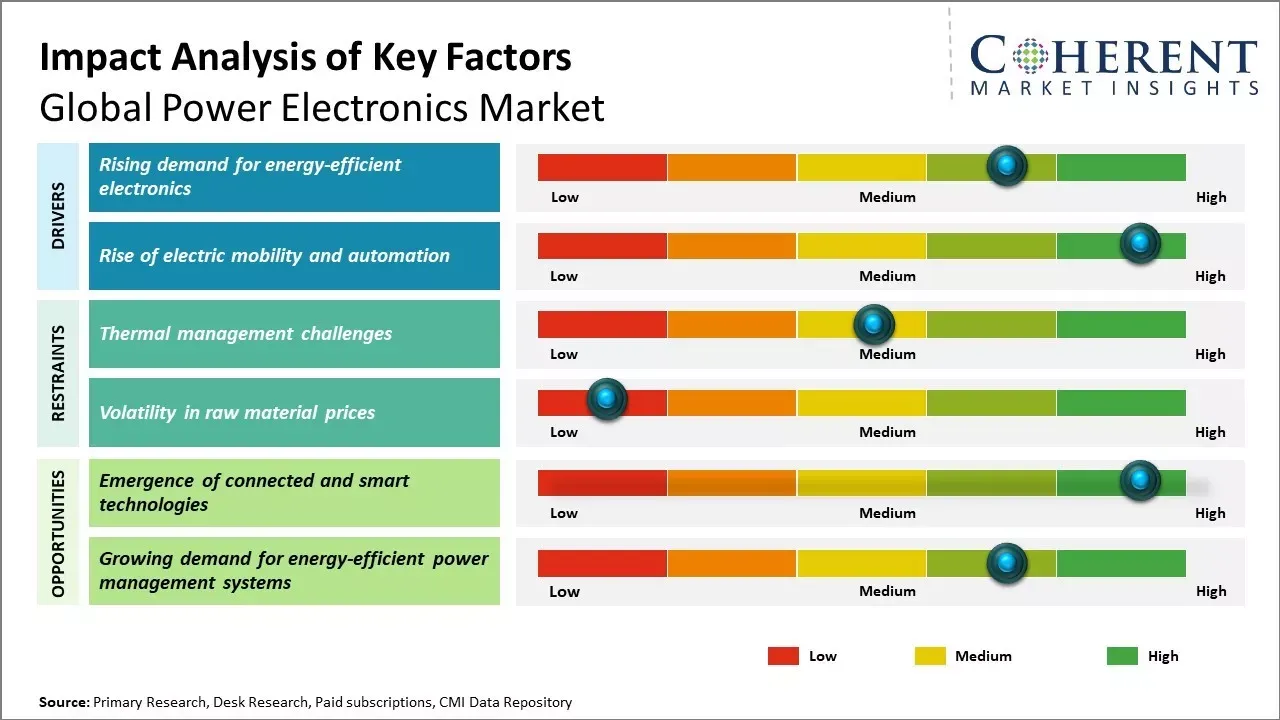
- Rising demand for energy-efficient electronics
The global emphasis on greener energy sources and reduced carbon emissions has increased the demand for power electronics applications around the world. Power electronics help optimize energy usage in various industries such as consumer electronics, automotive, industrial machinery, medical devices, and renewable energy generation. They allow precise control over electrical currents and help devices operate more efficiently.
Consumer awareness regarding energy conservation has never been higher. People want products that can perform multiple tasks but consume low power. This is driving innovations in power management integrated circuits that improve the efficiency of devices without compromising on performance. Variable frequency drives controlled by power electronics are also gaining popularity as they help electric motors use only as much power as they need.
Governments across the world are introducing stringent regulations and incentives to curb emissions. The European Union has mandated that all new vehicles sold from 2021 should emit no more than 95 grams of CO2 per kilometer. This is putting pressure on automakers to develop hybrid and electric vehicles. Sophisticated onboard chargers and DC-DC converters are essential for electric vehicles to charge quickly and extend driving range. Other industries are also under regulatory pressure to reform manufacturing processes and switch to cleaner alternatives.
In December 2024, ABB agreed to acquire Siemens Gamesa’s power electronics division in Spain—adding over 100 engineers and two factories focused on renewable power conversion.
This acquisition strengthens ABB's capabilities in renewable energy grid integration, enabling more cost-efficient, low-emission power conversion for utilities and industrial applications relying on clean energy.
- Rise of electric mobility and automation
The automotive sector is undergoing rapid transformation influenced by newly emerging technologies. Automakers are investing heavily in developing electric, autonomous, and connected vehicle solutions to stay ahead of the curve. According to many estimates, electric vehicles will dominate new car sales in less than two decades due to favorable regulations, improved battery technology, and charging infrastructure investment.
Power converters are essential components for electric vehicle powertrains, on-board charging systems, and efficient energy management. Batteries used in EVs also require sophisticated battery management systems (BMS) powered by embedded microcontrollers and power ICs.
Market Opportunities: Emergence of connected and smart technologies
Connected devices and IoT ecosystems are facilitating greater optimization, control and integration of power systems. Advanced technologies like artificial intelligence and machine learning are enabling more autonomous and adaptive management of power generation, transmission and consumption. This allows for improved reliability, higher efficiencies and reduced environmental impact.
Segmental Insights
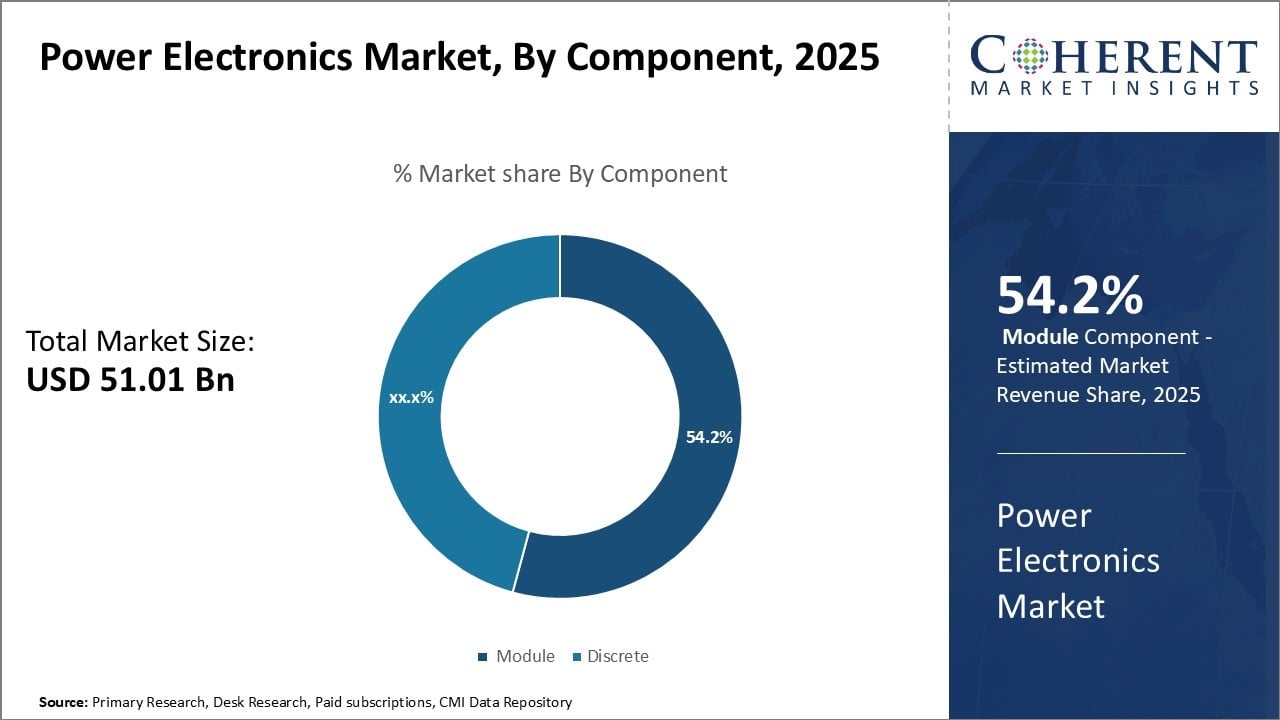
Power Electronics Market Insights, By Component
In terms of component, module is expected to contribute 55.2% share of the market in 2026 owing to its widespread use in electric vehicles. Modules integrate multiple discrete components together, reducing assembly effort and enhancing reliability. They allow easy upgrading of existing systems. The module segment is poised to grow considerably with the rising penetration of EVs worldwide. Government incentives and legislation to curb emissions are accelerating the EV adoption.
Modules consisting of IGBTs, diodes, and gate drivers for electric powertrains to control motors are crucial. Leading automakers are heavily investing in next-generation EV technologies, boosting the demand for more powerful modules that can handle higher voltages. Modules are also preferred over discrete components in industrial motor drives, solar inverters, and wind turbine generators due to their compact size and durability. With renewable energy gaining prominence, the module segment is well-placed to gain long-term.
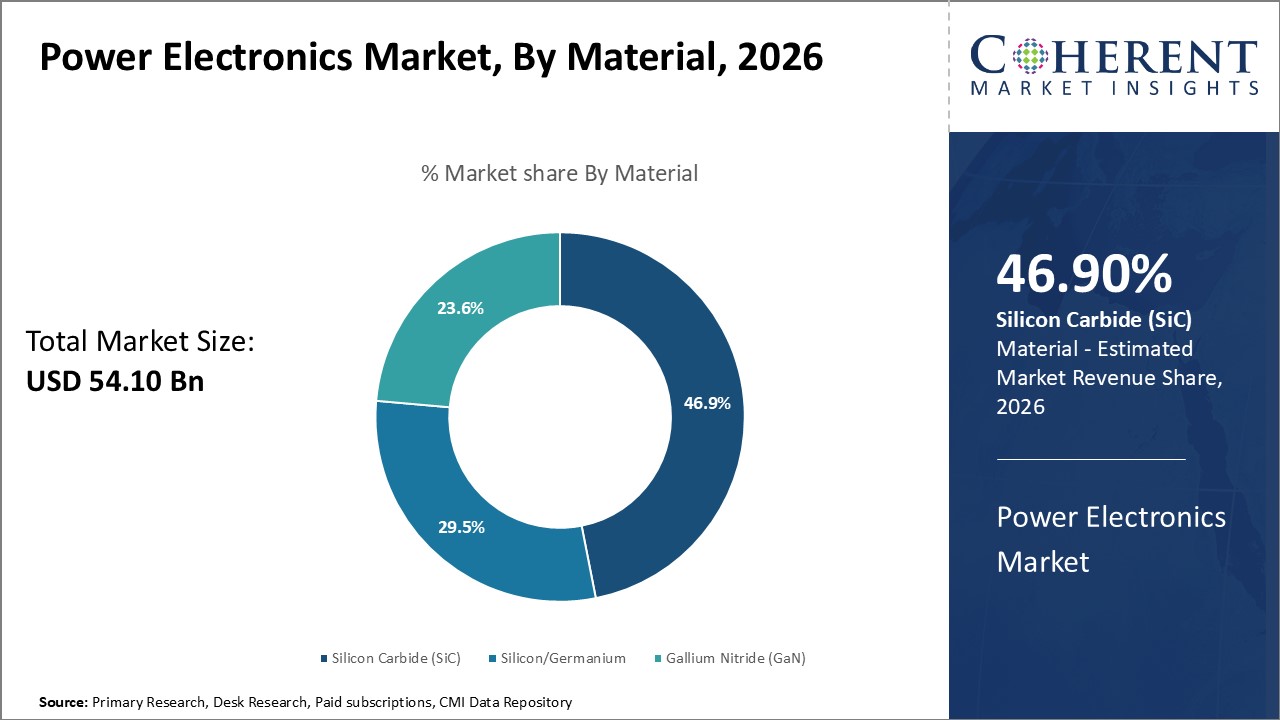
Power Electronics Market Insights, By Material
In terms of material, Silicon Carbide (SiC) is expected to contribute 46.9% share of the market in 2026 owing to its unparalleled advantages over silicon. As EVs require power electronic switches that can handle higher voltages, frequencies and temperatures, SiC is emerging as the material of choice. It enables power devices to operate at voltages 10X higher than traditional silicon devices without excessive cooling. This allows greater power densities and miniaturization of components.
SiC switches also reduce conduction and switching power losses remarkably. As a result, less energy is wasted as heat, enhancing EV driving ranges. SiC’s excellence at higher frequencies permits smaller passive components and motors in EVs. Leading automotive chipmakers are actively developing next-gen SiC modules, charging infrastructure and onboard chargers for future vehicles. Additionally, governments supporting domestic Sic industries will accelerate its adoption curve in the coming years.
Power Electronics Market Insights, By End-Use Industry
In terms of end-use industry, energy and power is expected to contribute 37.9% share of the market in 2026 owing to the criticality of efficient power conversion across utility infrastructure. Power electronics play a key role in renewable energy harvesting, long-distance power transmission, flexible AC transmission systems, energy storage systems, and microgrids.
The global energy transition towards renewable sources such as solar, wind, and tidal energy is stimulating power electronics spending. Optimum performance over their lifespan is crucial for solar inverters, wind generators and smart grid power electronics.
Investments in upgrading aging utility infrastructure with reliable power semiconductors are also growing worldwide. Additionally, demand from data centers, electric vehicle charging, and developing industrial sectors will sustain healthy growth opportunities in the energy and power end-use industry. Advancements in SiC and GaN technologies are expected to make renewable energy generation more affordable and scalable in the forthcoming years.
Power Electronics Market - Regional Insights
North America Power Electronics Market Analysis and Trends
North America has established itself as the dominant region in the global power electronics market. The region is expected to account for 36.3% of the market share in 2026. With major players based in the U.S. and Canada, the region is at the forefront of technological advancements in this field. It has a strong industrial and automotive manufacturing base which has helped boost the demand for power electronics over the years. Several new product developments and innovative solutions originating from North American companies have set global benchmarks.
The presence of an advanced infrastructure in place to support R&D as well as adoption of new technologies provides an edge to the region. North American players actively collaborate with application industries to build customized solutions. Their solutions often include value-added services and focus on energy efficiency. This level of customization and the additional value proposition have helped them gain significant market share globally.
Asia Pacific Power Electronics Market Analysis and Trends
Emerging economies in Asia Pacific present high growth opportunities for power electronics companies. China especially has turned into a global manufacturing hub which has driven the need for efficient power management across industries. Countries like India are also aggressively working to ramp up their manufacturing capabilities. The widespread focus on building local manufacturing capacities coupled with the expanding middle-class population will continue spurring demand.
The region has witnessed massive capacity additions in sectors like renewable energy, electric vehicles, and consumer electronics which are key application areas. This fast-paced industrialization aligns well with the government's initiatives to reduce carbon emissions through efficient energy utilization. Overall, the confluence of favorable government policies, growing electronics consumption, and huge investments in manufacturing make Asia Pacific the fastest expanding regional market for power electronics globally.
United States Power Electronics Market Analysis and Trend
The U.S. excels in power electronics innovation through aggressive R&D spending, solid semiconductor production, and strong industry demand from sectors such as electric vehicles, defense, and renewables. Industry leaders like Texas Instruments, ON Semiconductor, and Wolf speed are spearheading indigenous SiC and GaN device production to facilitate the clean energy revolution and EV ecosystem.
China Power Electronics Market Analysis and Trend
China is the world's largest producer as well as consumer of power electronics, driven by its huge electronics manufacturing industry, renewable energy installations, and quickly expanding EV industry. The government's encouragement of self-reliance in semiconductor technology and firm investment in domestic SiC/GaN manufacturing make China a world leader in this industry.
Germany Power Electronics Market Analysis and Trend
Germany is an important power electronics player in Europe, supported by its leading automotive sector and focus on energy efficiency. With industry leaders such as Infineon Technologies at the forefront of WBG semiconductor development, Germany is instrumental in providing high-performance power modules for EVs, industrial automation, and solar power systems.
Japan Power Electronics Market Analysis and Trend
Japan remains a leading contributor to power electronics with advancement in precision engineering and electronics. Mitsubishi Electric, Fuji Electric, and Rohm are some of the leading organizations developing efficient and compact power devices, particularly for automotive and energy industries.
Market Report Scope
Power Electronics Market Report Coverage
| Report Coverage | Details | ||
|---|---|---|---|
| Base Year: | 2025 | Market Size in 2026: | USD 54.10 Bn |
| Historical Data for: | 2020 To 2024 | Forecast Period: | 2026 To 2033 |
| Forecast Period 2026 to 2033 CAGR: | 6.1% | 2033 Value Projection: | USD 81.92 Bn |
| Geographies covered: |
| ||
| Segments covered: |
| ||
| Companies covered: | ABB, Analog Devices, Inc., Efficient Power Conversion Corporation, Euclid Techlabs, Fuji Electric Co., Ltd., Infineon Technologies AG, Littelfuse, Inc., Microchip Technology Inc., Mitsubishi Electric Corporation, Navitas Semiconductor, NXP Semiconductors, ON Semiconductor, Qorvo, Inc., Renesas Electronics Corporation, and ROHM CO., LTD. | ||
| Growth Drivers: |
| ||
| Restraints & Challenges: |
| ||
Power Electronics Industry News
- In December 2024, ABB entered into a deal to buy Siemens Gamesa's Spanish power electronics business, including two converter factories and more than 100 engineers, further solidifying its presence in renewable energy and grid integration markets; the transaction is to close in H2 2025.
- At PCIM Europe in May 2025, Navitas launched the industry's first production-ready 650 V bi‑directional GaNFast power ICs (with IsoFast gate drivers), along with automotive-qualified GaNSafe ICs and high‑reliability SiCPAK modules. These products enable single-stage topologies, which dramatically minimize size, improve efficiency, and advance performance in EV chargers, data centers, renewable inverters, and motor drives.
Key Takeaways from Analyst
- The global power electronics market is experiencing robust growth, with North America leading the charge and Asia Pacific emerging as the fastest growing region. North America's dominance can be attributed to the region's strong presence of major players like Infineon Technologies, ON Semiconductor, and Texas Instruments. These companies are leveraging their technological expertise and vast distribution networks to capture a significant market share.
- Asia Pacific, on the other hand, is poised for accelerated growth in the coming years. The rapid deployment of renewable energy projects and the increasing adoption of electric vehicles in countries like China, India, and Japan are driving the demand for power electronics in the region. Governments across Asia Pacific are implementing favorable policies and incentives to promote the adoption of clean energy technologies, further propelling the market's expansion.
- The power electronics market is also benefiting from the surge in demand for energy-efficient products across various industries, including data centers, automotive, and consumer electronics. The growing need to reduce carbon emissions and improve energy efficiency is pushing manufacturers to invest in advanced power electronics solutions. Wide bandgap semiconductors, such as silicon carbide (SiC) and gallium nitride (GaN), are gaining traction in the market due to their superior performance and efficiency compared to traditional silicon-based devices.
Market Segmentation
- Component Insights (Revenue, USD Bn, 2021 - 2033)
- Discrete
- Module
- Material Insights (Revenue, USD Bn, 2021 - 2033)
- Silicon/Germanium
- Silicon Carbide (SiC)
- Gallium Nitride (GaN)
- End-use Industry Insights (Revenue, USD Bn, 2021 - 2033)
- Automotive
- Consumer Electronics
- IT and Telecommunication
- Military and Aerospace
- Industrial
- Energy and Power
- Others
- Regional Insights (Revenue, USD Bn, 2021 - 2033)
- North America
- U.S.
- Canada
- Latin America
- Brazil
- Argentina
- Mexico
- Rest of Latin America
- Europe
- Germany
- U.K.
- Spain
- France
- Italy
- Russia
- Rest of Europe
- Asia Pacific
- China
- India
- Japan
- Australia
- South Korea
- ASEAN
- Rest of Asia Pacific
- Middle East & Africa
- GCC Countries
- Israel
- South Africa
- Rest of Middle East & Africa
- Key Players Insights
- ABB
- Analog Devices, Inc.
- Efficient Power Conversion Corporation
- Euclid Techlabs
- Fuji Electric Co., Ltd.
- Infineon Technologies AG
- Littelfuse, Inc.
- Microchip Technology Inc.
- Mitsubishi Electric Corporation
- Navitas Semiconductor
- NXP Semiconductors
- ON Semiconductor
- Qorvo, Inc.
- Renesas Electronics Corporation
- ROHM CO., LTD.
Sources
Primary Research Interviews
- Power Electronics System Integrators
- Online Power Electronics Component Manufacturers
- E-commerce Platform Managers (Electronics Segment)
- Power Electronics Distributors and Suppliers
- Others
Databases
- IHS Markit Electronics Database
- Frost & Sullivan Power Electronics Database
- Yole Développement Power Electronics Database
- GlobalData Electronics Intelligence Database
- Others
Magazines
- Power Electronics Technology Magazine
- Electronic Design Magazine
- Power Systems Design Magazine
- Electronics Weekly Magazine
- Others
Journals
- IEEE Transactions on Power Electronics
- Journal of Power Electronics
- Power Electronics and Drives Journal
- Others
Newspapers
- Electronic Engineering Times
- Electronics360 News
- Power Electronics News
- EE Times Electronic News
- Others
Associations
- Power Electronics Society (PELS)
- Institute of Electrical and Electronics Engineers (IEEE)
- Electronic Industries Alliance (EIA)
- International Electronics Manufacturing Initiative (iNEMI)
- Others
Public Domain Sources
- International Energy Agency (IEA) Reports
- U.S. Department of Energy Publications
- European Commission Energy Reports
- World Trade Organization Electronics Trade Statistics
- Others
Proprietary Elements
- CMI Data Analytics Tool
- Proprietary CMI Existing Repository of information for last 8 years
Get access to 250+ pages report
Every segment, forecast, competitor profile and data table behind the analysis above — available for instant download.
- ESOMAR Member
- ISO 9001:2015 Certified
- D-U-N-S Registered
- GDPR & CCPA Compliant
Missing comfort of reading report in your local language? Find your preferred language:
Transform your Strategy with Exclusive Trending Reports
Frequently Asked Questions
The Power Electronics Market size is estimated to be valued at USD 54.10 Bn in 2026, and is expected to reach USD 81.92 Bn by 2033.
The CAGR of the Power Electronics Market is projected to be 6.1% from 2026 to 2033.
Rising demand for energy-efficient electronics and rise of electric mobility and automation are the major factors driving the growth of the global power electronics industry.
Thermal management challenges and volatility in raw material prices are the major factors hampering the growth of the global market.
In terms of component, module is estimated to dominate the market revenue share in 2026. Which are the major players operating in the global market? ABB, Analog Devices, Inc., Efficient Power Conversion Corporation, Euclid Techlabs, Fuji Electric Co., Ltd., Infineon Technologies AG, Littelfuse, Inc., Microchip Technology Inc., Mitsubishi Electric Corporation, Navitas Semiconductor, NXP Semiconductors, ON Semiconductor, Qorvo, Inc., Renesas Electronics Corporation, and ROHM CO., LTD. are the major players.
North America is expected to lead the global power electronics industry in 2026.
The power electronics market is experiencing significant growth driven by the global shift towards renewable energy sources.