

Global Inspection Machines Market Size and Forecast – 2026 to 2033
The global inspection machines market is estimated to be valued at USD 1085.5 Mn in 2026 and is expected to reach USD 1,984.4 Mn by 2033, exhibiting a compound annual growth rate (CAGR) of 9.0% from 2026 to 2033. This significant growth reflects increasing investments in automated quality control solutions across various industries, including pharmaceuticals. The demand for enhanced precision, efficiency, and compliance with stringent regulatory standards, particularly in pharmaceutical manufacturing, is driving the adoption of advanced inspection technologies.
Key Takeaways of the Global Inspection Machines Market
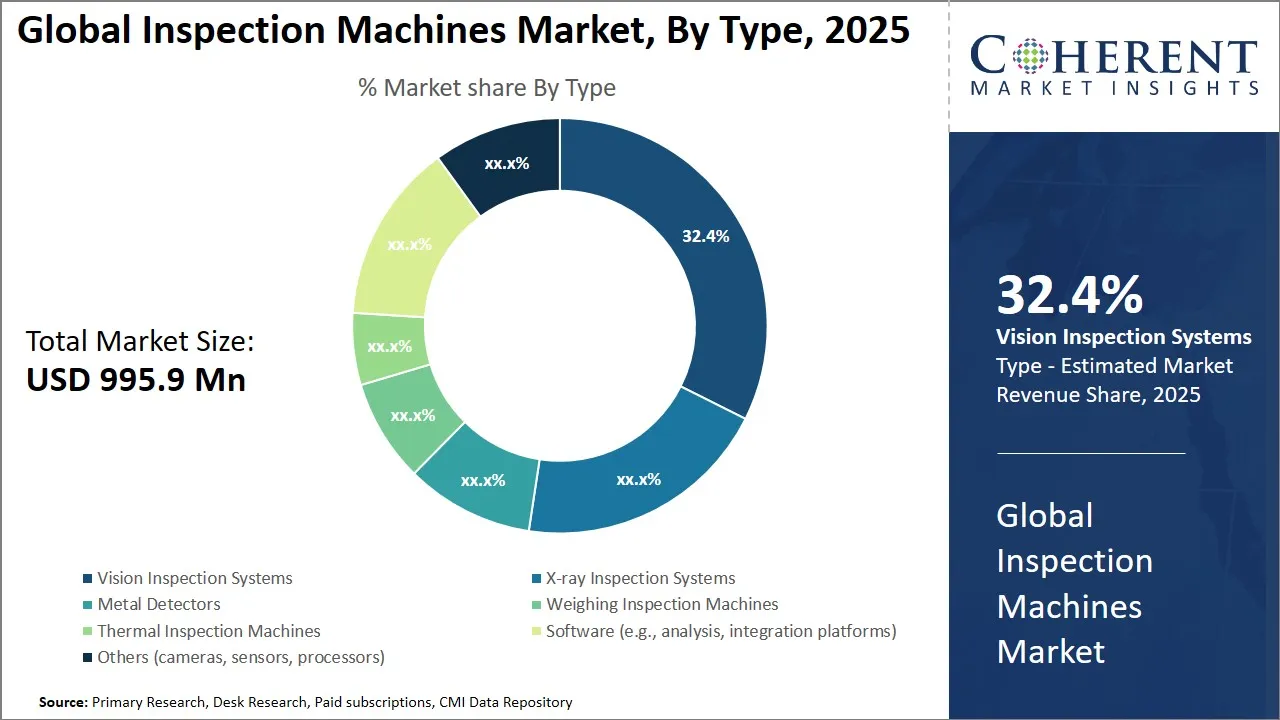
- In the global inspection machines market, vision inspection systems are projected to hold the largest share at 33.4% in 2026.
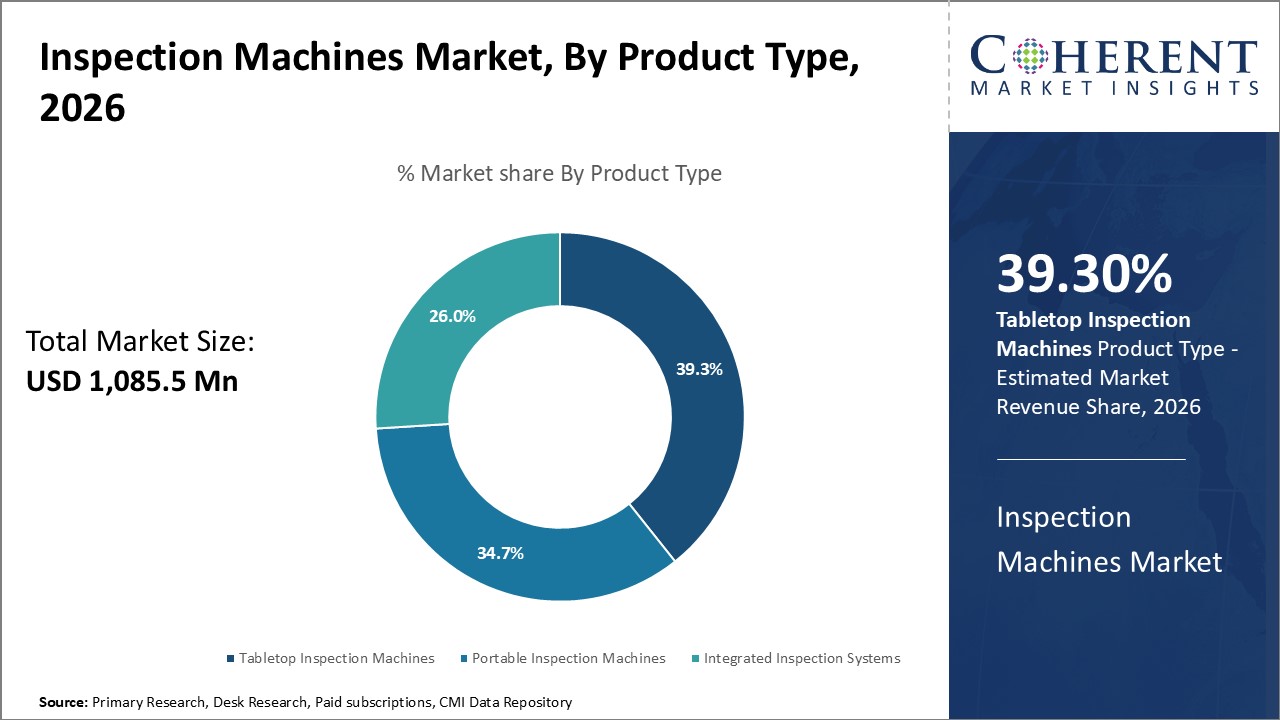
- Within the product type segment, tabletop inspection machines are expected to dominate with a 39.3% share in 2026.
- In the automation type segment, fully automated inspection machines are projected to lead the market, accounting for 41.3% of the share in 2026.
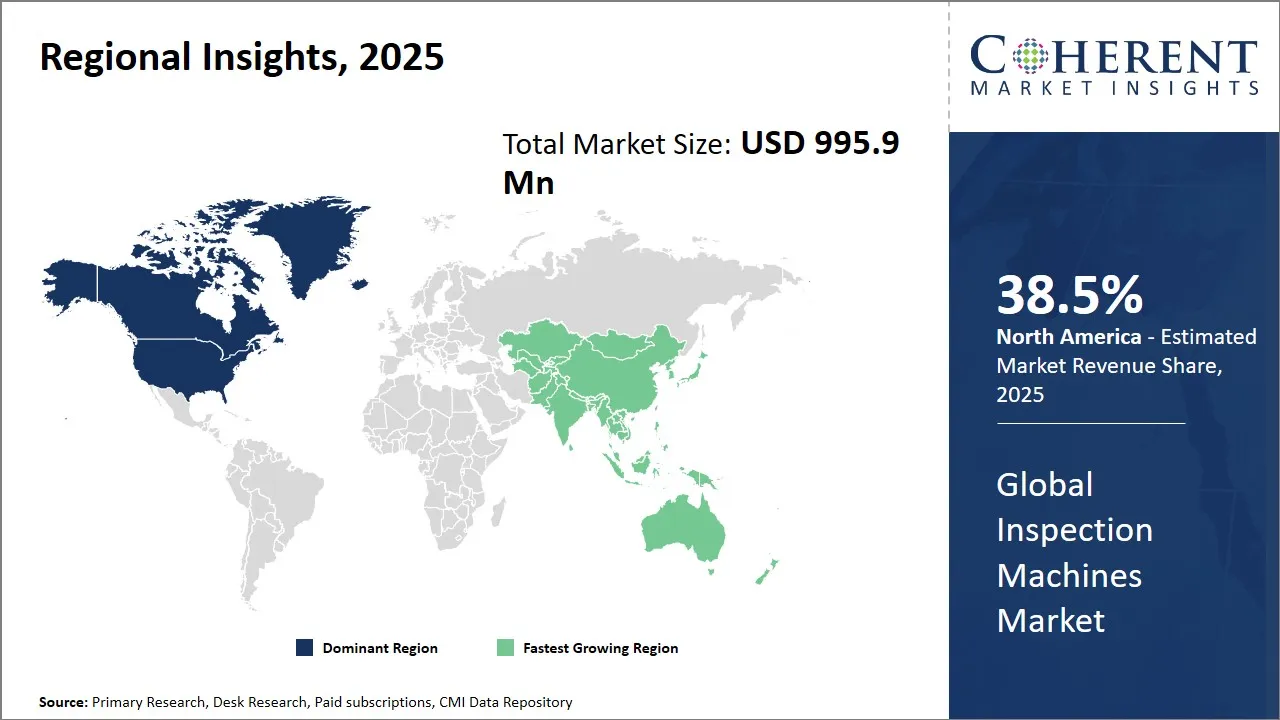
- North America is expected to lead the market, holding a share of 38.5% in 2026. Asia Pacific is anticipated to be the fastest-growing region, with a market share of 24.5% in 2026.
Market Overview
The market trend highlights a growing adoption of advanced technologies such as artificial intelligence, machine learning, and IoT in inspection machines, enabling real-time data analysis and predictive maintenance. Additionally, the shift towards Industry 4.0 and smart manufacturing processes is accelerating the demand for highly automated inspection systems capable of reducing human error and operational costs. This evolution fosters innovation and intensifies competition among key market players striving to deliver cutting-edge inspection solutions globally.
Current Events and Its Impact
Current Events | Description and its impact |
Technological Advancements in AI and IoT |
|
Expansion of Pharmaceutical Manufacturing in Asia Pacific |
|
Segmental Insights
- Current Industry Events of 2026
- Market Size Estimation
- Regional Breakdown
- Competitive Landscape
- Customer Intelligence
- Segmental Analysis
- Pricing Analysis
- Key Market Drivers, Challenges & Future Trends
- Customized Insights Section
Inspection Machines Market Insights, By Type - Vision inspection systems lead due to their unmatched versatility, precision, and ability to deliver reliable quality control across various industries
In terms of type, vision inspection systems contribute the highest share of the global inspection machines market with an estimated share of 33.4% in 2026, primarily due to their versatility and ability to deliver precise and reliable quality control across a broad range of industries. The widespread adoption of these systems is driven by the increasing need for defect detection, assembly verification, and real-time quality assurance in manufacturing processes. Vision inspection systems utilize high-resolution cameras and advanced image processing technologies, enabling manufacturers to identify surface defects, dimensional inaccuracies, and inconsistencies that manual inspection methods often miss.
In May 2023, Cognex Corporation, a leader in industrial machine vision, launched the Advantage 182 vision system to automate complex tasks like inspection and code reading in the life sciences sector. This all-in-one system uses edge learning technology to simplify applications such as test tube detection, centrifuged blood measurement, and pathology sample identification.
One significant factor boosting the demand for vision inspection systems is the ongoing emphasis on automation and digital transformation in factories worldwide. With the rise of Industry 4.0, manufacturers are increasingly integrating these systems into their production lines to enable continuous monitoring and reduce human error.
Inspection Machines Market Insights, By Product Type - Dominance of tabletop inspection machines is driven by compactness and versatility
Within the global inspection machines market, tabletop inspection machines hold the largest share in the product type segment with an estimated share of 39.3% in 2026, owing to their combination of compactness, ease of deployment, and adaptability across diverse production environments. These machines are favored by small to medium-sized enterprises and laboratories where space constraints and budget considerations necessitate scalable, cost-effective inspection solutions. Their tabletop design facilitates quick installation and relocation, allowing manufacturers to integrate quality checks at multiple points along the production line without disrupting workflow.
The growing complexity of products, especially in electronics, pharmaceuticals, and packaged food, has reinforced the need for flexible inspection equipment capable of handling varied inspection tasks efficiently. Tabletop machines offer the capability to perform multiple inspection functions such as dimensional measurement, surface defect detection, and component verification within a single compact unit. This multi-functionality reduces the requirement for separate equipment, thereby lowering operational costs and enhancing throughput.
Inspection Machines Market Insights, By Automation Type - Surge in fully automated inspection machines is attributed to efficiency and precision needs
In automation type segment, fully automated inspection machines are expected to lead the market, accounting for 41.3% of the market share in 2026, primarily driven by the relentless pursuit of efficiency, precision, and consistency in manufacturing operations. Fully automated systems are designed to perform end-to-end inspection tasks with minimal human intervention, significantly reducing labor costs and eliminating subjective errors inherent in manual inspections. This automation delivers faster inspection cycles, enabling industries to maintain high-speed production without compromising quality.
Industries with high regulatory compliance requirements, such as automotive and pharmaceutical sectors, particularly benefit from these machines due to their ability to provide reproducible and traceable inspection records. The integration of robotics, advanced sensors, and real-time data analytics within fully automated systems enhances defect detection capabilities while enabling corrective actions during production. As manufacturers seek to reduce scrap rates and avoid product recalls, the adoption of fully automated inspection machines becomes increasingly critical.
Role of Artificial Intelligence (AI) on the Global Inspection Machines Market
- Artificial Intelligence (AI) is significantly transforming the global inspection machines market by enhancing efficiency, reducing costs, and enabling greater automation. AI technologies, such as predictive analytics and machine learning, allow for real-time monitoring and fault detection in inspection processes, minimizing human errors and enhancing the accuracy of results. AI-driven automation optimizes production lines, leading to faster processing times and more consistent quality control. Additionally, AI’s ability to analyze vast amounts of data supports data-driven decision-making, enabling companies to make more informed choices about equipment maintenance, production schedules, and product quality. Companies in this market are increasingly adopting AI to enhance operational efficiency, improve customer experiences through personalized services, and create new business models that integrate AI-driven insights into their offerings.
- The adoption of AI in the global inspection machines market also opens doors for innovation in product design and service delivery. Companies leveraging AI are gaining a competitive edge by integrating smart technologies into their inspection machines, allowing for predictive maintenance, real-time defect detection, and tailored solutions for diverse industries. For instance, firms like Cognex and Keyence are already incorporating AI in their vision inspection systems, which provide high-precision and fast detection for manufacturing processes. As AI continues to advance, it is expected to drive further innovation, making products smarter and more adaptable to varying industry needs. However, while AI offers clear advantages, it also presents challenges such as the need for significant upfront investment and potential job displacement concerns. Nevertheless, companies that successfully integrate AI into their operations can expect substantial long-term growth, scalability, and improved competitive positioning.
Regional Insights
North America Inspection Machines Market Analysis and Trends
North America’s dominance in the global inspection machines market, with an estimated share of 38.5% in 2026, stems from a highly developed industrial ecosystem, advanced manufacturing technologies, and substantial investment in quality control and automation. The region benefits from stringent government regulations on manufacturing standards, particularly in sectors such as aerospace, automotive, and electronics, which demand precise and reliable inspection solutions. Robust R&D infrastructure and strong collaborations between industry and academia further accelerate technological advancements. Moreover, North America's well-established supply chain networks and trade policies supporting high-tech equipment imports and exports solidify its leading position in the market.
For example, Thermo Fisher Scientific is a leading provider of scientific instruments and laboratory supplies, specializing in analytical equipment, pharmaceutical inspection systems, and diagnostic reagents. Its product portfolio includes checkweighers, metal detectors, X-ray inspection systems, and mass spectrometers, supporting industries like pharmaceuticals, life sciences, and healthcare.
Asia Pacific Inspection Machines Market Analysis and Trends
Asia Pacific is expected to exhibit the fastest growth, with a share of 24.5% in 2026, driven by rapid industrialization, expanding manufacturing bases, and a growing emphasis on quality enhancement. Countries like China, Japan, South Korea, and India are investing heavily in automation and smart manufacturing, fueling the demand for sophisticated inspection machines. Government initiatives such as "Make in India," "Made in China 2026," and similar policies are incentivizing domestic production upgrades and the adoption of advanced inspection technologies. Additionally, the healthcare sector is increasingly adopting advanced inspection machines for improved diagnostics, quality control in medical device manufacturing, and ensuring compliance with stringent regulatory standards.
For example, Viswill, a leading Japanese company, specializes in designing and manufacturing advanced visual inspection systems for a wide range of industries, including pharmaceuticals, chip components, and rubber products. Known for its innovative technologies, Viswill offers a variety of pharmaceutical visual inspection systems, such as the NS Series, EX Series, and TIPS Series, which are designed for efficient tablet and capsule inspection.
Global Inspection Machines Market Outlook for Key Countries
U.S. Inspection Machines Market Trends
The U.S.’ inspection machines market is characterized by a strong demand from the aerospace, automotive, and electronics sectors, driven by stringent quality control requirements. Leading companies such as Cognex Corporation and Nikon Metrology have a significant presence here, offering advanced machine vision systems and coordinate measuring machines (CMMs). The U.S. government’s focus on manufacturing innovation through initiatives like the Advanced Manufacturing National Program encourages the integration of inspection technologies into smart factories, supporting quality assurance and process optimization.
In January 2023, Hanmi Pharmaceutical Co., a leading pharmaceutical company, announced a partnership with Euclid Medical Products, a U.S.-based manufacturer of drug dispensing automation machines, to sell JVM’s fully automated drug inspection machine in the U.S. Euclid, based in U.S, specializes in equipment for pharmacies, hospitals, and nursing facilities.
Germany Inspection Machines Market Trends
Germany continues to lead the European inspection machines market, anchored by its strong industrial base, particularly in automotive and machinery manufacturing. The country benefits from a highly skilled workforce and significant R&D investments by major market participants such as Carl Zeiss AG and Hexagon AB. Government policies that emphasize Industry 4.0 adoption have accelerated the use of automated inspection machines, including optical and X-ray systems, to improve manufacturing precision and competitiveness.
In March 2026, Systech, a part of Markem-Imaje and Dover, introduced UniSecure artAI, an AI-driven authentication solution for the pharmaceutical industry. Headquartered in Europe, Systech specializes in providing digital identification and traceability solutions, helping protect brands and enhance product security across global markets.
Japan Inspection Machines Market Trends
Japan’s inspection machines market showcases strong technological innovation, with companies like Keyence Corporation and Nikon Metrology driving product development in precision inspection machines. The country’s mature manufacturing landscape, especially in automotive and electronics, demands high accuracy and reliability, fostering continuous advancement in inspection technology. Government-led support for innovation and export-oriented trade policies facilitate Japan’s prominence in the global inspection machine supply chain.
In April 2026, Sonofai Inc., a Japanese startup focused on preserving traditional techniques through digital innovation, partnered with Fujitsu Limited, Ishida Tec Co., Ltd., and Tokai University to launch the SONOFAI T-01, an automated inspection device that determines the fat content of frozen albacore tuna non-destructively.
India Inspection Machines Market Trends
India’s inspection machines market is witnessing rapid growth due to expanding manufacturing activities in automotive, pharmaceuticals, and electronics. Government initiatives such as “Make in India” encourage the adoption of automation and quality control solutions to boost production standards. Both domestic manufacturers and foreign entities are investing in setting up local facilities and providing service networks, thereby increasing market accessibility. Emphasis on regulatory compliance and improving production efficiencies further accelerates market development in India.
In July 2026, Jekson Vision, a leader in innovative inspection solutions, launched its next-generation BiSmart Blister Inspection System, powered by advanced AI technology. Designed for the pharmaceutical industry, BiSmart ensures 100% consistent inspection results across various blister packaging types, including tablets, capsules, vials, ampules, and pre-filled syringes. With capabilities for inspecting products in Al-Al, clear or opaque foils, and child-resistant blisters, the system ensures high-speed, high-accuracy inspection at up to 800 blisters per minute.
Market Players, Key Developments, and Competitive Intelligence
Key Developments
- In June 2025, Antares Vision Group, a leader in product and supply chain digitalization, launched AI-GO, an AI-driven visual inspection platform, in collaboration with Oròbix, its AI service partner. The platform is designed to improve inspection accuracy, speed, and adaptability, addressing the increasing demand for smarter quality control.
- In May 2025, ACG, a provider of fully integrated manufacturing solutions, unveiled its world-first Personalised Capsule Machine (PCM), a patented technology that creates custom-formulated supplement capsules tailored to individual needs on demand. This innovation merges real-time health data with precision dosing and automated production to offer personalized nutrition solutions.
- In April 2025, Mettler-Toledo, a leading provider of inspection and packaging solutions, introduced its Test Before You Invest programme to assist manufacturers in the food, pharmaceutical, and packaging sectors. The programme allows businesses to trial checkweighers, metal detectors, x-ray systems, and vision inspection machines using their own product samples before making a purchase.
- In April 2025, Keyence, a leading provider of automation, sensing technologies, and inspection machines, launched its new IV4 vision sensor series. The sensors, equipped with built-in AI, feature tools like AI Identify, AI OCR, AI Count, and AI Trigger. Capable of detecting up to 15,000 parts per minute, these sensors can be installed at distances between 50 mm and 3 m, with both narrow and wide field-of-view options, offering advanced capabilities for high-speed inspection applications.
Top Strategies Followed by Global Inspection Machines Market Players
- Established market players, typically large multinational corporations, invest heavily in research and development (R&D) to create high-performance, innovative inspection machines that address diverse industrial needs. Their focus on R&D enables them to introduce cutting-edge features such as AI-powered defect detection, enhanced imaging capabilities, and faster processing speeds, which help maintain their technological edge and meet stringent quality requirements across industries. Alongside innovation, these players actively pursue strategic partnerships and alliances with major industry players and original equipment manufacturers (OEMs).
- In February 2021, Amgen, a leading biotech company, made an industry-first advancement by equipping its syringe inspection system with artificial intelligence (AI) to improve particle detection and reduce false rejects. In partnership with Syntegon Technology (formerly Bosch Packaging Technology), Amgen retrofitted an AI system onto a Syntegon syringe inspection machine at its Juncos, Puerto Rico facility.
- Mid-level competitors in the inspection machines market generally focus on delivering cost-effective products that strike a balance between quality and affordability. Their strategy involves targeting price-sensitive customers such as small and medium-sized enterprises (SMEs) that require reliable yet budget-friendly inspection solutions. These players emphasize efficient production processes and lean operational structures to keep manufacturing costs low without significantly compromising on product performance.
- For example, Ishida Co. Ltd offers reliable and cost-effective inspection solutions such as checkweighers and metal detectors, tailored for the pharmaceutical industry. They focus on providing value-for-money products that balance quality and affordability, catering to small and medium-sized pharmaceutical companies that require efficient packaging and quality control solutions.
- Small-scale players, while limited in resources compared to their larger counterparts, carve out specific niches within the global inspection machines market by emphasizing specialized features or innovative product variants tailored to unique industrial requirements. These companies often adopt cutting-edge technologies such as IoT integration, mobile inspection units, or customizable modular designs to differentiate their offerings and appeal to niche markets. By focusing on innovation and agility, small-scale manufacturers can quickly respond to localized customer needs and industry trends, an advantage that larger firms may find challenging.
- Vantage Technology offers innovative, mobile inspection solutions tailored to the pharmaceutical industry. Its Vantage Vision System is portable, IoT-enabled, and modular, allowing small and medium pharmaceutical manufacturers to perform real-time inspections and quality checks with minimal investment, making them an attractive choice for niche markets.
Market Report Scope
Inspection Machines Market Report Coverage
| Report Coverage | Details | ||
|---|---|---|---|
| Base Year: | 2025 | Market Size in 2026: | USD 1085.5 Mn |
| Historical Data for: | 2020 To 2024 | Forecast Period: | 2026 To 2033 |
| Forecast Period 2026 to 2033 CAGR: | 9.0% | 2033 Value Projection: | USD 1,984.4 Mn |
| Geographies covered: |
| ||
| Segments covered: |
| ||
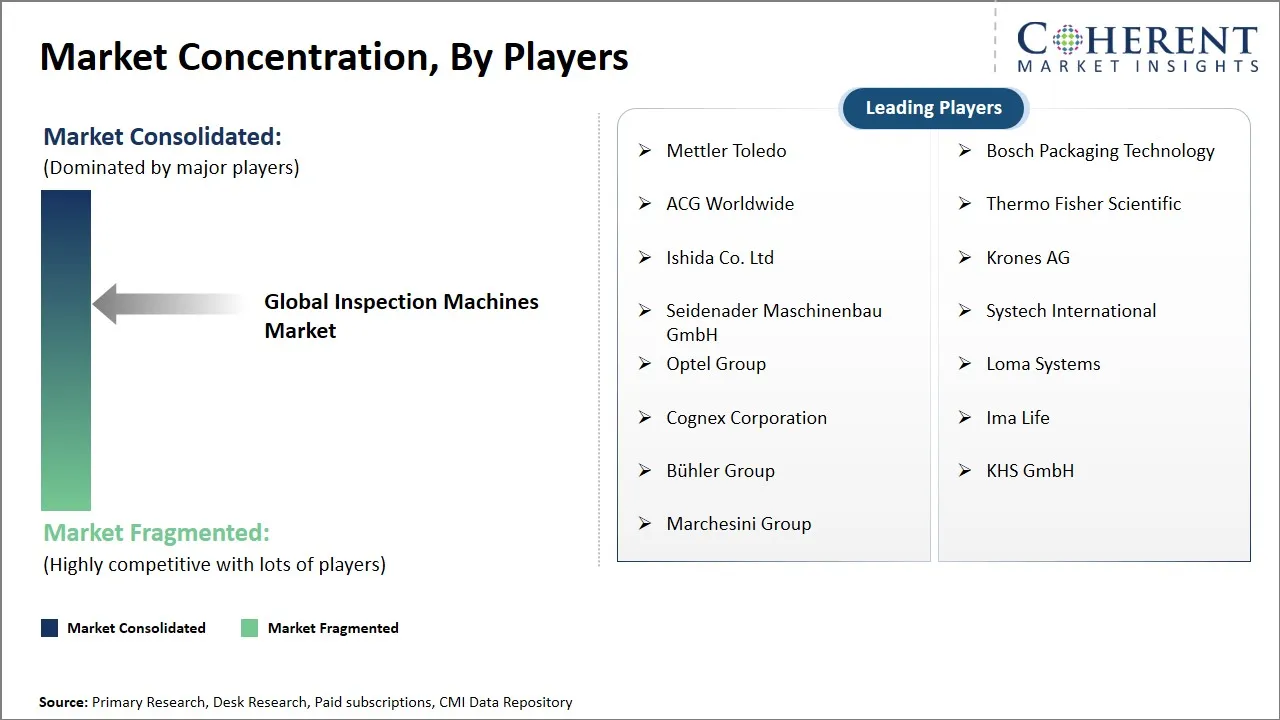
| Companies covered: | Mettler Toledo, Bosch Packaging Technology, ACG Worldwide, Thermo Fisher Scientific, Ishida Co. Ltd, Krones AG, Seidenader Maschinenbau GmbH, Systech International, Optel Group, Loma Systems, Cognex Corporation, Ima Life, Bühler Group, KHS GmbH, and Marchesini Group | ||
| Growth Drivers: |
| ||
| Restraints & Challenges: |
| ||
Inspection Machines Market Dynamics
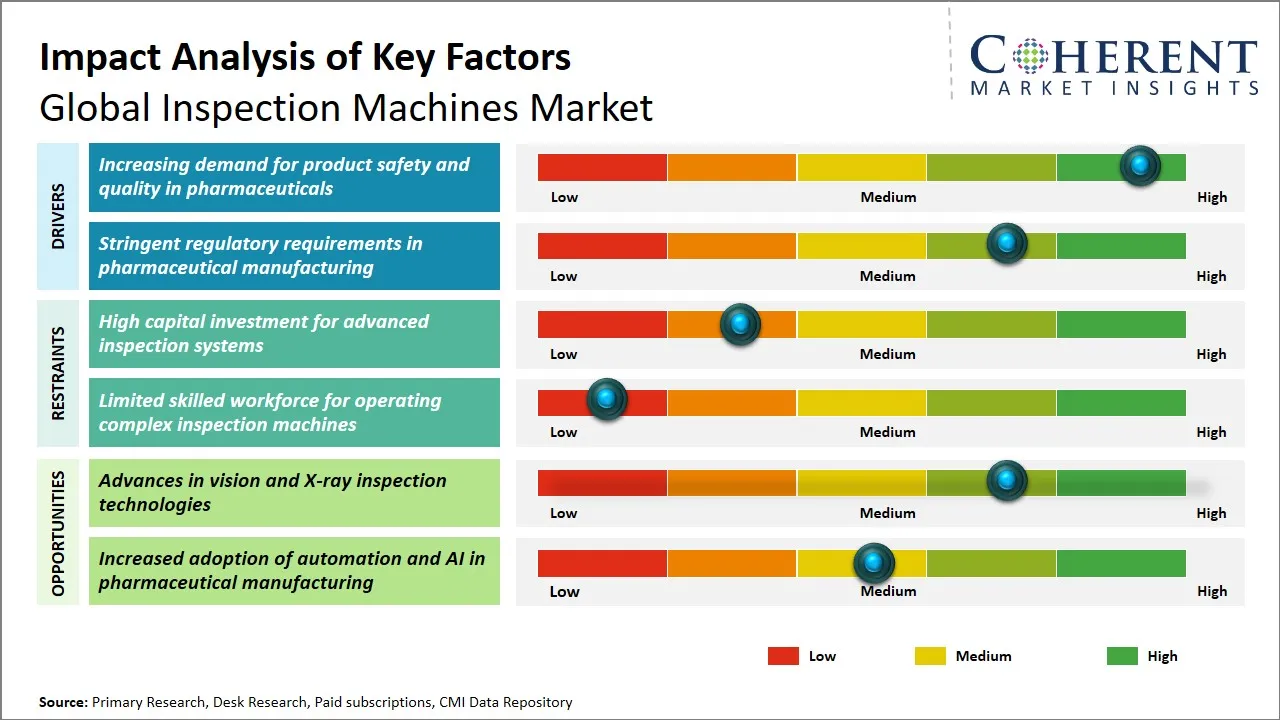
Inspection Machines Market Driver - Increasing Demand for Product Safety and Quality in Pharmaceuticals
The pharmaceutical sector's stringent regulatory environment and growing consumer awareness have significantly heightened the demand for product safety and quality, driving the adoption of advanced inspection machines globally. Manufacturers are increasingly compelled to ensure that every batch of pharmaceutical products, including tablets, capsules, and injectables, complies with rigorous standards to avoid contamination, dosage inconsistencies, and packaging defects. Automated inspection machines equipped with high-resolution imaging and real-time defect detection capabilities provide precise and consistent quality checks, reducing human error and improving operational efficiency. Additionally, the rising prevalence of counterfeit drugs has intensified the need for robust inspection solutions to verify authenticity and safeguard patient health.
In June 2025, Lange, a leading Swiss company specializing in high-quality label conversion, installed the Flexor IS440 inspection and rewinding machine to enhance its pharmaceutical label production. This investment was motivated by the growing need for improved security, traceability, and consistent quality in industries such as pharmaceuticals and cosmetics.
Inspection Machines Market Opportunity - Advances in Vision and X-ray Inspection Technologies
The global inspection machines market stands to benefit significantly from rapid advances in vision and X-ray inspection technologies, which are transforming quality control processes across numerous industries. Enhanced vision inspection systems, powered by artificial intelligence and machine learning algorithms, provide unparalleled accuracy and speed in detecting surface defects, dimensional inconsistencies, and assembly errors. These improvements enable manufacturers to reduce waste, improve product reliability, and comply with increasingly stringent regulatory standards. Parallelly, innovations in X-ray inspection technologies, including 3D computed tomography (CT) and advanced imaging software, allow for non-destructive testing of complex internal structures that were previously difficult or impossible to examine.
This capability is particularly crucial in sectors such as electronics, automotive, aerospace, and pharmaceuticals, where internal defects can result in significant safety and performance concerns. Moreover, miniaturization and cost reductions in X-ray systems are expanding their adoption beyond traditional heavy industries into food safety and consumer goods screening.
In October 2024, the U.K.’s National Health Service approved the use of an AI tool to aid in detecting bone fractures from X-rays. Companies like Techcare Alert and Boneview are helping to reduce missed diagnoses in the emergency department with their advanced platforms, enhancing diagnostic accuracy and efficiency.
Analyst Opinion (Expert Opinion)
- The global inspection machines market is experiencing significant growth, driven by several key factors. Technological advancements, particularly in AI and deep learning, are transforming inspection capabilities, enhancing accuracy and reducing false rejects. Increasing demand for quality control in industries like pharmaceuticals, food and beverage, and electronics is also boosting market expansion. Regulatory support, with stringent guidelines for product safety and traceability, further accelerates adoption of advanced inspection systems. As manufacturers focus on improving operational efficiency and reducing costs, opportunities for automation and integration of software solutions are becoming increasingly prominent, allowing for more seamless operations.
- However, the market faces challenges such as high initial investment costs and the complexity of integrating advanced systems into existing workflows. Despite these hurdles, the sector continues to thrive with initiatives like Syntegon Technology's AI-powered syringe inspection system, which has set a new industry benchmark. Recent events like the PACK EXPO and Interpack Expo have been instrumental in showcasing innovations and fostering knowledge-sharing among industry players. These gatherings provide valuable insights into emerging trends and help shape policy discussions, further driving the evolution of the inspection machines market on a global scale.
Speak to the analyst
Want personalized insights?
Take the findings above to one of our principal consultants, or have the report rebuilt around the segments, geographies and competitors you actually track.
Market Segmentation
- Type Insights (Revenue, USD Mn, 2021 - 2033)
- Vision Inspection Systems
- X-ray Inspection Systems
- Leak Detection Systems
- Metal Detectors
- Weighing Inspection Machines
- Thermal Inspection Machines
- Software (e.g., analysis, integration platforms)
- Others (cameras, sensors, processors)
- Product Type Insights (Revenue, USD Mn, 2021 - 2033)
- Tabletop Inspection Machines
- Portable Inspection Machines
- Integrated Inspection Systems
- Automation Type Insights (Revenue, USD Mn, 2021 - 2033)
- Fully Automated Inspection Machines
- Semi-automated Inspection Machines
- Manual Inspection Machines
- Packaging Type Insights (Revenue, USD Mn, 2021 - 2033)
- Ampoules and Vials
- Syringes
- Blisters
- Bottles
- Other Packaging Types (e.g., pre-filled syringes, cartridges)
- Application Insights (Revenue, USD Mn, 2021 - 2033)
- Quality Control
- Product Assembly Verification
- Final Inspection
- End User Insights (Revenue, USD Mn, 2021 - 2033)
- Hospitals
- Clinics
- Biopharmaceutical Companies
- Medical Device Manufacturers
- Diagnostic Laboratories
- Contract Research Organizations (CROs)
- Regulatory Authorities (for inspections)
- Regional Insights (Revenue, USD Mn, 2021 - 2033)
- North America
- U.S.
- Canada
- Latin America
- Brazil
- Argentina
- Mexico
- Rest of Latin America
- Europe
- Germany
- U.K.
- Spain
- France
- Italy
- Russia
- Rest of Europe
- Asia Pacific
- China
- India
- Japan
- Australia
- South Korea
- ASEAN
- Rest of Asia Pacific
- Middle East
- GCC Countries
- Israel
- Rest of Middle East
- Africa
- South Africa
- North Africa
- Central Africa
- North America
- Key Players Insights
- Mettler Toledo
- Bosch Packaging Technology
- ACG Worldwide
- Thermo Fisher Scientific
- Ishida Co. Ltd
- Krones AG
- Seidenader Maschinenbau GmbH
- Systech International
- Optel Group
- Loma Systems
- Cognex Corporation
- Ima Life
- Bühler Group
- KHS GmbH
- Marchesini Group
Sources
Primary Research Interviews
- Industry Stakeholders List
- Pharmaceutical Manufacturers
- Medical Device Manufacturers
- End Users List
- Hospitals and Healthcare Providers
- Pharmaceutical Packaging Companies
Government and International Databases
- U.S. Food and Drug Administration (FDA)
- European Medicines Agency (EMA)
- World Health Organization (WHO)
- U.S. Centers for Disease Control and Prevention (CDC)
- National Institutes of Health (NIH)
- Health Canada
Trade Publications
- Pharmaceutical Technology
- Healthcare Packaging
- Medical Device and Diagnostic Industry (MDDI)
- Packaging Digest
- Food Quality & Safety
- Journal of Pharmaceutical Sciences
Academic Journals
- Journal of Pharmaceutical Innovation
- International Journal of Pharmaceutics
- Journal of Food Engineering
- Journal of Biopharmaceutical Sciences
- Computers in Biology and Medicine
- Journal of Applied Pharmaceutical Science
Reputable Newspapers
- The New York Times
- The Wall Street Journal
- The Guardian
- Financial Times
- Reuters
- The Washington Post
Industry Associations
- International Society for Pharmaceutical Engineering (ISPE)
- American Society for Quality (ASQ)
- Pharmaceutical Research and Manufacturers of America (PhRMA)
- Association for Packaging and Processing Technologies (PMMI)
- European Federation of Pharmaceutical Industries and Associations (EFPIA)
- International Packaging Institute (IPI)
Public Domain Resources
- U.S. Government Accountability Office (GAO)
- U.S. Patent and Trademark Office (USPTO)
- European Commission - Digital Single Market
- U.S. Census Bureau
- United Nations Industrial Development Organization (UNIDO)
- World Trade Organization (WTO)
Proprietary Elements
- CMI Data Analytics Tool: Proprietary analytics tool to analyze real-time market trends, consumer behavior, and technology adoption in market
- Proprietary CMI Existing Repository of Information for Last 8 Years
Get access to 250+ pages report
Every segment, forecast, competitor profile and data table behind the analysis above — available for instant download.
- ESOMAR Member
- ISO 9001:2015 Certified
- D-U-N-S Registered
- GDPR & CCPA Compliant
Missing comfort of reading report in your local language? Find your preferred language:
Transform your Strategy with Exclusive Trending Reports
Frequently Asked Questions
The global inspection machines market is estimated to be valued at USD 1085.5 Mn in 2026 and is expected to reach USD 1,984.4 Mn by 2033.
The CAGR of global inspection machines market is projected to be 9.0% from 2026 to 2033.
Increasing demand for product safety and quality in pharmaceuticals and stringent regulatory requirements in pharmaceutical manufacturing are the major factors driving the growth of the global inspection machines market.
High capital investment for advanced inspection systems and limited skilled workforce for operating complex inspection machines are the major factors hampering the growth of the global inspection machines market.
In terms of type, vision inspection systems are estimated to dominate the market revenue share in 2026.
Technological advancements like AI-powered inspection systems, deep learning, and machine vision are playing a crucial role in improving inspection accuracy, speed, and flexibility. The integration of IoT and cloud-based analytics is also helping manufacturers monitor operations in real time and improve decision-making.
AI in inspection machines improves defect detection by learning from large datasets, enhancing accuracy, reducing false rejects, and adapting to new parameters with minimal human input. It optimizes inspection speeds while maintaining high-quality standards.