

Global Iron Supplement Market Size and Forecast – 2026 to 2033
The Global Iron Supplement Market is estimated to be valued at USD 2.91 billion in 2026 and is expected to reach USD 3.88 billion by 2033, exhibiting a compound annual growth rate (CAGR) of 4.2% from 2026 to by 2033.
Key Takeaways of the Global Iron Supplement Market:
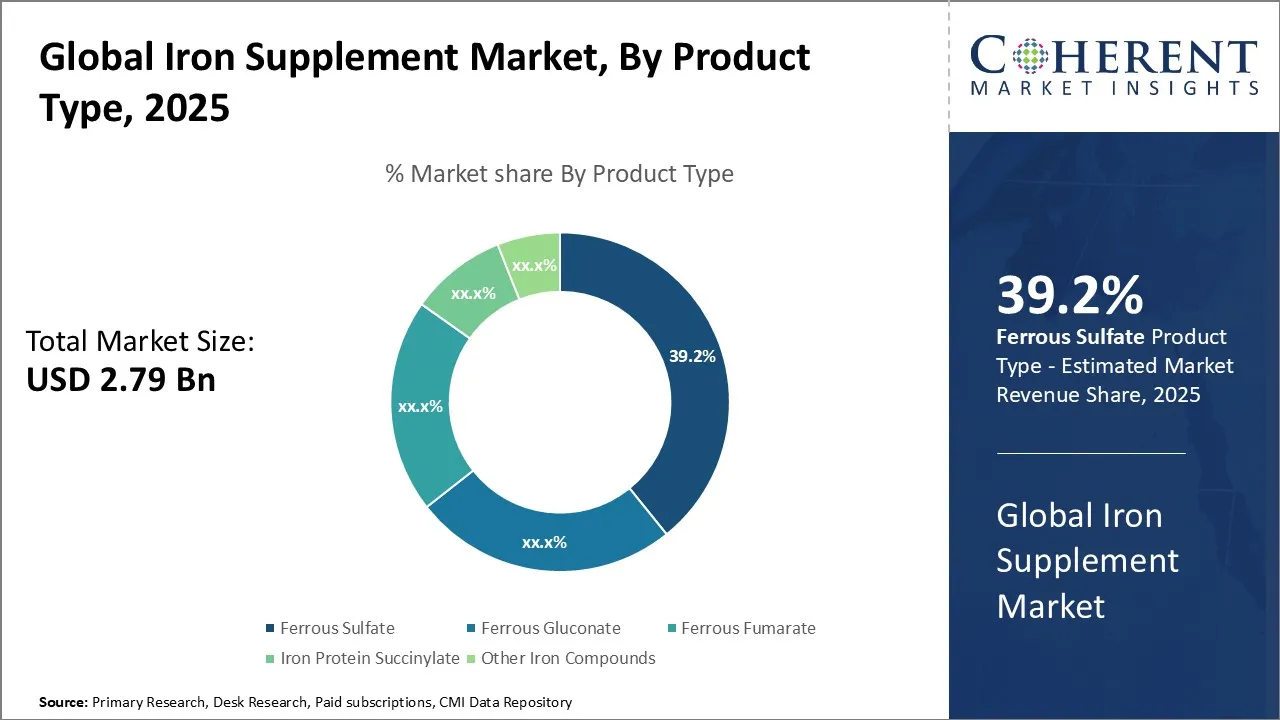
- By product type, ferrous sulfate holds the largest market share in 2026, accounting for an estimated share of 40.2%, attributed to its proven effectiveness, low cost, and widespread availability.
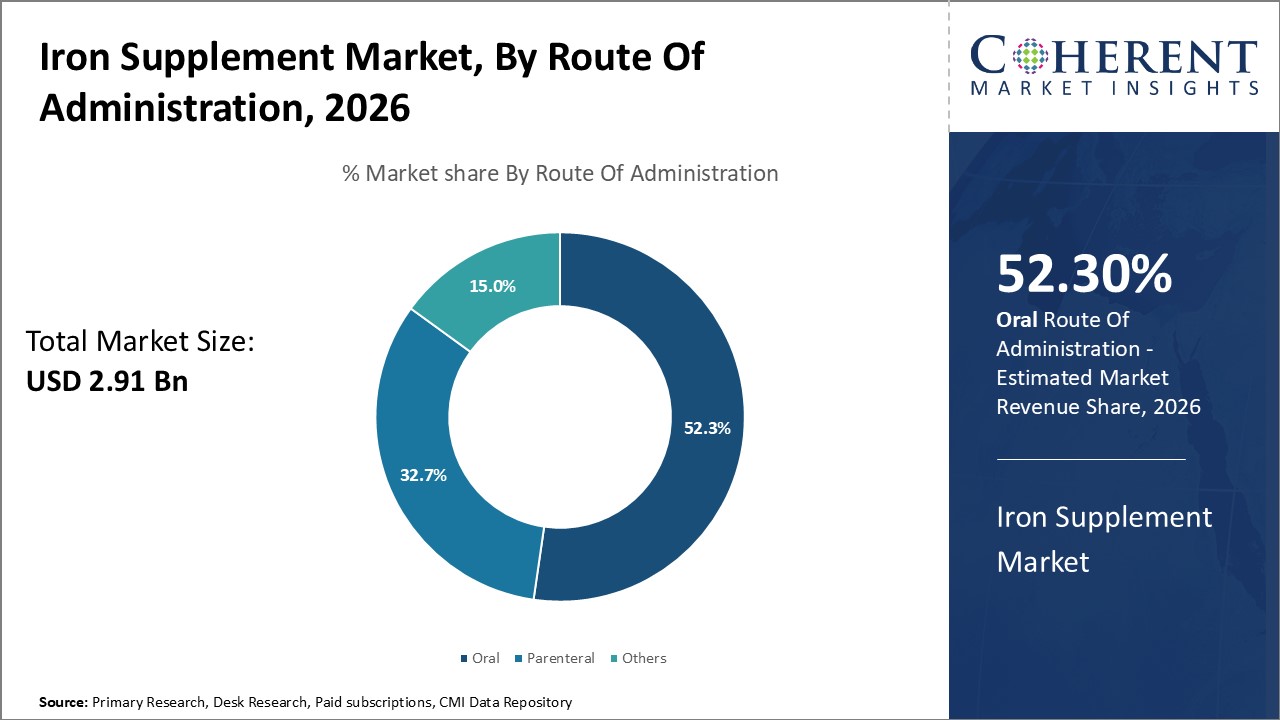
- In terms of route of administration, the oral segment is expected to dominate with a 52.3% share in 2026, owing to the ease of use and broad accessibility of oral iron formulations such as tablets, capsules, and liquids.
- By indication, iron deficiency anemia emerges as the leading segment, capturing an estimated 33.1% of the market share in 2026, driven by its widespread occurrence across various age groups and increasing awareness through public health initiatives.
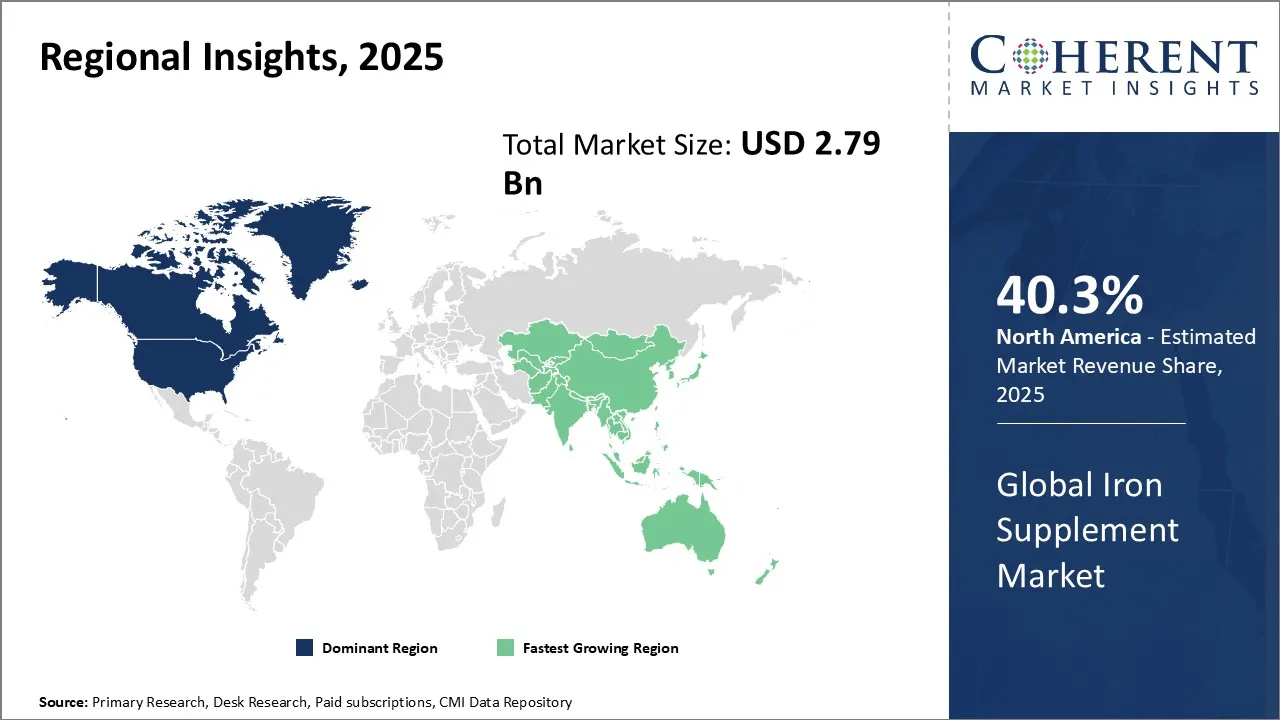
- North America is expected to lead the market, holding a share of 40. 3% in 2026. Asia Pacific is anticipated to be the fastest-growing region, with a market share of 30.1% in 2026.
Market Overview
The market trend for the iron supplement market is characterized by growing awareness about the importance of maintaining adequate iron levels in the body, particularly among women and individuals with certain health conditions. The increasing prevalence of anemia and other iron deficiency disorders, coupled with the rising popularity of veganism and vegetarianism, is driving the demand for iron supplements. Additionally, the development of innovative and user-friendly iron supplement formulations, such as gummies supplements, is expected to further fuel market growth during the forecast period.
Currents Events and their Impact
Current Events | Description and its impact |
Growth of plant‑based iron supplements |
|
Government Initiatives for Anemia Awareness |
|
Segmental Analysis
- Current Industry Events of 2026
- Market Size Estimation
- Regional Breakdown
- Competitive Landscape
- Customer Intelligence
- Segmental Analysis
- Pricing Analysis
- Key Market Drivers, Challenges & Future Trends
- Customized Insights Section
Iron Supplement Market Insights, By Product Type - Ferrous Sulfate Remains the Market Leader Due to Proven Efficacy and Cost-Effectiveness
In terms of product type, ferrous sulfate is expected to contribute the highest share of the market with a share of 40.2% in 2026 owing to its well-established efficacy, affordability, and widespread availability. Ferrous sulfate has been a staple in the treatment of iron deficiency anemia for decades, and its reliability has solidified its position as the leading iron supplement product.
One of the primary factors driving the growth of the ferrous sulfate segment is its proven effectiveness in replenishing iron stores and improving hemoglobin levels. Numerous clinical studies have demonstrated the superiority of ferrous sulfate over other iron compounds in terms of absorption and bioavailability. This scientific evidence has instilled confidence among healthcare professionals and consumers alike, leading to a strong preference for ferrous sulfate supplements.
Iron Supplement Market Insights, By Route of Administration - Oral Supplements Dominate Due to Superior Convenience and Consumer Preference
In terms of route of administration, the oral segment is projected to contribute the highest share of the market with 52.3% in 2026, primarily due to the convenience and accessibility associated with oral iron supplements. Oral iron supplements, such as tablets, capsules, and liquid preparations, offer a simple and non-invasive way for individuals to address their iron deficiency anemia or maintain optimal iron levels.
The ease of administration is a major driving factor for the growth of the oral segment. Oral iron supplements can be self-administered at home without the need for medical supervision or assistance. This convenience factor is particularly appealing to consumers who lead busy lifestyles or have limited access to healthcare facilities. The ability to incorporate iron supplementation into one's daily routine without significant disruption has contributed to the widespread adoption of oral iron supplements.
Iron Supplement Market– Iron Deficiency Anemia Drives the Largest Market Share Driven By Widespread Prevalence of Iron Deficiency Anemia
The iron supplement market by indication is led by iron deficiency anemia as the dominant segment with an estimated share of 33.1% in 2026, driven by its high global prevalence across all age groups and genders. It is one of the most common nutritional deficiencies worldwide, especially in women, children, and the elderly. With increasing awareness, government-led screening programs, and physician recommendations, the demand for iron supplements—both oral and intravenous—continues to surge. This segment accounts for the largest share due to its widespread clinical relevance and consistent medical need for therapeutic intervention.
Regional Insights:
North America Iron Supplement Market Analysis and Trends
In North America, the dominance in the global iron supplement market can be attributed to several factors with a share of 40.3% in 2026. The region boasts a well-established healthcare infrastructure, high consumer awareness regarding the importance of iron supplementation, and a strong presence of key market players. The U.S., in particular, has a large population of health-conscious individuals who actively seek iron supplements to prevent and treat iron deficiency anemia.
Moreover, the region's favorable regulatory environment and extensive research and development activities have further propelled market growth. For instance, in October 2021, BioSyent Inc., a Canadian specialty pharmaceutical company, announced the launch of FeraMAX Pd Powder 15 through its subsidiary BioSyent Pharma Inc. in Canada. This pediatric iron supplement uses the company’s patented Polydextrose-Iron Complex (PDIC) technology for improved tolerance and adherence.
Asia Pacific Iron Supplement Market Analysis and Trends
Meanwhile, the Asia Pacific region is expected to exhibit the fastest growth in the global iron supplement market with a share of 30.1% in 2026. This growth can be ascribed to the rising prevalence of iron deficiency anemia, increasing awareness about the importance of iron supplementation, and growing disposable incomes in the region. Countries such as China and India, with their large populations and expanding middle class, have witnessed a surge in demand for iron supplements.
Additionally, government initiatives aimed at combating anemia and improving overall health have further fueled market growth. For instance, in November 2024, Cadila Pharmaceuticals, one of India’s leading integrated pharmaceutical companies, launched Militol, a new iron supplement formulated with ferric maltol, folic acid, vitamin B12, vitamin C, and vitamin D. Designed to improve iron absorption and minimize gastrointestinal side effects, Militol offers a well-tolerated, low-dose solution targeting iron deficiency, particularly among women.
Global Iron Supplement Market Outlook for Key Countries:
U.S. Iron Supplement Market Trends
The U.S. market for iron supplements remains robust, driven by high consumer awareness and a strong healthcare system. Major players such as Procter & Gamble, with its Metamucil brand, and Bayer AG, with its Flintstones vitamins, have a significant presence in the country. These companies continue to invest in research and development to introduce innovative and targeted iron supplement formulations. Additionally, the growing popularity of e-commerce platforms has expanded the reach of iron supplements, making them easily accessible to consumers across the country.
For instance, in March 2026, IBSA USA, a subsidiary of the Switzerland-based pharmaceutical company IBSA Institut Biochimique SA, expanded its IBSA Care line of dietary supplements with the launch of Irosolv, an innovative oral film strip containing 30 mg of Iron and 400 mcg of Folic Acid. Designed for improved tolerability and ease of use, Irosolv utilizes novel orally dissolving film technology, reflecting the company’s commitment to advancing patient-friendly nutritional supplement formats.
Canada Iron Supplement Market Trends
The iron supplement market in Canada is undergoing a shift toward advanced, well-tolerated formulations driven by rising health awareness and consumer preference for clean-label, easy-to-use products. Canadian consumers are increasingly seeking alternatives to traditional iron tablets, which are often associated with side effects like nausea and constipation. This has led to greater adoption of liposomal, plant-based, and fortified iron products that offer improved absorption and digestive comfort.
For instance, in September 2024, Szio+ Inc., a Canadian natural healthcare company, launched Ferosom Forte in the U.S., an advanced iron supplement utilizing coated liposomal technology for enhanced absorption and reduced side effects. Available in capsule and sachet forms, Ferosom Forte is fortified with essential vitamins like C, D, B6, B12, and folic acid, offering a convenient and well-tolerated solution for iron deficiency.
China Iron Supplement Market Trends
China's market for iron supplements is experiencing significant growth, fueled by the country's large population and increasing health consciousness. The government's efforts to improve public health and combat anemia have created a conducive environment for market expansion. Domestic companies such as By-Health Co., Ltd. and Harbin Pharmaceutical Group Co., Ltd. have gained a strong foothold in the market by offering affordable and locally tailored iron supplement products.
For instance, in May 2021, ECMOHO Limited, a China-based health solutions provider, and Harbin Pharmaceutical Group (HPGC) jointly launched Puxue Oral Liquid, an iron and vitamin B12 supplement for all age groups, including pregnant women. ECMOHO handles packaging and distribution, while HPGC, a major pharma enterprise, supports production. The product aims to combat nutrient deficiencies linked to anemia and related health concerns.
India Iron Supplement Market Trends
India continues to be a key player in the global iron supplement market, driven by the high prevalence of iron deficiency anemia and growing awareness about the importance of iron supplementation. The government's National Iron Plus Initiative has played a crucial role in promoting iron supplementation among vulnerable groups. Companies like Emami Limited and Lupin Limited have capitalized on this demand by offering cost-effective and easily accessible iron supplement products.
For instance, in July 2023, Oriflame India, a holistic beauty and wellbeing brand, launched two new health supplements under its Wellosophy range: Iron Complex for women and Calcium with Vitamin D and Magnesium. Developed by Oriflame’s Nutrition Council in Sweden, both products are GMO-free, gluten-free, and meet top European quality standards.
Macro & Micro Economic Factors Impacting Growth of Global Iron Supplement Market:
- The macro-economic factors influencing the growth of the global iron supplement market include rising global population and increasing awareness of nutritional health, particularly in emerging economies. Economic development and rising disposable incomes in countries such as India, China, and Brazil have driven demand for over-the-counter supplements, including iron-based products. Government initiatives and national health programs addressing iron deficiency anemia – especially among women and children – are playing a significant role. Additionally, global urbanization trends and lifestyle changes have led to altered dietary habits, increasing the need for iron supplementation. Furthermore, improved healthcare infrastructure, growing geriatric populations, and increased investment in preventive healthcare contribute to a favorable market environment.
- On the micro-economic level, company-level initiatives such as product innovation, formulation improvements (e.g., heme vs non-heme iron, sustained-release capsules), and targeted marketing campaigns have fueled consumer demand. Strategic partnerships between pharmaceutical companies, retail chains, and e-commerce platforms have enhanced product accessibility. Rising consumer preference for personalized nutrition and plant-based supplements has also led to diversification in product offerings. Price sensitivity in developing markets, supply chain fluctuations (especially in raw materials like ferrous sulfate), and competition from multivitamins containing iron are notable challenges. Moreover, companies are increasingly investing in clinical research to validate product efficacy and differentiate themselves in a crowded marketplace.
Market Players, Key Developments, and Competitive Intelligence:
Key Developments:
- In March 2025, Wanbury Limited, a publicly listed pharmaceutical company on the National Stock Exchange (NSE) and Bombay Stock Exchange (BSE), announced the launch of two new products this month: Wanbury C-RED, a liposomal iron supplement, and Ketamine Hydrochloride Active Pharmaceutical Ingredient (API).
- In January 2024, Kolinpharma, an Italy-based nutraceutical company specializing in science-backed dietary supplements, launched KIPFeR, an innovative iron supplement developed in partnership with Nemysis LTD. KIPFeR features Iron Hydroxide Adipate Tartrate (IHAT) in nanoparticle form, mimicking ferritin—the body's natural iron storage protein.
- In October 2024, Seaford Pharmaceuticals Inc., a Canadian healthcare company based in Toronto, launched the "Iron Will" national awareness campaign to address iron deficiency (ID) and iron deficiency anemia (IDA) across Canada. The initiative aims to educate the public on the importance of iron in overall health, promote early intervention, and support vulnerable populations affected by these conditions.
Top Strategies Followed by Global Iron Supplement Market Players
- Established players in the global iron supplement market are focusing on extensive research and development to innovate high-performance products. These companies are investing heavily in R&D to develop new formulations and delivery methods that enhance the bioavailability and efficacy of iron supplements. leading companies are exploring novel technologies such as nanotechnology and liposomal encapsulation to improve the absorption and stability of iron supplements.
- For instance, in March 2023, Steadfast Nutrition, a sports and wellness nutrition brand, launched the KnowIronNoAnaemia campaign to raise awareness about iron-deficiency anaemia among women in India. The initiative encourages regular hemoglobin testing and promotes the intake of iron- and vitamin C-rich foods, while also educating the public on daily iron needs, symptoms, and causes of anemia.
- Mid-level players in the global iron supplement market are focusing on delivering cost-effective solutions to target price-sensitive consumers. These companies are developing quality products that offer value for money without compromising on efficacy. They are optimizing their manufacturing processes, sourcing strategies, and supply chain management to reduce costs and pass on the benefits to consumers.
- For instance, in June 2024, Bart, a manufacturer of natural colors, flavors, emulsions, and liposomal vitamins, unveiled its new iron supplement Liposovit-Fe at Vitafoods Europe 2024. The liposomal iron bisglycinate powder is designed for improved absorption and taste, offering a high-efficiency formula in a small dose.
- Small-scale players are increasingly shaping the dynamics of the iron supplement market, particularly in developing and underserved regions. These companies often focus on affordable, region-specific formulations such as syrup-based iron for children, chewables for geriatric use, and plant-based capsules for health-conscious consumers.
- For instance, in November 2024, JB Pharma announced its focus on achieving robust revenue and margin growth in the upcoming quarters. As part of its product expansion strategy, the company plans to launch Bizfer XT, a syrup-based iron supplement, in the third quarter, followed by the introduction of a probiotic product for dental health later this year.
Market Report Scope
Iron Supplement Market Report Coverage
| Report Coverage | Details | ||
|---|---|---|---|
| Base Year: | 2025 | Market Size in 2026: | USD 2.91 Bn |
| Historical Data for: | 2020 To 2024 | Forecast Period: | 2026 To 2033 |
| Forecast Period 2026 to 2033 CAGR: | 4.2% | 2033 Value Projection: | USD 3.88 Bn |
| Geographies covered: |
| ||
| Segments covered: |
| ||
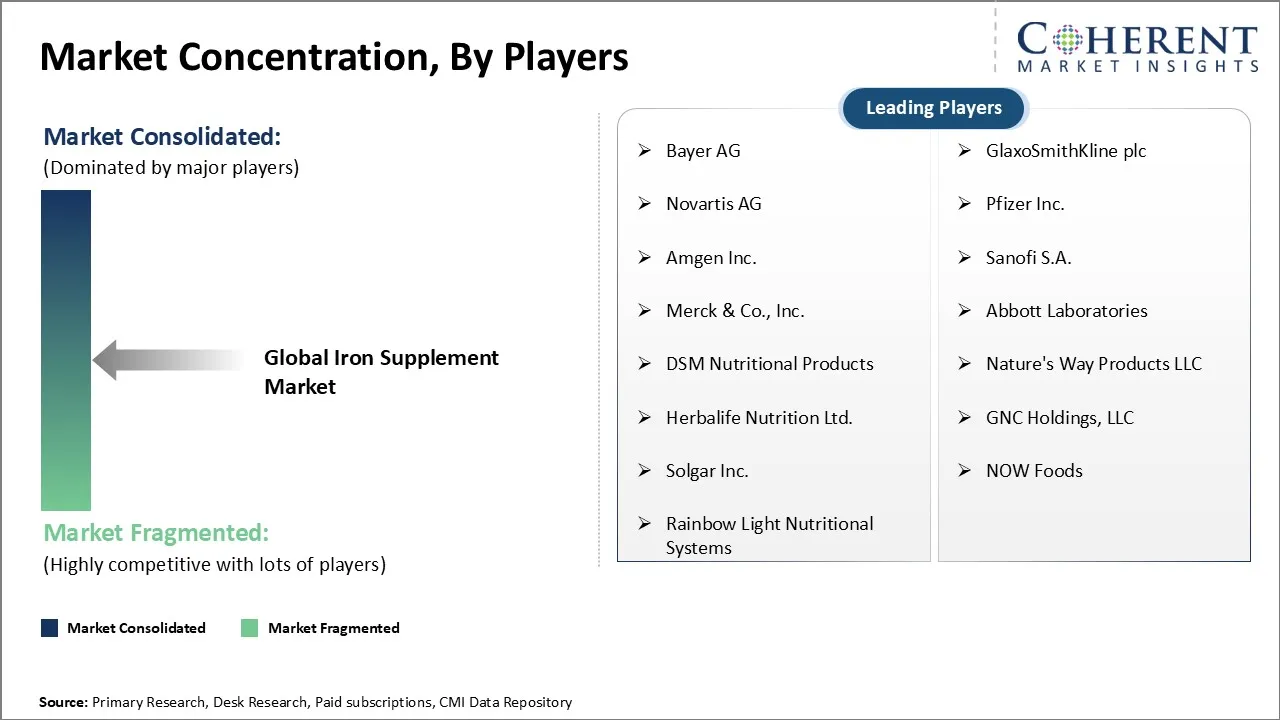
| Companies covered: | Bayer AG, GlaxoSmithKline plc, Novartis AG, Pfizer Inc., Amgen Inc., Sanofi S.A., Merck & Co., Inc., Abbott Laboratories, DSM Nutritional Products, Nature's Way Products LLC, Herbalife Nutrition Ltd., GNC Holdings, LLC, Solgar Inc., NOW Foods, and Rainbow Light Nutritional Systems | ||
| Growth Drivers: |
| ||
| Restraints & Challenges: |
| ||
Iron Supplement Market Dynamics
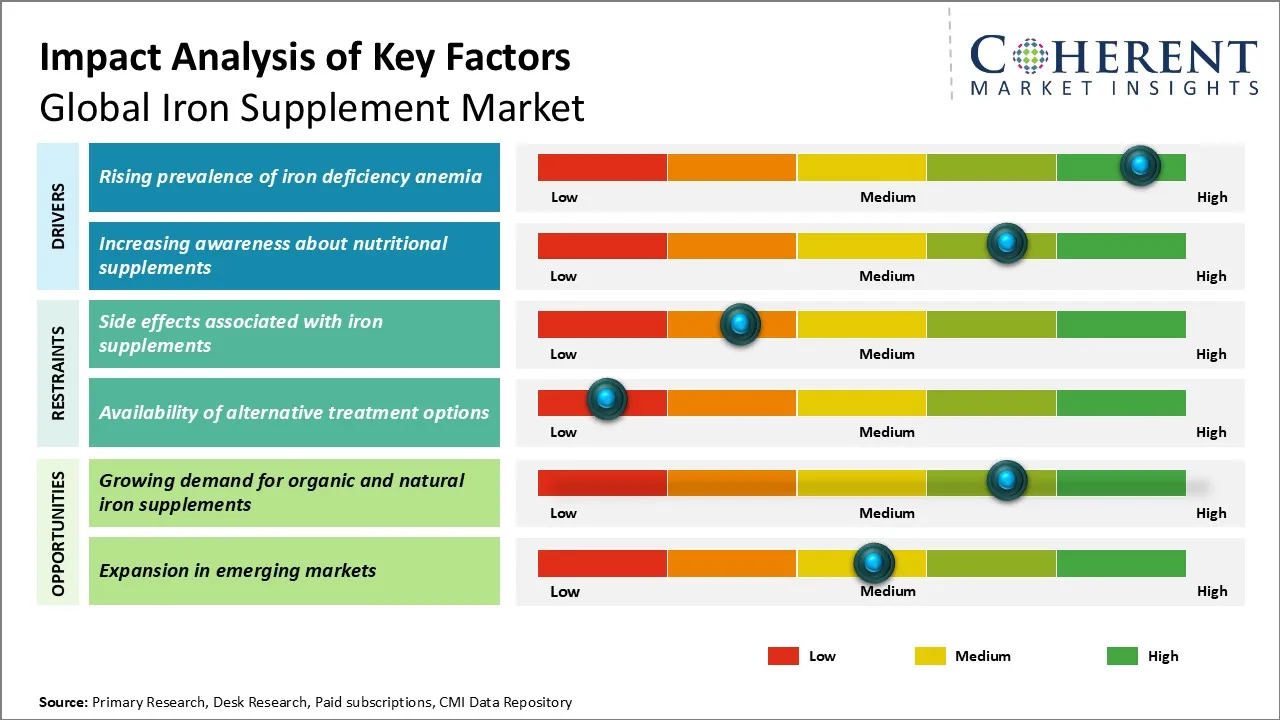
Iron Supplement Market Driver - Rising Prevalence of Iron Deficiency Anemia
The rising prevalence of iron deficiency anemia is a significant driver for the growth of the global iron supplement market. Iron deficiency anemia is a common nutritional disorder caused by insufficient iron intake or absorption, leading to reduced hemoglobin production and oxygen-carrying capacity in the blood. This condition affects a substantial portion of the global population, particularly women of reproductive age, pregnant women, and children.
The increasing awareness about the health consequences of iron deficiency anemia, such as fatigue, weakened immune system, and impaired cognitive development, has led to a higher demand for iron supplements as a preventive and therapeutic measure. Moreover, the growing emphasis on health and wellness, coupled with the availability of various iron supplement formulations, including tablets, capsules, and liquids, has further fueled the market growth.
For instance, according to WHO data, anemia is a major global health issue, especially among young children, adolescent girls, and pregnant women. It results from factors like nutrient deficiencies (mainly iron, folate, vitamins B12 and A), infections, chronic diseases, and inherited disorders. WHO estimates show anaemia affects 40% of children aged 6–59 months, 37% of pregnant women, and 30% of women aged 15–49 globally. Optimal haemoglobin levels vary by age, sex, altitude, smoking, and pregnancy status.
Iron Supplement Market Opportunity - Growing Demand for Organic and Natural Iron Supplements
The increasing consumer preference for organic and natural products presents a significant opportunity for the global iron supplement market. As health-conscious consumers become more aware of the potential benefits of organic and natural supplements, the demand for these products is expected to surge. Organic and natural iron supplements are perceived as safer and more bioavailable alternatives to synthetic formulations. They are derived from plant-based sources, such as spinach, beetroot, and spirulina, which are rich in iron and other essential nutrients. These supplements are free from artificial additives, preservatives, and genetically modified organisms (GMOs), making them appealing to consumers who prioritize clean label products.
For example, German company, Salus Haus, markets Floradix Iron + Herbs, a liquid iron supplement derived from natural ingredients like spinach and hibiscus, widely recommended for pregnant women and vegetarians. MaryRuth Organics offers a vegan-friendly, liquid iron supplement made with organic fruit extracts and iron chelates, catering to health-conscious and younger consumers.
Analyst Opinion (Expert Opinion)
- The global iron supplement market is growing steadily due to rising awareness of anemia, iron deficiency, and a strong shift toward preventive healthcare. Consumers increasingly view iron supplements as part of daily wellness, driving demand for both therapeutic and lifestyle-focused products. Technological advancements such as improved iron formulations (e.g., iron bisglycinate and microencapsulated iron) are enhancing absorption and minimizing gastrointestinal side effects, expanding the appeal of supplements across demographics. Regulatory backing from WHO, UNICEF, and national health agencies promoting iron fortification and supplementation programs, especially in maternal and child health, continues to accelerate market adoption. However, challenges such as compliance issues due to side effects, regional disparities in access, and competition from fortified foods remain critical hurdles. The shift toward plant-based, vegan-friendly supplements also presents a key opportunity, aligning with clean-label trends and dietary restrictions.
- Industry engagement through events like the Micronutrient Forum Global Conference, Nutrition Society Annual Conference, and Vitafoods Europe has played a crucial role in shaping innovation, public policy, and cross-sector partnerships in the iron supplement domain. For instance, the National Iron Plus Initiative (India) and the Maternal and Child Nutrition Programme (Sub-Saharan Africa) have significantly improved iron intake among vulnerable populations. Companies like MegaFood, Ritual, and Ironic Biotech have introduced new-age plant-based and high-bioavailability formulations, while collaborations between government and NGOs have rolled out school and prenatal supplementation pilots that are reshaping regional consumption trends. These efforts signal a robust outlook for targeted product development and market expansion in the years ahead.
Speak to the analyst
Want personalized insights?
Take the findings above to one of our principal consultants, or have the report rebuilt around the segments, geographies and competitors you actually track.
Market Segmentation
- Product Type Insights (Revenue, USD Bn, 2021 - 2033)
- Ferrous Sulfate
- Ferrous Gluconate
- Ferrous Fumarate
- Iron Protein Succinylate
- Other Iron Compounds
- Route of Administration Insights (Revenue, USD Bn, 2021 - 2033)
- Oral
- Parenteral
- Others
- Indication Insights (Revenue, USD Bn, 2021 - 2033)
- Iron Deficiency Anemia
- Pregnancy-related Iron Deficiency
- General Health & Wellness
- Pediatric Iron Supplementation
- Others
- Consumer Insights (Revenue, USD Bn, 2021 - 2033)
- Infants and Children
- Teenagers
- Adults
- Pregnant Women
- Geriatric Population
- Distribution Channel Insights (Revenue, USD Bn, 2021 - 2033)
- Hospital Pharmacies
- Retail Pharmacies
- Online Pharmacies
- Others (Supermarkets, Specialty Stores, etc.)
- Regional Insights (Revenue, USD Bn, 2021 - 2033)
- North America
- U.S.
- Canada
- Latin America
- Brazil
- Argentina
- Mexico
- Rest of Latin America
- Europe
- Germany
- U.K.
- Spain
- France
- Italy
- Russia
- Rest of Europe
- Asia Pacific
- China
- India
- Japan
- Australia
- South Korea
- ASEAN
- Rest of Asia Pacific
- Middle East
- GCC Countries
- Israel
- Rest of Middle East
- Africa
- South Africa
- North Africa
- Central Africa
- North America
- Key Players Insights
- Bayer AG
- GlaxoSmithKline plc
- Novartis AG
- Pfizer Inc.
- Amgen Inc.
- Sanofi S.A.
- Merck & Co., Inc.
- Abbott Laboratories
- DSM Nutritional Products
- Nature's Way Products LLC
- Herbalife Nutrition Ltd.
- GNC Holdings, LLC
- Solgar Inc.
- NOW Foods
- Rainbow Light Nutritional Systems
Sources
Primary Research Interviews:
- Clinical nutritionists and dietitians
- Pediatricians and general physicians
- Pharmaceutical formulation scientists
- Retail pharmacists and supplement distributors
- Regulatory compliance officers
- Supply chain experts in nutraceutical manufacturing
Databases:
- Centers for Disease Control and Prevention (CDC)
- National Institutes of Health (NIH) – Office of Dietary Supplements
- Health Canada – Natural and Non-prescription Health Products Directorate (NNHPD)
- European Food Safety Authority (EFSA)
- Indian Ministry of Health & Family Welfare – National Iron Plus Initiative (NIPI)
- Food and Agriculture Organization (FAO)
- Australian Department of Health – Therapeutic Goods Administration (TGA)
Magazines:
- Nutrition Insight
- NutraIngredients
- The Pharmaceutical Journal
- The Medicine Maker
- Natural Products Insider
- Nutraceutical Business Review
Journals:
- The American Journal of Clinical Nutrition
- The Lancet Global Health
- Journal of Nutrition
- European Journal of Clinical Nutrition
Newspapers:
- The Guardian
- The New York Times
- The Hindu
- South China Morning Post
Associations:
- World Bank – Nutrition and Health Division
- International Alliance of Dietary/Food Supplement Associations (IADSA)
- Council for Responsible Nutrition (CRN)
- Consumer Healthcare Products Association (CHPA)
Public Domain Sources:
- WHO Global Database on Anaemia
- World Bank eLibrary (Health/Nutrition Reports)
- Open Government Data Platforms (e.g., India, Canada, and U.K.)
- WHO e-Library of Evidence for Nutrition Actions (eLENA)
Proprietary Elements:
- CMI Data Analytics Tool: Proprietary analytics tool to analyze real-time market trends, consumer behavior, and technology adoption in market
- Proprietary CMI Existing Repository of Information for Last 8 Years
Get access to 250+ pages report
Every segment, forecast, competitor profile and data table behind the analysis above — available for instant download.
- ESOMAR Member
- ISO 9001:2015 Certified
- D-U-N-S Registered
- GDPR & CCPA Compliant
Missing comfort of reading report in your local language? Find your preferred language:
Transform your Strategy with Exclusive Trending Reports
Frequently Asked Questions
The global iron supplement market is estimated to be valued at USD 2.91 Bn in 2026 and is expected to reach USD 3.88 Bn by 2033.
The CAGR of the global iron supplement market is projected to be 4.2% from 2026 to 2033.
Rising prevalence of iron deficiency anemia and increasing awareness about nutritional supplements are the major factor driving the growth of the global iron supplement market.
Side effects associated with iron supplements and availability of alternative treatment options are the major factors hampering the growth of the global iron supplement market.
In terms of product type, the ferrous sulfate segment is estimated to dominate the market revenue share in 2026.
Bayer AG, GlaxoSmithKline plc, Novartis AG, Pfizer Inc., Amgen Inc., Sanofi S.A., Merck & Co., Inc., Abbott Laboratories, DSM Nutritional Products, Nature's Way Products LLC, Herbalife Nutrition Ltd., GNC Holdings, LLC, Solgar Inc., NOW Foods, and Rainbow Light Nutritional Systems are the major players.
North America is expected to lead the global iron supplement market in 2026.