

Global Jojoba Oil Market Size and Forecast – 2026 - 2033
The Global Jojoba Oil Market is estimated to be valued at USD 197.0 Mn in 2026 and is expected to reach USD 339.8 Mn by 2033, exhibiting a compound annual growth rate (CAGR) of 8.1% from 2026 to 2033.
Key Takeaways of the Jojoba Oil Market
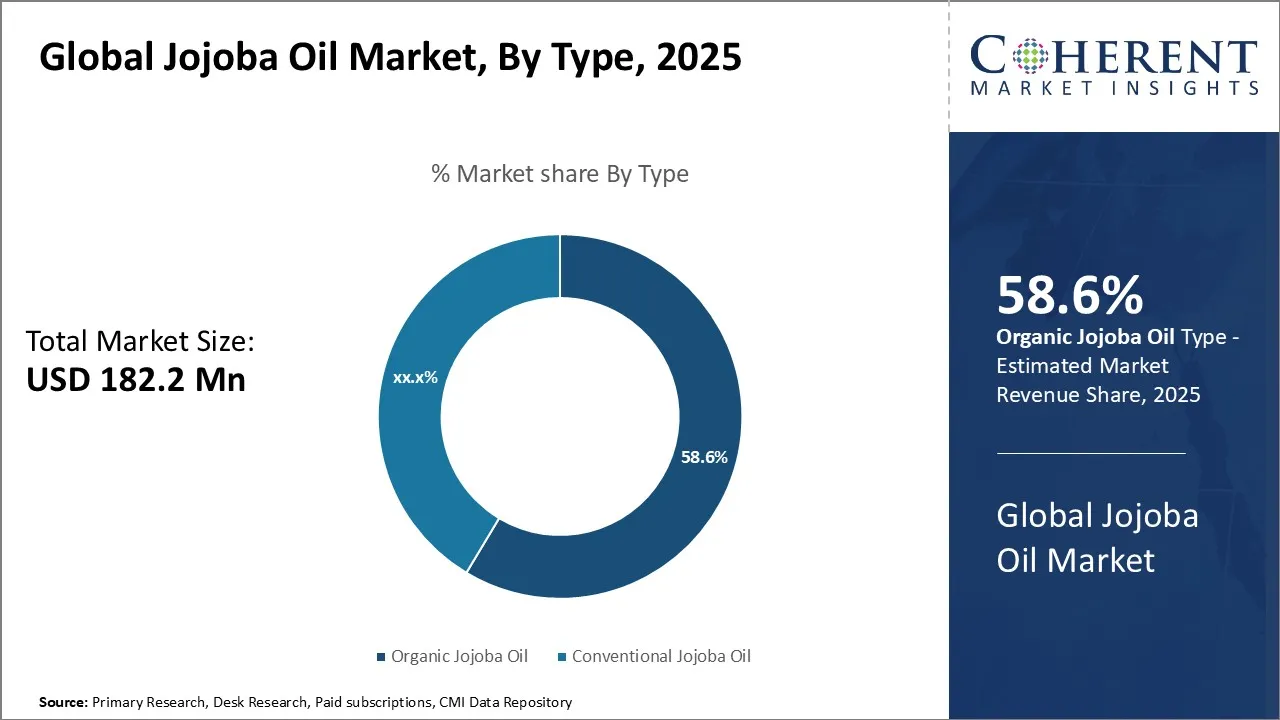
- The Organic Jojoba Oil segment is expected to account for 59.6% of the market share in 2026.
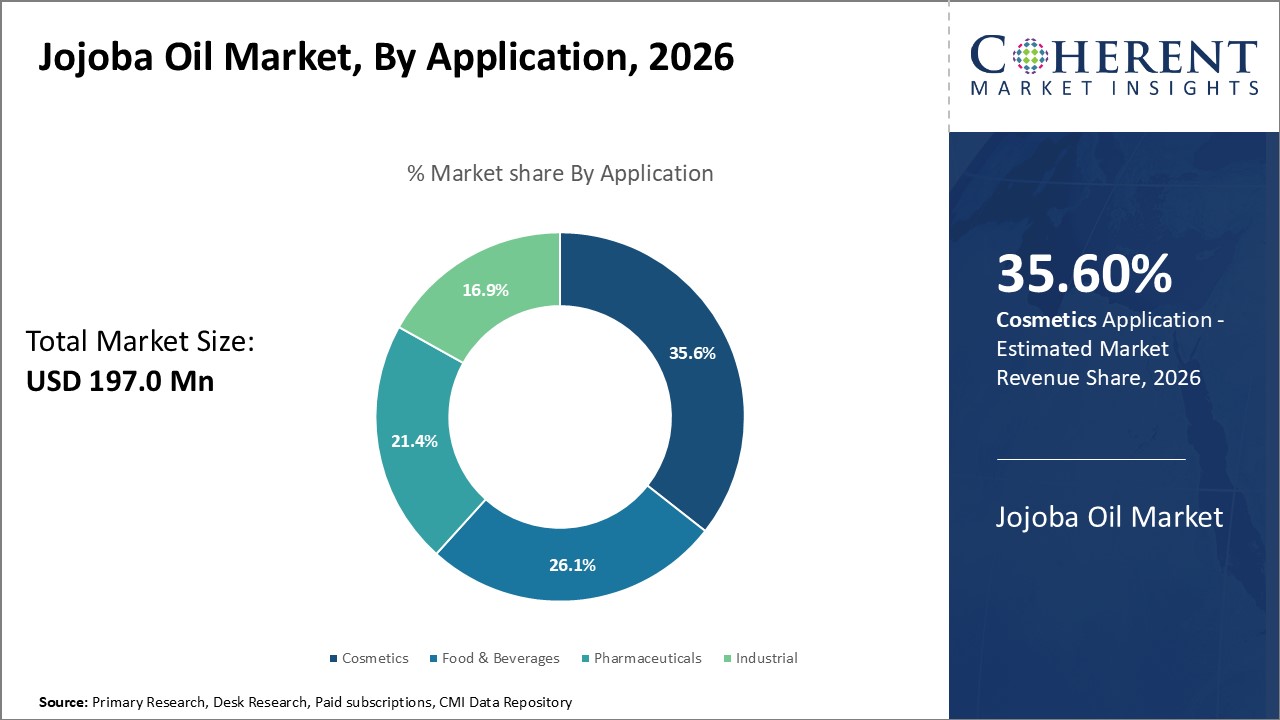
- The Cosmetics segment is projected to hold a 35.6% share of the global jojoba oil market in 2026.
- The B2B segment is expected to account for 54.3% of the global jojoba oil market in 2026.
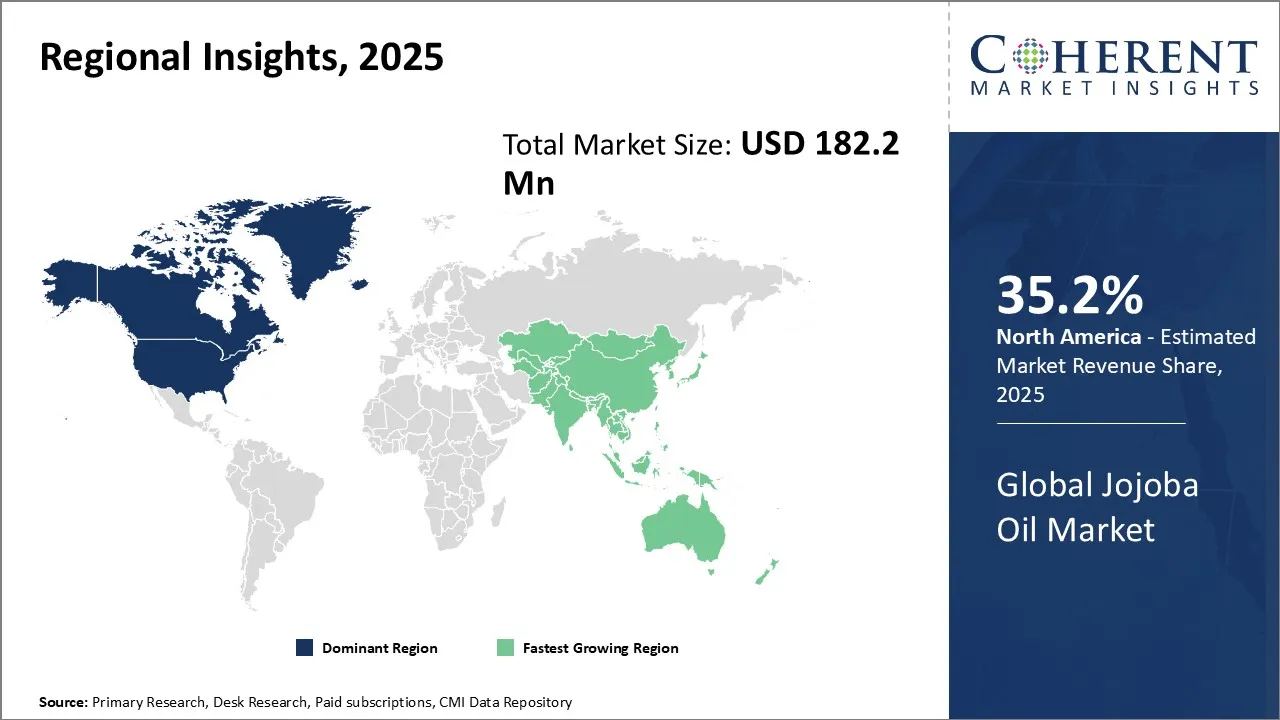
- North America is set to lead the global jojoba oil market in 2026 with a 35. 2% share. Asia Pacific, with a 11.5% share, will be the fastest-growing region.
Market Overview
Market trends indicate a strong shift toward eco-friendly and sustainable beauty solutions, driving demand for jojoba oil due to its moisturizing and anti-inflammatory properties. Additionally, the expansion of the vegan and cruelty-free product segments significantly contributes to market growth. Innovations in extraction techniques and increasing adoption in hair care and skincare formulations are expected to further propel the market during the forecast period.
Current Events and Its Impact
Current Events | Description and its impact |
Surge in Demand for Natural and Organic Products |
|
Technological Advancements in Extraction and Processing |
|
Segmental Insights
- Current Industry Events of 2026
- Market Size Estimation
- Regional Breakdown
- Competitive Landscape
- Customer Intelligence
- Segmental Analysis
- Pricing Analysis
- Key Market Drivers, Challenges & Future Trends
- Customized Insights Section
Jojoba Oil Market Insights, By Type - Organic Jojoba Oil Segment Dominates Due to Increasing Consumer Preference for Natural and Chemical-free Personal Care Products
Organic Jojoba Oil segment is expected to contribute 59.6% share of the market in 2026, owing to increasing consumer preference for natural and chemical-free personal care products. The global shift towards sustainability and clean-label ingredients has positioned organic jojoba oil as a favored choice among manufacturers and consumers alike. Organic jojoba oil, derived from jojoba plants grown without synthetic pesticides or fertilizers, appeals to health-conscious buyers who prioritize eco-friendly farming practices and ingredient transparency.
The wellness trend has particularly fueled demand as consumers become more aware of the potential adverse effects of conventional oils laden with chemical residues. Organic jojoba oil's inherent purity not only makes it safer for topical application, especially for sensitive skin, but also aligns with regulatory standards in regions where organic certification is highly valued. Furthermore, organic certification enhances brand credibility, allowing producers to command premium pricing and attract niche markets focused on green beauty and sustainable living.
Jojoba Oil Market Insights, By Application - The Cosmetics Segment Leads the Market, Driven by The Growing Use of Jojoba Oil in a Wide Range of Skincare and Haircare Products
Cosmetics segment is projected to contribute 35.6% share of the global jojoba oil market in 2026, primarily due to the increasing incorporation of jojoba oil in diverse skincare and haircare formulations. Jojoba oil’s unique composition, which closely resembles human sebum, makes it an ideal natural moisturizer and emollient, thus highly sought after in cosmetic products. Its ability to deeply hydrate without clogging pores, along with anti-inflammatory and antioxidant properties, has led to its widespread use in lotions, creams, serums, shampoos, and conditioners.
The growing consumer inclination towards natural and organic cosmetics is driving formulators to integrate jojoba oil as a key ingredient, differentiating their offerings in a competitive marketplace. Furthermore, intensified awareness about the damaging effects of synthetic chemicals in personal care products pushes brands to innovate with plant-based oils, with jojoba being a leading contender due to its versatility and skin compatibility. Its non-greasy texture and long shelf life further boost its appeal among cosmetic manufacturers seeking stable yet effective natural ingredients.
Jojoba Oil Market Insights, By Sales Channel - The B2B Segment Leads, Driven By Industries' Dependence on Bulk Procurement and Private Label Manufacturing
B2B segment is estimated to contribute 54.3% share of the global jojoba oil market in 2026, driven by the reliance of various industries on bulk procurement and private label manufacturing. The B2B segment covers substantial end users including cosmetics manufacturers, pharmaceutical companies, food processors, and industrial product developers who source jojoba oil in large volumes for formulation and production purposes.
Regional Insights
North America Jojoba Oil Market Analysis and Trends
The North America region is projected to lead the market with a 35.2% share in 2026, driven by a well-established cosmetics and personal care industry complemented by strong consumer demand for natural, organic, and sustainable products. The region benefits from advanced agricultural practices supporting jojoba cultivation primarily in the southwestern United States, especially Arizona and California, where climatic conditions are ideal. Government initiatives promoting sustainable agriculture and organic farming have further strengthened the market ecosystem.
Additionally, well-developed supply chains and trade infrastructures facilitate both domestic consumption and exports. Major players like Desert Whale Jojoba Company and Simmonds & Bristow play crucial roles by pioneering jojoba oil extraction techniques and integrating the oil into versatile product lines such as skincare, haircare, and therapeutic formulations. Their innovation and compliance with stringent regulatory standards give North America a competitive edge.
Asia Pacific Jojoba Oil Market Analysis and Trends
The Asia Pacific region is expected to exhibit the fastest growth in the market contributing 11.5% share in 2026, due to rapid urbanization, rising disposable incomes, and increasing awareness regarding natural beauty and health products. Emerging economies such as India, China, and Southeast Asian countries are witnessing growing demand from both the cosmetics and pharmaceutical sectors.
Additionally, government policies encouraging agricultural diversification and export promotion have incentivized jojoba cultivation in countries like India. The region's expanding middle-class consumer base and the influence of traditional medicinal systems like Ayurveda, which favor botanical ingredients, further fuel market expansion. Notable companies such as Khadi Natural and Marico in India are actively incorporating jojoba oil in their natural cosmetics portfolios, while international brands are entering these markets through collaborations and partnerships, enhancing product availability and innovation.
Jojoba Oil Market Outlook for Key Countries
U.S. Jojoba Oil Market Trends
The jojoba oil market for jojoba oil remains robust, supported by a high concentration of manufacturers specializing in natural and organic personal care products. Companies like Desert Whale Jojoba Company have pioneered jojoba-based formulations and invested heavily in research to improve extraction efficiency and product purity. The country’s strict regulatory environment ensures high-quality standards, boosting consumer confidence. Moreover, the U.S. sees significant imports that supplement local production, increasing market diversity. The focus on cruelty-free and sustainable products aligns well with jojoba oil’s natural profile, driving steady demand in skincare and therapeutic segments.
India Jojoba Oil Market Trends
India’s jojoba oil market is rapidly expanding as the country positions itself as a key producer and consumer. The government actively supports jojoba cultivation in arid and semi-arid regions to improve rural incomes and promote sustainable farming. Indian companies like Khadi Natural leverage traditional formulations and modern processing techniques to create a wide range of haircare and skincare products featuring jojoba oil. The rising preference for Ayurveda and organic cosmetics among consumers is contributing to market penetration. Furthermore, exports to neighboring countries and beyond are increasing, positioning India as a regional jojoba oil hub.
China Jojoba Oil Market Trends
China continues to lead as a critical consumer driven by growing health and wellness consciousness among urban populations. Chinese manufacturers and brands increasingly incorporate jojoba oil in premium personal care and cosmetic products. The government’s emphasis on green beauty and natural ingredients fosters product innovation and regulatory support. Import reliance remains significant due to limited domestic jojoba cultivation, but strategic partnerships with producers in India and North America facilitate supply. Notable local companies are investing in research and expanding product lines that highlight jojoba oil’s moisturizing and antioxidant properties, catering to a discerning consumer base.
Brazil Jojoba Oil Market Trends
Brazil’s jojoba oil market is evolving with a budding natural cosmetics industry and increasing interest in sustainable sourcing. Government incentives for biodiversity and natural product development encourage the adoption of jojoba oil across various sectors. Domestic companies such as Hypera Pharma and Natura are incorporating jojoba oil into haircare and skincare formulations, capitalizing on the global trend toward natural ingredients. The country’s rich biodiversity and established bioeconomy infrastructure support jojoba oil’s integration into health and personal care products. Trade links with North America and Europe facilitate raw material and finished product exchanges, enhancing market availability.
End User Feedback and Unmet Needs in the Jojoba Oil Market
Efficacy in Skincare and Haircare Formulations
A common area of satisfaction reported by end-users is the efficacy of jojoba oil as a versatile ingredient in skincare and haircare products. Many cosmetic formulators and end consumers highlight jojoba oil's natural moisturizing properties, which mimic the skin’s sebum and provide non-comedogenic benefits. This makes it an excellent ingredient for sensitive skin types, and it has been extensively used in moisturizers, serums, and hair conditioning treatments.
Price Accessibility and Sourcing Challenges
While jojoba oil’s benefits are well-regarded, end-users have frequently cited affordability concerns as a significant limitation. Jojoba oil is often perceived as a premium ingredient due to its production cost, which can impact its integration into mass-market products or limit access for smaller manufacturers. For instance, in regions with price-sensitive consumers, jojoba oil’s higher cost compared to synthetic alternatives or other natural oils often results in a reluctance to include it in consumer-facing formulations.
Market Players, Key Development, and Competitive Intelligence
Key Developments
- In September 2023, a recent study highlighted JD Jojoba Oil as a sustainable and effective alternative to mineral oil in skincare products. According to Jojoba Desert, the study demonstrated that JD Jojoba Oil matches the efficacy of mineral oil in enhancing skin hydration and reducing Trans Epidermal Water Loss (TEWL) both in the short and long term. This breakthrough positions JD Jojoba Oil as a natural and ethical choice for beauty formulations, further solidifying its role in the growing market for sustainable skincare ingredients.
Top Strategies Followed by Global Jojoba Oil Market Players
- Established companies in the sector typically prioritize heavy investment in research and development (R&D) to innovate and enhance the performance of their jojoba oil products. This focus on product innovation allows them to maintain a competitive edge by introducing formulations that meet evolving consumer preferences, such as organic certifications and multifunctional benefits.
- For instance, the Original Jojoba Company, a leading global supplier, continually invests in R&D to improve the quality and sustainability of its jojoba oil products. Their commitment to product innovation allows them to maintain a competitive edge by introducing formulations that meet evolving consumer preferences, such as organic certifications and multifunctional benefits.
- Mid-level competitors in the jojoba oil market primarily focus on delivering cost-effective solutions that offer a balance between quality and affordability. This approach allows them to target price-sensitive segments, including small and medium personal care manufacturers and local cosmetic brands that require reliable raw materials without the premium price tag. To enhance their product offerings and operational efficiency, mid-tier players often engage in collaborations and joint ventures with technology providers and regional producers.
- For example, Eco Oil in the U.S. has partnered with local farms to improve the extraction process and expand its production capabilities, allowing it to remain cost-competitive without incurring the high R&D expenses typical of larger firms.
- Small-scale market players carve out specialized niches by focusing on unique product features or pioneering innovative jojoba oil applications. These companies often capitalize on emerging trends such as organic certification, cold-pressed extraction methods, or customized blends to differentiate themselves from larger competitors.
- For example, Alba Botanica, a relatively smaller player in the market, has pioneered jojoba oil blends that target specific skin care needs, such as moisturizing and anti-aging, which cater to increasingly health-conscious consumers. By adopting cutting-edge technologies, including advanced extraction techniques and quality control systems, small players maintain competitiveness and ensure product consistency despite limited resources.
Market Report Scope
Jojoba Oil Market Report Coverage
| Report Coverage | Details | ||
|---|---|---|---|
| Base Year: | 2025 | Market Size in 2026: | USD 197.0 Mn |
| Historical Data for: | 2020 To 2024 | Forecast Period: | 2026 To 2033 |
| Forecast Period 2026 to 2033 CAGR: | 8.1% | 2033 Value Projection: | USD 339.8 Mn |
| Geographies covered: |
| ||
| Segments covered: |
| ||
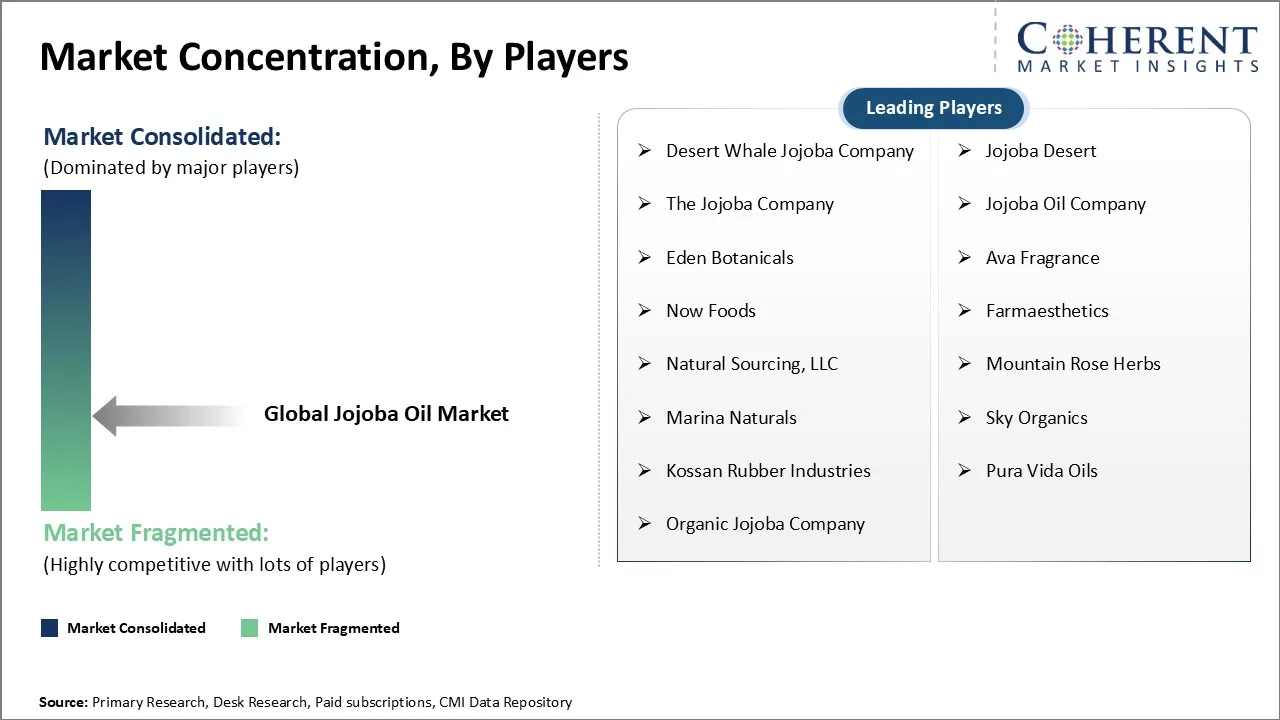
| Companies covered: | Desert Whale Jojoba Company, Jojoba Desert, The Jojoba Company, Jojoba Oil Company, Eden Botanicals, Ava Fragrance, Now Foods, Farmaesthetics, Natural Sourcing, LLC, Mountain Rose Herbs, Marina Naturals, Sky Organics, Kossan Rubber Industries, Pura Vida Oils, and Organic Jojoba Company | ||
| Growth Drivers: |
| ||
| Restraints & Challenges: |
| ||
Jojoba Oil Market Dynamics
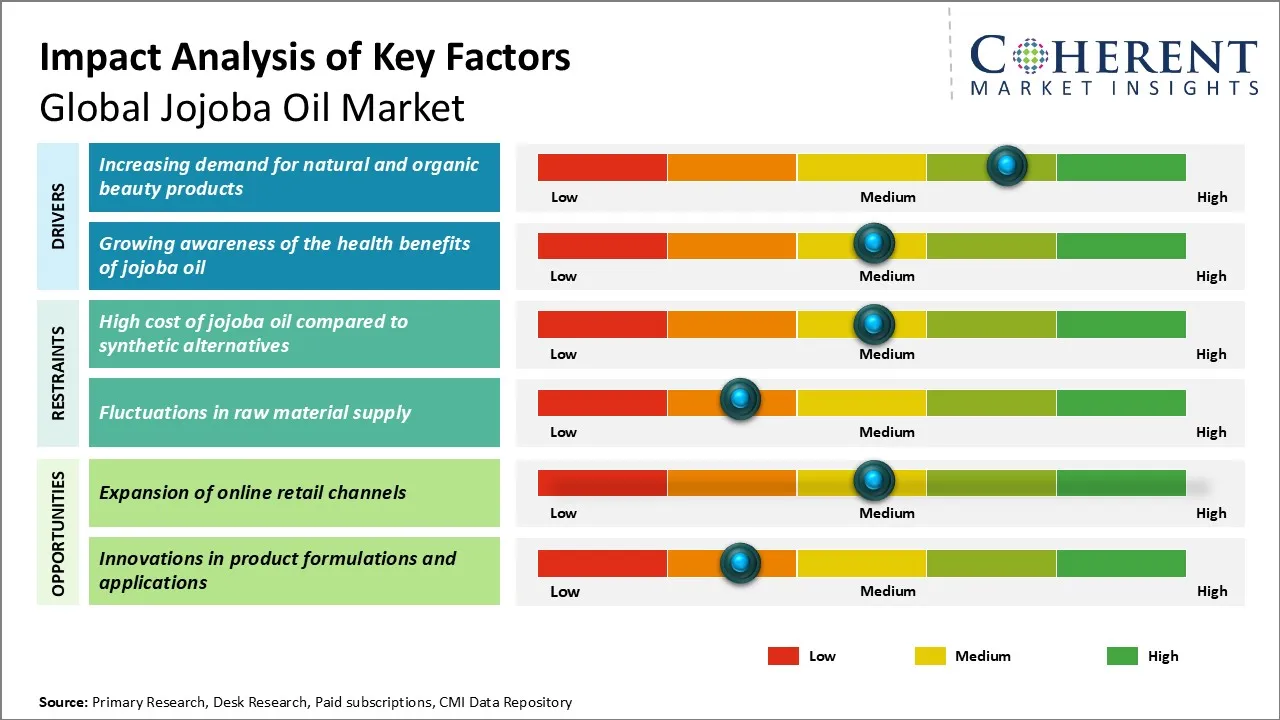
Jojoba Oil Market Driver - Increasing Demand for Natural and Organic Beauty Products
The escalating consumer shift towards natural and organic beauty products is a significant driver boosting the global jojoba oil market. With increasing awareness about the harmful effects of synthetic chemicals commonly found in conventional cosmetics, consumers are actively seeking safer, plant-based alternatives for skincare and haircare routines. Jojoba oil, known for its non-comedogenic properties and rich nutrient profile, perfectly aligns with this trend as a natural moisturizer, makeup remover, and hair conditioner. Its ability to closely mimic the skin’s sebum makes it highly compatible, appealing to consumers prone to sensitive and acne-prone skin, further intensifying its demand.
For instance, the Ordinary offers a 100% Cold-Pressed Organic Jojoba Oil as part of their clean beauty collection, highlighting its role in nourishing and hydrating the skin. Similarly, Wild Earth, known for its eco-conscious beauty products, uses jojoba oil in their Nourishing Hair Oil to enhance moisture retention, showcasing the ingredient's appeal to consumers seeking organic, cruelty-free alternatives.
Jojoba Oil Market Opportunity - Expansion of Online Retail Channels for the Global Jojoba Oil Market
The growing penetration of e-commerce platforms presents a significant opportunity for the global jojoba oil market, enabling manufacturers and brands to reach a broader and more diverse customer base. Online retail channels allow consumers to conveniently access a wide range of jojoba oil products, ranging from pure oils to blends used in cosmetics and personal care items. This digital transformation facilitates direct-to-consumer sales, reducing dependency on traditional brick-and-mortar stores and allowing brands to establish stronger, more personalized relationships with their customers through targeted marketing and consumer engagement strategies.
For example, Amazon, Flipkart, and Sephora have seen a rise in the number of jojoba oil-based products on their platforms. Brands like Leven Rose and Cliganic have expanded their presence on these e-commerce platforms, providing customers with easy access to organic jojoba oil at competitive prices.
Analyst Opinion (Expert Opinion)
- The global jojoba oil market is rapidly expanding, propelled by rising consumer awareness of natural and sustainable beauty products. Brands like Desert Whale Jojoba Company and Jojoba Desert are leading the way with innovative extraction methods that preserve the oil's beneficial properties, appealing to both cosmetic and culinary sectors. Notable events such as the Natural Products Expo West (2023) and the International Trade Fair for Natural Ingredients (2022) have highlighted successful applications of jojoba oil in skincare and haircare formulations, showcasing case studies where companies have leveraged its moisturizing and anti-inflammatory benefits to create standout products.
- These conferences have also underscored the importance of sustainable sourcing practices, aligning with consumer demand for ethical ingredients. As the market continues to grow, driven by innovations in product applications and a commitment to sustainability, the global jojoba oil market is well-positioned for significant expansion.
Speak to the analyst
Want personalized insights?
Take the findings above to one of our principal consultants, or have the report rebuilt around the segments, geographies and competitors you actually track.
Market Segmentation
- Type Insights (Revenue, USD Mn, 2021 - 2033)
- Organic Jojoba Oil
- Conventional Jojoba Oil
- Application Insights (Revenue, USD Mn, 2021 - 2033)
- Cosmetics
- Food & Beverages
- Pharmaceuticals
- Industrial
- Sales Channel Insights (Revenue, USD Mn, 2021 - 2033)
- B2B
- B2C
- Regional Insights (Revenue, USD Mn, 2021 - 2033)
- North America
- U.S.
- Canada
- Latin America
- Brazil
- Argentina
- Mexico
- Rest of Latin America
- Europe
- Germany
- U.K.
- Spain
- France
- Italy
- Russia
- Rest of Europe
- Asia Pacific
- China
- India
- Japan
- Australia
- South Korea
- ASEAN
- Rest of Asia Pacific
- Middle East
- GCC Countries
- Israel
- Rest of Middle East
- Africa
- South Africa
- North Africa
- Central Africa
- North America
- Key Players Insights
- Desert Whale Jojoba Company
- Jojoba Desert
- The Jojoba Company
- Jojoba Oil Company
- Eden Botanicals
- Ava Fragrance
- Now Foods
- Farmaesthetics
- Natural Sourcing, LLC
- Mountain Rose Herbs
- Marina Naturals
- Sky Organics
- Kossan Rubber Industries
- Pura Vida Oils
- Organic Jojoba Company
Sources
Primary Research Interviews
- R&D Director – Leading Jojoba Oil Manufacturer
- Procurement Manager – Major Skincare Retailer
- Product Development Head – Well-Known Cosmetics Brand
- Sustainability Manager – Organic Certification Body
Stakeholders
- Manufacturers
- End-use Sectors:
- Skincare (Moisturizers, Anti-aging Products, Sunscreens)
- Haircare (Shampoos, Conditioners, Hair Oils)
- Cosmetics (Foundations, Lip Balms, Lotions)
- Pharmaceutical (Topical Ointments, Therapeutic Products)
- Regulatory & Certification Bodies
- E-commerce Platforms and Retailers
- Technology Integration Players: AI-based formulation and personalization providers for beauty and personal care products
Databases
- UN Comtrade Database
- India Import Export (EXIM) Database
- U.S. International Trade Commission (USITC) Database
Magazines
- Cosmetics Business – Trends in the cosmetic and personal care industry
- Global Cosmetics News – Innovations in jojoba oil and organic ingredients
- Beauty Packaging – Market updates on the global cosmetic packaging industry
- Sustainable Beauty – Focus on sustainable and eco-friendly ingredient sourcing
- Skin Health & Beauty – Emerging trends in natural skincare formulations
Journals
- International Journal of Cosmetic Science – Advances in jojoba oil-based formulations for skincare
- Journal of the American Academy of Dermatology – Efficacy of jojoba oil in dermatological treatments
- Phytotherapy Research – Medicinal properties and health benefits of jojoba oil
Newspapers
- The Financial Times – Market growth and consumer trends in the natural oils industry
- The Guardian – Shifting consumer preferences for plant-based skincare products
- Asia Pacific Beauty Journal – Growth of jojoba oil consumption in the Asia-Pacific region
- European Health and Beauty News – Regulatory updates for natural oils in skincare products
Associations
- American Botanical Council (ABC)
- International Jojoba Export Council (IJEC)
- Cosmetic, Toiletry, and Fragrance Association (CTFA)
- Natural Products Association (NPA)
- International Organization for Standardization (ISO) – Cosmetic and natural oil standards
Public Domain Sources
- FDA – Guidelines for the safe use of jojoba oil in cosmetics and personal care products
- European Commission – Cosmetic Products Regulation and Natural Oils Guidelines
- World Health Organization – Safety standards and health impact studies on jojoba oil
Proprietary Elements
- CMI Data Analytics Tool, Proprietary CMI Existing Repository of information for last 8 years.
Get access to 250+ pages report
Every segment, forecast, competitor profile and data table behind the analysis above — available for instant download.
- ESOMAR Member
- ISO 9001:2015 Certified
- D-U-N-S Registered
- GDPR & CCPA Compliant
Missing comfort of reading report in your local language? Find your preferred language:
Transform your Strategy with Exclusive Trending Reports
Frequently Asked Questions
The global jojoba oil market is estimated to be valued at USD 197.0 Mn in 2026 and is expected to reach USD 339.8 Mn by 2033.
The CAGR of global jojoba oil market is projected to be 8.1% from 2026 to 2033.
Increasing demand for natural and organic beauty products and Growing awareness of the health benefits of jojoba oil are the major factor driving the growth of global jojoba oil market.
High cost of jojoba oil compared to synthetic alternatives and Fluctuations in raw material supply are the major factor hampering the growth of global jojoba oil market.
In terms of Type, Organic Jojoba Oil, estimated to dominate the market revenue share 2026.
Desert Whale Jojoba Company, Jojoba Desert, The Jojoba Company, Jojoba Oil Company, Eden Botanicals, Ava Fragrance, Now Foods, Farmaesthetics, Natural Sourcing, LLC, Mountain Rose Herbs, Marina Naturals, Sky Organics, Kossan Rubber Industries, Pura Vida Oils, and Organic Jojoba Company are the major players in the global jojoba oil market.
North America is expected to lead the global jojoba oil market in 2026.