

Global Kids Clothing Market Size and Forecast – 2026 - 2033
The Global Kids Clothing Market is estimated to be valued at USD 282.14 Bn in 2026 and is expected to reach USD 361.40 Bn by 2033, exhibiting a compound annual growth rate (CAGR) of 3.6% from 2026 to 2033.
Key Takeaways of the Kids Clothing Market
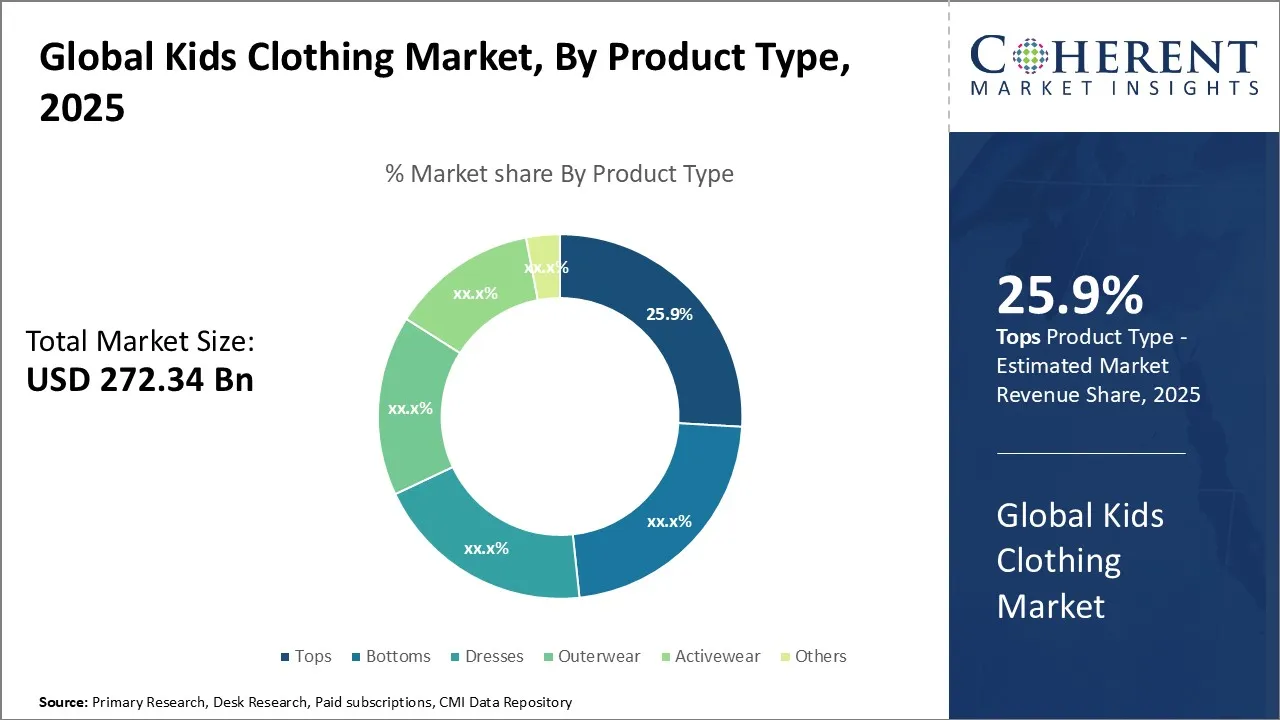
- The tops segment is expected to capture a 26.9 % share of the market in 2026.
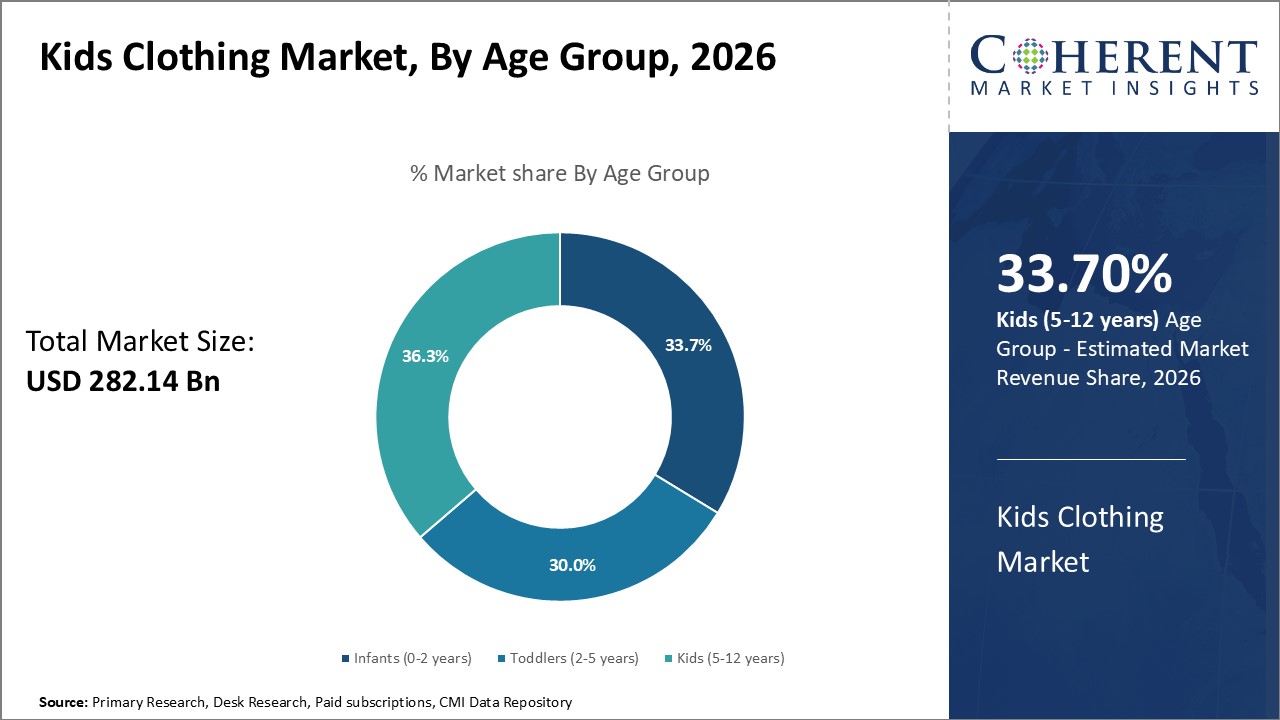
- The infants segment is projected to hold a 33.7 % share of the global kids clothing market in 2026.
- The boys clothing segment is set to secure a 39.5 % market share in 2026.
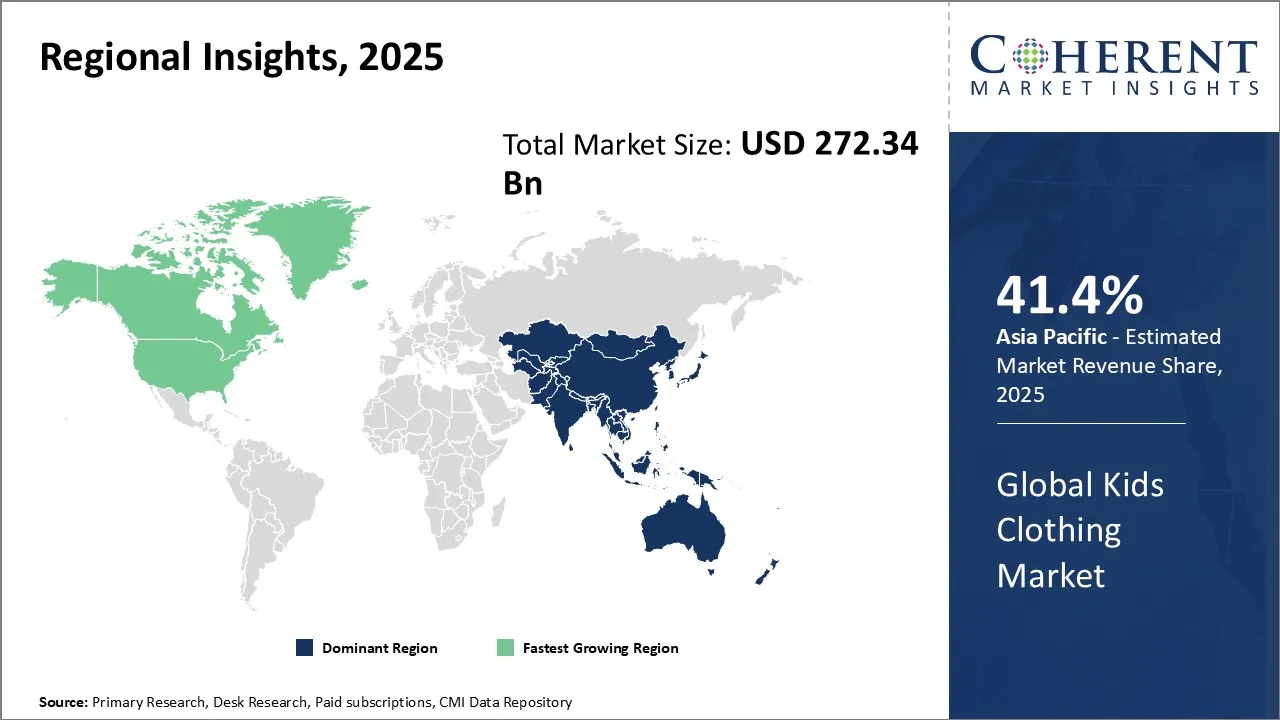
- Asia Pacific is set to lead the global kids clothing market in 2026 with a 41.4 % share. North America, with a 28.5% share in 2026.
Market Overview
The kids clothing market is increasingly focused on sustainability with eco-friendly materials, while customization and smart clothing are gaining traction. Social media is boosting demand for branded and designer wear. There's a rising interest in seasonal and occasion-specific clothing, along with a growing demand for down jacket and adaptive clothing for children with disabilities, prioritizing comfort and functionality.
Current Events and Its Impact
Current Events | Description and its impact |
U.S. Tariff Policy Changes (2025) |
|
Rising Demand for Specialty Coffee |
|
Segmental Insights
- Current Industry Events of 2026
- Market Size Estimation
- Regional Breakdown
- Competitive Landscape
- Customer Intelligence
- Segmental Analysis
- Pricing Analysis
- Key Market Drivers, Challenges & Future Trends
- Customized Insights Section
Kids Clothing Market Insights, By Product Type – Tops Segment Dominates the Market Due to its Versatility and Everyday Usability
The tops segment is expected to hold 26.9% share of the market in 2026, which can be primarily attributed to its broad applicability and frequent usage. Tops such as t-shirts, shirts, blouses, and knitwear are essential wardrobe staples for children, making them a preferred choice among parents and guardians when purchasing kids’ apparel. One of the key drivers for this segment is the functional versatility that tops offer — they serve as the base for layering outfits across different seasons and are suitable for various occasions, from casual playdates to slightly formal events.
Kids Clothing Market Insights, By Age Group - Infants (0-2 years) Segment Dominates Due to Growing Awareness of Comfort and Specialized Apparel Needs
The infants segment, commanding an estimated 33.7% share in the global kids clothing market in 2026, stems from increased parental emphasis on comfort, safety, and functionality during the crucial early stages of child development. Clothing for infants must fulfill specific criteria distinct from older children’s apparel, such as softness, ease of wear, and the absence of harmful chemicals or harsh materials, compelling manufacturers to innovate with hypoallergenic fabrics and specialized designs.
Parents and caregivers tend to prioritize multiple changes of clothing for infants, given the frequency of soiling and rapid growth, increasing the volume of purchase within this age segment. The market also sees significant demand for practical features such as snap buttons, elastic waistbands, and expandable sizing, which facilitate quick dressing and undressing, essential for infants’ care routines. These functional aspects differentiate infant clothing and stimulate higher repetitive sales.
Kids Clothing Market Insights, By Gender - Boys Clothing Segment Leads Due to Evolving Fashion Trends and Expanding Product Diversification
Boys clothing segment is expected to account for 39.5% market share of the market in 2026, due to the ongoing expansion of product offerings and the dynamic nature of boys’ fashion preferences. Historically, clothing for boys has moved beyond basic and utilitarian designs toward more diversified and style-conscious options. Retailers and brands now cater specifically to boys with an array of colors, patterns, and innovative designs, which attract both children and parents looking for trendy yet comfortable attire.
One critical factor propelling the boy’s segment is the booming popularity of activewear and sports-inspired apparel, which aligns well with boys' lifestyles characterized by higher physical activity and outdoor play. This has resulted in a broader range of casual and performance fabrics, enhancing the desirability of boys clothing as it caters to both functional and style requirements. The emphasis on durability and stain resistance appeals to parents juggling everyday wear and tear.
Regional Insights
Asia Pacific Kids Clothing Market Analysis and Trends
The Asia Pacific region is projected to lead the market with a 41.4% share in 2026, driven by the region’s vast consumer base, rapid urbanization, and expanding middle class with rising disposable incomes. Countries such as China, India, and Japan host well-established textile and garment manufacturing industries, which provide cost-effective production capabilities and foster a competitive local market environment.
Brands like Balabala and Semir are major players in the market, alongside international luxury brands like Gucci and Dior, who are expanding their reach in China to cater to the growing demand.
North America Kids Clothing Market Analysis and Trends
The North America region is expected to exhibit the fastest growth in the market contributing 28.5% share in 2026. The market is primarily fueled by the region's high disposable income levels, consumer willingness to spend on quality apparel, and an increasing emphasis on sustainable fashion choices.
In particular, the U.S. leads the region's growth, with a robust retail infrastructure and the presence of several major kidswear brands, including both global giants like H&M and domestic players such as Carter's and The Children's Place. The region also benefits from a diverse consumer base that demands a wide range of kids' clothing products, from everyday wear to premium, seasonal collections.
Kids Clothing Market Outlook for Key Countries:
China Kids Clothing Market Trends
China's market continues to lead due to a strong manufacturing base combined with immense domestic consumption. Notable players like Balabala and Mini Peace capitalize on the country’s growing demand for fashionable and functional children’s clothing. The government’s focus on quality standards and environmental sustainability in textile production has also prompted brands to innovate, adding value to the market. China's expansive e-commerce platforms such as Alibaba and JD.com further support wide market penetration across urban and rural areas.
U.S. Kids Clothing Market Trends
The U.S. kids clothing market boasts mature retail infrastructure supported by leading brands like Carter’s, The Children’s Place, and Gap Kids, which emphasize both comfort and style. The presence of significant online and offline retail channels, coupled with shifting consumer preferences toward organic and sustainable materials, shapes the market dynamics. U.S. government regulations on safety and product standards ensure high-quality offerings while fostering innovation in children’s apparel, including adaptive clothing and eco-conscious product lines.
India Kids Clothing Market Trends
India’s kids clothing market benefits from a large and youthful population alongside increasing urbanization and rising parental spending on children’s apparel. Local companies such as Lilliput and Gini & Jony have established strong regional presence, while global players like Zara Kids tap into metropolitan demand. Initiatives to boost domestic manufacturing, combined with growing digital retail penetration, enable widespread access to diverse product ranges. The government’s “Make in India” policy supports this ecosystem by facilitating supply chain enhancements and export incentives.
Germany Kids Clothing Market Trends
Germany continues to lead the European kids clothing market with a focus on premium quality and sustainability. Renowned German brands such as Steiff and Hanna Andersson emphasize ethical production and organic materials, catering to environmentally conscious consumers. The country’s strong retail networks and strict regulatory frameworks drive innovation and ensure high standards in kidswear. Additionally, Germany serves as a hub for regional distribution, influencing trends across the European market.
Brazil Kids Clothing Market Trends
Brazil’s kids clothing market is shaped by increasing consumer demand for affordable yet stylish children’s clothing, with local brands like PUC and Have Fun playing vital roles. The government’s support for textile industry modernization combined with expanding retail chains and e-commerce options enhances market access. Despite economic fluctuations, rising urban middle-class spending power fuels interest in fashion-forward kidswear. Brazil’s strategic position in Latin America also facilitates trade within the region, promoting broader market integration.
Consumer Behavior Analysis of the Kids Clothing Market
Key Factors Influencing Consumer Behavior
- Quality and Durability: Parents prioritize fabrics that are durable and can withstand frequent wear and wash cycles. Quality assurance is crucial, with longevity being seen as value for money.
- Comfort and Fit: Soft, breathable materials and freedom of movement are major purchase drivers, especially for toddlers and active children. Accurate sizing and clothing that allows for growth are preferred to maximize wear time.
- Price Sensitivity: While there is a growing interest in premium and branded products, many consumers remain highly price-conscious due to the rapid growth of children and frequent need for new clothes. Promotions, value packs, and affordable options are popular, especially in price-sensitive emerging markets.
- Shopping Channels and Convenience: Omnichannel purchasing is prevalent: While offline stores remain dominant, online shopping is growing rapidly. E-commerce platforms are favored for their variety, offers, and home delivery, and the sector has seen a shift to online post-pandemic. Ease of returns, flexible payments, and virtual fittings are valued by busy parents.
Market Players, Key Development, and Competitive Intelligence
Key Developments
- In July 2025, Enlightened Generation, a pioneering children’s clothing brand with a strong educational and impact-driven mission, was officially launched. Designed for children aged 3-10 and their families, the brand goes beyond offering beautifully crafted apparel—it provides a unique experience that encourages families to learn, explore, and connect. With this launch, Enlightened Generation aims to transform the way families engage with fashion while fostering meaningful educational experiences.
- In April 2025, Rag & Bone introduced its viral Miramar sweatpant jeans for kids, blending the look of denim with the comfort of loungewear. Crafted from ultra-soft, breathable cotton terry fabric, these joggers and wide-leg pants feature hyper-realistic denim prints, making them perfect for both playdates and casual outings.
- In March 2025, Janie and Jack unveiled a limited-edition Spring 2025 children’s collection in collaboration with Serena Williams, inspired by her bond with daughters Olympia and Adira, who also appear in the campaign. The collection includes resort-style clothing, swimwear, and accessories in bold hues and ombré tones for kids up to age 12.
- In March 2025, Vogue Williams launched Gen, a new unisex kidswear label available on M&S and Next digital platforms. Designed for children aged 2–8, the collection focuses on versatility, durability, and timeless appeal, featuring playful prints and bold colors.
- In March 2025, Reebok rolled out its Sesame Street kids’ sneaker collection, offering five distinctive styles inspired by characters like Elmo, Cookie Monster, Abby Cadabby, and Big Bird. With prices between USD 50 and USD 60, the lineup includes colorful versions of the Club C Revenge and Classic Nylon, enhanced with character-themed badges and educational sock liners.
Top Strategies Followed by Global Kids Clothing Market Players
- Established players, often multinational corporations with significant resources, consistently invest heavily in research and development (R&D) to innovate and design high-performance products that meet the diverse needs of children globally. Their innovation initiatives focus on enhancing fabric technology for comfort, durability, and sustainability, catering to increasingly eco-conscious consumers. To further solidify their market presence, these players form strategic partnerships with major industry stakeholders and original equipment manufacturers (OEMs).
- For instance, H&M has introduced its Conscious Collection, which uses sustainably sourced materials like organic cotton and recycled polyester. To further solidify their market presence, these players form strategic partnerships with major industry stakeholders and original equipment manufacturers (OEMs).
- Mid-level market players adopt a more cost-conscious approach, striving to offer affordable kids’ apparel that balances quality with pricing competitiveness, targeting price-sensitive consumers who demand value without compromising on durability or design. These companies often emphasize agility in production and pricing flexibility to adapt quickly to fluctuating market demands. Such partnerships enhance their production capacities and enable access to innovative textile technologies that improve garment functionality and aesthetics.
- For example, is Carter's collaboration with Gap Inc., which allowed them to expand their distribution and gain better access to premium textile technologies. These strategic alliances enhance their market reach, product variety, and customer loyalty, reinforcing their competitive edge.
- Small-scale players in the global kids clothing market adopt niche strategies to differentiate themselves from larger competitors by focusing on specialized features, such as organic materials, ergonomic designs, or customizable products. These players are nimble and quick to adopt cutting-edge technologies—like 3D knitting, digital printing, or AI-driven design tools—to create unique offerings tailored to trend-conscious or health-focused consumer segments. By targeting specific unmet demands or niche markets, they build loyal customer bases that value exclusivity and innovation.
- For examples of such players include Finn + Emma, a brand known for its organic cotton clothing for babies, and Lilly & Sid, a company that offers bespoke, hand-crafted garments for children.
Market Report Scope
Kids Clothing Market Report Coverage
| Report Coverage | Details | ||
|---|---|---|---|
| Base Year: | 2025 | Market Size in 2026: | USD 282.14 Bn |
| Historical Data for: | 2020 To 2024 | Forecast Period: | 2026 To 2033 |
| Forecast Period 2026 to 2033 CAGR: | 3.6% | 2033 Value Projection: | USD 361.40 Bn |
| Geographies covered: |
| ||
| Segments covered: |
| ||
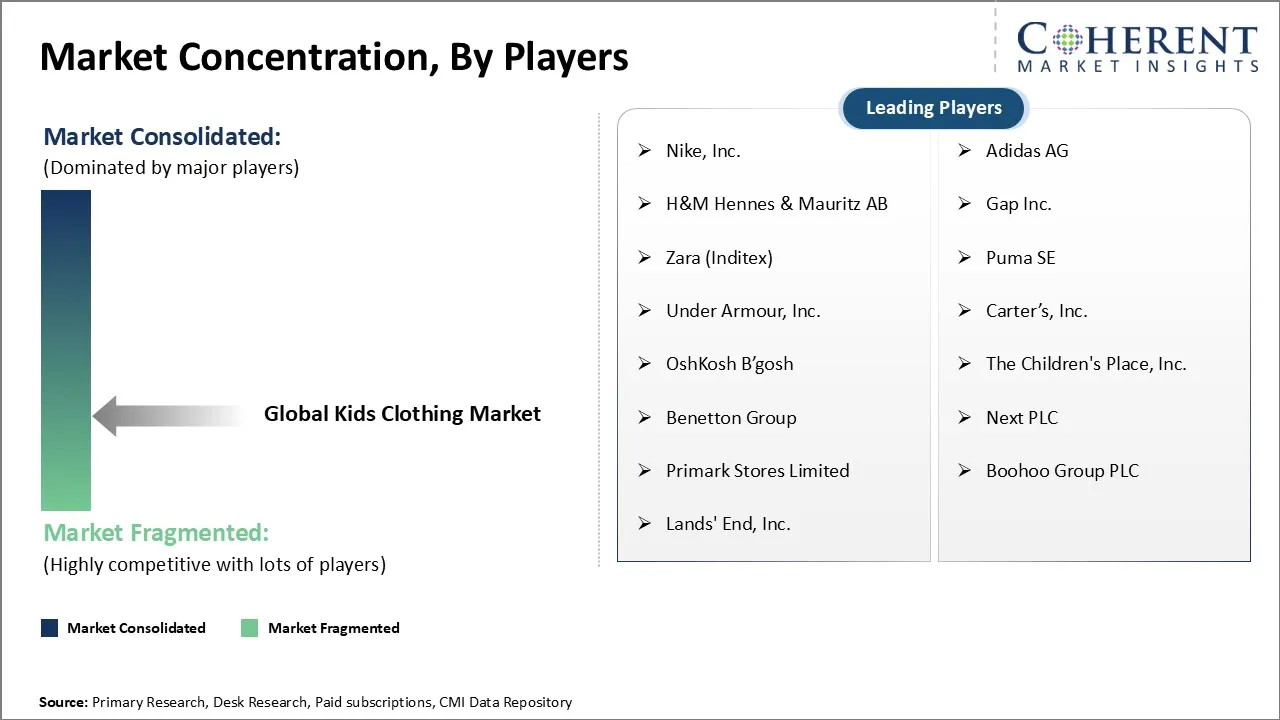
| Companies covered: | Nike, Inc., Adidas AG, H&M Hennes & Mauritz AB, Gap Inc., Zara (Inditex), Puma SE, Under Armour, Inc., Carter’s, Inc., OshKosh B’gosh, The Children's Place, Inc., Benetton Group, Next PLC, Primark Stores Limited, Boohoo Group PLC, and Lands' End, Inc. | ||
| Growth Drivers: |
| ||
| Restraints & Challenges: |
| ||
Kids Clothing Market Dynamics
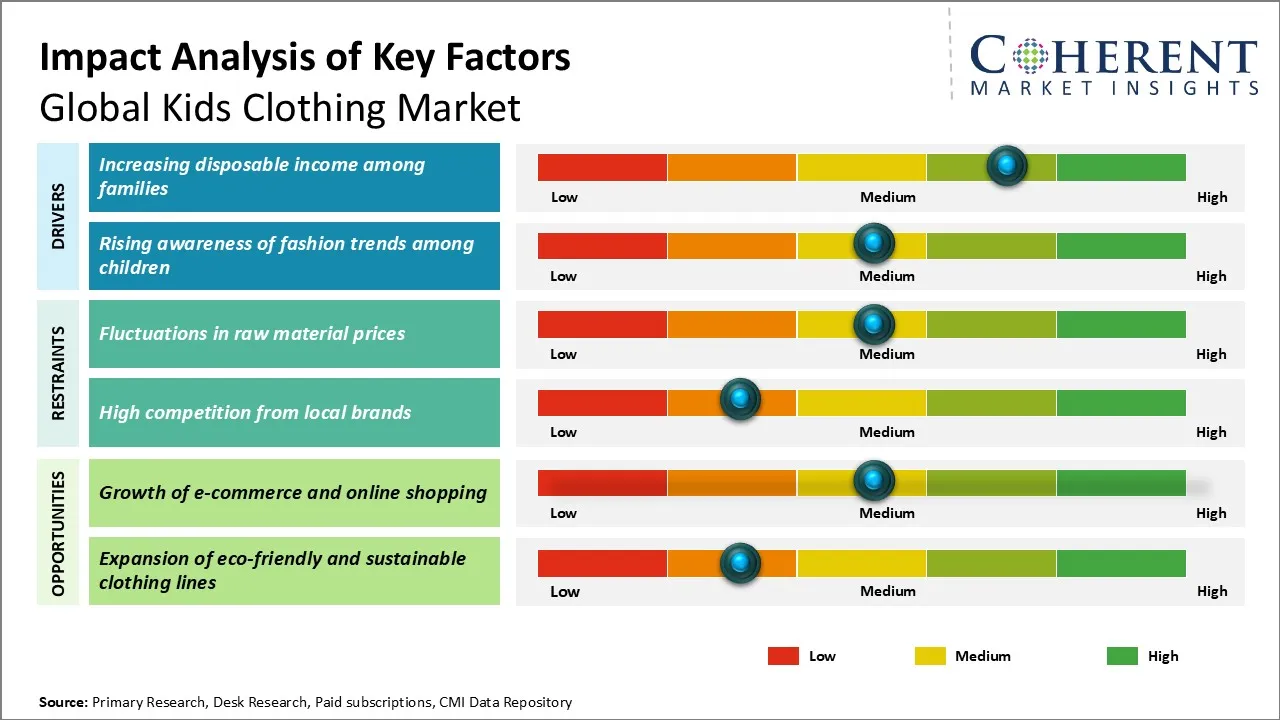
Kids Clothing Market Driver - Increasing Disposable Income Among Families
The increasing disposable income among families worldwide is significantly driving the demand in the global kids clothing market. As household earnings grow, parents are becoming more willing and able to allocate a larger portion of their budgets toward premium and diverse apparel options for their children. This financial flexibility allows families to explore a wider range of stylish, branded, and high-quality clothing, moving beyond just basic necessities to emphasize fashion, comfort, and durability.
Major brands such as Zara Kids and H&M have expanded their offerings in India, catering to the growing appetite for stylish and affordable children's clothing among affluent families. This trend is evident in tier 1 and tier 2 cities, where disposable income growth is outpacing rural areas, allowing families to indulge in non-essential purchases like branded kids' apparel.
Kids Clothing Market Opportunity - Growth of E-commerce and Online Shopping
The rapid expansion of e-commerce and online shopping is creating a significant growth opportunity in the global kids clothing market. With increasing internet penetration, widespread smartphone usage, and improved digital infrastructure, particularly in emerging economies like India and Brazil, online platforms are becoming more accessible to a larger consumer base. Parents are increasingly turning to online shopping for children's apparel due to the convenience, wider variety of options, competitive pricing, and the ability to shop at any time, bypassing traditional in-store limitations.
For example, global online retail giant Amazon has reported a steady increase in the sales of kids' clothing over the past few years. In 2024, Amazon's "Prime Day" event saw a record-breaking 25% growth in kids' fashion purchases, driven by a surge in new parent customers from both developed and developing countries. Furthermore, innovations in technology such as AI-powered personalized recommendations and virtual fitting rooms are enhancing the online shopping experience. Brands like Zara and H&M have integrated these features into their mobile apps, offering customers more accurate size recommendations and even the ability to virtually try on clothes.
Analyst Opinion (Expert Opinion)
- The global kids clothing market is poised for remarkable growth, fueled by evolving consumer preferences and a shift towards sustainable fashion. Leading brands like H&M Kids and Zara Kids are responding to the demand for eco-friendly materials and ethical production practices, as highlighted at recent events such as the Children’s Fashion Europe Show (2023) and the Global Kids Wear Conference (2022).
- Presentations showcased innovative approaches like circular fashion, where brands are increasingly adopting recycling programs and upcycled materials. Case studies from these conferences illustrated how companies that embrace sustainability not only enhance their brand image but also capture the attention of environmentally conscious parents.
- Discussions centered on the impact of digital marketing and e-commerce, particularly how social media influences buying decisions among the millennial parent demographic. As the trend towards personalization and custom designs grows, the kids clothing market is well-positioned for expansion. With the intersection of sustainability, technology, and consumer engagement, brands that adapt to these dynamics will likely thrive, making the market an exciting space for investors and entrepreneurs alike.
Speak to the analyst
Want personalized insights?
Take the findings above to one of our principal consultants, or have the report rebuilt around the segments, geographies and competitors you actually track.
Market Segmentation
- Product Type Insights (Revenue, USD Bn, 2021 - 2033)
- Tops
- Bottoms
- Dresses
- Outerwear
- Activewear
- Others
- Age Group Insights (Revenue, USD Bn, 2021 - 2033)
- Infants (0-2 years)
- Toddlers (2-5 years)
- Kids (5-12 years)
- Gender Insights (Revenue, USD Bn, 2021 - 2033)
- Boys Clothing
- Girls Clothing
- Unisex Clothing
- Distribution Channel Insights (Revenue, USD Bn, 2021 - 2033)
- Offline
- Online
- Regional Insights (Revenue, USD Bn, 2021 - 2033)
- North America
- U.S.
- Canada
- Latin America
- Brazil
- Argentina
- Mexico
- Rest of Latin America
- Europe
- Germany
- U.K.
- Spain
- France
- Italy
- Russia
- Rest of Europe
- Asia Pacific
- China
- India
- Japan
- Australia
- South Korea
- ASEAN
- Rest of Asia Pacific
- Middle East
- GCC Countries
- Israel
- Rest of Middle East
- Africa
- South Africa
- North Africa
- Central Africa
- North America
- Key Players Insights
- Nike, Inc.
- Adidas AG
- H&M Hennes & Mauritz AB
- Gap Inc.
- Zara (Inditex)
- Puma SE
- Under Armour, Inc.
- Carter’s, Inc.
- OshKosh B’gosh
- The Children's Place, Inc.
- Benetton Group
- Next PLC
- Primark Stores Limited
- Boohoo Group PLC
- Lands' End, Inc.
Sources
Primary Research Interviews
- Market Research Manager – Leading Global Kids Apparel Brand
- Procurement Head – Major Kids Fashion Retailer
- Product Development Lead – Popular Children’s Clothing Brand
- Sustainability Officer – Child Apparel Certification Body
Stakeholders
- Manufacturers
- End-use Sectors:
- Kids Apparel (T-shirts, Dresses, Jeans, Shorts, etc.)
- Online and Offline Retailers
- Fashion Brands focusing on children’s wear
- Global Wholesale Distributors
- Regulatory & Certification Bodies
- E-commerce Platforms and Retailers
- Technology Integration Players: AI-based fashion trend prediction tools
Databases
- UN Comtrade Database
- India Import Export (EXIM) Database
Magazines
- Children's Wear Business – Trends in kids’ fashion
- Fashion Kids Magazine – Innovations in kids' clothing styles
- Retail News Today – Kids fashion market updates and retail trends
- Global Fashion Insights – Consumer behavior in kids' apparel
- The Apparel Report – Market growth and forecasting for children's wear
Journals
- International Journal of Fashion Design – Trends in kids’ clothing patterns and designs
- Journal of Textile and Apparel Technology – Innovations in kids' clothing fabric
- Journal of Retail and Consumer Services – Impact of e-commerce on kids’ fashion industry
- Child Fashion Journal – Exploring kids’ clothing preferences and purchasing behaviors
- Fashion Marketing Journal – Market demand for kids’ fashion items in emerging economies
Newspapers
- The Financial Times – Market trends in the global kids clothing industry
- The Guardian – Shifting consumer preferences in kids' fashion
- Asia Fashion Review – Growth of kids' clothing markets in Asia-Pacific
- European Retail News – Trends in children's wear across Europe
- The New York Times – Impact of sustainability on kids’ clothing brands
Associations
- National Retail Federation (NRF)
- Children’s Apparel Manufacturers Association (CAMA)
- European Retailers Association (ERA)
- American Apparel & Footwear Association (AAFA)
Public Domain Sources
- U.S. Federal Trade Commission (FTC) – Guidelines on children’s advertising and apparel
- European Commission – Children’s fashion labeling regulations
- World Trade Organization (WTO) – Trade agreements impacting children’s wear imports/exports
Proprietary Elements
- CMI Data Analytics Tool, Proprietary CMI Existing Repository of information for last 8 years
Get access to 250+ pages report
Every segment, forecast, competitor profile and data table behind the analysis above — available for instant download.
- ESOMAR Member
- ISO 9001:2015 Certified
- D-U-N-S Registered
- GDPR & CCPA Compliant
Missing comfort of reading report in your local language? Find your preferred language:
Transform your Strategy with Exclusive Trending Reports
Frequently Asked Questions
The global kids clothing market is estimated to be valued at USD 282.14 Bn in 2026 and is expected to reach USD 361.40 Bn by 2033.
The CAGR of global kids clothing market is projected to be 3.6% from 2026 to 2033.
Increasing disposable income among families and rising awareness of fashion trends among children are the major factors driving the growth of the global kids clothing market.
Fluctuations in raw material prices and high competition from local brands are the major factors hampering the growth of the global kids clothing market.
In terms of Product Type, Tops are estimated to dominate the market revenue share in 2026.
Yes, sustainable kids' clothing brands are experiencing growing demand, driven by increased consumer awareness and preference for eco-friendly and ethical fashion choices.
Seasons affect kids' clothing sales by driving higher demand for weather-appropriate apparel, with cold months boosting sales of warm clothing and warm months increasing demand for lighter fabrics.