

Hard Seltzer Market Analysis & Forecast: 2026 to 2033
Hard Seltzer Market is estimated to be valued at USD 9.60 Bn in 2026 and is expected to reach USD 22.86 Bn in 2033, exhibiting a compound annual growth rate (CAGR) of 13.2% from 2026 to 2033.
Key Takeaways
- Based on ABV Content, the ABV Less Than 58.6% segment is expected to lead the market with the largest share in 2026, fueled by health-conscious millennials and Gen Z.
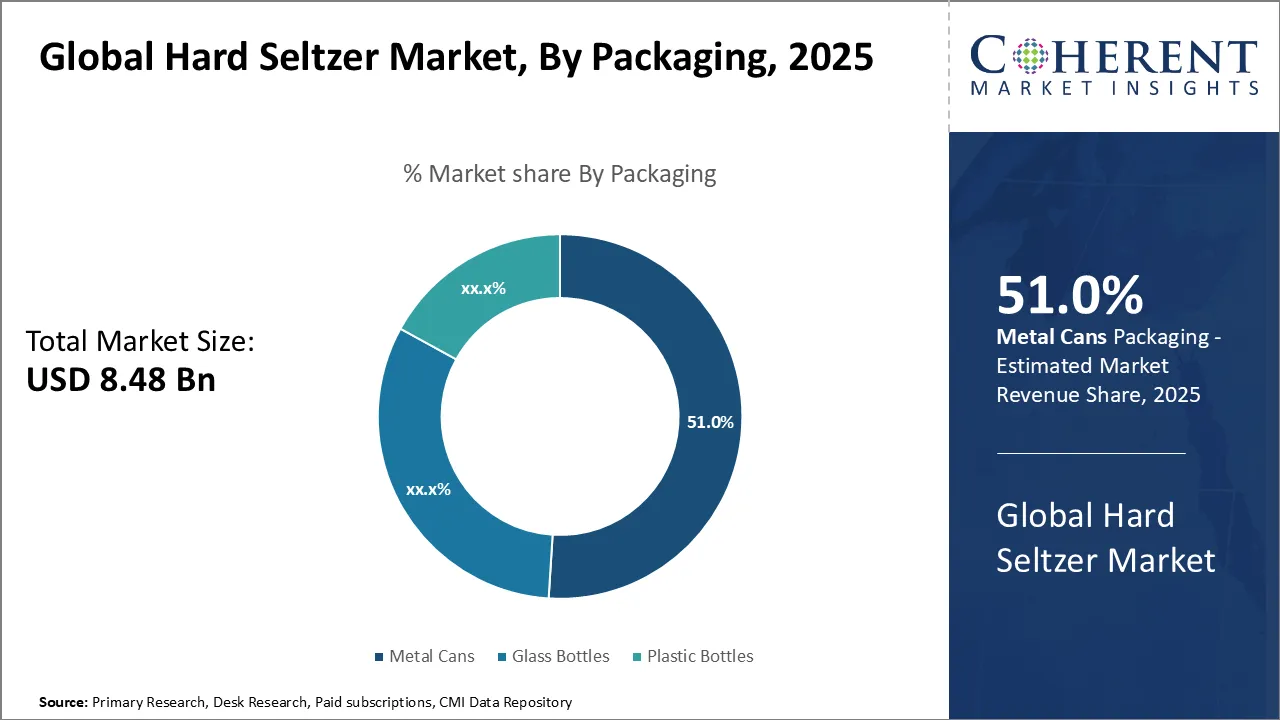
- Based on Packaging, the Metal Cans segment is expected to hold 52% share of the market in 2026, driven by sustainability, cost-effectiveness, portability, and superior carbonation preservation.
- Based on Distribution Channel, the Off-trade segment is projected to account for the highest share of the market in 2026, driven by retail presence, e-commerce growth, and at-home stocking preferences.
- Based on Region, North America is set to lead the hard seltzer market with 82% share in 2026. While, Asia Pacific is anticipated to be the fastest growing region.
Market Overview
The growing preference for flavored beverages among millennials, rising demand for alcoholic beverages with lower alcohol content, increasing product penetration in the on-trade channel, and increasing product advertisement on social media platforms are driving the growth of the hard seltzer market. Additionally, the rising demand for gluten free beverages due to health-conscious consumers and individuals with allergies or celiac disease is further fueling the growth of this market.
Current Events and Its Impacts on the Hard Seltzer Market
Current Event | Description and its Impact |
Regulatory and Health Policy Changes (Regional/Regulatory) |
|
Shifting Consumer Preferences and Demographics (Nano-Level/Social) |
|
Consumption & Demographics
Age Groups: Millennials and Gen Z are the most common
- More than 65% of people who drink hard seltzer are Millennials or Gen Z, showing that these two groups are in charge.
- These groups are moving away from beer and sugary cocktails and toward lighter, flavored, and healthier drinks.
- Their social drinking habits, like drinking at festivals, casual gatherings, and at home, are a perfect fit for portable, canned RTD formats.
- Gen Z cares a lot about real branding, sustainability, and wellness. This makes brands come up with new ideas like clean-label ingredients and functional seltzers.
Gender Split: More women than men, but men are growing
- Women make up 55–60% of drinkers right now, which shows that women who want low-calorie, low-sugar options are very interested in these drinks.
- Hard seltzers are often sold with fruity flavors and health benefits, which appeal to women more than regular beer.
- More men are adopting seltzers as brands add bolder flavors (like lime, black cherry, and tropical blends) and higher-ABV versions, making them more competitive with beer and spirits.
- This change suggests that the category is expanding beyond its original base of mostly women to include men and women in equal numbers.
Income Levels: Premium Appeal
- Premium hard seltzers are most popular with households that make $75,000 or more a year. This is because people with more money and a certain lifestyle are more likely to want them.
- People with more money are more likely to pay for premium flavors, artisanal blends, and functional add-ins like electrolytes or adaptogens.
- This group also cares about sustainability and brand storytelling, which opens up chances for high-end SKUs with eco-friendly packaging and one-of-a-kind flavor sets.
- The fact that people are willing to pay more for premium seltzers makes the category a status drink, not just a casual substitute for beer.
- Current Industry Events of 2026
- Market Size Estimation
- Regional Breakdown
- Competitive Landscape
- Customer Intelligence
- Segmental Analysis
- Pricing Analysis
- Key Market Drivers, Challenges & Future Trends
- Customized Insights Section
Segmental Insights
Global Hard Seltzer Market Insights, By ABV Content, ABV <5% segment leads in 2026, fueled by health-conscious millennials and Gen Z
In terms of ABV content, the ABV Less Than 5% segment is expected to dominate the global market over the forecast period and this is attributed to the growing number of health-conscious consumers worldwide as ABV less than 5% are mostly consume by people looking for healthy drinks.
Consumers, particularly millennials, and Gen Z, opt for low calorie, low-alcohol beverages that matches with their wellness and moderation trends.
For instance, in September 2026, Truly Hard Seltzer teamed up with breakout reality star JaNa Craig to launch a limited-edition flavor, No Shade, Just Tea. The release emphasizes the brand's emphasis on cool, low-calorie options with 5% ABV, 100 calories, and just 1g of sugar per 12-oz serving. The partnership highlights the increasing popularity of ABV <5% hard seltzers in 2025.
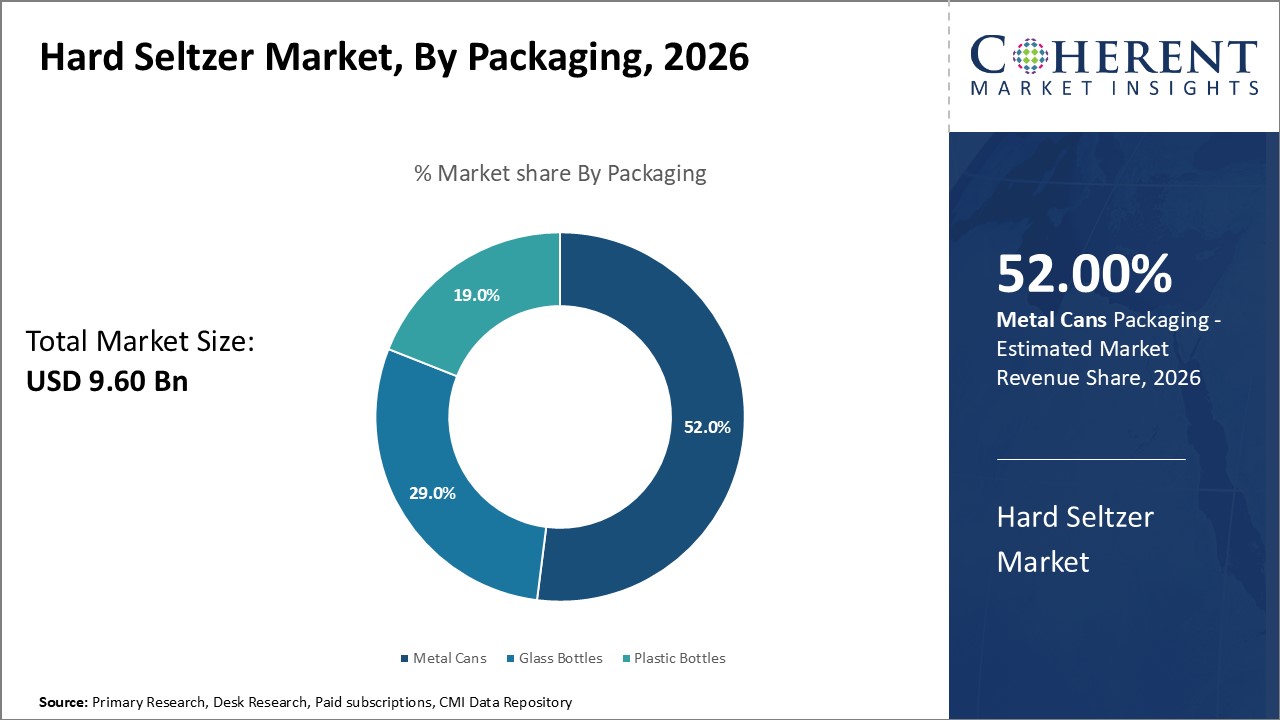
Global Hard Seltzer Market Insights, By Packaging: Metal Cans Dominance Is Driven by Sustainability, Cost-Effectiveness, Portability, And Superior Carbonation Preservation
In terms of packaging, the Metal Cans segment is expected to dominate the global market with 51% share in 2026, as it offers sustainable and environment-friendly solution packaging of food and beverages. Also, it is very cost-effective raw materials used in packaging of beverages and can be customized with colors, embossing, and 3D printing.
For instance, in May 2026, San Juan Beverage Company teamed up with Crown Holdings and Super Bowl champion Kam Chancellor to create a new hard seltzer brand that comes in eco-friendly aluminum cans. The partnership shows how metal cans are becoming more popular in the hard seltzer market. They are portable, recyclable, and keep carbonation better, and the use of celebrities to promote the product will get more people interested.
Global Hard Seltzer Market Insights, By Distribution Channel: Off-Trade Dominance Driven by Retail Presence, E-Commerce Growth, And At-Home Stocking Preferences
In terms of distribution channel, the off-trade segment holds a significant share of the market, mainly because of the presence of hypermarkets, supermarkets, convenience stores, mini-markets, and wine shops.
For instance, in April 2026, Topo Chico Hard Seltzer released new margarita-flavored alcoholic drinks and is now available in more places, including supermarkets, convenience stores, liquor stores, and online. The launch strengthens the brand's position in the off-trade segment, where demand is still rising as shoppers prefer to stock up at home. This shows how retail and e-commerce channels are becoming more important in 2025.
Regional Insights
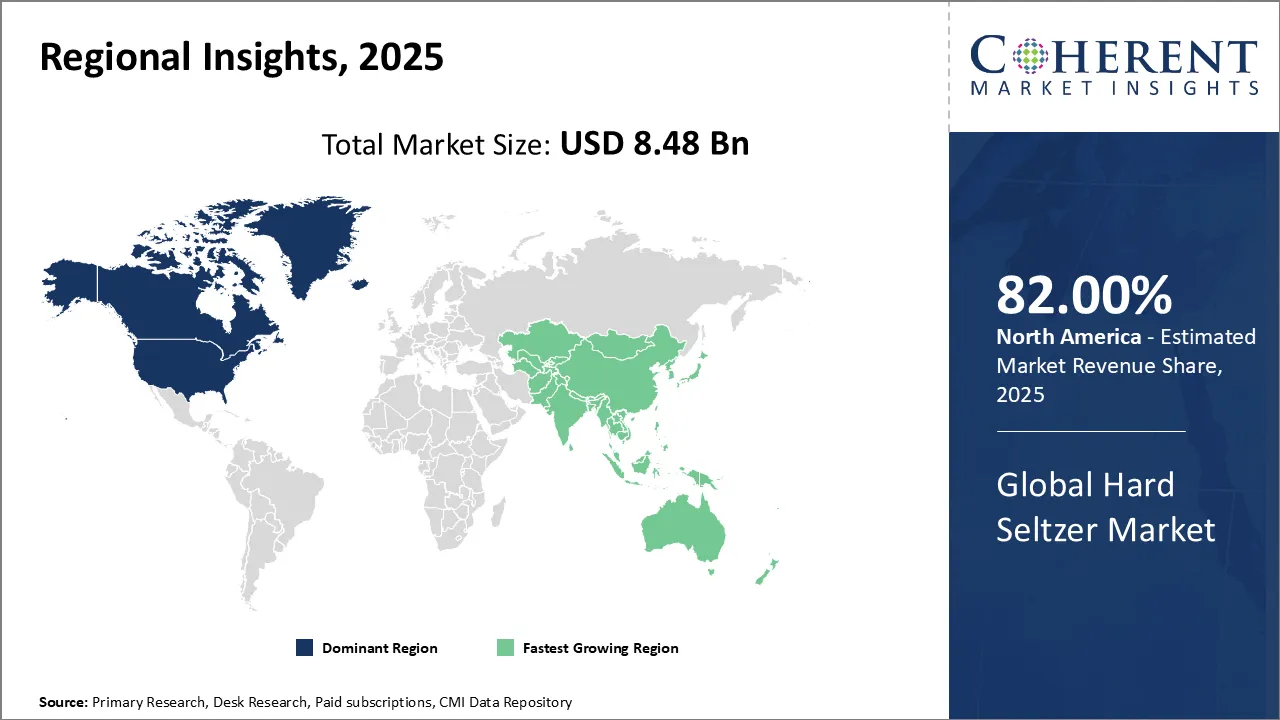
North America Hard Seltzer Market Analysis & Trends
North America is expected to be a dominant region with 82% share in 2026. This is mainly due to the presence of prominent brands and high consumer awareness. Moreover, key manufacturers are focusing on marketing campaigns and promoting their products through retail stores and bars.
For instance, in August 2026, NIU Athletics and Penrose Brewing teamed up to make a co-branded hard seltzer in Illinois. This is a one-of-a-kind partnership between college sports and craft brewing. The launch shows that North America is the leader in the hard seltzer market. It combines local brewing knowledge with sports branding to get fans involved and reach more customers in 2026.
Asia Pacific Hard Seltzer Market Analysis & Trends
Asia Pacific is expected to witness fastest growth in the global hard seltzer market over the forecast period owing to the increasing disposable incomes and rising urbanization. In addition, a growing travel industry is driving demand for hard seltzers in these regions. The regional market is also characterized by a growing number of small and medium-sized producers. As a result, the competition in the market is intense.
For instance, in May 2026, Suntory Global Spirits announced that its vodka seltzer will be available all over the country, showing off Japanese creativity in the category. The new release makes the company a stronger player in the hard seltzer market by giving customers a high-quality, refreshing option. This growth shows that more people want flavored seltzers and shows that the brand is committed to global drink trends in 2026.
Hard Seltzer Market Outlook Country-Wise
The U.S. Hard Seltzer Market Trends
The hard seltzer market in the U.S. performs well due to Millennials and Gen Z like low-calorie, sugar-free, and gluten-free alcoholic drinks. Hard seltzers fit with modern drinking habits because people are more health-conscious, want convenience, and like strong flavors. Their portability and unique taste keep them competitive with beer and wine, which is why the RTD category is growing quickly across the country.
For instance, in April 2026, Arizona and Mountain Dew introduced new drinks in North America, showing how active the soft drink and RTD market is in the area. The new drinks are all about refreshing flavors and appealing to customers. This shows that North America will still be a center for drink innovation in 2026. These products are not directly related to hard seltzer, but they show that the industry is growing and becoming more diverse.
South Korea Hard Seltzer Market Trends
As people seek out low-sugar, low-calorie alcoholic drinks that fit their healthier lifestyles, the hard seltzer market in South Korea is growing. Millennials and Gen Z are driving demand because they like new flavors and easy-to-open packaging. Both local and global brands are adding more products, which is driving strong growth in the country's ready-to-drink beverage market.
For instance, in June 2026, NEWROOK, expanded its reach with the launch of SWRL, a makgeolli-based hard seltzer brand. Originating in South Korea, the company has filed trademarks in the United States and Canada, with an official debut planned in New York. SWRL blends traditional Korean fermentation with modern seltzer trends, targeting health-conscious Millennial and Gen Z consumers.
Market Report Scope
Hard Seltzer Market Report Coverage
| Report Coverage | Details | ||
|---|---|---|---|
| Base Year: | 2025 | Market Size in 2026: | USD 9.60 Bn |
| Historical Data for: | 2020 To 2024 | Forecast Period: | 2026 To 2033 |
| Forecast Period 2026 to 2033 CAGR: | 13.2% | 2033 Value Projection: | USD 22.86 Bn |
| Geographies covered: |
| ||
| Segments covered: |
| ||
| Companies covered: | Barefoot, Bon V!V Spiked Seltzer, Bud Light, Ficks Beverage Co, Future Proof Brands Llc, Hard Seltzer Beverage Company Llc, Kona, Lift Bridge Brewing Co, Nude Beverages, And White Claw | ||
| Growth Drivers: |
| ||
| Restraints & Challenges: |
| ||
Global Hard Seltzer Market Drivers
Growing population of millennials and younger generations to augment market growth
The hard seltzer market is expected to continue growing as more and more millennials and younger generations adopt healthy lifestyle habits. With their focus on wellness, this generation is more interested in products that are organic, sustainable, and offer a natural halo. Moreover, brands are creating seasonal releases to appeal to this new audience of discerning drinkers, and these limited-edition products have been a big hit.
Advent of new product with innovative packaging to propel market growth
The emergence of newer products with innovative packaging and designs is a significant factor boosting the hard seltzer market growth. This is especially true in the United States, where brands are introducing hard seltzers with unique bottle shapes and designs. Additionally, the use of high-quality ingredients in the production of hard seltzers is a key factor in enhancing their taste and flavor profile.
Global Hard Seltzer Market Opportunities
Premiumization & Artisanal Blends
Premiumization in the hard seltzer market forecast highlights growing consumer demand for artisanal blends, craft-inspired recipes, and higher alcohol content. Limited-edition seasonal releases and terroir-driven flavors appeal to discerning drinkers seeking exclusivity. This trend positions hard seltzers as premium lifestyle beverages, driving innovation and long-term growth opportunities across global markets.
Functional & Wellness-Oriented Seltzers
Functional and wellness-oriented seltzers are reshaping the hard seltzer market size, driven by demand for healthier alcohol options. Infused with electrolytes, vitamins, botanicals, or adaptogens, these beverages appeal to Millennials and Gen Z seeking balance between refreshment and wellness. This innovation expands consumer reach, fueling growth and differentiation in the category.
Global Hard Seltzer Market Trends
Growing trend of keto and vegan diet
This market is growing at a rapid pace as a result of the increased demand for alcoholic beverages with low calorie count and higher nutritional value. It is also driven by the rising health consciousness of consumers, who are opting for a healthy lifestyle that is rich in vitamins and minerals. The growing popularity of dietary trends such as keto and vegan diet is further boosting the market growth of hard seltzer.
Launch of new product with different flavors
In order to capitalize on the growing demand for beverages with different flavors, companies are expanding their product portfolios and experimenting with different flavors.
Analyst Opinion (Expert Opinion)
The global hard seltzer market has grown significantly because a growing number of individuals want lighter, flavored, and low-calorie alcoholic drinks. Many sources in the industry show strong upward trends, which show that demand is high and adoption is growing in numerous sectors.
Health and lifestyle are two of the main factors driving this trend. Increasingly, individuals are looking for lower-calorie, lower-carb options to traditional beers and cocktails. Flavor innovation is still crucial, as fruit, berry, citrus, and tropical flavors appeal to health-conscious customers. Convenience and packaging are also vital. Ready-to-drink cans make it easy to drink on the go and fit into city life. Adding more places to buy things, like supermarkets, convenience stores, and retail stores, also helps the market grow.
North America has always been the leader in the market, but interest is growing in other areas. This suggests that future growth will come more from new markets as health-conscious and urban populations start drinking hard seltzers. As competition gets tougher, it will be important to set yourself apart by using flavor, brand image, and targeting specific groups of consumers.
There are problems like rules and cultural differences, pressure on the supply chain, and the need to teach consumers in new markets. Successful companies will market hard seltzers as drinks that fit into a healthy lifestyle, focusing on their convenience, taste, and health benefits. Overall, the market is moving from being a niche market to a mainstream one. This is because of structural momentum and the fact that it has a lot of room to grow around the world.
Speak to the analyst
Want personalized insights?
Take the findings above to one of our principal consultants, or have the report rebuilt around the segments, geographies and competitors you actually track.
Global Hard Seltzer Market: Key Developments
- In June 2025, Maru Hi introduced its Sparkling Cocktail Variety Pack to the U.S., which is a new addition to the hard seltzer-inspired RTD category. The pack has fruity, refreshing flavors that are meant to appeal to health-conscious people who want tasty alcoholic drinks that aren't too high in calories. Positioned within the growing seltzer market, Maru Hi aims to capture demand for convenient, modern drinking experiences.
- In March 2025, Kraft Heinz's Crystal Light brand made a ready-to-drink vodka line that is now available in stores. The launch of this product puts it in a good position to compete in the hard seltzer market. It offers low-calorie, flavored options that health-conscious consumers will like. This move adds alcoholic drinks to Crystal Light's product line, which is a response to the U.S. demand for easy-to-drink, refreshing drinks.
- In March 2025, The FDA has given Scott Laboratories permission to use Velcorin® (dimethyl dicarbonate) in hard seltzers, spirit-based cocktails, and beer mixes. This microbial control agent helps keep products safe and stable on the shelf. The approval is a big deal for drink makers because it lets Velcorin be used in the fast-growing "hard seltzer" category and encourages new ideas in ready-to-drink alcoholic drinks.
Market Segmentation
- Global Hard Seltzer Market, By ABV Content (Revenue, USD Bn, 2021 - 2033)
- ABV Less Than 5%
- ABV More Than 5%
- Global Hard Seltzer Market, By Packaging (Revenue, USD Bn, 2021 - 2033)
- Metal Cans
- Glass Bottles
- Plastic Bottles
- Global Hard Seltzer Market, By Distribution Channel (Revenue, USD Bn, 2021 - 2033)
- Off-trade
- On-trade
- Global Hard Seltzer Market, By Region (Revenue, USD Bn, 2021 - 2033)
- North America
- U.S.
- Canada
- Latin America
- Brazil
- Argentina
- Mexico
- Rest of Latin America
- Europe
- Germany
- U.K.
- Spain
- France
- Italy
- Russia
- Rest of Europe
- Asia Pacific
- China
- India
- Japan
- Australia
- South Korea
- ASEAN
- Rest of Asia Pacific
- Middle East & Africa
- GCC Countries
- Israel
- Rest of Middle East & Africa
- North America
- Key Companies Insights (Revenue, USD Bn, 2021 - 2033)
- Barefoot
- Bon V!V Spiked Seltzer
- Bud Light
- Ficks Beverage Co
- Future Proof Brands Llc
- Hard Seltzer Beverage Company Llc
- Kona
- Lift Bridge Brewing Co
- Nude Beverages
- White Claw
Get access to 250+ pages report
Every segment, forecast, competitor profile and data table behind the analysis above — available for instant download.
- ESOMAR Member
- ISO 9001:2015 Certified
- D-U-N-S Registered
- GDPR & CCPA Compliant
Missing comfort of reading report in your local language? Find your preferred language:
Transform your Strategy with Exclusive Trending Reports
Frequently Asked Questions
The Hard Seltzer Market is estimated to be valued at USD 9.60 Bn in 2026, and is expected to reach USD 22.86 Bn by 2033.
The CAGR of the Hard Seltzer Market is projected to be 13.2% from 2026 to 2033.
Growing population of millennial and younger generations is fuelling growth of market.
The Metal cans segment is the leading packaging segment in the market.
Easy availability of substitute products is the major factors restraining growth of the market.
Barefoot, Bon V!V Spiked Seltzer, Bud Light, Ficks Beverage Co, Future Proof Brands Llc, Hard Seltzer Beverage Company Llc, Kona, Lift Bridge Brewing Co, Nude Beverages, And White Claw