

Global L-Carnosine Market Size and Forecast – 2026 To 2033
The global L-Carnosine market is expected to grow from USD 185 Mn in 2026 to USD 260 Mn by 2033, registering a compound annual growth rate (CAGR) of 5%. The global L-Carnosine market is poised for significant expansion fueled by increasing aging population, driving the need for anti-aging and health-care preventive supplements.
According to the World Health Organization, by 2030, 1 in 6 people around the world will be 60 years old or older, reaching approximately 1.4 billion individuals. By 2050, the number of people 60 years old or older is expected to double to 2.1 billion, and the number of people 80 years old or older is expected to triple to 426 million.
(Source: World Health Organization)
Key Takeaways of the Global L-Carnosine Market
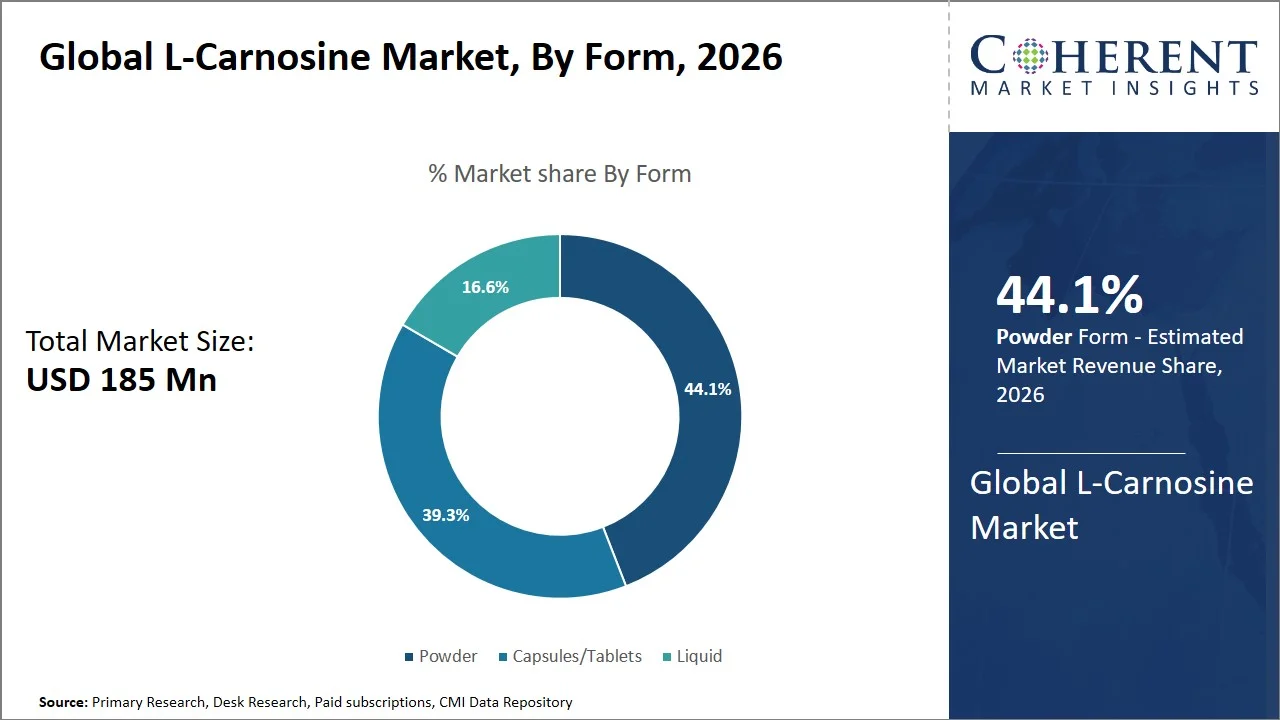
- Powder is projected to hold 44. 1% of the global L-Carnosine market share in 2026, making it the dominant form segment, with North America being the key contributor region owing to the extensive use of L-carnosine powders as bulk nutraceutical ingredients for flexible dosing. With a mature dietary supplement market and a strong inclination toward health products that promote fitness and anti-aging, L-carnosine in the powder form is extensively utilized here. For instance, brands such as BulkSupplements offer L-carnosine in pure powder form, widely used in sports nutrition and customizable supplement blends, reflecting strong consumer and manufacturer preference for powder-based formats.
- Dietary supplements are projected to hold 52.8 % of the global L-Carnosine market share in 2026, making it the dominant application segment, with Asia Pacific being among the biggest contributors due to aging demographics in nations such as Japan and China, along with a growing consumer focus on preventive health and wellness. Moreover, the high acceptability of functional foods in this region further surges the demand. For example, businesses like the DHC Corporation and the FANCL Corporation have established themselves through dietary supplement products in the Japan L-carnosine market, providing a variety of amino acid and anti-aging products. For instance, DHC Corporation offers amino acid-based health supplements as part of its anti-aging and wellness portfolio, catering to Japan’s aging population.
- Online retail is projected to hold 38.5 % of the global L-Carnosine market share in 2026, making it the dominant distribution channel segment, with North America taking the lead, driven by strong penetration of online commerce and direct-to-consumer brand supplements. The increasing demand for convenient, subscription-based supplement models, along with increased availability through online sources, will further boost the segment’s growth. For instance, according to the U.S. Census Bureau, e-commerce sales accounted for 16.6% of total U.S. retail sales in Q4 2025, reflecting strong consumer reliance on online purchasing channels, including health and wellness products. (Source: U.S. Census Bureau)
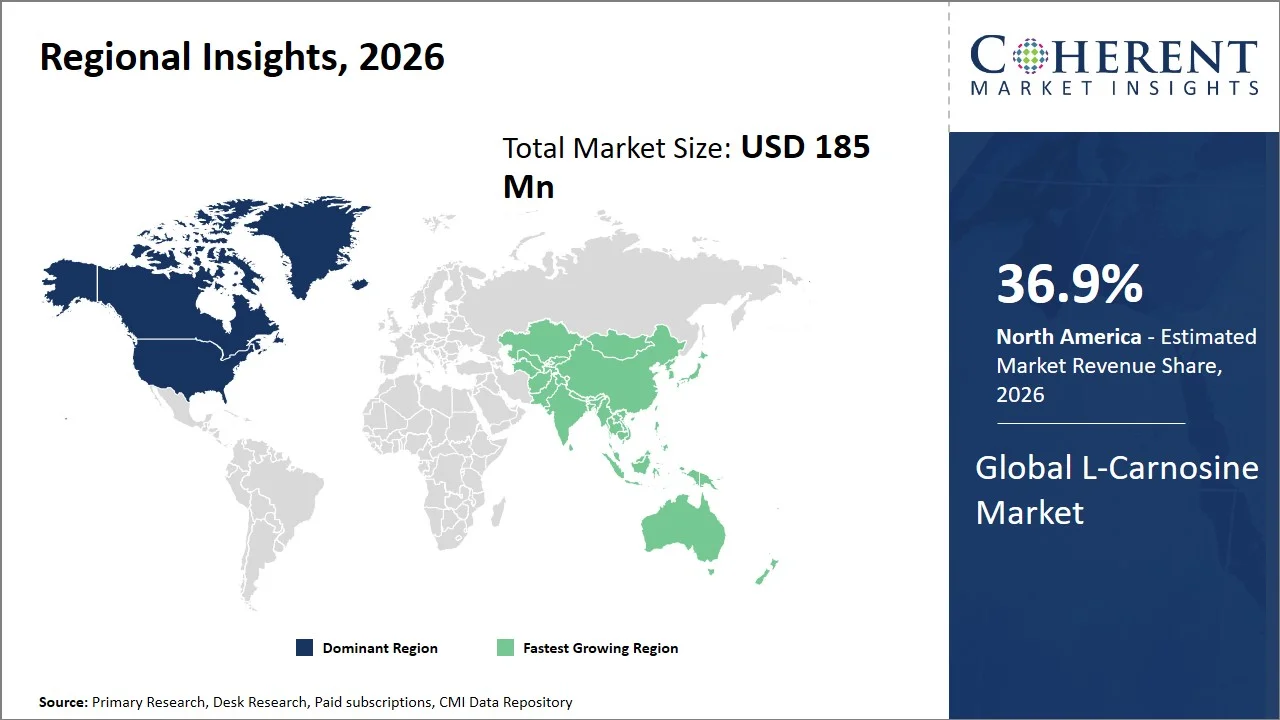
- North America maintains its dominance with an expected share of 36.9 % in 2026. The region benefits from strong commercialization of nutraceutical ingredients, including amino acid-based formulations such as L-carnosine. For example, companies such as NOW Foods and Jarrow Formulas offer L-carnosine-based supplements in various formulations, reflecting widespread product availability and consumer adoption across the U.S.
- Asia Pacific is expected to exhibit the fastest growth with an estimated contribution of 25.8 % share in 2026, supported by rapidly aging populations and increasing consumer focus on health maintenance in countries such as Japan, China, and South Korea. The region’s strong inclination toward functional nutrition and expanding e-commerce-driven supplement access further accelerates demand. For example, companies such as BY-HEALTH have expanded their portfolio of amino acid and wellness supplements across China, leveraging digital retail channels and rising middle-class health awareness, thereby reinforcing regional market growth. (Source: BY-HEALTH)
- Expansion in Neuroprotective and Cognitive Health Applications: The amino acid L-carnosine is increasingly being explored for its antioxidative effects, and its anti-glycation effects that can help in reducing the risk of neurodegenerative disorders like Alzheimer’s disease. The increasing number of clinical trials and pre-clinical research on its benefits in improving cognitive functions and protecting neurons from damage is paving the way for specialized applications in brain wellness supplements and medical nutrition products.
- Rising Demand in Anti-Glycation Skincare and Dermatology: L-Carnosine’s effectiveness in reducing advanced glycation end products (AGEs), which contribute to skin aging, is prompting its use in high-end skin care products. As more consumers prefer scientifically proven anti-aging compounds, L-Carnosine is being included in cosmeceuticals for improving skin elasticity, reducing wrinkles, and protecting skin from external factors.
Segmental Insights
Why Does the Powder Segment Dominate the Global L-Carnosine Market?
Powder is projected to hold a market share of 44.1% in 2026, owing to its flexibility, low cost, and easy adaptability to modern health supplements. This product form helps control the dosage accurately, such as for anti-aging and muscle recovery. For instance, according to research published in National Library of Medicine, L-carnosine is used extensively as an additive in food supplements because of its high level of bioavailability and suitability for use in different formulations, especially when used as a powder in food products. (Source: National Library of Medicine)
From the manufacturing process viewpoint, powder can be easily blended with proteins to make beverages and nutritional items, which involve less number of additives compared to other product forms. For example, Optimum Nutrition formulates its protein powders and drinks using amino acids and their derivatives, highlighting how such components can be utilized in nutritional supplements without requiring complicated formulations. (Source: Optimum Nutrition)
- Current Industry Events of 2026
- Market Size Estimation
- Regional Breakdown
- Competitive Landscape
- Customer Intelligence
- Segmental Analysis
- Pricing Analysis
- Key Market Drivers, Challenges & Future Trends
- Customized Insights Section
Why are Dietary Supplements the Most Preferred Application in Global L-Carnosine Market ?
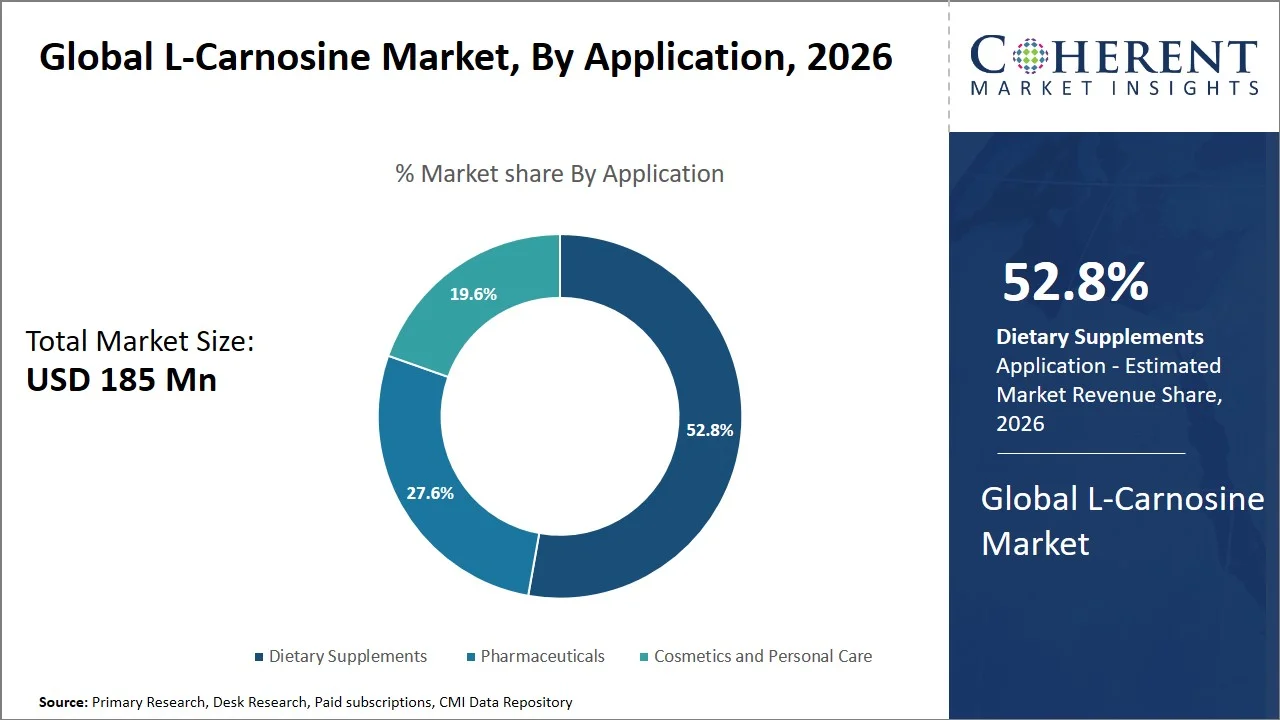
Dietary supplements are projected to hold a market share of 52.8% in 2026, because of the effectiveness of the compound in the management of diseases associated with aging, recovery of muscles, and cognitive improvement. For instance, a study published in October 2025, by Spandidos Publications has shown that L-Carnosine has powerful antioxidant and antiglycating capabilities, as well as neuroprotective action, thereby making it effective in dealing with age-related and metabolic diseases. (Source: Spandidos Publications).
Consumers’ inclinations toward living healthy lifestyles have driven the increasing demand for bioactive substances that can easily be included in their routines, and dietary supplements offer the simplest means of achieving this objective. Moreover, the application of L-carnosine in drug development is more challenging because of the stringent regulations governing drugs (such as compliance with the U.S. Food, Drug, and Cosmetic Act and the requirement for extensive clinical evaluation under the Investigational New Drug (IND) application process). On the contrary, dietary supplements face less resistance in terms of marketing products. Besides, L-carnosine is often combined with other chemicals to develop products that provide multiple benefits, thus making it an ideal raw material in nutraceuticals.
Online Retail Segment Dominates the Global L-Carnosine Market
The online retail segment is projected to hold a market share of 38.5% in 2026, because of its ease, wider availability of products, and the increasing tendency of consumers toward ordering directly from manufacturers of dietary supplements online. With the ability to compare various aspects of available products such as price and ingredients, online retailing provides an opportunity to choose from more diverse ranges of products, such as niche amino acids. Subscription-based models and personalized nutritional offerings make online retail even more appealing as it guarantees consistent supply. For example, online platforms like Amazon provide "Subscribe & Save" programs for dietary supplements, whereas businesses like Care/of provide personalized supplements subscription programs, indicating the increasing popularity of the recurring purchase approach within the health and wellness industry
Currents Events and their Impact
Current Events | Description and its Impact |
Expansion of Dietary Supplement Regulatory Frameworks Supporting Functional Ingredients |
|
U.S. cGMP Compliance Strengthening Supplement Manufacturing |
|
(Source: U.S. Food and Drug Administration, U.S. Food and Drug Administration)
Global L-Carnosine Market Dynamics
Market Drivers
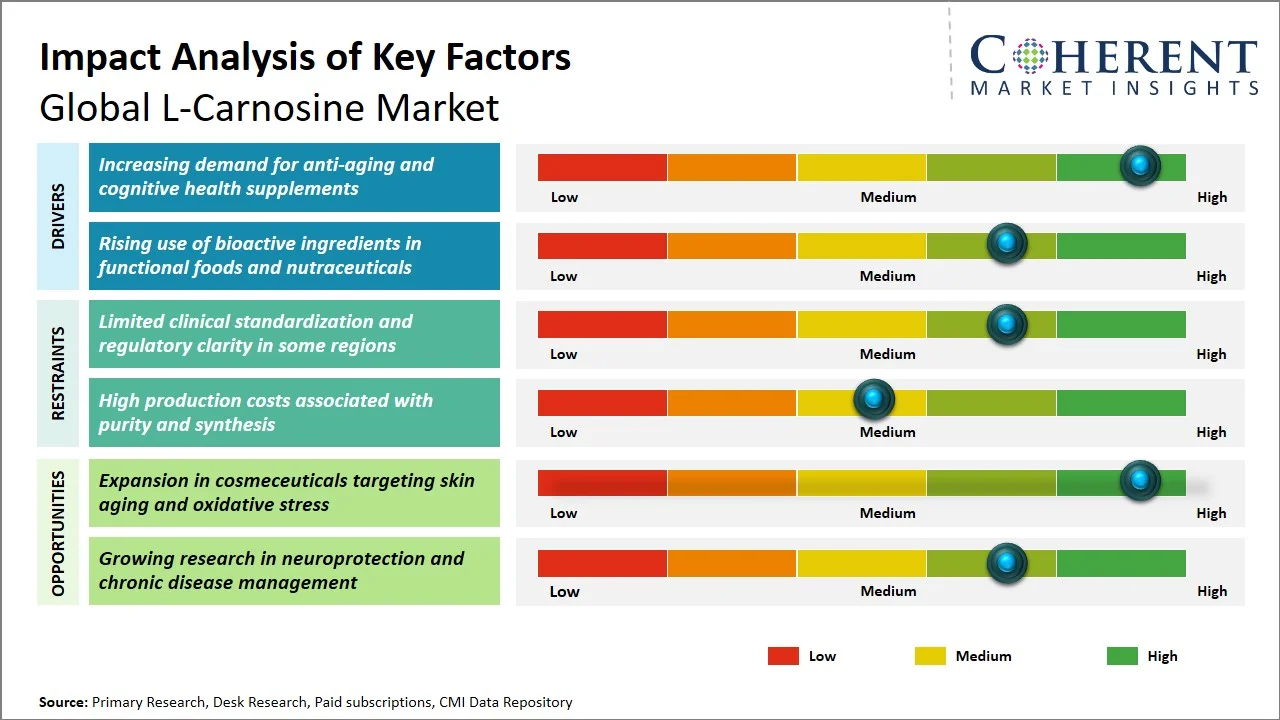
- Increasing demand for anti-aging and cognitive health supplements: Increased consumption of supplements to enhance cognitive abilities and promote longevity represents another key trend driving the global L-Carnosine market, and these trends can be attributed to the changing attitude of consumers towards prevention and proactive health management. Increased awareness about the negative effects of aging such as cognitive decline along with other health issues encourages people to incorporate certain supplements in their diet as opposed to taking measures to treat any existing conditions. The Centers for Disease Control and Prevention, reports that 57.6% of U.S. adults use dietary supplements, and use was higher among women (63.8%) than men (50.8%). (Source: Centers for Disease Control and Prevention)
- Rising use of bioactive ingredients in functional foods and nutraceuticals: The increasing trend of bioactive components incorporation into functional foods and nutraceuticals serves as an important impetus behind the L-Carnosine market growth as people strive to choose foods with additional benefits apart from providing essential nutrients. The diets of contemporary individuals had become more inclined towards fortified and functional foods with the ability to bring certain health benefits such as increased energy levels, better recovery, and other factors. As a result, there is an increasing tendency among food producers to develop food products with amino acids and other bioactive compounds such as protein powders, fortified beverages, and nutrition bars. Backing this trend, the U.S. Food and Drug Administration emphasizes that ingredients which have beneficial functions, including amino acids, are commonly added to regular foods and food supplements for the purpose of improving their nutritive value and functioning. (Source: U.S. Food and Drug Administration)
Emerging Trends
- Shift Toward Personalized Nutrition and Targeted Formulations: L-Carnosine is being widely used in personalized nutritional formulas by companies, in the form of supplements specific to cognitive well-being, metabolism issues, and geriatric individuals. This development has been facilitated by the rising preference among consumers for personalized nutraceutical products.
- Advancements in High-Purity Production and Bioavailability Enhancement: There have been technological advancements in the manufacture of L-Carnosine due to the increased need for stable and highly absorbable L-Carnosine. Such developments are geared towards the production of high-grade L-Carnosine (≥98%) that is offered in the liquid form and specially formulated capsules.
Regional Insights
Why is North America a Strong Market for L-Carnosine?
North America leads the global L-Carnosine market, accounting for an estimated 36.9% share in 2026, owing to its developed state of nutraceutical industry, increased consumer spending on prevention programs, and favorable regulations which ensure the swift introduction of new products in the market. North America features a rich tradition of supplement use as well as an increasing tendency toward specialized supplements targeted at specific needs such as anti-aging, improved cognitive functions, and physical activity.
In addition, the Dietary Supplement Health and Education Act of 1994 and 21 CFR Part 111 (Dietary Supplement cGMP) provide favorable conditions for the production of amino acids supplements such as L-Carnosine with a more efficient time-frame than drugs. These factors motivate companies to develop commercialization of their products in great detail. For example, NOW Foods serves as one of the companies producing supplements based on L-Carnosine amino acid family. Besides, the development of sophisticated distribution networks via the internet and direct sales gives additional impetus to make North America recognized as an important market for L-Carnosine.
Why Does the Asia Pacific L-Carnosine Market Exhibit High Growth?
The Asia Pacific L-Carnosine market is expected to exhibit the fastest growth with an estimated contribution of 25.8% share to the market in 2026, on account of demographic changes, increased nutraceutical production, and favourable regulatory environments that facilitate the commercialization of products at a rapid rate (such as Foods with Function Claims (FFC), Health Food Registration System).
Countries like China, Japan, and South Korea where the demographics have shifted considerably with an increase in the number of aged people along with the middle class that focuses significantly on their health care and performance nutrition needs. For instance, Japan’s population has surged to a record high of 36.25 million, representing 29.3% of total populace, highlighting a highly aged society driving demand for preventive healthcare solutions.
Furthermore, the region is well-known for having high domestic production of amino acids (over 70% of global fermentation capacity) that make it easier for them to add this ingredient to functional food and other supplements with lower costs involved. With the help of regulations such as Foods with Function Claims (FFC) offered by Japan, companies can market products containing function-related ingredients without going for complete drug approval, making it easy to launch the products These factors collectively facilitate faster product development and commercialization across the Asia Pacific region.
Global L-Carnosine Market Outlook for Key Countries
Why is the U.S. Leading Innovation and Adoption in the L-Carnosine Market?
The U.S. is at the forefront of the L-carnosine market, owing to its highly evolved nutraceutical research ecosystem, extensive clinical research, and conducive regulatory framework. The existence of research institutions (such as the National Institutes of Health support) as well as ingredient-focused companies (such as Lonza Group) facilitates the continued advancement of formulations made up of amino acids mixed with other bioactive. The regulatory framework, such as Dietary Supplement Health and Education Act of 1994 (DSHEA), has made it easier to quickly introduce products compared to pharmaceutical products, which has led to new ideas in formulation and delivery systems. Moreover, the high prevalence of direct consumer and personal nutrition approaches facilitates rapid commercialization of innovation. For example, Jarrow Formulas markets L-Carnosine within its innovative amino acid range that is aimed at promoting specific benefits. (Source: Jarrow Formulas)
Is China a Favorable Market for the L-Carnosine Market?
China represents an ideal market for L-Carnosine sales owing to the country’s efficient manufacturing infrastructure and growing interest in the development of the nutraceutical industry along with growing awareness among the population about preventive medicine. The presence of a big manufacturing capacity for amino acids is an important factor providing China with an opportunity to acquire these biological substances on affordable conditions and use them in the development of functional foods and nutritional supplements. Additionally, State Administration for Market Regulation (SAMR) health food regulation makes it possible to enter the China L-Carnosine market using approved schemes of promoting health food products.
Is Japan Emerging as a Key Growth Hub for the L-Carnosine Market?
In Japan, there is a growing opportunity for growth in the market of L-Carnosine, owing to its highly sophisticated functional foods system, an aging population base, and government support for health-oriented products. Japan also has a well-established tradition of preventive healthcare coupled with high consumer acceptance towards nutraceutical products especially those based on amino acids. Through systems like Foods with Function Claims (FFC), Japan can commercialize scientific ingredients without the need for pharmaceutical clearance. The existence of ingredient suppliers in the region along with ongoing product development makes Japan an important growth center for L-Carnosine.
Why Does Germany Top the Europe L-Carnosine Market?
Germany is at the forefront of European countries in terms of consumption of L-carnosine due to the country's advanced pharmaceutical chain and the high demand by its consumers for clinically tested, quality assured nutritional supplements. Unlike other countries, Germany's dietary supplement consumption is predominantly carried out in аптеке (pharmacies). Additionally, Germany has one of the most advanced regulatory environments as part of the European Food Safety Authority, which supports the prevalence of high-quality supplements in the form of amino acids.
Is L-Carnosine Market Developing in India?
The India L-Carnosine market is taking shape owing to the fast-growing nutraceuticals and dietary supplement market in the country. The increasing trend towards urbanization and disposable income levels along with the growing trend of preventive healthcare practices have led to an increase in demand for functional ingredients like amino acids.
The regulatory body, Food Safety and Standards Authority of India, is helping in making better standards in dietary supplements. Moreover, the growth in fitness culture, along with the consumption of protein and amino acid-rich products, has been witnessed in young consumers. For instance, a study published by Medical Journal of Dr. D.Y. Patil Vidyapeeth indicates that approximately 29.4% of young adults (medical college students) in India use dietary supplements, with protein powders being among the most preferred products for muscle building and general well-being. (Source: Medical Journal of Dr. D.Y. Patil Vidyapeeth)
Regulatory Landscape Governing the Global L-Carnosine Market
Region | Regulatory Environment | Key Characteristics |
North America | Governed by Dietary Supplement Health and Education Act of 1994 (DSHEA) and 21 CFR Part 111 (Dietary Supplement cGMP) under the U.S. Food and Drug Administration | Faster commercialization of amino acids as supplements; strong emphasis on labeling, safety, and manufacturing quality; innovation-friendly environment |
Europe | Regulated by European Food Safety Authority under Novel Food Regulation (EU) 2015/2283 and Food Supplements Directive | Stringent approval process; high focus on scientific validation and safety; slower product approvals but strong consumer trust |
Asia Pacific | Includes frameworks such as Foods with Function Claims (FFC) and oversight by State Administration for Market Regulation (SAMR) | Faster product approvals in functional foods; strong support for nutraceutical commercialization; diverse regulatory systems across countries |
Latin America | Regulated by agencies such as Agência Nacional de Vigilância Sanitária (ANVISA) | Moderate regulatory stringency; evolving nutraceutical frameworks; increasing standardization and safety compliance |
Middle East & Africa | Governed by authorities such as Saudi Food and Drug Authority and other regional bodies | Emerging regulatory frameworks; growing focus on supplement safety and import regulations; increasing market formalization |
How is the growing research in neuroprotection and chronic disease management creating new growth opportunities in the global L-Carnosine market?
The emergence of innovations in the area of neuroprotective and chronic illness treatment technologies provides opportunities for the growth of the L-Carnosine market via the increase in applications of the substance in condition-specific formulas. The scientific proof can be provided from scientific findings within the National Center for Biotechnology Information, where it is evident that L-Carnosine helps enhance cognitive abilities in relation to metabolic ailments and neurological issues connected with stroke and dementia. (Source: National Library of Medicine) The trend of development within this context will be geared towards the manufacturing of L-Carnosine products for brain ailments, diabetes, and aging issues, amongst other medical issues. As validation for its clinical benefits grows, more companies are looking towards L-Carnosine as an option for therapeutic nutrition and supplementation, thus increasing the commercial applicability of L-Carnosine beyond its usual dietary role.
Market Players, Key Development, and Competitive Intelligence
Key Development
- In September 2025, Sihuan Pharmaceutical Holdings Group Limited made an announcement concerning the approval of its composite skin booster product dubbed “Dongyan” based on the amino acid L-carnosine which was developed by one of its subsidiaries. This indicates the increasing relevance of use of L-Carnosine in cosmeceutical products especially those used to address skin rejuvenation concerns.
Competitive Landscape
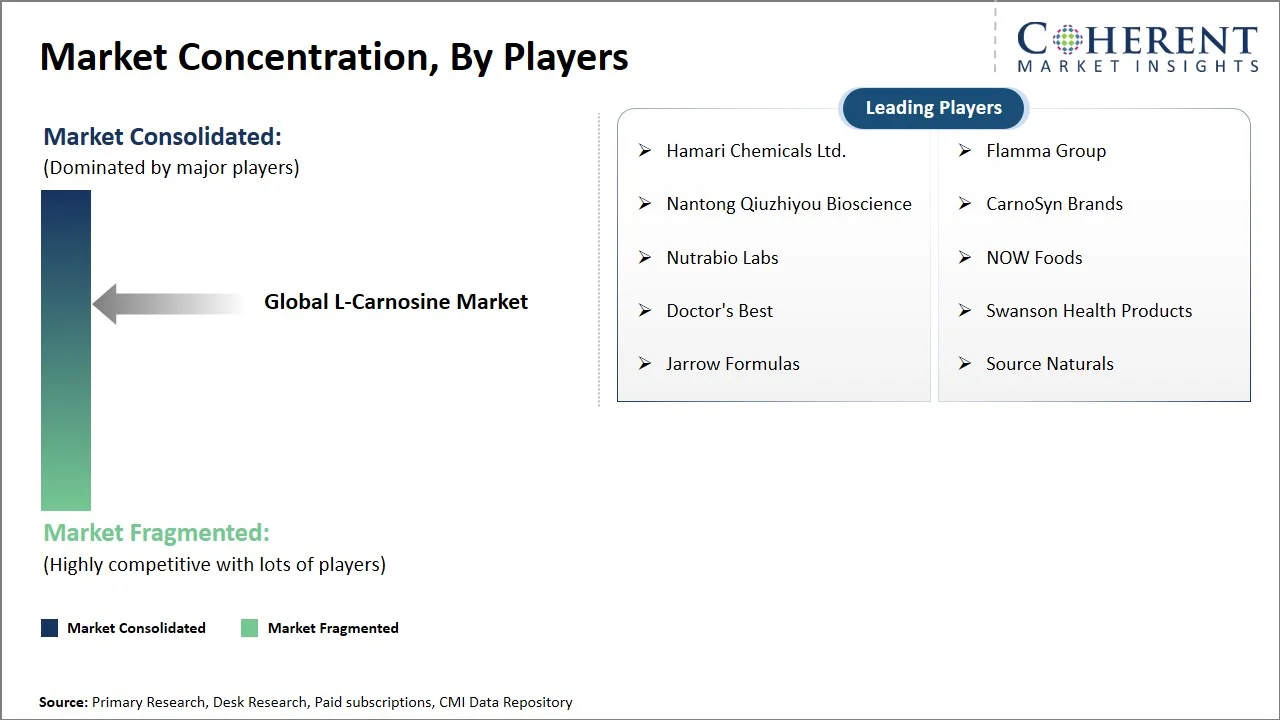
The global market for L-Carnosine is not too concentrated and includes a blend of companies such as nutraceutical producers, pharmaceutical ingredients suppliers, and specialty chemicals firms. The competition revolves around factors such as purity of products, capability of formulating different products, compliance with regulatory issues, and pricing due to the broad application of this substance across several end-use segments. In developed regions, the competition is determined by innovation, clinical support, and high-level marketing. However, in developing nations, price competition and capacity remain extremely relevant. Key focus areas include:
- Development of high-purity and pharmaceutical-grade L-Carnosine to meet stringent quality standards
- Strategic partnerships with supplement brands, cosmetic formulators, and healthcare companies to expand application scope and market reach
Market Report Scope
Report Coverage
| Report Coverage | Details | ||
|---|---|---|---|
| Base Year: | 2025 | Market Size in 2026: | USD 185 Mn |
| Historical Data for: | 2020 To 2024 | Forecast Period: | 2026 To 2033 |
| Forecast Period 2026 to 2033 CAGR: | 5% | 2033 Value Projection: | USD 260 Mn |
| Geographies covered: |
| ||
| Segments covered: |
| ||
| Companies covered: | Hamari Chemicals Ltd., Flamma Group, Nantong Qiuzhiyou Bioscience, CarnoSyn Brands, Nutrabio Labs, NOW Foods, Doctor's Best, Swanson Health Products, Jarrow Formulas, and Source Naturals | ||
| Growth Drivers: |
| ||
| Restraints & Challenges: |
| ||
Analyst Opinion (Expert Opinion)
- It is expected that the industry would shift away from general-purpose applications to a targeted/condition-specific one owing to increased scientific evidence about L-Carnosine's benefits in cognitive health, metabolic diseases, and healthy aging. Future trends would be marked by the scientific approach, which is associated with increased application of scientifically backed ingredients in nutraceuticals and other segments of the healthcare industry.
- The maximum potential for growth would be associated with usage in dietary supplements in the Asia Pacific, especially in China and Japan due to their growing aging populations and rising spending on their wellbeing along with favorable regulations like Foods with Function Claims (FFC). Another promising growth prospect would be functional foods owing to their scalable nature and broad consumer appeal.
- For gaining competitive advantage, one needs to concentrate on clinical evidence and differentiation. This implies development of condition-specific formulas and leveraging online/direct-to-consumer platforms to market the products. Collaboration with research institutes and targeting high-growth markets within APAC should also be considered.
Speak to the analyst
Want personalized insights?
Take the findings above to one of our principal consultants, or have the report rebuilt around the segments, geographies and competitors you actually track.
Market Segmentation
- Form Insights (Revenue, USD Mn, 2021 - 2033)
- Powder
- Capsules/Tablets
- Liquid
- Application Insights (Revenue, USD Mn, 2021 - 2033)
- Dietary Supplements
- Pharmaceuticals
- Cosmetics and Personal Care
- Distribution Channel Insights (Revenue, USD Mn, 2021 - 2033)
- Online Retail
- Pharmacies and Drug Stores
- Specialty Stores
- Regional Insights (Revenue, USD Mn, 2021 - 2033)
- North America
- U.S.
- Canada
- Latin America
- Brazil
- Argentina
- Mexico
- Rest of Latin America
- Europe
- Germany
- U.K.
- Spain
- France
- Italy
- Russia
- Rest of Europe
- Asia Pacific
- China
- India
- Japan
- Australia
- South Korea
- ASEAN
- Rest of Asia Pacific
- Middle East
- GCC Countries
- Israel
- Rest of Middle East
- Africa
- South Africa
- North Africa
- Central Africa
- North America
- Key Players Insights
- Hamari Chemicals Ltd.
- Flamma Group
- Nantong Qiuzhiyou Bioscience
- CarnoSyn Brands
- Nutrabio Labs
- NOW Foods
- Doctor's Best
- Swanson Health Products
- Jarrow Formulas
- Source Naturals
Sources
Primary Research Interviews
- Nutraceutical companies manufacturing L-carnosine-based dietary supplements
- Pharmaceutical ingredient (API) manufacturers and contract manufacturers (CMOs)
- Dermatologists and cosmetic formulators specializing in anti-aging products
- Clinical researchers focusing on neuroprotection, oxidative stress, and aging
Stakeholders
- Providers of L-carnosine and related formulations (e.g., API suppliers, supplement brands, cosmeceutical companies)
- End-use Sectors
- Dietary supplements and nutraceutical companies
- Pharmaceutical companies (neurodegenerative and metabolic disorder focus)
- Cosmetics and personal care manufacturers
- Regulatory & Health Bodies: U.S. Food and Drug Administration (FDA), European Medicines Agency (EMA), Ministry of Health, Labor and Welfare (Japan)
Databases
- U.S. FDA – Dietary supplement and pharmaceutical ingredient regulations
- NIH – Clinical trials database (ClinicalTrials.gov)
- OECD Health Statistics – Aging population and healthcare expenditure data
- EFSA (European Food Safety Authority) – Nutraceutical ingredient assessments
Magazines
- Nutraceuticals World – Ingredient innovations and supplement trends
- Cosmetics & Toiletries – Anti-aging and skincare ingredient developments
- Pharmaceutical Technology – API manufacturing and formulation advancements
- FoodNavigator – Functional food and ingredient trends
Journals
- Journal of Dietary Supplements – Clinical studies on nutraceutical efficacy
- Antioxidants (MDPI) – Research on oxidative stress and bioactive compounds
- Journal of Cosmetic Dermatology – Anti-aging and skin health studies
- Neurobiology of Aging – Cognitive health and neuroprotection research
Newspapers
- The New York Times – Consumer health and wellness trends
- Financial Times – Nutraceutical and healthcare industry investments
- The Guardian – Regulatory and health policy developments
Associations
- Council for Responsible Nutrition (CRN)
- International Alliance of Dietary/Food Supplement Associations (IADSA)
- American Academy of Dermatology (AAD)
- International Society of Antioxidants in Nutrition and Health (ISANH)
Public Domain Sources
- WHO – Healthy aging and non-communicable disease reports
- FDA – Dietary supplement regulations and safety guidelines
- EMA – Scientific opinions on active substances and formulations
- NIH – Research publications on antioxidants and cognitive health
Proprietary Elements
- CMI Data Analytics Tool, Proprietary CMI Existing Repository of information for last 10 years.
Get access to 250+ pages report
Every segment, forecast, competitor profile and data table behind the analysis above — available for instant download.
- ESOMAR Member
- ISO 9001:2015 Certified
- D-U-N-S Registered
- GDPR & CCPA Compliant
Missing comfort of reading report in your local language? Find your preferred language:
Transform your Strategy with Exclusive Trending Reports
Frequently Asked Questions
The global L-Carnosine market is estimated to be valued at USD 185 Mn in 2026 and is expected to reach USD 260 Mn by 2033.
Powder dominates due to its higher stability, cost-effectiveness, and ease of incorporation into dietary supplements, functional foods, and bulk pharmaceutical formulations.
L-Carnosine is a naturally occurring dipeptide composed of beta-alanine and histidine, known for its antioxidant and anti-glycation properties.
The CAGR of global L-Carnosine market is projected to be 5% from 2026 to 2033.
Increasing demand for anti-aging and cognitive health supplements and rising use of bioactive ingredients in functional foods and nutraceuticals are the major factors driving the growth of the global L-Carnosine market.
Limited clinical standardization and regulatory clarity in some regions and high production costs associated with purity and synthesis are the major factors hampering the growth of the global L-Carnosine market.
Its efficacy is limited by rapid enzymatic breakdown, requiring advanced delivery systems to enhance absorption.