

Global Level Sensor Market Size and Forecast – 2026-2033
The global level sensor market is estimated to be valued at USD 8.46 Bn in 2026 and is expected to reach USD 13.24 Bn by 2033, exhibiting a compound annual growth rate (CAGR) of 6.6% from 2026 to 2033.
Key Takeaways of the Global Level Sensor Market
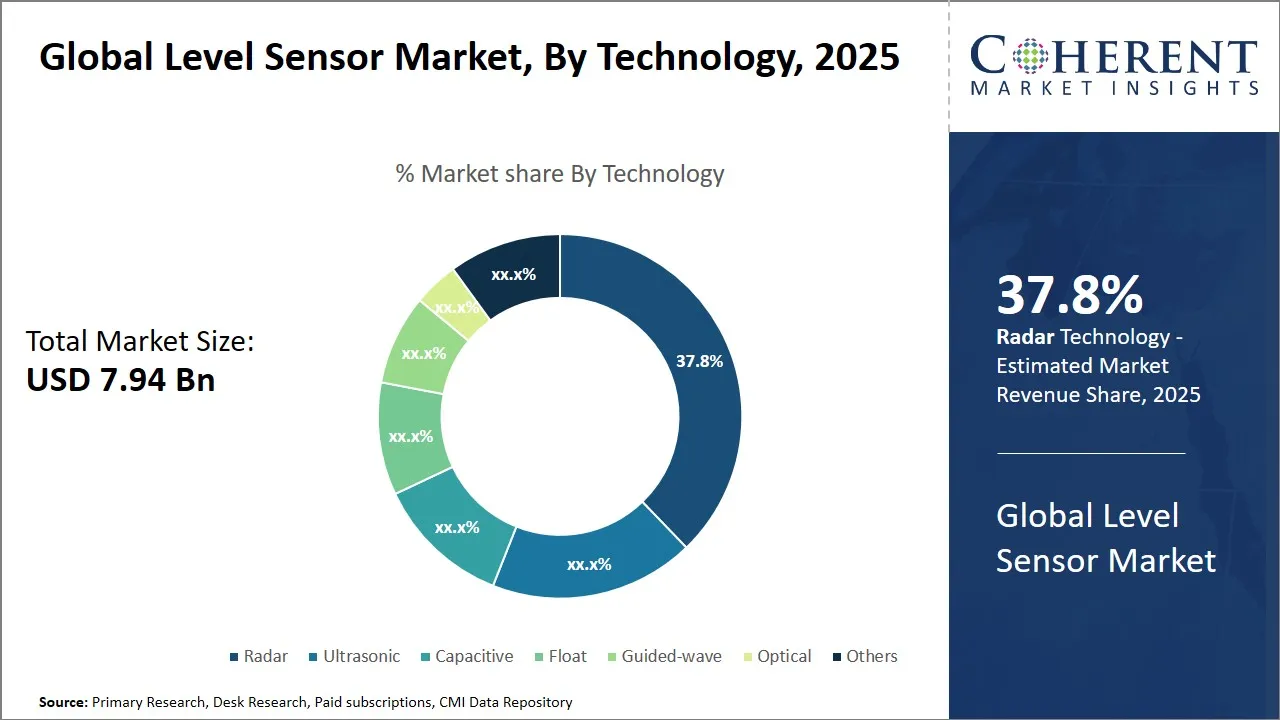
- The radar segment is expected to lead the market holding a share of 38.8% in 2026.
- The level transmitter segment is projected to dominate with a share of 51.7% in 2026.
- Asia Pacific, holding an estimated share of 42.81% in 2026, is projected to dominate the market.
- North America, holding an expected share of 26.5% in 2026, shows the fastest growth in the market.
Market Overview
The market is seeing the use of smart and IoT-enabled level sensors, which enhance real-time data acquisition and remote monitoring capabilities. The use of wireless and cloud-connected sensors is growing, enabling predictive maintenance and operational efficiency in industries such as oil & gas, water treatment, and manufacturing. Also, advancements in miniaturization and sensor accuracy are adding to innovation, while increasing regulatory focus on environmental monitoring fuels adoption in water and waste management applications.
Current Events and Its Impact
Current Events | Description and its Impact |
Geopolitical and Trade Developments |
|
Economic and Infrastructure Trends |
|
Segmental Insights
- Current Industry Events of 2026
- Market Size Estimation
- Regional Breakdown
- Competitive Landscape
- Customer Intelligence
- Segmental Analysis
- Pricing Analysis
- Key Market Drivers, Challenges & Future Trends
- Customized Insights Section
Global Level Sensor Market Insights, By Technology – Radar Leads Because of its Superior Accuracy and Versatility
The radar segment, expected to hold a 38.8% share in 2026, leads the global level sensor market because of its high precision, reliability, and ability to perform in harsh environments. Radar sensors measure levels by transmitting microwaves and calculating signal return times, giving accurate readings regardless of temperature, pressure, or vapor interference.
Their non-contact nature removes issues like corrosion and buildup, reducing maintenance and adding to lifespan. Furthermore, FMCW (Frequency Modulated Continuous Wave) radar technology enhances resolution and response time, making radar suited for oil & gas, chemical, and water treatment industries.
In 2024, Endress+Hauser launched its Micropilot FMR6x 80 GHz radar series, allowing precise measurement in complex tank geometries and adding to radar’s dominance in process industries.
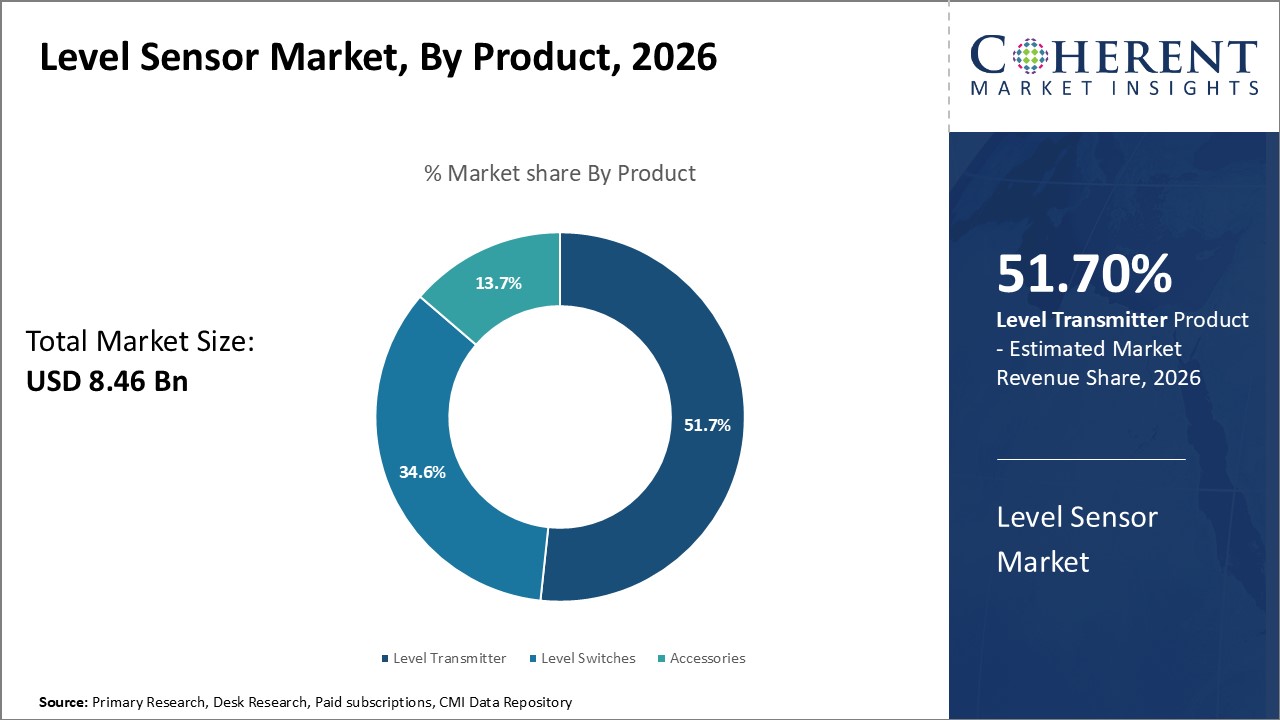
Global Level Sensor Market Insights, By Product – Level Transmitter Leads Because of their Critical Role in Continuous, Accurate Process Monitoring
Level transmitter, with an expected 51.7% of the market share in 2026, dominates the market due to their essential role in providing continuous, real-time monitoring for industrial process control. They support automation in oil & gas, chemicals, food & beverage, and water treatment, integrating seamlessly with PLC and SCADA systems for centralized operations.
Modern transmitters have digital communication protocols (HART, Modbus, Fieldbus) and self-diagnostics, allowing predictive maintenance and compliance with strict safety standards. Their versatility across liquids, solids, and corrosive media further cements their leading position. In March 2024, Emerson introduced the Rosemount 3490 Level and Flow Controller, improving process efficiency and remote diagnostics, underscoring the strategic importance of advanced transmitters in industrial automation.
Pricing Analysis of the Global Level Sensor Market
Segment | Estimated Average Price (USD) |
Low-cost non-contact radar (basic, low range) | ~USD 300 |
Mid-range radar level sensors (industrial, higher spec) | ~USD 1,200 |
Premium radar/level transmitters (global brand, harsh environment) | ~USD 2,000 |
Market‐wide average (across all technologies & applications) | ~USD 450 – USD 500 |
Entry point contact/point-level sensors | ~USD 200 |
Radar Level Sensor vs. Ultrasonic Level Sensor
Feature | Ultrasonic Level Sensor | Radar Level Sensor |
Measurement principle | Uses sound/acoustic waves (time-of-flight of ultrasound) | Uses microwave/electromagnetic waves (radar) |
Typical measurement range | Short-to-medium, e.g., up to ~10-20 m (≈30–65 ft) in typical conditions | Much longer range, often up to ~100 m or more in ideal conditions |
Accuracy & sensitivity to environment | Moderate accuracy; performance affected by temperature, humidity, dust, foam, vapor | High accuracy; less affected by environmental conditions like foam, vapor, dust, turbulence |
Suitable media/environments | Good for simple liquids and clean solids in relatively stable conditions | Suitable for liquids, solids, foam, vapors, harsh industrial/chemical/pressurized environments |
Installation & maintenance | Generally simpler and lower cost; but may require calibration and cleaning; sensitive to path obstructions or buildup | Installation may demand more careful setup (beam, mounting, tank geometry) but then offer lower maintenance and high reliability |
Cost/value proposition | Lower upfront cost; good for budget-sensitive/simple applications | Higher upfront cost; better long-term value in challenging or critical applications due to reliability and lower downtime |
Limitations | Performance degrades with foam, vapor, dust, strong turbulence, long distances, high pressure or temperature | Higher cost; may require careful configuration; may be overkill for very simple, clean, low-risk applications |
Smart Irrigation and the Role of Level Sensors in Sustainable Agriculture
Smart irrigation is transforming modern agriculture by integrating advanced sensing, automation, and data-driven control systems to optimize water usage and enhance crop productivity. In this ecosystem, level sensors play a big role in efficient management of water resources across reservoirs, tanks, canals, and irrigation pipelines.
Level sensors continuously monitor water levels and relay real-time data to control systems that adjust irrigation schedules based on soil moisture, weather forecasts, and crop needs. This precision ensures that crops receive the right amount of water at the right time, reducing wastage, energy consumption, and over-irrigation that can lead to soil degradation.
Regional Insights
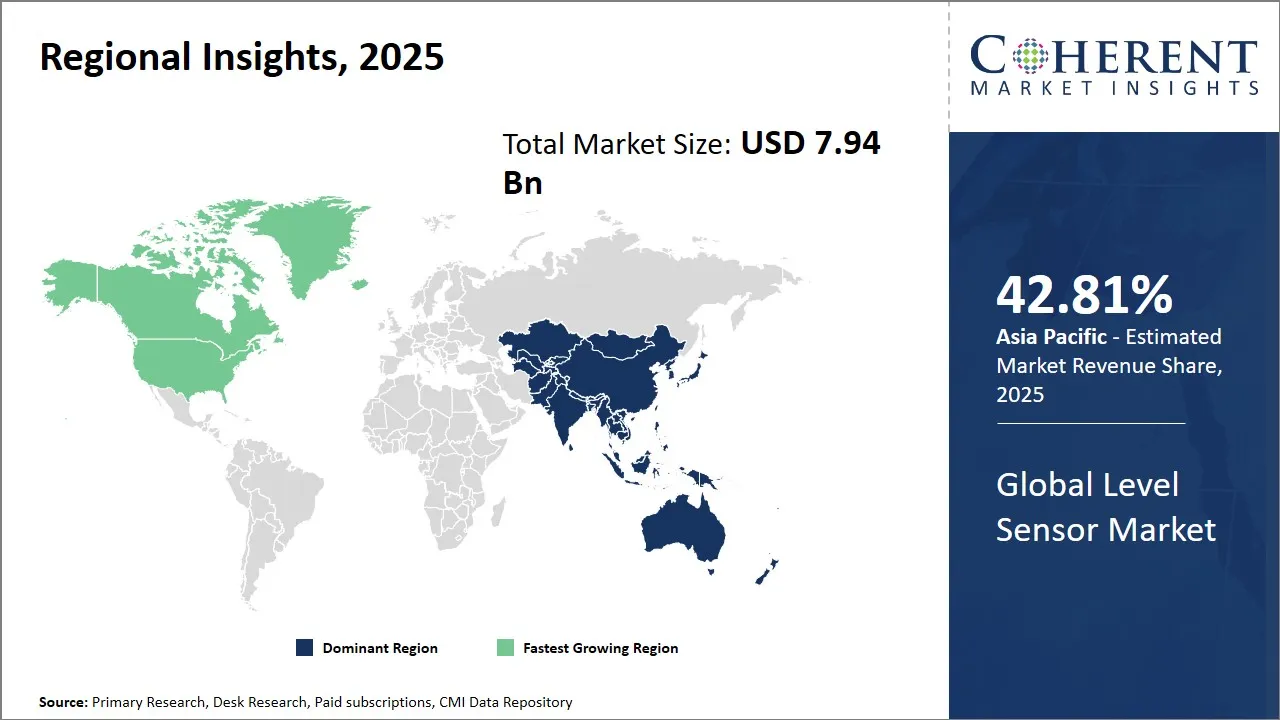
Asia Pacific Level Sensor Market Analysis and Trends
The Asia Pacific, holding an expected share of 42.81% in 2026, dominates the market because of fast industrialization, urbanization, and increasing investments in infrastructure development, especially in emerging economies such as China, India, and Southeast Asia. Government initiatives aimed at smart city projects, environmental monitoring, and increasing manufacturing automation are fueling demand for advanced level sensors.
The expanding chemical, automotive, and food & beverage sectors further bolster market expansion. Trade dynamics characterized by growing export activities and cross-border collaborations also add to market growth. Key players in this region, including ABB Ltd., Siemens AG, and local companies such as Omron Corporation and Yokogawa Electric Corporation, add to innovation tailored to the regional needs and cost sensitivities.
North America Level Sensor Market Analysis and Trends
North America, holding an expected share of 26.5% in 2026, shows the fastest growth in the global level sensor market, because of a well-established industrial ecosystem, advanced technological infrastructure, and significant investments in automation and smart manufacturing. The presence of big multinational corporations and a strong network of suppliers and distributors supports product innovation and the market penetration.
Also, strict environmental regulations and safety standards imposed by government bodies such as the EPA and OSHA encourage the adoption of precise level sensing solutions in industries like oil & gas, water treatment, and pharmaceuticals. Big companies in this region include Honeywell International Inc., Emerson Electric Co., and Texas Instruments, which contribute through their cutting-edge sensor technologies and expansive service networks.
Global Level Sensor Market Outlook for Key Countries
U.S. Level Sensor Market Analysis and Trends
The U.S. level sensor market grows because of its leadership in technological innovation and high adoption rates of Industry 4.0 practices. U.S.-based companies like Honeywell and Emerson dominate with their huge portfolio of level sensing solutions tailored to high-precision applications in aerospace, energy, and manufacturing sectors. Government emphasis on infrastructure renewal and environmental compliance mandates also propel sustained demand. Also, collaborations with universities and research institutions foster continual product development and deployment.
China Level Sensor Market Analysis and Trends
China level sensor market is propelled by rapid industrial expansion, especially in the manufacturing and construction domains. Government policies supporting "Made in China 2026" and large-scale urban infrastructure projects stimulate robust adoption of advanced sensors. Chinese firms alongside multinational corporations such as ABB and Siemens are actively putting in place manufacturing bases and R&D centers, aiming at cost-effective and scalable sensor solutions that cater to both domestic and export markets.
Germany Level Sensor Market Analysis and Trends
Germany continues to lead in the Europe level sensor market because of its strong industrial base, particularly in automotive, chemical, and machinery manufacturing. The country benefits from cutting-edge R&D ecosystems backed by government incentives adding to Industry 4.0 adoption. Companies such as Siemens and Bosch Rexroth play big roles by providing highly reliable and technologically advanced level sensors that comply with strict regulatory standards prevalent in Europe. Germany’s export-oriented economy adds to its influence on the global level sensor market through technology transfer and partnerships.
India Level Sensor Market Analysis and Trends
India level sensor market is characterized by growing infrastructure development, expanding oil & gas exploration, and increasing automation in manufacturing processes. Supportive government initiatives including “Make in India” and smart city projects provide a lot of support for market expansion. Companies like ABB and local firms including Honeywell India are investing in making strong distribution channels and after-sales services to capture the growing demand. The market is also seeing a gradual move towards adoption of IoT-enabled sensor technologies across industries.
Japan Level Sensor Market Analysis and Trends
Japan maintains a solid position in the level sensor market, using its expertise in precision engineering and electronics manufacturing. Government policies focused on industrial modernization and environmental conservation encourage use of advanced sensing technologies. Big companies such as Omron Corporation and Yokogawa Electric Corporation contribute through innovation in smart sensors with high accuracy for industrial automation and process control. Japan's focus on export competitiveness further adds to its role in the global sensor landscape.
Market Players, Key Development, and Competitive Intelligence
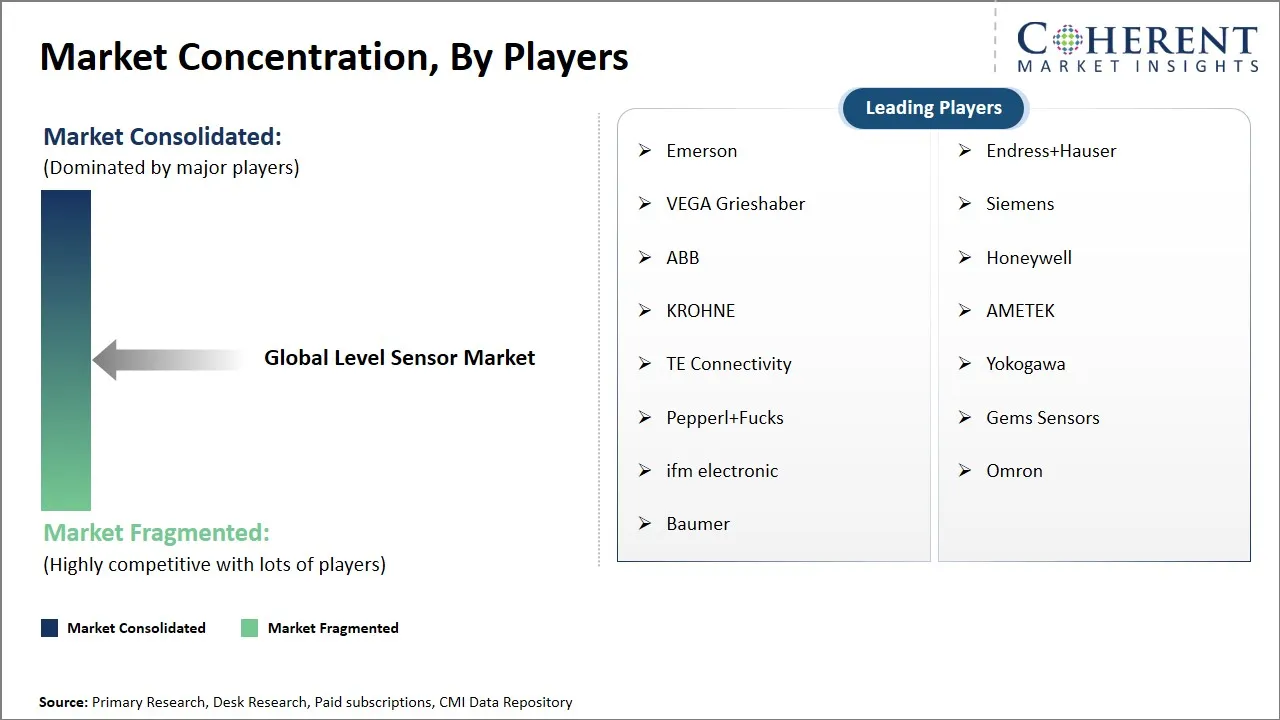
Key Developments
- On November 3-6, 2025, KROHNE showcased cutting-edge measurement technologies driving the future of energy. From traditional oil & gas to hydrogen, LNG, and carbon management at ADIPEC 2025.
- In January 2025, ABB acquired Sensorfact BV, a fast-growing energy management company headquartered in Utrecht, Netherlands. The acquisition further expands ABB’s digital energy management offering.
- In October 2024, EGE-Elektronik announced the launch of the revised UF2 series of intrinsically safe optical level sensors, now with ATEX/IECEx approval for use in Zone 0 environments.
- In January 2023, VEGA delivered the world’s first level sensor with built-in cyber security features. The VEGAPULS 6X radar sensor is developed in compliance with Industrial Cyber Security Standard IEC 62443-4-2.
Top Strategies Followed by Level Sensor Market Players
- Established players dominate the landscape by investing a lot in research and development (R&D) to make high-performance and reliable level sensing products that cater to diverse industrial needs.
- Endress+Hauser invested over USD 300 million in R&D in 2024, launching its Micropilot FMR6x 80 GHz radar series with advanced signal processing and self-diagnostics for Industry 4.0 applications.
- Mid-level players in the global level sensor market strike a balance between innovation and cost efficiency, focusing on offering cost-effective solutions that meet the quality expectations of a broader, price-sensitive customer base.
- VEGAPULS Air series by VEGA Grieshaber offers affordable wireless radar sensors for water management and agriculture, designed to compete in cost-conscious emerging markets without compromising quality.
- Small-scale players in the global level sensor market adopt highly focused strategies to carve out specialized niches and sustain growth amid fierce competition.
- Kobold Instruments focuses on niche fluid and chemical processing sensors, offering tailor-made float and conductive level sensors customized for small-batch chemical plants and laboratory systems.
Market Report Scope
Level Sensor Market Report Coverage
| Report Coverage | Details | ||
|---|---|---|---|
| Base Year: | 2025 | Market Size in 2026: | USD 8.46 Bn |
| Historical Data for: | 2020 To 2024 | Forecast Period: | 2026 To 2033 |
| Forecast Period 2026 to 2033 CAGR: | 6.6% | 2033 Value Projection: | USD 13.24 Bn |
| Geographies covered: |
| ||
| Segments covered: |
| ||
| Companies covered: | Emerson, Endress+Hauser, VEGA Grieshaber, Siemens, ABB, Honeywell, KROHNE, AMETEK, TE Connectivity, Yokogawa, Pepperl+Fucks, Gems Sensors, ifm electronic, Omron, and Baumer | ||
| Growth Drivers: |
| ||
| Restraints & Challenges: |
| ||
Market Dynamics
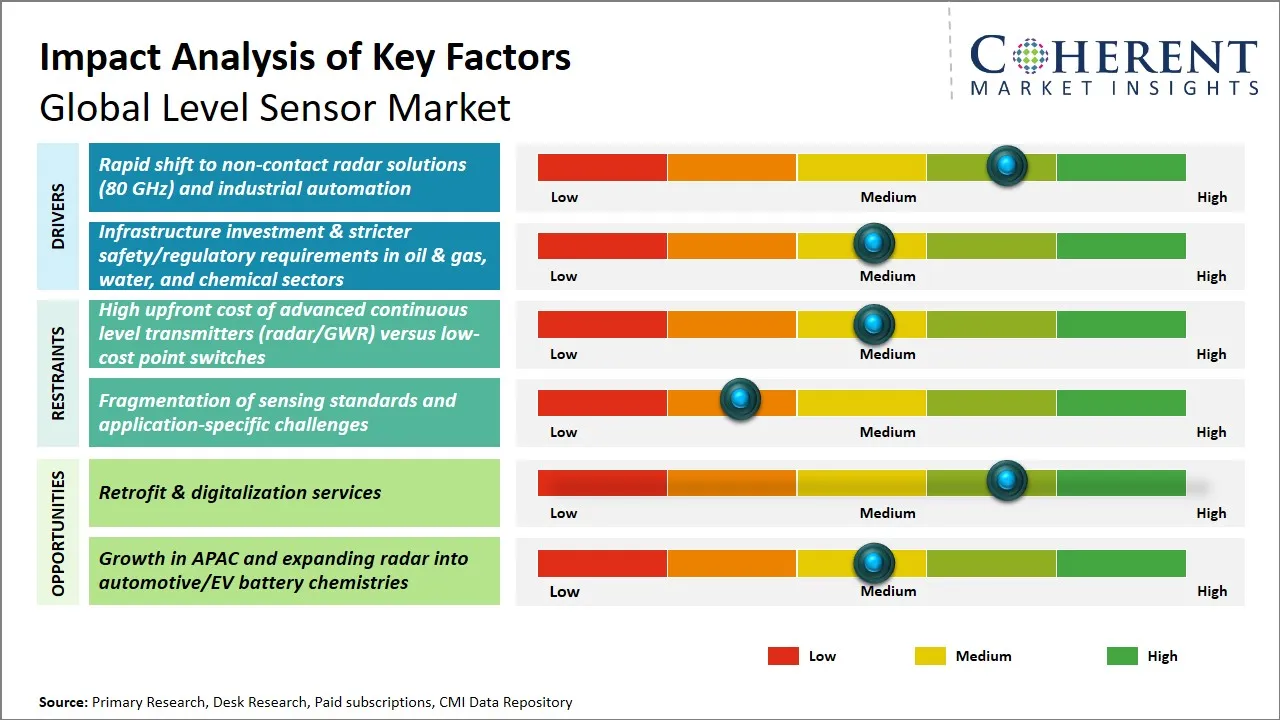
Global Level Sensor Market Driver – Rapid Shift to Non-Contact Radar Solutions (80 GHz) and Industrial Automation
The market is being propelled by the growing adoption of non-contact 80 GHz radar level sensors, which deliver superior accuracy, stability, and maintenance-free operation in harsh or hygienic environments. These sensors excel in applications involving vapors, foam, or dust, making them ideal for sectors such as food & beverage, pharmaceuticals, and chemicals. Their ability to provide continuous, real-time monitoring supports the broader industrial automation and predictive maintenance trends across industries.
VEGA Grieshaber’s VEGAPULS 64 and 69 80 GHz radar sensors are increasingly deployed in chemical and food processing plants to enable precise level measurement and digital integration with control systems.
Global Level Sensor Market Opportunity – Retrofit and Digitalization Services
A major growth opportunity lies in retrofitting legacy systems with smart and connected level sensors that integrate seamlessly with digital platforms. This approach allows industries to modernize existing infrastructure at lower cost while enabling IoT connectivity, data analytics, and remote monitoring. The demand is strongest in oil & gas, water management, and manufacturing sectors aiming to align with Industry 4.0 goals.
Endress+Hauser’s Heartbeat Technology retrofit program enables existing level instruments in wastewater treatment and process plants to gain digital diagnostics and predictive maintenance features without full replacement.
Analyst Opinion (Expert Opinion)
- Despite the industry’s push toward digitalization, integrating modern level sensors with legacy systems remains a persistent bottleneck. Many end users—especially in oil & gas and manufacturing—hesitate to adopt advanced sensors due to compatibility concerns and high commissioning costs. In my view, unless vendors simplify integration through standardized interfaces and modular retrofit kits, adoption will remain uneven.
- The growing influx of low-cost sensor alternatives from regional manufacturers, particularly in Asia Pacific, has created intense price pressure. While this democratizes access, it simultaneously squeezes the margins of established players who must balance innovation with affordability. The market is at risk of a “race to the bottom” if differentiation through performance and reliability is not emphasized.
- Real-world conditions—extreme temperatures, foam, condensation, and corrosive media—continue to compromise measurement accuracy, especially in ultrasonic and capacitive sensors. The industry often oversells “universal applicability,” but the truth is that sensor calibration and maintenance in harsh environments are still far from plug-and-play. Greater transparency and application-specific engineering are urgently needed.
Speak to the analyst
Want personalized insights?
Take the findings above to one of our principal consultants, or have the report rebuilt around the segments, geographies and competitors you actually track.
Market Segmentation
- Technology Insights (Revenue, USD Bn, 2021 - 2033)
- Radar
- Ultrasonic
- Capacitive
- Float
- Guided-wave
- Optical
- Others
- Product Insights (Revenue, USD Bn, 2021 - 2033)
- Level Transmitter
- Level Switches
- Accessories
- Regional Insights (Revenue, USD Bn, 2021 - 2033)
- North America
- U.S.
- Canada
- Latin America
- Brazil
- Argentina
- Mexico
- Rest of Latin America
- Europe
- Germany
- U.K.
- Spain
- France
- Italy
- Russia
- Rest of Europe
- Asia Pacific
- China
- India
- Japan
- Australia
- South Korea
- ASEAN
- Rest of Asia Pacific
- Middle East
- GCC Countries
- Israel
- Rest of Middle East
- Africa
- South Africa
- North Africa
- Central Africa
- North America
- Key Players Insights
- Emerson
- Endress+Hauser
- VEGA Grieshaber
- Siemens
- ABB
- Honeywell
- KROHNE
- AMETEK
- TE Connectivity
- Yokogawa
- Pepperl+Fucks
- Gems Sensors
- ifm electronic
- Omron
- Baumer
Sources
Primary Research Interviews
Stakeholders
- Industrial Automation Experts
- Sensor Manufacturers and OEMs
- System Integrators and IoT Solution Providers
- Process Plant Operators in Oil & Gas, Water Treatment, and Food & Beverage Sectors
- Procurement Managers from Manufacturing and Utility Firms
- Distributors and Value-Added Resellers of Industrial Sensors
- Environmental Monitoring Specialists and Smart Infrastructure Consultants
Databases
- Eurostat
- U.S. Energy Information Administration (EIA)
- Automation World Database
- OECD Data Repository
- World Manufacturing Outlook Database
Magazines
- Automation Today
- Sensor Technology Magazine
- Process Engineering Review
- Control Engineering Journal
- Industrial Automation Insights
Journals
- IEEE Sensors Journal
- Measurement Science and Technology Journal
- Sensors and Actuators A: Physical
- Journal of Process Control
- Automation in Industry Journal
Newspapers
- The Economic Times (India)
- The Guardian (U.K.)
- IndustryWeek
- Manufacturing News Daily
- TechXplore Industry Reports
Associations
- Instrumentation, Systems, and Automation Society (ISA)
- International Society of Automation (ISA)
- FieldComm Group
- Measurement, Control & Automation Association (MCAA)
- Sensor Industry Association (SIA)
Public Domain Sources
- U.S. Census Bureau
- EUROSTAT
- United Nations Industrial Development Organization (UNIDO)
- World Bank
- ResearchGate
- OECD Industrial Indicators Database
Proprietary Elements
- CMI Data Analytics Tool, Proprietary CMI Existing Repository of information for last 8 years
Get access to 250+ pages report
Every segment, forecast, competitor profile and data table behind the analysis above — available for instant download.
- ESOMAR Member
- ISO 9001:2015 Certified
- D-U-N-S Registered
- GDPR & CCPA Compliant
Missing comfort of reading report in your local language? Find your preferred language:
Transform your Strategy with Exclusive Trending Reports
Frequently Asked Questions
The global level sensor market is estimated to be valued at USD 8.46 billion in 2026 and is expected to reach USD 13.24 billion by 2033.
The CAGR of the global level sensor market is projected to be 6.6% from 2026 to 2033.
Rapid shift to non-contact radar solutions (80 GHz) and industrial automation and infrastructure investment & stricter safety/regulatory requirements in oil & gas, water, and chemical sectors are the major factors driving the growth of the global level sensor market.
High upfront cost of advanced continuous level transmitters (radar/GWR) versus low-cost point switches and fragmentation of sensing standards and application-specific challenges are the major factors hampering the growth of the global level sensor market.
In terms of technology, the radar, estimated to dominate the market revenue share in 2026.
A level sensor measures the amount of liquid or solid material within a container, tank, or silo.
Major end-users include oil & gas, water & wastewater, food & beverage, and chemicals.