

Global Life Science Logistics Market Size and Forecast: 2026 - 2033
According to Coherent Market Insights, the global life science logistics market is estimated to be valued at USD 21.46 Bn in 2026 and is expected to reach USD 37.74 Bn by 2033, exhibiting a compound annual growth rate (CAGR) of 8.4% from 2026 to 2033. This growth is driven by increasing demand for temperature-controlled logistics solutions, advancements in life sciences research, and the expanding pharmaceutical and biotechnology industries worldwide.
Key Takeaways of the Life Science Logistics Market
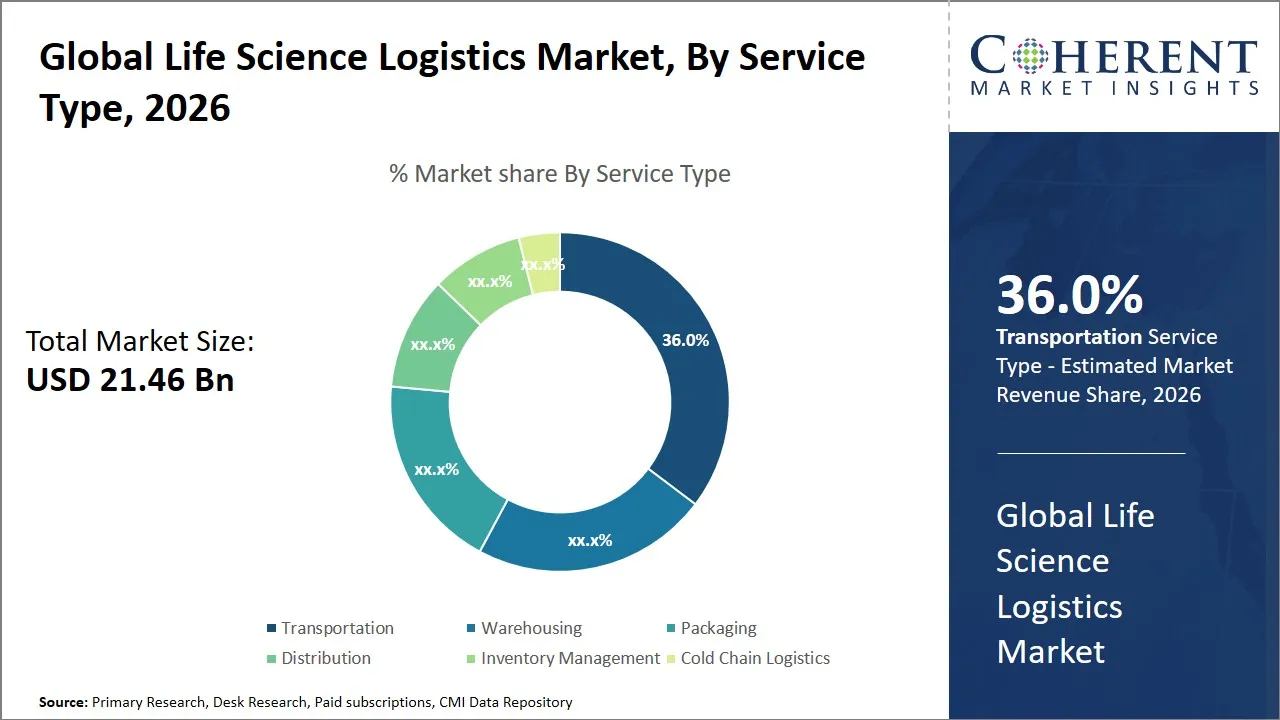
- Transportation segment is expected to lead the life science logistics market capturing 36% share in 2026.
- Pharmaceuticals segment is estimated to represent 41% of the market share in 2026.
- Ambient segment is projected to dominate with 44% of the global life science logistics market share in 2026.
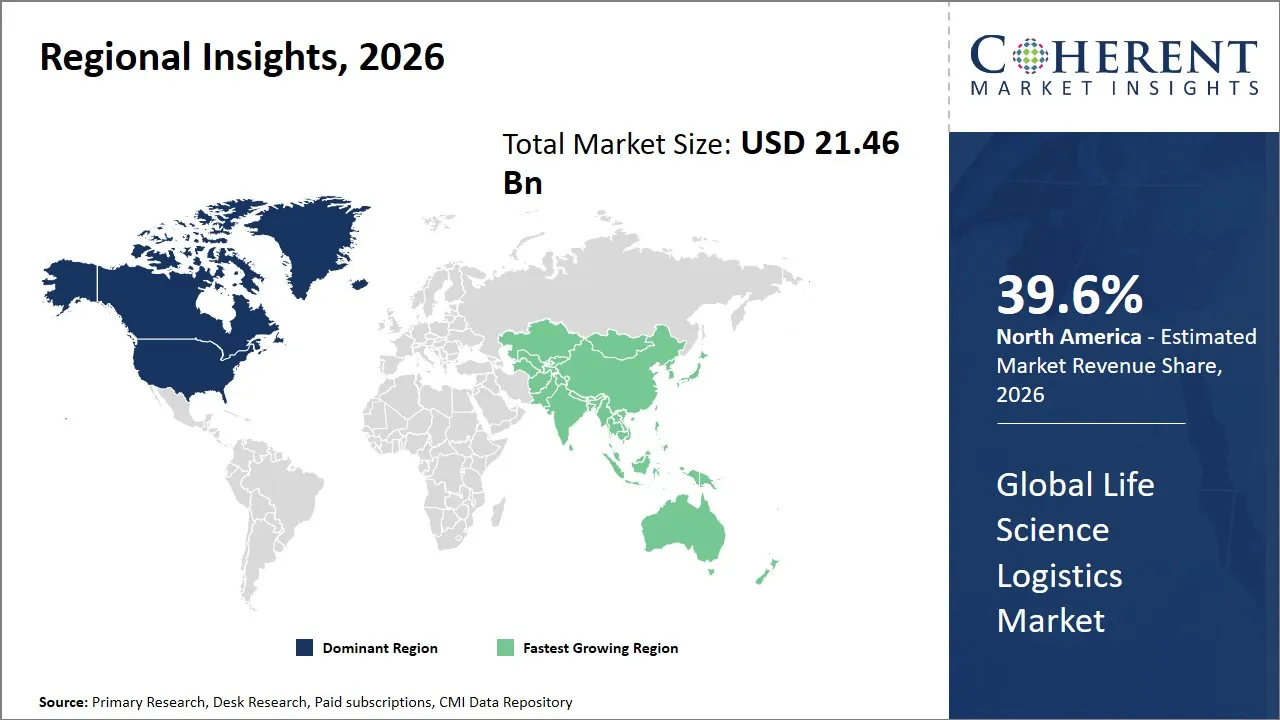
- North America is expected to lead the market, holding a share of 39.6% in 2026. Asia Pacific is anticipated to be the fastest-growing region, with 27.4% share in 2026.
Market Overview
- Increasing healthcare access, aging populations, and a surge in chronic diseases are driving higher demand for pharmaceutical and biotechnology products.
- The integration of digitalization, AI, and IoT into logistics operations is improving visibility, real-time tracking, and automation, leading to more efficient and secure supply chains.
- As more biologics and temperature-sensitive products are developed, cold chain logistics, which maintains specific temperature conditions during transportation and storage, is becoming increasingly essential. This has resulted in significant investments in specialized infrastructure and innovative packaging solutions.
- As regulatory standards continue to evolve globally, companies are adopting more advanced systems to meet Good Distribution Practice (GDP), Good Manufacturing Practice (GxP), and temperature control requirements to ensure compliance and maintain product integrity.
Currents Events and Its Impact
Current Events | Description and its Impact |
Azenta Life Sciences Launches CryoPod Carrier |
|
Life Science Logistics Expands U.S. Facility |
|
Segmental Insights
- Current Industry Events of 2026
- Market Size Estimation
- Regional Breakdown
- Competitive Landscape
- Customer Intelligence
- Segmental Analysis
- Pricing Analysis
- Key Market Drivers, Challenges & Future Trends
- Customized Insights Section
Why Does the Transportation Segment Dominate the Global Life Science Logistics Market in 2026?
The transportation segment is expected to hold the largest share of 36% in 2026, owing to its critical role in ensuring timely and secure delivery of sensitive pharmaceutical and biotech products across global supply chains. The life sciences sector requires specialized transportation solutions to maintain the integrity and efficacy of products such as vaccines, biologics, and medical devices, which are often temperature-sensitive and highly regulated. Transportation services are of various types that include air, sea, and ground transport, all of which are chosen depending on the type of the product, urgency, and destination. The increased complexity of international clinical trials and increased requirements in personalized medicine make the search of effective solutions to these issues by means of reliable transport more urgent, which meets the strict regulatory standards such as Good Distribution Practices (GDP).
For instance, logistics firms are expanding temperature‑controlled air transport offerings for faster global delivery of life science and pharmaceutical products, reflecting rising demand for compliant air freight solutions in the industry.
Why Does the Pharmaceuticals Segment Dominate the Global Life Science Logistics Market in 2026?
The pharmaceuticals segment is projected to hold the largest share of 41% in 2026, because of the vast scale of drug manufacturing and distribution worldwide. Pharmaceuticals have a wide range of products as opposed to other sectors of life sciences, meaning that a wide span of global networks is necessary to access diverse healthcare markets. The ever-growing drug portfolios such as generic and novel drugs require strong and compliant logistics systems to facilitate their supply channels between the manufacturing centers to end patients.
The pharmaceutical segment has one of the most stringent regulatory environments in terms of drug storage, handling, and transportation, which are also among the major drivers of growth. Adherence to regulation by the FDA and EMA and other regional agencies requires extremely regulated logistics procedures, which led to the need of companies to find specialized services that would comply with the norms. Also, the increased prevalence of chronic and lifestyle diseases results in constant production of pharmaceutical products, thus the market causes the constant need to have continuous and consistent supply chains of such products to maintain uninterrupted supply.
For instance, DHL Supply Chain opened a new life science and healthcare hub in Annville, Pennsylvania, designed to support complex pharmaceutical and healthcare supply chains across the region, enhancing distribution and cold chain capabilities.
Ambient Dominates the Global Life Science Logistics Market
The ambient segment is expected to capture the highest share of 44% in 2026, due to the relative stability of a wide range of life science products at controlled room temperatures. A large number of pharmaceutical formulations, such as tablets, capsules, and certain biologics, do not need refrigeration and therefore ambient logistics is the most universally relevant type of temperature control.
The ambient-preferred condition is based on a number of drivers. To begin with, ambient transport and storage are also much cheaper than the cold chain solutions, minimizing the total supply chain expenses without affecting the quality of products of those medicines that do not deteriorate under such circumstances. Second, ambient shipment ease makes the distribution easier and quicker and more versatile, particularly in new markets where cold chain infrastructure may be inadequate or erratic. In such areas, the logistics of ambience promotes the wide access to vital medicines.
Regulatory and Compliance Challenges in the Life Science Logistics Market
- The regulatory and compliance issues including Good Distribution Practice (GDP), Good Manufacturing Practice (GMP), IATA, USFDA and EMA are critical in determining logistics operations in the Life Science Logistics Market. The companies should carefully follow the requirements of GDP and GMP that require that the products of the life sciences, especially biologics and temperature sensitive pharmaceuticals, should be stored, handled, and transported under the best possible conditions. The adherence to the IATA regulations will guarantee the safety, packaging, and hazardous material standards of air transportation of such goods. Such a tremendous degree of regulatory control plays a huge role in making the operational process more complex and costly to the logistics providers since they have to introduce and establish stringent processes to satisfy the changing standards.
- Major drawbacks to life science logistics companies are the cost and complexity of compliance. The regulatory requirements impose technology investment, training, and infrastructure to achieve a complete traceability, temperature, and safe handling of the entire supply chain. As an illustration, pharmaceutical distribution needs detailed documentation and audits by the USFDA and the EMA so that patient safety can be maintained and thus provides extra overhead. All these compliance requirements are increased by the rising global regulations, whereby it is important that companies should integrate advanced tracking systems, automated temperature monitors, and real time reporting tools to not only ensure compliance but also control costs
Regional Insights
North America Life Science Logistics Market Analysis and Trends
The North America region is projected to lead the market with a 39.6% share in 2026, is driven by an advanced healthcare infrastructure, robust pharmaceutical and biotechnology industries, and highly sophisticated supply chain networks. Availability of large pharmaceutical centers in the U.S. and Canada guarantees a large demand in specialized logistics services unique to life sciences industry. Policies by governments that focus on adherence to a high standard of regulatory measures like FDA regulations, high investments in cold chain logistics and digital tracking technologies have increased the leadership of the North America.
For instance, notable companies such as UPS Healthcare, FedEx Custom Critical, and DHL Life Sciences & Healthcare provide end-to-end solutions including temperature-controlled transportation, real-time visibility platforms, and secure handling that cater to the complex needs of pharmaceutical manufacturers, research organizations, and clinical trial operators.
Asia Pacific Global Life Science Logistics Market Analysis and Trends
The Asia Pacific region is expected to exhibit the fastest growth in the market contributing 27.4% share in 2026, due to rapid expansion in pharmaceutical manufacturing and biotechnology sectors, increasing healthcare spending, and rising government support aimed at improving healthcare infrastructure. Countries like China, India, Japan and South Korea are emerging to form crucible centres of global pharma manufacturing and clinical trials, which in turn is driving the need of special logistics abilities.
Also, betterment in cold chain infrastructure, development of temperature-controlled warehousing and e-logistic platforms have enhanced maturation of the market. The policies of trade liberalization and the increased exports of pharmaceutical products by the Asian Pacific countries also cause increased demand in the reliable logistics of life sciences. The major players, including SF Express, Kerry Logistics, and Nippon Express, are increasing their capacities and technological capacities to cater to the growing regional market, and provide services to the market, such as, the last-mile delivery, integrated supply-chain, and regulatory compliance advisory.
Life Science Logistics Market Outlook for Key Countries
What are the Current Trends Shaping the U.S. Life Science Logistics Market?
The U.S. continues to dominate the world in terms of life science logistics because of its rich pharmaceutical and biotech sector, the adoption of the most advanced technologies, and the presence of a regulated supply chain environment. Specialized cold chain services, regulatory compliance services and advanced tracking services are also offered by companies such as UPS Healthcare and FedEx and geared towards biologics, vaccines, and clinical trial materials. The market is further boosted by the persistently important attention of the U.S. government to the optimization of healthcare logistics after the pandemic.
How is Germany Helping in the Growth of the Life Science Logistics Market?
The market conditions in Germany are shaped by the fact that it is a European pharmaceutical and biotech center, and has powerful regulatory frameworks, including the GDP (Good Distribution Practice) guidelines of EU. German logistics companies such as DHL Supply Chain and DB Schenker have put a lot of investments on temperature-sensitive transport, digitalization, and integrated supply chain solutions. The fact that it is centrally located in Europe contributes to efficient distribution to many of the neighboring markets, which makes its logistical value even higher.
Key Drivers for the Growth of China Life Science Logistics Market
The rapid expansion of China life sciences logistics market can be driven by the growing pharmaceutical manufacturing capacities, government efforts to expand healthcare facilities as well as increasing involvement in international clinical trials in China. CRM Logistics companies, including SF Express and Sinotrans, are upgrading their cold chain network and incorporating intelligent logistics systems to ensure high-level regulatory and quality requirements. The Belt and Road Initiative in the country also leads to increased trade connectivity and therefore, the ease of the cross-border logistics.
India Life Science Logistics Market Trends
The life science logistics market in India has been growing at a high pace with the rise of a booming pharmaceutical manufacturing market and more exports of generic medicines and vaccines. The role of governmental assistance in the form of schemes to develop cold chain and harmonize the regulations is crucial. The existing leading logistics companies such as Gati Ltd. and Blue Dart are also concentrating on the technology- oriented cold chain solutions and last mile delivery network to operate the various geographical locations to deal with the issues of maintaining temperature and timely delivery.
Adoption of Digital Visibility & Monitoring in the Global Life Science Logistics Market
Technology | Description | Impact on Life Science Logistics |
IoT Sensors | Internet of Things (IoT) sensors are embedded in containers, pallets, and shipments to monitor temperature, humidity, and shock. | Improved product integrity during transportation, ensuring compliance with cold chain requirements for biologics and temperature-sensitive products. |
Real-time Tracking | Real-time tracking systems use GPS, RFID, and IoT connectivity to provide continuous location and condition monitoring. | Increased transparency in the supply chain, reducing delays and improving inventory management by tracking shipments in real time, enhancing delivery reliability. |
Predictive Alerts | AI-driven systems send alerts based on predictive algorithms that foresee potential issues such as temperature fluctuations, delays, or route disruptions. | Proactive risk management by identifying issues before they occur, minimizing product damage, reducing costs, and improving customer satisfaction with faster resolutions. |
Cloud-based Data Management | Centralized platforms store, process, and analyze data from IoT sensors and tracking systems, accessible globally. | Enhanced decision-making with real-time analytics, enabling logistics teams to act quickly, improve efficiency, and optimize routes and storage solutions based on data. |
Market Players, Key Developments, and Competitive Intelligence
Key Developments
- In June 2025, LifeScience Logisticsis investing USD 23.2 million to open a 625,000-square-foot, temperature-controlled facility in Memphis, Tennessee, designed for pharmaceutical and medical device distribution. Located at 5200 Tradeport Drive, the site features 605,510 square feet of specialized, climate-controlled space (2-8°C, -25°C, and controlled room temperature) with advanced automation, creating over 100 jobs.
- In May 2025, the Azenta Life Sciences launched a portable, liquid nitrogen vapor-based system, CryoPod Carrier, designed to securely transport temperature-sensitive biological samples at temperatures below -150°C for over 3 hours. Weighing less than 6 kg, it features integrated data logging, audible/visual alarms, and optional automated filling for safe, compliant, and traceable cold chain handling.
- In April 2025, DHL Group announced a USD 2 billion investment over the next five years to expand its logistics footprint specifically within the life sciences and healthcare sectors. This substantial investment will focus on improving global supply chain capabilities, with particular emphasis on temperature-sensitive logistics required for the transportation of biologics, vaccines, and other pharmaceutical products. The expansion will target key global markets, including the U.S., Asia Pacific, and the EMEA (Europe, Middle East, and Africa) regions.
Top Strategies Followed by Global Life Science Logistics Market Players
Player Type | Strategic Focus | Examples |
Established Market Leaders | Established players in the Life Science Logistics Market lead through heavy investment in R&D to develop advanced solutions like temperature-controlled packaging, real-time tracking, and compliance-driven services. They form strategic partnerships with OEMs and pharmaceutical companies to co-develop tailored solutions and expand their presence in emerging markets. | DHL Life Sciences & Healthcare has invested in expanding its cold chain logistics infrastructure and forming partnerships with key players like Pfizer to enhance service offerings in emerging markets, positioning itself as a leader in temperature-sensitive supply chains. |
Mid-Level Players | Mid-level players in the Life Science Logistics Market focus on cost-effective solutions, balancing quality and affordability for price-sensitive segments. They enhance operational efficiency and form strategic partnerships with tech providers and regional firms to expand production capabilities, access new technologies, and improve supply chain operations. | World Courier offers cost-effective, temperature-sensitive logistics for small-to-mid-sized pharmaceutical companies. By partnering with tech providers and local firms, they expand reach and enhance operational efficiency, delivering reliable services while maintaining compliance. |
Small-Scale Players | Small-scale players in the Life Science Logistics Market differentiate by focusing on specialized niches and adopting innovative technologies like AI-driven route optimization, IoT-enabled monitoring, and blockchain for traceability. Their agility allows rapid response to market needs and regional demands, often underserved by larger firms. They form local partnerships to expand visibility and service portfolios. | Biocair, a small-scale logistics provider, specializes in temperature-sensitive and clinical trial logistics. By leveraging IoT sensors and partnering with local service providers, they cater to niche markets, offering customized solutions for biotech and pharmaceutical companies. |
Market Report Scope
Life Science Logistics Market Report Coverage
| Report Coverage | Details | ||
|---|---|---|---|
| Base Year: | 2025 | Market Size in 2026: | USD 21.46 Bn |
| Historical Data for: | 2020 To 2024 | Forecast Period: | 2026 To 2033 |
| Forecast Period 2026 to 2033 CAGR: | 8.4% | 2033 Value Projection: | USD 37.74 Bn |
| Geographies covered: |
| ||
| Segments covered: |
| ||
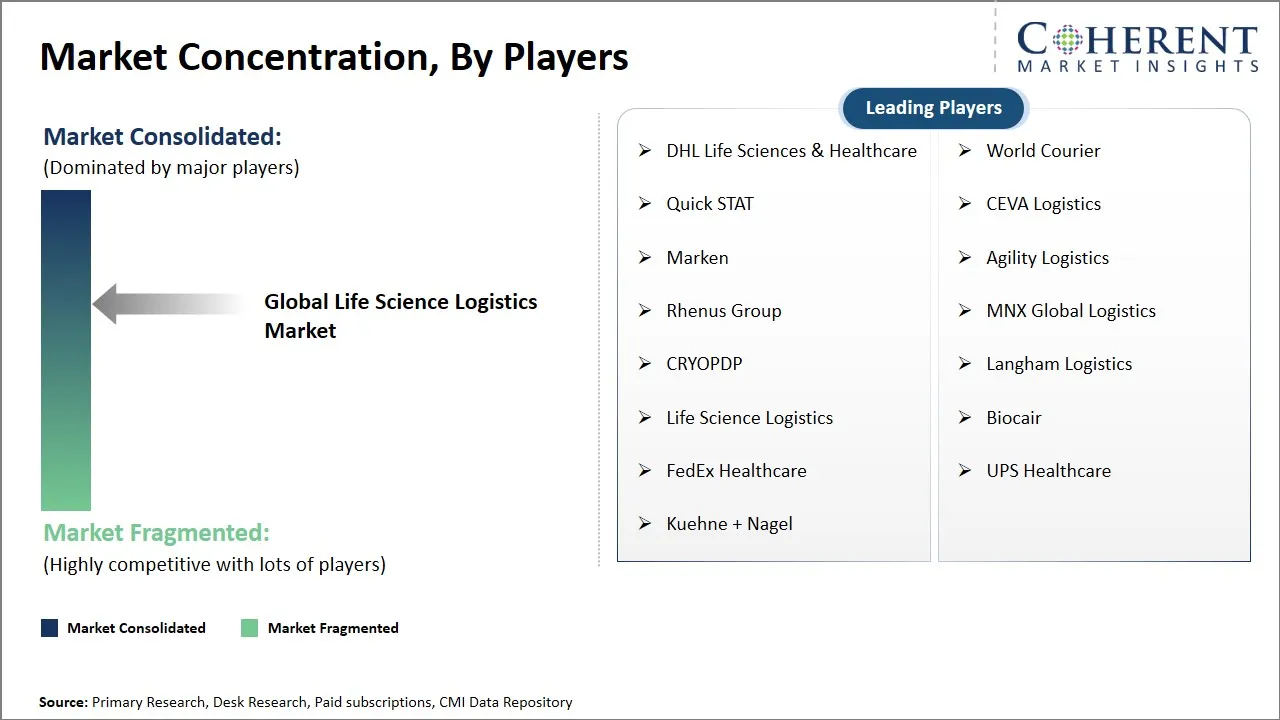
| Companies covered: | DHL Life Sciences & Healthcare, World Courier, Quick STAT, CEVA Logistics, Marken, Agility Logistics, Rhenus Group, MNX Global Logistics, CRYOPDP, Langham Logistics, Life Science Logistics, Biocair, FedEx Healthcare, UPS Healthcare, and Kuehne + Nagel | ||
| Growth Drivers: |
| ||
| Restraints & Challenges: |
| ||
Market Dynamics
Life Science Logistics Market Driver - Increasing Demand for Temperature ‑ Sensitive Pharmaceuticals and Biologics
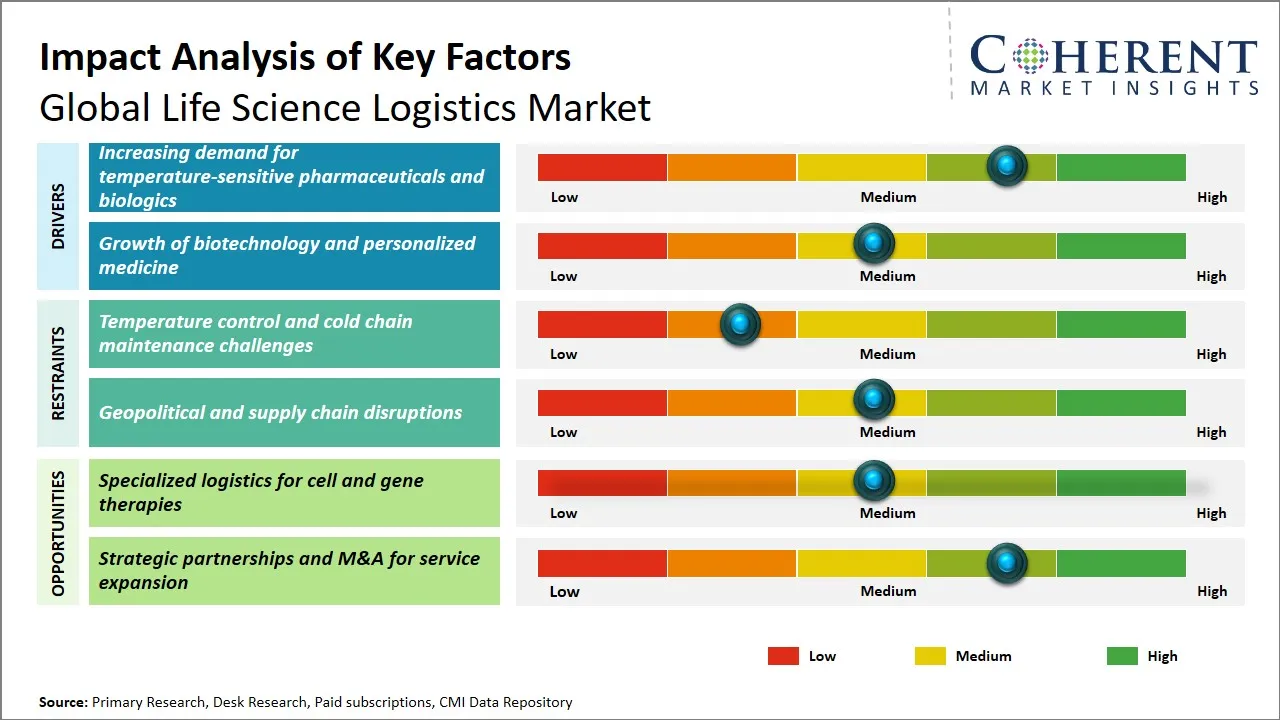
The increased incidence of chronic conditions and the increased use of novel therapeutic modalities like biologics, vaccines and gene therapies have greatly increased the need of temperature sensitive pharmaceutical logistics. These treatments demand a high degree of temperature control in the whole supply chain including manufacture, distribution, and delivery to make sure these treatments are effective and safe. These products are sensitive to changes in temperature and thus cannot be transported using the normal means of logistics, special cold chain solutions must be created.
For instance, medicines requiring cold storage are taking an increasing share of the pharmaceutical markets, rising from 26% in 2017 to 35% in 2022, with about half of new drugs expected to require cold chain distribution in the next five years. This trend underscores growing demand for biologics, vaccines and other temperature‑sensitive therapies that depend on controlled logistics.
Life Science Logistics Market Opportunity - Specialized Logistics for Cell and Gene Therapies
Increased approvals and commercialization are driving up the number of cell and gene therapies on the market, which is a key opportunity to the life science logistics industry. These treatments have special logistical requirements because they are sensitive and have limited shelf life and high regulatory requirements. They include the requirement of live cells to be strictly temperature-regulated, which contributes to the cold chain solutions demand, real-time tracking, and traceability. As there are additional clinical trials and regulatory approvals, chain-of-custody and compliance require special logistics providers. The adoption of high-tech packing and electronic monitoring provides companies with an advantage to win this growing market.
For instance- Novartis leverages specialized logistics services from World Courier to manage the end‑to‑end supply chain of its advanced cell and gene therapies, including patient‑specific shipments that require strict cryogenic cold chain handling, continuous temperature monitoring, chain‑of‑identity tracking, and global coordination across collection sites, manufacturing hubs, and treatment centers to ensure product viability and patient safety.
(Source- https://www.worldcourier.com/solutions/cell-and-gene-therapy)
Analyst Opinion (Expert Opinion)
- The life science logistics market is expanding at a very high rate as a result of technological improvements, growing regulatory favor and an augmenting demand in the pharmaceutical and biologics that require temperatures. The use of real-time tracking and AI-driven solutions is enhancing the efficiency of the supply chain, whereas stringent regulatory frameworks are guaranteeing safe transportation and storage of sensitive products. The increasing demand of cold chain infrastructure and biologics are major stimulatory factors, and obstacles to the industry, such as excessive compliance costs and complexity of their operation remain in the challenge of the resilience of the industry.
- The emerging opportunities in blockchain usage involve enhanced traceability and sustainability programs within the logistics chain. The use of industry events such as the Cold Chain Global Forum and the LogiPharma has become more than essential in terms of sharing of knowledge and technology. The cold chain investment and temperature-controlled air delivery by companies such as DHL and FedEx are establishing new industry benchmarks and the market is moving towards novelty and increased efficiency in the logistics of life sciences products.
Speak to the analyst
Want personalized insights?
Take the findings above to one of our principal consultants, or have the report rebuilt around the segments, geographies and competitors you actually track.
Market Segmentation
- Service Type Insights (Revenue, USD Bn, 2026 - 2033)
- Transportation
- Warehousing
- Packaging
- Distribution
- Inventory Management
- Cold Chain Logistics
- End-use Industry Insights (Revenue, USD Bn, 2026 - 2033)
- Pharmaceuticals
- Biotechnology
- Medical Devices
- Diagnostics
- Temperature Control Insights (Revenue, USD Bn, 2026 - 2033)
- Ambient
- Cold Chain
- Frozen
- Refrigerated
- Mode Of Transportation Insights (Revenue, USD Bn, 2026 - 2033)
- Air
- Sea
- Road
- Rail
- Packaging Type Insights (Revenue, USD Bn, 2026 - 2033)
- Primary Packaging
- Secondary Packaging
- Tertiary Packaging
- Supply Chain Type Insights (Revenue, USD Bn, 2026 - 2033)
- Integrated Logistics
- Third-Party Logistics
- Fourth-Party Logistics
- Regional Insights (Revenue, USD Bn, 2026 - 2033)
- North America
- U.S.
- Canada
- Latin America
- Brazil
- Argentina
- Mexico
- Rest of Latin America
- Europe
- Germany
- U.K.
- Spain
- France
- Italy
- Russia
- Rest of Europe
- Asia Pacific
- China
- India
- Japan
- Australia
- South Korea
- ASEAN
- Rest of Asia Pacific
- Middle East
- GCC Countries
- Israel
- Rest of Middle East
- Africa
- South Africa
- North Africa
- Central Africa
- North America
- Key Players Insights
- DHL Life Sciences & Healthcare
- World Courier
- Quick STAT
- CEVA Logistics
- Marken
- Agility Logistics
- Rhenus Group
- MNX Global Logistics
- CRYOPDP
- Langham Logistics
- Life Science Logistics
- Biocair
- FedEx Healthcare
- UPS Healthcare
- Kuehne + Nagel
Sources
Primary Research Interviews
Industry Stakeholders List
- Pharmaceutical Manufacturers
- Logistics Service Providers
End Users List
- Biopharma Companies
- Healthcare Providers
Government and International Databases
- U.S. Food and Drug Administration (FDA)
- European Medicines Agency (EMA)
- World Health Organization (WHO)
- U.S. Centers for Disease Control and Prevention (CDC)
- International Air Transport Association (IATA)
- United Nations Economic Commission for Europe (UNECE)
Trade Publications
- Pharmaceutical Commerce
- Cold Chain Magazine
- Logistics Management
- BioPharma Dive
- Supply Chain Digital
- The Pharmaceutical Journal
Academic Journals
- Journal of Pharmaceutical Sciences
- International Journal of Pharmaceutics
- Journal of Logistics and Supply Chain Management
- Biopharmaceutical Technology Journal
- Clinical Pharmacology & Therapeutics
- Journal of Supply Chain Management
Reputable Newspapers
- The Wall Street Journal
- The New York Times
- Financial Times
- The Guardian
- The Washington Post
- Reuters
Industry Associations
- Pharmaceutical Supply Chain Initiative (PSCI)
- Global Cold Chain Alliance (GCCA)
- Healthcare Distribution Alliance (HDA)
- International Pharmaceutical Excipients Council (IPEC
- Council of Supply Chain Management Professionals (CSCMP)
- World Health Organization (WHO)
Public Domain Resources
- U.S. Department of Health and Human Services (HHS)
- European Union Public Health Portal
- World Bank Health & Nutrition Reports
- U.S. Census Bureau
- United Nations Development Programme (UNDP)
- National Institutes of Health (NIH)
Proprietary Elements
- CMI Data Analytics Tool: Proprietary analytics tool to analyze real-time market trends, consumer behavior, and technology adoption in market
- Proprietary CMI Existing Repository of Information for Last 8 Years
Get access to 250+ pages report
Every segment, forecast, competitor profile and data table behind the analysis above — available for instant download.
- ESOMAR Member
- ISO 9001:2015 Certified
- D-U-N-S Registered
- GDPR & CCPA Compliant
Missing comfort of reading report in your local language? Find your preferred language:
Transform your Strategy with Exclusive Trending Reports
Frequently Asked Questions
The global life science logistics market is estimated to be valued at USD 21.46 billion in 2026 and is expected to reach USD 37.74 billion by 2033.
The CAGR of Global Life Science Logistics Market is projected to be 8.4% from 2026 to 2033.
Increasing demand for temperature‑sensitive pharmaceuticals and biologics and growth of biotechnology and personalized medicine are the major factors driving the growth of the global life science logistics market.
Temperature control and cold chain maintenance challenges and geopolitical and supply chain disruptions are the major factors hampering the growth of the global life science logistics market.
Key technologies include real time tracking systems, IoT enabled temperature monitoring, AI driven route optimization, and blockchain for traceability. These solutions improve visibility, ensure cold chain integrity, and enhance compliance with regulatory standards across the supply chain.
DHL Life Sciences & Healthcare, World Courier, Quick STAT, CEVA Logistics, Marken, Agility Logistics, Rhenus Group, MNX Global Logistics, CRYOPDP, Langham Logistics, Life Science Logistics, Biocair, FedEx Healthcare, UPS Healthcare, and Kuehne + Nagel are the major players.
North America is expected to lead the global life science logistics market in 2026.