

Global Life Sciences and Pharmaceutical Industrial Automation and Control Systems Market Size and Forecast – 2026 To 2033
The global life sciences and pharmaceutical industrial automation and control systems market is expected to grow from USD 26,328.2 Mn in 2026 to USD 55,546.7 Mn by 2033, registering a compound annual growth rate (CAGR) of 11.3% from 2026 to 2033. The global life sciences and pharmaceutical industrial automation and control systems market is driven by increasing regulatory focus on data integrity and product quality. On February 26, 2025, The U.S. FDA issued a warning letter to Granules India after an inspection of its Telangana manufacturing facility, stating that the company’s quality system did not adequately ensure the accuracy and integrity of data supporting the safety, effectiveness and quality of its drugs. The action specifically reinforces the need for stronger data governance, quality-unit oversight and reliable computerized records in pharmaceutical manufacturing.
Key Takeaways of the Global Life Sciences and Pharmaceutical Industrial Automation and Control Systems Market
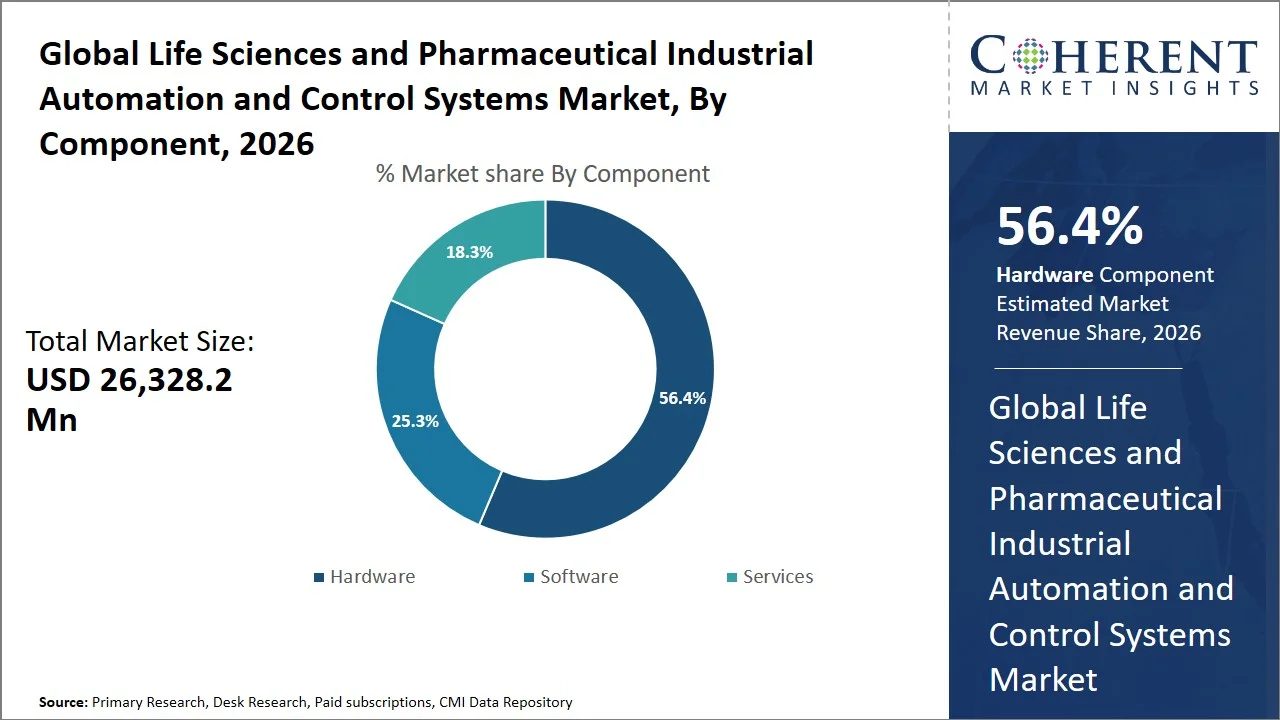
- The Hardware segment is expected to account for 56.4 % of the global life sciences and pharmaceutical industrial automation and control systems market share in 2026. Higher investment in digital transformation across life sciences is driving the growth of the segment. On February 23, 2026, AbbVie announced a new USD 380 million investment to build two new active pharmaceutical ingredient (API) manufacturing facilities at its current North Chicago, Illinois, campus.
- The Batch Manufacturing segment is estimated to capture 66.5 % of the market share in 2026. Expansion of biologics and advanced therapy manufacturing is majorly driving the growth of the segment. On March 24, 2026, UCB announced plans to construct a 460,000-square-foot biologics manufacturing facility on a 79-acre site in Georgia, representing approximately USD 2 billion of investment and the Belgian company's first US manufacturing plant.
- The On-Premise segment is estimated to capture 58.7 % of the market share in 2026. Growing deployment of robotics and industrial IoT platforms is driving the growth of the segment. On June 22, 2026, Rockwell Automation highlighted autonomous mobile robots through its OTTO AMR portfolio at INTERPHEX 2026, demonstrating how AMRs can be integrated with FactoryTalk PharmaSuite, DataMosaix and PlantPAx to connect material movement, production data and automation in pharmaceutical and biotechnology facilities.
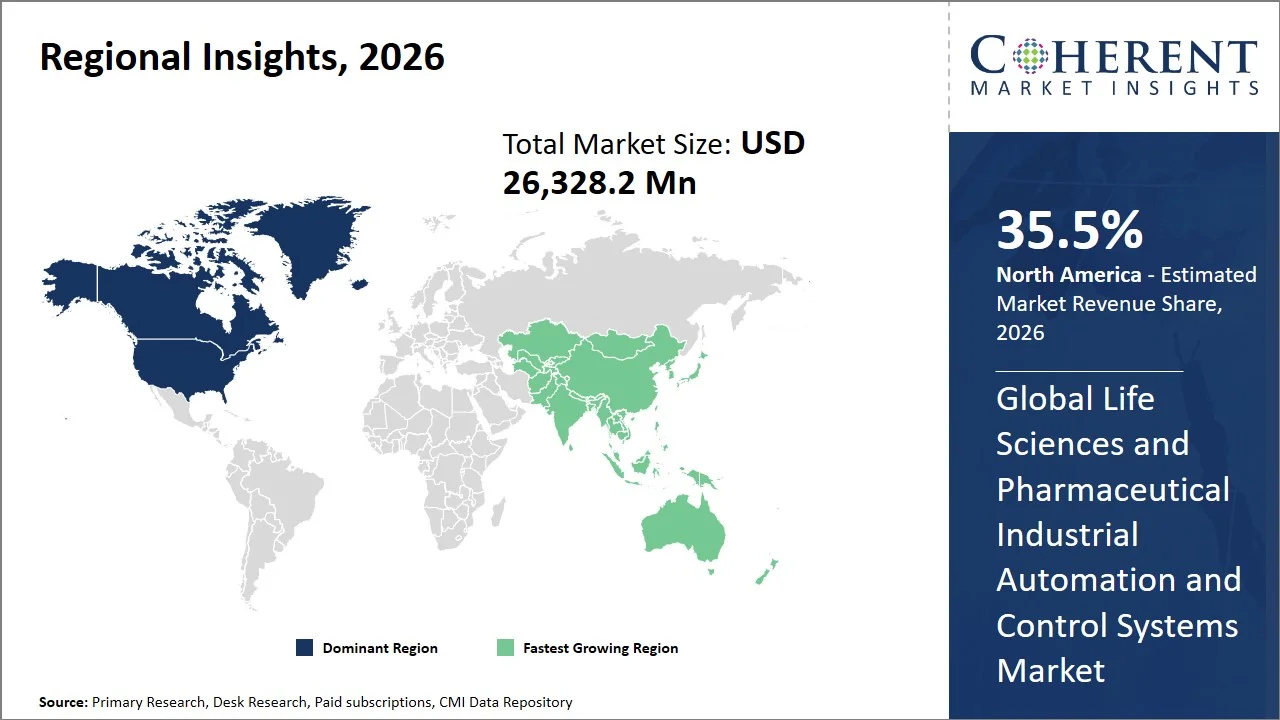
- North America is expected to dominate the life sciences and pharmaceutical industrial automation and control systems market in 2026 with a market share of 35.5 %. Growth in personalized medicine manufacturing facilities in North America is driving the growth of the regional market. On November 19, 2025, Novartis announced in November 2025 plans for a new flagship manufacturing hub in North Carolina as part of its previously announced US infrastructure investment, with the project expected to create 700 jobs by the end of 2030
- Asia Pacific is expected to account for 27.3 % share in 2026 and is projected to record the fastest growth over the forecast period. Rising demand for cloud based manufacturing execution systems across Asia Pacific is driving the growth of the regional market. On February 27, 2025, Körber announced that it was working with AWS to provide its Werum PAS-X MES as a fully managed software-as-a-service solution hosted in the AWS Cloud.
Segmental Insights
Why Does Hardware Dominate the Global Life Sciences and Pharmaceutical Industrial Automation and Control Systems Market?
The hardware segment is expected to account for 56.4% of the global life sciences and pharmaceutical industrial automation and control systems market share in 2026. The uptake of hardware is driven by the necessity of a robust physical infrastructure for monitoring, controlling and automating the pharmaceutical production processes. Components like sensors, controllers, actuators, industrial robots and human machine interfaces provide the vital link between production equipment and digital control platforms. These systems offer real time measurement of temperature, pressure, flow, contamination and other essential process parameters while supporting precise control across manufacturing and packing operations. The high requirements for process consistency, equipment reliability and regulatory compliance mean that pharmaceutical and life sciences enterprises are also obliged to invest in sound automation hardware as an integral component of their production infrastructure. On July 1, 2025, Kawasaki Heavy Industries, Ltd. announced that it will launch a new model of medical and pharmaceutical robot with 6-axis, the MC006V. As the latest model in the MC Series, this product maintains the strengths of previous models, compatibility with the advanced clean environments required in pharmaceutical manufacturing and high resistance to chemicals used for decontamination of manufacturing equipment including robots.
- Current Industry Events of 2026
- Market Size Estimation
- Regional Breakdown
- Competitive Landscape
- Customer Intelligence
- Segmental Analysis
- Pricing Analysis
- Key Market Drivers, Challenges & Future Trends
- Customized Insights Section
Why is Batch Manufacturing the Most Preferred Manufacturing Mode?
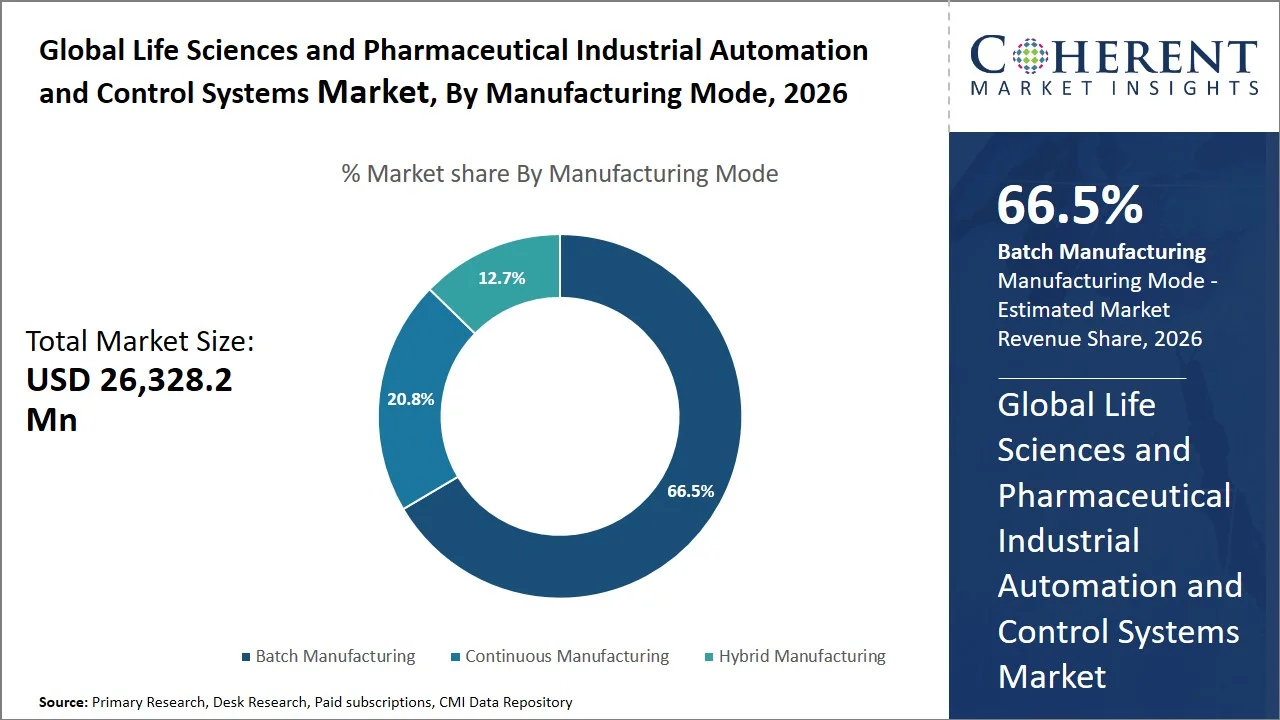
The batch manufacturing segment is expected to account for 66.5% of the global life sciences and pharmaceutical industrial automation and control systems market share in 2026. Batch manufacturing is broadly employed as it gives greater flexibility in the production of a variety of pharmaceutical products under strictly controlled and approved settings. Quality and traceability may be maintained across the whole manufacturing cycle, enabling manufacturers to adapt batch size, formulas and production parameters according to the product needs. This approach is especially important for vaccines, biologics, active pharmaceutical ingredients, and other products that require significant testing and controlled processing steps. Automated monitoring and control systems maintain critical parameters and minimize process variability during each production run. On September 11, 2025, Biocon Limited, an innovation-led global biopharmaceutical company, announced the inauguration of its first U.S. manufacturing facility in Cranbury, New Jersey, U.S., by its wholly owned subsidiary, Biocon Generics Inc (BGI).
On-Premise Dominates the Global Life Sciences and Pharmaceutical Industrial Automation and Control Systems Market
The on-premise segment is expected to account for 58.7% of the global life sciences and pharmaceutical industrial automation and control systems market share in 2026. On-premise deployment is strongly preferred by pharmaceutical and life sciences manufacturers because it provides greater control over sensitive production data, automation infrastructure and validated manufacturing environments. Pharmaceutical facilities are subject to severe regulatory requirements for data integrity, system validation, cybersecurity, and operational continuity, which makes localized infrastructure attractive for keeping direct control over essential systems and records. On-premise architectures also permit integration with legacy equipment and plant-level control networks, and reduce reliance on external connectivity for critical manufacturing operations, which is important for facilities that require round the clock production and tightly controlled access to automation systems. As of October 2025, Siemens continued to provide Opcenter Intelligence On-Premises as a standalone manufacturing intelligence platform providing manufacturers ownership and control of production data on their own infrastructure.
Current Events and their Impact
Current Events | Description and its Impact |
US FDA Cybersecurity Requirements For Medical Devices |
|
China Drug Contract Manufacturing Supervision Announcement |
|
Life Sciences and Pharmaceutical Industrial Automation and Control Systems Market Dynamics
Market Drivers
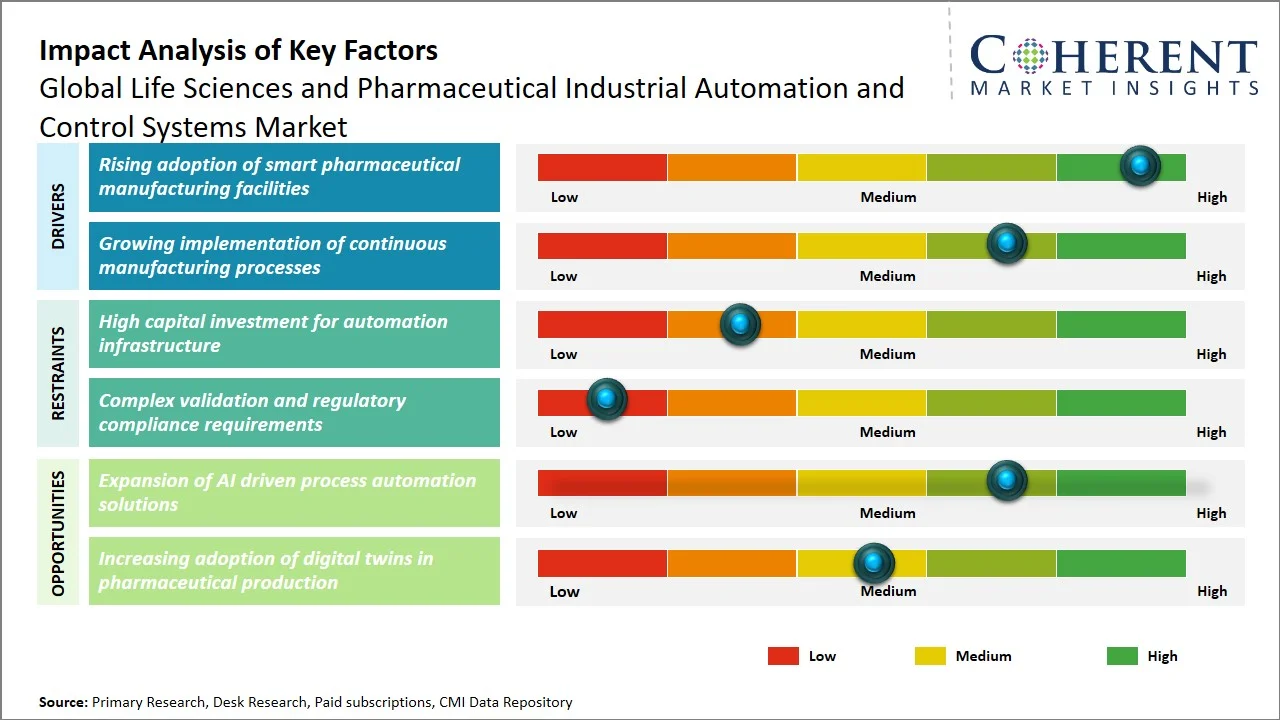
- Rising adoption of smart pharmaceutical manufacturing facilities: Pharmaceutical manufacturers are increasingly developing smart production facilities by integrating industrial automation, connected sensors, robotics, manufacturing execution systems, artificial intelligence and real time analytics across production operations. These technologies allow for ongoing monitoring of crucial process parameters, automated equipment control, predictive maintenance, and speedier identification of process irregularities, while enhancing coordination between manufacturing and quality operations. Increasing importance of data integrity, operational efficiency, traceability, and consistent product quality is pushing corporations to update traditional facilities and integrate networked automation designs into new pharmaceutical plants. For example, Sanofi’s Modulus sites in France and Singapore are being built as digitally connected, highly automated and robotics-enabled biopharmaceutical factories with full operational readiness scheduled for 2026-2027. The facilities are designed to produce numerous vaccine and biologic modalities including viral, mRNA and recombinant protein products, with digital systems recording facility-wide data for continuous process improvement and AI-enabled decision making.
- Growing implementation of continuous manufacturing processes: Continuous manufacturing processes are being increasingly adopted, driving the demand for improved automation and control systems that can ensure stable production conditions during continual processing. Unlike traditional systems that use distinct processing batches, continuous manufacturing needs real time monitoring and accurate automated control of parameters including temperature, pressure, flow rate and material composition. The use of continuous processing technologies in modern drug manufacturing facilities is on the rise. This is driven by regulatory support for advanced manufacturing technologies and pharmaceutical companies’ desire for improved process consistency, reduced production interruptions, and more efficient use of manufacturing assets. On March 10, 2026, Pfizer unveiled their extended Continuous Manufacturing Module at the 2025 AIChE Annual Meeting, which featured a novel wet-granulation configuration for high-drug-load formulations. The system draws on Pfizer’s commercial continuous manufacture of Daurismo and Cibinqo and incorporates process analytical technologies and end-to-end process modeling into the control strategy.
Emerging Trends
- Integration of artificial intelligence with process automation: Pharmaceutical manufacturers are increasingly using artificial intelligence and machine learning in conjunction with automation platforms to identify process deviations, optimize operating parameters, predict equipment failures and support real time production decisions. This enables more responsive and adaptive manufacturing environments.
- Growing adoption of digital twins and virtual commissioning: Digital twin technologies are being increasingly used to digitally replicate pharmaceutical production lines and process equipment, allowing manufacturers to simulate operating conditions, test control strategies and identify possible problems before implementing changes on physical equipment.
- Expansion of robotics and autonomous material handling: Automated guided vehicles, autonomous mobile robots and robotic systems are being increasingly used in pharmaceutical manufacturing to transport materials, packaging, inspection and repetitive handling tasks, helping to reduce manual input and improve operational consistency.
- Increasing convergence of operational technology and information technology: Pharmaceutical plants are increasingly integrating plant floor automation systems with enterprise platforms, manufacturing execution systems (MES), cloud infrastructure and advanced analytics, to establish integrated data environments that enhance production visibility, traceability, maintenance planning and quality management.
Regional Insights
Why is North America a Strong Market for Life Sciences and Pharmaceutical Industrial Automation and Control Systems?
North America is expected to account for a market share of 35.5% in 2026. North America is characterized by strong deployment of automation across pharmaceutical, biotechnology and advanced therapy manufacturing, supported by major production hubs in the United States and Canada and by the region’s emphasis on domestic drug supply resilience. The US FDA reported in 2025 that more than half of pharmaceuticals distributed in the country were manufactured overseas and that only 11% of manufacturers producing APIs used in FDA approved products were US manufacturers, prompting the FDA PreCheck initiative to facilitate construction of domestic pharmaceutical manufacturing sites. This policy direction is supporting investment in automated production lines, process monitoring, manufacturing execution systems and digitally controlled facilities, while the expansion of biologics and advanced therapies is increasing requirements for highly controlled manufacturing environments. North American facilities are also increasingly combining robotics, industrial data platforms, process analytical technology and predictive analytics to improve manufacturing consistency and reduce dependence on manual intervention.
Why Does Asia Pacific Life Sciences and Pharmaceutical Industrial Automation and Control Systems Market Exhibit High Growth?
Asia Pacific is projected to account for 27.3% of the global life sciences and pharmaceutical industrial automation and control systems market in 2026 and expected to register the fastest growth. Asia Pacific is emerging as a major deployment center for pharmaceutical automation because of expanding drug manufacturing capacity, large generic drug production bases and rapid government-led digitalization initiatives across China, India, Japan, Singapore and South Korea. China has established particularly explicit targets through its 2025–2030 pharmaceutical industrial digital transformation plan, which calls for more than 100 intelligent pharmaceutical and medical device factories, more than 100 representative digital technology application scenarios and the development or promotion of more than 100 high-performance products covering intelligent manufacturing equipment, testing instruments and pharmaceutical industrial software by 2027. The region is also seeing greater use of robotics, automated inspection, MES, PLC, DCS, SCADA, process analytical technology and industrial data platforms as manufacturers seek internationally compliant production capabilities. India is simultaneously attracting additional biopharmaceutical manufacturing and laboratory technology investment, with Thermo Fisher expecting its Indian customer base to increase by 15%–20% over the next five years as biopharma research and manufacturing expand.
Global Life Sciences and Pharmaceutical Industrial Automation and Control Systems Market Outlook for Key Countries
Why is U.S. Emerging as a Major Hub in the Life Sciences and Pharmaceutical Industrial Automation and Control Systems Market?
The US represents the most advanced national environment for pharmaceutical automation, combining large scale pharmaceutical manufacturing with extensive biotechnology, cell and gene therapy and contract development and manufacturing activity. The FDA’s 2025 FDA PreCheck program specifically targets faster and more predictable development of domestic pharmaceutical manufacturing facilities, creating additional incentives for modern automated plants rather than simple capacity additions. The country is also experiencing increasing application of continuous manufacturing, automated process control, real time quality monitoring and digital manufacturing systems as manufacturers respond to supply chain resilience requirements and increasingly complex biologics production. Advanced automation is particularly relevant to facilities producing sterile injectables, biologics and personalized therapies where automated environmental monitoring, equipment control, electronic batch records and process analytical technologies can reduce manual intervention and strengthen process consistency.
Is China the Next Growth Engine for the Life Sciences and Pharmaceutical Industrial Automation and Control Systems Market?
China is undergoing one of the most explicitly government-supported transitions toward digital and intelligent pharmaceutical manufacturing. The 2025–2030 pharmaceutical industrial digital transformation implementation plan calls for more than 100 intelligent pharmaceutical and medical device factories by 2027, at least 30 digital transformation leaders and at least 10 pharmaceutical large-model innovation platforms, while specifically identifying PLC, DCS, SCADA, safety instrumented systems, MES and process analytical technology as technologies for pharmaceutical industrial deployment. China's State Council has additionally called for deeper integration of new-generation information technologies with the pharmaceutical industry chain and specifically promoted information-based manufacturing and testing, including stronger digital requirements for vaccine manufacturing and blood-product production. The revised medical device GMP released by the NMPA in 2025 also introduces lifecycle risk-management concepts and strengthens quality-management requirements, further supporting investment in automated monitoring, traceability and digitally controlled production environments.
Germany Life Sciences and Pharmaceutical Industrial Automation and Control Systems Market Analysis and Trends
Germany remains an important pharmaceutical automation center because its pharmaceutical manufacturing base is closely connected with the country's broader Industry 4.0 ecosystem and established expertise in industrial control, process engineering and factory digitalization. Pharmaceutical manufacturers and technology suppliers are increasingly applying connected production equipment, automated inspection, MES, robotics and digital process monitoring to improve traceability and process consistency, particularly in highly regulated sterile, biologics and specialty pharmaceutical operations. Germany’s strong engineering ecosystem also supports integration between plant-level PLC and DCS infrastructure and higher-level manufacturing and enterprise systems, allowing production data to be used for quality management, maintenance and process optimization. The country is additionally well positioned for advanced manufacturing applications such as continuous processing and flexible production because pharmaceutical facilities can leverage established automation expertise from the chemicals, biotechnology and precision engineering sectors.
Japan Life Sciences and Pharmaceutical Industrial Automation and Control Systems Market Analysis and Trends
Japan's pharmaceutical automation environment is being shaped by an advanced manufacturing base, high levels of industrial robotics expertise and increasing emphasis on domestic production of innovative medicines. Japanese pharmaceutical and biotechnology companies are increasingly applying automated inspection, laboratory automation, robotics, electronic data systems and digitally controlled manufacturing processes, while the country's strong robotics ecosystem provides an established technology base for pharmaceutical material handling and production automation. At the same time, advanced therapies are also seeing expansion of domestic manufacturing to support automation needs, with five Japanese companies including Nikon and AGC said to be planning together to make more than USD 600 million in additional investments to expand domestic production of cutting-edge pharmaceuticals including iPS-cell-based products thru fiscal 2027. Japan’s pharmaceutical industry is also becoming more digital in its research and regulatory processes. A 2024 survey by the Japan Pharmaceutical Manufacturers Association showed that more than 60% of the companies surveyed used the R programming language, indicating a general trend toward data-driven pharmaceutical operations.
India Life Sciences and Pharmaceutical Industrial Automation and Control Systems Market Analysis and Trends
India is rapidly expanding pharmaceutical automation as its manufacturers increase production of complex generics, biosimilars, sterile APIs, injectables and other products intended for highly regulated international markets. The country has a particularly strong base of generic-drug and API manufacturing facilities, creating demand for automated process control, electronic batch documentation, laboratory automation, serialization, automated inspection and digitally integrated quality systems. Recent activity includes a long-term sterile API CDMO partnership between Gland Pharma and Neuland Laboratories focused on complex injectable therapies, highlighting the continuing expansion of technologically demanding pharmaceutical production in the country. Thermo Fisher has also identified India as one of its fastest-growing Asia Pacific markets and expects its Indian customer base to increase by 15%–20% over the next five years as biopharma research and manufacturing expand, while the company already employs more than 5,000 people in India. These developments are encouraging pharmaceutical facilities to adopt more sophisticated automation, analytical instrumentation and connected manufacturing infrastructure to meet global quality and regulatory requirements.
Global Life Sciences and Pharmaceutical Industrial Automation and Control Systems Market - Industrial Robotics Adoption By Pharmaceutical Application (2025)
Pharmaceutical Application | Industrial Robotics Adoption |
Packaging and labeling | 68% |
Sterile fill-finish | 61% |
Material handling | 56% |
Visual inspection and quality assurance | 49% |
Compounding and dispensing | 32% |
How is Expansion of AI Driven Process Automation Solutions Creating New Growth Opportunities in the Life Sciences and Pharmaceutical Industrial Automation and Control Systems Market?
The growth of AI-driven process automation is providing opportunities for pharmaceutical firms to transition from rule-based control to systems that can continually monitor production data and modify operating parameters in response to process aberrations. AI models can evaluate large volumes of data collected from bioreactors, chromatography systems, sensors and process analytical technology in biologics manufacturing to identify relationships between parameters like temperature, pH, dissolved oxygen and nutrient feed that can help operators optimize yield and detect deviations earlier.
AI powered control solutions in solid dosage and continuous manufacturing may aggregate data from feeders, granulators, tablet presses and in line quality sensors to discover differences in material qualities and recommend or perform corrective corrections automatically. Manufacturers are now applying AI to predictive maintenance of pumps, compressors, filling equipment and other important assets to discover anomalous operating patterns before they result in equipment failures that might affect proven production processes. These applications generate extra demand for AI enabled distributed control systems, manufacturing execution platforms, industrial edge computing and advanced analytics that can be connected with existing pharmaceutical automation infrastructure.
On September 15, 2025, Bausch + Lomb installed Arena AI’s Atlas technology in their contact lens manufacturing operations to help predict machinery faults and improve production performance. This deployment employs AI to study the behavior of equipment and detect possible problems before they lead to failures, showing how predictive intelligence may be applied directly to pharmaceutical and medical-device production equipment.
Market Players, Key Development, and Competitive Landscape
Key Developments
- On September 23, 2025, Merck and Siemens signed a new Memorandum of Understanding (MoU), extending their strategic partnership to accelerate digital transformation in the life science industry by connecting digital and physical products. The agreement focuses on delivering integrated software solutions, systems and consumables that harness automation, data and AI to connect drug discovery, development, and manufacturing.
- On May 13, 2025, Rockwell Automation, Inc. announced the launch of FactoryTalk PharmaSuite 12.00. The latest release of its manufacturing execution system (MES) is designed to support the unique needs of regulated pharmaceutical and biopharmaceutical manufacturing environments, helping companies simplify system management, accelerate deployments and scale production more efficiently.
Competitive Landscape
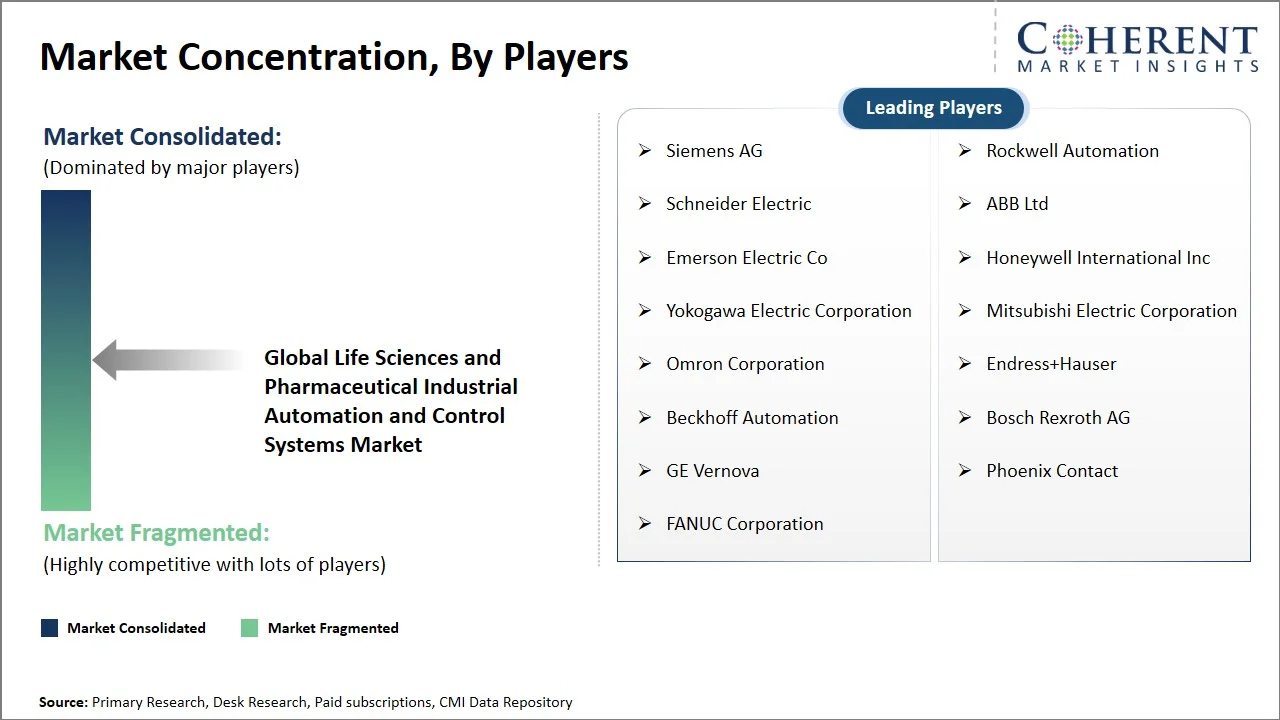
Major automation suppliers are reshaping the competitive landscape by moving beyond individual controllers and instrumentation to integrated pharmaceutical production platforms. Siemens is focusing on digitalized pharmaceutical manufacturing with its Xcelerator portfolio, Opcenter MES and SIMATIC automation technologies. Rockwell Automation is emphasizing PharmaSuite MES and FactoryTalk solutions and lifecycle automation for regulated manufacturing environments. Schneider Electric is focusing on EcoStruxure automation, AVEVA software and digital transformation solutions for pharmaceutical facilities while Emerson is emphasizing DeltaV distributed control systems, Syncade MES and life sciences process automation including continuous manufacturing and biologics applications.
Honeywell focuses on integrated automation, process control, data management and cybersecurity for pharmaceutical production, whereas Yokogawa is strengthening its position in biopharmaceutical manufacturing with integrated control, data collection and process analytical solutions. The competitive focus is increasingly shifting toward interoperability, electronic batch records, real time process monitoring, AI enabled analytics, digital twins, cybersecurity and validated automation architectures, with leading suppliers seeking long term relationships with pharmaceutical manufacturers and contract development and manufacturing organizations rather than relying solely on individual hardware sales.
Market Report Scope
Life Sciences and Pharmaceutical Industrial Automation and Control Systems Market Report Coverage
| Report Coverage | Details | ||
|---|---|---|---|
| Base Year: | 2025 | Market Size in 2026: | USD 26,328.2 Mn |
| Historical Data for: | 2020 To 2024 | Forecast Period: | 2026 To 2033 |
| Forecast Period 2026 to 2033 CAGR: | 11.3% | 2033 Value Projection: | USD 55,546.7 Mn |
| Geographies covered: |
| ||
| Segments covered: |
| ||
| Companies covered: | Siemens AG, Rockwell Automation, Schneider Electric, ABB Ltd, Emerson Electric Co, Honeywell International Inc, Yokogawa Electric Corporation, Mitsubishi Electric Corporation, Omron Corporation, Endress+Hauser, Beckhoff Automation, Bosch Rexroth AG, GE Vernova, Phoenix Contact and FANUC Corporation | ||
| Growth Drivers: |
| ||
| Restraints & Challenges: |
| ||
Analyst Opinion (Expert Opinion)
- The future of the industry is expected to move toward highly connected pharmaceutical production environments where automation, AI, manufacturing execution systems and process analytical technology operate as an integrated control layer rather than as separate systems. Continuous manufacturing, biologics, cell and gene therapy and personalized medicine are expected to generate particularly strong demand because these applications require precise real time monitoring and rapid response to process deviations. AI enabled process control and predictive maintenance are likely to become increasingly important as manufacturers seek to reduce manual intervention while maintaining validated production conditions.
- The largest opportunities are expected to be concentrated around AI enabled process automation × biologics and continuous manufacturing × United States and China, followed by advanced therapy manufacturing × automated process control × India and Japan. The United States is positioned strongly because of domestic pharmaceutical manufacturing expansion and the FDA's emphasis on strengthening manufacturing resilience, while China offers substantial opportunity through its government-backed target for more than 100 intelligent pharmaceutical and medical device factories by 2027. India is likely to provide additional opportunities through expansion of biosimilars, complex generics, sterile manufacturing and CDMO capabilities.
- To gain an edge, automation suppliers should prioritize validated AI capabilities, open interoperability with existing PLC, DCS, SCADA and MES infrastructure, and cybersecurity designed specifically for regulated pharmaceutical environments. Vendors that can combine automation hardware with process analytics, digital twins, electronic batch records and lifecycle services are likely to be better positioned than suppliers offering isolated automation components. Strategic partnerships with pharmaceutical manufacturers, CDMOs and technology providers should also be strengthened to develop application-specific solutions for biologics, continuous manufacturing and advanced therapies rather than relying on broad industrial automation offerings alone.
Speak to the analyst
Want personalized insights?
Take the findings above to one of our principal consultants, or have the report rebuilt around the segments, geographies and competitors you actually track.
Market Segmentation
- Component Insights (Revenue, USD Million, 2021 - 2033)
- Hardware
- Controllers & Processing Hardware (PLC, DCS Controllers, Batch Process Controllers, Industrial PCs/Edge Controllers)
- SCADA Hardware & Process Historians
- Human Machine Interface (HMI) Hardware
- Environmental Monitoring & Cleanroom Hardware
- Field Instruments (Process Measurement & Process Analytical Technology (PAT) Instruments)
- Final Control Elements (Control Valves, Actuators, Solenoid Valves & Positioners)
- Serialization & Track-and-Trace Hardware
- Robotics & Automated Material Handling
- Automation Components for Single-Use & Modular Systems
- Software
- Industrial Networking & Connectivity Software
- Manufacturing Execution Systems (MES)
- SCADA Software
- Laboratory Information Management Systems (LIMS) Integration
- Quality Management Systems (QMS) Integration
- Advanced Process Control (APC) & PAT Software
- Serialization & Track-and-Trace Software
- Industrial Analytics & AI Software
- Digital Twin & Simulation Software
- Industrial Cybersecurity & Data Integrity Software
- Plant Engineering & Simulation Software
- Services
- Consulting & Engineering
- System Integration
- Installation & Commissioning
- Validation & Compliance Services (Computer System Validation (CSV), IQ/OQ/PQ & GAMP 5)
- Modernization & Migration
- Maintenance & Lifecycle Services
- Training & Technical Support
- Managed Automation Services
- Hardware
- Manufacturing Mode Insights (Revenue, USD Million, 2021 - 2033)
- Batch Manufacturing
- Continuous Manufacturing
- Hybrid Manufacturing
- Deployment Insights (Revenue, USD Million, 2021 - 2033)
- On Premise
- Cloud
- Hybrid
- Enterprise Size Insights (Revenue, USD Million, 2021 - 2033)
- Large Pharma / Biopharma
- Mid and Small Pharma / Biopharma
- Industry Vertical Insights (Revenue, USD Million, 2021 - 2033)
- Small Molecule Pharma
- Biologics & Biopharmaceuticals
- Cell & Gene Therapy
- Sterile Injectables & Aseptic Manufacturing
- Medical Devices & Combination Products
- Contract Development & Manufacturing Organizations (CDMO/CMO)
- Regional Insights (Revenue, USD Million, 2021 - 2033)
- North America
- U.S.
- Canada
- Latin America
- Brazil
- Argentina
- Mexico
- Rest of Latin America
- Europe
- Germany
- U.K.
- Spain
- France
- Italy
- Russia
- Rest of Europe
- Asia Pacific
- China
- India
- Japan
- Australia
- South Korea
- ASEAN
- Rest of Asia Pacific
- Middle East
- GCC Countries
- Israel
- Rest of Middle East
- Africa
- South Africa
- North Africa
- Central Africa
- North America
- Key Players Insights
- Siemens AG
- Rockwell Automation
- Schneider Electric
- ABB Ltd
- Emerson Electric Co
- Honeywell International Inc
- Yokogawa Electric Corporation
- Mitsubishi Electric Corporation
- Omron Corporation
- Endress+Hauser
- Beckhoff Automation
- Bosch Rexroth AG
- GE Vernova
- Phoenix Contact
- FANUC Corporation
Sources
Primary Research Interviews
- Pharmaceutical manufacturing plant manager
- Head of automation and controls
- Engineering and maintenance directors
- MES and manufacturing IT managers
Magazines
- Pharmaceutical Technology
- European Pharmaceutical Review
- Pharmaceutical Engineering
Journals
- Journal of Pharmaceutical Innovation
- International Journal of Pharmaceutics
- Journal of Pharmaceutical Sciences
- Pharmaceutical Research
- Journal of Pharmaceutical Investigation
Associations
- International Society for Pharmaceutical Engineering (ISPE)
- International Society of Automation (ISA)
- Parenteral Drug Association (PDA)
Public Domain Sources
- U.S. Food and Drug Administration (FDA)
- European Medicines Agency (EMA)
- U.S. Department of Health and Human Services (HHS)
- National Institute of Standards and Technology (NIST)
Proprietary Elements
- CMI Data Analytics Tool
- Proprietary CMI Existing Repository of Information for the Last 10 Years
Get access to 250+ pages report
Every segment, forecast, competitor profile and data table behind the analysis above — available for instant download.
- ESOMAR Member
- ISO 9001:2015 Certified
- D-U-N-S Registered
- GDPR & CCPA Compliant
Missing comfort of reading report in your local language? Find your preferred language:
Transform your Strategy with Exclusive Trending Reports
Frequently Asked Questions
The global life sciences and pharmaceutical industrial automation and control systems market is expected to stand at USD 26,328.2 Mn in 2026 and is expected to reach USD 55,546.7 Mn by 2033.
The CAGR of the global life sciences and pharmaceutical industrial automation and control systems market is projected to be 11.3% from 2026 to 2033.
Rising adoption of smart pharmaceutical manufacturing facilities and growing implementation of continuous manufacturing processes are the major factors driving the growth of the global life sciences and pharmaceutical industrial automation and control systems market.
High capital investment for automation infrastructure and Complex validation and regulatory compliance requirements are the major factors hampering the growth of the global life sciences and pharmaceutical industrial automation and control systems market.
In terms of component, hardware segment is estimated to dominate the market revenue share in 2026.
Artificial intelligence is being applied to process optimization, anomaly detection, predictive maintenance and analysis of complex manufacturing datasets.
Digital twins allow manufacturers to simulate equipment and production processes virtually to evaluate operating conditions and optimize control strategies before physical implementation.