

Artificial Intelligence in Healthcare Market Size and Forecast – 2026 to 2033
The global artificial intelligence in healthcare market is estimated to be valued at USD 40.21 Bn in 2026 and is expected to exhibit a compound annual growth rate (CAGR) of 39.1% during the forecast period (2026-2033), reaching USD 405.20 Bn by 2033.
Key Takeaways from the Artificial Intelligence in Healthcare Market Report
- Demand is projected to remain high for hardware solutions, with the target segment accounting for 41.5% in 2026.
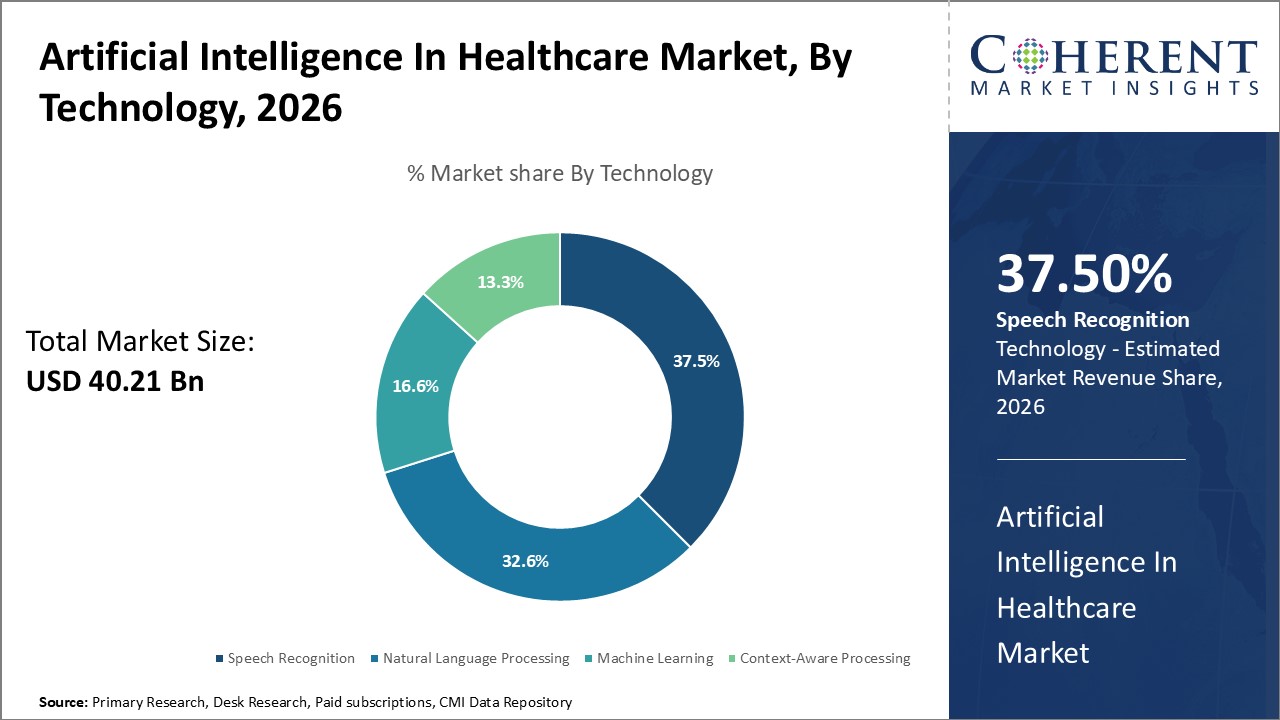
- Based on technology, speech recognition segment is slated to account for 37.5% of the global AI in healthcare market share by 2026.
- By application, imaging & diagnostics segment is expected to hold a prominent share of 44.5% in 2026.
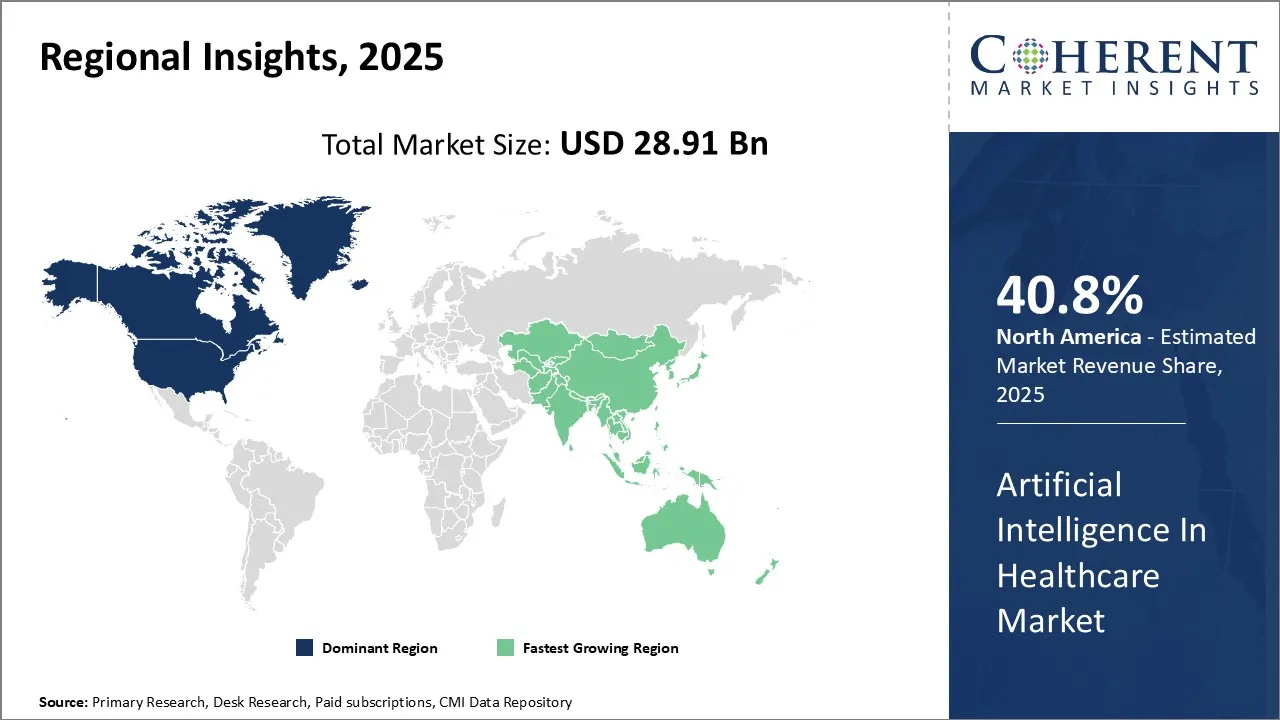
- North America remains at the epicentre of artificial intelligence in healthcare market growth, capturing 40.8% of the market share in 2026.
- Asia Pacific is poised to emerge as the most lucrative pocket for artificial intelligence solution providers during the assessment period.
Artificial Intelligence in Healthcare Market Overview
The global artificial intelligence in healthcare market is expected to exhibit robust growth during the forecast period. This is mostly due to explosion of healthcare data, rising need for better diagnostic accuracy and patient outcomes, and mounting pressure to control healthcare costs.
Hospitals, diagnostic centers, pharmaceutical companies, and medical device companies are increasingly adopting advanced technologies like artificial intelligence. These technologies help them automate routine tasks, optimize operations, and reduce costs.
Top players are constantly introducing new AI solutions for pharmaceutical and healthcare industries. For instance, Exscientia launched AWS AI-powered Platform to advance drug discovery.
The novel platform uses Amazon Web Services (AWS) technology and combines generative AI for drug design with robotic lab automation. It helps the company create high-quality drug candidates more quickly and at a lower cost.
Current Events and Their Impact on the Artificial Intelligence in Healthcare Market
Current Event | Description and its Impact |
Generative AI Breakthrough and Integration |
|
Healthcare System Transformation |
|
Segmental Insights
- Current Industry Events of 2026
- Market Size Estimation
- Regional Breakdown
- Competitive Landscape
- Customer Intelligence
- Segmental Analysis
- Pricing Analysis
- Key Market Drivers, Challenges & Future Trends
- Customized Insights Section
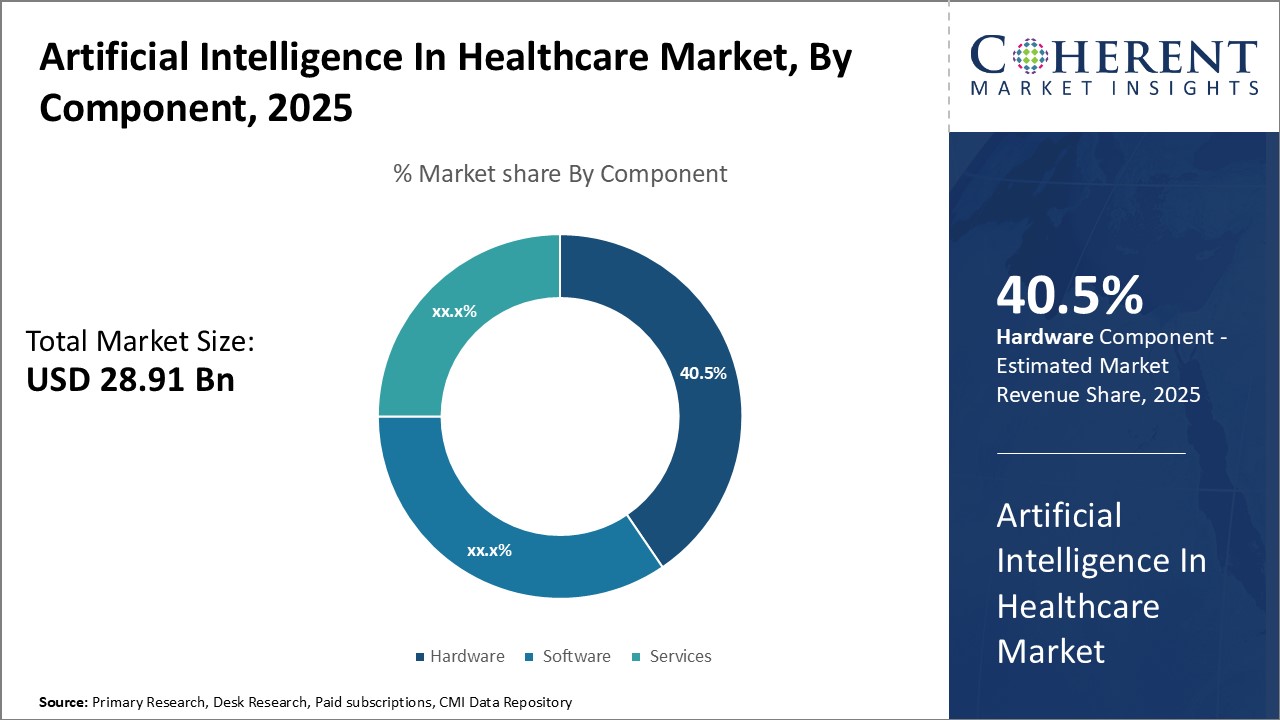
Artificial Intelligence in Healthcare Market Insights, By Component: Hardware Segment Leads the AI in Healthcare Industry
In terms of component, hardware segment is estimated to contribute the highest market share of 41.5% in 2026. This is attributable to increasing investments in developing versatile AI hardware platforms and devices.
Healthcare providers have been actively investing in hardware infrastructure like computer systems, networking devices, computer peripherals, and accessories. These upgrades enable the efficient operation of complex AI algorithms and predictive models.
Top companies have introduced powerful servers, data storage systems, and GPU-enabled computers made for training deep learning models using large healthcare datasets. Advancements in high bandwidth internet connectivity have further aided real-time data transmission between different AI hardware endpoints.
Rising focus on miniaturizing AI hardware is paving way for the development of AI-powered portable medical devices. For example, Samsung India recently launched new AI-powered mobile CT systems in India. These solutions combine advanced imaging hardware with AI capabilities to improve diagnostics.
Players are incorporating sophisticated AI processors as well as sensory interfaces in portable devices like smart wearables, therapeutic robots, patient monitors, and surgical tools. This allows continuous health monitoring and delivery of personalized care outside hospitals.
Neuro prosthetics powered by AI hardware are also gaining popularity for restoring motor functions in patients. Furthermore, heavy R&D investments by industry players have reduced hardware costs, thus making advanced AI systems affordable for healthcare providers.
Artificial Intelligence in Healthcare Market Insights, By Technology: Speech Recognition Leads Technological Adoption
As per Coherent Market Insights’ latest artificial intelligence in healthcare market analysis, speech recognition segment is expected to dominate the industry, owing to its wide applicability across healthcare activities. It will likely account for a prominent market share of 37.5% in 2026.
AI-based speech recognition systems are minimally invasive and user-friendly. This is making them ideal for clinical documentation, decision support, and patient communication.
Healthcare professionals have switched to using voice enabled digital assistants and interactive voice response systems for accessing patient records, reviewing test reports, and receiving diagnostic advice. Natural language proficiency of these systems enhances user experience while gaining clinical insights from vast unstructured speech data.
Speech recognition in combination with computer vision enhances capabilities of robotic surgical assistants and rehabilitation robots. AI systems can comprehend vocal instructions of surgeons and therapists during complex procedures or therapies, while automating documentation of the session.
Pharmaceutical companies are also testing speech-based conversational agents for health monitoring and compliance of patients on long term medication. New speed recognition models are being introduced in the market. For instance, Speechmatic launched a new medical speech recognition model with 93% accuracy and 50% fewer critical errors.
Advancements in deep learning algorithms have significantly boosted speech recognition accuracy on medical terminology and slangs used in clinical conversations. This has amplified adoption across healthcare workflow touchpoints involving patient-doctor interactions.
Artificial Intelligence in Healthcare Market Insights, By Application: Imaging & Diagnostics Remain the Most Lucrative Application
Based on application, imaging & diagnostics segment is expected to account for 44.5% of the AI in healthcare industry share in 2026. This can be attributed to increasing usage of AI in medical imaging sciences.
Advanced algorithms are helping radiologists and image analysts in diagnostic labs to process high volumes of visual medical data and detect subtle anomalies. Deep learning models are trained on thousands of labeled images to recognize tissue patterns as well as abnormalities linked to diseases.
AI applications have demonstrated high accuracy in detecting signs of cancer, neurological disorders, and cardiovascular issues from medical images well before symptoms arise. As a result, there is a rising growing adoption of AI in diagnostic segment.
AI-powered imaging systems use computer vision and deep learning techniques to provide automated quantitative analysis as well as assist physicians in generating precise diagnostic reports. This significantly reduces workload of radiologists and pathology technicians.
Players are also developing AI-driven robotic imaging devices and imaging analytics suites integrated with EHR systems. Such solutions empower near real-time exchange of scan reports between labs and consulting doctors. This fosters collaborative diagnostics practices.
For instance, researchers at Imperial College London and Imperial College healthcare NHS trust developed a new AI stethoscope that can detect major heart conditions in about 15 seconds. This news solution can analyze tiny differences in heartbeat and blood flow undetectable to the human ear, and can take a quick ECG at the same time.
AI imaging tools have also proven effective in medical education and research by supporting data-driven investigations. Continued improvements in algorithm performance can integrate advanced diagnostics at the point-of-care.
Regional Insights
North America Dominates Healthcare AI Adoption
North America leads from the forefront when it comes to AI adoption in healthcare. As per the latest AI in healthcare market analysis, North America is expected to account for 40.8% of the global market share in 2026. This is attributable to rising adoption of AI in healthcare sector and strong presence of leading players.
Healthcare institutions across nations like the U.S. are incorporating AI tools for personalized care, treatment decisions, drug discovery, and precision diagnosis. This is expected to boost growth of the artificial intelligence in healthcare market during the forthcoming period.
Major tech and healthcare companies like Microsoft, Google, and NVIDIA are investing heavily in AI research. This has created strong AI expertise focused on improving patient care.
Many universities and research centers are at the forefront of using advanced AI and machine learning in healthcare. Their investment and strong infrastructure give North American companies and hospitals an advantage in using AI for personalized care, treatment choices, drug development, and accurate diagnosis.
Asia Pacific Artificial Intelligence in Healthcare Market Outlook
Asia Pacific is emerging as the fastest growing regional market for artificial intelligence in healthcare. Countries like China, Japan, South Korea, and India offer a unique combination of large populations, growing healthcare needs, increasing consumer spending on wellness technologies as well as government initiatives to promote digital healthcare. This presents a massive opportunity for AI to make quality care more affordable and accessible for all.
Presence of a vibrant AI startup ecosystem and low-cost hubs for insourcing AI product development and testing helps global companies to establish Asia Pacific as their development and deployment center. Rapid advancements in infrastructure, along with rising medical standards, point towards Asia becoming the global leader in innovative AI technologies that can achieve healthcare for all.
Artificial Intelligence in Healthcare Market Outlook – Country-wise
U.S. Artificial Intelligence in Healthcare Market Trends
The United States is expected to lead the global artificial intelligence in healthcare market revenue during the assessment period. Strong government support, high spending on healthcare transformation, and early adoption of new technologies are helping the market grow. Major healthcare providers and technology companies in the nation are integrating AI tools for predictive analytics, clinical decision-making, and workflow optimization.
For instance, in June 2026, Universal Health Services (UHS) began using Hippocratic AI’s Generative AI Healthcare Agents to improve post-discharge patient engagement. The AI agents assist UHS staff with patient follow-ups, symptom checks, care reminders, and alerts to clinicians when needed.
China Artificial Intelligence in Healthcare Market Forecast
China is anticipated to emerge as the fastest-growing artificial intelligence in healthcare market during the assessment period. This is mostly due to government initiatives like the “Healthy China 2030” plan and heavy investments in AI innovation. The country’s large population, along with increasing healthcare digitization, has created strong demand for AI-driven diagnostics, telemedicine, and hospital management systems.
Leading Chinese tech firms such as Baidu, Alibaba, and Tencent are actively partnering with hospitals to deploy AI solutions in radiology, pathology, and patient monitoring. In addition, supportive regulations and pilot programs for AI-based medical devices are helping accelerate commercialization as well as adoption across healthcare facilities nationwide.
Market Concentration and Competitive Landscape
Artificial Intelligence in Healthcare Industry News
- In March 2025, Microsoft announced the launch of Microsoft Dragon Copilot, a new cutting-edge solution that transforms the way clinicians work. The solution combines voice dictation, ambient listening, and generative AI capabilities.
- In June 2025, the US FDA launched new AI tool named “Elsa”. The new AI tool is aimed at enhancing operational efficiency, especially in scientific reviews.
- In March 2024, NVIDIA launched new Generative AI Microservices designed to revolutionize medical technology (MedTech), drug discovery, and digital health. This groundbreaking initiative seeks to transform healthcare technology by leveraging cutting-edge AI capabilities.
Market Report Scope
Artificial Intelligence in Healthcare Market Report Coverage
| Report Coverage | Details | ||
|---|---|---|---|
| Base Year: | 2025 | Market Size in 2026: | USD 40.21 Bn |
| Historical Data for: | 2020 To 2024 | Forecast Period: | 2026 To 2033 |
| Forecast Period 2026 to 2033 CAGR: | 39.1% | 2033 Value Projection: | USD 405.20 Bn |
| Geographies covered: |
| ||
| Segments covered: |
| ||
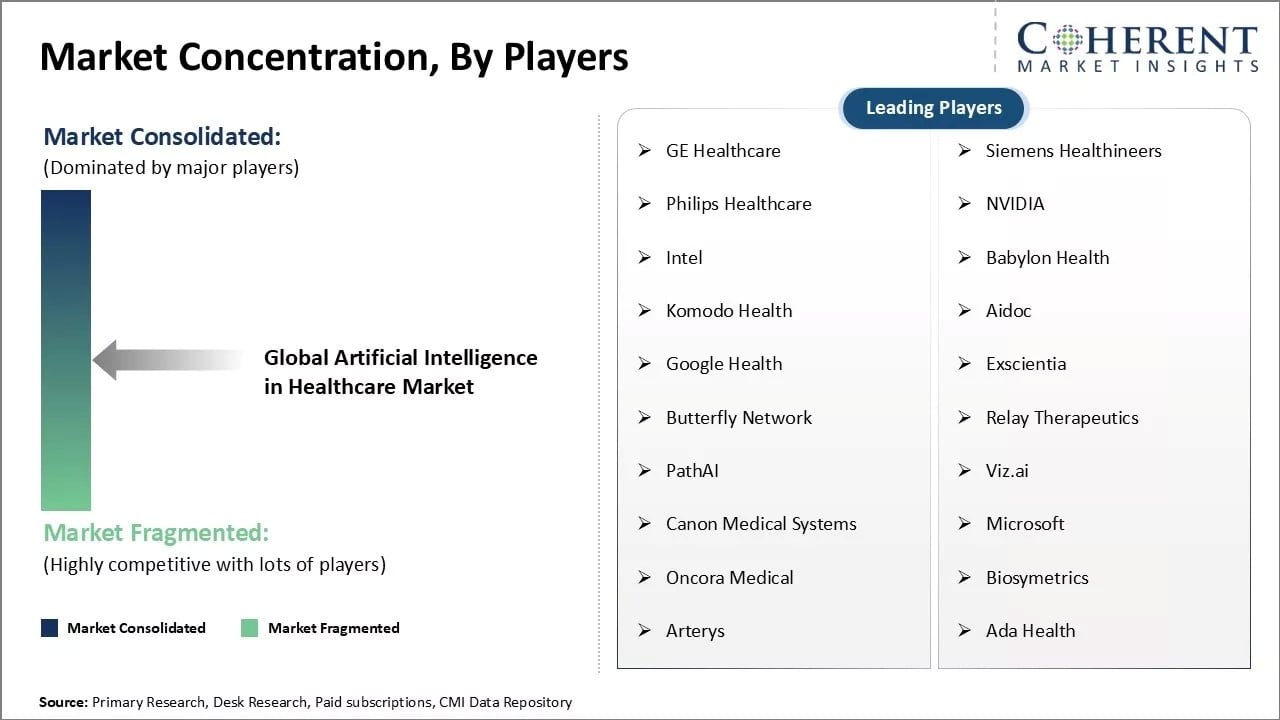
| Companies covered: | GE Healthcare, Siemens Healthineers, Philips Healthcare, NVIDIA, Intel, Babylon Health, Komodo Health, Aidoc, Google Health, Exscientia, Butterfly Network, Relay Therapeutics, PathAI, Viz.ai, Canon Medical Systems, Microsoft, Oncora Medical, Biosymetrics, Arterys, Ada Health | ||
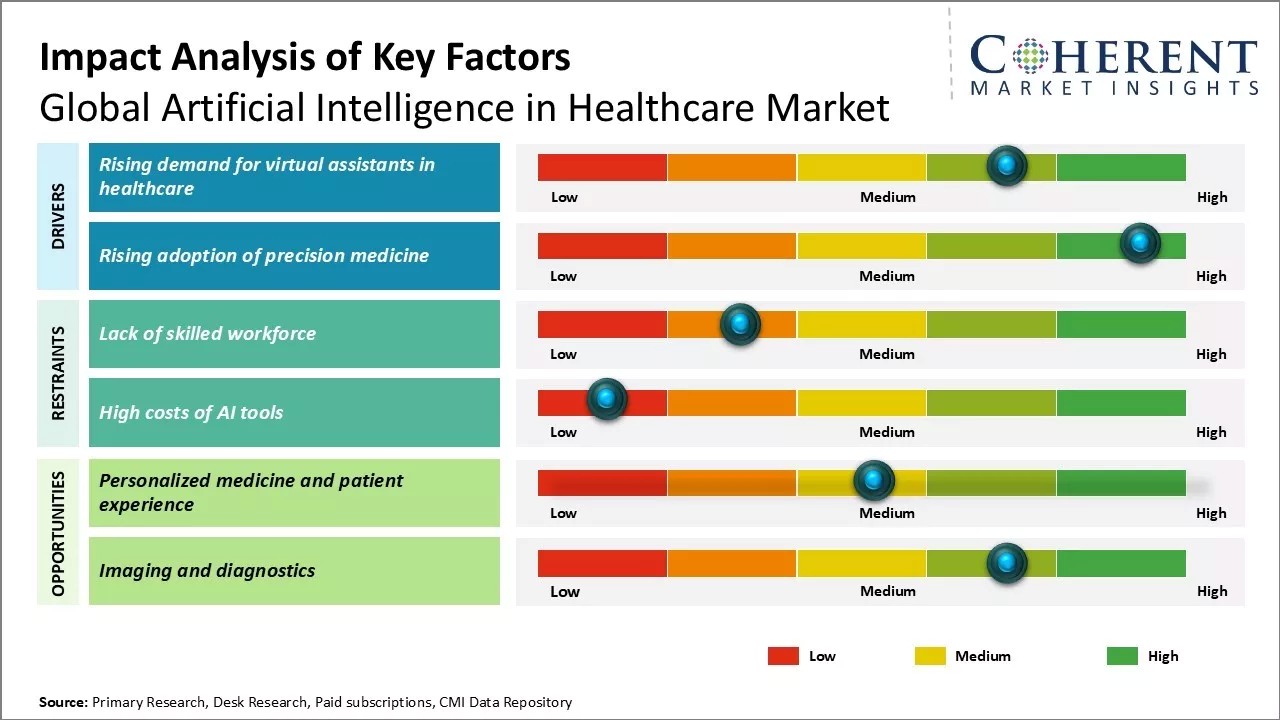
| Growth Drivers: |
| ||
| Restraints & Challenges: |
| ||
Artificial Intelligence in Healthcare Market Drivers
Healthcare Data Explosion
The global artificial intelligence in healthcare market growth is driven by rising need to analyze vast amounts of patient data to improve outcomes and streamline clinical workflows. As data volumes and computing power continue increasing, AI can help providers to develop more personalized care plans and precision medicine approaches.
Rising Demand for Virtual Assistants in Healthcare
Healthcare industry around the globe has witnessed high adoption of artificial intelligence-based virtual assistants in recent years. Increasing workload on physicians and nurses as well as the need for improved patient experience are encouraging healthcare organizations to use AI technologies that can automate routine tasks and provide answers to common medical queries without human intervention.
Virtual healthcare assistants powered by conversational AI are capable of answering basic questions about symptoms, providers, prescription refills, and also scheduling routine appointments. This allows clinical staff to focus their time and expertise on more complex cases and procedures.
As these AI systems continue to learn from each patient interaction, they are getting better at understanding medical terms as well as the context of the questions. This has made virtual assistance a cost-effective first point of contact for many patients.
The trend is especially prominent in outpatient and after-hours care. When access to doctors and nurses is limited due to non-working hours or locations far from hospitals, a virtual presence that patients can reach out to with questions has provided much-needed support. This has helped address issues of overburdened emergency rooms as well. For healthcare providers, virtual assistants reduce menial tasks allowing clinicians to spend more one-on-one time with patients who truly need their expertise, leading to higher job satisfaction levels.
Global Artificial Intelligence in Healthcare Market Trends
Rising Adoption of Precision Medicine
Precision medicine, which involves tailoring medical treatment to the individual characteristics of each patient, holds immense promise for delivering the right treatment to the right patient at the right time. However, implementing precision medicine approaches requires compiling and analyzing huge amounts of patient genetic and molecular data.
Healthcare systems have found it challenging to gather and process this volume of complex data through manual means. Thus, artificial intelligence plays a key role in unlocking the potential of precision medicine.
Advanced machine learning tools and computational capabilities of AI are helping researchers analyze disparate data sets and identify subtle patterns and correlations that otherwise would be difficult to detect. Genomic and molecular profiling of tumors can now be supplemented with clinical, lifestyle and environmental factors of individual patients.
AI's ability to evaluate huge genomic and health records data sets means that with each new record available, the systems become more effective in finding precision treatment matches. Healthcare providers are thus able to move away from a trial-and-error approach to a more predictive, pre-emptive model of treatment.
Analyst Opinion (Expert Opinion)
- The artificial intelligence in healthcare market is advancing rapidly as hospitals and health systems face challenges in managing growing volumes of clinical, imaging, and administrative data. With over 80% of healthcare data being unstructured (IDC), AI tools are becoming essential for converting this data into clinical insights. Healthcare organizations that delay adoption risk operational inefficiencies and missed diagnostic opportunities.
- Integration of AI and machine learning is transforming diagnostics and clinical workflows. For instance, NVIDIA and Mayo Clinic are using AI to improve cancer detection accuracy by over 20%, helping doctors identify subtle anomalies in scans faster. These are not minor gains—they represent a shift toward precision diagnostics that can redefine patient care standards.
- Cloud-based AI solutions are driving scalability and faster model deployment. Platforms like Google Cloud Healthcare API and AWS HealthLake allow hospitals to store, process, and analyze medical data securely and in real time. Over 60% of healthcare enterprises now rely on hybrid or multi-cloud AI environments (O’Reilly), underscoring the move toward data-driven, interoperable systems.
- Industry-specific AI applications are leading the next growth phase. Johns Hopkins Medicine, for example, uses predictive AI models to identify sepsis risk hours before symptoms appear, reducing mortality rates significantly. Such use cases highlight AI’s evolution from support technology to a core driver of clinical intelligence and patient safety.
Speak to the analyst
Want personalized insights?
Take the findings above to one of our principal consultants, or have the report rebuilt around the segments, geographies and competitors you actually track.
Market Segmentation
- By Component Insights (Revenue, USD Bn, 2020 - 2032)
- Hardware
- Software
- Services
- By Technology Insights (Revenue, USD Bn, 2020 - 2032)
- Speech Recognition
- Natural Language Processing
- Machine Learning
- Context-Aware Processing
- By Application Insights (Revenue, USD Bn, 2020 - 2032)
- Imaging & Diagnostics
- Home Health
- Medical Devices and Robotics
- Virtual Assistants
- Others
- By End User Insights (Revenue, USD Bn, 2020 - 2032)
- Hospitals & Clinics
- Medical Device Companies
- Diagnostic Centers
- Others
- By Regional Insights (Revenue, USD Bn, 2020 - 2032)
- North America
- U.S.
- Canada
- Latin America
- Brazil
- Argentina
- Mexico
- Rest of Latin America
- Europe
- Germany
- U.K.
- Spain
- France
- Italy
- Russia
- Rest of Europe
- Asia Pacific
- China
- India
- Japan
- Australia
- South Korea
- ASEAN
- Rest of Asia Pacific
- Middle East
- GCC Countries
- Israel
- Rest of Middle East
- Africa
- South Africa
- North Africa
- Central Africa
- Key Players Insights
- GE Healthcare
- Siemens Healthineers
- Philips Healthcare
- NVIDIA
- Intel
- Babylon Health
- Komodo Health
- Aidoc
- Google Health
- Exscientia
- Butterfly Network
- Relay Therapeutics
- PathAI
- Canon Medical Systems
- Microsoft
- Oncora Medical
- Biosymetrics
- Arterys
- Ada Health
Sources
Primary Research Interviews
- Industry professionals including healthcare IT specialists, AI engineers, hospital administrators, radiologists, data scientists, academic researchers, and representatives from medical device manufacturers and AI software providers.
Databases
- World Health Organization (WHO)
- World Bank Data, OECD Health Statistics
- PubMed, Scopus
- IEEE Xplore
- gov
- U.S. Food and Drug Administration (FDA) database
- National Center for Biotechnology Information (NCBI)
- European Medicines Agency (EMA) records.
Magazines
- Healthcare IT News
- Nature Medicine Technology
- Forbes Health
- MIT Technology Review
- Wired Health
- Medical Device Network.
Journals
- The Lancet Digital Health
- Journal of Medical Internet Research (JMIR)
- Nature Biomedical Engineering
- IEEE Journal of Biomedical and Health Informatics
- Artificial Intelligence in Medicine
- Frontiers in Artificial Intelligence.
Newspapers
- The New York Times
- The Guardian
- The Wall Street Journal
- Financial Times
- The Economic Times
Associations
- World Medical Association (WMA)
- American Medical Association (AMA)
- Healthcare Information and Management Systems Society (HIMSS)
- International Medical Informatics Association (IMIA)
- European Society of Radiology (ESR).
Public Domain Sources
- National Institutes of Health (NIH)
- Centers for Disease Control and Prevention (CDC)
- S. Department of Health and Human Services (HHS)
- European Commission Health and Digital Strategy reports
- Open-access government publications related to AI in healthcare.
Proprietary Elements
- CMI Data Analytics Tool
- Proprietary CMI Existing Repository of Information for Last 8 Years.
Get access to 250+ pages report
Every segment, forecast, competitor profile and data table behind the analysis above — available for instant download.
- ESOMAR Member
- ISO 9001:2015 Certified
- D-U-N-S Registered
- GDPR & CCPA Compliant
Missing comfort of reading report in your local language? Find your preferred language:
Transform your Strategy with Exclusive Trending Reports
Frequently Asked Questions
The global artificial intelligence in healthcare market value is estimated to total USD 40.21 Bn in 2026.
The global market is expected to be value at USD 405.20 Bn by 2033.
The global market is projected to record a CAGR of 39.1% from 2026 to 2033.
Rising demand for virtual assistants in healthcare and rising adoption of precision medicine are major growth factors.
Lack of skilled workforce and high costs of AI tools are the major factors hampering growth.
In terms of component, hardware segment is estimated to dominate the market in 2026.
GE Healthcare, Siemens Healthineers, Philips Healthcare, NVIDIA, Intel, Babylon Health, Komodo Health, Aidoc, Google Health, Exscientia, Butterfly Network, Relay Therapeutics, PathAI, Viz.ai, Canon Medical Systems, Microsoft, Oncora Medical, Biosymetrics, Arterys, Ada Health are the major players.