

Global De-Identified Health Data Market Size and Share Analysis – 2026 to 2033
De-identified health data market is estimated to be valued at USD 9.00 Bn in 2026 and is expected to reach USD 16.97 Bn by 2033, exhibiting a compound annual growth rate (CAGR) of 9.5% from 2026 to 2033.
Key Takeaways
- In terms of Type of Data, Clinical Data Segment is estimated to contribute the highest market share of 22.5% in 2026. This is due to the widespread adoption of electronic health records (EHRs).
- In terms of Application, Clinical Research and Trials Segment is estimated to contribute the highest market share of 26.6% in 2026. This is due to the growing reliance on de-identified real-world data to accelerate drug development, improve trial design, and ensure regulatory compliance.
- By End User, Pharmaceutical Sector is projected to hold 36.62% shares in the global market, due to wide usage of extensive dataset for advance drug development and personalized medicines.
- North America dominates the market with 39.7% market share in 2026. This is because of advanced healthcare infrastructure, the widespread adoption of EHRs, and supportive privacy laws like HIPAA (Health Insurance Portability and Accountability Act).
Market Overview
De-identified health data market is being driven by increasing need for privacy-safe patient data to fuel medical research, training artificial intelligence models, and population analysis. With the trend of digitization gathering pace across the healthcare sector, de-identified data is the key to allow insights into gaining without violating regulations like HIPAA, GDPR, and local regulation. Pharmaceutical companies, payers, and public health organizations are the most significant customers, using this data in drug development, clinical trials, and epidemiological models. Growth in electronic health records (EHRs), wearable health technology, and real-world evidence (RWE) programs also fuel data utility and availability.
In 2025, HealthSynapz launched its Blockchain-Backed De-Identification Platform, utilizing AI to anonymize and tokenize health data and provide data integrity for research. The platform enables safe sharing of de-identified datasets at scale between institutions by healthcare providers and researchers.
Current Events and Its Impact on De-identified Health Data Market
Current Events | Description and its impact |
Mayo Clinic Commits to Secure De-identified Data Platform for International Research Collaboration |
|
Truveta Expands De-identified Health Data Network Through 30+ U.S. Health Systems |
|
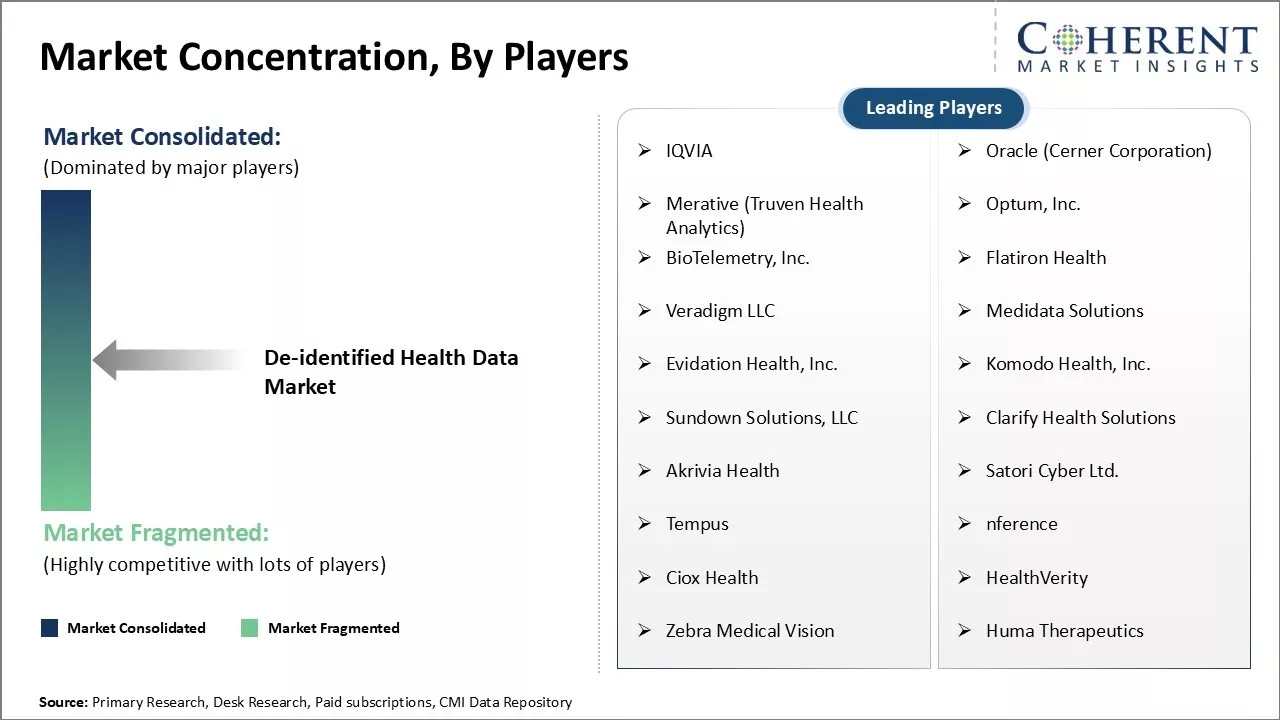
Market Concentration and Competitive Landscape
- Current Industry Events of 2026
- Market Size Estimation
- Regional Breakdown
- Competitive Landscape
- Customer Intelligence
- Segmental Analysis
- Pricing Analysis
- Key Market Drivers, Challenges & Future Trends
- Customized Insights Section
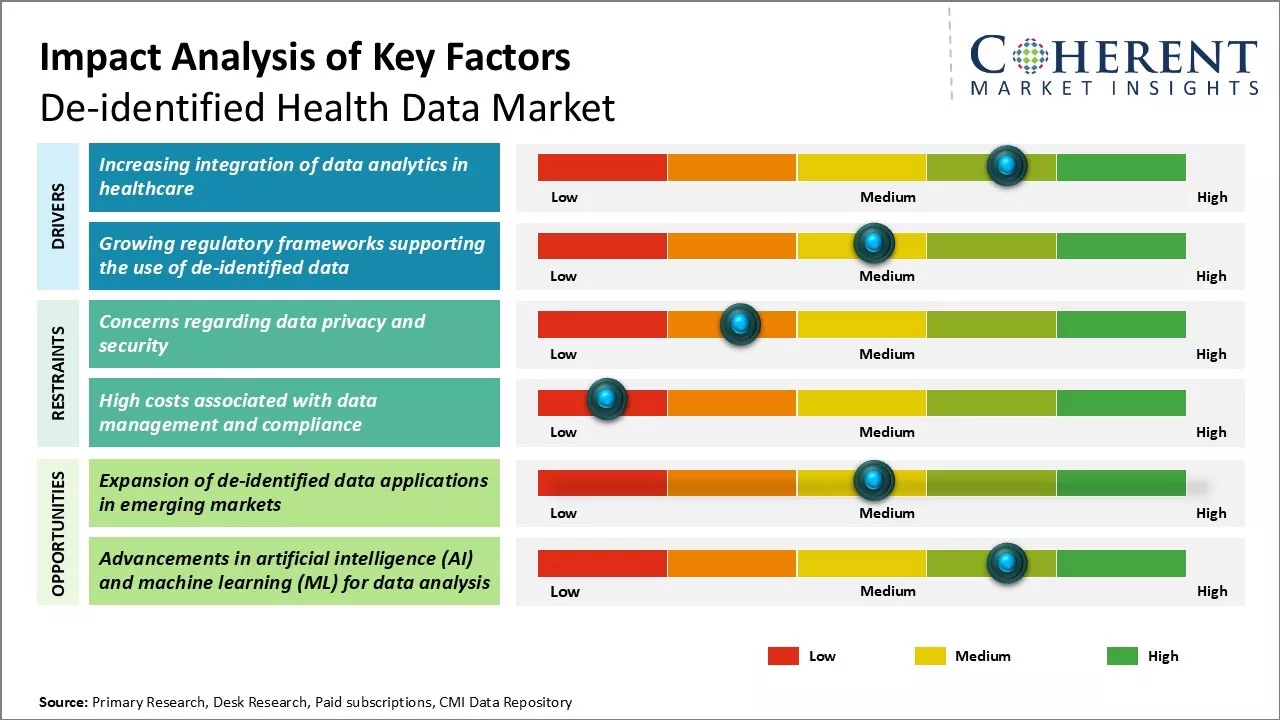
De-Identified Health Data Market Driver- Increasing integration of data analytics in healthcare
Integration of AI and machine learning in healthcare is advancing with the use of de-identified health data. This allows providers to share data freely for analytics, improving disease detection, drug discovery, and treatment recommendations.
For instance, in July 2025, European investment firm Nordic Capital acquired Arcadia Solutions, a Boston-based healthcare analytics provider. Arcadia specializes in integrating de-identified data from electronic health records, billing systems, and clinical workflows to drive real-time analytics using AI and ML. This acquisition underscores the industry's momentum toward leveraging AI-powered analytics on de-identified datasets.
De-Identified Health Data Market Opportunity- Expansion of de-identified data applications in emerging markets
Expansion of de-identified data applications in emerging markets offers significant opportunities. As regions like Asia, Latin America, the Middle East, and Africa invest in digital health and electronic records, de-identified data sharing can support clinical research, improve public health outcomes, and reduce healthcare costs. With strong privacy protections, emerging markets could drive innovation in health data, unlocking commercial potential for data holders, life science firms, and healthcare analytics companies.
Segmental Insights
De-identified Health Data Market Insights, By Type of Data
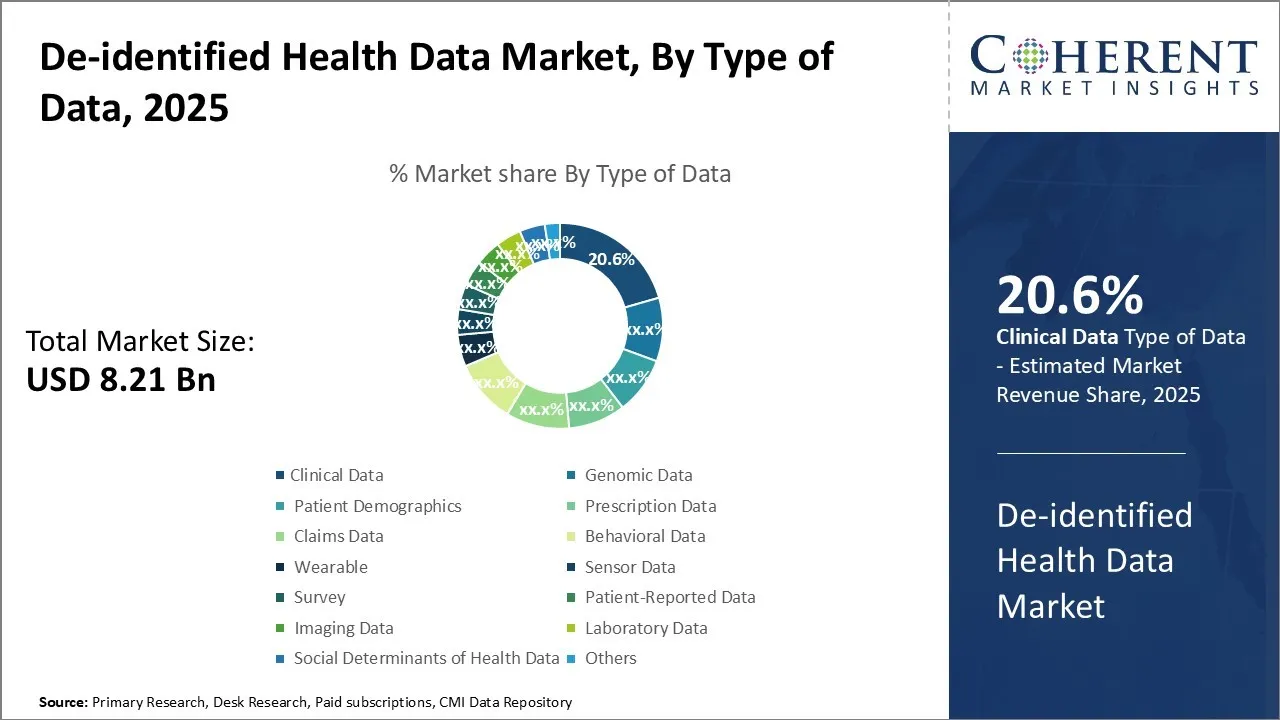
In terms of type of data, clinical data segment is estimated to contribute the highest market share of 22.5% in 2026, due to the widespread adoption of electronic health records (EHRs). EHRs store comprehensive patient information including medical history, diagnoses, treatments, and test results, all of which can be anonymized for secondary uses like research.
Rising focus on value-based care encourages the use of big data analytics on clinical records to enhance patient outcomes, further boosting demand for de-identified clinical data in the healthcare sector.
De-identified Health Data Market Insights, By Application
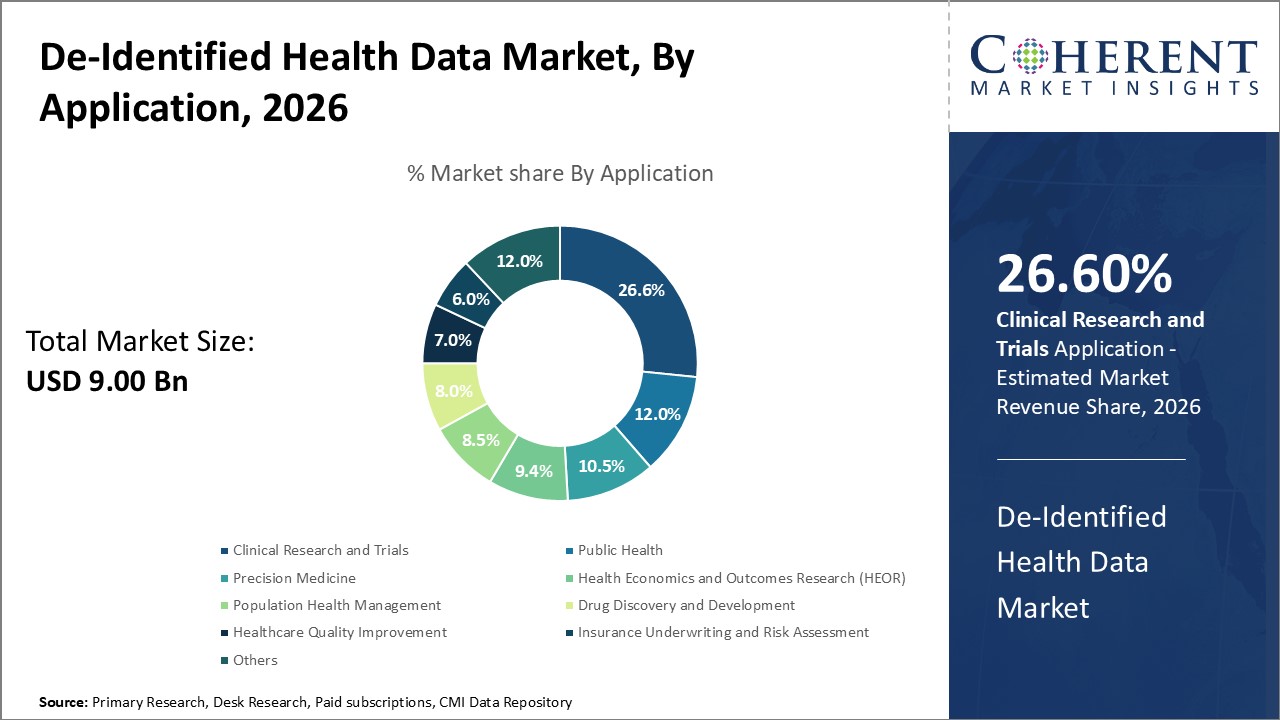
In terms of application, clinical research and trials segment is estimated to contribute the highest market share of 26.6% in 2026. The segment growth is driven by need for real-world evidence (RWE) to support regulatory requirements for long-term therapy effectiveness and safety. Leveraging de-identified healthcare databases enables cost-efficient, time-saving RWE generation through observational studies and post-marketing research.
De-identified Health Data Market Insights, By End User
Pharmaceutical companies lead the de-identified health data market, holding an estimated 36.62% share of the market in 2026, by utilizing extensive datasets to advance drug development and personalized medicine. Other prominent segments—such as biotech firms, healthcare providers, insurers, research institutions, and government agencies—also leverage this data to gain insights into patient outcomes, population health, and risk management.
Regional Insights
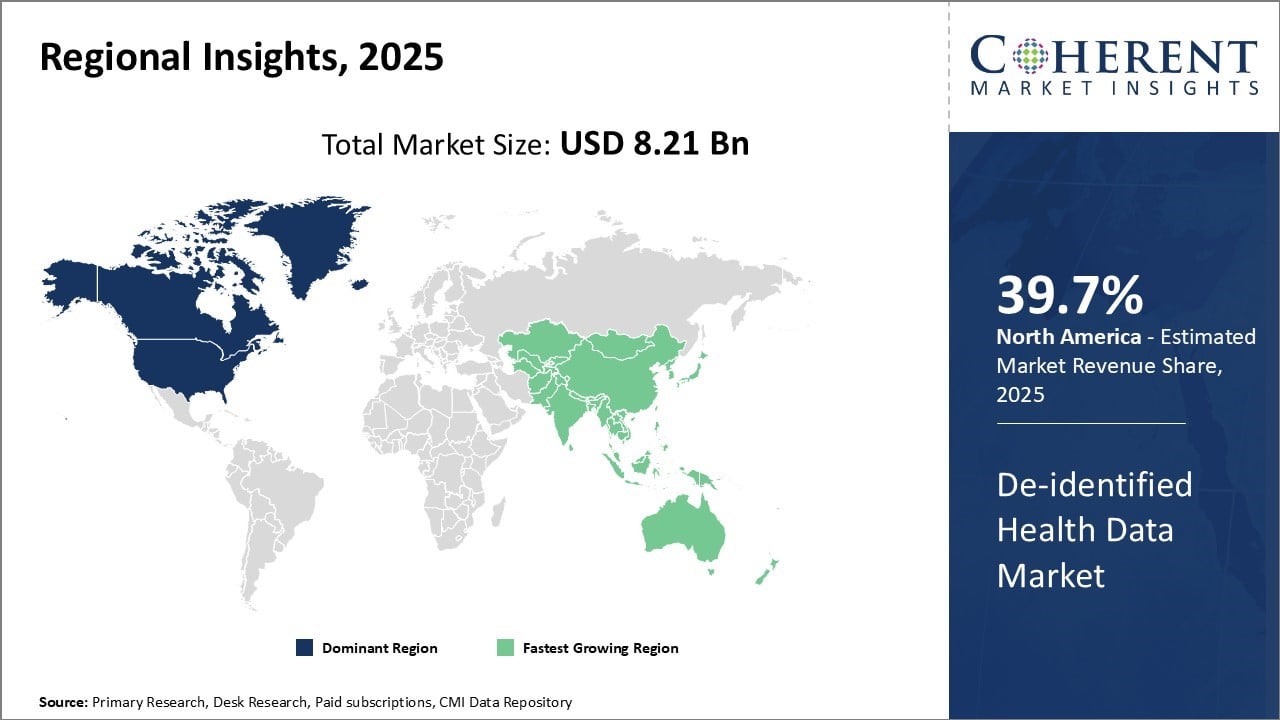
Dominating Region- North America
North America holds a 39.7% share in the de-identified health data market in 2026, driven by advanced healthcare infrastructure, widespread EHR adoption, and supportive privacy regulations like HIPAA (Health Insurance Portability and Accountability Act). The presence of major pharmaceutical companies utilizing de-identified data for drug development, along with significant government and research funding, further strengthens North America’s market leadership.
Fastest-Growing Region- Asia Pacific
Asia Pacific is experiencing rapid growth in the de-identified health data market due to increasing healthcare spending, focus on improving patient outcomes, and growing adoption of advanced technologies. Key countries like China and India are leading the way with investments in healthcare infrastructure, digital health solutions, and AI technologies, driving innovation and expanding access to healthcare services, thus, driving the market growth.
De-identified Health Data Market Dominating Countries
United States De-identified Health Data Market Analysis and Trend
The United States leads the de-identified healthcare data market due to its large digital health infrastructure, high rate of adoption of electronic health records (EHRs), and strong research ecosystem. Truveta, Flatiron Health, and IBM Watson Health are leading companies, helped by regulations such as HIPAA, that give guidance on secure de-identification. Ongoing innovation and data sharing initiatives are fueled by real-world evidence needs and AI-driven healthcare.
United Kingdom De-identified Health Data Market Analysis and Trend
The UK is a flag bearer, driven by the centralized data foundation of the NHS and spend on health technology. Public-private alliances under NHS Digital and Genomics England have allowed for large-scale de-identified datasets to support research, pharmaceutical advancement, and national planning in health. The strong data governance and GDPR compliance of the UK make it the poster child for ethical data utilization.
Germany De-identified Health Data Market Analysis and Trend
Germany is also catching up rapidly in this space, thanks to digital health government support and the Digital Healthcare Act (DVG), both of which support secondary use of data. Hospitals and technology providers are investing in anonymization technology and federated data architectures to balance innovation with robust EU privacy controls.
South Korea De-identified Health Data Market Analysis and Trend
South Korea is advancing very fast, taking advantage of its national health insurance and smart hospital programs. The government supports safe de-identification of medical information in order to advance AI in healthcare and biomedical studies as part of its Digital New Deal strategy.
Key Stakeholders of Market
What growth in De-identified Health Data Market mean for Different Stakeholders?
De-identified health data market has multiple players with varied designations and offers multiple opportunities based on their scope of operations.
Key Healthcare IT Stakeholder | Opportunities Due to De-identified Health Data Industry Growth |
Software Developers | Increased demand for developing healthcare applications, EHR systems, telemedicine platforms, and AI-driven diagnostics tools. |
Healthcare Providers | Opportunities to implement and optimize EHR systems, telemedicine solutions, and patient portals, enhancing patient care and operational efficiency. |
Healthcare IT Consultants | Providing expertise in the implementation and optimization of healthcare IT systems, compliance with health regulations, and digital transformation. |
Data Analytics Firms | Growth in demand for advanced analytics solutions, including predictive analytics, population health management, and personalized medicine. |
Cybersecurity Firms | Rising need for robust security solutions to protect sensitive health data, ensuring compliance with regulations like HIPAA and GDPR. |
Hospital Administrators | Implementing and managing health IT infrastructure to streamline operations, reduce costs, and improve patient outcomes. |
Medical Device Companies | Collaborating with healthcare IT firms to integrate devices with EHR systems, telemedicine platforms, and health monitoring applications. |
Telemedicine Providers | Expansion of telemedicine services, enabling remote consultations, monitoring, and patient management, especially in underserved areas. |
Market Report Scope
De-Identified Health Data Market Report Coverage
| Report Coverage | Details | ||
|---|---|---|---|
| Base Year: | 2025 | Market Size in 2026: | USD 9.00 Bn |
| Historical Data for: | 2020 To 2024 | Forecast Period: | 2026 To 2033 |
| Forecast Period 2026 to 2033 CAGR: | 9.5% | 2033 Value Projection: | USD 16.97 Bn |
| Geographies covered: |
| ||
| Segments covered: |
| ||
| Companies covered: | IQVIA, Oracle (Cerner Corporation), Merative (Truven Health Analytics), Optum, Inc., BioTelemetry, Inc., Flatiron Health, Veradigm LLC, Medidata Solutions, Evidation Health, Inc., Komodo Health, Inc., Sundown Solutions, LLC, Clarify Health Solutions, Akrivia Health, Satori Cyber Ltd., Tempus, nference, Ciox Health, HealthVerity, Zebra Medical Vision, and Huma Therapeutics | ||
| Growth Drivers: |
| ||
| Restraints & Challenges: |
| ||
De-identified Health Data Industry News
- In October 2025, Mayo Clinic announced Mayo Clinic Platform Orchestrate, a new program aimed at speeding up clinical development and helping biopharma and medical device companies deliver innovative therapies to patients more quickly.
- In March 2024, precision medicine firm Tempus donated a set of de-identified tumor molecular profiles and limited clinical information from over 3,000 cancer cases to the National Cancer Institute’s (NCI) Data Enclave. This enriched dataset includes genomic alterations, treatment outcomes, and patient demographics.
Analyst View
- The de-identified health data market is a paradigm-shifting opportunity in healthcare analytics, catalyzed by the explosive expansion of electronic health records and growing requirements for evidence-based medical research. Healthcare organizations are fervently looking for means to monetize their enormous repositories of data while ensuring compliance with patient privacy, leading to tremendous market momentum.
- The drivers that are key here are the increasing usage of artificial intelligence and machine learning in drug discovery, personalized medicine projects, and increasing pharmaceutical company focus on generating real-world evidence.
- Nonetheless, substantial constraints remain, such as rigid regulatory regimes like HIPAA and GDPR that result in complicated compliance obligations. Concerns around data quality and the technical problems of effective anonymization methods also impede market growth. Furthermore, differing global data protection regulations complicate cross-border data sharing efforts.
- North America leads the market picture, with well-developed healthcare infrastructure and mature regulatory systems that support safe data sharing. The strong pharmaceutical and biotechnology industries in the region create steady demand for de-identified health data sets.
Market Segmentation
- Type of Data Insights (Revenue, USD Bn, 2021 - 2033)
- Clinical Data
- Genomic Data
- Patient Demographics
- Prescription Data
- Claims Data
- Behavioral Data
- Wearable and Sensor Data
- Survey and Patient-Reported Data
- Imaging Data
- Laboratory Data
- Social Determinants of Health (SDOH) Data
- Others
- Application Insights (Revenue, USD Bn, 2021 - 2033)
- Clinical Research and Trials
- Public Health
- Precision Medicine
- Health Economics and Outcomes Research (HEOR)
- Population Health Management
- Drug Discovery and Development
- Healthcare Quality Improvement
- Insurance Underwriting and Risk Assessment
- Others
- End User Insights (Revenue, USD Bn, 2021 - 2033)
- Pharmaceutical Companies
- Biotechnology Firms
- Healthcare Providers
- Insurance Companies/Healthcare Payers
- Research Institutions
- Government Agencies
- Others
- Regional Insights (Revenue, USD Bn, 2021 - 2033)
- North America
- U.S.
- Canada
- Latin America
- Brazil
- Argentina
- Mexico
- Rest of Latin America
- Europe
- Germany
- U.K.
- Spain
- France
- Italy
- Russia
- Rest of Europe
- Asia Pacific
- China
- India
- Japan
- Australia
- South Korea
- ASEAN
- Rest of Asia Pacific
- Middle East
- GCC Countries
- Israel
- Rest of Middle East
- Africa
- South Africa
- North Africa
- Central Africa
- Key Players Insights
- IQVIA
- Oracle (Cerner Corporation)
- Merative (Truven Health Analytics)
- Optum, Inc.
- BioTelemetry, Inc.
- Flatiron Health
- Veradigm LLC
- Medidata Solutions
- Evidation Health, Inc.
- Komodo Health, Inc.
- Sundown Solutions, LLC
- Clarify Health Solutions
- Akrivia Health
- Satori Cyber Ltd.
- Tempus
- nference
- Ciox Health
- HealthVerity
- Zebra Medical Vision
- Huma Therapeutics
Sources
Primary Research Interviews
- Healthcare Data Analytics Companies
- Health Information Exchanges (HIEs)
- Healthcare Providers and Hospital Systems
- Healthcare IT Solution Providers
- Others
Databases
- Healthcare Cost and Utilization Project (HCUP)
- Centers for Medicare & Medicaid Services (CMS) Database
- National Health Interview Survey (NHIS)
- IBM MarketScan Research Databases
- Others
Magazines
- Healthcare IT News
- Modern Healthcare
- Health Data Management
- Healthcare Finance
- Others
Journals
- Journal of Medical Internet Research
- Health Affairs
- Journal of the American Medical Informatics Association
- Others
Newspapers
- Healthcare Dive
- FierceHealthcare
- Becker's Hospital Review
- Healthcare Business Today
- Others
Associations
- Healthcare Information and Management Systems Society (HIMSS)
- American Health Information Management Association (AHIMA)
- Healthcare Financial Management Association (HFMA)
- American Medical Informatics Association (AMIA)
- Others
Public Domain Sources
- U.S. Department of Health and Human Services
- Food and Drug Administration (FDA)
- Centers for Disease Control and Prevention (CDC)
- World Health Organization (WHO)
- Others
Proprietary Elements
- CMI Data Analytics Tool
- Proprietary CMI Existing Repository of information for last 8 years
Get access to 250+ pages report
Every segment, forecast, competitor profile and data table behind the analysis above — available for instant download.
- ESOMAR Member
- ISO 9001:2015 Certified
- D-U-N-S Registered
- GDPR & CCPA Compliant
Missing comfort of reading report in your local language? Find your preferred language:
Transform your Strategy with Exclusive Trending Reports
Frequently Asked Questions
The De-identified Health Data Market size is estimated to be valued at USD 9.00 Bn in 2026, and is expected to reach USD 16.97 Bn by 2033.
The CAGR of the global Market is projected to be 9.5% from 2026 to 2033.
Increasing integration of data analytics in healthcare and growing regulatory frameworks supporting the use of de-identified data are the major factors driving the growth of de-identified health data industry.
Concerns regarding data privacy and security and high costs associated with data management and compliance are the major factors hampering the growth of the global market.
In terms of type of data, clinical data segment is estimated to dominate the market in 2026.
IQVIA, Oracle (Cerner Corporation), Merative (Truven Health Analytics), Optum, Inc., BioTelemetry, Inc., Flatiron Health, Veradigm LLC, Medidata Solutions, Evidation Health, Inc., Komodo Health, Inc., Sundown Solutions, LLC, Clarify Health Solutions, Akrivia Health, Satori Cyber Ltd., Tempus, nference, Ciox Health, HealthVerity, Zebra Medical Vision, and Huma Therapeutics are the major players.
North America is expected to lead the de-identified health data industry in 2026.