

Global Mammography Machine Market Size and Forecast – 2026-2033
According to Coherent Market Insights, the global mammography machine market is estimated to be valued at USD 32.70 Bn in 2026 and is expected to reach USD 64.54 Bn by 2033, exhibiting a compound annual growth rate (CAGR) of 10.2% from 2026 to 2033. This significant market expansion reflects increasing demand driven by rising breast cancer awareness, advancements in imaging technology, and growing adoption of early screening programs worldwide. The market’s robust growth trajectory highlights its critical role in improving diagnostic accuracy and patient outcomes.
Key Takeaways of the Global Mammography Machine Market
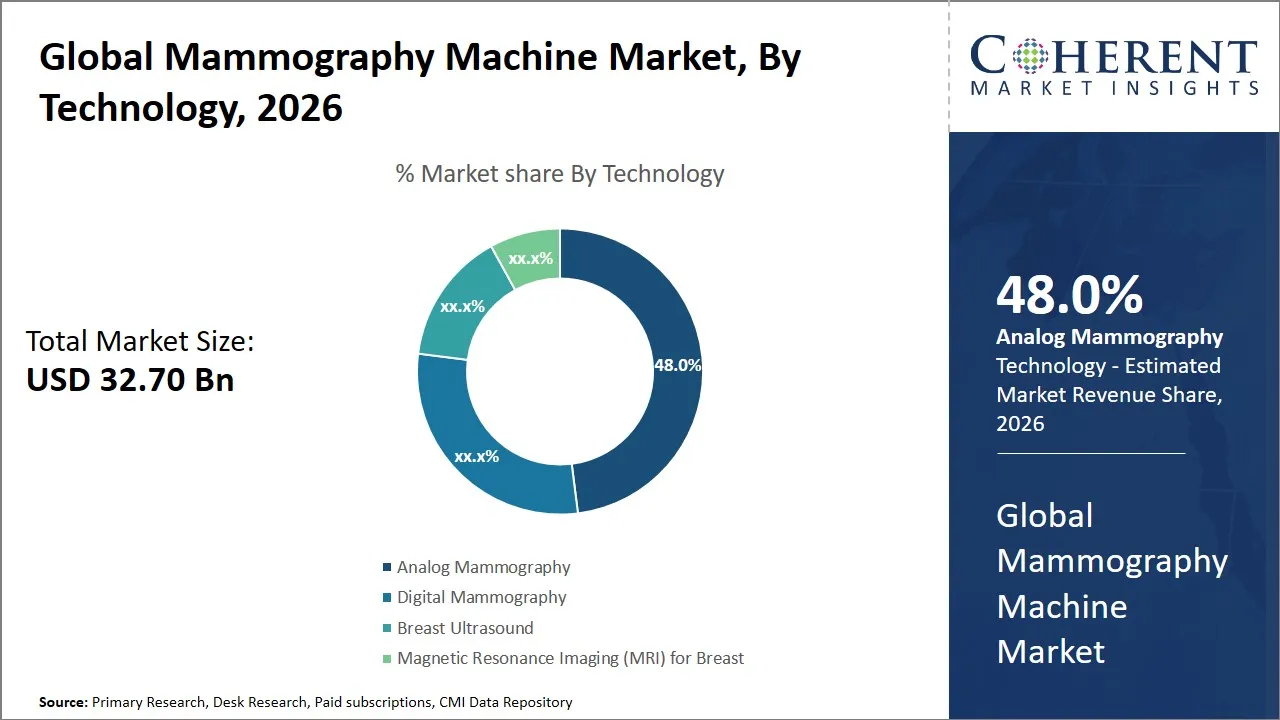
- Analog mammography segment is expected to lead the mammography machine market, capturing 48% share in 2026.
- Hospitals segment is estimated to represent 38% of the global mammography machine market share in 2026.
- Full-Field Digital Mammography (FFDM) segment is projected to dominate with 47% of the global mammography machine market share in 2026.
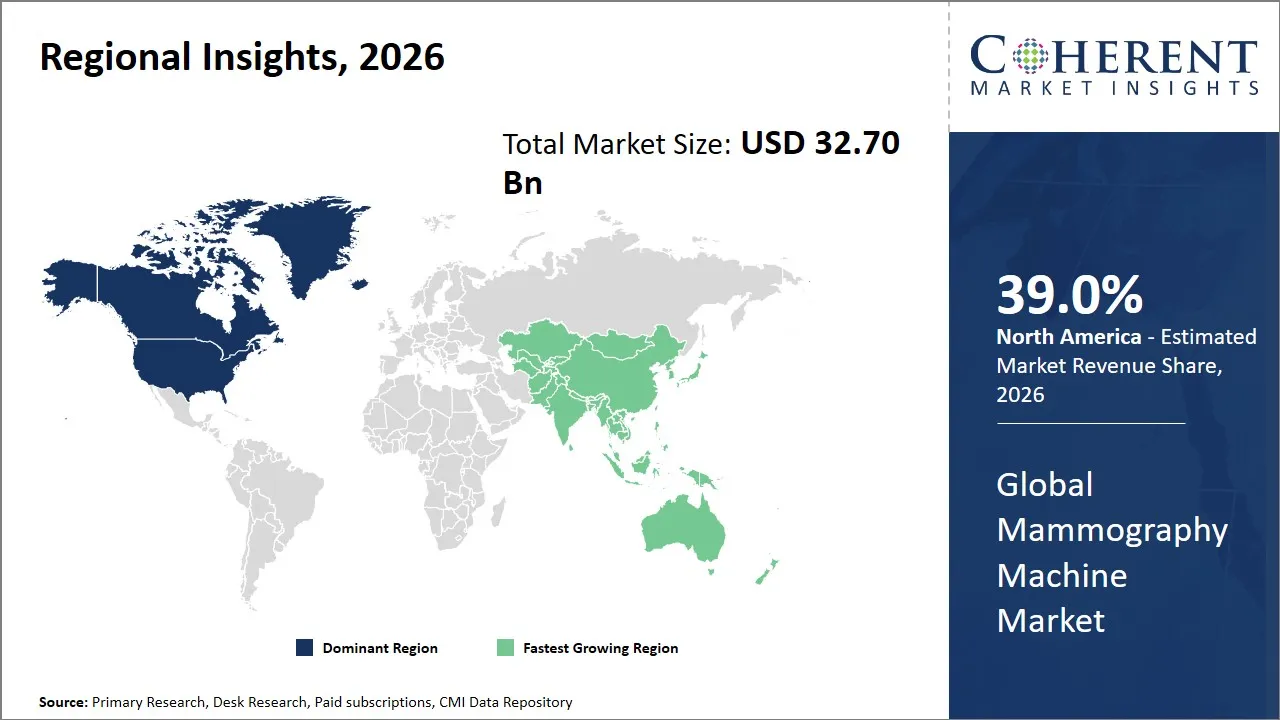
- North America is expected to lead the market, holding a share of 39% in 2026. Asia Pacific is anticipated to be the fastest-growing region, with 27% share in 2026.
Market Overview
- The increasing global incidence of breast cancer and growing awareness about the importance of early detection are driving the demand for mammography machines worldwide.
- Innovations such as digital mammography and 3D tomosynthesis are significantly improving diagnostic accuracy, leading to a shift from analog systems to more advanced technologies.
- The integration of artificial intelligence (AI) and machine learning in mammography systems is improving diagnostic precision, reducing false positives, and enhancing workflow efficiency.
- The introduction of portable and mobile mammography units is expanding access to breast cancer screening in rural and underserved regions.
Currents Events and their Impact
Current Events | Description and its Impact |
Technological Advancements in Mammography Machines |
|
Expansion of Government Breast Cancer Screening Programs |
|
Segmental Insights
- Current Industry Events of 2026
- Market Size Estimation
- Regional Breakdown
- Competitive Landscape
- Customer Intelligence
- Segmental Analysis
- Pricing Analysis
- Key Market Drivers, Challenges & Future Trends
- Customized Insights Section
Why Does the Analog Mammography Segment Dominate the Global Mammography Machine Market in 2026?
The analog mammography segment is expected to hold the largest share of 48% in 2026, because of its longstanding presence in healthcare infrastructure, especially in regions with budget constraints or limited access to advanced medical technologies. The cost of capital investment and operational cost of analog systems is one of the primary motivators behind this segment because it is lower than that of the digital versions. In developing countries or resource-starved regions, hospitals and testing facilities are more likely to support the use of the analog mammography as an effective means of screening breast cancer cases without the need to invest heavily in the modernization of its equipment or even superior digital platforms. The ability to incorporate advanced mammography technologies in multidisciplinary care facilities is among the root causes of the prevalence of hospitals as it facilitates the diagnostic imaging and biopsy services, oncology treatment, and surgical interventions under a single roof.
For instance, GE Senographe 2000D, a traditional film-based mammography system used for breast cancer screening. While it has been largely replaced by digital systems in many developed countries, analog mammography remains in use in some rural or low-resource regions due to its lower upfront cost and simpler technology. However, analog systems require film processing, which can lead to longer waiting times for results and limited image quality compared to modern digital systems.
(Source - https://www.accessdata.fda.gov/cdrh_docs/pdf/P990066c.pdf)
The Hospitals Segment Dominates the Global Mammography Machine Market
The hospitals segment is projected to capture 38% share in 2026, due to their pivotal role in delivering extensive breast cancer screening, diagnosis, and treatment services. The number of patients that hospitals usually handle are high and diverse, when compared to other end users like specialty clinics or research institutes. Their capacity in handling large number of patients requires the introduction of a number of mammography equipment and sophisticated imaging modalities to diagnose and shorten the wait time. This high throughput surrounding automatically requires strong and dependable mammography equipment that will be able to sustain many applications without the image quality being compromised.
Full-Field Digital Mammography (FFDM) Segment Dominates the Global Mammography Machine Market
The Full-Field Digital Mammography (FFDM) segment is expected to capture the highest share of 47% in 2026, as it addresses crucial clinical and operational requirements for breast imaging. The key driver behind the popularity of the FFDM is the fact that it offers high-resolution digital images that can make the breast tissue easier to visualize helping the radiologists to see the minor abnormalities that would not be as pronounced in the analog mammography.
FFDM is a digital technology that allows obtaining and processing images in real-time, which simplifies the work of clinicians, making it possible to diagnose a patient faster and save time on new examinations due to poor image quality. This efficiency has been useful especially in large volume healthcare, enhancing patient throughput and reducing the total examination time.
Impact of Clinical Workflow Enhancements on the Mammography Machine Market
- Streamlined Workflow Enhances Adoption- New capabilities in mammography machines, like AI integration and automated image analysis, streamline the clinical workflow by saving on image processing and interpretation time. This enhances efficiency of diagnostic centers and hospitals which results into higher adoption rates and market demand of systems that facilitate fast, accurate and user-friendly workflow.
- Cost-Effectiveness and Resource Optimization- Mammography systems that simplify clinical workflows aid in resource optimization eliminating the necessity of special human resources and operational costs are minimized. This enables the accessibility and affordability of mammography services especially in resource-limited environments, which leads to expansion in the emerging markets as well as the overall penetration of these technologies into the market.
Regional Insights
North America Mammography Machine Market Analysis and Trends
The North America region is projected to lead the market with a 39% share in 2026, driven by a well-established healthcare infrastructure, high adoption of advanced medical technologies, and strong government initiatives aimed at early breast cancer detection and improved healthcare outcomes. The presence of a mature healthcare ecosystem with widespread insurance coverage facilitates access to mammography screening programs. Regulatory support, through agencies such as the FDA and Centers for Medicare & Medicaid Services (CMS), ensures the availability and reimbursement for cutting-edge mammography equipment.
For instance, in September 2025, Gateway Community Health Center in Texas, U.S. installed a new mammography machine at its central clinic to improve access to early breast cancer screening, reduce patient wait‑times, and expand preventive care services.
(Source- https://www.kgns.tv/2025/09/23/gateway-community-health-center-open-new-mammography-machine/)
Asia Pacific Mammography Machine Market Analysis and Trends
The Asia Pacific region is expected to exhibit the fastest growth in the market contributing 27% share in 2026, propelled by increasing healthcare investments, rising breast cancer awareness, and expanding screening programs in both urban and rural areas. Some of the rising economies, including China and India, are experiencing the modernization of healthcare infrastructure alongside the government assisting in the health sector to detect cancer at an earlier stage. Disposable incomes and enhanced insurance penetration are also on the increase thus promoting the uptake of modern mammography tools.
In addition to this, there is an increasing availability of multinational and regional manufacturers in Asia Pacific such as Mindray medical, Philips Healthcare and Toshiba Medical systems who are customizing affordable and innovative solutions to meet varied market demands. It enables competitive pricing and faster product distribution through strategic partnerships and local manufacturing centers that promote explosive market growth.
Global Mammography Machine Market Outlook for Key Countries
How is the U.S. Helping in the Growth of the Mammography Machine Market?
The U.S. mammography machine market is old and competitive, with an early uptake of the technological development of digital breast tomosynthesis and AI-related diagnostic devices. Such major players as Hologic and GE Healthcare invest considerably in R&D and have strong distribution and service networks. The high demand is sustained through government policies that give incentives to conduct breast cancer screening, and through the creation of awareness about health issues through the media. Also, strict regulatory systems are in place to assure high quality and safety standards of the products which will increase the rates of patient trust and uptake.
How is Germany Helping in the Growth of the Mammography Machine Market?
Germany is an excellent country to invest in the mammography business since it has well-developed health care facilities and government reimbursement programs that cultivate screening of cancer as a routine. The domestic market players such as Siemens Healthineers and foreign firms offer the most advanced mammography systems to hospitals and clinics. The digitalization of the healthcare system and Precision medicine are prioritized in the country, which supports the implementation of high-resolution imaging and AI technologies. Moreover, the fact that Germany is a European trade center increases the availability of innovative products to other countries across Europe, which boosts its market presence.
Key Drivers for the Growth of the China Mammography Machine Market
The mammography machine market of China is growing fast because of the intensified public health campaigns, the awareness of breast cancer incidences, and a huge screening campaign that the government programs are funding. Domestically based companies like the Mindray Medical are emerging as real force to reckon with the world as they offer affordable and technologically driven mammography machines that meet the localized demands. These trends of healthcare modernization and infrastructure investment by the Chinese government enhance the adoption of diagnostic equipment, and facilitation of technology transfer and market expansion through the easing of importing taxes and encouragement of joint ventures.
India Mammography Machine Market Trends
The market of mammography machines in India is growing due to the increase in breast cancer screening awareness among women, increase in healthcare accessibility in Tier 2 and Tier 3 cities, and the increased involvement of the private sector. Firms such as Philips Healthcare and Siemens Healthineers have enhanced their provision by partnerships with local distributors with advanced digital mammography systems. Efforts by the government to broaden market penetration through national cancer control programs and screening programs that are subsidized can play a leading role in facilitating expansion in this area, although there are issues concerning price and inequity in healthcare infrastructure.
Impact of Public Screening Programs and Government Reimbursement on Mammography Machine Market Adoption
- High Screening Penetration in Developed Markets Drives Mammography Demand- In North America and some of Western Europe, the demand for mammography is driven by high penetration rates of organized public screening programs (often population-based with age cohorts) as a result of which mammography services will be used on a routine and repeat basis. These initiatives also require frequent screening periods, which will increase the steady demand of mammographic machines and other imaging services.
- Government Reimbursement Policies Directly Influence Market Adoption- The out-of-pocket expenses to patients in regions that have extensive government or insurance reimbursement plans (e.g., Medicare/Medicaid in the U.S., provincial health insurance in Canada, NHS screening in the U.K.) are substantially reduced. This makes the use of mammography more affordable and increased and incentivizes the healthcare providers (in particular the large hospital systems) to invest in newer technologies of mammography and increase their screening capacity.
Market Players, Key Developments, and Competitive Intelligence
Key Developments
- In December 2025, Siemens Healthineers offered Mammomat B. brilliant, which is a 3D mammography system featuring 50° wide-angle tomosynthesis that delivers high-depth resolution images in under 5 seconds, enhancing diagnostic accuracy. It utilizes PlatinumTomo technology, flying focal spot, and ClearCEM for clearer lesion visualization and reduced patient discomfort.
- In October 2025, private equity firms, Blackstone and TPG, completed regulatory approval to acquire Hologic Inc. in a deal valued around USD 18.3 billion, taking the major mammography and breast imaging systems manufacturer private.
- In November 2023, GE HealthCare launched the MyBreastAI Suite, an AI-driven, all-in-one platform designed to integrate with its Senographe Pristina mammography portfolio to enhance breast cancer detection and improve radiology workflows.
Top Strategies Followed by Global Mammography Machine Market Players
Player Type | Strategic Focus | Examples |
Established Market Leaders | Established market leaders in the mammography sector invest heavily in R&D to enhance image quality, reduce radiation, and integrate AI for better diagnostic accuracy. They form strategic partnerships with OEMs and global healthcare providers to strengthen supply chains and expand their product offerings. These companies also focus on global expansion, particularly in emerging markets like Asia-Pacific, Latin America, and Africa. | Hologic, a key player in the mammography machine market, has significantly advanced AI integration into its mammography systems, partnering with various healthcare providers globally to enhance diagnostic precision and expand its presence in emerging markets. |
Mid-Level Players | Mid-level players in the mammography machine market focus on offering cost-effective solutions that balance quality and affordability, catering to price-sensitive segments like public hospitals and diagnostic centers in developing countries. Their products emphasize essential features, regulatory compliance, and user-friendly designs. | Carestream Health offers affordable digital mammography systems, collaborating with healthcare providers in emerging markets to expand access while maintaining cost-effective, reliable technology. |
Small-Scale Players | Small-scale players in the mammography machine market target niche segments with specialized products, such as portable units, compact designs, or AI-powered diagnostics. Their agility allows them to quickly adapt to trends and create unique value propositions. They often build local alliances with startups, regional distributors, or manufacturers to enhance market entry and visibility in specific regions. | Imago specializes in portable mammography units, collaborating with local distributors in emerging markets to provide affordable, compact solutions tailored to rural healthcare settings. |
Market Report Scope
Mammography Machine Market Report Coverage
| Report Coverage | Details | ||
|---|---|---|---|
| Base Year: | 2025 | Market Size in 2026: | USD 32.70 Bn |
| Historical Data for: | 2020 To 2024 | Forecast Period: | 2026 To 2033 |
| Forecast Period 2026 to 2033 CAGR: | 10.2% | 2033 Value Projection: | USD 64.54 Bn |
| Geographies covered: |
| ||
| Segments covered: |
| ||
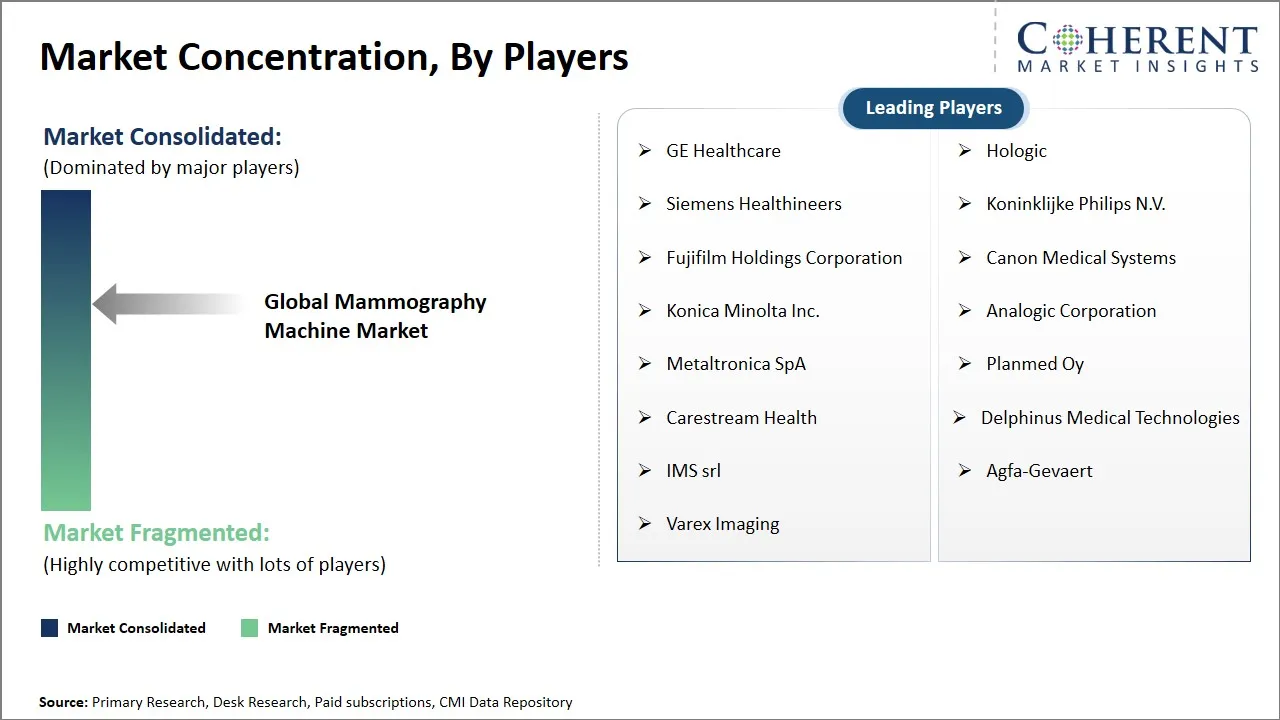
| Companies covered: | GE Healthcare, Hologic, Siemens Healthineers, Koninklijke Philips N.V., Fujifilm Holdings Corporation, Canon Medical Systems, Konica Minolta Inc., Analogic Corporation, Metaltronica SpA, Planmed Oy, Carestream Health, Delphinus Medical Technologies, IMS srl, Agfa‑Gevaert, and Varex Imaging | ||
| Growth Drivers: |
| ||
| Restraints & Challenges: |
| ||
Global Mammography Machine Market Dynamics
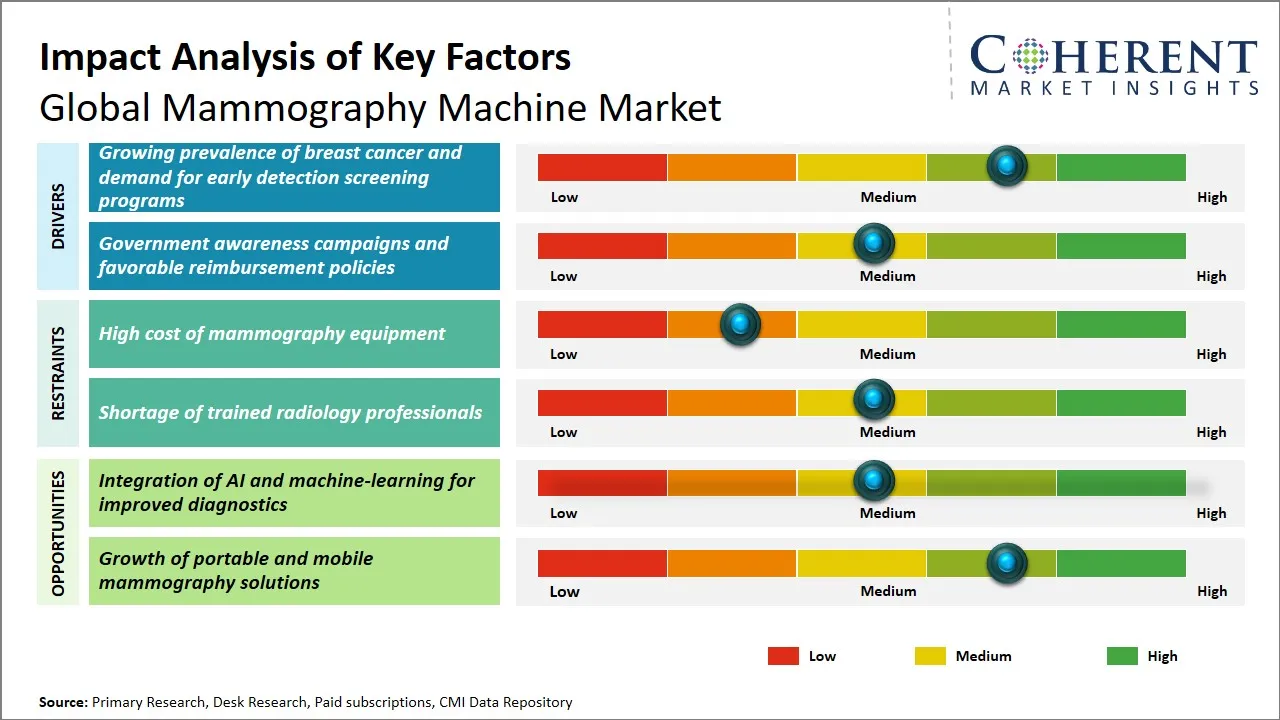
Global Mammography Machine Market Driver - Growing Prevalence of Breast Cancer and Demand for Early Detection Screening Programs
The increasing rate of breast cancer in different parts of the world is a major element contributing to the increased demand for mammography machines, whereby early diagnosis is central in the enhancement of patients outcome and survival. As breast cancer is one of the most widespread types of cancer that occur in women worldwide, healthcare systems focus on the regular screening programs aimed at detecting abnormalities in the initial possible stage.
This heightened interest in screening has seen the growth of national and regional breast cancer awareness campaigns, which have been encouraging women to go through regular mammograms. Moreover, new technology of mammography, digital and 3D are improvements that offer the effectiveness and accuracy of the detecting of cancer in the breast, making the early screening programs more accurate and accessible.
For instance, AI‑assisted mammography screening in a large randomized trial with over 100,000 women increased early detection rates and reduced aggressive cancer diagnoses, underscoring the effectiveness of structured screening programs and technological advancements that are boosting screening demand.
(Source -https://www.icthealth.org/news/ai-supported-mammography-leads-to-fewer-aggressive-breast-cancers)
Global Mammography Machine Market Opportunity - Integration of AI and Machine Learning for Improved Diagnostics
Introduction of artificial intelligence (AI) and machine learning into mammography machines is a major growth opportunity in the mammography machine market. The use of AI-based diagnostic tools can improve the accuracy and efficiency of breast cancer diagnosis by helping radiologists to interpret mammograms more accurately.
With these sophisticated algorithms, it is possible to review large volumes of data and detect the hidden patterns and abnormalities that may not be detected by human vision to minimize false positives and false negatives. More so, the introduction of AI can offer the option of personalized screening strategies whereby patients history and risk profiles are taken into account and may result in timely and more specific interventions.
For instance, the U.S. Food and Drug Administration (FDA) granted Breakthrough Device designation to an AI‑powered software called Prognosia Breast that analyzes mammogram images to estimate a woman’s personalized five‑year risk of developing breast cancer.
Analyst Opinion (Expert Opinion)
- The market of mammography machines is expanding at a high pace because of the development of digital mammography, high-definition images, and AI, which enhances accuracy of the results and minimizes radiation. Market expansion is also caused by regulatory support and augmented government funding concerning breast cancer screening. But such issues as high costs of systems, as well as insufficient training of radiologists continue to exist.
- One-on-one conferences such as EUSOBI Annual Meeting, RSNA Conference are important in order to present innovations and exchange knowledge in the industry. The U.S. Breast Cancer Awareness Campaign and subsidized mammography programs in India are among the activities that are making early detection more accessible, especially in underserved areas, which has a positive impact on the future of the market.
Speak to the analyst
Want personalized insights?
Take the findings above to one of our principal consultants, or have the report rebuilt around the segments, geographies and competitors you actually track.
Market Segmentation
- Technology Insights (Revenue, USD Bn, 2021 - 2033)
- Analog Mammography
- Digital Mammography
- 2D Digital Mammography
- 3D Digital Mammography (Tomosynthesis)
- Breast Ultrasound
- Magnetic Resonance Imaging (MRI) for Breast
- End User Insights (Revenue, USD Bn, 2021 - 2033)
- Hospitals
- Diagnostic Centers
- Specialty Clinics
- Research Institutes
- Product Type Insights (Revenue, USD Bn, 2021 - 2033)
- Full-Field Digital Mammography (FFDM)
- Mobile Mammography Units
- Portable Mammography Units
- Application Insights (Revenue, USD Bn, 2021 - 2033)
- Breast Cancer Diagnosis
- Screening
- Diagnosis of Breast Lumps
- Modality Insights (Revenue, USD Bn, 2021 - 2033)
- Stand-Alone Mammography Units
- Mammography Units Integrated with Other Imaging Systems
- Imaging Technique Insights (Revenue, USD Bn, 2021 - 2033)
- Film-Based Imaging
- Digital Imaging
- Hybrid Imaging System
- Regional Insights (Revenue, USD Bn, 2021 - 2033)
- North America
- U.S.
- Canada
- Latin America
- Brazil
- Argentina
- Mexico
- Rest of Latin America
- Europe
- Germany
- U.K.
- Spain
- France
- Italy
- Russia
- Rest of Europe
- Asia Pacific
- China
- India
- Japan
- Australia
- South Korea
- ASEAN
- Rest of Asia Pacific
- Middle East
- GCC Countries
- Israel
- Rest of Middle East
- Africa
- South Africa
- North Africa
- Central Africa
- North America
- Key Players Insights
- GE Healthcare
- Hologic
- Siemens Healthineers
- Koninklijke Philips N.V.
- Fujifilm Holdings Corporation
- Canon Medical Systems
- Konica Minolta Inc.
- Analogic Corporation
- Metaltronica SpA
- Planmed Oy
- Carestream Health
- Delphinus Medical Technologies
- IMS srl
- Agfa‑Gevaert
- Varex Imaging
Sources
Primary Research Interviews
Industry Stakeholders List
- Healthcare providers
- Medical equipment manufacturers
End Users List
- Hospitals
- Diagnostic centers
Government and International Databases
- World Health Organization (WHO)
- U.S. Food and Drug Administration (FDA)
- Centers for Disease Control and Prevention (CDC)
- National Cancer Institute (NCI)
- European Commission
- National Institute for Health and Care Excellence (NICE)
Trade Publications
- Radiology Today
- Diagnostic Imaging
- Journal of Clinical Imaging Science
- Medical Imaging Technology
- Imaging Technology News
- Health Management Technology
Academic Journals
- Breast Cancer Research
- Radiology
- Journal of Mammary Gland Biology and Neoplasia
- Journal of Clinical Oncology
- American Journal of Roentgenology (AJR)
- European Journal of Radiology
Reputable Newspapers
- The New York Times
- The Guardian
- The Wall Street Journal
- Financial Times
- The Washington Post
Industry Associations
- American College of Radiology (ACR)
- European Society of Breast Imaging (EUSOBI)
- Radiological Society of North America (RSNA)
- National Breast Cancer Foundation (NBCF)
- American Cancer Society (ACS)
- World Health Organization (WHO)
Public Domain Resources
- U.S. National Library of Medicine
- National Institutes of Health (NIH)
- European Medicines Agency (EMA)
- OpenCitations
- ClinicalTrials.gov
Proprietary Elements
- CMI Data Analytics Tool: Proprietary analytics tool to analyze real-time market trends, consumer behavior, and technology adoption in market
- Proprietary CMI Existing Repository of Information for Last 8 Years
Get access to 250+ pages report
Every segment, forecast, competitor profile and data table behind the analysis above — available for instant download.
- ESOMAR Member
- ISO 9001:2015 Certified
- D-U-N-S Registered
- GDPR & CCPA Compliant
Missing comfort of reading report in your local language? Find your preferred language:
Transform your Strategy with Exclusive Trending Reports
Frequently Asked Questions
The global mammography machine market is estimated to be valued at USD 32.70 billion in 2026 and is expected to reach USD 64.54 billion by 2033.
The CAGR of the global mammography machine market is projected to be 10.2% from 2026 to 2033.
Growing prevalence of breast cancer and demand for early detection screening programs and government awareness campaigns and favorable reimbursement policies are the major factors driving the growth of the global mammography machine market.
Rising awareness, improving healthcare infrastructure, and government initiatives are boosting the demand for mammography in emerging markets.
Innovations include 3D mammography (tomosynthesis) for clearer images and AI-powered systems for enhanced diagnostic accuracy.
High cost of mammography equipment and shortage of trained radiology professionals are the major factors hampering the growth of the global mammography machine market.
In terms of technology, analog mammography is estimated to dominate the market revenue share in 2026.