

Global Marine Pharmaceutical Market Size and Forecast – 2026 to 2033
The Global Marine Pharmaceutical Market is estimated to be valued at USD 6.98 Bn in 2026 and is expected to reach USD 10.16 Bn by 2033, exhibiting a compound annual growth rate (CAGR) of 5.5% from 2026 to 2033. This growth reflects increasing investments in marine biotechnology and rising demand for novel drug compounds derived from marine organisms. Expansion in research activities and collaborations between pharmaceutical companies and marine research institutes are key factors driving the market growth over the forecast period.
Key Takeaways of the Global Marine Pharmaceutical Market
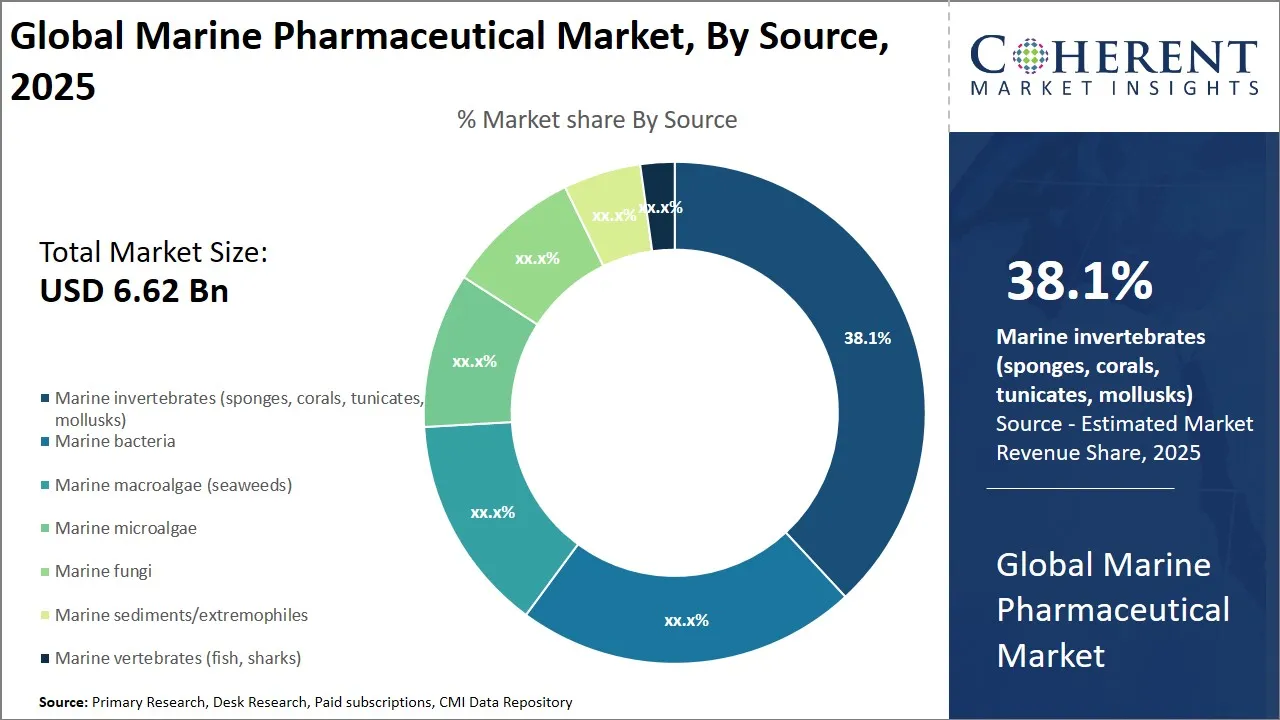
- Marine invertebrates including sponges, corals, tunicates, and mollusks lead the global marine pharmaceutical market by source with an estimated 39.1 % share in 2026.
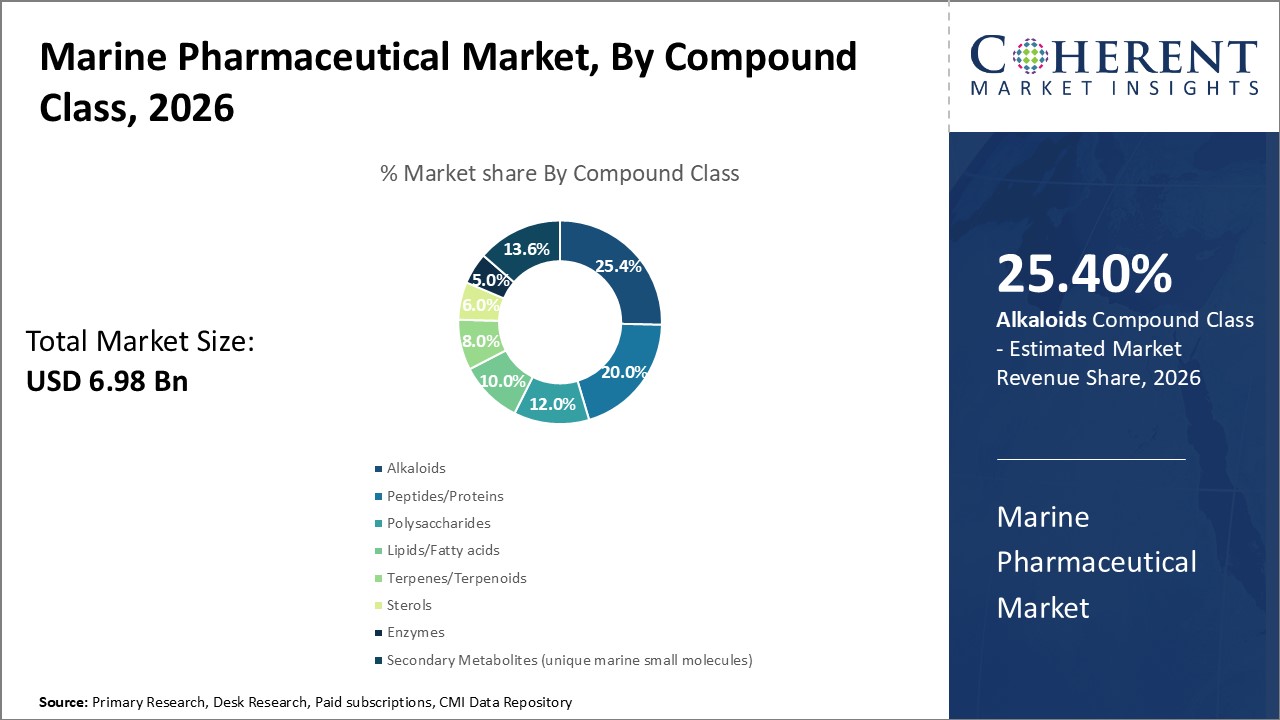
- Alkaloids are projected to dominate the compound class landscape accounting for 25.4 % of the market in 2026.
- Oncology/Anticancer agents represent the largest therapeutic application segment holding an estimated 36.2 % of the market share in 2026.
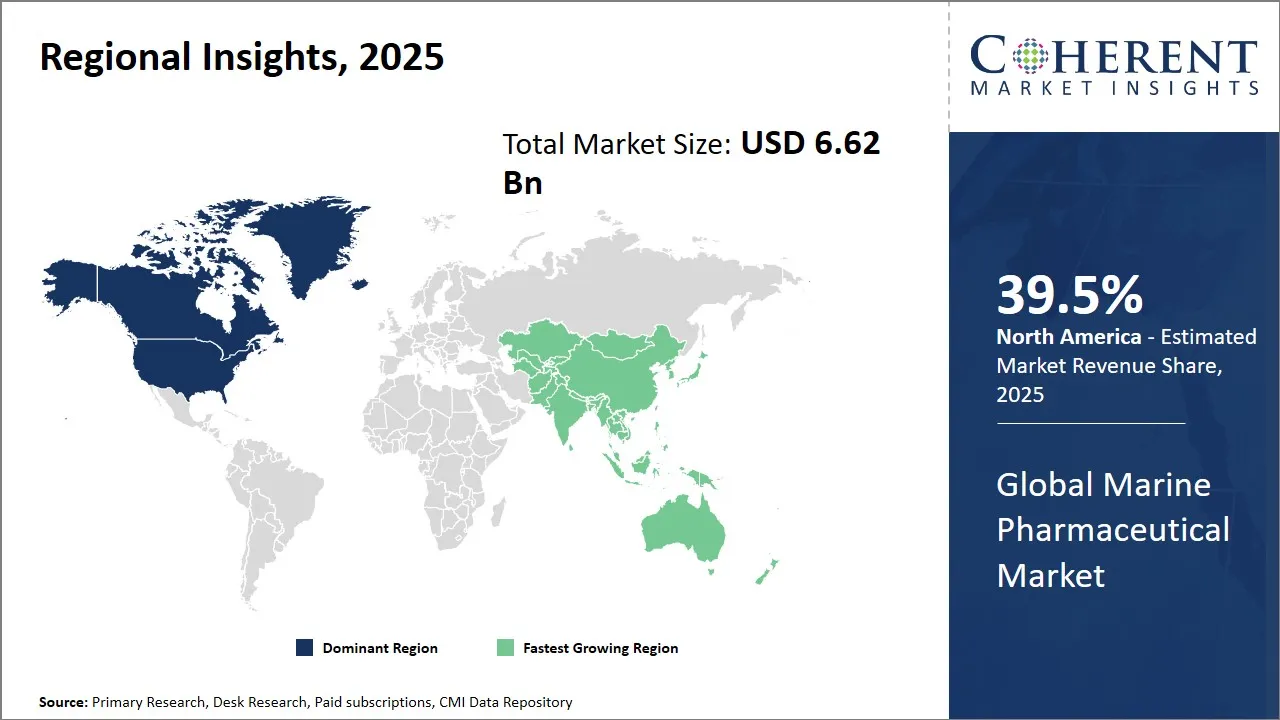
- North America is expected to lead the market, holding a share of 39.5 % in 2026. Asia Pacific is anticipated to be the fastest-growing region, with 24.3% share in 2026.
Market Overview
- Current trends in the marine pharmaceutical market highlight a growing focus on sustainable sourcing of marine bioactive compounds and advancements in marine biotechnology.
- Companies are leveraging innovative extraction and bioprocessing technologies to explore marine biodiversity for new drug development, particularly targeting cancer, infectious diseases, and chronic conditions.
- Additionally, strategic partnerships and rising awareness of marine resources’ potential for pharmaceutical applications are contributing to the market’s steady expansion, underscoring its promising outlook in the near future.
Current Events and Its Impact
Current Events | Description and its Impact |
Advancement of AI & Machine Learning in Bioprospecting |
|
IntegriCulture Inc and Umami Bioworks’ collaboration on cell cultured marine ingredients |
|
Segmental Insights
- Current Industry Events of 2026
- Market Size Estimation
- Regional Breakdown
- Competitive Landscape
- Customer Intelligence
- Segmental Analysis
- Pricing Analysis
- Key Market Drivers, Challenges & Future Trends
- Customized Insights Section
Why Are Marine Invertebrates the Primary Source Driving Innovation in the Marine Pharmaceutical Market?
Based on source, marine invertebrates (sponges, corals, tunicates, mollusks) offer the most significant portion of the global marine pharmaceutical market with an estimated 39.1% in 2026, a supremacy due to their unmatched chemical diversity and ecological versatility.
These are high-producers of bioactive compounds, which have developed complicated chemical defense strategies to endure in competitive, predator-saturated oceans. The low mobility or sessile life necessitates strong biochemical solutions, which convert into distinct pharmaceutical molecules exhibiting remarkable therapeutic value.
Why Do Alkaloids Dominate Innovation in Marine Pharmaceuticals?
Alkaloids, which are just one of the many classes of compounds in the global marine pharmaceutical market, have the largest proportion of an estimated 25.4% in 2026 due to their outstanding bioactivity and therapeutic potential. Natural organic drugs, alkaloids, frequently containing nitrogen atoms, have a long history of use in pharmacotherapy, and many terrestrial examples exist.
The marine environment also enhances their significance due to their ability to show a diverse array of biological activities such as potent antitumor, antimicrobial, analgesic, and anti-inflammatory actions, which are not seen in terrestrial alkaloids.
On December 02, 2025, Uppsala University, Sweden’s oldest public research university, announced a Marine Pharmaceutical relevant discovery of a new sponge order. Researchers identified Vilesida, a previously unknown marine sponge order producing unique sterols with drug development potential. These sterols show promise for antimicrobial anticancer and antiviral applications. The finding also supports evidence that early animal life emerged far earlier than believed. The discovery strengthens marine invertebrates as a critical source of future pharmaceutical compounds.
(Source: Uppsala University)
Why are Oncology and Anticancer Agents Driving Therapeutic Demand in the Marine Pharmaceutical Market?
Based on therapeutic application, oncology/anticancer agents take the top percentage of global marine pharmaceutical market at an estimated 36.2% in 2026. It is because of a combination of unmet medical demands as well as the high efficacy of marine-derived compounds in treating cancer.
Cancer has remained among the top causes of death in the world, and the non-homogeneous nature of tumor biology requires the emergence of new drugs capable of acting on cancer cells in a multi-modal manner. Anticancer agents obtained in marine have proven to be remarkably promising in providing new action mechanisms that are either complementary or superior to the current chemotherapy strategies.
Regulatory Complexity Index for Marine-Origin Drugs - Marine Pharmaceutical Market
U.S. FDA (U.S.) - High Complexity
- Stringent IND/NDA requirements with full molecular characterization of marine bioactives
- High scrutiny on reproducibility, supply scalability, and contamination control
- Extensive non-clinical toxicology and CMC documentation
- Strong post-approval pharmacovigilance expectations
EMA (European Union)- Very High Complexity
- Centralized approval with multi-member state alignment
- Additional environmental risk assessment for marine sourcing
- Strict GMP traceability for marine raw materials and bioprocessing
- Higher regulatory burden for novel mechanisms and first-in-class compounds
PMDA (Japan) - Moderate-to-High Complexity
- Conservative review culture with emphasis on domestic clinical data
- Detailed quality and impurity profiling for natural-origin substances
- Longer consultation and pre-submission phases
- Slower approval timelines for non-Japan-origin marine compounds
Bottom Line
- EMA is the most complex, U.S. FDA is rigorous but predictable, PMDA is conservative and time-intensive
- Regulatory complexity directly impacts development timelines, costs, and go-to-market strategy for marine pharmaceuticals
Regional Insights
North America Marine Pharmaceutical Market Analysis and Trends
A well-developed ecosystem of biotechnology and pharmaceutical products with an estimated share of 39.5% in 2026 and substantial investments in the development of marine bioprospecting and drug discovery programs are the key to the dominance of the global marine pharmaceutical market in North America. The good news is that the region enjoys strong governmental backup by bodies like the National Institutes of Health (NIH) and National Oceanic and Atmospheric Administration (NOAA) which provide robust funding to natural product research in the marine environment.
The availability of top pharmaceutical producers such as Pfizer, Johnson and Johnson, and Gilead sciences develops the market by constantly innovating and partnering with marine research organizations. Seagen has successfully commercialized antibody drug conjugates that use highly potent cytotoxic payloads originally inspired by marine-derived natural products, reinforcing the region’s role in translating marine chemistry into approved therapeutic solutions.
Asia Pacific Marine Pharmaceutical Market Analysis and Trends
The quickest growth is noted in Asia Pacific which is expected to contribute 24.3% of the market share in 2026 due to good marine biodiversity and powerful government supported marine drug campaigns. China Japan and South Korea are working on marine pharmaceuticals by integrating traditional marine medicine with the current drug technologies.
The fast rate of industrialization and growth of biotechnology centers particularly in China and India are creating massive prospects of research and commercialization. Zhejiang Hisun Pharmaceutical, Nichi-Iko Pharmaceutical (Japan), and Aurobindo Pharma (India) are typical examples of companies that have dedicated more attention to marine-derived compounds, which contributes to the rapid growth of the markets.
Global Marine Pharmaceutical Market Outlook for Key Countries
Why is the U.S. still the main launchpad for marine-inspired oncology drugs?
The marine pharmaceutical industry is dominated by the U.S. which makes significant investment in marine drug discovery through the efforts of such institutions as Woods Hole Oceanographic Institution and Scripps Institution of Oceanography. Key pharmaceutical companies such as Pfizer and Gilead Sciences are actively involved in the development of marine based compounds to treat cancer, antiviral as well as neurological diseases.
The government programs promote the collaboration of the government and the business sector, which enhances the process of transforming marine biodiversity into marketable medicines. The high-technology clinical trial services and regulatory capabilities of the country further put the country in the leading position of this niche segment of pharmaceutical products.
Why is China becoming a faster test bed for marine derived drug discovery and translation?
The marine pharmaceutical market in China is growing at a very high rate due to the fact that there are a lot of marine resources and the government is highly pushing in the innovation of marine biomedicine. Firms like Zhejiang Hisun Pharmaceutical and Sino Biopharmaceutical are putting up a lot of money in research of marine natural products targeting a combination of marine pharmacology and traditional Chinese medicine.
Product development is enhanced by the increasing biotechnology market in the country, the attractive patent legislation and the strategic partnership of the country with academic institutes. Moreover, the emerging local demand for new therapeutics and export activities in China endow it with a significant force in the world marine pharmaceutical arena.
Japan Marine Pharmaceutical Market Trends
The country still remains a technological leader in marine pharmaceutical studies and has a well-developed marine ecosystem along with government research grants, administered by entities such as RIKEN and the Japan Agency of Marine-Earth science and technology (JAMSTEC). Nichi-Iko Pharmaceutical and Chugai Pharmaceutical are also players of marine bioprospecting as they seek to extract rare marine compounds that have potential therapeutic uses.
High level of manufacturing and high-quality standards coupled with high clinical trial network has promoted the growth of the industry in Japan and many marine-derived pharmaceuticals have managed to achieve commercial success in other parts of the world.
India Marine Pharmaceutical Market Trends
The marine pharmaceutical market in India is growing with its enormous coastline and marine biodiversity of the Arabian Sea, Bay of Bengal and the Indian Ocean. The government has implemented programs aimed at promoting marine biotechnology through its programs funded by the government such as Central Marine Fisheries Research Institute (CMFRI) and Council of Scientific and Industrial Research (CSIR).
Firms such as Aurobindo Pharma and Biocon are increasing investment in marine bioactives and are primarily interested in infectious diseases and anti-inflammatory agents. The emerging bio tech centers in Bengaluru and Hyderabad play a central role in innovation giving India a greater edge in the marine pharmaceutical market whether in the local market or in exporting.
Germany Marine Pharmaceutical Market Trends
Germany is a key European market with strong pharmaceutical interest in marine-derived natural products, supported by a well-established research ecosystem and strategic investments from the Federal Ministry of Education and Research (BMBF). Bayer and BioNTech are the top firms conducting research on marine-derived drugs, especially in oncology and immunology.
The biotechnology concentrations that are well established in Germany, particularly in Berlin and Munich, facilitate cooperation between academics and industry in research. Its membership in the international marine biotech consortia and trade facilitation policies helps the country to remain a major player in the marine pharmaceutical industry in Europe.
Marine Compound Scalability & Supply Feasibility Index
- Marine Compound Scalability & Supply Feasibility Index is a critical decision filter in the marine pharmaceutical market due to the inherent constraints of marine biodiversity, seasonal availability, and low natural yield of bioactive compounds. Direct extraction from marine organisms faces scalability bottlenecks driven by ecological protection laws, batch-to-batch variability, and high purification costs. As a result, compounds with complex structures but low natural abundance score poorly on scalability, increasing development risk and extending commercialization timelines.
- To mitigate these constraints, the market increasingly prioritizes semi-synthetic routes, total chemical synthesis, fermentation, and cell-culture platforms, which significantly improve supply feasibility and regulatory acceptability. Marine-derived compounds supported by sustainable bioprocessing and reproducible manufacturing pathways achieve higher feasibility scores, enabling late-stage clinical progression and global market access. Consequently, scalability readiness now acts as a gatekeeper for investment, partnering, and pipeline prioritization in marine pharmaceuticals.
Market Players, Key Developments, and Competitive Intelligence
Key Developments
- In August 2025, Chuo University, a public research university, partnered with Nippon Yusen Kabushiki Kaisha, a global Japanese shipping major, to launch a Marine Pharmaceutical research project. The collaboration focuses on discovering novel therapeutic compounds from marine organisms attached to ship hulls. Building on pilot research since 2023, the study identified a new natural compound showing activity against African sleeping sickness. The compound inhibits Rhodesian trypanosome proliferation, addressing a major neglected tropical disease.
- In August 2025, Far Eastern Federal University, a leading Russian research university, announced a Marine Pharmaceutical breakthrough in non-opioid pain management. Scientists developed a peptide analgesic using marine organism DNA derived from sea anemone venom. The drug blocks pain centers without opioid mechanisms and completed preclinical trials successfully. The technology is industrially ready and has no global equivalents. Clinical trials are planned for 2026 with state registration targeted by 2030.
- In June 2024, Marinova Pty Ltd, an Australia-based marine biotechnology company, expanded its fucoidan facility in Tasmania, Australian State. The expansion strengthens Marine Pharmaceutical and nutraceutical supply for marine derived functional food development.
- In December 2024, the European Commission funded BlueBioValue, a USD 16.2 million Marine Pharmaceutical research program. The project focuses on deep sea microorganisms to advance antimicrobial drug discovery and health innovation.
Top Strategies Followed by Global Marine Pharmaceutical Market Players
Player Type | Strategic Focus | Examples |
Established Market Leaders | Heavy R&D investment in marine bioprospecting, biotechnology, and advanced extraction/synthesis platforms; development of high-efficacy marine-derived drugs (oncology, pain, anti-infectives); strategic alliances with large pharma, CROs, and academic institutes; global distribution expansion targeting regulated and emerging healthcare markets | PharmaMar develops marine-derived oncology drugs (e.g., trabectedin) and commercializes them globally through pharma partnerships; Jazz Pharmaceuticals (via acquisition of GW/legacy marine pipelines) leverages global regulatory and commercialization infrastructure for specialty therapeutics |
Mid-Level Players | Cost-optimized development of marine bioactives with proven mechanisms; focus on niche or orphan indications with faster clinical validation; partnerships with universities, CMOs, and regional pharma for scale-up; selective market entry in Asia, Latin America, and Eastern Europe | Aeterna Zentaris explores marine-linked peptide and bioactive platforms through collaborations to control development cost; New England Biolabs (marine enzymes segment) commercializes marine-derived enzymes for pharma and biotech applications via targeted partnerships |
Small-Scale Players | Highly specialized innovation in marine organisms, peptides, and toxins; use of genomics, synthetic biology, and AI-enabled compound discovery; early-stage pipelines and proof-of-concept focus; strong local or academic alliances to mitigate capital and regulatory risk | Venomtech works on marine and aquatic venom-derived compounds for drug discovery via research partnerships; Marinomed Biotech develops marine-inspired molecules with differentiated anti-infective and inflammatory profiles through regional collaborations |
Market Report Scope
Marine Pharmaceutical Market Report Coverage
| Report Coverage | Details | ||
|---|---|---|---|
| Base Year: | 2025 | Market Size in 2026: | USD 6.98 Bn |
| Historical Data for: | 2020 To 2024 | Forecast Period: | 2026 To 2033 |
| Forecast Period 2026 to 2033 CAGR: | 5.5% | 2033 Value Projection: | USD 10.16 Bn |
| Geographies covered: |
| ||
| Segments covered: |
| ||
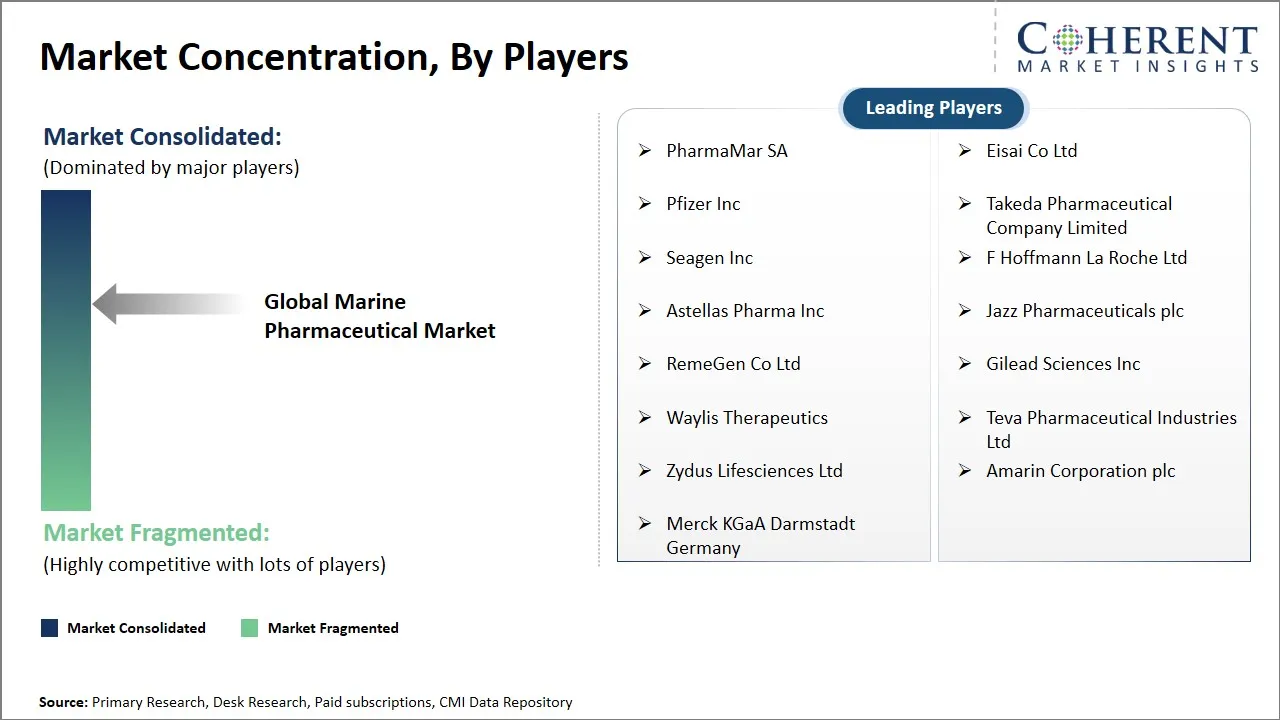
| Companies covered: | PharmaMar SA, Eisai Co Ltd, Pfizer Inc, Takeda Pharmaceutical Company Limited, Seagen Inc, F Hoffmann La Roche Ltd, Astellas Pharma Inc, Jazz Pharmaceuticals plc, RemeGen Co Ltd, Gilead Sciences Inc, Waylis Therapeutics, Teva Pharmaceutical Industries Ltd, Zydus Lifesciences Ltd, Amarin Corporation plc, and Merck KGaA Darmstadt Germany | ||
| Growth Drivers: |
| ||
| Restraints & Challenges: |
| ||
Marine Pharmaceutical Market Dynamics
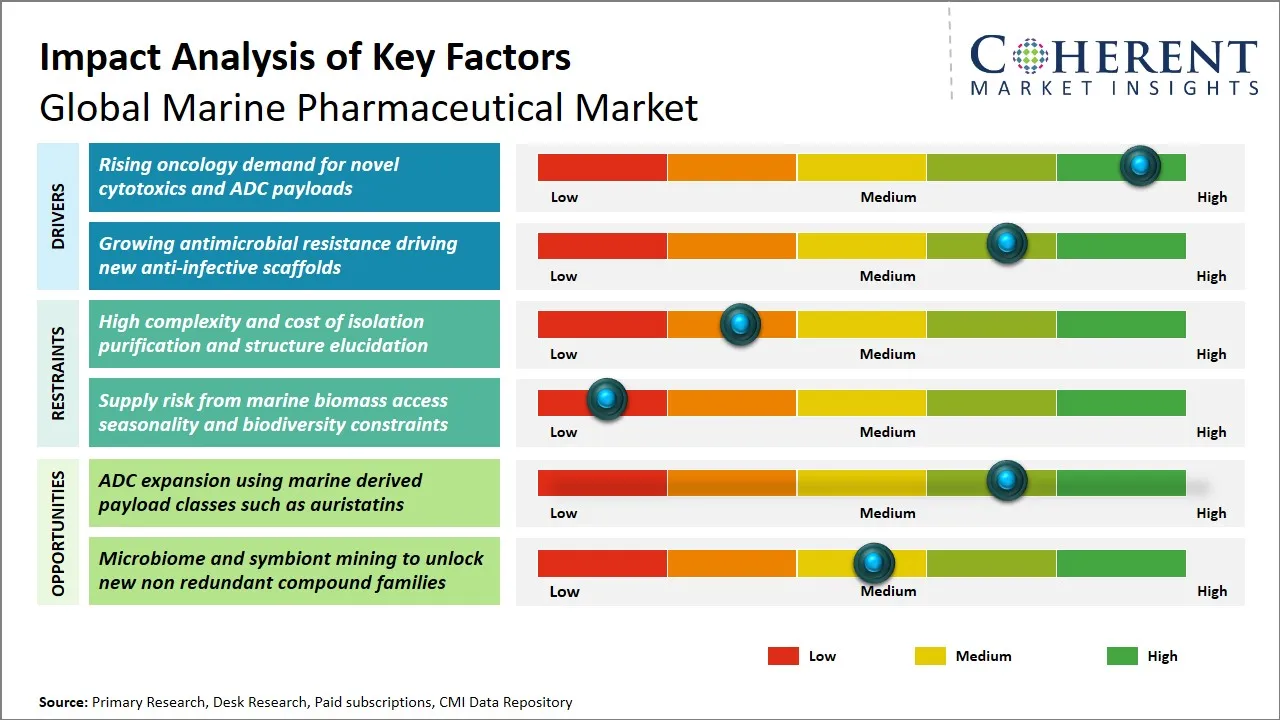
Marine Pharmaceutical Market Driver - Rising Oncology Demand for Novel Cytotoxics and ADC Payloads
The increasing demand for effective cancer treatments has aggravated the research of new cytotoxic agent, in regards to marine-derived compounds, they are gaining much attention because they have distinct chemical structures and good bioactivity.
Marine life, such as sponges, mollusks, and cyanobacteria are also turning out to be invaluable resources of complex molecules which are highly effective as cytotoxins, which are critical components in cancer treatment. This has been especially sought after in the creation of antibody drug conjugates (ADCs), in which cytotoxic drugs of marine origin are desirable due to their capacity to impart a specific targeting effect on cell kill whilst limiting collateral harm on normal tissues. These marine-based cytotoxins are particularly specific and effective and thus the therapeutic index of ADCs is increased, rendering them promising in the treatment of various malignancies.
In June 2024, Novotech, a global clinical research organization supporting biotech drug development, released a Marine Pharmaceutical relevant ADC whitepaper. The report shows antibody drug conjugates rapidly reshaping cancer treatment through targeted cytotoxic delivery. Asia Pacific led ADC clinical trial growth with strong participation from China Japan and South Korea. Marine derived cytotoxic payloads increasingly support ADC innovation alongside oncology focused biologics.
(Source: Novotech)
Marine Pharmaceutical Market Opportunity - Expansion of Antibody-Drug Conjugates (ADCs) Using Marine-Derived Payload Classes
The global marine pharmaceutical market has a high growth opportunity owing to the growth of Antibody-Drug Conjugates (ADCs) that use marine-derived payload classes like the auristatins. ADCs are a progressive advancement of specific cancer therapy that incorporates specificity of monoclonal antibodies with the compelling cytotoxic ability of drug conjugates. Marine organisms have proven to be a fruitful source of bioactive compounds, synthetic analogs of dolastatin 10 that were discovered in marine cyanobacteria have become some of the most efficient cytotoxic agents in ADC design. Auristatins are payloads utilized to target cancer cells with minimal off-target events by taking advantage of their superior potency and effectiveness of the therapeutic features and safety.
In May 2024, AstraZeneca, a global biopharmaceutical company focused on oncology innovation, announced a Marine Pharmaceutical relevant ADC facility in Singapore. The company plans to invest USD 1.5 billion in its first end to end antibody drug conjugate manufacturing site. Supported by the Singapore Economic Development Board, a government agency driving industrial growth, the plant will strengthen precision cancer therapy supply.
(Source: AstraZeneca)
Analyst Opinion (Expert Opinion)
- Marine pharmaceutical market is changing the focus period of exploratory research to specific drug development due to the oncology innovation in non-opioid pain management and antimicrobial resistance. The developments of genomics AI based screening and synthetic biology are enhancing the efficiency of discovery and fermentation and semi synthesis is countering previous supply limitations. Orphan drug and first in class regulatory support helps in this progress but lengthy development cycle IP complexity and scalable production are challenges.
- The forums strengthen the industry momentum, e.g., the International Marine Biotechnology Conference Gordon Research Conference on Natural Products and marine biotech tracks at BIO Asia Pacific. Recently, there was the establishment of university led shipping partnerships in Japan to discover marine compounds and the seafarer DNA based non opioid analgesic in Russia which is on the way to clinical trials. Asian and European marine biotech initiatives partly funded by the government also remain in place to enhance the pipeline of innovation and market perspective.
Speak to the analyst
Want personalized insights?
Take the findings above to one of our principal consultants, or have the report rebuilt around the segments, geographies and competitors you actually track.
Market Segmentation
- Source Insights (Revenue, USD Bn, 2021 - 2033)
- Marine invertebrates (sponges, corals, tunicates, mollusks)
- Marine bacteria
- Marine macroalgae (seaweeds)
- Marine microalgae
- Marine fungi
- Marine sediments/extremophiles
- Marine vertebrates (fish, sharks)
- Compound Class Insights (Revenue, USD Bn, 2021 - 2033)
- Alkaloids
- Peptides/Proteins
- Polysaccharides
- Lipids/Fatty acids
- Terpenes/Terpenoids
- Sterols
- Enzymes
- Secondary metabolites (unique marine small molecules)
- Therapeutic Application Insights (Revenue, USD Bn, 2021 - 2033)
- Oncology/Anticancer agents
- Anti‑infectives (antibacterial, antiviral, antifungal)
- Anti‑inflammatory agents
- Cardiovascular drugs
- Neuroprotective/neurological drugs
- Metabolic disorder drugs (diabetes/obesity)
- Pain management/analgesics
- Dermatological agents
- Immunomodulators
- Development Stage Insights (Revenue, USD Bn, 2021 - 2033)
- Discovery/bioprospecting
- Preclinical development
- Clinical trials (Phase I–III)
- Approved/Commercialized products
- Formulation Type Insights (Revenue, USD Bn, 2021 - 2033)
- Small molecules
- Biologics/biopharmaceuticals
- Extracts/standardized fractions
- Nutraceutical formulations (marine‑derived)
- End User Insights (Revenue, USD Bn, 2021 - 2033)
- Pharma and Biopharma Companies
- Hospitals and Specialty Clinics
- CDMOs/CMOs
- Nutraceutical/functional food producers
- Academic and research institutes
- Drug Delivery Format Insights (Revenue, USD Bn, 2021 - 2033)
- Oral
- Injectable/infusion
- Topical/dermal
- Inhalation
- Implants/controlled‑release
- Source Habitat Insights (Revenue, USD Bn, 2021 - 2033)
- Coastal marine
- Deep‑sea marine
- Polar marine
- Hydrothermal vents/extreme environments
- Application Sector Insights (Revenue, USD Bn, 2021 - 2033)
- Human therapeutics
- Veterinary therapeutics
- Regional Insights (Revenue, USD Bn, 2021 - 2033)
- North America
- U.S.
- Canada
- Latin America
- Brazil
- Argentina
- Mexico
- Rest of Latin America
- Europe
- Germany
- U.K.
- Spain
- France
- Italy
- Russia
- Rest of Europe
- Asia Pacific
- China
- India
- Japan
- Australia
- South Korea
- ASEAN
- Rest of Asia Pacific
- Middle East
- GCC Countries
- Israel
- Rest of Middle East
- Africa
- South Africa
- North Africa
- Central Africa
- North America
- Key Players Insights
- PharmaMar SA
- Eisai Co Ltd
- Pfizer Inc
- Takeda Pharmaceutical Company Limited
- Seagen Inc
- F Hoffmann La Roche Ltd
- Astellas Pharma Inc
- Jazz Pharmaceuticals plc
- RemeGen Co Ltd
- Gilead Sciences Inc
- Waylis Therapeutics
- Teva Pharmaceutical Industries Ltd
- Zydus Lifesciences Ltd
- Amarin Corporation plc
- Merck KGaA Darmstadt Germany
Sources
Primary Research Interviews
Industry Stakeholders
- Marine biotechnologists
- Pharmaceutical R&D directors
- Marine natural products chemists
- Clinical research investigators
- Bioprocess development scientists
- Regulatory affairs professionals
End Users
- Oncologists
- Pain management specialists
- Infectious disease physicians
- Hospital pharmacists
- Clinical trial coordinators
- Public health researchers
Government and International Databases
- World Health Organization
- U.S. Food and Drug Administration
- European Medicines Agency
- National Institutes of Health
- UNESCO Intergovernmental Oceanographic Commission
- Organisation for Economic Co-operation and Development
Trade Publications
- Nature Biotechnology
- Marine Biotechnology Journal
- Drug Discovery Today
- Trends in Pharmacological Sciences
- Science Translational Medicine
- ACS Medicinal Chemistry Letters
Academic Journals
- Marine Drugs
- Journal of Natural Products
- Bioorganic and Medicinal Chemistry
- Chemical Reviews
- Frontiers in Marine Science
- Journal of Pharmaceutical Sciences
Reputable Newspapers
- The New York Times
- The Guardian
- Financial Times
- The Japan Times
- The Hindu
- South China Morning Post
Industry Associations
- International Society for Marine Biotechnology
- American Society of Pharmacognosy
- European Federation for Pharmaceutical Sciences
- Society for Industrial Microbiology and Biotechnology
- International Union of Pure and Applied Chemistry
- World Association for Marine Natural Products
Public Domain Resources
- ClinicalTrials.gov
- PatentScope
- Google Scholar
- National Center for Biotechnology Information
- Europe PMC
Proprietary Elements
- CMI Data Analytics Tool: Proprietary analytics tool to analyze real-time market trends, consumer behavior, and technology adoption in market
- Proprietary CMI Existing Repository of Information for Last 8 Years
Get access to 250+ pages report
Every segment, forecast, competitor profile and data table behind the analysis above — available for instant download.
- ESOMAR Member
- ISO 9001:2015 Certified
- D-U-N-S Registered
- GDPR & CCPA Compliant
Missing comfort of reading report in your local language? Find your preferred language:
Transform your Strategy with Exclusive Trending Reports
Frequently Asked Questions
The global marine pharmaceutical market is estimated to be valued at USD 6.98 Bn in 2026 and is expected to reach USD 10.16 Bn by 2033.
The CAGR of global marine pharmaceutical market is projected to be 5.5% from 2026 to 2033.
Rising oncology demand for novel cytotoxics and ADC payloads and growing antimicrobial resistance driving new anti-infective scaffolds are the major factors driving the growth of the global marine pharmaceutical market.
High complexity and cost of isolation purification and structure elucidation and supply risk from marine biomass access seasonality and biodiversity constraints are the major factors hampering the growth of the global marine pharmaceutical market.
In terms of source, marine invertebrates (sponges, corals, tunicates, mollusks) are estimated to dominate the market revenue share in 2026.
Marine biodiversity offers unique bioactive compounds not found in terrestrial sources.
Oncology leads, followed by pain management, anti-infectives, and CNS disorders.