

Marine Biotechnology Market Analysis & Forecast: 2026-2033
Marine Biotechnology Market is estimated to be valued at USD 8.04 Bn in 2026 and is expected to reach USD 13.77 Bn in 2033, exhibiting a compound annual growth rate (CAGR) of 8.0% from 2026 to 2033.
Key Takeaways
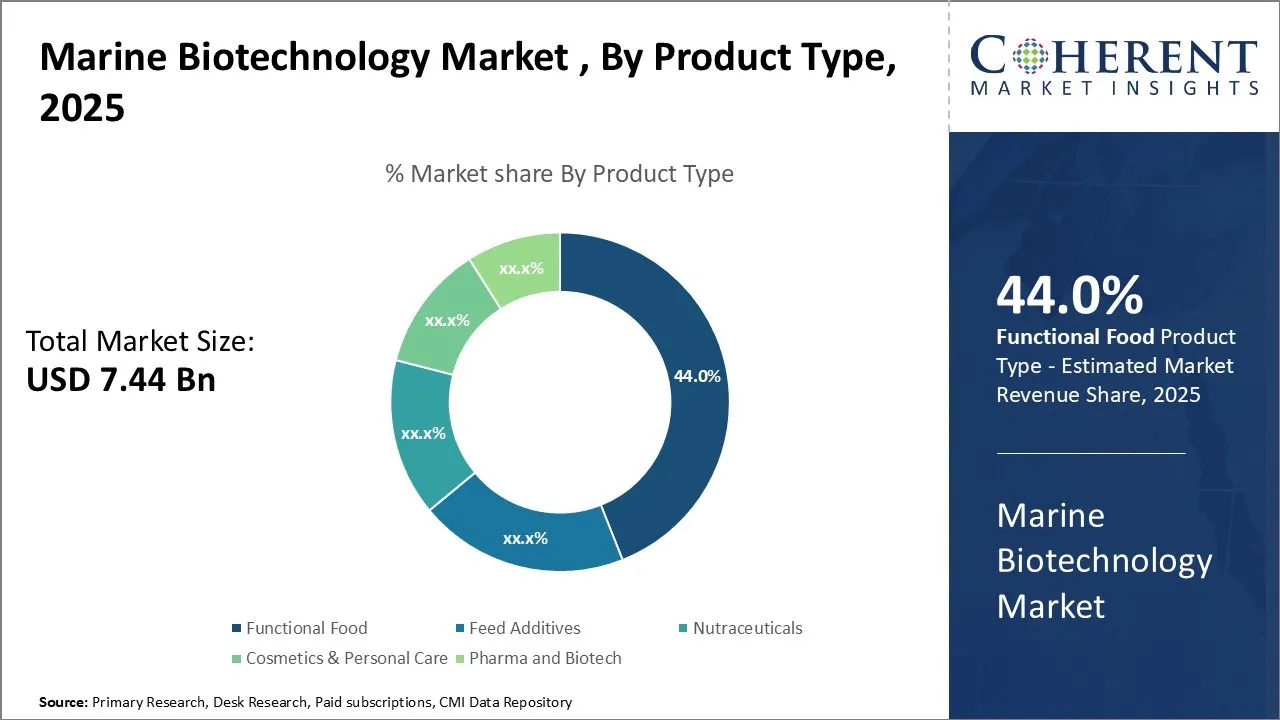
- By Product Type, Functional Food Division is projected to dominate the marine biotechnology market with a 45% share in 2026.
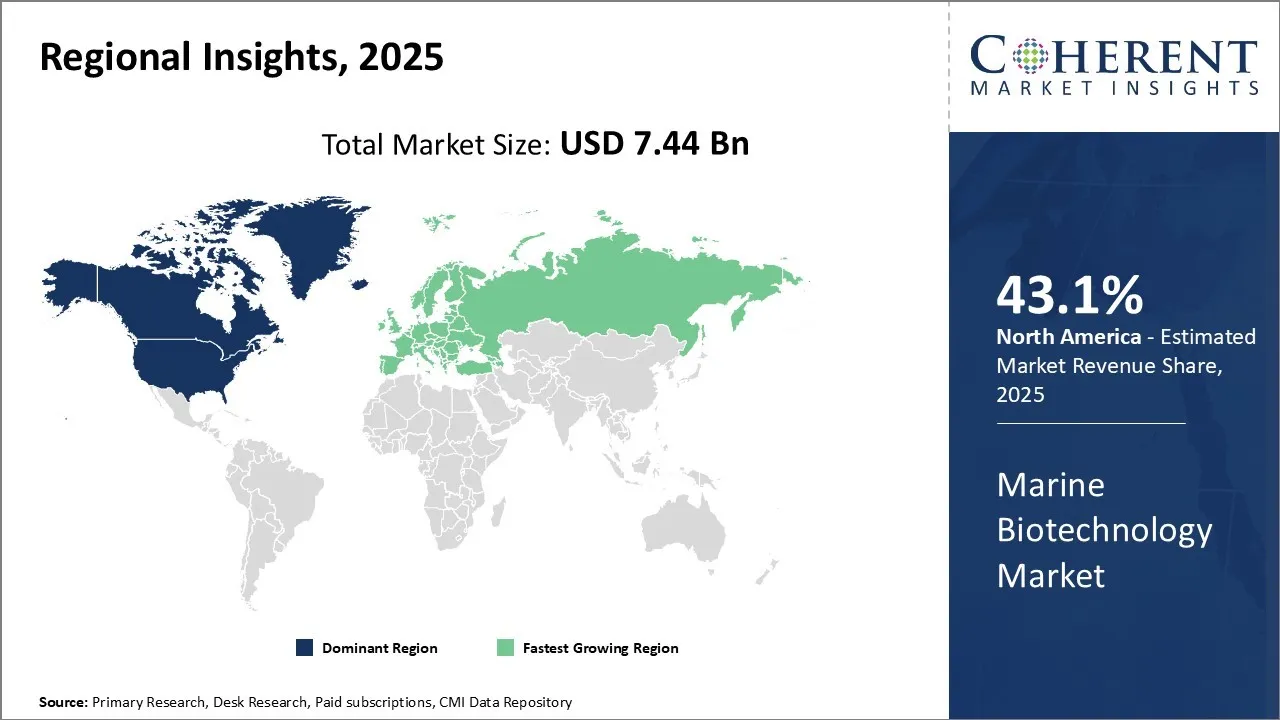
- Regionally, North America is expected to lead the marine biotechnology market 43.1% share in 2026.
- Europe follows as the second-largest market, accounting for over 23.3% of the global marine biotechnology market share in 2026.
- The Asia Pacific region is anticipated to be the fastest-growing market with a CAGR of 7.1% during the forecast period.
Market Overview
The global marine biotechnology market is witnessing significant growth, propelled by increasing demand for sustainable and innovative marine-derived products across various industries. Key drivers include rising consumer awareness of the health benefits associated with marine bioactive compounds, expanding applications in pharmaceuticals, nutraceuticals, cosmeceuticals, and agriculture, and escalating investments in research and development.
Current Events and its Impact on the Marine Biotechnology Market
Current Event | Description and its impact |
Expansion of Marine-Derived Pharmaceuticals |
|
Rising Demand for Sustainable Aquaculture Solutions |
|
Government Initiatives Supporting Marine Biotechnology R&D |
|
Marine Biotechnology Market Trends
- Growing awareness about the impacts of climate change, pollution and overfishing on marine ecosystems is boosting efforts to develop conservation biotechnologies. Application of genetics, genomics, captive breeding and bioremediation are gaining interest for marine conservation. This growth is driven by advancements in marine genomics, metabolomics, and cultivation technologies, with applications spanning pharmaceuticals, nutraceuticals, cosmetics, aquaculture, and industrial sectors.
- The interface between marine biotechnology and nanotechnology is an emerging trend with far-reaching impacts. Marine bioactive compounds coupled with smart nanocarriers offer new possibilities in drug delivery and nutraceuticals. This growth is driven by advancements in marine-derived pharmaceuticals, biofuels, and sustainable aquaculture practices.
- In June 2024, the "blue beauty" trend gained momentum in the cosmetics industry, emphasizing the use of ocean-friendly and sustainable ingredients. Brands like Osea and Captain Blankenship have committed to sourcing seaweed responsibly, ensuring sustainable harvesting practices that protect marine ecosystems. This movement underscores the growing consumer demand for environmentally conscious beauty products and the role of marine biotechnology in meeting these expectations.
Opportunities in the Marine Biotechnology Market
- Expanding application of marine-derived polysaccharides: Marine organisms produce a variety of complex polysaccharides like chitin, ulvans, carrageenan and fucoidan that have emerged as valuable biotech products. Owing to their anti-inflammatory, anti-coagulant and anti-microbial properties, the application of marine polysaccharides is growing across the food, pharmaceutical and biomedical sectors.
- Leveraging marine genomics big data: The field of marine genomics has advanced rapidly, leading to a vast accumulation of genomic big data. Metagenomics analysis of marine microbial samples has revealed complex marine microbiomes with millions of new genes, enzymes and metabolites.
- Current Industry Events of 2026
- Market Size Estimation
- Regional Breakdown
- Competitive Landscape
- Customer Intelligence
- Segmental Analysis
- Pricing Analysis
- Key Market Drivers, Challenges & Future Trends
- Customized Insights Section
Segmental Insights
Global Marine Biotechnology Market Insights, By Type
Functional food is anticipated to dominate the marine biotechnology market by 2026, accounting for 45% of the market share. This segment benefits from the increasing global demand for natural and health-enhancing food products enriched with marine-derived bioactive compounds such as omega-3 fatty acids, peptides, and antioxidants.
Regional Insight
North America Marine Biotechnology Market Trends and Analysis
North America is projected to dominate the global marine biotechnology market, accounting for over 43.1% of the market share in 2026. This leadership is driven by the region’s robust R&D infrastructure, strong government and private investments, and the presence of major biotechnology firms. The United States, in particular, is spearheading innovations in marine drug discovery, aquaculture enhancement, and marine-derived functional foods.
Europe Marine Biotechnology Market Trends and Analysis
Europe is expected to hold the second-largest share in the marine biotechnology market, with 23.3% in 2026. The region’s growth is underpinned by the thriving nutraceutical and cosmeceutical industries, which are increasingly utilizing marine-based bioactives. Countries such as France, Germany, and Norway are investing in sustainable marine sourcing, algae cultivation, and marine organism research.
Marine Biotechnology Market Dominating Countries
United States and Canada Market Trends and Analysis
The United States and Canada are poised to dominate the global marine biotechnology market, with North America expected to account for over 43.1% of the total market share in 2026. The U.S. leads the region through significant investments in marine-derived pharmaceuticals, nutraceuticals, and bioengineering solutions. Home to leading biotech firms and advanced marine research institutions, the country benefits from strong government support and private sector innovation.
Canada contributes with its robust marine biodiversity, academic research on ocean health, and commitment to sustainable marine resource utilization. Together, these countries are advancing the frontiers of marine biotechnology across healthcare, agriculture, and industrial applications.
Market Report Scope
Marine Biotechnology Market Report Coverage
| Report Coverage | Details | ||
|---|---|---|---|
| Base Year: | 2025 | Market Size in 2026: | USD 8.04 Bn |
| Historical Data for: | 2020 To 2024 | Forecast Period: | 2026 To 2033 |
| Forecast Period 2026 to 2033 CAGR: | 8.0% | 2033 Value Projection: | USD 13.77 Bn |
| Geographies covered: |
| ||
| Segments covered: |
| ||
| Companies covered: | BASF, CP Kelco, Cyanotech Corp., Kerry Group, Corbion, FMC Corp, Marine Biotech, Royal DSM, TransGen Biotech Co., Ltd., Olmix Group, Ittinsect, BRAIN Biotech AG, Biotech Marine | ||
| Growth Drivers: |
| ||
| Restraints & Challenges: |
| ||
Analyst Viewpoint – Marine Biotechnology Market
- The marine biotechnology market is poised for significant expansion, driven by the growing demand for sustainable and bio-based solutions across pharmaceuticals, nutraceuticals, cosmeceuticals, and industrial applications. Analysts observe that marine organisms offer a largely untapped reservoir of bioactive compounds, enzymes, and biomaterials with immense commercial potential. The shift toward green technologies and natural products is reinforcing market interest, especially in sectors seeking alternatives to synthetic chemicals.
- North America continues to dominate the market, supported by advanced R&D infrastructure, significant public and private investments, and a strong presence of key biotech firms. Europe is rapidly following suit, with increasing focus on marine-sourced ingredients for functional foods and cosmetics.
- However, analysts also highlight challenges, including the high cost of marine exploration, ethical concerns over biodiversity conservation, and complex regulatory landscapes. Innovations in AI, genomics, and sustainable harvesting techniques are expected to ease some of these barriers, improving efficiency and discovery rates.
Marine Biotechnology Market: Key Development
- In March 2025, Marinova Pty Ltd announced a major expansion of its fucoidan production facility in Tasmania to meet growing global demand for marine-derived nutraceutical ingredients. This expansion will significantly boost supply capabilities and support the development of new marine-based functional food products.
- In February 2025, BASF and Oceanix Biotech entered into a strategic partnership to co-develop algae-based bioactives for use in cosmetics and personal care. The collaboration aims to accelerate innovation in sustainable beauty solutions using marine-sourced compounds.
- In December 2024, the European Commission funded a €15 million marine biotechnology research project, BlueBioValue, focused on the exploration of deep-sea microorganisms for antimicrobial drug discovery. This initiative reinforces Europe's commitment to marine bioprospecting and health innovation.
- In November 2024, the Indian Council of Agricultural Research (ICAR) initiated a national program to explore marine microbes for biofertilizer development. This is part of a broader strategy to reduce chemical input in agriculture and enhance soil health through marine biotechnology.
Key Players Insights
- BASF
- CP Kelco
- Cyanotech Corp.
- Kerry Group
- Corbion
- FMC Corp
- Marine Biotech
- Royal DSM
- TransGen Biotech Co., Ltd.
- Olmix Group
- Ittinsect
- BRAIN Biotech AG
- Biotech Marine
Market Segmentation
- By Product Type (Revenue, USD Bn, 2021 - 2033)
- Functional Food
- Feed Additives
- Nutraceuticals
- Cosmetics & Personal Care
- Pharma & Biotech
- By Application (Revenue, USD Bn, 2021 - 2033)
- Food & Beverages
- Animal & Aquaculture Feed
- Cosmetics & Personal Care
- Pharmaceuticals
- Nutraceuticals & Dietary Supplements
- By Source (Revenue, USD Bn, 2021 - 2033)
- Microalgae
- Macroalgae
- Cyanobacteria
- Diatoms
- Sponges
- By End User (Revenue, USD Bn, 2021 - 2033)
- Pharmaceutical Companies
- Biotechnological Companies
- Cosmetic Companies
- Nutraceutical Companies
- Others
- By Region (Revenue, USD Bn, 2021 - 2033)
- North America
- U.S.
- Canada
- Latin America
- Brazil
- Argentina
- Mexico
- Rest of Latin America
- Europe
- Germany
- U.K.
- Spain
- France
- Italy
- Russia
- Rest of Europe
- Asia Pacific
- China
- India
- Japan
- Australia
- South Korea
- ASEAN
- Rest of Asia Pacific
- Middle East
- GCC Countries
- Israel
- Rest of Middle East
- Africa
- South Africa
- North Africa
- Central Africa
Sources
The Stakeholders Consulted
- Marine biotechnology researchers and marine biologists
- Pharmaceutical and nutraceutical product developers
- Biotechnology and pharmaceutical companies specializing in marine-derived products
- Academic and research institutions focused on marine bioresources
- Environmental and marine conservation agencies
- Regulatory bodies governing marine bioprospecting and product approvals
- Industry experts in marine functional foods, cosmeceuticals, and bioactive compounds
- Supply chain and logistics managers in marine biomass harvesting and processing
Databases Accessed
- Food and Agriculture Organization (FAO) – Fisheries and Aquaculture Statistics
- European Marine Observation and Data Network (EMODnet)
- U.S. National Oceanic and Atmospheric Administration (NOAA) – Marine Data Sets
- Global Biodiversity Information Facility (GBIF) – Marine Species Data
- World Bank Open Data – Marine and Coastal Resources
Magazines & Trade Publications
- Marine Biotechnology Magazine
- Journal of Applied Phycology
- Nutraceuticals World – Marine Ingredients Section
- Cosmetics & Toiletries – Marine Bioactive Coverage
- Biotechnology Advances
Scientific and Industry Journals
- Marine Drugs
- Journal of Marine Science and Engineering
- Aquaculture and Fisheries
- Journal of Functional Foods
- Trends in Biotechnology
Newspapers & Media Outlets
- The Guardian – Environment and Marine Science
- Reuters – Health and Biotechnology News
- Science Daily – Marine Biology and Biotechnology Updates
- The Economic Times – Biotechnology and Pharmaceutical Sector
Associations and Regulatory Bodies
- International Marine Biotechnology Association (IMBA)
- U.S. Food and Drug Administration (FDA) – Marine Product Regulations
- European Food Safety Authority (EFSA)
- Convention on Biological Diversity (CBD) – Marine Genetic Resources
- Marine Stewardship Council (MSC)
Public Domain Sources
- United Nations Environment Programme (UNEP) – Marine Biodiversity Reports
- European Commission – Blue Growth and Marine Biotechnology Policy Documents
- World Health Organization (WHO) – Nutraceuticals and Marine Health Products Reports
Proprietary Research Elements
- Internal Database on Marine Bioactive Compound Market Trends (covering the last 10 years)
- Expert Interviews and Survey Data from Industry Leaders and Marine Scientists
- Market Modeling and Forecasting Tools Developed In-house
Get access to 250+ pages report
Every segment, forecast, competitor profile and data table behind the analysis above — available for instant download.
- ESOMAR Member
- ISO 9001:2015 Certified
- D-U-N-S Registered
- GDPR & CCPA Compliant
Missing comfort of reading report in your local language? Find your preferred language:
Transform your Strategy with Exclusive Trending Reports
Frequently Asked Questions
The Marine Biotechnology Market size is estimated to be valued at USD 8.04 Bn in 2026, and is expected to reach USD 13.77 Bn by 2033.
The CAGR of the global Market is projected to be 8.0% from 2026 to 2033.
Increasing demand for marine-derived pharmaceuticals and nutraceuticals, development of marine-derived cosmeceuticals, increasing agreement among key market players, need for sustainable marine ingredients in animal feed are expected to drive the market growth.
Functional Food segment is the leading product type segment.
BASF, CP Kelco, Cyanotech Corp., Kerry Group, Corbion, FMC Corp, Marine Biotech, Royal DSM, TransGen Biotech Co., Ltd., Olmix Group, Ittinsect, BRAIN Biotech AG, Biotech Marine
North America is expected to hold dominant position in the market