

Global Maternal Health Market Size and Forecast – 2026 To 2033
The global maternal health market is expected to grow from USD 42.8 Bn in 2026 to USD 68.4 Bn by 2033, registering a compound annual growth rate (CAGR) of 6.9% from 2026 to 2033. The market for maternal health is poised for significant expansion, fueled by greater emphasis on enhancing women's access to health services and mitigating pregnancy-related complications through enhanced prenatal and postnatal care services.
According to the World Health Organization, about 260,000 women died during and following pregnancy and childbirth in 2023. Approximately 92% of all maternal deaths occurred in low and lower-middle countries, highlighting continued efforts to enhance the maternal care infrastructure and accessibility of quality healthcare services, which is expected to support market growth during the forecast period.
(Source: World Health Organization)
Key Takeaways of the Global Maternal Health Market
- Prenatal care services are projected to hold 35.8 % of the global maternal health market share in 2026, making it the dominant product type segment. This dominance is supported by rising demand across regions, particularly in Asia Pacific, driven by high fertility rates, improving healthcare infrastructure, and government initiatives promoting access to maternal healthcare services. For instance, India's Pradhan Mantri Surakshit Matritva Abhiyan (PMSMA) has improved the availability of comprehensive antenatal services and routine antenatal check-up, hence leading to greater utilization of prenatal health services. (Source: Ministry of Health and Family Welfare)
- Pregnancy complications are projected to hold 33.6 % of the global maternal health market share in 2026, making it the dominant condition segment, particularly across the Middle East and Africa due to relatively high maternal mortality ratios, and increasing prevalence of pregnancy-related complications including hemorrhage, hypertensive disorders during pregnancy and maternal infections. For instance, according to World Health Organization, sub-Saharan Africa accounted for around 70% of the maternal deaths (182,000) out of 260,000 maternal deaths in 2023. (Source: World Health Organization) emphasizing the surging need for effective maternal monitoring and intervention services.
- Hospitals and maternity centers are projected to hold 58.3 % of the global maternal health market share in 2026, making it the dominant end user segment, throughout North America owing to the existence of well-developed healthcare systems, high urbanization and institutional delivery rates coupled with easily accessible specialized obstetric and neonatal services. For instance, according to Centers for Disease Control and Prevention (CDC), 98% of all births in the U.S. occur in hospitals, illustrating the dominant role institutions play in the delivery of maternity related health care. (Source: Centers for Disease Control and Prevention) The presence of specialized facilities for emergency obstetric care and neonatal intensive care units (NICUs) along with integrated maternity pathways has underpinned the move towards hospital-based maternal care throughout the region.
- North America maintains dominance with an expected share of 34.7 % in 2026, bolstered by robust healthcare investments, improved reimbursement systems and persistent government intervention regarding maternal health. In addition, the region has a full array of high-technology maternal healthcare options available and accessible including remote patient monitoring, prenatal diagnostics, and maternal subspecialty practice. For instance, the National Maternal Health Action Plan launched by the U.S. Department of Health & Human Services (HHS) aim to enhance the quality of maternal care and reduce pregnancy complications thereby ensuring extensive availability of equitable maternal health services. (Source: U.S. Department of Health and Human Services)
- Asia Pacific is expected to exhibit the fastest growth with an estimated contribution of 25.8 % share in 2026, fueled by the booming healthcare infrastructure, proliferating healthcare spending, as well as enhancing knowledge about maternal and neonatal well-being. Accelerated urbanization, and rising government support for maternal health program are nurturing regional acceleration. For instance, The Healthy China 2030 strategy launched by China underscores the development of maternal child health care benefits in terms of stronger prenatal and child care systems, and improved access to health services. (Source: ScienceDirect)
- Expansion of Digital Maternal Monitoring and Telehealth Services: Increased adoption of telehealth services and remote maternal health monitoring devices are unlocking key growth opportunities in maternal health market across emerging and underserved geographies. Digital technological innovations such as portable pregnancy trackers, mobile apps for gestational health and virtual doctor consultations are making postpartum and maternal health parameters more monitorable and manageable, aiding in more efficient detection of pregnancy related risks.
- Increasing Focus on Personalized and Predictive Maternal Care Solutions: Progress in precision medicine and AI-based predictive analytics is creating new pathways to personalized maternal healthcare. Providers have become more willing to utilize predictive instruments to diagnose the most at-risk pregnancies and make treatment decisions on an individualized basis, considering unique patient risk characteristics. Strengthening this trend toward preventive therapy and personalized clinical decision, making is anticipated to improve maternal health outcomes and facilitate the proliferation of novel maternal health technologies.
Segmental Insights
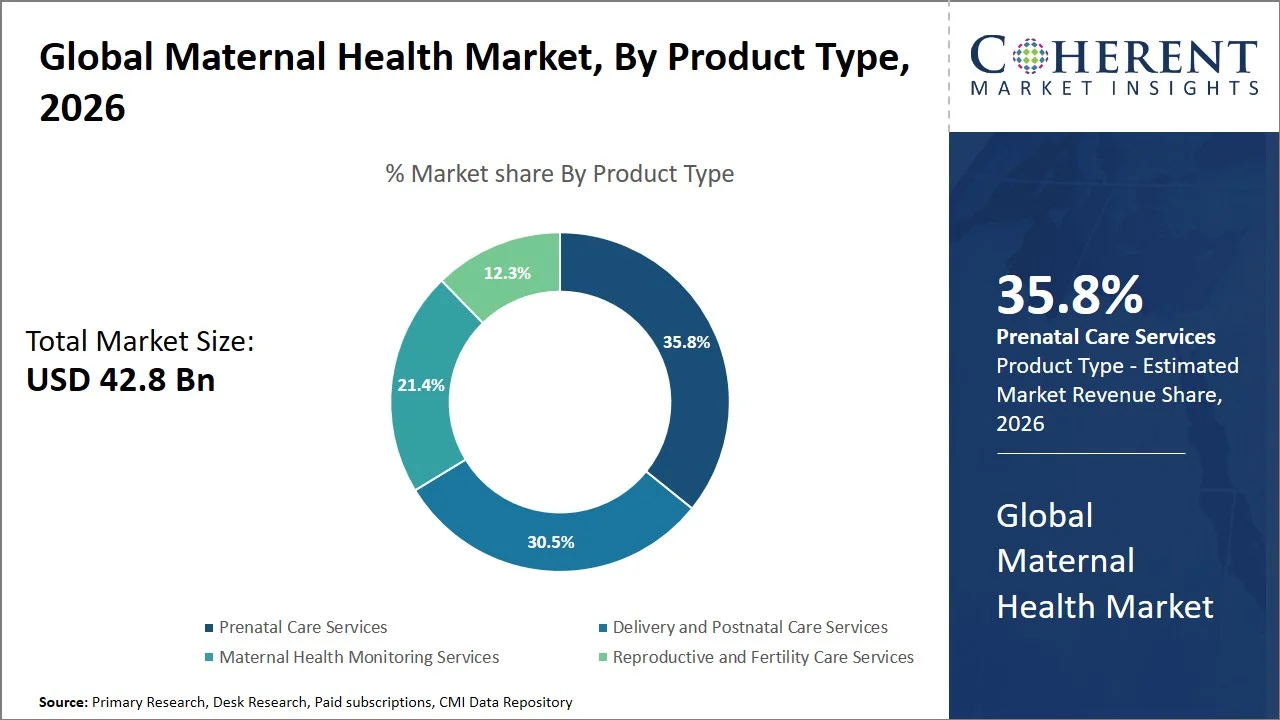
Why Do Prenatal Care Services Dominate the Global Maternal Health Market?
Prenatal care services are projected to hold a market share of 35.8% in 2026, owing to their role in assisting continuous pregnancy management and maternal well-being throughout gestation. The segment's growth is accelerated due to high adoption rate of comprehensive prenatal evaluation to improve healthcare provider's monitoring ability on infant growth, maternal condition, and pregnancy process. Furthermore, the increasing inclination toward combined care approach of medical supports, nutritional counseling, maternal health programs, and risk-assessment services is also boosting segment market expansion.
Innovations in prenatal screening technology and care coordination models are improving speed and personalization of pregnancy management resulting in rise in service consumption. For instance, The March of Dimes Prenatal Care Program advocates numerous prenatal health care visits and provision of a systematized form of social support during pregnancy. It emphasizes ongoing health monitoring, education on preferred practices of care during pregnancy, and screening for potential health problems. (Source: March of Dimes)
- Current Industry Events of 2026
- Market Size Estimation
- Regional Breakdown
- Competitive Landscape
- Customer Intelligence
- Segmental Analysis
- Pricing Analysis
- Key Market Drivers, Challenges & Future Trends
- Customized Insights Section
Why Do Pregnancy Complications Represent the Largest Condition Segment in the Maternal Health Market?
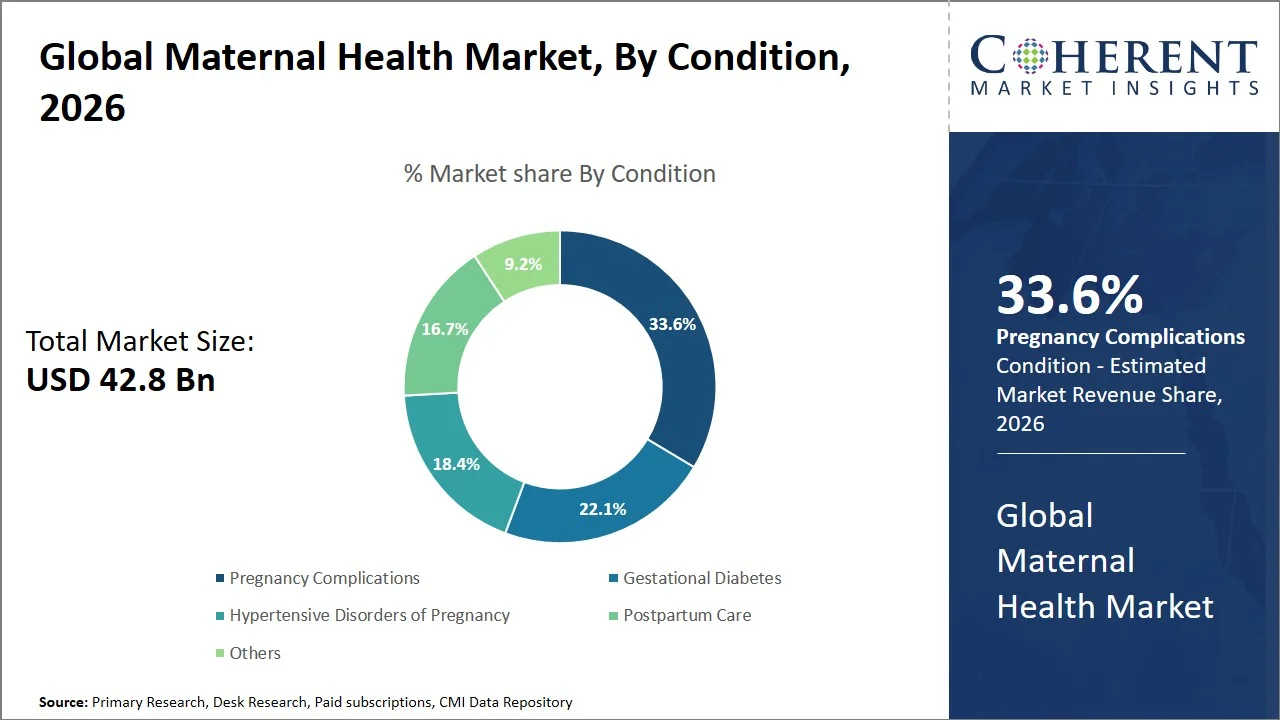
Pregnancy complications are projected to hold a market share of 33.6% in 2026, due to the rising incidence of complex maternal conditions that impact pregnancy outcome. The segment is witnessing rising adoption of dedicated monitoring systems, individualized intervention strategies, and specialized treatment pathways towards alleviating conditions that occur during pregnancy. The growing inclusion of prophylactic and risk-stratification protocols and integrated treatment modules is further aiding early clinical decision support and improved patient care.
Moreover, growing adaption of multidisciplinary treatment frameworks involving maternal health specialists and auxiliary treatment teams is further bolstering clinical success and broadening utilization of healthcare services in this segment. For instance, The Preeclampsia Foundation Resources and Pregnancy Complication Support disseminate educational materials and implements clinical support programs for complications of pregnancy including preeclampsia and other maternal conditions associated with pregnancy. They promote awareness of warning signs, intervention strategies, and specialized pregnancy management techniques to improve maternal and infant health outcomes. (Source: Preeclampsia Foundation)
Hospitals and Maternity Centers Segment Dominates the Global Maternal Health Market
The hospitals and maternity centers segment is projected to hold a market share of 58.3% in 2026, because of their ability to offer integrated maternal services during all phases of pregnancy and childbirth. The mother's need for continuous clinical support for all services related with pregnancy management; high-tech obstetric department to carry out the related diagnostics and clinical procedures; equipment for fetal assessment, and dedicated maternal support programs have made hospitals and maternity centers an important part of the consumer preference to avail maternal healthcare services. The trend of shifting closer to the need of the population of a focus on high-end technological solutions for complex pregnancy leading to continuous increase in segment growth attributable to evolving clinical workflows and specialized maternal care protocols.
For instance, according to Cleveland Clinic Maternity Services, every year Cleveland Clinic hospitals deliver more than 10,000 birth and care services for low-, medium-, and high-risk pregnancies. Cleveland Clinic offers a seamless maternity care system with expert obstetrics care teams and pregnancy management programs. This reflects the emerging role of hospital-based maternity care system. (Source: Cleveland Clinic)
Currents Events and their Impact
Current Events | Description and its Impact |
Australia Expands Maternal Health Research and Preventive Care Funding (December 2025) |
|
India Strengthens Digital Maternal Care Programs Through Integrated Health Platforms (April 2025) |
|
(Source: National Health and Medical Research Council, Ministry of Health and Family Welfare)
Maternal Health Market Dynamics
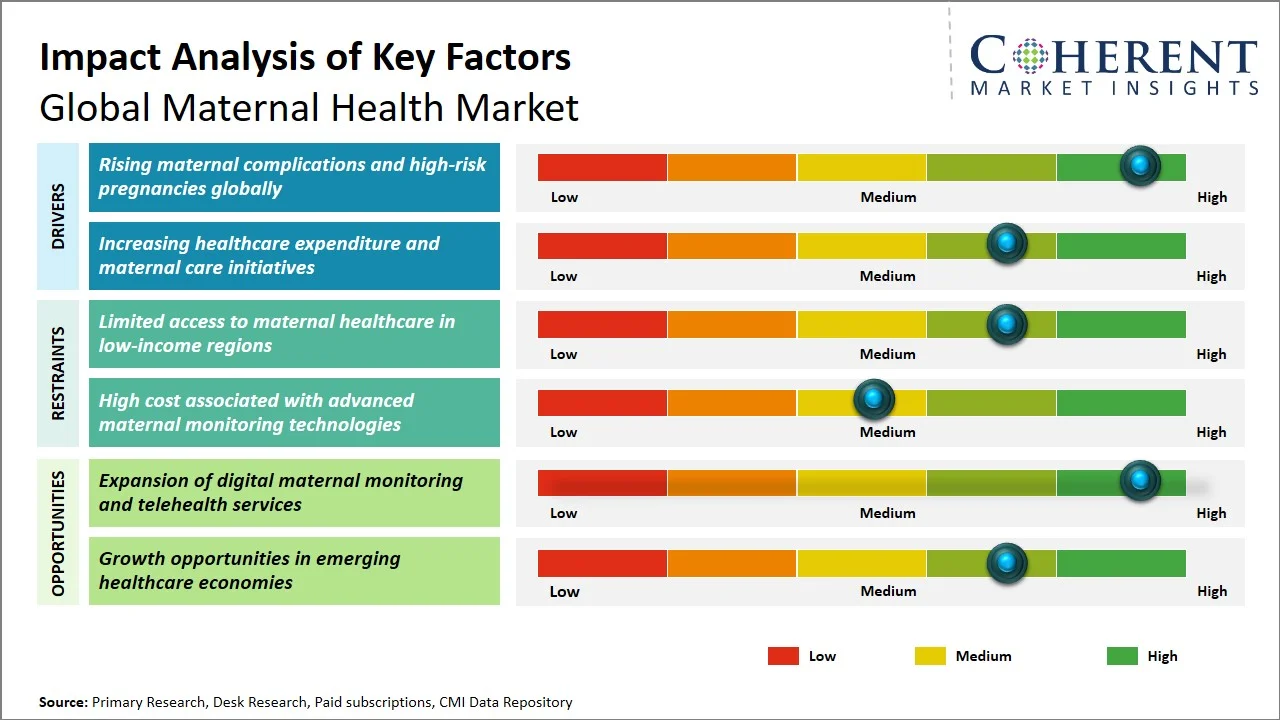
Market Drivers
- Rising maternal complications and high-risk pregnancies globally: The rising rates of maternal complications and high-risk pregnancies are substantially stimulating the market by creating a demand for specialized monitoring, diagnostics, and intervention services. The increasing occurrences of delayed pregnancy, metabolic diseases, and health risks associated with pregnancy are contributing to the need for more comprehensive maternal care solutions. This is hastening the adoption of more sophisticated monitoring procedures and directed approaches to care to optimize maternal and neonatal health. For instance, the U.S. National Institutes of Health (NIH) initiated the IMPROVE (Implementing a Maternal Health and Pregnancy Outcomes Vision for Everyone) to promote the development of research and strategies aimed at decreasing preventable pregnancy-related complications and advancing the quality of maternal care. (Source: US Department of Health and Human Services)
- Increasing healthcare expenditure and maternal care initiatives: The increasing expenditure on healthcare coupled with growing maternal healthcare program are majorly fueling the growth of maternal health market by helping in the development of healthcare infrastructure, dedicated maternal services, and high-end advanced care technologies. Extensive expenditure on healthcare sector is also encouraging the wider availability of pregnancy, birthing and after-birth services such as more accessible and improved quality of maternal care. For instance, in line with the investment in healthcare systems and services throughout the world, the World Bank reported that global current healthcare expenditure made up about 9.9% of gross domestic product (PGP). (Source: World Bank)
Emerging Trends
- Growing Integration of AI-Based Pregnancy Risk Prediction Tools: The maternal health market is increasingly witnessing the adoption of artificial intelligence (AII) platforms capable of measuring various aspects of maternal health and identifying high risk pregnancies at an earlier stage. These systems assist clinicians in decision support with predictive insights while also allowing clinicians to more effectively target intervention points.
- Expansion of Connected Maternal Care Ecosystems: The trend among healthcare providers is toward integrated models of maternal care that utilize the ecosystem of wearables, mobile health solutions, and remote monitoring into one integrated care path, allowing for continuous monitoring of maternal and fetal health metrics, as well as tailored pregnancy support and engagement.
Regional Insights
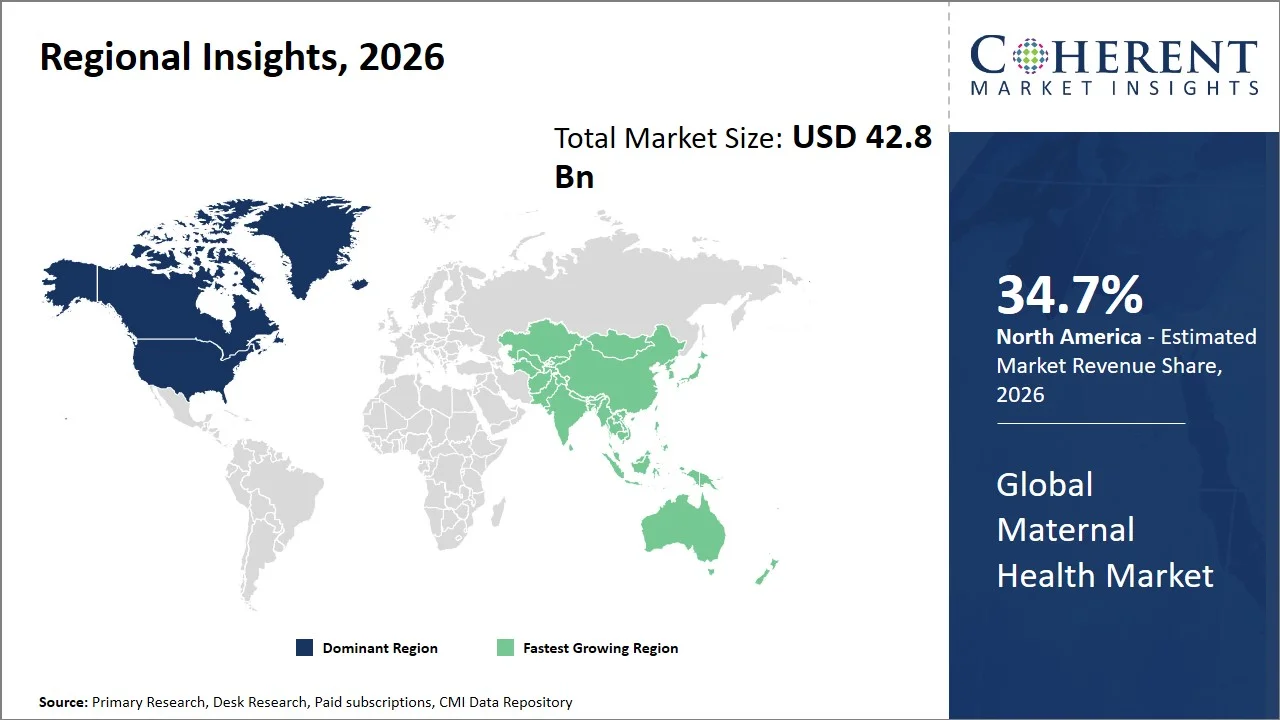
Why is North America a Strong Market for Maternal Health?
North America leads the global maternal health market, accounting for an estimated 34.7% share in 2026, attributed to the presence of strong healthcare systems, technologically advanced procedures, and huge investments made in maternal health programmes. The availability of excellent health institutions and favoring government policies that support maternal health, strengthen this existing position. For instance, the U.S. Centers for Medicare & Medicaid Services (CMS) implemented the Transforming Maternal Health (TMaH) Model that aims to reform the delivery of care during pregnancy, labor and delivery and postpartum through payment reforms, care integration, and payment incentives to foster comprehensive, team-based and patient centered maternal health care. (Source: Centers for Medicare & Medicaid Services)
In addition, stringent healthcare quality and customer safety standards are still bolstering the maternal health market across the region. The mature pharmaceutical sector and rapid adoption of modern medical appliances have played an important role in strengthening the market position. For instance, The Maternal Morbidity Structural Measure established by the U.S. Centers for Medicare & Medicaid Services (CMS) incentivizes hospitals to develop and adopt general safety and quality-focused protocols for maternal care to prevent pregnancy-related morbidity. (Source: Centers for Medicare & Medicaid Services)
Why Does the Asia Pacific Maternal Health Market Exhibit High Growth?
The Asia Pacific maternal health market is expected to exhibit the fastest growth with an estimated contribution of 25.8% share to the global market in 2026, attributed to the surging awareness about maternal health, expanding healthcare sectors and intensifying government programs spurring couple’s health and child health. For instance, the National Stillbirth Action and Implementation Plan has been developed in Australia to enhance maternity services by identifying risk, monitoring pregnancy and developing clear clinical guidance for expectant mothers. (Source: Commonwealth of Australia)
Moreover, developments in healthcare infrastructure, the widening of public and private healthcare insurance is under way in emerging countries. The demand for premium maternal health care services and products is mounting due to swift economic expansion and suburbanization. In addition, encouraging government initiatives such as the Janani Suraksha Yojana in India and China's Healthy China 2030 policy serve to facilitate favorable market conditions. Trade liberalizations and rise in foreign direct investments have further brought in new technologies and knowledge into the market.
Global Maternal Health Market Outlook for Key Countries
Why is the U.S. Leading Innovation and Adoption in the Maternal Health Market?
The U.S. is at the forefront of innovation and adoption in the maternal health market owing to rapid adoption of cutting-edge maternal care technologies throughout the comprehensive healthcare system. The country shows high adoption rate of AI-assisted prenatal risk calculators, interconnected maternal tracking devices, and digital solutions for pregnancy management. Furthermore, multidisciplinary and customized care regimens are widely used by the healthcare providers, which combine in- and postnatal diagnostics and maternal monitoring into a seamless integration of pregnancy and postpartum care, fostered also by an increasing focus on early identification of pregnancy complications enabled by technologies.
Is Japan a Favorable Market for Maternal Health Market?
Japan is one of the most promising markets for the maternal health market driven by the strong adoption of technology enabled healthcare facilities and focus on precision-based management of maternal healthcare. With healthcare systems increasingly adopting technology infused all aspects of pregnancy management such as at the level of routine pregnancy management, the use of advanced prenatal imaging techniques, fetal monitoring systems and digital health solutions becomes inevitable. In addition, the market is enabled through the existing organized care system which emphasizes on continuous monitoring of the expectant mothers and early detection of pregnancy related risk thus boosting the need for specialized maternal care solutions.
Is China Emerging as a Key Growth Hub for the Maternal Health Market?
China is positioned as a key growth hub in the global maternal health market driven by the expanding utilization of digital healthcare technologies within the maternal care protocol, and rising prevalence of sophisticated fetal and prenatal monitoring solutions. The market is experiencing rising acceptance of accurate, AI-powered diagnostic systems, dedicated pregnancy management solutions and wired maternal health platforms to optimize care quality and efficiency. Going forward, rise in customized pregnancy monitoring and intervention focused obstetric strategies is also likely to propel the innovations in China.
Why Does Germany Top the Europe Maternal Health Market?
Germany is the leader in the European market for maternal health largely contributed to significant presence and utilization of emerging screening procedures and specialized maternal care pathways in the country's healthcare infrastructure. The country exhibits high levels of utilization for early screening and diagnosis procedures such as high-resolution fetal imaging systems and genetic screening procedures as well as integrated obstetric pathways for overall pregnancy handling. Rising emphasis on early detection of maternal and fetal health conditions further is expected to underpin market growth.
Is the Maternal Health Market Developing in India?
India is emerging as a lucrative market for maternal health amidst the growing adoption of emerging maternal monitoring solutions and integration of digital healthcare platforms. The country is witnessing increasing uptake of prenatal screening solutions, connected pregnancy management tools, remote pregnancy consultation platforms leading to improved accessibility and continuity of care. Furthermore, the increasing emphasis on prenatal care and risk-based monitoring of pregnancy have stimulated the demand for maternal health services and technologies in the country.
Regulatory Landscape Governing the Global Maternal Health Market
Region | Authority & Classification | Approval Pathway | Key Regulatory Insight |
North America | U.S. FDA, Health Canada; medical devices categorized under risk-based Class I, II, and III systems | FDA 510(k), PMA pathway, De Novo process; Health Canada Medical Device Licensing | Strong emphasis on maternal and fetal safety, digital health compliance, post-market surveillance, and clinical evidence requirements for maternal monitoring technologies |
Europe | European Medicines Agency (EMA), European Commission Medical Device Regulation (EU MDR) | CE marking under EU MDR and clinical evaluation requirements | Stringent clinical performance and safety requirements with increased focus on maternal device traceability and real-world evidence |
Asia Pacific | NMPA (China), PMDA (Japan), CDSCO (India), TGA (Australia) | Country-specific device registration and clinical review pathways | Rapid regulatory modernization with increasing support for maternal healthcare technologies and telehealth solutions |
Latin America | ANVISA (Brazil), COFEPRIS (Mexico) | National registration and product evaluation process | Increasing harmonization of medical device regulations and maternal healthcare standards across emerging economies |
Middle East & Africa | Saudi FDA (SFDA), UAE Ministry of Health & Prevention, South African Health Products Regulatory Authority (SAHPRA) | National registration and market authorization process | Growing investments in maternal care infrastructure and adoption of international quality and safety standards for healthcare products |
How is the expansion of digital maternal monitoring and telehealth services creating new growth opportunities in the maternal health market?
The rapid adoption and development of the digital maternal monitoring and telehealth solutions is set to revolutionize the market by helping to improve access to care for women living in remote regions and other underserved groups. Existing telehealth systems are being used to offer dedicated monitoring pathways for both mothers, and babies reducing the need for frequent in-person hospital visits for routine monitoring. Furthermore, telehealth services are enhancing the quality and efficiency of maternal healthcare delivery for health professionals, as well as increasing patient engagement. For instance, in October 2025, Ascension Florida unveiled a telehealth maternity care program aimed at providing remote care services to expectant, new mothers and their babies, highlighting the increasing utilization of virtual maternity care models within health systems. (Source: Ascension)
Market Players, Key Development, and Competitive Intelligence
Key Developments
- On May 7, 2026, the Indian Government's Ministry of Health and Family Welfare introduced the JANANI platform. This new initiative aims to enhance maternal and child healthcare with the use of new digital monitoring practices and integrated health record management to facilitate a creation of a single, longitudinal healthcare record across all stages of care. These types of digital healthcare initiatives introduced by government bodies should serve to provide increased access to maternal health, in addition to increased capacity for patient monitoring, and would also seem to encourage expansion in maternal services.
- In November 2025, Laborie announced a purchase agreement to acquire the JADA System from Organon, aiming to enhance its obstetrics and maternal health portfolio. The JADA system is a U.S. FDA-approved device designed for rapid management of postpartum hemorrhage, one of the leading causes of maternal deaths worldwide. These types of acquisitions help hasten innovation and enable improved access to state-of-the-art maternal health and postpartum care technologies.
Competitive Landscape
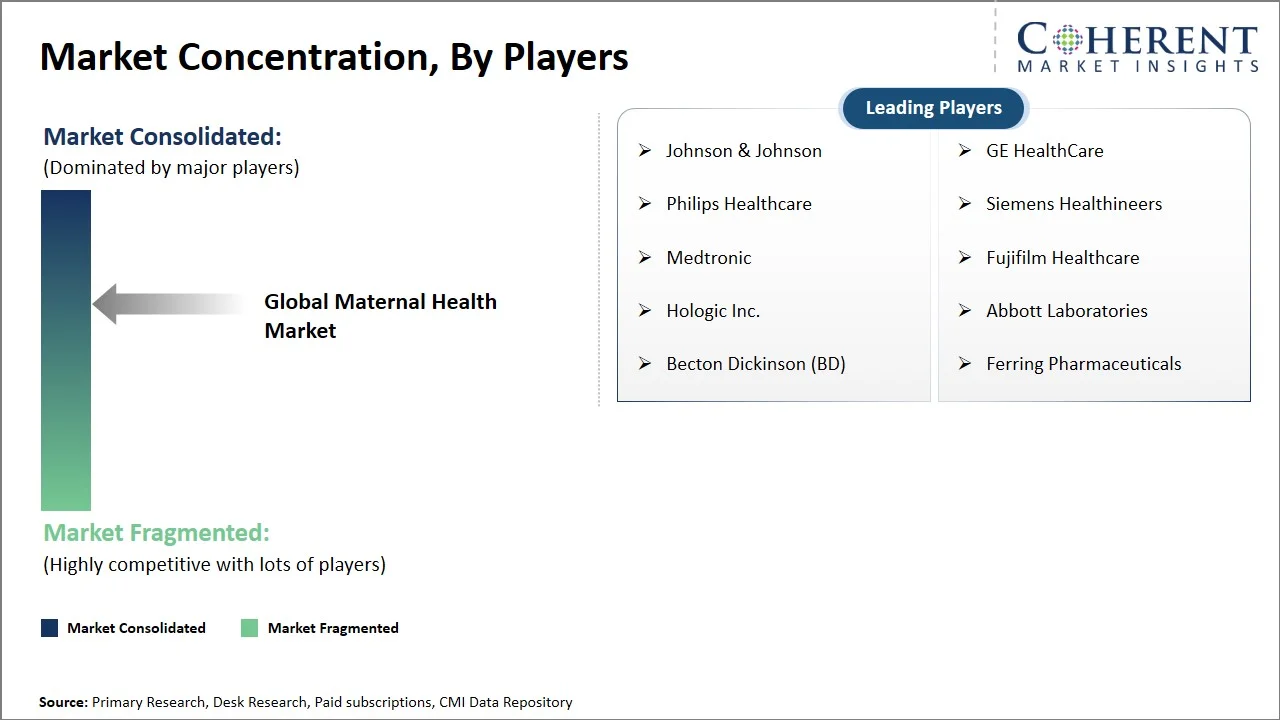
The global maternal health market is moderately competitive with company focus on innovation in technology, enhancement of maternal care sectors and improving accessibility for complete health care management. The market players are putting resources into electronic health records, modern forms of prenatal discovery and remote maternal monitoring technologies to improve pregnancy results and minimize cases of maternal health issues. Entrenched co-partings with government institutions and clinical organizations with expansion in developing nations are also the emerging strategies. Key focus areas include:
- Development of advanced prenatal and maternal monitoring technologies
- Expansion of maternal diagnostic and preventive care solutions
- Integration of telehealth platforms, AI-enabled analytics, and remote patient monitoring systems
- Strengthening healthcare partnerships and regional service expansion initiatives
Market Report Scope
Maternal Health Market Report Coverage
| Report Coverage | Details | ||
|---|---|---|---|
| Base Year: | 2025 | Market Size in 2026: | USD 42.8 Bn |
| Historical Data for: | 2020 To 2024 | Forecast Period: | 2026 To 2033 |
| Forecast Period 2026 to 2033 CAGR: | 6.9% | 2033 Value Projection: | USD 68.4 Bn |
| Geographies covered: |
| ||
| Segments covered: |
| ||
| Companies covered: | Johnson & Johnson, GE HealthCare, Philips Healthcare, Siemens Healthineers, Medtronic, Fujifilm Healthcare, Hologic Inc., Abbott Laboratories, Becton Dickinson (BD), and Ferring Pharmaceuticals | ||
| Growth Drivers: |
| ||
| Restraints & Challenges: |
| ||
Analyst Opinion (Expert Opinion)
- In the coming years, the maternal health market is expected lean towards holistic, preventive, and data-driven modalities of care, that early risk detection and intervention could become a cornerstone in maternal healthcare management. Digital platforms for maternal health, AI-based early risk prediction solutions, remote patient monitoring solutions, and telehealth services are likely to reshape approaches to traditional care standards.
- The maximum opportunities will probably exist within prenatal and remote maternal monitoring applications across Asia Pacific, particularly India and China owing to large number of births, increasing number of hospitals/healthcare infrastructure, rising government investments for maternal-child health/ healthcare programs. Rising adoption of digital health technologies and increasing awareness related to maternal health/ wellbeing are expected to create potential opportunities for global players in these countries.
- In order to obtain a competitive advantage, market participants should focus on investing more on AI-enabled maternally monitoring solutions, strategic cooperation with hospitals and public health organizations, and establishing a stronger presence in new markets. The players involved in providing affordable, scalable, and explicitly digital solutions for maternally health while increasing the presence in underdeveloped areas would be better differentiated than their competitors through gaining a competitive advantage.
Speak to the analyst
Want personalized insights?
Take the findings above to one of our principal consultants, or have the report rebuilt around the segments, geographies and competitors you actually track.
Market Segmentation
- Product Type Insights (Revenue, USD Bn, 2021 - 2033)
- Prenatal Care Services
- Delivery and Postnatal Care Services
- Maternal Health Monitoring Services
- Reproductive and Fertility Care Services
- Condition Insights (Revenue, USD Bn, 2021 - 2033)
- Pregnancy Complications
- Gestational Diabetes
- Hypertensive Disorders of Pregnancy
- Postpartum Care
- Others
- End User Insights (Revenue, USD Bn, 2021 - 2033)
- Hospitals and Maternity Centers
- Specialty Clinics
- Home Healthcare Settings
- Community Healthcare Centers
- Others
- Regional Insights (Revenue, USD Bn, 2021 - 2033)
- North America
- U.S.
- Canada
- Latin America
- Brazil
- Argentina
- Mexico
- Rest of Latin America
- Europe
- Germany
- U.K.
- Spain
- France
- Italy
- Russia
- Rest of Europe
- Asia Pacific
- China
- India
- Japan
- Australia
- South Korea
- ASEAN
- Rest of Asia Pacific
- Middle East
- GCC Countries
- Israel
- Rest of Middle East
- Africa
- South Africa
- North Africa
- Central Africa
- North America
- Key Players Insights
- Johnson & Johnson
- GE HealthCare
- Philips Healthcare
- Siemens Healthineers
- Medtronic
- Fujifilm Healthcare
- Hologic Inc.
- Abbott Laboratories
- Becton Dickinson (BD)
- Ferring Pharmaceuticals
Sources
Primary Research Interviews
- Maternal healthcare providers, obstetricians, gynecologists, and prenatal care specialists involved in pregnancy and childbirth management
- Hospital administrators and maternal care program managers overseeing maternity services and patient care workflows
- Digital health and remote patient monitoring solution providers supporting maternal health applications
- Public health experts and maternal healthcare policymakers involved in women’s health initiatives
- Researchers and clinicians engaged in maternal and fetal health studies and prenatal diagnostic advancements
Stakeholders
- Maternal healthcare service providers and medical technology companies
- End-use Sectors
- Hospitals and maternity centers
- Obstetrics and gynecology clinics
- Diagnostic laboratories
- Telehealth and remote monitoring providers
- Academic and research institutions
- Public health organizations and maternal welfare agencies
- Regulatory & Health Bodies: World Health Organization (WHO) – maternal mortality and maternal healthcare statistics, U.S. Food and Drug Administration (FDA) – maternal and fetal medical device regulations, Centers for Disease Control and Prevention (CDC) – maternal health surveillance data, National Institutes of Health (NIH) – maternal health research initiatives, United Nations Population Fund (UNFPA) – maternal health programs and policy guidance
Databases
- WHO Global Health Observatory – maternal mortality and reproductive healthcare statistics
- World Bank Health Database – healthcare expenditure and maternal health indicators
- CDC National Center for Health Statistics – maternal and infant healthcare data
- OECD Health Statistics – healthcare access and maternal care infrastructure data
- Global Burden of Disease (GBD) Database – pregnancy-related disease prevalence and healthcare burden data
- United Nations Population Division Database – fertility and reproductive health trends
Magazines
- Healthcare IT News – digital healthcare and telemedicine advancements
- Modern Healthcare – healthcare infrastructure and maternal care trends
- Medical Device Network – maternal care technologies and monitoring innovations
- Healthcare Business Today – maternal healthcare service developments
- HealthTech Magazine – digital health and AI applications in healthcare
Journals
- Maternal and Child Health Journal
- American Journal of Obstetrics and Gynecology
- BJOG: International Journal of Obstetrics and Gynecology
- Journal of Maternal-Fetal & Neonatal Medicine
- The Lancet Global Health
Newspapers
- Financial Times – healthcare and life sciences industry developments
- The Wall Street Journal – healthcare technology and medical services updates
- The New York Times (Health Section) – maternal health and healthcare innovation trends
- The Guardian (Health & Science) – global maternal healthcare advancements
Associations
- American College of Obstetricians and Gynecologists (ACOG)
- Society for Maternal-Fetal Medicine (SMFM)
- International Federation of Gynecology and Obstetrics (FIGO)
- Association of Women's Health, Obstetric and Neonatal Nurses (AWHONN)
- March of Dimes
Public Domain Sources
- World Health Organization (WHO) – maternal healthcare and mortality statistics
- Centers for Disease Control and Prevention (CDC) – maternal and reproductive healthcare data
- United Nations Population Fund (UNFPA) – maternal healthcare initiatives and reports
- World Bank – healthcare access and maternal health expenditure data
- National Institutes of Health (NIH) – maternal healthcare research publications
Proprietary Elements
- CMI Data Analytics Tool, Proprietary CMI Existing Repository of information for last 10 years.
Get access to 250+ pages report
Every segment, forecast, competitor profile and data table behind the analysis above — available for instant download.
- ESOMAR Member
- ISO 9001:2015 Certified
- D-U-N-S Registered
- GDPR & CCPA Compliant
Missing comfort of reading report in your local language? Find your preferred language:
Transform your Strategy with Exclusive Trending Reports
Frequently Asked Questions
The global maternal health market is estimated to be valued at USD 42.8 Bn in 2026 and is expected to reach USD 68.4 Bn by 2033.
Prenatal care services dominate due to the increasing emphasis on early pregnancy monitoring, routine screenings, risk assessment, and timely interventions aimed at improving maternal and fetal outcomes.
Maternal health refers to the healthcare and well-being of women during pregnancy, childbirth, and the postnatal period.
The CAGR of the global maternal health market is projected to be 6.9% from 2026 to 2033.
Rising maternal complications and high-risk pregnancies globally, and increasing healthcare expenditure and maternal care initiatives are the major factors driving the growth of the global maternal health market.
Limited access to maternal healthcare in low-income regions, and high cost associated with advanced maternal monitoring technologies are the major factors hampering the growth of the global maternal health market.
The adoption of digital health platforms, remote patient monitoring, AI-based risk assessment tools, and advanced prenatal diagnostics is accelerating innovation in maternal healthcare.