

Global Oncology Precision Medicine Market Size and Forecast – 2026-2033
According to Coherent Market Insights, the global oncology precision medicine market is estimated to be valued at USD 190.50 Bn in 2026 and is expected to reach USD 366.53 Bn by 2033, exhibiting a compound annual growth rate (CAGR) of 9.8% from 2026 to 2033. This significant growth is driven by advancements in genomic profiling, increasing adoption of targeted therapies, and rising cancer incidence globally. Investment in research and development and collaborations among healthcare providers further propel market expansion during this period.
Key Takeaways of the Oncology Precision Medicine Market
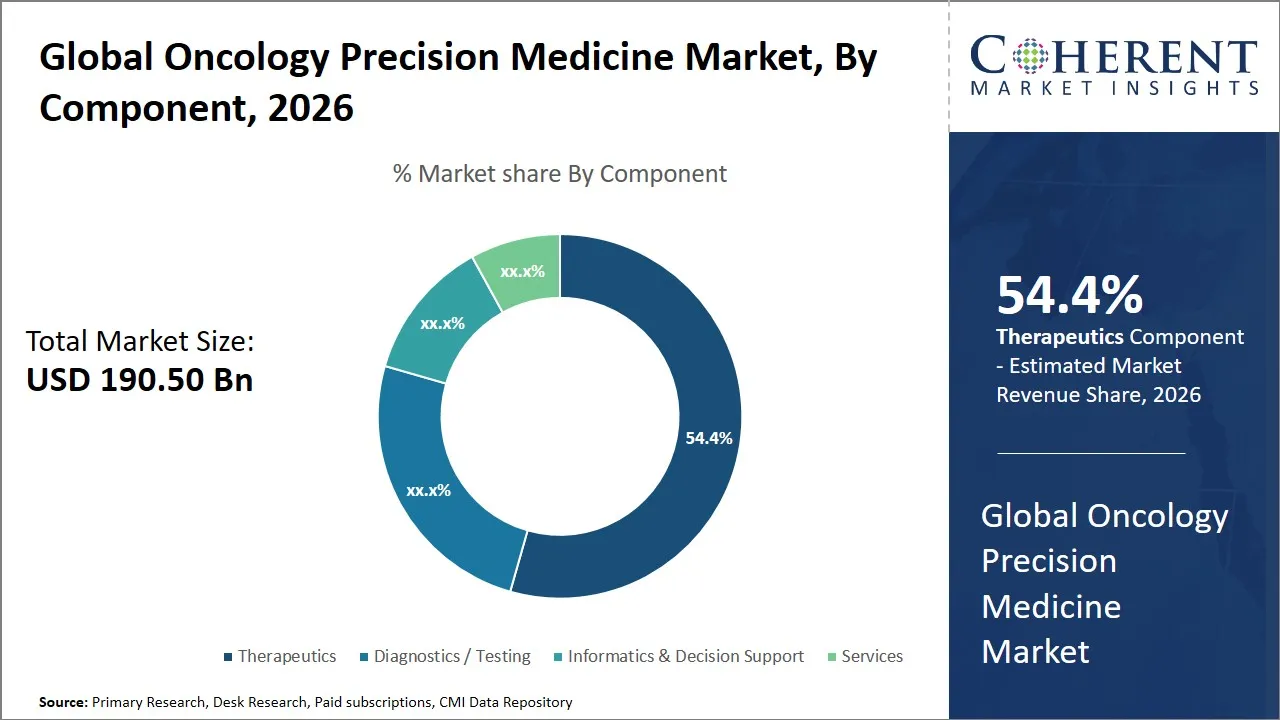
- Therapeutics segment is expected to lead the oncology precision medicine market, capturing 54.4% share in 2026.
- Risk assessment & screening segment is estimated to represent 21.4% of the market share in 2026.
- Genomics segment is projected to dominate with 37% of the global oncology precision medicine market share in 2026.
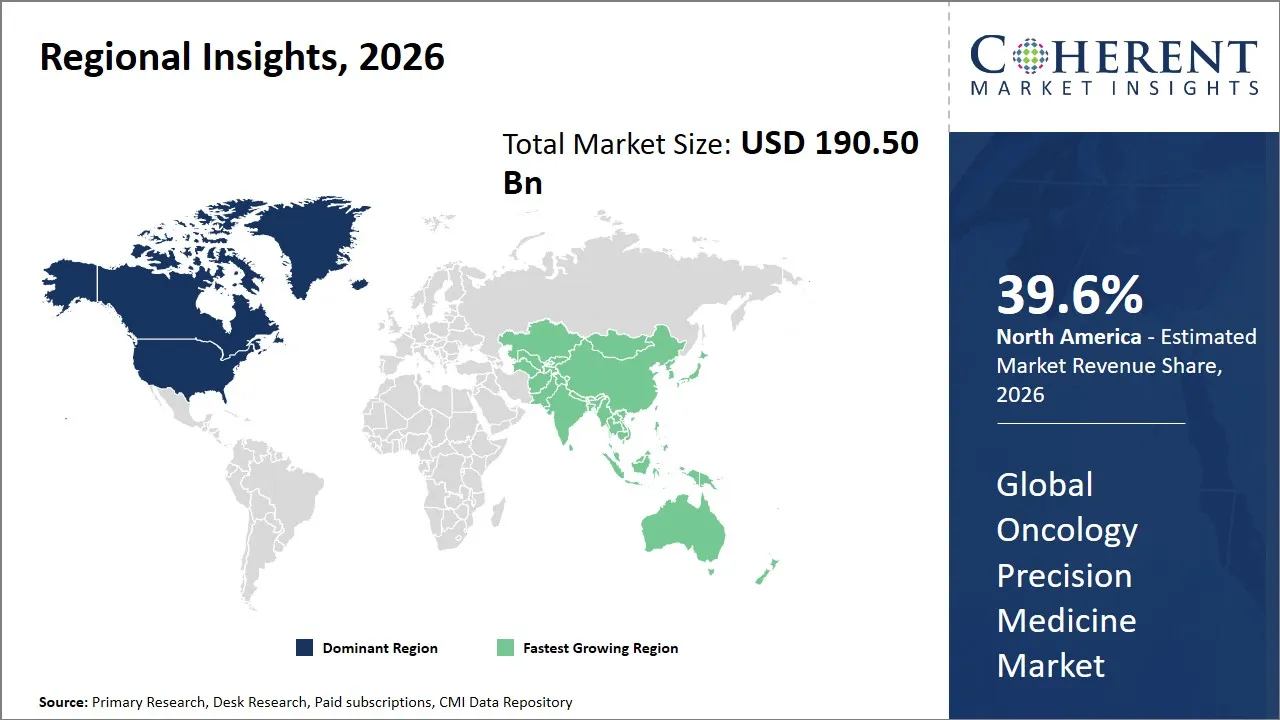
- North America is expected to lead the market, holding a share of 39.6% in 2026. Asia Pacific is anticipated to be the fastest-growing region, with 26% share in 2026.
Market Overview
- The increasing focus on personalized cancer care, driven by advancements in genomic sequencing technologies, is enhancing the adoption of precision medicine. This trend enables tailored treatment plans based on a patient's genetic makeup, leading to better treatment outcomes and fewer side effects.
- Innovations in genomic profiling, liquid biopsy, and AI-driven platforms are transforming cancer diagnostics. Tools like next-generation sequencing (NGS) and liquid biopsy are revolutionizing the precision oncology landscape, allowing for earlier detection and more accurate treatment options.
- The integration of artificial intelligence (AI) and machine learning into precision oncology presents significant opportunities. AI can analyze vast amounts of clinical and genomic data to identify new biomarkers, personalize treatment plans, and optimize drug development processes.
- Despite the growth in precision oncology, access remains limited in low-income regions due to infrastructure challenges and high treatment costs. Expanding access to precision medicine in emerging markets presents both a challenge and an opportunity for market players to make treatments more widely available.
Currents Events and Its Impact
Current Events | Description and its Impact |
Advancements in Genomic Sequencing Technologies |
|
Increased Regulatory Support for Precision Medicine |
|
Segmental Insights
- Current Industry Events of 2026
- Market Size Estimation
- Regional Breakdown
- Competitive Landscape
- Customer Intelligence
- Segmental Analysis
- Pricing Analysis
- Key Market Drivers, Challenges & Future Trends
- Customized Insights Section
Why Does the Therapeutics Segment Dominate the Global Oncology Precision Medicine Market in 2026?
The therapeutics segment is expected to hold the largest share of 54.4% in 2026, driven by the increasing focus on personalized cancer treatment tailored to individual tumor biology. Therapeutics encompass a broad spectrum including targeted therapies, targeted biologics, precision immuno-oncology, cell & gene therapies, radiotheranostics/targeted radionuclide therapies, and innovative combination regimens. The increased use of cancer and the increasing need to have better treatment options with safer profiles drive investments and innovations in the respective fields of treatment.
For instance, developed by Merck, Keytruda is an immunotherapy drug that targets the PD-1 protein on immune cells, helping the immune system recognize and attack cancer cells. It is used to treat various cancers, including melanoma, lung cancer, and head and neck cancer, and is a prime example of precision medicine, as it is administered based on the patient's specific tumor characteristics.
Why Does the Risk Assessment & Screening Segment Dominate the Global Oncology Precision Medicine Market in 2026?
The risk assessment & screening segment is projected to hold the largest share of 21.4% in 2026, powered by a growing emphasis on early detection and prevention of cancer. The capability to detect high-risk patients and diagnose tumors in a pre-symptomatic form radically enhances patient outcomes and decreases the overall treatment burden, which prompts caregivers to invest in sophisticated screening tools as the part of precision oncology systems. Genetic risk profiling and screening tools have been innovated based on a biomarker, which has allowed stratification of populations based on inherited susceptibilities and environmental exposures. This accuracy facilitates precise screening programs, which are better in terms of detection and cost-effectiveness as opposed to the traditional one-fits-all screening programs.
For instance, Guardant360 CDx is a leading U.S. FDA-approved liquid biopsy test that analyzes circulating tumor DNA (ctDNA) from a simple blood draw to identify actionable genetic mutations in solid tumors. It guides personalized treatment selection for advanced cancer patients particularly in lung, breast, and colorectal cancers without the risks of invasive tissue biopsies.
(Source- https://investors.guardanthealth.com/press-releases/press-releases/2026)
Genomics Dominates the Global Oncology Precision Medicine Market
Genomics segment is expected to capture the highest share of 37% in 2026, largely due to its fundamental role in unraveling cancer heterogeneity and guiding precision diagnostics and therapeutics. The broad application of genomics from mutation detection to comprehensive tumor profiling—has transformed oncology by enabling more accurate tumor classification, targeted drug development, and personalized treatment planning. Genomic developments are based on the next-generation sequencing (NGS) technologies that enable the sequencing of large numbers of genes or whole exomes/genomes with both high throughput and low cost in parallel. This scalability aids in the discovery of mutations that can be acted upon, variations of the copy number and gene fusions that are essential in determining candidates that are viable to use in targeted therapy or even immunotherapies. NGS panels have already become an ordinary instrument of oncology diagnostics today.
AI & Data-Driven Innovations in Oncology Precision Medicine: Transforming Cancer Treatment
Category | Description | Impact |
| Technological Advancements | AI and machine learning are being increasingly integrated into oncology precision medicine to analyze complex genomic and clinical data for better patient diagnosis and treatment. | AI’s role in oncology precision medicine accelerates data processing and enables faster, more accurate identification of genetic mutations, thereby improving the precision of cancer diagnoses and treatments. |
| Key Applications | AI is used for early cancer detection, treatment prediction, personalized treatment recommendations, and biomarker identification based on genomic data analysis. | By using AI, oncologists can offer more personalized treatments, increasing the chances of successful outcomes, reducing unnecessary treatments, and enhancing overall patient care. |
| Benefits for Healthcare Providers | AI assists oncologists in making more informed, data-backed decisions, leading to optimized treatment strategies and improved efficiency in cancer care. | Oncologists benefit from more precise diagnostic tools, allowing them to make quicker, more accurate treatment decisions, thereby reducing errors and improving overall care efficiency. |
| Market Impact | AI-driven tools are enhancing the development of personalized cancer therapies, improving precision, and decreasing the time required to bring new treatments to market. | AI speeds up the process of drug discovery, reduces time-to-market for oncology therapies, and improves the accuracy of cancer treatments, making them more effective and accessible to patients worldwide. |
Regional Insights
North America Oncology Precision Medicine Market Analysis and Trends
The North America region is projected to lead the market with a 39.6% share in 2026, due to a well-established healthcare infrastructure, significant R&D investments, and strong clinical trial networks. Innovation and commercialization of advanced precision therapies and diagnostics are motivated by the availability of major pharmaceutical and biotechnology firms, including Pfizer, Roche, and Thermo Fisher Scientific. The dominance further strengthens the market by government efforts such as heavy investments by the National Cancer Institute and favorable U.S. FDA policies that facilitate the fast-tracking of personal treatments into the market.
For instance, in the U.S., the Foundation Medicine Company is an organization that offers comprehensive genomic profiling (CGP) (FoundationOne CDx and Liquid CDx) under the guidance of the FDA to identify genetic mutations in cancer to direct targeted therapy. The tests are conducted on hundreds of genes in different solid tumors that include lung, breast, and colon, and that aid oncologists in making decisions based on personalized treatment.
(Source- https://www.foundationmedicine.com/press-releases/)
Asia Pacific Oncology Precision Medicine Market Analysis and Trends
The Asia Pacific region is expected to exhibit the fastest growth in the market contributing 26% share in 2026, propelled by increasing cancer incidence, expanding healthcare access, and rapid investments in medical biotechnology. China, Japan, India, and South Korea are among the countries that are doing a lot to incorporate precision medicine in their healthcare systems, which is facilitated by the governments via national precision medicine programs and larger investments in genomic research. Another advantage of the area is the expansion of patient population whose needs can be addressed through the application of personalized treatments, as well as an increase in the number of partnerships between local companies and international industry leaders, such as Illumina, Novartis and Becton Dickson.
For instance, in Japan (March 2022) and Singapore (May 2023), the Guardant360 CDx test is regulatory approved to do comprehensive genomic profiling (CGP) and companion diagnostic (CDx) on advanced solid tumors. It finds extensive application in the process of discovering mutations in lung, breast, and colorectal cancer.
(Source- https://guardanthealth.com/products/tests-for-patients-with-early-and-advanced-stage-cancer/)
Oncology Precision Medicine Market Outlook for Key Countries
What are the Current Trends Shaping the U.S. Oncology Precision Medicine Market?
The U.S. is at the forefront of the oncology precision medicine market having strong ecosystems of research and dominant clinical trials. Major companies, Bristol-Myers Squibb, Gilead sciences and Foundation medicine are actively involved in the development of targeted treatment and companion diagnostics. The market is further developed by government agencies, such as the NIH, and programs, such as the Cancer Moonshot, with a strong focus on precision oncology. The high concentration of dedicated cancer facilities and biotech centers will guarantee a high rate of innovation and access of most patients to next generation therapy.
How is China Helping in the Growth of the Oncology Precision Medicine Market?
The oncology precision medicine market in China is growing at a very fast rate because of the widespread government efforts to control the spread of cancer and increase the growth of molecular diagnostics. Such firms as BGI Genomics and Wuxi AppTec are also significant in their contribution to the field of genomic sequencing and the study of biomarkers. The Made in China 2025 plan by the Chinese government places a lot of focus on biotech innovation, which has been used to support the creation of localized precision medicine platforms. Besides, market forces also enjoy the advantages of mergers between local companies and multinationals, which improve the use of technology and harmonization of regulations.
Key Drivers for the Growth of the Japan Oncology Precision Medicine Market
Japan has an important role in precision oncology due to the developed healthcare system and the presence of the pharmaceutical industry. Certain pharmaceutical companies like Takeda Pharmaceutical and Daiichi Sankyo are heavily investing in targeted therapies and companion diagnostics to the genetic profile of the Japanese. The regulation policies by the government facilitate the innovations of personalized medicine and reimbursement systems encourage the use of personalized medicine in clinical settings. Demand to use precision therapeutics is also high in Japan due to the aging population and the high incidence of cancer in the population.
India Oncology Precision Medicine Market Trends
The oncology precision medicine market in India is growing with a significant pace, which is supported by the growing healthcare infrastructure and the growing understanding of customized cancer treatment. Key players in biotechnology such as Dr. Reddy’s Laboratories and Strand Life Sciences have specialized in affordable diagnostics and targeted therapy. The initiatives by the government to enhance access to cancer care and enhance innovation are taking off. Although there is a significant problem with the harmonization of regulations and reimbursement, the rise in collaboration between the private and the public sector contributes to market growth.
Advancements in Clinical Trials and Pipeline Activity in Oncology Precision Medicine
- Increase in Clinical Trials on Targeted Therapies and Immunotherapies: The targeted therapies and Immunotherapeutics market has remarkably grown in regard to clinical trials aimed at assessing the targeted therapies as well as Immunotherapies. Such trials are based on genomic and biomarker profiling to pair the cancer patients with the most suitable treatments depending on their specific genetic composition. Various cancers are in key trials such as lung, breast, colorectal or melanoma. Indicatively, the treatment of individual mutations like EGFR and HER2 in non-small cell lung cancer (NSCLC) and breast cancer has been able to reach new stages of clinical trials. The trials will be conducted to confirm the effectiveness of the precision therapies, which could be more effective and less adverse than the conventional therapy, such as chemotherapy. The increasing knowledge of cancer genomics has prompted pharmaceutical firms and research centers to produce more personalized treatment choices leading to the swift increase in the number of clinical trials in this region.
- Expanding Liquid Biopsy and Biomarker-Driven Investments: The other development driving changes in the oncology precision medicine environment is the increasing number of clinical trials based on liquid biopsies and biomarker-directed therapies. Trial Liquid biopsy, the study of genetic material in blood, is being trialed as an alternative to conventional tissue biopsy, a more invasive procedure. These experiments are intended to answer the question of whether liquid biopsies can be efficient at detecting mutations, tracking tumor progression and treatment response in real-time. Various cancers are being investigated using liquid biopsies such as lung cancer, colorectal cancer and breast cancer. Research based on biomarker is also exploring genetic markers that may be used to predict how a patient responds to a treatment, such as immunotherapy and targeted therapy. With these trials underway, liquid biopsy technologies and biomarker analysis will likely transform cancer detection and monitoring, which are much more accessible and personalized oncology care approaches.
Market Players, Key Developments, and Competitive Intelligence
Key Developments
- On January 12, 2026, Caris Life Sciences and Everlywell are launching Caris Detect, a blood-based multi-cancer early detection (MCED) test expected in the first half of 2026. It uses advanced whole genome sequencing (WGS) and AI to identify molecular signals from various cancers non-invasively.
- In December 2025, Johnson & Johnson (Janssen Pharmaceuticals), a global leader in healthcare innovation, announced the acquisition of Halda Therapeutics, a cutting-edge biotechnology company specializing in novel oncology treatments for prostate cancer. The deal, valued at an undisclosed amount, is aimed at reinforcing J&J's expanding oncology pipeline, particularly in precision therapies for prostate cancer.
- In July 2025, Sanofi finalized its acquisition of Blueprint Medicines in a deal valued at approximately USD 9.1 to USD 9.5 billion. The move strengthens Sanofi’s precision oncology and immunology pipeline by adding Ayvakit/Ayvakyt (avapritinib), a key therapy for systemic mastocytosis, aimed at advancing targeted treatments.
Top Strategies Followed by Global Oncology Precision Medicine Market Players
Player Type | Strategic Focus | Examples |
Established Market Leaders | Established industry leaders in oncology precision medicine prioritize substantial R&D investments to develop accurate diagnostic tools, personalized treatments, and companion diagnostics. Strategic partnerships with pharma, tech firms, and OEMs help enhance their product portfolios and market position. | Roche continues to lead in precision oncology by forming partnerships with tech firms for AI-driven diagnostics and expanding its global reach, especially in regions like Asia and Latin America. |
Mid-Level Players | Mid-level players in the oncology precision medicine market focus on providing cost-effective solutions without compromising clinical efficacy, making treatments more accessible in price-sensitive regions. They enhance competitiveness by forming strategic collaborations with contract manufacturers, research institutions, and technology partners to broaden their capabilities. | Varian Medical Systems collaborates with research institutions to develop affordable radiotherapy solutions, helping expand access to precision oncology treatments in emerging markets. |
Small-Scale Players | Small-scale players in the oncology precision medicine market focus on niche innovations and specialized products, often targeting specific cancer types or novel biomarkers. By leveraging advanced technologies like AI and machine learning, they differentiate themselves despite limited resources. | OncoOne specializes in developing innovative biomarkers for cancer detection and collaborates with regional biotech startups to expand its market presence and distribution channels. |
Market Report Scope
Oncology Precision Medicine Market Report Coverage
| Report Coverage | Details | ||
|---|---|---|---|
| Base Year: | 2025 | Market Size in 2026: | USD 190.50 Bn |
| Historical Data for: | 2020 To 2024 | Forecast Period: | 2026 To 2033 |
| Forecast Period 2026 to 2033 CAGR: | 9.8% | 2033 Value Projection: | USD 366.53 Bn |
| Geographies covered: |
| ||
| Segments covered: |
| ||
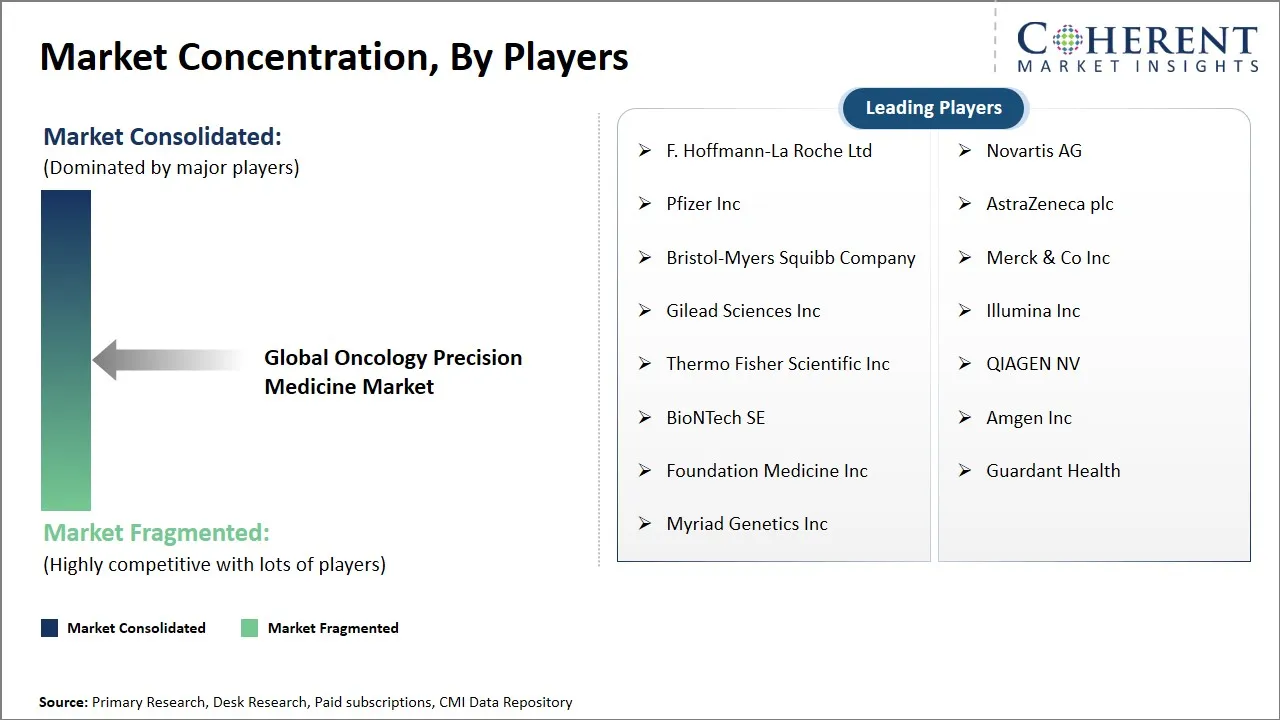
| Companies covered: | F. Hoffmann‑La Roche Ltd, Novartis AG, Pfizer Inc, AstraZeneca plc, Bristol‑Myers Squibb Company, Merck & Co Inc, Gilead Sciences Inc, Illumina Inc, Thermo Fisher Scientific Inc, QIAGEN NV, BioNTech SE, Amgen Inc, Foundation Medicine Inc, Guardant Health, and Myriad Genetics Inc | ||
| Growth Drivers: |
| ||
| Restraints & Challenges: |
| ||
Market Dynamics
Oncology Precision Medicine Market Driver - Advancements in Genomic Sequencing Technologies
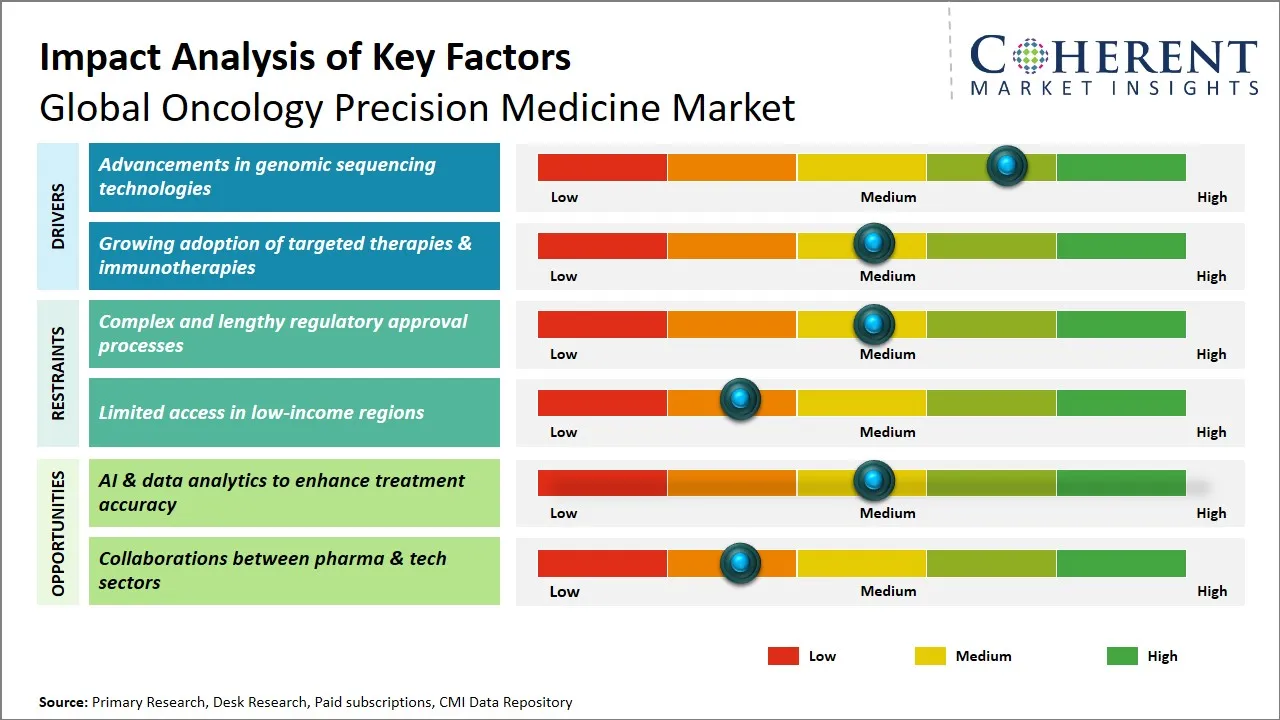
Precision medicine in oncology has been highly driven and embraced with the swift advancement of genomic sequencing technologies. Latest advances in next-generation sequencing (NGS) technologies have made the analysis of tumor genomes much faster, accurate, and less expensive, as it will proceed to provide a wider insight into genetic mutations and molecular profiles unique to individual cancer patients. This improved ability enables clinicians to design specific interventions that specifically respond to the individual genetic mutations that initiate the growth of cancer in a patient, thereby improving the clinical outcomes and reducing the adverse effects.
For instance, NovaSeq NGS systems by Illumina have transformed the field of genomics by allowing enormous scale of sequencing with great accuracy and at very low prices. Based on sequencing by synthesis (SBS) technology, such systems, such as the NovaSeq 6000 and NovaSeq X Series, enable parallel sequencing of billions of DNA fragments. This would enable quick and accurate screening of genetic defects in cancer, which will lead to individualized treatment regimens and targeted therapy.
(Source- https://www.illumina.com/science/technology/next-generation-sequencing.html)
Oncology Precision Medicine Market Opportunity - AI & Data Analytics to Enhance Treatment Accuracy
The combination of Artificial Intelligence (AI) and the further development of data analytics represents the great chance to redefine the global oncology precision medicine market as the means of increasing the accuracy of treatments and patient outcomes. Being a highly heterogeneous and complex field, Oncology creates immense volumes of data due to genomic sequencing, imaging, clinical trials, and electronic health records. By applying AI-based algorithms and machine learning models, it is possible to draw meaningful conclusions out of these heterogeneous datasets, which results in a better ability to identify cancer subtypes, biomarkers, and patient-specific targets of therapy. Clinicians are able to make treatments that are more precise with this capability, reducing the number of side effects and enhancing effectiveness.
For instance, Tempus is a healthcare technology firm which uses AI and machine learning to analyze large amounts of clinical and molecular data to enable oncologists to make evidence-based, individualized treatment choices. The platform helps to determine precision-based therapies and improve cancer treatment by combining DNA/RNA sequencing, clinical trials, and patient histories.
(Source-https://www.tempus.com/#:~:text=Nature%20Biotechnology%)
Analyst Opinion (Expert Opinion)
- Addressing the current market condition, the oncology precision medicine market is rapidly transforming due to the development of genomic sequencing technologies, regulatory policies, and the growing preference of the personalized treatment of cancer. With the increased availability of technologies such as next-generation sequencing (NGS) and liquid biopsy, oncologists can offer more precise more personalized therapy, which enhances patient outcomes. Also, robust regulatory support in other markets such as North America and Europe is creating a path toward expedited go-ahead of the precision oncology therapies. The emergence of personalized diagnostic, immunotherapies, and targeted therapies is growing the range of treatment, and companies in the field have a great opportunity. Nevertheless, the high cost of treatment and data-integration are the major hurdles that should be countered in order to be adopted to the wider market.
- New opportunities are in the increased cooperation between pharmaceutical and technology firms to apply AI and machine learning to cancer treatment planning. Such prominent events in the industry as the ASCO Annual Meeting and the European Society of Medical Oncology (ESMO) Congress have been the significant source of knowledge-exchange and policy-making, offering the stage on which the most recent discoveries and studies take place. Moreover, such projects as the introduction of liquid biopsy tests by Caris Life Sciences and the introduction of AI-based diagnostic platform by Guardant Health are on the forefront of enhancing early cancer detection and more accurate treatment, pushing the market forward. These practical examples demonstrate how fast the process of innovation is growing and how the concept of precision medicine can transform the process of treating cancer throughout the world.
Speak to the analyst
Want personalized insights?
Take the findings above to one of our principal consultants, or have the report rebuilt around the segments, geographies and competitors you actually track.
Market Segmentation
- Component Insights (Revenue, USD Bn, 2021 - 2033)
- Therapeutics
- Targeted therapies
- Targeted biologics
- Precision immuno-oncology
- Cell & gene therapies
- Radiotheranostics / targeted radionuclide therapies
- Combination regimens
- Diagnostics / Testing
- Companion diagnostics (CDx)
- Complementary diagnostics
- Comprehensive genomic profiling (CGP) panels
- Minimal residual disease (MRD) testing
- Pharmacogenomics (PGx) relevant to oncology regimens
- Informatics & Decision Support
- Clinical decision support (CDS) / treatment matching engines
- Variant interpretation & annotation platforms
- Molecular tumor board (MTB) enablement software
- Data integration (EHR/LIS/omics) & interoperability tools
- Services
- Sample logistics, biobanking, and pre-analytics services
- Bioinformatics services (pipeline, interpretation, reporting)
- Clinical trial matching services
- Real-world evidence (RWE) and outcomes analytics
- Contract research / companion diagnostic development services
- Therapeutics
- Care Pathway Stage (Revenue, USD Bn, 2021 - 2033)
- Risk assessment & screening
- Diagnosis & tumor classification
- Therapy selection
- Treatment monitoring
- Response monitoring
- Resistance emergence detection
- Dose/therapy optimization
- Recurrence surveillance / MRD
- Clinical trial enrolment & matching
- Technology (Revenue, USD Bn, 2021 - 2033)
- Genomics
- Next-generation sequencing (NGS)
- Targeted panels
- Whole exome sequencing (WES)
- Whole genome sequencing (WGS)
- Next-generation sequencing (NGS)
- PCR / qPCR / ddPCR
- Sanger sequencing (confirmatory)
- Transcriptomics
- RNA sequencing (RNA-seq)
- Gene expression profiling / signatures
- Proteomics / Protein biomarkers
- Immunohistochemistry (IHC)
- Mass spectrometry–based proteomics (select settings)
- Cytogenetics & Structural Variation
- FISH
- Karyotyping (certain hematologic cancers)
- Epigenetics
- DNA methylation profiling (select tumors)
- Liquid biopsy technologies
- ctDNA / cfDNA
- CTCs
- Exosomes / extracellular vesicles (emerging)
- Single-cell & spatial
- Single-cell sequencing (scRNA/scDNA)
- Spatial transcriptomics / multiplex imaging
- Genomics
- Biomarker Type (Revenue, USD Bn, 2021 - 2033)
- Genetic biomarkers
- Single nucleotide variants (SNVs)
- Indels
- Copy number variations (CNVs)
- Gene fusions / rearrangements
- Germline variants (hereditary cancer)
- Genomic signatures / global markers
- Tumor mutational burden (TMB)
- Microsatellite instability (MSI)
- Homologous recombination deficiency (HRD)
- Expression / protein markers
- Receptor status, ligand expression, immune markers (e.g., checkpoint pathway expression classes)
- Epigenetic biomarkers
- Methylation signatures
- MRD biomarkers
- Personalized tumor-informed MRD
- Tumor-naïve MRD panels
- Genetic biomarkers
- Sample Type (Revenue, USD Bn, 2021 - 2033)
- Tissue-based
- FFPE tissue
- Fresh frozen tissue
- Core needle biopsy / surgical specimens
- Blood-based (liquid biopsy)
- Plasma (ctDNA/cfDNA)
- Whole blood (CTCs, RNA)
- Other biofluids
- Urine, saliva, CSF (indication-dependent)
- Cytology samples
- FNA, smears (select workflows)
- Tissue-based
- End User (Revenue, USD Bn, 2021 - 2033)
- Hospitals & cancer centers
- Diagnostic laboratories
- Clinical pathology labs
- Molecular/genetic labs
- Academic & research institutes
- Pharmaceutical & biotech companies
- CROs / clinical trial networks
- Payers / HTA bodies
- Cancer Type (Revenue, USD Bn, 2021 - 2033)
- Solid tumors
- Lung, breast, colorectal, prostate, ovarian, melanoma, pancreatic, gastric, head & neck, liver, kidney, brain/CNS, etc.
- Hematologic malignancies
- Leukemia, lymphoma, myeloma, MDS/MPN, etc.
- Rare cancers / tumor-agnostic segments
- Tumor-agnostic biomarker-defined populations
- Solid tumors
- Reimbursement & Access Channel (Revenue, USD Bn, 2021 - 2033)
- Public reimbursement
- Private reimbursement
- Out-of-pocket / self-pay
- Hybrid coverage models
- Patient assistance / access programs
- Clinical trial–funded testing
- Regional Insights (Revenue, USD Bn, 2021 - 2033)
- North America
- U.S.
- Canada
- Latin America
- Brazil
- Argentina
- Mexico
- Rest of Latin America
- Europe
- Germany
- U.K.
- Spain
- France
- Italy
- Russia
- Rest of Europe
- Asia Pacific
- China
- India
- Japan
- Australia
- South Korea
- ASEAN
- Rest of Asia Pacific
- Middle East
- GCC Countries
- Israel
- Rest of Middle East
- Africa
- South Africa
- North Africa
- Central Africa
- North America
- Key Players Insights
- Hoffmann‑La Roche Ltd
- Novartis AG
- Pfizer Inc
- AstraZeneca plc
- Bristol‑Myers Squibb Company
- Merck & Co Inc
- Gilead Sciences Inc
- Illumina Inc
- Thermo Fisher Scientific Inc
- QIAGEN NV
- BioNTech SE
- Amgen Inc
- Foundation Medicine Inc
- Guardant Health
- Myriad Genetics Inc
Source
Primary Research Interviews
Industry Stakeholders List
- Oncologists from leading hospitals and cancer centers
- Pharmaceutical executives in oncology R&D departments
End-users List
- Oncology patients (various cancer types)
- Healthcare providers in precision oncology
Government and International Databases
- National Cancer Institute (NCI)
- World Health Organization (WHO)
- U.S. Food and Drug Administration (FDA)
- European Medicines Agency (EMA)
- National Institutes of Health (NIH)
- Global Health Data Exchange (GHDx)
Trade Publications
- Cancer Research Journal
- Oncology Times
- The Lancet Oncology
- Journal of Clinical Oncology
- Nature Reviews Cancer
- BioWorld
Academic Journals
- Journal of Cancer Research
- Cancer Cell
- Oncogene
- Journal of Clinical Investigation
- Cancer Immunology Research
- Molecular Cancer Therapeutics
Reputable Newspapers
- The New York Times
- The Guardian
- The Wall Street Journal
- The Washington Post
- Financial Times
- Reuters
Industry Associations
- American Association for Cancer Research (AACR)
- American Society of Clinical Oncology (ASCO)
- European Society for Medical Oncology (ESMO)
- International Association for the Study of Lung Cancer (IASLC)
- Precision Medicine World Conference (PMWC)
- Cancer Research UK
Public Domain Resources
- ClinicalTrials.gov
- Open Access Cancer Journal
- World Cancer Research Fund International
- The Human Genome Project
- U.S. National Library of Medicine
Proprietary Elements
- CMI Data Analytics Tool: Proprietary analytics tool to analyze real-time market trends, consumer behavior, and technology adoption in market
- Proprietary CMI Existing Repository of Information for Last 8 Years
Get access to 250+ pages report
Every segment, forecast, competitor profile and data table behind the analysis above — available for instant download.
- ESOMAR Member
- ISO 9001:2015 Certified
- D-U-N-S Registered
- GDPR & CCPA Compliant
Missing comfort of reading report in your local language? Find your preferred language:
Transform your Strategy with Exclusive Trending Reports
Frequently Asked Questions
The global oncology precision medicine market is estimated to be valued at USD 190.50 Bn in 2026 and is expected to reach USD 366.53 Bn by 2033.
The CAGR of global oncology precision medicine market is projected to be 9.80% from 2026 to 2033.
Advancements in genomic sequencing technologies and growing adoption of targeted therapies & immunotherapies are the major factors driving the growth of the global oncology precision medicine market.
Complex and lengthy regulatory approval processes and limited access in low‑income regions are the major factors hampering the growth of the global oncology precision medicine market.
In terms of component, therapeutics are estimated to dominate the market revenue share in 2026.
F. Hoffmann‑La Roche Ltd, Novartis AG, Pfizer Inc, AstraZeneca plc, Bristol‑Myers Squibb Company, Merck & Co Inc, Gilead Sciences Inc, Illumina Inc, Thermo Fisher Scientific Inc, QIAGEN NV, BioNTech SE, Amgen Inc, Foundation Medicine Inc, Guardant Health, and Myriad Genetics Inc are the major players.
North America is expected to lead the global oncology precision medicine market in 2026.