

Global Medical Barium Sulfate Contrast Media Market Size and Forecast – 2026-2033
The global medical barium sulfate contrast media market is expected to grow from USD 565.0 Mn in 2026 to USD 823.5 Mn by 2033, registering a compound annual growth rate (CAGR) of 5.5%. The global medical barium sulfate contrast media market is poised for significant expansion fueled by the growing incidence of gastrointestinal (GI) disorders requiring diagnostic imaging.
According to the World Gastroenterology Organization, gastrointestinal (GI) diseases remain highly prevalent worldwide, with an estimated 7.3 billion incident cases and approximately 8 million deaths globally, highlighting the substantial and persistent burden of digestive disorders.
(Source: World Gastroenterology Organization)
Key Takeaways of the Global Medical Barium Sulfate Contrast Media Market
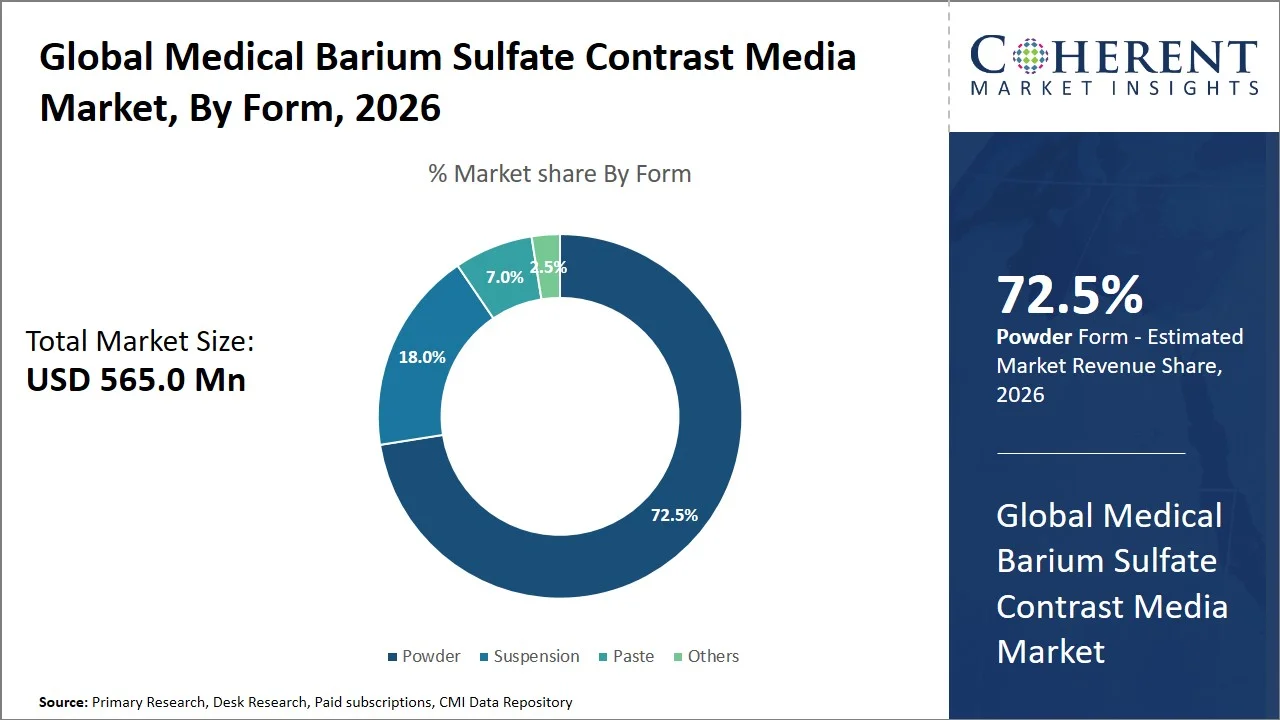
- Powder is projected to hold 72.5 % of the global medical barium sulfate contrast media market share in 2026, making it the dominant form segment, with the highest adoption in Asia Pacific, especially in China and India. This is because of the existence of massive procurement systems in public hospitals that encourage bulk buying and central preparation, as well as cost-conscious health care environment. For example, in China, large hospital chains use volume purchasing systems for contrast agents, whereas government hospitals in India use bulk purchasing systems based on tenders, both of which prefer powdered contrast agents due to their ease of storage and transportation. In India, public procurement under initiatives like Central Government Health Scheme and Tamil Nadu Medical Services Corporation emphasizes bulk tendering of essential diagnostics, where powdered barium sulfate is favored due to lower per-dose cost after reconstitution and longer shelf life compared to ready-to-use liquid formulations.
- Oral is projected to hold 69.0 % of the global medical barium sulfate contrast media market share in 2026, making it the dominant route of administration segment, with maximum usage in North America, particularly the U.S., owing to the presence of well-developed networks for outpatient diagnostics and organized screening protocols that use non-invasive imaging techniques extensively. For instance, standard upper gastrointestinal (GI) studies conducted at outpatient radiology facilities in the U.S. commonly call for patients to ingest barium contrast, which will coat the esophagus and stomach during live fluoroscopy visualization. (Source: Radiological Society of North America, Inc.)
- Upper GI tract segment is projected to hold 48.0 % of the global medical barium sulfate contrast media market share in 2026, making it the dominant application segment, with Europe being one of the main contributing regions, especially Germany, with clinical guidelines for diagnosis of early stages of gastrointestinal disorders (e.g., European Society of Gastrointestinal Endoscopy (ESGE) clinical guidelines for upper GI evaluation; American College of Radiology (ACR) Practice Parameter for Upper Gastrointestinal Examination), and also the concentration of centers (e.g., Charité – Universitätsmedizin Berlin; University Hospital Heidelberg Department of Gastroenterology) specializing in gastroenterology. For example, the upper digestive system tests including barium swallow and barium meal are regularly conducted in German healthcare facilities, as per standardized diagnostics for certain diseases such as reflux and anatomical issues, which emphasize continued need for barium contrast medium.
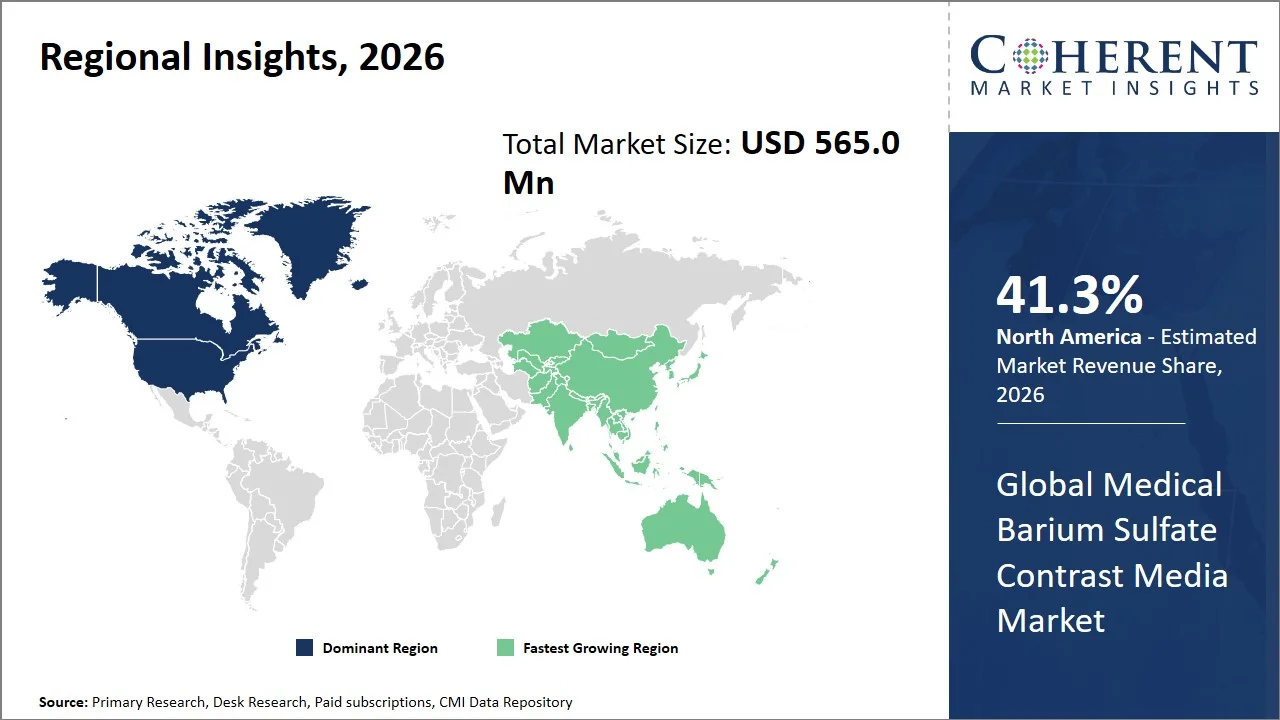
- North America maintains dominance with an expected share of 41.3 % in 2026, led by the U.S. as the country is backed by the early use of advanced imaging protocols and standardized clinical practices in healthcare facilities. For example, the implementation of evidence-based diagnosis protocols and the use of enhanced imaging in decision-making at hospitals and imaging networks guarantees the proper use of barium-containing contrast agents. For instance, in the U.S., upper gastrointestinal (GI) series and modified barium swallow studies are routinely performed across hospitals such as Mayo Clinic and Cleveland Clinic for diagnosing conditions like dysphagia, GERD, and structural abnormalities, following standardized radiology protocols.
- Asia Pacific is expected to exhibit the fastest growth with an estimated contribution of 20.5 % share in 2026, driven by countries such as China and India, owing to expanding healthcare infrastructure and rising diagnostic awareness. For instance, ongoing expansion of public hospital networks and increased installation of imaging equipment in tier-2 and tier-3 cities in India are significantly improving access to diagnostic procedures, thereby accelerating the adoption of contrast media across the region.
- Rising Adoption of Point-of-Care and Outpatient Imaging Centers: The shift toward outpatient and ambulatory imaging centers is increasing the use of cost-effective diagnostic solutions such as barium-based contrast media. This trend is especially strong in developed markets where a lot of patients need to be seen quickly.
- Preference for Cost-Effective Contrast Agents in Routine Diagnostics: Barium sulfate is still a cheap alternative compared to more advanced contrast agents, which makes it ideal for routine gastrointestinal imaging. Healthcare systems that want to save money are using more barium-based procedures, which keeps demand high, especially in settings where price is important and volume is high.
Segmental Insights
Why Does the Powder Segment Dominate the Global Medical Barium Sulfate Contrast Media Market?
Powder is projected to hold a market share of 72.5% in 2026, due to its enhanced stability, safety, and versatile formulation possibilities. Barium sulfate contrast agent occurs in a natural powder form that does not dissolve in water and is not metabolized by the body; thus, it is safe and stable when stored. Also, one can easily mix powder barium sulfate with water to make a suspension with a certain density and viscosity. This makes the mucous layer cover more and makes images clearer during gastrointestinal exams.
Besides, hospitals usually favor powder agents because they can prepare contrast media solutions from powdered formulations or use pre-prepared solutions of barium sulfate depending on specific needs. For instance, according to Johns Hopkins Hospital, during an upper G.I. examination, the patient may be required to take a barium pill or a barium drink, possibly through a perforated straw that allows for gas to be added to expand the G.I. tract, showing how pre-made barium products are commonly utilized in medical practice. (Source: The Johns Hopkins Hospital) From the logistic point of view, powder products are cheaper to ship and store because of less waste and loss during transportation and usage.
- Current Industry Events of 2026
- Market Size Estimation
- Regional Breakdown
- Competitive Landscape
- Customer Intelligence
- Segmental Analysis
- Pricing Analysis
- Key Market Drivers, Challenges & Future Trends
- Customized Insights Section
Why is Oral the Most Preferred Route of Administration in the Global Medical Barium Sulfate Contrast Media Market?
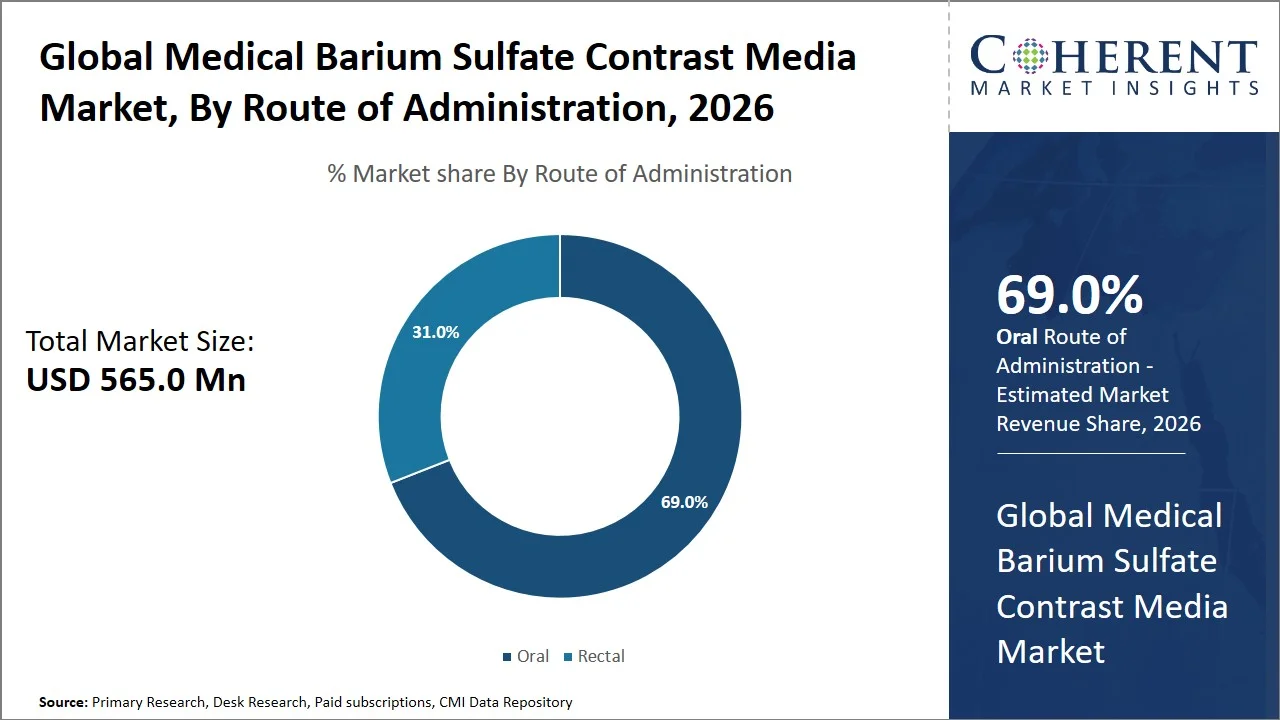
Oral is projected to hold a market share of 69.0% in 2026, owing to its efficiency, safety, and ease of application in gastroenterological examinations. The formulation is meant for oral intake through which barium sulfate is coated on the interior surfaces of the esophagus, stomach, and intestinal tract to provide a distinct view of mucosa under an X-ray examination. This route is relatively non-invasive when compared to injectable routes. Furthermore, the route is highly preferred since barium swallow and barium meal tests constitute millions of patients every year, thus sustaining steady demand. For instance, globally, there are approximately 3.6 billion diagnostic imaging examinations, including X-ray examinations such as barium studies, conducted each year, emphasizing the huge number of procedures that require oral contrast media. (Source: Collective Minds) Furthermore, oral route offers the convenience of dosage adjustment and simple preparation of the medication, particularly the powders.
Upper GI Tract Segment Dominates the Global Medical Barium Sulfate Contrast Media Market
The upper GI tract segment is projected to hold a market share of 48.0% in 2026, driven by the high prevalence of imaging tests like barium swallow and barium meal test procedures. These diagnostic tests are commonly performed to diagnose a variety of diseases such as gastroesophageal reflux disease (GERD), ulcers, strictures, and tumors. As a result, this segment dominates the market due to the preference for the ingestion of oral contrast media, especially those that are highly suitable for visualizing the esophagus and the stomach walls. For example, double-contrast upper GI examinations, where patients ingest barium along with gas-producing agents, are widely used to enhance mucosal detail and detect early-stage lesions such as small ulcers or tumors in clinical practice.
Currents Events and their Impact
Current Events | Description and its Impact |
WHO Resolution on Strengthening Global Diagnostics Capacity (May 2023) |
|
U.S. FDA Oversight on Medical Imaging Safety & Contrast Agents (Ongoing) |
|
(Source: World Health Organization, U.S. Food and Drug Administration)
Global Medical Barium Sulfate Contrast Media Market Dynamics
Market Drivers
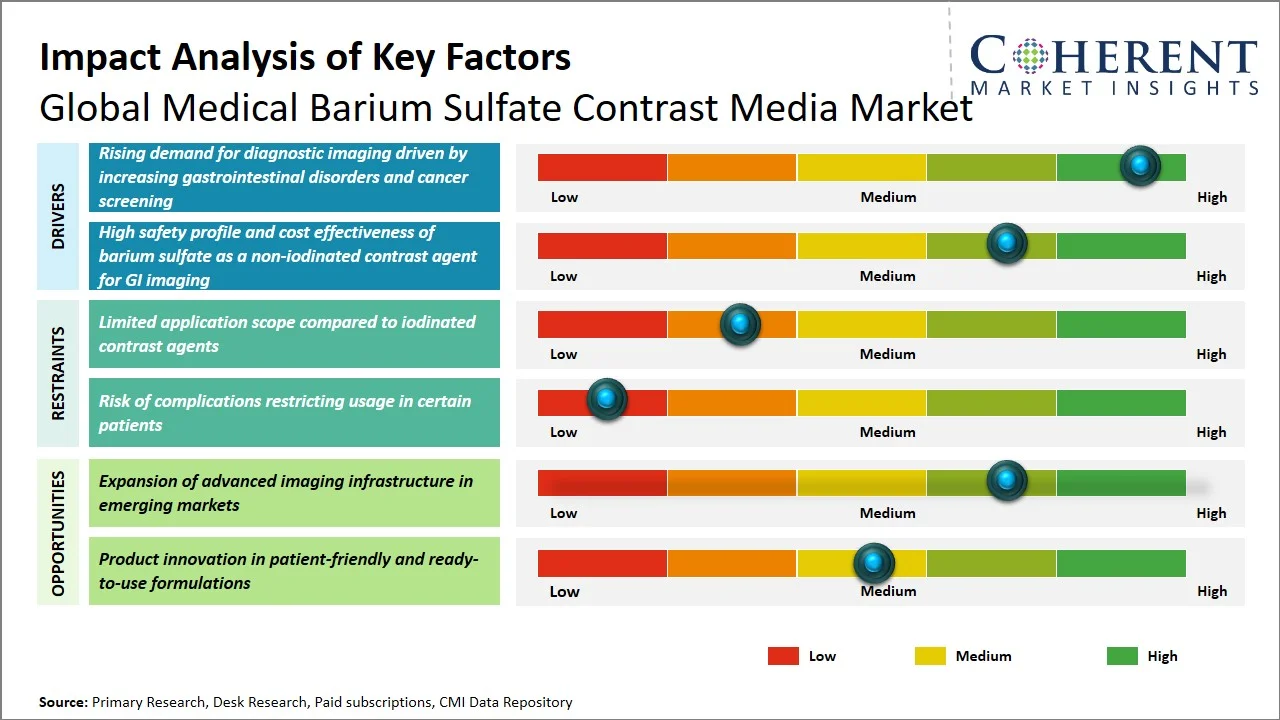
- Rising demand for diagnostic imaging driven by increasing gastrointestinal disorders and cancer screening: The need for diagnostic imaging is on the rise due to the increased incidence of gastrointestinal disorders and cancer screening programs. According to WHO data, the number of new cases of colorectal cancer diagnosed worldwide rose to 1.93 million, while fatalities from this disease exceeded 916,000 in 2020. (Source: World Health Organization) Colorectal cancer is one of the major diseases associated with the gastrointestinal tract. Therefore, various initiatives have been implemented to support early diagnosis of colorectal cancer, including population-based screening programs across Europe and routine screening recommendations for adults by the U.S. Preventive Services Task Force.
- High safety profile and cost-effectiveness of barium sulfate as a non-iodinated contrast agent for GI imaging: Barium sulfate's high safety profile and affordability as a contrast medium without iodine are among the primary reasons why it is used for gastrointestinal (GI) imaging. Barium sulfate is different from iodine contrast agents because it is insoluble and does not get absorbed into the body's blood circulation system, thus making it safe to use. It has a good mucosa-coating ability, and it is an ideal imaging contrast agent when performing barium swallow and barium enema tests. Besides, barium sulfate is comparatively inexpensive, making it highly applicable in routine gastrointestinal (GI) imaging. According to the U.S. FDA's recommendations, barium sulfate can be used frequently in gastrointestinal (GI) imaging. (Source: U.S. Food and Drug Administration)
Emerging Trends
- Shift Toward Low-Density and Patient-Friendly Formulations: Barium sulfate is being developed in lower density, flavored, and easy-to-dose forms to increase patient acceptance, particularly among pediatric and geriatric patients. This leads to better diagnostics since fewer discomforts and higher success rates can be achieved through imaging.
- Integration with Advanced Imaging and AI-Driven Diagnostics: Barium sulfate contrast media is now being used in conjunction with high-tech imaging systems and AI diagnosis solutions that help with enhanced imaging clarity and automated detection and diagnose conditions more accurately. AI technology helps radiologists detect any gastrointestinal disease with ease, thus facilitating rapid decision-making.
Regional Insights
Why is North America a Strong Market for Medical Barium Sulfate Contrast Media?
North America leads the global medical barium sulfate contrast media market, accounting for an estimated 41.3% share in 2026, due to the high level of diagnostic imaging technology, high numbers of gastrointestinal procedures, and strict regulation governing the market. According to the Centers for Disease Control and Prevention, there are about 35.4 million patient visits to office-based physicians due to conditions affecting the gastrointestinal tract in a year in the U.S. (Source: Centers for Disease Control and Prevention) Additionally, the availability of colorectal cancer screening facilities in tandem with advanced imaging techniques like X-rays and fluoroscopy has contributed significantly to the volume of procedures performed.
Why Does Asia Pacific Medical Barium Sulfate Contrast Media Market Exhibit High Growth?
The Asia Pacific medical barium sulfate contrast media market is expected to exhibit the fastest growth with an estimated contribution of 20.5% share to the market in 2026, owing to the fast development of healthcare infrastructure, and improved access to diagnosis in countries such as China, India, and Japan. The government in the region is making efforts to improve their healthcare system; for example, Ayushman Bharat in India seeks to improve the affordability of health care facilities. In addition, the World Health Organization states that there is low access to radiological diagnosis in some low- and middle-income countries, which requires more funding to enhance the use of radiological diagnosis. (Source: World Health Organization) Therefore, the increased availability of X-ray and fluoroscope equipment leads to more gastro-intestinal radiography diagnosis and subsequently increases the demand for barium sulfate contrast media.
Global Medical Barium Sulfate Contrast Media Market Outlook for Key Countries
Why is the U.S. Leading Innovation and Adoption in the Medical Barium Sulfate Contrast Media Market?
The U.S. is a market leader in both innovations and usage of the medical barium sulfate contrast media due to the existing well-developed imaging environment, and proper regulations (e.g., oversight and approval of contrast agents under the U.S. Food and Drug Administration (FDA) drug and imaging guidelines; adherence to the American College of Radiology (ACR) Manual on Contrast Media; and quality and safety standards enforced by the Centers for Medicare & Medicaid Services (CMS) for imaging services reimbursement and compliance), and clinical practice frameworks promoting fast introduction and adoption of new innovations. High number of advanced imaging technologies in use, for instance, computed tomography (CT) and fluoroscopy at hospitals and out-patient facilities provides stable demand for high quality contrast media, especially for diagnosis of the gastrointestinal tract.
Moreover, availability of leading pharmaceutical and imaging equipment manufacturers (such as Johnson & Johnson, Abbott Laboratories, and Baxter International) in the region promotes innovations in contrast media formulations, aimed at providing greater stability, tolerance, and imaging performance. Positive reimbursement and the trend towards using more outpatient and preventive diagnostics helps to further accelerate usage of contrast media, while effective regulatory framework promoting rapid introduction to the market makes U.S. a leader in the industry. For instance, colorectal cancer screening programs in the U.S. are widely adopted, with around 72.6% of adults aged 50–75 undergoing screening, many of which involve imaging-based diagnostic procedures that utilize contrast agents such as barium sulfate.
Is China a Favorable Market for Medical Barium Sulfate Contrast Media Market?
China emerges as a promising market for medical barium sulfate contrast media, considering the increasing investment in health facilities (China’s total health expenditure exceeded USD 1.2 trillion (RMB 8.4 trillion) in 2022), high patient volumes (China records billions of annual hospital visits, with total healthcare visits exceeding 8.5 billion per year), and growing demand for diagnostic imaging. The demand for contrast media has increased due to the increasing prevalence of digestive system ailments and cancers, thus leading to fluoroscopy and X-ray imaging exams, involving contrast agents.
In addition, the reforms in the healthcare sector by the government of China, including the implementation of Healthy China 2030 program by the National Health Commission of China, have influenced the demand for diagnostic exams and hence led to more installations of imaging devices in public hospitals. (Source: National Health Commission of the PRC) Moreover, the measures taken by the National Medical Products Administration, in order to facilitate the approval process for commercialization of locally produced products, have enabled companies to benefit from economies of scale in manufacturing. Such measures include launching of cancer screening and increased tier-2 and tier-3 hospitals. These trends, combined with the importance accorded to preventive healthcare, make China one of the promising market for barium sulfate contrast media.
Is Japan Emerging as a Key Growth Hub for the Medical Barium Sulfate Contrast Media Market?
The market of medical barium sulfate contrast media is experiencing significant growth in Japan owing to the presence of highly advanced diagnostic imaging technology and standards in the country. The aging population in Japan (with almost 29% people above the age of 65 years) is creating demand for various diagnostic techniques such as gastrointestinal and cancer diagnosis. Japan has an extensive imaging density in the world and hence, all hospitals have access to imaging systems such as X-rays and fluoroscopy. The strong support from the government for routine diagnostic screening programs through the National Health Insurance System in Japan has been contributing towards the demand for barium sulfate contrast media.
Why Does Germany Top the Europe Medical Barium Sulfate Contrast Media Market?
Germany is the leading country in Europe concerning the medical barium sulfate contrast media market due to its well-developed healthcare infrastructure. Numerous radiographic and gastroenterological procedures are performed in Germany (Germany records over 140 million outpatient imaging procedures annually, including a significant share of X-ray and fluoroscopy exams). Additionally, Germany has a well-developed system of reimbursements for patients from statutory health insurance. Moreover, Germany houses important industrial players and innovators (such as Bayer AG and Siemens Healthineers), leading to continuous innovations in imaging and contrast agents.
Is Medical Barium Sulfate Contrast Media Market Developing in South Korea?
There is tremendous potential for South Korea in the medical barium sulfate contrast media market due to the improved image generation process and the technology that has been implemented in the South Korea healthcare industry. South Koreans rely heavily on imaging techniques such as X-rays and fluoroscopy (e.g., over 300 CT scans per 1,000 population annually and high imaging equipment density among OECD countries), hence, they are likely to continue using contrast media in their diagnostic imaging tests.
As the number of elderly increases and the incidence of chronic diseases increases, the number of procedures will increase too. The adoption of artificial intelligence by the South Korea government in its health sector will help in carrying out diagnostic procedures efficiently. For instance, the government’s “Digital New Deal” promotes AI integration across industries, including healthcare, with planned investments of over USD 39.4 billion (KRW 58.2 trillion) by 2025 to strengthen data, network, and AI infrastructure. (Source: Ministry of Science and ICT)
Regulatory Landscape Governing the Global Medical Barium Sulfate Contrast Media Market
Region | Regulatory Authority | Regulatory Status | Key Regulation | Impact on Market |
North America | U.S. Food and Drug Administration (FDA); Health Canada | Highly regulated (drug classification) | Federal Food, Drug, and Cosmetic Act (FDCA); New Drug Application (NDA) approval pathway; FDA Contrast Media Guidelines | Ensures high safety and efficacy standards, increasing approval timelines but driving adoption of high-quality products |
Europe | European Medicines Agency (EMA); European Commission | Highly regulated and harmonized across EU | EU Medicinal Products Directive; Pharmacovigilance Regulations; EMA safety reviews | Strong compliance requirements enhance product reliability and patient safety, but increase compliance costs |
Asia Pacific | PMDA (Japan); NMPA (China); CDSCO (India) | Moderately to highly regulated (country-specific variations) | National drug approval frameworks; Good Manufacturing Practices (GMP) guidelines | Diverse regulatory pathways may delay market entry but support rapid growth in emerging markets |
Latin America | ANVISA (Brazil); COFEPRIS (Mexico) | Developing regulatory framework | National drug regulatory laws; import and quality certification requirements | Improving regulations support market expansion but inconsistent standards may affect product approvals |
Middle East & Africa | SFDA (Saudi Arabia); SAHPRA (South Africa); MOH authorities | Emerging regulatory landscape | Country-specific pharmaceutical regulations; reliance on WHO and international guidelines | Gradual regulatory development supports market penetration, though slower approval processes may limit growth |
How is the expansion of advanced imaging infrastructure in emerging markets creating new growth opportunities in the global medical barium sulfate contrast media market?
The development of imaging facilities in developing nations (such as India, China, and Brazil) presents immense opportunities for the growth of the medical barium sulfate contrast media market in terms of increased availability of medical procedures. According to the World Health Organization, diagnostic tests influence nearly 70% of healthcare decisions, yet only 3–5% of healthcare budgets are allocated to diagnostics, highlighting a major gap in infrastructure. (Source: World Health Organization) To counter these unmet needs, governments are working to improve radiological services through national health campaigns and building imaging infrastructure.
Market Players, Key Development, and Competitive Intelligence
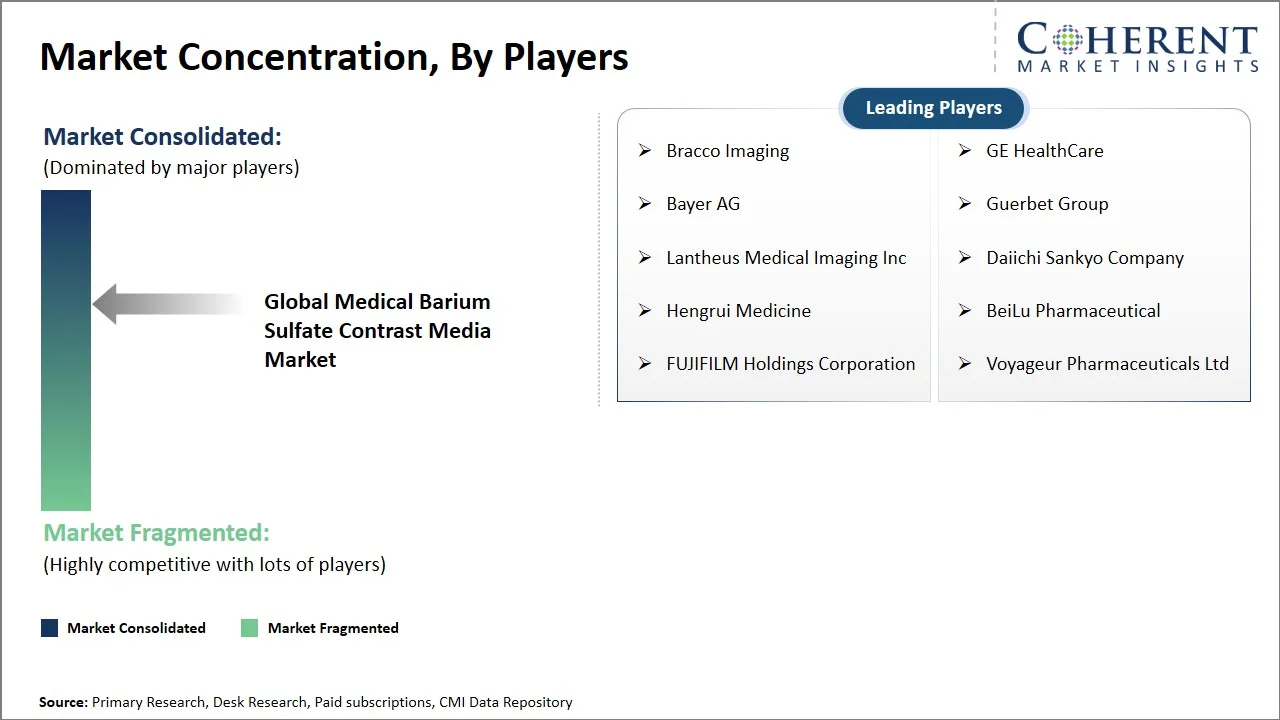
Key Developments
- In March 2026, Voyageur Pharmaceuticals Ltd reported developments in its research and development projects on barium and iodine contrast media, highlighting advancements in the formulation and commercialization aspects of its products. The development has been driven by the increasing need for developing solutions that maximize the efficiency of imaging, increase safety levels for patients, and ensure a stable supply of the contrast media.
- In December 2024, Bracco Imaging S.p.A. unveiled a new "Mini" packaging design for its VARIBAR barium sulfate oral suspension. This move aimed to streamline clinical workflows, cut down on material waste, and boost patient throughput. The goal was to promote sustainability and operational improvements within diagnostic imaging practices.
Competitive Landscape
The global medical barium sulfate contrast media market is highly competitive considering that there is increased demand for diagnostic imaging in the gastrointestinal system, and steady volume procedures in hospitals and imaging facilities. The firms are investing in enhancing the stability, affordability, and consistency of their products. There is also increased interest in reinforcing supply chains and regulatory compliance. Key focus areas include:
- Advanced formulation & suspension stability
- Standardization and quality control compliance
- Cost-effective manufacturing and bulk supply
- Strategic partnerships with diagnostic centers
Market Report Scope
Medical Barium Sulfate Contrast Media Market Report Coverage
| Report Coverage | Details | ||
|---|---|---|---|
| Base Year: | 2025 | Market Size in 2026: | USD 565.0 Mn |
| Historical Data for: | 2020 To 2024 | Forecast Period: | 2026 To 2033 |
| Forecast Period 2026 to 2033 CAGR: | 5.5% | 2033 Value Projection: | USD 823.5 Mn |
| Geographies covered: |
| ||
| Segments covered: |
| ||
| Companies covered: | Bracco Imaging, GE HealthCare, Bayer AG, Guerbet Group, Lantheus Medical Imaging, Inc., Daiichi Sankyo Company, Hengrui Medicine, BeiLu Pharmaceutical, FUJIFILM Holdings Corporation, and Voyageur Pharmaceuticals Ltd. | ||
| Growth Drivers: |
| ||
| Restraints & Challenges: |
| ||
Analyst Opinion (Expert Opinion)
- The trajectory of the medical barium sulfate contrast media market seems stable and dependent on procedures, given the increasing demand for imaging the gastro-intestinal tract irrespective of the advent of other forms of imaging technology. Although there are newer imaging techniques available like MRI scanning and CT scan using iodinated contrast media, the medical barium sulfate contrast media are likely to retain their importance owing to their affordability and safety profile.
- The maximum growth potential lies in the powder form products for the application in gastrointestinal imaging in countries like the U.S., Germany, and France due to the large number of patients and aged population in these countries. Apart from that, there is also an increase in the screening process for colorectal ailments and outpatient imaging procedures.
- In order to develop a competitive advantage, companies can concentrate on innovations in products (better formulas and suspensions), alliances with diagnostic centers, and growth in outpatient/ambulatory care facilities. Improvement in the efficiency of supply chains, adherence to regulations, and the development of economical solutions for high-throughput imaging facilities would be key to achieving competitive success.
Speak to the analyst
Want personalized insights?
Take the findings above to one of our principal consultants, or have the report rebuilt around the segments, geographies and competitors you actually track.
Market Segmentation
- Form Insights (Revenue, USD Mn, 2021 - 2033)
- Powder
- Suspension
- Paste
- Others
- Route of Administration Insights (Revenue, USD Mn, 2021 - 2033)
- Oral
- Rectal
- Application Insights (Revenue, USD Mn, 2021 - 2033)
- Upper GI Tract
- Small Intestine
- Large Intestine
- Regional Insights (Revenue, USD Mn, 2021 - 2033)
- North America
- U.S.
- Canada
- Latin America
- Brazil
- Argentina
- Mexico
- Rest of Latin America
- Europe
- Germany
- U.K.
- Spain
- France
- Italy
- Russia
- Rest of Europe
- Asia Pacific
- China
- India
- Japan
- Australia
- South Korea
- ASEAN
- Rest of Asia Pacific
- Middle East
- GCC Countries
- Israel
- Rest of Middle East
- Africa
- South Africa
- North Africa
- Central Africa
- North America
- Key Players Insights
- Bracco Imaging
- GE HealthCare
- Bayer AG
- Guerbet Group
- Lantheus Medical Imaging, Inc.
- Daiichi Sankyo Company
- Hengrui Medicine
- BeiLu Pharmaceutical
- FUJIFILM Holdings Corporation
- Voyageur Pharmaceuticals Ltd.
Sources
Primary Research Interviews
- Medical barium sulfate contrast media manufacturers and suppliers
- Diagnostic imaging centers and radiologists using gastrointestinal contrast agents
- Hospital procurement managers and clinical imaging specialists
- Life sciences researchers focusing on radiology and contrast media applications
Stakeholders
- Providers of Medical Barium Sulfate Contrast Media Solutions
- End-use Sectors
- Hospitals and Diagnostic Imaging Centers
- Ambulatory Surgical Centers
- Research Institutes
- Pharmaceutical & Biotechnology Companies
- Regulatory & Health Bodies: World Health Organization, U.S. Food and Drug Administration, European Medicines Agency, American College of Radiology (ACR)
Databases
- World Health Organization – Global Health Observatory (GHO)
- World Bank – Healthcare Expenditure Database
- OECD Health Statistics
- National Institutes of Health (NIH) Clinical Research Database
Magazines
- Radiology Business – Imaging market trends and contrast agent adoption
- Diagnostic Imaging Magazine – Advancements in contrast media technologies
- Healthcare Business Today – Medical imaging infrastructure growth
- Pharmaceutical Technology – Contrast agents manufacturing and innovations
Journals
- Radiology (RSNA) – Clinical imaging and contrast agent studies
- American Journal of Roentgenology (AJR) – Contrast media applications
- European Radiology – Safety and efficacy of contrast agents
- The Lancet Gastroenterology & Hepatology – GI imaging applications
- Journal of Medical Imaging and Radiation Sciences
Newspapers
- The Wall Street Journal – Medical imaging industry investments
- Financial Times – Global healthcare and diagnostics market trends
- Business Standard – Growth in diagnostic imaging infrastructure
- The Economic Times – India diagnostics and radiology expansion
Associations
- Radiological Society of North America (RSNA)
- European Society of Urogenital Radiology (ESUR)
- American College of Radiology (ACR)
- Society of Nuclear Medicine and Molecular Imaging (SNMMI)
Public Domain Sources
- U.S. FDA – Guidance documents for contrast agents and imaging safety
- ACR Manual on Contrast Media (latest editions)
- WHO – Global diagnostic imaging and healthcare access reports
- European Commission – Medical imaging and regulatory frameworks
Proprietary Elements
- CMI Data Analytics Tool, Proprietary CMI Existing Repository of information for last 10 years.
Get access to 250+ pages report
Every segment, forecast, competitor profile and data table behind the analysis above — available for instant download.
- ESOMAR Member
- ISO 9001:2015 Certified
- D-U-N-S Registered
- GDPR & CCPA Compliant
Missing comfort of reading report in your local language? Find your preferred language:
Transform your Strategy with Exclusive Trending Reports
Frequently Asked Questions
The global medical barium sulfate contrast media market is estimated to be valued at USD 565.0 Mn in 2026 and is expected to reach USD 823.5 Mn by 2033.
Powder dominates due to its longer shelf life, ease of storage and transportation, and flexibility in preparation for different imaging requirements.
Medical barium sulfate contrast media is a radiopaque agent used in X-ray and CT imaging to enhance visualization of the gastrointestinal (GI) tract.
The CAGR of global medical barium sulfate contrast media market is projected to be 5.5% from 2026 to 2033.
Rising demand for diagnostic imaging driven by increasing gastrointestinal disorders and cancer screening and high safety profile and cost-effectiveness of barium sulfate as a non-iodinated contrast agent for GI imaging are the major factors driving the growth of the global medical barium sulfate contrast media market.
Limited application scope compared to iodinated contrast agents and risk of complications restricting usage in certain patients are the major factors hampering the growth of the global medical barium sulfate contrast media market.
It is insoluble and non-absorbable, allowing it to safely coat the GI lining without entering the bloodstream, providing detailed mucosal visualization with minimal systemic risk.