

Global Contrast Media Market Size and Forecast – 2026 - 2033
The Global Contrast Media Market is estimated to be valued at USD 6.88 Bn in 2026 and is expected to reach USD 12.02 Bn by 2033, exhibiting a compound annual growth rate (CAGR) of 8.3% from 2026 to 2033. This significant growth is driven by the increasing demand for advanced imaging techniques and the rising prevalence of chronic diseases requiring diagnostic imaging. Continuous innovations in contrast media formulations also contribute to market expansion, enhancing diagnostic accuracy and patient safety.
Key Takeaways of the global contrast media market
- Iodinated Contrast Media is expected to maintain its leading position in the global contrast media market, accounting for 26.6 % of the market share in 2026.
- X-ray and Computed Tomography (CT) imaging technologies lead the global contrast media market, capturing an estimated 33.3 % share in 2026.
- Among applications, the cardiovascular segment is projected to hold the largest share of 24.2 % in 2026.
- North America is expected to lead the market, holding a share of 38.3 % in 2026. Asia Pacific is anticipated to be the fastest-growing region, with a market share of 25.6% in 2026.
Market Overview
The contrast media market trend highlights a growing shift towards non-ionic and low-osmolar contrast agents due to their improved safety profile and reduced side effects. Additionally, there is an increasing adoption of contrast media in emerging markets fueled by expanding healthcare infrastructure and rising awareness about early disease detection. The integration of artificial intelligence and machine learning in imaging processes is further optimizing contrast media utilization, improving diagnostic outcomes, and shaping future market dynamics.
Current Events and Its Impact
Current Events | Description and its impact |
Taejoon Pharm Co. Ltd. Expands Iodinated Contrast Media Production |
|
Persistent Global Iodinated Contrast Media Shortages |
|
Segmental Insights
- Current Industry Events of 2026
- Market Size Estimation
- Regional Breakdown
- Competitive Landscape
- Customer Intelligence
- Segmental Analysis
- Pricing Analysis
- Key Market Drivers, Challenges & Future Trends
- Customized Insights Section
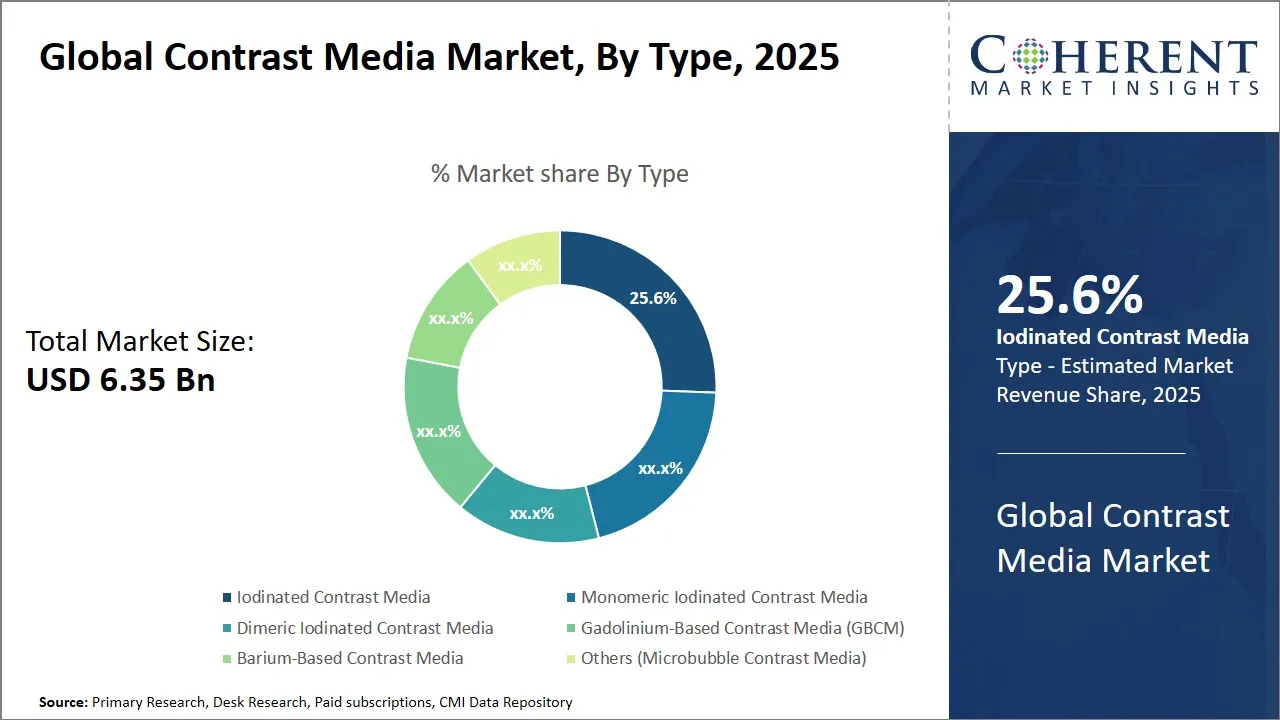
Contrast Media Market Insights, By Type – Leading Role of Iodinated Contrast Media Driven by Versatility and Imaging Efficacy
In terms of type, Iodinated Contrast Media is projected to hold the dominant position in the global contrast media market with share of 26.6% in 2026, primarily due to its extensive application in various imaging procedures, especially X-ray and Computed Tomography (CT) scans. The widespread use of iodinated agents can be attributed to their high radiopacity, which significantly enhances the contrast in vascular structures and soft tissues during imaging. This ability allows for more precise visualization of anatomical details, making it indispensable in diagnostic radiology.
Among iodinated contrast agents, the monomeric iodinated contrast media maintain a strong presence because of their lower viscosity and osmolarity compared to dimeric types, making them preferable in many clinical situations due to improved patient tolerance. However, dimeric iodinated contrast media are favored in cases demanding lower osmolality to reduce adverse reactions, indicating the market’s nuanced demand based on safety profiles and application requirements.
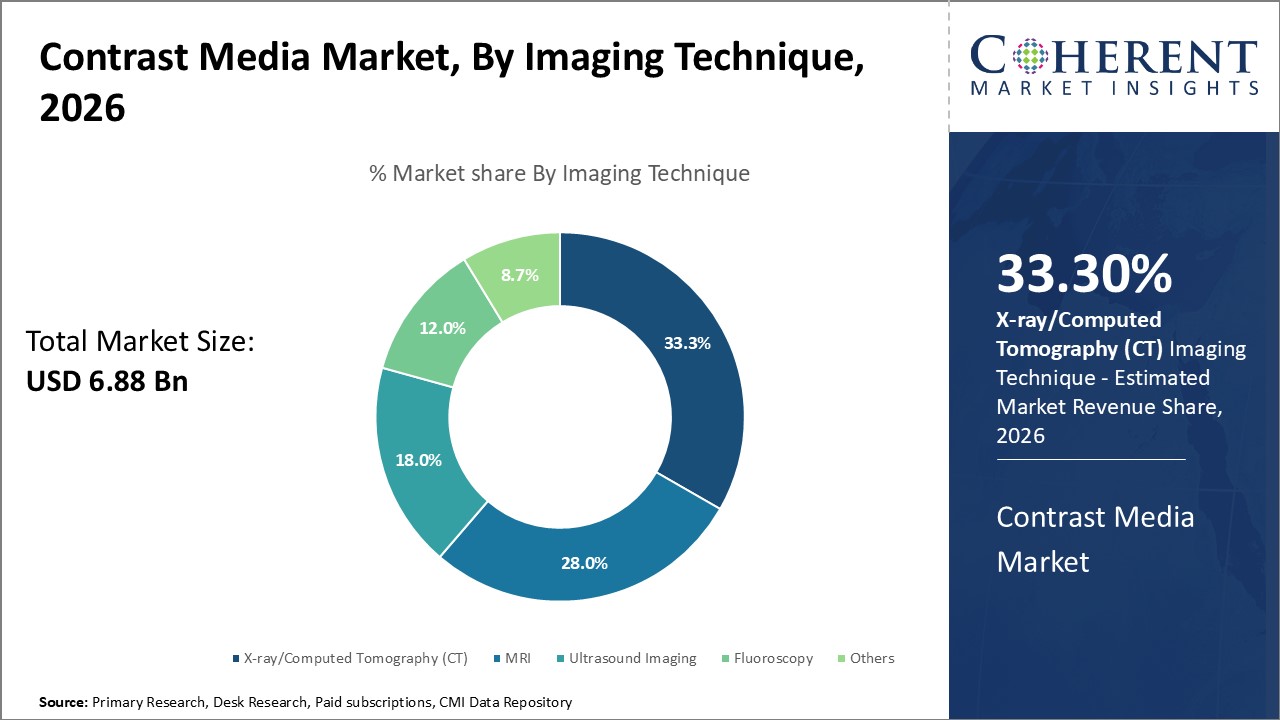
Contrast Media Market Insights, By Imaging Technique – Dominance of X-ray/Computed Tomography (CT) Imaging Fueled by Diagnostic Efficiency and Wide Availability
X-ray and Computed Tomography (CT) imaging technologies hold the largest share within the global contrast media market’s segmentation by imaging technique with an estimated share of 33.3% in 2026. This prominence is rooted in their established role as fast, reliable, and widely accessible imaging methods across diverse healthcare settings. The ability of CT scans to provide detailed cross-sectional images of the body, enhanced by contrast media, makes them invaluable for comprehensive diagnostic assessments.
One major growth driver is the broad applicability of CT imaging in diagnosing cardiovascular diseases, trauma, cancer staging, and infectious diseases. When combined with contrast media—predominantly iodinated agents—CT allows clinicians to accurately visualize blood vessels, soft tissues, and organ structures, facilitating early and accurate diagnosis. Additionally, CT’s rapid imaging capability benefits emergency and critical care environments where time is crucial.
Contrast Media Market Insights, By Application – Cardiovascular Application Leads through Growing Clinical Complexity and Screening Needs
Within the global contrast media market, the cardiovascular segment is expected to commands the highest share of 24.2% in 2026 by application, driven by the escalating burden of cardiovascular diseases (CVDs) worldwide and the necessity for detailed vascular imaging. Cardiovascular imaging requires high-resolution visualization of blood vessels, chambers, and cardiac tissues, making contrast-enhanced imaging indispensable for accurate diagnosis, treatment planning, and procedural guidance.
The rising incidence of conditions such as coronary artery disease, stroke, heart failure, and peripheral vascular disease fuels the increasing demand for advanced diagnostic tools. Contrast media enable methods like CT angiography and fluoroscopy-guided interventions to detect and evaluate blockages, stenosis, aneurysms, and other vascular anomalies. This facilitates timely intervention, reducing morbidity, and mortality associated with cardiovascular pathologies.
Role & Impact of Artificial Intelligence (AI) on the Global Contrast Media Market
- Artificial Intelligence (AI) is playing a transformative role in the global contrast media market by driving efficiency, cost reduction, and automation. AI-powered predictive analytics allow healthcare providers to optimize the use of contrast agents, ensuring precise dosing and reducing unnecessary administration. This enhances diagnostic accuracy while lowering costs for both healthcare systems and patients. AI also aids in process automation, such as in the development of contrast agents, streamlining production, and improving operational efficiency. Furthermore, AI facilitates personalized treatment plans by analyzing patient data and medical imaging, tailoring the use of contrast agents to individual needs, thus improving patient outcomes. Companies in the contrast media space are leveraging AI to innovate new products, enhance customer experiences, and improve data-driven decision-making, creating a competitive edge.
- Emerging opportunities created by AI in the contrast media market include the development of new business models, such as AI-powered diagnostic tools that integrate seamlessly with imaging platforms. These innovations provide an opportunity for companies to differentiate themselves in the market by offering smarter, more efficient products and services. AI’s ability to predict demand trends and automate supply chains also enhances scalability and flexibility for manufacturers. While the benefits of AI in the contrast media market are clear, it’s important to consider potential drawbacks, such as the high initial investment required for AI integration and concerns around data privacy. However, with the right strategic approach, AI can undoubtedly propel companies in the global contrast media market toward sustainable growth and long-term success.
Regional Insights
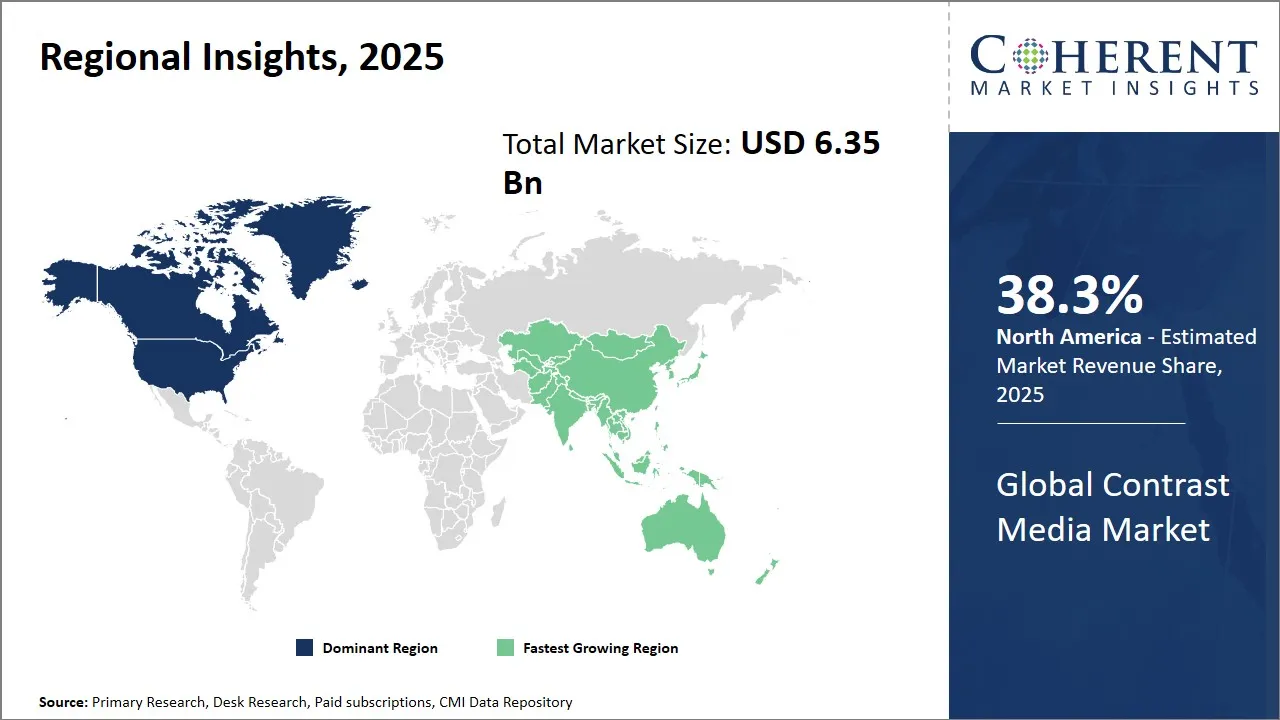
North America Contrast Media Market Analysis and Trends
North America’s dominance in the global contrast media market, with an estimated share of 38.3% in 2026, is driven by a well-established healthcare infrastructure, high adoption of advanced diagnostic imaging technologies, and strong presence of key industry players. The market ecosystem benefits from extensive hospital networks, radiology centers, and diagnostic labs equipped with state-of-the-art imaging modalities requiring contrast agents. Government policies and reimbursement frameworks in the U.S. and Canada support diagnostic imaging expenditures, fostering steady demand. Prominent companies such as GE Healthcare, Bracco Diagnostics, and Bayer AG have substantial research and development (&D) facilities and distribution channels in the region, facilitating product innovation and wide availability.
In June 2026, Fresenius Kabi Canada, a division of the global healthcare leader Fresenius, introduced Iodixanol Injection 270 and 320, marking the launch of the first generic version of Visipaque in Canada. Approved by Health Canada on December 17, 2024, Iodixanol is a contrast media agent widely used in diagnostic imaging procedures, including CT scans, arteriography, and venography. This new product expands Fresenius Kabi's footprint in the contrast media sector, addressing the ongoing supply shortages and providing a more cost-effective and reliable alternative for Canadian healthcare providers.
Asia Pacific Contrast Media Market Analysis and Trends
The Asia Pacific is expected to exhibit the fastest growth with share of 25.6% in 2026, due to increasing healthcare spending, rising patient population, expanding medical infrastructure, and growing awareness of advanced diagnostic solutions. Governments in key countries like China and India are focused on healthcare reforms and improving access to diagnostic services, which propels demand for contrast media. Additionally, Asia Pacific benefits from a burgeoning middle class with enhanced healthcare affordability and a rise in chronic diseases requiring diagnostic imaging. Companies such as Guerbet, Bracco, and Indian firms like Jubilant Life Sciences contribute significantly by tailoring products to local market needs and expanding distribution networks.
Global Contrast Media Market Outlook for Key Countries
U.S. Contrast Media Market Trends
The U.S. maintains a leadership position with a robust healthcare delivery system supported by high healthcare expenditure and advanced medical technology penetration. Industry giants—such as GE Healthcare, Bayer AG, and Mallinckrodt Pharmaceuticals—focus on continuous innovation in contrast media formulations, including iodine-based and gadolinium-based products. Regulatory support from the FDA and reimbursement policies enable widespread adoption of diagnostic imaging, fueling market growth. The presence of major research institutions and collaborations with biotechnology firms further provide momentum to product development and clinical uptake.
In June 2026, Bayer, a global leader in healthcare and life sciences, submitted a New Drug Application (NDA) to the U.S. Food and Drug Administration (FDA) for its investigational gadolinium-based contrast agent, gadoquatrane. This contrast agent, designed for contrast-enhanced MRI of the central nervous system (CNS) and other body regions, offers a 60% reduction in dosage compared to traditional macrocyclic GBCAs. The submission is based on positive results from the Phase III QUANTI studies. If approved, gadoquatrane will be the lowest dose macrocyclic GBCA available in the U.S., providing a safer option for patients, especially those requiring multiple MRI scans due to chronic conditions.
Germany Contrast Media Market Trends
Germany’s market benefits from strong healthcare infrastructure, a high standard of medical services, and considerable government support for diagnostic imaging technologies. The country hosts significant operations of major multinational companies like Bayer AG and Bracco, which contribute to product innovation and supply chain efficiency. German emphasis on precision medicine and advanced imaging diagnostics creates a favorable environment for contrast media usage. Additionally, reimbursement schemes and health insurance coverage ensure broad accessibility of these imaging agents in both public and private medical sectors.
In April 2026, Bayer, a global healthcare leader, and Siemens Healthineers, a prominent medical technology company based in Germany, launched three groundbreaking diagnostic imaging solutions: Centargo, MAGNETOM Flow, and SOMATOM Pro.Pulse. The products were unveiled at the "Expanding the Future of Care" event in Vietnam on April 11, 2026, attended by over 120 healthcare professionals.
China Contrast Media Market Trends
China represents a strategic focus for many contrast media manufacturers due to vast patient populations and increasing hospital modernization. The government’s healthcare reforms aimed at expanding insurance coverage and modernizing tertiary care centers amplify demand. Domestic companies, including Sino Biopharmaceutical and Jubilant Life Sciences, are collaborating with international firms for technology transfer and co-development of novel contrast agents. Moreover, aggressive investments in diagnostic infrastructure and rising prevalence of lifestyle-related diseases contribute to China’s growing consumption of contrast media.
In November 2024: Beijing Beilu Pharmaceutical Co., Ltd., a Chinese pharmaceutical company specializing in contrast agents, received GMP certification from Brazil's ANVISA for its contrast agent production line. This certification facilitates the company's successful entry into the Brazilian market and supports its expansion into Brazil and other international markets.
U.K. Contrast Media Market Trends
The U.K. contrast media market is experiencing notable growth, driven by advancements in diagnostic imaging technologies and an increasing prevalence of chronic diseases. The National Health Service (NHS) has been instrumental in expanding diagnostic capabilities, leading to a higher demand for contrast agents in procedures such as CT and MRI scans. This trend is further supported by the aging population, which necessitates more frequent imaging for conditions like cardiovascular diseases and cancer. Additionally, the market is witnessing a shift towards sustainable practices, with a growing emphasis on biodegradable and environmentally friendly contrast agents.
On July 1, 2026, a new Contrast Media and Associated Injectors/Consumables Framework was launched to streamline procurement for the NHS, enhancing diagnostic capabilities and reducing delays. Managed by four NHS procurement hubs, the framework covers Contrast Media Products, Consumables, and Injectors, with suppliers including Bayer Plc, Bracco UK Ltd, GE Healthcare, and Guerbet Lab. The framework, running from July 2026 to June 2027, ensures high-quality, reliable supplies, cost efficiency, and risk mitigation, with flexible procurement options and innovative offers such as free CT injector loans.
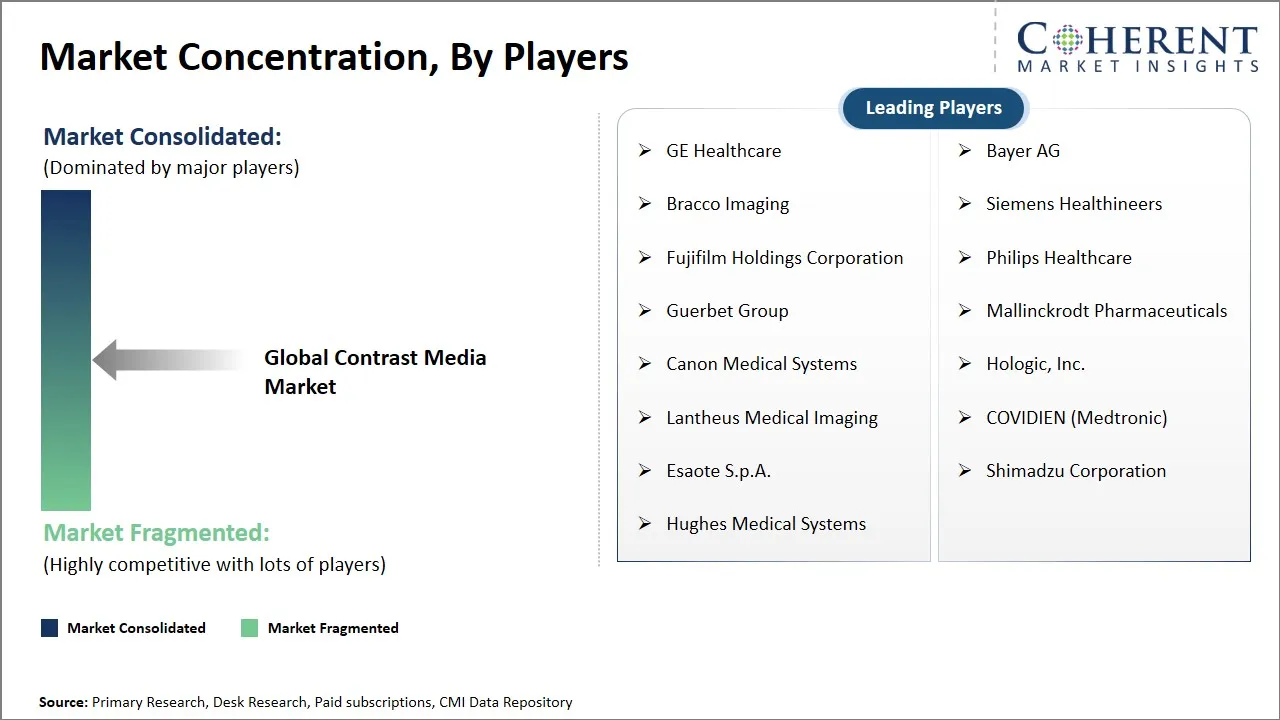
Market Players, Key Developments, and Competitive Intelligence
Key Developments
- In May 2025, Royal Philips, a global leader in health technology, has launched the RADIQAL (Radiation Dose and Image Quality Trial) study to gather real-world evidence for its new ultra-low X-ray dose technology used in coronary procedures with contrast media. The trial will involve 824 patients across 6 hospitals in Spain, Czech Republic, Denmark, and the US. The primary goal is to demonstrate that this technology can reduce patient radiation exposure without compromising the performance of coronary procedures, while ensuring high-quality angiograms with diluted contrast media.
- In January 2025, GE HealthCare, a global leader in medical technologies, has announced a USD 138 million investment to expand its manufacturing facility in Carrigtohill, Cork, Ireland. This new 3,000m² facility will boost production capacity by 25 million additional patient doses of contrast media per year by 2027. The investment aims to meet the growing global demand for iodine-based contrast media, driven by aging populations and increasing chronic diseases.
- In March 2025, Bracco Imaging, a leading company in the field of diagnostic imaging, completed the acquisition of NanoPET Pharma GmbH. This acquisition expands its portfolio of specialized contrast agents for molecular imaging applications, strengthening its position in the precision medicine segment.
- In February 2025, Lantheus Medical Imaging, a global leader in medical imaging diagnostics, announced successful Phase III clinical trial results for its novel manganese-based MRI contrast agent. This agent could serve as a potential alternative to gadolinium-based agents for patients with renal impairment and addresses environmental concerns.
Top Strategies Followed by Global Contrast Media Market Players
- Established players dominate the contrast media market by leveraging their significant financial and technological resources. These industry leaders invest heavily in R&D to create high-performance contrast agents with enhanced imaging quality and greater safety profiles. Their investment & new product launch not only enhances their product offering but also reflects a commitment to innovation, ensuring that their agents are integrated seamlessly into clinical workflows. Furthermore, like the example of Voyageur Pharmaceuticals Ltd., which launched a new barium contrast product line in Canada and global markets, established players expand market reach by focusing on the growing healthcare infrastructure in emerging markets.
- In April 2025: Voyageur Pharmaceuticals Ltd., a radiology contrast media company, has launched its new barium contrast product line in Canada and other global markets that accept Health Canada standards. This follows positive results from a clinical performance study conducted at Canada Diagnostic Centres (CDC) on 24 subjects, where Voyageur’s high-density barium suspensions were praised for image quality in GI and small bowel exams.
- Mid-level players in the contrast media market adopt a more cost-sensitive and collaborative approach to remain competitive. They prioritize delivering cost-effective solutions that maintain a balance between quality and affordability, targeting price-conscious healthcare providers and patients, especially in developing economies Mid-level players in the contrast media market adopt a cost-sensitive and collaborative approach to remain competitive, focusing on providing cost-effective solutions without compromising quality.
- In December 2024, Guerbet Group, a global leader in medical imaging, launched an eco-friendly packaging initiative for its contrast media products. The initiative reduces plastic usage by 40% and implements recyclable materials across its product line, responding to growing hospital sustainability requirements.
- Small-scale players in the global contrast media market carve out their niches by focusing on innovation, specialization, and regional alliances. These companies often develop specialized contrast agents with unique features tailored for specific diagnostic applications or patient demographics, thereby differentiating themselves from the more generalist offerings of larger firms.
- For example, Biocompatibles specializes in microspheres for specific treatments like liver cancer imaging, while Nanoxis develops nanotechnology-based contrast agents for cardiovascular imaging. Additionally, companies like HYPERLITE collaborate with local hospitals in Asia to distribute specialized agents, helping them expand their reach despite limited resources.
Market Report Scope
Contrast Media Market Report Coverage
| Report Coverage | Details | ||
|---|---|---|---|
| Base Year: | 2025 | Market Size in 2026: | USD 6.88 Bn |
| Historical Data for: | 2020 To 2024 | Forecast Period: | 2026 To 2033 |
| Forecast Period 2026 to 2033 CAGR: | 8.3% | 2033 Value Projection: | USD 12.02 Bn |
| Geographies covered: |
| ||
| Segments covered: |
| ||
| Companies covered: | GE Healthcare, Bayer AG, Bracco Imaging, Siemens Healthineers, Fujifilm Holdings Corporation, Philips Healthcare, Guerbet Group, Mallinckrodt Pharmaceuticals, Canon Medical Systems, Hologic, Inc., Lantheus Medical Imaging, COVIDIEN (Medtronic), Esaote S.p.A., Shimadzu Corporation, and Hughes Medical Systems | ||
| Growth Drivers: |
| ||
| Restraints & Challenges: |
| ||
Contrast Media Market Dynamics
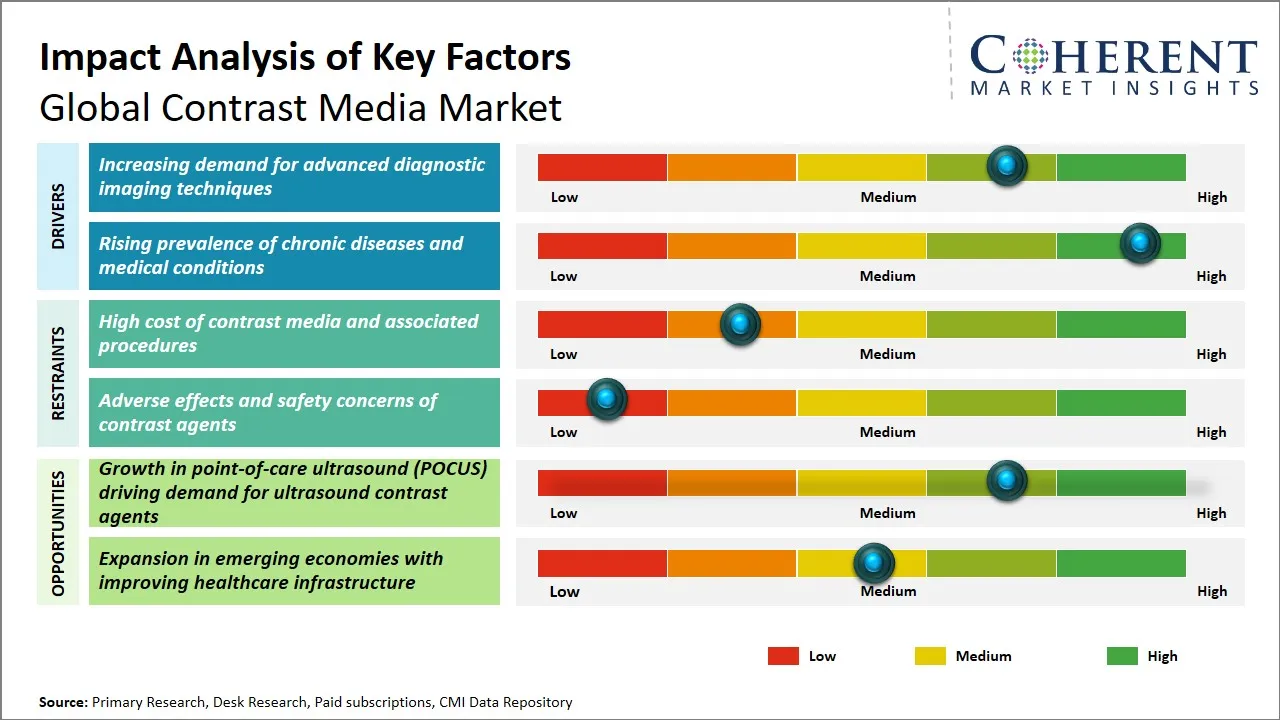
Contrast Media Market Driver - Increasing Demand for Advanced Diagnostic Imaging Techniques
The escalating demand for advanced diagnostic imaging techniques is a significant driver propelling the growth of the global contrast media market. As healthcare providers increasingly prioritize early and accurate disease detection, the reliance on sophisticated imaging modalities such as computed tomography (CT), magnetic resonance imaging (MRI), and ultrasound has surged. These imaging techniques require contrast media to enhance the visibility of internal structures, facilitating more precise diagnoses. Moreover, technological advancements in imaging procedures have broadened the scope of applications for contrast agents, encompassing cardiovascular, neurological, and oncological conditions. The growing prevalence of chronic diseases and the rising number of diagnostic procedures being conducted in both inpatient and outpatient settings further amplify the need for effective contrast media.
On July 24, 2025, GE HealthCare, a global leader in medical technology, has launched the Definium Pace Select ET, a floor-mounted digital X-ray system designed to enhance imaging quality and workflow efficiency in high-demand environments. The system automates repetitive tasks and reduces physical strain on technologists by leveraging AI for accurate patient positioning and consistent image quality across various clinical conditions. This innovation addresses the growing demand for X-ray exams, the high burnout rates among radiology technologists, and staffing challenges in healthcare.
Contrast Media Market Opportunity: Growth in Point-of-Care Ultrasound (POCUS) Driving Demand for Ultrasound Contrast Agents
The increasing adoption of Point-of-Care Ultrasound (POCUS) in various clinical settings presents a significant opportunity for the global contrast media market, particularly in the segment of ultrasound contrast agents. POCUS, characterized by its portability, real-time imaging capability, and non-invasive nature, is gaining traction among healthcare professionals for rapid diagnosis and bedside examination. This trend is especially prominent in emergency medicine, critical care, and outpatient settings where quick decision-making is crucial. The integration of ultrasound contrast agents enhances the diagnostic accuracy of POCUS by improving visualization of blood flow, tissue perfusion, and lesion characterization, thereby expanding its clinical applications. Moreover, advancements in ultrasound technology coupled with growing clinician awareness regarding the benefits of contrast-enhanced ultrasound (CEUS) are accelerating its adoption.
On July 24 2025, Fujifilm Sonosite has launched the UHF46-20 Transducer, the world’s first 46 MHz ultra-high frequency transducer for point-of-care ultrasound system (POCUS). Offering high-resolution imaging of structures smaller than 1mm, it enhances diagnostic accuracy in sensitive areas like NICU and Rheumatology. Paired with the Sonosite LX system, this innovation provides the largest frequency range in the POCUS market, driving demand for advanced ultrasound contrast agents in clinical applications.
Analyst Opinion (Expert Opinion)
- The global contrast media market has experienced significant growth, driven by several key factors. Technological advancements in imaging modalities, such as MRI, CT, and X-ray, have propelled the demand for high-quality contrast agents. Regulatory support, particularly from bodies like the FDA and EMA, has streamlined the approval processes, encouraging the development and commercialization of novel contrast agents. The increasing prevalence of chronic diseases, coupled with a growing aging population, has heightened the demand for diagnostic imaging, further supporting market expansion. Additionally, the shift towards personalized medicine and minimally invasive procedures is creating new opportunities for contrast media.
- However, the market faces challenges, including concerns over the safety of certain contrast agents, such as nephrotoxicity and allergic reactions, as well as regulatory hurdles in emerging markets. Notable conferences like the Radiological Society of North America's (RSNA) annual meeting and the European Society of Radiology (ESR) conference have contributed to knowledge-sharing and the introduction of new technologies in the field. In terms of market initiatives, collaborations between pharmaceutical companies and diagnostic centers, along with government-backed programs for enhanced healthcare access, are expected to shape the future of the market. For example, recent collaborations between medical imaging companies and health ministries to improve early disease detection in developing regions are paving the way for a stronger market outlook.
Speak to the analyst
Want personalized insights?
Take the findings above to one of our principal consultants, or have the report rebuilt around the segments, geographies and competitors you actually track.
Market Segmentation
- Type Insights (Revenue, USD Bn, 2021 - 2033)
- Iodinated Contrast Media
- Monomeric Iodinated Contrast Media
- Dimeric Iodinated Contrast Media
- Gadolinium-Based Contrast Media (GBCM)
- Barium-Based Contrast Media
- Others (Microbubble Contrast Media)
- Imaging Technique Insights (Revenue, USD Bn, 2021 - 2033)
- X-ray/Computed Tomography (CT)
- Magnetic Resonance Imaging (MRI)
- Ultrasound Imaging
- Fluoroscopy
- Others (Angiography)
- Application Insights (Revenue, USD Bn, 2021 - 2033)
- Cardiovascular
- Oncology
- Neurology
- Gastrointestinal
- Musculoskeletal
- Pulmonary
- Urology
- Infectious Diseases
- Other Therapeutic Areas
- Route Of Administration Insights (Revenue, USD Bn, 2021 - 2033)
- Oral
- Rectal
- Intravenous
- End User Insights (Revenue, USD Bn, 2021 - 2033)
- Hospitals
- Diagnostic Centers
- Imaging Centers
- Ambulatory Surgical Centers
- Others (Research and Academic Institutes)
- Regional Insights (Revenue, USD Bn, 2021 - 2033)
- North America
- U.S.
- Canada
- Latin America
- Brazil
- Argentina
- Mexico
- Rest of Latin America
- Europe
- Germany
- U.K.
- Spain
- France
- Italy
- Russia
- Rest of Europe
- Asia Pacific
- China
- India
- Japan
- Australia
- South Korea
- ASEAN
- Rest of Asia Pacific
- Middle East
- GCC Countries
- Israel
- Rest of Middle East
- Africa
- South Africa
- North Africa
- Central Africa
- North America
- Key Players Insights
- GE Healthcare
- Bayer AG
- Bracco Imaging
- Siemens Healthineers
- Fujifilm Holdings Corporation
- Philips Healthcare
- Guerbet Group
- Mallinckrodt Pharmaceuticals
- Canon Medical Systems
- Hologic, Inc.
- Lantheus Medical Imaging
- COVIDIEN (Medtronic)
- Esaote S.p.A.
- Shimadzu Corporation
- Hughes Medical Systems
Sources
Industry Stakeholders
- Radiology Department Heads
- Medical Imaging Equipment Manufacturers
- Pharmaceutical Companies Producing Contrast Media
- Healthcare Providers and Hospitals
- Diagnostic Centers and Imaging Clinics
- Medical Device Distributors and Suppliers
End Users
- Radiologists
- Technicians in Imaging Departments
- Patients undergoing diagnostic imaging
- Healthcare professionals in emergency care
- Specialists in medical imaging technology
Government and International Databases
- U.S. Food and Drug Administration (FDA)
- European Medicines Agency (EMA)
- World Health Organization (WHO)
- Centers for Disease Control and Prevention (CDC)
- National Institutes of Health (NIH)
- European Commission (EC) Health and Consumer Protection Directorate
Trade Publications
- Diagnostic Imaging Magazine
- Health Imaging and IT Journal
- Medical Imaging Technology Journal
- Radiology Business Journal
- Imaging Technology News
Academic Journals
- Journal of Radiology
- The British Journal of Radiology
- American Journal of Roentgenology (AJR)
- Radiology and Imaging Journal
- European Radiology Journal
- Journal of Clinical Imaging Science
Reputable Newspapers
- The New York Times – Health Section
- The Guardian – Health & Medicine
- The Wall Street Journal – Healthcare & Pharmaceuticals
- BBC News – Health
- Reuters Health
Industry Associations
- Radiological Society of North America (RSNA)
- European Society of Radiology (ESR)
- American College of Radiology (ACR)
- International Society for Magnetic Resonance in Medicine (ISMRM)
- Society of Interventional Radiology (SIR)
- World Radiology Foundation (WRF)
Public Domain Resources
- PubMed Central (PMC) – for open access research articles
- Open Access Journals from Universities
- National Health Service (NHS) Resources
- National Cancer Institute (NCI) Resources
- U.S. National Library of Medicine
Proprietary Elements
- CMI Data Analytics Tool: Proprietary analytics tool to analyze real-time market trends, consumer behavior, and technology adoption in market
- Proprietary CMI Existing Repository of Information for Last 8 Years
Get access to 250+ pages report
Every segment, forecast, competitor profile and data table behind the analysis above — available for instant download.
- ESOMAR Member
- ISO 9001:2015 Certified
- D-U-N-S Registered
- GDPR & CCPA Compliant
Missing comfort of reading report in your local language? Find your preferred language:
Transform your Strategy with Exclusive Trending Reports
Frequently Asked Questions
The global contrast media market is estimated to be valued at USD 6.88 Bn in 2026 and is expected to reach USD 12.02 Bn by 2033.
The CAGR of global contrast media market is projected to be 8.3% from 2026 to 2033.
Increasing demand for advanced diagnostic imaging techniques and rising prevalence of chronic diseases and medical conditions are the majors factor driving the growth of the global contrast media market.
High cost of contrast media and associated procedures and adverse effects and safety concerns of contrast agents are the major factors hampering the growth of the global contrast media market.
In terms of Type, Iodinated Contrast Media segment is estimated to dominate the market revenue share in 2026.
The market is expected to grow steadily, with innovations in contrast agent safety and efficiency and increasing healthcare demands driving the trend.
Risks include allergic reactions, nephropathy (kidney damage), and potential side effects related to overexposure.