

Global Medical Device Water Chiller Market Size and Forecast: 2026-2033
The global medical device water chiller market is estimated to be valued at USD 500 Mn in 2026 and is expected to reach USD 730 Mn by 2033, exhibiting a compound annual growth rate (CAGR) of 5.56% from 2026 to 2033. This consistent upward trend mirrors the rising need for accurate temperature control in medical devices. This demand is fueled by the global expansion of healthcare infrastructure and ongoing medical technology innovations. Further, the market is set to keep growing, with healthcare providers increasingly focused on both the effectiveness and safety of their equipment.
Key Takeaways of the Global Medical Device Water Chiller Market
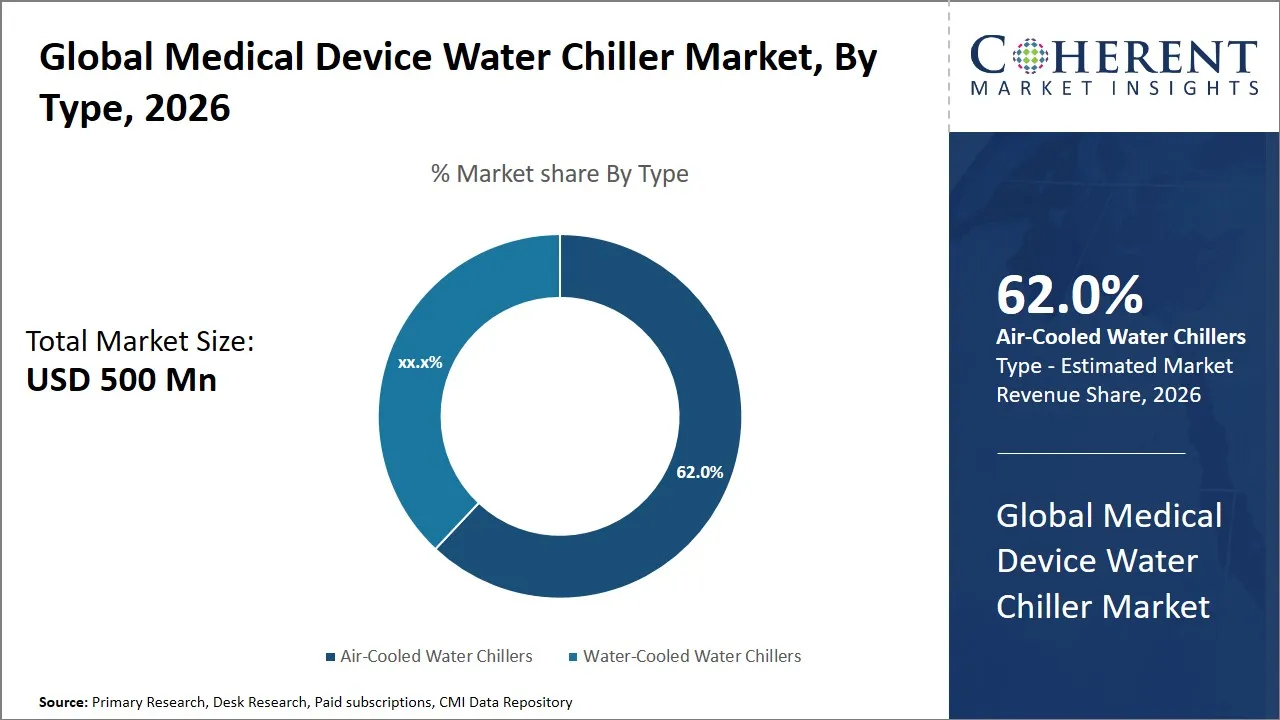
- The air-cooled water chillers segment is expected to dominate the global medical device water chiller market by type, accounting for approximately 62.0% of the total market share in 2026.
- The Up-to 5 kW segment is expected to dominate the global medical device water chiller market by capacity, accounting for approximately 45.0% of the total market share in 2026.
- The diagnostic imaging systems segment is expected to dominate the global medical device water chiller market by application, accounting for approximately 58.0% of the total market share in 2026.
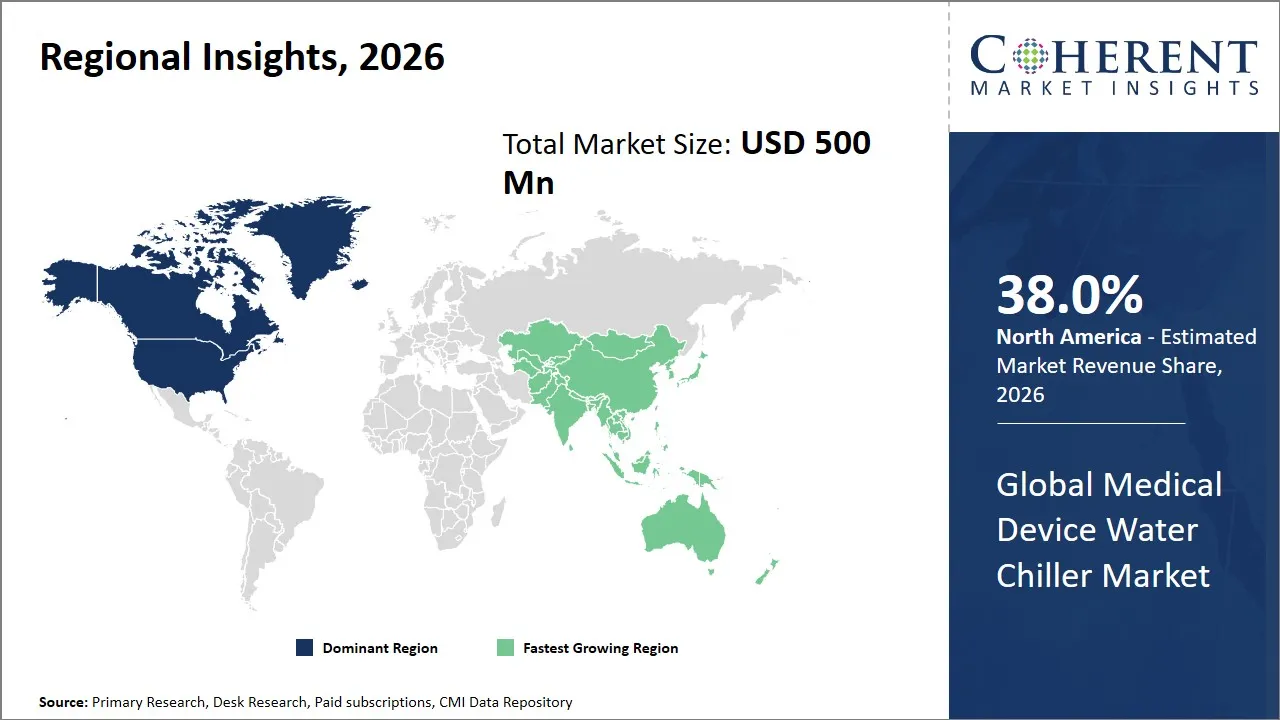
- North America is expected to dominate the global medical device water chiller market in 2026, accounting for approximately 38.0% of the total market share.
- Asia Pacific is anticipated to witness the fastest growth holding a market share of 26.0 % in 2026.
Market Overview
- Medical device water chillers are an essential type of medical equipment used for maintaining optimal temperature levels for various medical devices such as MRI, CT, medical lasers, and laboratory equipment. These medical water chillers are essential in the healthcare industry for the smooth functioning of medical equipment, which is used for various medical procedures.
- The market for medical device water chiller is driven by the increasing number of medical devices installed in various hospitals and diagnostic centers. With an increase in the number of medical devices used for various medical procedures, the importance of medical water chillers can never be ignored.
- Technological advancements in medical water chillers, such as compactness, energy efficiency, and precise control, are driving the medical water chiller market globally owing to the increasing focus on sustainability in the healthcare industry.
- The increasing healthcare infrastructure in emerging economies, coupled with an increase in the number of medical procedures, is also driving the medical device water chiller market globally.
Currents Events and their Impact
Current Events | Description and its Impact |
Rising Adoption of Advanced Diagnostic Imaging Systems |
|
Integration of IoT and Smart Monitoring in Chiller System |
|
Segmental Insights
- Current Industry Events of 2026
- Market Size Estimation
- Regional Breakdown
- Competitive Landscape
- Customer Intelligence
- Segmental Analysis
- Pricing Analysis
- Key Market Drivers, Challenges & Future Trends
- Customized Insights Section
Why Does the Air-Cooled Water Chillers Segment Dominate the Global Medical Device Water Chiller Market in 2026?
The air-cooled water chillers segment is anticipated to hold a market share of 62.0% in 2026, owing to the ease of integration of the device with existing systems. In addition, air-cooled chillers are flexible and can be used in a wide range of medical device applications. The fact that air-cooled chillers do not require complex infrastructural facilities, unlike water-cooled chillers, makes them highly flexible for integration into existing medical device applications. This is primarily because space constraints are a major issue in medical device applications. In addition, the ease of integration of the device with existing medical device applications results in a need for reliable temperature control.
Moreover, air-cooled water chillers provide operational advantages. Unlike water-cooled chillers, air-cooled water chillers do not demand water supply. Therefore, there is no risk of water scarcity or system inefficiencies due to water scarcity. Furthermore, air-cooled water chillers demand low maintenance costs. Unlike water-cooled chillers, air-cooled water chillers do not demand maintenance due to issues such as corrosion, scaling, or bio-fouling. Additionally, air-cooled water chillers align with the healthcare sector’s focus on sustainability thus driving the segment growth.
For instance, in March 2025, Thermo Fisher Scientific unveiled its latest large-capacity, superspeed centrifuges. These new models feature cutting-edge cooling systems that utilize natural refrigerants. The goal is to boost energy efficiency and lessen their environmental footprint by incorporating refrigerants with a low global warming potential (GWP).
(Source: Thermo Fisher Scientific)
Why Does the Up-to 5 kW Segment Dominate the Global Medical Device Water Chiller Market in 2026?
The Up-to 5 kW segment is projected to hold a market share of 45.0% in 2026, due to increased demand for compact and efficient cooling solutions that are applicable for small and precise medical equipment. The medical devices used in diagnostic labs and outpatient facilities require efficient cooling solutions that do not occupy too much space and are not too power-intensive. The up to 5 kW rating segment is efficient in meeting these requirements, thus helping healthcare facilities make efficient use of available space.
Also, the flexibility and cost-effectiveness of up to 5 kW capacity chillers make them highly sought after in the healthcare industry. The capacity of the devices to support individual units or small groups of units helps the healthcare industry avoid over-investing in larger units, all while keeping their energy needs in check. The developments in technology, such as better compressor units and eco-friendly refrigerants, also make them more efficient and effective in their operations. The increasing trend of decentralized healthcare, including mobile medical units, also helps this segment dominate the market.
The Diagnostic Imaging Systems Segment Dominates the Global Medical Device Water Chiller Market
Diagnostic imaging systems segment is projected to hold a market share of 58.0% in 2026, due to the need to manage temperature levels precisely in diagnostic imaging equipment, including MRI, CT scanners, and ultrasound equipment. This is because diagnostic imaging equipment generates considerable heat while in use, and temperature fluctuations affect the performance and lifespan of the equipment. Hence, there is a need to provide reliable equipment in this case, where water chillers are critical in the sense that diagnostic imaging equipment requires precise temperature management, which is essential in the equipment.
Also, the increasing demand for non-invasive medical diagnostic procedures worldwide has fueled the installation of imaging devices in hospitals and diagnostic centers. This, in turn, is creating a strong market requirement for effective and reliable cooling systems to support smooth operations, thus reducing the maintenance costs of such equipment. Moreover, the regulations associated with the performance of such medical devices also emphasize the significance of having effective cooling systems in place. With the constant evolution of digital diagnostic technologies, the above factors are adding to the overall market dominance of diagnostic imaging systems in the medical device water chiller market.
Regional Guidelines and Regulations Governing the Medical Device Water Chiller Market
Region | Key Authorities | Description & Impact on Market |
North America | U.S. Food and Drug Administration (FDA), Environmental Protection Agency (EPA) | Strict medical device quality standards and environmental regulations ensure reliability and safety of cooling systems. Refrigerant regulations promote adoption of energy-efficient and low-emission chillers. |
Europe | European Commission (MDR, CE Marking), F-Gas Regulation | Strong compliance requirements for medical device safety and environmental sustainability drive demand for certified, low-GWP, and energy-efficient cooling systems. |
Asia Pacific | National Medical Products Administration (NMPA), Bureau of Indian Standards (BIS) | Growing regulatory frameworks ensure safety and performance of medical equipment, while increasing focus on standardization supports adoption of advanced cooling systems in emerging markets. |
Latin America | Agência Nacional de Vigilância Sanitária (ANVISA), COFEPRIS (Mexico) | Developing regulatory landscape focusing on medical device approval and safety, encouraging gradual adoption of compliant and efficient cooling technologies. |
Middle East & Africa | Saudi Food and Drug Authority (SFDA), South African Health Products Regulatory Authority (SAHPRA) | Increasing regulatory enforcement and healthcare investments are driving demand for standardized and reliable medical cooling systems across healthcare facilities. |
Regional Insights
North America Medical Device Water Chiller Market Analysis and Trends
The North America region is projected to lead the market with a 38.0% share in 2026, owing to its strong medical infrastructure, higher adoption of advanced medical technologies, and strong R&D capabilities. The presence of key medical device companies in countries such as the U.S. and Canada also helps in building a competitive environment with an emphasis on innovation and quality. Government policies such as reimbursement policies and strong regulations by U.S. FDA have also encouraged the adoption of reliable medical device water chillers in medical devices to ensure operational efficacy.
Strong trade relations are an added advantage for the medical device water chiller market in North America, which helps in smooth supply chain management. Key players such as ThermoTek, PolyScience, and SPX Cooling Technologies have also contributed significantly to the growth of the medical device water chiller market by developing highly reliable and energy-efficient medical-grade water chillers.
For instance, in February 2026, U.S. Food & Drug Administration cleared the next-generation SIGNA MRI technologies developed by GE HealthCare. The new technologies are intended to enable greater precision and efficiency in imaging. This is part of the growing demand for the latest technologies in imaging in the region. In the process of regulating the temperature of the MRI systems, there is a growing need for medical device water chillers in the region.
(Source: GE HealthCare)
Asia Pacific Medical Device Water Chiller Market Analysis and Trends
The Asia Pacific region is projected to lead the market with a 26.0% share in 2026, driven by increasing healthcare infrastructure, the rising popularity of medical tourism, and surge in investment in the adoption of medical technology. Countries in the Asia Pacific region, such as China, India, Japan, and South Korea, are at the core of the rising demand for high-tech medical equipment, including water chillers, in the public and private sectors.
Additionally, the rising initiatives of the governments in these countries to improve access to healthcare facilities and upgrade the infrastructure of healthcare centers have propelled the growth of the market. Furthermore, the region has the advantage of low manufacturing costs and high manufacturing capabilities, which has encouraged many international players to set up their manufacturing facilities in the region. Companies such as S&A Corporation, Lauda, and Blue Star Ltd. are the key players in the market, providing cost-effective and high-tech chillers according to the needs of the region.
Medical Device Water Chiller Market Outlook for Key Countries
How is the U.S. Helping in the Growth of the Medical Device Water Chiller Market?
The U.S. medical device water chiller market is known for the adoption of technology with high levels of regulatory compliance for the quality of the water chiller in medical devices. The key players in the market, such as ThermoTek and SPX Cooling Technologies, invest highly in innovation in the product development area, creating products that cater to the needs of medical devices such as surgical tools and medical imaging.
For instance, in January 2024, JULABO announced the launch of its first refrigerant-free chiller in the U.S. This move is a step towards the changing environmental regulations aimed at controlling the use of HFCs. The new solution provides precise temperature control for laboratory and medical applications, along with being a more environmentally friendly option. This move is a part of the increasing popularity of eco-friendly products in the U.S., specifically for medical devices and water chillers.
(Source: JULABO)
How is China Helping in the Growth of the Medical Device Water Chiller Market?
China is an emerging market with vast growth prospects due to enormous investments by the China government in healthcare infrastructure. In addition, China is witnessing an increasing need for advanced medical devices. The country offers vast manufacturing capabilities to both local and international companies to develop affordable medical device water chillers. Companies such as S&A Corporation are committed to providing affordable medical device water chillers.
Key Drivers for the Growth of the Germany Medical Device Water Chiller Market
Germany is at the forefront due to the country’s high industrial base and its reputation for manufacturing high-tech equipment, which has led to the development of high-precision water chillers. Companies like Lauda and GEA Group are well-established in the country, providing high-tech solutions that are required in the medical sector. The country has favorable government policies that support the manufacturing sector, which is export-oriented, thus driving the market growth in the country.
Japan Medical Device Water Chiller Market Trends
Japan is at the forefront in Asia Pacific owing to its advanced technological innovations in the medical devices industry, including the water chiller. The focus of country on precise engineering and quality assurance makes it the hub for the highest quality of cooling systems in the medical devices industry. Organizations like Hitachi and Mitsubishi Electric are contributing significantly to the medical devices industry by incorporating advanced and efficient chillers.
Regional Diagnostic Imaging Equipment Installed Base & Penetration Trends
Region | Installed Base & Penetration Trends | Impact on Medical Device Water Chiller Market |
North America | High installed base of MRI and CT systems with strong penetration across hospitals and diagnostic centers; early adoption of advanced imaging technologies. | Drives consistent demand for high-performance, energy-efficient chillers due to extensive usage and need for precise temperature control. |
Europe | Mature market with widespread imaging infrastructure and strong regulatory compliance; increasing upgrades to advanced systems. | Supports demand for compliant and sustainable cooling systems, especially low-GWP and energy-efficient chillers. |
Asia Pacific | Rapidly growing installed base driven by expanding healthcare infrastructure in countries like China and India; increasing penetration in tier-2 and tier-3 cities. | Creates significant growth opportunities for cost-effective and scalable chiller solutions to support new installations. |
Latin America | Moderate installed base with gradual increase in diagnostic imaging adoption; improving healthcare access. | Drives steady demand for reliable and affordable cooling systems as imaging infrastructure expands. |
Middle East & Africa | Emerging adoption with increasing investments in healthcare infrastructure and diagnostic capabilities. | Generates demand for robust and adaptable cooling systems suited to varying environmental conditions and infrastructure levels. |
Market Players, Key Developments, and Competitive Intelligence
Key Developments
- In September 2025, Schneider Electric announced its complete range of liquid cooling solutions, now incorporating Motivair technologies, including chillers and thermal management solutions. These solutions are designed to deliver precise and flexible cooling, especially for high-performance applications.
- In March 2025, Thermo Fisher Scientificbroadened its laboratory solutions offerings, adding sophisticated temperature control and cooling systems designed for analytical and diagnostic uses. The company remains committed to bolstering the infrastructure that underpins high-precision laboratory environments. This move underscores the growing need for dependable cooling technologies in both medical and research facilities. It should also contribute to expansion within the medical device water chiller market.
- In July 2024, Laird Thermal Systems recently announced the launch of a new recirculating chiller. This product was developed keeping the environment in mind. This type of chiller utilizes the natural refrigerant R290, whose global warming potential is practically zero. This product is intended to provide precise temperature control, which is usually required in the medical, laboratory, and analytical industries.
Top Strategies Followed by Global Medical Device Water Chiller Market Players
Player Type | Strategic Focus | Examples |
Established Market Leaders | Established market leaders focus on constant R&D investments to design high-performance, energy-efficient, and compliant chillers. These companies focus on strategic partnerships with OEMs, globalization, and the adoption of advanced technologies such as IoT monitoring systems and eco-friendly chiller technologies. | In January 2024, Trane Technologies introduced advanced energy-efficient thermal management solutions designed for precision cooling applications, strengthening its portfolio in healthcare and high-tech environments. |
Mid-Level Players | Mid-level players focus on cost-effective solutions that offer the right balance of performance and price, targeting mid-sized hospitals and clinics. These companies focus on strategic partnerships, joint ventures, and flexible manufacturing to expand their market presence and improve their technological capabilities. | In March 2023, Advantage Engineering expanded its portable chiller product line with improved efficiency and compact design, catering to medical and laboratory applications requiring reliable yet affordable cooling solutions. |
Small-Scale Players | Small-scale players focus on specific market needs, customization, and innovation, such as compact design, IoT, and eco-friendly technologies. These companies use local partnerships to access specific markets. | In June 2022, Solid State Cooling Systems developed thermoelectric-based cooling solutions targeting precise temperature control in medical and laboratory devices, highlighting innovation in compact and specialized cooling technologies. |
Market Report Scope
Medical Device Water Chiller Report Coverage
| Report Coverage | Details | ||
|---|---|---|---|
| Base Year: | 2025 | Market Size in 2026: | USD 500 Mn |
| Historical Data for: | 2020 To 2024 | Forecast Period: | 2026 To 2033 |
| Forecast Period 2026 to 2033 CAGR: | 5.56% | 2033 Value Projection: | USD 730 Mn |
| Geographies covered: |
| ||
| Segments covered: |
| ||
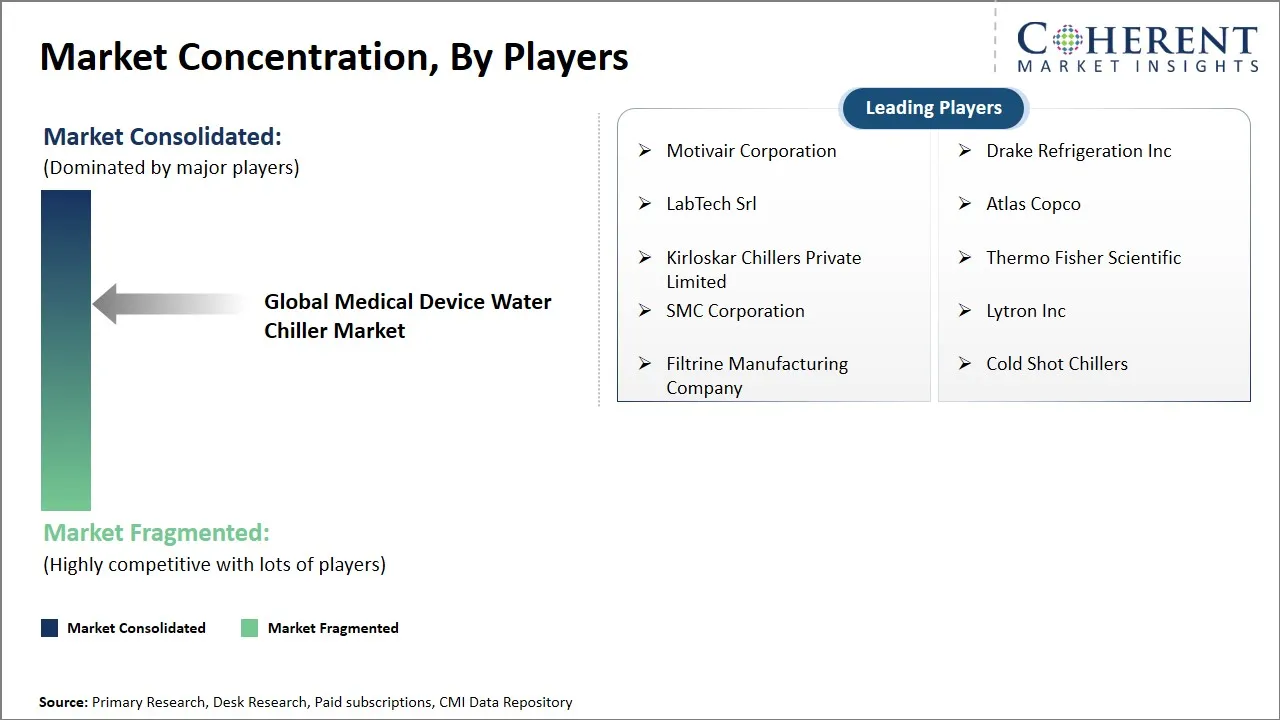
| Companies covered: | Motivair Corporation, Drake Refrigeration Inc, LabTech Srl, Atlas Copco, Kirloskar Chillers Private Limited, Thermo Fisher Scientific, SMC Corporation, Lytron Inc, Filtrine Manufacturing Company, and Cold Shot Chillers | ||
| Growth Drivers: |
| ||
| Restraints & Challenges: |
| ||
Global Medical Device Water Chiller Market Dynamics
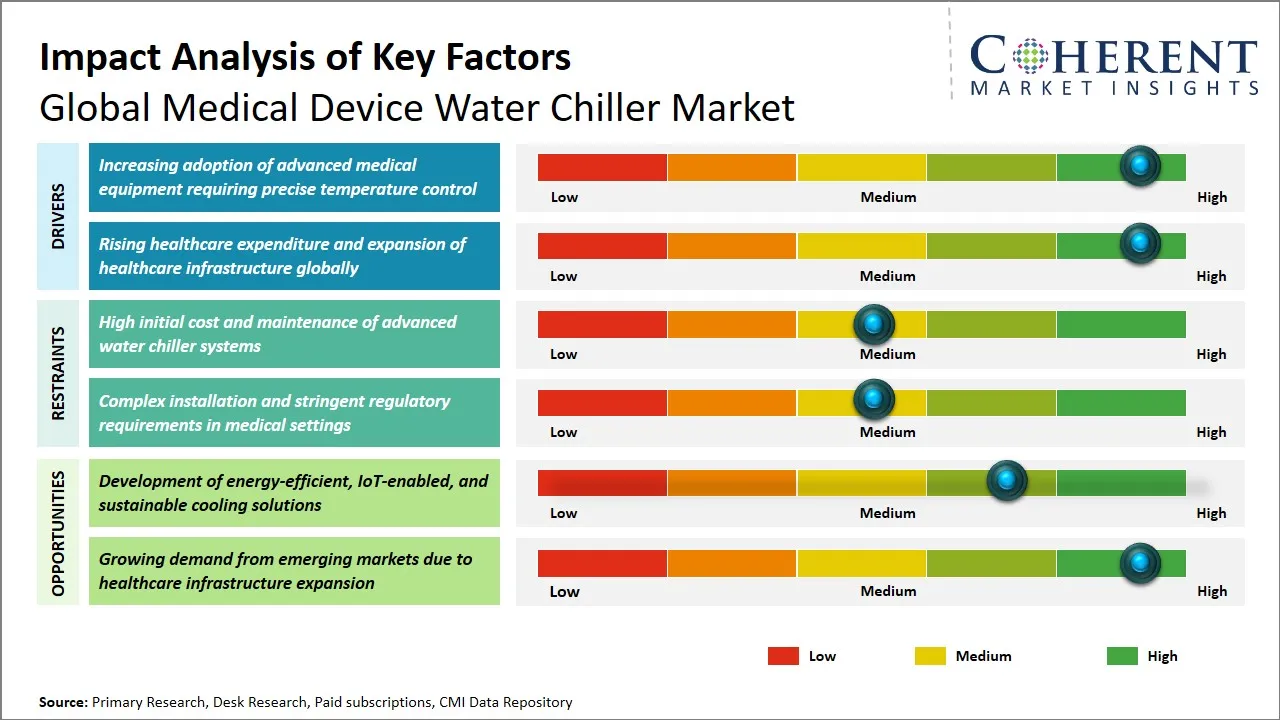
Medical Device Water Chiller Market Driver - Increasing Adoption of Advanced Medical Equipment Requiring Precise Temperature Control
The trend towards the incorporation of sophisticated medical technology in healthcare facilities is also contributing to the increased demand for medical device water chiller. This is due to the fact that sophisticated medical equipment, including MRI machines, CT scans, and laser technology, often produces considerable amounts of heat during their functioning. Therefore, it is essential that cooling technology be incorporated in order to avoid overheating.
Moreover, it is also important that precise control be maintained in order to ensure accurate performance and longevity. Therefore, it is imperative that healthcare facilities incorporate sophisticated medical technology in order to satisfy the demand for precise temperature controls. This is where high-quality water chillers have been incorporated in healthcare facilities in order to satisfy the demand for precise controls over temperature as required by sophisticated medical technology. Therefore, it is imperative that it is evident that the trend towards sophisticated medical technology is also contributing to the increased demand for medical device water chillers.
For instance, in October 2024, Schneider Electric acquired a controlling interest in Motivair Corporation, which improved its portfolio in precision cooling solutions. Motivair Corporation is a company that offers medical imaging and liquid cooling solutions, primarily for healthcare applications. This acquisition improved Schneider Electric’s position in mission-critical, high-performance cooling solutions. This is expected to boost innovation in the medical device water chiller market.
(Source: Motivair Corporation)
Medical Device Water Chiller Market Opportunity - Development of Energy-Efficient, IoT-Enabled, and Sustainable Cooling Solutions
The global medical device water chiller market is expected to witness tremendous growth in the coming years due to the increasing demand for energy-efficient, IoT-based, and sustainable water chillers. In the context of the growing emphasis on reducing the overall cost of operations and the environmental impact of the operations of medical institutions, the medical device water chiller industry presents an enormous scope for innovation in the development of sustainable water chillers that incorporate the latest technologies. Energy efficiency is another important factor that needs to be taken into consideration in the development of sustainable water chillers. The implementation of IoT-based water chillers helps in improving the reliability of the operations of medical institutions.
Also, the use of environmentally friendly refrigerants and materials can be seen as an opportunity in line with the global drive towards reducing carbon footprints, as well as the regulations stipulated in the Kigali Amendment. This opportunity is further magnified by the increasing cases of chronic diseases, which are accompanied by the use of advanced medical equipment for diagnosis and treatment, which demands precise cooling. Innovation in collaboration with key players in the market, in developing medical water chiller devices that can meet various medical needs, presents an opportunity for growth in the market. By seizing this opportunity, stakeholders in the medical device water chiller market can meet the demands of customers, thus ensuring sustainability in the market.
For instance, in September 2023, Danfoss unveiled cutting-edge cooling solutions. These systems, which utilize natural and low-GWP refrigerants, are engineered to boost energy efficiency while lessening their environmental footprint. They're specifically tailored for precision applications, promising both sustainability and top-tier performance. This move underscores the industry's ongoing transition toward greener, more efficient technologies. It also responds to the increasing need for sustainable, IoT-capable water chiller systems used in medical devices.
(Source: Danfoss)
Analyst Opinion (Expert Opinion)
- The medical device water chiller market is growing steadily with the increasing need for high-performance diagnostic and treatment equipment that requires precise control of temperatures. The need to prevent conditions such as overheating and the uninterrupted functioning of such equipment, including MRI machines, CT scans, and medical lasers, is making water chillers an indispensable supporting infrastructure in modern healthcare facilities.
- The advancements in the technologies used in chiller systems, including energy-efficient technologies, advanced temperature monitoring systems, and compact designs that save space, are all having a positive impact on the growth of the medical device water chiller market. The industry is also witnessing the shift in the focus of companies in the industry toward developing more reliable systems, reducing the costs of maintenance, and the use of environmentally friendly refrigerants to meet the changing healthcare standards.
- However, the major challenges that the medical device water chiller market is likely to face in the coming years is the high cost of investment in water chiller systems. However, considering the long-term benefits that water chillers provide in protecting the equipment and maintaining the efficiency and uninterrupted functioning of the equipment in the long term, the industry is likely to witness promising growth in the coming years.
Speak to the analyst
Want personalized insights?
Take the findings above to one of our principal consultants, or have the report rebuilt around the segments, geographies and competitors you actually track.
Market Segmentation
- Type Insights (Revenue, USD Mn, 2021 - 2033)
- Air-Cooled Water Chillers
- Water-Cooled Water Chillers
- Capacity Insights (Revenue, USD Mn, 2021 - 2033)
- Up-to 5 kW
- 5–20 kW
- Above 20 kW
- Application Insights (Revenue, USD Mn, 2021 - 2033)
- Diagnostic Imaging Systems
- Medical Laser Systems
- Laboratory and Analytical Equipment
- Radiotherapy Systems
- End User Insights (Revenue, USD Mn, 2021 - 2033)
- Hospitals
- Diagnostic Centers
- Research and Laboratories
- Specialty Clinics
- Regional Insights (Revenue, USD Mn, 2021 - 2033)
- North America
- U.S.
- Canada
- Latin America
- Brazil
- Argentina
- Mexico
- Rest of Latin America
- Europe
- Germany
- U.K.
- Spain
- France
- Italy
- Russia
- Rest of Europe
- Asia Pacific
- China
- India
- Japan
- Australia
- South Korea
- ASEAN
- Rest of Asia Pacific
- Middle East
- GCC Countries
- Israel
- Rest of Middle East
- Africa
- South Africa
- North Africa
- Central Africa
- North America
- Key Players Insights
- Motivair Corporation
- Drake Refrigeration Inc
- LabTech Srl
- Atlas Copco
- Kirloskar Chillers Private Limited
- Thermo Fisher Scientific
- SMC Corporation
- Lytron Inc
- Filtrine Manufacturing Company
- Cold Shot Chillers
Sources
Primary Research Interviews
Industry Stakeholders
- Medical device manufacturers (imaging systems, laboratory equipment)
- Thermal management and water chiller manufacturers
- Hospital procurement managers and biomedical engineers
- Healthcare infrastructure planners
- Regulatory affairs specialists (medical devices)
End Users
- Hospitals and multi-specialty clinics
- Diagnostic imaging centers
- Research laboratories
- Pharmaceutical and biotechnology companies
Government and International Databases
- World Health Organization (WHO) – Global Health Observatory
- U.S. Food and Drug Administration (FDA) – Medical Device Databases
- European Medicines Agency (EMA) – Medical Device & Healthcare Regulations
- National Institutes of Health (NIH) – Clinical Research & Equipment Data
- Centers for Disease Control and Prevention (CDC) – Healthcare Infrastructure Data
Trade Publications
- Medical Device Network
- Pharmaceutical Technology
- FierceBiotech
- BioPharma Dive
- Cooling Post
Academic Journals
- International Journal of Refrigeration
- Applied Thermal Engineering
- Journal of Medical Devices (ASME)
- Energy and Buildings
Reputable Newspapers
- The Wall Street Journal – Medical device industry, manufacturing, and corporate developments
- Financial Times – Global healthcare investments and market trends
Industry Associations
- Advanced Medical Technology Association (AdvaMed)
- Medical Device Manufacturers Association (MDMA)
- American Society of Heating, Refrigerating and Air-Conditioning Engineers (ASHRAE)
- International Institute of Refrigeration (IIR)
Public Domain Resources
- ClinicalTrials.gov
- WHO Reports and Fact Sheets
- NIH Publications
- Company Annual Reports and Investor Presentations
Proprietary Elements
- CMI Data Analytics Tool: Proprietary analytics tool to analyze real-time market trends, consumer behavior, and technology adoption in market
- Proprietary CMI Existing Repository of Information for Last 10 Years
Get access to 250+ pages report
Every segment, forecast, competitor profile and data table behind the analysis above — available for instant download.
- ESOMAR Member
- ISO 9001:2015 Certified
- D-U-N-S Registered
- GDPR & CCPA Compliant
Missing comfort of reading report in your local language? Find your preferred language:
Transform your Strategy with Exclusive Trending Reports
Frequently Asked Questions
The global medical device water chiller market is estimated to be valued at USD 500 Mn in 2026 and is expected to reach USD 730 Mn by 2033.
The CAGR of the global medical device water chiller market is projected to be 5.56% from 2026 to 2033.
Increasing adoption of advanced medical equipment requiring precise temperature control and rising healthcare expenditure and expansion of healthcare infrastructure globally are the major factors driving the growth of the global medical device water chiller market.
High initial cost and maintenance of advanced water chiller systems and complex installation and stringent regulatory requirements in medical settings are the major factors hampering the growth of the global medical device water chiller market.
In terms of type, air-cooled water chillers are estimated to dominate the market revenue share in 2026.
Motivair Corporation, Drake Refrigeration Inc, LabTech Srl, Atlas Copco, Kirloskar Chillers Private Limited, Thermo Fisher Scientific, SMC Corporation, Lytron Inc, Filtrine Manufacturing Company, and Cold Shot Chillers are the major players.
North America is expected to lead the global medical device water chiller market in 2026.