

Aneurysm Clips Market Size and Share Analysis: (2026 - 2033)
The global aneurysm clips market is estimated to be valued at USD 1,600 Mn in 2026 and is projected to grow at a compound annual growth rate (CAGR) of 6.2% during the forecast period (2026-2033), reaching USD 2,438 Mn by 2033. This growth can be attributed to rising incidence of cerebral aneurysms and other neurovascular disorders, increasing adoption of advanced neurosurgical procedures, and growing demand for minimally invasive surgical techniques. Cerebral aneurysms affect about 3%–5% of adults. In India, ruptured aneurysms occur at an annual rate of roughly 6–16 per 100,000 people, while globally the rupture rate is around 8–10 per 100,000 per year. Many cases remain asymptomatic.
Key Takeaways from the Aneurysm Clips Market Report
- Cerebral segment is projected to lead the market with a share of 85% in 2026 due to the rising incidence of cerebral aneurysms and the high use of clipping in neurosurgery. For example, a large multicenter neurosurgical study of 2,245 clipped intracranial aneurysms published in Neurosurgery found that 53.6% were MCA aneurysms and 25.2% were anterior cerebral/anterior communicating artery aneurysms, confirming that the vast majority of clipped aneurysms are located in cerebral vessels.
- Titanium is slated to account for the largest market share of more than 72% in 2026 because of its lightweight nature, corrosion resistance, MRI compatibility, durability, and strong biocompatibility.
- North America is expected to dominate the global aneurysm clips industry with a share of 32% in 2026, owing to high prevalence of intracranial aneurysms, well-established neurosurgical infrastructure, strong reimbursement policies, and increasing adoption of advanced microsurgical technologies, as well as a strong presence of leading medical device manufacturers. For instance, the annual incidence of aneurysmal subarachnoid hemorrhage is approximately 10–13 per 100,000 people, according to peer-reviewed literature indexed in the National Library of Medicine (NCBI).
- Asia Pacific aneurysm clips market is poised to emerge as a hotbed for aneurysm clip manufacturers during the forecast period, exhibiting a CAGR of 7.2% during the forecast period, thanks to rising detection of unruptured cerebral aneurysms, growing medical tourism, and the expansion of neurosurgical infrastructure across China, India, and Japan.
Aneurysm Clips Market Overview
The global aneurysm clips market is expected to grow steadily during the forecast period. This is primarily due to rising prevalence of intracranial aneurysms, growing demand for minimally invasive surgical techniques, and continuous technological advancements in aneurysm clip design, such as improved biocompatible materials, enhanced clip durability, and better MRI compatibility.
An aneurysm is an abnormal bulging or weakening in the wall of a blood vessel that can occur in various parts of the body, including the brain, aorta, and peripheral arteries. Among these, brain aneurysms are among the most clinically significant forms due to their potential to cause life-threatening hemorrhagic stroke upon rupture.
A brain aneurysm, also known as a cerebral or intracranial aneurysm (IA), is a weakened area in the wall of a brain artery that bulges outward, often resembling a balloon-like protrusion or a weak spot in an inner tube. The most common types of intracranial aneurysms are saccular (berry) and fusiform aneurysms, while mycotic, pseudoaneurysms, and blister aneurysms are less common forms.
According to the Brain Aneurysm Foundation, brain aneurysms cause nearly 500,000 deaths worldwide each year, with approximately half of the victims being younger than 50 years. Major risk factors associated with aneurysm formation include smoking, hypertension, cocaine use, traumatic head injury, family history of aneurysms, and genetic disorders. The increasing prevalence of these risk factors is contributing to a larger patient population requiring aneurysm diagnosis and treatment, supporting demand for aneurysm clips.
Brain aneurysms can be detected using non-invasive imaging techniques such as magnetic resonance imaging (MRI), particularly magnetic resonance angiography (MRA), as well as computed tomography angiography (CTA). Surgical clipping is a well-established and effective treatment for many brain aneurysms. During the procedure, one or more small metal clips are placed across the neck of the aneurysm to prevent blood from entering the aneurysm sac, thereby reducing the risk of rupture and bleeding.
The clips are typically intended to remain in place permanently, and the excluded aneurysm usually shrinks and scars over time. When an aneurysm is completely clipped, the risk of recurrence is very low, and the procedure successfully provides a durable solution for most patients.
Segmental Insights
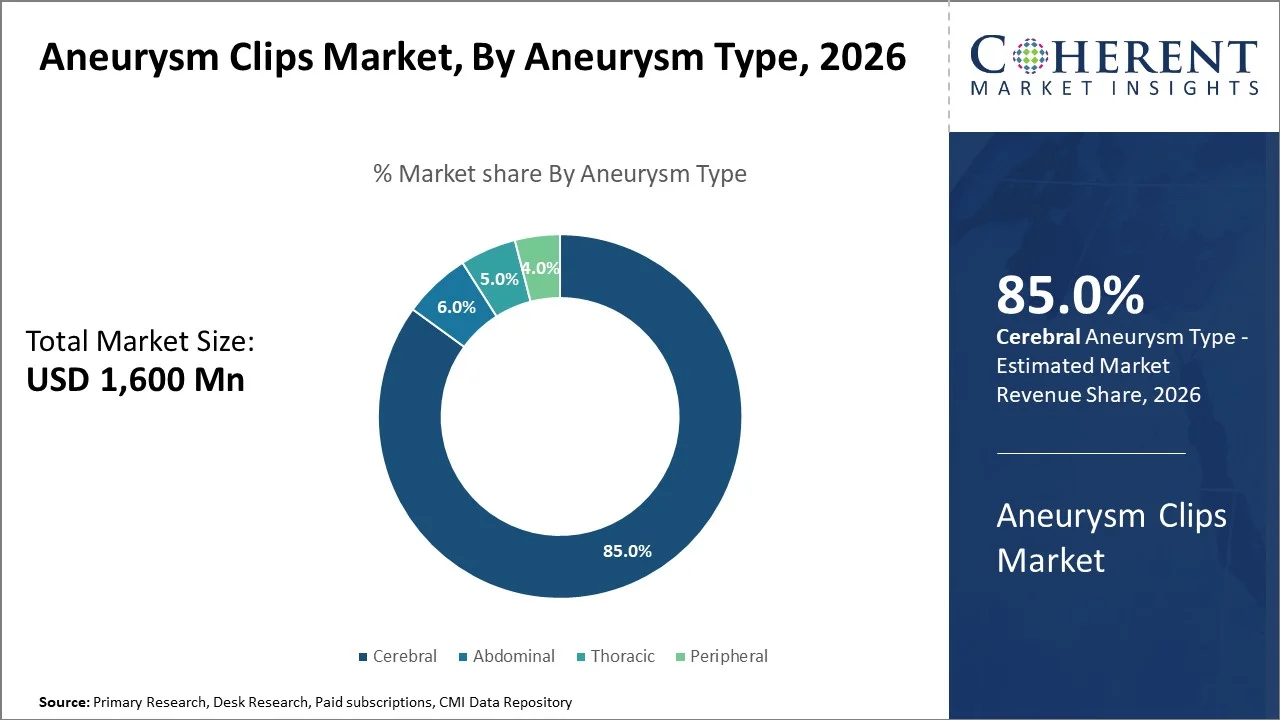
Which Aneurysm Type Holds the Largest Share in the Aneurysm Clips Market?
Cerebral Aneurysm Segment Accounts for the Largest Market Share
According to Coherent Market Insights’ latest aneurysm clips market analysis, aneurysm type, cerebral segment is set to lead the market with a revenue share of 85% in 2026. This can be attributed to high prevalence of intracranial (brain) aneurysms worldwide, increasing diagnosis rates due to advancements in neuroimaging technologies, and growing number of surgical interventions for ruptured and unruptured cerebral aneurysms.
For instance, according to a report published in the . This, in turn, is fueling demand for aneurysm clips as well as boosting growth of the target segment. In addition, rising incidence of subarachnoid hemorrhage, increasing stroke burden, and ongoing innovations in microsurgical clipping techniques and aneurysm clip designs are supporting segment growth.
- Current Industry Events of 2026
- Market Size Estimation
- Regional Breakdown
- Competitive Landscape
- Customer Intelligence
- Segmental Analysis
- Pricing Analysis
- Key Market Drivers, Challenges & Future Trends
- Customized Insights Section
Which Raw Material Dominates the Aneurysm Clips Market?
Titanium Dominates Aneurysm Clip Manufacturing
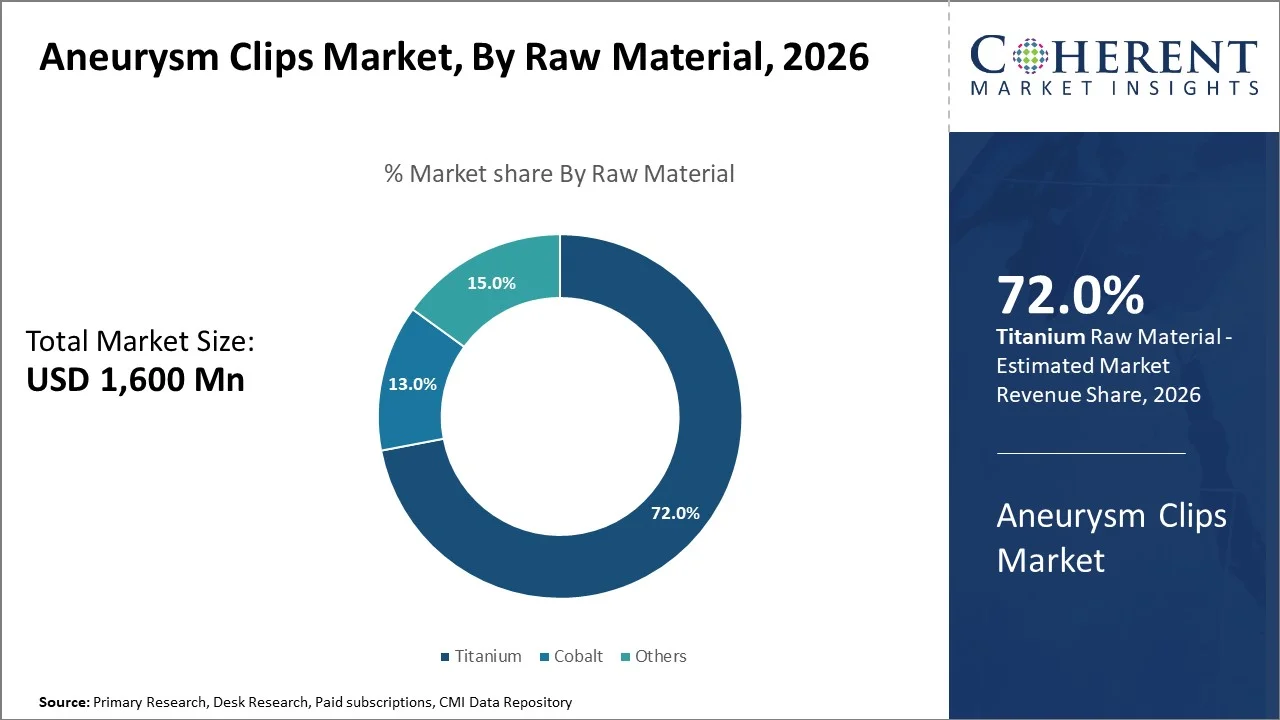
By raw material, titanium is projected to lead the global aneurysm clip industry, capturing a share of 72% in 2026. This is mostly due to its superior biocompatibility, high strength-to-weight ratio, corrosion resistance, and compatibility with advanced imaging techniques such as MRI and CT scans.
Unlike traditional stainless-steel clips, titanium aneurysm clips produce fewer imaging artifacts, enabling more accurate postoperative monitoring and diagnosis. In addition, their durability and lower risk of adverse tissue reactions have made them the preferred choice among neurosurgeons for intracranial aneurysm procedures, further supporting their dominant position in the market.
Aneurysm Clips Market Growth Drivers
Rising Prevalence of Aneurysms: Increasing incidence of aneurysms is providing a strong impetus for the growth of aneurysm clips market. There is a rapid rise in the number of patients diagnosed with brain aneurysms globally, especially brain aneurysms. For instance, according to the Brain Aneurysm Foundation, an estimated 6.8 million people in the United States have an unruptured brain aneurysm. This increasing burden of aneurysms worldwide is driving demand for effective neurosurgical interventions, including aneurysm clipping procedures.
Aneurysm Clips Market Opportunities
Advancements in Aneurysm Clip Materials and Design: Continuous advancements in aneurysm clip materials and designs are expected to create lucrative growth opportunities for the aneurysm clips market during the forthcoming period. Manufacturers are increasingly developing MRI-compatible titanium clips, optimized clip geometries, and advanced applier systems that enhance surgical precision, ease of deployment, long-term durability, and patient safety. These technological improvements can improve clinical outcomes as well as support greater adoption of aneurysm clipping procedures, especially in complex neurovascular surgeries, thereby driving market growth.
Aneurysm Clips Market Trends
Shift Towards MRI-Compatible Titanium Clips: Rising adoption of MRI-compatible titanium clips is a key growth-shaping trend in the aneurysm clips market. Titanium clips are gaining preference because of their biocompatibility, corrosion resistance, and compatibility with modern imaging systems. Demand for titanium aneurysm clips is expected to rise steadily during the forecast period as healthcare providers increasingly prioritize advanced imaging compatibility and improved patient outcomes.
Impact of AI on the Aneurysm Clips Market
Artificial intelligence (AI) is increasingly influencing the aneurysm clips market by improving the detection, diagnosis, and surgical planning of cerebral aneurysms. AI-powered imaging and analytics tools help neurosurgeons identify aneurysm characteristics more accurately, enabling better clip selection and treatment outcomes.
In addition, AI-assisted navigation and decision-support systems are enhancing surgical precision, reducing procedural risks, and supporting the adoption of advanced aneurysm clipping procedures. These advancements are expected to support expansion of the aneurysm clips industry during the forecast period.
A recent example of AI's growing impact in this field is the expanded collaboration between Viz.ai and Illuminate announced in January 2025. The partnership aims to improve cerebral aneurysm patient management through AI-powered detection and monitoring solutions, helping healthcare providers identify at-risk patients earlier and facilitate timely intervention. Such developments are expected to support demand for aneurysm treatment procedures, including surgical clipping.
Current Events and Their Impact on the Aneurysm Clips Market
Current Event | Description and its Impact |
WHO Reports Rising Global Burden of Hypertension, a Key Risk Factor for Brain Aneurysms (2025–2026) |
|
Continued Clinical Focus on Microsurgical Clipping Safety and Outcomes (2026) |
|
Regional Insights
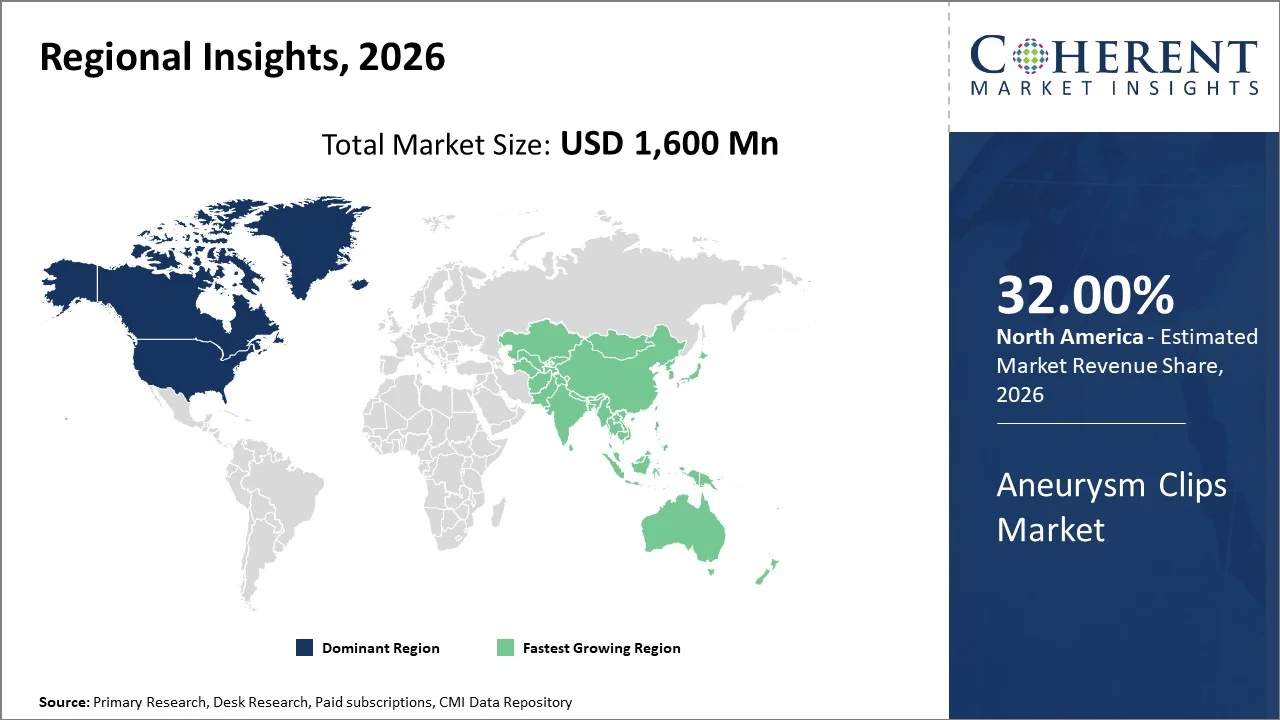
High Aneurysm Incidence Fueling Market Growth in North America
North America is expected to retain its dominance over the global aneurysm clips market during the forecast period, accounting for a share of 32% in 2026. This can be attributed to increasing prevalence of brain aneurysms, advanced neurosurgical infrastructure, and increasing adoption of surgical clipping procedures. Strong presence of leading medical device manufacturers is also supporting market expansion in the region.
Rising burden of cerebral aneurysms plays a key role in boosting North America aneurysm clips market. According to the This is expected to drive demand for aneurysm clips and other effective treatment solutions, as healthcare providers increasingly focus on preventing aneurysm rupture as well as reducing the risk of severe neurological complications.
Asia Pacific to Emerge as Central Hub for Aneurysm Clip Manufacturers
Asia Pacific is anticipated to emerge as a happy hunting ground for manufacturers of aneurysm clips during the forecast period, registering a CAGR of 7.2%. This is mostly due to increasing patient pool, expanding healthcare infrastructure, rising access to neurosurgical care, and growing awareness regarding early diagnosis of neurological disorders.
The increasing burden of stroke and neurological diseases is creating strong demand for aneurysm treatment procedures in the region. According to a . This indicates the rising need for advanced neurosurgical interventions and aneurysm management solutions in the region.
Aneurysm Clips Market Outlook – Country-wise
U.S. Aneurysm Clips Market Trends
The United States is expected to remain the leading market for aneurysm clips during the forecast period. This is attributed to the high prevalence of intracranial aneurysms, advanced neurosurgical capabilities, and the widespread availability of specialized neurological care centers. According to the Brain Aneurysm Foundation, an estimated 6.8 million people in the United States have an unruptured brain aneurysm. This large patient population is expected to support demand for aneurysm clipping procedures during the forthcoming period, thereby driving sales of aneurysm clips and contributing to overall market growth.
China Aneurysm Clips Market Forecast
The aneurysm clips market in China is expected to grow steadily during the forecast period. This can be attributed to expanding healthcare infrastructure, increasing access to neurosurgical services, and a growing burden of cerebrovascular diseases. Improved diagnostic imaging, early detection, and technological innovation in neurosurgery are also supporting market expansion in the nation.
Who are the Major Companies in the Aneurysm Clips Market?
Some of the major players in Aneurysm Clips Market are B. Braun, Boston Scientific, Codman & Shurtleff, Integra LifeSciences, InoMed, KLS Martin Group, Medtronic Plc., Mizuho America, St. Jude Medical, Stryker Corporation, and RauMedic.
Key Strategies Adopted by Industry Players
Top aneurysm clip companies are adopting various organic and inorganic strategies to boost their revenue as well as gain a competitive edge over the industry. These include new product launches and approvals, mergers, partnerships, acquisitions, and distribution agreements. Manufacturers are developing advanced titanium and MRI-compatible aneurysm clips to meet evolving needs of customers. Similarly, they are investing in research and development activities to improve clip design as well as durability and surgical precision.
- In January 2026, Boston Scientific announced an agreement to acquire Penumbra, Inc. for approximately USD 14.5 billion. The acquisition is expected to strengthen Boston Scientific’s neurovascular and thrombectomy product portfolio as well as expand its presence in vascular disease treatment.
- In September 2025, Terumo Neuro launched the Aneurysm Treatment Alliance at the 2025 European Society of Minimally Invasive Neurological Therapy (ESMINT) Congress. The alliance is designed to strengthen physician collaboration as well as improve aneurysm care across the EMEA region.
- In January 2025, Kaneka Corporation announced the acquisition of EndoStream Medical Ltd., a company that develops devices for the treatment of intracranial aneurysms. The acquisition is expected to strengthen Kaneka’s neurovascular business and expand its aneurysm treatment portfolio.
Market Report Scope
Aneurysm Clips Market Report Coverage
| Report Coverage | Details | ||
|---|---|---|---|
| Base Year: | 2025 | Market Size in 2026: | USD 1,600 Mn |
| Historical Data for: | 2020 To 2024 | Forecast Period: | 2026 To 2033 |
| Forecast Period 2026 to 2033 CAGR: | 6.2% | 2033 Value Projection: | USD 2,438 Mn |
| Geographies covered: |
| ||
| Segments covered: |
| ||
| Companies covered: | B. Braun, Boston Scientific, Codman & Shurtleff, Integra LifeSciences, InoMed, KLS Martin Group, Medtronic Plc., Mizuho America, St. Jude Medical, Stryker Corporation, and RauMedic. | ||
| Growth Drivers: |
| ||
| Restraints & Challenges: |
| ||
Analyst Opinion (Expert Opinion)
- The aneurysm clips market is growing steadily because brain aneurysms remain a major health concern worldwide. Research published in The Lancet Neurology estimates that about 3.2% of the global population has an unruptured intracranial aneurysm, creating a significant need for diagnosis and treatment.
- Surgical clipping continues to be an important treatment option, especially for complex or wide-neck aneurysms where long-term durability and complete aneurysm closure are critical.
- Improvements in titanium aneurysm clips, MRI-compatible materials, and advanced neurosurgical instruments are helping surgeons perform safer and more precise procedures, encouraging adoption in specialized hospitals.
Speak to the analyst
Want personalized insights?
Take the findings above to one of our principal consultants, or have the report rebuilt around the segments, geographies and competitors you actually track.
Market Segmentation
- By Aneurysm Type Insights ( Revenue, USD Mn, 2021 - 2033)
- Abdominal
- Cerebral
- Thoracic
- Peripheral
- By Raw Material Insights ( Revenue, USD Mn, 2021 - 2033)
- Titanium
- Cobalt
- Others
- By Region Insights ( Revenue, USD Mn, 2021 - 2033)
- North America
- U.S.
- Canada
- Latin America
- Brazil
- Argentina
- Mexico
- Rest of Latin America
- Europe
- Germany
- U.K.
- Spain
- France
- Italy
- Russia
- Rest of Europe
- Asia Pacific
- China
- India
- Japan
- Australia
- South Korea
- ASEAN
- Rest of Asia Pacific
- Middle East
- GCC Countries
- Israel
- Rest of Middle East
- Africa
- South Africa
- Central Africa
- North Africa
- North America
- Key Players
- Braun
- Boston Scientific
- Codman & Shurtleff
- Integra LifeSciences
- InoMed
- KLS Martin Group
- Medtronic Plc.
- Mizuho America
- Jude Medical
- Stryker Corporation
- RauMedic
Sources
Primary Research Interviews
- Neurosurgeons and cerebrovascular surgeons
- Interventional neuroradiologists
- Hospital procurement managers
- Medical device distributors and suppliers
- Clinical researchers specializing in neurovascular disorders
- Key opinion leaders (KOLs) in neurosurgery
Databases
- World Health Organization (WHO)
- Centers for Disease Control and Prevention (CDC)
- National Center for Biotechnology Information (NCBI)
- PubMed
- Eurostat
- United Nations (UN) Data
- World Bank Open Data
- Organisation for Economic Co-operation and Development (OECD) Data
Magazines
- NeuroNews International
- Medical Device Network
- MedTech Dive
- Healthcare Business Today
- Neurosurgery Market Watch
- Becker’s Hospital Review
Journals
- Journal of Neurosurgery
- Neurosurgery
- World Neurosurgery
- Stroke
- Journal of NeuroInterventional Surgery
- The Lancet Neurology
- Acta Neurochirurgica
- Journal of Clinical Neuroscience
Newspapers
- The Wall Street Journal
- Financial Times
- The New York Times
- USA Today
- The Guardian
- The Economic Times
Associations
- American Association of Neurological Surgeons (AANS)
- Congress of Neurological Surgeons (CNS)
- World Federation of Neurosurgical Societies (WFNS)
- European Association of Neurosurgical Societies (EANS)
- Society of NeuroInterventional Surgery (SNIS)
- American Stroke Association (ASA)
Public Domain Sources
- U.S. Food and Drug Administration (FDA)
- European Medicines Agency (EMA)
- National Institutes of Health (NIH)
- National Health Service (NHS)
- Centers for Medicare & Medicaid Services (CMS)
- ClinicalTrials.gov
- World Health Organization (WHO)
- Organisation for Economic Co-operation and Development (OECD)
- Ministry of Health publications and government healthcare portals
Proprietary Elements
- CMI Data Analytics Tool
- Proprietary CMI Existing Repository of Information for Last 10 Years
Get access to 250+ pages report
Every segment, forecast, competitor profile and data table behind the analysis above — available for instant download.
- ESOMAR Member
- ISO 9001:2015 Certified
- D-U-N-S Registered
- GDPR & CCPA Compliant
Missing comfort of reading report in your local language? Find your preferred language:
Transform your Strategy with Exclusive Trending Reports
Frequently Asked Questions
The global Aneurysm Clips Market is estimated to be valued at USD 1,600 Mn in 2026.
The global Aneurysm Clips Market value is expected to reach USD 2,438 Mn by 2033.
The global market is poised to exhibit a CAGR of 6.2% from 2026 to 2033.
Major growth factors include rising prevalence of aneurysms and advancements in aneurysm clipping technologies.
Some major companies in the Aneurysm Clips Market include B. Braun, Boston Scientific, Codman & Shurtleff, Integra LifeSciences, InoMed, KLS Martin Group, Medtronic Plc., Mizuho America, St. Jude Medical, Stryker Corporation, and RauMedic.
North America, with 32% share in 2026, is set to lead the market during the forecast period.