

Stroke Management Market Size and Forecast – 2026 to 2033
The Stroke Management Market is anticipated to grow at a CAGR of 7.1% with USD 47.2 Bn share in 2026 and is expected to reach USD 76.2 Bn in 2033. The stroke management market grows as the increasing stroke incidence, aging population, and rising awareness of early diagnosis and treatment drive demand. The lifetime risk of stroke has increased by 50% over the past two decades, with one in four adults expected to experience a stroke during their lifetime. Source: WHO
Key Takeaways
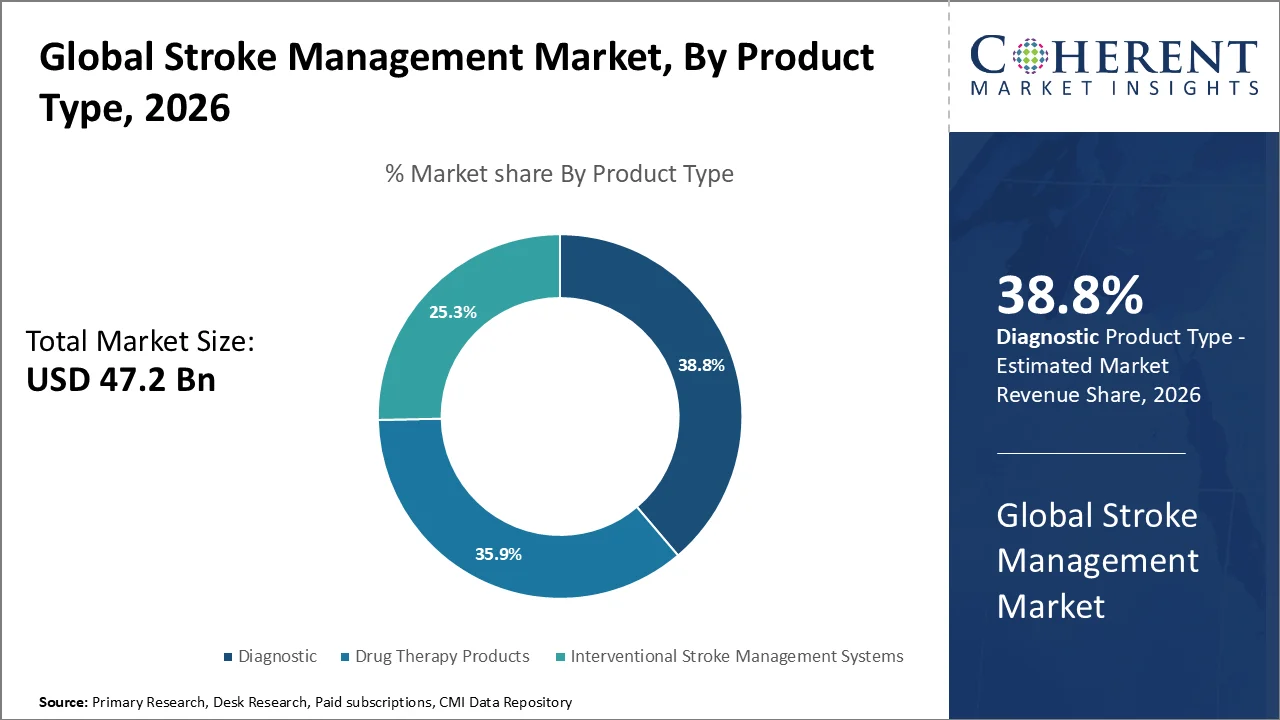
- Diagnostic hold the largest market share of 38.8% in 2026 owing to its increasing incidence of stroke.
- Ischemic Stroke expected to hold largest market share of 53.3% in 2026 owing to the growing geriatric population. India's elderly population is projected to reach approximately 230 million by 2036, accounting for about 15% of the total population.
- Hospitals acquired the prominent market share of 34.8% in 2026 owing to the availability of advanced diagnostic infrastructure. Approximately 6.5%–15.0% of all strokes occur in hospitalized patients, many of whom are admitted for surgery or cardiac conditions.
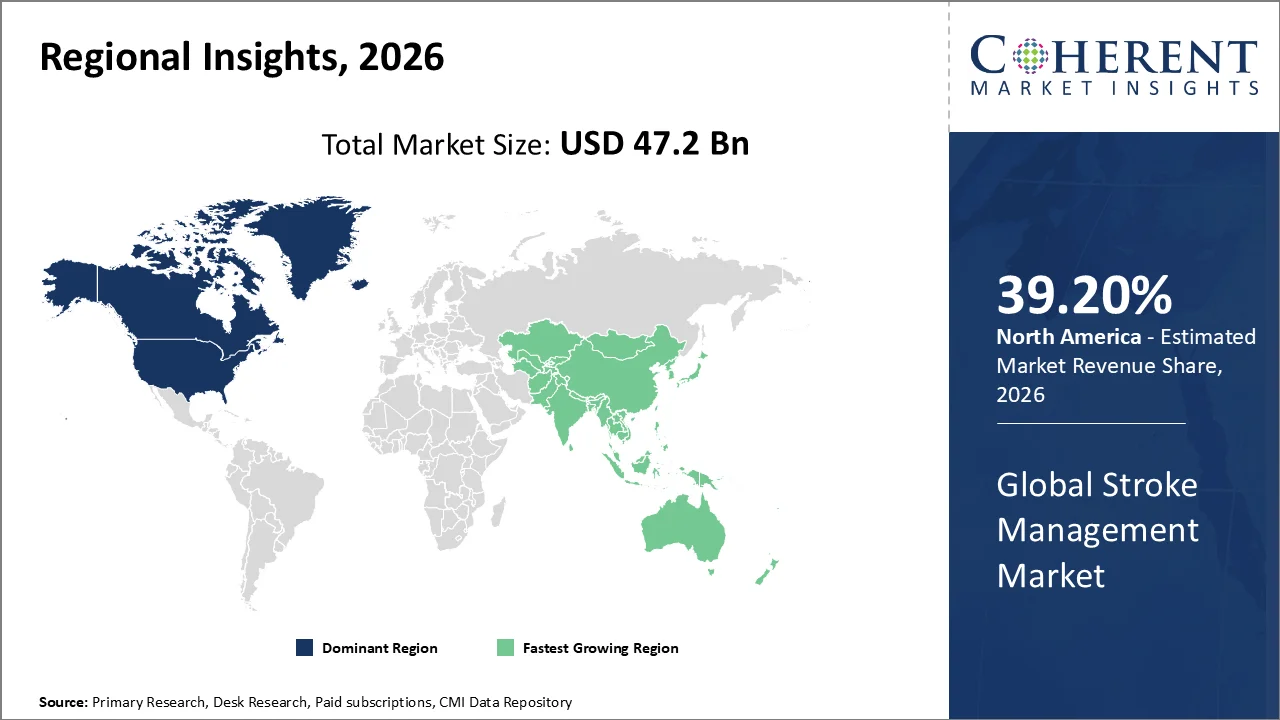
- By Region, North America is expected to acquire the dominant share of 39.2% in 2026 owing to its well-established healthcare infrastructure. As of 2023, Canada had 4 cardiologists and 0.5 cardiovascular surgeons per 100,000 population, representing one of the highest specialist densities globally.
Current Events and Their Impact on the Stroke Management Market
Current Event | Description and its Impact |
U.S. FDA Expansion of AI-Based Stroke Detection Devices |
|
CMS Expands Medicare Coverage for Mechanical Thrombectomy |
|
Segmental Insights
- Current Industry Events of 2026
- Market Size Estimation
- Regional Breakdown
- Competitive Landscape
- Customer Intelligence
- Segmental Analysis
- Pricing Analysis
- Key Market Drivers, Challenges & Future Trends
- Customized Insights Section
Why is Diagnostic Acquiring the Largest Market Share?
Diagnostic hold the largest market share of 38.8% in 2026. Healthcare providers are increasingly adopting advanced diagnostic solutions to detect strokes quickly and accurately, enabling faster treatment and better patient outcomes. The rising incidence of stroke, growing aging population, and increasing prevalence of cardiovascular risk factors are driving demand for imaging technologies such as CT and MRI. Cardiovascular diseases (CVDs) are the leading cause of death worldwide, accounting for an estimated 17.9 million deaths annually. Technology developers continue to enhance diagnostic capabilities through artificial intelligence-assisted imaging, while healthcare systems expand stroke centers and strengthen emergency care infrastructure. Government support and greater public awareness of early stroke diagnosis are also encouraging wider adoption of advanced diagnostic technologies. Brainomix unveiled its 360 Stroke Next Generation software. The software features automated net water uptake (NWU) evaluation, which helps clinicians assess and improve the management of patients with severe strokes.
Ischemic Stroke expected to hold largest market share
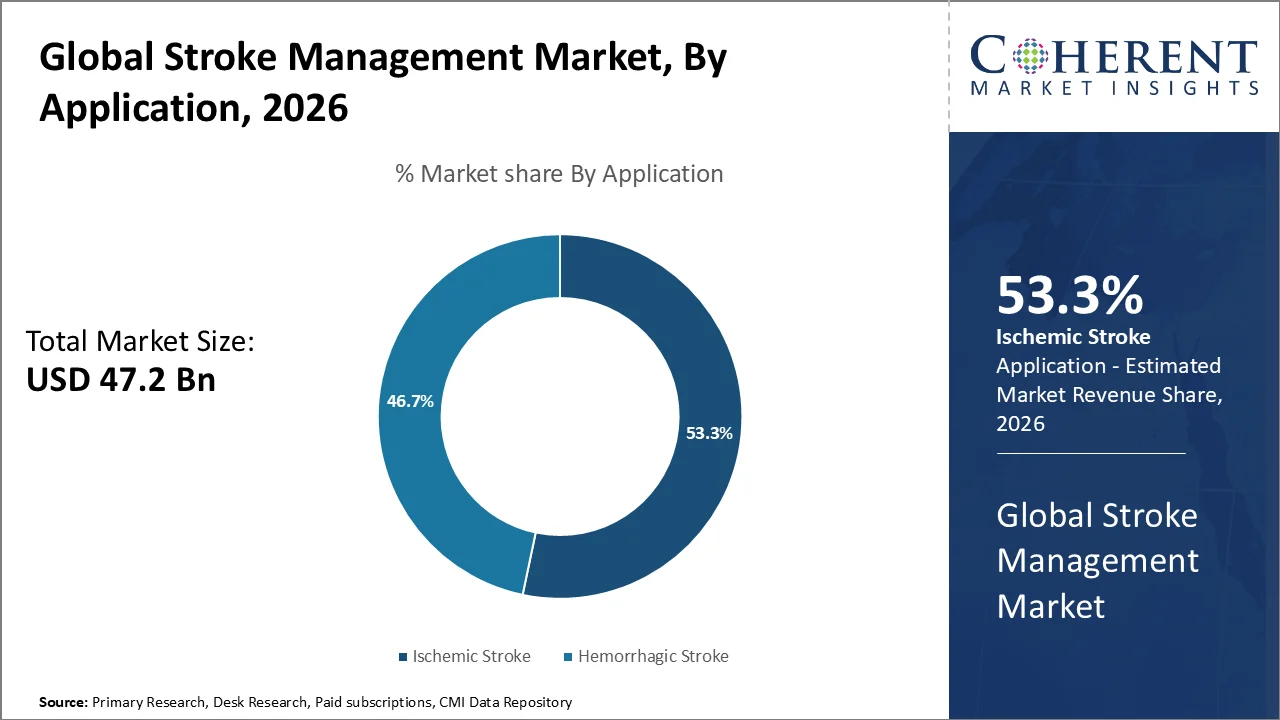
Ischemic Stroke expected to hold largest market share of 53.3% in 2026 owing to the supportive clinical guidelines. Healthcare providers are expanding access to advanced diagnosis and treatment for ischemic stroke, driving market growth. The rising prevalence of hypertension, diabetes, atrial fibrillation, obesity, and an aging population continues to increase demand for stroke management. Approximately 630 million adults with hypertension, representing 44% of cases, are diagnosed and receiving treatment. Hospitals are adopting advanced imaging, thrombolytic therapies, and mechanical thrombectomy to improve outcomes. They are also establishing comprehensive stroke centers, integrating artificial intelligence into clinical workflows, expanding telemedicine services, and using innovative neurovascular devices to enhance patient care. In March 2026, Johnson & Johnson launched CEREGLIDE 42, CEREGLIDE 57 aspiration catheters, and INNERGLIDE 7 delivery aid in the U.S. to expand its stroke portfolio and help physicians remove distal clots more efficiently in ischemic stroke procedures.
Which End User segment dominates the market?
Hospitals acquired the prominent market share of 34.8% in 2026. Hospitals strengthen the stroke management market by delivering rapid diagnosis, emergency interventions, and comprehensive rehabilitation services. The increasing number of stroke cases, wider availability of advanced imaging technologies, and growing adoption of thrombolytic therapies and mechanical thrombectomy are enhancing hospital-based stroke care. In February 2026, Brainomix introduced its next-generation Brainomix 360 platform at the International Stroke Conference (ISC), featuring the first net water uptake (NWU) capability using routine non-contrast CT (NCCT) scans. Healthcare organizations are developing specialized stroke centers, implementing artificial intelligence-driven diagnostic solutions, and expanding telemedicine services to support faster clinical decisions. Investments in healthcare infrastructure, multidisciplinary care teams, and standardized treatment approaches continue to drive the adoption of hospital-based stroke management solutions.
Stroke Management Market Trends
- Healthcare providers are increasingly adopting minimally invasive stroke management procedures, including advanced endovascular interventions, to improve patient safety, minimize complications, and support faster recovery. The American Heart Association (AHA)/American Stroke Association (ASA) recommends mechanical thrombectomy as the standard of care for eligible patients with acute ischemic stroke caused by large vessel occlusion, including selected patients presenting up to 24 hours after symptom onset based on advanced imaging.
- Hospitals and stroke centers are expanding the use of advanced imaging-guided and technology-assisted procedures to enable precise diagnosis, improve treatment accuracy, and accelerate post-treatment recovery. The Joint Commission continues to certify Primary Stroke Centers, Thrombectomy-Capable Stroke Centers, and Comprehensive Stroke Centers, promoting standardized use of advanced imaging and evidence-based stroke care.
- The growing aging population worldwide is increasing the prevalence of stroke and related neurological disorders, creating greater demand for advanced stroke diagnosis, treatment, and rehabilitation solutions. Aging-related risk factors, including cardiovascular diseases and other chronic conditions, continue to increase the need for comprehensive stroke management. According to the World Stroke Organization, the lifetime risk of stroke has increased by 50% over the past 20 years, and one in four adults is expected to experience a stroke during their lifetime. In addition, the World Health Organization (WHO) reports that cardiovascular diseases cause an estimated 17.9 million deaths annually, with stroke remaining one of the leading contributors.
Regional Insights
North America dominates owing to Stroke Management Market
North America is expected to acquire the dominant share of 39.20% in 2026. North American healthcare providers strengthen the stroke management market by expanding advanced healthcare infrastructure, establishing specialized stroke centers, and adopting innovative diagnostic and treatment technologies. The increasing stroke burden, growing aging population, and rising prevalence of cardiovascular risk factors are driving demand for comprehensive stroke care solutions. Canada’s population aged 65 and older is projected to increase by 68%, having more than tripled over the past four decades. Hospitals and medical institutions are implementing artificial intelligence, telemedicine, advanced imaging systems, and minimally invasive procedures to enhance patient outcomes. Favorable reimbursement frameworks, continuous research initiatives, and technological advancements further accelerate market growth across the region. In May 2026, Sanford Bismarck launched its Stroke Comprehensive Treatment Clinic in February 2026 to expand specialized stroke recovery services and provide coordinated care for improved long-term patient outcomes.
Asia Pacific Stroke Management Market Trends
The Asia Pacific stroke management market grows as rising stroke cases, an aging population, increased awareness of early diagnosis and treatment, and improved healthcare infrastructure drive demand. Healthcare providers are expanding access to advanced medical technologies and adopting minimally invasive procedures, while governments support neurological care through targeted initiatives. Growing investments in healthcare facilities, the establishment of specialized stroke centers, and the increasing need for effective rehabilitation solutions further encourage the adoption of stroke management products and services across the region. The Indian Stroke Association (ISA) launched a pilot initiative to strengthen stroke care pathways and improve timely treatment for acute stroke patients, with plans to develop a scalable model for nationwide implementation.
United States Stroke Management Market Trends
The United States stroke management market expands as increasing stroke prevalence, greater awareness of early diagnosis and treatment, and technological advancements create strong demand. Healthcare providers actively implement minimally invasive procedures, advanced imaging technologies, and innovative rehabilitation solutions to enhance patient care. A well-established healthcare system, favorable reimbursement policies, and ongoing neurological research investments continue to support market growth. The expanding elderly population and rising demand for efficient stroke prevention and management approaches further drive the development of this market.
Japan Stroke Management Market Trends
Japan’s stroke management market grows as the increasing prevalence of cerebrovascular diseases, an aging population, and rising demand for advanced diagnosis and treatment solutions drive healthcare needs. Cerebrovascular disease is Japan’s fourth leading cause of death, with approximately 115 deaths per 100,000 population. Healthcare providers and organizations strengthen market growth by improving infrastructure, adopting innovative imaging technologies, advancing minimally invasive procedures, and promoting early stroke detection awareness. Government programs, specialized stroke centers, and the integration of artificial intelligence into clinical decision-making further enhance patient care and support market development across Japan.
Who are the Major Companies in Stroke Management Industry
Some of the major key players in Stroke Management are Abbott Laboratories, B. Braun Melsungen AG, Boston Scientific Corporation, GE Healthcare, GlaxoSmithKline Plc, Medtronic Plc, Merck & Co., Inc., and Cardinal Health.
Key News
- In May 2025, Boehringer Ingelheim launched a new acute ischemic stroke (AIS) medication containing Tenecteplase 25 mg in the UAE to improve emergency stroke care by providing a faster and more effective treatment option.
Market Report Scope
Stroke Management Market Report Coverage
| Report Coverage | Details | ||
|---|---|---|---|
| Base Year: | 2025 | Market Size in 2026: | USD 47.2 Bn |
| Historical Data for: | 2020 To 2024 | Forecast Period: | 2026 To 2033 |
| Forecast Period 2026 to 2033 CAGR: | 7.1% | 2033 Value Projection: | USD 76.2 Bn |
| Geographies covered: |
| ||
| Segments covered: |
| ||
| Companies covered: | Abbott Laboratories, B. Braun Melsungen AG, Boston Scientific Corporation, GE Healthcare, GlaxoSmithKline Plc, Medtronic Plc, Merck & Co., Inc., and Cardinal Health. | ||
Analyst Opinion
- Stroke management is fundamentally driven by an increasing clinical burden rather than short-term healthcare trends. Stroke remains one of the leading causes of death and long-term disability worldwide, with approximately 12 million new stroke cases occurring annually and millions of survivors requiring continuous rehabilitation and secondary prevention. In my view, the market’s strongest growth catalyst is the urgent need to reduce disability through faster diagnosis, timely intervention, and improved post-stroke care pathways rather than simply technological advancement.
- Advanced acute stroke interventions are becoming essential components of modern stroke care. Mechanical thrombectomy has transformed treatment outcomes for patients with large vessel occlusion strokes, with clinical studies demonstrating that a significant proportion of appropriately selected patients achieve functional independence when treated within recommended time windows. The expanding adoption of thrombectomy-capable stroke centers, improved neuroimaging, and streamlined emergency protocols will continue to reshape stroke management by prioritizing speed and precision in treatment decisions.
- Artificial intelligence and digital stroke solutions are moving from supportive tools to critical decision-making platforms. AI-enabled imaging technologies can analyze brain scans within minutes and help clinicians identify suspected vessel blockages or brain tissue damage, improving treatment prioritization in emergency settings. As healthcare systems face increasing pressure to deliver faster stroke responses, AI integration, tele-stroke networks, and remote neurological expertise will become key differentiators, particularly in regions where specialist access remains limited.
Speak to the analyst
Want personalized insights?
Take the findings above to one of our principal consultants, or have the report rebuilt around the segments, geographies and competitors you actually track.
Market Segmentation
- By Product Type (Revenue, USD Bn, 2021-2033)
- Diagnostic
- Drug Therapy Products
- Interventional Stroke Management Systems
- By Application (Revenue, USD Bn, 2021-2033)
- Ischemic Stroke
- Hemorrhagic Stroke
- By End User (Revenue, USD Bn, 2021-2033)
- Hospitals
- Clinics
- Retail Pharmacies
- Ambulatory Surgical Centers
- Diagnostic Laboratories
- Online Pharmacies
- Other End Users
- By Region (Revenue, USD Bn, 2021-2033)
- North America
- U.S.
- Canada
- Latin America
- Brazil
- Mexico
- Argentina
- Rest of Latin America
- Europe
- Germany
- U.K.
- France
- Italy
- Spain
- Russia
- Rest of Europe
- Asia Pacific
- China
- India
- Japan
- Australia
- South Korea
- ASEAN
- Rest of Asia Pacific
- Middle East
- GCC
- Israel
- Rest of Middle East
- Africa
- South Africa
- Central Africa
- North Africa
- North America
Sources
Primary Research interviews
- Neurologists, stroke specialists, neurosurgeons, and interventional radiologists
- Hospital administrators, stroke center directors, and healthcare providers
- Pharmaceutical and medical device industry professionals involved in stroke treatment and management
- Rehabilitation specialists and clinical experts in post-stroke care
- Key opinion leaders (KOLs) in cerebrovascular disease management
Databases
- U.S. Food and Drug Administration databases for approved stroke-related drugs and medical devices
- ClinicalTrials.gov for ongoing and completed stroke management clinical studies
- World Health Organization databases for stroke epidemiology and global health statistics
- Centers for Disease Control and Prevention databases for stroke-related disease burden and mortality data
- National Center for Biotechnology Information resources for biomedical research and publications
Magazines
- Stroke publications and industry updates
- Healthcare and life sciences industry magazines covering neurological disorders and medical advancements
- Medical technology publications focusing on stroke diagnosis, intervention, and rehabilitation solutions
Journals
- Stroke
- The Lancet Neurology
- Journal of Neurology, Neurosurgery & Psychiatry
- Journal of Stroke
- Peer-reviewed publications covering cerebrovascular diseases, thrombolysis, thrombectomy, rehabilitation, and stroke prevention
Newspapers
- Healthcare and biotechnology sections of leading global newspapers
- Publications covering regulatory approvals, clinical breakthroughs, healthcare policies, and neurological disease trends
- Business and healthcare news sources reporting on advancements in stroke treatment technologies
Associations
- American Heart Association
- European Stroke Organisation
- World Stroke Organization
- American Stroke Association
- National neurological and stroke care associations worldwide
Public Domain sources
- Government healthcare databases and statistical reports
- Regulatory authority publications and safety communications
- Public health reports on stroke incidence, prevalence, and mortality
- Open-access clinical guidelines and treatment recommendations
- Publicly available hospital, healthcare infrastructure, and disease surveillance data
Proprietary Elements
- CMI Data Analytics Tool
- Proprietary CMI Existing Repository of information for last 10 years
Get access to 250+ pages report
Every segment, forecast, competitor profile and data table behind the analysis above — available for instant download.
- ESOMAR Member
- ISO 9001:2015 Certified
- D-U-N-S Registered
- GDPR & CCPA Compliant
Missing comfort of reading report in your local language? Find your preferred language:
Transform your Strategy with Exclusive Trending Reports
Frequently Asked Questions
The stroke management market includes medical devices, diagnostic technologies, treatment solutions, rehabilitation systems, and healthcare services used for stroke prevention, diagnosis, acute treatment, and post-stroke recovery.
The market is driven by the rising incidence of stroke, aging populations, increasing demand for rapid diagnosis, and improvements in stroke care infrastructure.
Key technologies shaping the market include artificial intelligence-based imaging analysis, advanced neuroimaging systems, and digital rehabilitation solutions that improve treatment accuracy and patient outcomes.
Early diagnosis enables faster treatment decisions, reduces the risk of permanent disability, and improves patient survival outcomes.
Artificial intelligence helps clinicians analyze brain scans, identify stroke-related abnormalities, prioritize emergency cases, and support clinical decision-making.