

Global Medical Morphine Market Size and Forecast – 2026 to 2033
The global medical morphine market is estimated to be valued at USD 27.13 Bn in 2026 and is expected to reach USD 46.19 Bn by 2033, exhibiting a compound annual growth rate (CAGR) of 7.9% from 2026 to 2033. This growth is driven by the increasing prevalence of chronic pain, rising geriatric population, and advancements in drug delivery systems enhancing the efficacy and safety of morphine-based treatments worldwide.
Key Takeaways of the Global Medical Morphine Market
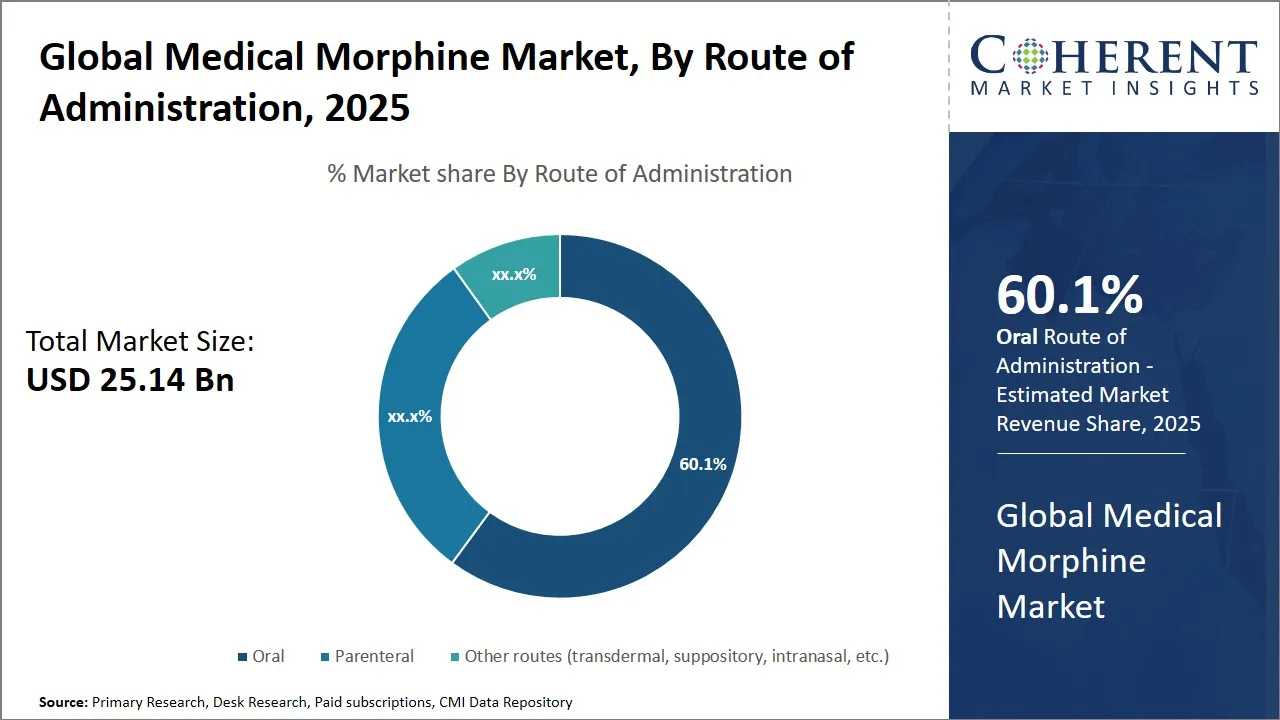
- In 2026, the oral segment is expected to lead the global medical morphine market, holding a 61.1 % share.
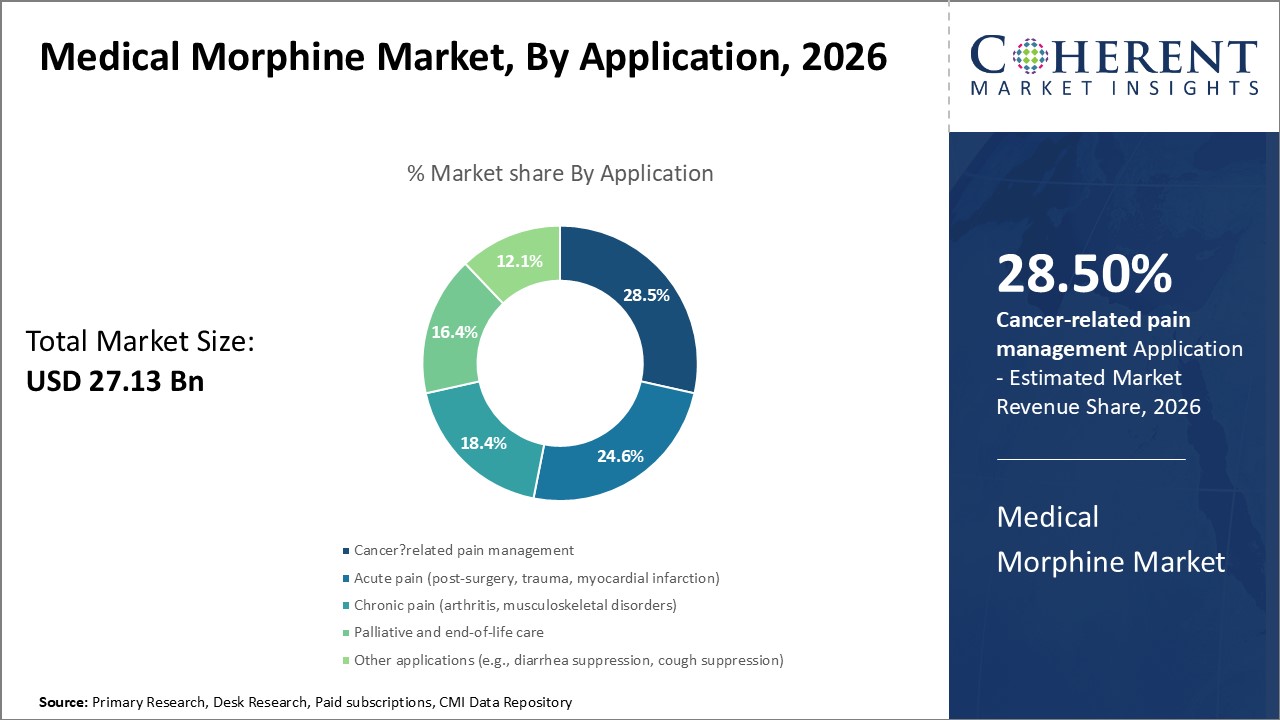
- Within the application segment, cancer-related pain management will dominate, accounting for 28.5 % of the market.
- Hospitals and clinics will represent the largest end user segment, with a 25.5 % share in 2026.
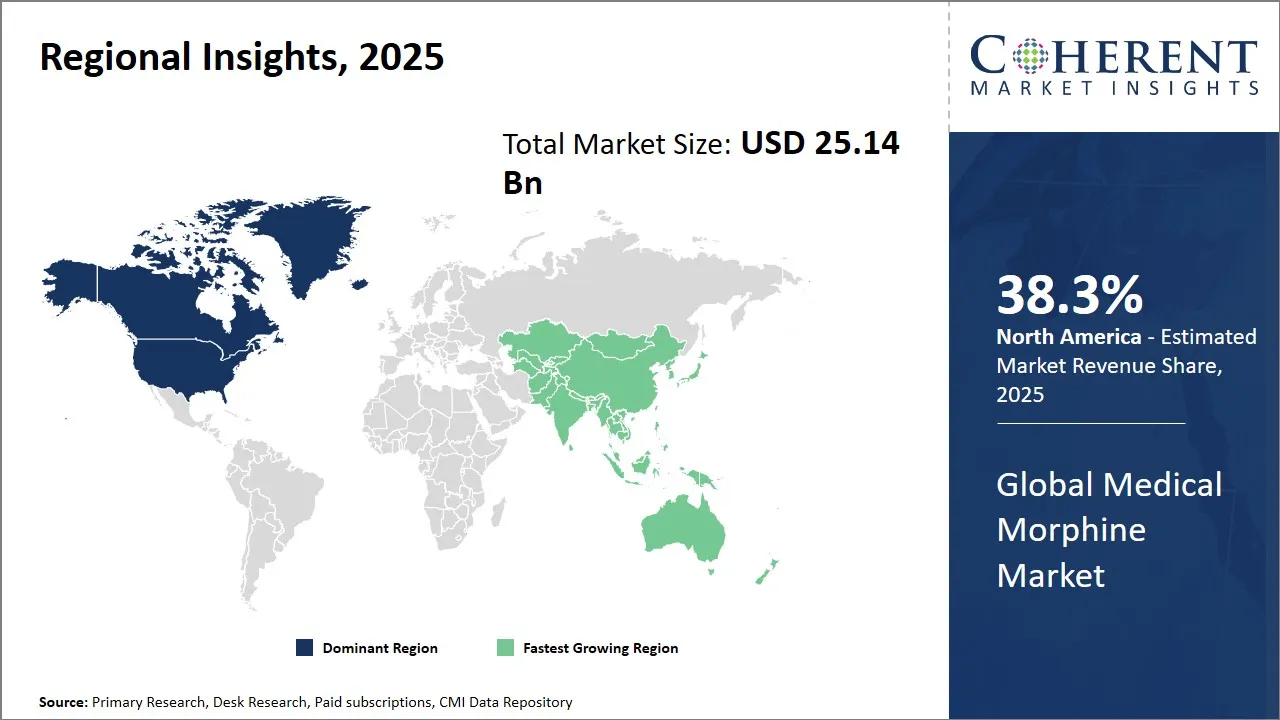
- North America is expected to lead the market, holding a share of 38.3 % in 2026. Asia Pacific is anticipated to be the fastest-growing region, with an estimated market share of 23.6% in 2026.
Market Overview
Key market trends include a growing emphasis on personalized pain management therapies and the integration of novel controlled-release formulations to minimize side effects. Additionally, regulatory approvals for new indications and expanding healthcare infrastructure in emerging economies are propelling the demand. Increasing awareness among patients and healthcare providers about effective opioid pain management is fostering the adoption of medical morphine, further bolstering the market growth throughout the forecast period.
Current Events and Its Impact
Current Events | Description and its Impact |
Rising focus on opioid‑abuse risks and tighter prescribing controls |
|
Advancements in synthetic morphine alternatives |
|
Segmental Insights
- Current Industry Events of 2026
- Market Size Estimation
- Regional Breakdown
- Competitive Landscape
- Customer Intelligence
- Segmental Analysis
- Pricing Analysis
- Key Market Drivers, Challenges & Future Trends
- Customized Insights Section
Medical Morphine Market Insights, By Route of Administration – Accessibility and Patient Compliance Drive Oral Administration of Medical Morphine
In terms of the route of administration, the oral segment is expected to hold the largest share in the global medical morphine market with 61.1% share in 2026, due to its convenience and improved patient compliance.
Oral morphine provides a non-invasive, easy-to-administer option, eliminating the need for trained professionals for injections. This accessibility is crucial for long-term pain management, offering sustained analgesic effects without the discomfort or risks of parenteral administration.
Medical Morphine Market Insights, By Application – Cancer-Related Pain Management Leads with Growing Prevalence of Cancer
Within the application segment, cancer-related pain management dominates the global medical morphine market with an estimated share of 28.5% in 2026, driven by the high prevalence of cancer and complex pain profiles associated with cancer progression and its treatments. Morphine, a potent opioid analgesic, is a primary treatment for moderate to severe cancer pain, effectively managing both nociceptive and neuropathic pain components commonly experienced by patients.
For example, Johnson & Johnson supports cancer pain care through its oncology-focused analgesic portfolio, supplying hospital networks with morphine formulations used for moderate to severe cancer pain.
Medical Morphine Market Insights, By End User – Hospitals and Clinics Lead Demand Due to Complex Pain Management Needs and Infrastructure
Hospitals and clinics constitute the largest end user segment in the global medical morphine market with a projected share of 25.5% in 2026, attributable to their role as primary points of diagnosis, treatment, and acute care. These settings have the required medical infrastructure, trained staff, and monitoring systems to safely administer potent opioids like morphine for managing moderate to severe pain.
Acute pain scenarios such as postoperative recovery, trauma cases, and myocardial infarction are frequently managed within hospital environments where morphine administration can be closely observed to mitigate risks like respiratory depression or addiction potential.
Epidemiological Context of Pain Management: Cancer, Trauma, and Aging Populations
- According to WHO, cancer remains one of the significant worldwide burdens, in 2020 alone, the disease has caused almost 10 million deaths. The most prevalent ones are breast, lung, colon, and prostate cancers, with tobacco, alcohol, and poor diet being the leading cause of one-third of cancers killing. In the lower-income countries, 30 percent of cases are HPV and hepatitis, and the case of cancer induced by it is approximately 400,000 children annually.
- Cancer pain is still a common issue with 44-45 percent of all cancer patients as well as 40 percent of survivors increasing to 60-66 percent in advanced disease increasing dependence on medical morphine. The proportion of people who receive palliative care is only 14% of individuals who require palliative care. Increasing opioid demands are further projected by aging populations and an annual 310 million of major surgeries and 3% of opioid-naïve persist with opioids following surgery. In low-income areas, the rate of trauma surgery per 100,000 individuals is 65, which confirms the need to rely on efficient pain-killing factors.
Regional Insights
North America Medical Morphine Market Analysis and Trends
North America’s dominance in the global medical morphine market with a projected share of 38.3% in 2026. A mature healthcare infrastructure, highly developed pharmaceutical industry, and progressive regulatory framework that supports the availability and use of opioid analgesics for pain management drive the regional market growth.
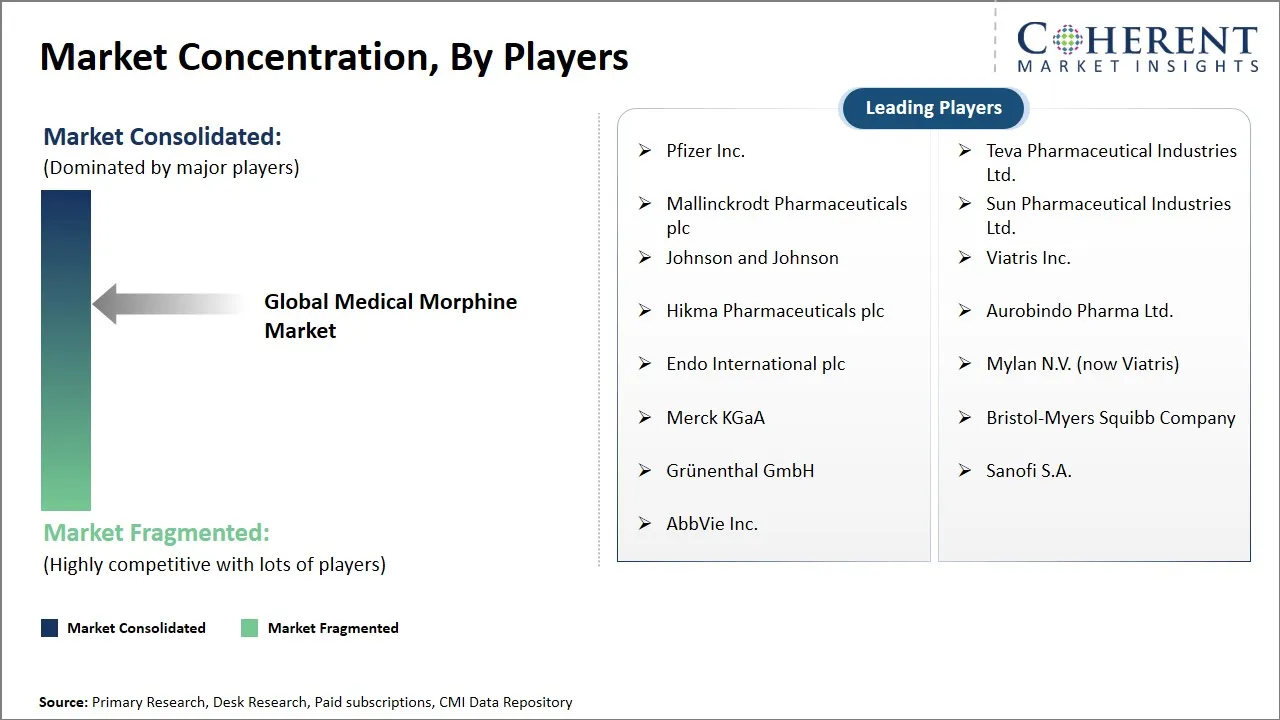
The region benefits from well-established supply chains, advanced research and development capabilities, and strong government initiatives to regulate and monitor morphine use, ensuring patient safety while addressing medicinal needs. The presence of leading pharmaceutical companies such as Pfizer, Johnson & Johnson, and Mallinckrodt Pharmaceuticals further consolidates North America's commanding position.
Asia Pacific Medical Morphine Market Analysis and Trends
Asia Pacific exhibits the fastest growth in the medical morphine market, with an expected share of 23.6% in 2026, due to expanding healthcare access, rising incidence of chronic diseases requiring pain management, and increasing government efforts to improve palliative care frameworks. The region’s growth is propelled by rising investments in healthcare infrastructure, evolving regulatory landscapes supportive of opioid availability, and growing awareness regarding the treatment of cancer-related and postoperative pain.
Countries like India, China, and Japan are focal points of this growth, aided by regional companies such as Cipla, Sun Pharmaceutical Industries, and Takeda Pharmaceuticals, which amplify market reach through localized production and distribution.
Medical Morphine Market Outlook for Key Countries
U.S. Medical Morphine Market Trends
The U.S. medical morphine market is heavily influenced by stringent FDA regulations coupled with a well-established pharmaceutical manufacturing base. Leading companies such as Pfizer and Mallinckrodt Pharmaceuticals contribute significantly through innovative formulations and extensive distribution networks. Government initiatives aimed at balancing effective pain management and opioid misuse prevention shape product availability and prescribing patterns.
For example, Boehringer Ingelheim is focusing on developing extended-release morphine formulations to improve chronic pain management for patients who need consistent relief. Their innovative products help reduce the frequency of dosing, offering better convenience for patients with long-term pain. Teva Pharmaceuticals also plays a significant role in the market by providing affordable generic morphine options.
Germany Medical Morphine Market Trends
Germany's medical morphine robust healthcare system and stringent pharmaceutical regulations underpin the country's strong position in the medical morphine market within Europe. Major players such as Bayer and Grünenthal have been instrumental in driving advancements, particularly in controlled-release morphine formulations. The German government’s emphasis on palliative care and adequate pain relief guidelines ensures steady demand, while trade policies facilitate access to high-quality raw materials and pharmaceutical technologies from across the EU.
For example, Grünenthal GmbH is a leading player in Germany, specializing in long-acting morphine products for managing chronic pain. Their innovations in controlled-release formulations offer consistent pain relief, which is crucial for patients in palliative care. Bayer HealthCare continues to expand its morphine portfolio with advanced formulations aimed at improving patient outcomes in managing severe and chronic pain.
India Medical Morphine Market Trends
India medical morphine market is evolving rapidly due to increasing efforts by the government to amend narcotics laws and improve accessibility to opioid analgesics. Companies such as Cipla and Sun Pharmaceutical Industries have expanded their presence by leveraging local manufacturing capabilities and cost advantages. The country’s vast patient population with unmet pain management needs alongside growing palliative care awareness accelerates demand.
For example, Alkem Laboratories has strengthened its position in India’s morphine market by offering affordable, high-quality generic morphine. This is particularly important in addressing the country’s increasing demand for pain management, especially in rural and underserved areas. Lupin Pharmaceuticals is another key player, leveraging its local manufacturing capabilities to expand access to morphine.
China Medical Morphine Market Trends
China medical morphine market continues to lead in the Asia Pacific region, driven by its robust healthcare reforms and investments targeting enhanced pain therapy services. Domestic pharmaceutical companies, including Shanghai Pharmaceuticals and Harbin Pharmaceutical Group, bolster supply while expanding into advanced morphine-based treatments. The government’s balanced approach between opioid regulation and accessibility has progressively reduced barriers, allowing broader clinical use of morphine, especially in oncology and postoperative care.
For example, CSPC Pharmaceutical Group is making strides in China’s morphine market by focusing on the development of injectable morphine for post-surgical pain management. Their innovations help improve pain relief options for patients recovering from surgeries. Sinopharm is enhancing the availability of morphine products across China.
Regulatory Landscape & Compliance in Opioid Management
Regulatory Aspect | Details |
International Treaties | The Single Convention on Narcotic Drugs, 1961 establishes global controls on opioid production and distribution for medical purposes. Countries must comply with production quotas and monitoring requirements. |
National Regulations (U.S.) | In the U.S., the Controlled Substances Act (CSA) classifies opioids into schedules. The DEA enforces strict rules on prescription, storage, and transport of Schedule II substances like morphine. |
National Regulations (India) | India's Narcotic Drugs and Psychotropic Substances Act, 1985 regulates the manufacture, sale, and transportation of narcotics, requiring permits for every step of the supply chain. |
Supply Chain Controls | Opioids require strict documentation and licensing for production, transport, and storage. Any diversion or misuse is penalized, and shipments must meet security and tracking standards. |
DEA Scheduling & Prescription Rules (U.S.) | The DEA enforces scheduling for opioids. Schedule II drugs, like morphine, require written prescriptions, and refills are not allowed. Non-compliance can lead to penalties or revocation of licenses. |
Import/Export Regulations | Each country has regulations for opioid import/export that require permits and documentation. Global coordination is essential to prevent shortages or delays due to regulatory bottlenecks. |
Market Players, Key Developments, and Competitive Intelligence
Key Developments
- In August 2025, the World Health Organization (WHO) highlighted the growing global crisis of opioid overdose. Opioids, including morphine, fentanyl, and tramadol, are commonly used for pain management but are also highly addictive. Opioid misuse, prolonged use, and lack of medical supervision can lead to overdose and death. In 2019, about 600,000 drug-related deaths occurred, with opioids accounting for nearly 80%. The rise of potent synthetic opioids, like fentanyl, worsens the situation.
- In July 2025, Hikma Pharmaceuticals, a leading global pharmaceutical company, launched Morphine Sulfate Injection, USP, in 2mg/mL and 4mg/mL doses in the U.S. This prefilled syringe form is intended for managing severe pain where alternative treatments are inadequate. The product was approved by the U.S. FDA. According to IQVIA, US sales for this product were around USD 75 million in the 12 months ending May 2025.
- In September 2024, Pharmascience Inc Canada launched N pms-MORPHINE SULFATE 5mg and 10mg tablets, a new treatment for severe chronic pain in adults aged 18 to 65. This opioid painkiller works by acting on specific nerve cells in the brain and spinal cord to relieve pain. Available in 100-tablet bottles, N pms-MORPHINE SULFATE is a generic version of N STATEX and is priced affordably.
- In April 2022, a study by UT Southwestern Medical Center found that using nonsteroidal anti-inflammatory drugs (NSAIDs) for pain management after C-sections reduced opioid use by more than 75%. This new approach, which replaced morphine patient-controlled analgesia (PCA) devices, also improved breastfeeding rates. The study, which involved 778 women at Parkland Memorial Hospital in Dallas, showed that women using NSAIDs required significantly fewer opioids and reported lower pain levels at 48 hours post-delivery.
Top Strategies Followed by Global Medical Morphine Market Players
- Established industry leaders primarily focus on heavy investments in research and development to innovate and enhance the efficacy, safety, and delivery mechanisms of their morphine products. These companies push formulation technology boundaries and explore novel drug delivery systems to maintain a competitive edge. They also forge strategic partnerships with major pharmaceutical companies, OEMs, and healthcare providers to strengthen market positioning.
- Examples of such leaders include Johnson & Johnson, which invests significantly in R&D to create advanced morphine products for pain management, and Sanofi, which focuses on improving the safety and efficacy of their morphine formulations through continuous innovation. Both companies are also known for forging strategic partnerships with healthcare providers to strengthen their market presence.
- Mid-level companies in the medical morphine market adopt a somewhat different approach, frequently emphasizing cost-effectiveness and accessibility. These players strive to offer products that strike a careful balance between quality and affordability, catering predominantly to price-sensitive consumer segments and healthcare systems with tighter budget constraints. By doing so, they aim to capture a sizable market share in regions where cost considerations heavily influence procurement decisions.
- Examples of mid-level players include Sun Pharma, which offers affordable generic morphine solutions targeting cost-conscious healthcare systems, and Teva Pharmaceuticals, which focuses on providing budget-friendly alternatives without compromising on quality, making them a go-to for price-sensitive segments.
- Small-scale players, meanwhile, employ more specialized strategies to thrive amid intense competition. Recognizing the challenges of competing on scale or cost, these firms often carve out unique market niches by focusing on innovative or specialized product features. This might include developing morphine formulations with targeted release profiles, enhanced safety attributes, or compatibility with emerging drug delivery devices.
- Examples of small-scale players include Mundipharma, which specializes in morphine products with targeted release systems, and Zydus Cadila, which focuses on developing unique formulations with enhanced safety and compatibility with newer drug delivery technologies, catering to niche markets.
Market Report Scope
Medical Morphine Market Report Coverage
| Report Coverage | Details | ||
|---|---|---|---|
| Base Year: | 2025 | Market Size in 2026: | USD 27.13 Bn |
| Historical Data for: | 2020 To 2024 | Forecast Period: | 2026 To 2033 |
| Forecast Period 2026 to 2033 CAGR: | 7.9% | 2033 Value Projection: | USD 46.19 Bn |
| Geographies covered: |
| ||
| Segments covered: |
| ||
| Companies covered: | Pfizer Inc., Teva Pharmaceutical Industries Ltd., Mallinckrodt Pharmaceuticals plc, Sun Pharmaceutical Industries Ltd., Johnson and Johnson, Viatris Inc., Hikma Pharmaceuticals plc, Aurobindo Pharma Ltd., Endo International plc, Mylan N.V. (now Viatris), Merck KGaA, Bristol‑Myers Squibb Company, Grünenthal GmbH, Sanofi S.A., and AbbVie Inc. | ||
| Growth Drivers: |
| ||
| Restraints & Challenges: |
| ||
Medical Morphine Market Dynamics
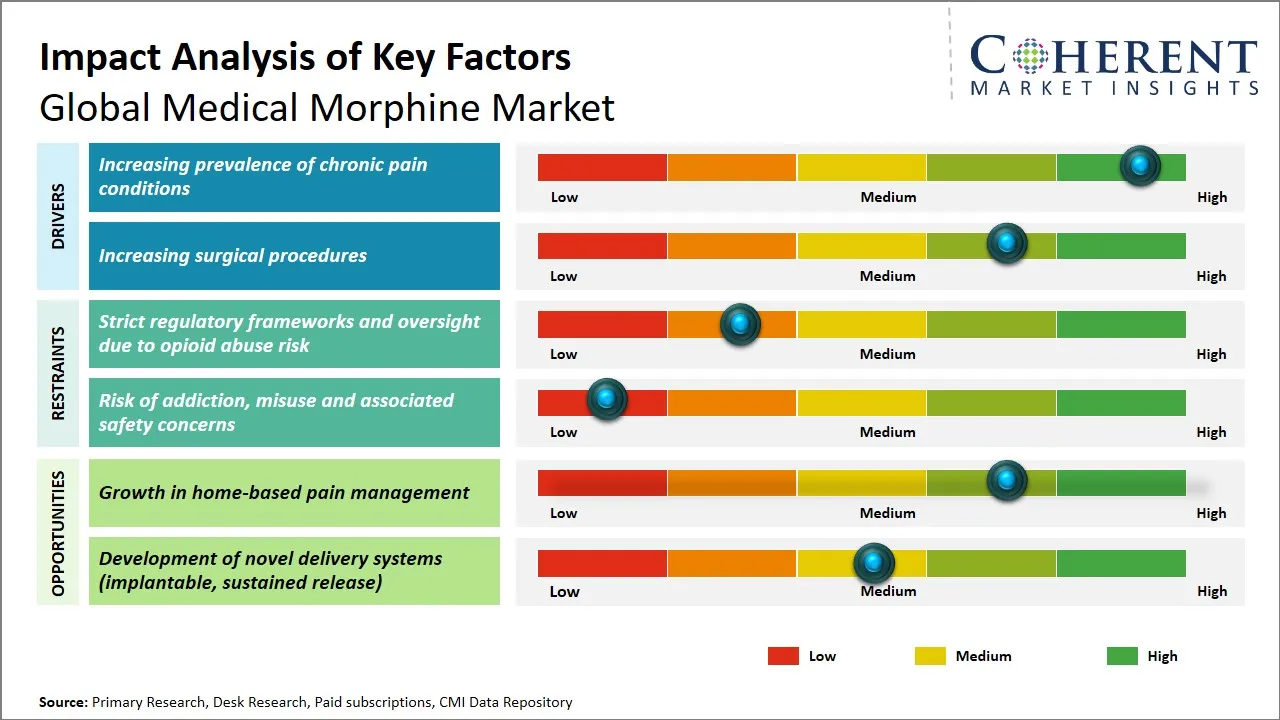
Medical Morphine Market Driver - Increasing Prevalence of Chronic Pain Conditions
The rising incidence of chronic pain conditions worldwide significantly drives the demand for medical morphine, as this opioid remains a cornerstone in managing severe and persistent pain. Chronic ailments such as cancer, arthritis, neuropathic pain, and postoperative pain are becoming increasingly prevalent due to aging populations and lifestyle-related health issues. As more patients face chronic pain affecting daily life, healthcare providers prioritize effective pain management. Morphine, known for its potent analgesic effects, is often prescribed for moderate to severe pain unresponsive to non-opioid treatments.
For instance, in December 2023, the World Health Organization (WHO) released guidelines on managing chronic low back pain (LBP). LBP is the leading cause of disability globally, affecting 619 million people in 2020. With cases projected to rise to 843 million by 2050, especially in Africa and Asia Pacific, WHO's guidelines focus on interventions for primary and community care settings. Chronic primary LBP, lasting over 3 months, accounts for most cases. WHO emphasizes that addressing this issue is crucial to achieving universal health coverage.
Medical Morphine Market Opportunity - Growth in Home-Based Pain Management
The increasing preference for home-based pain management presents a significant growth opportunity for the global medical morphine market. Advancements in healthcare infrastructure and telemedicine have empowered patients to manage chronic and acute pain from the comfort of their homes, reducing hospital visits and healthcare costs. Morphine, being a critical opioid analgesic, plays a vital role in home-based palliative and long-term pain management, especially for patients with cancer, post-surgical pain, and severe chronic conditions. User-friendly delivery systems like pre-filled syringes, transdermal patches, and oral formulations enable safe administration outside hospitals, improving patient adherence and quality of life.
For instance, in December 2024, AppliedVR's U.S. FDA-authorized RelieVRx device showed significant pain relief for high-impact chronic pain (HICP) patients. A study revealed 70% of HICP patients transitioned to lower-impact chronic pain (LICP) after treatment. This highlights the growing trend of home-based pain management solutions, with VR therapy offering an effective, non-invasive treatment option. AppliedVR continues to expand access through partnerships with Highmark and the U.S. Department of Veterans Affairs.
Analyst Opinion (Expert Opinion)
- The medical morphine market is growing, fueled by technological advancements in drug delivery and strong regulatory support. Increasing demand from aging populations and cancer care needs are driving market expansion. Additionally, emerging opportunities in Asia Pacific, where healthcare systems are improving, offer significant growth potential.
- Despite this, the market faces challenges like opioid misuse and addiction concerns. Global initiatives, such as WHO pain management guidelines and stricter opioid regulations in the U.S. and Canada, are addressing these issues. Conferences like the World Pain Congress and European Pain Federation Congress play vital roles in knowledge-sharing, influencing policies, and fostering collaborations to improve pain management.
Speak to the analyst
Want personalized insights?
Take the findings above to one of our principal consultants, or have the report rebuilt around the segments, geographies and competitors you actually track.
Market Segmentation
- Route of Administration Insights (Revenue, USD Bn, 2021 - 2033)
- Oral
- Parenteral
- Other routes (transdermal, suppository, intranasal, etc.)
- Application Insights (Revenue, USD Bn, 2021 - 2033)
- Cancer‑related pain management
- Acute pain (post‑surgery, trauma, myocardial infarction)
- Chronic pain (arthritis, musculoskeletal disorders)
- Palliative and end‑of‑life care
- Other applications (e.g., diarrhea suppression, cough suppression)
- End User Insights (Revenue, USD Bn, 2021 - 2033)
- Hospitals and Clinics
- Ambulatory Surgical Centers
- Homecare/Home Healthcare Settings
- Other (rehabilitation centers, hospices)
- Manufacturing Origin Insights (Revenue, USD Bn, 2021 - 2033)
- Branded
- Generic
- Strength Insights (Revenue, USD Bn, 2021 - 2033)
- Low‑dose (e.g.≤10 mg)
- Medium‑dose (e.g.10 mg to ≤30 mg)
- High‑dose (30 mg)
- Patient Age Group Insights (Revenue, USD Bn, 2021 - 2033)
- Pediatric
- Adult
- Geriatric
- Distribution Channel Insights (Revenue, USD Bn, 2021 - 2033)
- Hospital Pharmacies
- Retail Pharmacies
- Online Pharmacies
- Regional Insights (Revenue, USD Bn, 2021 - 2033)
- North America
- U.S.
- Canada
- Latin America
- Brazil
- Argentina
- Mexico
- Rest of Latin America
- Europe
- Germany
- U.K.
- Spain
- France
- Italy
- Russia
- Rest of Europe
- Asia Pacific
- China
- India
- Japan
- Australia
- South Korea
- ASEAN
- Rest of Asia Pacific
- Middle East
- GCC Countries
- Israel
- Rest of Middle East
- Africa
- South Africa
- North Africa
- Central Africa
- North America
- Key Players Insights
- Pfizer Inc.
- Teva Pharmaceutical Industries Ltd.
- Mallinckrodt Pharmaceuticals plc
- Sun Pharmaceutical Industries Ltd.
- Johnson and Johnson
- Viatris Inc.
- Hikma Pharmaceuticals plc
- Aurobindo Pharma Ltd.
- Endo International plc
- Mylan N.V. (now Viatris)
- Merck KGaA
- Bristol‑Myers Squibb Company
- Grünenthal GmbH
- Sanofi S.A.
- AbbVie Inc.
Sources
Primary Research Interviews
- Industry Stakeholders
- Hospitals pain-management department heads
- Pharmaceutical formulation R&D leads
- End Users
- Oncology and palliative care physicians
- Home-healthcare and hospice care nurses
Government and International Databases
- World Health Organization
- International Narcotics Control Board
- US Food and Drug Administration
- Therapeutic Goods Administration
- Health Canada
- United Nations Office on Drugs and Crime
Trade Publications
- Pain Medicine
- Regional Anesthesia and Pain Medicine
- StatPearls
- Frontiers in Public Health
- MDPI Pharmaceutics
- Journal of Pain
Academic Journals
- Global consumption of prescription opioid analgesics (ScienceDirect)
- Oral Morphine Use in South India: A Population-Based Study (ASCO)
- The Industrial Organization of Morphine in India (Springer)
- Opioids for Pain Management (IASP statement)
- Opioids for Pain Management (NEJM Review)
- On subclasses of opioid analgesics (Tandfonline)
Reputable Newspapers
- The New York Times
- The Financial Times
- The Hindu
- The Economic Times
- The Washington Post
- The Guardian
Industry Associations
- International Association for the Study of Pain
- American Academy of Pain Medicine
- American Society of Regional Anesthesia and Pain Medicine
- The British Pain Society
- American Chronic Pain Association
- World Palliative Care Alliance
Public Domain Resources
- WHO fact sheet on Opioid overdose
- DrugBank online entry for Morphine
- NCBI Bookshelf chapter on Pain Management and the Opioid Epidemic
- Wikipedia entry for the WHO Model List of Essential Medicines
- Wikipedia entry for Misuse of Drugs Act 1971
- Opioid Atlas
Proprietary Elements
- CMI Data Analytics Tool: Proprietary analytics tool to analyze real-time market trends, consumer behavior, and technology adoption in market
- Proprietary CMI Existing Repository of Information for Last 8 Years
Get access to 250+ pages report
Every segment, forecast, competitor profile and data table behind the analysis above — available for instant download.
- ESOMAR Member
- ISO 9001:2015 Certified
- D-U-N-S Registered
- GDPR & CCPA Compliant
Missing comfort of reading report in your local language? Find your preferred language:
Transform your Strategy with Exclusive Trending Reports
Frequently Asked Questions
The global medical morphine market is estimated to be valued at USD 27.13 Bn in 2026 and is expected to reach USD 46.19 Bn by 2033.
The CAGR of the global medical morphine market is projected to be 7.9% from 2026 to 2033.
Increasing prevalence of chronic pain conditions and increasing surgical procedures are the major factors driving the growth of the global medical morphine market.
Strict regulatory frameworks and oversight due to opioid abuse risk and risk of addiction, misuse and associated safety concerns are the major factors hampering the growth of the global medical morphine market.
In terms of route of administration, oral is estimated to dominate the market revenue share in 2026.
Pfizer Inc., Teva Pharmaceutical Industries Ltd., Mallinckrodt Pharmaceuticals plc, Sun Pharmaceutical Industries Ltd., Johnson and Johnson, Viatris Inc., Hikma Pharmaceuticals plc, Aurobindo Pharma Ltd., Endo International plc, Mylan N.V. (now Viatris), Merck KGaA, Bristol‑Myers Squibb Company, Grünenthal GmbH, Sanofi S.A., and AbbVie Inc. are the major players.
North America is expected to lead the global medical morphine market in 2026.