

Microbiome Sequencing Service Market Analysis & Forecast- 2026-2033
Global Microbiome Sequencing Service Market size is estimated to be valued at USD 2.44 Bn in 2026 and is expected to reach USD 5.23 Bn by 2033, exhibiting a compound annual growth rate (CAGR) of 11.5% from 2026 to 2033.
Key Takeaways
- By Service Type, the 16S rRNA gene profiling segment is projected to lead the market with a 36.8% share in 2026, attributed to its cost-effectiveness, widespread adoption for microbial community analysis, and compatibility with high-throughput sequencing platforms.
- By Application, the gut microbiome analysis segment is anticipated to dominate with a 41.8% share in 2026, driven by rising interest in gut health’s role in chronic diseases, personalized nutrition, and immune response modulation.
- By End User, academic and research institutes are expected to command the largest share of 39.7% in 2026, supported by increasing government and private funding for microbiome research and growing partnerships between universities and sequencing service providers.
- By Region, North America is set to remain the leading market in 2026, underpinned by the presence of key players, a well-established research ecosystem, and favorable policies promoting precision medicine and microbial therapeutics.
Market Overview
Global Microbiome Sequencing Service Market is expected to witness significant growth during the forecast period. This can be attributed to factors such as increasing R&D investment and field trials for gut microbiome-based drug development. Additionally, continual technological advancements in sequencing platforms and bioinformatics solutions are supporting high-throughput studies. Rising focus on human microbiome transplants and personalized probiotics as alternative treatment options for various conditions are another key trend driving investments in microbiome profiling services. Expanding applications of microbiome studies in healthcare, industrial, and environmental sectors will further promote market growth over the next few years.
Current Events and Its Impact on the Global Microbiome Sequencing Service Market
Event | Description and Impact |
Regulatory and Policy Developments |
|
Geopolitical Tensions and Trade Controls |
|
Technological Innovations and R&D Initiatives |
|
End User Feedback and Unmet Demand – Microbiome Sequencing Service Market
Key feedback
- Cost and access remain barriers: Multiple reports note that although sequencing costs have declined, the overall cost (library prep, sample logistics, data analysis, storage) remains substantial — limiting adoption especially in smaller labs or emerging markets.
- Standardisation, reproducibility, and quality remain weak: Users and market reports flag the variability in sample‑prep (DNA extraction, library prep), sequencing depth, bioinformatics pipelines, and reference databases. This weakens comparability and confidence.
- Clinical/diagnostic utility is still evolving: Many end‑users in clinical or translational contexts report that while microbiome sequencing is interesting, it often doesn’t yet deliver clear actionable outputs.
Unmet demand
- Actionable, interpreted outputs rather than just data dumps: Users increasingly expect microbiome services to provide interpretation: what the microbial profile means (functionally, clinically, physiologically), what actionable guidance follows.
- Standardised, validated workflows especially for translational/clinical use: For clinical labs, diagnostics, the need is for validated protocols (sample collection, DNA extraction, library prep), accredited labs (CLIA, CAP, ISO), reproducible pipelines, quality certifications.
- Lower cost / tiered service models for smaller labs / emerging geographies: Smaller research labs or those in low‑/middle income geographies are underserved. They need cost‑efficient workflows (maybe lower sequencing depth, targeted panels rather than full shotgun), streamlined logistics.
- Current Industry Events of 2026
- Market Size Estimation
- Regional Breakdown
- Competitive Landscape
- Customer Intelligence
- Segmental Analysis
- Pricing Analysis
- Key Market Drivers, Challenges & Future Trends
- Customized Insights Section
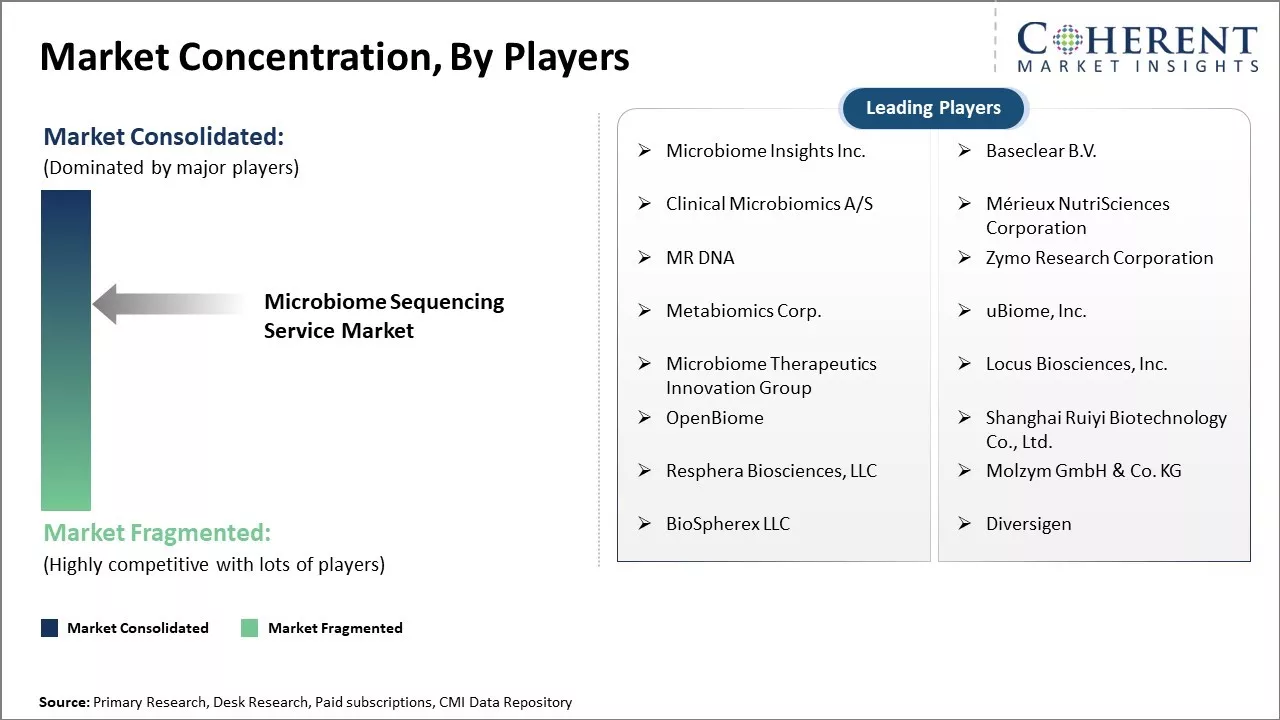
Market Concentration and Competitive Landscape
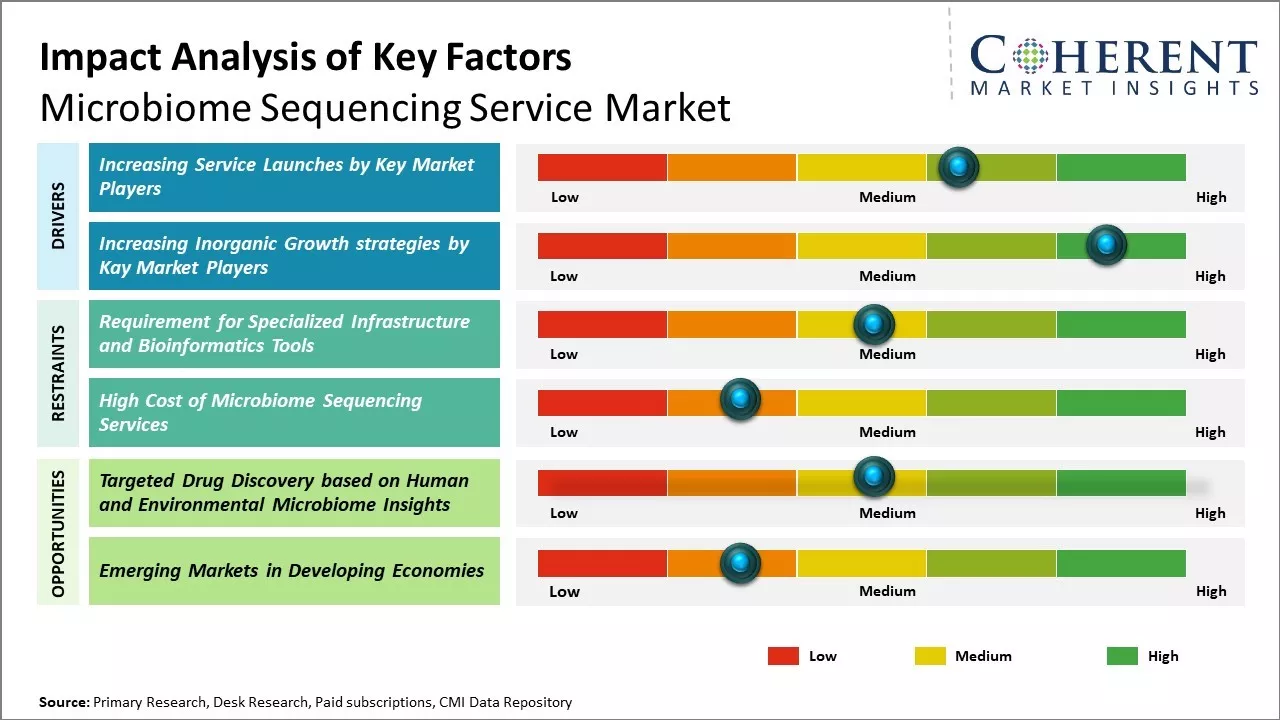
Increasing Service Launches by Key Market Players
Increasing adoption of organic growth strategies such as service launch is expected to drive the market growth over the forecast period. For instance, on February 21, 2025, ALS Limited, a provider of comprehensive testing solutions, announced that it had launched the Gut Microbiome.
Sequencing service, offering researchers around the world a complete solution for obtaining comprehensive, publication-ready data to deliver in-depth insights into the human and animal gut microbiome. The microbiome sequencing service includes the use of cutting-edge technologies: Invitek Diagnostics Sample Collection Tubes, which allow shelf-stable storage of stool samples for up to 3 months.
Increasing Inorganic Growth Strategies by Key Market Players
The key market players are focused on partnerships among key market players which in turn is expected to drive the market growth. For instance, in June 2022, CosmosID, a leading microbial genomics company, and Locus Biosciences Inc., a clinical-stage biotechnology company, announced a partnership for long-term support for clinical trial initiatives. CosmosID’s support for microbiome analysis is expected to assist Locus Biosciences Inc., in strengthening its precision therapeutics platform.
Market Opportunity Targeted Drug Discovery based on Human and Environmental Microbiome Insights
Targeted drug discovery based on human and environmental microbiome insights can provide great opportunities in the microbiome sequencing service market. The human microbiome, which consists of trillions of microbes playing an important role in health, is an untapped source for the discovery of novel drugs, disease biomarkers and probiotics.
Sequencing the microbiome communities inhabiting body, coupled with meta-omics analysis, can help gain in-depth insights about the microbes and their role in various diseases. This knowledge can further aid in developing precision diagnostics and therapeutics. For example, microbiome-based research has linked altered gut bacteria with various diseases like diabetes, obesity, cancer etc. and led to identification of potential drug targets and probiotics.
Segmental Insights
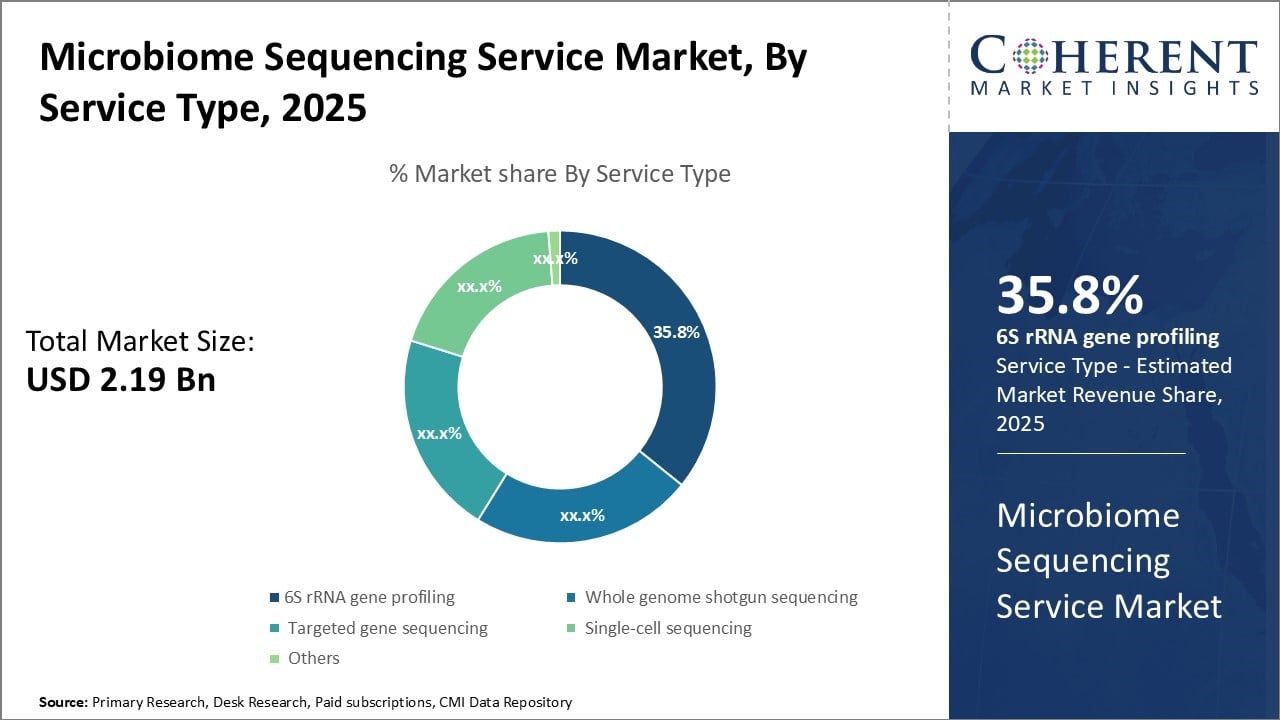
Microbiome Sequencing Market Insights, By Service Type
Service Type segment is sub-segmented into 6S rRNA gene profiling, whole genome shotgun sequencing, targeted gene sequencing, single-cell sequencing, others. The 6S rRNA gene profiling sub-segment is estimated to hold 36.8% of the market share in 2026 owing to its unmatched potential for comprehensive microbial profiling. As the foundational unit of bacterial identification, the 6S rRNA gene allows for cataloging of entire microbial communities through sequencing.
Compared to targeted assays focusing on only several hundred species, 16S profiling embraces microbial diversity through an unbiased survey of both cultivated and uncultivated bacteria. This has become invaluable for exploring microbiomes in various host and environmental settings. Being a genomic fingerprint, 16S profiling can discern microbes even when whole genomes are unavailable. As sequencing costs drop, it has grown as a first-line investigation into microbiota composition before subsequent assays.
Its standardization as a marker gene also makes results readily comparable across studies. Reference databases continue expanding recognition of microbial taxa detectable by 16S. Moreover, lower material requirements have boosted applications to difficult-to-access microbiome sites. Consistently delivering phylogenetic clues down to the genus/species level, 16S remains the workhorse enabling microbiome-guided discoveries
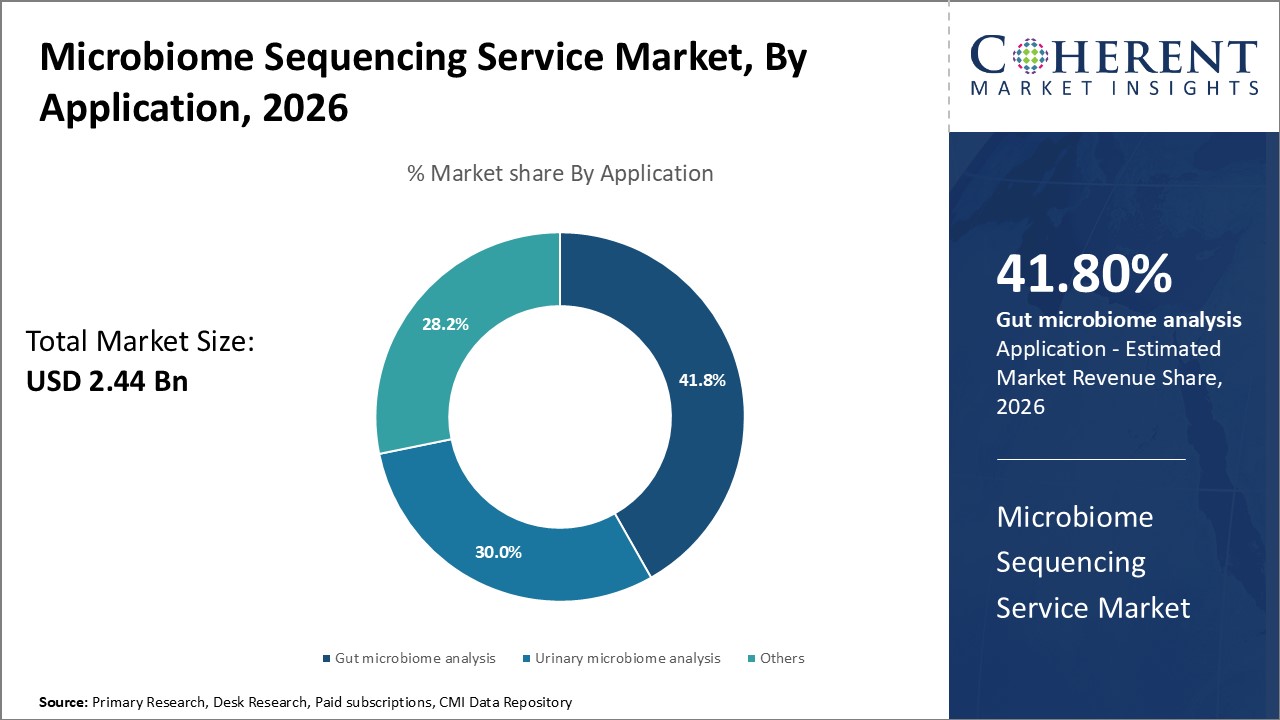
Microbiome Sequencing Market Insights, By Application
Application segment is sub-segmented into gut microbiome analysis, urinary microbiome analysis, and others. The gut microbiome analysis sub-segment is estimated to hold 41.8% of the market share in 2026 owing to its immense significance to human health and disease. As the densest microbial community interfacing with the host, the gut microbiota performs essential roles in nutrition, metabolism, immunity and neurobiology. Dysbiosis of this intricate ecosystem has been linked to a wide range of gastrointestinal, metabolic and extra-intestinal disorders.
Sequencing gut microbes illuminates their structure-function relationships and influence on pathology. Detection of novel butyrate-producing species or pathogens helps formulate dietary/pharmacological interventions. Tracking compositional shifts during therapies assesses clinical responses.
Personalized diagnostics and therapeutics increasingly rely on characterization of patient-specific enterotypes. Probiotic formulation and prebiotic design also benefit from targeting keystone taxa identified by community profiling. With ever stronger associations emerging, gut microbiome analysis remains at the forefront of precision medicine approaches.
Microbiome Sequencing Market Insights, By End User
End User segment is sub-segmented into academic and research institutes, pharmaceutical and biotechnology companies, diagnostic laboratories others. The academic and research institutes sub-segment is estimated to hold 39.7% of the market share in 2026, due to their pioneering discovery efforts. Universities and research organizations spearhead basic investigations to elucidate microbial function, host interactions and ecological principles governing assemblages. Their curiosity-driven inquiries lay foundations for applied microbiome fields.
Being early adopters of emerging sequencing technologies, academics continually optimize protocols and expand reference databases. Large cohort studies involving healthy and diseased populations help establish benchmark representations.
Multi-omic analyses integrating metagenomics with metabolomics, transcriptomics and more also become platforms within their laboratories. International initiatives are coordinating data sharing to accelerate insights. By training future scientists and spawning start-ups, academic research seeds the next generation of microbiome innovators.
Regional Insights
North America Microbiome Sequencing Service Market Analysis and Trends
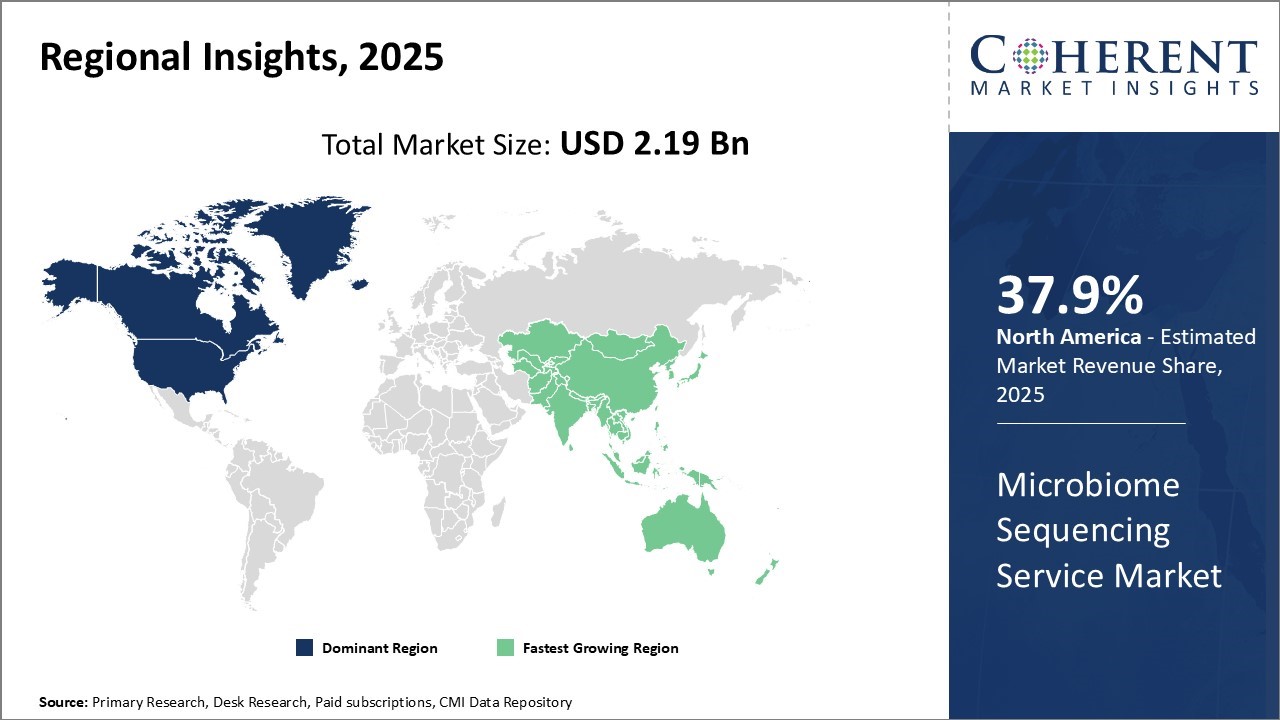
North America is expected to dominate the global microbiome sequencing service market in 2026, holding an estimated 37.9% market share. This leadership is driven by the presence of major industry players like Illumina, Qiagen, and CosmosID, all headquartered in the U.S. with expansive regional operations.
The region benefits from a strong healthcare research infrastructure, with numerous pharmaceutical and biotechnology companies utilizing microbiome sequencing for drug discovery and development. North America also offers a favorable reimbursement environment and increasing clinical acceptance of microbiome-based diagnostics.
In addition, a vibrant academic ecosystem—supported by public and private research funding—further accelerates advancements in microbiome science and sequencing services across the U.S. and Canada.
Asia Pacific Microbiome Sequencing Service Market Analysis and Trends
Asia Pacific is the fastest growing market for microbiome sequencing services, fueled by rising healthcare investments and strategic emphasis on preventive and precision medicine. Countries such as China, Japan, India, and South Korea are rapidly expanding their genomics capabilities, backed by government funding and public-private partnerships.
Local companies are aggressively scaling operations through acquisitions and collaborations, enabling the transfer of advanced sequencing technologies into the region. Asia Pacific’s cost advantages—such as lower labor and operational expenses—position it as a preferred destination for outsourcing large scale sequencing projects. Growing disposable income and improving healthcare infrastructure are enhancing access to specialized services, with global providers establishing regional hubs and partner labs to meet accelerating demand.
Dominating Countries in the Microbiome Sequencing Service Market
United States Microbiome Sequencing Service Market Analysis and Trends
The U.S. leads the global microbiome sequencing market due to its cutting-edge biomedical research environment, abundant funding opportunities, and deep integration of microbiome studies in pharmaceutical pipelines. Home to the headquarters of key market players and renowned research universities, the U.S. drives technological innovation and commercialization of microbiome sequencing services. The convergence of academic research, biotech startups, and clinical adoption has created a dynamic ecosystem that continues to shape the global trajectory of the microbiome industry.
China Microbiome Sequencing Service Market Analysis and Trends
China plays a pivotal role in the Asia Pacific microbiome sequencing market, supported by government-led initiatives aimed at expanding genomic research and personalized healthcare. Domestic firms are scaling up capabilities through licensing agreements and joint ventures with global leaders, bringing state-of-the-art sequencing technologies to the local market. With competitive pricing and growing international recognition, China is increasingly positioned as both a key consumer and exporter of microbiome sequencing services, reinforcing its status as a strategic hub in the global landscape.
Market Report Scope
Microbiome Sequencing Service Market Report Coverage
| Report Coverage | Details | ||
|---|---|---|---|
| Base Year: | 2025 | Market Size in 2026: | USD 2.44 Bn |
| Historical Data for: | 2020 To 2024 | Forecast Period: | 2026 To 2033 |
| Forecast Period 2026 to 2033 CAGR: | 11.5% | 2033 Value Projection: | USD 5.23 Bn |
| Geographies covered: |
| ||
| Segments covered: |
| ||
| Companies covered: | Microbiome Insights Inc., Baseclear B.V., Clinical Microbiomics A/S, Mérieux NutriSciences Corporation, MR DNA, Zymo Research Corporation, Metabiomics Corp., uBiome, Inc., Microbiome Therapeutics Innovation Group, Locus Biosciences, Inc., OpenBiome, Shanghai Ruiyi Biotechnology Co., Ltd., Resphera Biosciences, LLC, Molzym GmbH & Co. KG, BioSpherex LLC, and Diversigen | ||
| Growth Drivers: |
| ||
| Restraints & Challenges: |
| ||
Analyst Opinion ( Expert Opinion)
- The global microbiome sequencing service market is experiencing strong growth fueled by rising demand for personalized medicine and precision healthcare solutions. Increasing recognition of the microbiome’s vital influence on human health, disease prevention, and therapeutic development has made this market a key driver in biotechnology innovation. Pharmaceutical and biotech companies are increasingly adopting microbiome sequencing to accelerate novel drug discovery, particularly targeting conditions such as inflammatory bowel disease, metabolic syndromes, and immunotherapy.
- Major growth drivers include continuous technological advancements in next-generation sequencing (NGS) platforms, significant reductions in sequencing costs, and the expanding range of applications in clinical diagnostics, pharmaceutical research, and agricultural sciences.
- The growing burden of chronic diseases and the global transition towards preventive healthcare models further propel market demand. However, challenges such as complex regulatory requirements, data standardization issues, and limited reimbursement frameworks continue to restrain widespread adoption.
- Currently, North America leads the market due to substantial R&D investments, advanced healthcare infrastructure, a strong biotechnology presence, and supportive regulatory frameworks. The region benefits from extensive collaborations between academia and industry, facilitating innovation.
- Meanwhile, the Asia-Pacific region is emerging as the fastest-growing market, driven by increased healthcare spending, expanding research capabilities, and rising pharmaceutical manufacturing activities in countries like China and India.
- Looking ahead, significant opportunities exist in broadening clinical applications, establishing standardized analytical methodologies, and integrating artificial intelligence to enhance data interpretation. The synergy between microbiome research and digital health technologies offers promising growth avenues for service providers worldwide.
Speak to the analyst
Want personalized insights?
Take the findings above to one of our principal consultants, or have the report rebuilt around the segments, geographies and competitors you actually track.
Microbiome Sequencing Service Market Key Developments
- In April 23, 2025, Metabolon, Inc. announced the launch of a comprehensive new microbiome research solution that integrated metagenomics sequencing and bioinformatics tools with a new microbiome metabolite panel to create the industry’s most powerful microbiome research toolkit.
- In November 2023, QIAGEN, a global biotechnology company, announced the launch of the Microbiome WGS (whole-genome sequencing) SeqSets, a comprehensive Sample to Insight workflow designed to provide an easy-to-use solution that maximizes efficiency and reproducibility in microbiome research.
- In May 2023, Zymo Research Corporation, a key player in epigenetics, microbiomics, and Next-Gen Sequencing, announced the launch of its Full-Length 16S Sequencing Service, offering researchers high-quality, full-length 16S rRNA gene sequencing for microbiome analysis. The new full-length 16S service provides researchers with greater species resolution and increased data quality while maintaining a cost-effective approach when compared to historic, short-read 16S sequencing.
- In March 2022, Diversigen, a microbiome and metagenomics services provider, announced the launch of a new human gut microbiome testing service for comprehensive gastrointestinal testing solutions. The solutions are accessible to healthcare professionals through brand name CO-Biome.
Market Segmentation
- Service Type Insights (Revenue, USD Bn, 2021 - 2033)
- 6S rRNA gene profiling
- Whole genome shotgun sequencing
- Targeted gene sequencing
- Single-cell sequencing
- Others
- Application Insights (Revenue, USD Bn, 2021 - 2033)
- Gut microbiome analysis
- Urinary microbiome analysis
- Others
- End User Insights (Revenue, USD Bn, 2021 - 2033)
- Academic and research institutes
- Pharmaceutical and Biotechnology companies
- Diagnostic laboratories
- Others
- Regional Insights (Revenue, USD Bn, 2021 - 2033)
- North America
- U.S.
- Canada
- Latin America
- Brazil
- Argentina
- Mexico
- Rest of Latin America
- Europe
- Germany
- U.K.
- Spain
- France
- Italy
- Russia
- Rest of Europe
- Asia Pacific
- China
- India
- Japan
- Australia
- South Korea
- ASEAN
- Rest of Asia Pacific
- Middle East
- GCC Countries
- Israel
- Rest of Middle East
- Africa
- South Africa
- North Africa
- Central Africa
- Key Players Insights
- Microbiome Insights Inc.
- Baseclear B.V.
- Clinical Microbiomics A/S
- Mérieux NutriSciences Corporation
- MR DNA
- Zymo Research Corporation
- Metabiomics Corp.
- uBiome, Inc.
- Microbiome Therapeutics Innovation Group
- Locus Biosciences, Inc.
- OpenBiome
- Shanghai Ruiyi Biotechnology Co., Ltd.
- Resphera Biosciences, LLC
- Molzym GmbH & Co. KG
- BioSpherex LLC
Sources
Primary Research Interviews
- Microbiome Sequencing Service Providers
- Healthcare Professionals & Researchers
- Pharmaceutical & Biotechnology Companies
- Academic Institutions
- Others
Databases
- Bioproject Database (NCBI)
- Global Health Observatory (WHO)
- IBISWorld Industry Reports
- Others
Magazines
- Nature Biotechnology Magazine
- Genetic Engineering & Biotechnology News (GEN)
- BioWorld Magazine
- Microbiome Magazine
- Others
Journals
- Nature Microbiome
- Microbiome Journal (BMC)
- Applied and Environmental Microbiology
- Others
Newspapers
- The Wall Street Journal
- Financial Times
- Reuters Health News
- Bloomberg Healthcare
- Others
Associations
- International Human Microbiome Consortium (IHMC)
- American Society for Microbiology (ASM)
- International Society for Microbial Ecology (ISME)
- Biotechnology Innovation Organization (BIO)
- Others
Public Domain Sources
- U.S. Food and Drug Administration (FDA)
- European Medicines Agency (EMA)
- National Institutes of Health (NIH)
- World Health Organization (WHO)
- Others
Proprietary Elements
- CMI Data Analytics Tool
- Proprietary CMI Existing Repository of information for last 8 years
Get access to 250+ pages report
Every segment, forecast, competitor profile and data table behind the analysis above — available for instant download.
- ESOMAR Member
- ISO 9001:2015 Certified
- D-U-N-S Registered
- GDPR & CCPA Compliant
Missing comfort of reading report in your local language? Find your preferred language:
Transform your Strategy with Exclusive Trending Reports
Frequently Asked Questions
The Microbiome Sequencing Service Market size is estimated to be valued at USD 2.44 Bn in 2026, and is expected to reach USD 5.23 Bn by 2033.
The CAGR of the global Market is projected to be 11.5% from 2026 to 2033.
Increasing service launches by key market players and increasing inorganic growth strategies by key market players are the major factor driving the growth of microbiome sequencing service industry.
Requirement for specialized infrastructure and bioinformatics tools and high cost of microbiome sequencing services are the major factors hampering the growth of global market.
In terms of Service Type, 6S rRNA gene profiling is estimated to dominate the market revenue share in 2026.
Microbiome Insights Inc., Baseclear B.V., Clinical Microbiomics A/S, Mérieux NutriSciences Corporation, MR DNA, Zymo Research Corporation, Metabiomics Corp., uBiome, Inc., Microbiome Therapeutics Innovation Group, Locus Biosciences, Inc., OpenBiome, Shanghai Ruiyi Biotechnology Co., Ltd., Resphera Biosciences, LLC, Molzym GmbH & Co. KG, BioSpherex LLC, and Diversigen are the major players.
North America is expected to lead the microbiome sequencing service industry.