

Global Microneedle Patches Market Size and Forecast – 2026 to 2033
The global microneedle patches market is estimated to be valued at USD 2.13 Bn in 2026 and is expected to reach USD 6.52 Bn by 2033, exhibiting a compound annual growth rate (CAGR) of 17.3% from 2026 to 2033. This robust growth is driven by increasing demand for minimally invasive drug delivery systems and rising adoption in both therapeutic and cosmetic applications, positioning the market for significant expansion in the coming years.
Key Takeaways of the Global Microneedle Patches Market
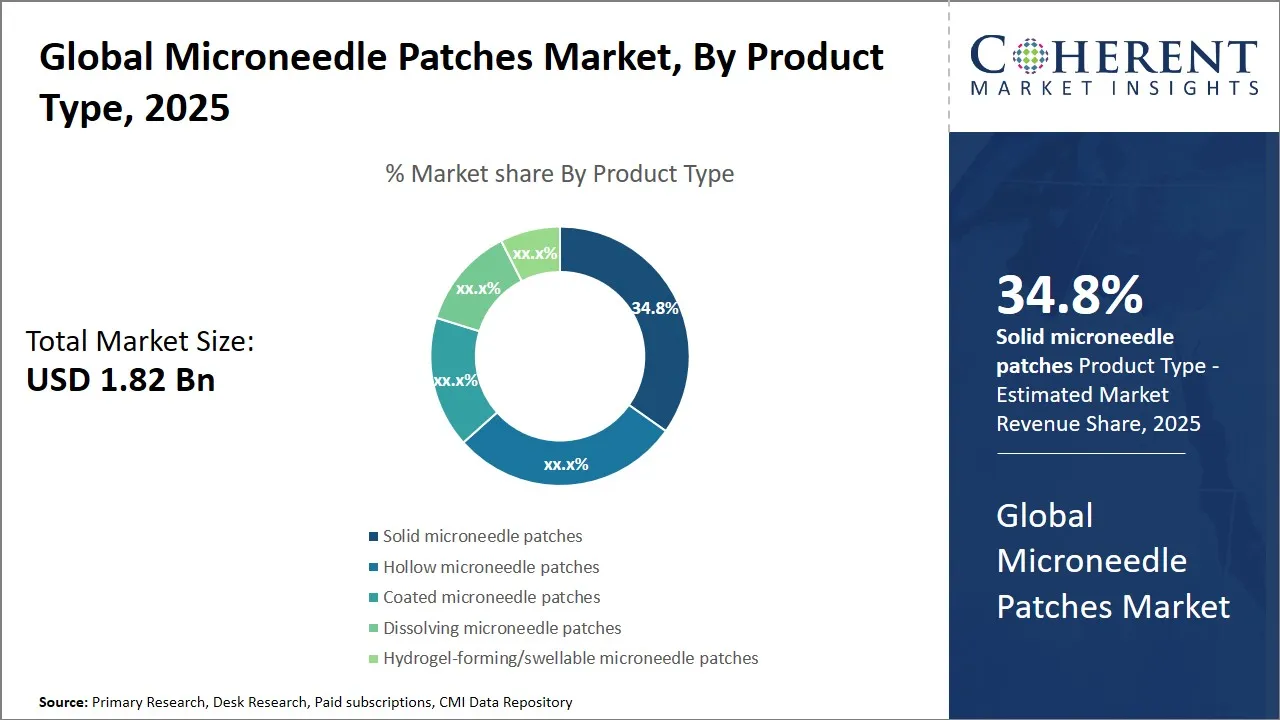
- By product type, solid microneedle patches are expected to dominate the global microneedle patches market, capturing a 35.8% share in 2026.
- By material type, the polymers segment, including PVA, PVP, PLA, and PLGA, leads the market with a 35.5% share in 2026.
- By patch design, the drug-coated patch segment hold a 33.4% share, making them the largest segment in 2026.
- North America is expected to lead the market, holding a share of 42.3% in 2026. Asia Pacific is anticipated to be the fastest-growing region, with an estimated market share of 24.3% in 2026.
Market Overview
Emerging trends in the microneedle patches market include advancements in painless drug delivery technology, enhanced patient compliance, and growing use in vaccination programs due to ease of administration. Additionally, integration with smart devices for monitoring and controlled release of medication is gaining attention. The expanding applications across dermatology, oncology, and chronic disease management are also accelerating innovation, making microneedle patches a transformative tool in personalized medicine and healthcare delivery.
Currents Events and Its Impacts
Current Events | Description and its Impact |
University of Bath develops hydrogel-based microneedle patch platform (October 2023) |
|
Advancement in Biologics & mRNA Vaccine Platforms |
|
Segmental Insights
- Current Industry Events of 2026
- Market Size Estimation
- Regional Breakdown
- Competitive Landscape
- Customer Intelligence
- Segmental Analysis
- Pricing Analysis
- Key Market Drivers, Challenges & Future Trends
- Customized Insights Section
Microneedle Patches Market Insights, By Product Type - Solid Microneedle Patches Dominant Due to Their Superior Skin Penetration and Effective Drug Delivery
By product type, solid microneedle patches take the largest portion of the microneedle patches market in the world with an estimated market share of 35.8% in 2026, owing to its simplicity, versatility and established scope of application. Solid patches of microneedles work by producing temporary microchannels in the skin, which, in turn, enables further topical delivery of drugs or increased skin permeability.
This modality has a number of important benefits, which support its popularity and further use by healthcare providers and patients. The simple design and production of the solid microneedle patches can be taken as one of the primary factors that drive dominance of the patches.
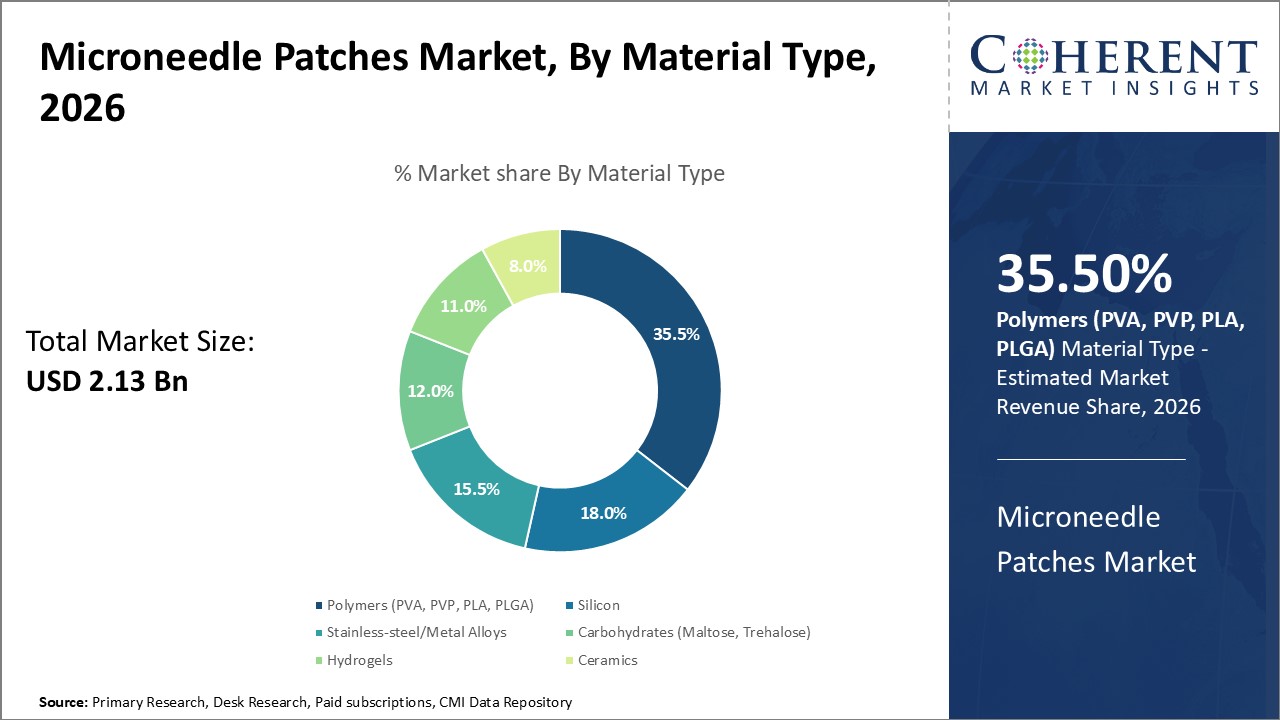
Microneedle Patches Market Insights, By Material Type - Polymers Dominant as Preferred Material Due to Versatility and Performance
In 2026, the polymers (PVA, PVP, PLA, PLGA) segment will have the largest share of the microneedle patches market worldwide, 35.5%. This tendency to use polymer-based microneedles is based on the fact that these materials possess a combination of biocompatibility, mechanical strength, and flexibility of production in a unique way.
One of the first reasons why polymers dominate is their good level of safety. Polymers including PVA and PVP are non-toxic, biodegradable and have widely been accepted in pharmaceutical and biomedical use.
Microneedle Patches Market Insights, By Patch Design - Drug-Coated Patch Dominates Due to Enhanced Drug Delivery Efficiency
The drug-coated patch is expected to have the highest market share of 33.4% in the year 2026, since it is more efficient, safe and has minimum invasiveness in delivering drugs. It is an active ingredient that is impregnated on solid microneedles and is dissolved quickly when inserted into the skin, which gives controlled and reliable dosing with high levels of patient compliance.
As an example, Micron Biomedical has invented a needle patch that offers vaccines and biologics in a minimally invasive manner and is drug-coated, which increases patient compliance with the needle-free experience. Likewise, Vaxxas has also developed the application of their Nanopatch technology that uses coated microneedles to deliver drugs more effectively and safely, which enhances the efficiency and safety of vaccines.
Comparative Technology Advantage of Microneedle Patches
- Microneedle patches outperform conventional delivery routes by offering faster onset, higher bioavailability, and painless administration while eliminating the need for trained staff. They bypass first-pass metabolism, deliver larger biomolecules that oral or standard transdermal systems cannot, and reduce needle-stick injuries common with injections. This positions them as a superior choice for self-use, chronic therapies, vaccines, and cosmetic applications where convenience and compliance drive buyer decisions.
- Across microneedle technologies, coated microneedles lead on rapid release, dissolving microneedles lead on safety and consumer acceptance, hydrogel microneedles lead on controlled release, and hollow microneedles target specialty clinical settings. Buyer-aligned messaging should emphasize how each technology solves the user’s pain points lower cost of administration for hospitals, new biologic delivery pathways for pharma, and clinic-grade results for consumer brands ensuring clear product superiority in every segment.
Regional Insights
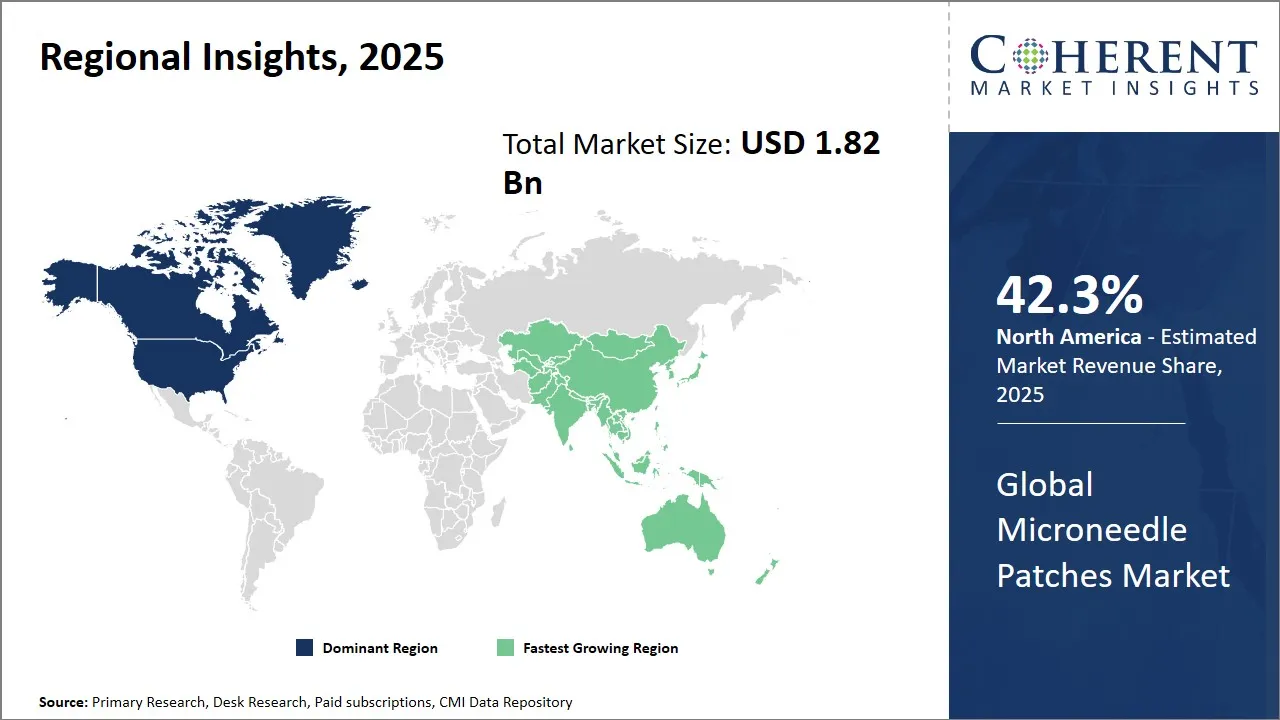
North America Microneedle Patches Market Analysis and Trends
The presence of the developed infrastructure of the healthcare system with an estimated 42.3% share in the global market of microneedles and patches in 2026, the level of technological ecosystem, and the presence of the key industry players explain the dominance of the North America region in the global microneedles patches market. In the U.S. and Canada, the region is dominated by a lot of research and development practices by both the U.S. government and the Canadians government with a large amount of government financial allocation and a very friendly regulatory environment which eases product approvals.
Besides, the consumer awareness of the minimally invasive drug delivery systems and the rising prevalence of chronic diseases has driven market demand. The region boasts of the presence of great companies like 3M Company, Zosano Pharma Corporation, and BD (Becton, Dickinson and Company) who invest a lot in innovation and commercialization of microneedle technologies.
Asia Pacific Microneedle Patches Market Analysis and Trends
The fastest growing market with regard to the microneedle patches is found in Asia Pacific. The upward growth is caused by growing healthcare spending with an estimated share of 24.3% in 2026, growing awareness regarding the advanced systems of drug delivery and expanding biotechnology industries in some countries such as China, India, Japan and South Korea. The increase in chronic illness rates and the need to have painless injection and dermatology are factors that drive adoption.
Major local competitors in Asia Pacific like 3M and Jiangsu Hengrui Medicine Co., Ltd, and Korean biotech companies like Nanoeng and Raphas are developing new technologies in microneedle patches and gaining market shares. New Indian competitors, such as Wockhardt, Biocon Biologicals, and Encube Ethicals, are considering putting microneedle vaccines platforms into use, in dermatology and pain therapy. Biocon, Encube, and Wockhardt have high potentials of adopting microneedles because of their expertise in biologics vertical, advanced drug delivery programs, and topical formulation expertise.
Global Microneedle Patches Market Outlook for Key Countries
U.S. Microneedle Patches Market Trends
The U.S microneedle patches market is marked by the strong R&D activities and a stable pharmaceutical production hub. The major players in the fourth wave of innovation of new microneedle patches are 3M and Zosano Pharma, which focus on the development of innovative microneedle patches as a source of pain management, vaccine delivery, and cosmetic use. Such regulatory authorities like FDA enable the market by providing guidelines and pilot programs to novel drug delivery solutions. The high levels of patient acceptance and demand of home-based healthcare solutions are also advantageous to the U.S. as it is commercialized..
Beyond the major incumbents, companies like Micron Biomedical, Vaxxas (U.S. operations), and Kindeva Drug Delivery are accelerating U.S. microneedle innovation. Micron Biomedical’s pediatric vaccine patch trials, Kindeva’s drug-device combination platforms, and Vaxxas’ U.S. clinical programs highlight how diverse players are pushing commercialization.
China Microneedle Patches Market Trends
The market of microneedle patches in China is fast changing through the major investments in biotechnology and medical devices fields. China has also become an ideal location in the development of microneedle technology due to government efforts in encouraging innovation and other aspects used to expedite the regulatory approvals. Domestic firms like Jiangsu Hengrui Medicine are broadening their research pipeline and partnering with other overseas companies in order to improve product lines. The large population of the country gives it a wide market base of customers who can buy therapeutic and cosmetic solutions to aid in increasing its market penetration.
New players such as Beijing Tsinghua Tongfang, Suzhou Yunyin Medical Technology, and Beijing MicroTech Medical are strengthening China’s microneedle pipeline. MicroTech’s work in minimally invasive diabetes tools, Yunyin’s polymer-based cosmetic microneedles, and Tongfang’s biotech integrations demonstrate China’s rapid innovation curve. These firms leverage strong government grants and domestic demand to scale quickly.
Germany Microneedle Patches Market Trends
Germany is still the dominant player in the European microneedle patches market because of the high pharmaceutical and medical device production potential. The nation has some of the strongest rules and regulations coupled with the presence of the government that heavily funds medical innovation. The major players in the development and commercialisation of microneedle-delivery of drugs include Raphas AG and B Braun Melsungen AG. The strong healthcare system of Germany and the greatest extent of acceptance among the patients and the health care providers contribute to the development of consistent demand and innovations in the field.
Germany also hosts emerging innovators such as Dermaroller GmbH, LTS Lohmann Therapie-Systeme (Germany operations), and MT Derm GmbH. Dermaroller advances minimally invasive skincare devices, MT Derm focuses on precision microneedle engineering, and LTS drives transdermal innovations from its German facilities. These examples show how Germany blends medical-grade engineering with strict quality systems to sustain leadership in Europe.
U.K. Microneedle Patches Market Trends
The microneedle patches market in the U.K. is motivated by the fast-paced acceptance of painless drug delivery, the increased need to find a solution at home, and high penetration in the dermatology and cosmetic fields. Pharmaceutical manufacturers are testing microneedle-based vaccine and hormone delivery systems, and make-up lines are marketing dissolving patches of the microneedle to tighten wrinkles, acne, and hyperpigmentation. Product launch is increasingly becoming faster due to regulatory emphasis on minimally invasive technologies and increasing consumer acceptance of self-administered therapies.
In November 2021, Loughborough University, a U.K. research institution, joined Queen’s University Belfast, a medical research university, and the University of Bath, a U.K. science university, to launch a USD 1.5 project improving global access to Microneedle Patches. The team aims to optimize polymeric microneedle design and accelerate real-world adoption.
End User Feedback and Unmet Needs
- End users in healthcare and cosmetic applications consistently highlight the convenience and comfort of microneedle patches, especially for painless drug delivery and faster skin absorption. A common positive example comes from chronic pain patients who report steadier relief and better compliance compared to oral medication. At the same time, users frequently point out issues such as inconsistent patch adhesion on sensitive or oily skin and difficulty maintaining performance in humid environments, which limits reliability in real-world use.
- Unmet needs center on affordability, wider customization, and better integration with existing clinical workflows. Many users want patches tailored to different skin types, drug formulations, and dosage requirements, along with lower prices to support broader access in emerging markets. Addressing these gaps would strengthen adoption, improve patient satisfaction, and open new innovation pathways for manufacturers aiming to expand market presence.
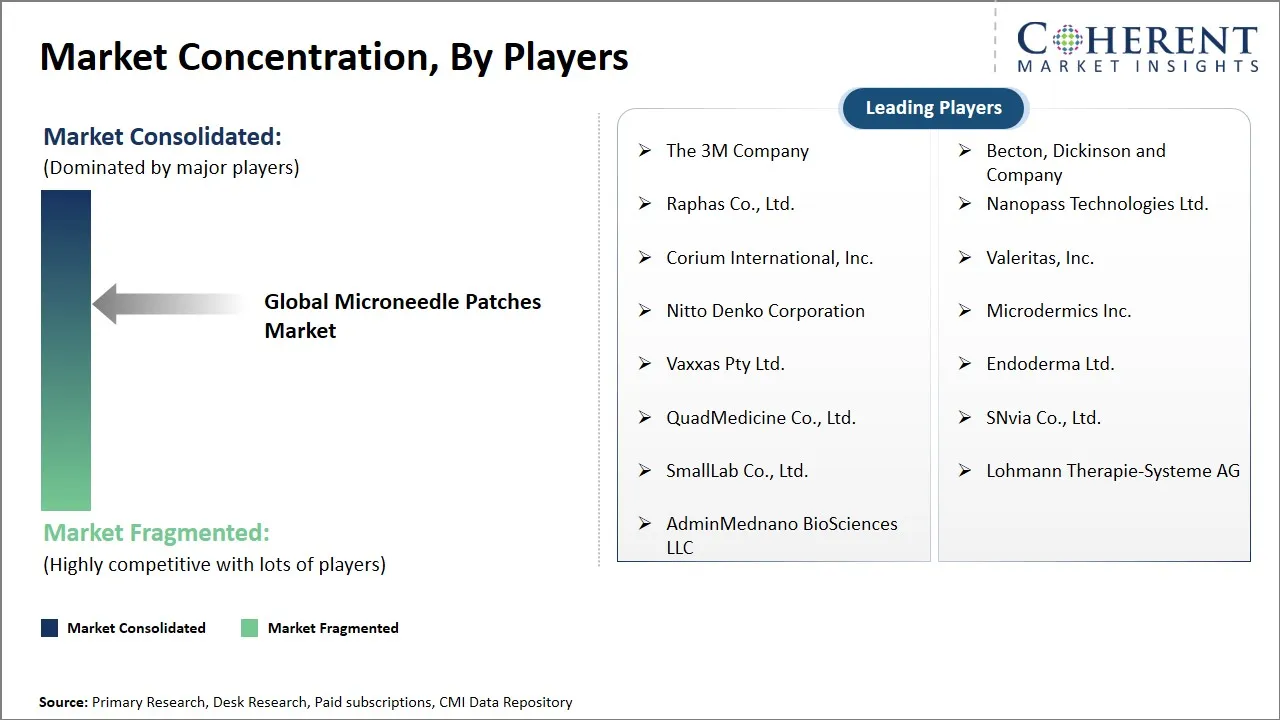
Market Players, Key Developments, and Competitive Intelligence
Key Developments
- In August 2025, Daewoong Pharmaceutical, a South Korean drug maker, announced breakthrough results for its semaglutide microneedle patch developed by Daewoong Therapeutics, a biotech focused on advanced delivery systems. The patch achieved over 80% relative bioavailability compared with injections, far above existing microneedle technologies. The study confirmed once-weekly dosing potential with strong therapeutic plasma levels.
- In August 2025, WCC Biomedical, a Taiwan drug-delivery innovator, showcased its WINMAP Microneedle Patches platform at the NACDS Total Store Expo and introduced two dissolvable patch products. The company demonstrated high-precision molds, accurate drug loading, and scalable production capabilities. Synmosa Group, a Taiwan specialty pharma company, supported the showcase as a key partner.
- In June 2025, Emory University, a U.S. clinical research institution, and Micron Biomedical, a needle-free vaccine developer, launched the first human trial of a rotavirus vaccine delivered through dissolvable Microneedle Patches. The study uses the CDC-developed CC24 vaccine and aims to improve protection in regions where oral vaccines perform poorly. Micron’s thermostable patch technology enables painless self-administration and reduces cold-chain needs.
- In July 2025, Punctual, a U.S. premium skincare innovator, introduced new dissolving microneedle patches designed to improve wrinkle reduction and ingredient delivery. The company uses a microneedle system that pushes active compounds far deeper than traditional skincare products. Clinical tests showed visible improvements in elasticity and wrinkle depth after early use.
Top Strategies Followed by Global Microneedle Patches Market Players
- The dominant firms are investing heavily in research and development (R&D) to develop superior high-performance microneedle patches to improve efficiency of drug delivery, patient compliance, and safety. These new ideas usually entail the incorporation of new materials and optimization of patches to accommodate many types of therapeutic uses. Established participants are strategic partners with OEMs, pharma, and technology companies to leverage the expertise of both companies and allow them to innovate faster.
- Examples will include 3M, Becton Dickson (BD) and Nitto Denko. These groups shop intensively in microneedles R&D, submit regular patents and partner with pharmaceutical giants to scale subsequent generation delivery infrastructures. Such firms as Vaxxas and Corium also have robust innovation pipelines in the form of clinical relationship, and vaccine-delivery programs based on proprietary microneedle architectures.
- Mid-level players in the microneedle patches business environment take the approach of providing quality and affordable solutions that are focused on consumer segments that are price-sensitive. Such players tend to acquire streamlined production methods and concentrate on the strategies of striking a balance between performance and cost. Mid-level companies are also able to cut large market share by focusing on emerging economies and healthcare providers seeking scalable and cost-effective drugs delivery solutions.
- There are Raphas, QuadMedicine, and Endoderma are aiming at price-sensitive Asian and LATAM markets, and these companies construct cost-effective manufacturing machinery, dissolve and hydrogel microneedles and concentrate on their production. Mid-tier positioning is also implemented by players such as partnered divisions of Micropoint Technologies and Zosano Pharma which are providing affordable and scalable systems of microneedles to healthcare providers and OTC wellness brands.
- Small mighty players hold a specific niche in the microneedle patches market as they specialize in a specific feature of the product or innovative versions of the product that meet certain medical conditions or delivery issues. These agile firms are using the latest technologies including biodegradable polymers or smart microneedles with sensors, or tailor-made versions of drugs to achieve a competitive edge against larger companies.
- Microneedle Solutions Ltd. (SJJ Solutions, and DermActiva Labs) have developed niche patches on the basis of biodegradable polymer or ultra-thin smart microneedles. New companies such as Microdermics and TreDerm Innovations have investigated sensor-based microneedles and customized dermatology, wound healing, and cosmetic precision-delivery markets to enable them to differentiate them with innovation within the domain.
Market Report Scope
Microneedle Patches Market Report Coverage
| Report Coverage | Details | ||
|---|---|---|---|
| Base Year: | 2025 | Market Size in 2026: | USD 2.13 Bn |
| Historical Data for: | 2020 To 2024 | Forecast Period: | 2026 To 2033 |
| Forecast Period 2026 to 2033 CAGR: | 17.3% | 2033 Value Projection: | USD 6.52 Bn |
| Geographies covered: |
| ||
| Segments covered: |
| ||
| Companies covered: | The 3M Company, Becton, Dickinson and Company, Raphas Co., Ltd., Nanopass Technologies Ltd., Corium International, Inc., Valeritas, Inc., Nitto Denko Corporation, Microdermics Inc., Vaxxas Pty Ltd., Endoderma Ltd., QuadMedicine Co., Ltd., SNvia Co., Ltd., SmallLab Co., Ltd., Lohmann Therapie-Systeme AG, and AdminMednano BioSciences LLC | ||
| Growth Drivers: |
| ||
| Restraints & Challenges: |
| ||
Microneedle Patches Market Dynamics
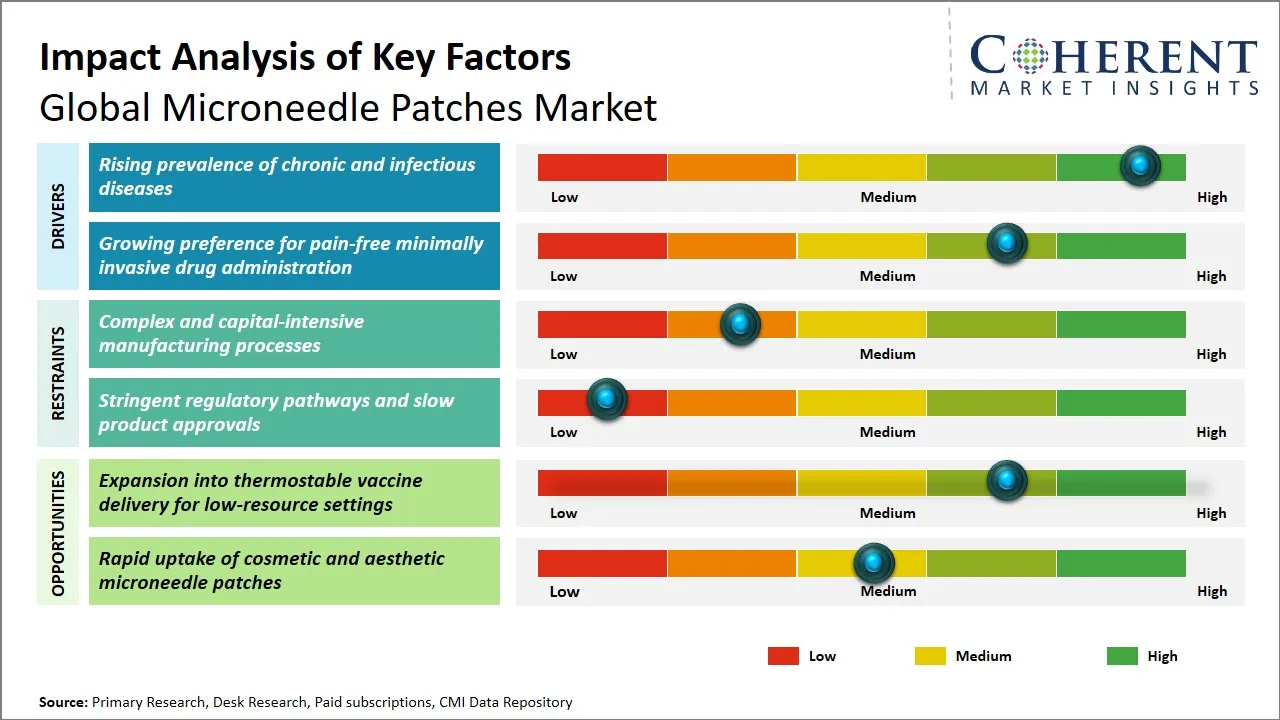
Microneedle Patches Market Driver - Rising Prevalence of Chronic and Infectious Diseases
Increasing rates of chronic diseases including diabetes, cardiovascular diseases, and auto immune diseases around the world, as well as endemic infectious diseases like hepatitis and influenza, are playing a significant role in the popularity of the adoption of the use of microneedle patches. The patches provide an efficient, pain-free, and minimally invasive solution to conventional injections and orally administered drugs, in terms of ensuring compliance, which is frequently a problem with patients undergoing long-term treatment. Micro needle patches are especially effective in chronic conditions that need frequent drug delivery or vaccination because they are easy to use, less prone to needle-stick infections, and have enhanced bioavailability of drugs which is essential in patient-compliance and treatment results.
In September 2025, the World Health Organization (WHO) reported a sharp rise in the global burden of chronic or noncommunicable diseases, which claimed around 43 million lives in 2021—accounting for 75% of non-pandemic-related deaths. The data highlighted cardiovascular diseases, cancers, chronic respiratory conditions, and diabetes as the leading causes, with 80% of premature deaths occurring in low- and middle-income countries.
Microneedle Patches Market Opportunity - Expansion into Thermostable Vaccine Delivery for Low-Resource Settings
Diversification of the global microneedle patches market has a tremendous opportunity in the progression of thermostable vaccine delivery systems; especially to the low resource and remote areas. The cold chain requirements are critical to the traditional vaccine storage and administration and increase the costs and decrease the accessibility of vaccines in developing regions. By taking advantage of their thermostabilizing capabilities, microneedle patches will change the landscape of vaccine delivery by removing or majorly decreasing the need for refrigeration. Besides, microneedle patches reduce the chances of needle-stick injuries and biohazard wastes, which is important in resource-scarce settings.
In April 2023, MIT researchers, led by Mr. Robert Langer, developed a microneedle patch printer for on-demand vaccine manufacturing. This portable printer, capable of creating small microneedle patches, can deliver vaccines like COVID-19 mRNA vaccines. The patches are self-administered and do not require refrigeration, which could improve vaccine access in remote areas. Companies like Vaxxas, pioneers in microneedle technology, and Micron Biomedical, focused on vaccine delivery through microneedle patches, are advancing this innovation.
Analyst Opinion (Expert Opinion)
- The microneedle patches market is expanding at a high pace because of the technological change in the drug delivery and vaccination administration. This growth is being promoted through innovations in dissolvable polymers and materials and regulatory encouragement of new healthcare solutions. The growing need of less invasive treatment and development of chronic illnesses also contribute to the market. Nevertheless, there are issues with scaling operations to production, development expenses, and general patient acceptance.
- The chances related to the delivery of vaccines are especially high, as the storage and distribution issues can be addressed with the help of the microneedle patches. Knowledge-sharing and collaborations have been facilitated by such industry events as the Microneedle Summit 2022 and International Drug Delivery Forum 2023. The possibility of enhancing the coverage of vaccines particularly in remote locations is echoed through the notable efforts like the MIT-microneedle patch printer that allows on-demand vaccine production.
Speak to the analyst
Want personalized insights?
Take the findings above to one of our principal consultants, or have the report rebuilt around the segments, geographies and competitors you actually track.
Market Segmentation
- Product Type Insights (Revenue, USD Bn, 2021 - 2033)
- Solid microneedle patches
- Hollow microneedle patches
- Coated microneedle patches
- Dissolving microneedle patches
- Hydrogel-forming/swellable microneedle patches
- Material Type Insights (Revenue, USD Bn, 2021 - 2033)
- Polymers (PVA, PVP, PLA, PLGA)
- Silicon
- Stainless-steel/Metal Alloys
- Carbohydrates (Maltose, Trehalose)
- Ceramics
- Hydrogels
- Patch Design Insights (Revenue, USD Bn, 2021 - 2033)
- Drug-Coated Patch
- Drug-Loaded (Dissolving) Patch
- Dry-Patch (No Active Load)
- Reservoir-Based/Hollow Patch
- Smart/Sensor-Integrated Patch
- Application Insights (Revenue, USD Bn, 2021 - 2033)
- Vaccination
- Transdermal Drug Delivery
- Dermatology and Aesthetic Treatments
- Pain Management
- Hormone Delivery
- Insulin and Diabetes Care
- Cosmeceuticals/Anti-Aging
- Wound Healing and Regenerative Therapies
- Usage Pattern Insights (Revenue, USD Bn, 2021 - 2033)
- Single-use disposable
- Multi-use/reusable
- End User Insights (Revenue, USD Bn, 2021 - 2033)
- Hospitals and Clinics
- Dermatology and Aesthetic Centers
- Pharmacies (Rx and OTC)
- Home-Use Consumers
- Research Institutions
- Biopharma and Vaccine Manufacturers
- Type Insights (Revenue, USD Bn, 2021 - 2033)
- Prescription (Rx)
- Over-the-Counter (OTC)
- Distribution Channel Insights (Revenue, USD Bn, 2021 - 2033)
- Online
- Offline
- Regional Insights (Revenue, USD Bn, 2021 - 2033)
- North America
- U.S.
- Canada
- Latin America
- Brazil
- Argentina
- Mexico
- Rest of Latin America
- Europe
- Germany
- U.K.
- Spain
- France
- Italy
- Russia
- Rest of Europe
- Asia Pacific
- China
- India
- Japan
- Australia
- South Korea
- ASEAN
- Rest of Asia Pacific
- Middle East
- GCC Countries
- Israel
- Rest of Middle East
- Africa
- South Africa
- North Africa
- Central Africa
- North America
- Key Players Insights
- The 3M Company
- Becton, Dickinson and Company
- Raphas Co., Ltd.
- Nanopass Technologies Ltd.
- Corium International, Inc.
- Valeritas, Inc.
- Nitto Denko Corporation
- Microdermics Inc.
- Vaxxas Pty Ltd.
- Endoderma Ltd.
- QuadMedicine Co., Ltd.
- SNvia Co., Ltd.
- SmallLab Co., Ltd.
- Lohmann Therapie-Systeme AG
- AdminMednano BioSciences LLC
Sources
Primary Research Interviews
- Industry Stakeholders
- R&D Heads – Microneedle Technology
- Manufacturing Leads – Drug Delivery Devices
- End Users
- Dermatologists
- Pharmacists
- Cosmetic Clinics
Government and International Databases
- U.S. FDA
- European Medicines Agency (EMA)
- World Health Organization (WHO)
- National Institutes of Health (NIH)
- Centers for Disease Control and Prevention (CDC)
- Japan Pharmaceuticals and Medical Devices Agency (PMDA)
Trade Publications
- FiercePharma
- In-Pharma Technologist
- Endpoints News
- Drug Delivery Business News
- PharmaTimes
- BioPharma Dive
Academic Journals
- Journal of Controlled Release
- Advanced Drug Delivery Reviews
- International Journal of Pharmaceutics
- Biomaterials
- Nature Biomedical Engineering
- Drug Delivery and Translational Research
Reputable Newspapers
- The Wall Street Journal
- The Guardian
- The New York Times
- Financial Times
- The Economic Times
- Reuters Health
Industry Associations
- Drug Delivery Alliance
- Biomedical Engineering Society (BMES)
- Parenteral Drug Association (PDA)
- American Association of Pharmaceutical Scientists (AAPS)
- International Society for Pharmaceutical Engineering (ISPE)
- Regenerative Medicine Manufacturing Society
Public Domain Resources
- Google Scholar
- ClinicalTrials.gov
- ScienceDirect Open Access
- NIH RePORTER
- U.S. Patent and Trademark Office (USPTO)
Proprietary Elements
- CMI Data Analytics Tool: Proprietary analytics tool to analyze real-time market trends, consumer behavior, and technology adoption in market
- Proprietary CMI Existing Repository of Information for Last 8 Years
Get access to 250+ pages report
Every segment, forecast, competitor profile and data table behind the analysis above — available for instant download.
- ESOMAR Member
- ISO 9001:2015 Certified
- D-U-N-S Registered
- GDPR & CCPA Compliant
Missing comfort of reading report in your local language? Find your preferred language:
Transform your Strategy with Exclusive Trending Reports
Frequently Asked Questions
The global microneedle patches market is estimated to be valued at USD 2.13 Bn in 2026 and is expected to reach USD 6.52 Bn by 2033.
The CAGR of the global microneedle patches market is projected to be 17.3% from 2026 to 2033.
Rising prevalence of chronic and infectious diseases and growing preference for pain-free minimally invasive drug administration are the major factors driving the growth of the global microneedle patches market.
Complex and capital-intensive manufacturing processes and stringent regulatory pathways and slow product approvals are the major factors hampering the growth of the global microneedle patches market.
In terms of product type, solid microneedle patches are estimated to dominate the market revenue share in 2026.
The 3M Company, Becton, Dickinson and Company, Raphas Co., Ltd., Nanopass Technologies Ltd., Corium International, Inc., Valeritas, Inc., Nitto Denko Corporation, Microdermics Inc., Vaxxas Pty Ltd., Endoderma Ltd., QuadMedicine Co., Ltd., SNvia Co., Ltd., SmallLab Co., Ltd., Lohmann Therapie-Systeme AG, and AdminMednano BioSciences LLC are the major players.
North America is expected to lead the global microneedle patches market in 2026.