

Global Mortgage Loan Market Size and Forecast – 2026-2033
The Global Mortgage Loan Market is estimated to be valued at USD 1.68 Bn in 2026 and is expected to reach USD 2.31 Bn by 2033, exhibiting a compound annual growth rate (CAGR) of 4.7% from 2026 to 2033.
Key Takeaways of the Global Mortgage Loan Market
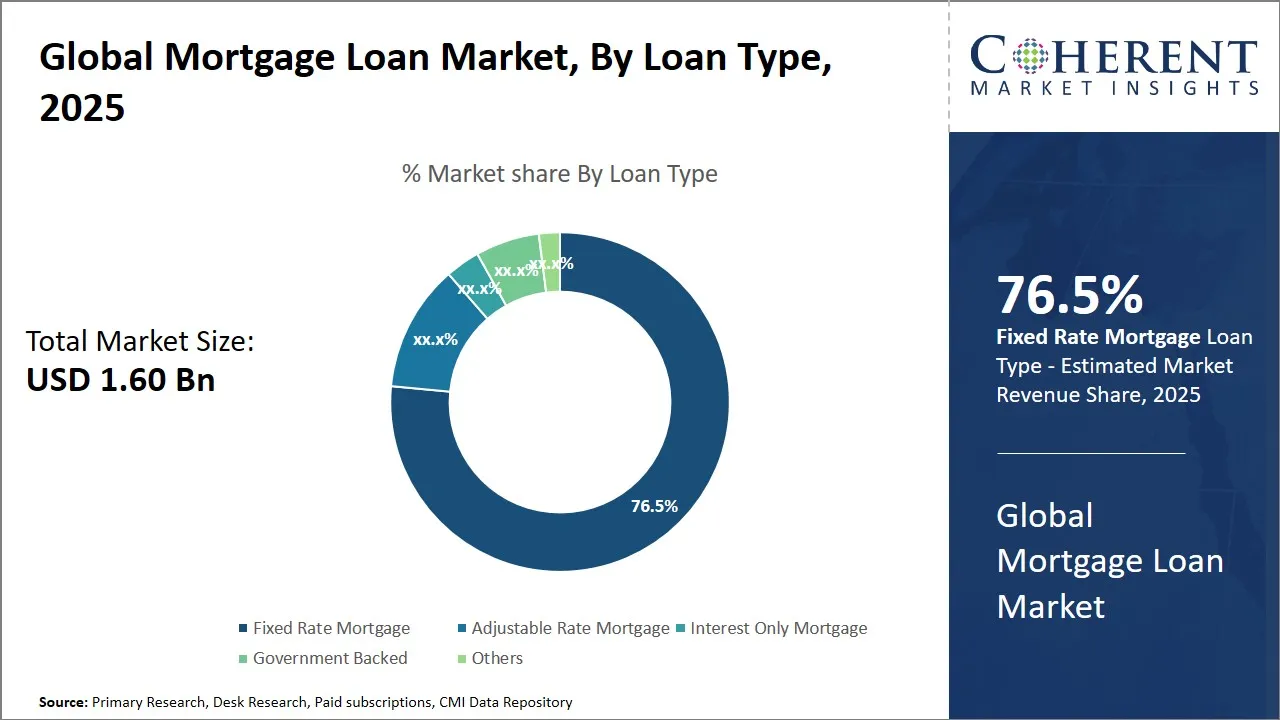
- The fixed rate mortgage segment leads the market holding an estimated share of 77.5 % in 2026.
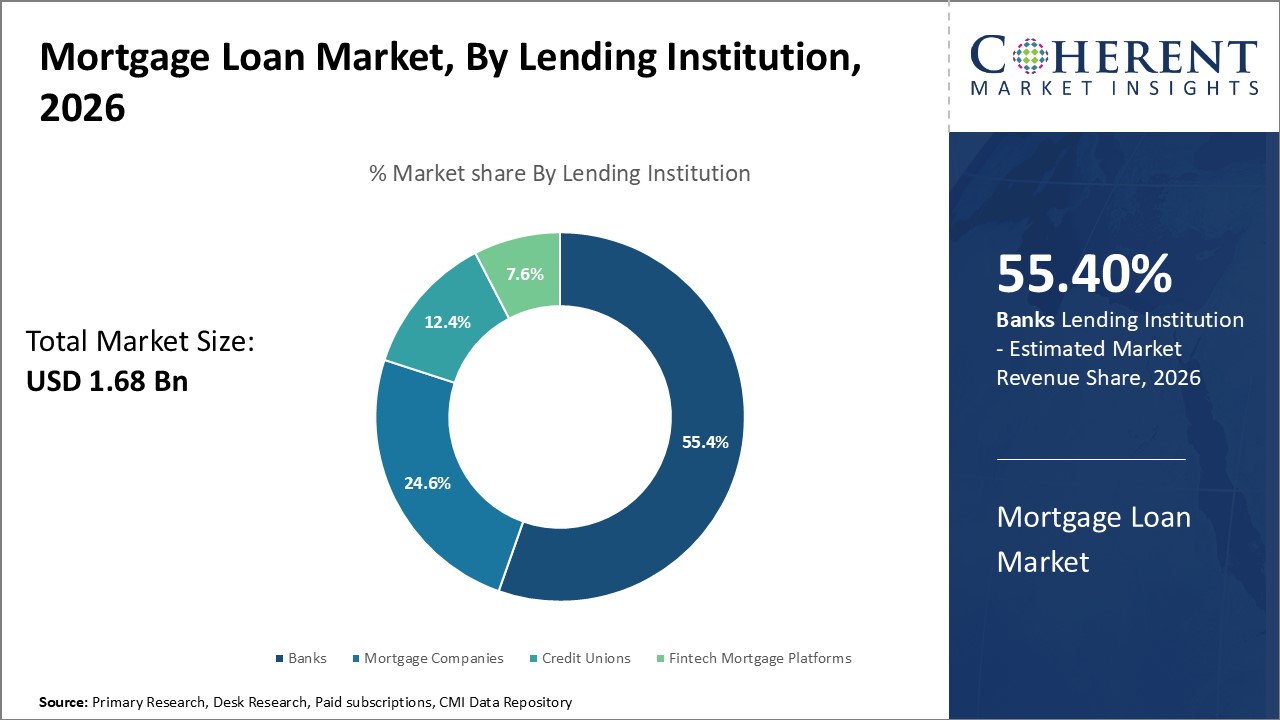
- The banks segment dominates with an estimated share of 55.4 % in 2026.
- The first-time homebuyers segment leads the market holding an estimated share of 34.2 % in 2026.
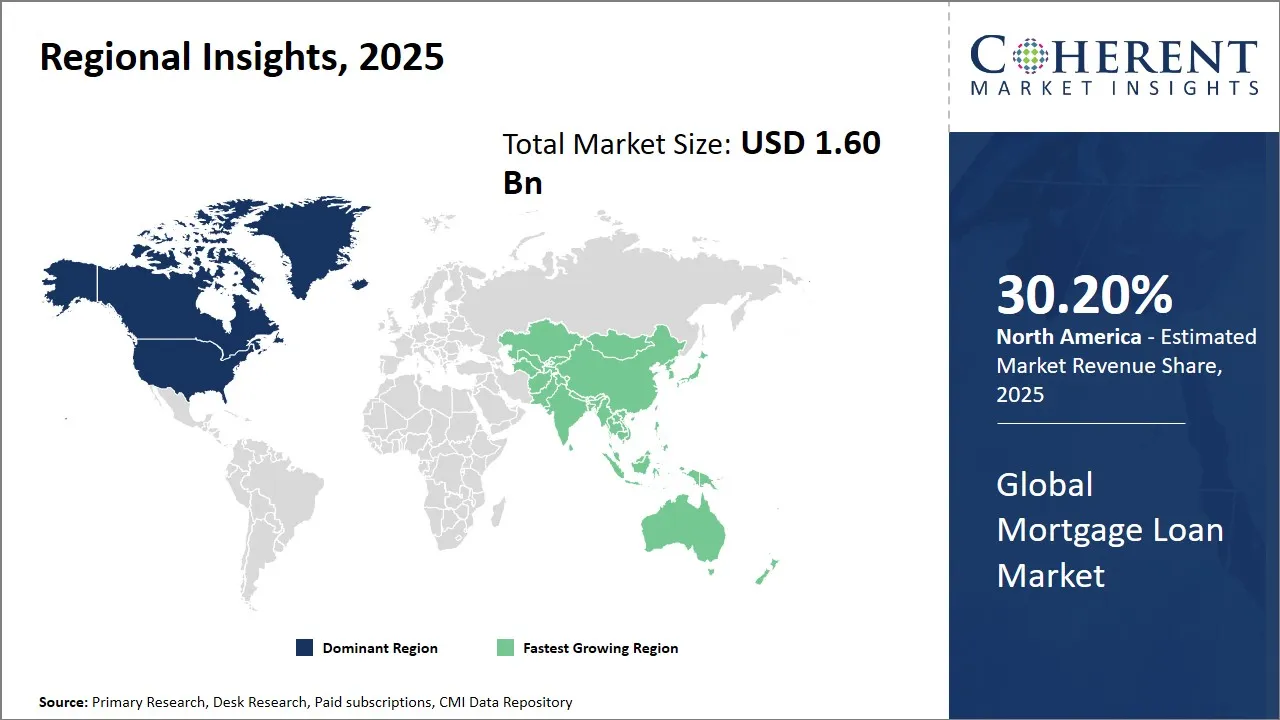
- North America, holding a share of 30.2 % in 2026, is expected to dominate the market.
- Asia Pacific, holding a share of 28.7 % in 2026, is projected to show the fastest growth in the market.
Market Overview
The market sees a move towards digitalization and customer-centric solutions, with fintech innovations streamlining loan origination and approval processes. Additionally, sustainable financing options and green mortgages are gaining traction as environmental awareness grows. Lenders are using data analytics and AI to remove risks and personalize loan offerings. This evolution, coupled with rising homeownership aspirations, is redefining how mortgage services are delivered, promoting greater accessibility and efficiency in the market.
Current Events and Its Impact
Current Events | Description and its impact |
Geopolitical and Trade Developments |
|
Economic and Industrial Trends |
|
Segmental Insights
- Current Industry Events of 2026
- Market Size Estimation
- Regional Breakdown
- Competitive Landscape
- Customer Intelligence
- Segmental Analysis
- Pricing Analysis
- Key Market Drivers, Challenges & Future Trends
- Customized Insights Section
Global Mortgage Loan Market Insights, By Loan Type – Fixed Rate Mortgage Leads Because of Predictability and Stability
The fixed rate mortgage segment is expected to hold the largest share of 77.5% in the global mortgage loan market in 2026 because of their predictability and stability. Borrowers want fixed-rate loans because the interest rate remains constant throughout the loan tenure, which offers a clear and consistent repayment structure. This helps homeowners budget their monthly expenses without the risk of unexpected increases in mortgage payments, particularly in fluctuating economic environments where interest rates could otherwise grow suddenly.
The demand for these loans becomes strong during periods of economic uncertainty or rising interest rates, as borrowers prioritize financial security. In many developed and emerging markets, consumers look for fixed rate mortgages to protect against inflation and market volatility. Also, these mortgages are seen as long-term financial commitments, pushing borrowers to opt for fixed payments that provide peace of mind and reduce their exposure to interest rate risk.
Financial institutions push these products as they tend to foster customer loyalty and reduce the chance of loan restructuring or delinquency. Also, the growing awareness in consumers about financial planning and risk mitigation also accelerates the move towards fixed rate options compared to adjustable or other more complex loan structures.
The fixed rate mortgage segment benefits significantly from rising homeownership aspirations backed by favorable government policies that support stable home financing. Urbanization, increasing disposable incomes, and expanding middle-class populations add to the preference for fixed installment loans. Together, these factors ensure that fixed rate mortgages remain the most sought-after product in the loan type segmentation of the global mortgage loan market.
Global Mortgage Loan Market Insights, By Lending Institution – Banks Dominate Lending Institutions Because of Extensive Reach and Trust
Banks are projected to hold the highest share of 55.4% in the global mortgage loan market in 2026 because of their huge branch networks, robust financial resources, and longstanding reputation of trustworthiness. Banks have long been the primary mortgage providers, benefiting from their ability to offer a comprehensive suite of financial products and professional advisory services under one roof. This convenience often appeals to borrowers looking for a seamless and integrated banking experience.
The dominance of banks is also supported by their capacity to underwrite huge volumes of mortgage loans with different funding sources, including deposits and interbank borrowing. This financial strength enables banks to offer competitive interest rates and flexible loan terms, making their mortgage products more attractive to a wide spectrum of borrowers, from first-time homebuyers to seasoned investors.
Consumer perceptions of banks' stability and reliability also matter. In many countries, banks are highly regulated and need to comply with strict capital adequacy and consumer protection norms, which reassures borrowers of loan security and transparent dealings. The formalized procedures in banks also reduce processing errors and improve the borrower experience.
Also, banks can use technology through digital platforms complements their physical presence, enabling faster loan approvals and processing times. While alternative lending institutions like fintech platforms are becoming popular, banks still hold the advantage of ingrained customer relationships and brand recognition, which foster higher customer retention. Their ability to offer customized mortgage products tailored to various borrower needs further solidifies their leading position in the mortgage lending landscape.
Global Mortgage Loan Market Insights, By Borrower Type – First-Time Homebuyers Maintain Dominance Because of Housing Affordability Measures and Urbanization
The first-time homebuyers segment is anticipated to claim the largest share 34.2% in the global mortgage loan market in 2026 because of growing housing demand and targeted government initiatives aimed at improving housing affordability. This segment is a key driver of mortgage demand as individuals shift from renting to owning, especially in fast urbanizing regions where new residential developments abound.
Many countries have put in place preferential lending schemes, down payment assistance programs, and tax rebates made to lower entry barriers for first-time buyers. These measures make mortgage financing more accessible and feasible for younger demographics and those with limited savings. Banks and lending institutions make mortgage products with lower interest rates, flexible repayment options, and longer tenures to cater to this segment, making more demand.
Demographic trends like expanding millennial populations reaching prime home-buying ages and increased urban migration add to the rise in first-time mortgage borrowers. Also, improvements in credit scoring systems and digital mortgage platforms have simplified the application process, making it easier for novice borrowers to navigate home financing options confidently.
The aspirational shift toward homeownership as a means of wealth-building and financial security also motivates many within this segment. Online real estate platforms and increased awareness about mortgage benefits make possible more informed decision-making among first-time buyers. Housing market recovery post-pandemic and revival of property markets in key urban centers continue to accelerate demand from this segment, allowing it to maintain dominance within the borrower classification in the mortgage loan market.
Pricing Analysis of the Global Mortgage Loan Market
Pricing metric | Value (USD/%) — as accurate as available or extrapolated |
30-yr fixed mortgage rate (avg) | 6.30% |
15-yr fixed mortgage rate (avg) | 5.53% |
5/1 ARM (national average APR) | 6.12% |
Median existing home price (U.S.) | USD 422,600.00 |
Median down payment | 9.00% → USD 38,034.00 |
Implied median loan amount (purchase) | USD 384,566.00 |
Average new mortgage loan size (purchase) | USD 407,541.00 |
Average outstanding mortgage balance (per borrower) | USD 252,505.00 |
Average origination fee (% & USD) | 0.5%–1.0% (typical) — example: 0.75% → USD 2,884.25 |
Average closing costs (buyer) — USD | USD 4,661.00 (national average) |
Cost per mortgage point (1%) | 1% of loan → USD 3,845.66 per point |
FHA Upfront MIP (mortgage insurance premium) | 1.75% → USD 6,724.91 (upfront) |
FHA Annual MIP (typical) | ≈0.55% → USD 2,115.11/year |
Private Mortgage Insurance (PMI) — annual range & USD | 0.50%–1.50% → USD 1,922.83 – USD 5,768.49/year |
Average monthly P&I on median purchase (30-yr, using USD 384,566 loan @6.30%) | USD 2,380.36/month (principal & interest only) |
Average monthly P&I on median purchase (15-yr, USD 384,566 @5.53%) | USD 3,148.35/month (principal & interest only) |
Typical closing cost % of home price (range) | ~1.6% (typical) — 2%–5% range depending on state & loan |
Average origination fee (reported dataset) | ~0.648% (reported average in sample) → USD 2,493.73 |
Regional Insights
North America Mortgage Loan Market Analysis and Trends
North America, holding a share of 30.2% in the mortgage loan market in 2026, dominates because of a well-established financial ecosystem supported by mature banking infrastructures and diversified mortgage products. The region sees a strong regulatory framework that promotes transparency and consumer protection, adding to homeownership. The presence of big financial institutions like Wells Fargo, Bank of America, and JPMorgan Chase, adds to competitive lending solutions like fixed-rate and adjustable-rate mortgages.
Government initiatives like the Federal Housing Administration (FHA) loan programs and support from agencies like Fannie Mae and Freddie Mac add to mortgage accessibility, fostering market stability. Additionally, the high level of digitalization in the mortgage application process enhances customer experience, amplifying market penetration.
Asia Pacific Mortgage Loan Market Analysis and Trends
The Asia Pacific region, holding a share of 28.7% in 2026, shows the fastest growth in the mortgage loan market because of fast urbanization, rising disposable incomes, and increasing homeownership aspirations across emerging economies. Governments in countries like China, India, and Southeast Asian nations have put in place reforms to ease credit availability and promote affordable housing initiatives. The growing banking and non-banking financial institutions ecosystem, combined with growing fintech industry penetration, is changing mortgage lending.
Companies like HDFC in India, China Construction Bank, and Bank of East Asia are very important in expanding mortgage loan offerings tailored to diverse customer segments. Also, policy support pushing foreign investment in real estate and streamlined regulatory procedures are attracting greater mortgage uptake across the region.
Global Mortgage Loan Market Outlook for Key Countries
U.S. Mortgage Loan Market Analysis and Trends
The U.S. mortgage loan market grows because of the presence of extensive secondary mortgage industries facilitated by Fannie Mae and Freddie Mac, which provide liquidity and risk mitigation for lenders. Big banks and fintech firms like Rocket Mortgage simplify loan approvals through technology-driven platforms. The government’s role in maintaining fair lending practices and offering different loan guarantee programs adds to market confidence. Regional housing demands because of demographic shifts and economic cycles shape loan product innovation in the U.S.
China Mortgage Loan Market Analysis and Trends
China mortgage loan market is propelled by massive urban migration and government-driven housing development programs. The Chinese government’s regulatory policies like credit control and interest rate guidance look to balance growth with financial stability. Large state-owned banks like China Construction Bank and Industrial and Commercial Bank of China, dominate mortgage lending while adopting digital tools to expedite processing times. The market is seeing a growth in mortgage products for both first-time homebuyers and real estate investors.
India Mortgage Loan Market Analysis and Trends
India mortgage loan market sees ongoing economic liberalization and rising middle-class population demanding homeownership. Non-banking financial companies (NBFCs) like HDFC and LIC Housing Finance play big roles alongside traditional banks, offering a big range of loan products. The government’s Housing for All initiative, along with tax incentives and credit-linked subsidy schemes, pushes borrowing. Increasing digital adoption and regulatory reforms aimed at boosting transparency and reducing loan processing times enhance market accessibility across urban and semi-urban centers.
U.K. Mortgage Loan Market Analysis and Trends
The U.K. mortgage loan market sees strict regulatory oversight from the Financial Conduct Authority making possible responsible lending and consumer protection. Big banks like Barclays, Lloyds Banking Group, and NatWest, affect market offerings like fixed, variable, and buy-to-let mortgages. Government schemes like Help to Buy and Shared Ownership push first-time buyers, making demand. The region’s growing Brexit-related trade dynamics and interest rate policies shape market sentiment and lending patterns.
Australia Mortgage Loan Market Analysis and Trends
Australia mortgage loan market grows because of a well-developed banking sector led by institutions like Commonwealth Bank, Westpac, and ANZ. The government’s role includes initiatives for pushing housing supply and affordable mortgages. Regulatory bodies put in place prudent lending standards to manage systemic risks. Increasing urbanization and a culture of property investment drive the demand for varied mortgage products. Technological innovation in loan processing and customer service benchmarking adds to competitiveness among lenders.
Market Players, Key Development, and Competitive Intelligence
Key Developments
- On October 6, 2025, Fifth Third Bancorp and Comerica Incorporated entered a definitive merger agreement under which Fifth Third will acquire Comerica in an all-stock transaction valued at USD 10.9 billion.
- On October 1, 2025, Rocket Companies, the U.S.-based homeownership platform, acquired Mr. Cooper Group, bringing together the country's largest home loan originator and the largest mortgage servicer.
- In July 2025, First National Financial reached an agreement to be acquired by private equity firm, Birch Hill Equity Partners and asset manager Brookfield Asset Management.
- In June 2025, Guild Holdings Company, a growth-oriented mortgage company that uses a relationship-based loan sourcing strategy, signed a definitive agreement under which a fund managed by Bayview Asset Management, LLC will acquire all of the outstanding shares of the company's common stock that it does not already own.
Top Strategies Followed by Mortgage Loan Market Players
- Established players in the industry use their huge resources to invest a lot in research and development (R&D), aiming to innovate and offer high-performance mortgage products that meet evolving consumer demands.
- JPMorgan Chase invested over USD 12 billion annually in technology innovation, including its digital mortgage platform that uses AI-based document verification and automated underwriting to cut loan processing time by 30%.
- Mid-level players in the global mortgage loan landscape use strategies that balance competitiveness with cost efficiency, focusing on delivering affordable yet quality mortgage solutions made for price-sensitive consumer segments.
- LoanDepot’s mello smartloan program is a digital lending platform that reduces loan processing costs and offers lower closing fees.
- Small-scale players in the mortgage loan sector make their niche by introducing specialized or innovative products made for specific customer needs.
- com, initially a small digital lender, became popular by focusing on first-time homebuyers and tech-savvy borrowers, offering zero-commission mortgages online.
Market Report Scope
Mortgage Loan Market Report Coverage
| Report Coverage | Details | ||
|---|---|---|---|
| Base Year: | 2025 | Market Size in 2026: | USD 1.68 Bn |
| Historical Data for: | 2020 To 2024 | Forecast Period: | 2026 To 2033 |
| Forecast Period 2026 to 2033 CAGR: | 4.7% | 2033 Value Projection: | USD 2.31 Bn |
| Geographies covered: |
| ||
| Segments covered: |
| ||
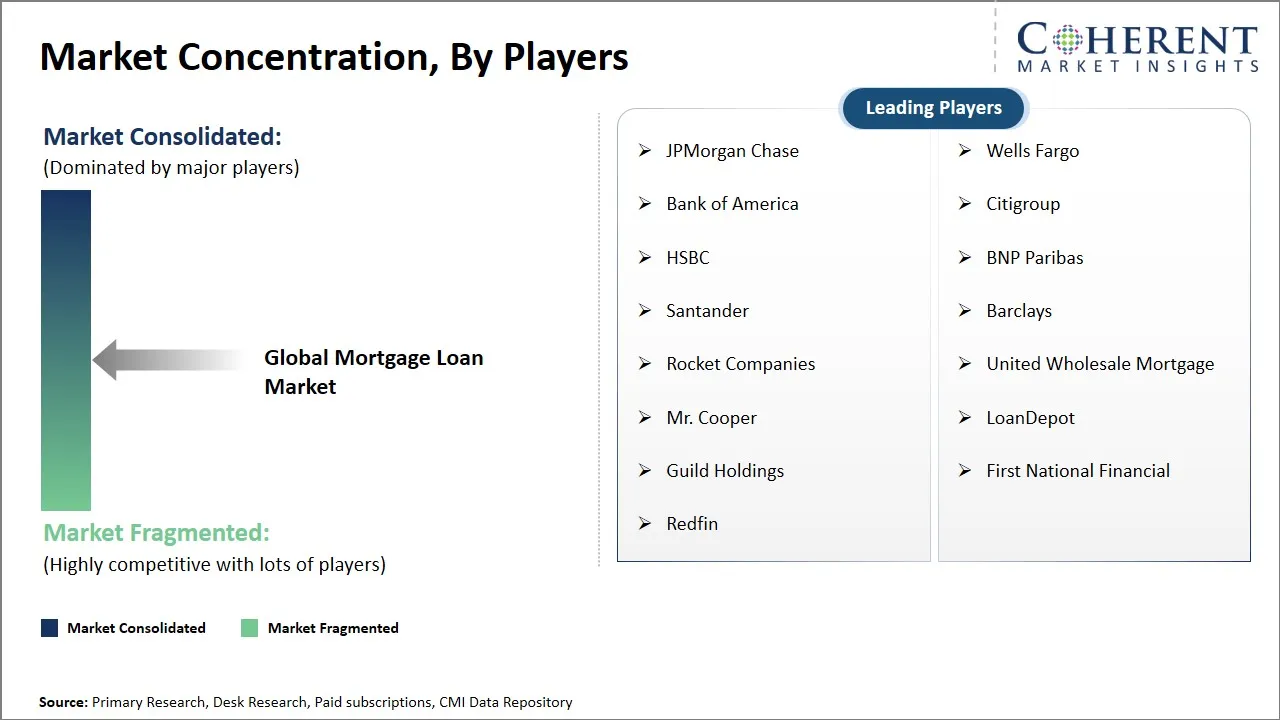
| Companies covered: | JPMorgan Chase, Wells Fargo, Bank of America, Citigroup, HSBC, BNP Paribas, Santander, Barclays, Rocket Companies, United Wholesale Mortgage, Mr. Cooper, LoanDepot, Guild Holdings, First National Financial, and Redfin | ||
| Growth Drivers: |
| ||
| Restraints & Challenges: |
| ||
Market Dynamics
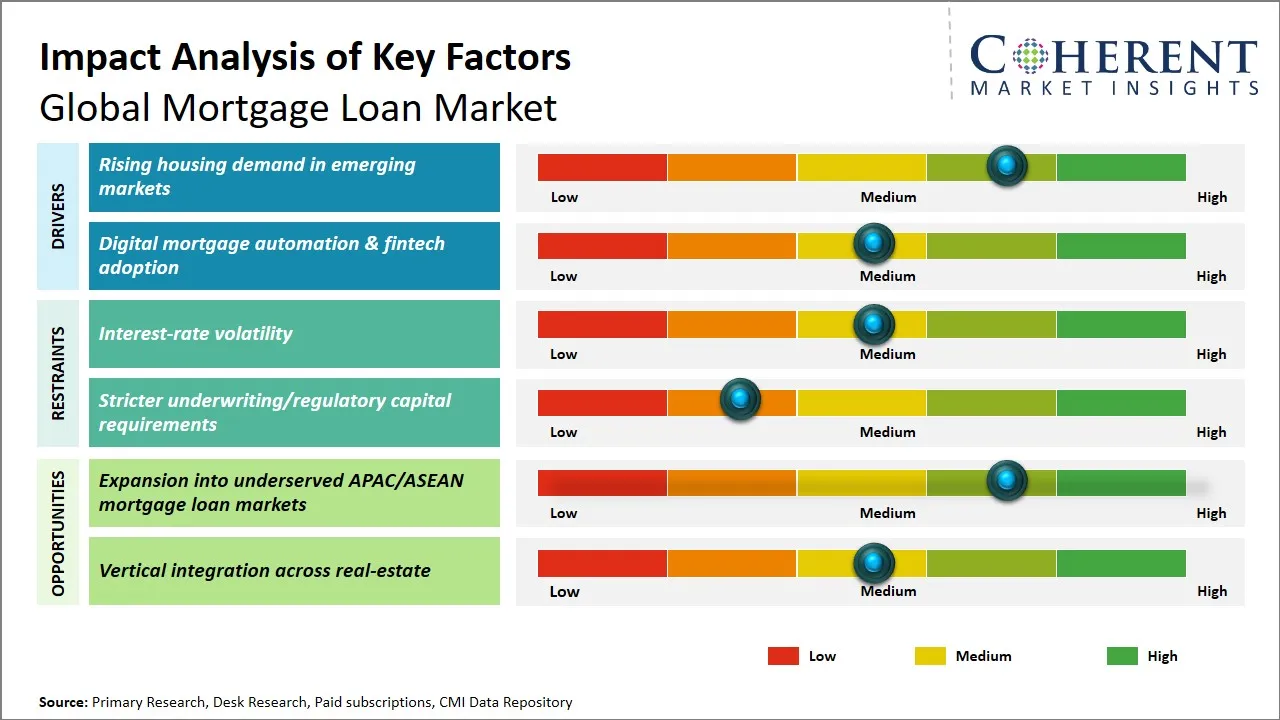
Global Mortgage Loan Market Driver - Rising Housing Demand in Emerging Markets
The surge in housing demand across emerging markets is a significant driver for the global mortgage loan market. Rapid urbanization, coupled with increasing disposable incomes and expanding middle-class populations, has intensified the need for affordable and accessible housing solutions in regions such as Asia Pacific, Latin America, and Africa. Many households in these markets are transitioning from rental to owner-occupied residences, creating higher demand for mortgage financing options. Additionally, favorable government initiatives, such as subsidies for first-time homebuyers and relaxed lending norms, are further stimulating loan uptake.
India’s Pradhan Mantri Awas Yojana (PMAY) has supported millions of first-time buyers through credit-linked subsidies, driving a significant increase in mortgage disbursements among public and private sector banks.
Infrastructure development and improvements in credit accessibility are also encouraging more consumers to consider homeownership, thereby driving mortgage penetration. As a result, financial institutions and mortgage lenders are expanding their footprint and product offerings tailored to local needs, which not only supports home buyers but also strengthens the housing finance ecosystem in these markets. This rising housing demand in emerging economies remains a key stimulus for sustained growth within the global mortgage loan landscape.
Global Mortgage Loan Market Opportunity – Expansion into Underserved APAC/ASEAN Mortgage Loan Markets
The global mortgage loan market presents significant growth potential through expansion into the underserved Asia Pacific and Association of Southeast Asian Nations (ASEAN) regions. Rapid urbanization, rising middle-class incomes, and increasing homeownership aspirations across countries like Indonesia, Vietnam, the Philippines, and Myanmar are driving the demand for mortgage financing. Despite these favorable demographics, mortgage penetration in these markets remains comparatively low due to limited access to formal credit, underdeveloped housing finance infrastructure, and regulatory challenges.
Additionally, digital transformation and fintech innovations can further accelerate mortgage adoption by simplifying application processes, improving credit assessments through alternative data, and reducing transaction costs. Governments in these regions are also increasingly supportive of affordable housing initiatives and financial inclusion policies, which can facilitate partnerships and ease regulatory hurdles for new entrants. Indonesia’s state-owned Bank Tabungan Negara (BTN) has partnered with fintech firms like Ayoconnect to digitize mortgage applications and expand housing loan access for first-time buyers. Targeted marketing strategies focusing on localized needs and cooperative ventures with local banks and developers can enhance market penetration.
Analyst Opinion (Expert Opinion)
- Persistent inflation has pushed up construction costs, property prices, and household expenses, making homeownership increasingly out of reach for middle-income buyers. As a result, the volume of new mortgage originations has declined, particularly among first-time homebuyers, while demand has shifted toward smaller loans or rental alternatives.
- Central banks’ inflation-fighting measures have led to elevated mortgage interest rates, reducing refinancing activity and tightening credit conditions. Borrowers with variable-rate loans face higher monthly payments, increasing default risks and prompting lenders to adopt stricter credit assessments to maintain portfolio quality.
- To offset slowing demand, lenders are introducing flexible mortgage products such as hybrid-rate and income-adjusted loans, as well as digital lending platforms that lower origination costs. Inflationary pressures have thus accelerated structural changes in the mortgage loan market, pushing lenders toward greater efficiency, automation, and risk-adjusted pricing strategies.
Speak to the analyst
Want personalized insights?
Take the findings above to one of our principal consultants, or have the report rebuilt around the segments, geographies and competitors you actually track.
Market Segmentation
- Loan Type Insights (Revenue, USD Bn, 2021 - 2033)
- Fixed Rate Mortgage
- Adjustable Rate Mortgage
- Interest Only Mortgage
- Government Backed
- Others
- Lending Institution Insights (Revenue, USD Bn, 2021 - 2033)
- Banks
- Mortgage Companies
- Credit Unions
- Fintech Mortgage Platforms
- Borrower Type Insights (Revenue, USD Bn, 2021 - 2033)
- First-Time Homebuyers
- Move-Up Buyers
- Investors
- Refinancers
- Property Type Insights (Revenue, USD Bn, 2021 - 2033)
- Residential
- Commercial Real Estate (CRE)
- Industrial
- Construction Financing
- Regional Insights (Revenue, USD Bn, 2021 - 2033)
- North America
- U.S.
- Canada
- Latin America
- Brazil
- Argentina
- Mexico
- Rest of Latin America
- Europe
- Germany
- U.K.
- Spain
- France
- Italy
- Russia
- Rest of Europe
- Asia Pacific
- China
- India
- Japan
- Australia
- South Korea
- ASEAN
- Rest of Asia Pacific
- Middle East
- GCC Countries
- Israel
- Rest of Middle East
- Africa
- South Africa
- North Africa
- Central Africa
- North America
- Key Players Insights
- JPMorgan Chase
- Wells Fargo
- Bank of America
- Citigroup
- HSBC
- BNP Paribas
- Santander
- Barclays
- Rocket Companies
- United Wholesale Mortgage
- Cooper
- LoanDepot
- Guild Holdings
- First National Financial
- Redfin
Sources
Primary Research Interviews
Stakeholders
- Mortgage Lenders and Financial Institutions (e.g., Bank Managers, Loan Officers)
- Housing Finance Companies and Real Estate Investment Trusts (REITs)
- Policy Makers and Regulators from Central Banks and Housing Authorities
- Property Developers and Builders in Residential and Commercial Segments
- Financial Advisors and Mortgage Brokers
- Fintech Startups offering Digital Mortgage Solutions
- Credit Risk Analysts and Rating Agency Professionals
Databases
- International Monetary Fund (IMF) Financial Statistics
- World Bank Global Housing Finance Database
- U.S. Federal Reserve Economic Data (FRED)
- European Mortgage Federation (EMF) Databank
- Reserve Bank of India (RBI) Financial Stability Reports
- Asian Development Bank (ADB) Economic Outlook
- Global Finance Tracker (GFT)
Magazines
- Housing Finance International
- Mortgage Banking Review
- Global Finance Magazine
- The Banker
- Financial World Review
- Realty Today
Journals
- Journal of Housing Economics
- International Journal of Financial Studies
- Journal of Real Estate Research
- Housing Policy Debate
- Journal of Economic Perspectives
- Journal of Banking & Finance
Newspapers
- The Financial Times (U.K.)
- The Wall Street Journal (U.S.)
- The Economic Times (India)
- South China Morning Post (Hong Kong)
- The Australian Financial Review (Australia)
- Gulf Business News (U.A.E.)
Associations
- Mortgage Bankers Association (MBA – U.S.)
- European Mortgage Federation (EMF)
- National Association of Realtors (NAR)
- Canadian Mortgage and Housing Corporation (CMHC)
- Asia-Pacific Housing Finance Forum (APHFF)
- African Housing Finance Association (AHFA)
Public Domain Sources
- U.S. Census Bureau – Housing and Mortgage Data
- EUROSTAT – Real Estate and Financial Services Indicators
- Organisation for Economic Co-operation and Development (OECD)
- United Nations Economic Commission for Europe (UNECE)
- World Bank – Global Housing Indicators
- Bank for International Settlements (BIS)
- ResearchGate
Proprietary Elements
- CMI Data Analytics Tool, Proprietary CMI Existing Repository of information for last 8 years
Get access to 250+ pages report
Every segment, forecast, competitor profile and data table behind the analysis above — available for instant download.
- ESOMAR Member
- ISO 9001:2015 Certified
- D-U-N-S Registered
- GDPR & CCPA Compliant
Missing comfort of reading report in your local language? Find your preferred language:
Transform your Strategy with Exclusive Trending Reports
Frequently Asked Questions
The global mortgage loan market is estimated to be valued at USD 1.68 billion in 2026 and is expected to reach USD 2.31 billion by 2033.
The CAGR of global mortgage loan market is projected to be 4.7% from 2026 to 2033.
Rising housing demand in emerging markets and digital mortgage automation & fintech adoption are the major factors driving the growth of the global mortgage loan market.
Interest-rate volatility and stricter underwriting/regulatory capital requirements are the major factors hampering the growth of the global mortgage loan market.
In terms of loan type, fixed rate mortgage segment is estimated to dominate the market revenue share in 2026.
AI-driven credit scoring, digital verification, and e-signature platforms are reducing loan approval times and improving borrower experience.
A green mortgage offers lower interest rates or incentives for purchasing or building energy-efficient homes, aligning with sustainability goals.