

Neuralgia Treatment Market Size and Forecast – 2026-2033
The global neuralgia treatment market is estimated to be valued at USD 2.70 Bn in 2026 and is expected to reach USD 4.35 Bn by 2033, exhibiting a compound annual growth rate (CAGR) of 6.8% from 2026 to 2033.
Key Takeaways
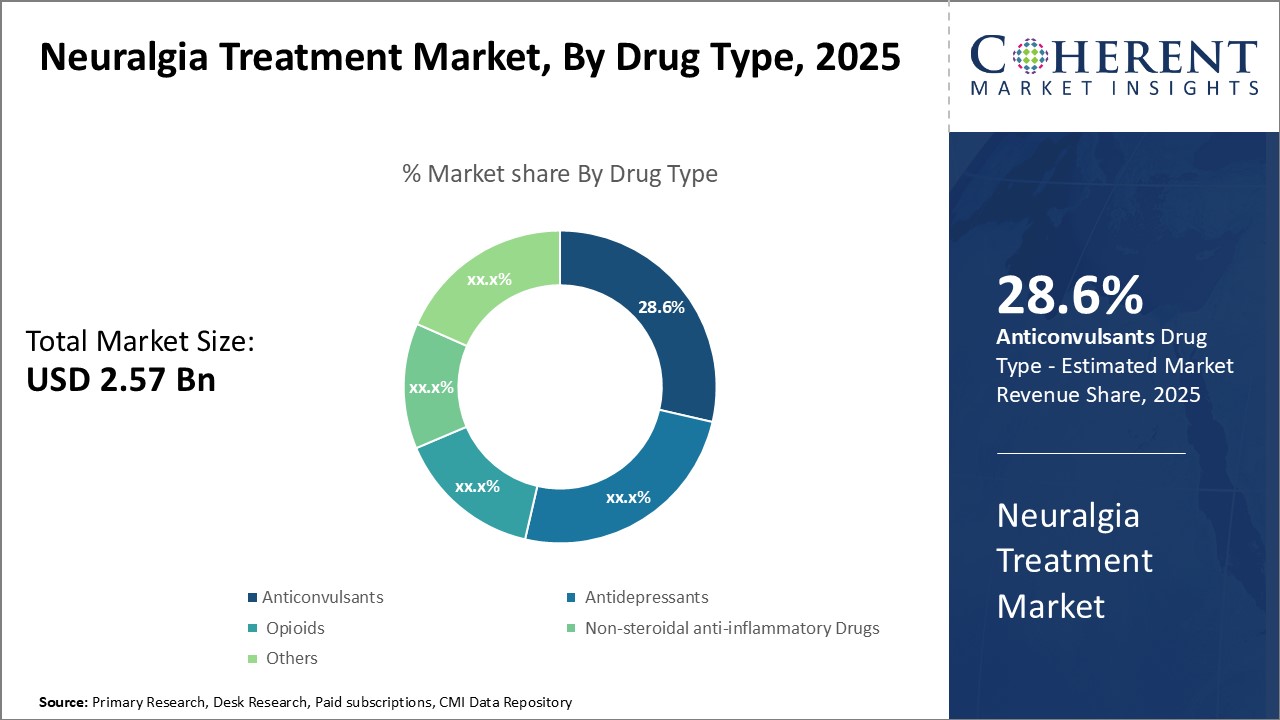
- Based on Drug Type, Anticonvulsants acquired the prominent share of 29.6% in 2026, owing to their widespread use in managing nerve pain associated with neuralgia.
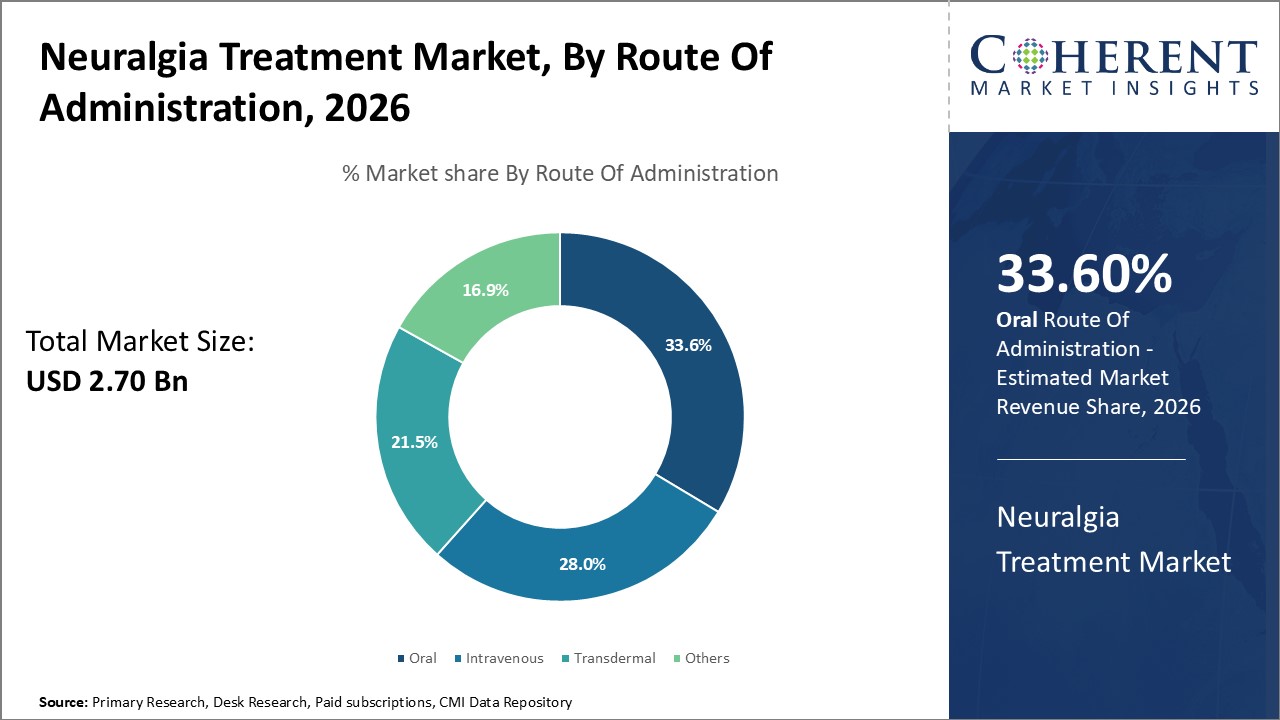
- Based on the Route of Administration segment, Oral administration dominates the overall market with an estimated share of 33.6% in 2026 due to ease of use and better patient compliance.
- Based on the Severity segment, the market is led by Mild neuralgia cases with a share of 42.6% in 2026, driven by early diagnosis and increasing awareness regarding nerve pain disorders
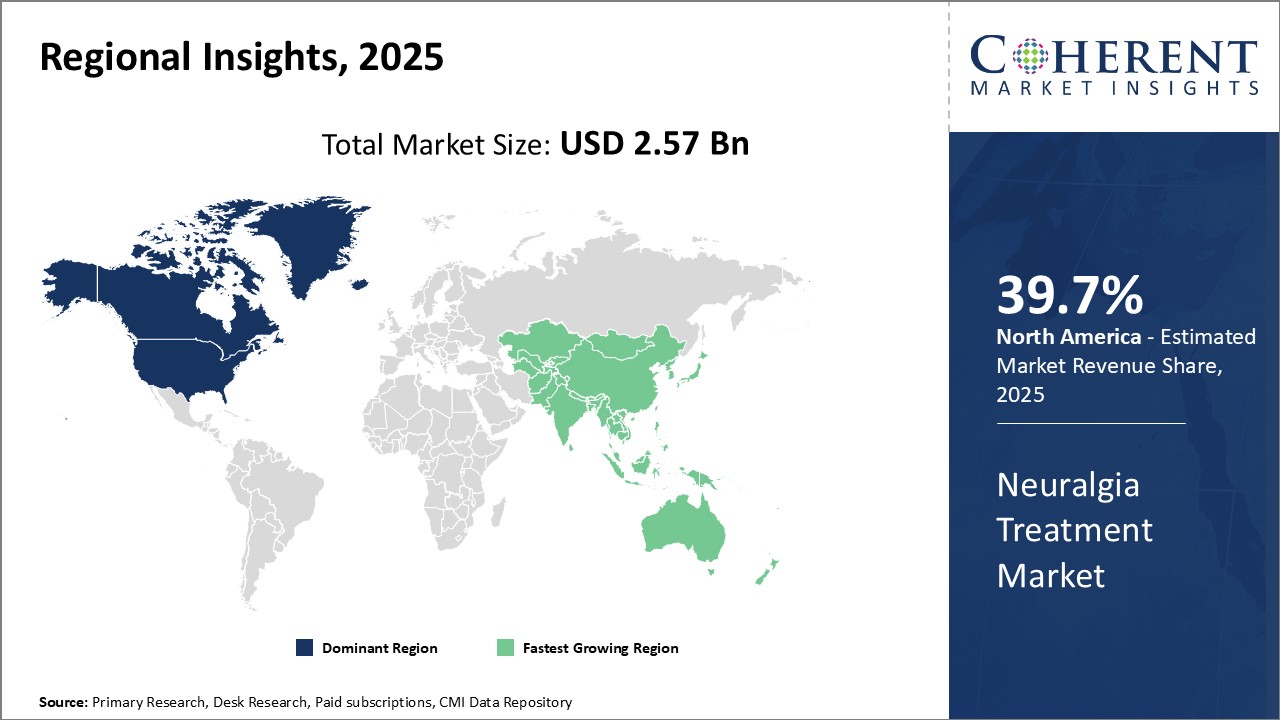
- Based on Region, North America led the overall neuralgia treatment market growth because of strong healthcare infrastructure, advanced treatment technologies, and a rising elderly population prone to nerve-related conditions.
Market Overview
The neuralgia treatment industry is expected to witness lucrative opportunities with innovations in drug delivery systems. Companies like Biogen are investing heavily in research and development of advanced drugs that have fewer side effects such as nanocarrier drug delivery systems. Furthermore, the demand for minimally invasive treatments for neuralgia like cryotherapy and radiofrequency ablation is expected to increase considerably over the forecast period providing attractive growth avenues.
Current Events and Their Impact
Current Events | Description and its impact |
Technological Innovations in Pain Management |
|
Pharmaceutical Strategic Pipeline Expansions |
|
Demographic-Driven Demand Shifts |
|
Neuropathic Pain Research Breakthroughs |
|
Emerging Market Healthcare Infrastructure Growth |
|
Segmental Analysis
- Current Industry Events of 2026
- Market Size Estimation
- Regional Breakdown
- Competitive Landscape
- Customer Intelligence
- Segmental Analysis
- Pricing Analysis
- Key Market Drivers, Challenges & Future Trends
- Customized Insights Section
Neuralgia Treatment Insights, By Drug Type - Anticonvulsants segment leads due to efficacy and tolerability.
The anticonvulsant segment within the drug type is projected to command the most significant market share of 29.6% in 2026. In the neuralgic market, the anticonvulsants segment is leading due to their proven efficacy and tolerability in treating a variety of neurological disorders, particularly epilepsy, neuropathic pain, and trigeminal neuralgia. For instance, carbamazepine (brand name Tegretol) has been a cornerstone in managing epileptic seizures and trigeminal neuralgia for decades. According to a 2019 study in Epilepsia, carbamazepine is considered one of the most effective drugs for focal seizures, with over 50% of patients achieving seizure control on this medication, further positively influencing the neuralgic treatment market forecast.
Neuralgia Treatment Insights, By Route of Administration - Oral administration gains prominence owing to convenience and safety
The market shares for oral-based delivery routes reach 33.6% in 2026 due to their user-friendly nature, low invasiveness and safety features. The therapeutic benefits of oral drugs include steady pain control and fewer required doses which encourages independent administration by patients. Pain and Therapy (2020) published a study which demonstrates that oral drugs represent the primary approach in neuropathic pain treatment by focusing on patient convenience and favorability to support the oral administration method.
Neuralgia Treatment Insights, By Severity - Mild neuralgia cases are driving the segment growth
The mild segment will dominate the market during 2026 because it has 42.6% market shares due to simpler treatment options and its common occurrence. The treatment of low back pain often uses non-steroidic drugs and topical medications and lifestyle interventions because these approaches deliver cost-effective yet minimally restrictive solutions. The study investigated Indian patients who stopped combination therapy after thirteen months but maintained favourable outcomes according to the source. These factors are expected to propel the neuralgic treatment market.
Regional Insights
North America Neuralgia Treatment Trends
The North American region holds the largest control of 39.7% in the neuralgia treatment market during 2026. The region dominates due to its strong healthcare system combined with increasing nerve pain disorders along with major pharmaceutical organizations operating there. The region holds its dominant position due to regulatory support that allows fast approvals of new pharmaceutical products. The United States Food and Drug Administration approved suzetrigine as a non-opioid pain drug that specifically targets sodium channels in pain neurons during March of 2024.
Asia Pacific Neuralgia Treatment Trends
The Asia Pacific region leads all other markets with its highest rate of expansion because of increased medical spending and numerous patients as well as intensive attention from international healthcare providers to these emerging markets. Multiple governments worldwide develop programs for nerve pain condition education and healthcare system development. A group of experts from Asia Pacific countries collaborated to develop standard approaches for treating neuropathic pain which will enhance patient results.
U.S. Neuralgia Treatment Trends
Future growth of the U.S. neuralgia treatment market is expected because neurological conditions show an increasing prevalence. For instance, over 20 million Americans suffer from peripheral neuropathy, a condition that causes nerve damage in the extremities. For many, the symptoms go beyond just numbness and tingling; more than one-third of those affected experience sharp, prickling pain, which often leads to increased rates of depression. This is further propelling the demand for neuralgia treatment.
United Kingdom Neuralgia Treatment Market Trends
The U.K. neuralgia treatment market experiences rapid expansion because of companies investing resources into clinical trials for new treatment methods. The development of the Octopus trial during April 2023 investigates using existing drugs metformin and alpha-lipoic acid as treatments for neuralgia which affects people with multiple sclerosis (MS). The MS Society supports the Octopus trial with USD 16.78 million to enroll 1,200 participants at 30 U.K. sites for discovering new marketable neuralgia treatments.
Also, trigeminal neuralgia (TN) receives advancing non-invasive treatment research within the U.K. medical sector. The National Institute for Health and Care Excellence (NICE) endorses stereotactic radiosurgery with Gamma Knife among other variants as a beneficial treatment method for trigeminal neuralgia (TN) patients. The London Clinic achieves high success rates using CyberKnife radiosurgery equipment to treat patients while reducing the associated risks. This is further adding to the neuralgia treatments market share.
Adoption of Minimally Invasive Procedures Drives Germany’s Neuralgia Treatment Market Growth
The Germany neuralgia treatment industry is estimated to hold a significant share in 2024, driven by the adoption of advanced, minimally invasive procedures for chronic pain management. In July 2024, NEW4MED GmbH, a MedTech company, introduced basivertebral nerve ablation (BVNA) therapy in Europe. This procedure targets the basivertebral nerve to relieve chronic lower back pain using radiofrequency energy. The 30-minute treatment involves a probe that destroys the nerve, preventing pain signal transmission.
Neuralgia Treatment Market Trend
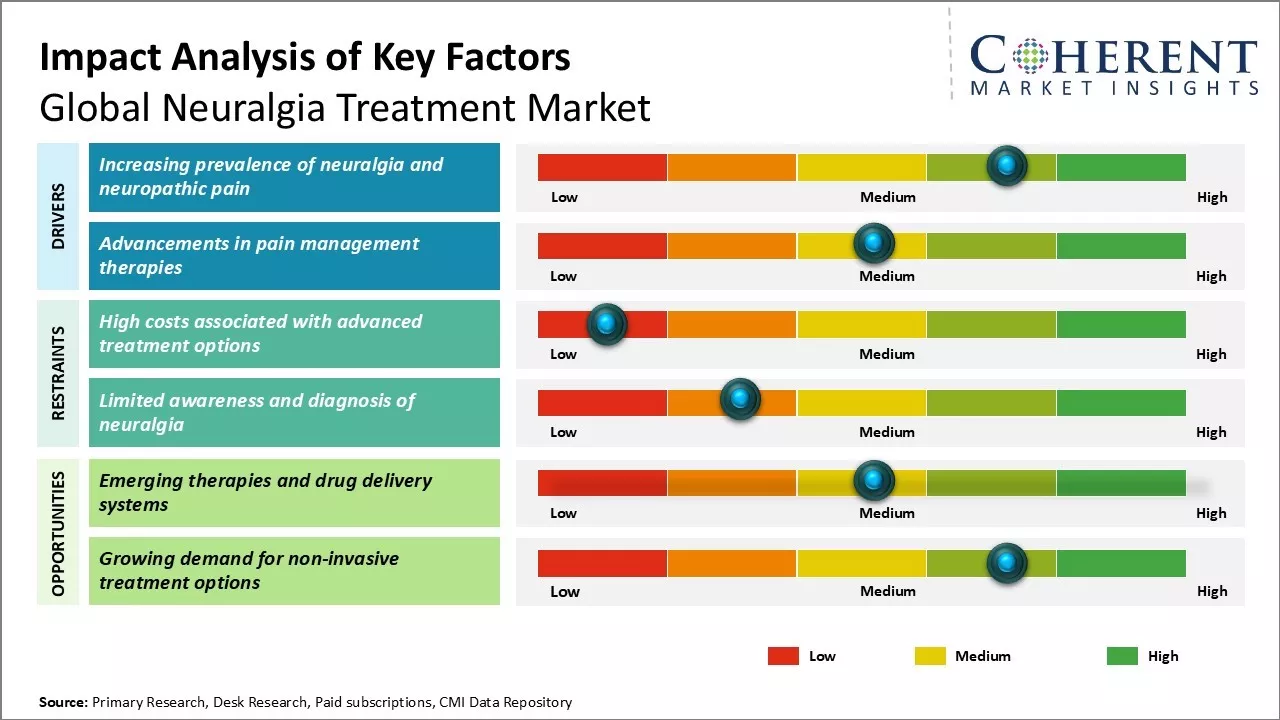
Increasing prevalence of neuralgia and neuropathic pain
The changing pattern of neuropathic conditions and neuralgia, and the increasing number of PHN and TN patients and diabetic nerve damage cases, drive growth in the neuralgia treatment sector. Aging populations and growing cases of herpes zoster and diabetes are the main drivers of market expansion. The Neuroepidemiology study from June 27, 2024, confirmed trigeminal neuralgia occurred in 98.5 people per 100,000 population of Afyonkarahisar, Türkiye, while persistent idiopathic facial pain (PIFP) reached 202 per 100,000, and both conditions affected women more frequently, further propelling the neuralgia market growth.
Neuralgia Treatment Market Challenge - High costs associated with advanced treatment options
Advanced therapy options that treat neuralgia face substantial market limitations because of their high expense. Medical interventions involving stereotactic radiosurgery together with microvascular decompression procedures exceed $38,000–$40,000 in prices according to National Center for Biotechnology Information and PubMed. Patients must bear the expense of treatment because modern medical care requires patented drugs and specialized medical professionals with intricate drug delivery systems.
Neuralgia Treatment Market Opportunity - Emerging therapies and drug delivery systems
The worldwide neuralgia treatment market shows potential through both upcoming medicinal solutions and improved medicine administration systems. The pharmaceutical sectordevotes significant funds to research and development for creating both effective and affordable new pharmaceutical products. The investigation of advanced drug delivery systems through topical gels alongside long-acting injectables and implantable pumps continues to gain emphasis because they enable drug longevity and better patient outcome and adherence, further accelerating the neuralgia market growth.
End-user Feedback and Unmet Needs
- Effectiveness & Safety: People who have pain along with medical professionals are looking for better treatments that haven't got so many negative consequences. The existing medical treatments for chronic neuralgia provide minimal relief through side effects that undermine their usefulness.
- Ease of Administration: Patient compliance needs improved care as clinicians search for treatments that require minimal intervention or are convenient to deliver outside clinical settings and non-invasive administration methods.
- Affordability: Advanced treatment costs act as barriers to accessibility especially in regions characterized as low- and middle-income. Permanent treatment options at affordable prices must be developed to address the global increase of neuralgia cases.
Market Concentration and Competitive Landscape
Top Strategies Followed by Global Neuralgia Treatment Market Players
- Established Players: Leading companies in the global neuralgia treatment market, such as Pfizer, Novartis, and Johnson & Johnson, focus on continuous innovation through research and development (R&D) to expand their product portfolios. They often invest in clinical trials to introduce new, targeted therapies, enhance drug efficacy, and improve patient compliance. Strategic mergers and acquisitions also help them strengthen market presence and diversify offerings.
- Mid-Level Players: Companies like Mylan and Teva often differentiate themselves by focusing on cost-effective generics and biosimilars of existing neuralgia medications. They aim to expand their geographic presence, especially in emerging markets, while optimizing manufacturing processes for lower-cost production.
- Small Players: Smaller companies tend to focus on niche markets or novel treatment options, such as novel drug delivery systems or natural supplements. Their strategies often include targeting unmet needs in the neuralgia space or introducing alternative therapies with a strong value proposition for specific patient populations.
Market Report Scope
Neuralgia Treatment Market Report Coverage
| Report Coverage | Details | ||
|---|---|---|---|
| Base Year: | 2025 | Market Size in 2026: | USD 2.70 Bn |
| Historical Data for: | 2020 To 2024 | Forecast Period: | 2026 To 2033 |
| Forecast Period 2026 to 2033 CAGR: | 6.8% | 2033 Value Projection: | USD 4.35 Bn |
| Geographies covered: |
| ||
| Segments covered: |
| ||
| Companies covered: | GlaxoSmithKline PLC, Pfizer Inc., Novartis AG, Biogen, Cadila Healthcare Limited, Lundbeck Pharmaceuticals LLC, Teva Pharmaceutical Industries Ltd., Sanofi S.A., Amgen Inc., Eli Lilly and Company, Astellas Pharma Inc., Johnson & Johnson, Merck & Co., Inc., AbbVie Inc., and H. Lundbeck A/S | ||
| Growth Drivers: |
| ||
| Restraints & Challenges: |
| ||
Neuralgia Treatment Industry News
- In July 2024, Adalvo Limited, a global pharmaceutical company, introduced Pregabalin Extended-Release (ER) tablets in Europe for the treatment of neuropathic pain. This new formulation provides the advantage of less frequent dosing, enhancing patient convenience and adherence to the treatment regimen.
- In April 2024, Vertex Pharmaceuticals, a pharmaceutical company, announced advancements in its suzetrigine (VX-548) pain treatment program, targeting neuralgia management
- In March 2024, Apollo Hospitals Group introduced the Zap-X Gyroscopic Radiosurgery Platform in Chennai, India offering precise, non-invasive treatment for brain tumors with improved accuracy, fewer side effects, and faster recovery times, enhancing patient outcomes in neurological care.
- In January 2024, the U.S. FDA approved Neuralace Medical's Axon Therapy, a non-invasive neurostimulation treatment for painful diabetic neuropathy (PDN). The technology uses low-voltage electrical pulses to reduce nerve pain without drugs or invasive procedures Get instant access to report
Analyst Opinion (Expert Opinion)
- The Neuralgia Treatment Market is poised for steady growth, driven by the rising prevalence of trigeminal, postherpetic, and glossopharyngeal neuralgia globally. With the global aging population expanding rapidly, demand for effective neuralgia management solutions is increasing.
- Off-label medication use for cost reasons may somewhat limit the uptake of neuralgia-specific treatments. Moreover, stringent regulatory hurdles for new therapy approvals could moderately restrain market expansion.
- Asia Pacific presents strong opportunities due to growing unmet medical needs and improving healthcare access. According to Coherent Market Insights, the region is expected to exhibit the highest CAGR during the forecast period, fueled by rising investments and awareness initiatives.
- North America is projected to retain its market leadership, supported by high treatment rates and healthcare spending, while Europe is boosting R&D efforts into rare pain disorders, further expanding treatment options for neuralgia patients.
Speak to the analyst
Want personalized insights?
Take the findings above to one of our principal consultants, or have the report rebuilt around the segments, geographies and competitors you actually track.
Market Segmentation
- Drug Type Insights (Revenue, USD Bn, 2021 - 2033)
- Anticonvulsants
- Antidepressants
- Opioids
- Non-steroidal anti-inflammatory Drugs (NSAIDs)
- Others
- Route of Administration Insights (Revenue, USD Bn, 2021 - 2033)
- Oral
- Intravenous
- Transdermal
- Others
- Severity Insights (Revenue, USD Bn, 2021 - 2033)
- Mild
- Moderate
- Severe
- Distribution Channel Insights (Revenue, USD Bn, 2021 - 2033)
- Hospital Pharmacies
- Retail Pharmacies
- Online Pharmacies
- Regional Insights (Revenue, USD Bn, 2021 - 2033)
- North America
- U.S.
- Canada
- Latin America
- Brazil
- Argentina
- Mexico
- Rest of Latin America
- Europe
- Germany
- U.K.
- Spain
- France
- Italy
- Russia
- Rest of Europe
- Asia Pacific
- China
- India
- Japan
- Australia
- South Korea
- ASEAN
- Rest of Asia Pacific
- Middle East
- GCC Countries
- Israel
- Rest of Middle East
- Africa
- South Africa
- North Africa
- Central Africa
- North America
- Key Players Insights
- GlaxoSmithKline PLC
- Pfizer Inc.
- Novartis AG
- Biogen
- Cadila Healthcare Limited
- Lundbeck Pharmaceuticals LLC
- Teva Pharmaceutical Industries Ltd.
- Sanofi S.A.
- Amgen Inc.
- Eli Lilly and Company
- Astellas Pharma Inc.
- Johnson & Johnson
- Merck & Co., Inc.
- AbbVie Inc.
- Lundbeck A/S
Sources
Primary Research Interviews from the following stakeholders:
Stakeholders:
- Interviews with neurologists, pain management specialists, healthcare providers, medical device developers, and pharmaceutical professionals engaged in neuralgia treatment and related therapeutics.
- Specific stakeholders: Neurologists, anesthesiologists, neurosurgeons, biomedical researchers, R&D heads from pharma and MedTech companies, and healthcare policy experts.
Databases:
- PubMed
- ClinicalTrials.gov
- HealthData.gov
Magazines:
- MedTech Insight
- Healthcare Technology News
- Medical Device and Diagnostic Industry (MD+DI)
- HealthTech Magazine
Journals:
- Pain
- The Journal of Headache and Pain
- Neurology
- European Journal of Pain
- Journal of Neurology, Neurosurgery & Psychiatry
Newspapers:
- The New York Times
- The Guardian
- The Wall Street Journal
- Financial Times
- The Washington Post
Associations:
- International Association for the Study of Pain (IASP)
- American Academy of Neurology (AAN)
- European Pain Federation (EFIC)
- American Pain Society (APS)
- World Federation of Neurology (WFN)
Public Domain Sources:
- World Health Organization (WHO)
- Centers for Disease Control and Prevention (CDC)
- Food and Drug Administration (FDA)
- National Institutes of Health (NIH)
Proprietary Elements:
- CMI Data Analytics Tool and Proprietary CMI Repository of neuralgia treatment-related data spanning the last 8 years
Get access to 250+ pages report
Every segment, forecast, competitor profile and data table behind the analysis above — available for instant download.
- ESOMAR Member
- ISO 9001:2015 Certified
- D-U-N-S Registered
- GDPR & CCPA Compliant
Missing comfort of reading report in your local language? Find your preferred language:
Transform your Strategy with Exclusive Trending Reports
Frequently Asked Questions
The Neuralgia Treatment Market is estimated to be valued at USD 2.70 Bn in 2026, and is expected to reach USD 4.35 Bn by 2033.
The CAGR of the Neuralgia Treatment Market is projected to be 6.8% from 2026 to 2033.
Increasing prevalence of neuralgia and neuropathic pain and advancements in pain management therapies are the major factors driving the growth of the global neuralgia treatment market.
High costs associated with advanced treatment options and limited awareness and diagnosis of neuralgia are the major factors hampering the growth of the global neuralgia treatment market.
In terms of drug type, anticonvulsants segment is estimated to dominate the market revenue share in 2026.
GlaxoSmithKline PLC, Pfizer Inc., Novartis AG, Biogen, Cadila Healthcare Limited, Lundbeck Pharmaceuticals LLC, Teva Pharmaceutical Industries Ltd., Sanofi S.A., Amgen Inc., Eli Lilly and Company, Astellas Pharma Inc., Johnson & Johnson, Merck & Co., Inc., AbbVie Inc., and H. Lundbeck A/S are the major players.
North America is expected to lead the global neuralgia treatment market in 2026.