

North America Bio-identical Hormones Market Size and Forecast – 2026 To 2033
The North America bio-identical hormones market is expected to grow from USD 1,492.6 Mn in 2026 to USD 2,323.4 Mn by 2033, registering a compound annual growth rate (CAGR) of 6.5% from 2026 to 2033. The North America bio-identical hormones market is poised for significant expansion, fueled by the rising population of aging female and increasing prevalence of menopause-related symptoms requiring hormone replacement therapy.
According to the U.S. Centers for Disease Control and Prevention (CDC), menopause typically occurs between 45 and 55 years of age, with the average age being 52 years in the U.S., contributing to sustained demand for bio-identical hormone therapies to manage vasomotor and other menopausal symptoms.
Key Takeaways of the North America Bio-identical Hormones Market
- Estrogen is projected to hold 58.1 % of the North America bio-identical hormones market share in 2026, making it the dominant product type segment, owing to its established role in managing menopausal symptoms. The segment continues to benefit from regulatory support for evidence-based hormone therapies. For instance, in February 2026, the U.S. Food and Drug Administration (FDA) approved labeling changes for menopausal hormone therapy products, including systemic estrogen therapies, to reflect updated scientific evidence regarding their benefits and risks, reinforcing confidence in U.S. FDA-approved estrogen products.
- Tablets and capsules are projected to hold 58.7 % of the North America bio-identical hormones market share in 2026, making it the dominant dosage form segment, owing to their convenience, high patient compliance, and widespread prescription for menopausal hormone therapy. For instance, the U.S. Food and Drug Administration (FDA) recommend the use of U.S. FDA-approved oral hormone therapy products that have undergone rigorous evaluation for safety, efficacy, and quality, supporting the adoption of oral bio-identical hormone formulations.
- Hospitals are projected to hold 46.2 % of the North America bio-identical hormones market share in 2026, making it the dominant end user segment, owing to their role in specialist-led diagnosis, treatment initiation, and long-term hormone therapy management. For instance, the U.S. Food and Drug Administration (FDA) advises that menopausal hormone therapy should be prescribed and monitored by qualified healthcare professionals after evaluating individual patient risks and benefits, reinforcing hospitals as primary treatment settings.
Segmental Insights
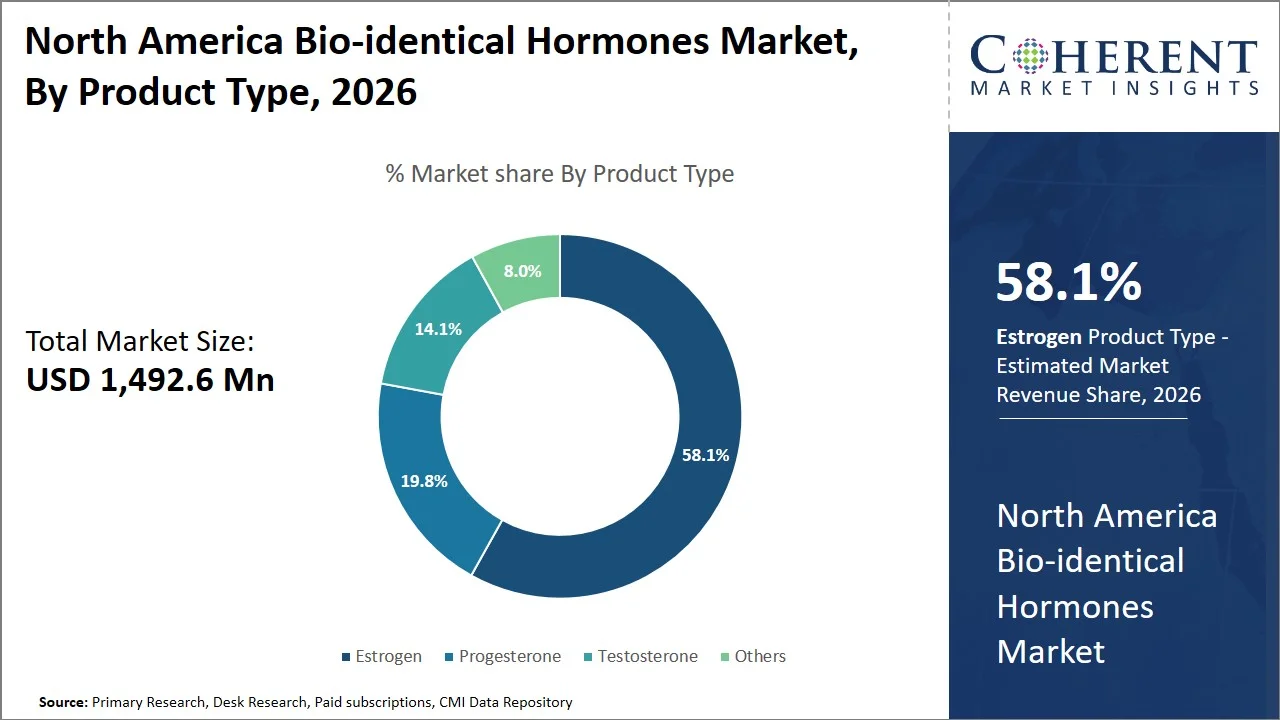
Why Does Estrogen Dominate the North America Bio-identical Hormones Market?
Estrogen is projected to hold a market share of 58.1% in 2026, attributed to its recognition as first-line therapy hormone replacement for mitigating menopausal symptoms, and increasing the number of U.S. FDA approved bio-identical estrogen products available through various oral, transdermal, and vaginal application for improving bone health and post-menopausal quality of life. For instance, in December 2025, the U.S. Food and Drug Administration (FDA) approved the first generic version of Imvexxy estradiol vaginal inserts for the management of moderate to severe dyspareunia associated with menopause, expanding patient access to estrogen-based therapies.
- Current Industry Events of 2026
- Market Size Estimation
- Regional Breakdown
- Competitive Landscape
- Customer Intelligence
- Segmental Analysis
- Pricing Analysis
- Key Market Drivers, Challenges & Future Trends
- Customized Insights Section
Why Do Tablets and Capsules Represent the Largest Dosage Form Segment in the North America Bio-identical Hormones Market?
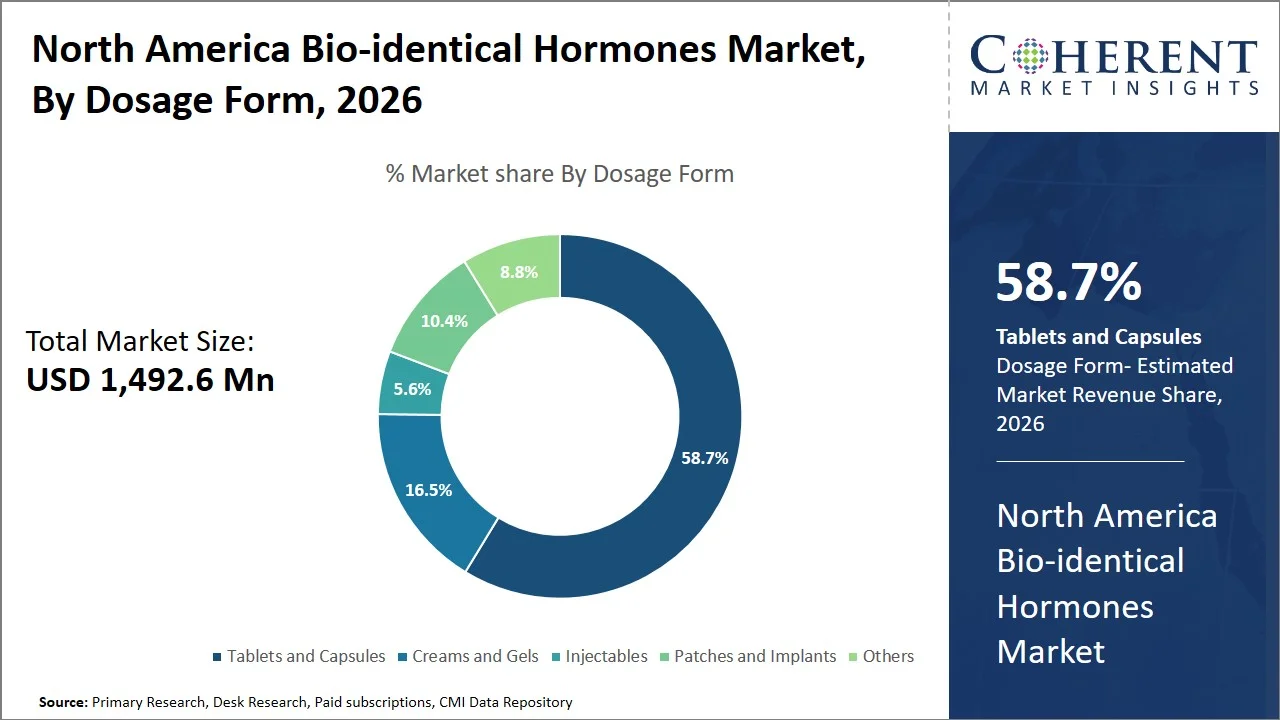
Tablets and capsules are projected to hold 58.7% of the market share in 2026, driven by their ease of consumption, accurate dosing and high compliance for a long-term hormone replacement therapy. Also, preference over these oral dosage forms comes due to their inherent accessibility in day-to-day use and vast clinical evidence. For instance, in November 2025, Ingenus Pharmaceuticals announced the U.S. Commercial launch of its first FDA approved generic equivalent of Premarin (Conjugated Estrogens Tablets, USP), available in all FDA-approved strengths: 0.3 mg, 0.45 mg, 0.625 mg, 0.9 mg, and 1.25 mg, making oral hormone replacement therapy more accessible throughout the U.S
Hospitals Segment Dominates the North America Bio-identical Hormones Market
The hospitals segment is projected to hold a market share of 46.2% in 2026, as they provide superior Diagnostic infrastructure, multidisciplinary specialists as well as deliver thorough treatment related to HRT under close observation. In patients with complicated disorders affecting menopause and endocrine status, hospitals serve as the initial place of treatment due to the necessity of specialist care. For instance, Mayo Clinic expanded menopause and women’s health clinic services to sites across the U.S., providing coordinated care with expertise that integrates services with gynecology, endocrinology, cardiology and primary care specialists, strengthening focus on hormone replacement in the hospital care setting.
Current Events and their Impact
Current Events | Description and its Impact |
U.S. FDA Requests Safety Labeling Updates for Menopausal Hormone Therapies (November 2025) |
|
FDA Reinforces Preference for FDA-Approved Hormone Therapies Over Compounded Bio-identical Products (Updated FDA Guidance, 2025) |
|
North America Bio-identical Hormones Market Dynamics
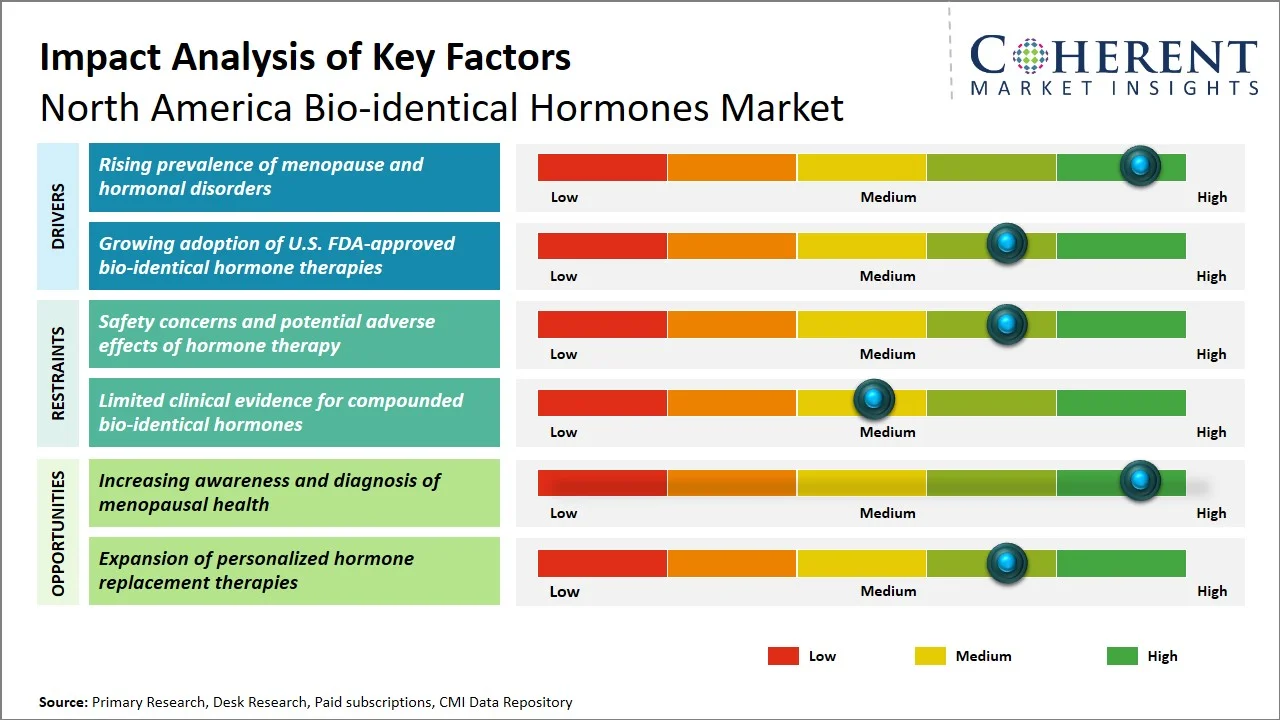
Market Drivers
- Rising prevalence of menopause and hormonal disorders: The increasing prevalence of menopause-related symptoms and growing awareness of hormonal health are key factors driving the North America bio-identical hormones market. Rising demand for effective symptom management is encouraging greater adoption of bio-identical hormone therapies, particularly among women seeking individualized treatment options. For instance, in June 2025, The Menopause Society launched the NextGen Now initiative, a USD 10 million program aimed at training 25,000 healthcare professionals over three years to improve menopause care and expand access to evidence-based treatment. This initiative is expected to strengthen diagnosis, treatment, and adoption of hormone therapies across North America.
- Growing adoption of U.S. FDA-approved bio-identical hormone therapies: The growing adoption of U.S. FDA-approved bio-identical hormone therapies is driving the North America Bio-identical hormones market, as healthcare providers increasingly favor standardized therapies with established safety, efficacy, and manufacturing quality over compounded alternatives. This trend is improving physician confidence and supporting broader clinical utilization. For instance, in November 2025, the U.S. Department of Health and Human Services (HHS) announced that the U.S. FDA had approved the first generic version of Premarin (conjugated estrogens) tablets in more than 30 years, improving patient access and affordability for hormone replacement therapy.
- Expanding regulatory oversight of compounded hormone products: Growing regulatory scrutiny of compounded hormone products is encouraging the use of FDA-approved bio-identical hormone therapies with established safety and quality standards. This shift is strengthening confidence among physicians and patients while supporting the commercial market for approved products. For instance, in January 2025, the U.S. FDA continued enforcement of Section 503B outsourcing facility quality standards through inspections and compliance actions to improve the quality of compounded drugs, including hormone preparations.
Emerging Trends
- Increasing Shift Toward FDA-Approved Bio-identical Hormone Products: Physicians and healthcare systems are gradually favoring U.S. FDA-approved bio-identical hormone therapies over compounded formulations due to stronger clinical evidence, standardized manufacturing, and regulatory oversight. This trend is reshaping prescribing practices and encouraging manufacturers to expand approved product portfolios.
- Growing Adoption of Menopause-Focused Integrated Care Models: Healthcare providers are increasingly adopting multidisciplinary menopause care models that combine hormone therapy with nutrition, mental health, metabolic care, and lifestyle management. This integrated approach is improving treatment outcomes and driving demand for comprehensive bio-identical hormone therapy services across North America.
- Growing Focus on Comprehensive Menopause Treatment: The growing emphasis on comprehensive menopause treatment is emerging as a key trend in the North America bio-identical hormones market. Healthcare providers are increasingly adopting multidisciplinary care models that integrate hormone replacement therapy with lifestyle management, mental health support, and metabolic care, improving patient outcomes and driving demand for bio-identical hormone therapies.
Key Regulatory and Reimbursement Developments Shaping the North America Bio-identical Hormones Market
Development Area | Regulatory Body / Stakeholder | Recent Development (2025–2026) | Market Implications |
Menopausal Hormone Therapy Safety & Labeling | U.S. Food and Drug Administration (FDA) | In November 2025, the FDA initiated the removal of outdated boxed warnings and updated safety information for menopausal hormone therapy products to better reflect current scientific evidence on benefit-risk considerations. | Expected to improve physician confidence in FDA-approved bio-identical hormone therapies, support evidence-based prescribing, and expand patient acceptance. |
Clinical Review of Hormone Replacement Therapy | U.S. Food and Drug Administration (FDA) | In July 2025, the FDA convened an Expert Panel on Menopause and Hormone Replacement Therapy to review current evidence on the risks and benefits of menopausal hormone therapy and identify future regulatory priorities. | May influence future regulatory policies, product labeling, and clinical practice, strengthening the long-term regulatory framework for hormone therapies. |
Compounded Bio-identical Hormone Therapy Guidance | American College of Obstetricians and Gynecologists (ACOG) | ACOG recommend FDA-approved menopausal hormone therapies over compounded bio-identical hormone products, citing limited evidence on the safety and effectiveness of compounded preparations. | Encourages greater utilization of FDA-approved bio-identical hormone products and supports investment in commercially approved formulations. |
Regulatory Oversight of Compounded Hormones | U.S. Food and Drug Administration (FDA) | The FDA continues to emphasize that compounded bio-identical hormones are generally not FDA-approved and have not undergone the same evaluation for safety, efficacy, or manufacturing quality as approved hormone therapies. | Reinforces regulatory preference for approved hormone therapies, encouraging manufacturers to focus on compliant, standardized bio-identical hormone products. |
How are increasing awareness and diagnosis of menopausal health creating new growth opportunities in the North America bio-identical hormones market?
Increased awareness regarding menopause along with the development in diagnostic technologies aiding in efficient detection of hormonal disorders is paving the way for several new and lucrative avenues for the North America bio-identical hormones market. The growing prevalence and visibility of the symptoms related to menopause among medical practitioners and patients is driving the demand for consultation with physicians thereby increasing the percentage of patients eligible for the hormone therapy. For instance, in October 2025, The Menopause Society revealed data from a massive U.S study which revealed that women treated with specialized menopause management by obstetrics and gynecology (OB/Gyn) were significantly more likely to receive prescription hormone therapy than those treated by other provider types, reinforcing the importance of expanding specialized menopause care.
Market Players, Key Development, and Competitive Landscape
Key Developments
- In May 2026, Maven Clinic launched a direct-to-consumer women's health platform in the U.S. integrating GLP-1 therapy and hormone support. The platform connects patients with providers across more than 30 specialties, offering coordinated care for metabolic, hormonal, and reproductive health, thereby strengthening access to hormone therapy services in North America.
- In February 2024, Knight Therapeutics Inc. launched BIJUVA (estradiol and progesterone) capsules in Canada. BIJUVA is a once-daily oral bioidentical hormone therapy indicated for the treatment of moderate to severe vasomotor symptoms associated with menopause, expanding access to bioidentical hormone replacement therapy in the Canadian market.
- In January 2024, Biote Corp. announced its acquisition of Asteria Health, an FDA-registered 503B outsourcing facility specializing in compounded bioidentical hormones. The acquisition vertically integrates hormone product manufacturing, strengthens Biote's supply chain capabilities, and expands its presence in the North American bio-identical hormones market.
Competitive Landscape
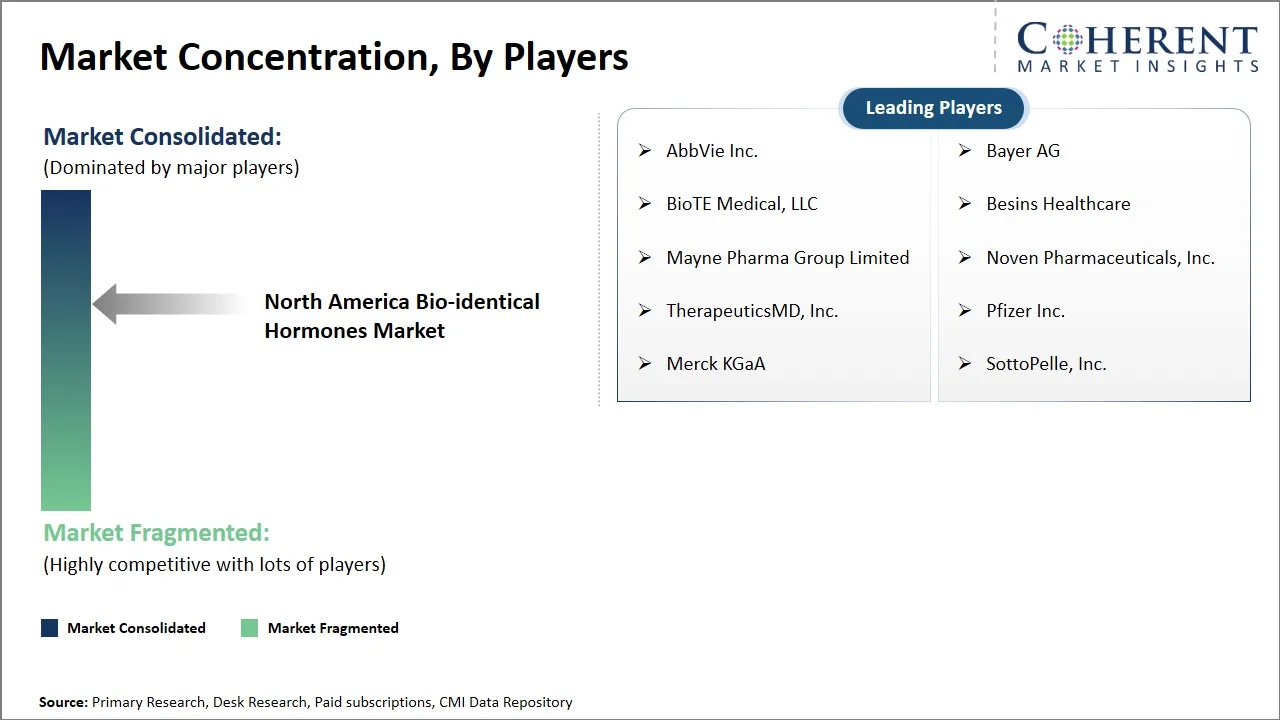
The North America bio-identical hormones market is moderately consolidated, with leading companies competing through FDA-approved product development, strategic acquisitions, manufacturing expansion, and women's health-focused service offerings. Market participants are strengthening their presence by expanding hormone therapy portfolios, enhancing manufacturing capabilities for bio-identical formulations, and investing in evidence-based menopause care solutions. Collaborations with healthcare providers, specialty clinics, and digital health platforms are further improving patient access and treatment adoption. Key focus areas include:
- Development and commercialization of U.S. FDA-approved bio-identical hormone therapies
- Expansion of manufacturing capabilities and strategic acquisitions to strengthen the supply chain and availability of bio-identical hormone products across North America.
- Integration of women's health and menopause care services through specialty clinics and digital health platforms
- Investment in clinical research and regulatory compliance to generate robust evidence, support product approvals, and expand therapeutic indications for hormone replacement therapies.
Market Report Scope
North America Bio-identical Hormones Market Report Coverage
| Report Coverage | Details | ||
|---|---|---|---|
| Base Year: | 2025 | Market Size in 2026: | USD 1,492.6 Mn |
| Historical Data for: | 2020 To 2024 | Forecast Period: | 2026 To 2033 |
| Forecast Period 2026 to 2033 CAGR: | 6.5% | 2033 Value Projection: | USD 2,323.4 Mn |
| Segments covered: |
| ||
| Companies covered: | AbbVie Inc., Bayer AG., BioTE Medical, LLC, Besins Healthcare, Mayne Pharma Group Limited, Noven Pharmaceuticals, Inc., TherapeuticsMD, Inc., Pfizer Inc., and Merck KGaA, SottoPelle, Inc. | ||
| Growth Drivers: |
| ||
| Restraints & Challenges: |
| ||
Analyst Opinion (Expert Opinion)
- In the coming years, the North America bio-identical hormones market is expected to witness sustained growth over the coming years, driven by the increasing demand for evidence-based menopause management, rising adoption of U.S. FDA-approved bio-identical hormone therapies, and greater integration of women's health services into mainstream healthcare. Continued regulatory support and expanding clinical evidence are likely to accelerate the transition from compounded formulations toward standardized, commercially approved products.
- The maximum growth opportunity lies within estrogen-based bio-identical hormone therapies for the menopause management application, particularly in the U.S. This opportunity is supported by the country's large menopausal population, well-established reimbursement ecosystem, high healthcare expenditure, and growing emphasis on women's midlife health.
- In order to create an advantage for themselves, the competitors should prioritize the development of FDA-approved bio-identical hormone formulations, strengthen clinical evidence through post-marketing and real-world studies, and expand collaborations with obstetrics and gynaecology (OB/Gyn) specialists, menopause clinics, and digital women's health platforms. Investments in patient education, market access strategies, and innovative, patient-friendly formulations will further differentiate companies in an increasingly competitive landscape.
Speak to the analyst
Want personalized insights?
Take the findings above to one of our principal consultants, or have the report rebuilt around the segments, geographies and competitors you actually track.
Market Segmentation
- Product Type Insights (Revenue, USD Mn, 2021 - 2033)
- Estrogen
- Progesterone
- Testosterone
- Others
- Dosage Form Insights (Revenue, USD Mn, 2021 - 2033)
- Tablets and Capsules
- Creams and Gels
- Injectables
- Patches and Implants
- Others
- End User Insights (Revenue, USD Mn, 2021 - 2033)
- Hospitals
- Specialty Clinics
- Homecare Settings
- Others
- Key Players Insights
- AbbVie Inc.
- Bayer AG
- BioTE Medical, LLC
- Besins Healthcare
- Mayne Pharma Group Limited
- Noven Pharmaceuticals, Inc.
- TherapeuticsMD, Inc.
- Pfizer Inc.
- Merck KGaA
- SottoPelle, Inc.
Sources
Primary Research Interviews
- Obstetricians and Gynecologists (OB/Gyn) – menopause management, hormone replacement therapy (HRT) prescribing trends, and patient selection
- Endocrinologists – diagnosis and management of hormonal disorders, testosterone deficiency, and endocrine replacement therapies
- Menopause Specialists – adoption of bio-identical hormone therapies and clinical treatment pathways
- Compounding Pharmacists – customized bio-identical hormone formulations, prescribing patterns, and operational challenges
- Hospital Pharmacy Directors – procurement trends, formulary inclusion, and utilization of hormone therapies
- Women's Health Clinic Directors – patient demand, treatment preferences, and adoption of FDA-approved bio-identical hormone products
- Retail & Specialty Pharmacy Executives – dispensing trends and patient adherence to hormone replacement therapies
Stakeholders
- Bio-identical Hormone Manufacturers (e.g., AbbVie Inc., Bayer AG, Besins Healthcare, BioTE Medical, LLC)
- Compounding Pharmacies (503A and 503B Outsourcing Facilities)
- Women's Health & Menopause Clinics
- End-use Sectors
- Hospitals
- Specialty Clinics
- Retail Pharmacies
- Compounding Pharmacies
- Regulatory & Health Bodies
- U.S. Food and Drug Administration
- Health Canada
- Centers for Medicare & Medicaid Services (CMS)
- United States Pharmacopeia (USP)
- American College of Obstetricians and Gynecologists (ACOG)
- The Menopause Society
Databases
- U.S. Food and Drug Administration (FDA) – Drugs@FDA Database (approved hormone therapies and labeling updates)
- ClinicalTrials.gov – Clinical trials involving bio-identical hormone therapies and menopause management
- Centers for Medicare & Medicaid Services (CMS) Physician Fee Schedule & HCPCS Database – reimbursement policies for hormone therapy-related services
- NIH RePORTER – federally funded women's health, endocrinology, and hormone therapy research projects
- FDA Orange Book – approved estrogen, progesterone, and testosterone products and therapeutic equivalence information
Magazines
- Contemporary OB/GYN
- Managed Healthcare Executive
- Pharmacy Times
- Drug Topics
- Pharmaceutical Executive
Journals
- Menopause (The Menopause Society)
- Journal of Clinical Endocrinology & Metabolism
- Obstetrics & Gynecology
- The Journal of Clinical Endocrinology and Metabolism
- Maturitas
Associations
- The Menopause Society
- American College of Obstetricians and Gynecologists (ACOG)
- Endocrine Society
- American Association of Clinical Endocrinology (AACE)
- North American Primary Care Research Group (NAPCRG)
Public Domain Sources
- U.S. Food and Drug Administration
- Health Canada
- Centers for Medicare & Medicaid Services (CMS)
- National Institutes of Health (NIH)
- U.S. Office on Women's Health (OWH)
Proprietary Elements
- CMI Data Analytics Tool, Proprietary CMI Existing Repository of information for last 10 years.
Get access to 250+ pages report
Every segment, forecast, competitor profile and data table behind the analysis above — available for instant download.
- ESOMAR Member
- ISO 9001:2015 Certified
- D-U-N-S Registered
- GDPR & CCPA Compliant
Missing comfort of reading report in your local language? Find your preferred language:
Transform your Strategy with Exclusive Trending Reports
Frequently Asked Questions
The North America bio-identical hormones market is estimated to be valued at USD 1,492.6 Mn in 2026 and is expected to reach USD 2,323.4 by 2033.
Estrogen dominates due to its widespread use in managing menopausal symptoms and the high prevalence of menopause-related hormone replacement therapy.
Bio-identical hormones are plant-derived hormones that are chemically identical to those naturally produced by the human body.
The CAGR of the North America bio-identical hormones market is projected to be 6.5% from 2026 to 2033.
Rising prevalence of menopause and hormonal disorders, and growing adoption of U.S. FDA-approved bio-identical hormone therapies are the major factors driving the growth of the North America bio-identical hormones market.
Safety concerns and potential adverse effects of hormone therapy, and limited clinical evidence for compounded bio-identical hormones are the major factors hampering the growth of the North America bio-identical hormones market.
The market is expected to grow steadily, driven by increasing adoption of FDA-approved bio-identical hormone therapies, expanding menopause care services, and rising demand for personalized hormone replacement treatments.